

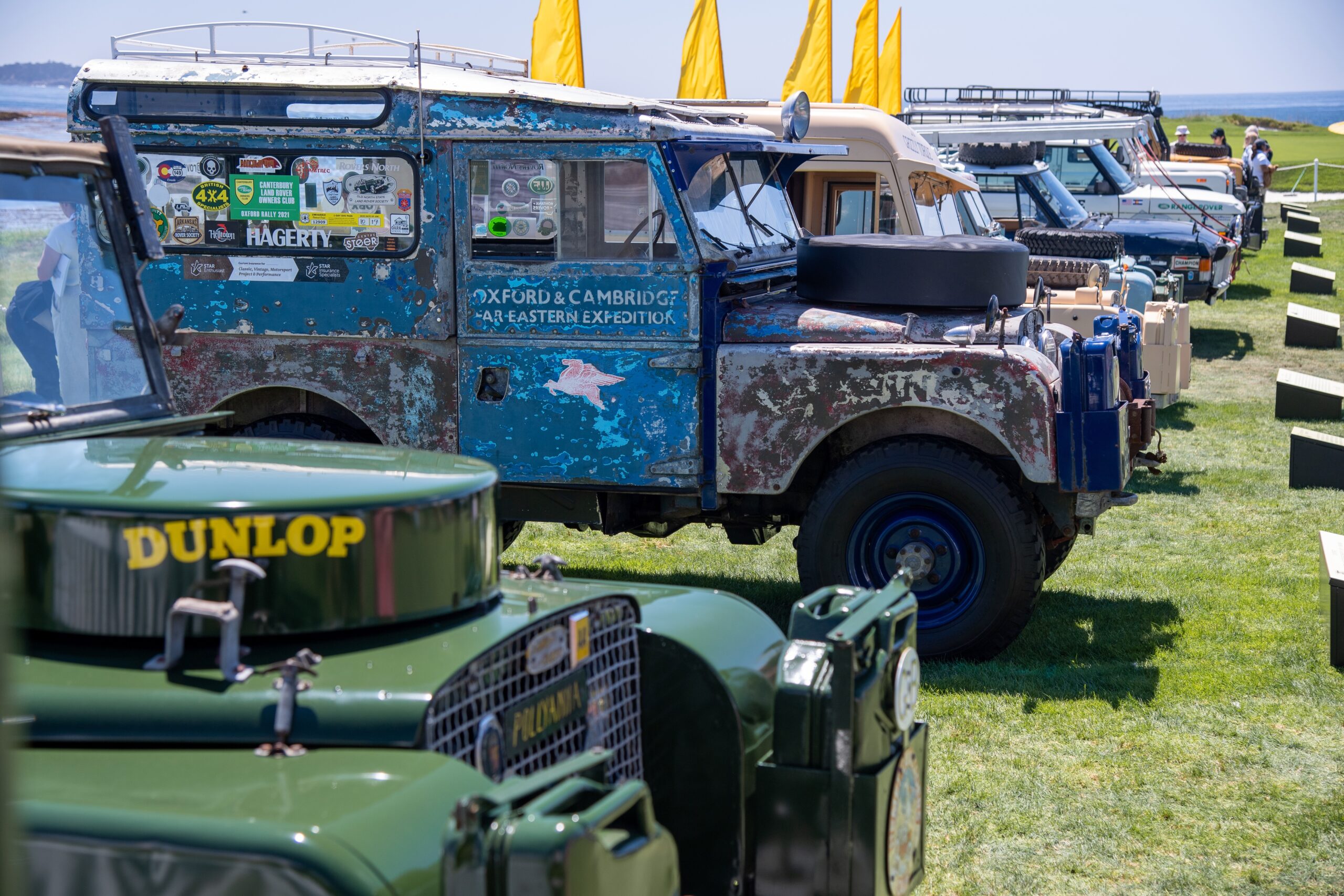
When you think of the annual Pebble Beach Concours d’Elegance, you usually think of the famous waterfront golf course lined with immaculate eight-figure Ferraris and one-off pre-war vehicles from European marques that are long out of business. But for the past two years, Land Rover has made a statement at the iconic event with a themed display of 10 of their vehicles on the 17th fairway. This year’s event focused on historic expedition vehicles from across the company’s history, celebrating 75 years of Land Rover-based exploration in 2025.
The event builds on the success of last year’s exhibit, The Vehicles of Her Majesty Queen Elizabeth II, which displayed personal and processional Land Rovers owned or used by the late Queen. That display proved so successful that it went on tour across North America, including a display of all 10 vehicles at New York City’s Rockefeller Plaza.
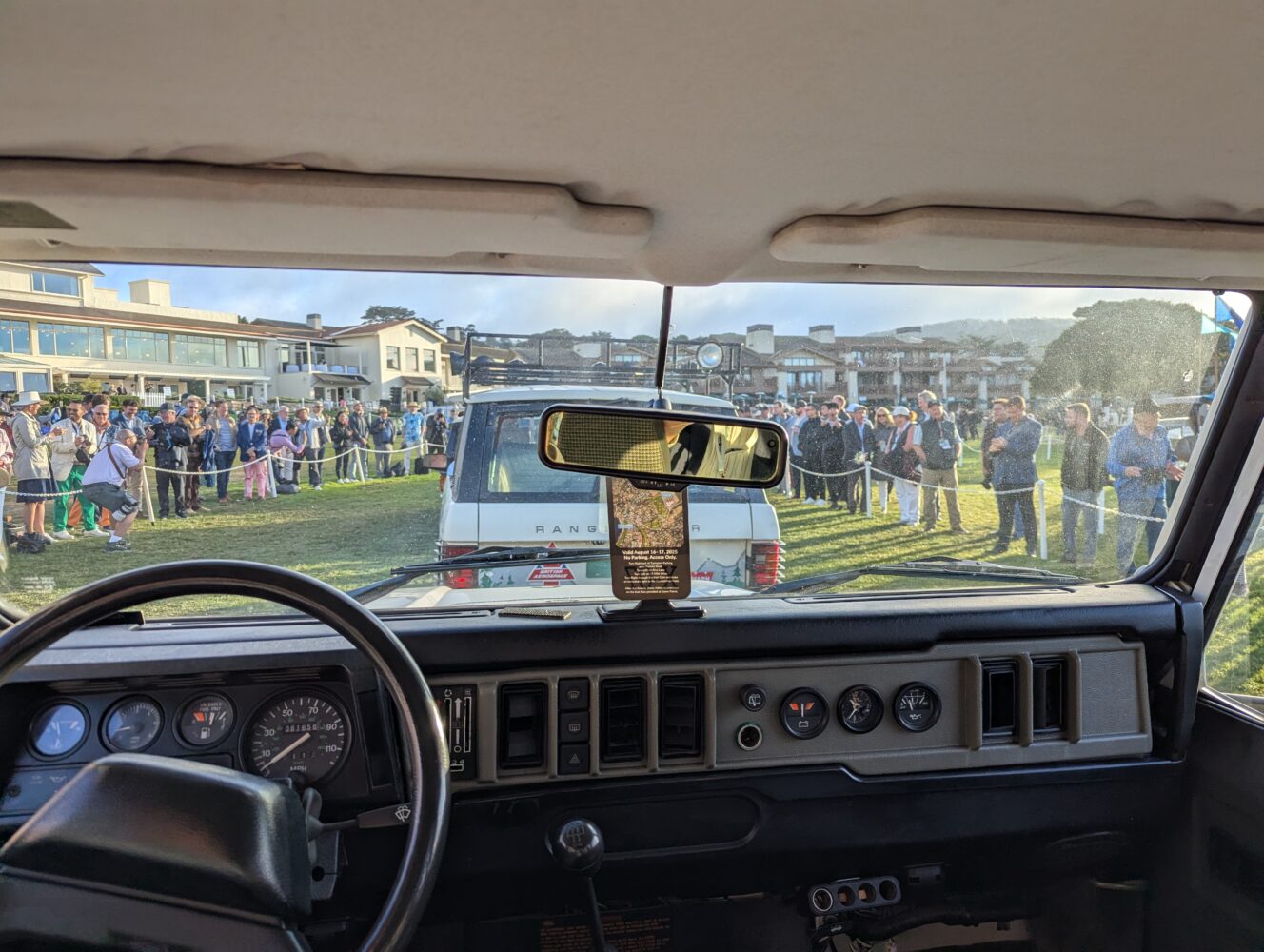
The vehicles began their adventure at Monterey Car Week with the Tour d’Elegance on Thursday, August 14, where they joined the Bugattis and Dusenbergs on a run along the 17 Mile Drive around the Monterey Peninsula, culminating in a dramatic crossing of Route 1’s Bixby Bridge.
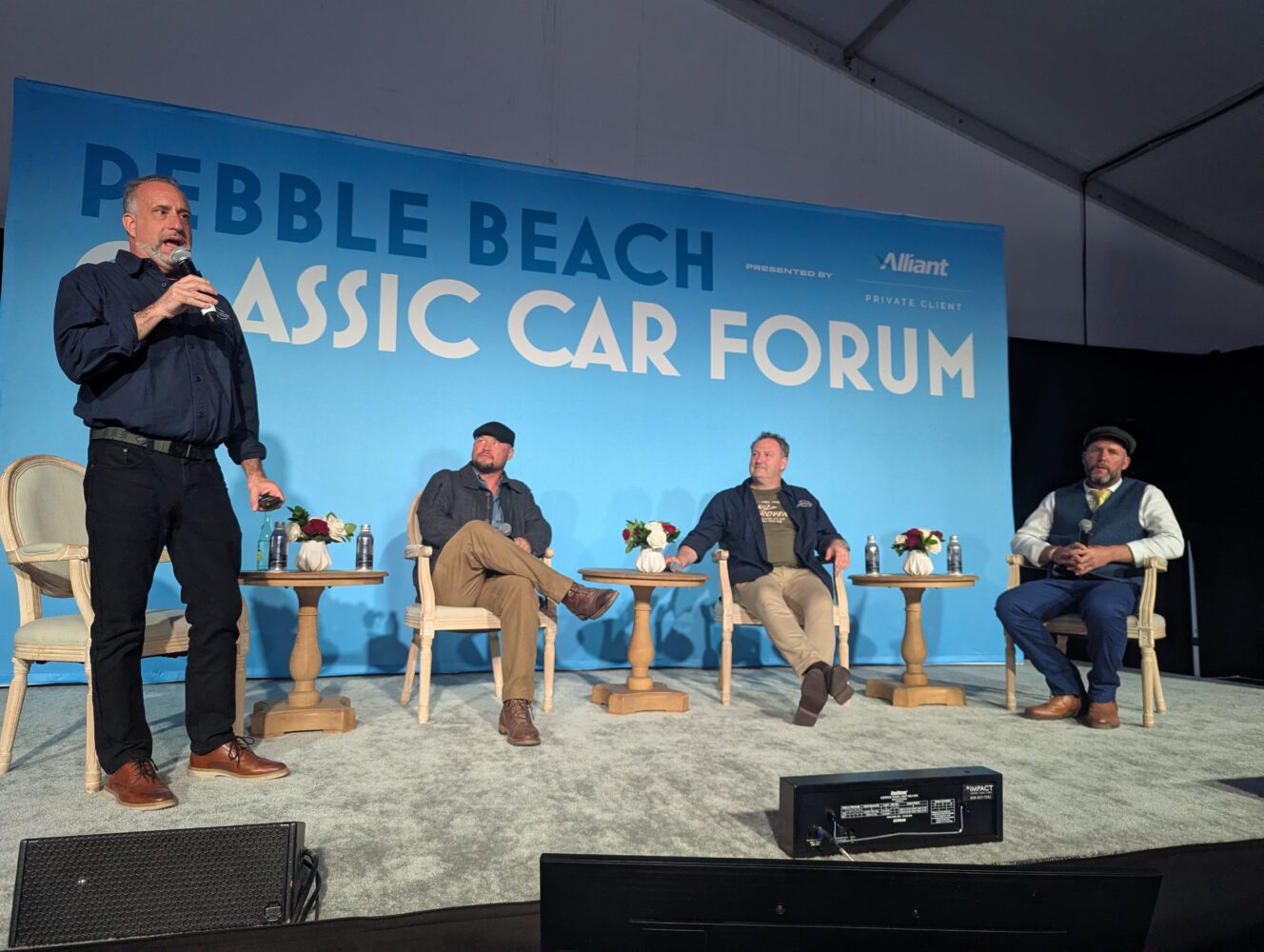
On Saturday, August 16, there was a presentation at the Pebble Beach Classic Car Forum on Land Rover’s history of adventure and exploration. The panel discussion, moderated by JLR’s Jeff Ehoodin, brought together experts on Land Rover history and exploration.
Land Rover Classic Historian Mike Bishop set out the stage: after self-funded solo exploration efforts by Australian-British adventuress Barbara Toy in the early 1950s, Land Rover leaned into long-range explorations to market and promote their vehicles. This program was built primarily around a series of three expeditions in the 1950s undertaken by students of Oxford and Cambridge. One of the members of the first of those expeditions, Gethin Bradley, would become a keystone in Land Rover’s public relations department and would take his experience driving across Africa to build out Land Rover’s exploration brand even further. It is because of his influence that Land Rover has used large-scale expeditions as a marketing tool to a greater degree than many other off-road vehicle manufacturers.
Tom Pickford, owner of Series Land Rover parts company Vintage LR Co, is also the caretaker of Barbara Toy’s 1950 Series I 80”, Pollyanna. He is dedicated to telling the story of Barbara Toy and her ground-breaking adventures. Pickford discussed what it is like to take care of her vehicle, and the efforts underway to retell her story. Executive Publisher Scott Brady related the spirit of adventure exemplified in these exhibits to a human level, discussing the primal need for adventure and connection, and relating to the influence of Land Rover’s expedition-driven ethos in the 1990s on the development of his life path.
On Sunday, August 17, the line of Land Rovers proceeded down the cart path at Pebble Beach Golf Links in the iconic early morning “Dawn Patrol,” before anchoring the end of the show field all day. The vehicles became a must-see, just as popular as the 1924 Hispano-Suiza H6C “Tulipwood” Torpedo that won Best of Show.
1950 Series I 80 | “Pollyanna”
Land Rover’s overland record began with Barbara Toy, an Australian-British woman who drove a Series I 80” named “Pollyanna,” solo from London to Baghdad in the late 1950s. A little over two years after the launch of the vehicle in April 1948, Barbara Toy’s trip across North Africa was the first recorded recreational expedition utilizing a Land Rover. During a later journey in Pollyanna in 1956-1957, she also became the first person to drive a Land Rover around the world.
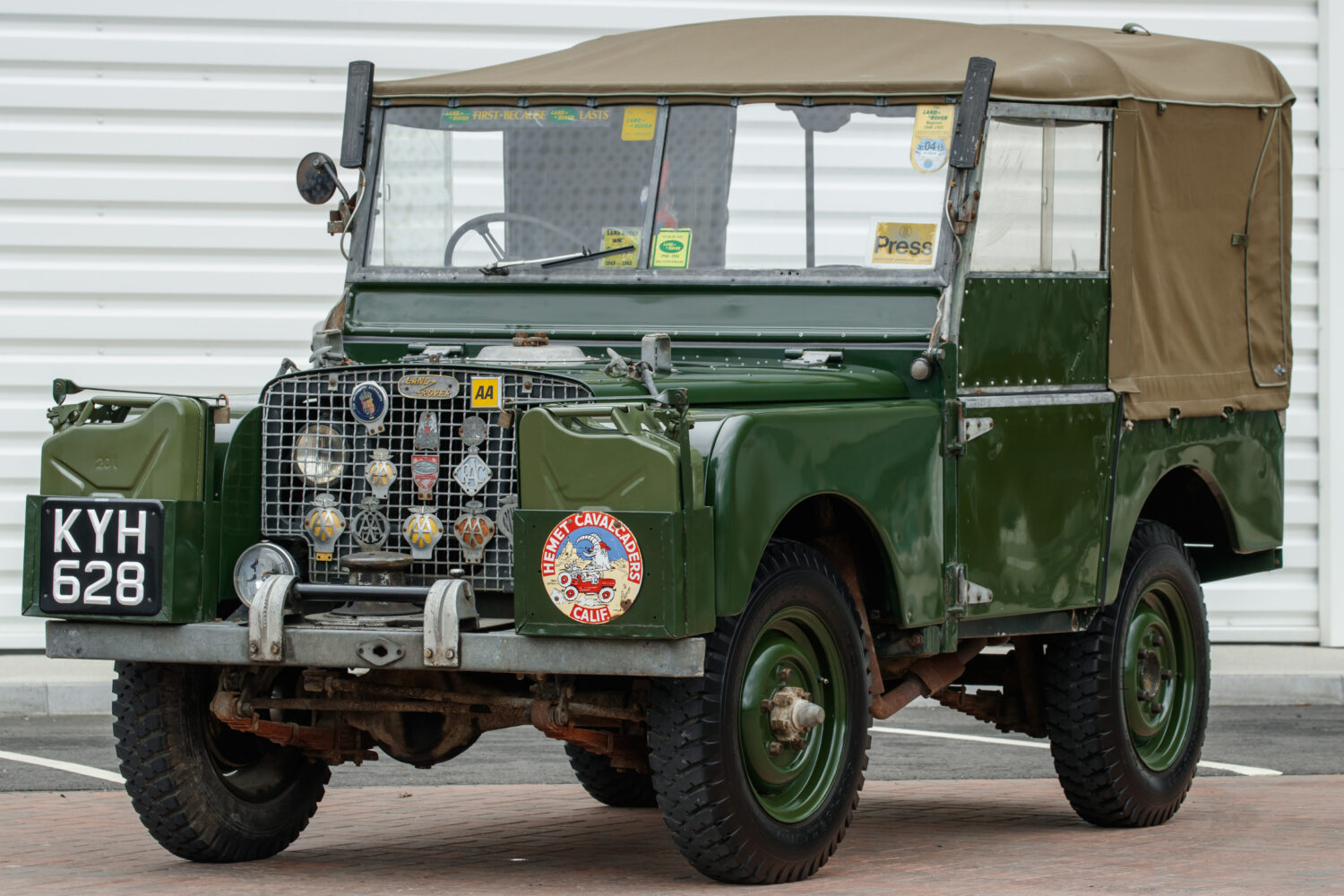
Toy’s adventures resulted in a series of eight books published between 1955 and 1970, starting with A Fool on Wheels, which documented her first trip to Iraq. Toy spent much of the 1950s exploring the world with Pollyanna, sharing her journeys through a series of books. She had a special affinity for North Africa and the Middle East, with a love for the desert imparted to her by her father. She took a cavalier view toward challenges, often gaining access to insular kingdoms and special opportunities by writing letters burnishing her credentials as an explorer and writer. (Mentioning her friendship with Agatha Christie probably didn’t hurt, either.) She died in 2001, and Pollyanna’s appearance at Pebble Beach is a significant milestone in the recent recognition of her story.
1955 Series I 86 | “Oxford”
The most famous Land Rover expedition of them all is probably the Oxford and Cambridge Far East Expedition, undertaken in 1955-56 as the first-ever transit by vehicle from London to Singapore. Utilizing two Series I 86” vehicles, named “Oxford” and “Cambridge,” it was part of a set of three expeditions undertaken by students from the two universities in the 1950s, utilizing factory-supported Land Rovers. The first, in 1954, conquered Africa, and the third, in 1957-58, tackled the Americas. The London-Singapore expedition resulted in a classic of automotive travel literature, the book First Overland.
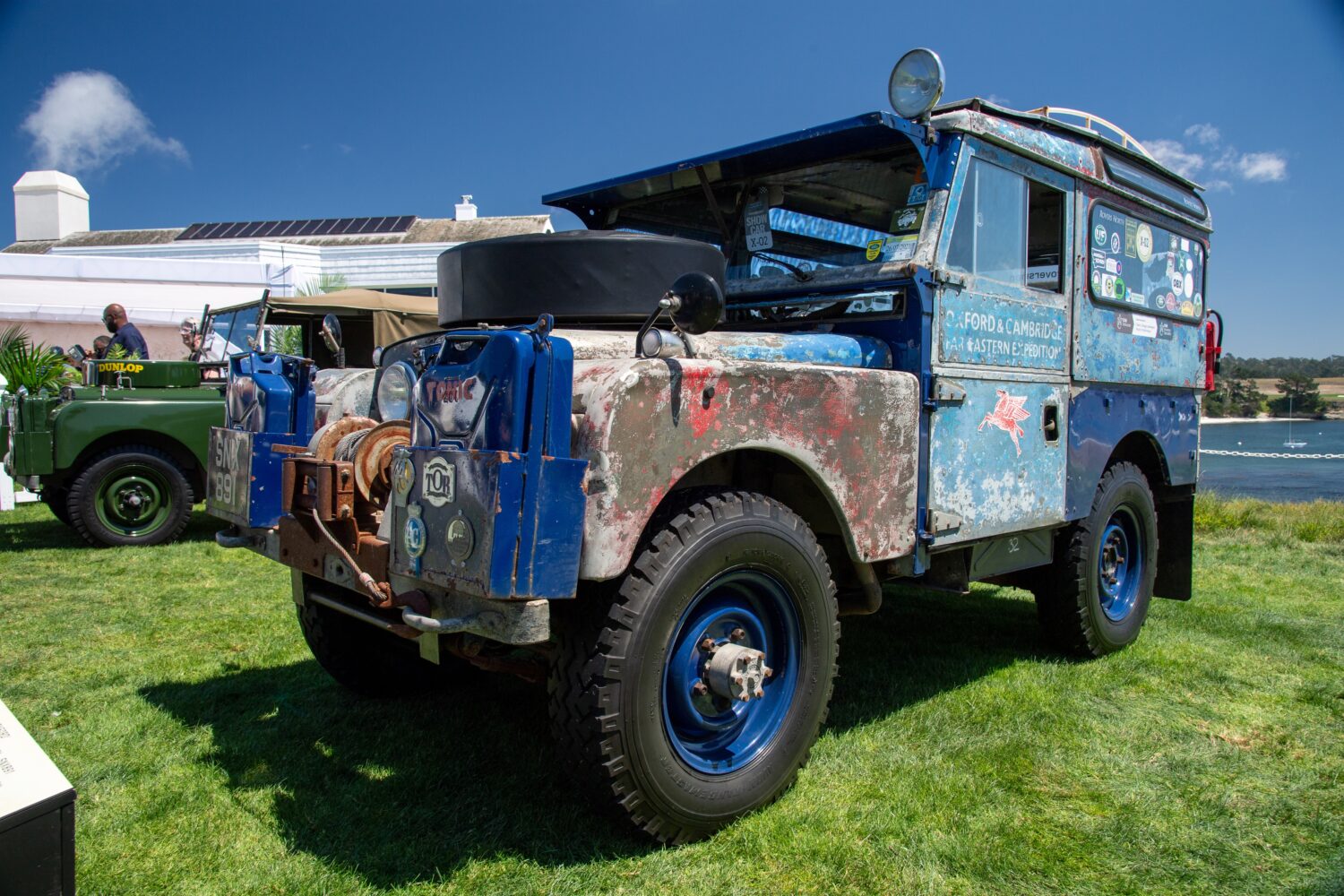
After the expedition, the vehicle was sent to Ascension Island as part of a research expedition for the British Ornithologists’ Union in 1958. With the vehicle being very worn out, Land Rover didn’t bother asking for it back, and it spent the next 60 years in the South Atlantic British overseas territories of Ascension Island and St. Helena. In 2017, enthusiast Adam Bennett acquired what was left of the vehicle and sent it back to the UK to rebuild it. The vehicle has been crossing the globe ever since, including a reversal of its steps in the 2019 Last Overland expedition from Singapore to London. The vehicle has acquired a collection of stickers on its windows from these modern travels, with memories from Malaysia to Graceland.
1957 Series I 107 | “Grizzly Torque”
Grizzly Torque is Canada’s most iconic entry in the logbook of Land Rover expeditions. The custom-bodied Series I undertook a 60,000-kilometer expedition across Africa, India, Southeast Asia, and Australia across 14 months in 1957-8. The voyage was undertaken by biologist and ecologist Bristol Foster alongside his friend, nature artist Robert Bateman. The pair took on a leisurely 14-month round-the-world trip through 19 countries. The vehicle was custom-built on an ambulance body, which gave them the space to build two fold-down cots and custom storage.
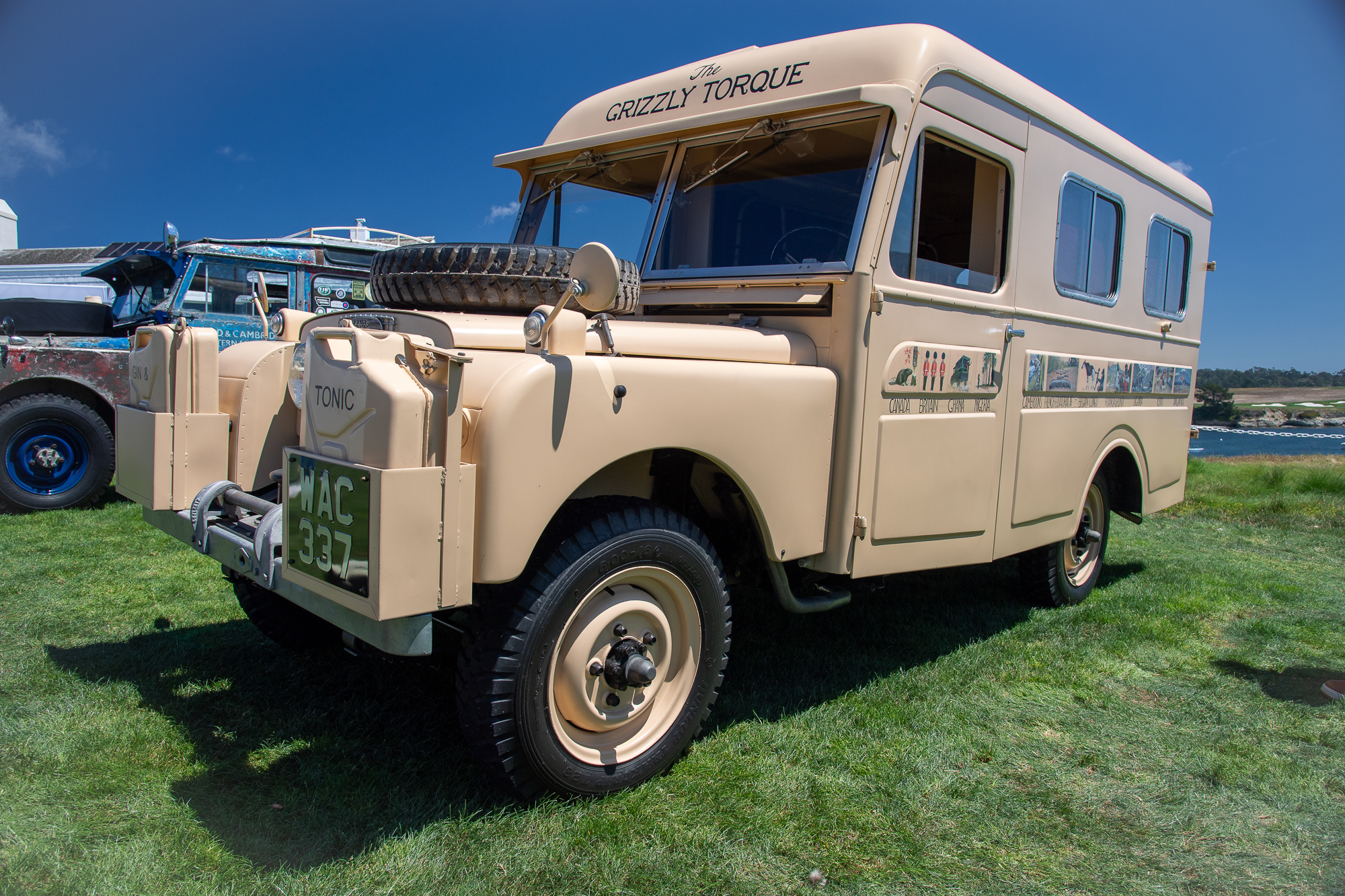
As the journey wound around the world, Bateman painted vignettes from each country on the side of the vehicle, souvenirs of a blissfully happy time in his life. The adventure would influence the careers of both men: Bateman has become one of the world’s most renowned living nature artists, and Foster became a renowned biologist who pioneered the understanding of the evolutionary differences between mainland and island examples of species. The vehicle was sold after the trip and lost for many years, until it was found as a blue-painted derelict wreck in 2008. It was restored in the 2010s to its original specifications and is now again a proud symbol of Canadian exploration.
1960 Series II 109 | “Cambridge”
In 1961, a group of four Cambridge graduates shipped a Series II 109 to Argentina to begin an agricultural study of the Americas. They drove across South America, conducting their observations from Argentina to Colombia, where some of the group walked across the Darién Gap before rejoining the party and vehicle in Panama for the rest of the drive north. Their expedition would be the first to drive the length of the Americas, minus the Darién.
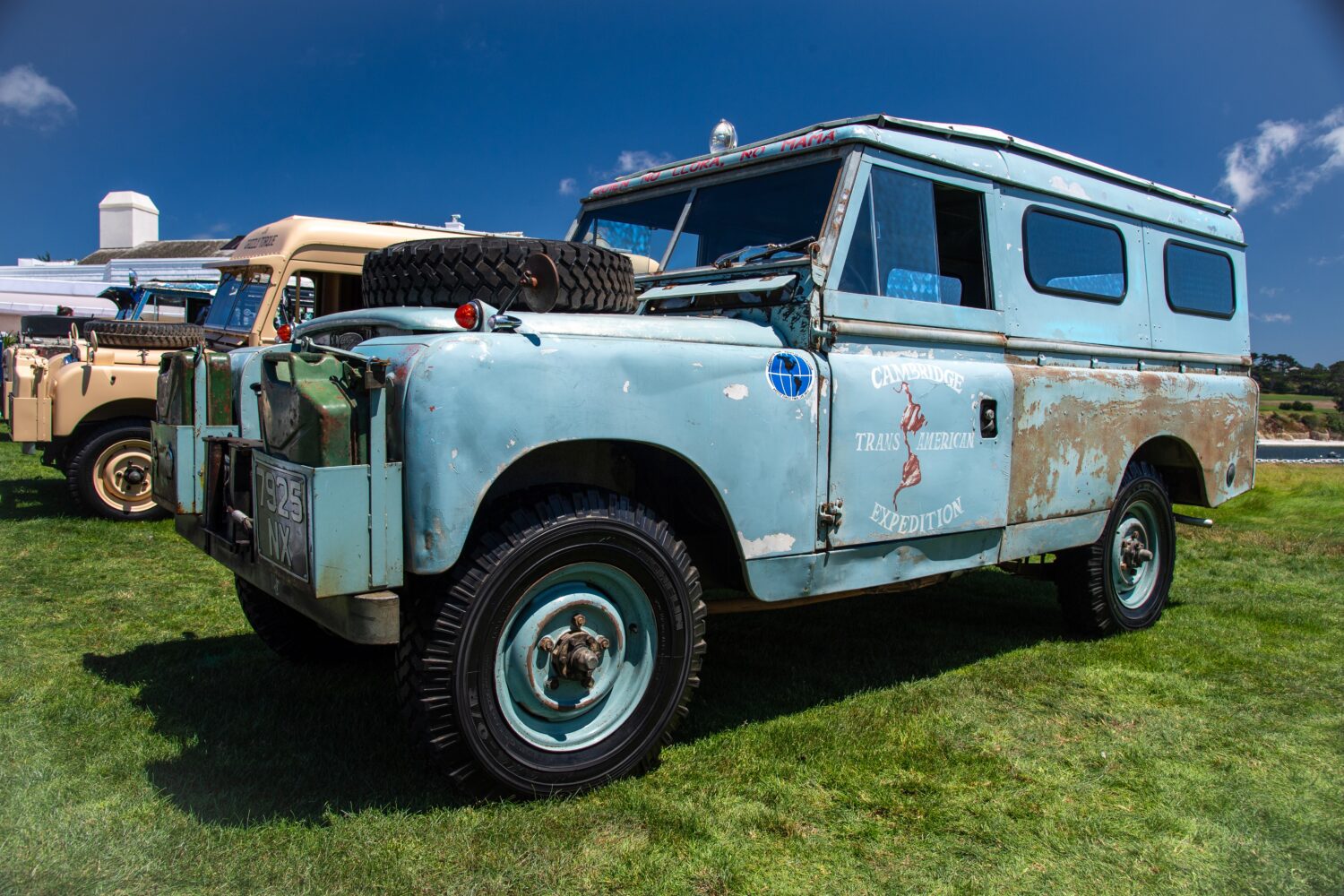
The team took this 109” almost to the end of the continent at Fairbanks, but after 15 months on the road, they ran into one obstacle they could not get through: the Alaskan winter. Five hundred miles short of the Arctic Circle, they ended their journey, sold the Land Rover, and headed home to write Year with Three Summers.
In 2015, the three surviving members of the expedition reunited with the vehicle after some Alaskan Land Rover enthusiasts connected the signage painted on the vehicle’s doors to the expedition and the book. They took the Land Rover the last few hundred miles from Fairbanks to Prudhoe Bay, completing the last leg 55 years later.
1971 Range Rover Suffix A | British Trans-Americas Expedition
By the late 1960s, the direct transit of the Americas from north to south in a continuous journey remained the one major unconquerable overland journey left on the map. Expeditions had crossed the Gap itself, and expeditions had driven the Americas minus the Gap, but Fairbanks to Ushuaia in one single go across the land remained an unfulfilled dream.
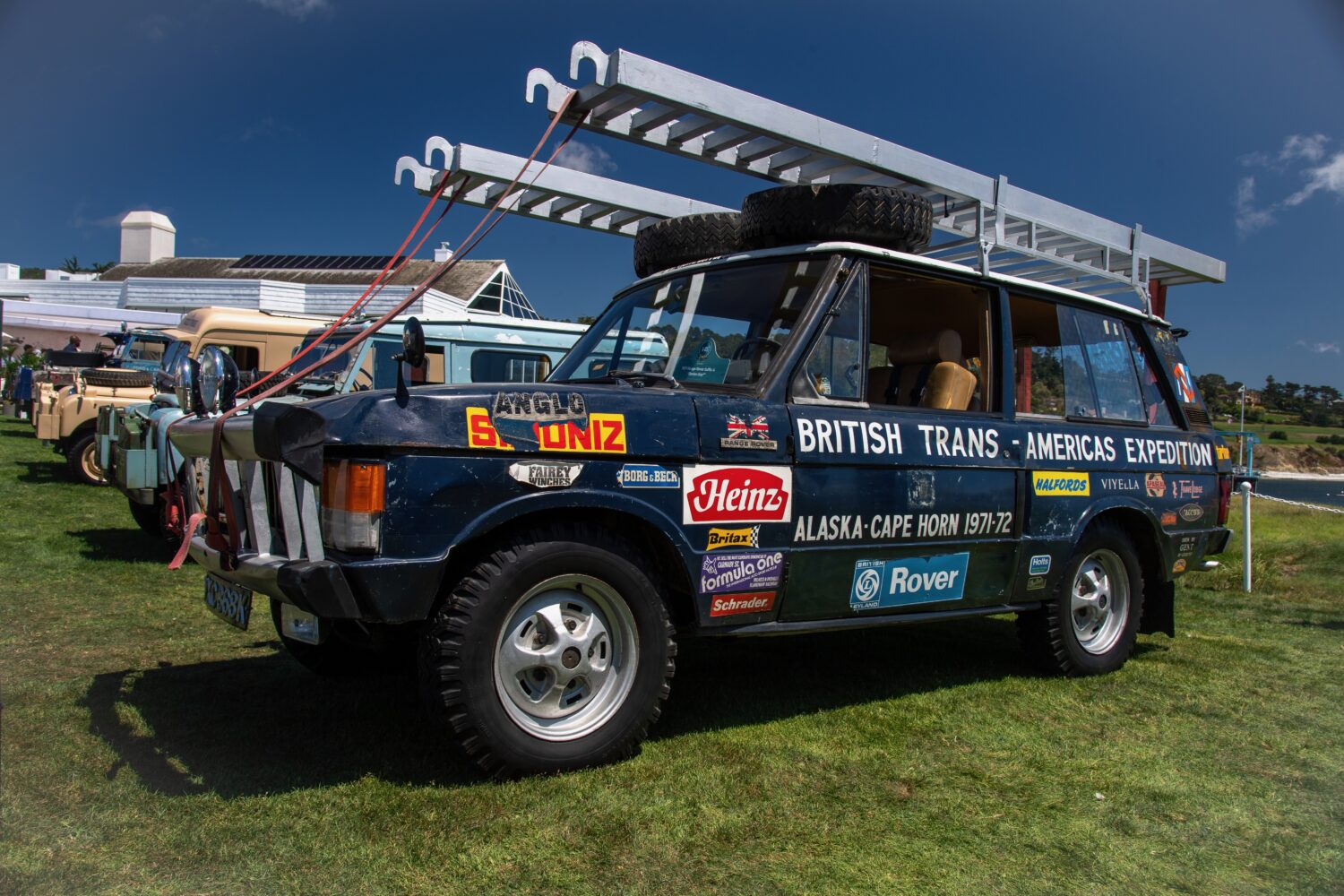
Explorer Col. John Blashford-Snell, of the Corps of Royal Engineers, led an attempt at the entire journey in one go, and partnered with Rover and their brand-new Range Rover to undertake the route. The expedition was run with the support of the British Ministry of Defence, with over 60 personnel working their way through the gap, at a pace of about four miles per day. After 99 days battling inch by inch through the hot and dense jungle, the two Range Rovers (assisted by “Pathfinder,” a Series IIA 88”) completed what is one of the greatest feats of overland achievement. The Range Rovers were sent back to England to be taken apart and analyzed by the engineering department before being preserved as museum pieces.
1989 Range Rover Classic | Great Divide Expedition
The Great Divide Expedition was undertaken over 12 days in August 1989 as a partnership with the Tread Lightly! movement. It was also an opportunity for Land Rover to show the press the updates made to the Range Rover for 1989.

The expedition traversed the full spine of the Rocky Mountains in Colorado, crossing briefly into Wyoming and New Mexico at either end for good measure. The route was created by Coloradan and 1987 Camel Trophy competitor Tom Collins to show off the diversity and beauty of the Centennial State. The 1,100-mile route was only 25 percent paved, and crossed the highest road in America, the 13,188-foot Mosquito Pass.
The expedition continues to loom large in the Range Rover story and has been replicated several times by Land Rover. They undertook several trips in the 1990s as part of their off-road vacations program and replicated the original journey 25 years later in 2014 with the fourth-generation Range Rover. The vehicle displayed at Pebble Beach is one of the few remaining original event vehicles from 1989.
1993 NAS Defender 110 | La Ruta Maya Expedition
The Discovery came to the United States in 1994 as Land Rover looked to expand into the new family-friendly SUV market. With seven seats, it was a relatively unparalleled family hauler for the early 1990s—but that didn’t take any of its trail credentials away.
To launch the Disco to the American press, an expedition was devised to traverse Belize, focused on the Mayan ruins of Caracol. The Land Rover team would return fiberglass replicas of artifacts taken from Caracol (now in a museum in Philadelphia) strapped to the roof rack of a Discovery.

The expedition was the introduction to Discovery for major American press outlets, and resulted in a driving instructional VHS tape that came with every Discovery for the first few years of sales, making La Ruta Maya iconic not just in magazines, but in the VCRs of thousands of new Land Rover owners.
The vehicle on display isn’t a Discovery, though; it’s a 1993 North American Specification Defender 110 #58/500, the single vehicle out of the storied special run of Defender 110s held back by the company. It’s been used as a support vehicle through the years for Land Rover events, but it still bears the decals from its time as a support vehicle on the La Ruta Maya expedition.
1998 Defender 110 | Camel Trophy 1998: Tierra del Fuego
The 1998 Camel Trophy was the final Land Rover-supported event, the capstone to 18 years of Sandglow-colored iconic adventures around the globe. The last sortie took the Camel convoy to Tierra del Fuego—in winter. The event primarily featured the then-new Freelander, at that time fast on its way to becoming Europe’s best-selling 4×4. The 1998 event also expanded on a trend that had developed over the final few years of the event, with mountain biking, kayaking, and orienteering becoming major elements of the competition. Instead of the iconic snaking yellow convoy weaving through the landscape, each team went on its own quest to gather points from a listing of 140 “Adventure Locations” spread across the two countries.
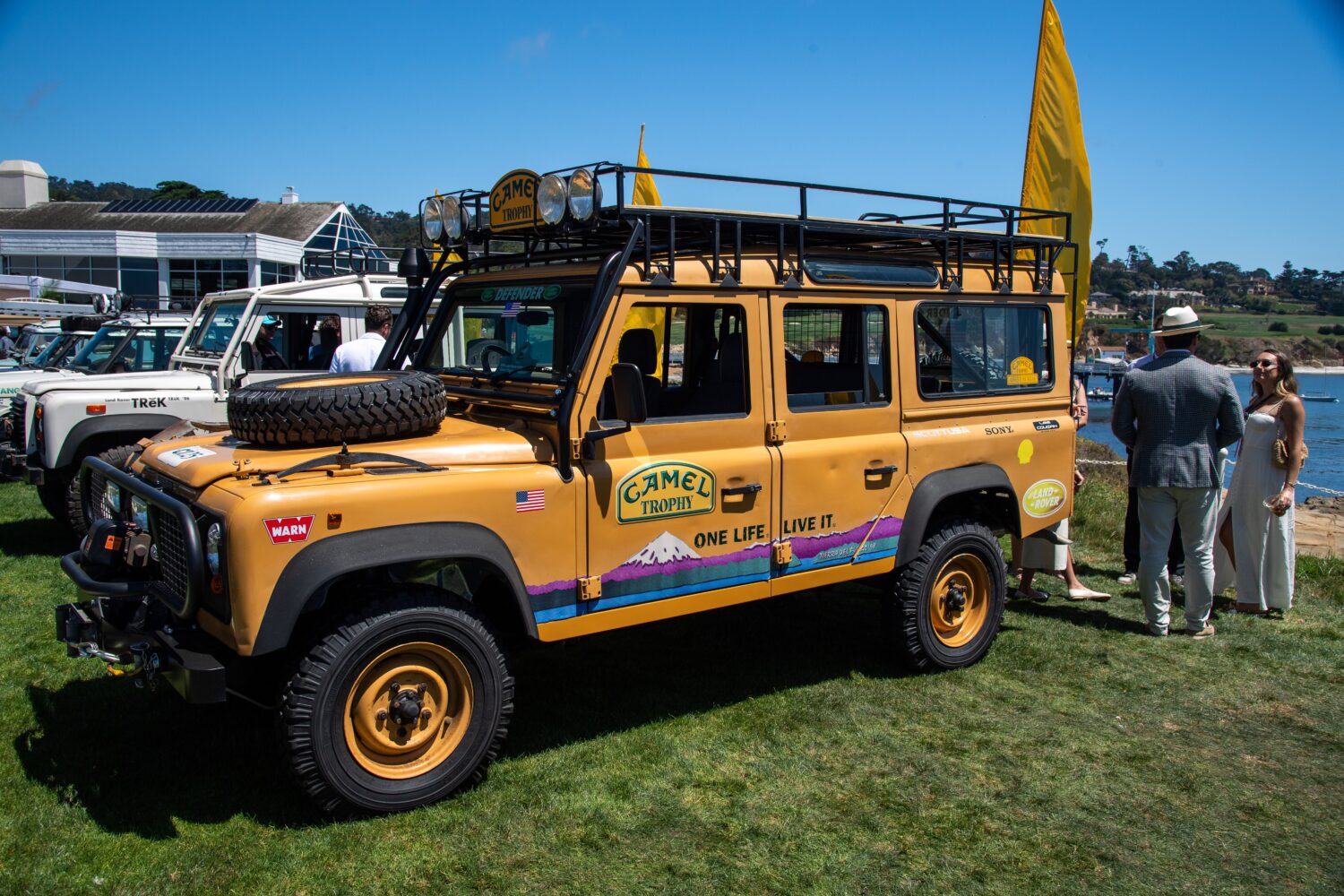
Because of the amount of gear required for this conceptual expansion, each Freelander was followed by a dedicated Defender 110 that held their supplies, as well as media covering the event. The 1998 Defender 110 on display at Pebble Beach was Team USA’s support vehicle. The support vehicles were driven by former Camel Trophy competitors who rotated between teams on a schedule—in the case of this American truck, the rota consisted of Karen MacDonald (Team UK 1997), Tim Dray (UK 1991), Deirdre Morael (Belgium 1996), and Mike Lofgren (Canary Islands 1997), in support of the 1998 Team USA of Dean Vergillo and Greg Thomas driving the Freelanders.
2003 Discovery | Longitude Expedition
The 2003 Discovery on display is one of the vehicles from the 2003-2005 Longitude Expedition, which departed San Francisco in November 2003 and returned 41,000 miles later in March 2005. The intent of the expedition was to raise funds for Parkinson’s research – a mission that included auctioning off one of the vehicles at the end of the trip. The team included Rolf Potts, whose 2003 book, Vagabonding, is considered a major early influence on the digital nomad movement.
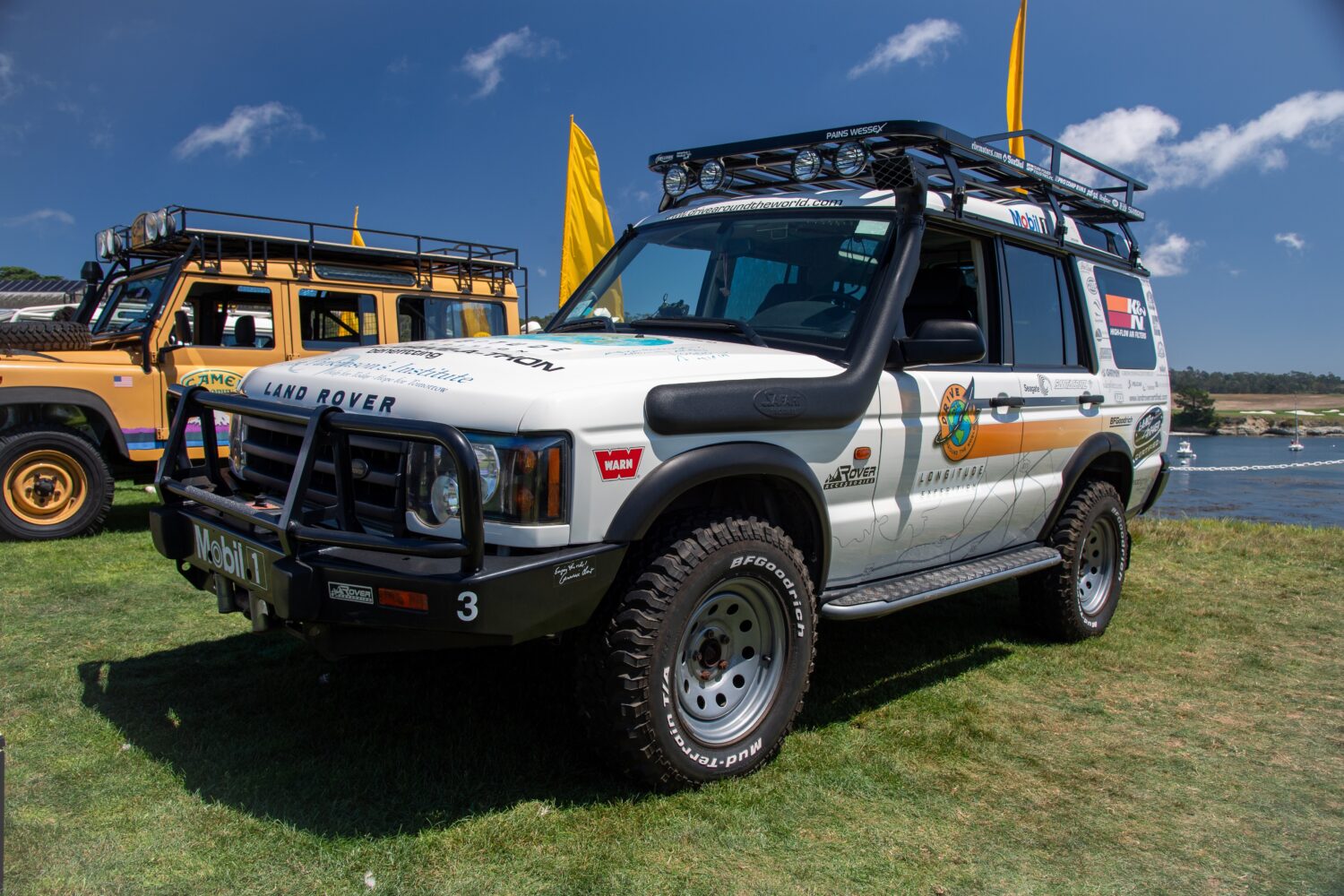
The Discoverys were Certified Pre-Owned models, with the expedition meant to show off the strength of the company’s CPO program. The expedition began with a southward Pan-American run through Central and South America. Then, after shipping to and crossing Australia, it returned north through Southeast Asia, the Himalayas, and Russia, with another ship and a final run south from Alaska back to California.
Along the way, the team encountered several celebrities and iconic figures. They were met by Arnold Schwarzenegger, Michael J. Fox, and a Pol Pot survivor in Cambodia. When the team was in India, they met with the Dalai Lama, who signed the vehicle with the message “May the Land of Snows Prevail.” Today, this vehicle is part of Land Rover’s permanent historical collection and is often on display at its Mahwah, New Jersey, North American headquarters.
2013 Range Rover TDV6 Hybrid | Silk Trail Expedition
The most recent entry in the display is a 2013 Range Rover Diesel Hybrid, a prototype vehicle from the first year of production of the L405 generation. The fourth-generation Range Rover launched into a world starting to look toward hybrids and electrification, and it offered the first electrified powertrain in a full-size Range Rover: a 3.0-liter V6 diesel with a 35-kilowatt electric motor. Order books opened in September 2013, with the Silk Trail Expedition designed to be an instant-gratification real-world engineering test that departed the UK the day after the model was announced.
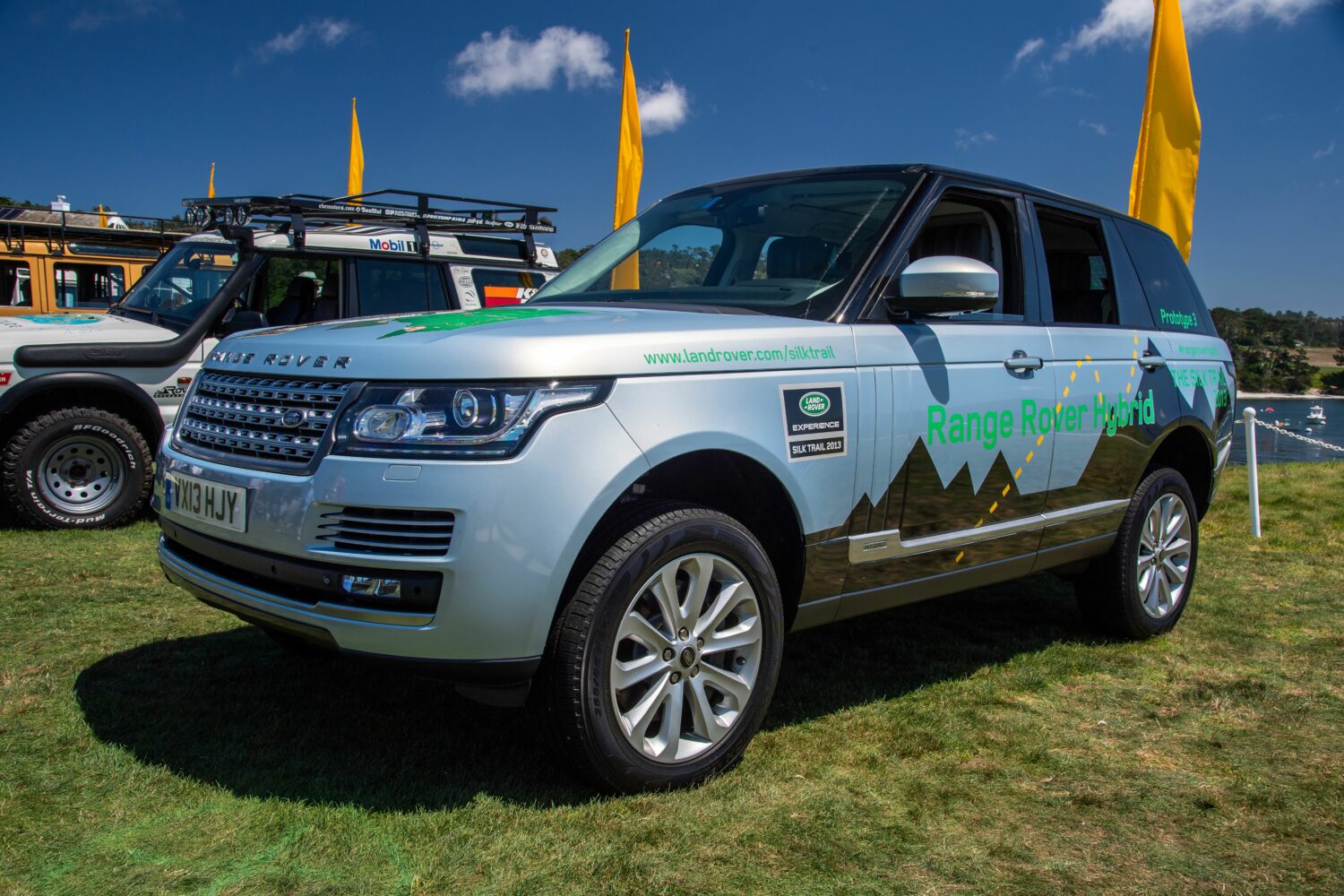
The expedition left Solihull on September 10, 2013, heading for Tata’s headquarters in Mumbai. In the course of just over a month, three vehicles crossed France, Belgium, Germany, Poland, Ukraine, Russia, Uzbekistan, Kyrgyzstan, China, and India, in the spirit of the great Silk Road route, arriving in Mumbai on October 15. The vehicle still has its cupholder-mounted emergency stop button, required on prototype vehicles in case of electrical malfunctions. The vehicle, which was built on the top-level Autobiography specification, might also be the only long-range expedition vehicle to ever feature executive-class rear reclining bucket seats.
Read more: Meeting a Legend: Barbara Toy’s 1950 Series I Land Rover, Pollyanna
Our No Compromise Clause: We do not accept advertorial content or allow advertising to influence our coverage, and our contributors are guaranteed editorial independence. Overland International may earn a small commission from affiliate links included in this article. We appreciate your support.
