

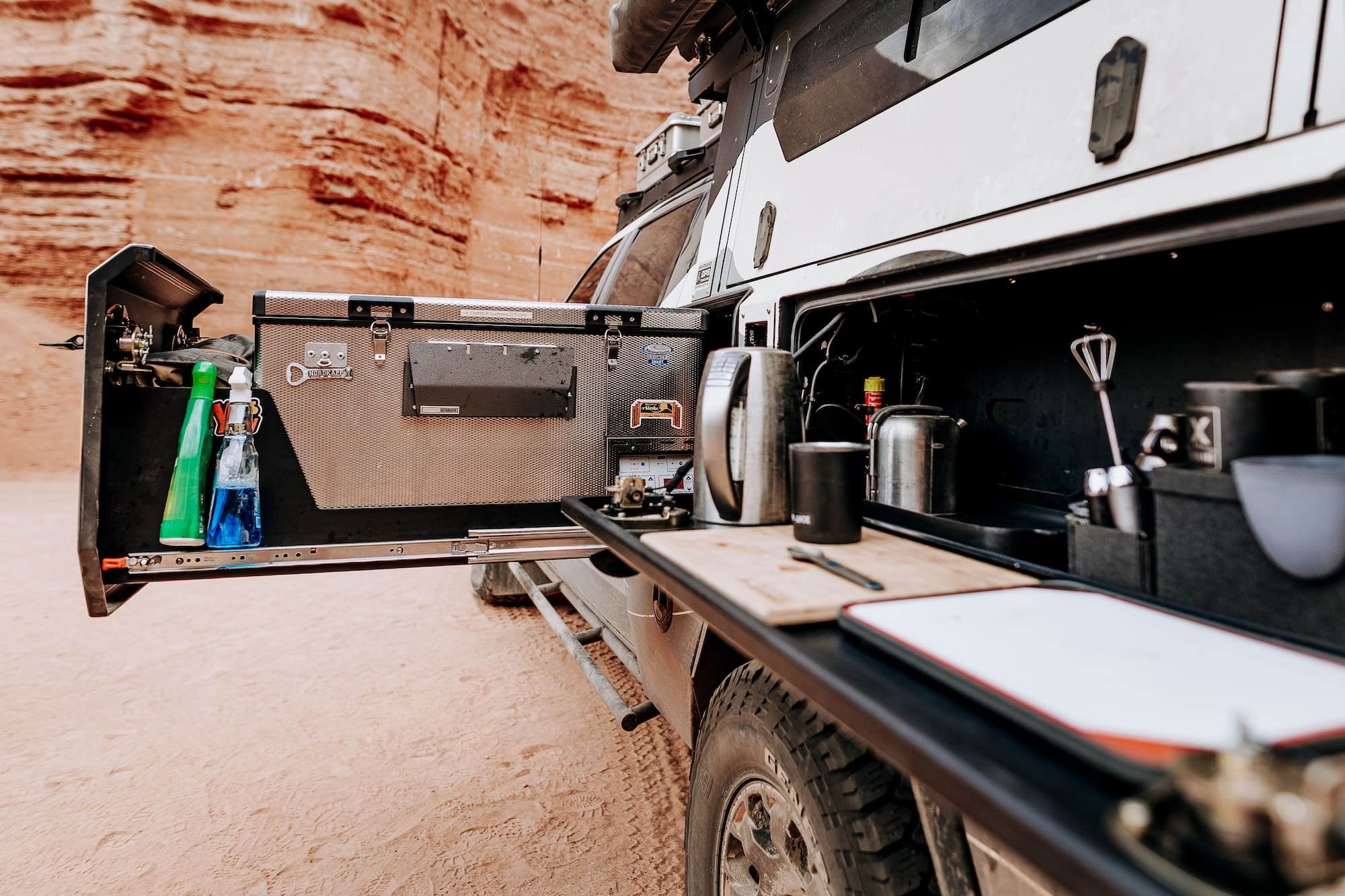
East Africa is known for many things, and nearly all of them are the stuff of overlanding dreams. But a few could be classified as nightmares, principally the endless dance with roadblocks, police checkpoints, and military convoys. At times, that includes determined efforts to separate the traveler from their cash. As a result, I would smile, sit patiently, and make every effort to avoid a facilitation payment. In years past, this could sometimes be mitigated with the offer of a cigarette (that still works in North Africa), but the one thing that solved the stalemate nearly every time was a smile and a cold water or Coke. I kept my Dometic 25-liter fridge chock-full of extra cold drinks, which I would offer during prolonged discussions or vehicle inspections. It introduced a bit of humanity into the exchange, and I would soon be on my way.
The 12-volt fridge/freezer is one of the great comforts of overlanding, filled to the brim with libations, coffee creamers, chocolate, fresh fruit, and your favorite protein. The ability to make ice in a dual-zone fridge will bring cheers to any campfire gathering. While many consider a fridge a necessary addition, it comes with a high purchase price, increased power consumption, and added weight. For that reason, I recommend purchasing a smaller unit than the marketing material might suggest. A 25-liter fridge works well for one to two travelers, a 40-liter unit for two to four people, and a 50-liter model for larger families or longer trips. Space can be saved by storing shelf-stable drinks and milk until needed and keeping only essential perishables—like that chocolate—in the fridge.
Another important factor to consider is electrical demand. Portable refrigerators draw power nearly continuously in hot conditions, so efficiency can significantly affect the requirements of your vehicle’s electrical system. Most modern compressor fridges include adjustable low-voltage cutoffs to protect starting batteries, but owners should still consider a dedicated auxiliary battery or portable power station for extended travel.
Construction quality is also worth careful evaluation. Overland refrigerators are frequently mounted in the rear cargo area of vehicles and must endure vibration, dust, and heat for years of service. Durable hinges, secure latches, and reinforced handles all become important considerations. Materials differ widely between models, ranging from stainless-steel shells to lightweight, reinforced-plastic housings. In recent years, manufacturers have found ways to maintain performance while lowering weight, with some models barely exceeding 30 pounds. The trade-off is typically weight versus durability. The fridge/freezer weights reflected in this review are as tested and vary slightly from each manufacturer’s specifications; we used an industrial scale accurate to .01 pounds.
Interior organization can influence day-to-day usability as well. Removable baskets, dividers, and interior lighting make it easier to access food quickly, while dual-zone configurations allow the traveler to tailor the unit to changing needs—perhaps starting with a larger freezer side to store meat, then switching to a larger refrigerated section once local markets are available.
There are several additional concerns worth noting, including compressor startup amperage, which will determine whether a factory outlet can be used safely. We have also seen an uptick in manufacturers programming their fridges to give the impression of rapid cooling, which can leave a 30-40°F variance between what the display shows and what our precision temperature data loggers recorded during testing, and can directly affect food safety. To mitigate this concern, load cold food from your home refrigerator or the grocery store first, then pack the fridge with the coldest items on the bottom and progressively stack upward until vegetables and fruit are at the top. Some of the reviewed models are currently classified in the industry as electric coolers, a confusing misnomer since they differ in cooling power and technology; coolers only maintain temperatures 30-40°F below ambient air.
Testing
For testing, we set up a controlled procedure designed to replicate real-world usage while eliminating environmental variables and charging inconsistencies. The most important metrics measured were cooldown speed, insulation performance, and electrical consumption.
All testing was conducted in a climate-controlled environment maintained at 22°C ±1°C, which approximates the median ambient temperature encountered inside a vehicle during typical travel. Each fridge was powered by a regulated power supply (13.55 ±0.05 volts) to simulate a vehicle charging system while ensuring consistent electrical conditions for testing, as changes in voltage significantly affect compressor performance and efficiency.
To create a realistic thermal load, each refrigerator was filled with 39 12-ounce cans of Liquid Death (why not use something worth drinking when it is all over?)—representing approximately 13.8 liters of mass. The cans were stabilized to 20°C before testing began. This approach provides a more representative workload.
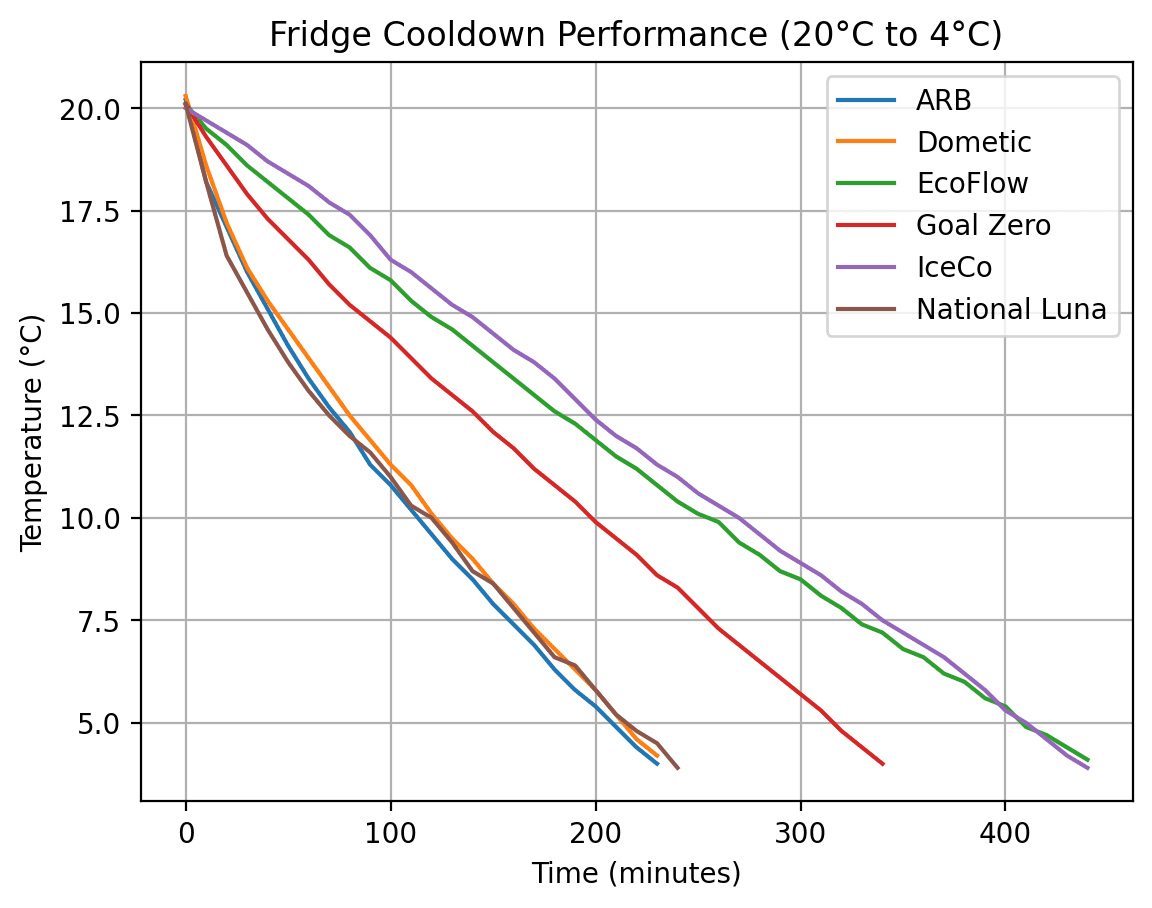
Temperature was monitored using certified digital data loggers positioned within the thermal load, and the results were transmitted via 4G to allow for continuous monitoring. Fridges were required to cool the contents from 20°C to 4°C, with a tolerance of ±0.2°C. The time required to reach the 4°C (39°F) benchmark served as the primary cooldown metric.
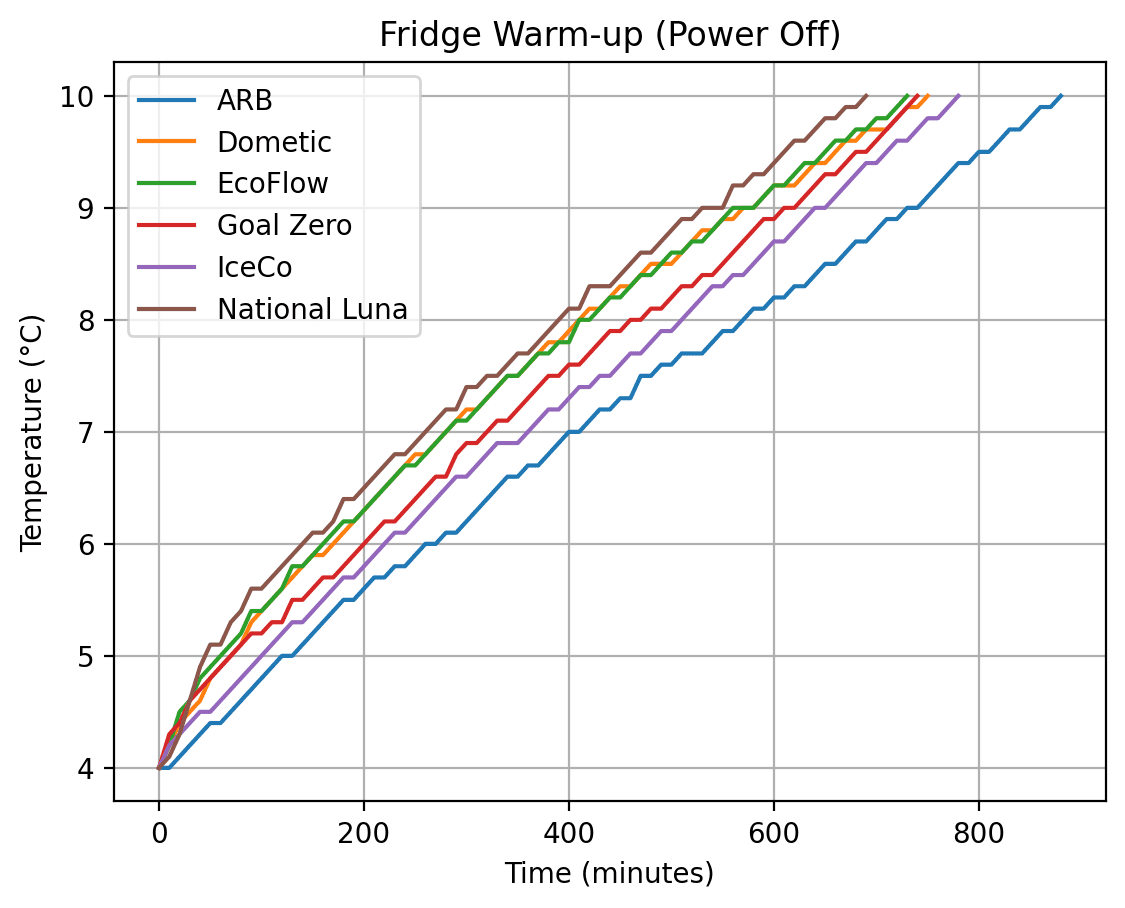
Following the cooldown phase, power was disconnected while the lid remained closed. The rate at which the contents warmed from 4°C to 10°C (50°F) was recorded to evaluate insulation performance and passive thermal retention.
Electrical demand was also recorded during operation. Running amperage was measured for each compressor at the regulated 13.55-volt supply. From this data, we calculated the electrical energy required to cool the thermal load. For example, the most efficient fridge required approximately 11.6 amp-hours to complete the cooldown, while the least efficient fridge required more than 23 amp-hours to accomplish the same task.
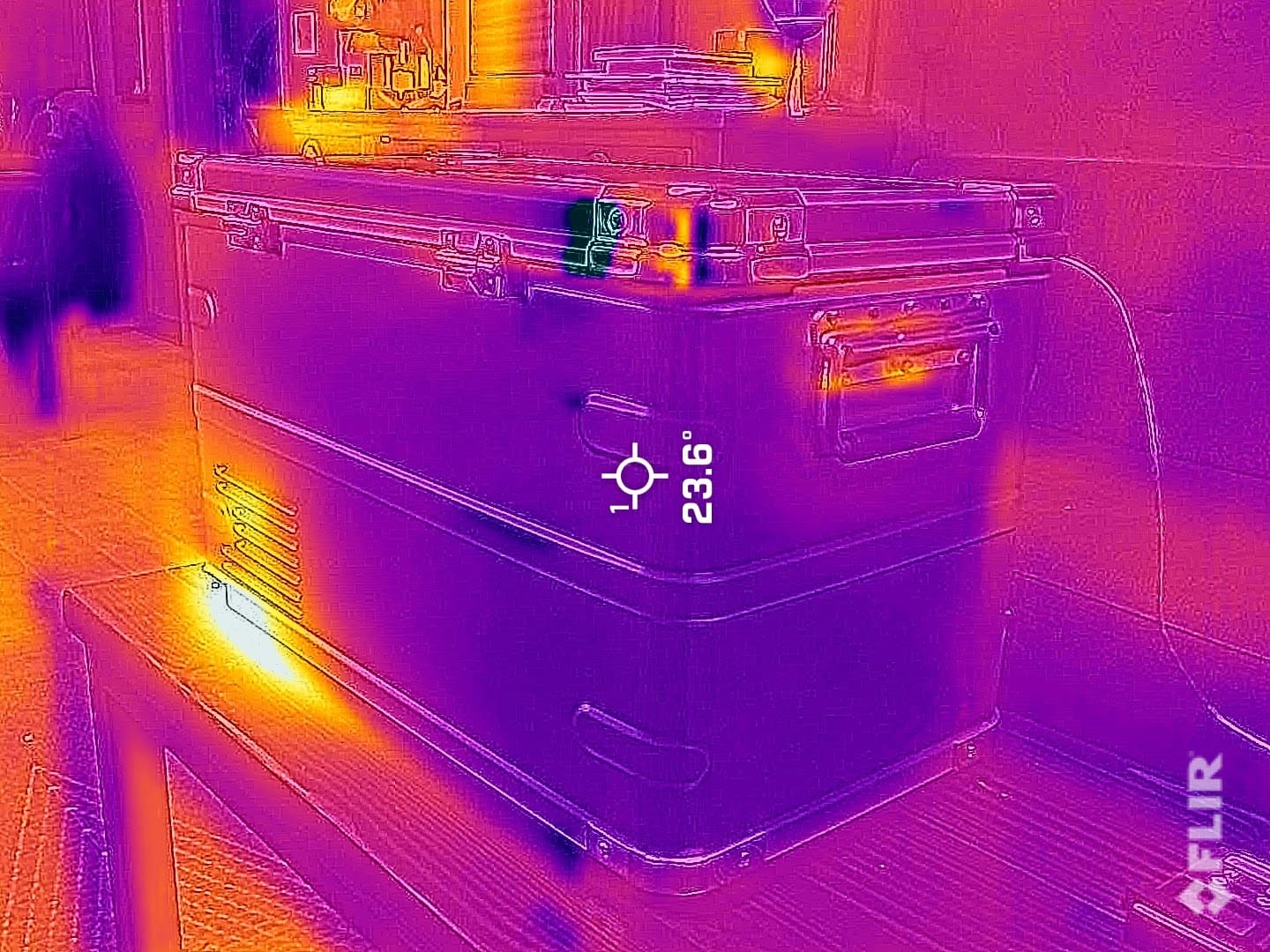
To supplement the quantitative testing, we also inspected each fridge with a thermal imaging camera to identify potential temperature loss around seals, hinges, and cabinet joints. Additional observations included weight, app performance, connector quality, lid usability, lashing features, and control-panel functionality.
(Editor’s Note: The Engel unit is conspicuously absent from this test. As one of the most efficient and reliable fridges ever made, it is unfortunate to see it on import hold due to a change in refrigerant regulations. We are hopeful that this will be resolved soon and that the legend will soon return.)
ARB Elements 60L (EDITOR’S CHOICE)
$ 1,700 | If you need a fridge to survive Armageddon…
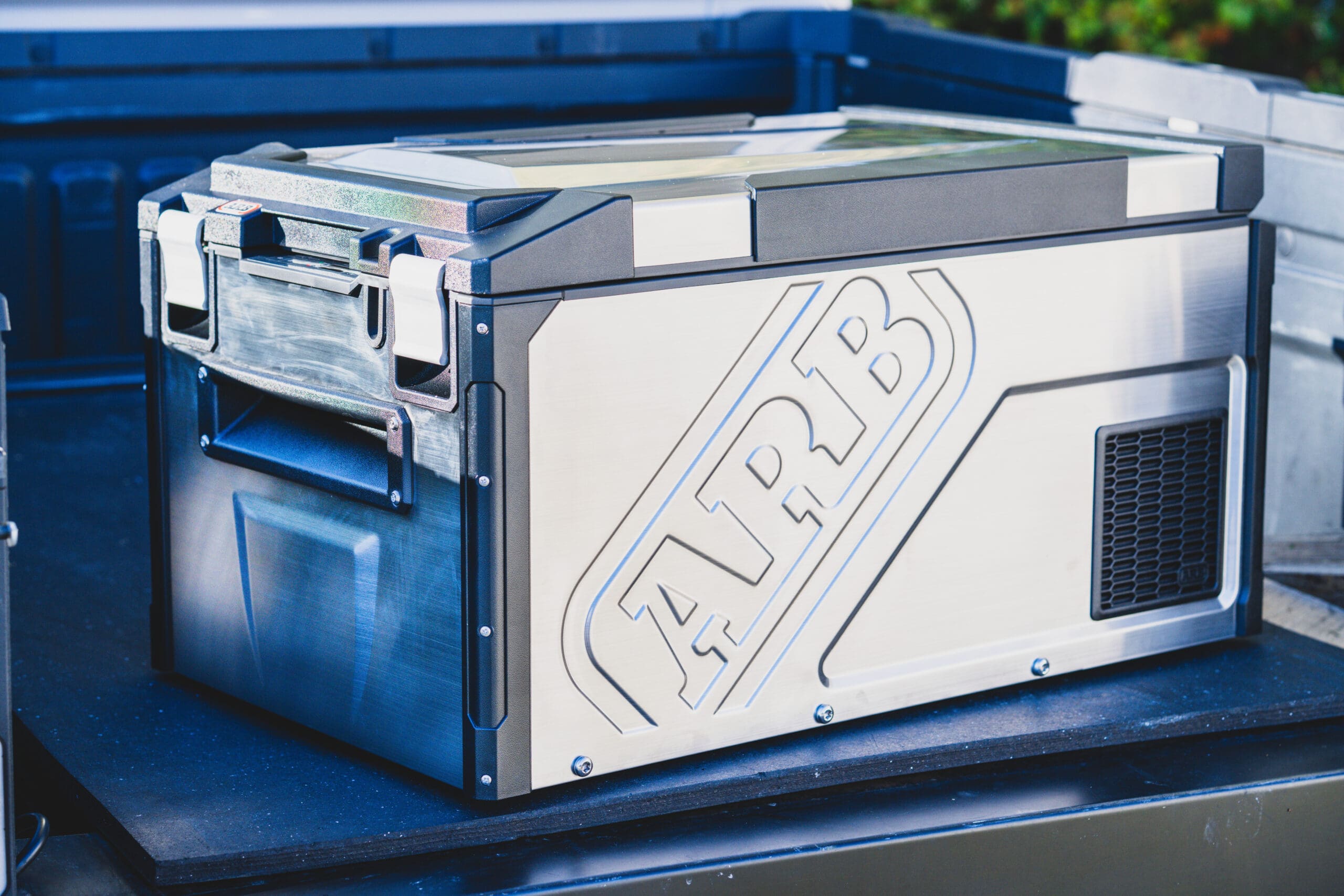
ARB has been producing high-quality overland equipment for more than 50 years, gear that has survived Overland Journal expeditions around the globe. For this test, we wanted to evaluate ARB’s most robust refrigerator, the Elements 60L. To call the Elements durable is an understatement—it is the only fridge in the group specifically designed for permanent exterior installations and harsh environmental exposure, earning its classification as a fully weatherproof unit. ARB engineers spent years designing, testing, and abusing the Elements in extreme environments throughout Australia. It was built to endure installations in truck beds, tray canopies, and trailer slide-outs where ventilation and environmental protection are limited.
The durability features are extensive. The exterior shell is constructed from thick 304 stainless steel, reinforced with UV-resistant ASA impact corners. The anodized aluminum latches are secure and sturdy, and the lid can be padlocked or electronically locked through the control panel. A gas strut supports the lid when opened, and recessed carry handles help reduce the overall footprint when installed in tight cargo areas.
All of this rugged construction comes at a cost in weight. At 73 pounds empty, the Elements was the heaviest fridge in this comparison. The owner’s manual even recommends a team lift when moving it. For vehicles with limited payload or travelers who frequently remove their fridge between trips, that weight deserves consideration.
In operation, however, the Elements proved exceptionally capable. Compressor amperage was a solid 3.1 amps, and it delivered the fastest cooldown performance in the test, reaching the 4°C reference temperature in 3 hours and 45 minutes while also consuming the least electrical energy in the comparison, requiring approximately 11.6 amp-hours during the cooldown phase. Insulation performance was equally impressive, retaining safe temperatures for 14 hours and 40 minutes after power was removed, the best result in the test.
There are a few areas where the Elements could be improved. The control interface is not particularly intuitive, and the lid design partially obscures the panel when closed. Connectivity also feels dated without a native Bluetooth app. While ARB offers Bluetooth capability and remote displays, these features are optional accessories rather than integrated components. The lid can only be opened in one direction, and it is only a single-zone configuration. In the context of overland travel, it would be ideal to see an Elements model in a 40-liter size, constructed to fit within a common fridge footprint.
Pros
- Best insulation performance in the test
- Fastest cooldown performance
- Exceptional durability and weather resistance
Cons
- Weight impacts portability
- Single-zone configuration
- Connectivity features lag behind all competitors
Overall, the Elements is unapologetically built for expedition and remote travel use. It is exceptionally durable, efficient, and thermally capable, making it an ideal choice for truck, trailer, and camper installations where ruggedness matters more than portability or compactness.
Dometic CFX5 45L (Value Award)
$ 1,050 | One of the best keeps getting better.
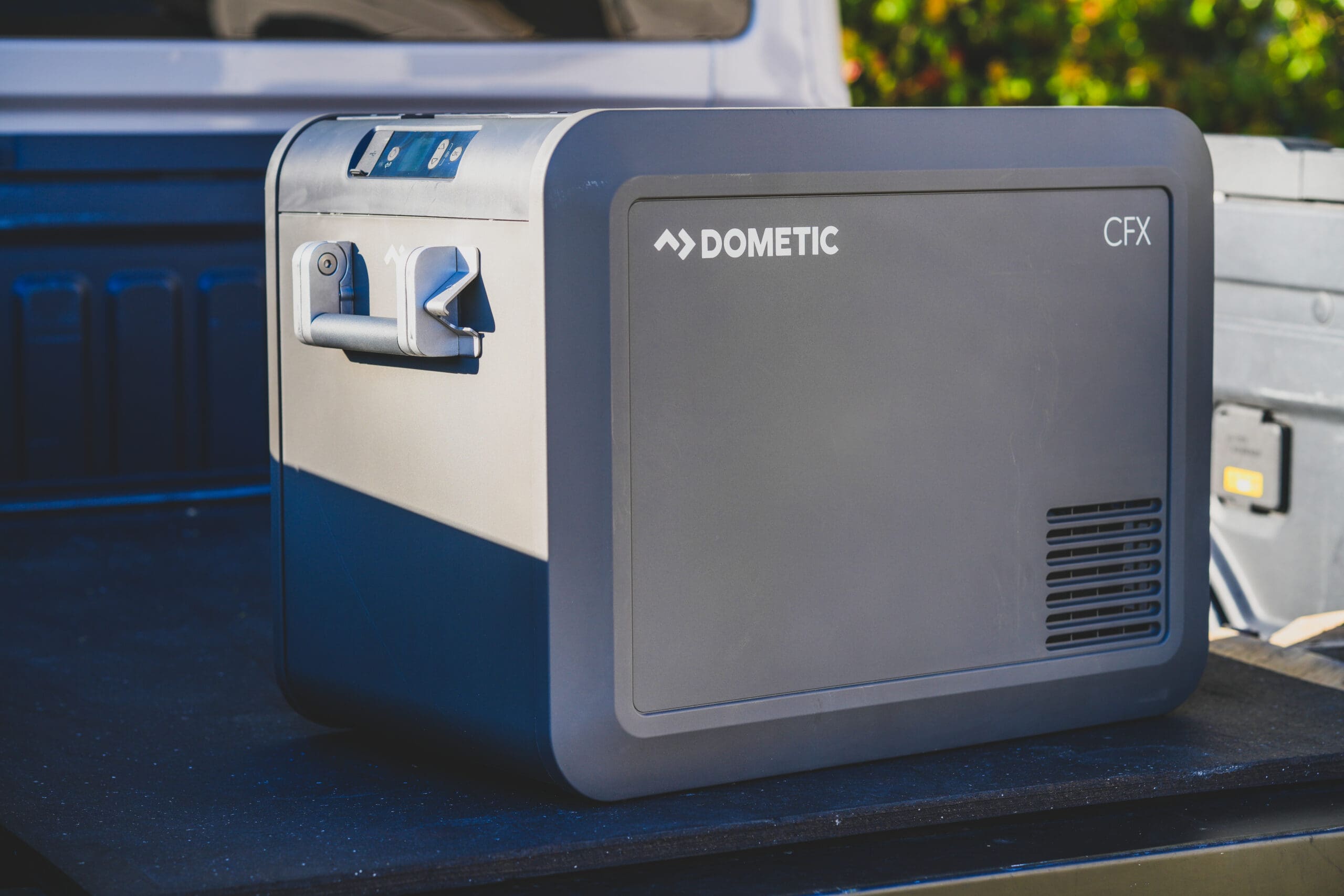
Dometic has long been one of the most recognizable names in mobile refrigeration. The CFX series has been a popular and reasonably priced option for overland vehicles for more than a decade, and the latest CFX5 continues that lineage with refined controls, improved connectivity, and even better performance. The majority of the performance improvement comes from new panel insulation and a VMSO 3.5 compressor with automatic speed control (slowing or speeding the compressor up as needed). The Dometic CFX3 won our last Editor’s Choice in 2021.
With a capacity of 45 liters and a weight of 39 pounds as tested, the CFX5 is the right size for most couples or small families. With 55 millimeters of insulation incorporating vacuum-insulated panels (VIP), it performed well in the warm-up test without becoming excessively bulky, while still fitting on a standard fridge slide. Large aluminum handles fold against the sides of the cabinet, providing secure carry and lashing points while minimizing overall width. The lid-opening position is fixed, so some planning may be needed based on how it is stored. In use, the lid also feels like the least durable mechanism on the unit, using a thin plastic tab that interfaces with a plastic shelf, limiting the compression of the lid seal; on some occasions, the lid fails to latch entirely (although the app has a lid-open alarm notification). Interior organization includes removable baskets, interior lighting, and a drain for ease of cleaning. The mobile app is easy to use and allows control of the set temperature, battery cutoff voltage, and display of the current cabinet temperature.
Performance testing placed the CFX5 firmly among the top performers. It cooled the thermal load to 4°C in 3 hours and 50 minutes, nearly matching the fastest units in the comparison. Compressor demand averaged 3.41 amps, and the total energy required to complete the cooldown was approximately 13.1 amp-hours, making it the second most efficient fridge in the test. Insulation performance during the warm-up test was also strong, taking 12 hours and 30 minutes for the contents to warm from 4°C to 10°C, placing it in the middle of the pack overall. We also found that the display temperature was one of the closest matches to the actual contents temperature, which improves food safety and day-to-day confidence in the settings.
Pros
- Strong overall cooling performance
- Good balance between insulation and space efficiency
- Durable finish with strong lashing handles
Cons
- Less flexible installation than reversible-lid competitors
- Lid latch needs improved engagement and durability
- Single-zone compartment
The CFX5 improved over the last test while also holding its own against the highest-performing units in the evaluation. In use, I have experienced excellent reliability with both the CFX 25- and 45-liter units, with no failures during multiple continental crossings.
EcoFlow Glacier Classic 55L
$1,498 | Innovation meets refrigeration.
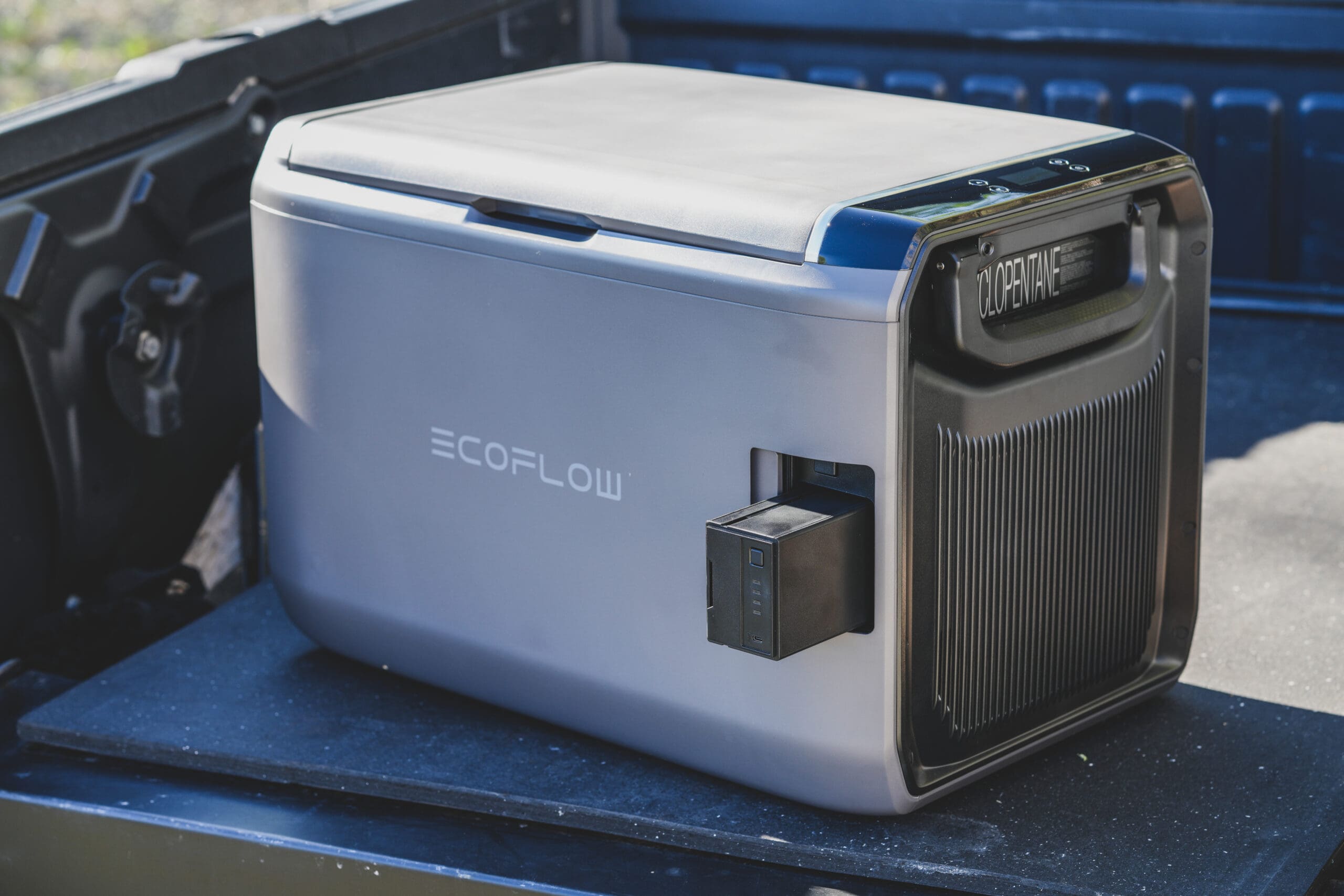
EcoFlow has made a name for itself in the overland portable power and HVAC space, building quality electric systems for travelers. I have used their air conditioner and heater for years and currently power my Scout camper with their Delta Pro. When I noticed that they had launched a fridge, it was time to give it a test. The Glacier Classic is unique in that it can be purchased with a removable lithium battery that slides into a slot on the side. The 24.8-amp-hour battery will easily maintain fridge temperature overnight while camping, then recharge during the day while driving.
The exterior has a modern design and closely matches the rest of EcoFlow’s product line. The cabinet combines metal and reinforced polymer construction, with large side handles that retract flat against the case. EcoFlow claims 50 millimeters of foam insulation and improved sealing, and the app integration is simple and among the best in the test, even working via Wi-Fi, so that the fridge can be remotely monitored and adjusted. I also like that the app serves as a one-stop interface for managing all of the EcoFlow products in my camper.
In our controlled testing, the Glacier Classic 55 proved to be more feature-forward than performance-oriented. It required 7 hours and 17 minutes to cool the 39-can test load from 20°C to 4°C, making it one of the slower units in the comparison. Running amperage averaged 3.22 amps at 13.55 volts, or roughly 44 watts. The issue becomes runtime: it takes longer to reach the target temperature, consuming approximately 23.5 amp-hours in the cooldown phase, placing it among the least efficient units in the test. Warm-up performance was more respectable, taking 12 hours and 10 minutes to rise from 4°C to 10°C after power was removed, which placed it in the lower middle of the group.
Pros
- Dual-zone configuration
- Optional plug-in battery
- Strong app and ecosystem integration
Cons
- Slow cooldown performance
- Less space-efficient for its interior volume
- Weight
I like that the fridge can be used as either a single-zone or dual-zone unit simply by installing the insulated divider. In use, the magic is the 298-watt-hour swappable lithium battery, which could replace the need for a dual-battery system for many travelers. This battery takes up space and adds weight to the (already) 57.5-pound unit, but the ease of use and reduced complexity will appeal to many overlanders who use their vehicles for double duty.
Goal Zero Alta 50 53L
$800 | Affordability and integration with Goal Zero’s power ecosystem.
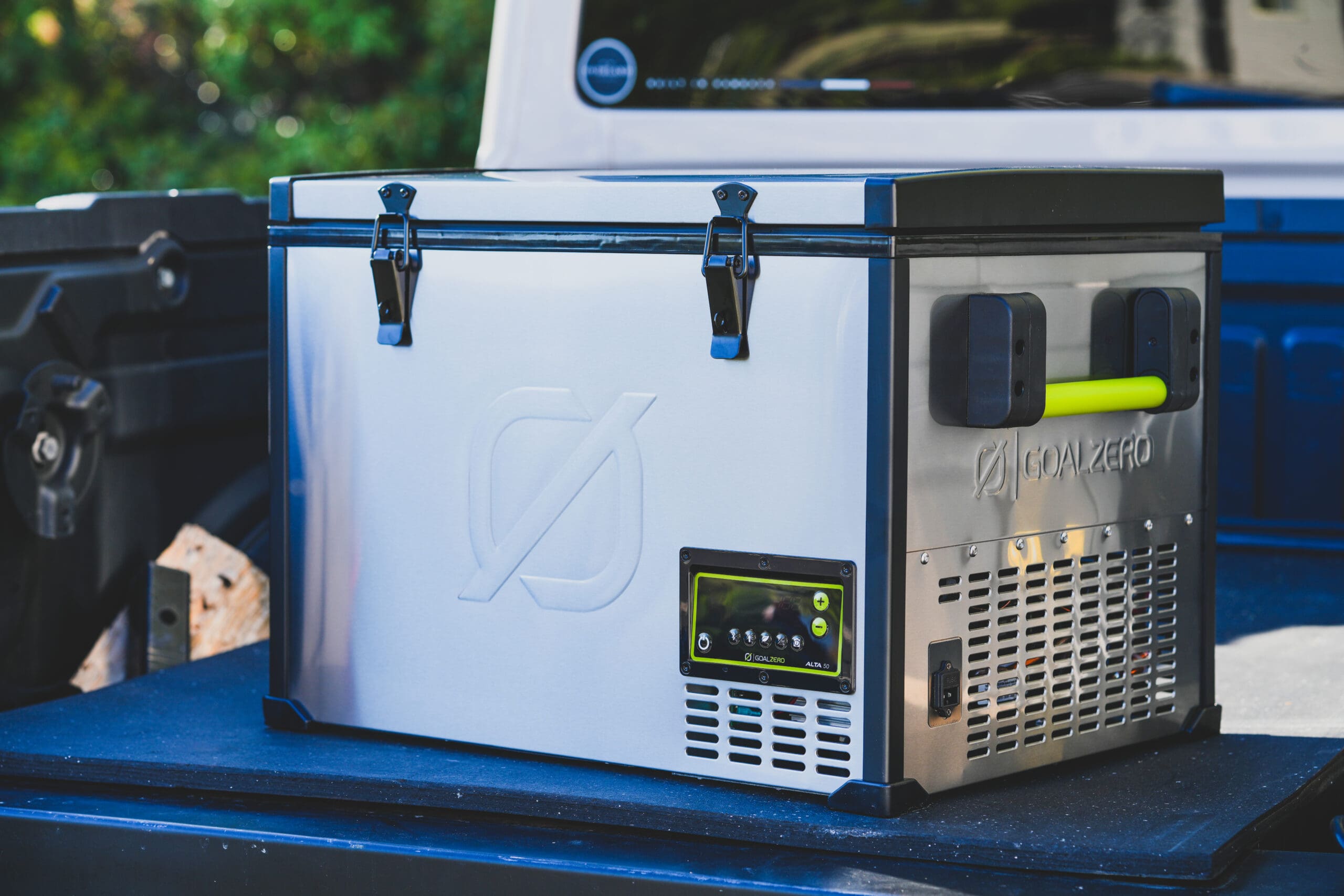
Goal Zero has been a pioneer of portable off-grid power systems since 2009 and is widely credited with popularizing the modern portable power station. The company estimates that more than 14 million customers rely on its off-grid power solutions. Overland Journal has followed Goal Zero’s progression from early lead-acid systems to today’s lithium power stations and app-enabled solar power systems. The Alta refrigerator series represents the company’s entry into portable refrigeration.
The Alta 50 is the smaller of two models in the lineup; it features a 53-liter single-zone interior and weighs 48.5 pounds without the cover. Its nearly square footprint is unique in this comparison: the shape is non-standard, so it may not fit some standard fridge slides or drop-slide systems.
Because portable power is Goal Zero’s specialty, the Alta is designed to integrate easily with their battery ecosystem. The fridge can operate from 12- to 24-volt DC power, and a converter allows operation from 100- to 240-volt AC sources. Power ports are located on both sides of the fridge to simplify installation. The package also includes adapters and a 6-millimeter connector compatible with Goal Zero power stations.
Interior features include two removable baskets and a bright LED light. The control panel is mounted low on one side, which could easily be blocked by surrounding cargo. Fortunately, the mobile app provides full monitoring and temperature control. Construction is best described as value-oriented. The cabinet uses flat stainless-steel panels with molded-plastic corner guards and large folding handles that double as tie-down points. The Alta was the only fridge in the test to include a padded insulating cover as standard equipment.
Pros
- Competitive price
- Power-station compatibility
- Insulating and protective cover included
Cons
- Average cooling performance
- Non-typical footprint limits mounting options
Testing results placed the Alta squarely in the middle of the pack. It required 5 hours and 35 minutes to reach the 4°C cooldown benchmark, approximately 1 hour and 50 minutes slower than the fastest units. Electrical demand averaged 3.66 amps, equating to roughly 50 watts, and total consumption to reach temperature was approximately 20.4 amp-hours. Warm-up performance was similarly average, requiring 12 hours and 20 minutes to reach 10°C once power was removed, also placing it in the middle of the pack. While the Alta did not lead any performance category, it delivered balanced cooling capability at a competitive price point. At $799, including the insulating cover, the Alta represents strong value for travelers already invested in Goal Zero’s portable power ecosystem.
IceCo APL35(L) Ultralight Dual Zone
$759 | Lightweight, and as handsome as the day is long.
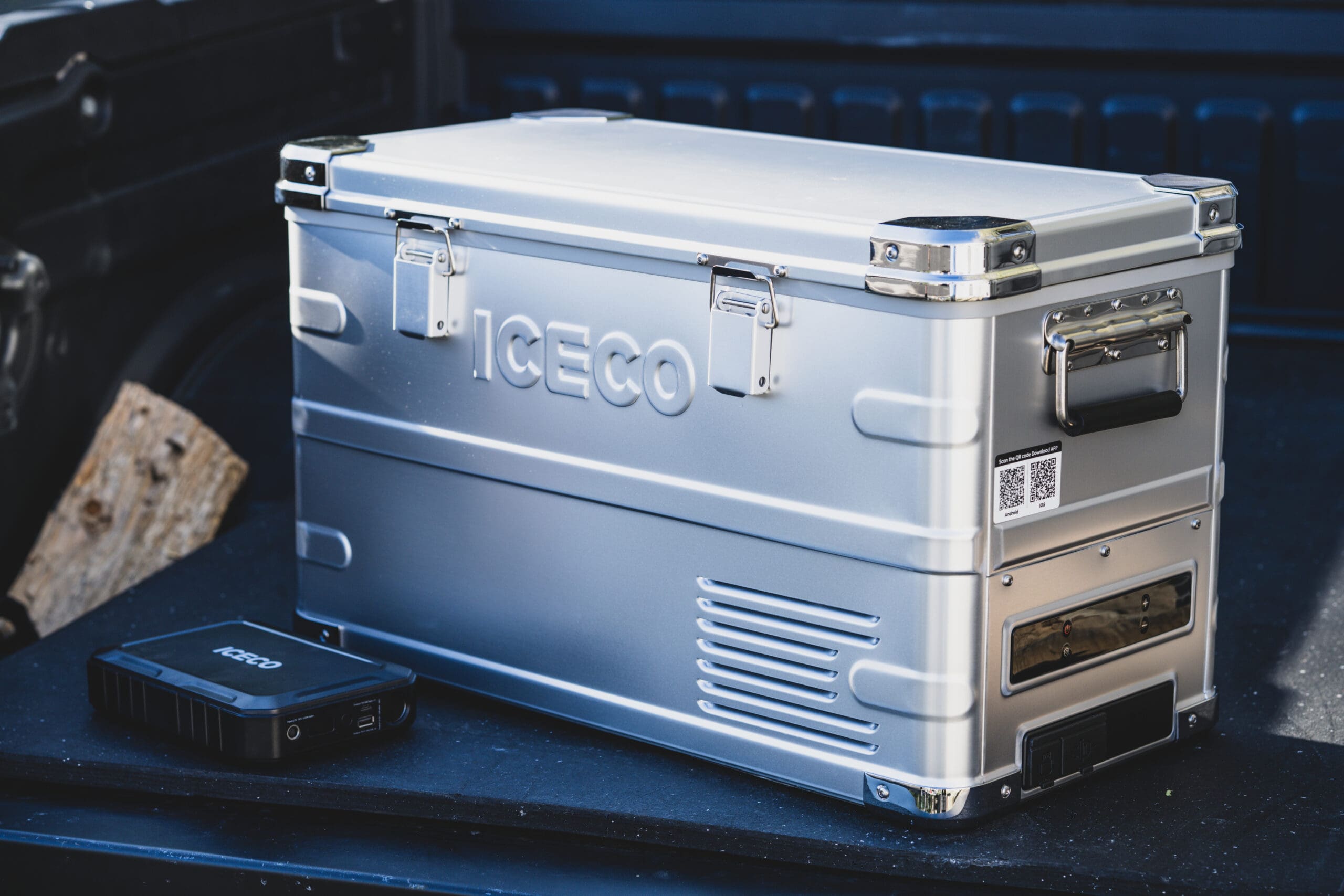
IceCo has quickly established a reputation for producing affordable compressor refrigerators with innovative design and popular features. The APL35 Ultralight represents their attempt to build a compact dual-zone fridge that prioritizes portability without sacrificing functionality. At just 30.5 pounds, it was the lightest refrigerator in this comparison and nearly half the weight of some competitors. It is also one of the smallest fridges in the test with dual-zone capability.
The exterior design is reminiscent of the classic Zarges case, with an aluminum shell and molded corner protection. Large folding handles provide convenient carry points and double as tie-down anchors for vehicle installations. The dual-zone interior allows one compartment to operate as a freezer while the other maintains refrigeration temperatures, offering flexibility. The freezer compartment is just large enough for a few ice trays and some ice cream bars.
The interior layout is simple, forgoing baskets and removable dividers in favor of two dedicated compartments, the larger of which features LED lighting to improve visibility and a drain plug. Control functions are accessed via a digital panel and smartphone connectivity, allowing temperature adjustments and system monitoring from a mobile device. The IceCo had one of the widest gaps between what the display temperature indicated and the actual fluid-load temperature measured by the data logger, so some care should be taken to ensure food safety.
The IceCo required 7 hours and 10 minutes to cool the test load from 20°C to 4°C, placing it near the bottom of the cooldown chart. Electrical demand averaged 3.30 amps, equating to roughly 45 watts of compressor power. Because of the longer runtime required to reach the target temperature, the total energy consumed during the cooldown phase was approximately 23.6 amp-hours, the highest in the test. While this does not necessarily translate to poor performance in the field, it does indicate that the Ultralight relies more on extended compressor runtime than raw cooling power. In the warm-up test, the IceCo performed more favorably, maintaining safe temperatures for approximately 13 hours after power was removed, the second-best warm-up result in the test behind the ARB. It is important to note that this is also the smallest interior volume of the group, which would aid in warm-up performance.
Pros
- Lightest fridge in the test
- Dual-zone capability
- Classic styling
Cons
- Slow cooldown performance
- Display temperature differs from actual food temperature
The APL35 ended up being one of my favorite fridges in the test for real-world use. It is extremely light with the advantage of dual-zone capability despite holding only 35 liters overall. The unit also looks classic and will only look better with age, a few stickers, and some dings along the way.
National Luna Legacy Smart 50L
$1,795 | Your kids will fight over this one when you are gone.
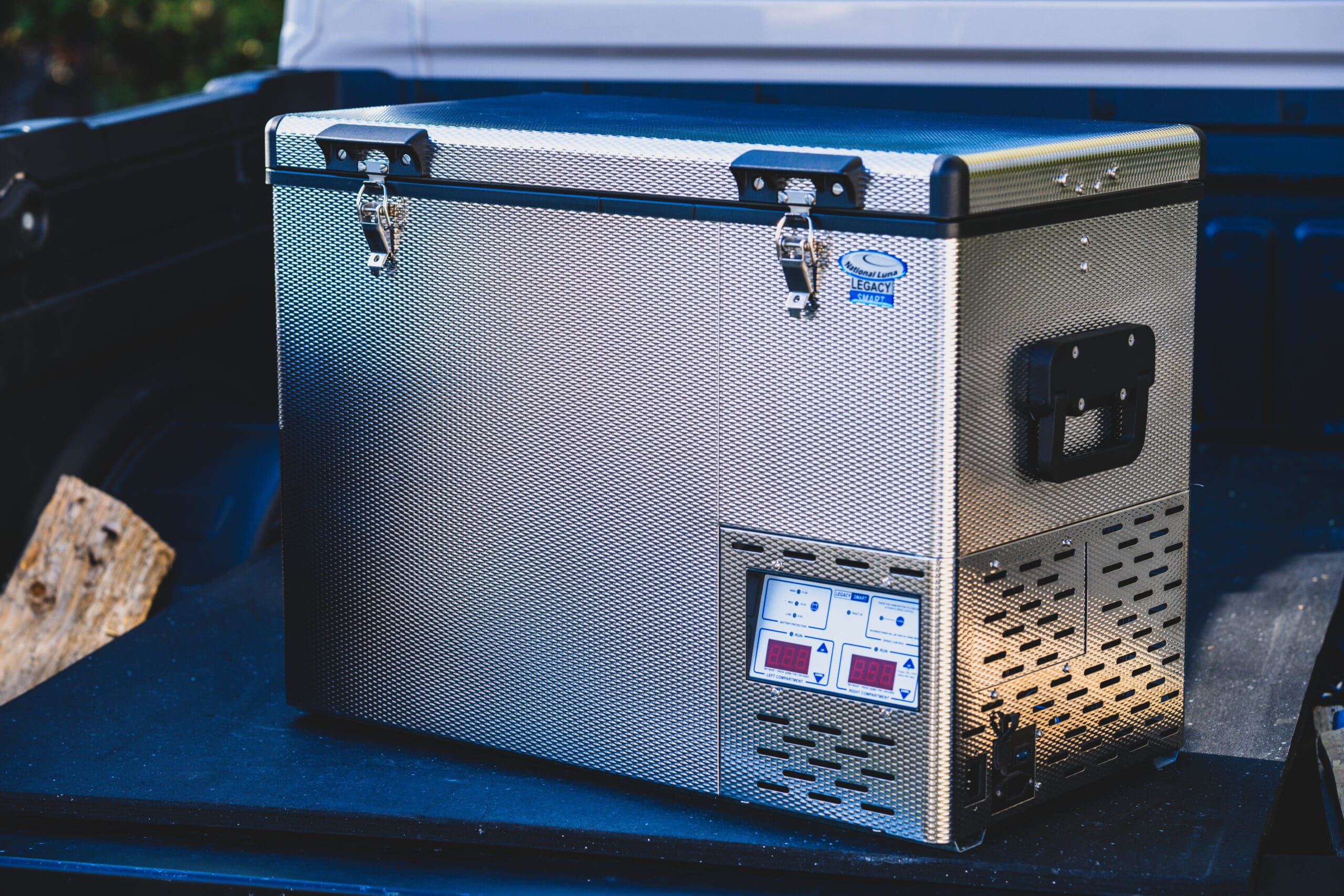
National Luna is a South African icon with more than three decades of experience producing lighting systems, dual-battery systems, ice makers, and expedition refrigerators. I have tested National Luna fridges on six continents, and they have served as the refrigeration platform for major expeditions, including Expeditions 7 and the recent XOverland Milestones journey. Their reputation for durability and reliability has earned them multiple Overland Journal Editor’s Choice awards.
The Legacy Smart series continues that tradition with premium construction and thoughtful engineering. Each fridge is manufactured in South Africa on a modern assembly line and undergoes a run-in test before shipment. The interior compartment is constructed from aluminum, while the exterior shell is corrosion-resistant, dimpled stainless steel. Three removable baskets simplify loading and organization, although a drain plug would make cleanup easier.
Compact folding handles lie flush against the cabinet and include integrated tie-down slots. The lid and control panel can be mounted on either the side or the end of the fridge, providing flexibility during installation. These all-metal components contribute to a total weight of 54 pounds. The Legacy Smart includes Bluetooth connectivity with the NL Connect app, allowing users to adjust compartment temperatures, monitor operation, and change battery protection settings. The system also displays fault codes for diagnostics. Power is supplied through an Anderson SB50 connector and a standard 100- to 240-volt AC plug.
Performance in the cooldown test was impressive. The National Luna reached the target temperature in approximately four hours, placing it among the fastest fridges in the comparison. However, it did so with the highest running amperage in the group. Running amperage averaged 5.15 amps, with a peak draw of 8.11 amps, and total energy required to reach temperature was approximately 20.6 amp-hours. That peak draw may exceed some vehicle cigarette-lighter outlets. Insulation performance was respectable but not class-leading. The fridge took 11 hours and 20 minutes to warm from 4°C to 10°C during the warm-up test, the shortest retention result in the group. These results are consistent with the unit’s 42-millimeter insulation thickness, which trades some thermal retention for improved interior capacity and a smaller overall footprint.
Pros
- Exceptional materials and build quality
- Flexible lid and control-panel mounting
- Dual-zone capability
Cons
- High electrical demand
- Less insulative performance than others in the test
- No drain plug
The Legacy Smart ultimately reflects National Luna’s philosophy of robust construction and serviceability. While its cooling system is powerful and its build quality exceptional, the fridge prioritizes durability and flexibility over absolute efficiency.
Conclusion
Portable fridges have changed more in the last three years than they had in the previous 30. There is more variation in compressor types, app features, layouts, materials, and even power systems than ever before, reflecting a wider range of options that ultimately benefit the consumer. Our testing revealed meaningful differences between the six models evaluated. By standardizing the thermal load, environmental conditions, and electrical supply, we were able to isolate performance characteristics that are often difficult to identify during casual or isolated use.
For the Value Award, the Dometic CFX5, Goal Zero Alta 50, and IceCo APL35 Ultralight all made compelling cases. The IceCo represents notable value due to its overall construction, design, and dual-zone configuration. It is the lightest unit in the test and has most of the features travelers need. However, the energy consumption is high relative to storage volume, and it struggles to manage the dual zones as efficiently as the top performers. The Goal Zero Alta 50 was one of the surprises in the test, competitively priced at $800 and including a protective cover and various adapters for integrating with Goal Zero portable power units. Its cooling performance is average, and its warm-up performance also landed in the middle of the pack, but its unusual dimensions make it difficult to pair with fridge slides or integrate with some existing trailer or camper layouts.
The standout value is the Dometic CFX5, which nearly matches the cooldown performance of the more expensive units while also benefiting from strong electrical efficiency at just 13.1 amp-hours to reach temperature. It is lightweight at only 39 pounds and can be found for around $1,000 from reputable resellers. Dometic has won our Editor’s Choice in the past and continues to produce a best-of-breed fridge, earning our Value Award for this roundup.
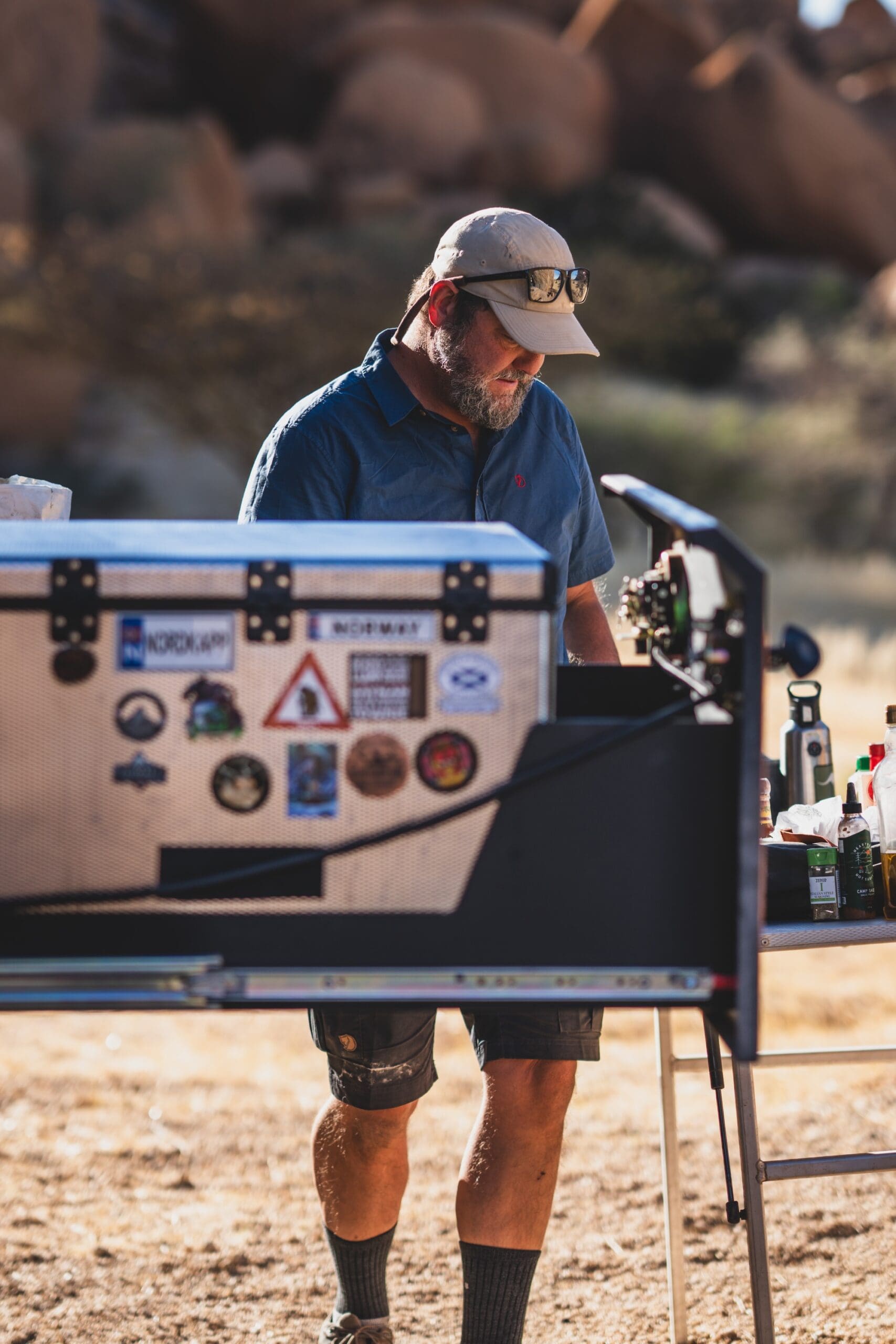
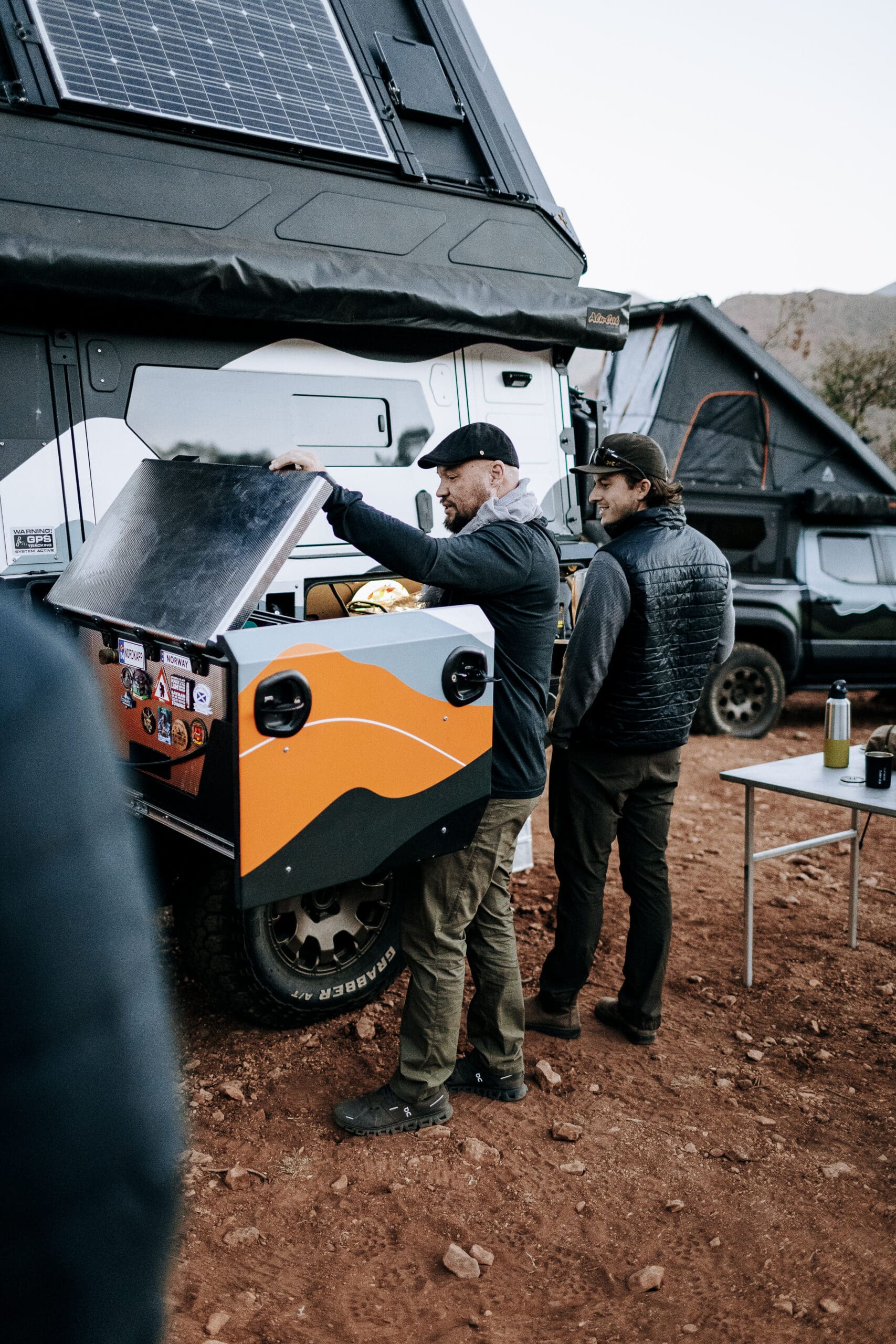
The Editor’s Choice is always the most difficult award to bestow, as there are typically several products that vie for the title. The same was true in this evaluation, with the ARB Elements, National Luna Legacy Smart, and Dometic CFX5 all earning serious consideration. We have to start with the Dometic, as it combines impressive performance with excellent value. Dometic units have also proven to be durable and reliable in the field, and I am particularly fond of the 25-liter CFX, having used one for crossing Africa and another on my sailboat. For this test, I pulled the CFX5 out of my Scout camper, where it had already been in service for a year. It is certainly worthy of an Editor’s Choice, but the next two fridges bring more specialized travel benefits.
The National Luna has been a trusted companion on many of my continental crossings, soldiering on for years in some of the most challenging conditions on the planet. The Legacy model is also a study in contrasts: it is one of the most attractive and timeless units in the test while also delivering premium components, dual zones with auto-switching, and field serviceability. Its cooldown performance is near the top of the pack, but that comes with a significant power penalty. In turbo mode, the National Luna draws more power than any other fridge in the group, and the insulation performance is also the weakest in this test, due in part to thinner insulation. If you have a vehicle with a robust house-battery system, the National Luna is still a compelling choice. It can keep meat frozen and make ice while also providing enough room and organization (thanks to the clever baskets) to stow approximately three days’ worth of drinks, salads, fruit, and vegetables.
For the Editor’s Choice, the winner is clearly the ARB Elements, and the results were unambiguous. It cools down rapidly while remaining the most efficient unit in the comparison, then keeps the contents cold longer than anything else in the group. This performance is owed to the insulation thickness and high-quality lid seal; our infrared testing showed no visible thermal loss around the lid. This fridge should also last for decades thanks to its robust construction, filters, and all-weather sealing. If you own a trailer or plan to put the fridge in a slide-out on your tray bed, or even out in the maelstrom in the bed of your truck, there is nothing else quite like it. The drawbacks are few, but the lack of dual zones is unfortunate, and it does not include Bluetooth app control as standard. If your goal is expedition travel or a fridge that will survive anything you can throw at it, the ARB Elements is the ultimate choice.
Editor’s Note: This article was originally published in Overland Journal’s Summer 2026 Issue.
Our No Compromise Clause: We do not accept advertorial content or allow advertising to influence our coverage, and our contributors are guaranteed editorial independence. Overland Collective may earn a small commission from affiliate links included in this article. We appreciate your support.
