

Photography by Max Badulin
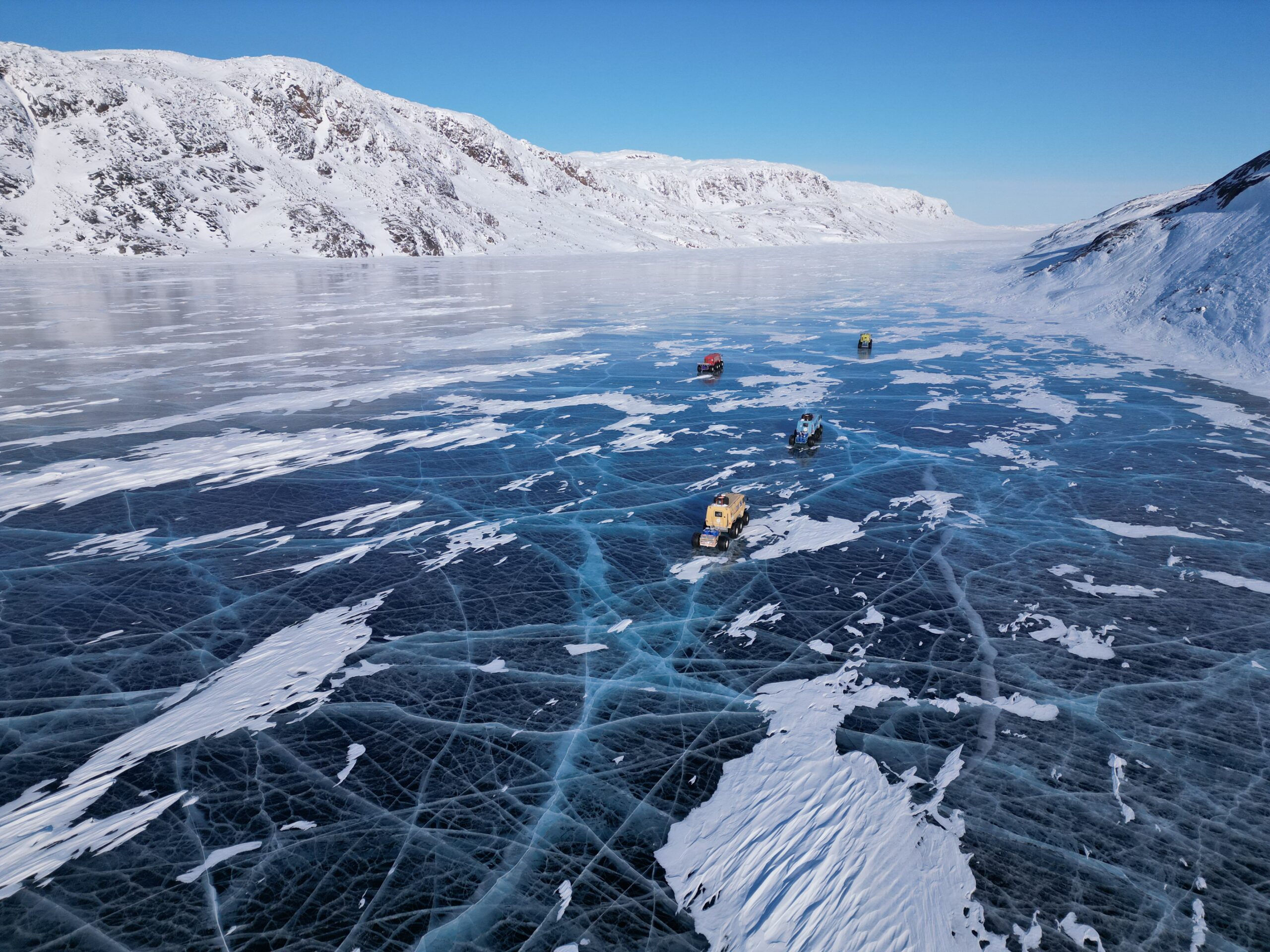
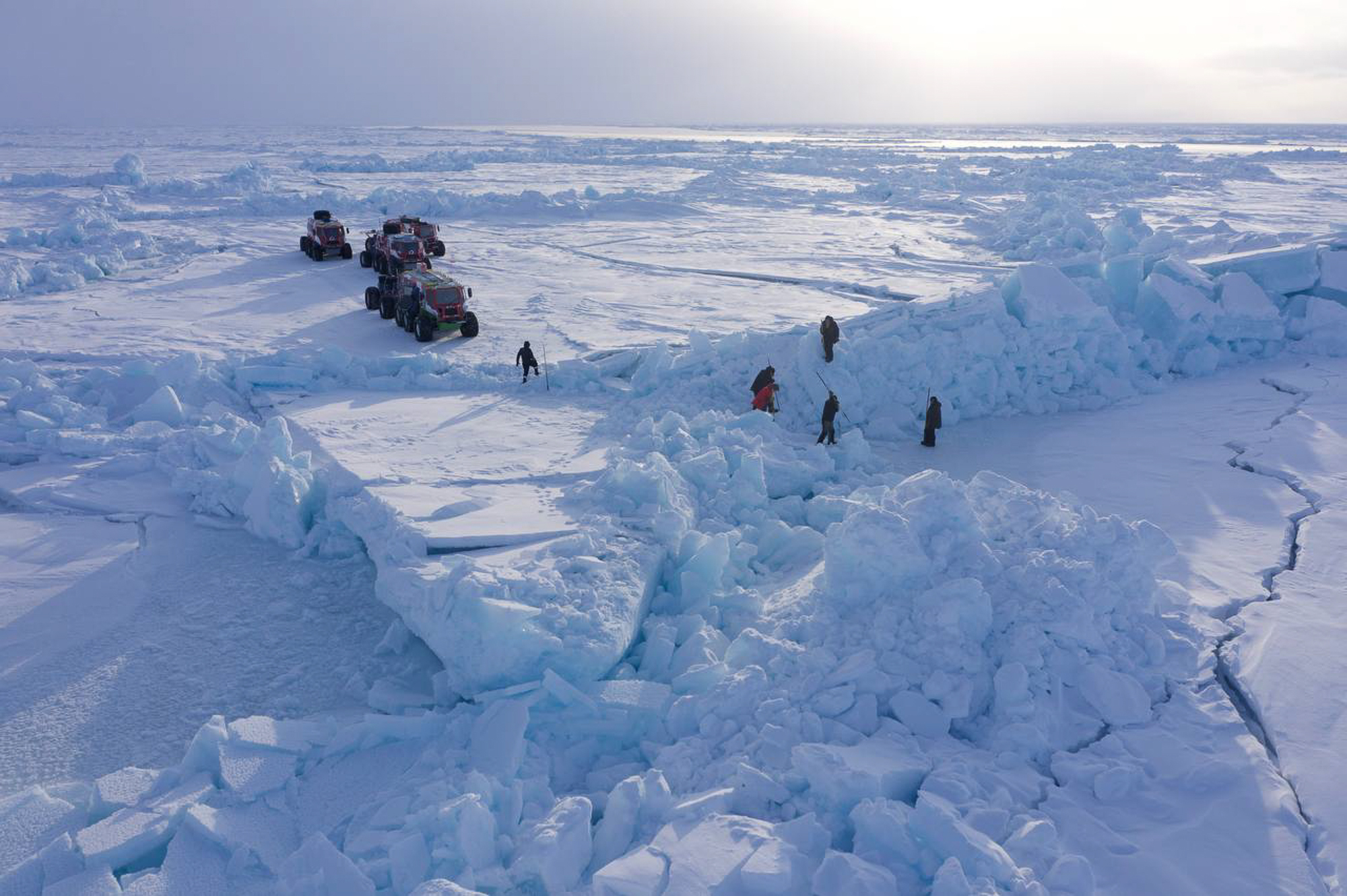
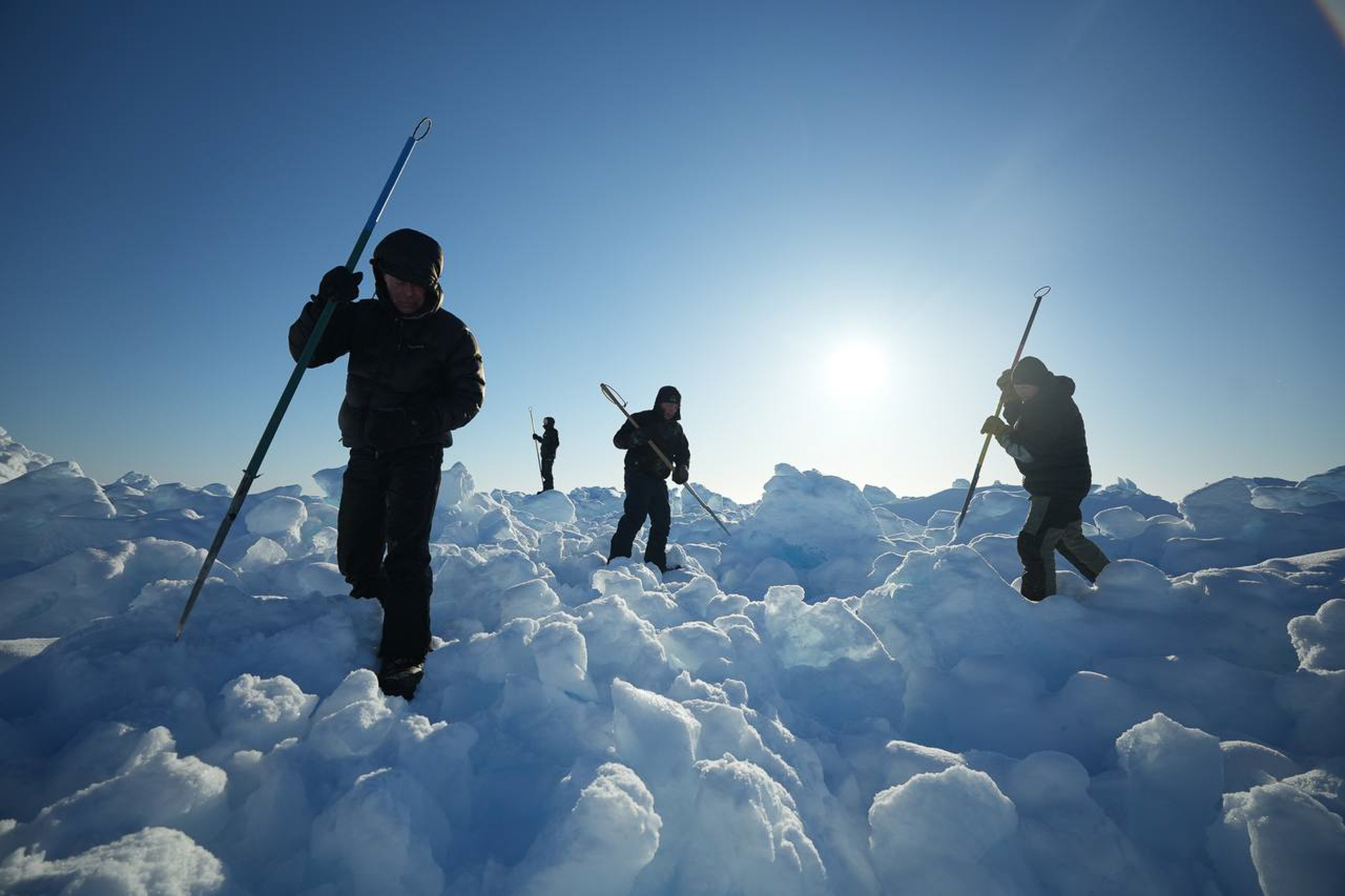
Their mornings start no different than ours—with a hot cup of coffee. Once the dregs are drained, though, their days differ wildly. Drinking water is from snow melt, the sun never drops below the horizon, and daytime hours are spent checking ice thickness and hacking ice hummocks with long, sharp spears, feeling the sting of sub-zero temperatures on their noses and cheeks. Sometimes, it is necessary to cross crevasses or narrow sections of seawater by driving over bridging ladders that bend, creak, and groan under the weight. Other times, the men stand on active pressure ridges— living, moving sea ice.
For dinner, Siberian stroganina is served. Bits of raw, frozen fish are thinly sliced and served with salt and pepper or soy sauce. For 113 days, this group of 12 international explorers drove from the Canadian Arctic Archipelago toward Greenland in amphibious six-wheel-drive trucks, completing the first geographic North Pole crossing by vehicle from North America. Navigation through Europe, Africa, Antarctica, and the Americas, however, was the ultimate goal. If successful, the Transglobal Car Expedition would be the first in history to navigate the surface of the Earth, by wheeled vehicles, through both geographic poles.
This risky, ambitious scheme was dreamt up by two Russian mountaineers in 2018. Vasily Shakhnovsky, a former Yukos Oil ex-ecutive turned professional mountaineer, invited his good friend and climbing partner Alex Abramov to his home in Switzerland in the summer. They summited Mount Everest together earlier that year. “Climbing Mount Everest was the final apogee of a very long preparation period. Ever since I was a teenager, Everest has always been this splendid, outstanding goal.” But after the summit, he sought something more—something to reach for, to prepare for. Sporting a Game of Thrones T-shirt, his hair pulled into a long ponytail, Skakhnovsky describes the moment he and Abramov hatched the plan: “While we were discussing about our future climbing plans, we realized that we had enough experience to make an unusual world circumnavigation trip, from the North Pole to the South Pole.” Shakhnovsky would become the Transglobal Car Expedition leader.
The route, from New York City and back again, would require specialists in mountaineering and polar crossings, skilled drivers, and vehicles suited to Antarctic and Arctic conditions, off-pavement tracks, and highway transits. Chosen team members include explorers and scientists from eight countries, including Canada, the United States, Russia, Ukraine, Georgia, Iceland, Germany, and Italy. Arctic Trucks CEO Emil Grímsson was approached by Transglobal Car in 2019 to arrange the Arctic and Antarctic sections, including expedition planning, selecting the appropriate vehicles, arranging fuel, and securing permits.
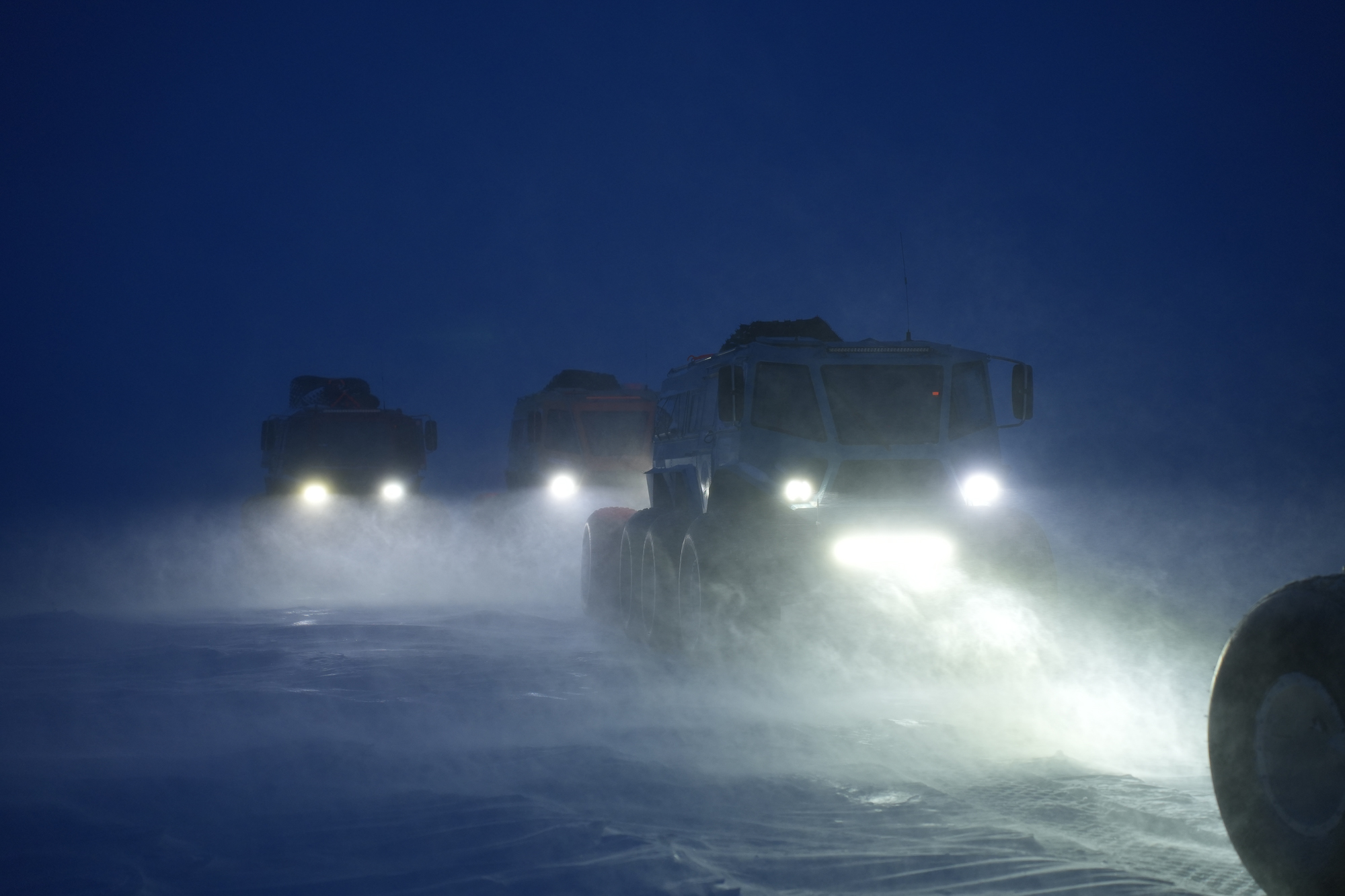
Arguably, the expedition’s most ambitious and dangerous stage was the journey from Cambridge Bay, Nunavut, to Greenland via the North Pole, which involved navigating sections of thin ice and open water. With average winter temperatures of -43°C, unpredictable ice thickness, open water crossings by anchor and pulley or fording ladders, navigation of active pressure ridges, and the presence of polar bears, TGCE team member Andrew Comrie-Picard later described the four-month Arctic stage as “hours of anticipation punctuated by moments of terror.”
“I was fine with us driving the [Canadian] archipelago and driving Greenland, but getting to the geographical [North] Pole would be very difficult for us,” Grímsson says. The Icelander found his calling for exploration during the 2007 BBC Top Gear “Polar Special,” which featured Jeremy Clarkson and James May attempting to reach the North Magnetic Pole with an Arctic Trucks modified Hilux. Grímsson provided logistical and expedition support on the project. Since then, he has played a key role in planning 27 international expeditions and has participated in well over a dozen. To prepare for the Transglobal Car Expedition, he flew to Russia to study expedition vehicles suited to Arctic conditions, including the Sherp, several mixed Russian and German designs, and the amphibious Yemelya.
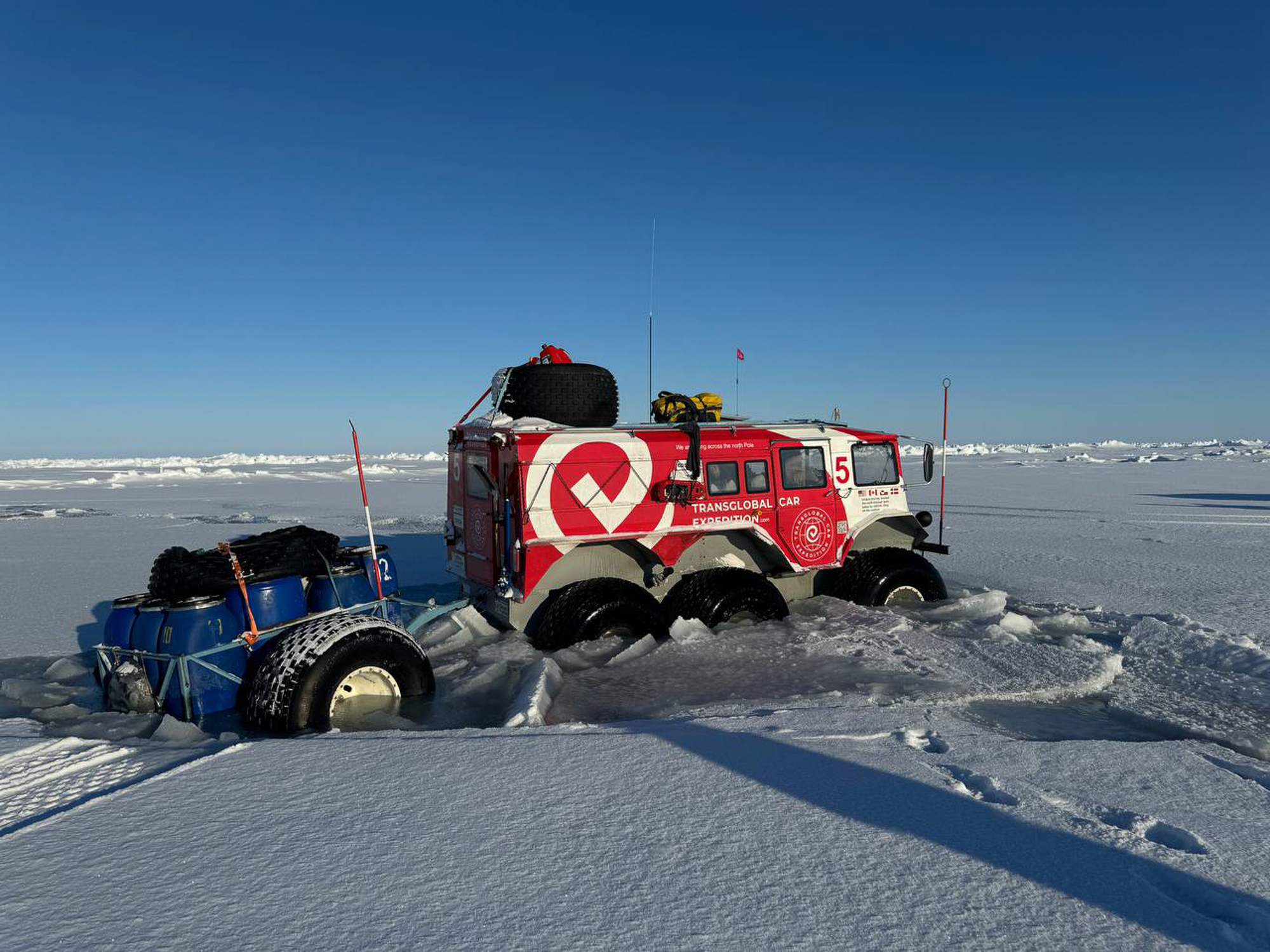
Yemelya Chief Designer Vasily Elagin says that in his wife’s opinion, he’s a rather gloomy individual. To prove otherwise, when faced with what to name the vehicle he designed, he chose a lazy character from a [Russian] fairy tale— Emelya—whose life is envied by many people. “All the time he is lying on a magic stove which goes anywhere,” Elagin said. “That was the vehicle which I thought about—you are just sitting in the warm and driving uphill and down-hill, no matter if there is a road or nothing at all.” Elagin, who holds a geology degree and Snow Leopard title for summiting five peaks over 7,000 meters in Central Asia, has participated in the Paris-Dakar Rally, rode 1,000 kilometers along the coast of the Chukchi Sea on a snow scooter, and has taken part in countless Arctic expeditions that inspired him to create the Yemelya Special Mobile Unit. He’s also a Jack London fan.
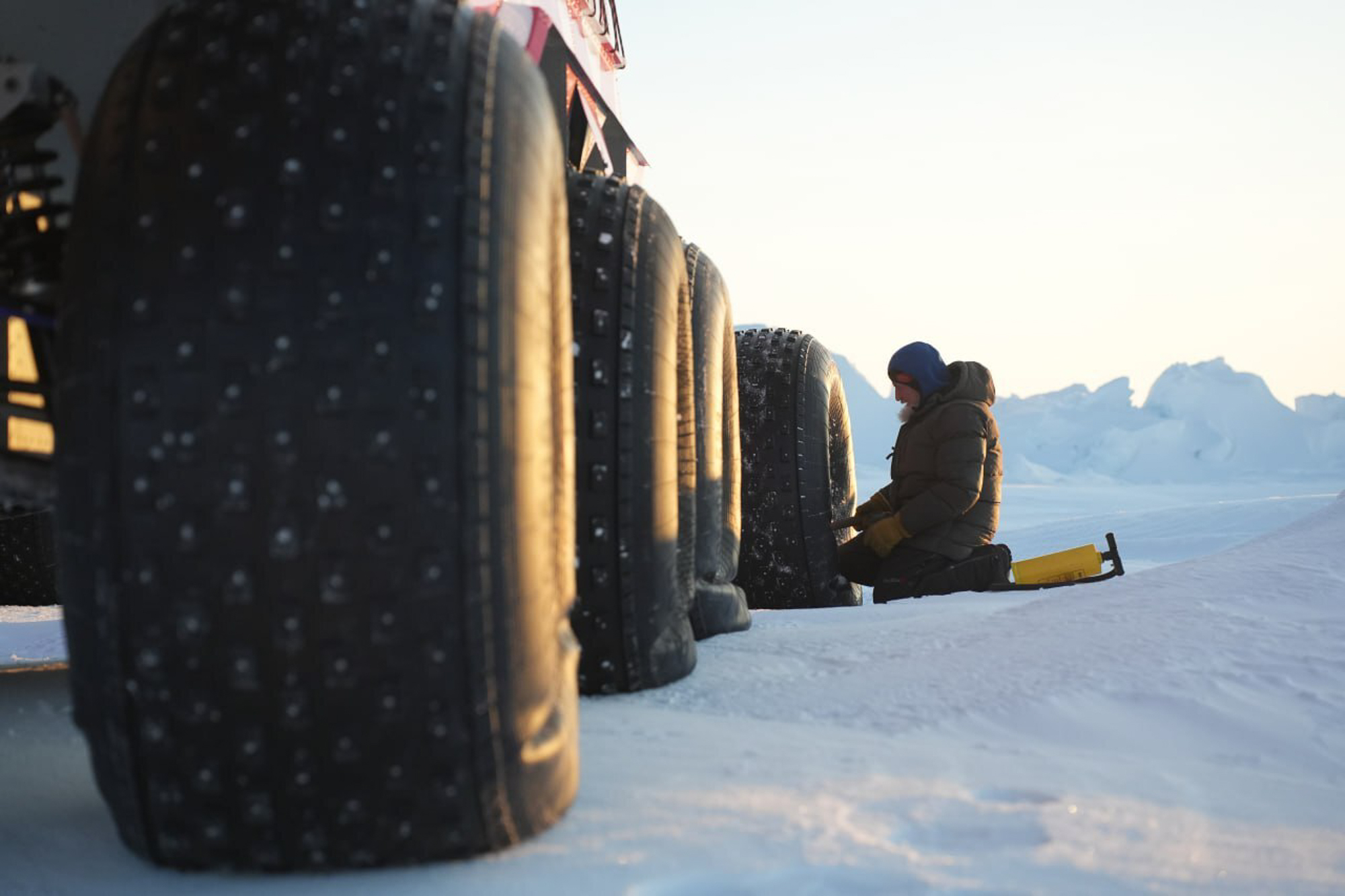
Elagin’s focus during the design and development of the Yemelya vehicles was straight out of a mountaineer’s playbook: “complete minimization of the vehicle weight while maintaining the necessary strength and simplicity of design.” Fitted with 51-inch tires, which can run as low as 1 psi of air pressure, the Yemelyas make less impact on the ground than a human foot. Six of these center-control trucks have been manufactured to date, with various versions participating in nine expeditions, including several Marine Live-ice Automobile Expeditions (MLAE) from Russia to Canada. “The most difficult and memorable was the first trip to the North Pole in 2009,” Vasily said. “There was nowhere and no one to get the experience from, reaching the goal was not easy, and literally in the last hours before the deadline, we achieved the desired point.” The Transglobal Car team used the latest iteration of this six-wheel-drive, all-terrain vehicle (powered by a 2.2-liter Toyota car turbo-diesel engine), which was improved over the years by Elagin and his team for the Arctic stage of the expedition. Seven Yemelya drivers and mechanics provided Transglobal Car Expedition support.
To broadcast real-time updates from the field, Grímsson brought on Andrew Comrie-Picard, whose experience as a professional driver, television host, and producer would serve him well with everything from technical driving to public relations duties. Hailing from a small town in rural Alberta, Canada, Comrie-Picard is the one we see most often on Instagram reels and in Facebook stories, extrapolating on Yemelya specs and fuel sledges, Cosmic Pi detectors, and more. All accounted for, Comrie-Picard is one of 25 expedition team members and scientists, and one of eight core explorers involved in multiple stages.
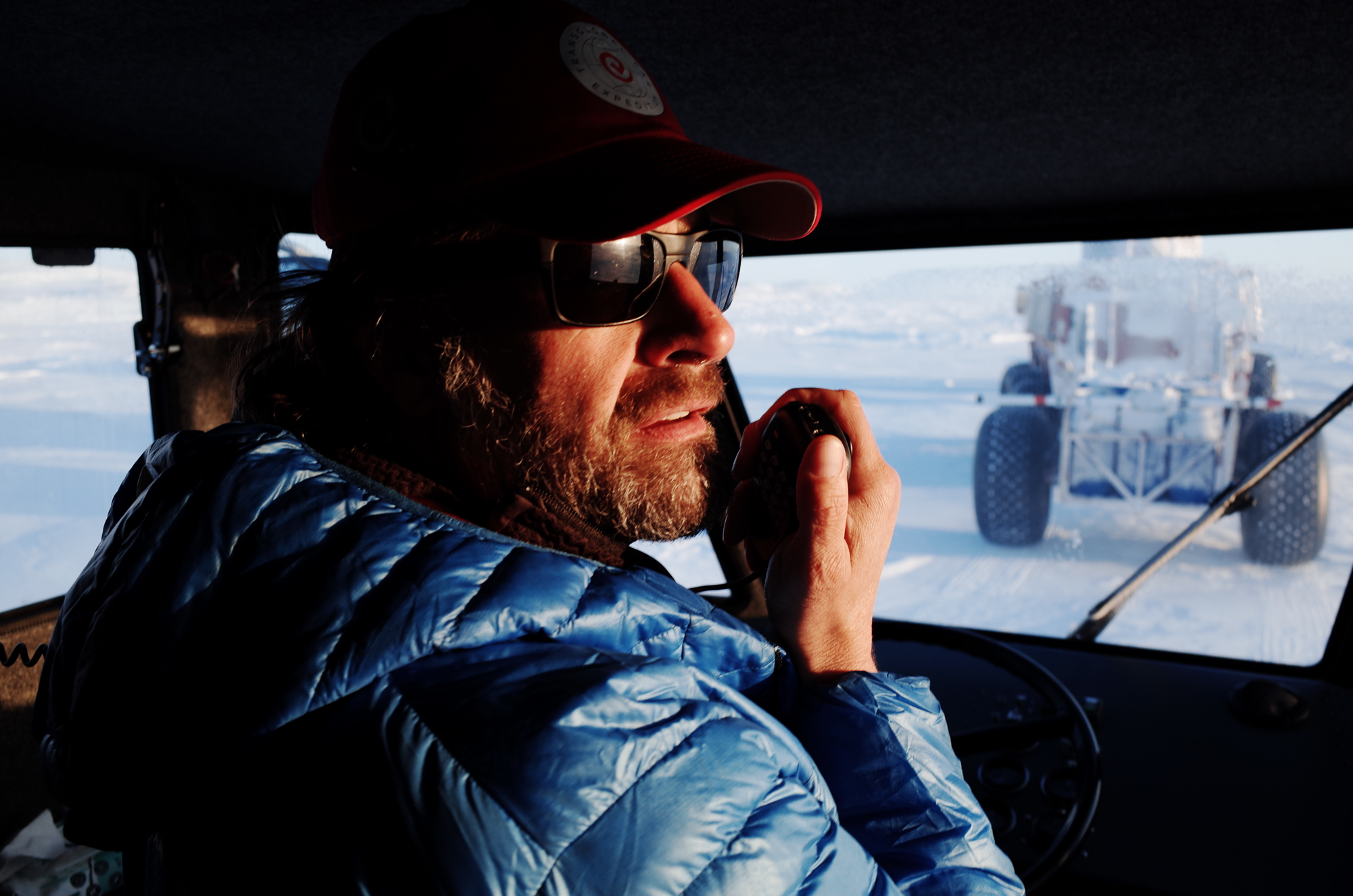
From rally cars to amphibious vehicles, Andrew Comrie-Picard’s driving CV is like no other.
The Explorers Club flag has been carried on over 1,450 expeditions since 1918, including to the moon, the summit of Mount Everest, and both poles. To carry the flag is an honor and privilege, and is awarded, on loan, to non-commercial field research expeditions that benefit exploration and science, in a remote location, by gathering scientific data or recording observations under field conditions. On January 10, 2024, the Transglobal Car Expedition departed from New York City, home of the Explorers Club headquarters, with the flag in tow. Due to their unusual route into the high Arctic and beyond, team members would have the opportunity to gather all sorts of data, from ice thickness at the North and South Poles, to cosmic radiation levels, light pollution, and human physiology changes in extreme environments. Eight core team members, piloting four AT35 Ford Expeditions and an AT44 Ford F-150 hybrid, left the city center, eventually skirting the Great Lakes, and crossing the border into Canada, trekking 6,000 kilometers north to the city of Yellowknife in the Northwest Territories. Navigating icy January roads and -20°C temperatures between Chicago and Minneapolis, snowstorms in Fargo, and passing through the Canadian Rocky Mountains, extreme weather conditions would become the norm for the Transglobal Car team over the coming months.
Referred to as the “continental vehicles,” the AT44 F-150 Hybrid and AT35 Expeditions would transport gear and crew members to Yellowknife and rendezvous with the team for legs through Europe, Africa, and South America. Selected to test hybrid technology under extreme conditions, the AT44 F-150 features a 3.5-liter PowerBoost hybrid engine with a 1.5-kilowatt-per-hour lithium-ion battery. Running on Arctic Trucks/Nokian 44-inch 475/70R17 tires for the Arctic, the vehicle was modified with narrower fender flares and 39- inch BFGoodrich tires for the remainder of the expedition, as a narrower profile would fare better for road conditions in Europe, Africa, and South America.
Due to shared components and service options with the Ford F-150 Hybrid, and for its spaciousness, comfort, and service reliability, Grímsson chose the Ford Expedition, with the 3.5-liter EcoBoost V6 and 440 horsepower, as the primary vehicle platform for the continental stages of the journey. Expecting limited off-road challenges with asphalt roads and a few challenges requiring four-wheel drive, some modifications were made to the vehicle to optimize its performance. Factory tires were swapped for BFGoodrich All-terrain T/A KO2 35×12.5R18s, while the hitch was re-engineered to fit a 35-inch spare tire in the factory location. Left and right hitch receivers were added for a Hi-Lift jack; additional accessories include an on-board air compressor, various VisionX lights, a BougeRV 23-quart cooler, and Xantrex ProWatt 2,000-watt inverter.
Situated on the north arm of Great Slave Lake, a visitor’s arrival in Yellowknife is marked by a blue Bristol freighter surrounded by birch and spruce trees. The first wheel-equipped aircraft to land at the North Pole, it was piloted by Captain Don Braun in the 1960s and has since been decommissioned. It seems fitting, then, that the Transglobal Car Expedition would gather here to prepare for the Arctic leg of the journey. After a hearty meal of homemade fish stew and bannock bread, and an aurora borealis show from local guide Tracy Terrein’s cabin, the crew stocked up on 154 pounds of frozen fish, which would make up most of their diet through the next phase of the expedition.
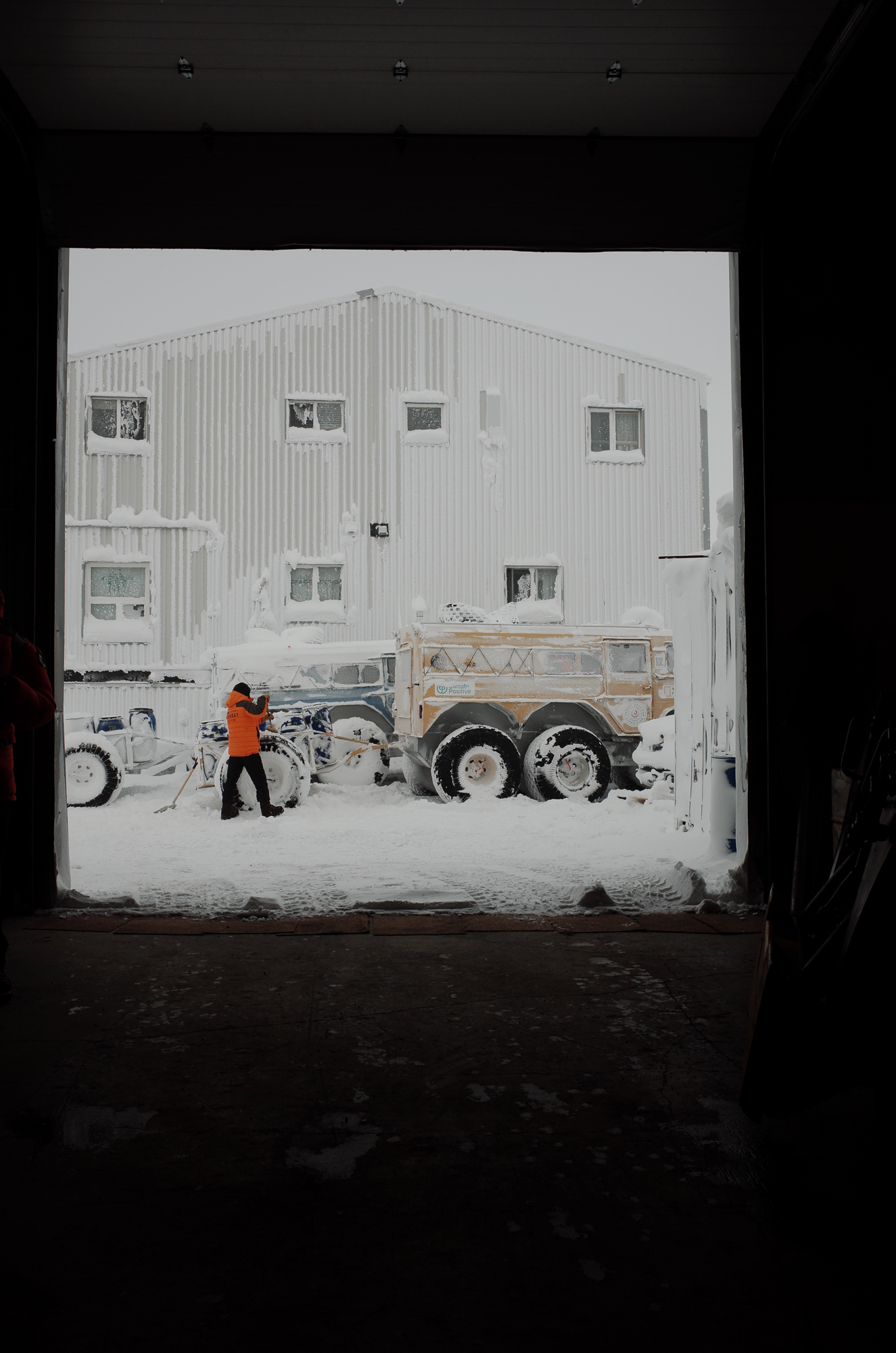
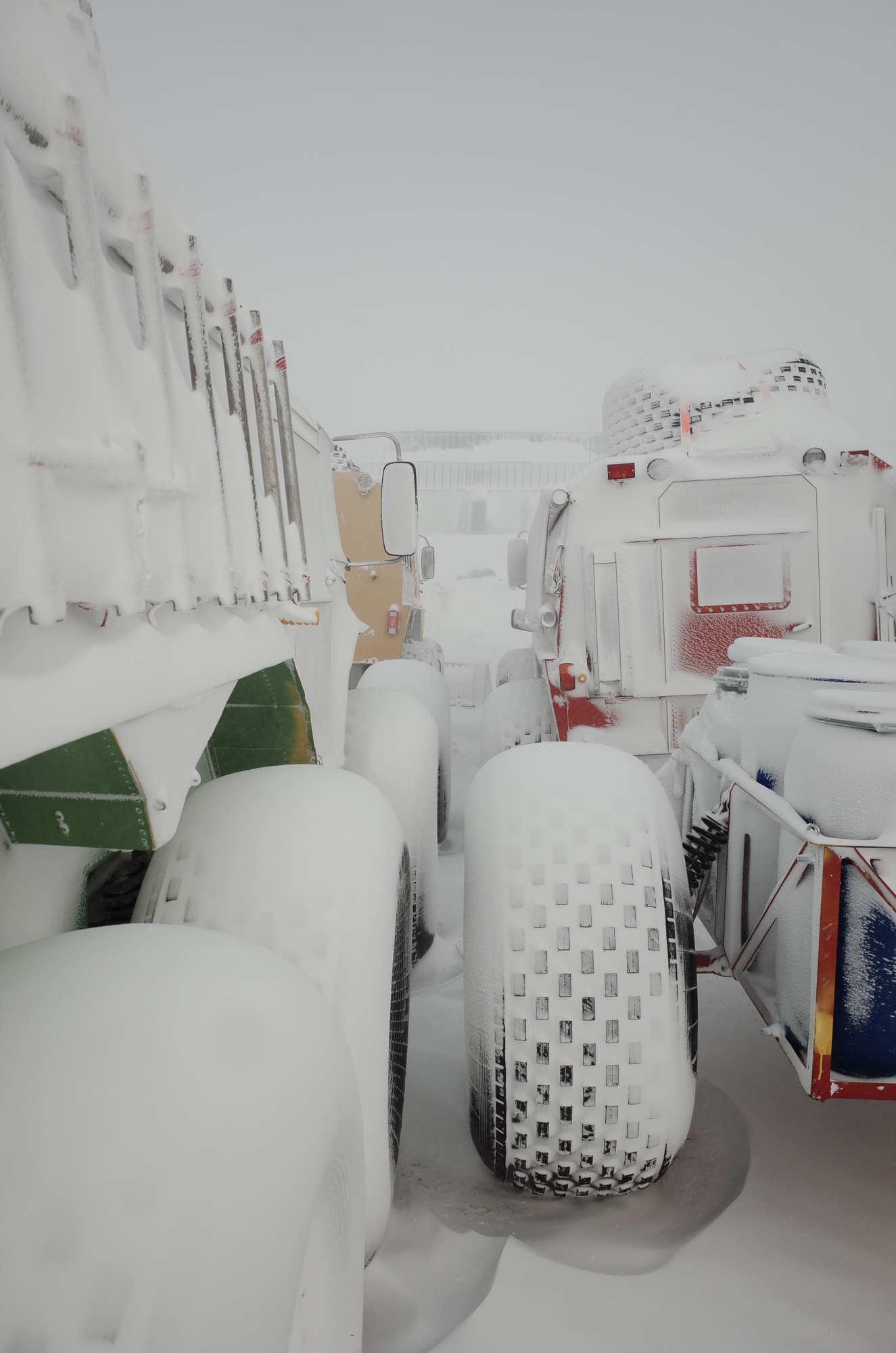
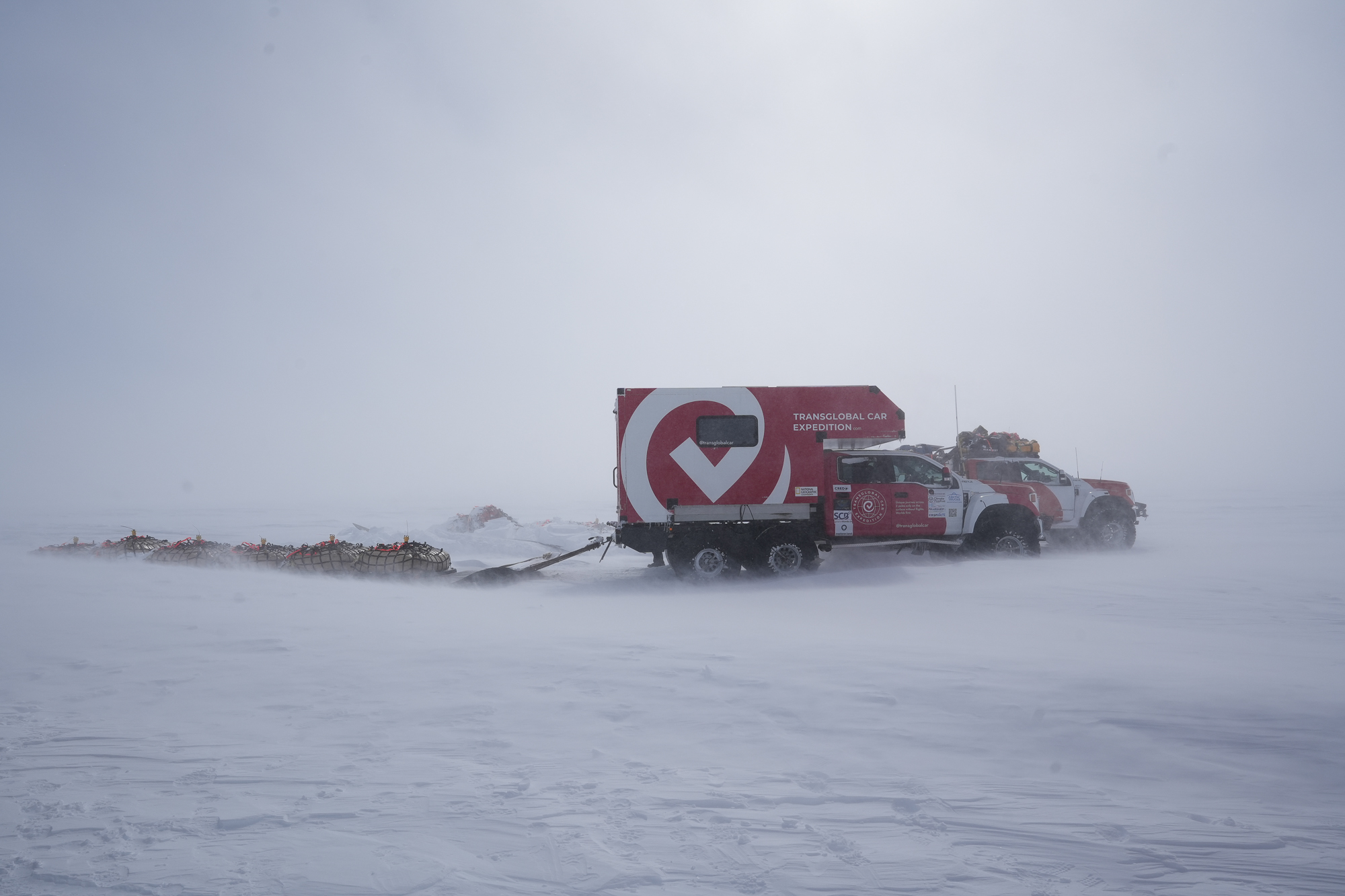
In Yellowknife, the 12-man team switched from continental vehicles to four AT44 6×6 F-350 trucks, which they would use again in Antarctica. Grímsson chose the 6.7-liter turbo-diesel Ford Super Duty as the model offers more space, load, and towing capacity over the current AT44 6×6 Hilux. The 475/70R17 44-inch tires, co-developed with Nokian Tires Finland, provide added snow flotation, while increased suspension travel with adjustable air bags on leading and trailing arms in the rear increases average travel speed and spare parts efficiency. To prepare for Antarctica, the brake systems, DPF, and most auxiliary lights would be removed, and the front bumpers would be changed to accommodate a crane and ground penetrating radar for scientific purposes. For ultimate luxury, two of the four models sport a Total Composites cabin, which would reduce camp setup and tear-down time, providing a haven of inside living space for team members. The remaining 6×6 vehicles were equipped with utility decks and Arctic Trucks crane systems.
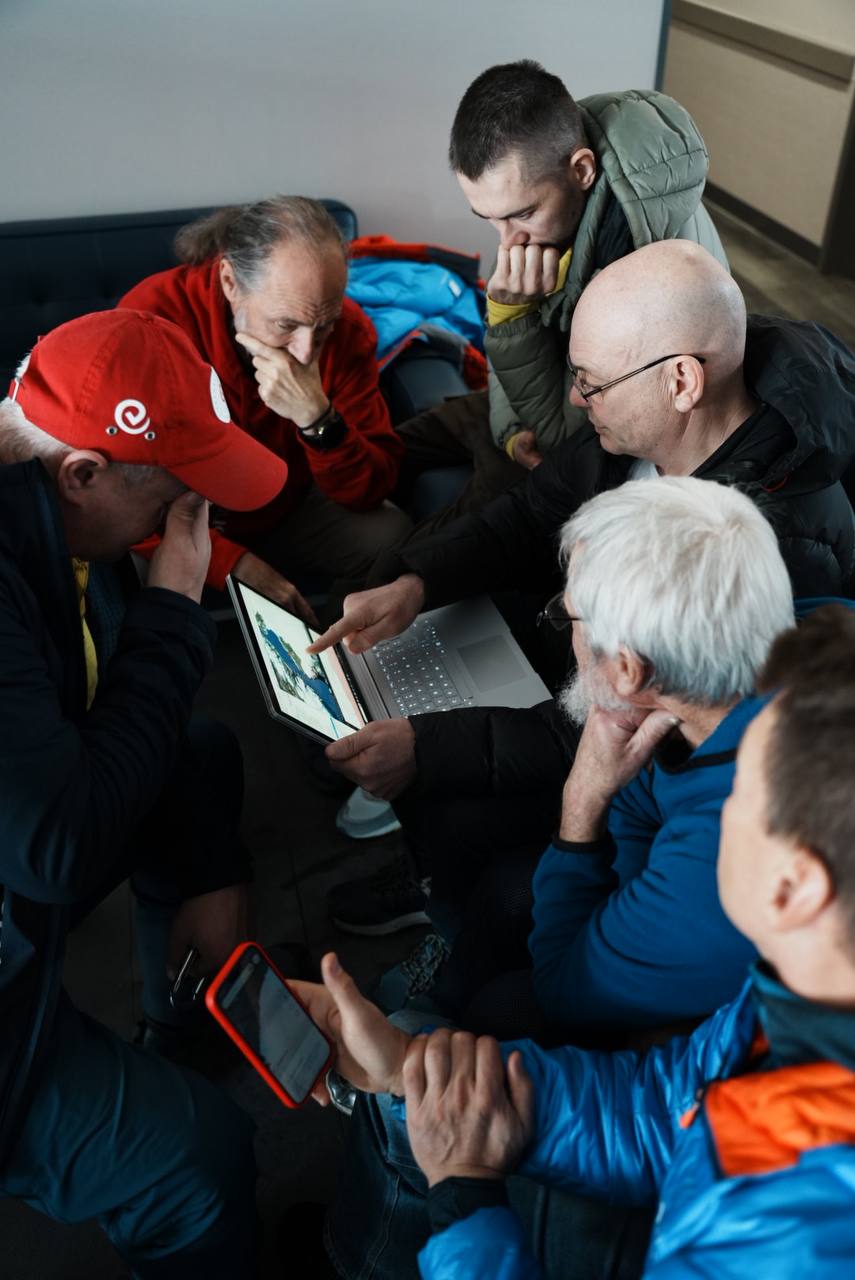
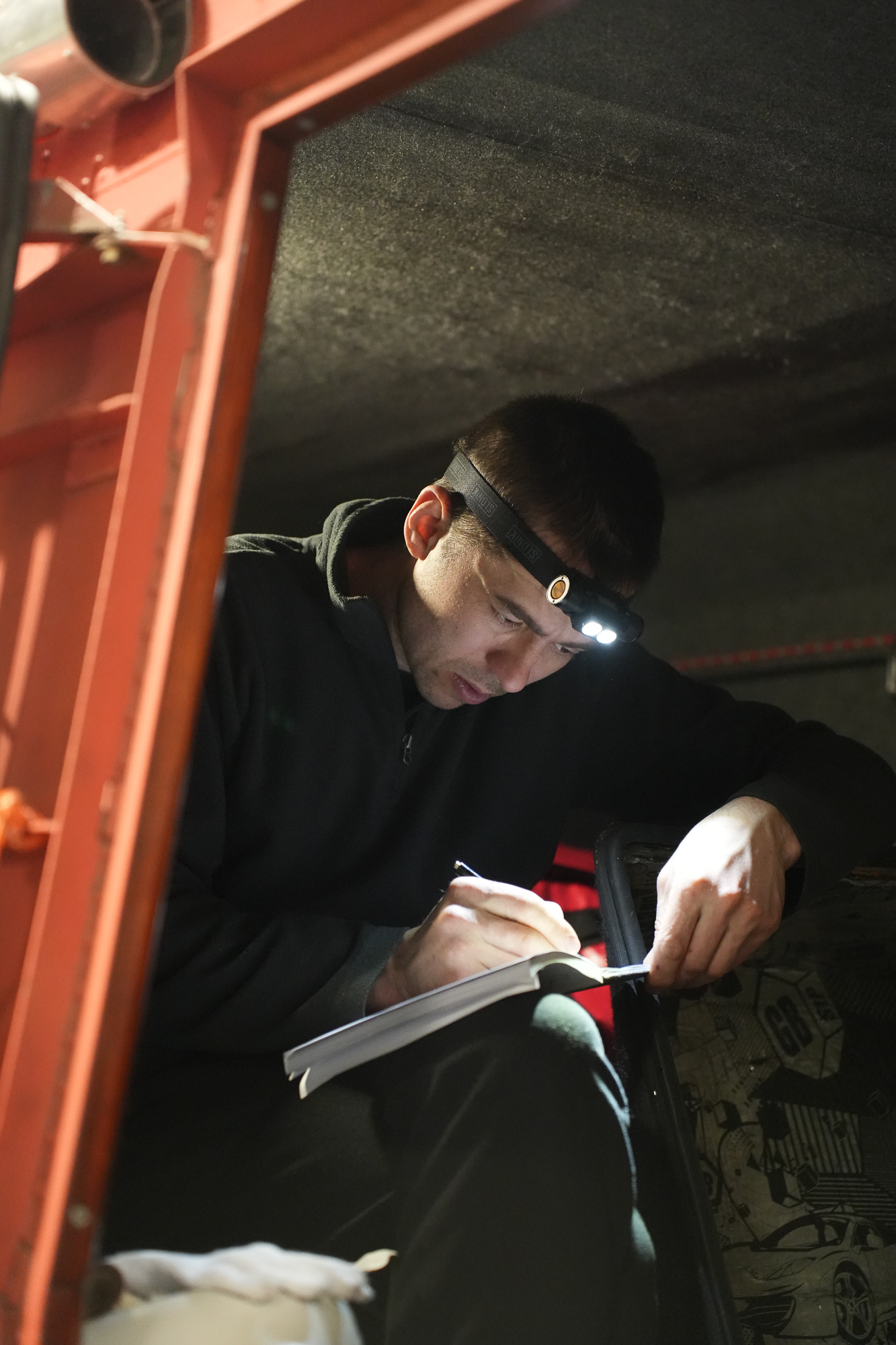
Developed by Grímsson in 2022, the Transglobal route from Yellowknife to the hamlet of Cambridge Bay, Nunavut, is only possible during winter months when conditions are suitable. While most visitors arrive in Cambridge Bay by Boeing 737 jet or ATR 72 turbo-prop, paying a hefty price for the ticket due to the location’s remoteness, the Transglobal Car team spent a week winching through deep snow, facing -32°C temperatures and delays due to slurry ice where saltwater had softened the surface. But by mid-February 2024, the Transglobal Car Expedition team was busily sorting gear and re-viewing logistics, including transferring team members, equipment, and a heck of a lot of frozen fish to the Yemelyas, which were the vehicles of choice for the next phase of the expedition from Cambridge Bay to the geographic North Pole, continuing across the Arctic ice cap to Greenland. The team visited local elders at the Cambridge Bay Elders Palace, practicing their Inuinnaqtun and playing qiliirlagu over lunch. The day before departure, the municipality and its mayor, Wayne Gregory, organized a parade to celebrate the expedition, including a procession of a dozen Royal Canadian Mounted Police and ambulance and municipal services, ending at the Canadian High Arctic Research Station, where people gathered in the -36°C temperatures or waved from windows of houses.
It wasn’t the first time members of the Transglobal Car Expedition had visited Cambridge Bay. In March 2022, a crew of 16 piloted three 2021 Ford F-150 trucks and four Yemelyas to complete a 2,200-kilometer expedition from Yellowknife to Resolute Bay, Nunavut, marking the first-ever overland wheeled journey from the continental shelf of North America to the High Arctic. The purpose of the pre-run was to test the route to Resolute to make sure it was plausible. “We knew that it was possible to go further north because that’s the route Emil Grímsson had innovated with Top Gear,” explained Comrie-Picard. “This [expedition] has a lot of interesting challenges,” Grímsson added. “[There are] a lot of things that nobody knows how to deal with… and that inspires. We will do it in the best possible way—in a very sensible way—and learn from it.”
Prior to their departure from Cambridge Bay, the remainder of the prep trip team met with local hunters George Angohiatok and Lawrence Otokiak, who advised on ice and snow conditions and safety considerations using on-the-ground intel and SIKU, an app used by Indigenous communities, hunters, and harvesters. The app displays Indigenous knowledge and observations alongside weather and safety services, including tides, marine forecasts, and satellite imagery, allowing hunters to share dangerous and changing conditions in their own language and information systems. Brandon Langan, a Cambridge Bay resident and Inuk man, was hired on to help navigate sea ice and for his polar bear monitoring expertise, while additional support came from scientists in Germany and England.
“It was, on the face of it, a total success,” says Comrie-Picard. “We got all the way to Resolute, which is at 74°N, in the last civilian Inuit community in the North. It was a huge achievement.” Comrie Picard remained at Resolute to continue testing with the Yemelya team while two team members—Icelandic driver Torfi Jóhannsson and Inuit guide Langan—returned to Yellowknife in one of two Ford F-150 trucks. What they didn’t realize, however, was that in the past four days, the ice had thinned from 50 centimeters to about 15 centimeters due to the shifting current beneath. “It’s a huge change in a very short time,” says Grimsson, who was providing expedition support from Iceland. “It was -30°C the whole time, so the [current] was just eating up from underneath the ice.”
Jóhannsson knew immediately that the ice had cracked, and the vehicle was sinking. Grabbing the radio, he yelled that the truck was going down before he and Langan scrambled out the passenger-side door. The men spent a long night seated in the support vehicle, ready to jump out at a moment’s notice if the thin ice gave way. When daylight returned the next morning, they spotted a polar bear nearby and decided to call for a helicopter rescue. “Look, we’re all pretty experienced,” Comrie-Picard says about the incident. “Nobody’s more experienced than Emil and the Arctic Trucks team at driving on ice. You can always make mistakes, and you can always learn more—and we did. We learned the ice can change really fast. We also learned that the relationships of the Indigenous communities here are crucially important. We have to rely on and share local knowledge in order to get through.”
Taloyoak, located on the southwestern coast of the Boothia Peninsula at the Northwest Passage, is the northernmost community on Canada’s mainland. Its inhabitants, the Netsilingmiut, are direct descendants of the Thule people and have lived in the area around Taloyoak, Gjoa Haven, and Kugaaruk for over a thousand years. The search for the Northwest Passage brought Scottish explorer Sir John Ross to the area in 1829 when his ship became trapped in the ice nearby; he spent the next four years exploring the Boothia Peninsula region with local Netsilingmiut assistance, locating the magnetic pole in 1831. In nearby Gjoa Haven, 138 kilometers as the crow flies, Roald Amundsen harbored his ship, the first vessel to transit the Northwest Passage, from 1903 to 1906.
Unbeknownst to the Transglobal Car Expedition team and the Inuit communities further south in Cambridge Bay, the ice where the F-150 went down is susceptible to early-season melt. Because of this, it is well-known by Taloyoak hunters as prime seal territory. The current between the Atlantic and Arctic Oceans flows through the Bellot Strait right between two islands, never freezing, resulting in extremely rapid changes in ice thickness. “We’d never been to Taloyoak. We didn’t even think of it as it wasn’t anywhere near our route,” Comrie-Picard said. “But [the hunters] know that around the Tasmania Islands the ice gets thin, and so we know it now.”
Grímsson issued a formal apology to the Inuit communities of Taloyoak, who were concerned that the truck, which contained 40 liters of fuel, as well as other fluid and a back-up generator, would leak and contaminate an ecosystem local communities depend on for their sustenance and livelihood, including a major migration route for beluga whales, narwhals, seals, walruses, and Arctic char. “They should have consulted with us,” Jimmy Oleekatalik, manager of the Spence Bay Hunters and Trappers Association, told the Iceland Review, saying that the local community would have provided a guide. “This is our hunting ground. This is our livelihood. This is what we know.”
Comrie-Picard says that after a rocky start, the experience resulted in deepened relationships with the Indigenous populations of Nunavut. In April 2023, once the winter ice had melted, the team returned to extract the sunken Ford F-150 using an Airbus Super Puma helicopter, Icelandic divers, and two Indigenous underwater drone operators from Iqaluit. “The truck only leaked a few quarts of diff oil,” says Comrie-Picard. “Compared to what a tanker does going by, it was a negligible effect.” The recovery operation wasn’t about get-ting the truck back, he says, but “doing the right thing and respecting the land.” CBC News reported that Oleekatalik was happy with the results. “I feel a lot better knowing it’s out of the water. They took the extra initiative, and they [went] above and beyond and did a great job cleaning up the area.”
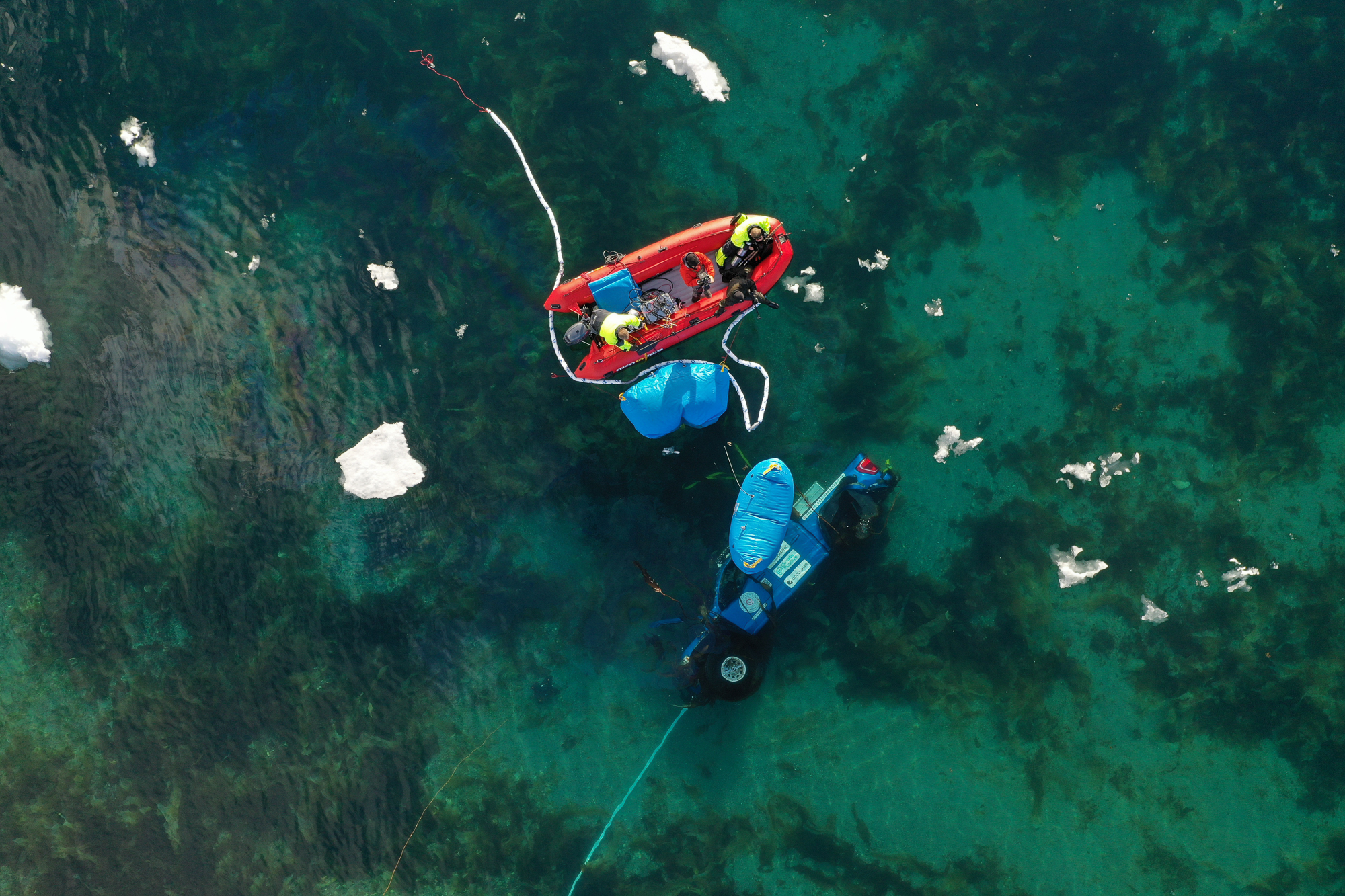
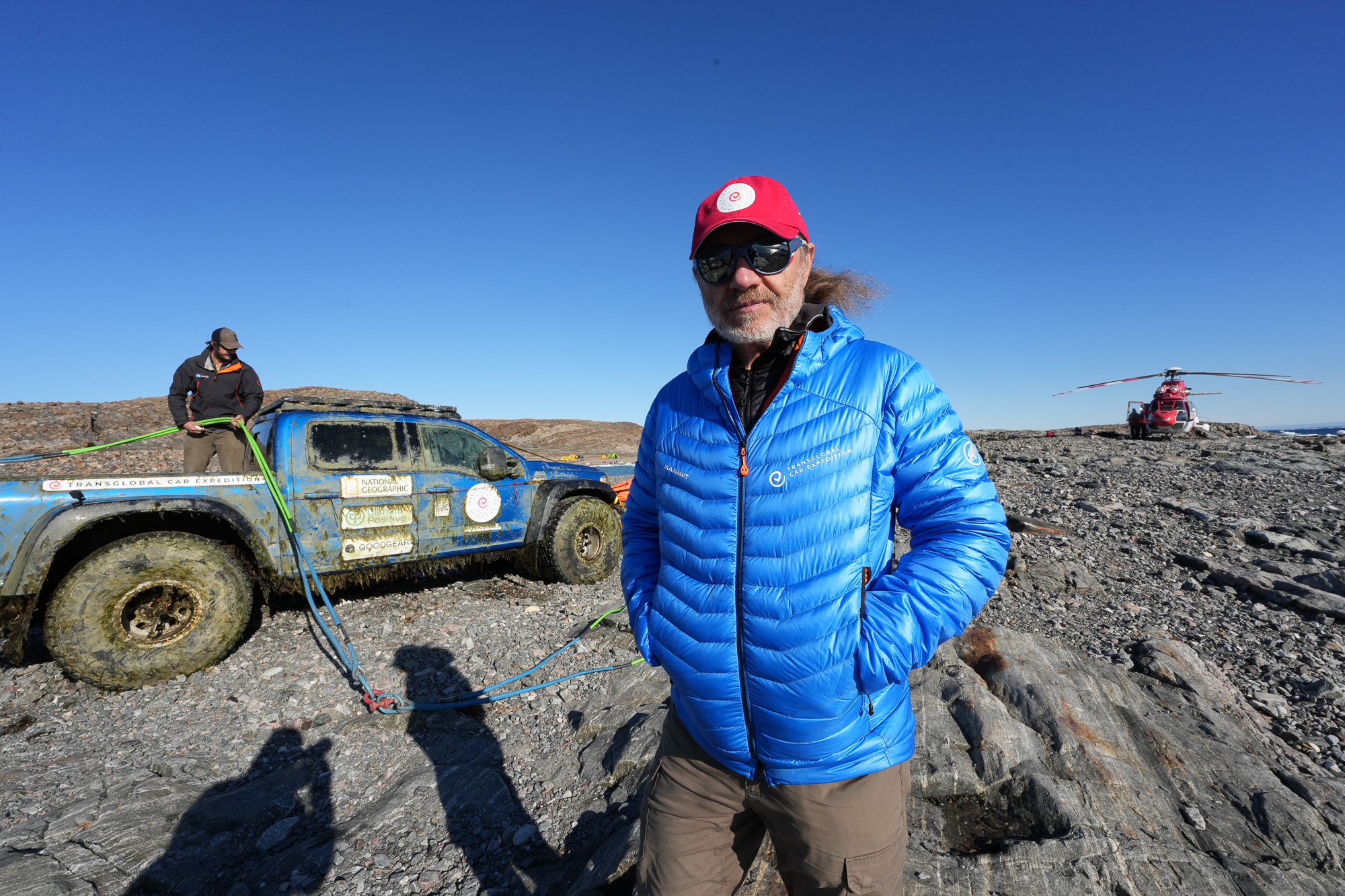
In Taloyoak, Transglobal Car team members met with Mayor Chuck Pizzo-Lyall and the Hunters and Trappers Association chairman, members, and elders to discuss the safest routes and to obtain their permission to cross the region. One year later, they did just that, arriving at Station Nord, Greenland, for immigration processing. “We always knew that in any season we would be at the mercy of the ice and that in some years it was simply impossible to cross the Pole on the surface,” Shakhnovsky said about the Arctic leg of the expedition. “This sets us up for the success of the whole project.”
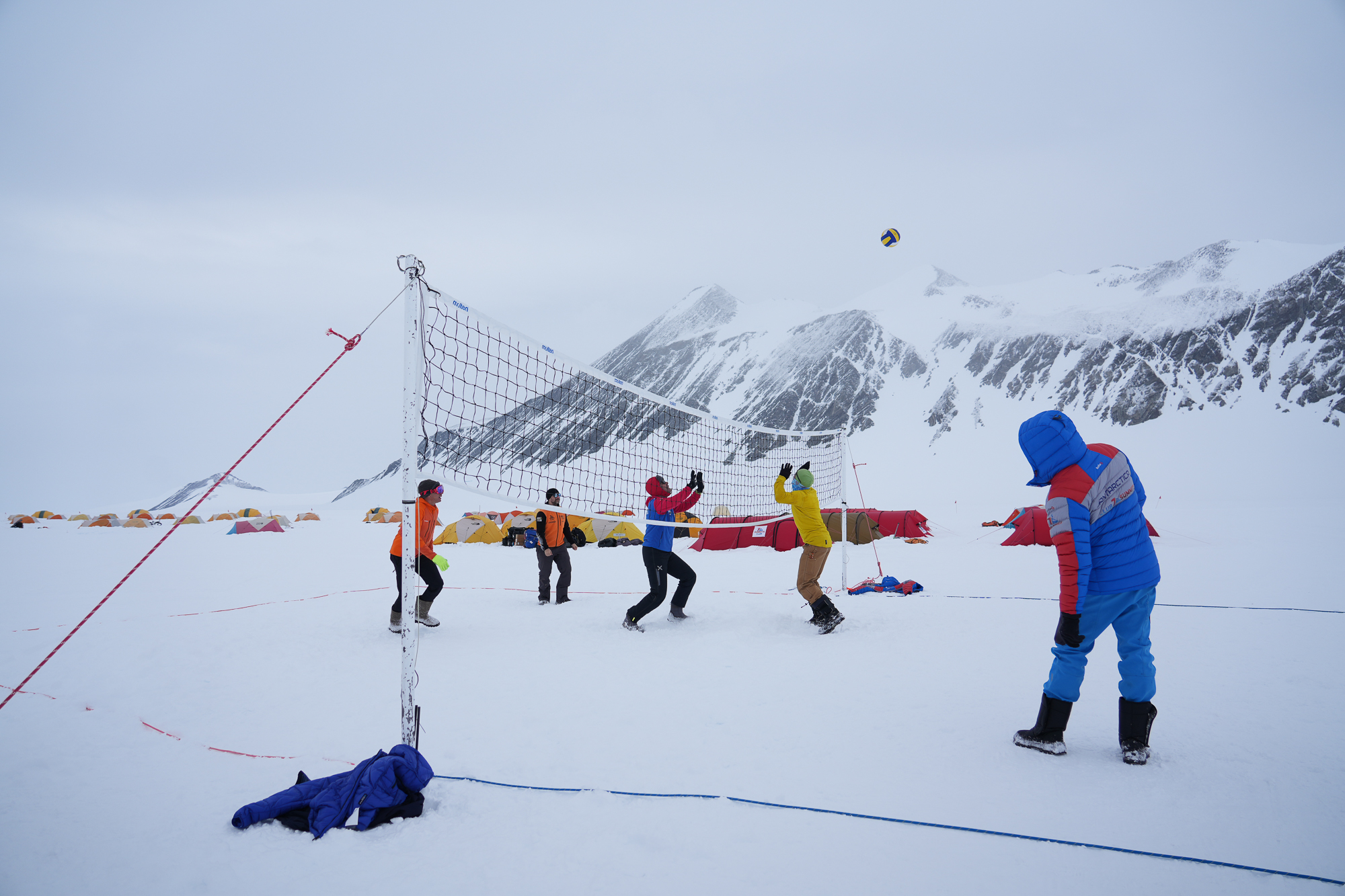
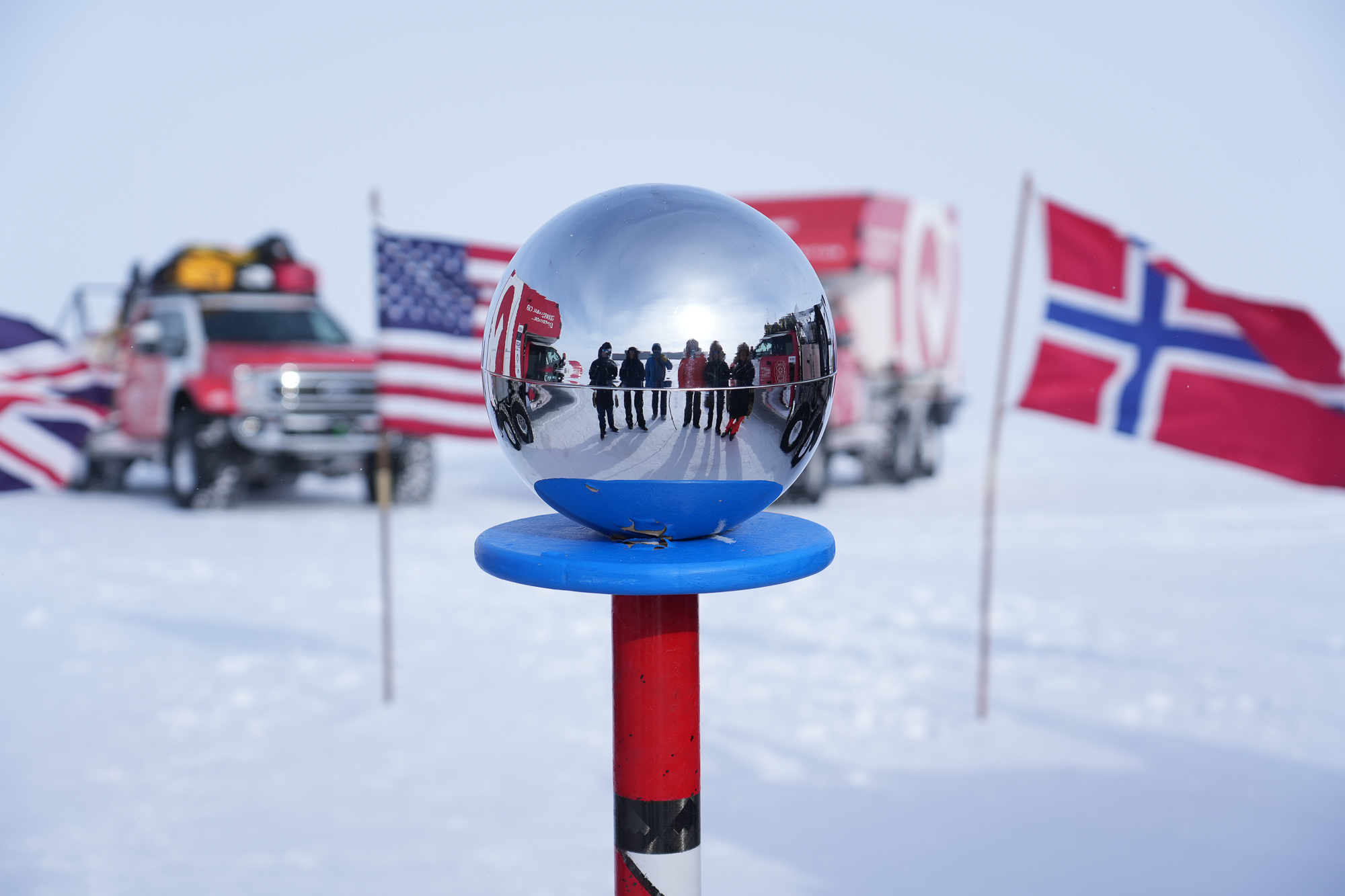
The journey resumed in Oslo, where nine team members continued as far east as Krakow, Poland, eventually arriving in Morocco, where the continental trucks were shipped to Namibia for the Southern Africa leg. From Cape Town, South Africa, four AT44 6×6 F-350 trucks were loaded onto an icebreaker bound for Antarctica. Grímsson is no stranger to the continent as Arctic Trucks has clocked around 400,000 expedition kilometers there, but each trip presents new challenges. This time, the expedition team braved -39°C temperatures and altitude sickness, navigating through Antarctic storms with winds up to eight on the Beaufort scale. Reaching the geographic South Pole marked another milestone, and from there, the Transglobal team rendezvoused with the continental vehicles in Punta Arenas, Chile, and spent the next four months driving north.
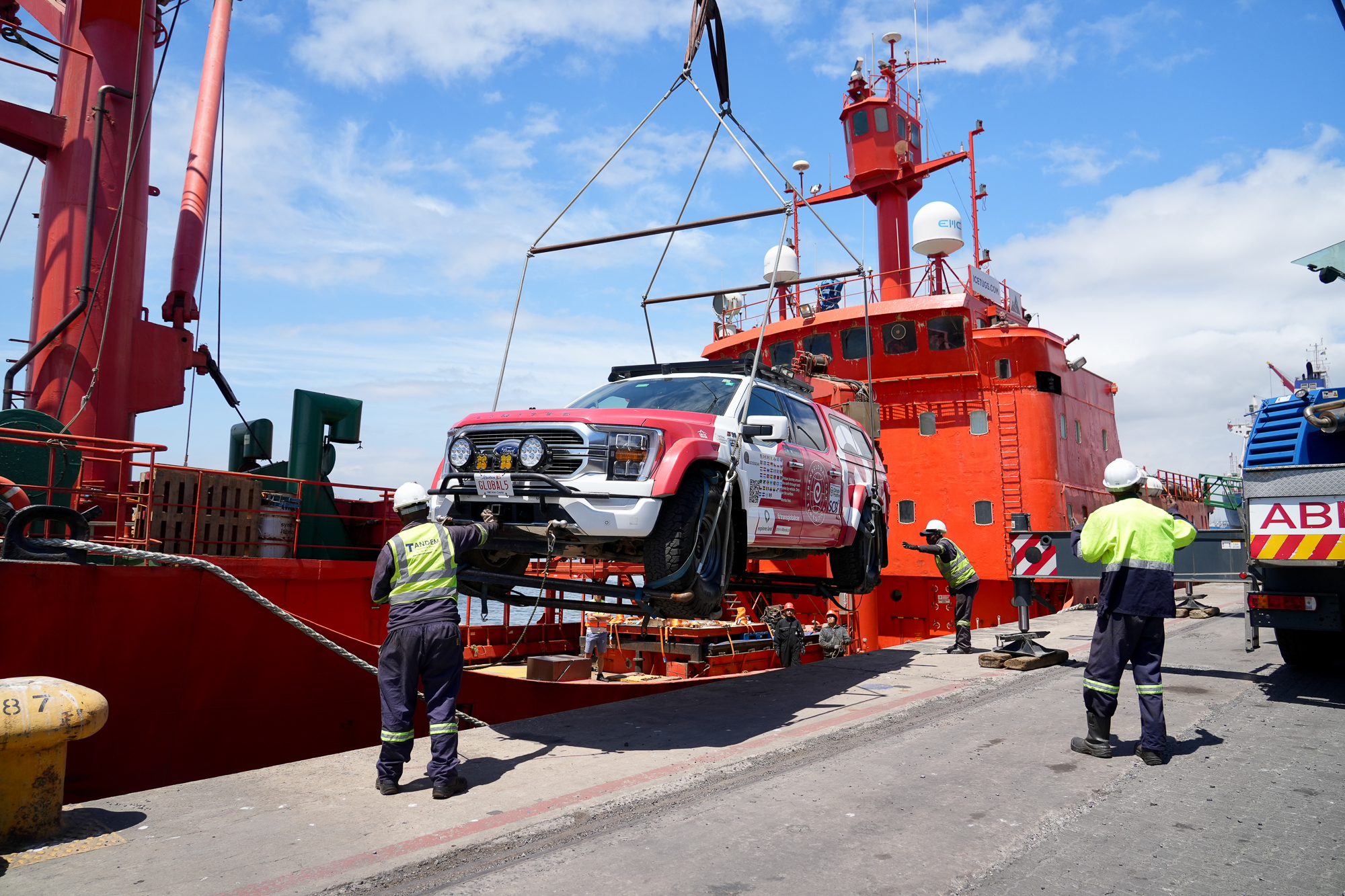
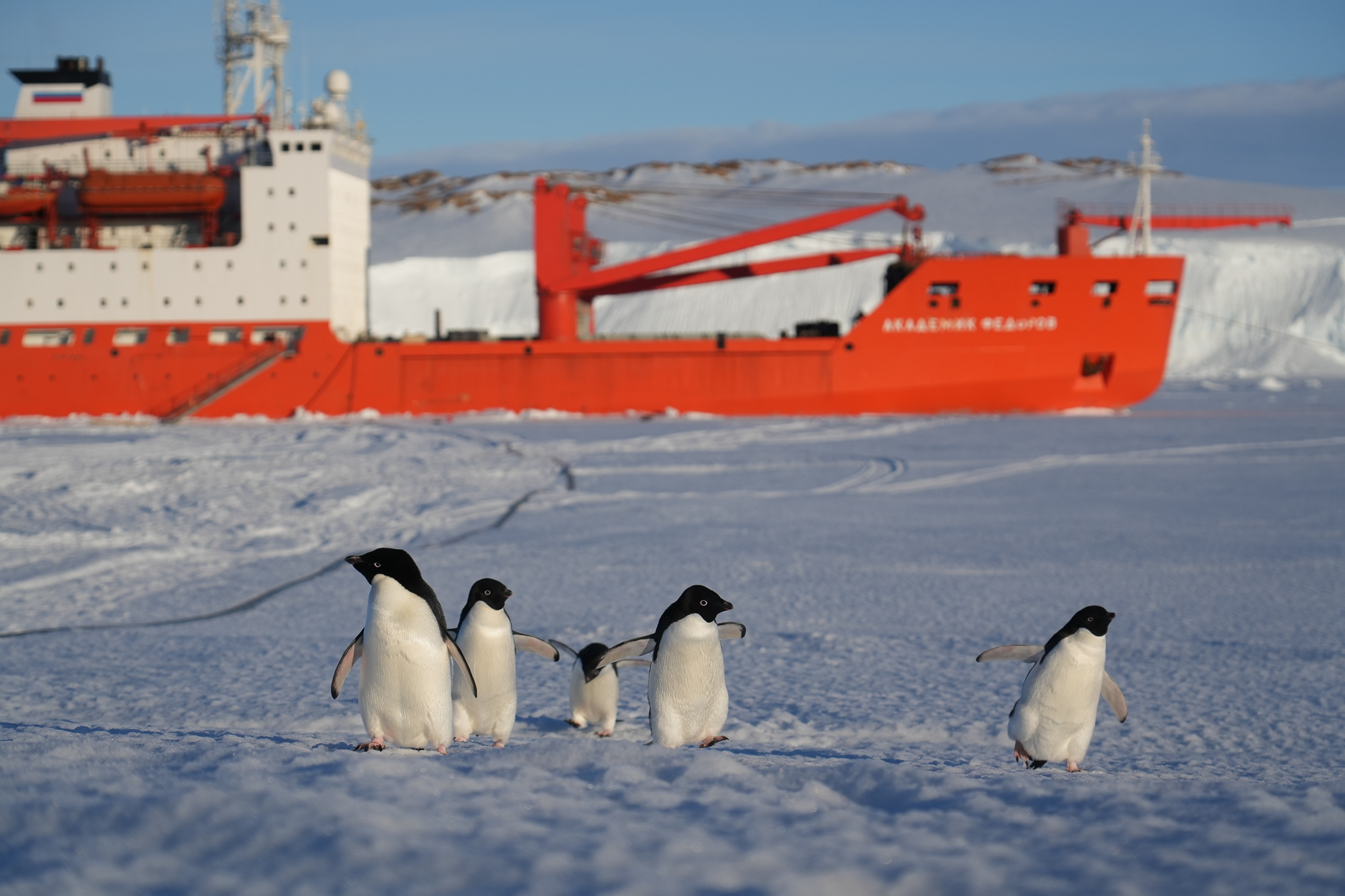


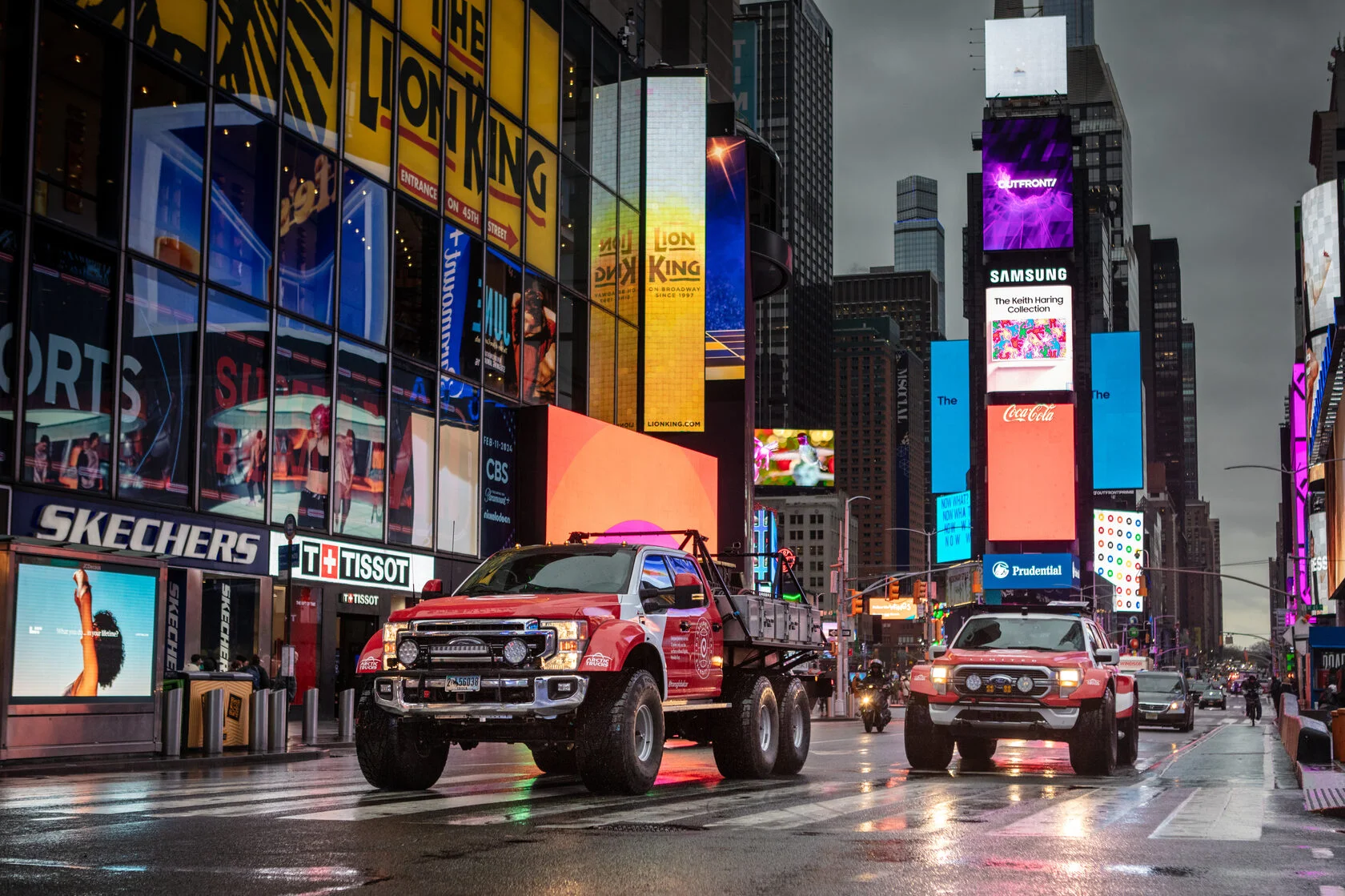
The core members of the Transglobal Car Expedition arrived at Times Square in New York City after 475 days, over 92,500 kilo-meters, and nearly 16 months of travel. For many reasons, this pole-to-pole journey will remain one-of-a-kind. Data from NASA and the US National Snow and Ice Data Center confirm that winter sea ice in the Arctic reached a record low in 2025. “We know the Arctic ice cap is getting smaller,” Comrie-Picard says. “We’ve seen the data. We’ve seen it with the Indigenous people we’ve spoken to. The ice breaks up earlier, the weather is changing, the migration patterns are changing.” This fact, plus the colossal expense, the unique vehicle requirements, and the niche polar expertise required, means it is unlikely we’ll see an undertaking quite like this one again.
But Emil Grímsson is already dreaming about his next polar project. “There have been attempts made to do a winter crossing of Antarctica,” he says. “This is a huge, huge project, but we believe we have a plan to do it.” In the meantime, the core team awaits the safe arrival of their fleet of continental Ford trucks into the United States. With unexpected border complications in Veracruz, Mexico, the vehicles remain in customs purgatory with no end date in sight. Eager to complete the expedition on schedule, the core team members—including Shakhnovsky, Elagin, Grímsson, Comrie-Picard, and Alexei Safanov—arrived in New York City victorious and in nothing less than a black Chrysler Pacifica rental van.
Editor’s Note: This article was originally published in Overland Journal’s Fall 2025 Issue.
Our No Compromise Clause: We do not accept advertorial content or allow advertising to influence our coverage, and our contributors are guaranteed editorial independence. Overland International may earn a small commission from affiliate links included in this article. We appreciate your support.
