

Toyota never disappoints, consistently delivering vehicles that strike a balance between innovation, reliability, and thoughtful design—meeting evolving customer needs while staying true to its reputation for quality and dependability.
At the 2025 SEMA Show in Las Vegas, Toyota is highlighting its versatility and engineering depth with four distinct concept vehicles designed to explore the intersection of performance, sustainability, and adventure.
The collection includes the hydrogen-powered Tacoma H2-Overlander Concept, the performance-focused Turbo Trail Cruiser, the hybrid Scion 01 Side-by-Side Concept, and the Corolla Cross Hybrid Nasu Edition. Together, these vehicles reflect Toyota’s multi-pathway approach to mobility and its ongoing commitment to innovation across every powertrain category.
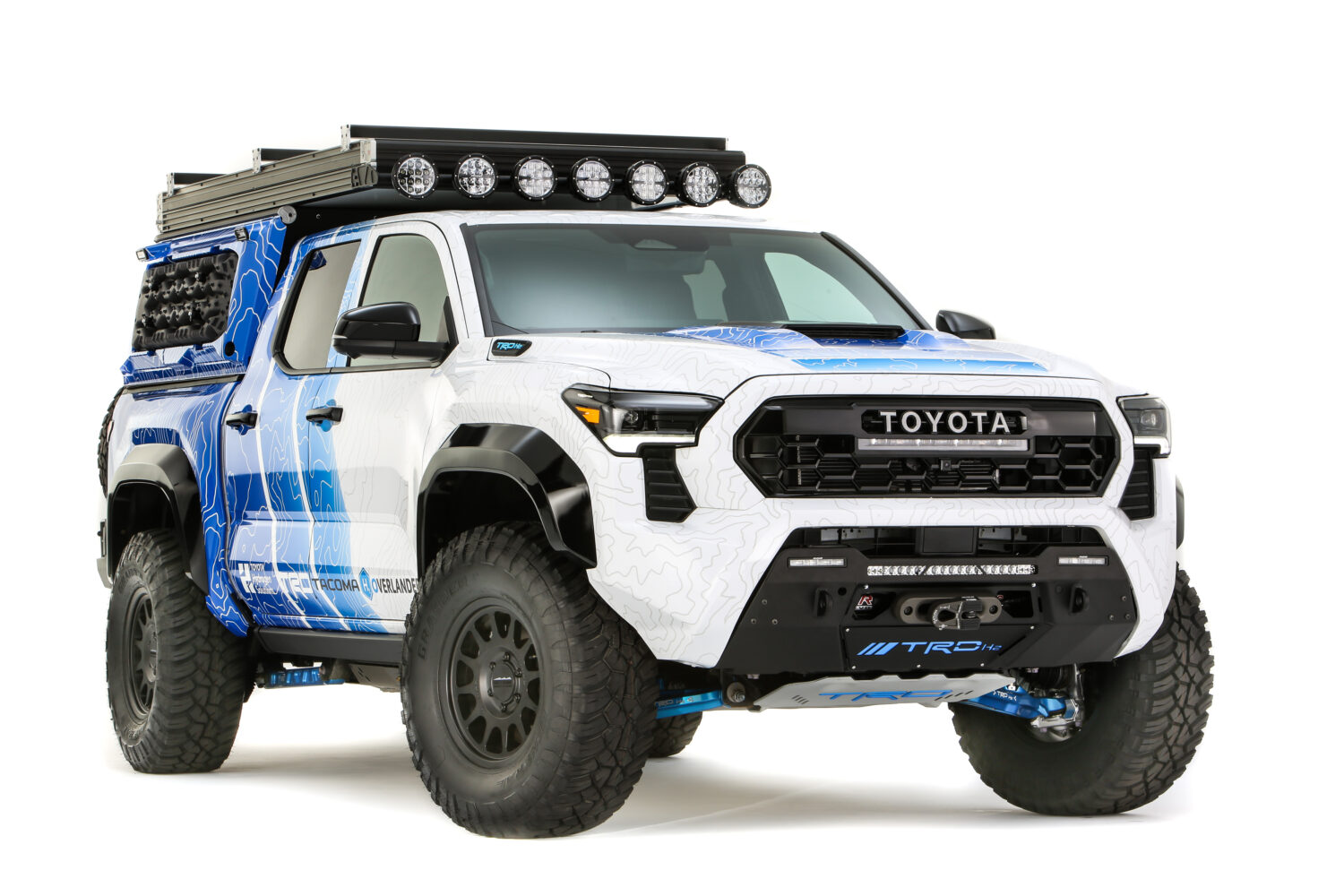
Tacoma H2-Overlander Concept
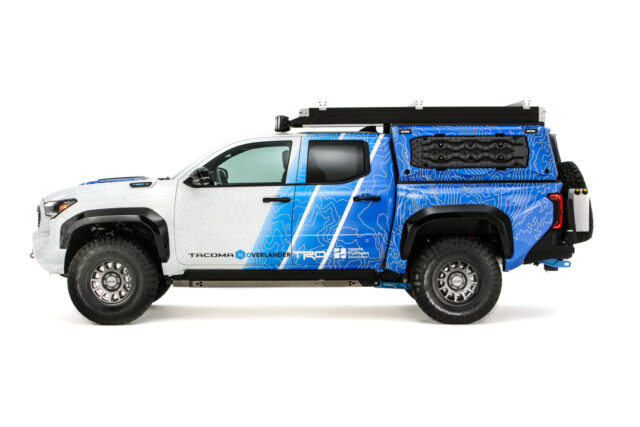
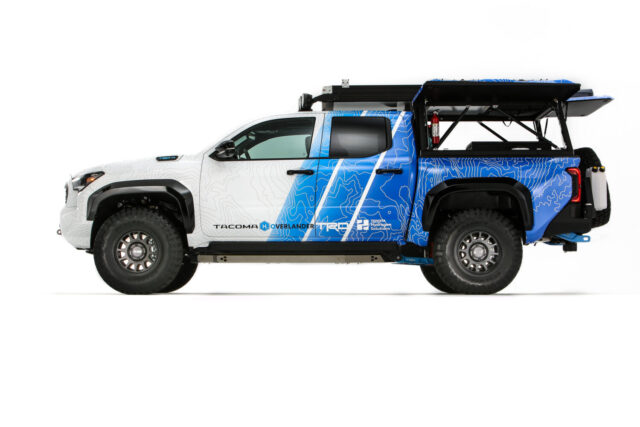
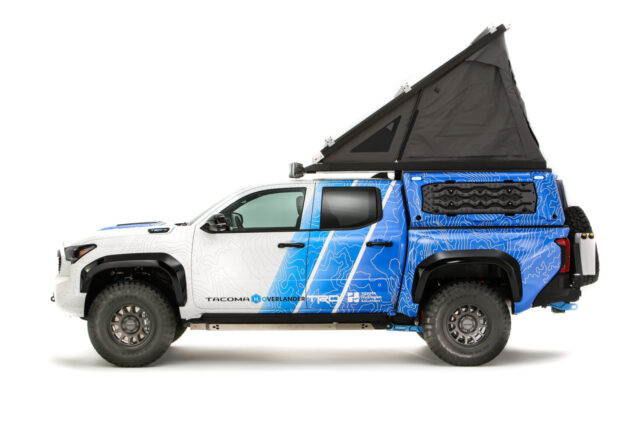
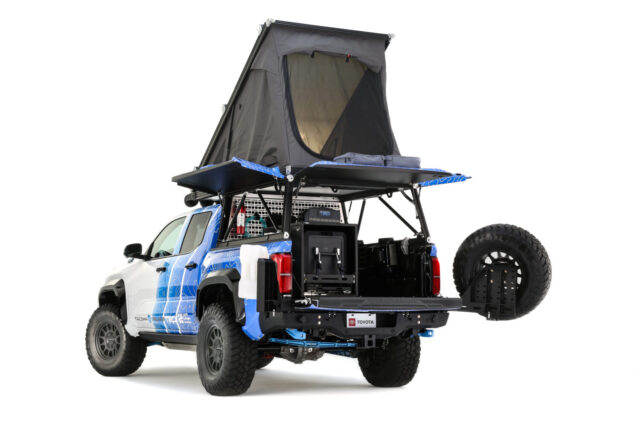
The Tacoma H2-Overlander Concept represents Toyota’s most forward-looking take on off-road exploration. Developed by Toyota Racing Development (TRD) teams in California and North Carolina, the concept blends hydrogen fuel cell and battery-electric power within a purpose-built overlanding platform.
Built on Toyota’s TNGA-F truck architecture, the Tacoma H2-Overlander produces 547 horsepower through dual electric motors while emitting only water vapor. A patent-pending TRD exhaust water recovery system captures and filters the hydrogen stack’s only byproduct—pure water—for use at camp! It pairs a second-generation Mirai fuel cell stack with three hydrogen tanks totaling six kilograms of storage and supplements this setup with a 24.9-kilowatt-hour lithium-ion battery pack. Power is distributed between a 225-kilowatt front motor and a 188-kilowatt rear eAxle, providing immediate torque and smooth all-wheel-drive response.
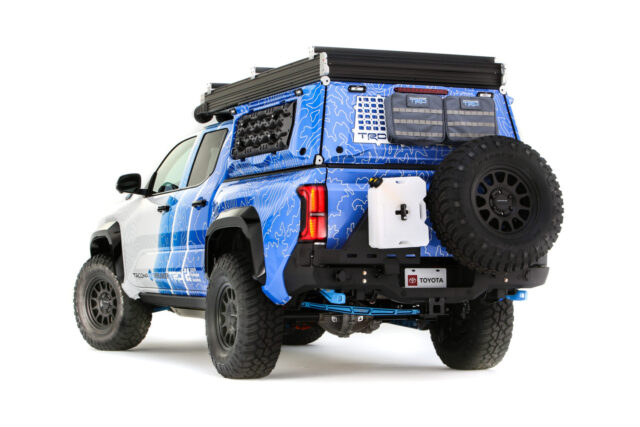
TRD engineers equipped the concept with a billet long-travel suspension and heavy-duty Fox 2.5 Performance Elite Series shocks adapted from Tundra development. A front limited-slip differential and rear electronic locking differential enhance traction, while upgraded Tundra brakes and 35-inch off-road tires on 17×8.5-inch wheels improve control. Cooling systems borrowed from the Tacoma TRD Pro and Lexus RZ ensure consistent performance under load.
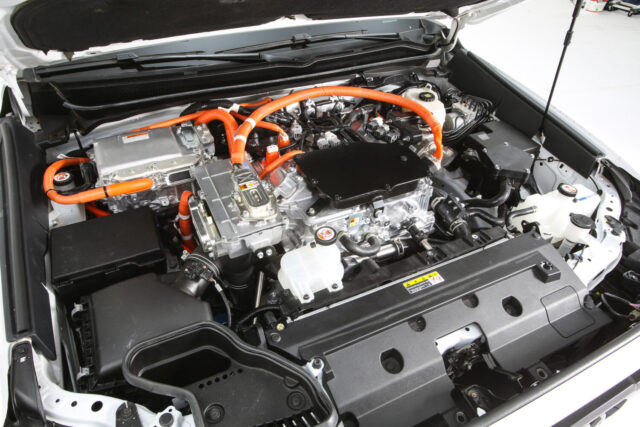
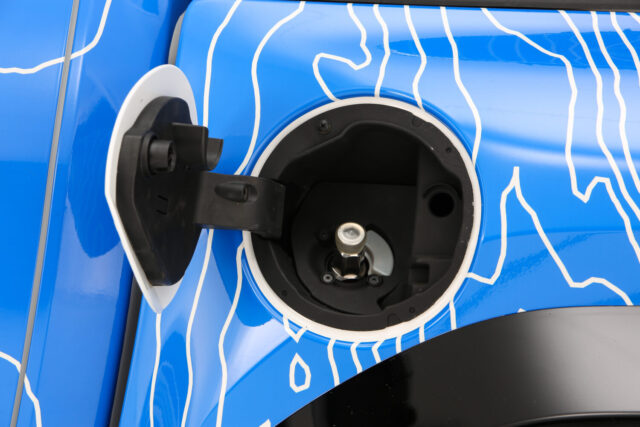

Beyond its drivetrain, the Tacoma H2-Overlander serves as a mobile power source. Its 15-kilowatt power takeoff can energize an off-grid campsite, operate household systems, or recharge two EVs simultaneously via dual NEMA 14-50 outlets.
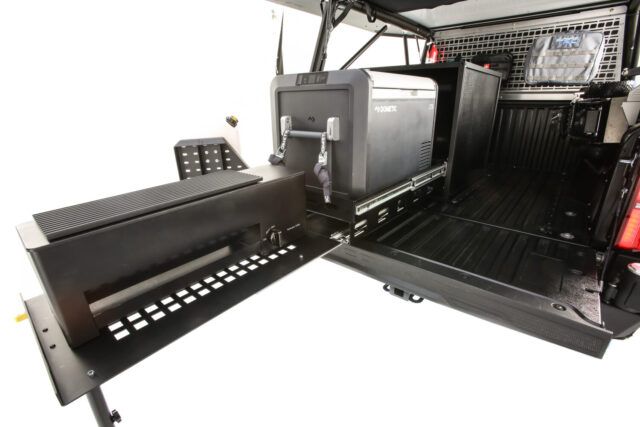
Externally, the Tacoma H2-Overlander wears heavy-duty bumpers, recovery points, and dual swingouts. Integrated lighting, a winch, and storage systems complete the overland setup.
Turbo Trail Cruiser

The Turbo Trail Cruiser rekindles the spirit of the 1985 Land Cruiser FJ60 with a thoroughly modern powertrain, stirring the imagination of classic overland enthusiasts everywhere.
Built by Toyota’s Motorsports Garage, the project combines classic Land Cruiser styling with the i-Force 3.4-liter twin-turbocharged V6 found in today’s Tundra. Generating 389 horsepower and 479 pound-feet of torque—nearly twice that of the original inline-six—the engine offers refinement, lower emissions, and superior responsiveness.


Director of Operations Marty Schwerter led the build and described it as “a hot-rod approach with Toyota DNA — power, drivability, and reliability in a package that still feels true to the original Land Cruiser.” The engineering team ensured factory authenticity by avoiding structural modifications. New motor mounts, a custom-machined adapter plate that links the V6 to the original five-speed manual transmission, and a reworked oil pan facilitate seamless integration.
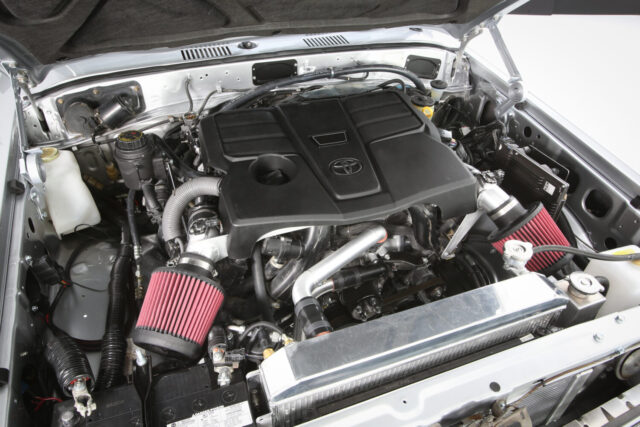
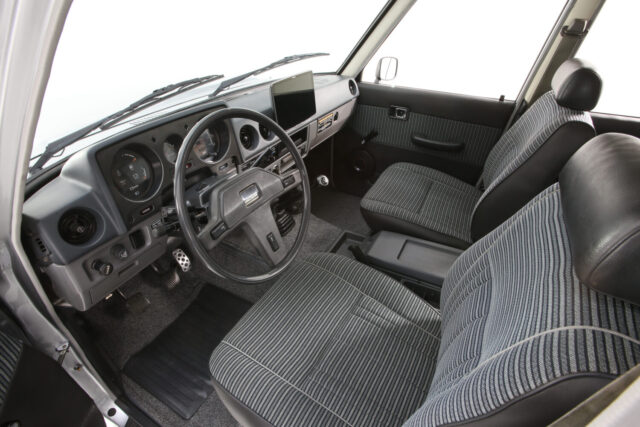
The result is a vehicle that looks original yet drives like a contemporary model. A bespoke exhaust system and enhanced cooling were developed for the turbocharged engine, while a modern wiring harness preserves factory-grade reliability. The Cruiser rides on a mild 1.5-inch lift, 35-inch tires, and retains the period-correct Silver 147 paint and graphics from 1986. Inside, the original layout remains intact, complemented by a discreet JBL sound upgrade.
Scion 01 Concept

The Scion 01 Concept marks the return of the Scion nameplate, reimagined as a hybrid off-road performance platform. Built by Toyota’s North American engineering team, the concept embodies Scion’s legacy of creativity and experimentation.
Purpose-built as a side-by-side vehicle, the Scion 01 merges Toyota’s off-road know-how with hybrid powertrain innovation. It features Toyota’s High-Output Turbocharged Four-Cylinder Hybrid system—derived from its truck lineup—producing over 300 horsepower. This combination of combustion and electric power provides strong torque, quick throttle response, and improved range efficiency.


A unique Silent Mode enables the vehicle to operate solely on electric power, allowing for quiet traversal through natural landscapes and aligning with Toyota’s environmental goals. Designed for versatility, the Scion 01 handles everything from high-speed desert runs to technical rock crawling thanks to its long-travel suspension and balanced chassis.
Safety and durability remain central to the design, with a Toyota-developed FIA-compliant roll cage that meets SCORE and FIA standards. The concept uses proven Toyota driveline and braking components for reliability in extreme terrain.


Corolla Cross Hybrid Nasu Edition
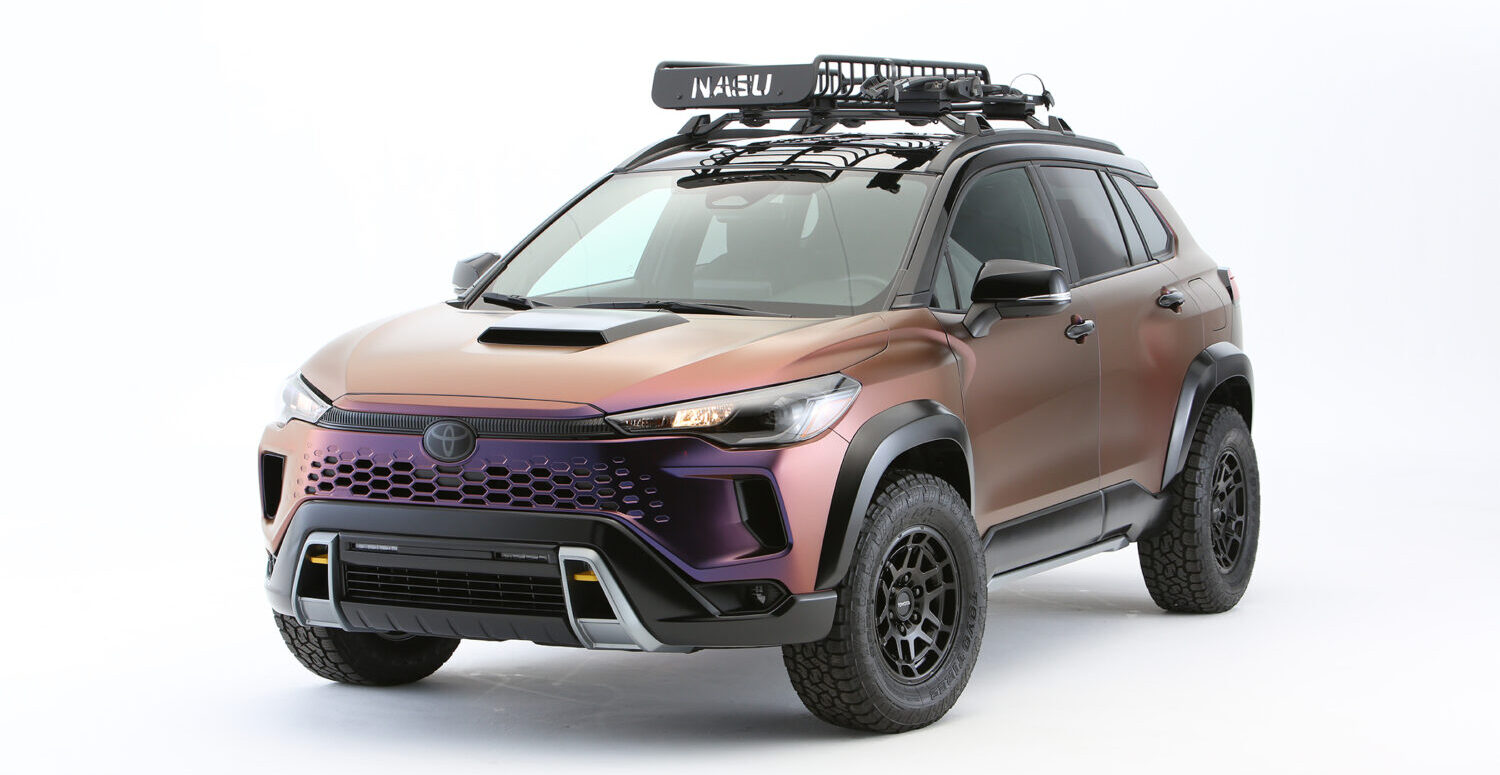
The 2026 Corolla Cross Hybrid Nasu Edition adds a new dimension to Toyota’s compact crossover, transforming it into a capable, adventure-oriented machine. Named after Japan’s Mt. Nasu, known for its trails and hot springs, the concept reflects Toyota’s effort to merge practicality with outdoor capability.
The Nasu Edition was developed by Toyota’s Service Parts and Accessories Development (SPAD) team, which specializes in designing components that extend vehicle functionality. Balancing this concept build alongside numerous ongoing accessory projects, SPAD engineers utilized CAD modeling, 3D printing, and CNC machining to develop and assemble the vehicle across multiple facilities.


Under the hood, the Nasu Edition retains the 2026 Corolla Cross Hybrid’s 2.0-liter Atkinson-cycle four-cylinder engine combined with three electric motors, producing 196 horsepower through an all-wheel-drive system. Custom Toyota truck wheels, fitted with Toyo Open Country A/T III tires and a suspension lift, improve the stance and ground clearance while maintaining efficiency and comfort.
Visually, the Nasu Edition stands apart with a custom body kit, modified hood scoop, and a deep purple wrap—a playful nod to the Japanese word for “eggplant.” Practical features reinforce its overlanding intent: rock sliders, a modular roof rack with an articulating cargo basket, a drawer storage system in the rear, and a refrigerator tray for extended travel convenience.


Lighting enhancements include upgraded lightbars, fog lamps, illuminated door sills, and interior lighting designed to make camp setup easier. Inside, subtle refinements align the cabin with the Nasu Edition’s adventurous spirit. A downhill mountain bike mounted to the roof rack connects the concept to cycling culture and symbolizes its focus on active lifestyles.
The four concept vehicles collectively highlight Toyota’s comprehensive approach to innovation—embracing hydrogen fuel cells, hybrid systems, gasoline performance, and advanced accessories to meet diverse customer needs.
Read More: SEMA 2025 :: Innovation, Heritage, and Performance Unite in Las Vegas
Our No Compromise Clause: We do not accept advertorial content or allow advertising to influence our coverage, and our contributors are guaranteed editorial independence. Overland International may earn a small commission from affiliate links included in this article. We appreciate your support.
