

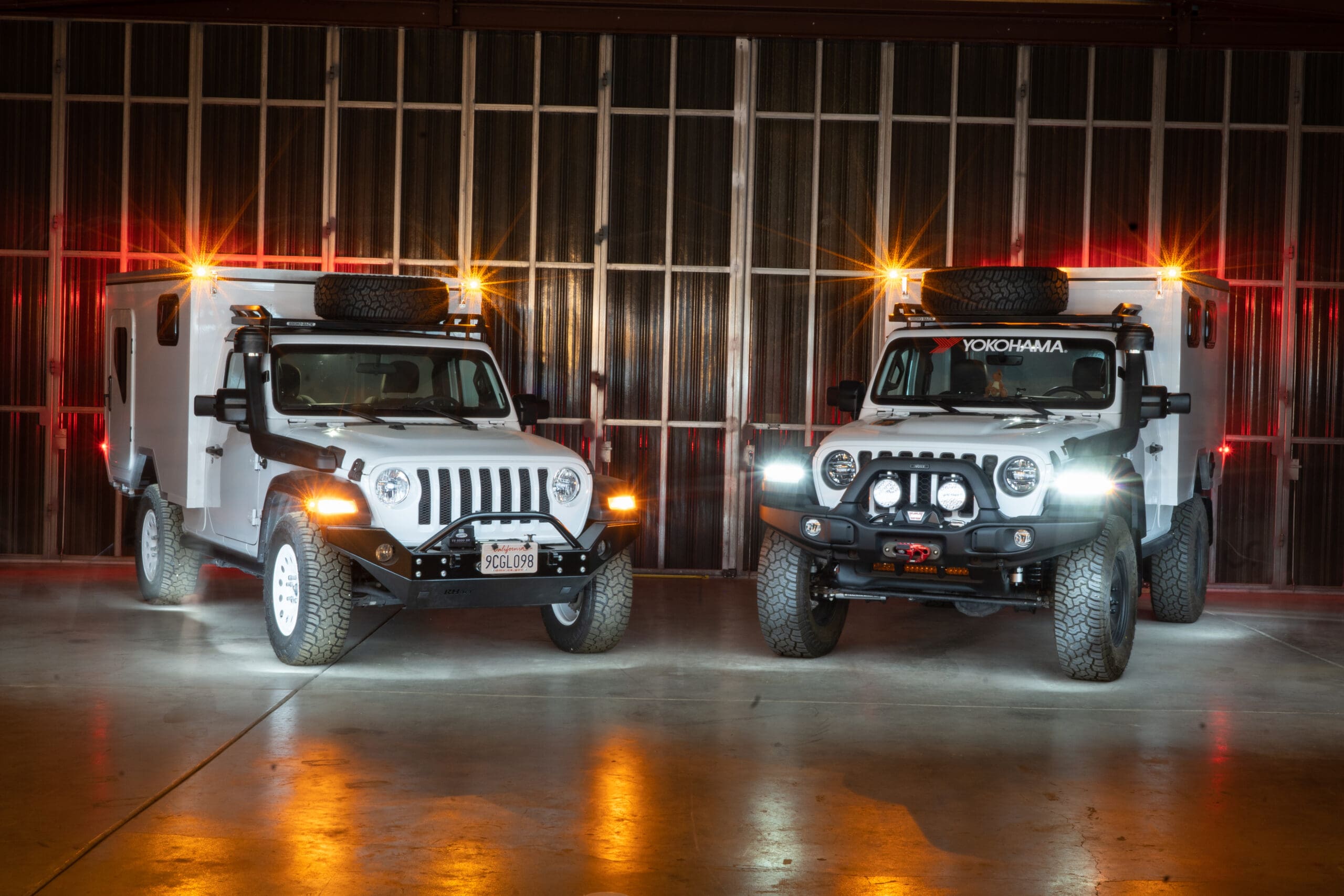
Photography by Dan Grec and Michael Fuchs
Mad scientists, the Bermuda Triangle, and quicksand. According to Disney movies and cartoons, a person exploring the globe will inevitably have to deal with these from time to time, like it or not. In my personal experience, that has not been the case. Until recently, that is.
Thanks to my online presence, I receive a lot of random emails, both good and bad. One in particular stood out thanks to the attached CAD rendering. Michael Fuchs, whom I didn’t know at all, was toying with the idea of building a custom Jeep camper. He wanted to hear my thoughts on exploring the world with a modern Jeep Wrangler and wondered whether it was a good idea.
I can’t lie, he had me at “Jeep camper.” Little did I know that one simple email would lead to almost three years of planning, logistics, fabrication, and long nights, with the end result being much more than I ever thought possible.
Calling Michael and his wife, Yvonne, mad scientists might be a little unfair. Don’t get me wrong, they’re both completely mad, in the very enthusiastic sense, and they’re both scientists to boot. They even have a cavernous lair disguised as an aircraft hangar, where they design and fabricate flying and rolling contraptions that would make Wile E. Coyote green with envy. From a 1943 Ford Willys Jeep that became the namesake for this project to a Pinzgauer, a light medium tactical vehicle (LMTV), and a Unimog, they also have firsthand experience with many of the most iconic overland vehicles ever made.
Michael and Yvonne met as engineers at NASA and later in the private sector, where they literally designed, built, and tested space vehicles. For a couple of decades, they have been developing cutting-edge vehicles that fly extremely high and fast. Michael even saw the curvature of the Earth while flying at 52,400 feet.
The couple has always explored wherever they happened to be, working with a modest two-door Wrangler equipped with a rooftop tent. Although this setup got them out, waking up to 6 inches of wet snow soon had them dreaming of a better house on wheels.
After designing and fabricating a custom living habitat for the Unimog, they set off to explore Alaska and the Arctic. While it was an incredible living habitat, the finished vehicle was simply too big. Potential recovery was an issue, and the Unimog didn’t fit on tight, overgrown trails, so they missed out on the best remote camps. In a strange twist of fate, driving the world’s most capable off-roader resulted in restricted adventures that were less remote than those in the little two-door Wrangler (which was also not ideal). Michael began to ponder a middle ground.
If a comfortable living habitat could be built on a modest vehicle, it could go anywhere on the planet without worry of being forever stuck. This hypothetical vehicle would get vastly better mileage than the 10 mpg of the Unimog and would be much more comfortable at highway speeds. The seed was planted, and Michael began sketching a modest-sized living box mounted to the back of a modest-sized 4×4.
The ideal base vehicle would be readily available in North America, affordable, easy to modify, and have large aftermarket support. Their two-door Wrangler had been a great adventure vehicle, so modifying a four-door Wrangler into a camper started to make more and more sense. As a bonus, the body-on-frame construction greatly simplified the structural engineering, and the easily removable doors and roof were a nice bonus.

Design and Engineering
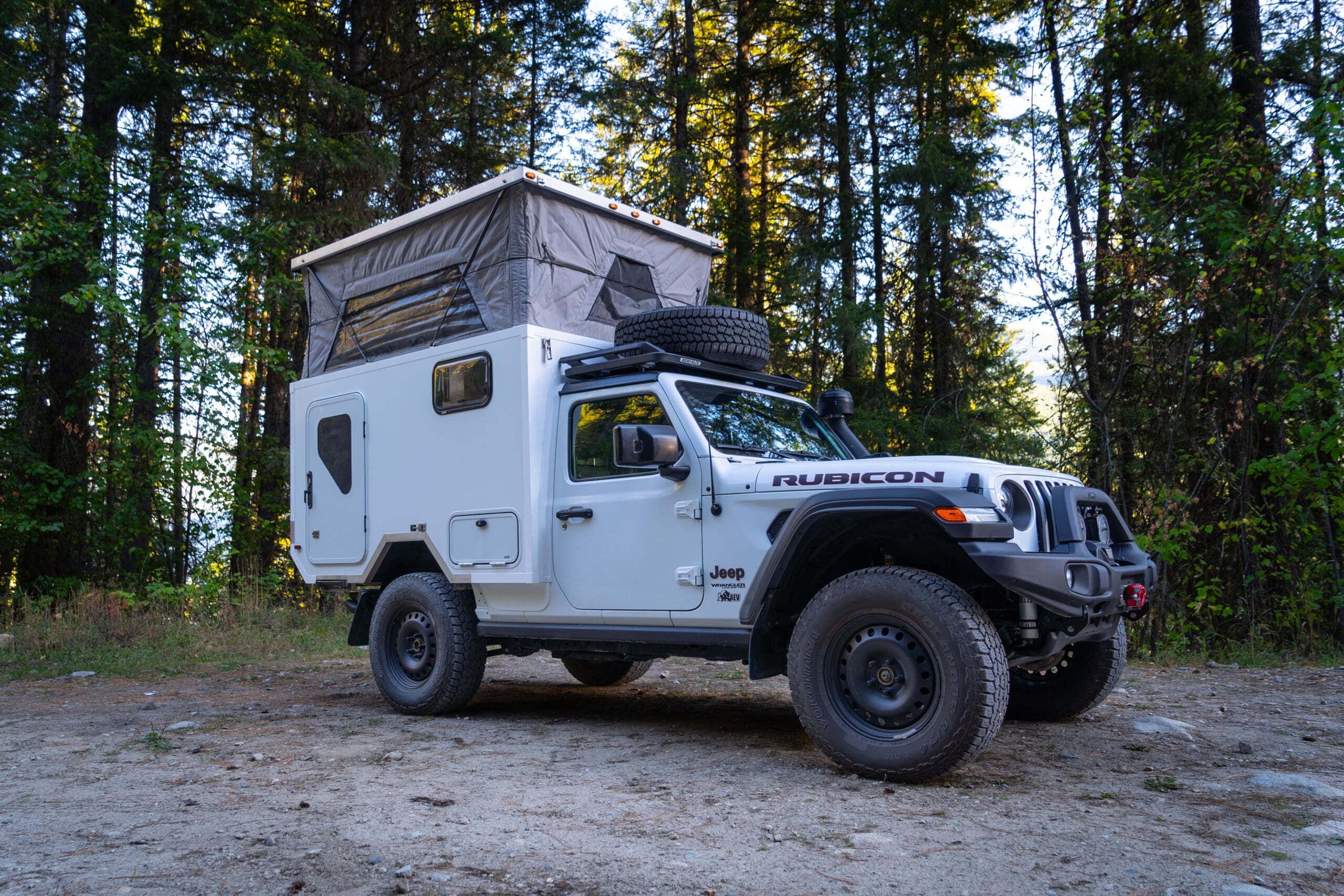
Michael and Yvonne applied the knowledge gained from 15 years of overland vehicle building and their travels, and jumped into the new design. At a high level, the vehicle needed to fit inside a standard 20-foot shipping container to enable global adventures and still maintain many of the standout features of the Unimog: a cab passthrough, standing height with top up, sitting height with top down, four-season comfort, minimal setup time at camp, and strong four-wheel drive capability.
After I plucked up the courage to ask, Michael soon agreed that building two campers at the same time would add a fun twist to the project. He combined our requirements, iterated his design with me, and built the two campers as identical siblings, allowing for the customization of the final internal layout and function to meet our unique travel needs.
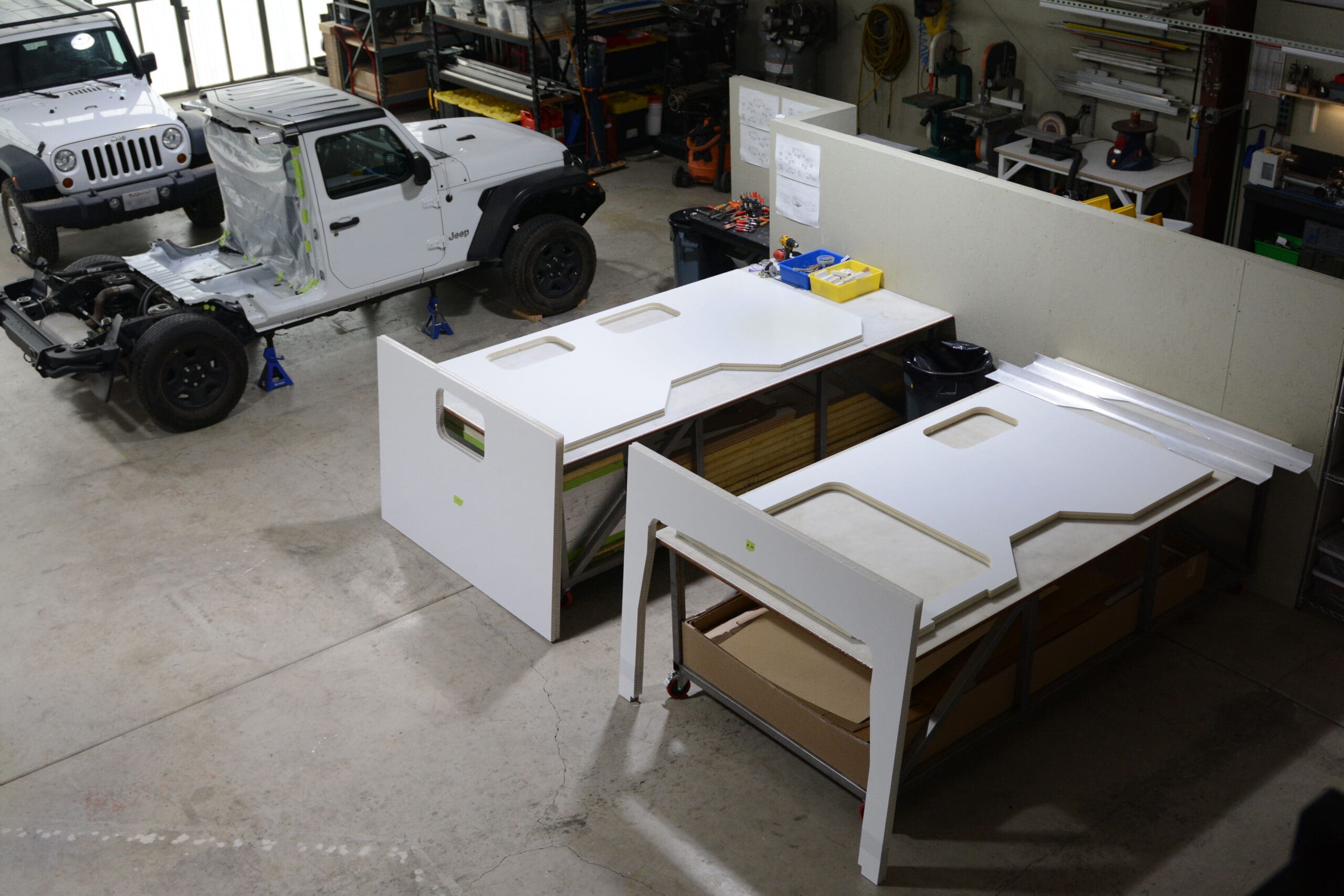
Combining our various wants into a single design was no easy task, driving every decision from structural layout to window and door locations. Michael consulted a number of overland industry experts, including Dave Harriton of American Expedition Vehicles, who was extremely helpful, offering recommendations based on his building of the Wrangler-based AEV Outpost II camper. In the end, Michael settled on fabricating custom vacuum-formed carbon fiber panels that adhered to a TIG-welded structural steel subframe, which integrated with the stock Wrangler JLU body mounts and roll bar interfaces.
No Turning Back
Upon our arrival at the shop, the first order of business was to finalize numerous build details for the installation of Michael’s camper, learning as much as possible about working together and the camper build and integration before digging into my own. From the minute I met Michael and Yvonne face-to-face, I knew we would get along like a house on fire, and I enjoyed every minute of the project.
I have long pined for a strong 4×4 with a small diesel engine, and it’s finally available in North America with the 3.0 EcoDiesel in the Wrangler and Gladiator. The huge torque of the turbo-diesel from idle and the increased mileage are both priorities for adventures that span entire continents. Finding ultra-low-sulfur diesel in undeveloped regions of the globe is a concern; however, availability improves with each passing year, so I’m optimistic that I can make it work.
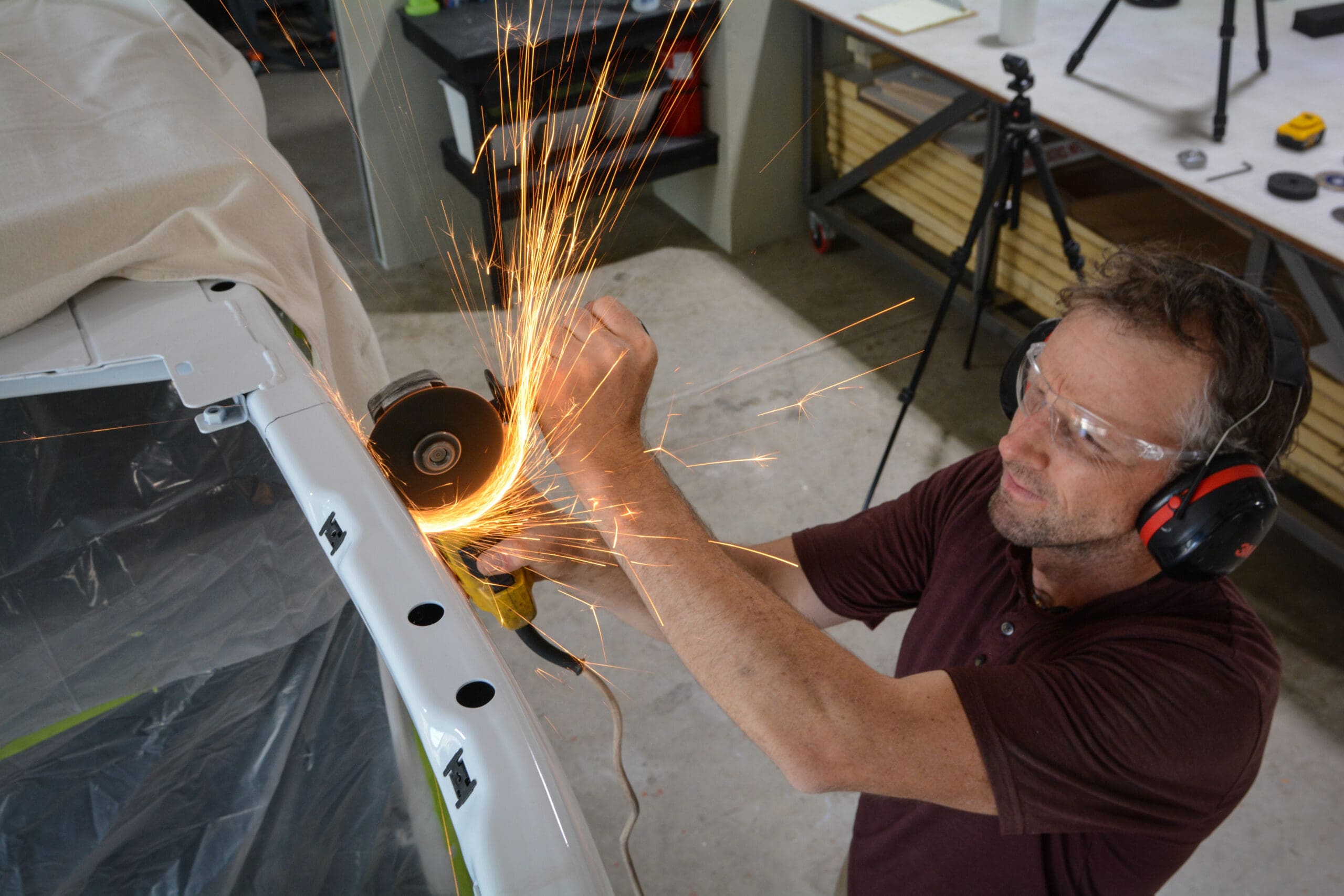
Cutting my pristine Jeep in half with an angle grinder was something I never thought I would do, and I procrastinated as long as possible before actually going through with it. I was either going to have an incredible adventure vehicle or a very expensive pile of scrap metal. Either way, I was all in, and the Refuge II Jeep Camper was born.
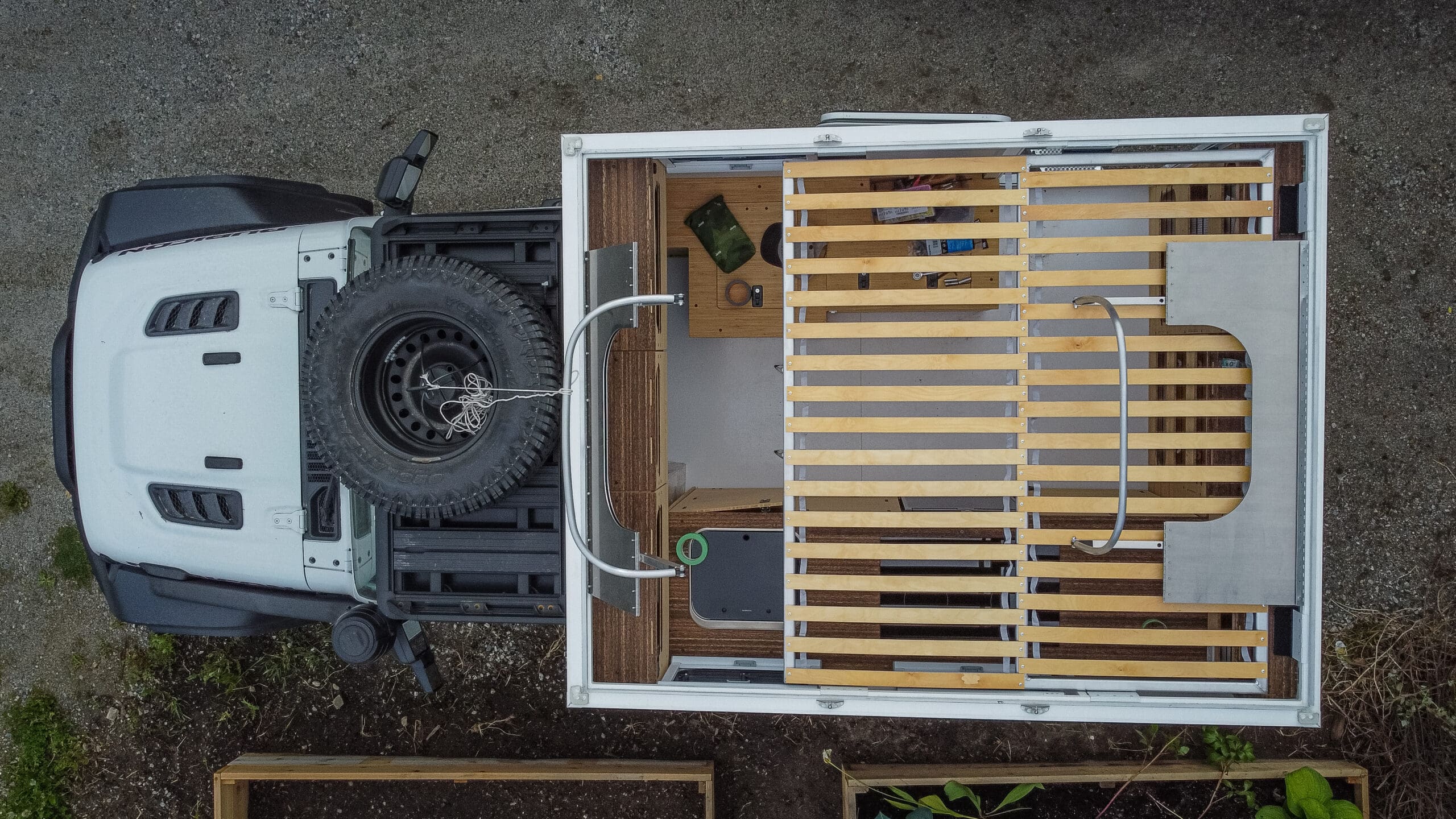
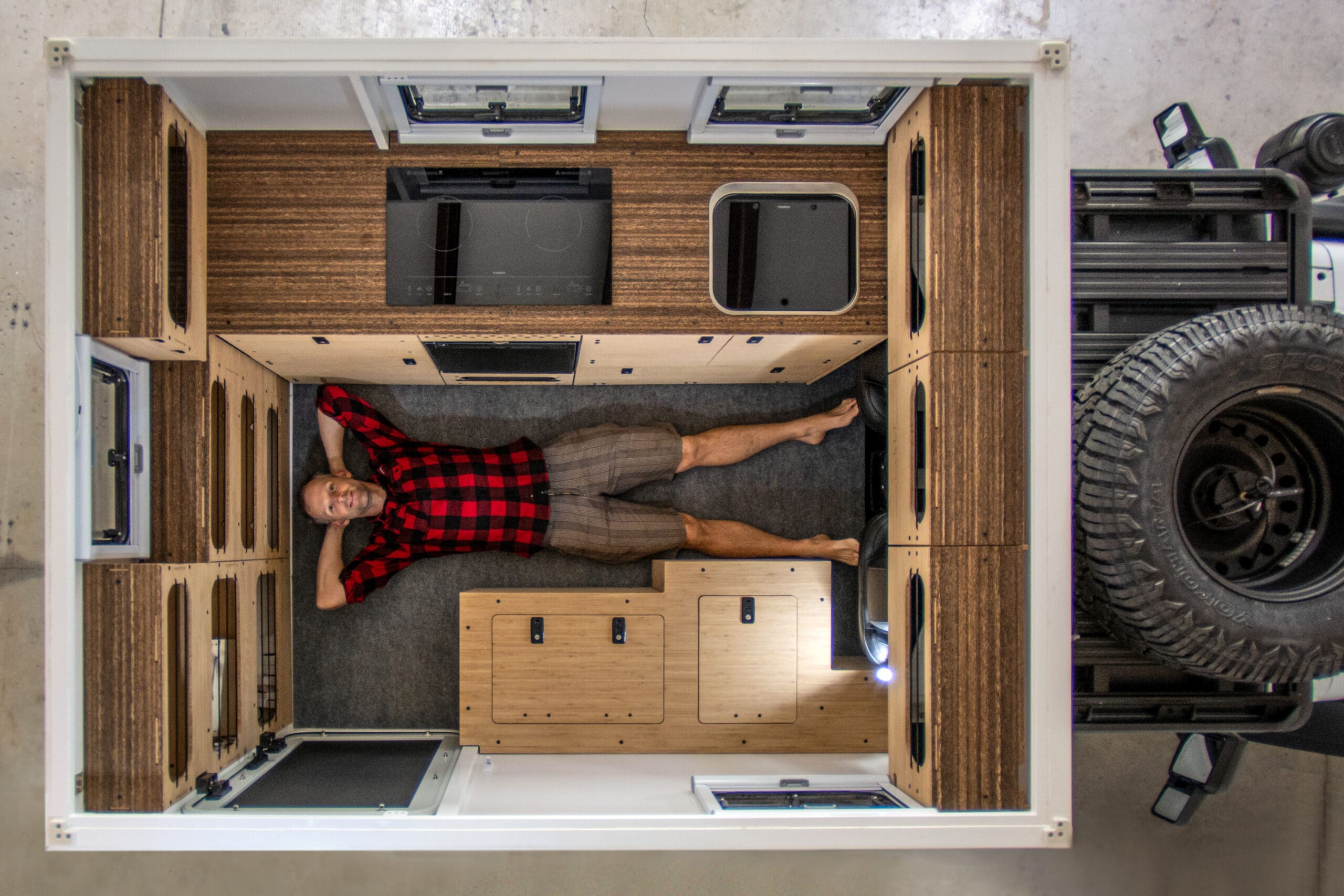
As Michael’s apprentice, we worked together to bond the composite camper to the forward section of my Jeep, creating a rigid structure similar to what it had initially been. With no flex or movement between the forward cab and the rear camper, this new single rigid unit behaves the same as the factory Jeep steel body. With three of us sitting inside, we were continually perplexed by the amount of internal living space that had been created. Measuring 6 feet wide by 7.5 feet long on the inside, the blank floor plan is larger than the bed of two Jeep Gladiators.
Long days in the shop turned into long weeks, and we soon had the camper’s main structure permanently mounted to my Jeep. During the off times, I tackled more run-of-the-mill Jeep upgrades, including a snorkel with a pre-filter, AEV front and rear bumpers, a Warn winch, Lightforce driving lights, and an AEV 2.5-inch DualSport XP suspension, complete with Bilstein remote-reservoir 8100 shocks.
As expected, replacing sheet metal and glass with carbon fiber reduced the weight of the empty Jeep and, in a roundabout way, Michael’s design created an enormously large living area while simultaneously increasing usable payload.
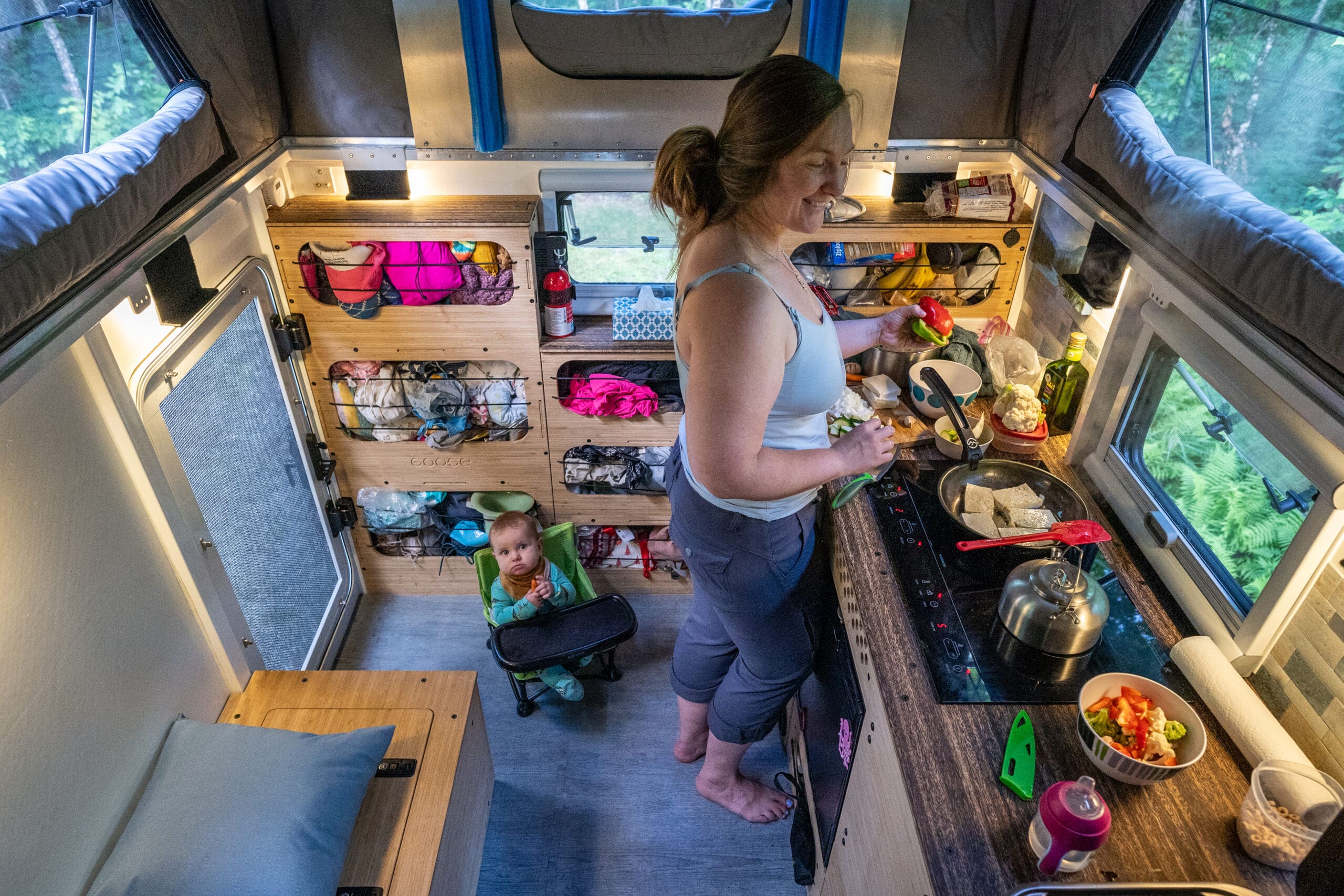
For the interior build and living systems, my goal was to gain experience with systems I had not previously integrated into a vehicle to learn the pros and cons. An Espar 2-kilowatt diesel heater, a 12-volt hot water boiler, and an outdoor shower will provide comfort in any weather. Additionally, a Dometic induction cooktop eliminates the dependency on propane or gasoline for cooking. The camper only requires diesel and drinking water to explore anywhere on the planet.
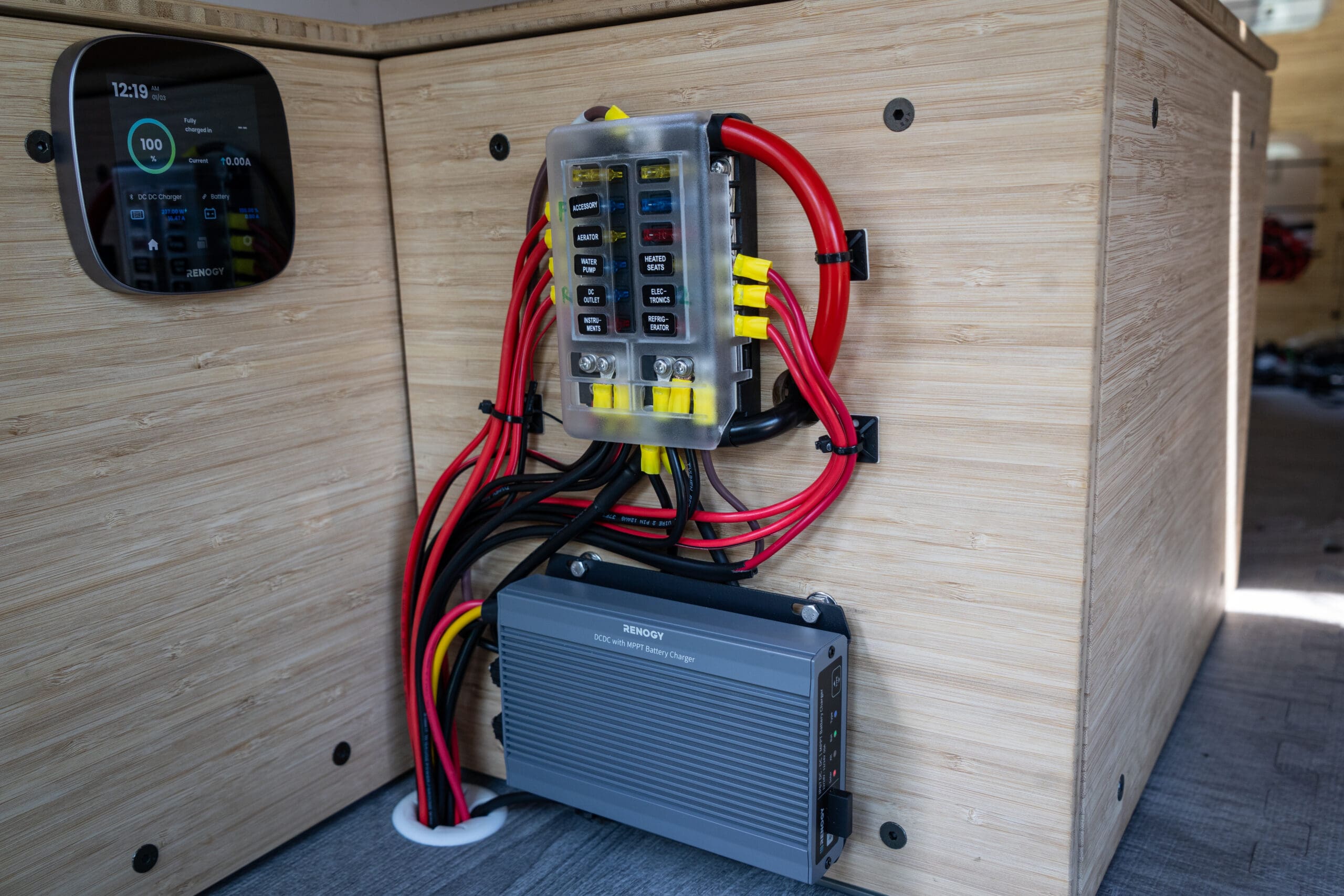
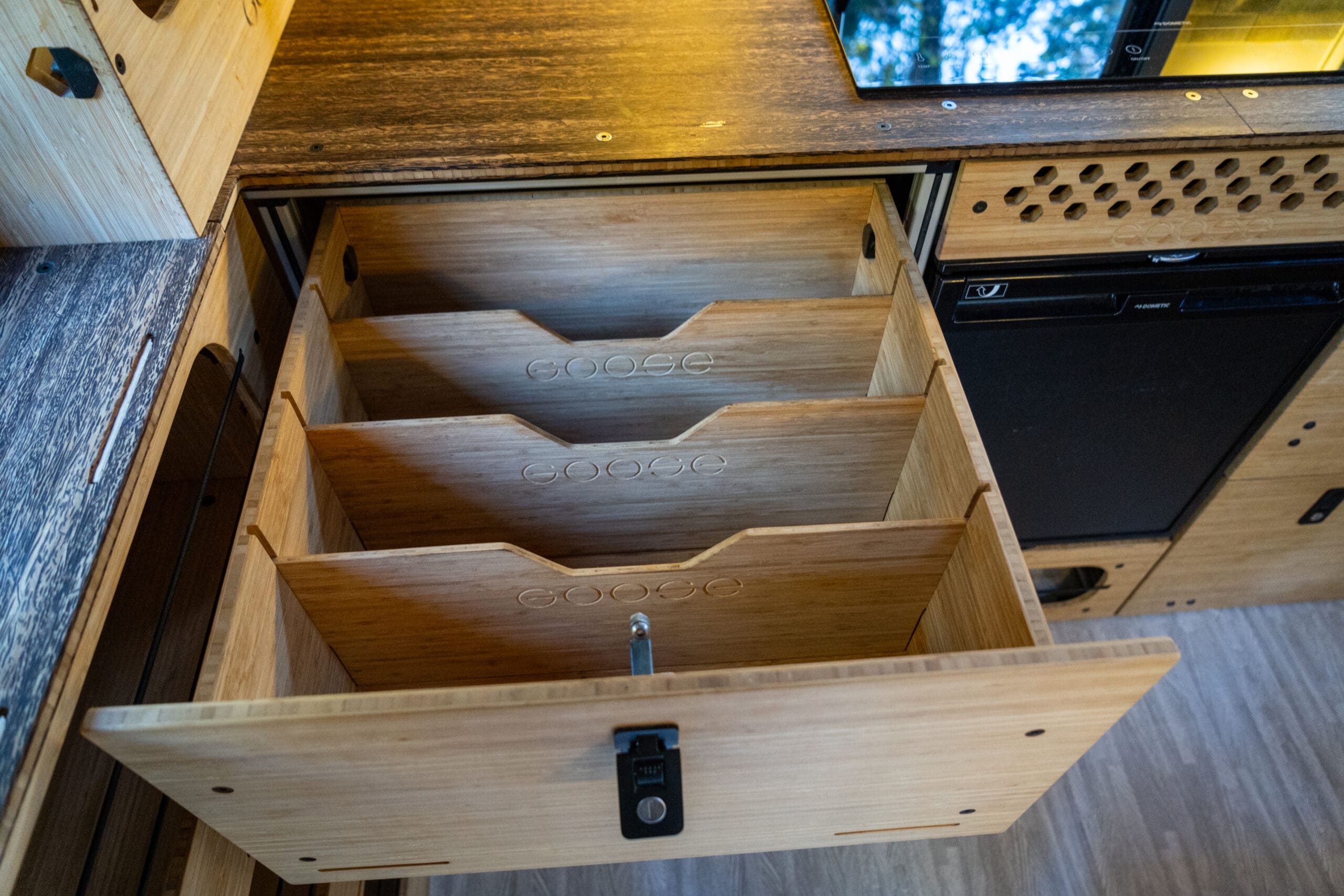
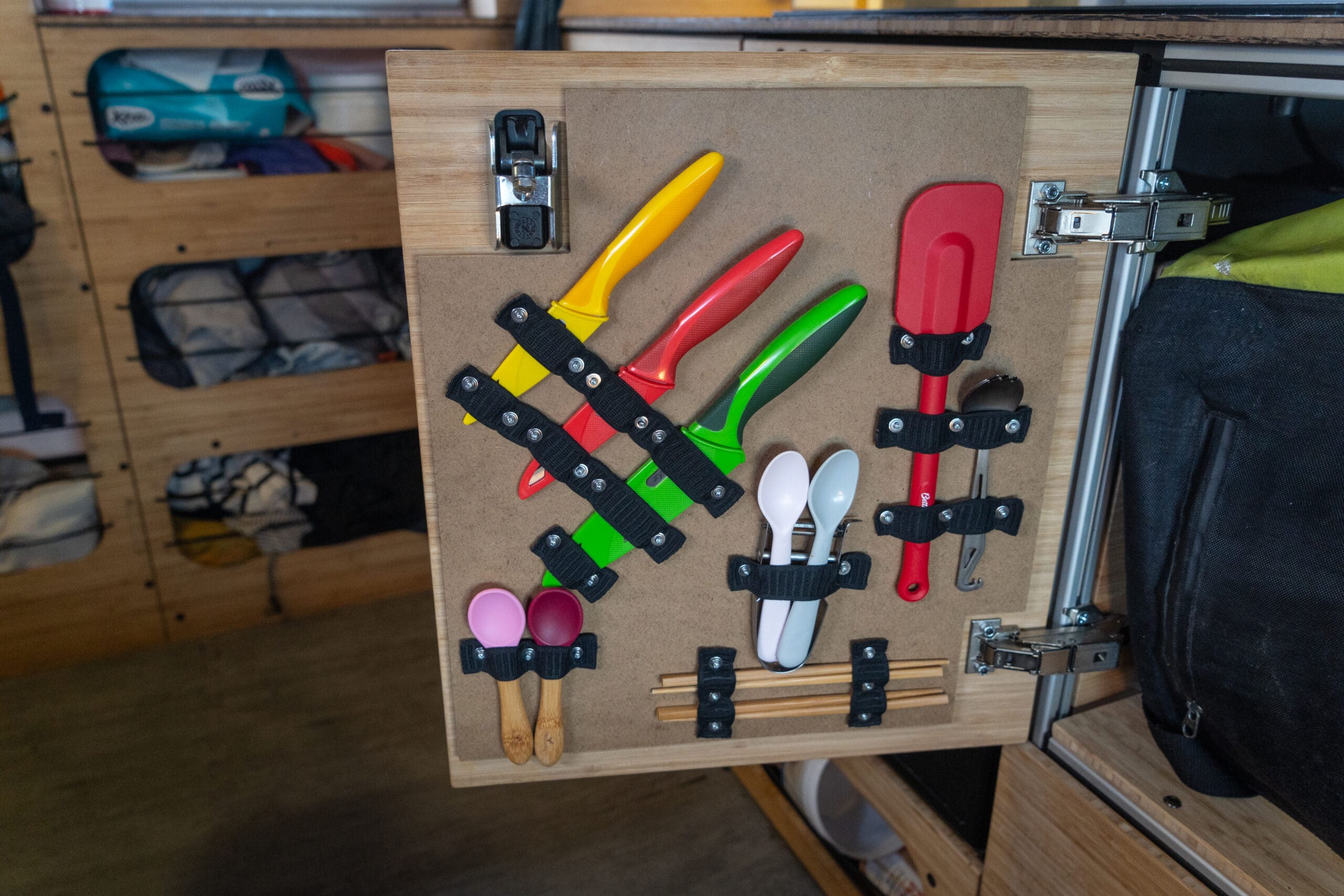
Goose Gear designed and built a custom interior using lightweight aluminum extrusions and bamboo, incorporating their latest Venture Series cabinet design, featuring a Dometic 50-liter, 12-volt upright fridge/freezer, a dual-burner induction cooktop, and a stainless steel sink. All water is double-filtered and UV-treated through a Guzzle H2O 0.5-micron carbon filter. A 200-amp-hour smart lithium battery paired with a 50-amp DC/DC charger and 600 watts of lightweight solar panels provides plenty of power, even near the Arctic Circle in winter.
For the vertical pop-top roof, Mario Donovan from AT Overland graciously gave his time to assist me in integrating their very stout bi-fold mechanism. And Supertramp Campers in Colorado designed and sewed an insulated canvas from scratch. Famous for campers with extremely large windows, Supertramp is the expert when it comes to pop-top camper canvas, with each of the four windows incorporating a zip-away bug screen, clear vinyl, and an insulated cover.
Shakedown to Adventure
Determined to shake out any bugs, we embarked on a rambling cross-continent shakedown spanning 4,000 miles across 10 US states and five Canadian provinces, where the camper performed flawlessly. Averaging a touch over 25 mpg exceeded even my expectations.
Planned from the outset for global travel, it was a tight squeeze as I reversed the camper into a standard 20-foot shipping container before lashing it down to the floor with ratchet straps. After a long and involved build, it was a strange feeling to watch the sealed container disappear into a sea of identical steel boxes, and I always feel hollow standing alone without so much as a receipt for my trouble.
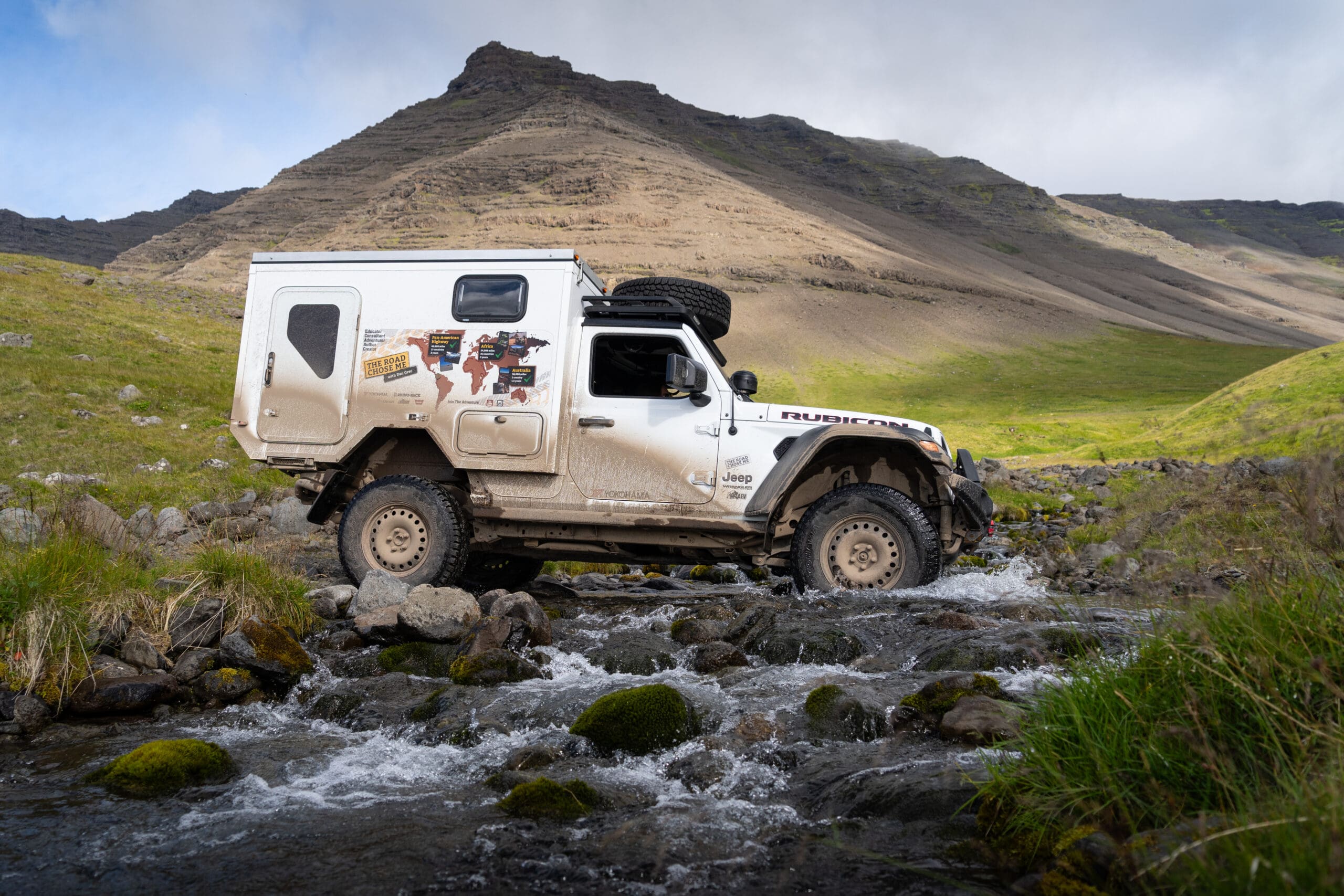
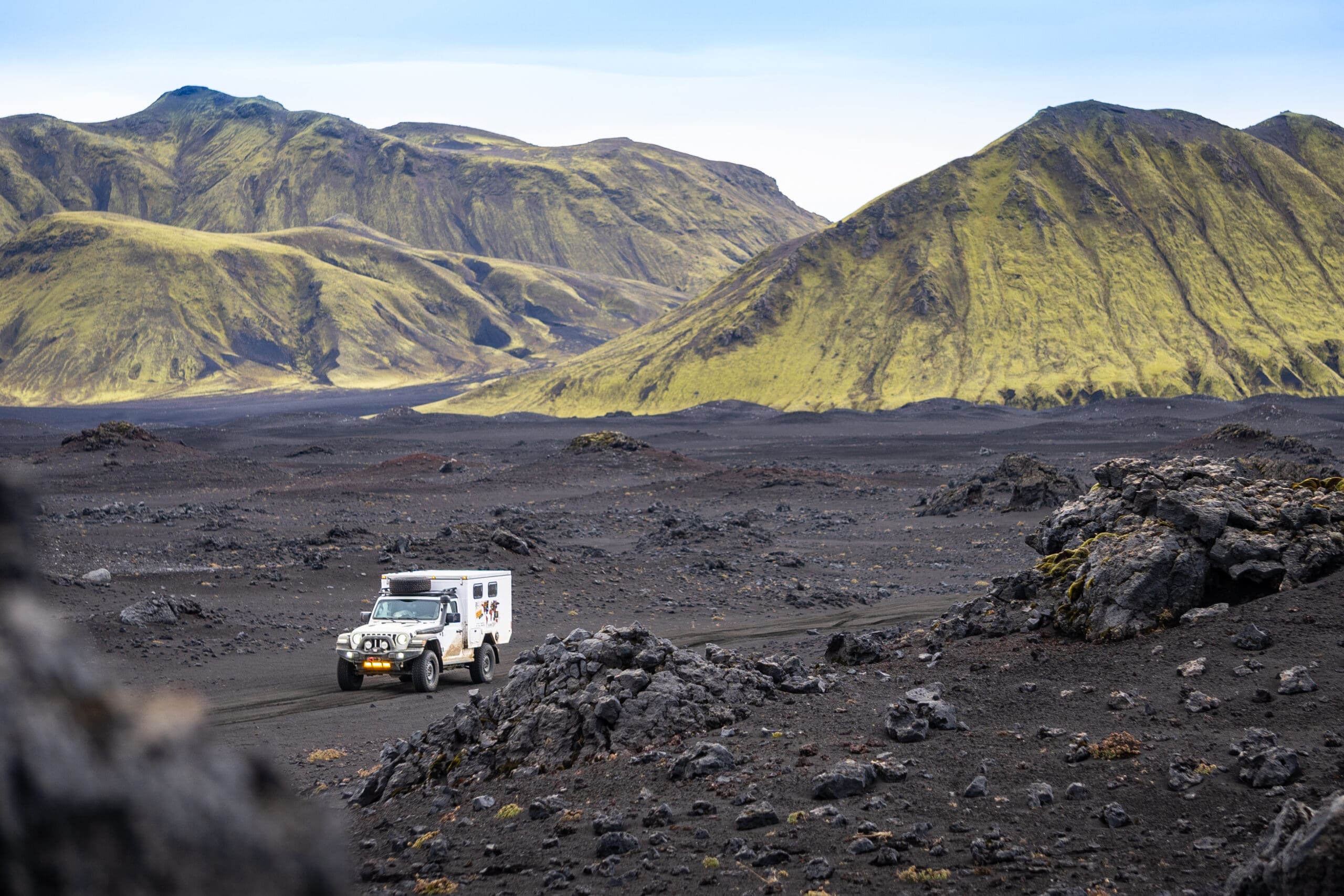
Together with my partner, Katie, and our daughter, Aurora, we are now exploring the remote regions of Iceland in our house-on-wheels Jeep camper. Running hot and cold water is a luxury I may never again decide to live without, and the diesel heater has been essential for keeping my family warm and dry in the arctic conditions. We are living in the camper full-time, and I repeatedly pinch myself, unable to believe that all the hard work has resulted in such an incredible vehicle, perfectly at home exploring anywhere on the planet.
A Dream Project
Although I’ll be content if I never tackle the Bermuda Triangle or quicksand, turning wrenches with a couple of mad scientists on my dream overland vehicle, while casually talking about working on the Space Shuttle and hosting BBQs with astronauts, is something I will never forget. Working with and learning from Michael and Yvonne was a deeply rewarding and eye-opening venture. I learned a lot about composite materials in a very short time, and seeing the precision with which Michael works raised the bar for my own projects.
When they’re not out exploring in their own Refuge II Jeep Camper, Michael and Yvonne can be found in their lair improving ACME blueprints and thinking up wacky contraptions that were never meant to exist, like a Jeep Wrangler with an apartment grafted on the back. I hope they never stop.
Specifications
2021 Jeep Wrangler Rubicon Unlimited
Custom-made composite camper habitat
Power
EcoDiesel (3.0-liter), 240 horsepower/420 foot-pounds
ZF 8HP75 8-speed automatic
Suspension and Drive
AEV 2.5-inch DualSport XP Suspension and heavy load springs
AEV steering damper
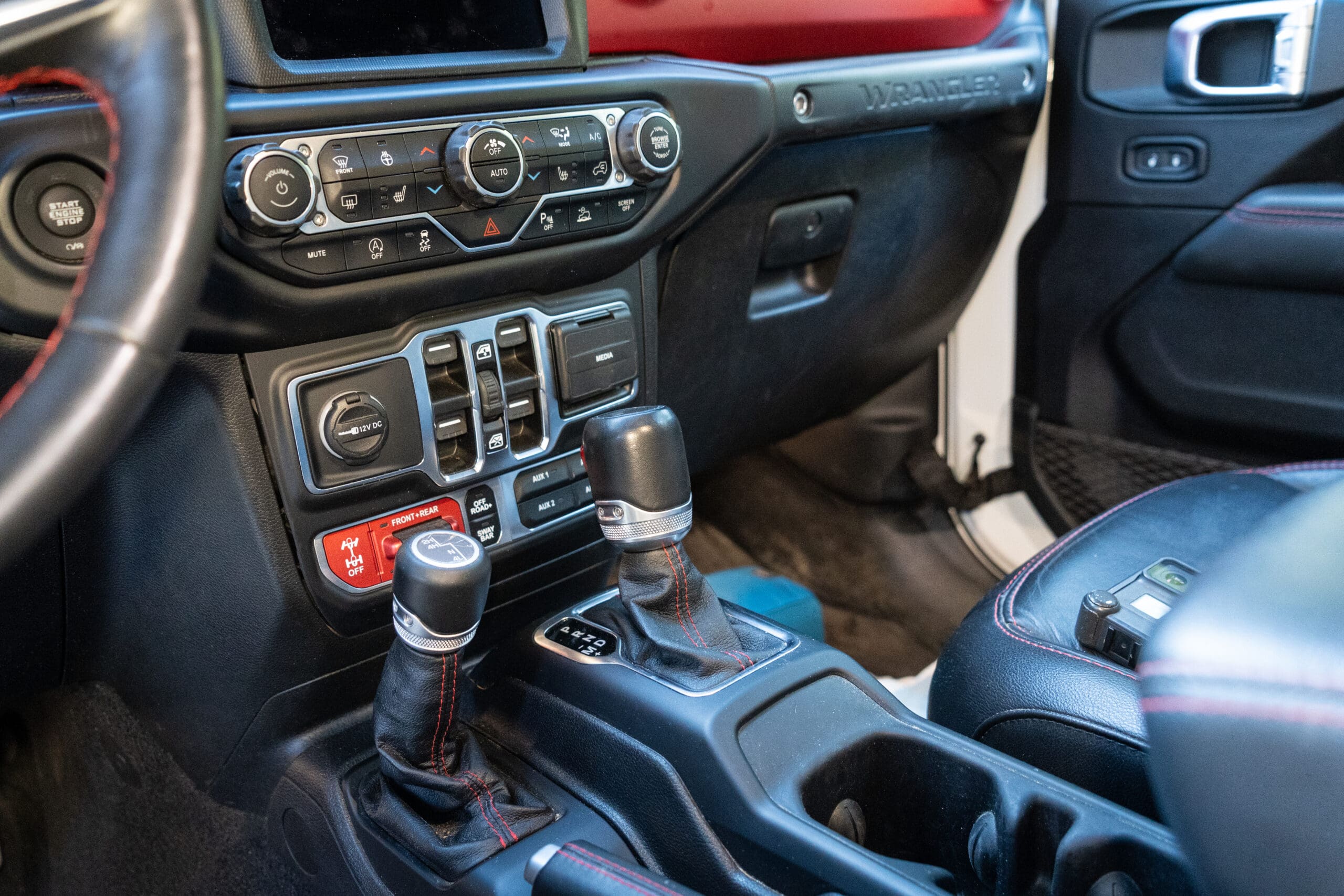
Factory 3.73 diff ratios, locking differentials, low-range transfer case
Wheels and Tires
Mopar steel 18-inch wheels
Yokohama Geolandar A/T4 tires, 295/70R18
Recovery and Armor
AEV EX front bumper and skid plate
AEV rear bumper
Warn Zeon 10-S winch, Factor 55 UltraHook
AEV snorkel with dust pre-filter
MaxTrax MKII recovery boards
Accessories
Lightforce Venom LED driving lights and 20-inch light bar
Lightforce Rok LED 40-watt light
Rhino-Rack Pioneer platform with side rails
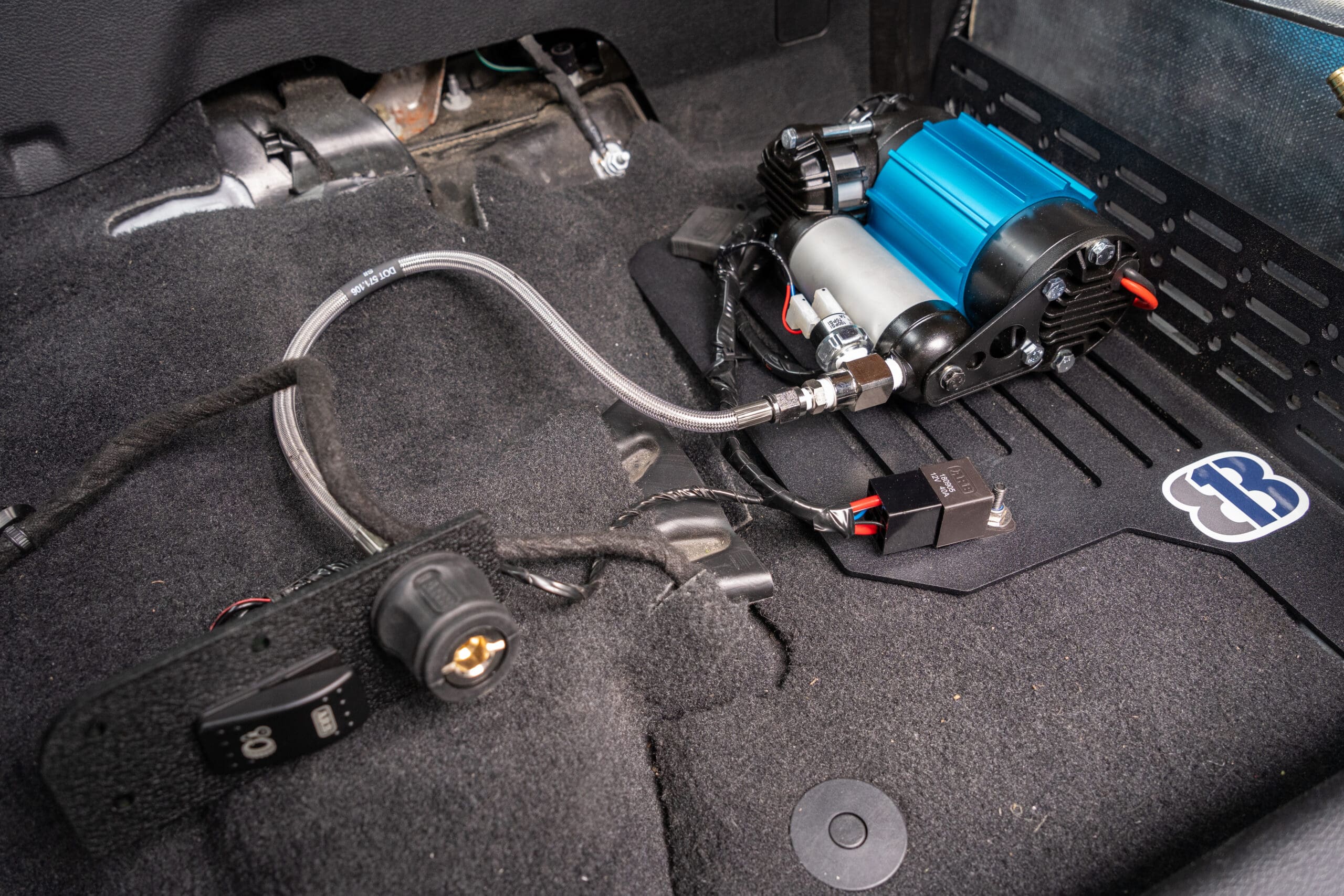
ARB air compressor, 813 Fabrication and Design under-seat mount
Hazard 4 molded storage headliners
OffRoam GPS/GoPro/phone mounts
Renogy flexible 600-watt lightweight solar panels
Renogy DC-DC MPPT 50-amp solar charge controller
Renogy 3,000-watt pure sine wave inverter
Renogy One Core smart monitor
Renogy 200-amp-hour smart lithium battery
Camper Habitat
Composite panel, 1-inch foam and honeycomb core
Goose Gear Venture Series full interior
Supertramp Campers insulated canvas
Espar 2-kilowatt diesel heater
Arctic Tern insulated windows, side hatches, door
Expedition Upfitter 12-volt, 2-gallon tank water boiler, 10-gallon freshwater tank
Guzzle H2O 0.5-micron carbon filter and UV lamp
Dometic dual-burner induction cooktop
Dometic 50-liter, 12-volt fridge/freezer
Outdoor shower
RoamRest 2-inch high-density foam mattress and seat cushions
2020 Jeep Wrangler JL Unlimited Sport w/Carbon Fiber Pop-Top Camper :: Featured Classified
Editor’s Note: This article was originally published in Overland Journal’s Spring 2026 Issue.
Our No Compromise Clause: We do not accept advertorial content or allow advertising to influence our coverage, and our contributors are guaranteed editorial independence. Overland International may earn a small commission from affiliate links included in this article. We appreciate your support.
