


Pearl Pass has always carried a reputation. In Colorado, it’s shorthand for something stubborn, something reckless, something earned. The road was first cut in the 1880s when Aspen was a silver boomtown and Crested Butte still a rough mining camp. Mules and men scratched their way across the Elk Mountains, hauling ore and supplies along a trail that was never intended to be permanent. It was a scar across granite and shale, temporary infrastructure for a temporary fever dream of silver and gold.
But some scars never heal.
Decades later, long after the mines shut down, Pearl became a proving ground. Early Jeep clubs cut their teeth here, a ritual of passage. To say you’d “done Pearl” was to speak a certain language of risk, mechanical sympathy, and patience. Vehicles broke here. People turned back here. Pearl had a way of sending you home.
By the late 1970s, Pearl took on another identity: ground zero for the birth of mountain biking. Crested Butte locals on klunkers—balloon-tire cruisers stripped and welded into something rideable—would push bikes over the pass, dragging them through snowfields and rockslides, before dropping thousands of feet into Aspen. It wasn’t about comfort then either. It was about proving what was possible on machines never intended for punishment. Those rides became legend, the first inklings of a sport that would spread worldwide. Pearl was the crucible: mules, miners, Jeeps, bikes. The pass never discriminated, only tested whatever came its way.
Which is why it seemed absurd, borderline comic, to take the TruckHouse prototype over it. A one-of-a-kind carbon-fiber expedition camper built for long-haul travel, self-sufficiency, and modern refinement. You don’t drive something like that over a 19th-century mule trail. No one would, which is exactly why I did. Proof of concept: Not marketing. Not spectacle. Just proof.
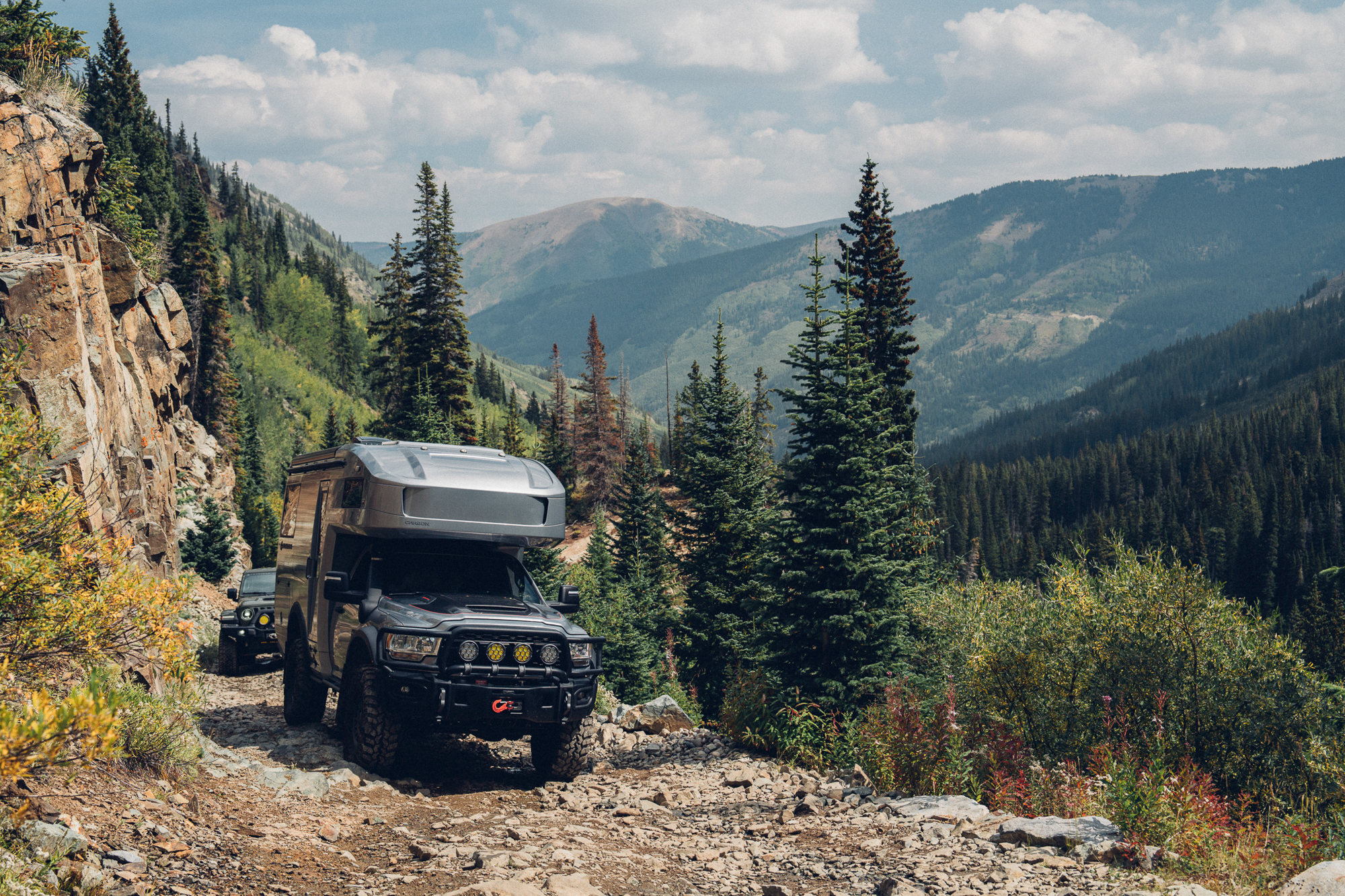
The day started crisp, the kind of clean mountain air that cuts straight through you, the aspen leaves just beginning to show their first flickers of gold, summer tipping toward autumn. We left Aspen with the sky clear, the kind of perfect September morning that tricks you into believing it might last. It never does in the high country.
The north approach had already tested us. Waterfalls spilled across the road, slicking shale and granite until driving felt less like momentum and more like skating on a bad idea. That’s where the TruckHouse would have ended if not for Ziggy, a Colorado local and co-founder of TAG Overland, a man who has read these passes like scripture. He walked every line, patient and deliberate, hand signals cutting through the mist, guiding the wheels into places a half-million-dollar camper had no business being. Behind him, his partner and fellow TAG co-founder, Jason Broome, staged in his AEV Jeep, shadowing us like insurance against gravity, a backup against judgment.
Without them, we wouldn’t have made it.
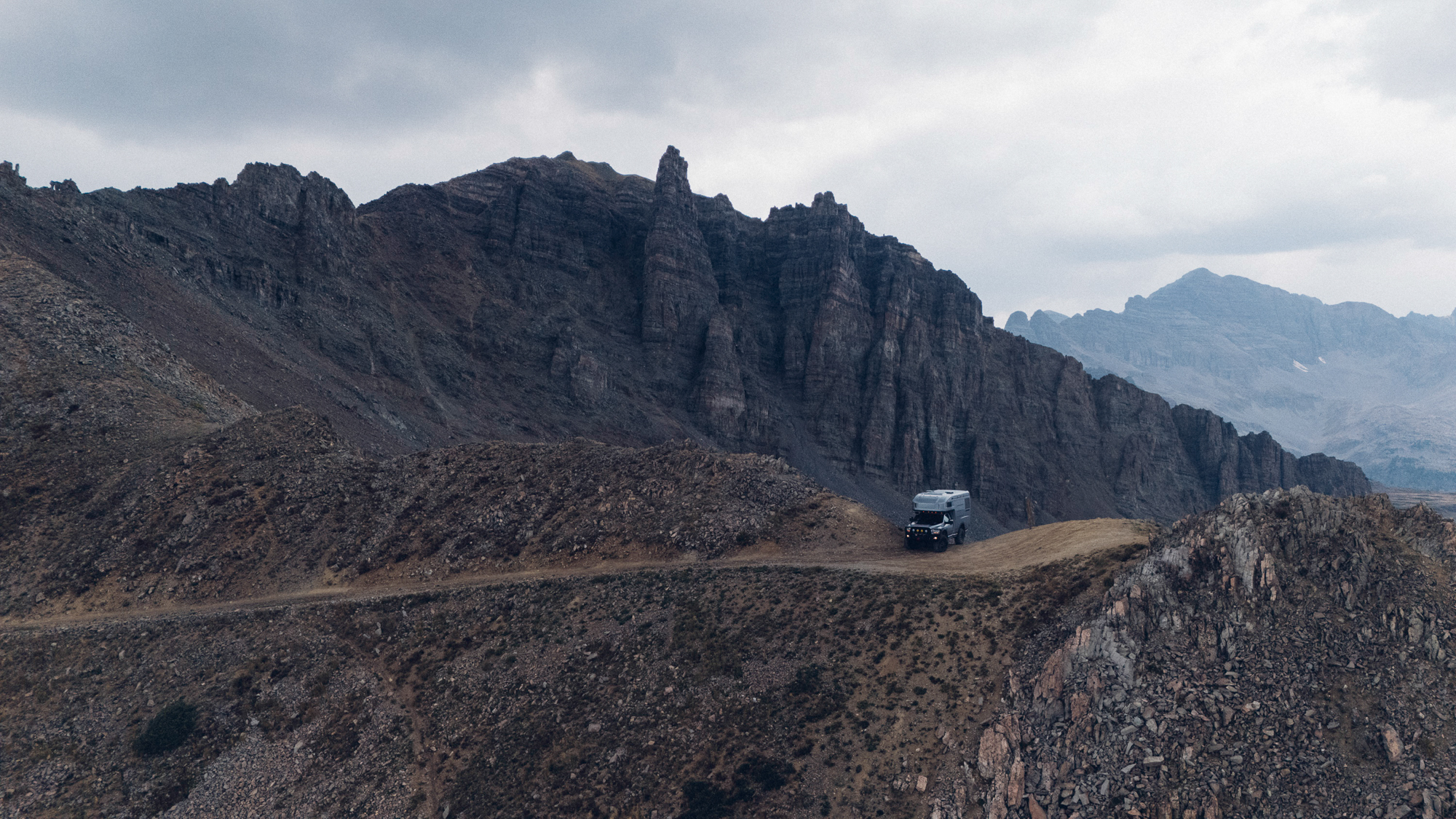
By the time we climbed above timberline, clouds had begun to stack—dark, heavy, inevitable. The pass sits at 12,705 feet, a saddle in the mountains where weather gathers and spills without warning. At the summit, the sky finally broke. Hail hammered the truck, pinging against the carbon shell as we started the descent into Brush Creek on the south side.
Other trail users stopped to watch. Short wheel-based Jeeps, 4Runners, their drivers shaking their heads, doubtful eyes following the prototype. Some laughed. Some reached for their phones. Because who in their right mind points a half-million-dollar camper at Pearl Pass? Fair question.
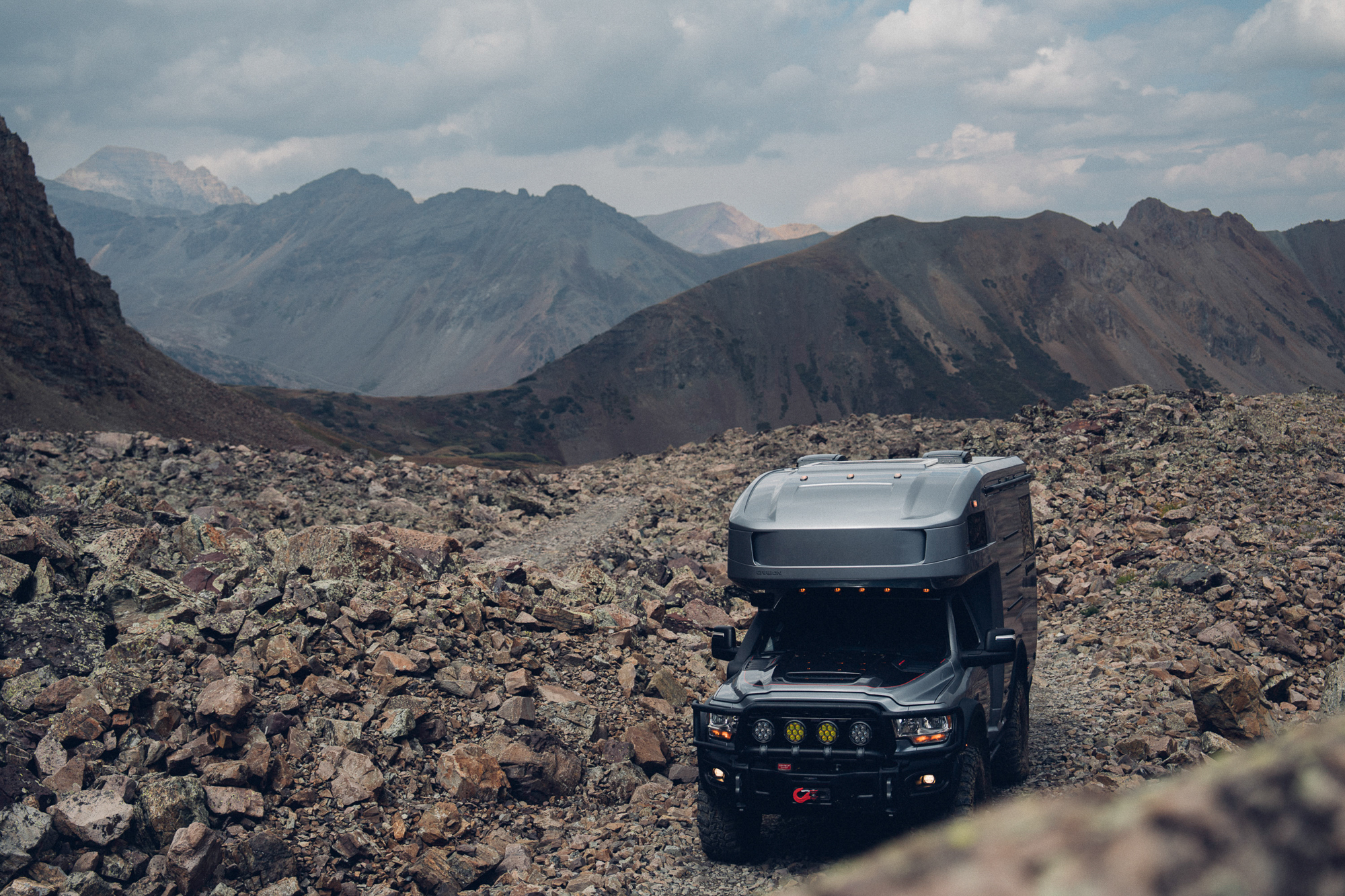
The answer is simple—you don’t, unless it’s built on an AEV Prospector XL. That platform is the difference. The geometry, the suspension, and the axles are engineered to take punishment that would turn lesser builds into wreckage. It’s the reason the prototype wasn’t left bleeding oil and coolant on the side of the mountain.
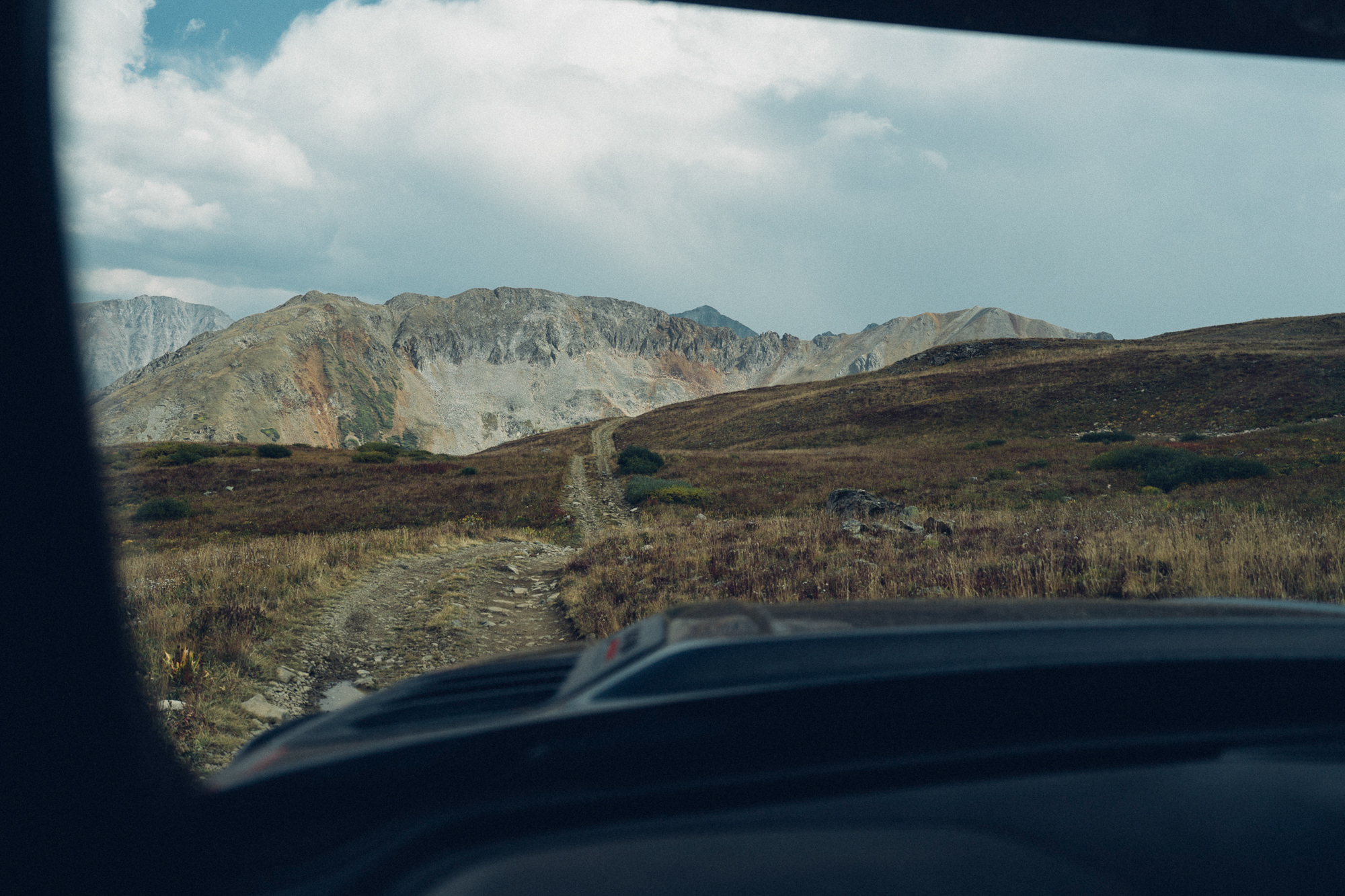
Still, even with the engineering, Pearl was no casual crossing. The waterfalls on the north side made every move feel consequential. The shale shifted under tires, the granite slick with runoff. Gravity waited. Each inch mattered. And each inch passed only because of trust—trust in the platform, trust in the spotter, trust in the patience to not rush what couldn’t be rushed.
This wasn’t about comfort. It wasn’t about fun. It wasn’t even about adventure in the usual sense. It was about setting a modern expedition rig with carbon fiber, aerospace design, and six-figure precision against a trail carved by desperation and stubbornness. A century apart, mule and machine met on the same granite, and for a moment the line held.
When we rolled into Crested Butte hours later, mud and hail still clinging to the truck, the absurdity of it all landed. We hadn’t just crossed Pearl; we had carried something through it that, by all logic, shouldn’t have fit—proof of concept.
Pearl Pass isn’t something you conquer. It isn’t a trophy. It’s a reminder that the past still has a hold on the present. That engineering only matters if it can meet the realities of rock, water, gravity, and doubt. That nothing is inevitable, not even forward motion.
But the TruckHouse made it. Slow, deliberate, improbable, but it made it without a scratch. Carbon fiber against granite. Torque against gravity. Mule trail against modern design.
Proof.
Our No Compromise Clause: We do not accept advertorial content or allow advertising to influence our coverage, and our contributors are guaranteed editorial independence. Overland International may earn a small commission from affiliate links included in this article. We appreciate your support.
