

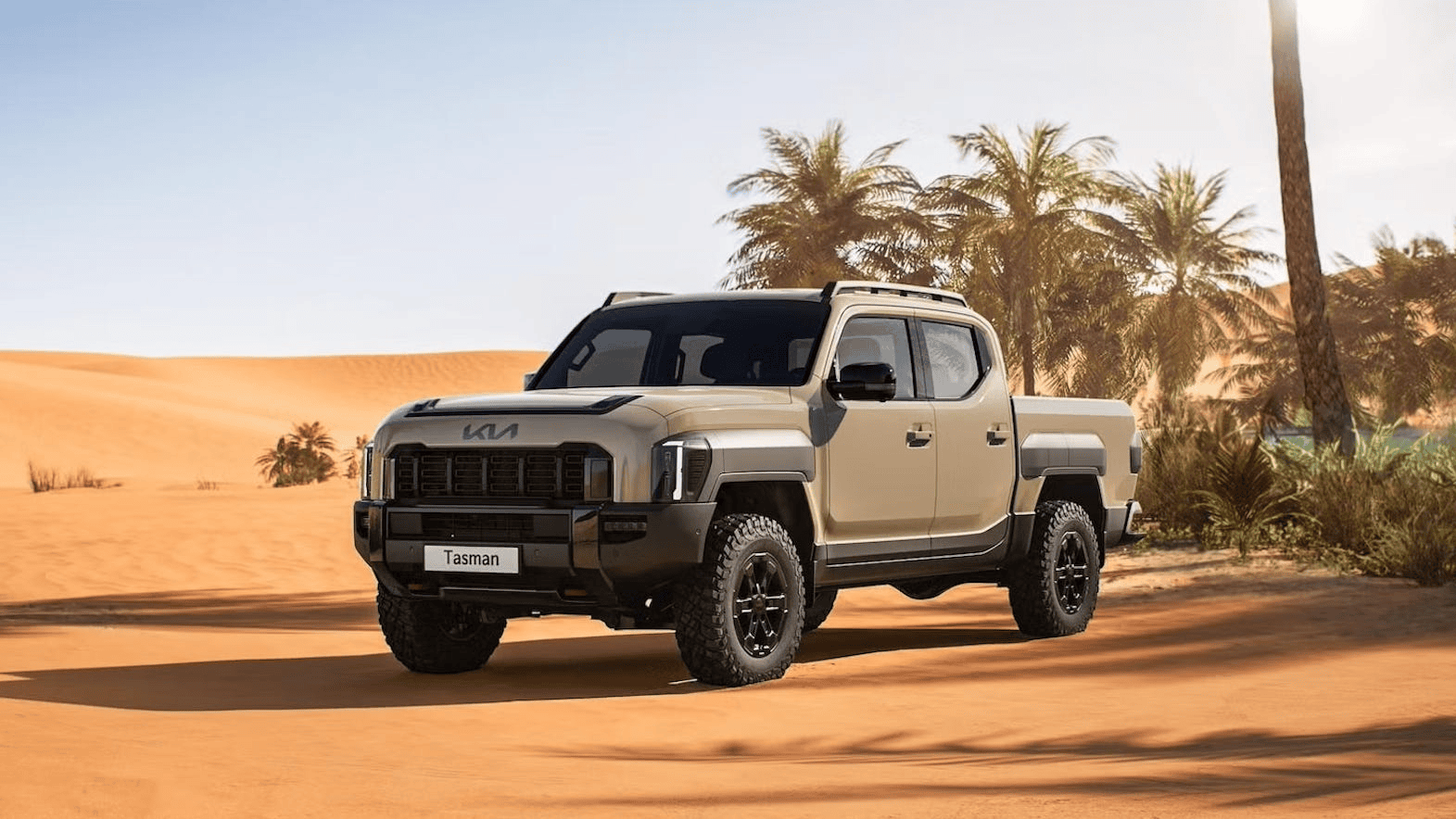
Kia has officially thrown its hat into one of North America’s most fiercely contested segments, confirming that it will launch a body-on-frame hybrid pickup truck in the United States before the end of the decade. To be perfectly clear, this announcement wasn’t a leak, a rumor, or a supplier slip; this information comes directly from CEO Ho Sung Song during the brand’s 2026 Investor Day presentation, where the company outlined its global strategy through 2030.
For a company that has built its modern reputation on unibody crossovers and value-driven SUVs, the move marks a significant pivot toward traditional, rugged platforms designed for serious work and off-road travel.

A Platform Built for More Than Just a Pickup
The new truck will ride on an all-new body-on-frame architecture, the first of its kind developed by the Hyundai Motor Group. More importantly, this platform is not being created for a single vehicle. Kia has already confirmed it will underpin a family of products, including SUVs and potentially additional utility-focused variants including vans.
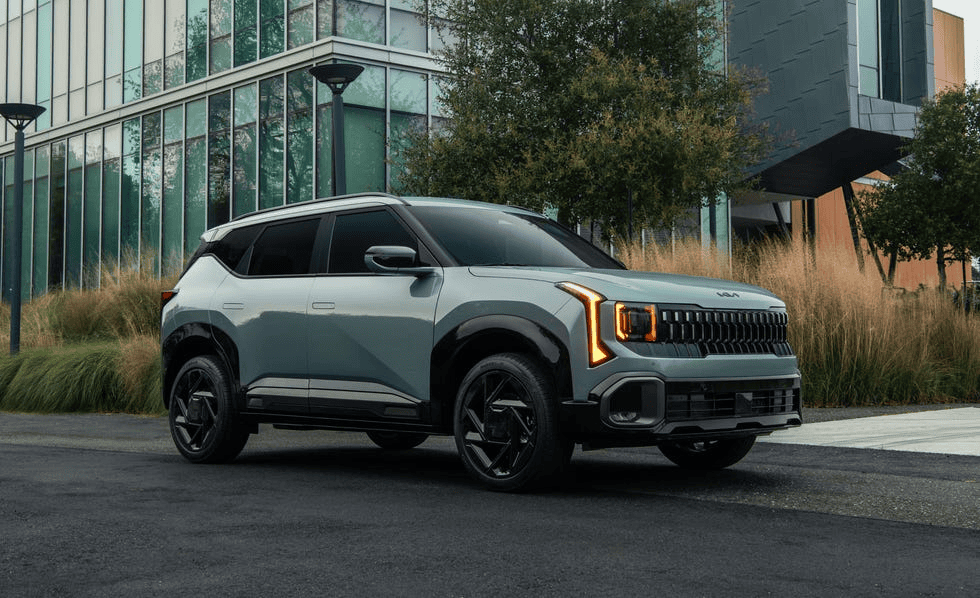
This mirrors the approach taken by established players like Toyota with the Toyota Tacoma and Toyota 4Runner, or Jeep with the Jeep Wrangler and Jeep Gladiator—a shared architecture that allows for both pickup and SUV derivatives. Given the hints from Hyundai’s parallel development of the Hyundai Boulder, it’s highly likely Kia will follow suit with its own rugged SUV counterpart, potentially targeting overlanders and off-road enthusiasts.
Hybrid First, But Not Hybrid Only
Kia’s drivetrain strategy is where things get especially interesting. Rather than going fully electric out of the gate, the company has confirmed a mix of internal combustion, conventional hybrid (HEV), and extended-range electric vehicle (EREV) powertrains. The EREV setup, where a gasoline engine acts as a generator rather than directly powering the wheels, is the powertrain of choice for the upcoming RAM REV and Ford’s replacement for the F-150 Lightning. Running a gasoline engine as a generator will give these vehicles a major advantage in remote travel scenarios compared to straight battery electric vehicles.
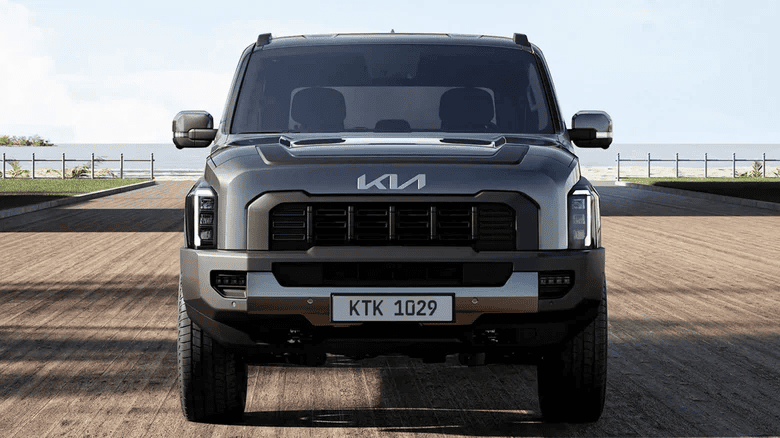
It promises EV-like torque and smoothness while retaining the long-range refuelling capability critical for backcountry exploration. While Kia are stepping up to the EREV plate to match Ram and Ford, it’s worth noting the latest Toyota Tacoma is a traditional hybrid, not range-extension. Meanwhile, fully electric options like the Rivian R1T push capability forward but remain expensive and dependent on charging infrastructure. Kia’s middle-ground approach could prove compelling.
Aiming Straight at Segment Leaders
There’s no ambiguity about Kia’s target. This truck is aimed squarely at the midsize segment dominated by the Tacoma, Ford Ranger, and Chevrolet Colorado. Kia believes there’s still room to carve out space by offering something different, specifically electrified capability in a traditional body-on-frame package. The company is targeting roughly 90,000 annual sales and about 7% of the segment by the early 2030s. Expect strong towing, real off-road hardware, and the kind of durability North American buyers demand, no doubt a key driver of the body-on-frame construction.
Pricing and Positioning
While official pricing hasn’t been announced, expectations place the truck in the heart of the midsize segment. That likely means a starting price in the mid-$30,000 range, climbing into the $50,000s for higher trims and electrified variants. Kia’s track record suggests it will lean heavily on value, packing in technology and features that traditionally cost more elsewhere.
The Bigger Picture
It’s worth pointing out this truck will not be a one-off experiment, but is part of a broader push to expand Kia’s hybrid lineup and grow US sales to over one million units annually by 2030. For overlanders and outdoor enthusiasts, the implications are significant. A body-on-frame Kia with hybrid or range-extended capability could offer something the market has been missing: a durable, efficient, and adventure-ready platform that doesn’t force buyers to choose between range and electrification.
If Kia executes properly, this could be one of the most disruptive new entries in the midsize truck segment in decades, and may very well force Jeep, Toyota and others to rethink their electrification strategy once again.
Read More: Hyundai Releases Body-On-Frame Boulder Concept
Images: Kia
Some images provided by certain brands or manufacturers may contain AI-generated content.
Our No Compromise Clause: We do not accept advertorial content or allow advertising to influence our coverage, and our contributors are guaranteed editorial independence. Overland International may earn a small commission from affiliate links included in this article. We appreciate your support.
