

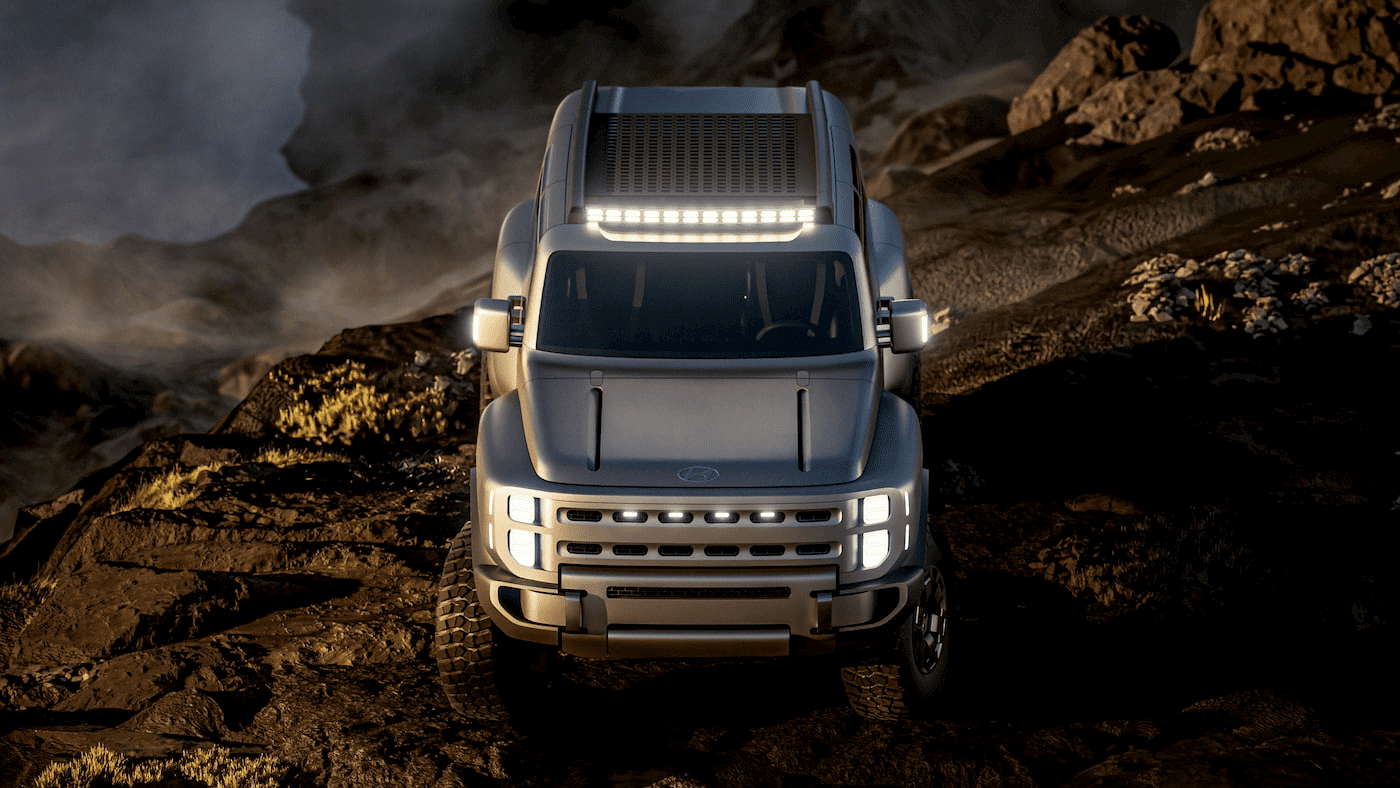
Hyundai has never been a brand you’d associate with solid axles, mud-terrain tires, and the kind of trail abuse that defines the modern overland scene. But with the debut of the Hyundai Boulder Concept, it appears that story is about to change dramatically.
Unveiled at the 2026 New York Auto Show, the Boulder isn’t just a design exercise, but is a clear signal that Hyundai is preparing to enter one of the last frontiers it has yet to conquer: the body-on-frame, off-road-ready truck and SUV segment.

A serious contender
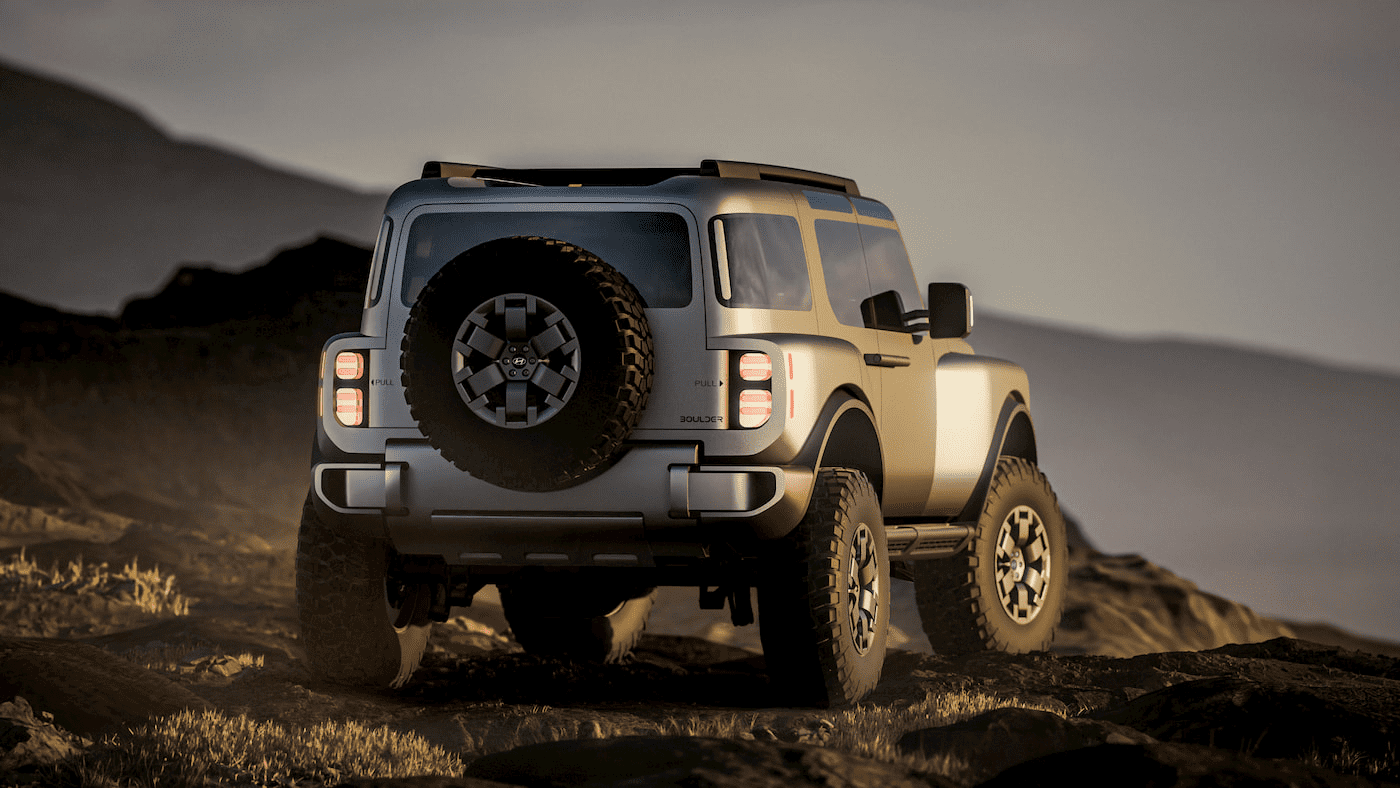
At the core of the Boulder is a fully boxed body-on-frame architecture, a major departure from Hyundai’s traditional unibody crossovers. This ladder-frame construction is the same foundation used by serious off-roaders and work trucks, prioritizing durability, articulation, towing, and payload over on-road refinement. Paired with a solid rear axle, independent front suspension, and massive 37-inch mud-terrain tires, the Boulder is clearly engineered with real-world trail capability in mind.
But perhaps more important than the concept itself is what it represents. Hyundai has confirmed that this platform will underpin not just one vehicle, but an entire family of rugged products. Expect at least two: a production mid-size pickup truck targeted for around 2029–2030, and a closely related SUV that could closely mirror the Boulder’s boxy silhouette. In other words, Hyundai is following the same playbook as the Ford Bronco and Ranger and the Jeep Wrangler and Gladiator, leveraging a shared platform to compete across multiple segments.
It’s actually coming to the US
Unlike so many prototypes and global vehicles, this one has been designed for the American market from day one. Styled in California and intended to be built in the United States using domestically produced steel, the concept reflects Hyundai’s growing focus on North America’s appetite for trucks and rugged SUVs.
Hyundai recognize American buyers demand towing capability, off-road performance, and long-distance usability.
What’s inside and under the hood?
When it comes to powertrain specifics, Hyundai is keeping its cards close to the chest. There are no confirmed horsepower or torque figures, and no finalized engine lineup. However, industry signals point toward an extended-range electric (EREV) setup, pairing electric drive with a gasoline engine acting as a generator, similar to offerings soon to be released by RAM and Ford. If that proves accurate, it could deliver the best of both worlds: EV-like torque for technical terrain and long-range capability for remote travel, quite likely offering 600 miles between fill-ups and charges. Traditional combustion or hybrid options may also be on the table, particularly for early production models.
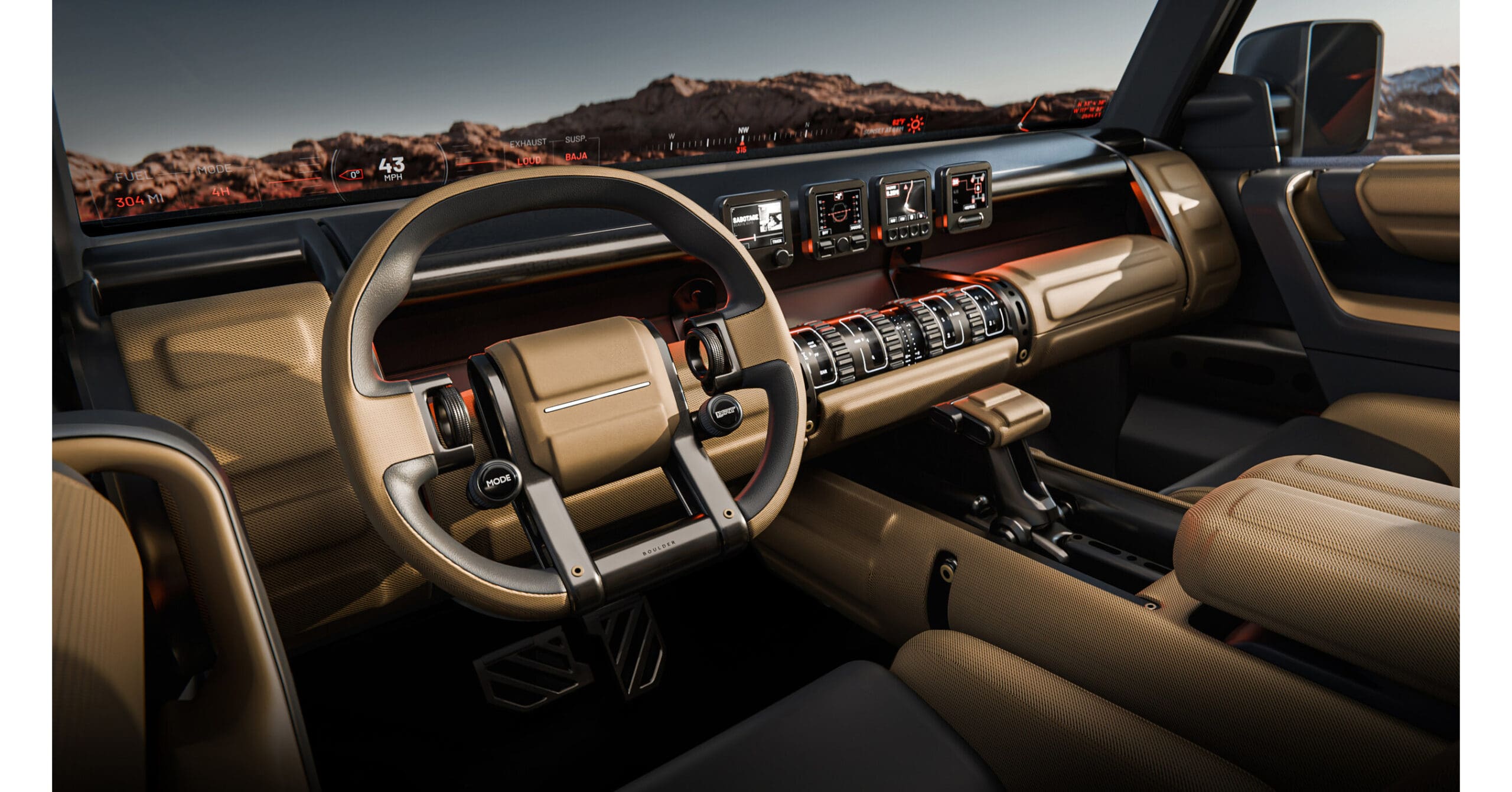
The Boulder concept’s interior features very cool tire-like switchgear on the steering wheel.
What’s the price?
Nothing is official, but expectations suggest a starting point around $40,000 USD, with Hyundai likely aiming to undercut established competitors. That would position the Boulder squarely against icons like the Ford Bronco and Jeep Wrangler, and may just throw a fox in the chicken coup.
And that’s exactly the point.
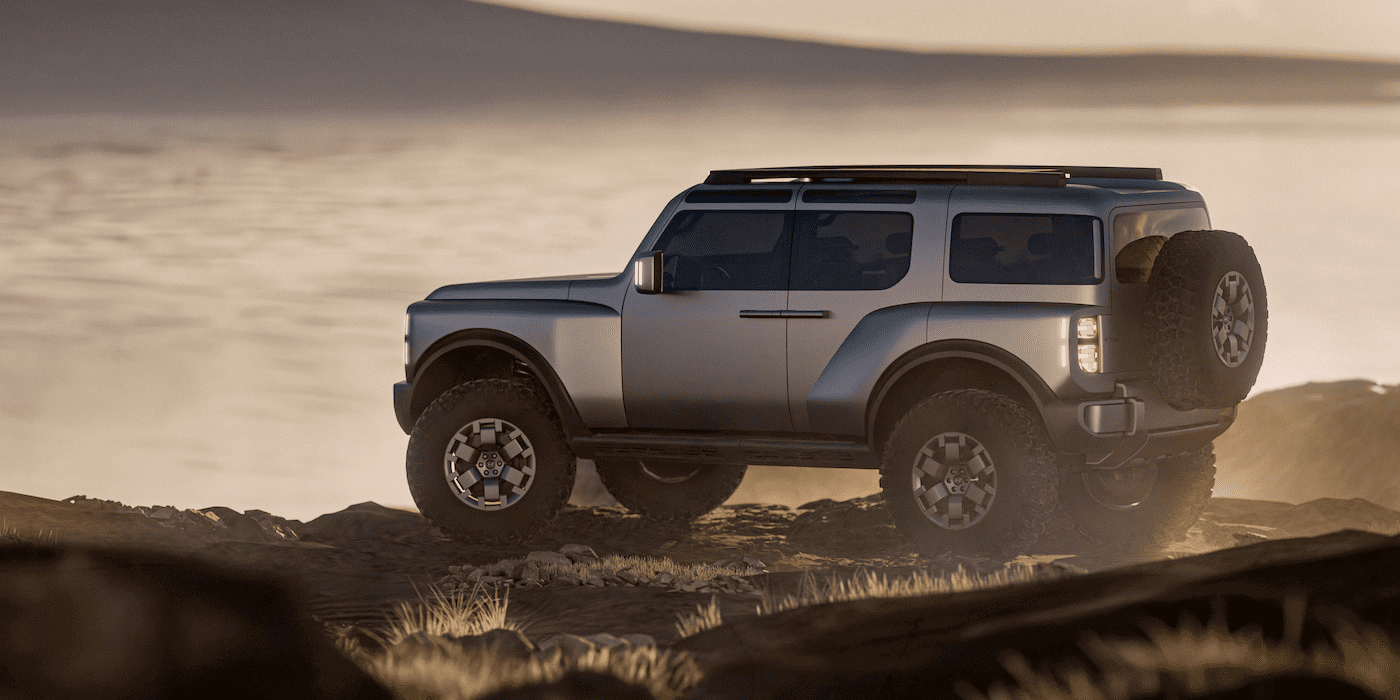
From its upright two-box design to its functional details like safari windows, dual-hinged tailgate, and trail-focused interior controls, the Boulder is unapologetically aimed at the same buyers who currently shop Wrangler and Bronco. Production timing remains fluid, but all signs point to the first real-world version arriving before the end of the decade, with the pickup likely leading the charge and the SUV following close behind.
More options is a wonderful thing
For overlanders and outdoor explorers, the takeaway is simple: Hyundai is no longer sitting on the sidelines. The Boulder Concept suggests that the next generation of trail-ready rigs may come from a brand few would have expected, and that competition in the off-road space is about to get a lot more interesting.
Images: Hyundai
Our No Compromise Clause: We do not accept advertorial content or allow advertising to influence our coverage, and our contributors are guaranteed editorial independence. Overland International may earn a small commission from affiliate links included in this article. We appreciate your support.
