

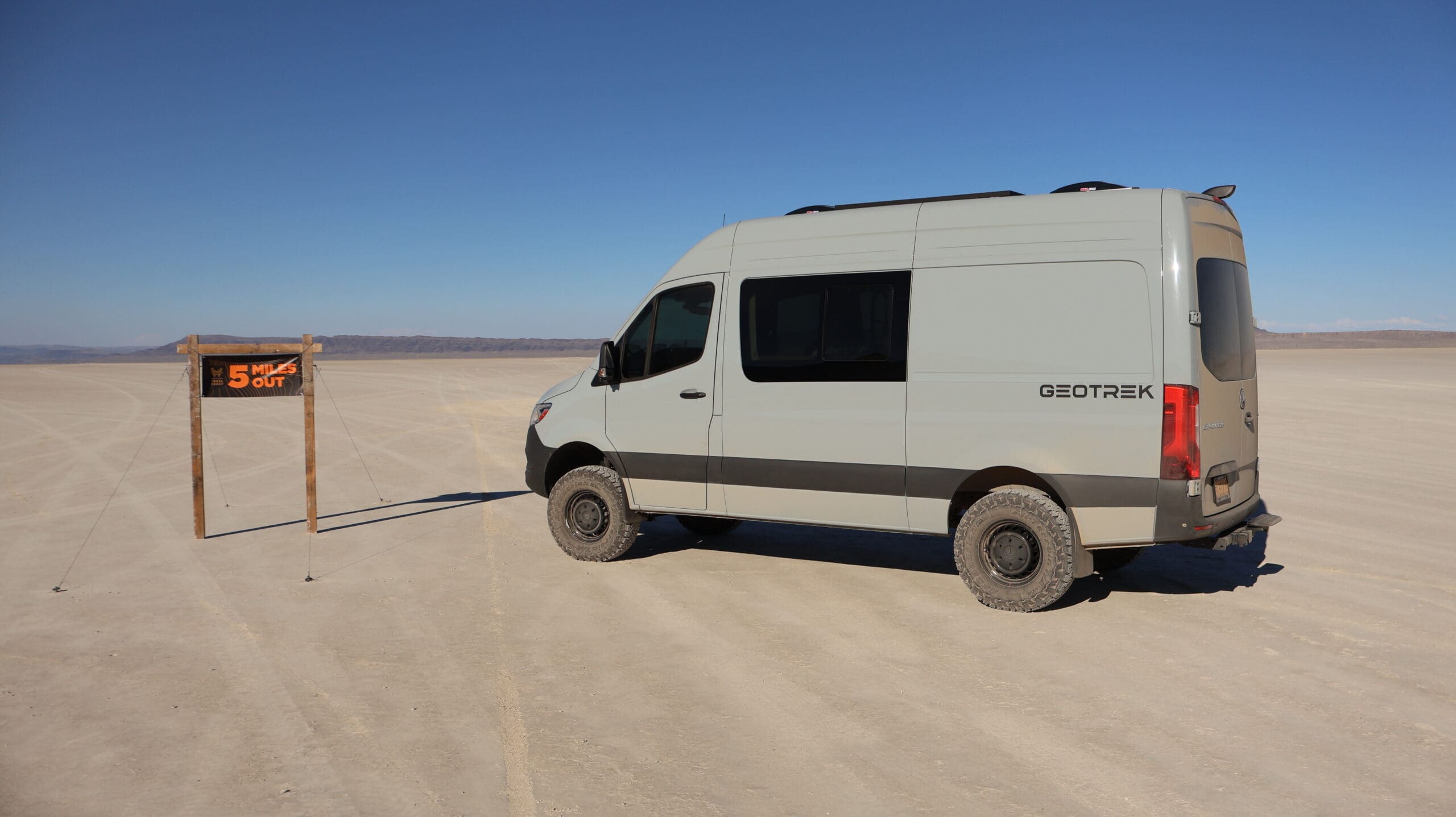
It is no secret that we are not a #vanlife kind of family. A while back, I wrote an article for my website that may have included an introduction comparing overlanding to Hendrix and #vanlife to Nickelback. It might also have mentioned that the good news for #vanlifers—after they had been berated for 500 words—was that they, too, could become overlanders. They just needed to do what overlanders do and use their vans for actual travel, preferably across borders, like us snobby overlanders. Simple.
So, it came as a surprise to many when we showed up at the TrailFeast event in the Alvord Desert in a van. Was I not the one who berated vanlife and stated that “You can’t fake overlanding”? Yes, that was me, and I stand by those tongue-in-cheek words. It’s not about the van, man. It’s what you do with it.
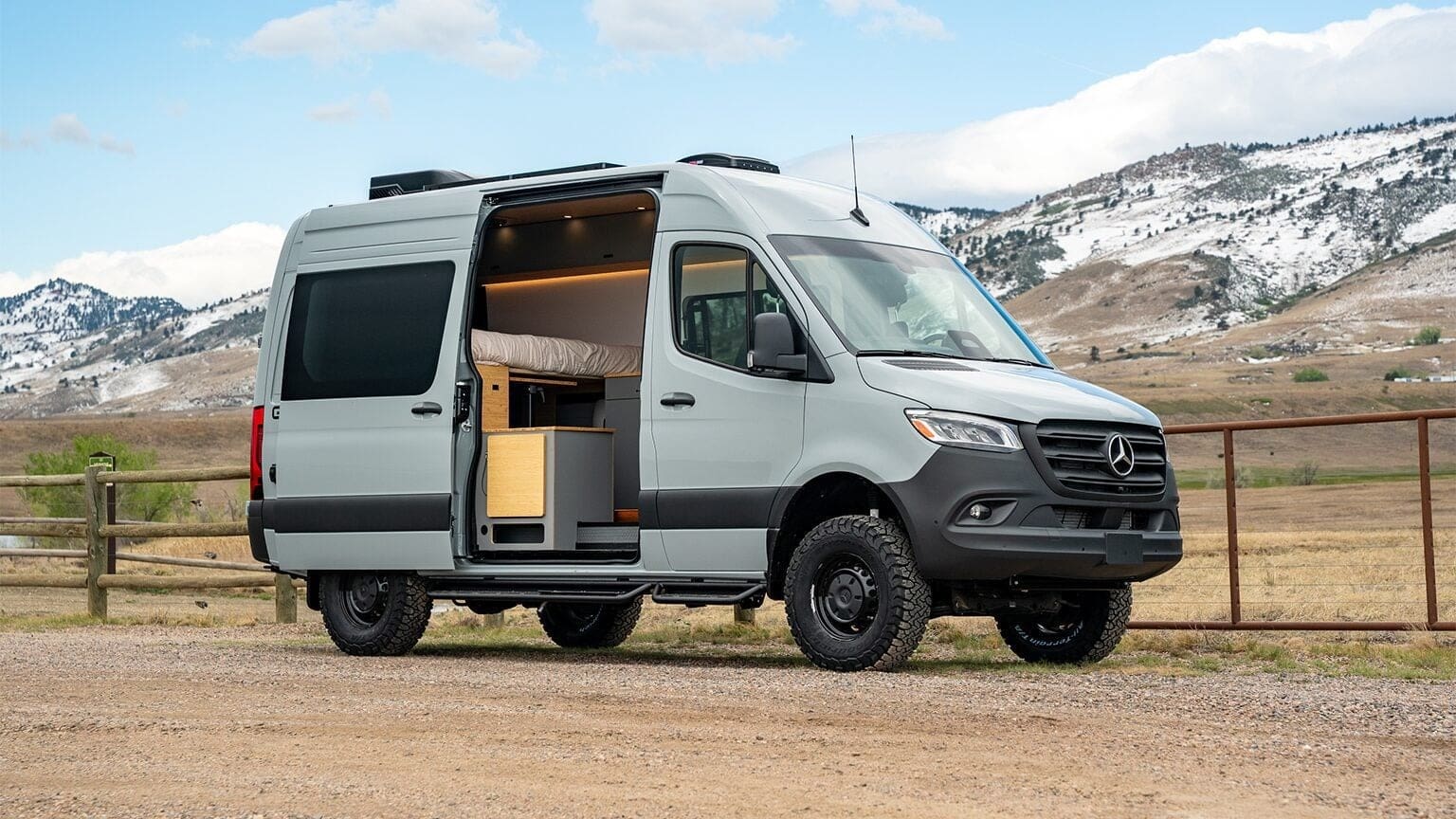
We rented our Flatiron through Outdoorsy from an amicable chap named Jackson in Bend, and I knew the instant Luisa climbed into the van that I was in for expensive trouble. Her eyes lit up with the big-money sparkle as she crooned, “Oooh, this is niiice.”
The first time I stepped inside a camper van, I struggled to understand the appeal. After years of traveling in Land Rovers, I viewed vans as bulky vehicles with limited ground clearance and too much interior space devoted to domestic comforts. Experience has softened that opinion. A well-designed van is easy to drive, relatively discreet, and capable of providing a warm, dry home after a long day on the trail. Crucially, it can also carry everything needed for an extended journey without requiring its occupants to pack and unpack camp each morning.
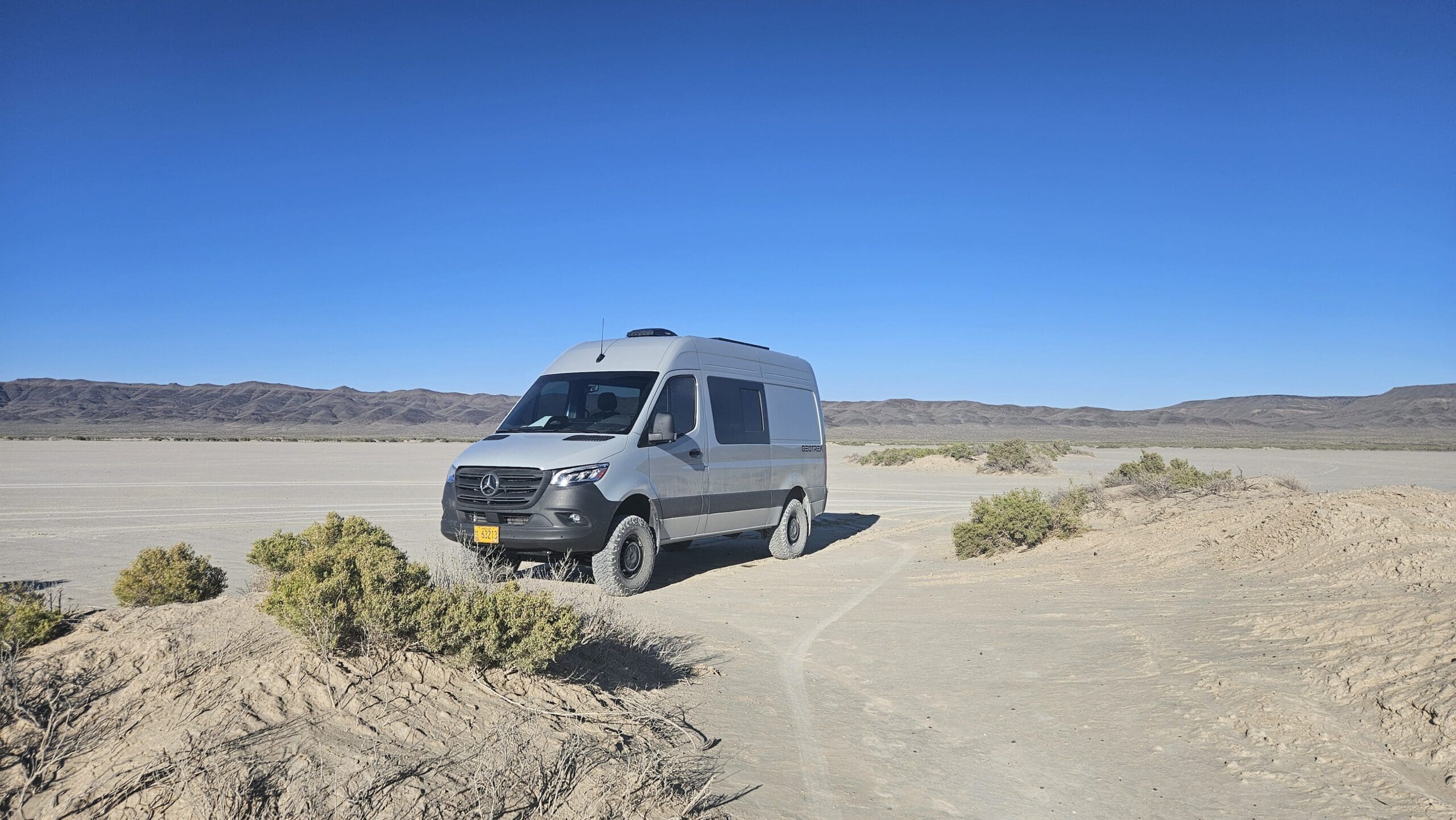
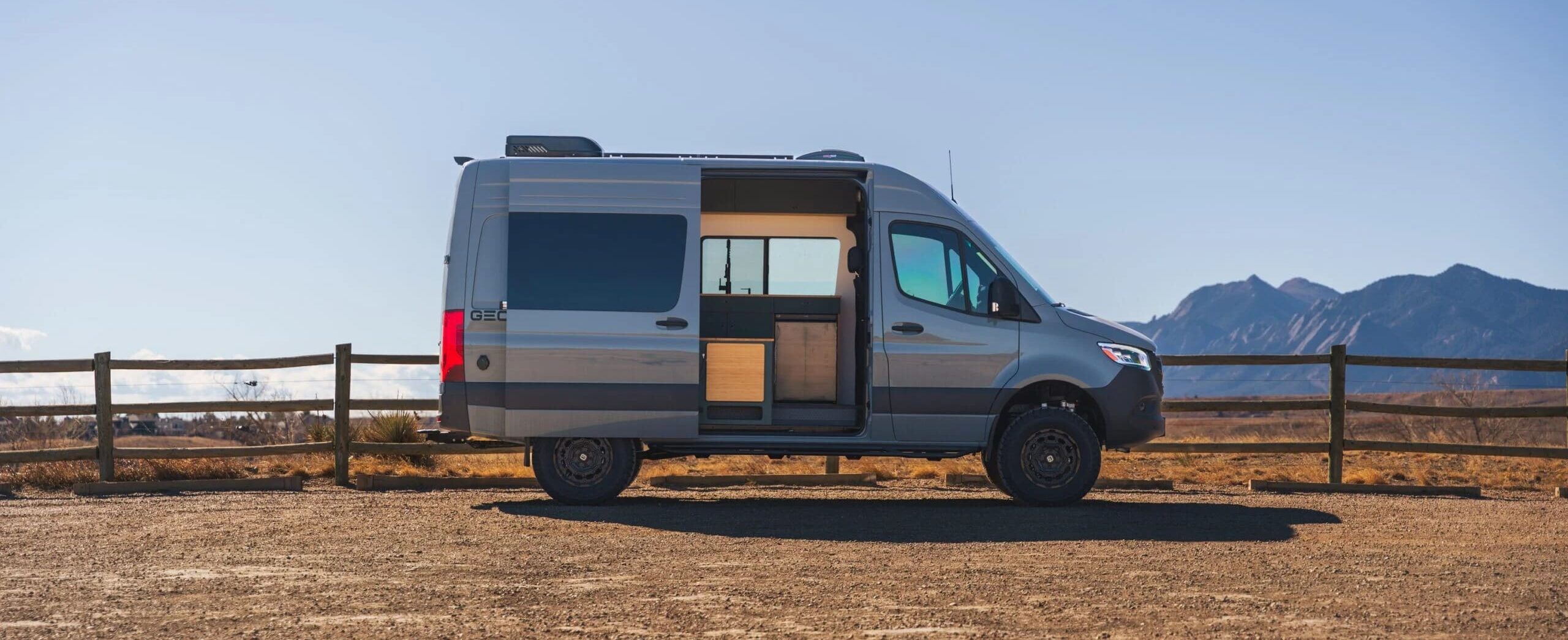
The Geotrek Flatiron is a good example of this increasingly practical approach to van travel. Built in Boulder, Colorado, on the 144-inch-wheelbase Mercedes-Benz Sprinter AWD chassis, it combines manageable exterior dimensions with a permanent bed, a full galley, and the power and water systems required for traveling beyond established campgrounds.
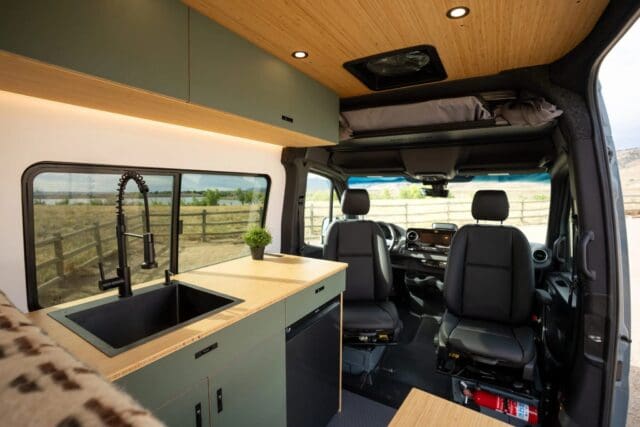
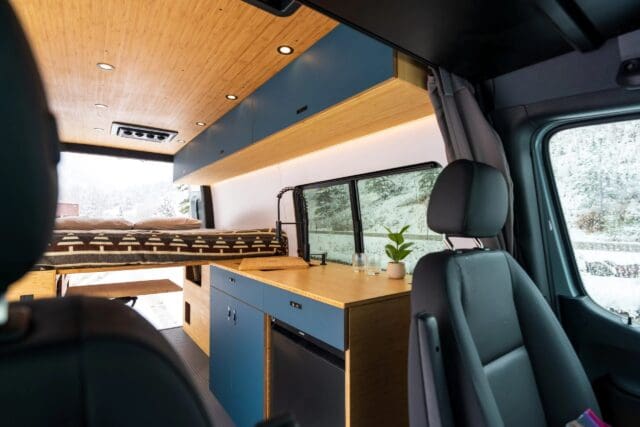
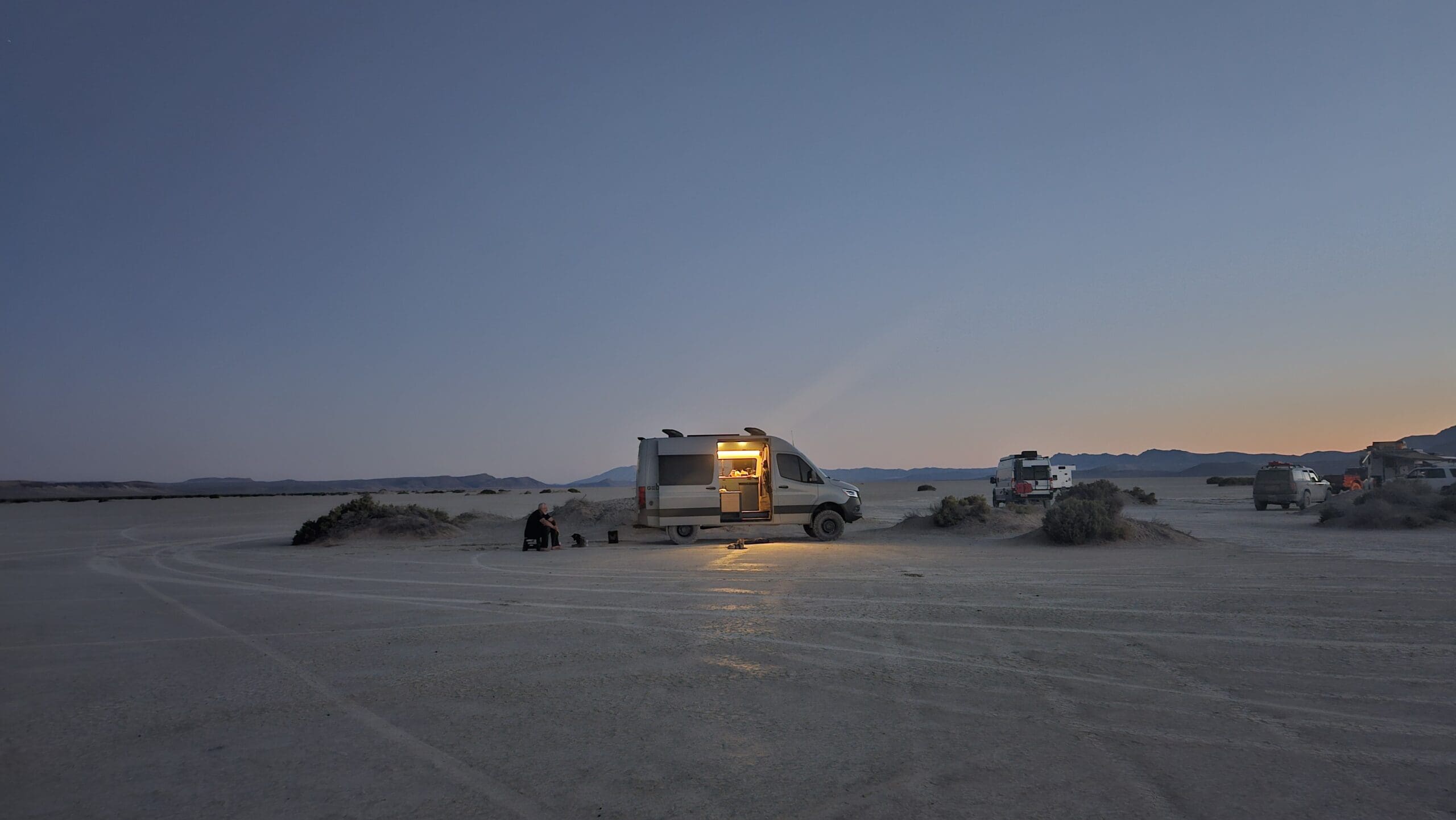
At approximately 19.5 feet long, the Flatiron remains small enough to negotiate cities, conventional parking areas, and the narrow forest roads that frequently lead to worthwhile campsites. The Sprinter’s all-wheel-drive system will not turn it into a rock crawler, but it provides useful additional traction on snow, gravel, sand, and muddy tracks. That is probably all most owners will need. Despite what carefully staged advertising might suggest, the majority of overland travel takes place on pavement and graded dirt roads rather than highly technical trails.
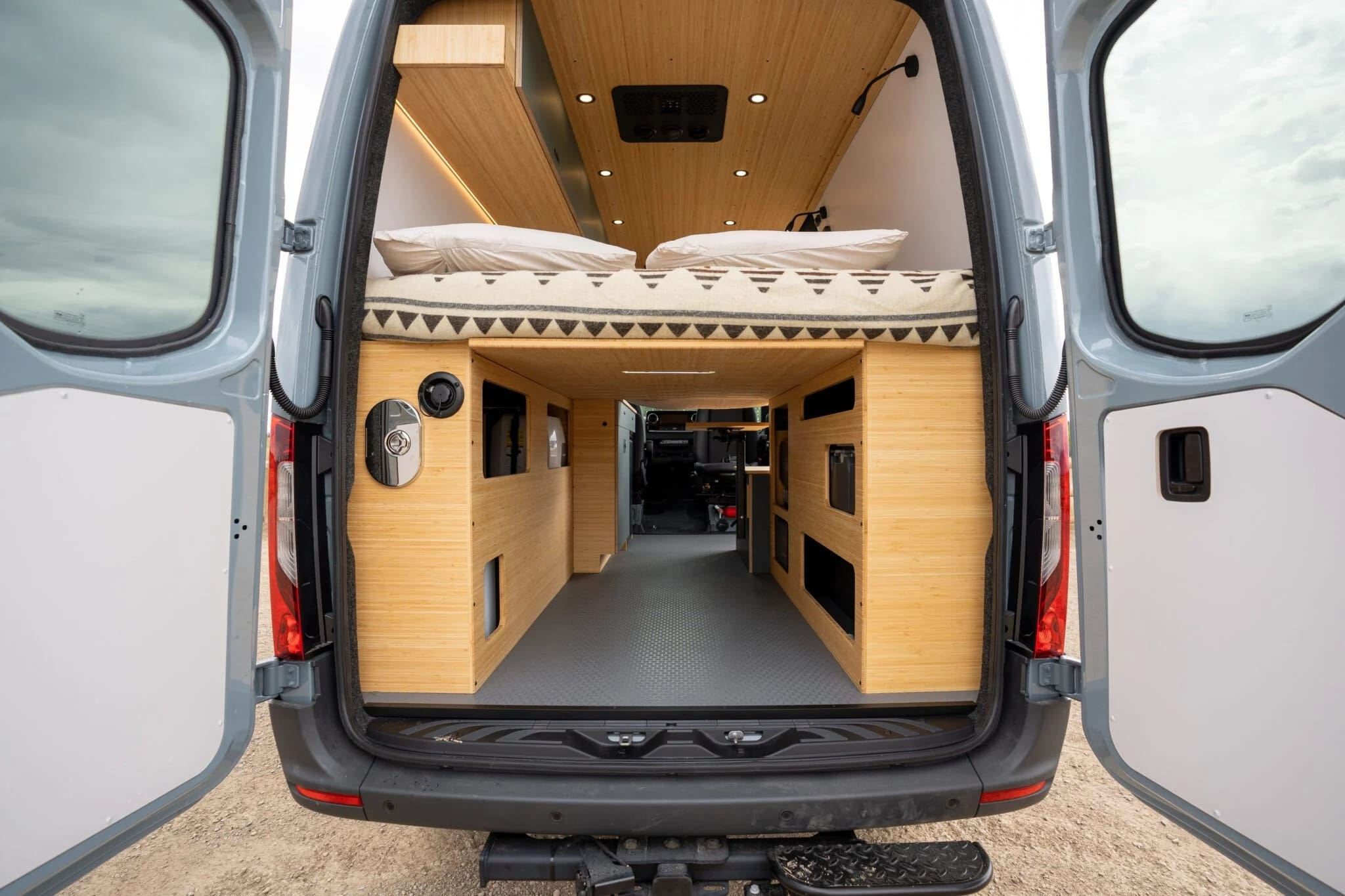
Inside, the Flatiron uses a simple two-person layout centered around a north-south bed. This arrangement is particularly welcome for taller travelers because it eliminates the need to sleep across the width of the van. I am 6 feet, 4 inches tall, and although my feet hung off the bed, I was not at all uncomfortable. Luisa fit comfortably into the narrower sleeping space, although the overhead cabinets meant she had to squeeze past me each morning to get out of bed. The 6-inch bifold mattress measures 72 by 68 inches and sits on a removable platform, allowing the rear space to be reconfigured to carry bicycles, large equipment, or additional cargo. The layout works well if cargo capacity is a priority, but for long-term travel we’d prefer a raised bed that frees up space for a larger dinette and more comfortable seating.
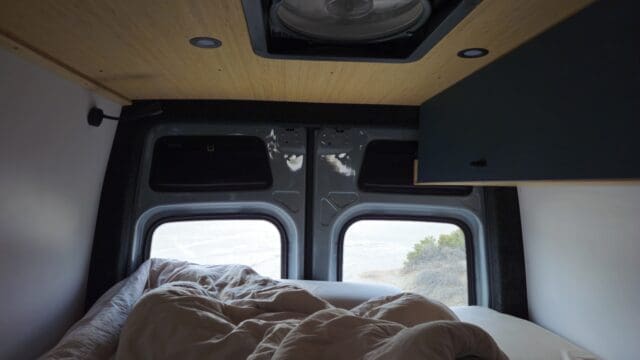
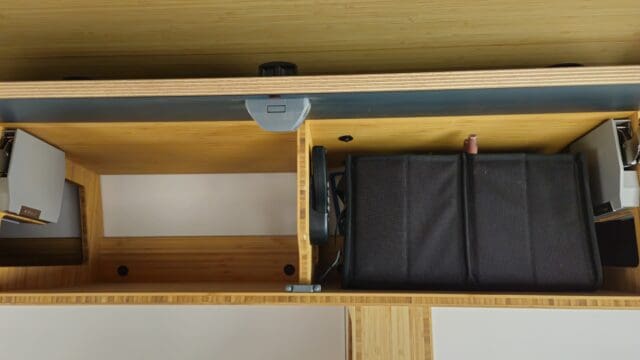
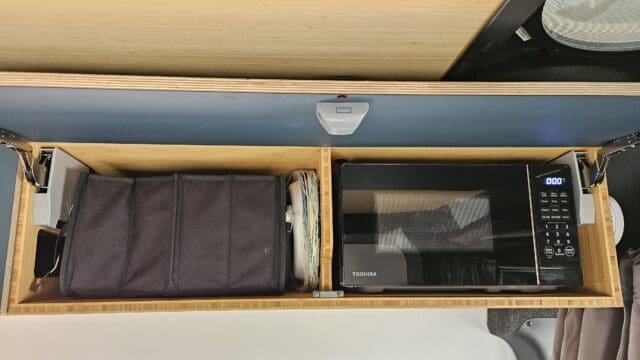
Overhead cabinets and drawers provide storage for clothing, food, and smaller equipment, and the interior is finished with bamboo cabinetry and countertops, laminate walls, and durable flooring. The materials give the Flatiron a warm appearance without being too elaborate for a vehicle that will inevitably collect dust, mud, and wet outdoor gear.
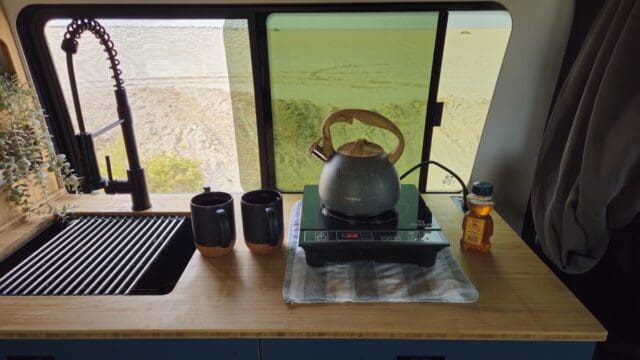
A full-length galley runs along the driver’s side, leaving a clear passage between the cab and rear doors. It incorporates a large sink, a portable single-burner induction cooktop, storage drawers, and a Dometic NRX 115 refrigerator/freezer. The front seats swivel to face the living area, where a small bench and Lagun table create a place to eat, work, or plan the following day’s route. Housed beneath the small bench seat was a Trelino composting toilet. It took some practice to use correctly and prevent fluids from entering the solids compartment, and vice versa. While it isn’t our preferred toilet system, including a small starter bag of composting material with the rental would make the experience more user-friendly for first-time renters. An exterior fold-down table provides another useful preparation surface when the weather encourages cooking outside.
Geotrek offers the 2026 Flatiron in two specifications. The entry-level Ascent starts at $119,950 and includes a 5-kilowatt EcoFlow power system, 400 watts of rooftop solar, DC-to-DC alternator charging, a 24-gallon freshwater tank, and a 5-gallon removable graywater tank. An Espar diesel heater and a front and rear MaxxAir ventilation fan handle climate control. While camped on the Alvord Desert, the fans worked hard to keep the interior comfortable, but the opening galley window above the kitchen sink proved to be the real lifesaver, providing a welcome cross-breeze.
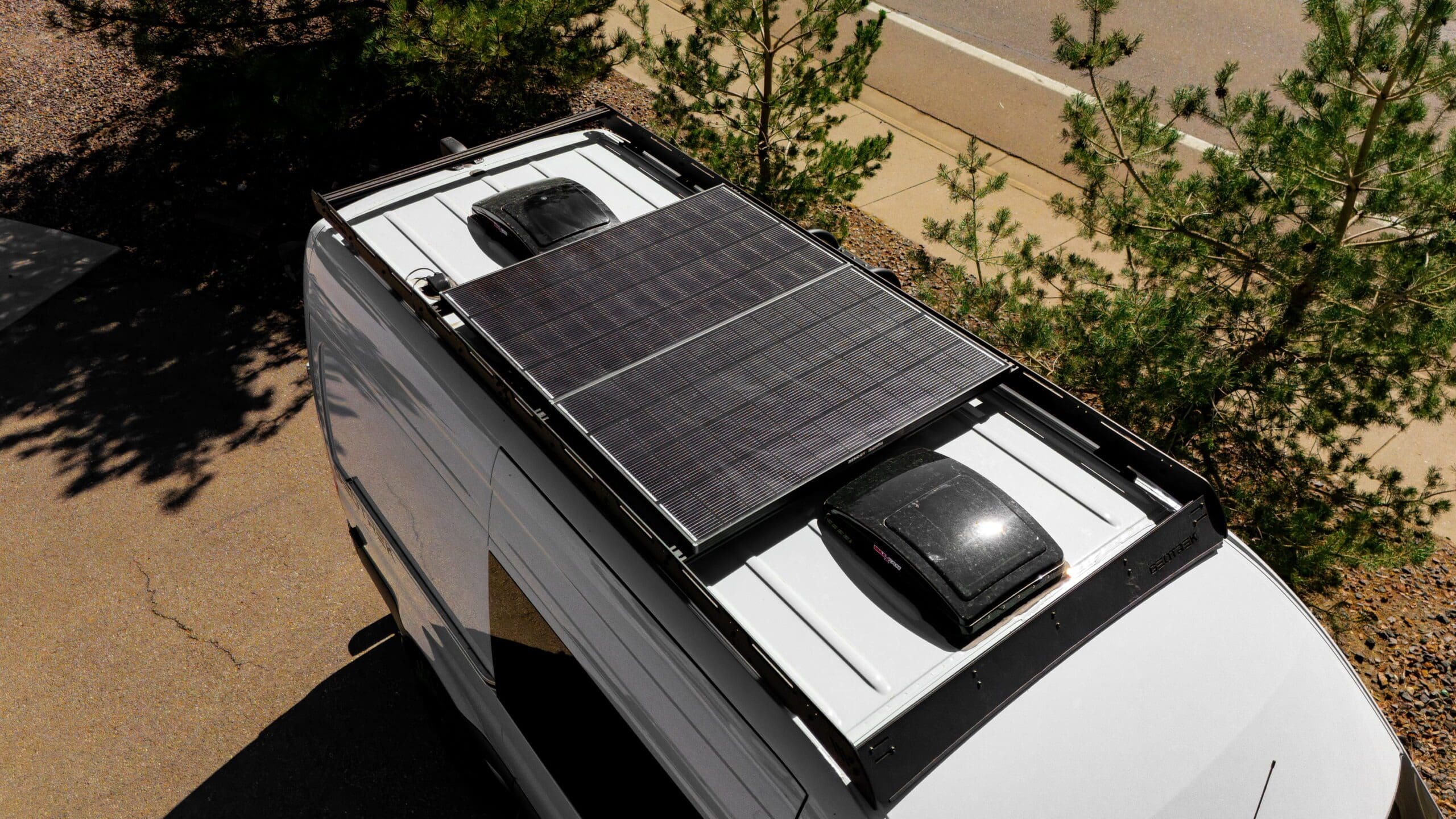
Starting at $136,450, the Summit is better suited to extended travel and warmer climates. Battery capacity increases to 10 kilowatt-hours, while a Velit 2000R rooftop air conditioner makes it possible to cool the living area without immediately searching for shore power. The Summit also gains a 4-gallon water heater and a 22-gallon underbody graywater tank. These upgrades make showering and managing wastewater considerably easier during longer stays.
Both versions employ 3M Thinsulate insulation, a GeoTherm thermal barrier, window covers, dimmable lighting, and a pressurized water system. The 12-volt pump is rated at 3 gallons per minute, while the exterior shower can be used for washing people, pets, bicycles, or muddy equipment. Geotrek backs its vans with a three-year/36,000-mile comprehensive warranty and sells directly to customers rather than through a conventional dealer network.
The Flatiron does not attempt to accommodate a large family or reproduce every convenience of a conventional RV. It seats and sleeps two, has no permanent indoor bathroom, and asks its occupants to live within the constraints of a compact space. Those limitations are also part of its appeal. Fewer rooms, appliances, and complicated mechanisms generally mean less weight, fewer potential failures, and more space for the equipment that makes a journey worthwhile.
For a couple or solo traveler, the Flatiron presents a sensible balance. It is compact enough for everyday driving, comfortable enough for extended habitation, and equipped to remain away from campgrounds for several days at a time. It may not follow a well-prepared Land Rover through every obstacle, but after a cold, wet day on the road, the ability to close the door, turn on the heater, and climb into a permanent bed is difficult to dismiss.
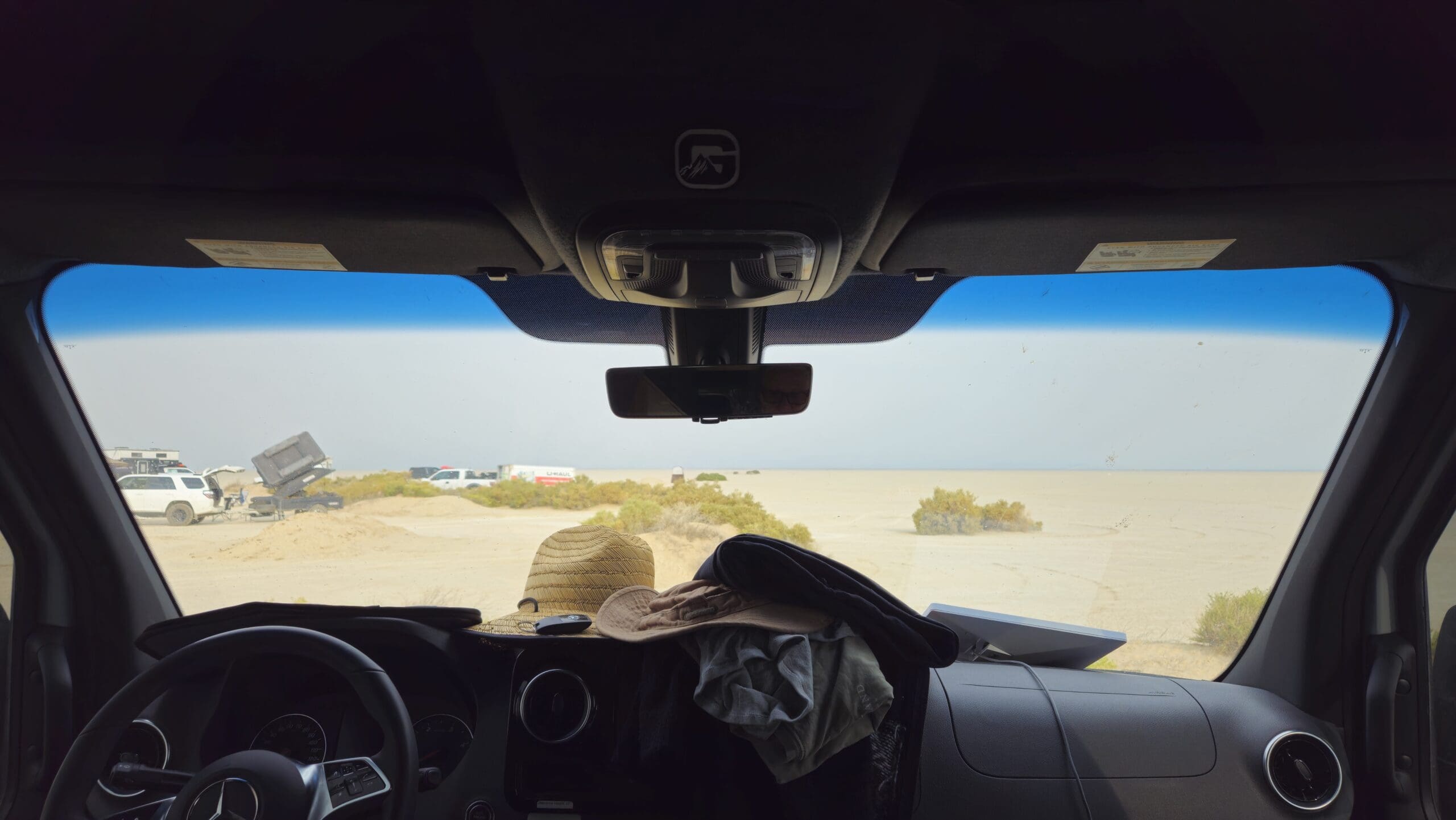
I also appreciate the straightforward driving experience provided by the AWD Mercedes-Benz base vehicle, the comfortable swivel seats, and the elevated driving position, with panoramic views through a massive windshield washed by the most delightful fluid-fed wipers. Strong crosswinds in Idaho provided an ideal test for the Crosswind Assist. Although the system helped keep the van stable, its occasional steering corrections could be surprising until you became accustomed to them. Am I converted? I am not sure, but Luisa definitely is. Sign her up, Geotrek.
Read More: Norton Atlas Brings a Historic British Name to the Middleweight Adventure Market
Our No Compromise Clause: We do not accept advertorial content or allow advertising to influence our coverage, and our contributors are guaranteed editorial independence. Overland Collective may earn a small commission from affiliate links included in this article. We appreciate your support.
