

I sat down and took a deep breath, desperately trying to clear my nerves. Our Zoom call gave a soft chime as parents and teachers logged on one by one. It’s not every day that a high school would consider supporting and helping pay for a month-long overland trip, much less an expedition consisting of four students with no adult supervision during a pandemic. It felt like it would take a miracle to get all the parents on board, not to mention our high school. I glanced nervously at my classmates—Jackson, James, and Alex—all of whom looked sheepish.
The idea was simple: as a high school senior intensive project, we would travel down to and along the US-Mexico border via our two overland vehicles. We listed, in turn, the permits and certifications each of us would need, diving into field procedures in the event of breakdowns or illness. By the end of the pitch, we had covered everything from our intended route to what would happen if one of us got a blister; no stone had been left unturned. We held our breaths for what seemed like forever, waiting for the question that would inevitably be asked. Wait, did you say the border?
Every time I explained this trip to someone, the idea of traveling along the border gave people pause. On the surface, the border seems a hazardous place, rumored to be full of cartel operations and undocumented migrants, with the US Border Patrol left trying to deal with it all. Most thought four teenagers wanting to explore a place as dangerous and unruly as that was a bad idea. Much to our surprise, the school signed off on our trip. So, for better or worse, we would bear witness to the reality of the area.
The first reveal of the border came after a slight detour into Joshua Tree National Park and a near misadventure with a scorpion while digging a cathole on the outskirts of the Salton Sea. The immediate impact of the scene was underwhelming. All that could be seen was a dreary canal separating the two nations. Other than that, it was just farmland and a myriad of side roads likely used by the border patrol. However, the landscape became more dramatic as we drove toward Yuma. The fields slowly fell away and were replaced by a maze of dunes, each towering over the last. Now and again, a break in the ridge would allow a clear line of sight to a massive metal wall dominating the ever-changing sands. It took me a moment to comprehend what I was looking at. As quickly as it appeared, it vanished behind another dune, a mammoth giant lying in wait. Endless and sturdy, it leaves an imprint on the desert as far as the eye can see.
Our first planned off-road section of the trip was the aptly named El Camino del Diablo, an approximately 150-mile stretch of remote desert that goes through the Barry M. Goldwater Air Force Range (a bombing and combat training facility), Cabeza Prieta National Wildlife Refuge, and Organ Pipe Cactus National Monument. The route stayed within a few miles of the border, a reasonably adventurous way to kick off the trip.
At the trailhead, we exited the rigs to air down and activate our virtual permits. A sign stood over us, reminding us that “smuggling and illegal immigrants are present ahead.” I stared, rendered speechless by the moment. Everything that lay ahead was unknown to me, and fear surfaced in my gut. Okay, we are doing this.
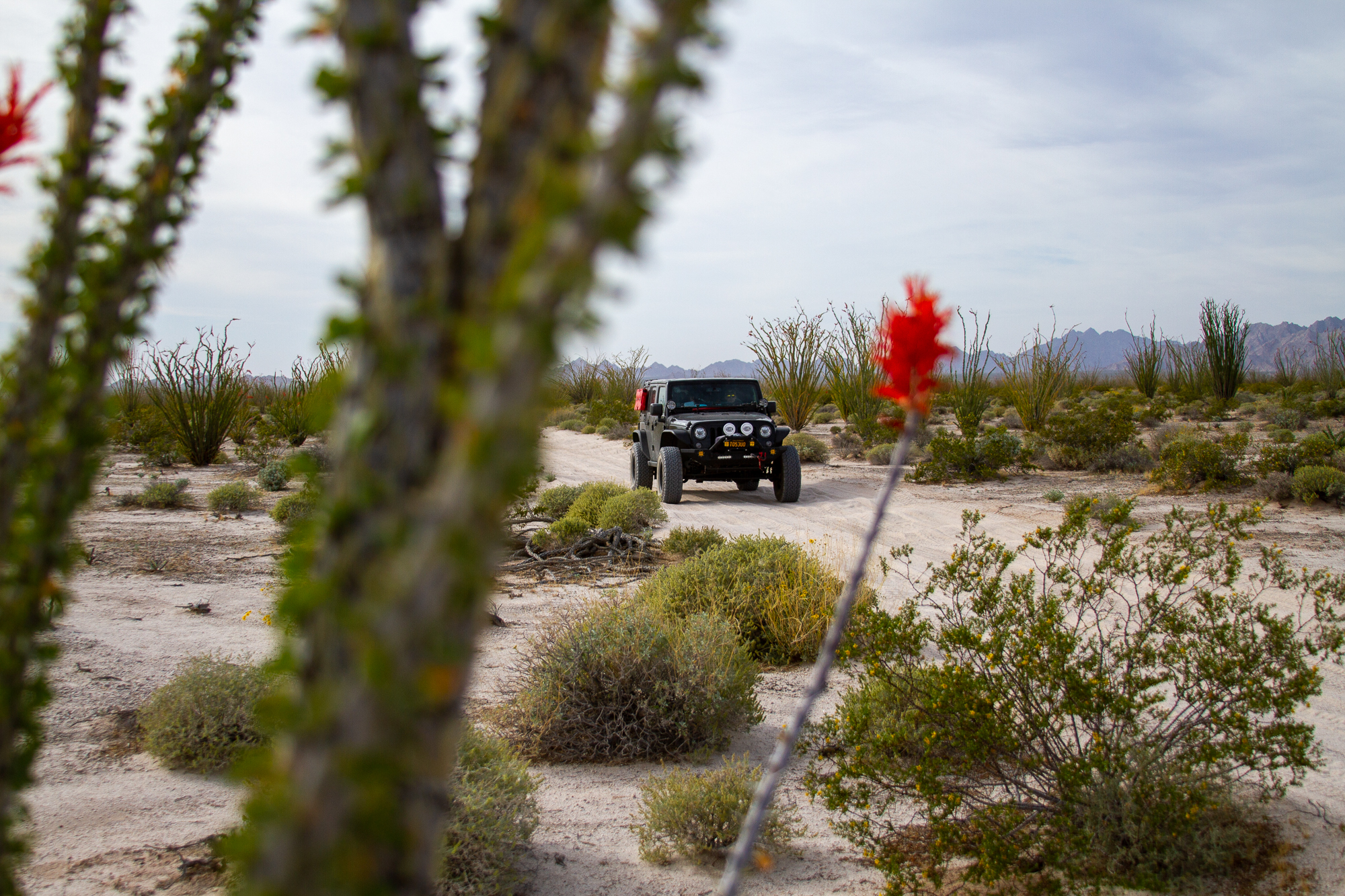
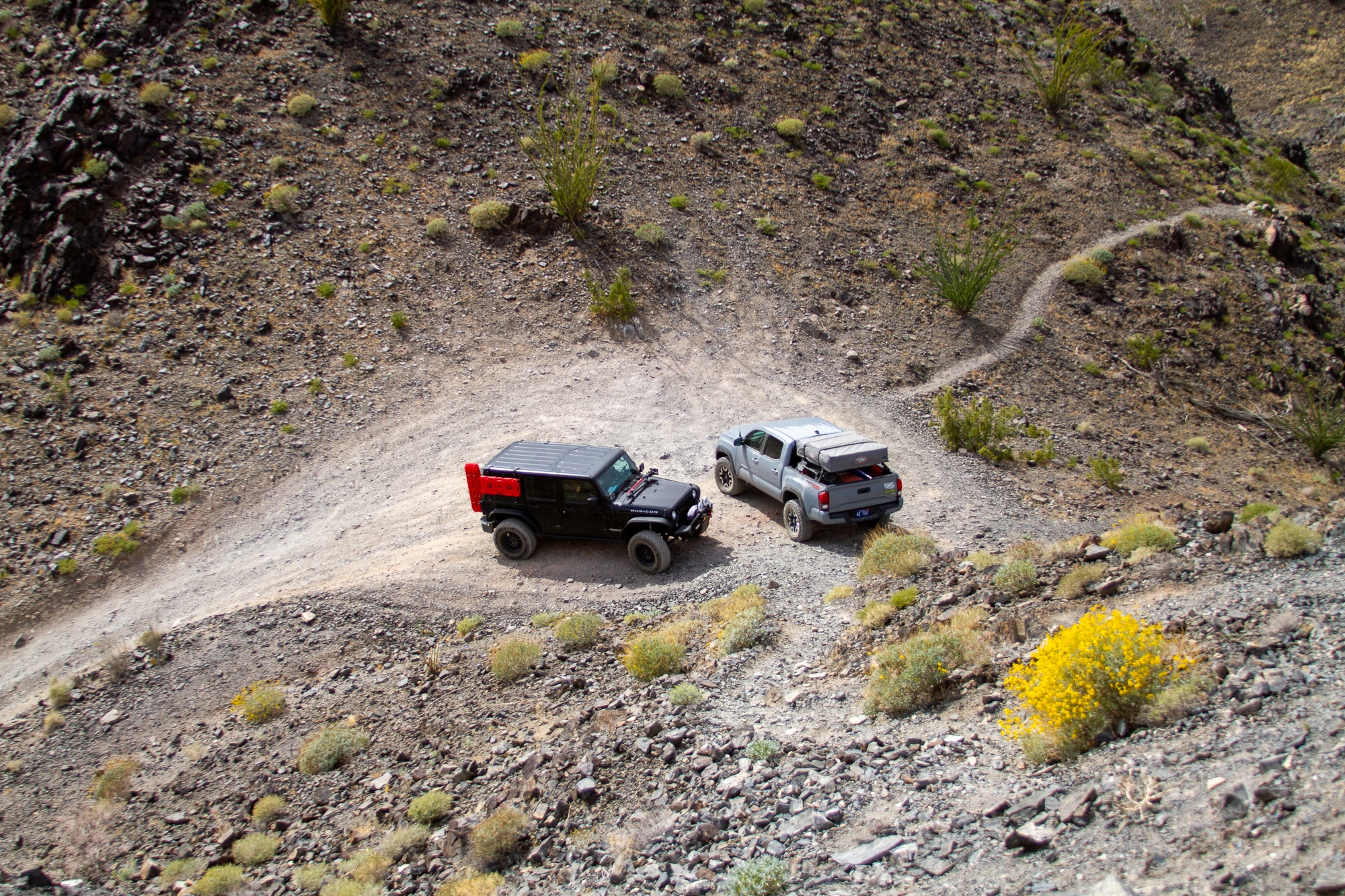
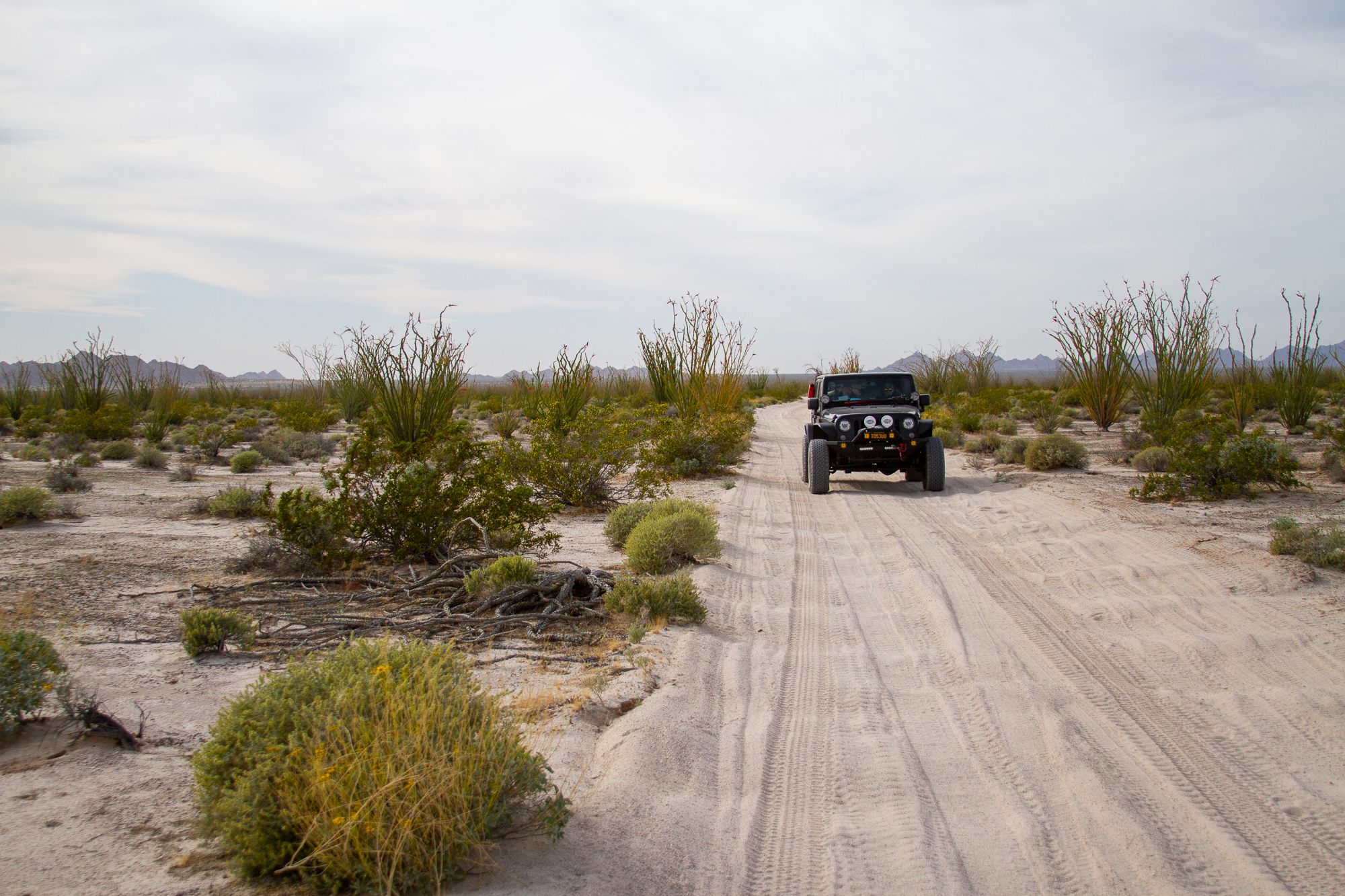
Deeper and deeper we went, passing through small cactus gardens. Ocotillos dotted the landscape, bridging over the roads with long spiny tendrils, at the ends of which were ornate orange blooms. Beyond the ocotillo and cacti, jagged mountains stood as steady sentinels, splitting the desert sands.
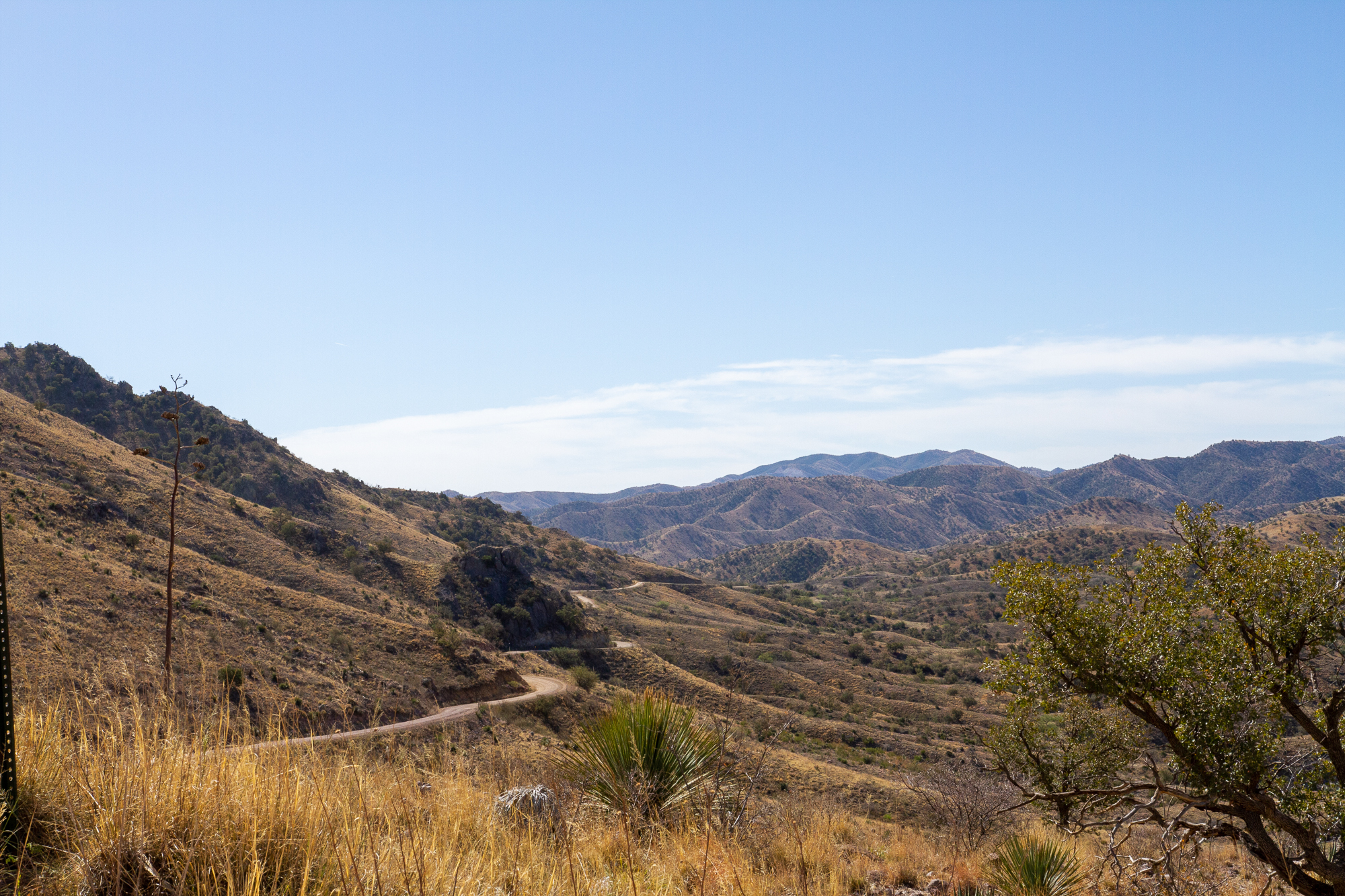
We passed through the ghost town of Fortuna, Arizona, and began meandering our way into the mountains. The sandy roads turned to a dark brown shale that cracked under the weight of our vehicles. Sun-stained plaques stationed along the side of the road told the story of the town’s rise and fall. After walking around and a few rocks tossed down the deepest mine shaft we had ever seen, we dropped back down to a lower elevation.
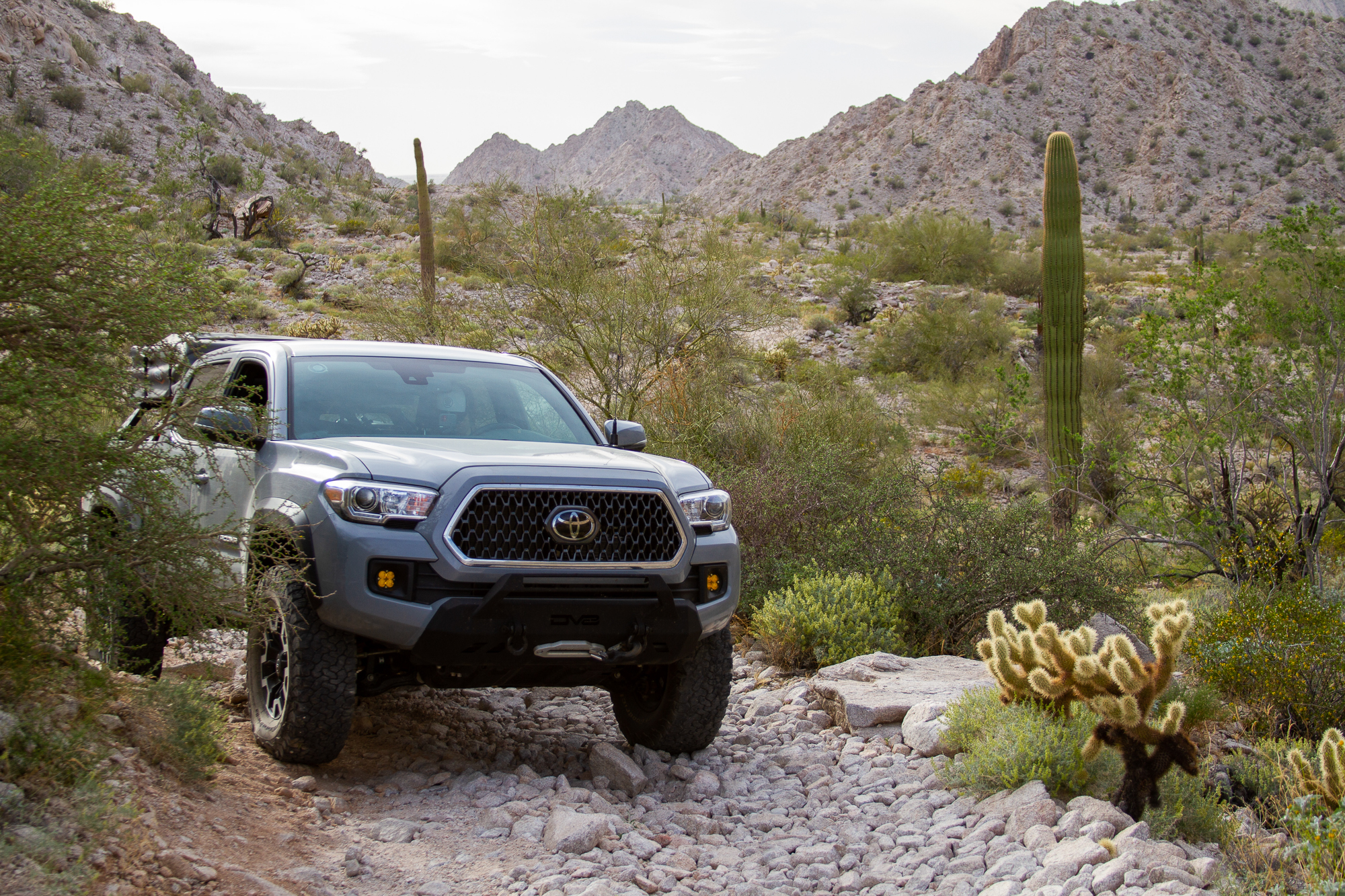
Strangely, the more remote we got, the roads became increasingly developed, which contrasted heavily with the fact that we hadn’t seen any other people so far. Every hundred feet or so, a sign warned us against going off the road. To our right, the laser weapons testing site of Yodavill could be seen between brief openings in the ocotillo. Fifteen minutes later, each of our phones chimed in turn, our cell carriers informing us they were connecting to Mexican towers. Jackson (co-pilot in my Tacoma) checked the map and saw we were within four miles of the border.
Over the horizon, a rapidly accelerating billow of dust emanated off the road. In no time, a white pickup with green decals came around the corner. As fast as we could, we edged onto the shoulder to let it pass as the car continued on its course, racing into the distance. This would be our first glimpse of the border patrol—many more would come.
The sun was sinking lower and lower in the sky. Every half hour, border patrol vehicles would pass us, intent on the task at hand, never even glancing in our direction. We began looking for spots to camp; however, every side road was marked Government Only. Finally, at twilight, we came upon a designated campsite. It sat across the road from a rundown hut and windmill stationed at the foot of a small hill.
The frequency of border patrol vehicles increased, whipping by our campsite at speeds that would have given our parents a heart attack. Occasionally, a government car would stop and sit outside the camp, silently watching.
Two of us had previously done ride-alongs with the border patrol in eighth grade. We learned from them that most of the patrol’s work when encountering immigrants is giving people water and medical attention. Now that we had ventured so far into the vast, unforgiving desert surrounding the border, this made a lot of sense. Even in the early spring, temperatures easily reached over a hundred degrees, and water was next to impossible to find.
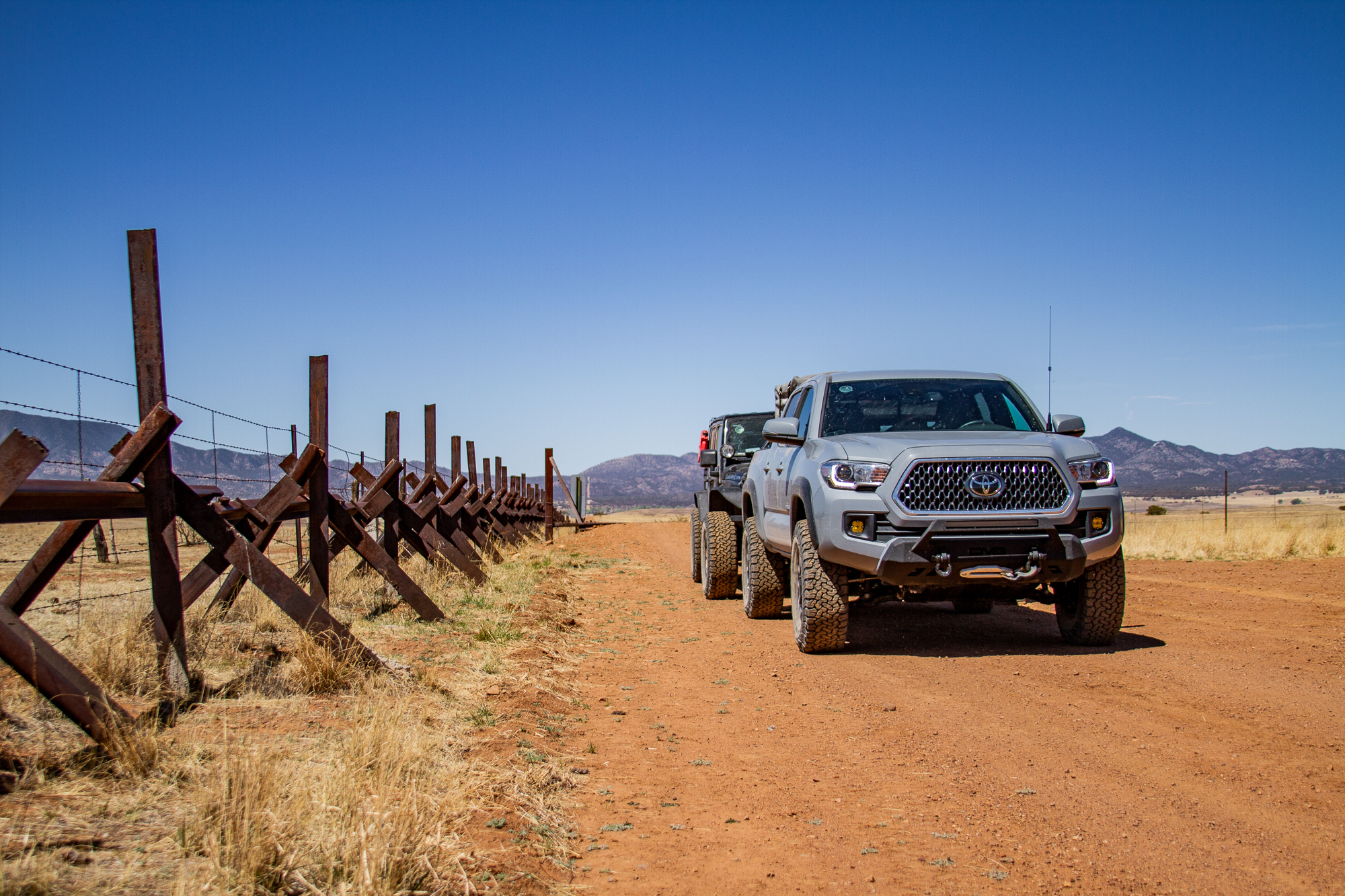
We had been warned by many concerned adults that we needed to avoid contact with undocumented immigrants. Now that we were out here, that statement seemed outlandish. It is doubtful that immigrants would risk interactions with vehicles or civilians. Not long after leaving camp, we began to see the wall emerge from behind distant hills. The border was closer than ever before.
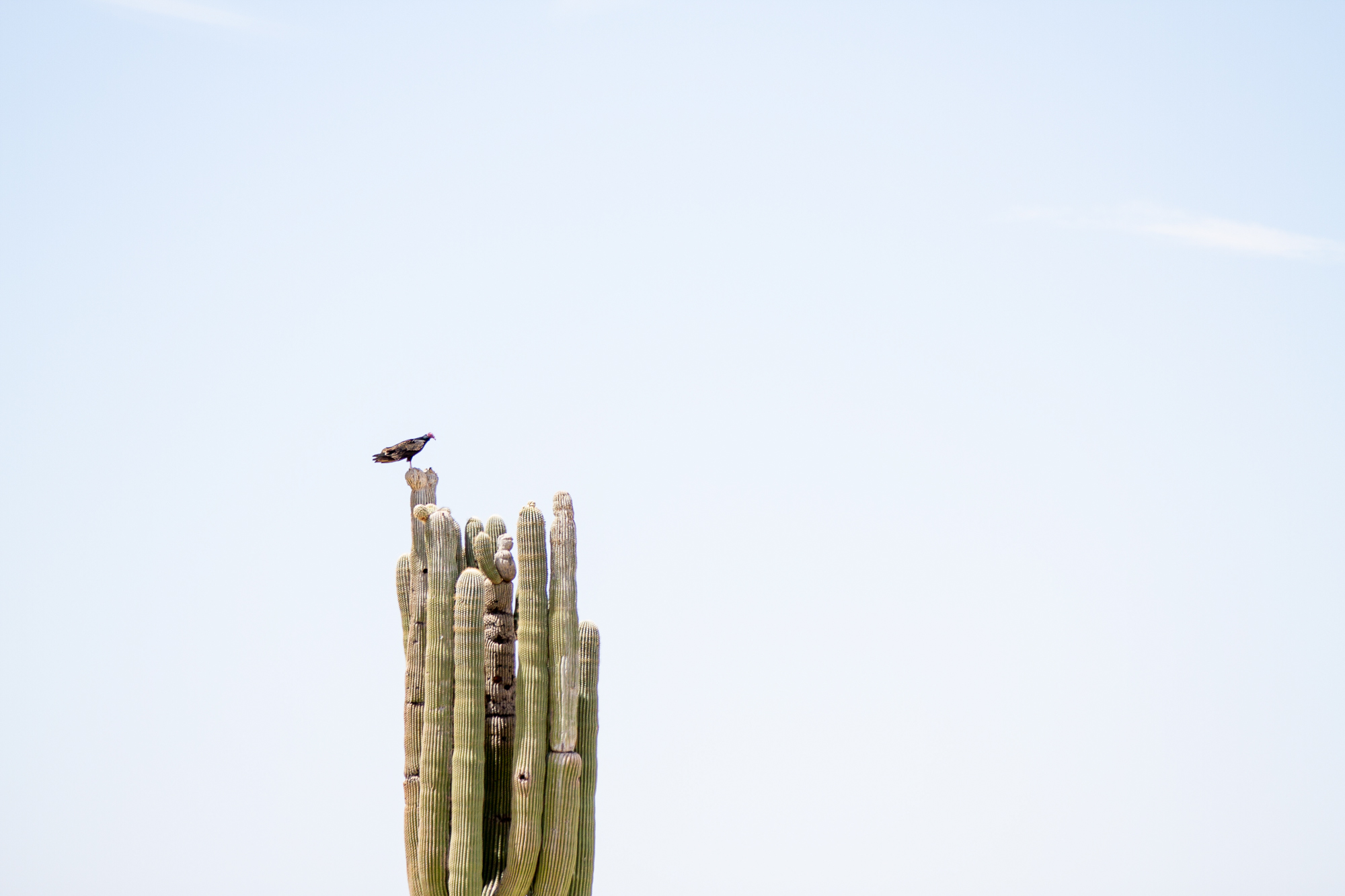
Organ pipe cactus now flanked the trail, towering over the sandy road, sporadically topped by bouquets of large, striking flowers. Turkey vultures landed atop the immense cacti and watched us drive by, their eyes dark and suspicious. Lizards darted across the road as our vehicles disturbed their roadside sunbathing. Poor Jackson had to deal with me asking to stop every 10 minutes so I could walk around or take a picture; the area was nothing short of stunning.
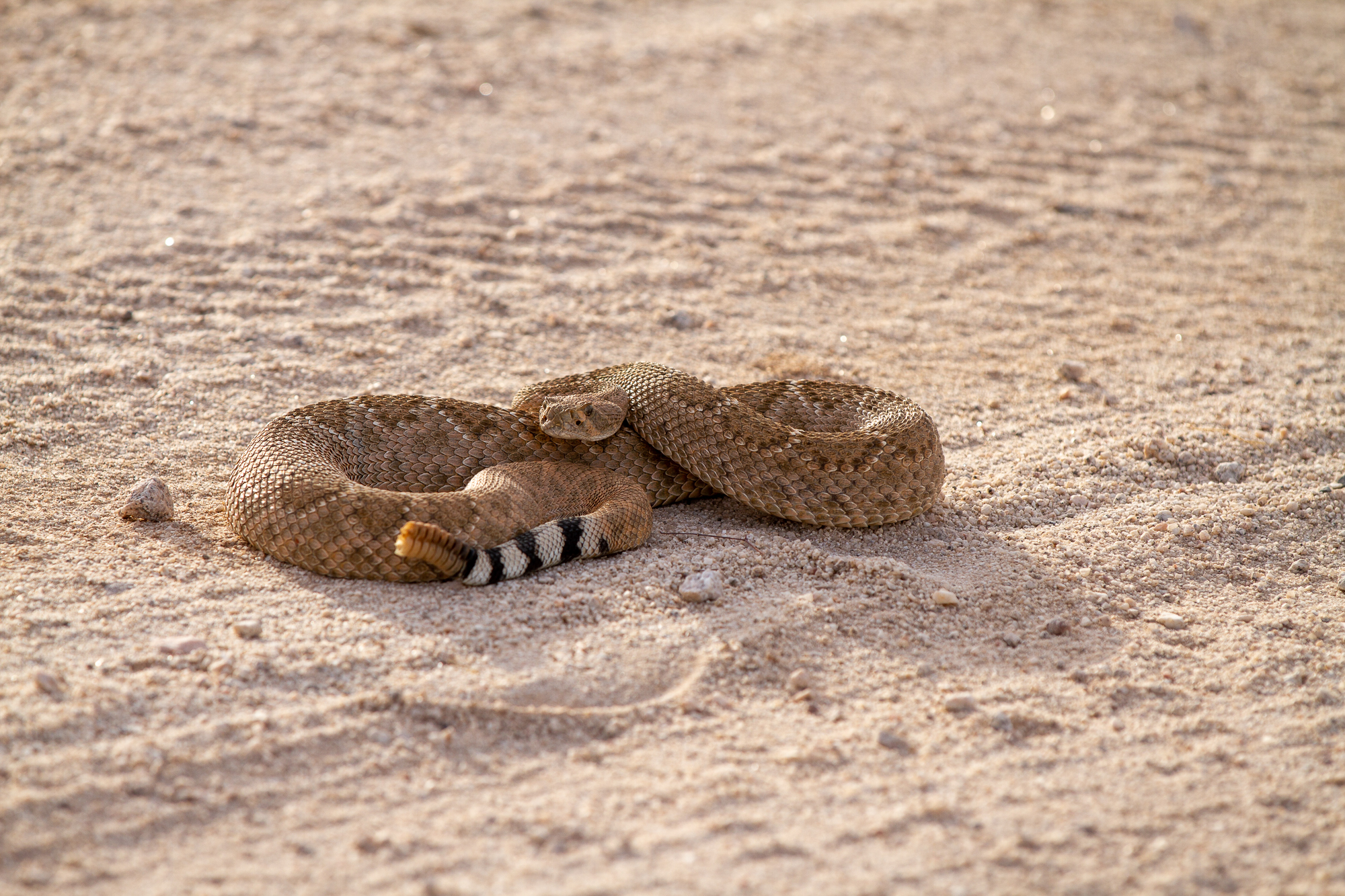
We came around a bend, and Jackson slammed on the brakes; I prayed James and Alex in the Jeep wouldn’t rear-end us. Jackson had spotted our first rattlesnake. We piled out of the cars, carefully approaching the coiled lump on the ground. A gorgeous diamondback was staring us down, clearly agitated. I carefully snapped photos and watched. The geometric assembly of colors lining its back was mesmerizing. After some time and far longer than our snake friend would have preferred, we left.
“Oh, man, ” Jackson’s voice trailed off. Three border patrol trucks were parked on the side of the road. Many agents were out of their cars, huddled together, talking over the radio. I waved and gave a friendly smile, and they responded with stoic nods. My heart dropped as we passed the second truck; three people sat handcuffed in the back. Like many others, these three individuals were detained at what we called surrender stations. These large metal towers in the desert were much taller than any cactus or ocotillo. At first glance, you could mistake them for a radio tower. At the base of each station is a single button; when pressed, it reveals your location. In other words, you are ready to surrender.
Days passed, and the landscape was ever-changing. Even though the experiences of El Camino del Diablo were behind us, the story of the border persisted. We would weave our way into densely wooded mountain passes and sit at the foot of cliffs, refueling in small towns that looked like Western movie sets. Border patrol cars sped by us relentlessly, and at night, low-flying planes would pass overhead, modified with well-crafted lenses and cameras that would survey the distant world below.
The road started leading closer and closer to the border, and the only evidence was a simple metal fence; finally, we stumbled upon a side road that meandered its way closer to it. Silently, we exited the cars, walking up to what separated us from the rest of the world. Mountains stood tall in the distance, and to our east, willows surrounded what must have been a creek weaving its way across the border. Tentatively, I reached over the fence and across the divide—I half expected something to happen as my hand entered a land totally unfamiliar to me.
We stayed in that spot for a good while, enthralled by the beauty of the untamed valley and the reality of where we were. At that point, the four of us had traveled just shy of 1,000 miles, the majority of which were off-pavement and at all times along the border. The following day, we headed north, watching the beauty and conflict fade away in our mirrors.
Ultimately, we discovered the border region is not something to be afraid of. On the contrary, it’s arguably one of the last wild places in the United States, teaming with adventure and discovery. If you choose to go, be as open-minded as possible toward your experiences. I came away not only in awe of the border’s beauty but also of its complexity. I learned that letting fear and prejudice guide my decisions worsens my judgment. Moreover, leading my life with curiosity and a readiness to explore will better prepare me for my future as an adult and an adventurer.
Editor’s Note: This article was originally published in Overland Journal’s Spring 2025 Issue.
Our No Compromise Clause: We do not accept advertorial content or allow advertising to influence our coverage, and our contributors are guaranteed editorial independence. Overland International may earn a small commission from affiliate links included in this article. We appreciate your support.
