

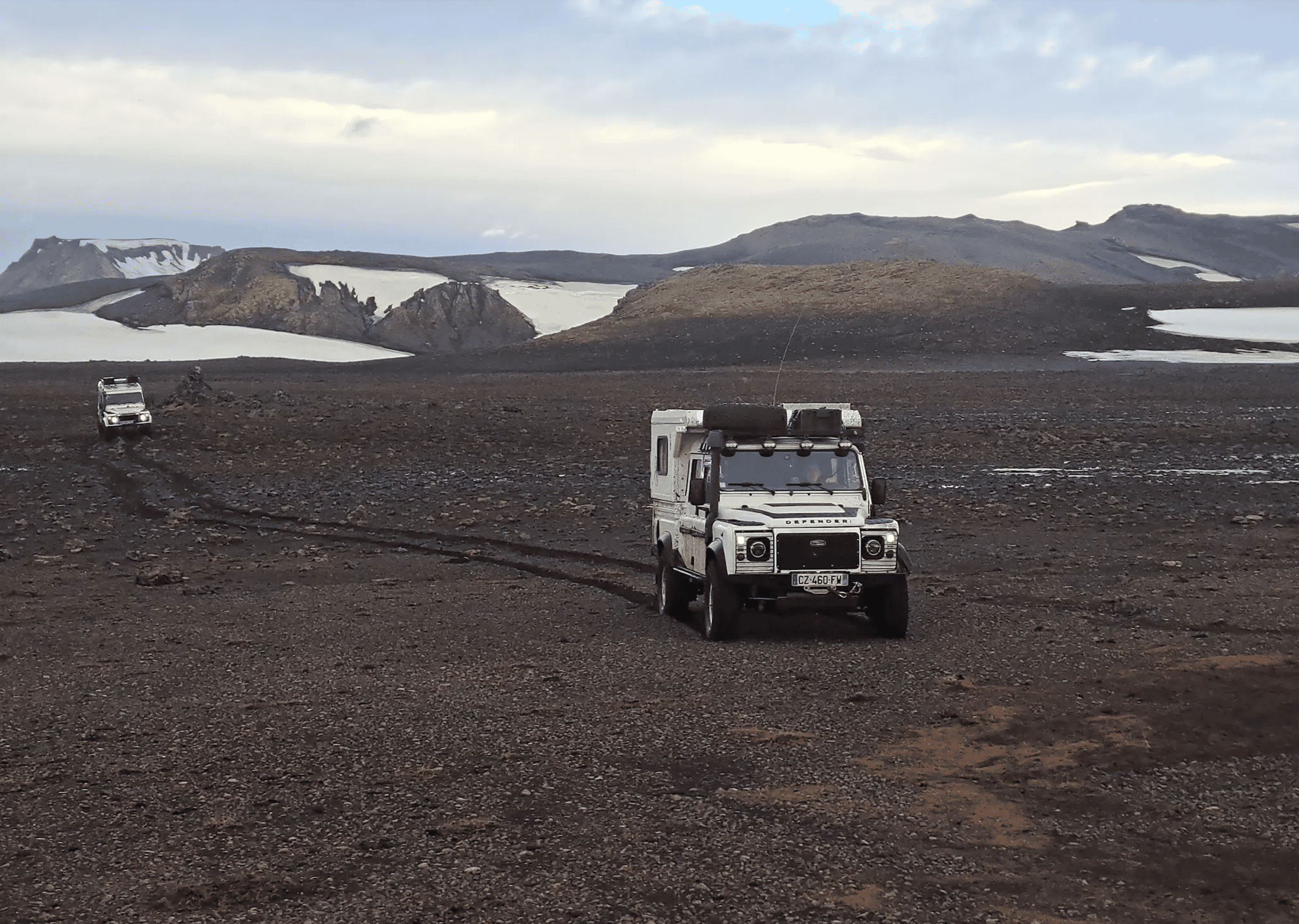
Image credits: Klemenz Geir Klemenzson, Iceland Review
A recent incident in Iceland has sparked outrage among locals and renewed calls for visitors to respect the country’s strict off-road driving laws. Two French tourists have paid heavy fines for driving off established tracks in the Fjallabak Nature Reserve in South Iceland, leaving visible damage across a fragile volcanic landscape.
According to Icelandic authorities, the group was traveling in two Land Rover Defenders when they left marked routes in an attempt to drive around deep snow patches that had not yet thawed near Mælifellssandur, an area known for black sand plains, moss-covered lava fields, and highly sensitive soils. Rangers documented extensive tire tracks crossing untouched terrain, and the Environmental Agency of Iceland opened a formal investigation into violations of conservation laws. The tourists were stopped by rangers and later fined, while police continue reviewing the case.
The reaction from locals who witnessed the damage was immediate and emotional. Klemenz Geir Klemenzson, a local ranger, said, “This is the worst thing I’ve ever seen,” describing multiple sets of tracks cutting through areas that may take decades to recover. Another local resident said, “People come here because the landscape is untouched. When someone drives across it, they destroy exactly what everyone traveled here to see.”
For anyone visiting Iceland, the most important point is simple: true “off-road” driving is illegal across the entire country. Vehicles must remain on marked roads, F-roads, and clearly designated tracks. Driving onto lava fields, black sand areas, moss-covered ground, riverbanks, or other untouched terrain is strictly prohibited under Icelandic nature conservation laws because Iceland’s environment is extraordinarily fragile. The famous green moss that covers many lava fields grows only a few millimeters per year, and a single vehicle can leave scars that remain visible for generations. Volcanic soils are easily eroded by wind and water once disturbed, and damaged areas can expand far beyond the original tire tracks.
Fines for illegal off-road driving can be as high as $8,000 USD, rental companies can impose additional charges, and authorities can pursue compensation for environmental restoration in serious cases.
The Bigger Picture
This incident is a reminder of the broader responsibility that comes with international overland travel. Every country has its own rules governing public land access, vehicle use, camping, and environmental protection. What may be acceptable on a remote trail in one part of the world can be a criminal offense in another.
Before driving in a foreign country, we all need to study the regulations, understand where driving is permitted, check seasonal restrictions, and ask local authorities or rangers when in doubt. A few minutes of research can prevent enormous damage, expensive fines, and negative consequences for the entire overlanding community.
Read more: Death Valley Landmarks Marred Again By 4WD Vandals
Our No Compromise Clause: We do not accept advertorial content or allow advertising to influence our coverage, and our contributors are guaranteed editorial independence. Overland Collective may earn a small commission from affiliate links included in this article. We appreciate your support.
