

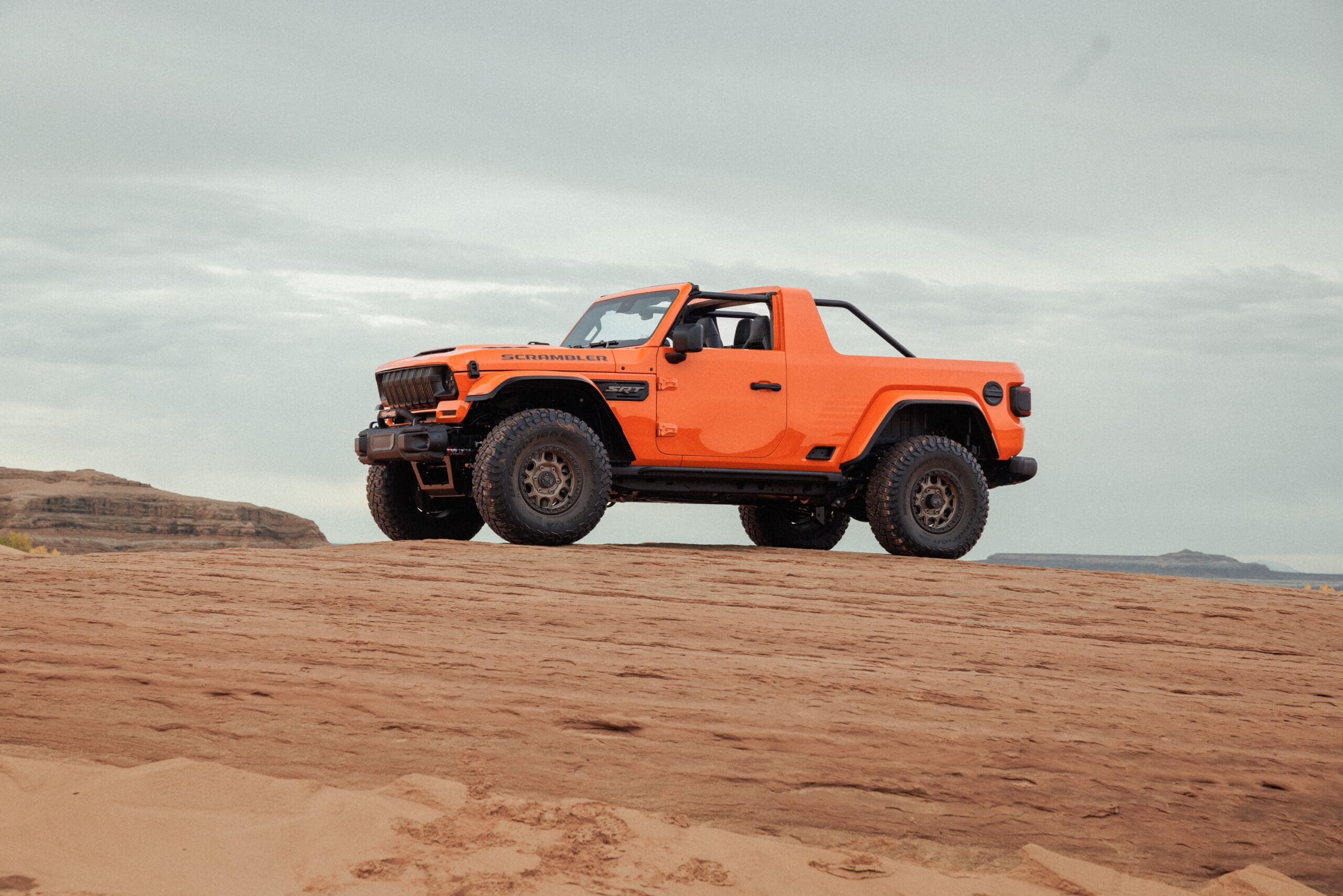
My first impression of the Wrangler Scrambler SRT Concept came from a fleeting glance at the thumbnail accompanying Jeep’s official press release. “Is that a new Rambo Lambo (LM002)?” I asked myself. The resemblance is passing but clear: flat body panels, a pointed nose, and an aggressive stance, with an obvious retro influence in the Scrambler’s case.
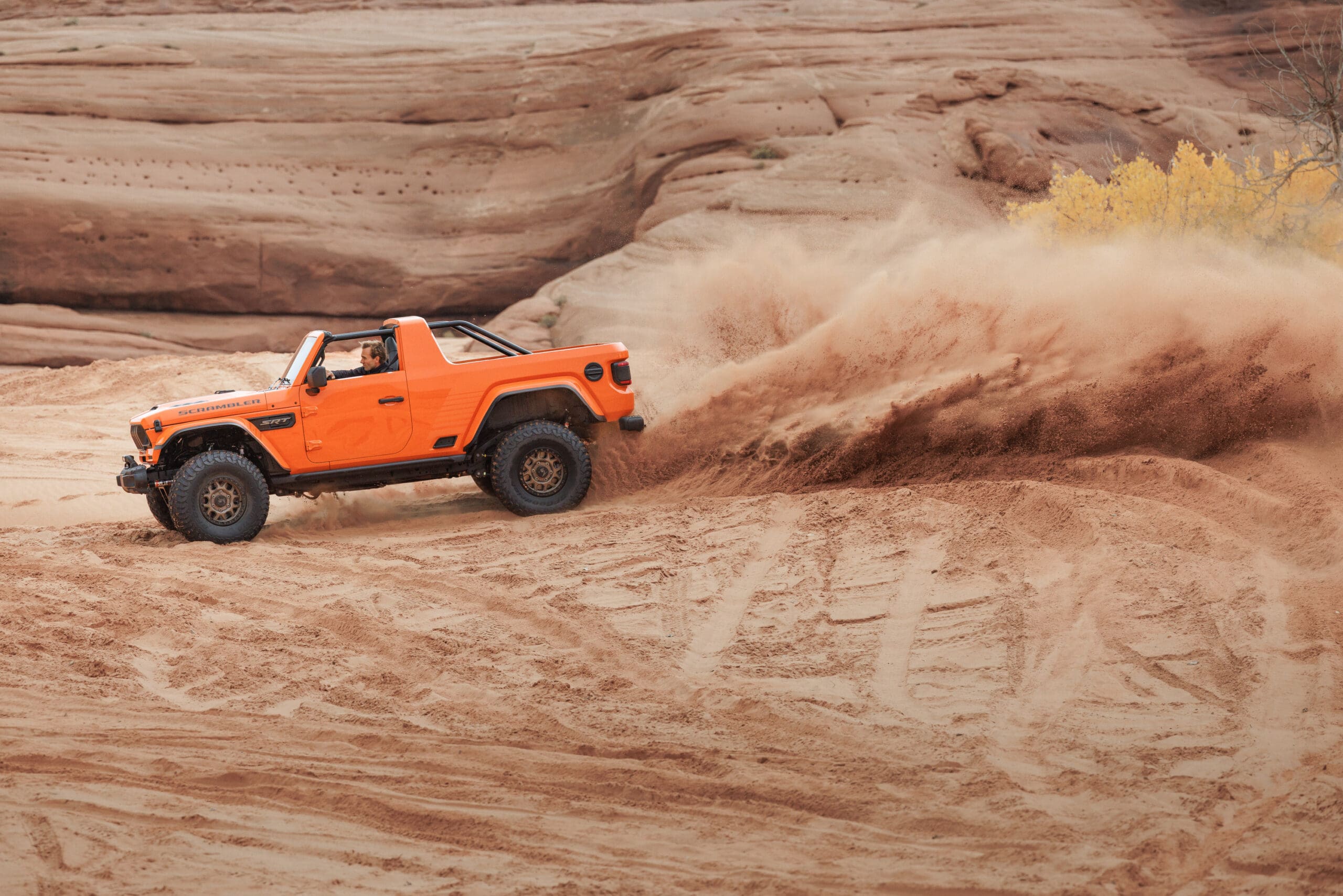
A closer look revealed something with an altogether different focus. Decades of technological progress separate the two, but the Jeep’s apparent sense of purpose appeals to me most. Beyond the attention-grabbing styling, its desert-racing-inspired suspension, V8 power, and adaptable pickup bed suggest a machine built to be driven hard. The Scrambler looks ready to rip, and I have a feeling that I would happily point it toward a long desert stretch, with a few tight trails along the way, to see how that promise translates to the dirt.
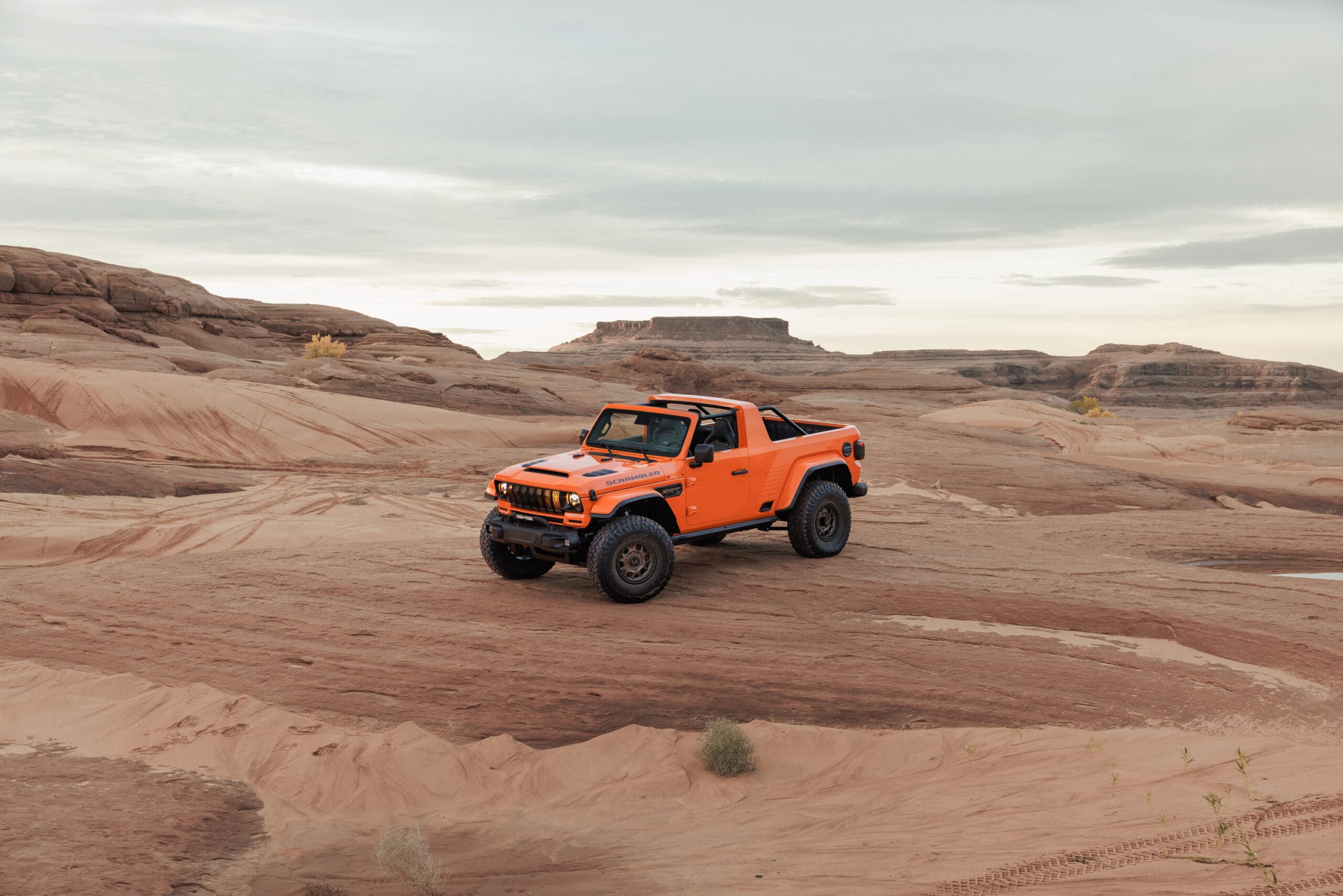
Announced in Las Vegas on November 2, 2026, the Wrangler Scrambler SRT Concept is the first desert-performance Jeep concept to carry an SRT badge. Its most significant engineering departure is up front: Jeep describes the independent suspension as a historic first for the Wrangler.
Inspired by the Jeep CJ-8 Scrambler, the concept revisits the combination of open-air driving and pickup utility on a modern Wrangler foundation. For overland travelers, the adaptable passenger and cargo space is particularly relevant, although the announcement leaves several practical questions unanswered. Jeep has not supplied payload, bed dimensions, fuel capacity, or driving-range figures, all of which would help establish its suitability for extended travel. On paper, this machine would be incredible for a bare-bones Pan-American journey over the Andes and through the deserts to Patagonia.
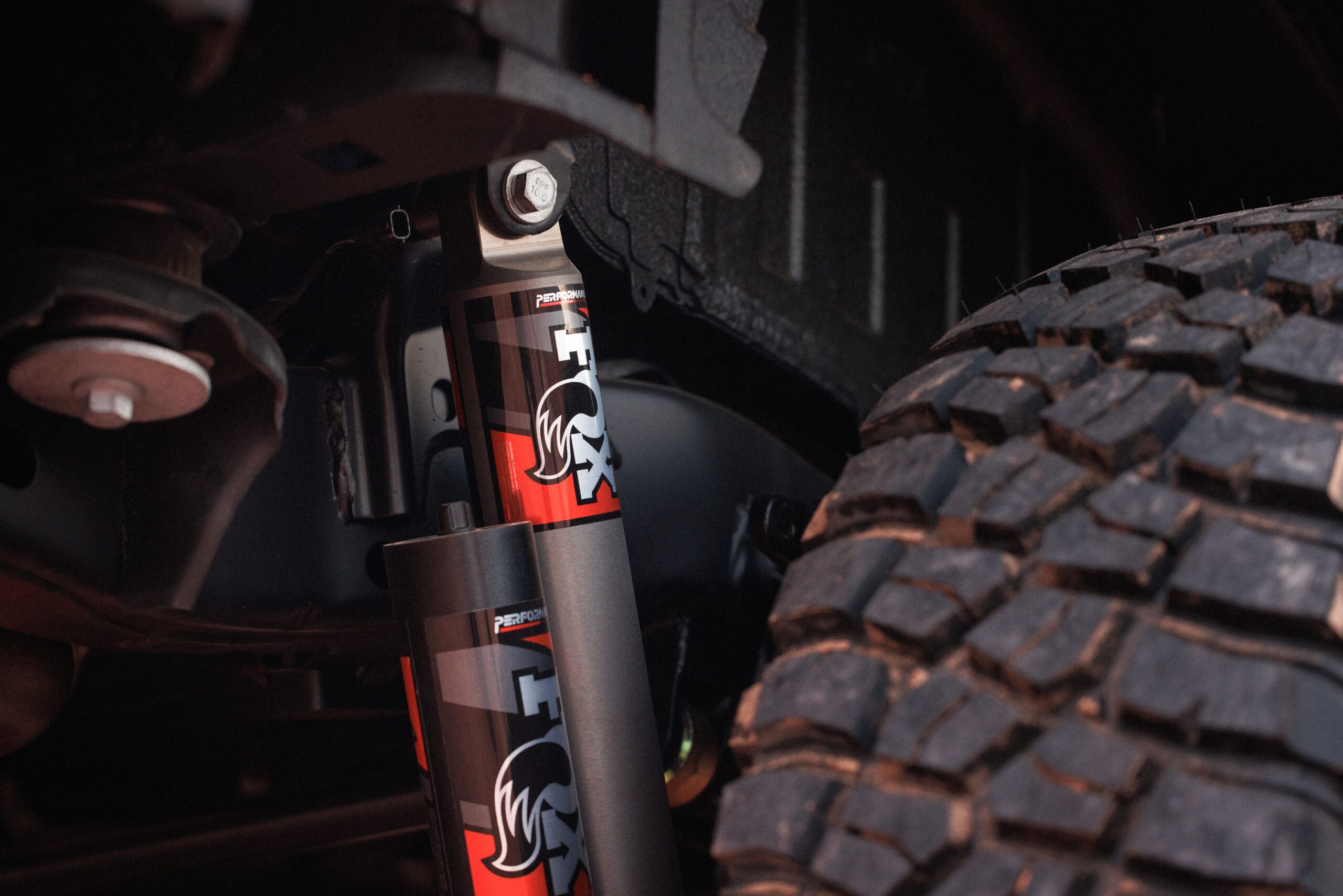
The high-travel independent front suspension was developed with off-road racing champion Casey Currie. According to Jeep, the system improves steering precision, wheel control, and stability during high-speed off-road driving. A trophy-truck-inspired rear axle, heavy-duty wheel package, and hardware informed by desert racing support that intended use. Suspension travel measurements, shock specifications, and tire dimensions have not been disclosed.
Jeep says the suspension architecture builds on the system previously shown on the Jeep Striker Concept. The company also points to Currie’s class victory at the NORRA 500 in his custom Gladiator “Striker” as competition validation of the underlying approach. That connection gives the Scrambler’s chassis development a racing reference, although the announcement does not provide test results for the new concept itself.
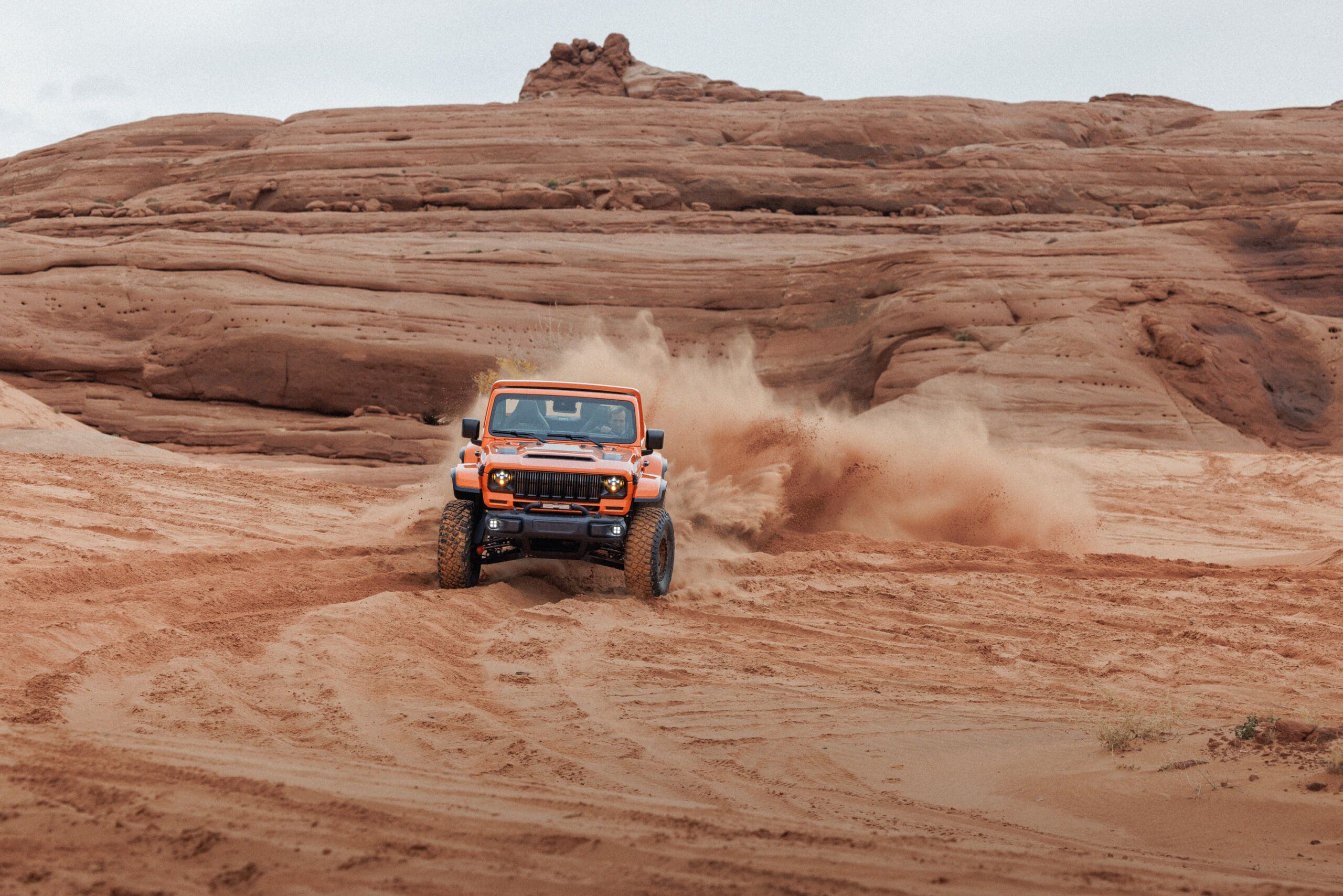
The emphasis shifts the Wrangler formula toward covering rough ground at speed. Jeep also describes the concept as suitable for remote backcountry routes and technical trails, but has not published ground clearance, approach and departure angles, or other measurements that would allow a detailed capability comparison. We will have to trust our eyes. Although the release confirms V8 power, it does not identify the engine’s displacement, but much speculation suggests the Scrambler would be equipped with a 6.4-liter Hemi V8 producing 470 horsepower and 470 pound-feet of torque, paired with an eight-speed automatic transmission.
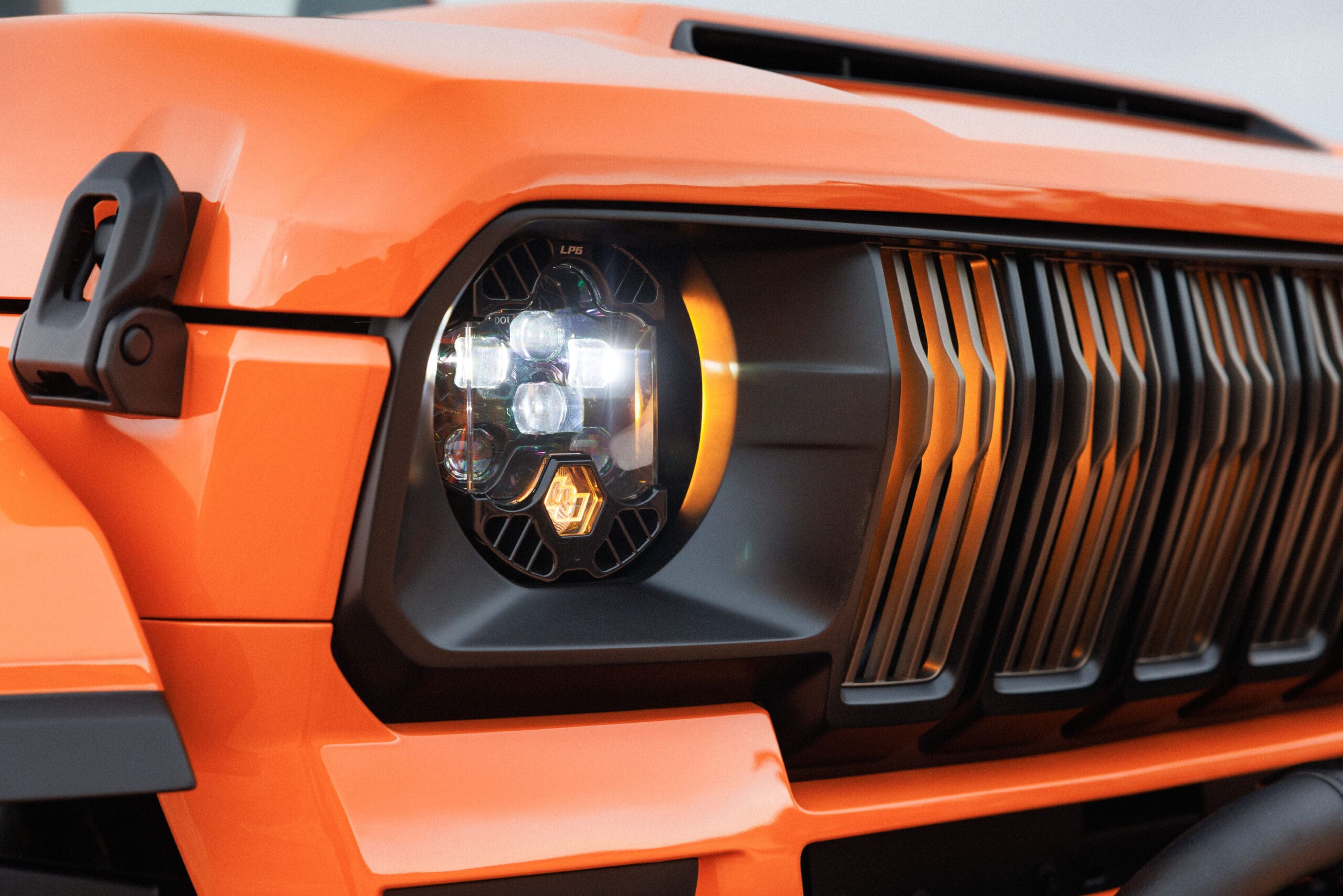
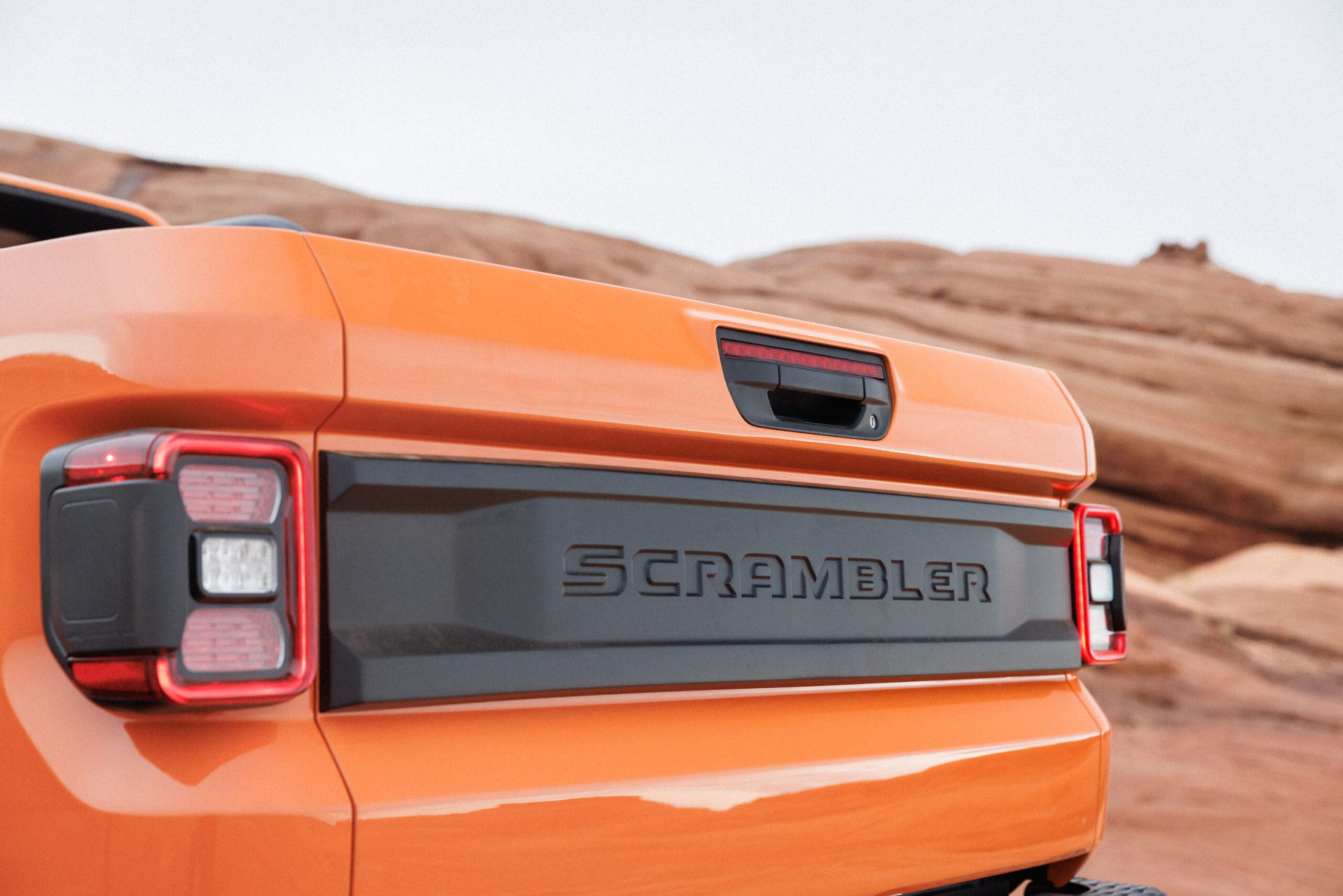
Body changes extend from the A-pillar rearward. Longer doors, custom rear bodywork, an integrated pickup bed, a redesigned tailgate, and unique fender flares give the vehicle its Scrambler-inspired proportions. A structural roll cage forms part of the conversion, while a spray-applied bed liner provides a durable cargo surface.
The front end adopts Jeep’s sharknose styling, drawing on Gladiator design and classic Jeep trucks. Jeep says this design direction first appeared on a concept at the 2026 Easter Jeep Safari. Punk’n orange paint, bronze-painted beadlock wheels, and SRT details complete the exterior. The concept was also referenced in the Stellantis FaSTLAne 2030 presentation in May 2026.
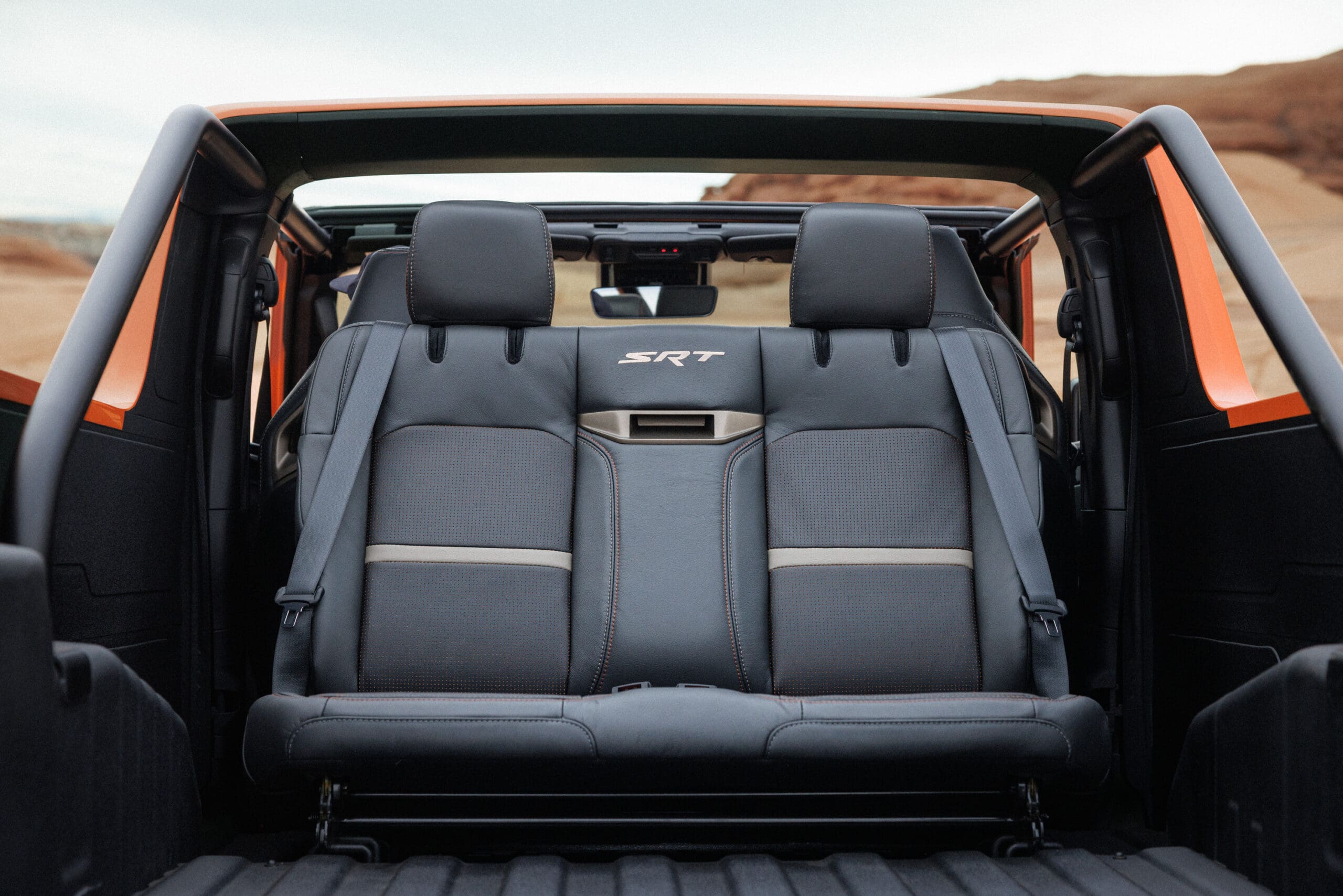
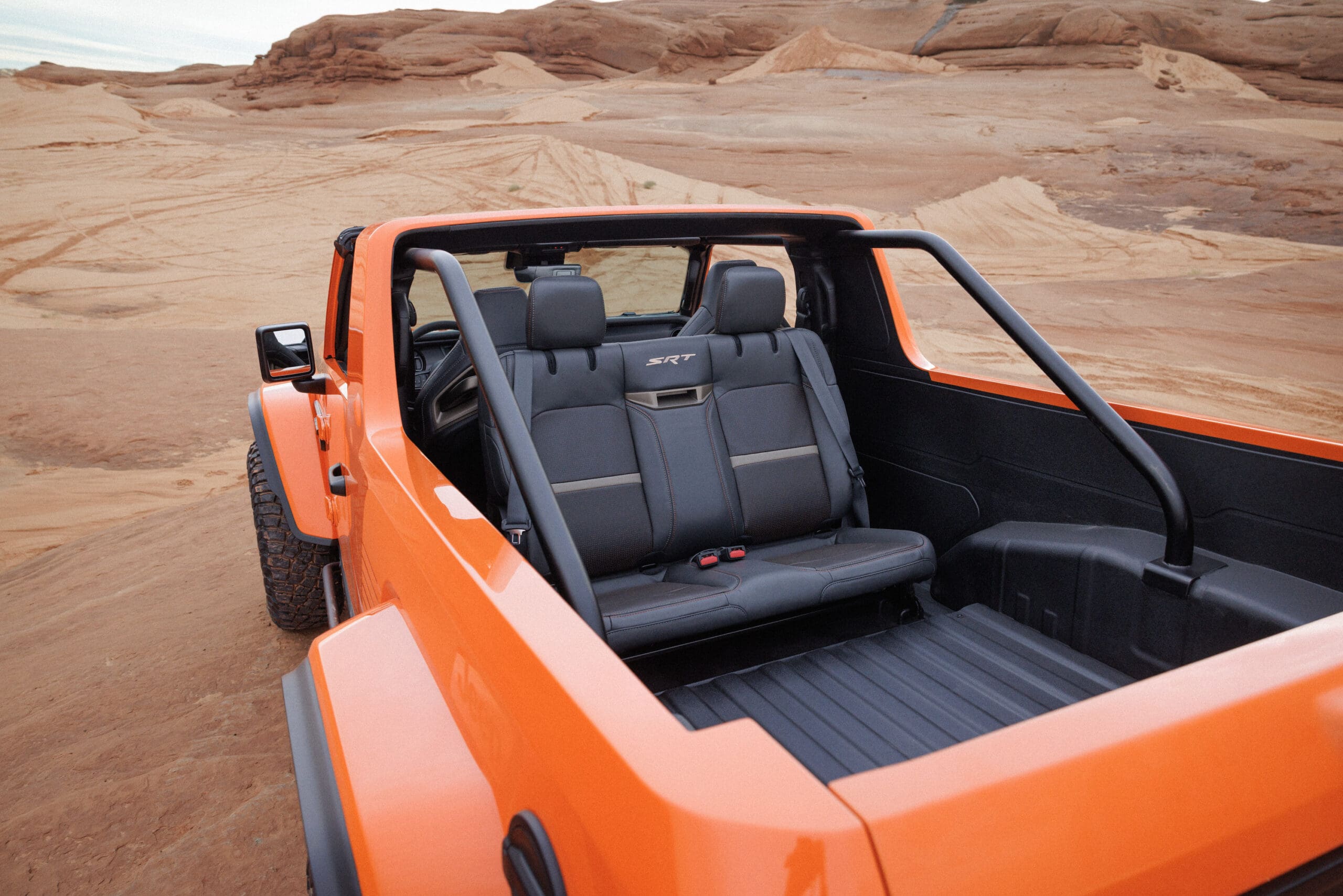
The rear seating provides the concept’s most distinctive utility feature. Seats attach to floor-mounted hooks and can be removed entirely or rotated 180 degrees to face rearward. Removing them opens the bed for camping equipment, motorcycles, or other cargo, Jeep says.
Inside, performance-oriented seats support occupants during fast off-road travel. Dark Graphite leather, orange inserts, contrast stitching, bronze accents, and SRT embroidery carry the exterior colors into the cabin. Additional details include unique grab handles, revised trim, and a rear-seat Jeep Multi-panel System, although Jeep provides no further explanation of that system’s operation.
The Wrangler Scrambler SRT remains a concept, with no production commitment, ordering schedule, or retail availability announced.
Read More: Overland News of the Week, October 23, 2026
Our No Compromise Clause: We do not accept advertorial content or allow advertising to influence our coverage, and our contributors are guaranteed editorial independence. Overland Collective may earn a small commission from affiliate links included in this article. We appreciate your support.
