

To honor the 20-year anniversary of Overland Journal, we are revisiting special heritage content in the upcoming 100th issue of the magazine. Originally published in Overland Journal’s Winter 2012 issue, this article is part of that celebration.
It is the unsung hero of expedition travel, an essential piece of kit that any mindful backcountry regular carries. If they don’t, they should. It is often fitted to a roof rack and left to the elements, or bolted to a bumper, only to be augured into the mud and snow, or sandblasted by desert winds. In short, it is the forsaken recipient of abuse and neglect. Until, that is, the moment that it is needed. Released from its chains, bolts, or bungee-cord incarceration, it receives a few hard knocks against terra firma to shake off its “rough spell” on your bumper, then a squirt of WD-40 and a few cycles of its handle. Without retort, it stands rigidly and steps up to whatever hell you’ve tasked it with—say, lifting a 4,000-pound vehicle, pressing a U-joint in place, or pulling out a fence post. And it performs flawlessly. The “it” we are referring to is the jack-of-all-trades, the Hi-Lift.
History
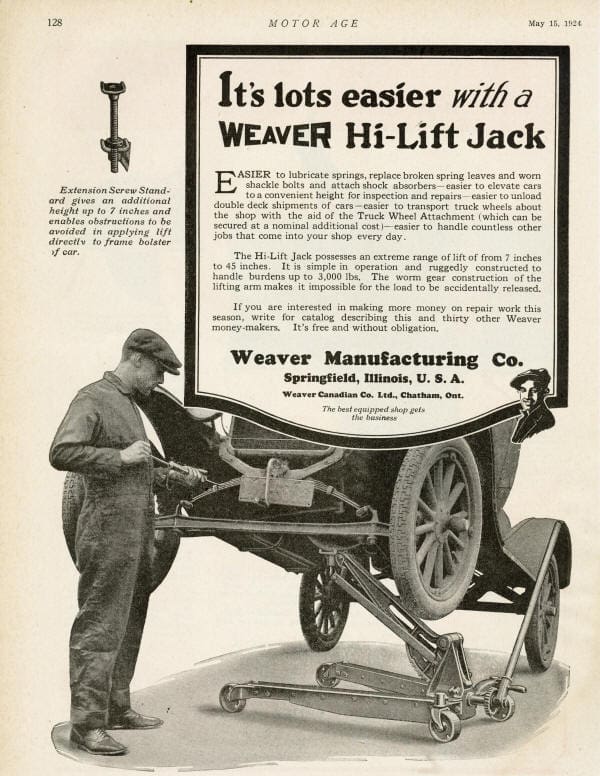
With roots dating back more than a century to 1905, a time before the internal combustion engine had fully transformed the world, the Hi-Lift, originally known as the Automatic A-B-C Combination Tool, has become an integral part of the overlanding landscape. In the 19th century, heavy lifting of farm equipment and wagons was an arduous task with few modern mechanical options. There were various leverage-arm lifting devices, but nothing that could be hand-carried to a site and raise a cart or wagon with ease. Phillip John Harrah, who was orphaned at age three and adopted by Captain James B. Harrah, became an ardent inventor at a young age. An admirer of Thomas Edison, he spent his days (between jobs as a washing machine salesman and a schoolteacher) sketching and creating machines that would make life easier. A few such inventions were the Universal Repair Machine (an anvil-vise-drill tool) and a unique seven-use tool that included a hammer, hatchet, wire cutters, and pliers. In 1895, he formed the Bloomfield Manufacturing Company with partner Oscar Shryer. It would be just a few years before his concept of a multi-use tool for lifting, pulling, and pressing—the Automatic A-B-C Combination Tool—came to fruition. It became the utility tool of the decade and was utilized for stretching barbed wire fences, holding boards in place for cutting, and changing wagon wheels. As the “horseless carriage” trend swept the nation, the A-B-C Tool became a highly sought-after piece of equipment for tire repair shops. With just a few cycles of the handle, a vehicle could be lifted and a damaged tire easily removed.
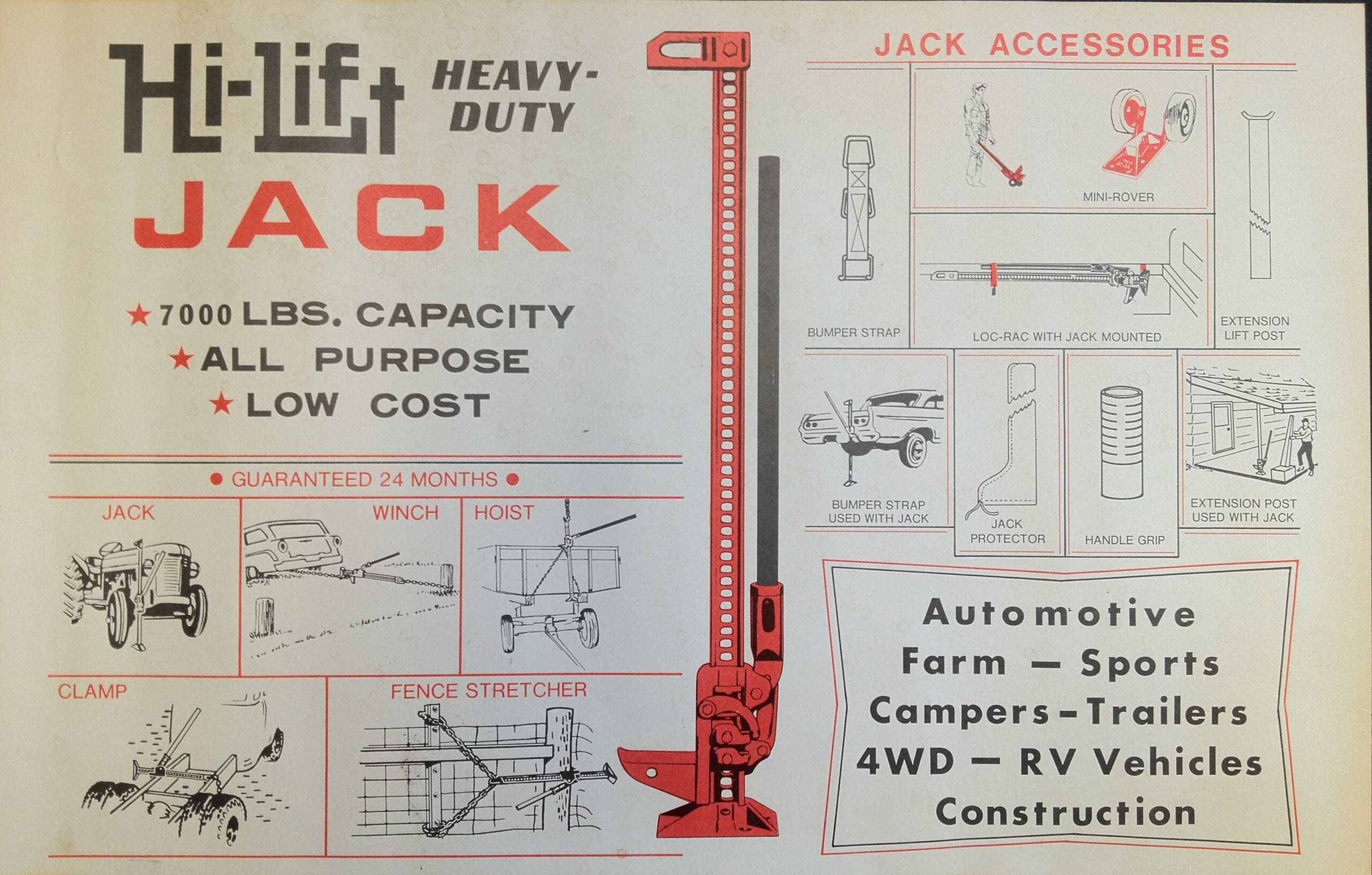
In the 1910s, it underwent several redesigns, and in 1919 became known as the Handyman Jack. In 1917, when the United States entered World War I, the soon-to-be Handyman accompanied US troops overseas. After the war, with the Roaring 20s underway, a prosperous economy put automobiles in the hands of swelling ranks of “middle-class” Americans. The concept of four-wheel drive was present, but there were very few working models. Nonetheless, America, and the world, took to the road in record numbers. Many understood the utility of the Handyman and it soon became a standard trunk ornament for adventurous over-the-road drivers. Phillip Harrah’s company had attained national status; it was a good era for Bloomfield Manufacturing. Following his father’s family’s practice, Phillip Harrah adopted a son, Chester (C.P. Harrah) who would eventually take the reins.
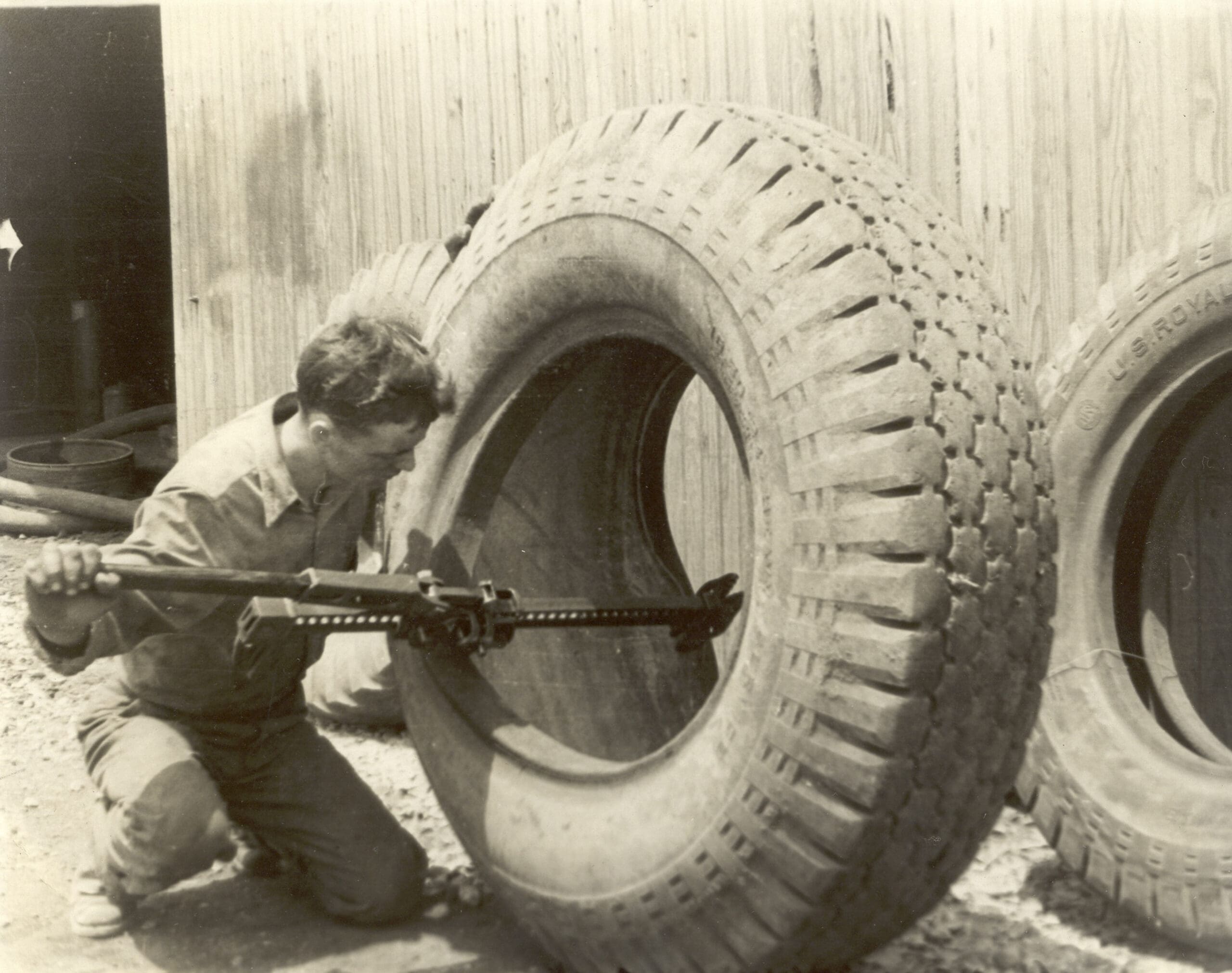
Upon the onset of the Second World War, the Handyman was again heading to Europe with American troops. According to Austin Harrah, fifth-generation in the Harrah lineage, the Handyman accompanied Allied Troops on the D-Day invasion at Normandy. It also provided support to American troops during campaigns in Africa and the South Pacific.
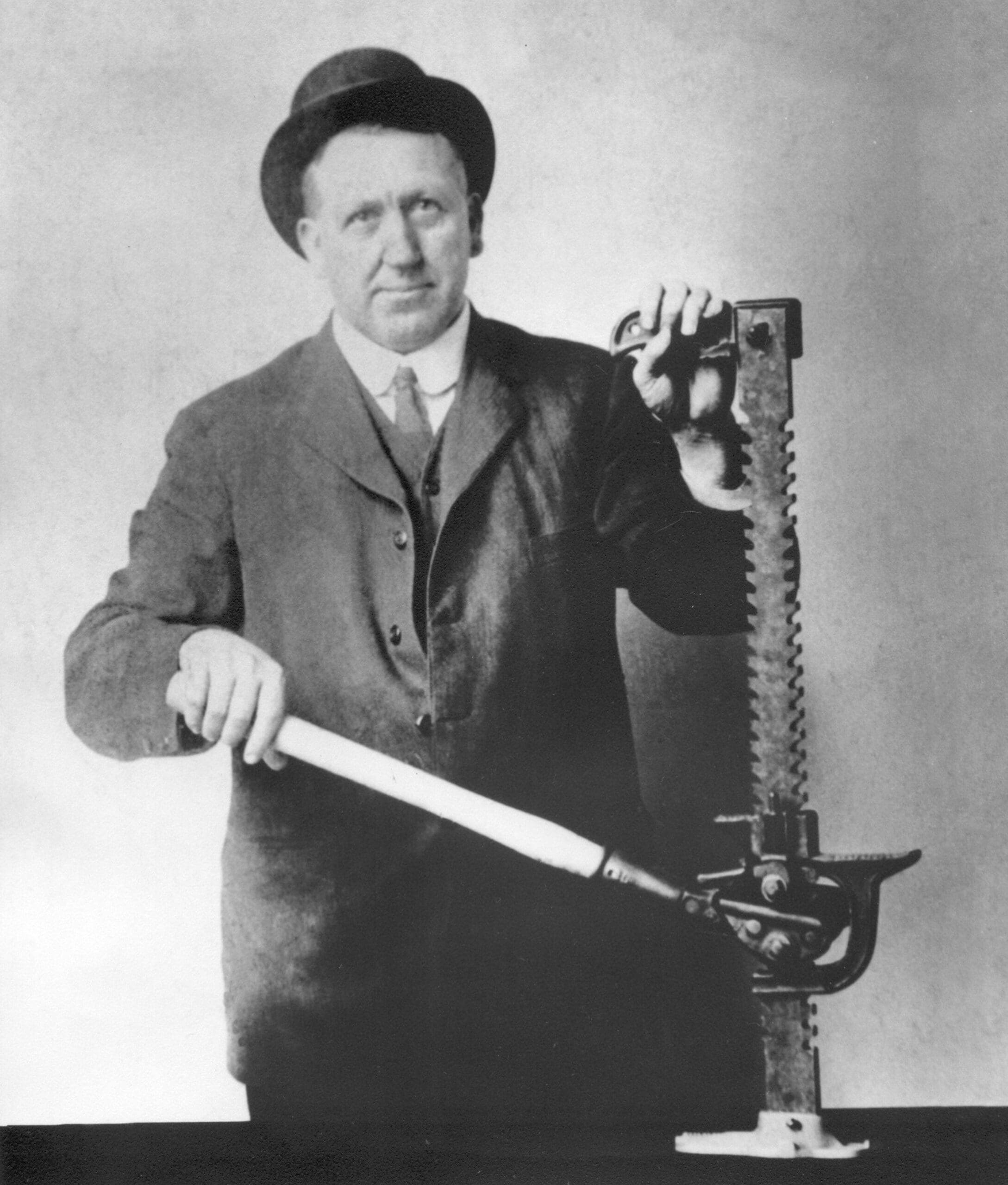
Phillip John Harrah, founder of the Bloomfield Manufacturing Company, invented the Automatic A-B-C Combination Tool in 1905. It originally retailed for $3.95.
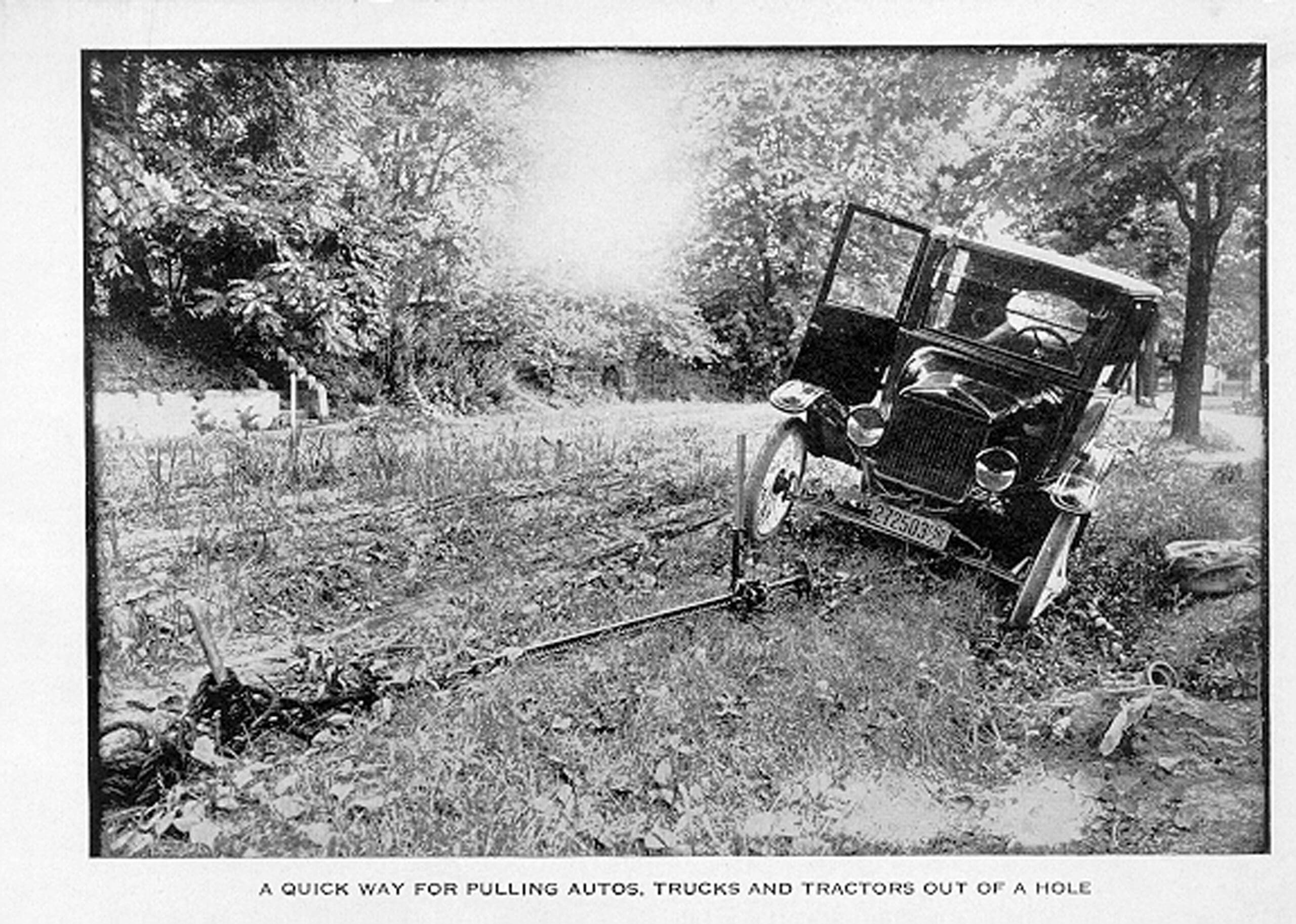
In the early days of the horseless carriage, before the invention of vehicle-mounted electric winches, the Automatic Combination Tool was standard equipment for adventurous travelers.
Standard Overland Kit
In 1963, the Handyman underwent a major redesign. With refinements to every component, increased load capacity, and the addition of a metal handle, the Hi-Lift, as we know it today, was born. Though it had always been a reliable tool for auto enthusiasts, the “new” Hi-Lift would soon become a staple piece of kit for the overland traveler. When Mark Smith, founding father of the Jeepers Jamboree, prepared for Expedición de las Americas in 1978 (which would include the first unsupported crossing of the Darién Gap between Colombia and Panama), he made sure each of his expedition Jeeps were fitted with a Hi-Lift. “We used them in the Darién and they were very, very handy. We were in all types of terrain and needed them for many uses. The most common was changing damaged tires—a very valuable tool. Our Hi-Lift jacks, along with the Ramsey winches and [bridging] ladders made the expedition possible.”
In the 1980s, Camel Trophy organizers found the Hi-Lift to be an indispensable piece of equipment. Tom Collins, a competitor in the 1988 event and US Team Coordinator from 1990 to 1998, offered nothing but praise for the silent hero of the Camel Trophy. “We were in Madagascar, and for one of the tasks they backed the Land Rovers into the ocean and spun the tires until they were buried in the sand. We used the Hi-Lift jack to get them out and ended up winning the event. The way we did it was to place a couple of sand tracks in the back as a base. We put the Hi-Lift in the receiver, where the pintle would go, jacked up the vehicle, filled in the holes, and put down more sand tracks under the tires. It worked really well,” Collins said. “Another good use is getting a vehicle out of a trench. On that same Madagascar event there was a long section of muddy trenches and every once in a while we’d slide into one. By raising the car out of the trench, we could get to one side and push it over onto solid ground.” Collins continued, “I started with Camel Trophy in 1988 and we used the Hi-Lift in every year I was involved.”
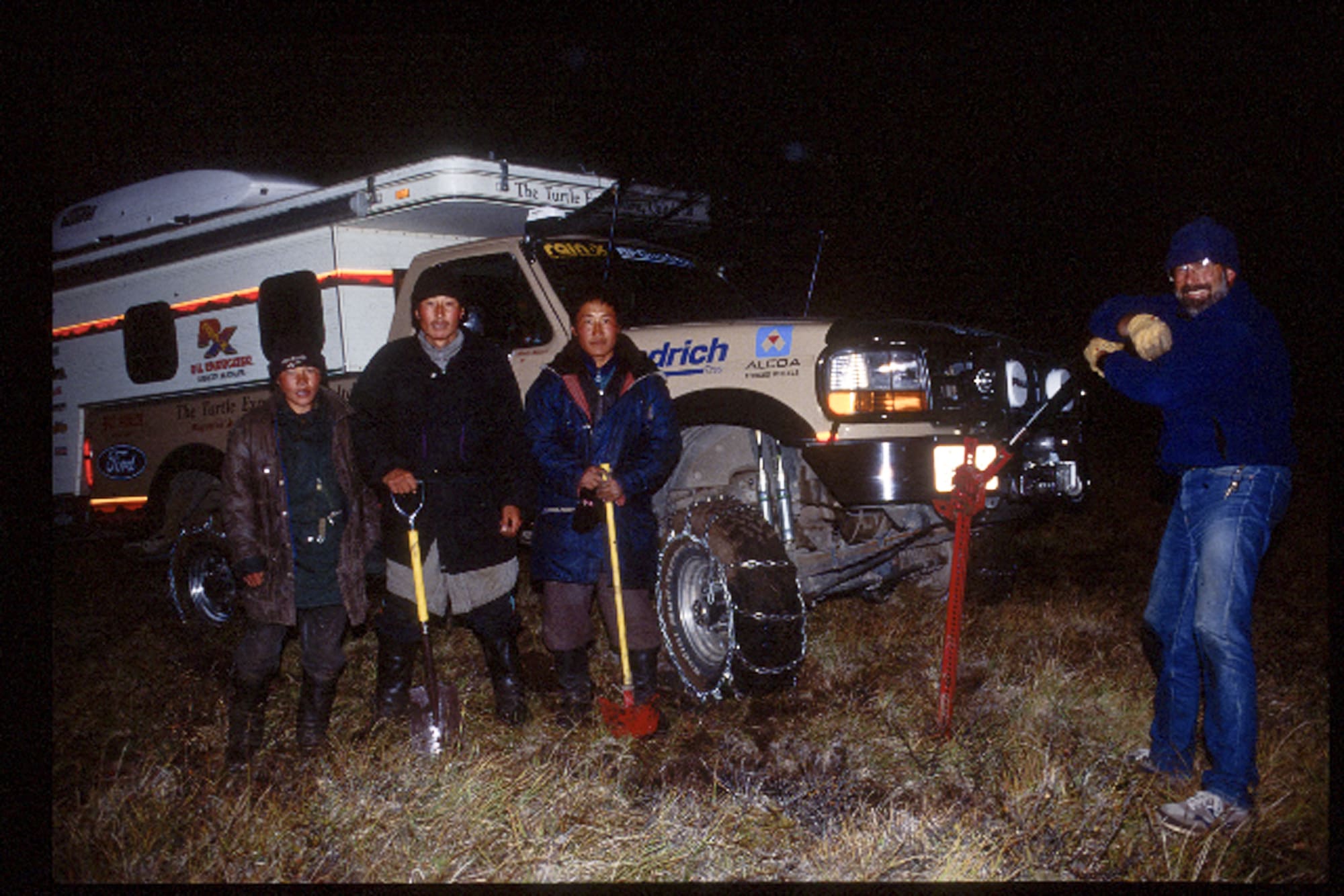
Gary and Monika Wescott have been exploring the far reaches of the planet for four decades in specially prepared “Turtle” vehicles. Under the guise of the Turtle Expedition, the duo has crossed every continent, save Antarctica. In the process they’ve managed to get stuck (a lot) in varying conditions in dozens of countries. Gary says, “When I say ‘stuck,’ what that means is, leave the keys in the ignition and walk away … no one is going to steal it. As for the Hi-Lift, I would have to say that I’ve always carried one and always will carry one. I’ve used it so many different times in so many different ways: as a winch, a clamp, a hoist, and a number of other things. I use it with the Jack Mate from Rescue 42. The combination of the two has many functions. When we crossed Siberia [in 1996] we were probably stuck at least nine times—sometimes in mud, sometimes in snow, sometimes in sand. There were only three or four times where we could actually hook a winch cable to something. With the Hi-Lift under a bumper we could raise the truck, build a road underneath it, and set it back down. It saved an incredible amount of digging.”
Still an American Original
There have been a dozen redesigns of the Automatic Combination Tool during the past century, yet the general premise remains: a multi-purpose tool for lifting, pulling, and clamping. Several companies have done very well by creating handy accessories for the Hi-Lift. Yet others, as early as the 1920s, tried to sneak under the radar with cheap knockoffs or the inappropriate use of the name—for which Hi-Lift has had to chase them down in court.
Bloomfield Manufacturing’s old brick building still stands on West Spring Street in Bloomfield, Indiana, and it still produces most Hi-Lift components. Austin said, “Back in the day, we were 100% US made. Our foundry dropped us in 1991. Apparently our contract was too small. We were able to find a high-quality foundry in Taiwan and some of our parts are now made there. We’re still American built and most of our parts are made here. Currently we have 44 employees locally and 150 sales representatives worldwide. We’re a tight-knit company and most of us live within a few blocks of the shop.”
Next time you’re in the backcountry and want to put your hands on a piece of American history, release your Hi-Lift from its lonely mounting point. Feel its robust construction and solid components. Give it a shot of WD-40 and cycle the handle a few times. Think about the 100-plus countries where this 45-pound hero has been used, about our boys in WWI raising a piece of field artillery and our troops in WWII lifting a Willys MB to change a tire. Consider the Wescotts in their Turtle Expedition exploits; Camel Trophy Land Rovers in Borneo, Belize, and Madagascar; and Mark Smith’s team crossing the Darién Gap.
We’ve come to take our old pal Hi-Lift for granted. When we get stuck, need to change a tire, or clamp a broken steering box on a frame, we reach for it. To dislodge remnants of its “rough spell” on our bumper or roof rack, we unceremoniously beat it on a rock to “loosen it up.” We then expect it to perform at first prompt, regardless of terrain, weather, or task. And it does—it’s a Hi-Lift.
Resources
Hi-Lift: hi-lift.com
Turtle Expedition: turtleexpedition.com
Mark A. Smith: jeepjamboreeusa.com
.
Our No Compromise Clause: We do not accept advertorial content or allow advertising to influence our coverage, and our contributors are guaranteed editorial independence. Overland Collective may earn a small commission from affiliate links included in this article. We appreciate your support.
