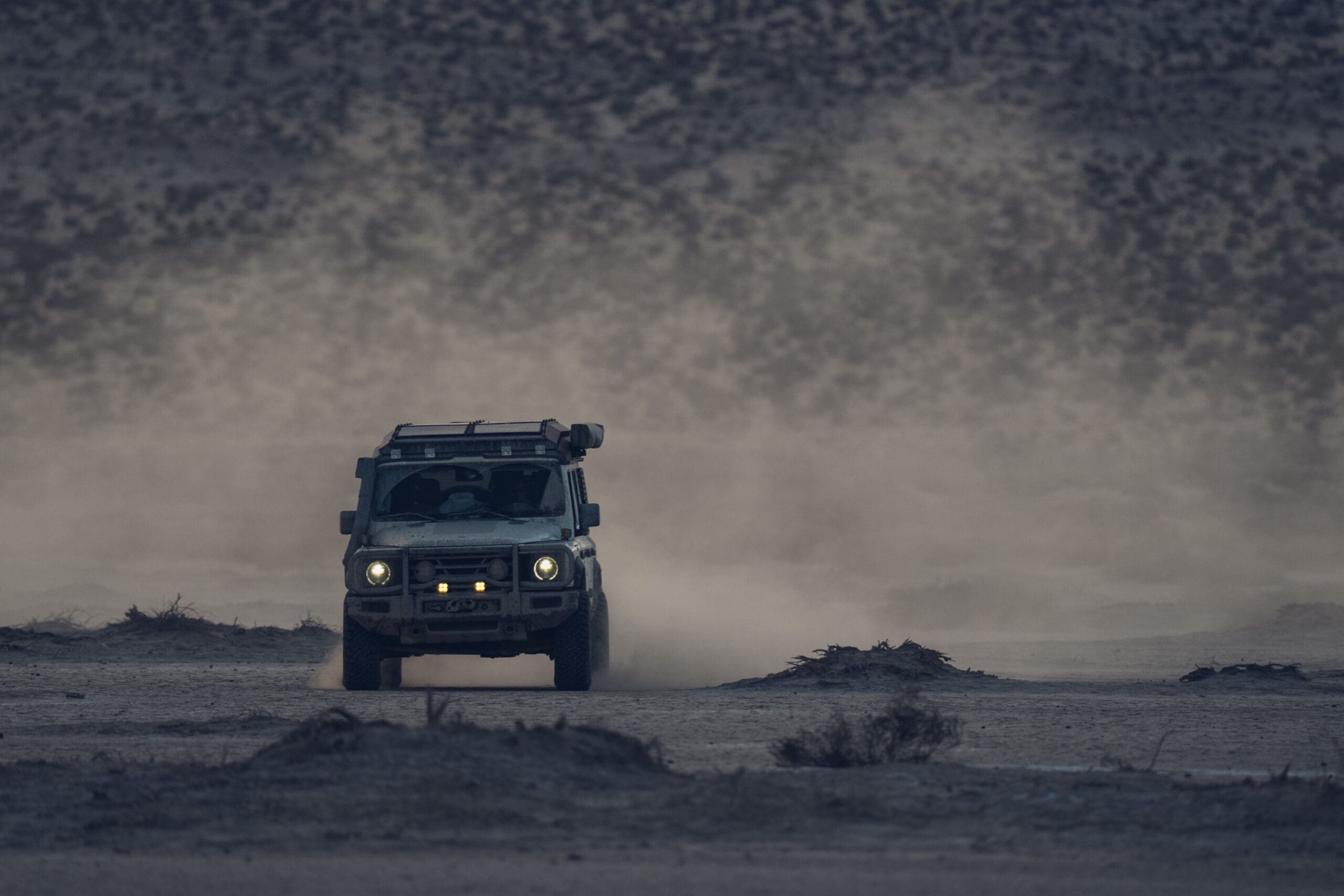

Lasertown sits in the dry lake country that King of the Hammers made famous. In October, the days run warm and the nights fall steep into cold. Storyteller Overland chose this ground for STO Fest, its first national owners rally, October 15 to 18, 2026.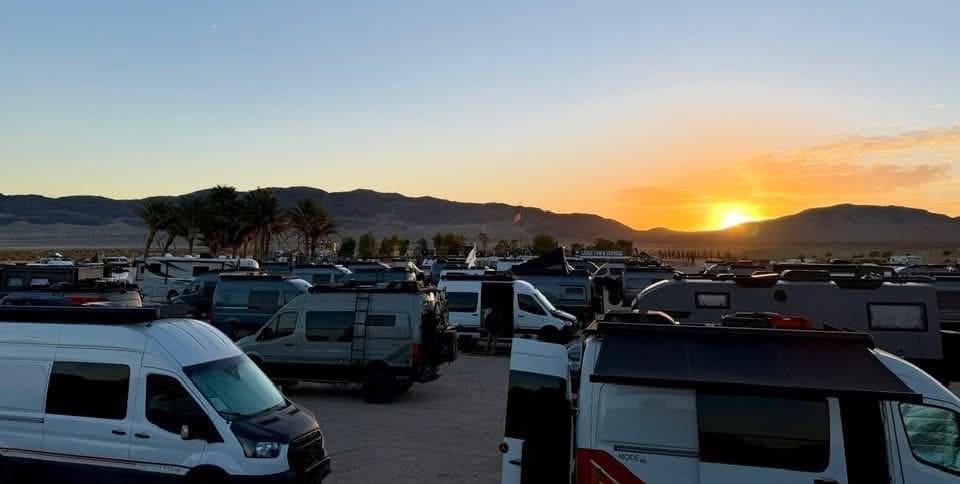
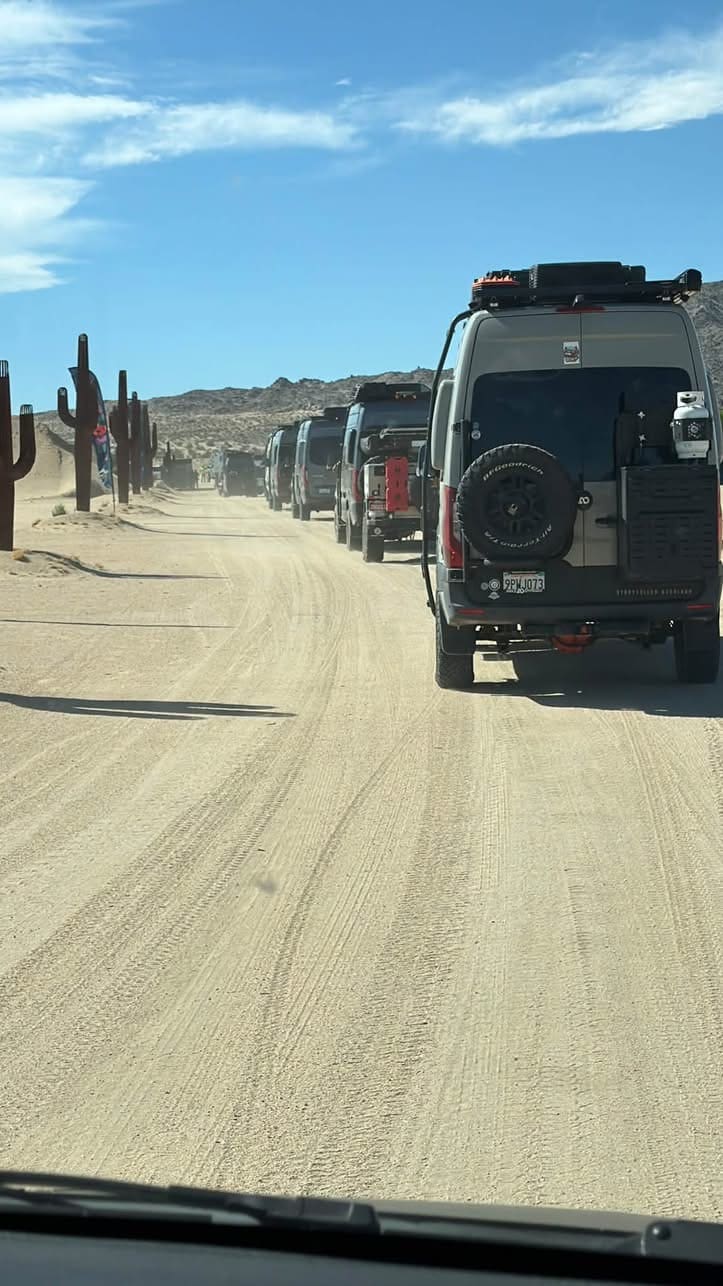
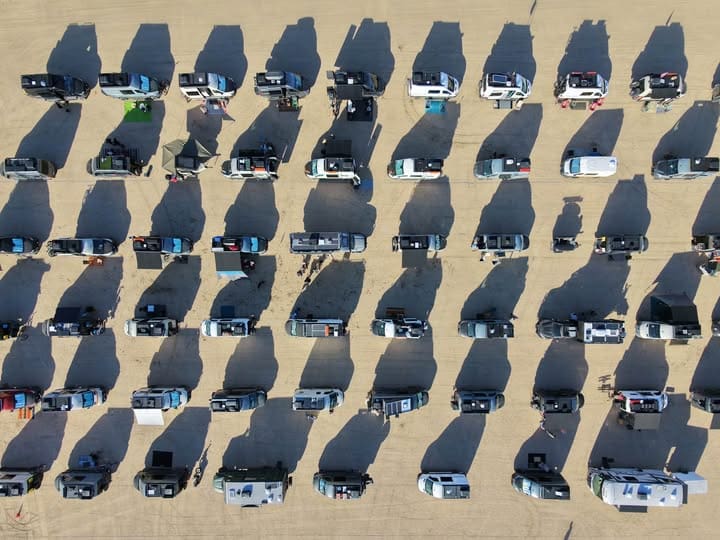
By 2:00 in the afternoon there was a parade of Storytellers coming up the same road, MODE vans and GXV trucks, nose to tail in the dust, and by dark, the lakebed was a town.
Overland Expo is where the industry sells to the curious. Five shows a year and a crowd that comes to compare products and stories. STO Fest does the opposite job. Storyteller invites the people who already bought in, hauls them into the desert, and asks them to show each other what they do with the trucks. There is only the question of whether the overland vehicle you bought facilitates the adventure you are after.
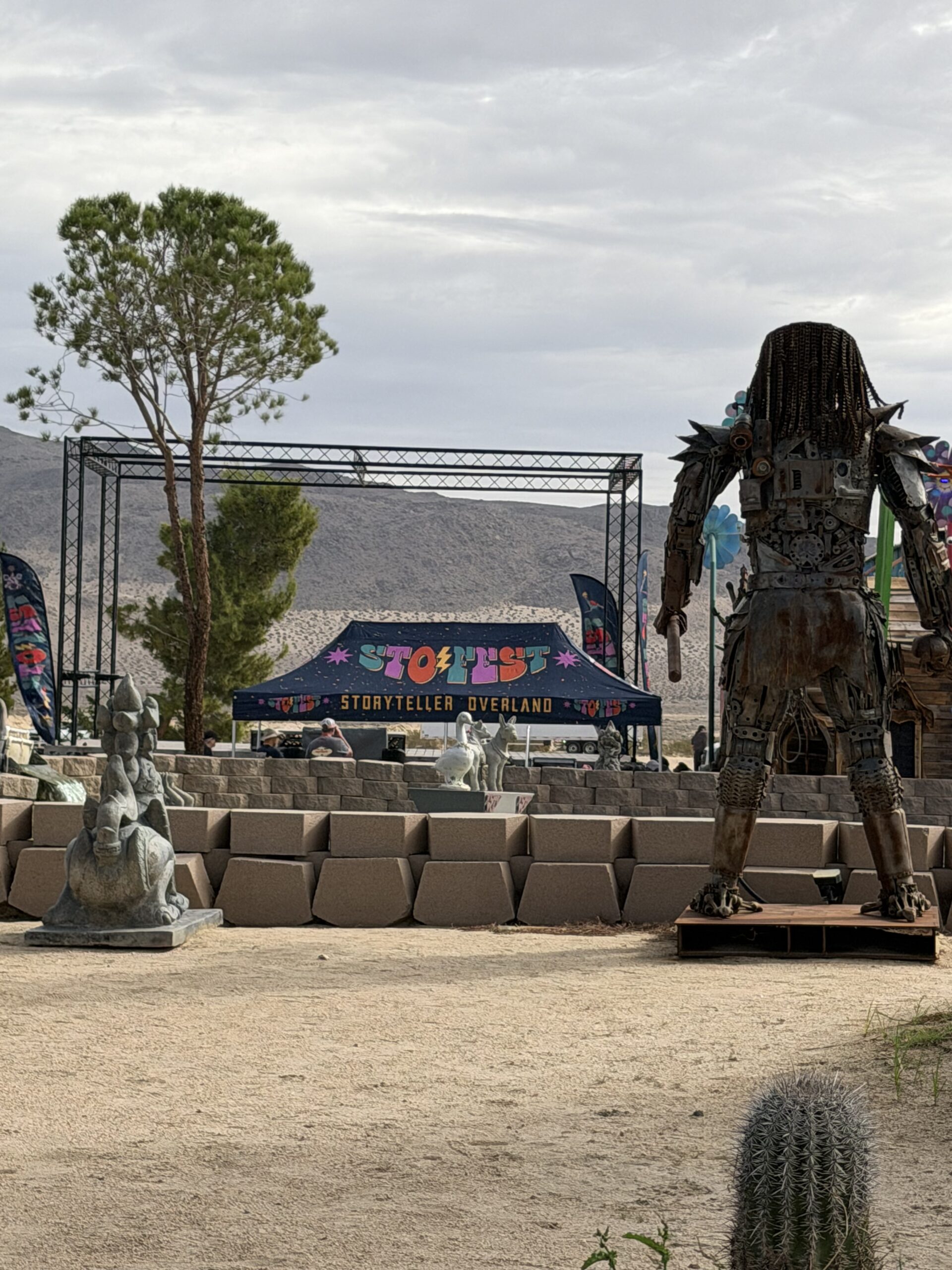
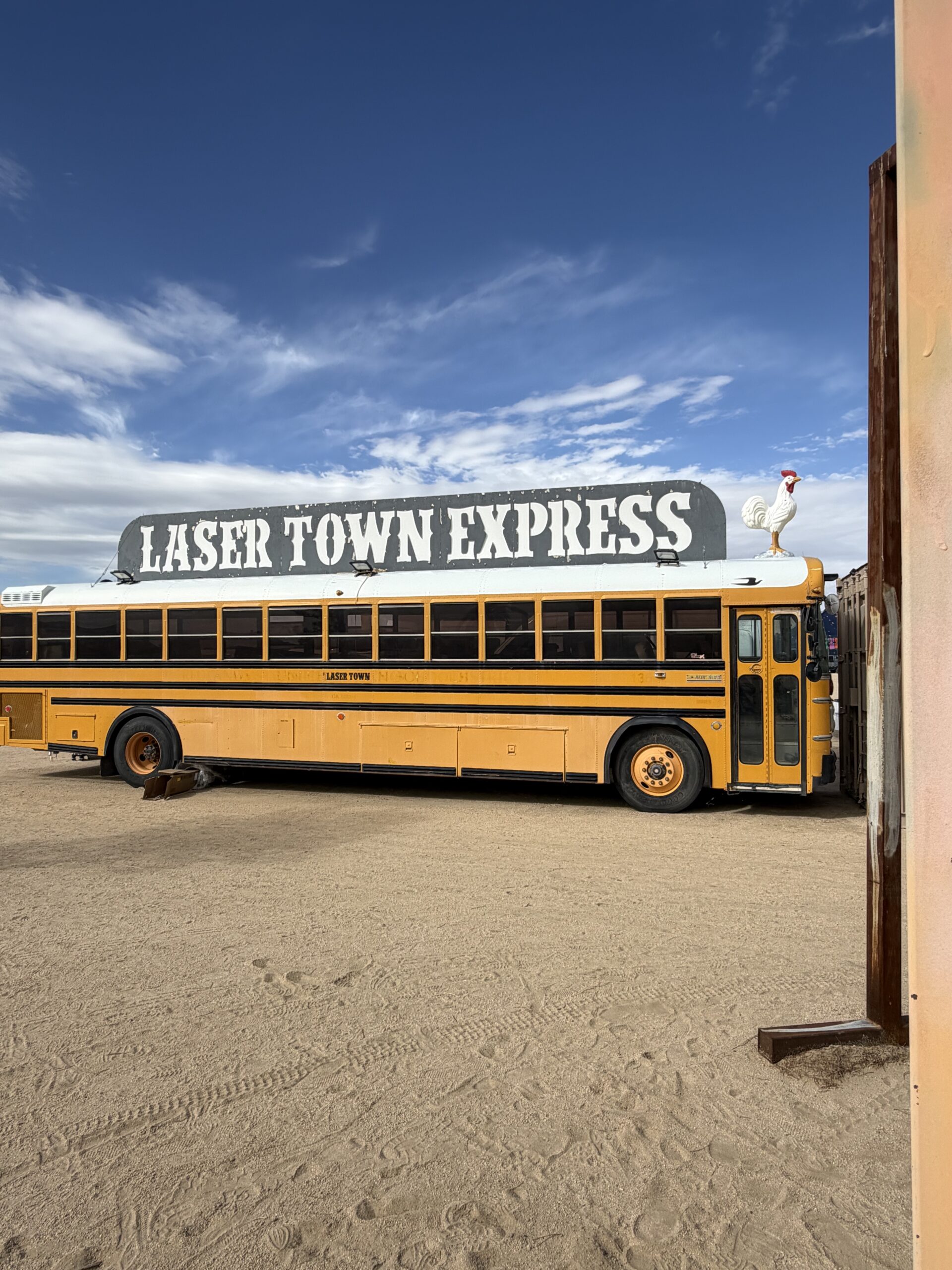
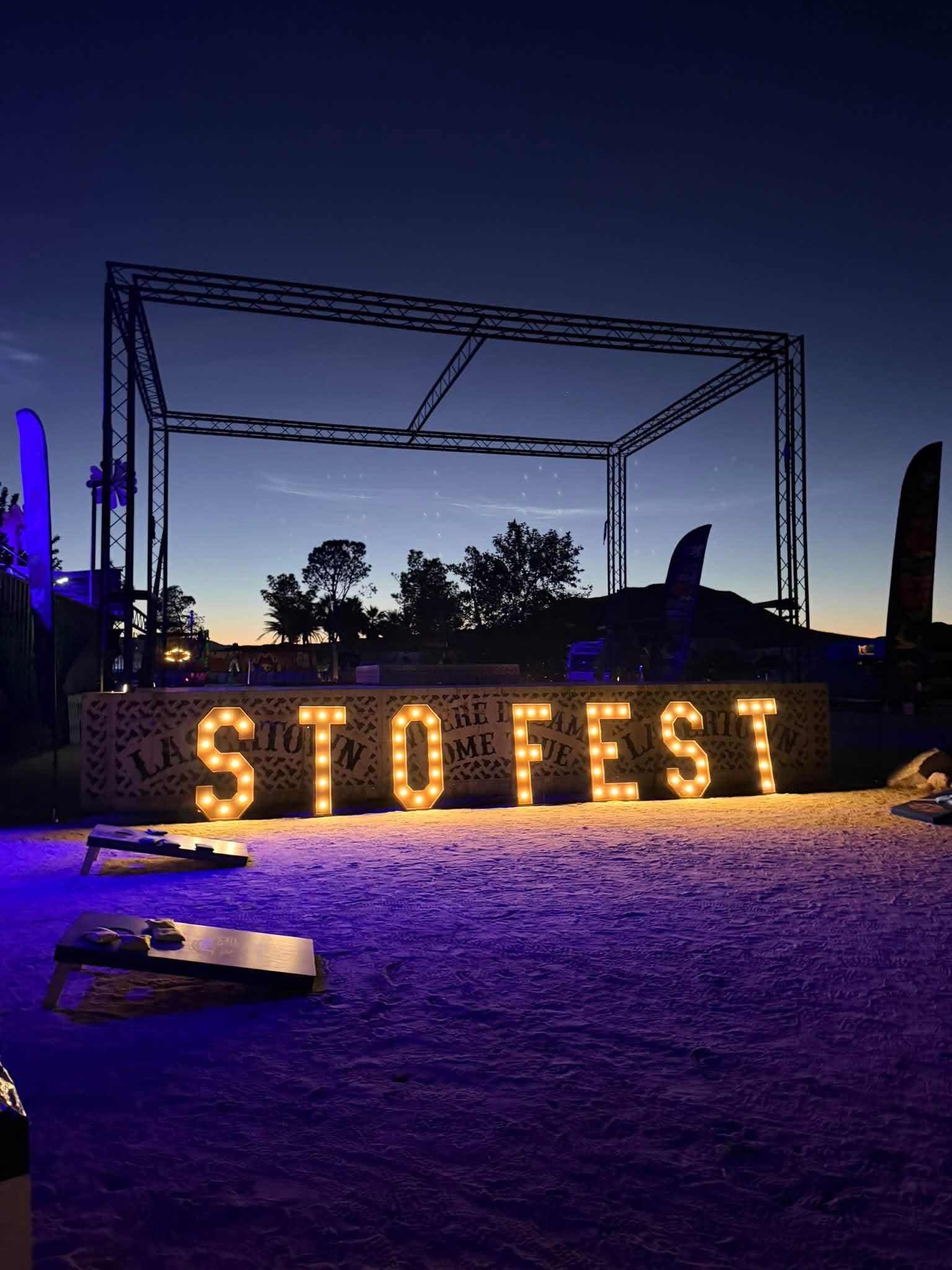
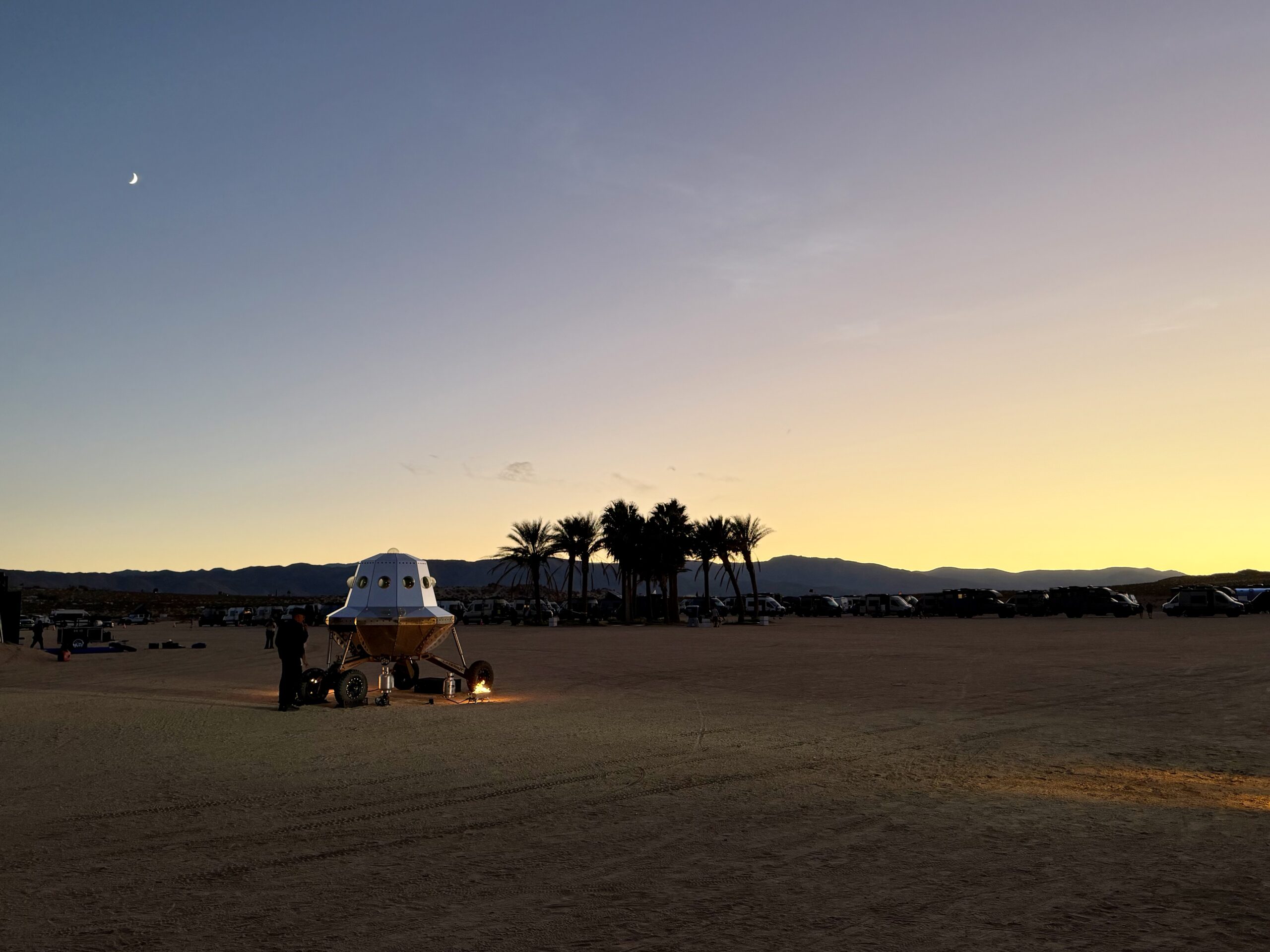
Lasertown is private property belonging to Cody Waggoner, who owns Lasernut, a metal fabrication shop, and his crew built everything on the property. The steel cactus forest along the road in. The retired school bus with a rooster on the roof that reads Laser Town Express. The stage beside the merch garage. The lunar lander that sits in the middle of the lakebed with a fire going under it at dusk. There are also date palms. This place is an oasis, and Storyteller parked its owners under the trees.
The company prints its promise on the side of the building in Birmingham: Live Free, Explore Endlessly, Tell Better Stories. While many company taglines fail to deliver, this event demonstrates their commitment by facilitating training, community, and seeing just what their vehicles can do.
The service tent
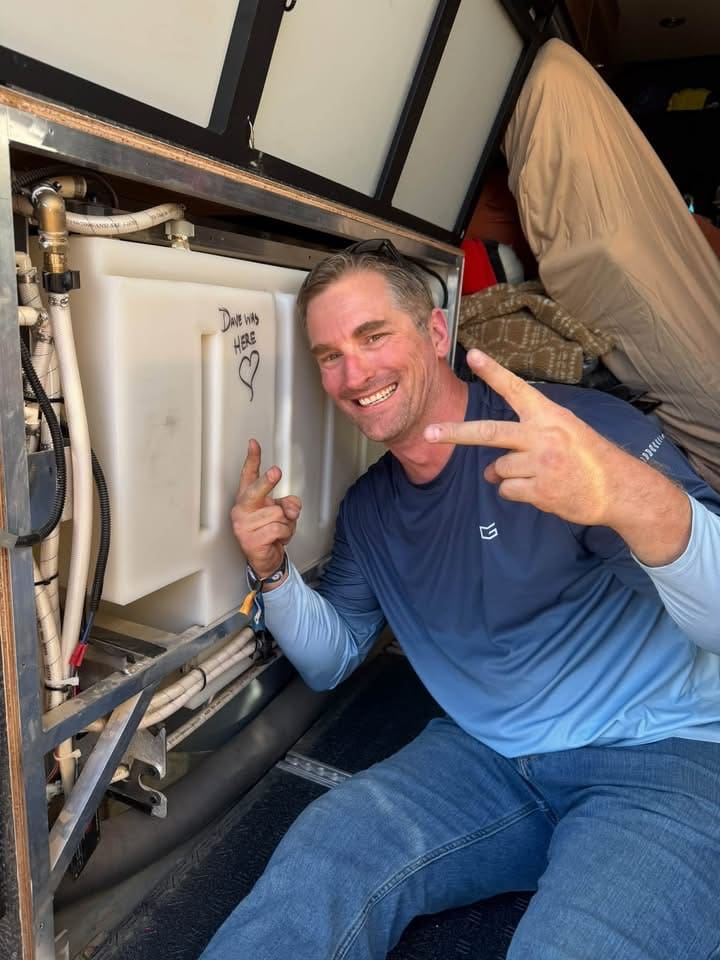
Storyteller’s service team ran a free mechanical clinic for the whole event. Thomas Burleson, the company’s head of service, brought his techs out from Alabama, and they went van to van across the camp with tools and parts, checking batteries, chasing leaks, pulling codes, and fixing whatever an owner had been living with since the last trip. The final count was 163 service appointments in the dirt.
Think about what that costs a company. Techs flown in, parts staged, a weekend of labor given away to people who have already paid. No manufacturer runs that math and comes out ahead on the invoice. The math works somewhere else. An owner who gets a free repair in the middle of the desert does not remember the repair. He remembers that the company showed up. That memory survives the next model year, the next competitor, and the next time something breaks 200 miles from a shop.
Two currencies
I write and consult on something I call the Hero Economy, and the shortest version is this: people spend two currencies that never appear on a balance sheet. The first is becoming, the sense that the purchase moved you closer to the person you hope to be. The second is recognition or belonging, the moment a group of people you respect sees you and says you belong here.
A van delivers the first currency on the day you drive it home. It cannot deliver the second. Only other people can. A company that understands the difference stops thinking of an owner event as a marketing expense and starts thinking of it as the only place the second currency gets paid.
The objection is obvious: any brand with a budget can rent a dry lake and hire a band. Plenty have, and the events feel like a trade show that lost its booths. The difference at Lasertown was that Storyteller put its own people in the camp doing real work in front of the owners. A service tech with grease to the elbow buys more belonging than a branded hat ever will.
The learning labs ran both afternoons. Steven Hashiguchi, MD, taught off-grid care for people who adventure hours from a hospital. Azure O’Neil of Overland Expo taught a session called “Getting There Is a Team Sport,” which could have been the title of the weekend. There was a snake safety class and a knot class and miniature donkeys. What people came for was the row of chairs that formed outside every open side door by 4 in the afternoon.
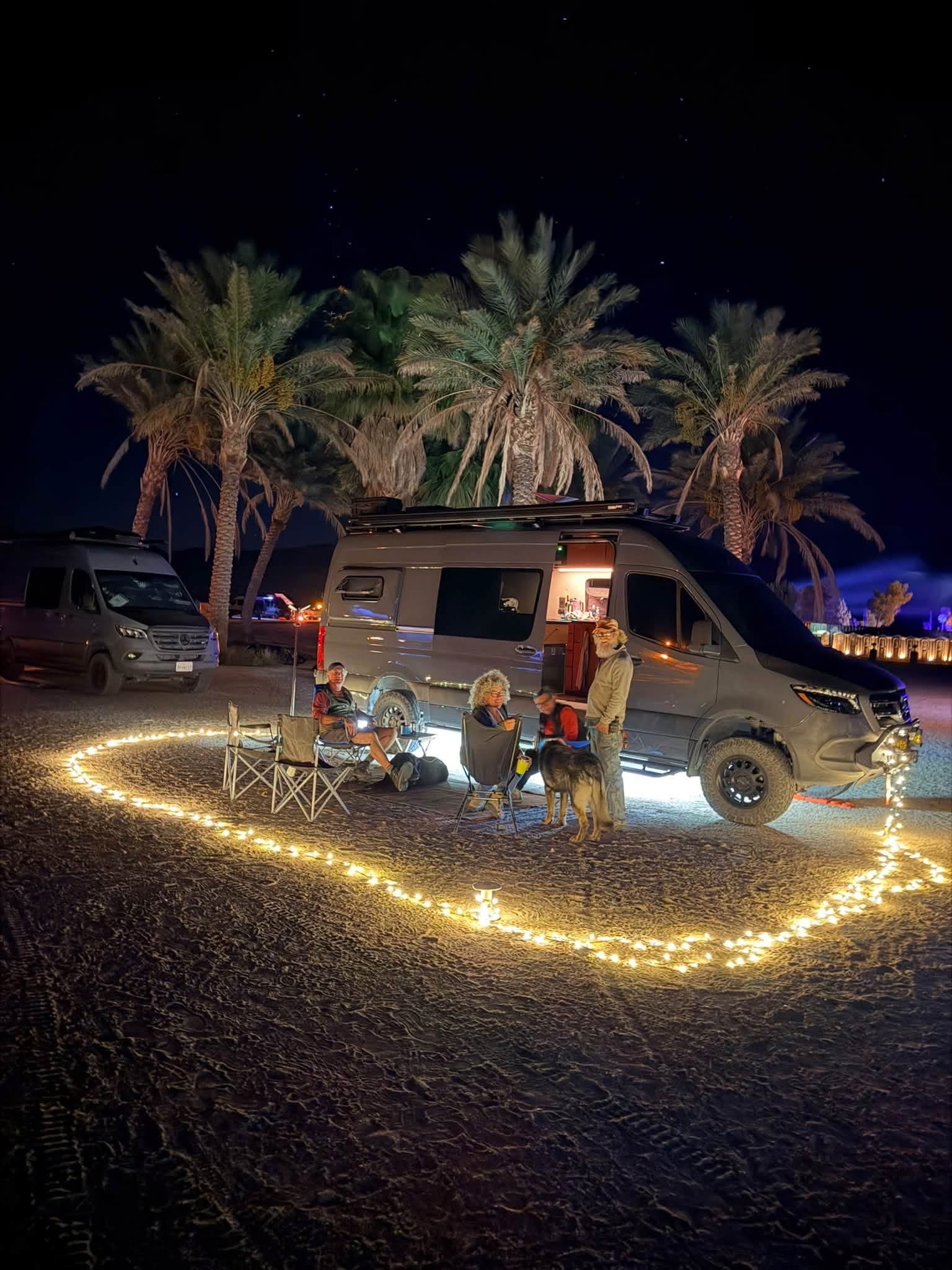
Gordy Hyde and Dolly Samson took delivery of MODE number 269 in Fort Worth in December 2020. They had been on the owners’ Facebook group for a year before they ever sat in the van, and within a week of getting home, they threw their gear back in and drove to Joshua Tree for a New Year’s Eve with five strangers from the internet. Three months later, 25 vans met in Moab for what the group still calls the “Meeting of the MODEs,” and Storyteller’s founders flew in to see it.
Most people want their story heard. Storyteller owners want that too, and they want to hear yours just as much, and the trade is even. That reciprocity is what builds the trust that lets a stranger park in your driveway on the way through town, which happens in this group all the time. It is also why the group reads as problem solvers rather than complainers. A small win gets shared with the same weight as a breakdown, because both are stories, and a story is the currency.
The company figured out its part of the exchange. Storyteller corporate shows up at these gatherings as a resource for the stories rather than the subject of them: Bureau of Land Management permits, insurance solutions, a tech under your van. The owners are not shy about saying so. The company wants to create the conditions that produce better stories, and then it wants to get out of the way.
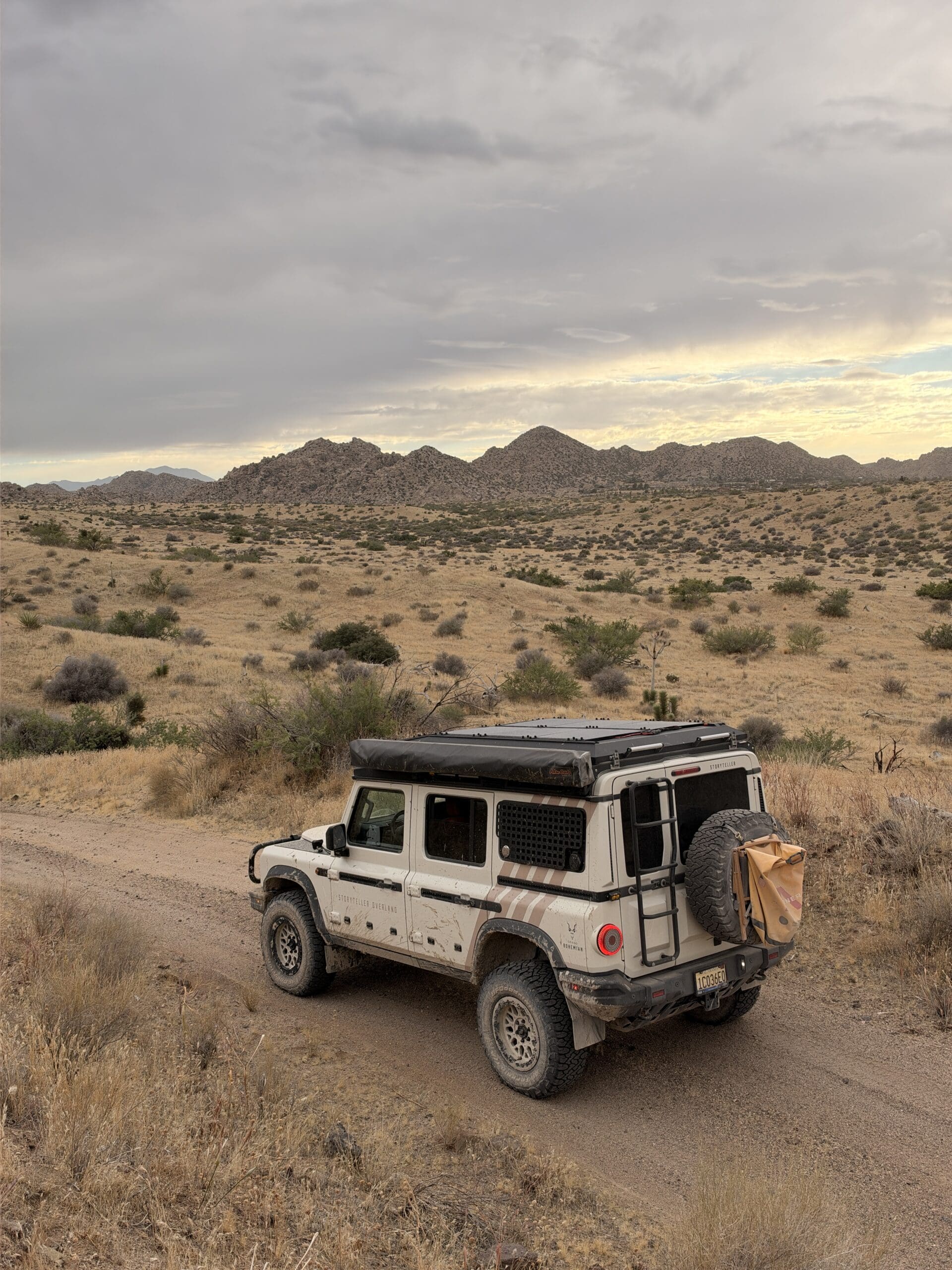
Mercedes-Benz and Gibson were the presenting sponsors, and a second tier that included Overland Expo, BFGoodrich, KC HiLiTES, and Warner Ineos Grenadier filled out the vendor row. Warner set up a tent with a stock courtesy Grenadier out front. The Storyteller Grand Bohemian, the newest rig in its line, is built on a Grenadier Warner supplies, so the two trucks sat about 40 yards apart all weekend.
The Storyteller Grand Bohemian
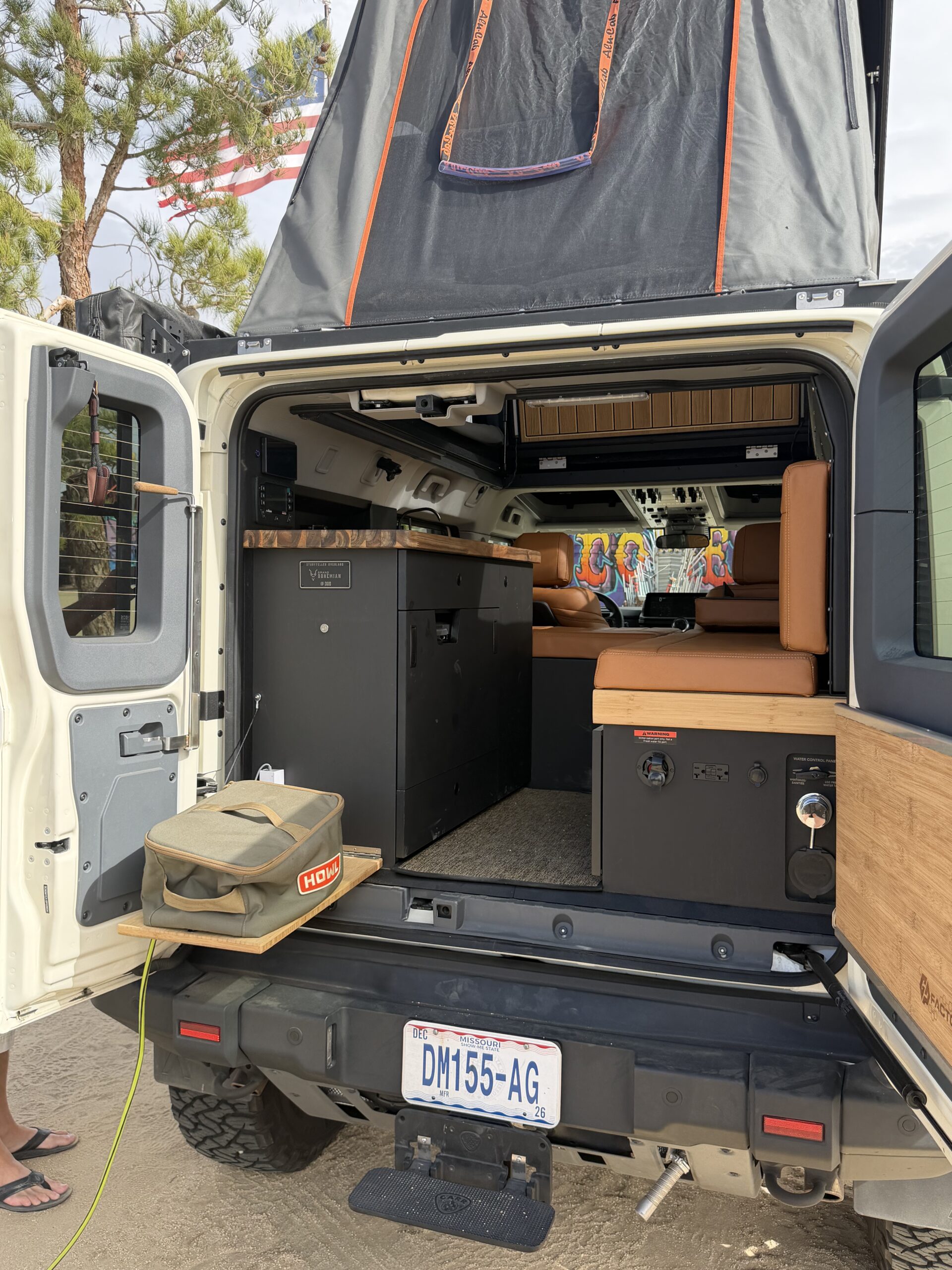
The platform underneath the Grand Bohemian is the reason Storyteller picked it. The Grenadier runs BMW’s B58 straight six through an 8-speed ZF automatic geared for mountain passes, highway passing, and sand, on Carraro solid-beam axles with a Tremec two-speed transfer case and a fully boxed ladder frame. Storyteller adds a 5.4-kilowatt-hour M-Power battery system, a 2,000-watt inverter, 400 watts of solar, freshwater storage with filtration, and an Alu-Cab roof conversion. The suspension is the Evictus Prerunner from 4×4 Proyect.
The Nights
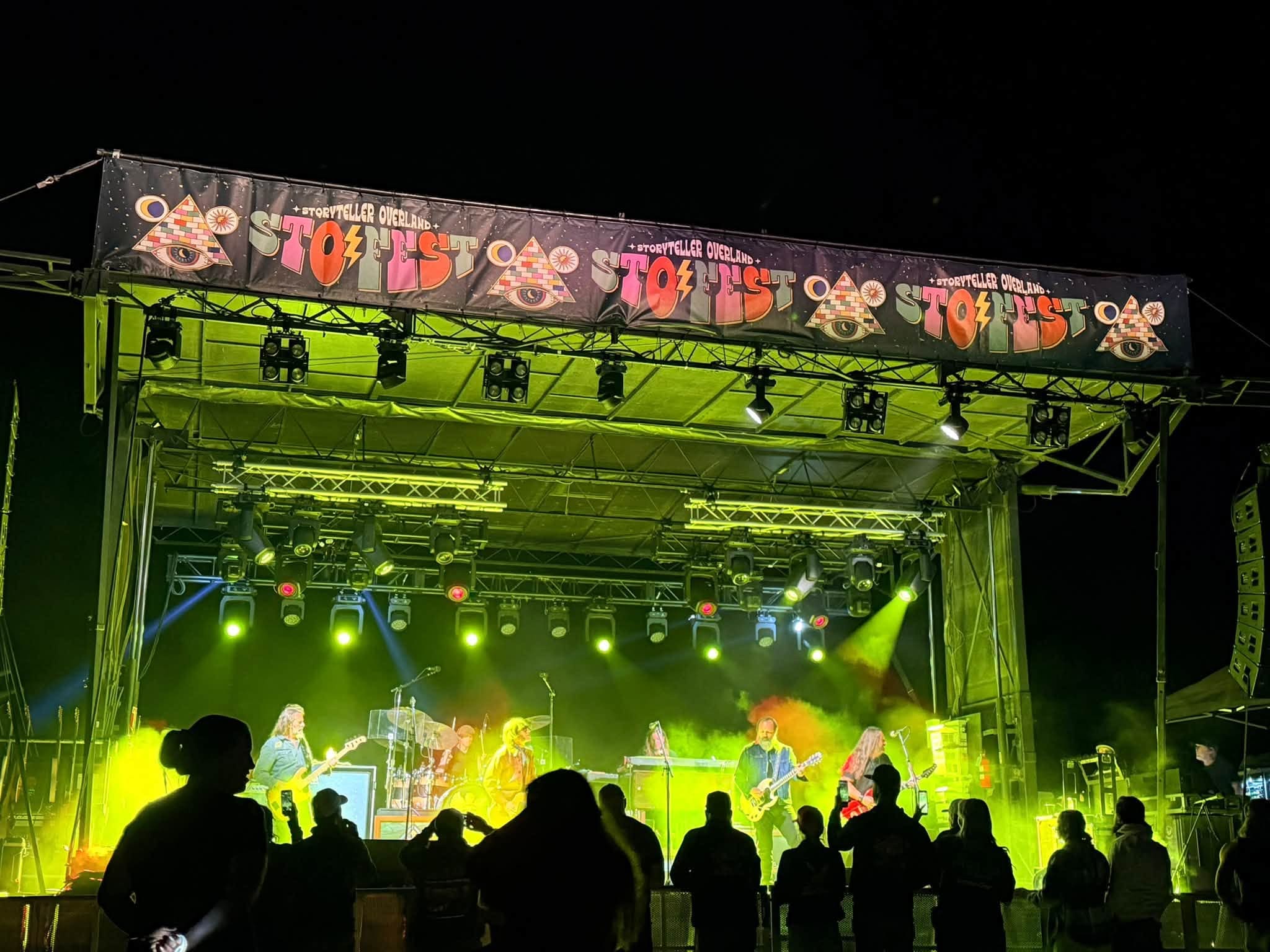
Gibson sponsored the stage and booked it like a festival. The Western States and Ozomatli played Thursday while people were still leveling their vans. Jared James Nichols opened Friday for Blackberry Smoke, and the Dusty Bunch played the after-party until past 11. Saturday closed with Black Sabbitch and The Struts. The stage sat below a ridge and the sound carried across camp, so an owner could sit on the step of his own van, boots in the sand, and hear the whole set.
Eileen Murphy McCarthy wrote afterward that she loved all of it, “the van dogs, van cats, van chats, van bands, van sips, van strolls, van tips, van tunes, van tools, van treats, and above all the new van friends.”
Neil Grimmer, Storyteller’s CEO, said the line that the weekend was built on. “These rigs are the thing that got us here, and you all are what keep us here.”
A product gets you to the campsite. A company that keeps showing up at the campsite, with a wrench and a band and a permit question answered, is the reason anyone stays.
Storyteller has already set the dates: October 14 to 17, 2027, back at Johnson Valley. You do not need to own a rig to come. Details at stofest.com.
Images: Kristian Rene; Warner Ineos, Salt Lake; Storyteller; Robert Simon; Eileen Murphy McCarthy; Caraleigh Pfeifer, Start Your Someday.