

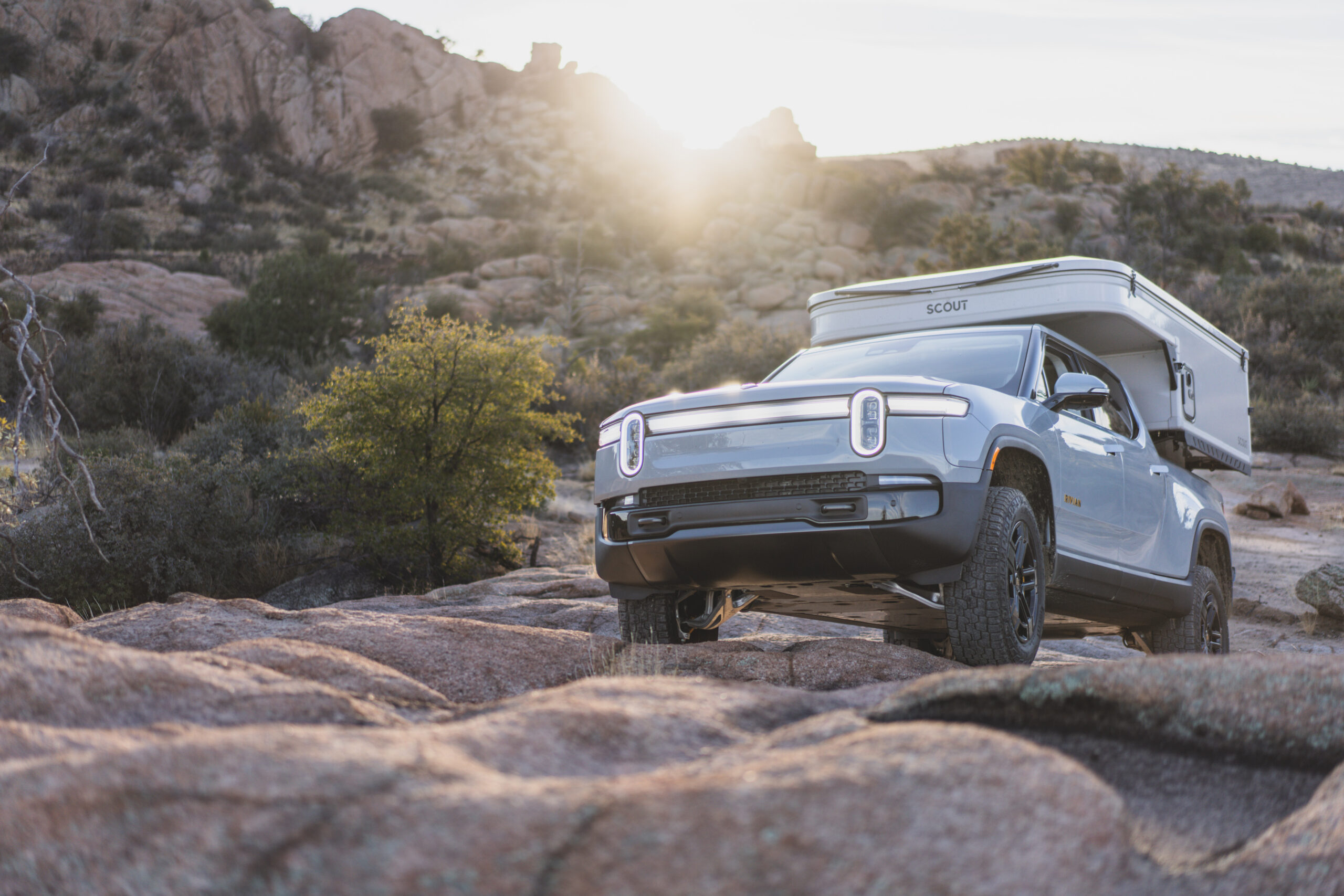
Early memories are so formative, often defining and informing the path of our lives. My dad taught me the importance of doing what you love with the people you love, and truck campers have been synonymous with that aim since their commercial debut in the early 1950s. I still remember a cold morning camping in my dad’s Four Wheel Campers Keystone, mounted to his 1970 Ford F250, as if it were yesterday. And John Steinbeck famously mounted a Wolverine Camper to his 1960 GMC pickup “Rocinante” for his best-selling book, Travels with Charley: In Search of America.
Considerations
There are two major categories of truck campers: hard-sided units and lifting roof models. Both have distinct advantages, and neither is superior. The decision comes down to either the lower profile and improved fuel economy of the lifting roof or the four-season comfort, quiet, and lack of setup of a hard-sided option. Pricing and the general list of amenities are often comparable between the two styles. The lifting roof is usually preferred for international travel as the truck will likely still fit in a high-top shipping container. In contrast, the hard-sided camper must either be removed for containerizing or shipped using a roll-on/roll-off (RORO) vessel.
Hard-sided models should start with the construction method and insulation, with bonded composite panels being the preferred method. The panels will be several inches thick and filled with insulation to improve extreme weather performance and reduce outside noise. The panels are often bonded to reinforced metal corners or extrusions to give impact protection (think tree branches) and rigidity to the entire structure. These corners and extrusions should be insulated or covered on the interior to reduce thermal bridging and the likelihood of condensation. Hard-sided campers often have high-output heaters for winter camping, and it is becoming increasingly common for them to have 12-volt air conditioners, too.
The downsides to hard-sided models are few, but it is important to consider the camper’s weight and the impact on the center of gravity when traveling off-highway. The suspension rate should be increased to keep the truck level, and the rear anti-sway bar and shocks may need to be changed to control sway on the road and trail. For backcountry use, the most common issue is the overall height of the camper, increasing the chances of contacting tree branches and even rock outcroppings. Check the height of the camper using a tape measure to the highest point (often a vent cover) and put a label with the number on the windshield as a reminder. As a clever hack, install an antenna on the front bumper that matches the apex of the camper to work as a strong visual indicator of whether the tree branch or coffee shop drive-through is tall enough to drive under (a lesson I learned the hard way).
Lifting roof or pop-top slide-in campers are becoming increasingly popular, with more models than ever on the market, including aluminum-framed options with a skinned exterior and composite panel models with insulated tent sides. The pop-top is great for daily driving, off-highway use, better fuel economy, and lower overall height. The lifting roof models typically have a lower center of gravity and much-improved clearance on tight trails with tree branches and rock overhangs. When traveling in the majority world, the lower height reduces the chance of hitting overhead power lines or succumbing to height restrictions on bridges and ferries.
The greatest limitation with the lifting roof campers is in extreme weather, as a tent will never have the same insulation and sound-deadening properties as a hard-sided camper. There is an increased chance of leaks, tears in the tent fabric, and wear to the lifting mechanism over time. Other practical limitations include restrictions on roof loads, smaller entry doors, the absence of overhead cabinets, and reduced heater/air conditioner performance. However, the pop-top camper is one of the most effective camping solutions for long-term overlanders, striking the ideal balance between size, performance, maneuverability, and value.
Testing
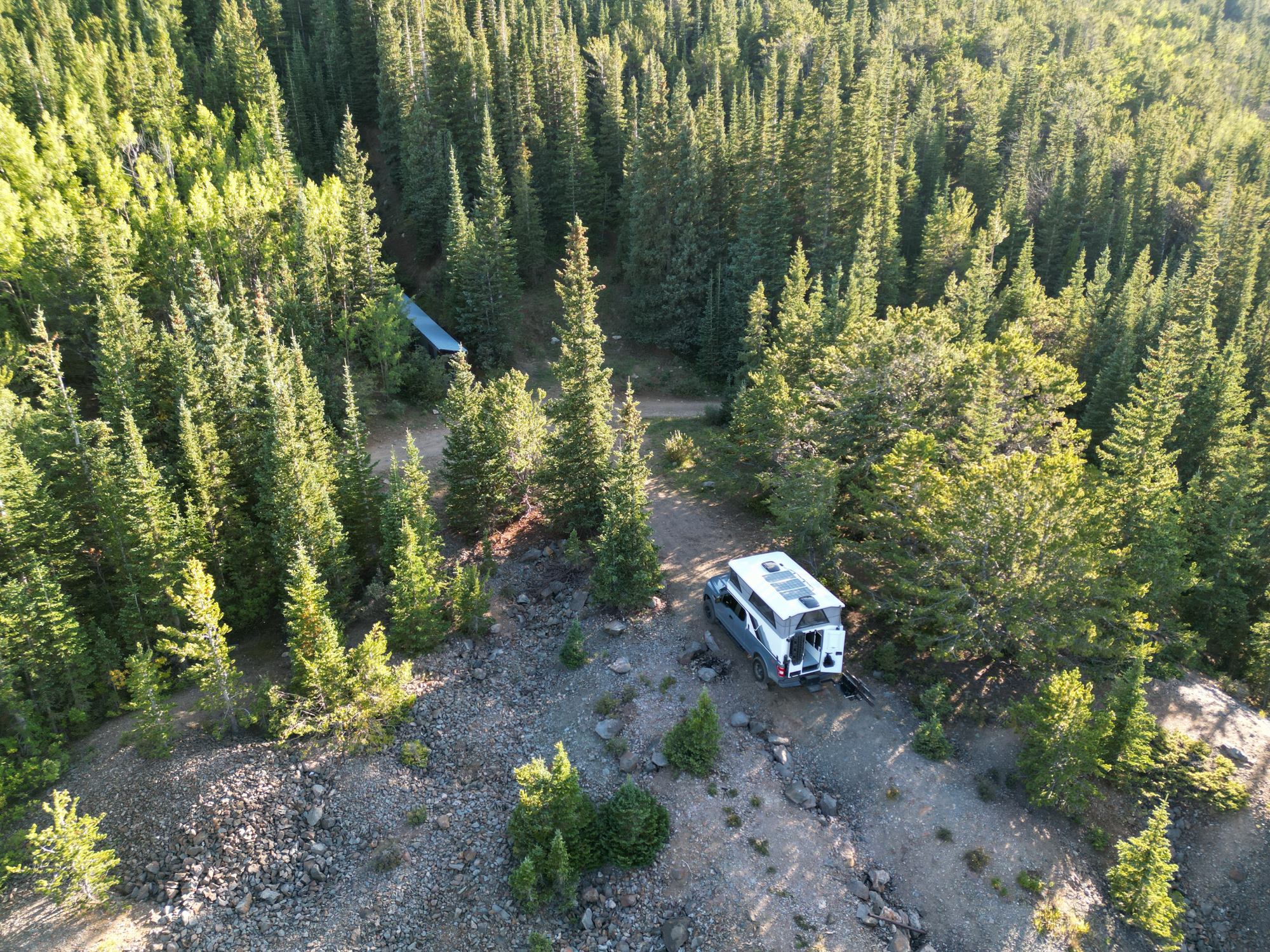
I conducted these tests over several years, making the commitment to use these units in the field to properly evaluate each model. Several models were used for months. In recent years, truck campers have become my preferred choice for long-term domestic travel, which led me to purchase a Scout Kenai and a Yoho pop-up for personal use. When testing truck campers, there are three primary criteria used for evaluation:
Durability of Construction and Reliability of Components Most RVs are only used a few weekends per year, causing a chain-reaction, industry-wide approach of producing fast function, which only needs to survive until the warranty expires. For the overlander, this construction method does not survive hundreds of miles of corrugations and will ultimately leave the buyer frustrated. The models in this test were selected for their reputation for durability.
Component reliability is another criterion, and a surprising issue in the marketplace. Fortunately, manufacturers like Truma and Redarc are producing systems that survive years of use in the field. Expedition sailing has also benefited the overland camper market with crossover systems built to the highest standards in harsh environments.
Weight and Height Even if your truck has a 1-ton GVWR, weight should always be a consideration for both performance and safety. While the truck might be able to carry 3,000 pounds of payload, how will it perform in soft sand or deep mud? Find the lightest camper that meets your most important requirements and consider leaving behind the adjustable dumbbells, even if you have the space.
Comfort and Usability It only makes sense to haul around a camper if you can sleep comfortably, stay warm (or cool), cook healthy meals, use a toilet inside if you are sick (or to reduce human waste impact), and take a hot shower. All of that is possible in these test units, although some do it better than others.
Alaskan Camper 650 SI
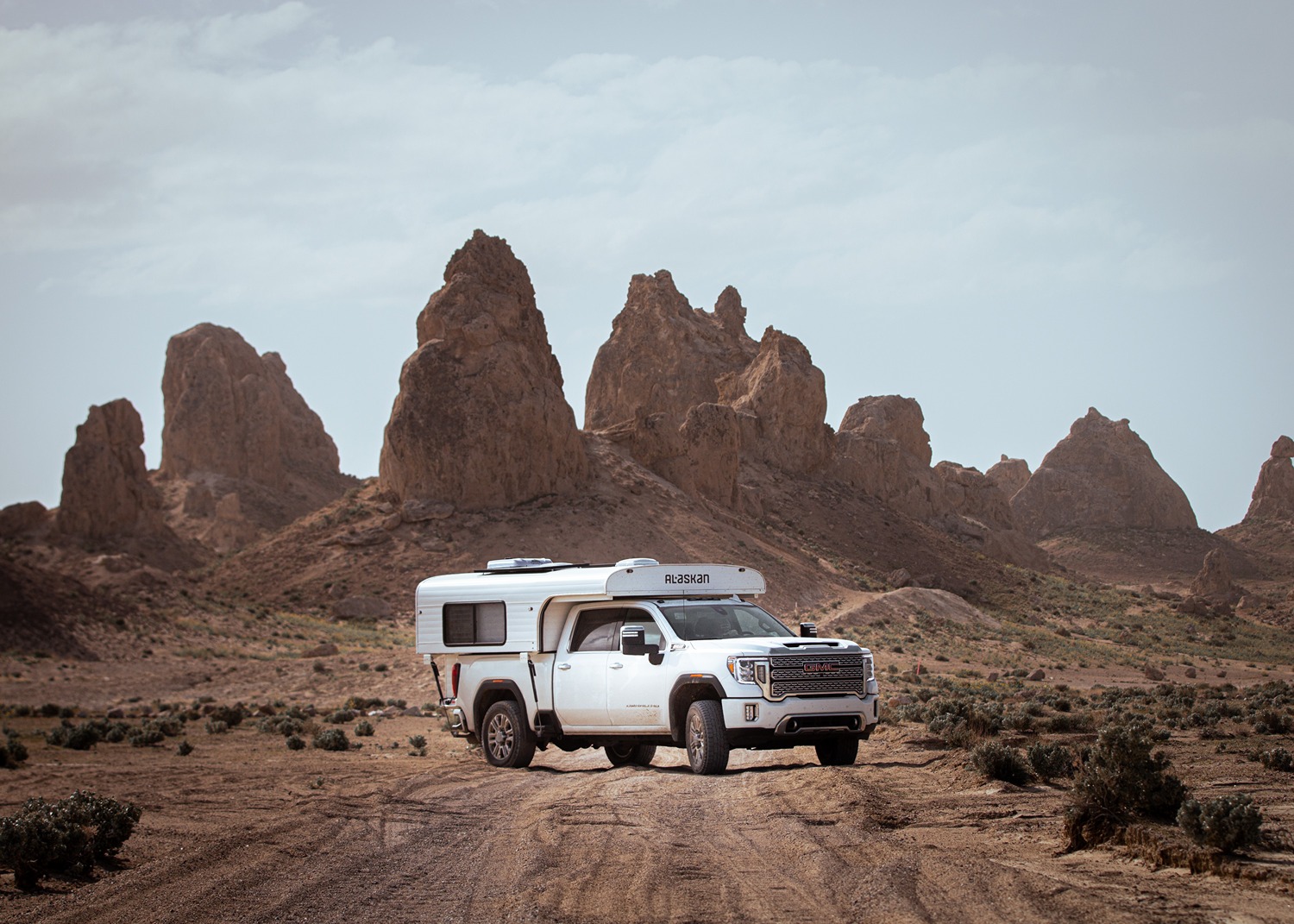
We did not have an opportunity to test the Alaskan 650 SI, but it is worthy of inclusion in this article. It is the original overland pop-up, and it is also hard-sided to endure four-season conditions. The company was founded in 1957 and offers multiple sizes for full-size trucks, including cab-over and non-cabover models, along with both slide-in and flatbed floor plans. Alaskan accomplishes the lifting-roof, hard-sided puzzle through a bit of origami and simplicity. The majority of the lifting roof over–hangs the base structure and uses seals to close the gap once fully extended. The roof lifts on actuators and has safety pins for both the traveling and raised positions. The real challenge is the cab-over, which leaves a near–ly 2-foot open space around three sides of the bed area. Three flip-up panels raise into place and pin into position, making for an entirely hardsided and cozy cabin on wheels. These campers also look old-school cool and are a perfect fit for vintage truck builds or even new vehicles. Look for a full report in the coming issues.
AT Overland Aterra ASI Hardside
1,157 pounds | $47,399 (as tested)
Engineered to outlive the owner

AT Overland has been around since the earliest days of the overland industry, manufacturing some of the most capable and durable campers on the market. Their Aterra tray camper is renowned for being constructed for around-the-world travel in four seasons. Mario and his team have now added to the lineup with their new slide-in camper called the Aterra ASI. The camper stands out for its fair pricing and extremely lightweight design, coming in at under 757 pounds as the base shell.
From a durability perspective, the Aterra ASI is built with angled roof sides, reinforced metal corners, and a seamless spray-on coating. The entire assembly is pinned and bonded in a jig to ensure repeatability and the strongest possible structure; it looks more utilitarian than most, lacking the gel or automotive finish that some buyers prefer. The engineering and construction process produces one of the lightest campers in the test, even with a full complement of house systems. The durability extends to the mounting system, which is unique in the industry and utilizes bolt-in centering brackets specific to each truck model. The plates center the camper forward and aft, as well as side to side, while preventing it from contacting the forward bed bulkhead (most half-ton trucks cannot support a camper against the bulkhead).
The Aterra ASI is modular in its configuration, allowing the buyer to choose from an empty shell all the way up to a complete home on wheels. Each module can be specified or added at a later date, all with an emphasis on store capacity. The Aterra ASI has the best storage configuration of the test, utilizing lightweight and removable Step22 bags, all of which feature Velcro label tags. The cabinets are constructed from premium plywood with a hexagon pattern and mold- and moisture-resistant coatings. The countertops are bamboo with a smooth, oiled finish. While the layout is somewhat unconventional, the table can be used as a standing desk, and it eschews the typical dinette for more storage, standing room, and counterspace. The sink sits in the passenger rear corner and utilizes the Dometic USB chargeable pump/faucet, a simple and easy-to-replace solution.
The bed is configured for either a north-south (N-S) or east-west (E-W) layout, with the N-S resulting in a king-sized sleeping area. A panel pulls out from the camper bulkhead and extends on slides to several stopping positions. For most users, it will be best to sleep E-W as the extended bed covers the porta-potty and much of the counterspace. The E-W is comfortable for two adults, even those of above-average height. The mattress is comfortable, and the slatted panel serves to control moisture and mold under the bed. The Truma heater is thoughtfully installed at ceiling height with the vent facing the bunk to keep you cozy in any weather, and the cushioned floor feels luxurious on bare feet.
Pros
- Engineered and built for remote overlanding
- Spacious interior with expansive storage
- Design reflects AT Overland’s decades of travel experience
Cons
- Lack of a traditional dinette
- Bed headroom is cramped in an E-W configuration with the sloped roof
- Utilitarian exterior finish
Four Wheel Campers CampOut | VALUE AWARD WINNER
1,270 pounds | $36,000 (as tested)
The OG is still one of the best
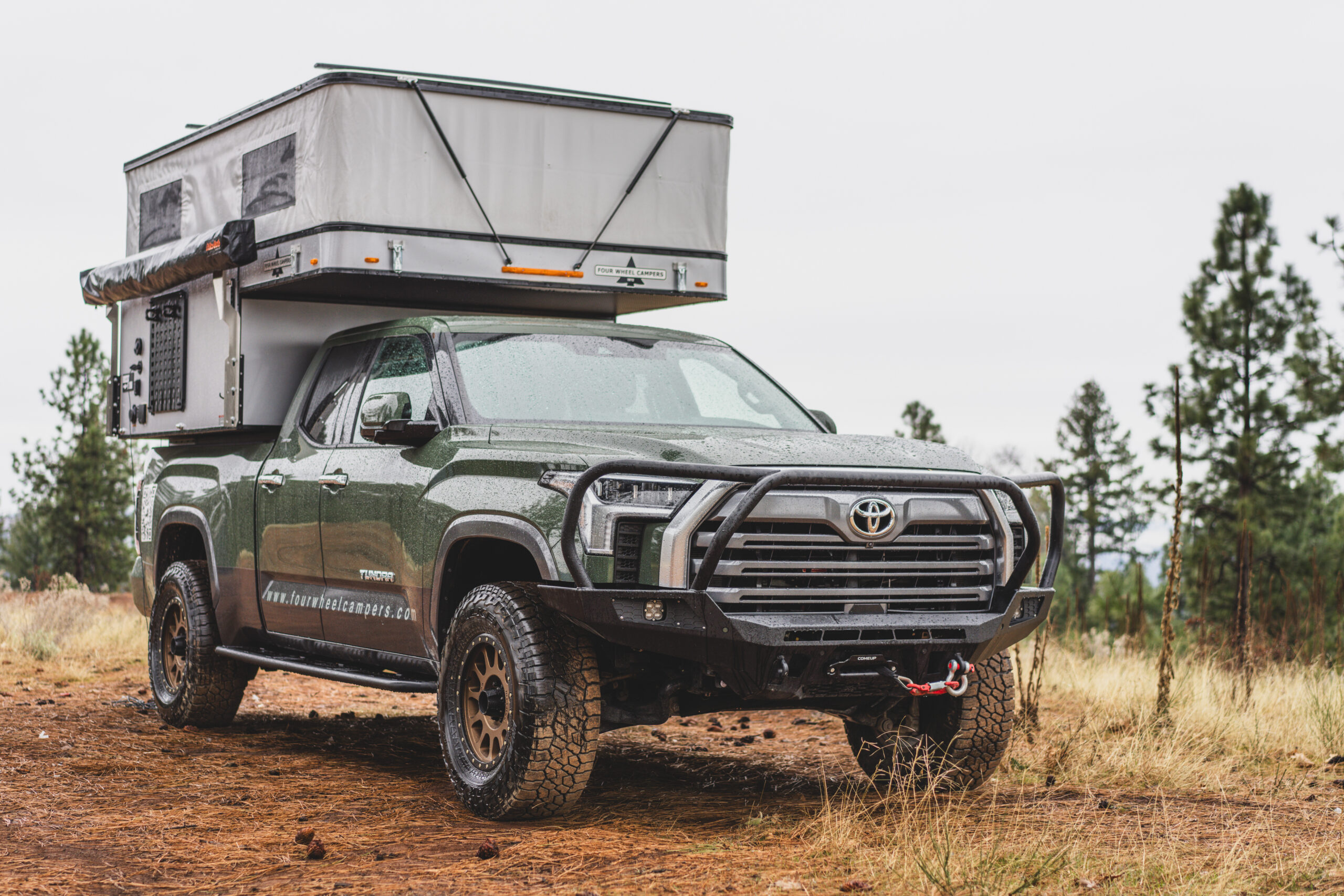
The Four Wheel Campers CampOut represents a fresh approach from this longstanding and respected manufacturer. The newest model aims to merge durability and affordability, with a starting price of approximately $25,000. The update offers a modern, smooth-sided aesthetic with functionality that appeals to new buyers and seasoned travelers alike. Fabricated to fit a half-ton pickup, the CampOut boasts a lightweight composite skin over a robust welded aluminum frame, ensuring long-term durability while presenting a more modern appearance.
One of the most notable features of the CampOut is its modular design, which includes separate power, a galley, heating, and storage modules to build out the interior based on needs and budget. The base model comes equipped with two cabinets (additional ones can easily be added), dinettes, power modules, fridges, and bed extenders to meet their needs. The camper includes a queen-sized bed, and the height of the lifting-roof sides is notable, adding to headroom and contributing to a feeling of openness.
The CampOut is equipped with numerous access points for 120-volt, 12-volt, and USB power, including a shore power RV plug, an onboard inverter, and a Starlink mini connector. The attention to detail is consistent with previous 4WC models, with features like a premium Alu-Cab awning for shade, aircraft tie-down channels for securing gear, and a thoughtful layout that includes an outside shower and storage options. The Truma heater is a quality option, but the vent placement directs the heat at the fridge instead of the bunk. There isn’t a provision for an inside shower.
I like the dinette for working, but the lack of backrests is a damper on more relaxed activities such as reading. The driver’s side dinette backrest is also a window, which makes for a cold place to lean back on.
The Four Wheel Campers CampOut is an innovative new option from a well-respected and high-quality company. The modular design enables buyers to tailor the camper to their whims and budget, while helping to future-proof the unit as new features are introduced. It’s an ideal camper for two occupants who plan on taking the road less traveled.
Pros
- Modular design
- Durable construction with lightweight composite materials
- Spacious interior with a high pop-up design
Cons
- Adding modules quickly increases weight and cost
- Dinette would benefit from backrests
- Heater less effective and efficient as positioned
Overland Explorer Vehicles (OEV) Backcountry 6.85
1,500 pounds (without jacks) | $52,000 (as tested)
Durability and four-season capability in a pop-up
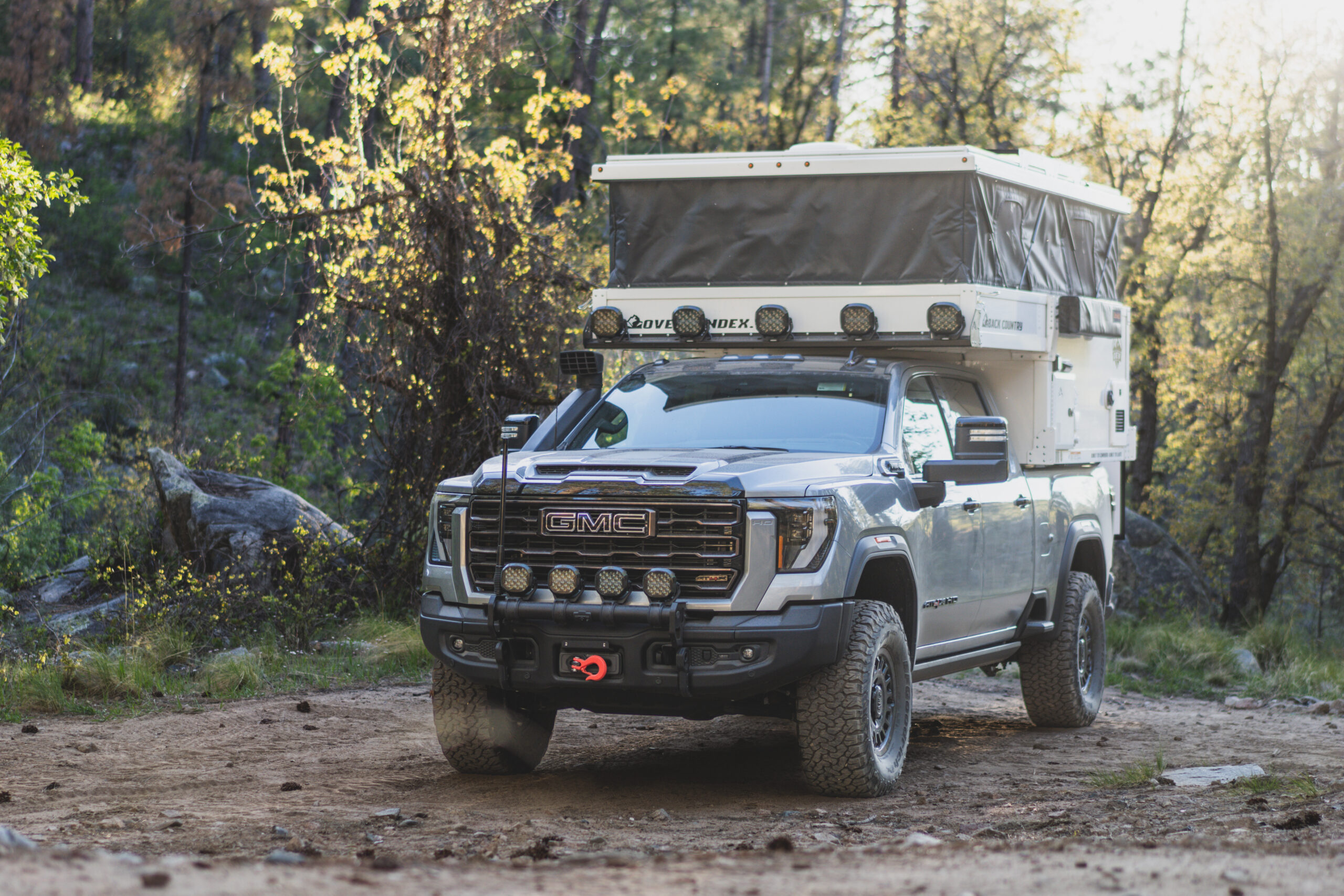
Overland Explorer Vehicles (OEV) is unique in the industry for offering true four-season capability out of a pop-top camper. Units feature robust construction, extensive standard features, premium components, and high-wear materials. In discussing these campers with owners (such as Senior Editor Ashley Giordano), they are intended for long-term travel in harsh conditions.
The Backcountry uses composite panels bonded to heavy-duty metal corners, providing good insulation (R8). The heavy-duty extruded aluminum corners and joints enhance structural integrity and impact resistance. Thermal bridging is addressed by affixing padded and insulated strips to the aluminum frame (we did not experience any condensation buildup at the frame). This combination ensures that the camper can withstand the challenges of overland travel, including potential damage from branches and other obstacles.
The camper’s four-season design is a significant advantage for those planning to travel across continents, featuring a four-layer soft-wall insulation system with a value of R4, helping to control condensation while improving heater efficiency. OEV’s campers are engineered and produced in Canada, so rain, snow loads, and extreme cold are all factored into play. It’s one of the few campers in this test with an integrated air heater (Truma VarioHeat) and an on-demand hot water heater (Truma VarioHeat). Unfortunately, the camper does not include an inside shower configuration, which belies its cold-weather intentions. The heater vent is not in an ideal position, with the airflow directed toward the dinette instead of the bunk.
Weight is a consideration in the backcountry, as factory options, exterior storage lockers, and battery capacity can quickly place the unit outside of gross vehicle weight (GVW) for most half-ton trucks. This unit will be most at home on 3/4- and 1-ton platforms, such as the GMC AT4x AEV diesel we tested it with.
The camper is a comfortable home away from home, with generous storage, a large sink, and 20 gallons of freshwater storage. There are tall storage cabinets that will easily swallow overland gear and clothing for two travelers. An integrated two-burner stove features both induction and propane options, and there is a Dometic sink with a high-pressure pump, hot water, and a fold-down cover to extend counter space. The dinette is roomy with an adjustable table and offers the option of sleeping on the cushions in extreme weather (with the top down). It is worth noting that the cushions are both thick and yet undersupportive, with the added discomfort of not compressing quickly when first seated (the air does not escape properly during compression).
The Backcountry is a premium expedition-grade camper that comes with the expected additional weight and higher initial cost. It is perfect for a heavy-duty pickup and can be specified as a tray model for custom applications. My criticisms of the model are few, and these units have already served our team well on three continents.
Pros
- Premium construction, fit, finish, and materials
- Engineered for extreme climates
- Premium components and 270-amp-hour lithium battery capacity
Cons
- Roof is difficult to lift for many owners
- No interior shower
- Cushion materials, foam density, and color need a refresh
Scout Kenai Hardside
1,247 pounds | $33,520 as tested
Impressive confluence of light weight and spacious living
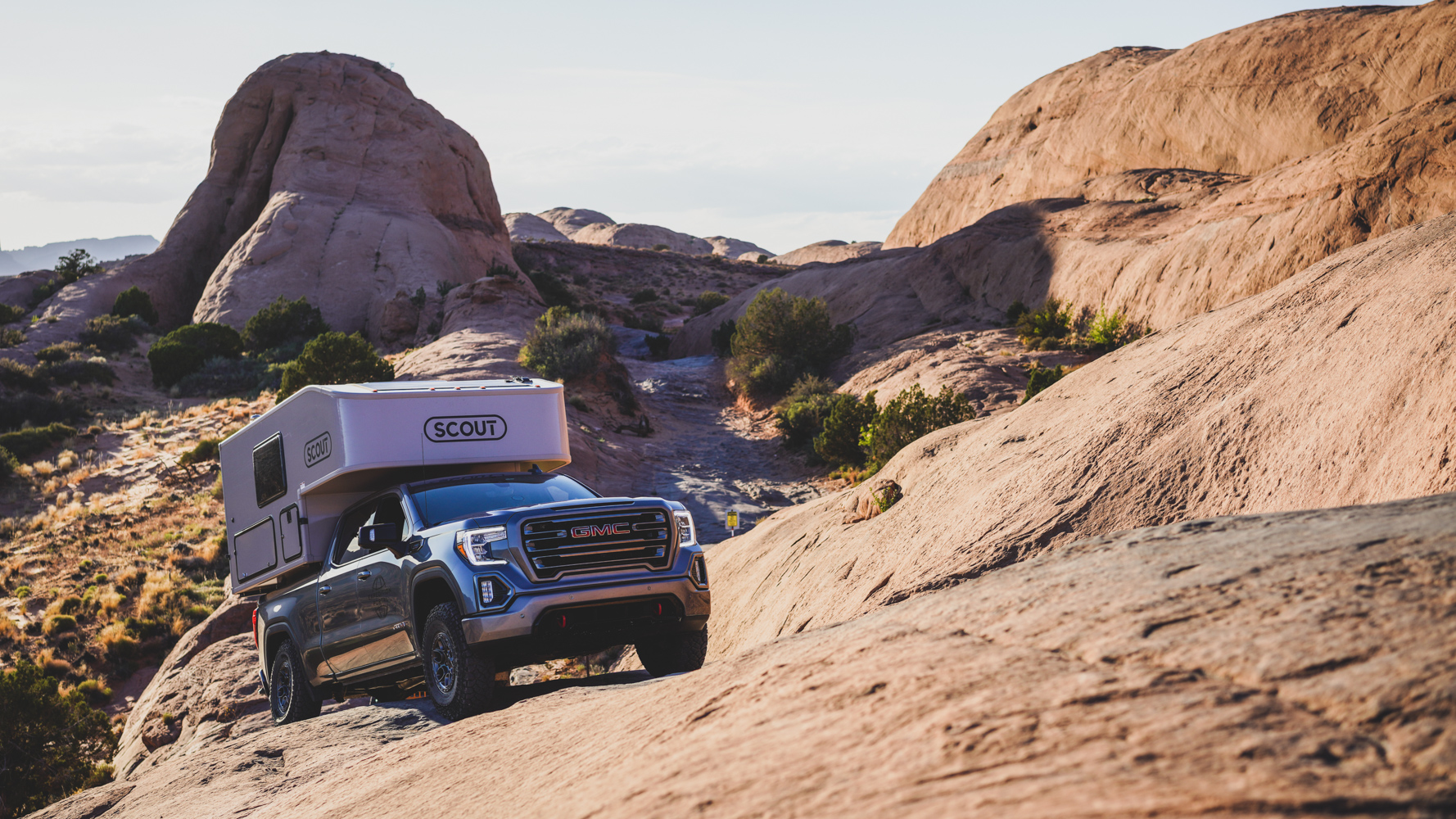
Scout has entered the scene with momentum, launching one new product after another out of its Washington factory. The goal of producing affordable, durable, and lightweight campers at scale has resulted in a nationwide dealership network and seven models in less than five years. The minimalist design and spartan interior are ideal for most overlanders, combining durable materials with reliability through simplicity. I purchased this camper for personal use and tested it for many years on my GMC 1500 AT4.
For many travelers, the most critical consideration is weight, as many are running half-ton pickups or heavily modified heavy-duty models. The Scout features a 1,100-pound dry weight in its most basic configuration, although most customers will order units closer to 1,300 pounds. With the camper jacks removed and a few other items (like the bed extension pads and support) taken out, you can get an even lighter Kenai. The camper is constructed from reinforced, multi-layer composite panels supported by aluminum extrusions to protect the corners. There is no plumbing (other than a 7-inch sink drain hose) and no 120-volt wiring. The cabinetry is made from durable plywood, finished in dark gray, and is devoid of drawers or doors, resulting in nothing to fail and that ever-important weight savings. Simple soft-sided organizers from Dometic and Red Oxx kept everything in its place for me. For 12- and 120-volt power, I used a Goal Zero Yeti 1500x lithium power station, which includes USB-C, 12-volt, and 120-volt inverter capabilities, along with a solar charge controller. The Scout has a 180-watt solar panel on the nose cone, which has met all the camper’s modest power needs. The Goal Zero does have an optional 50-amp charger to run off a 7-pin connection, but it failed after about six months of use. Scout has since upgraded their power systems to incorporate proven components from Xantrec.
Beyond its low weight, the Kenai has one of the most generous living spaces in the test, with a shower pan and toilet cubby in the rear. The unit can be specified with a cassette toilet or (in my case) fitted with a composting unit. It was possible to fit a Dickinson fireplace, which was admittedly one of the reasons I bought the camper. As of this printing, you can fit a diesel heater, or the owner will need to install the Dickinson after delivery. The bed is roomy for two and can be used comfortably without the bed extension in an E-W configuration. The Kenai can be installed on 6.5-foot or 8-foot beds and is now available in a pop-top model as well. I spent over two months living in the Kenai, and it became my home on wheels.
Pros
- Lightweight
- Durable construction
- Simple layout
- Available roof tent with access hatch
Cons
- Limited storage options
- Lifeline water cans are heavy and prone to leaking
- Mounting straps require regular inspection when off-road
Scout Yoho Pop-up | EDITOR’S CHOICE
937 pounds | $30,885 as tested
The around-the-world camper for all roads
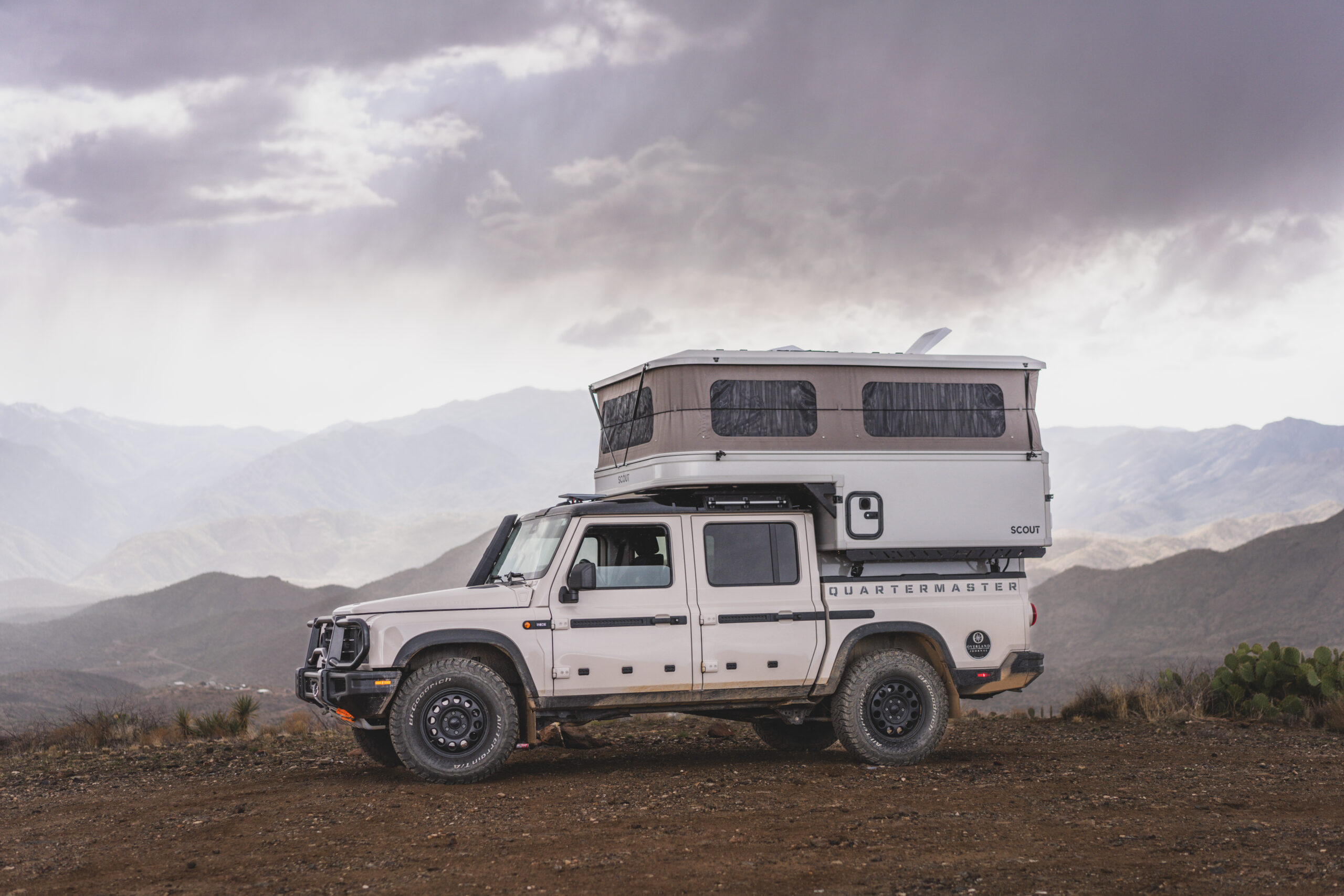
The Scout Yoho Pop-up proved popular immediately upon its release due to its modern, minimalist design and light weight. At 937 pounds in base trim, the Yoho is one of the lightest campers available, allowing for excellent performance in backcountry conditions and the possibility of working with the low payload ratings of mid-size pickups. The lifting roof with its sloped sides and rounded corners reduces wind noise and increases fuel economy while simultaneously improving trail clearance and allowing the vehicle to fit in a container for international shipping.
The exterior features durable composite panels bonded to metal corners, and is finished in a durable tan color to complement most trucks. The lifting roof is equipped with 100 watts of solar.
One of the Scout Yoho’s key advantages is its compactness, which lowers the center of gravity and overall height of the vehicle. It’s capable of fitting into tight spaces, navigating narrow trails, and even parking in garages. Additionally, the camper can be stored in high cube containers for shipping, enhancing its versatility for international travel. The well-thought-out external features include accessory rails for mounting gear, as well as removable lifting jacks that save weight and improve maneuverability on challenging terrains.
Despite being designed for a 5- or 6-foot mid-size truck bed, the interior feels open and uncluttered, thanks to large windows and the lack of overhead cabinetry. It maximizes usable space and retains a dinette for working or sleeping (a great spot to read, too). The interior is free from 120-volt wiring and leak-prone plumbing. There is a single 7-inch length of drain tubing that comes from the bottom of the sink and empties onto the ground or into a bucket. Their system uses a LifeSaver jerrycan, which is nicely made, but I have not tested one that didn’t leak, particularly from the spray hose. There is a small porta-potty cubby, in which I stored the new Trelino compact composting toilet.
The camper features an upgraded power system with Victron components, providing 120 amp hours of 12-volt power. I supplemented that with an EcoFlow portable power pack and a 2,000-watt inverter. The combination of those two batteries can run my induction cooktop and the electric air heater/AC unit I am testing. Scout offers an optional diesel heater that mounts to the back camper wall. My one criticism is the lack of a shower pan in the entry door opening (the Kenai has one). There were also some finish issues with the wood countertops and table; all were resolved under warranty (the wood has already been changed for future units).
Pros
- Lightweight and compact
- Spacious interior, efficient use of storage
- Simple plumbing and electrical system
Cons
- Zippers on windows may require careful handling for longevity
- Lack of available shower pan
- Pop-top mechanism may be cumbersome for some
Supertramp Flagship LT
Expedition camper features and design in a slide-in
1,600 pounds | $63,000 (as tested)
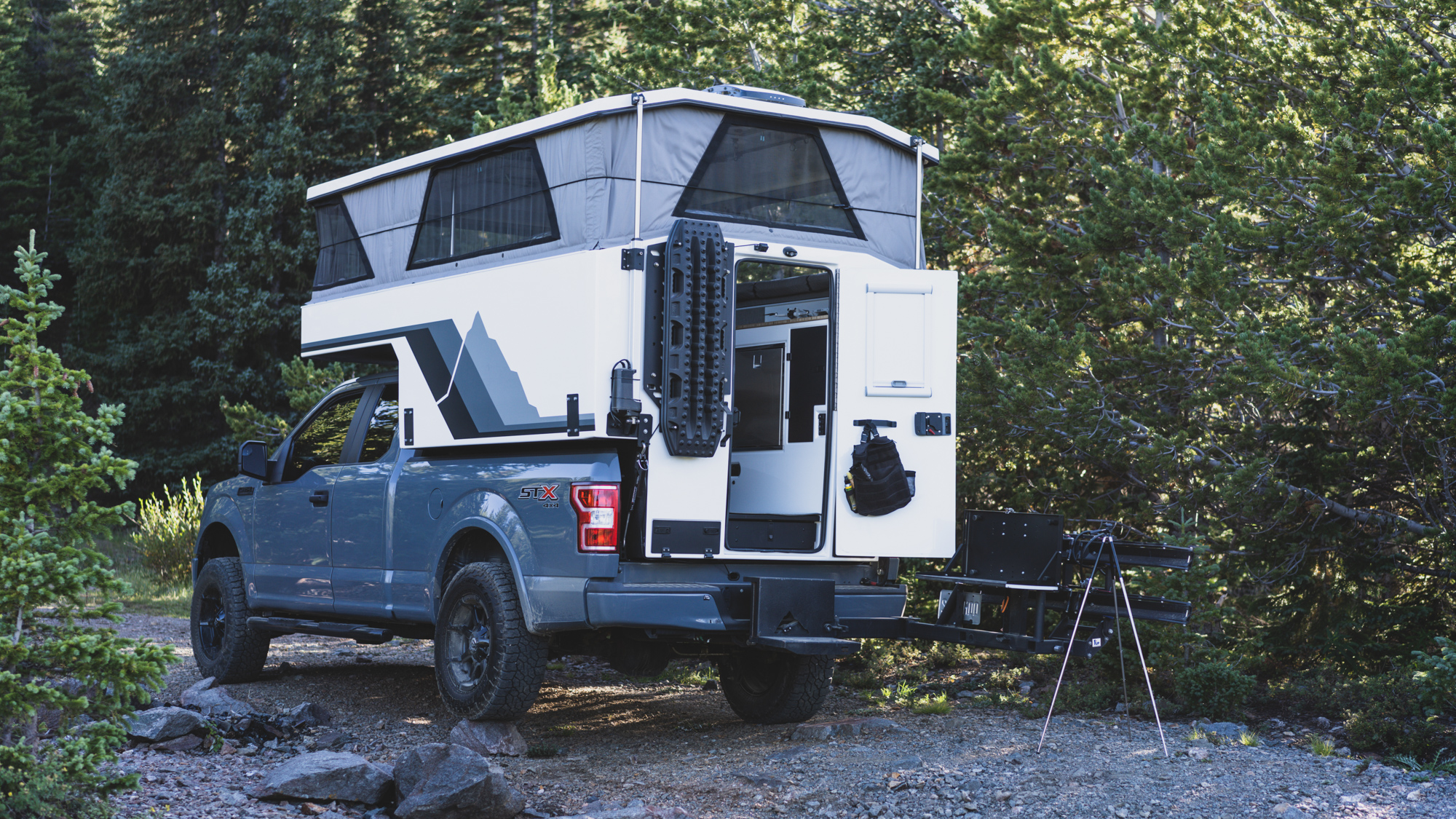
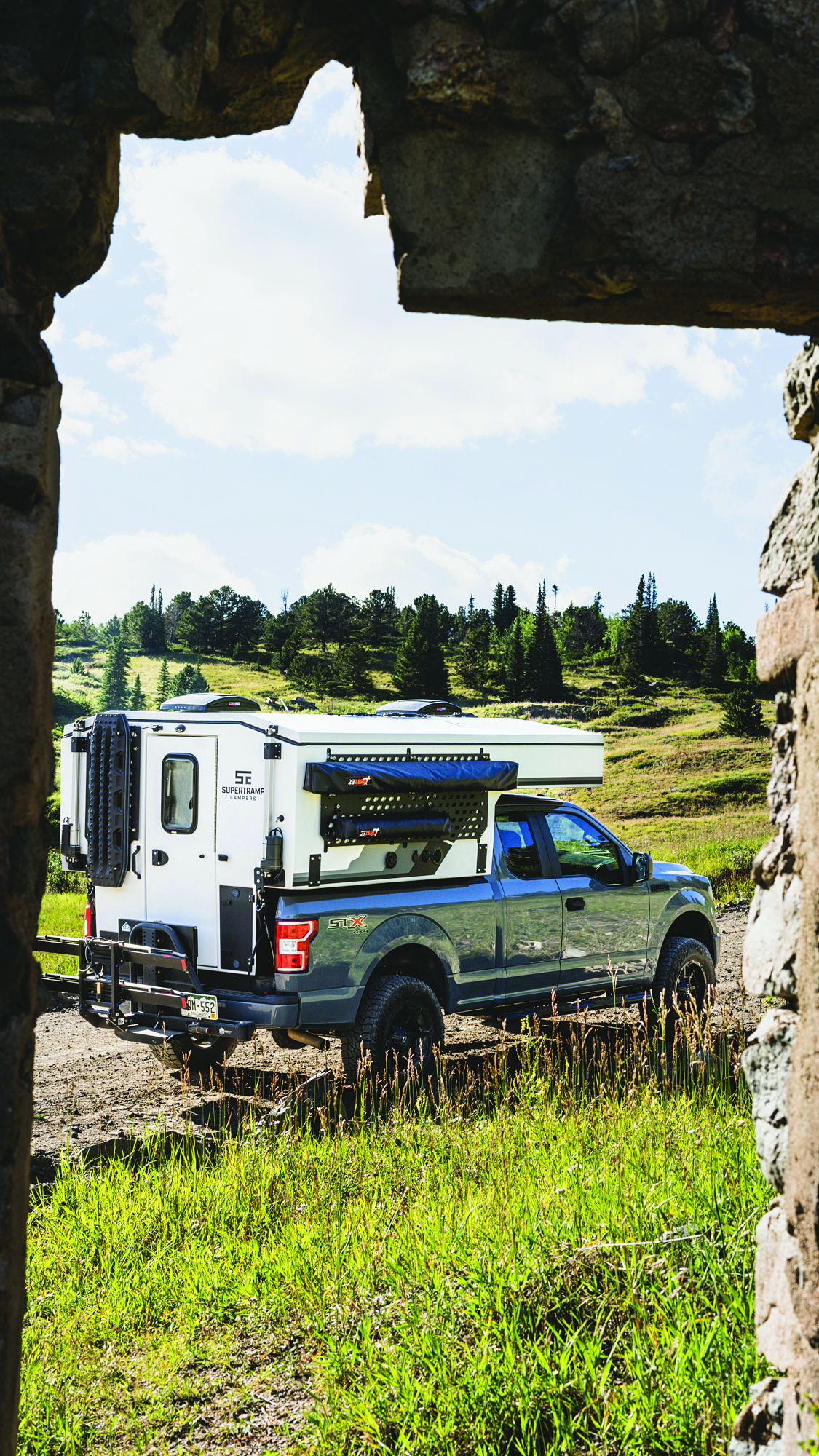
The Supertramp camper has quickly gained recognition for providing a premium expedition camper experience and features in a slide-in camper. Weighing in at just under 1,600 pounds, it strikes a balance between lightweight construction, durability, and amenities. Built for full-size trucks, the Supertramp offers a surprisingly spacious interior, given its 6.8-foot floor length. The camper is wider than most, adding to the sense of spaciousness, but still manages to incorporate a hot water interior shower, toilet options, up to 800 amp-hours of battery power, 25 gallons of water, and more.
The camper’s robust construction features a molded composite shell and vacuum-infused carbon fiber lifting roof. The top lifts on four electric rams that have limit switches and other safety features. There are no latches to unhook or awkward Tai Chi movements required—it just goes up and down with the push of a button. As a result, weight, purchase price, and complexity are affected, and there is no manual override should the system fail.
Supertramp does an exceptional job of interior layout and the use of premium finishes and touch points. This camper feels even more roomy than the Kenai, which is nearly 2 feet longer. They achieved that by making the camper wider than the truck bed sides (but not wider than the mirrors) and avoiding tall or overhead cabinetry. The one cabinet that runs down the passenger side is narrow and bright white, lending to the sense of open space. That singular cabinet contains the galley, Truma combi, electronics, batteries, sink, plumbing, and more, allowing the rest of the floor area to encompass a long settee that wraps around the front of the bulkhead and all the way to the backside of the galley. This gives two massive reclining positions for two occupants and easily accommodates sleeping inside with the top down.
The comfort of the interior extends to the ducted heating and an optional 12-volt air conditioner. There is a molded shower pan with a full curtain that hangs from the ceiling. The sink faucet becomes the showerhead (with hot water from the Combi), supplied from the 24-gallon freshwater tank. The shower pan also serves as the storage locker for a portable composting toilet, the curtain, and even a wet locker for shoes or a wetsuit.
There are a few considerations with the Supertramp worth noting. The single-size option excludes mid-size trucks and (arguably) 8-foot bed full-size platforms. The camper is wide, so avoid installing the MOLLE panels and large awnings. I would use a suction cup-style awning in the rare instance a south-facing position fails to provide enough shade. I found a few suggestions for improvement, and was impressed by how quickly Supertramp made the changes in production (so they are not worth mentioning here). The camper really needs to be seen in person to be fully appreciated, as the automotive finish is stunning, and the feel of interior spaciousness will make you grab a tape measure to confirm the dimensions. This all comes at a cost, but the juice is worth the squeeze if your travel budget supports the list price.
Pros
- Efficient, robust electric lifting mechanism
- Surprisingly spacious
- Integration of an interior, hot-water shower
Cons
- Lifting mechanism location by bed requires awareness
- Limited to one size
- Skip the MOLLE panels on the sides (already wide)
Conclusions
Over the last two decades, awarding the Editor’s Choice and Value Awards has become increasingly challenging as products continue to improve in durability and reliability. The growing size of the industry has led to a wider array of specialized options tailored to individual travelers’ needs. The concept of the Editor’s Choice was developed to reflect the distinction between winning a test and the unique experiences and preferences of the editor. This is particularly true in this test, featuring six of the best overland slide-in campers ever produced—any of which would be suitable for a journey around the world. These campers have become more durable, lighter, and comfortable than ever before.
For the Value Award, a handful of campers stood out. The Scout Kenai offers the largest and most comfortable interior in the test, emphasizing essential attributes such as an easily accessible toilet and an integrated shower pan. Its minimalist design incorporates high-quality materials, creating a warm and inviting atmosphere with soft-touch fabrics and wood-grain countertops. The Kenai is reasonably priced and weighs as little as 1,100 pounds. The AT Overland Aterra ASI is built for around-the-world travel, showcasing exceptional construction and durability. Its modularity allows for customization, giving owners the option to create a camper that meets their specific needs. The Aterra includes drill points and wiring channels for future upgrades, making it a future-proof choice for international overland travelers. The winner of the Value Award goes to the Fourwheel Campers CampOut, though, which features a modular design that allows purchasers to start with a lower entry price and then add necessary options later. Owners can customize their camper based on evolving needs, while maintaining high-quality finishes and appliances throughout, making it a solid value at $35,000 as tested.
Selecting the Editor’s Choice was even more challenging, as every model in this test is ready for global journeys. My focus was on attributes that matter most to me, such as the ability to fit the camper in a shipping container and the overall maneuverability in small villages and unpredictable conditions. Reducing height minimizes the risk of contact with power lines, branches, and other hazards. For my travels, I require a camper that fits on a mid-size, high-clearance, four-wheel-drive truck while offering durability for crossing continents. For this reason, I purchased the Scout Yoho pop-up camper in 2024, and I am giving it our Editor’s Choice award (I literally put my money where my words are). Weighing less than 1,000 pounds, it leaves me with 800 pounds of spare payload with the INEOS Grenadier Quartermaster. I would like to see an integrated shower pan at the entry door to facilitate ease of hygiene on the road, but my suggestions end there. Senior Editor Ashley Giordano selected the Overland Explorer Vehicles Alpine pop-top camper as her Editor’s Choice, which has proven durable and reliable on her travels across Europe, North Africa, and into Central Asia.
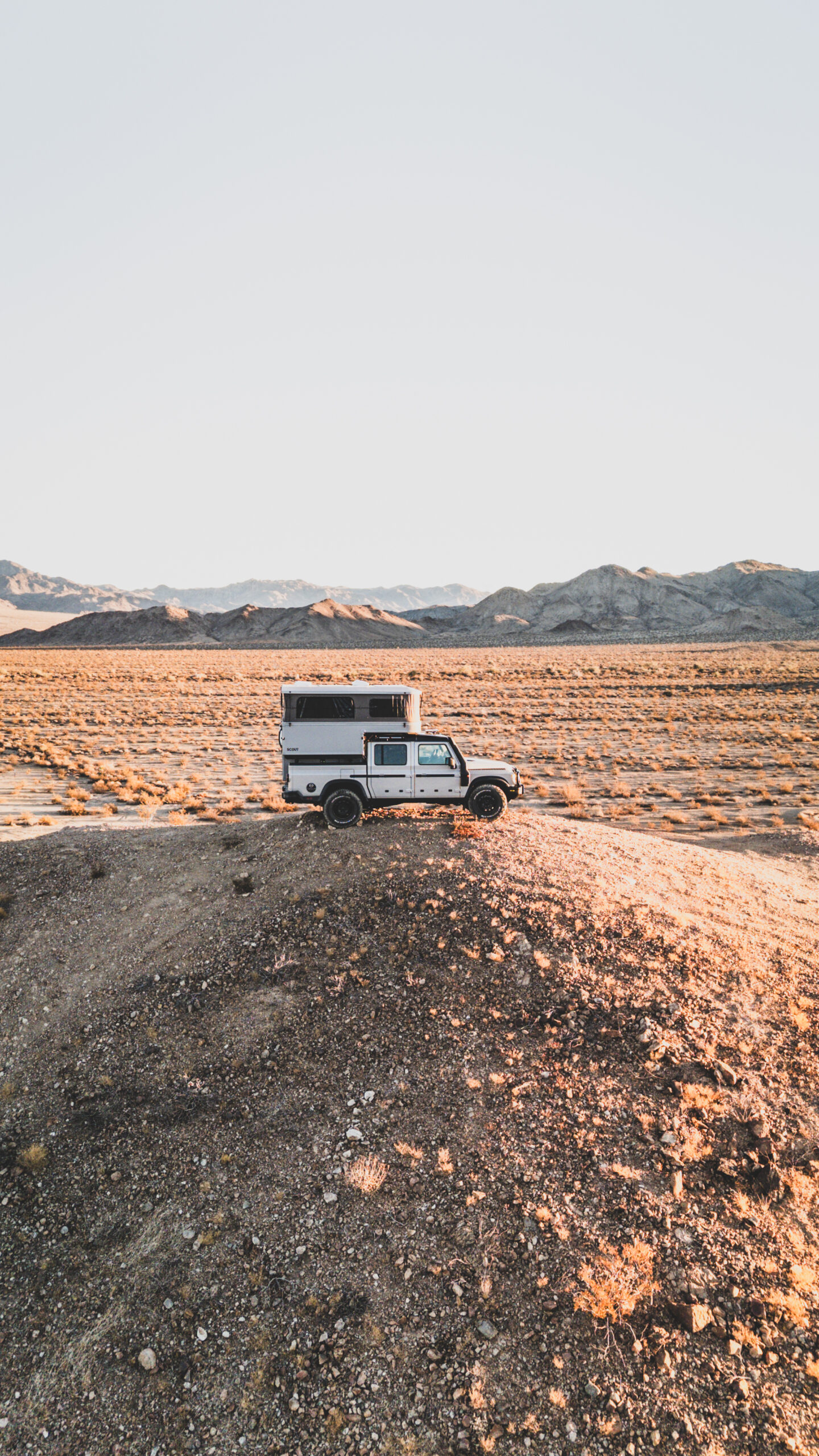
There has never been a better time to buy an overland camper, and each of these models could earn an Editor’s Choice designation. I look forward to future innovations, including standard composting toilets to minimize waste impact and integrated shower pans in entry doors. Advancements in lithium battery energy density and the reliability of electrical systems are particularly exciting, which will enable the use of induction cooking and electric heating and cooling, reducing reliance on propane. I am currently testing different configurations of these electrical systems in my own Yoho. As always, our findings will be reported.
Editor’s Note: This article was originally published in Overland Journal’s Winter 2025 Issue.
Our No Compromise Clause: We do not accept advertorial content or allow advertising to influence our coverage, and our contributors are guaranteed editorial independence. Overland International may earn a small commission from affiliate links included in this article. We appreciate your support.
