

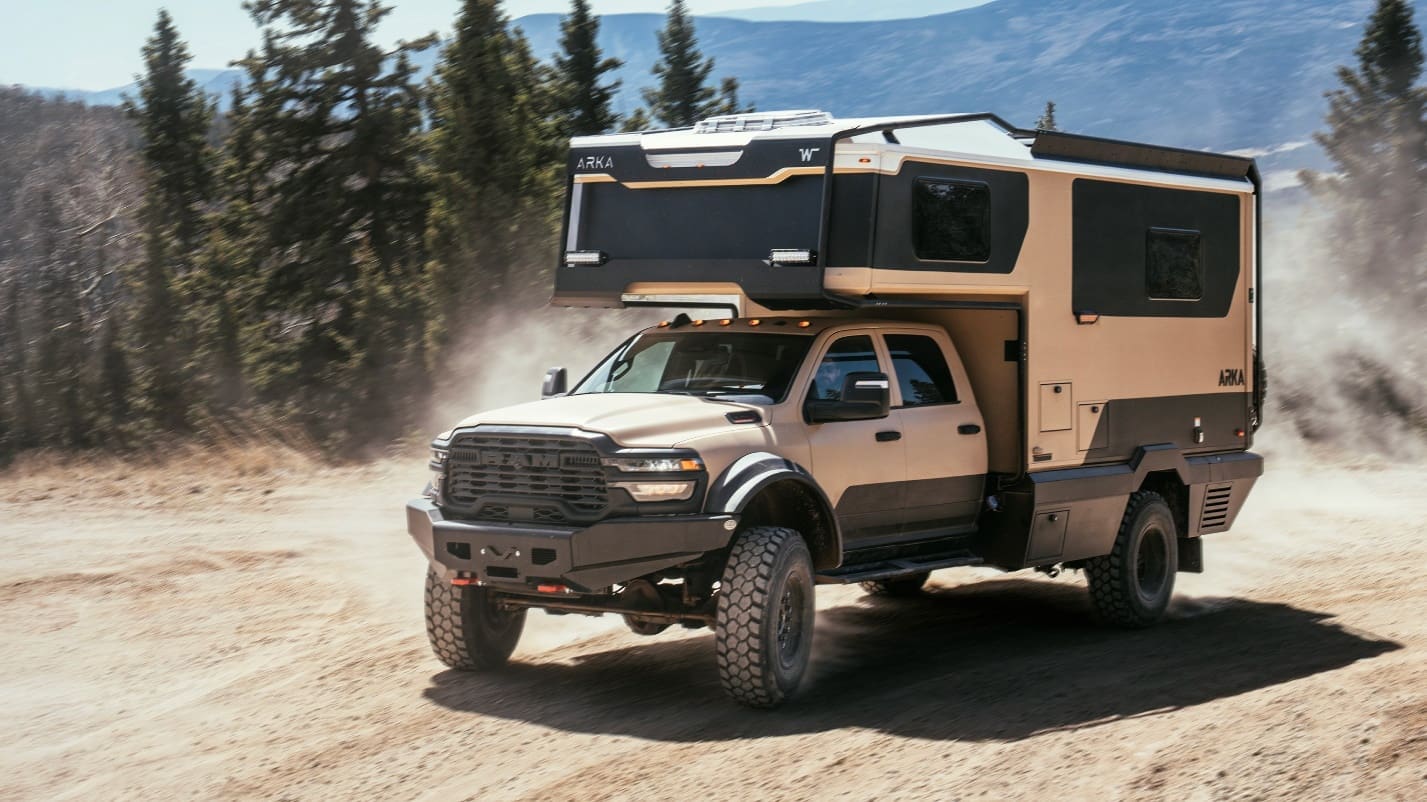
Winnebago Industries has introduced the new Arka, an overland-focused adventure truck that signals the company’s continued push into the growing off-grid and backcountry travel market. The Arka is generating considerable buzz across social media, with many quick to compare it to vehicles like the EarthCruiser. While there are certainly similarities in concept, the two platforms occupy quite different positions in the market. Retailing at approximately $330,000, the Winnebago costs roughly a third of what buyers could expect to pay for a fully equipped EarthCruiser, and that price difference becomes apparent in areas such as layout, storage solutions, and overall fit and finish.
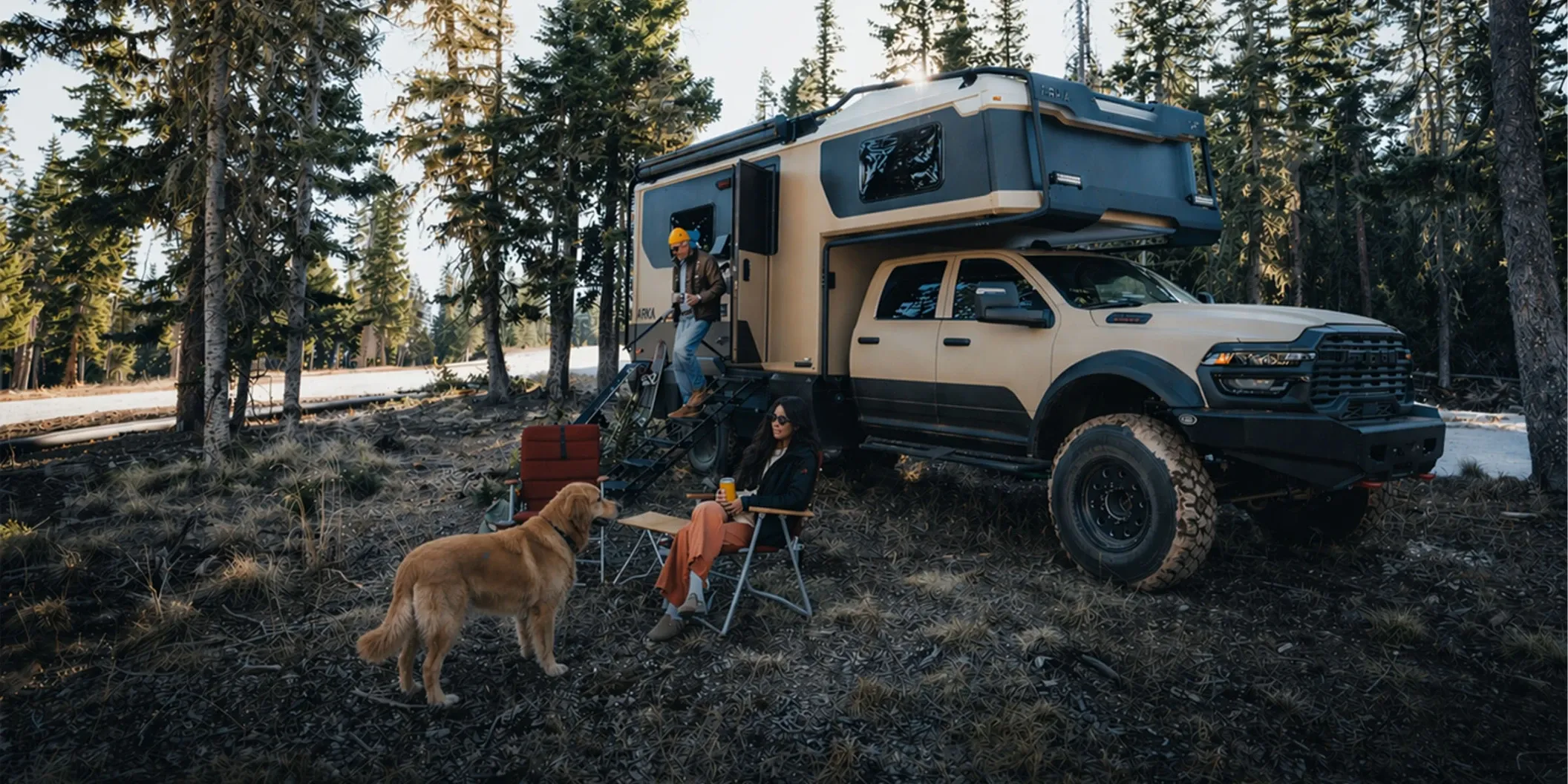
That said, the Arka fits neatly within the broad premium overland vehicle category and represents a significant milestone for the industry. Few companies have the manufacturing capacity, dealer support, and nationwide service infrastructure of Winnebago, and its entry into the overland truck camper market signals growing mainstream interest in expedition-style travel. As one of the RV industry’s “big four” manufacturers alongside Thor Industries, Forest River, and REV Group, Winnebago brings considerable resources and visibility to a segment that has traditionally been dominated by smaller specialty builders.
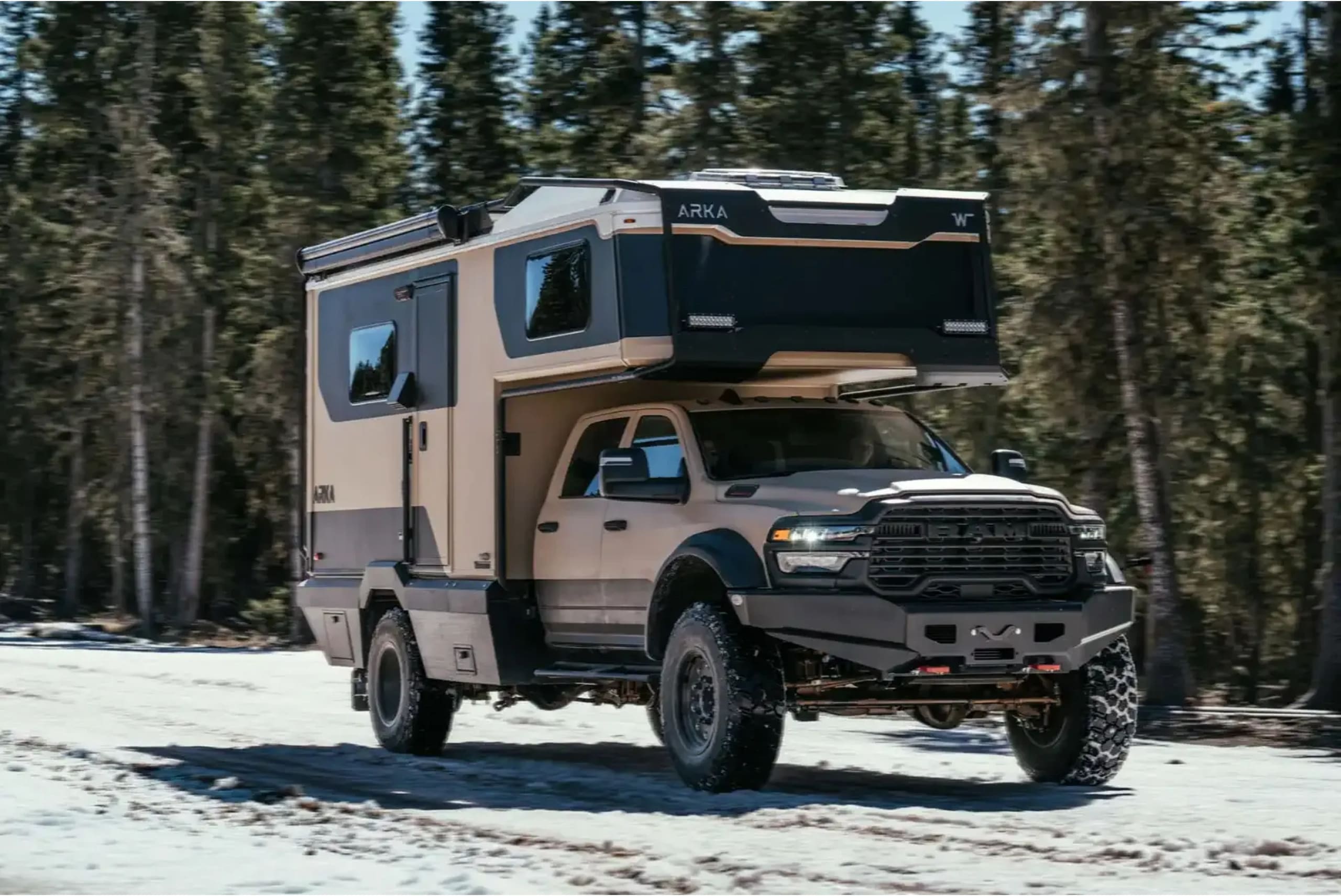
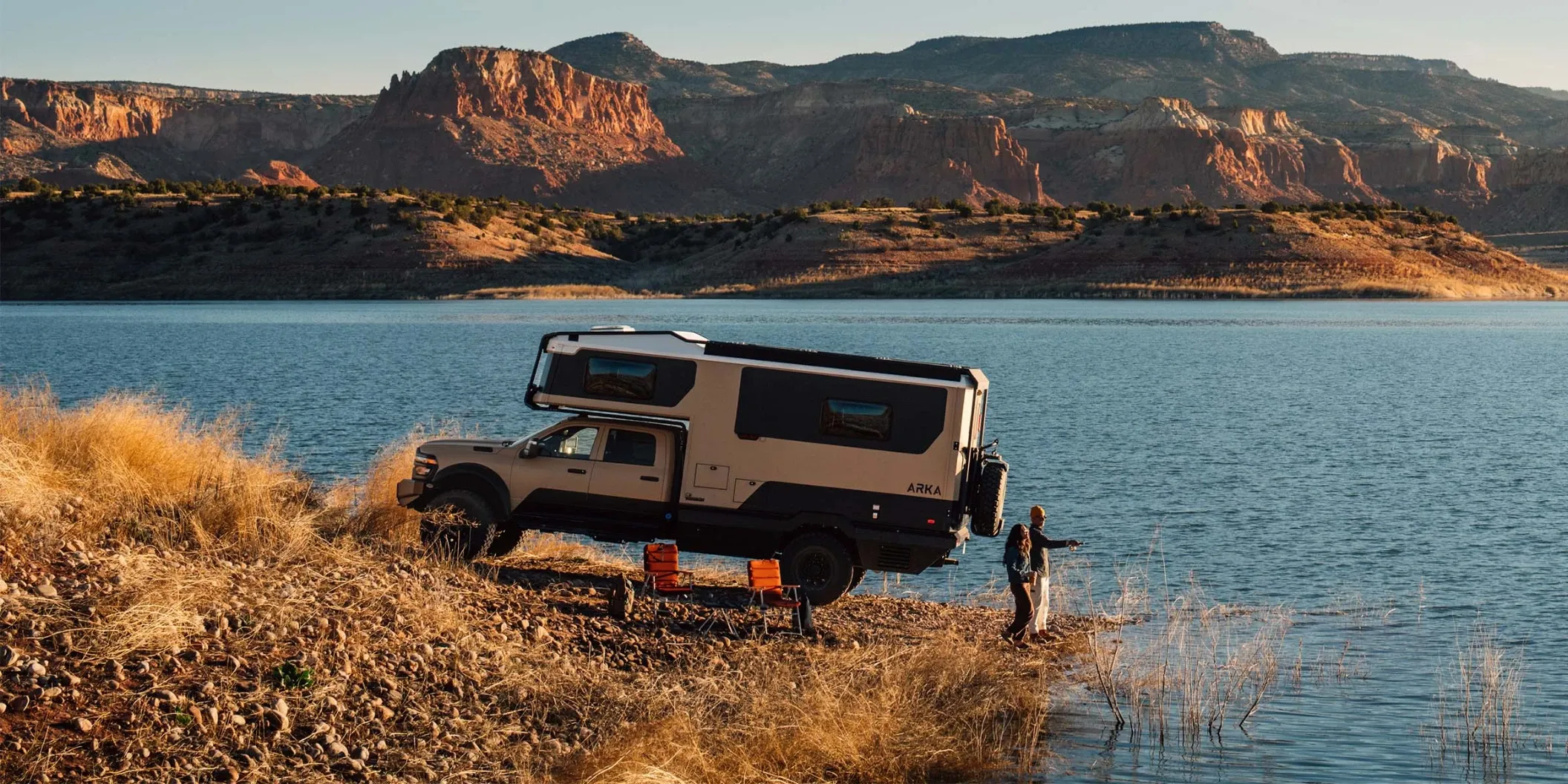
Positioned alongside the brand’s Backcountry Series models, such as the Revel and Ekko, the Arka departs from traditional RV thinking by combining heavy-duty truck architecture with expedition-style durability and extended off-grid capability. Built on a Ram 5500 4×4 chassis, the Arka has been engineered for travelers who prioritize remote travel and long-term self-sufficiency, but with a degree of campground comfort. The platform utilizes Ram’s 6.7-liter Cummins diesel engine paired with an 8-speed automatic transmission and offers a towing capacity of up to 15,000 pounds. Winnebago says the vehicle has been designed specifically to cope with rough terrain, trail vibration, and extended travel away from paved roads, while the clean underbody layout is intended to improve approach, departure, and breakover angles.

Most of the promotional footage released so far shows the Arka posed statically in scenic locations, though videos of the vehicle traveling off pavement reveal a noticeable amount of movement between the camper body and the cab over rough terrain. While this may appear concerning at first glance, the motion is arguably the result of the camper mounting system doing exactly what it was designed to do.
The Arka camper body is mounted to the Ram 5500 chassis using what Winnebago describes as a “zero-torsion, four-point pillow-block system” or “four-point articulating box-to-chassis mounting system.” In practical terms, this means the habitation box is not rigidly bolted directly to the truck chassis like a conventional RV body. Instead, the system is designed to allow controlled movement between the chassis and camper as the truck frame twists and flexes over uneven terrain.
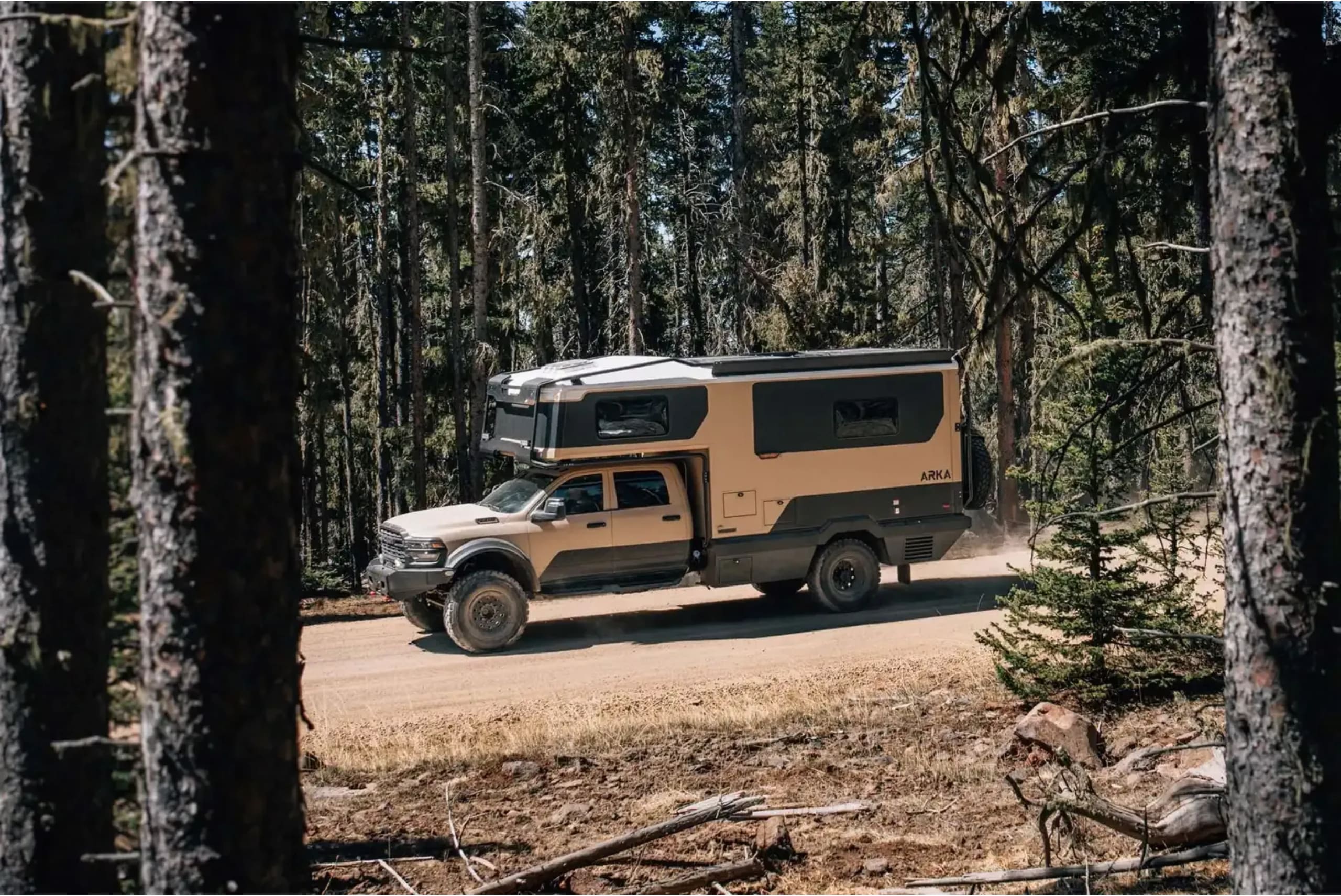
That articulation is important because heavy-duty truck frames are designed to flex off-road. If a large camper body is mounted rigidly to the chassis, that twisting force can eventually lead to cracked cabinetry, stressed joints, damaged windows, or structural fatigue within the camper itself. Expedition vehicle manufacturers such as EarthCruiser, Unicat, and Bliss Mobil have long used various forms of articulating or torsion-free subframes for precisely this reason.
The Arka reportedly underwent Winnebago’s OEM-level testing program, which included durability simulations intended to replicate more than 100,000 miles of on- and off-road use. That testing likely placed particular emphasis on the camper-to-chassis mounting system, an area critical to long-term durability in expedition-style vehicles designed to endure repeated torsional loads and trail vibration. As with any new platform entering the overland market, long-term durability will ultimately be determined by how the vehicle performs in the hands of owners traveling heavily corrugated roads and remote backcountry tracks over extended periods.

Stefanie Whittington, senior manager for Winnebago’s compact Class C and adventure platforms, said,
“Arka was designed by listening closely to real backcountry travelers. We looked at what breaks down, what creates friction, and what gives people confidence when they’re days from pavement. Every decision came back to durability, autonomy, and ease of use.”
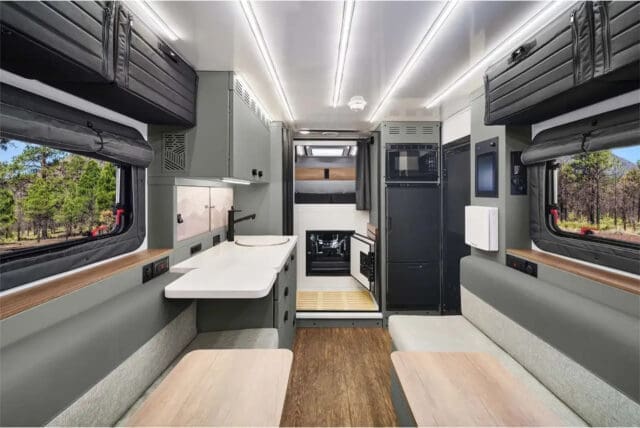
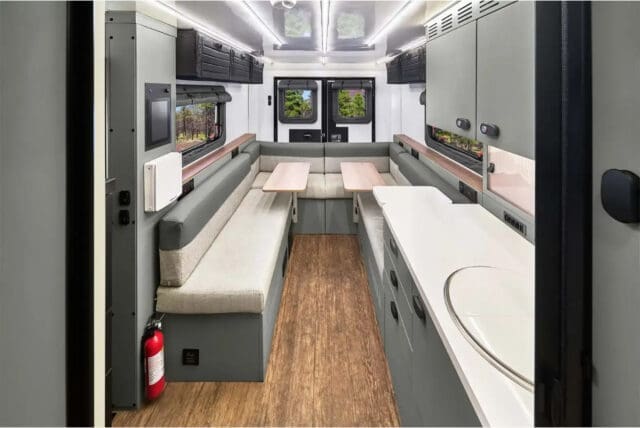
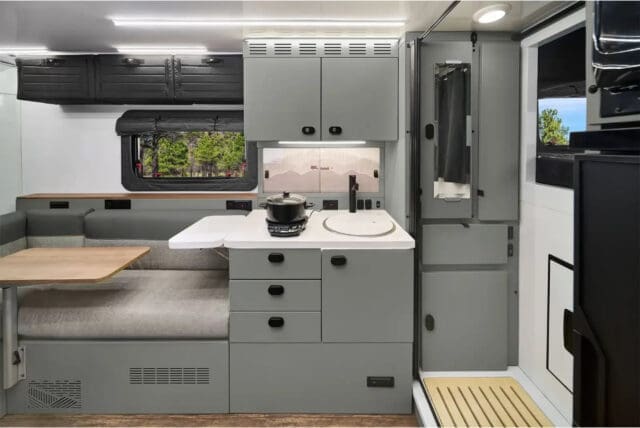
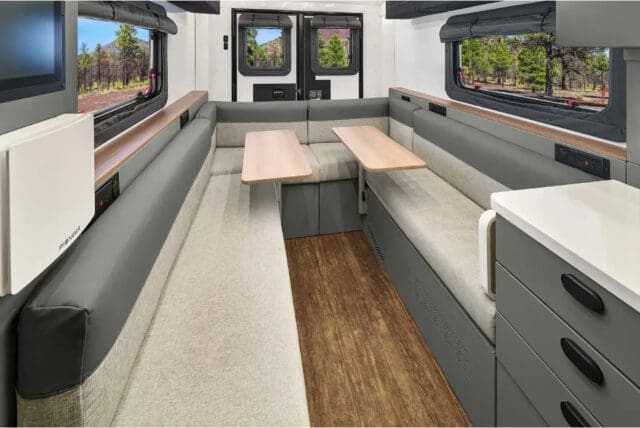
The Arka measures 26 feet 7 inches in length and offers seating for up to six occupants, while sleeping accommodations are provided for four. The current model lineup centers around a single floorplan known as the 20Z, though Winnebago has emphasized the modular nature of the design and its adaptability for different styles of travel. The galley kitchen features solid-surface countertops, a stainless-steel under-mount sink, a portable induction cooktop, pantry storage, and a 6.2-cubic-foot refrigerator with a drawer freezer, all packaged within a durable aluminum cabinetry system designed to withstand rough travel.
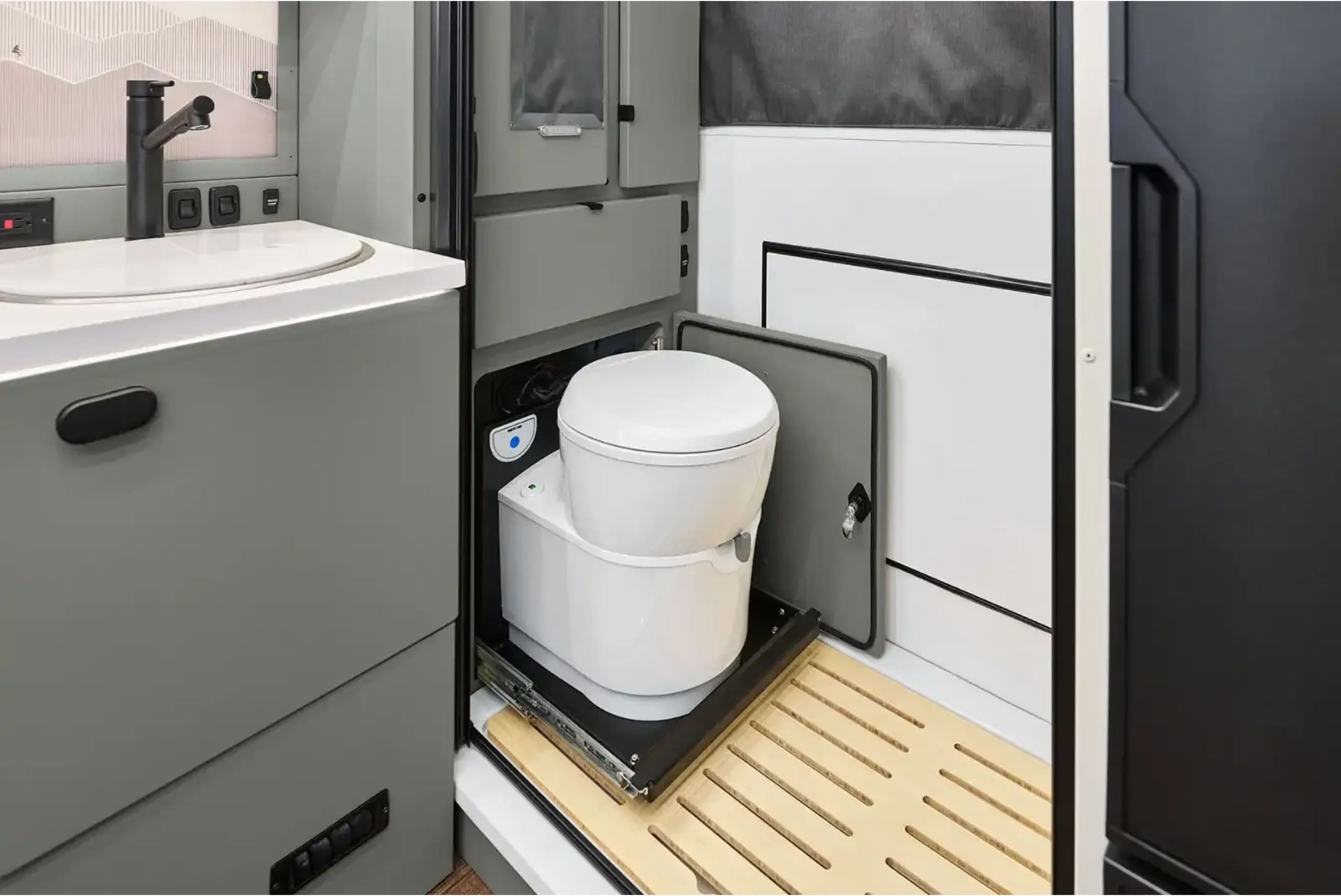
The bathroom, located in the middle of the camper, uses a compact wet-bath layout with a retractable privacy screen, folding shower seat, and a Thetford cassette toilet mounted on a sliding tray to maximize usable space. While receiving some criticism online, the position of the bathroom seems a good use of space, and an extraction fan above the bathroom should help keep steam and odors manageable.
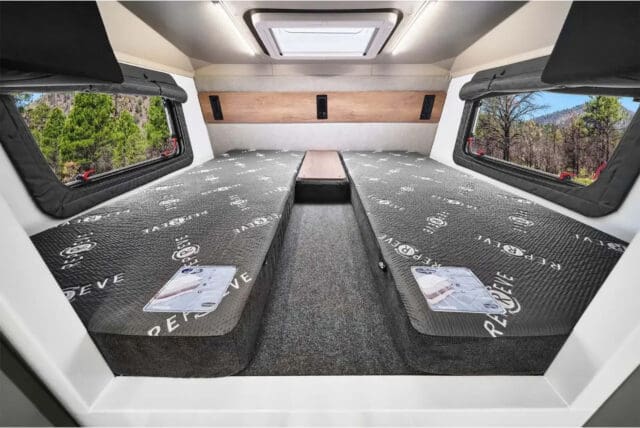
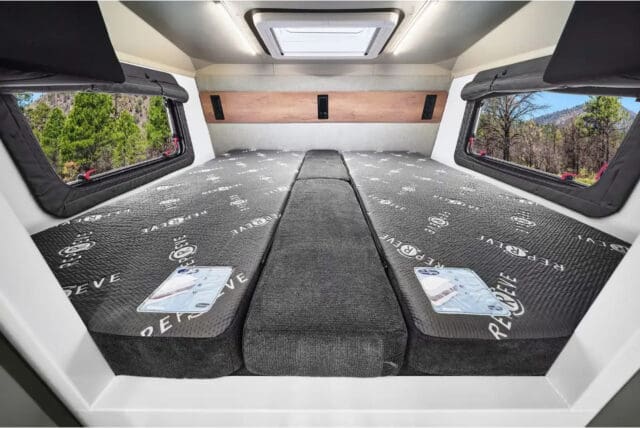
Sleeping arrangements include a configurable over-cab bunk that can be arranged as twin, queen, or king beds, while the rear dinette converts into an additional sleeping area, allowing the Arka to sleep up to four occupants comfortably.
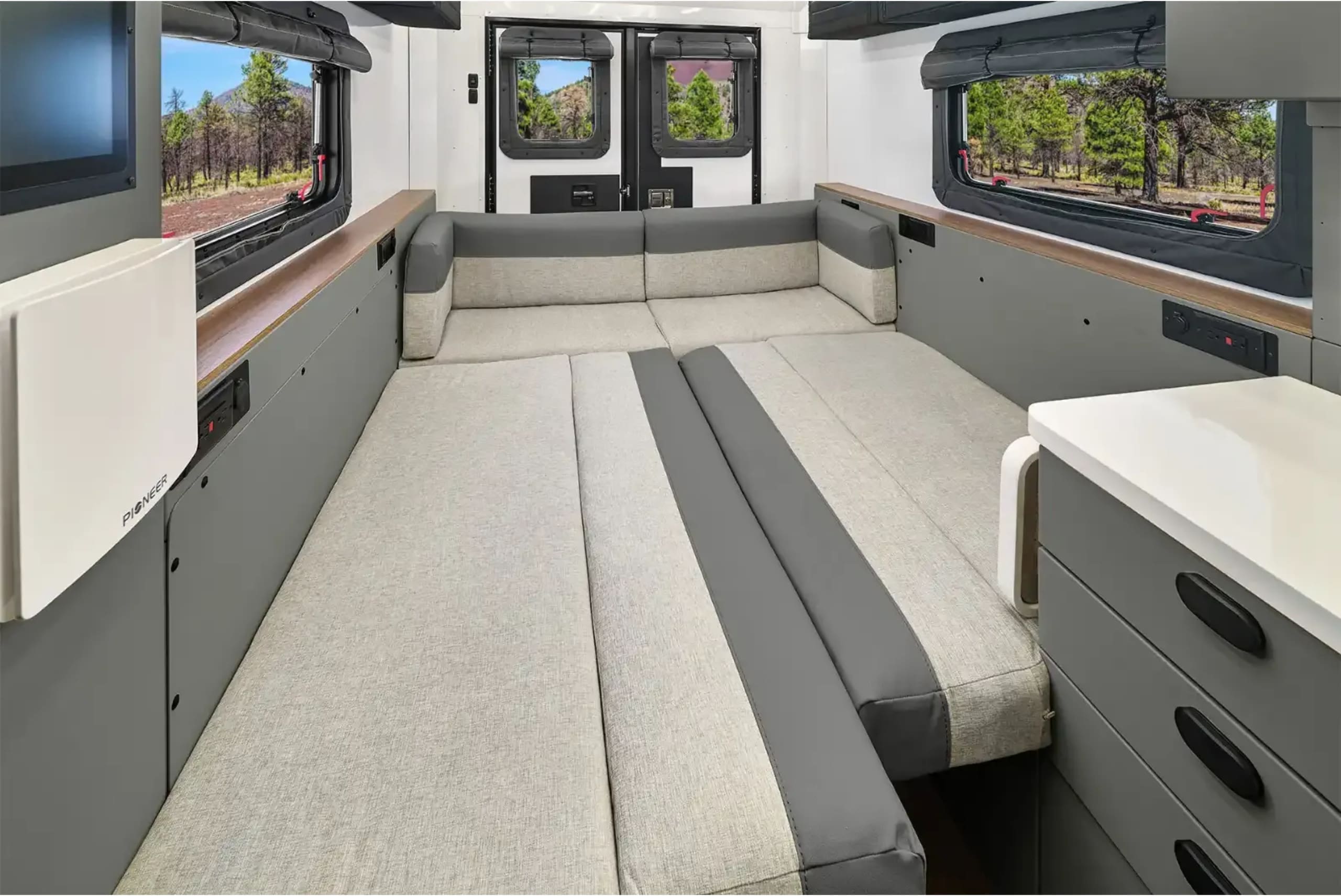
The interior layout reflects trends increasingly common within the overland vehicle segment rather than the traditional RV industry. Aluminum cabinetry replaces wood construction to improve durability and reduce weight, as well as the risk of swelling or delamination in humid environments. L-track systems throughout the cabin and rear gear garage allow equipment to be secured in multiple configurations, while removable storage cabinets and movable tables emphasize flexibility. The Arka has been designed as a modular platform capable of evolving alongside its owners’ travel requirements. Flexible storage systems and a range of bolt-on interior and exterior accessories allow the vehicle to be configured for different styles of travel over time, while maintaining a deliberately functional base package that focuses on essential capability rather than unnecessary complexity.
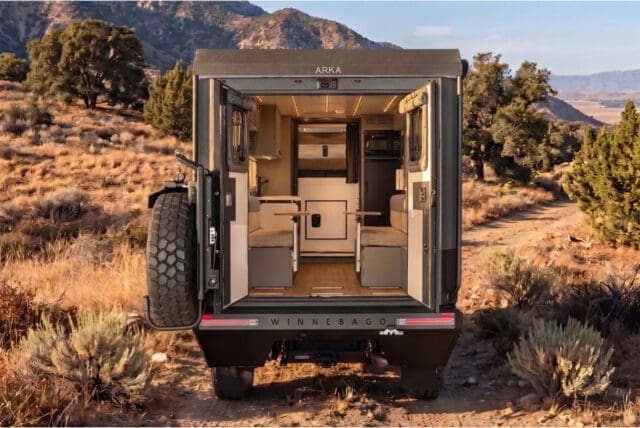
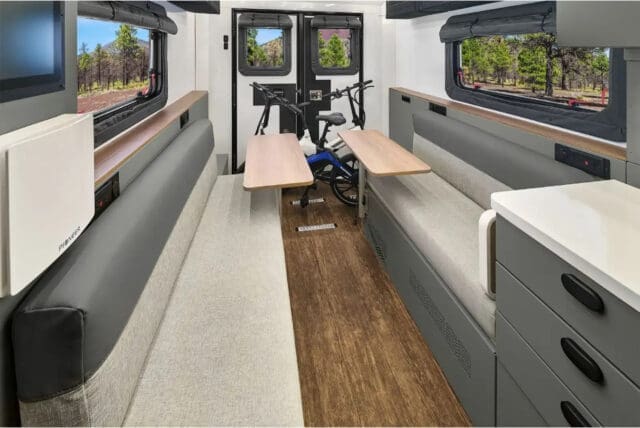
The rear-gear garage is one of Arka’s defining features. Accessed through full-height double rear doors that allow unrestricted views and airflow, the heated storage area is intended to accommodate bicycles, recovery gear, tools, and outdoor equipment. The garage is complemented by external storage bins and can be extended by removing sections of the dinette, creating a larger space for larger items. The design echoes solutions commonly seen in custom expedition trucks and high-end overland campers, where internal storage and weather protection are prioritized over exterior racks and exposed gear.
Winnebago has also focused heavily on climate management and four-season usability. The company claims the Arka is capable of operating in temperatures ranging from -10°F to 120°F. To achieve this, the vehicle utilizes hydronic heating, heated floors and tanks, R-15 roof insulation, R-12 wall insulation, and what Winnebago describes as the RV industry’s first heat recovery ventilation system. The system is designed to manage humidity and condensation while maintaining airflow during cold-weather operation.
Power management is centered around a 48-volt electrical architecture with a lithium battery capacity of up to 15 kilowatt-hours or more, depending on configuration. Solar charging capability of up to 800 watts, dual alternators, and shore power compatibility are intended to support extended periods away from hookups. Winnebago claims the Arka can sustain up to 14 days off-grid for two occupants under moderate usage conditions. Fresh water capacity stands at 60 gallons, while the heated gray water tank holds 40 gallons.
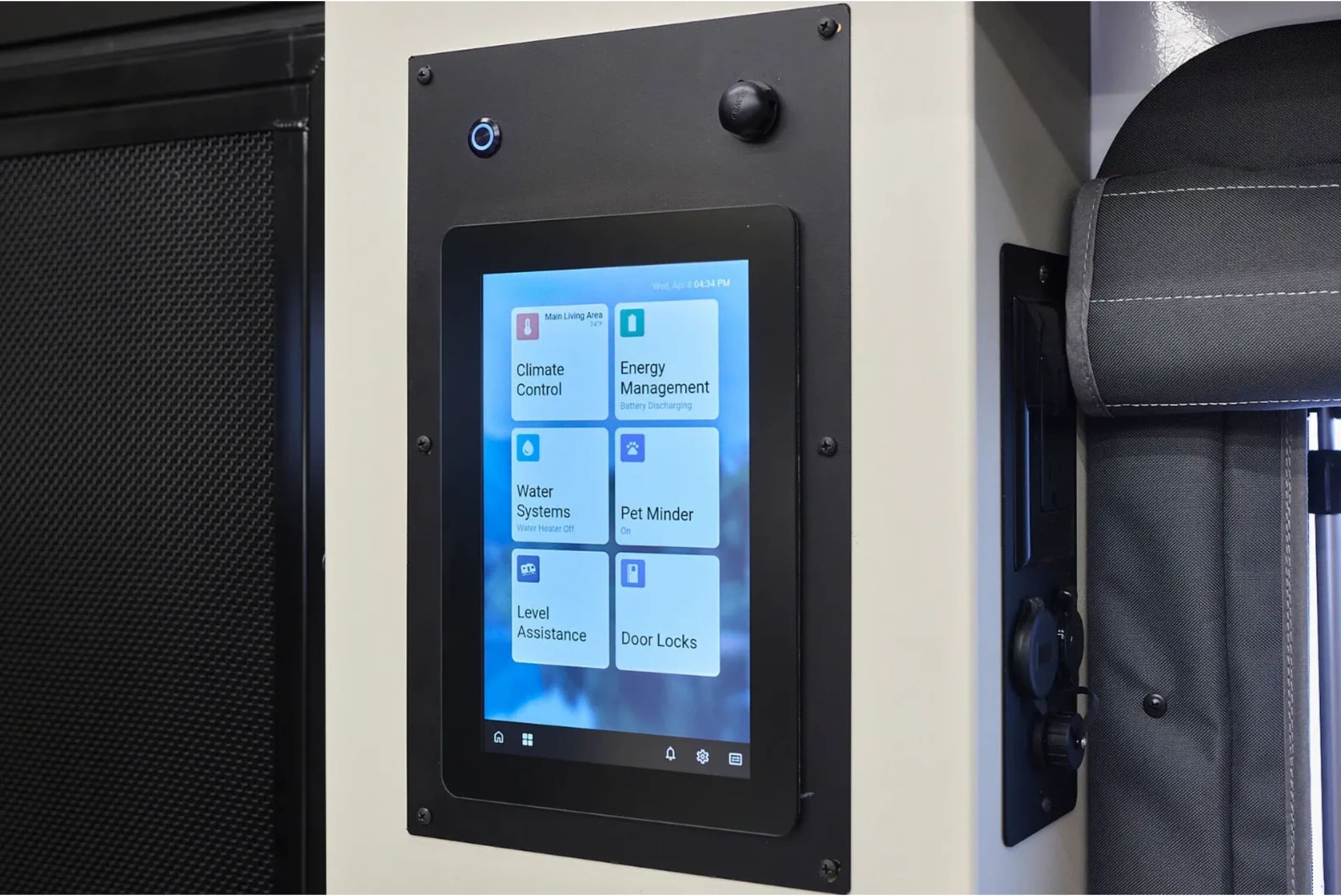
Technology integration is managed through the Winnebago Connect system, which allows owners to monitor power, water, climate, and security systems through a touchscreen interface or mobile device. The system also provides vehicle pitch and roll information, an increasingly common feature among overland-oriented platforms. Optional Starlink integration is also available for travelers requiring connectivity in remote locations.

Winnebago says the Arka will make its public debut at Overland Expo West in Flagstaff, Arizona, next week. Pricing for a fully equipped model is, according to the Winnebago website, $331,901.
Read More: Overland News of the Week
Our No Compromise Clause: We do not accept advertorial content or allow advertising to influence our coverage, and our contributors are guaranteed editorial independence. Overland International may earn a small commission from affiliate links included in this article. We appreciate your support.
