

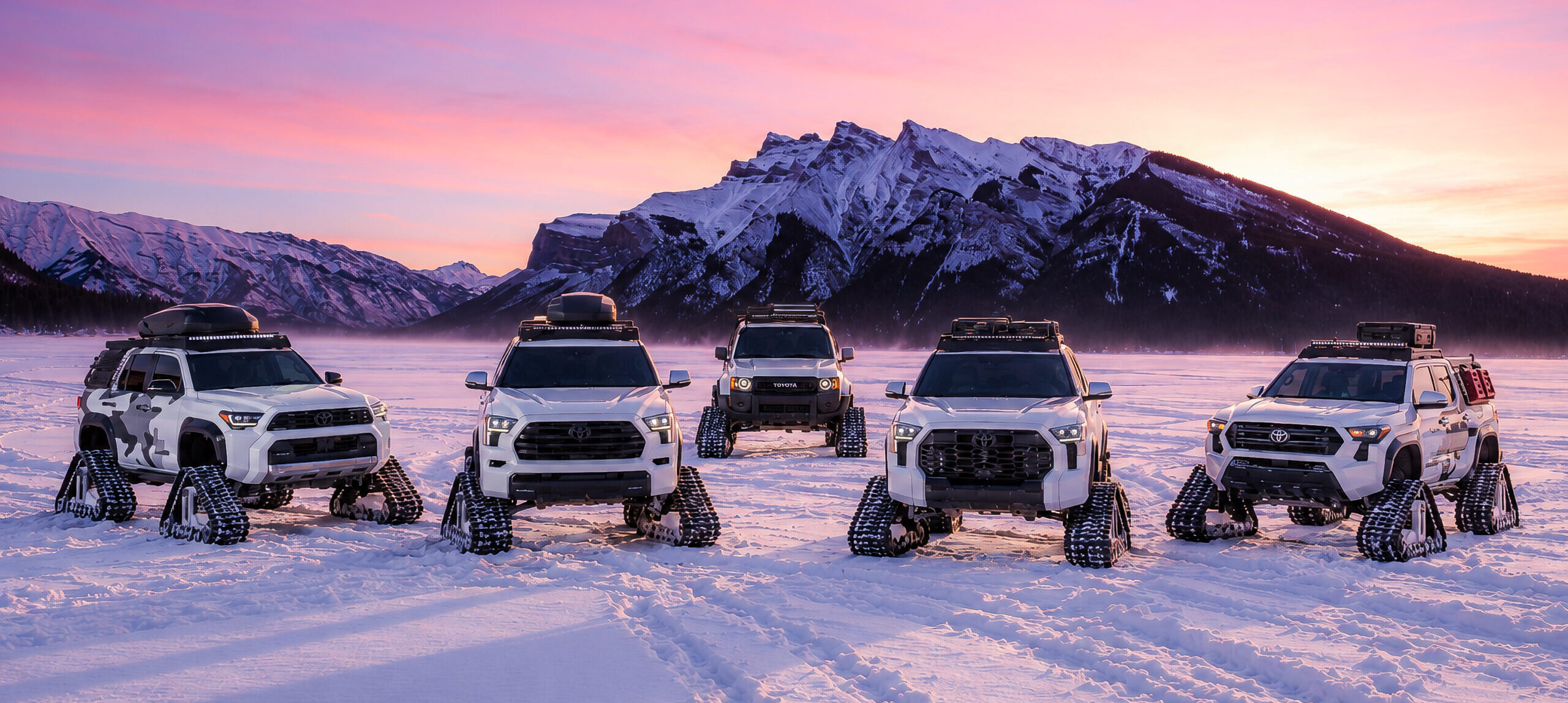
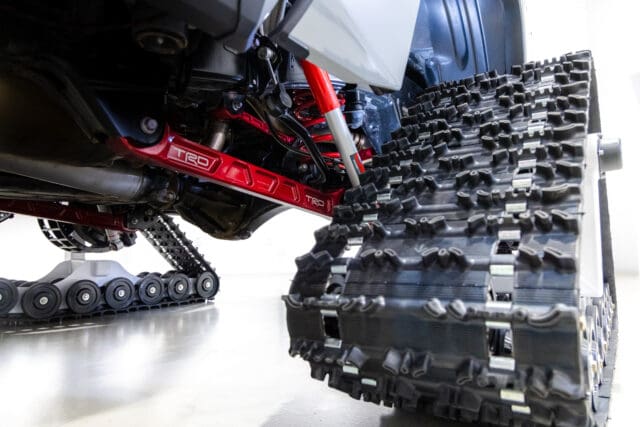
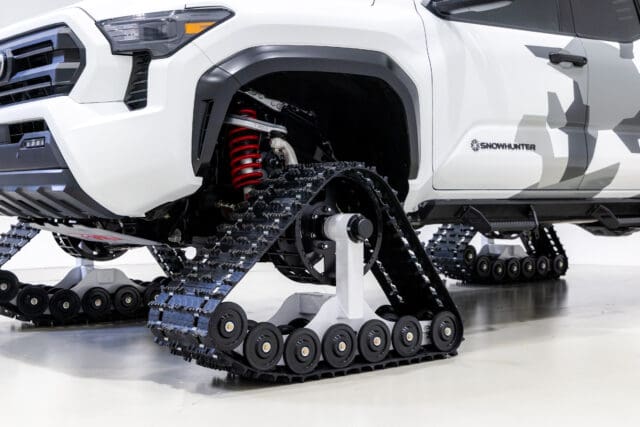
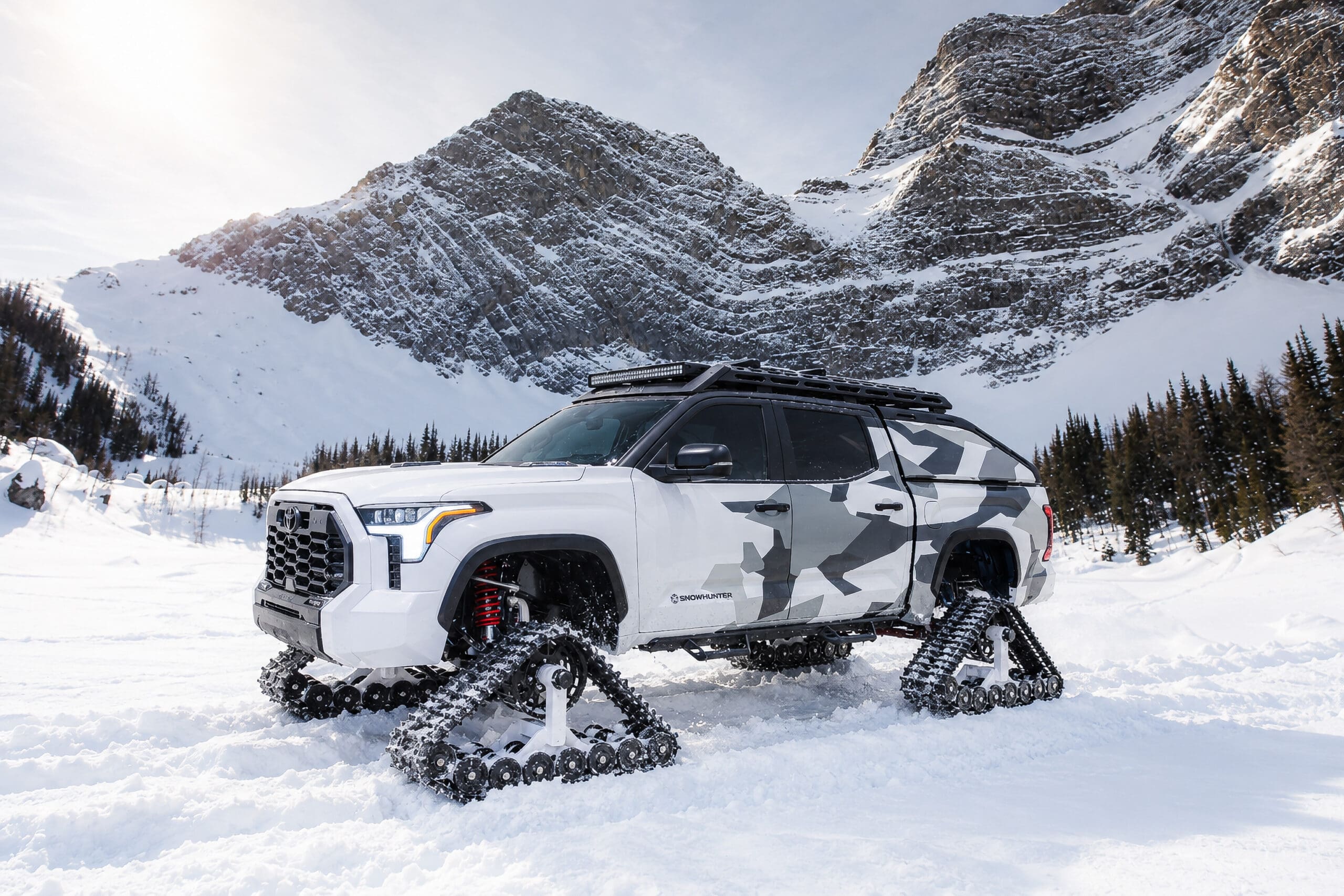
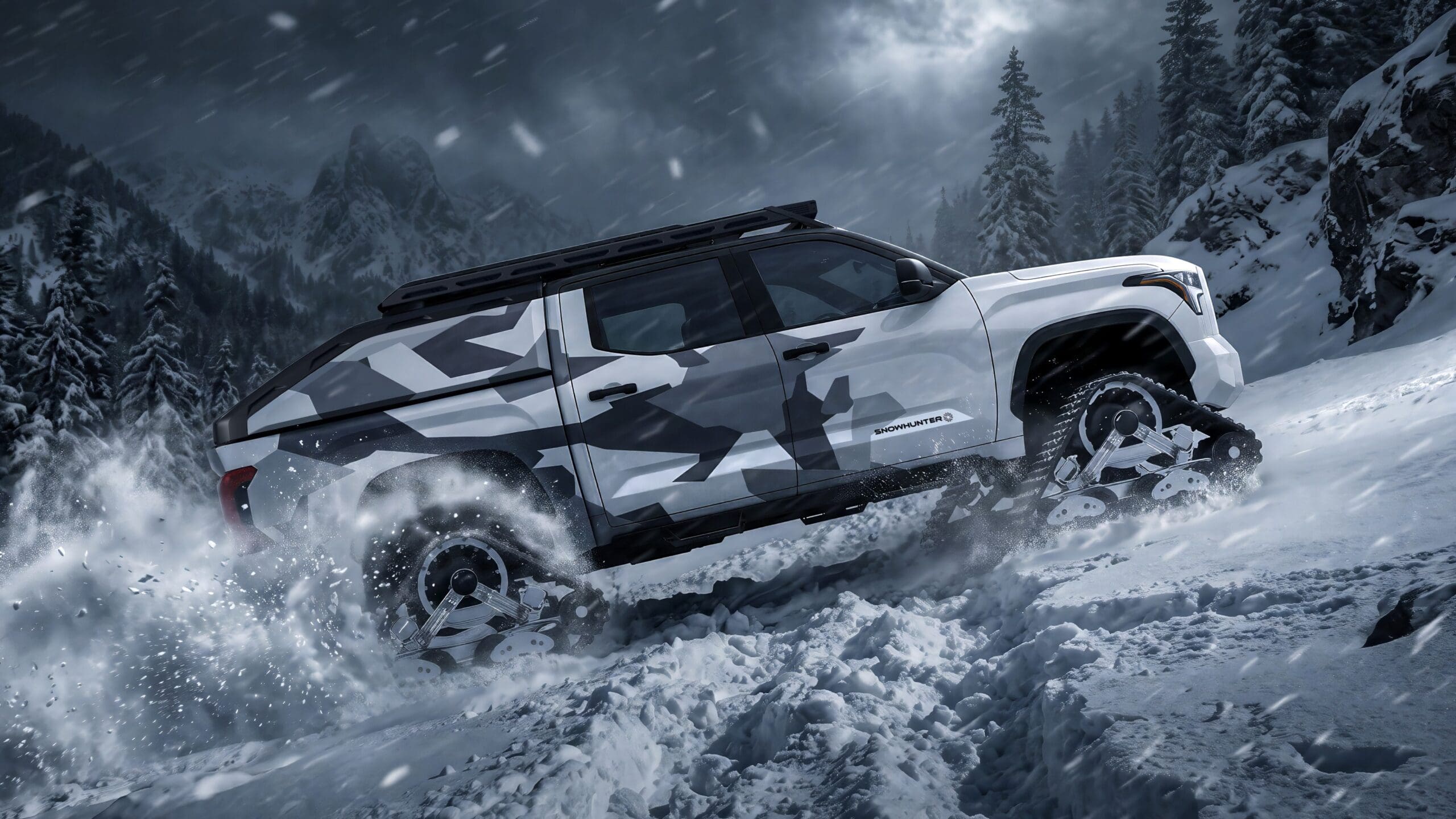
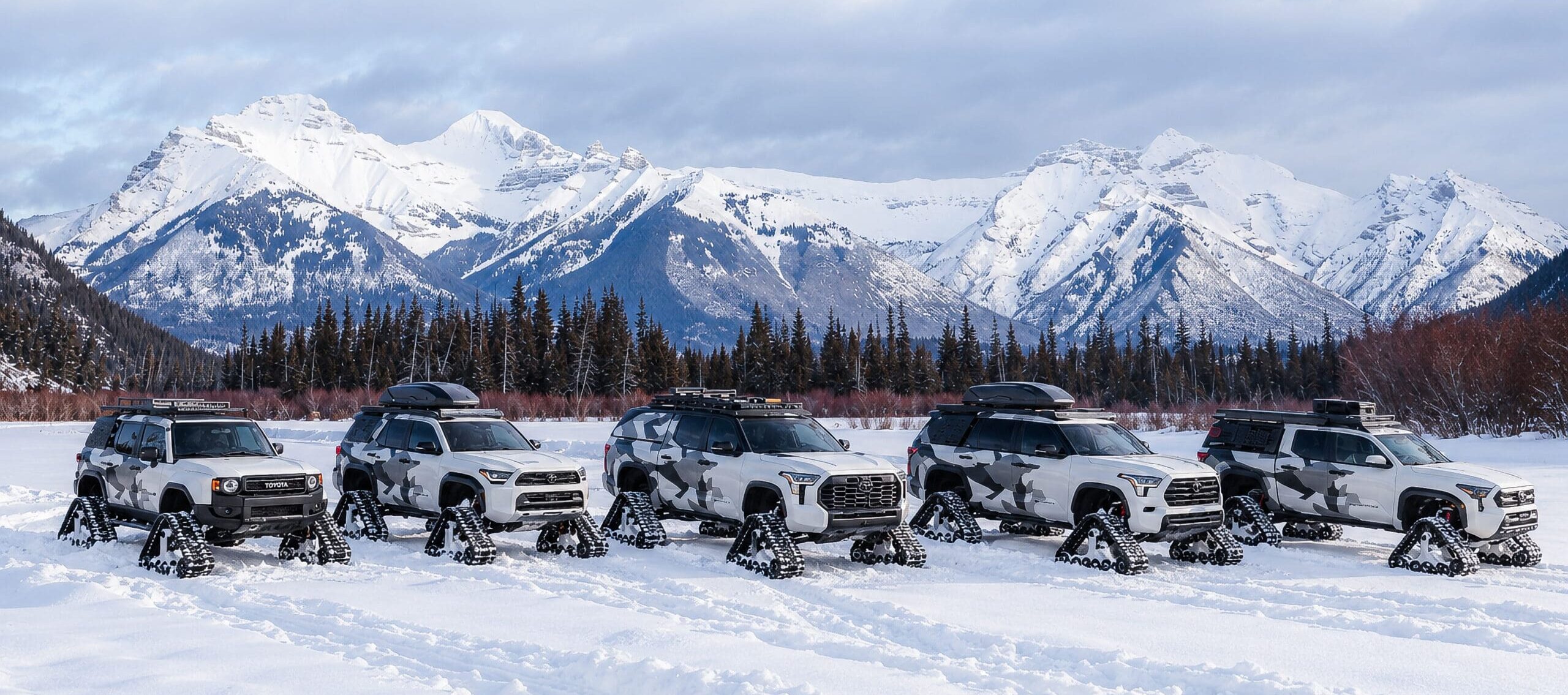
Toyota has announced five tracked Snowhunter concepts for the 2026 SEMA Show, applying a winter exploration theme to the Tundra, Tacoma, 4Runner, Land Cruiser, and Sequoia. Practicality may be a secondary consideration, but that is often the case with concept vehicles. They provide an exercise in creativity, demonstrate what is possible, gauge public interest, showcase components, and offer an excellent marketing opportunity. And here they are, making headlines. Objective achieved.
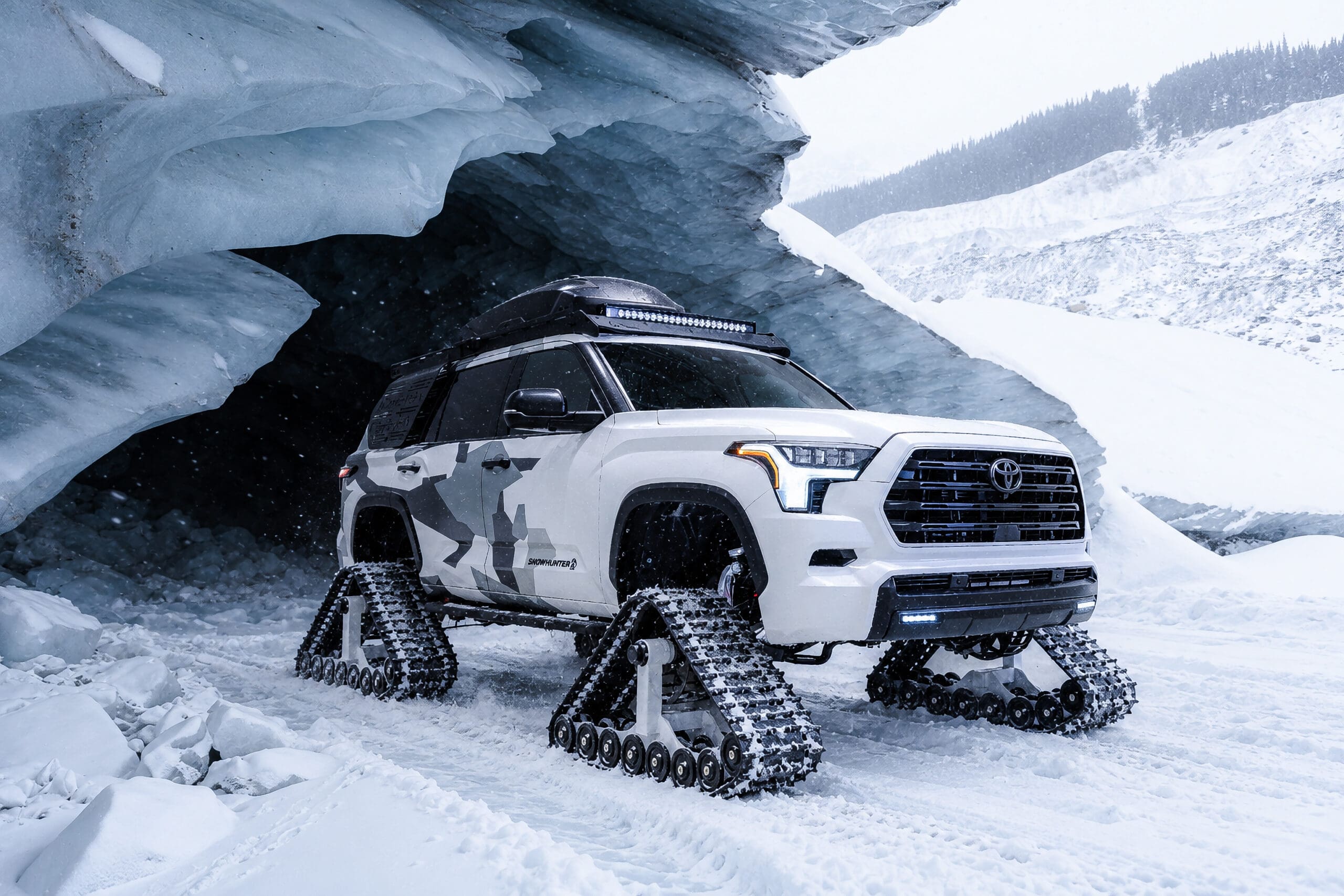
Revealed on October 27, the builds combine snow tracks with cargo systems, protective equipment, and auxiliary lighting. They remain prototypes, with no production versions announced.
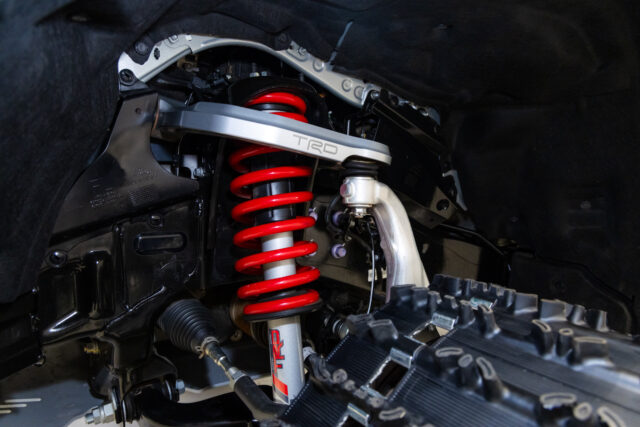
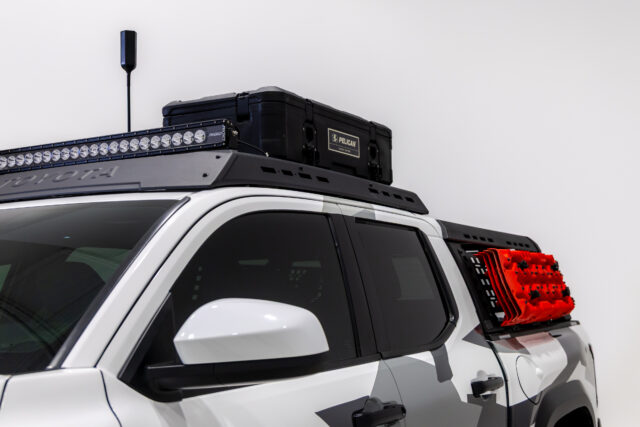
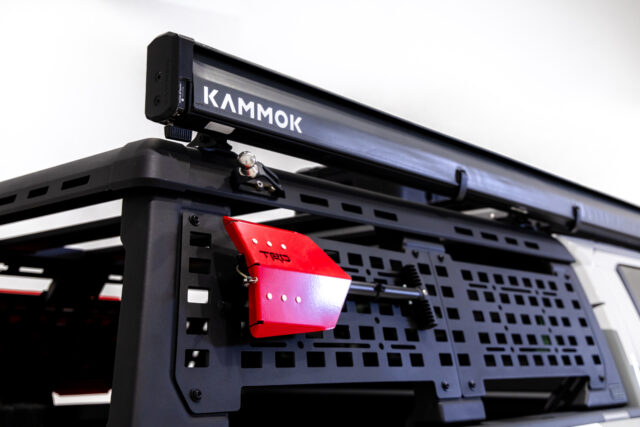
Calty Design Research in Ann Arbor, Michigan, led the design. Shared features include camouflage, gloss-black accents, white powder-coated tracks, Rigid lighting, and Toyota Genuine Parts and TRD lift components. The Tundra adds a TrailLift Pro Rack System Concept with an upper rack that lowers to simplify loading bulky equipment. The Tacoma carries roof and bed racks, MOLLE panels, an awning, cargo storage, recovery equipment, and bed lighting.
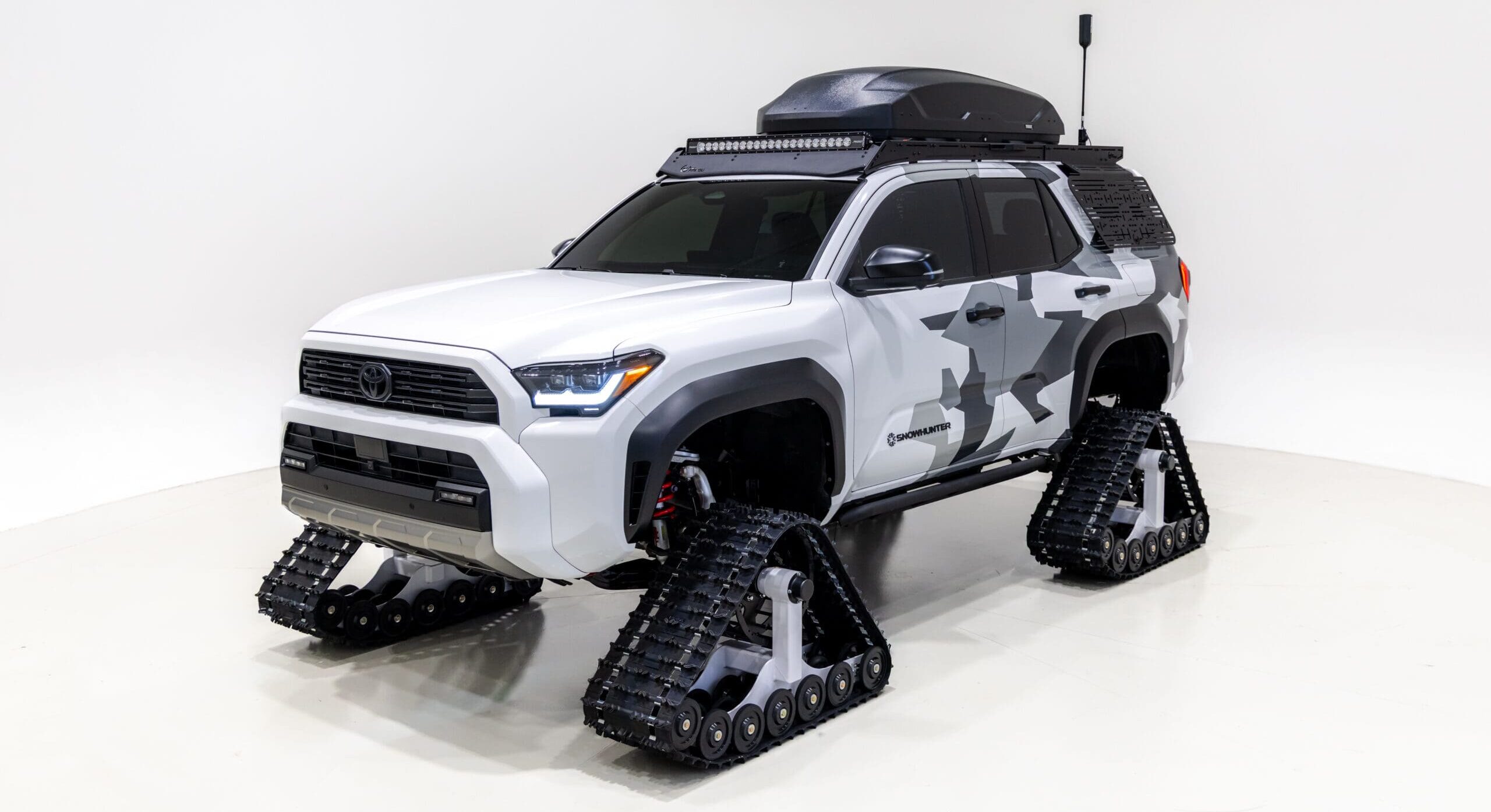
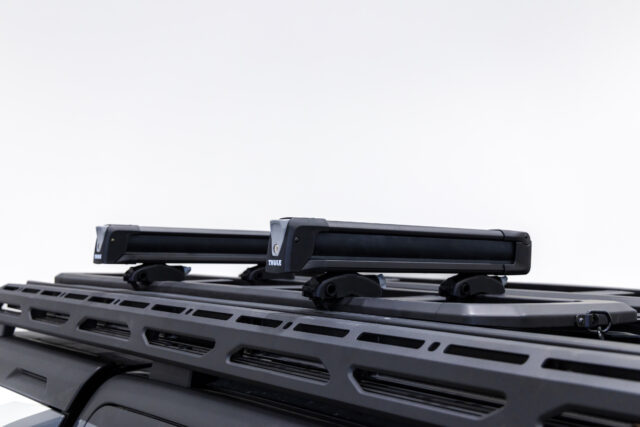
The SUV builds emphasize external storage and protection. The 4Runner combines rock rails with a Prinsu roof rack and Thule Pulse 2 cargo box. The Land Cruiser receives rock rails, skid plates, a Prinsu roof rack, and a Thule SnowPack ski carrier. The Sequoia uses a TRD front skid plate, cast-aluminum running boards, a Prinsu roof rack, and a Thule Pulse 2 cargo box.
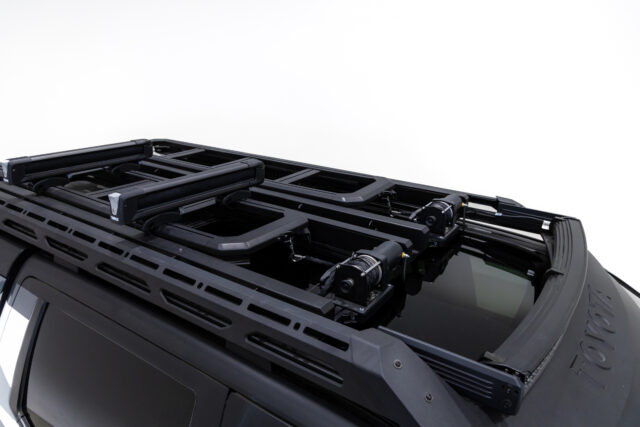
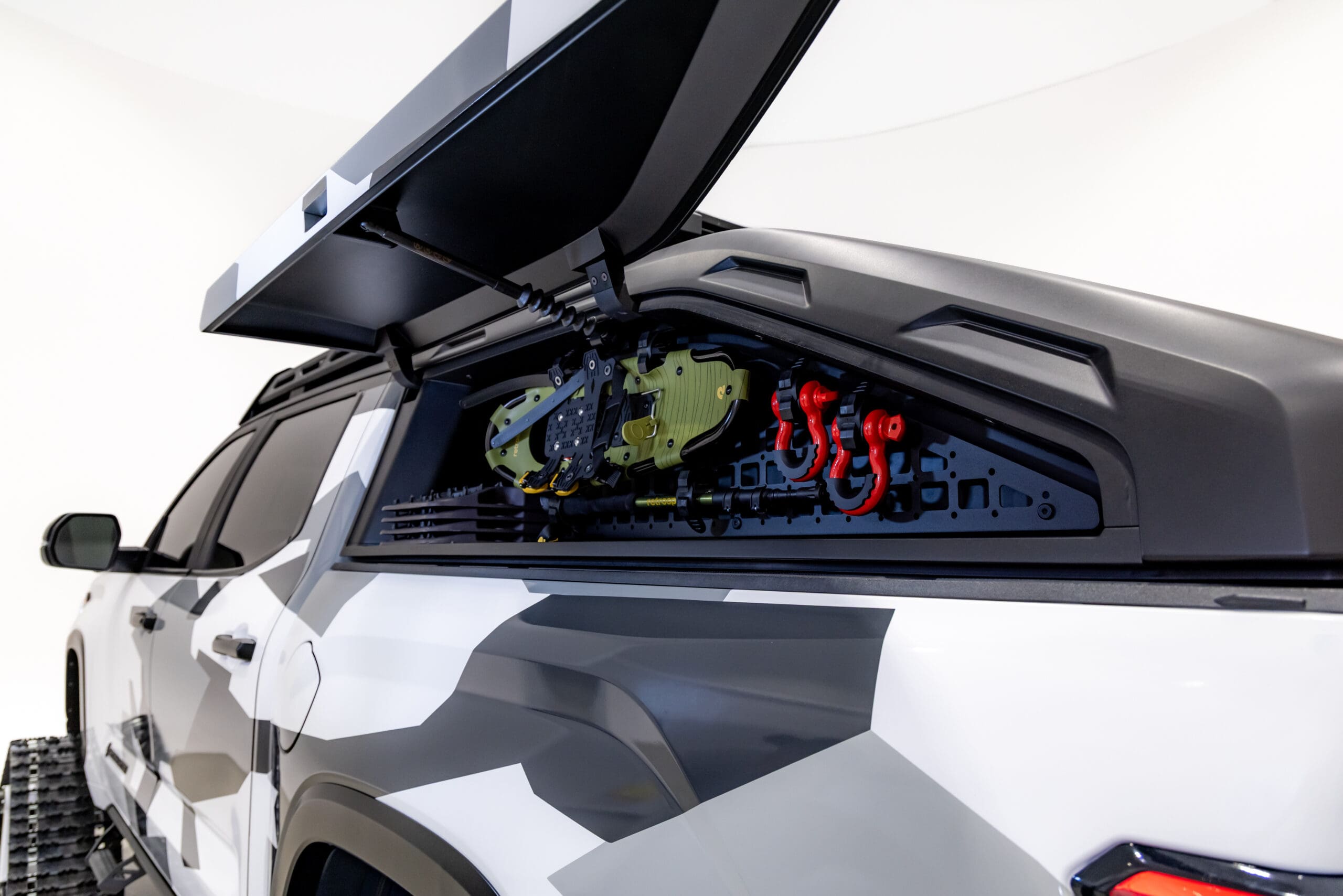
For overland travelers, the most useful idea may be the Tundra’s approach to loading. A tall bed rack creates room for equipment above the load bed, but reaching that equipment can become a daily inconvenience. A rack that lowers could make loading and unloading easier, particularly when traveling alone. Its practical value would depend on details such as load capacity, locking arrangements, operating effort, and compatibility with other bed accessories.
The Snowhunter theme also offers a useful comparison with Toyota’s established Trailhunter approach. Toyota already supplies expedition-oriented equipment on production Tacoma and 4Runner Trailhunter models, including Old Man Emu suspension, steel skid plates, a high-mounted air intake, and an onboard air compressor. The 2025 Tacoma Trailhunter adds an ARB steel rear bumper and Sport bar, while the corresponding 4Runner carries an ARB roof rack. Those vehicles provide a factory-equipped starting point for conventional overland travel.
Toyota’s original Tacoma Trailhunter development illustrates how closely accessories can be integrated into a production vehicle. The company worked with ARB on suspension, recovery points, and cargo equipment, including 2.5-inch Old Man Emu position-sensitive shocks with rear remote reservoirs. It also offered an accessory full bed rack for additional camping equipment. The Snowhunter concepts take those familiar storage and protection ideas in a more specialized, winter-focused direction.
Evaluating that configuration requires more than an equipment list. A winter expedition vehicle must accommodate its occupants, recovery gear, shelter, and supplies without exceeding its load limits. Track-equipped concepts also raise questions about transport between trailheads, maintenance requirements, and operation across changing surfaces. The answers would help determine whether a similar build suited an extended expedition or primarily served a fixed winter recreation area.
Should Toyota ever commit these vehicles to a proper test of people and machinery, there are more than a few capable expedition travelers who would welcome the opportunity to point them toward either pole. Whether the vehicles could complete such a journey remains an open question, but the prospect captures the appeal of a concept vehicle: the chance to see an ambitious idea take physical form.
Read More: Overland News of the Week, October 23, 2026
Our No Compromise Clause: We do not accept advertorial content or allow advertising to influence our coverage, and our contributors are guaranteed editorial independence. Overland Collective may earn a small commission from affiliate links included in this article. We appreciate your support.
