


“I don’t like sand,” the young Padawan declared. “It’s coarse and rough and irritating… and it gets everywhere.” A true Jedi adventurer would not make such an uninitiated statement. After all, to properly experience sand, one does not fly over it with a speeder. Ripping through it with a 4WD is the civilized approach.
So, when the hosts of the YouTube series Throttle House borrowed a 2024 Land Cruiser Prado from Toyota, they had to test it in the Imperial Sand Dunes in southeastern California. However, near the end of their excursion, they crested a dune with “full send.” When the dune ended, the Cruiser kept going, launching itself more than 10 feet into the air like a Super Hornet off a carrier. After gravity took over and the shock and awe wore off, the Top Gun students exited the vehicle and spotted red fluid dripping onto the sand—a broken radiator.
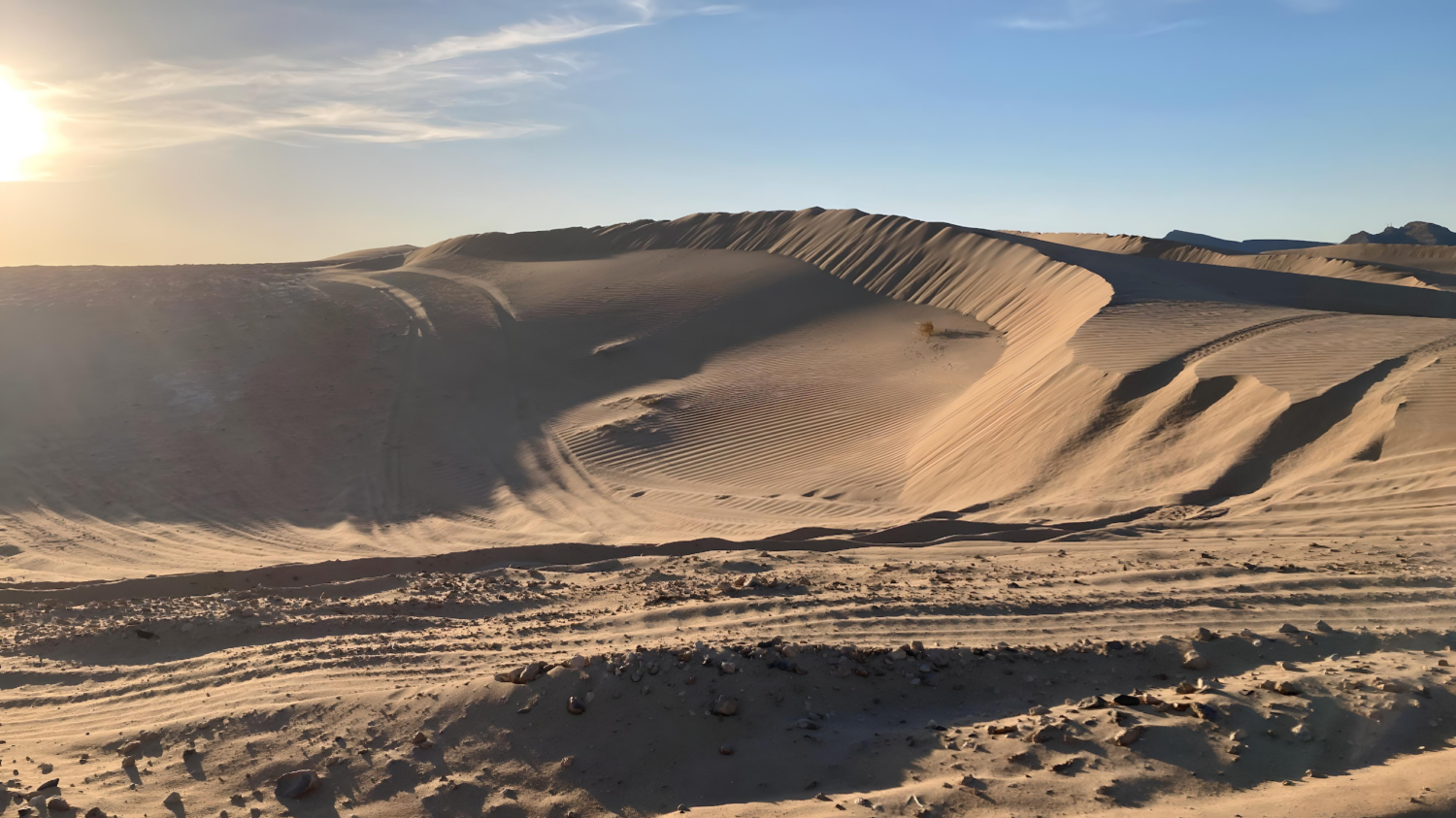
Experienced drivers will tell you the formula for successfully driving on dunes is the combination of power management and terrain prediction. A miscalculation with the former will bog you down, while a failure with the latter will fling you airborne.
Sand is the most dynamic driving surface because it is constantly changing with the weather. Wind, air temperature, precipitation, and humidity modify the sand’s drivability features. In addition, each vehicle that drives over it alters it even further. Mastering it requires skill. “It’s a chess match, much like snow,” Scott Brady observes. Like snow, gentle driver inputs are key to maintaining momentum to avoid getting bogged.
Dune seas are also known as ergs, a French loanword derived from the Algerian Arabic word ʿirq (عرق; “dune field”). Many years ago, I had the opportunity to travel to the Erg Chebbi along the Morocco-Algerian border as part of a college study abroad program. My first experience with “big sand” followed a two-hour ride on a temperamental camel. At a Berber campsite, I clambered bowlegged to the summit of an 800-foot dune and surveyed the stunning landscape as the sun sank below the horizon. Golden-orange sand from the top of that dune resides in a plastic water bottle on my bookcase.
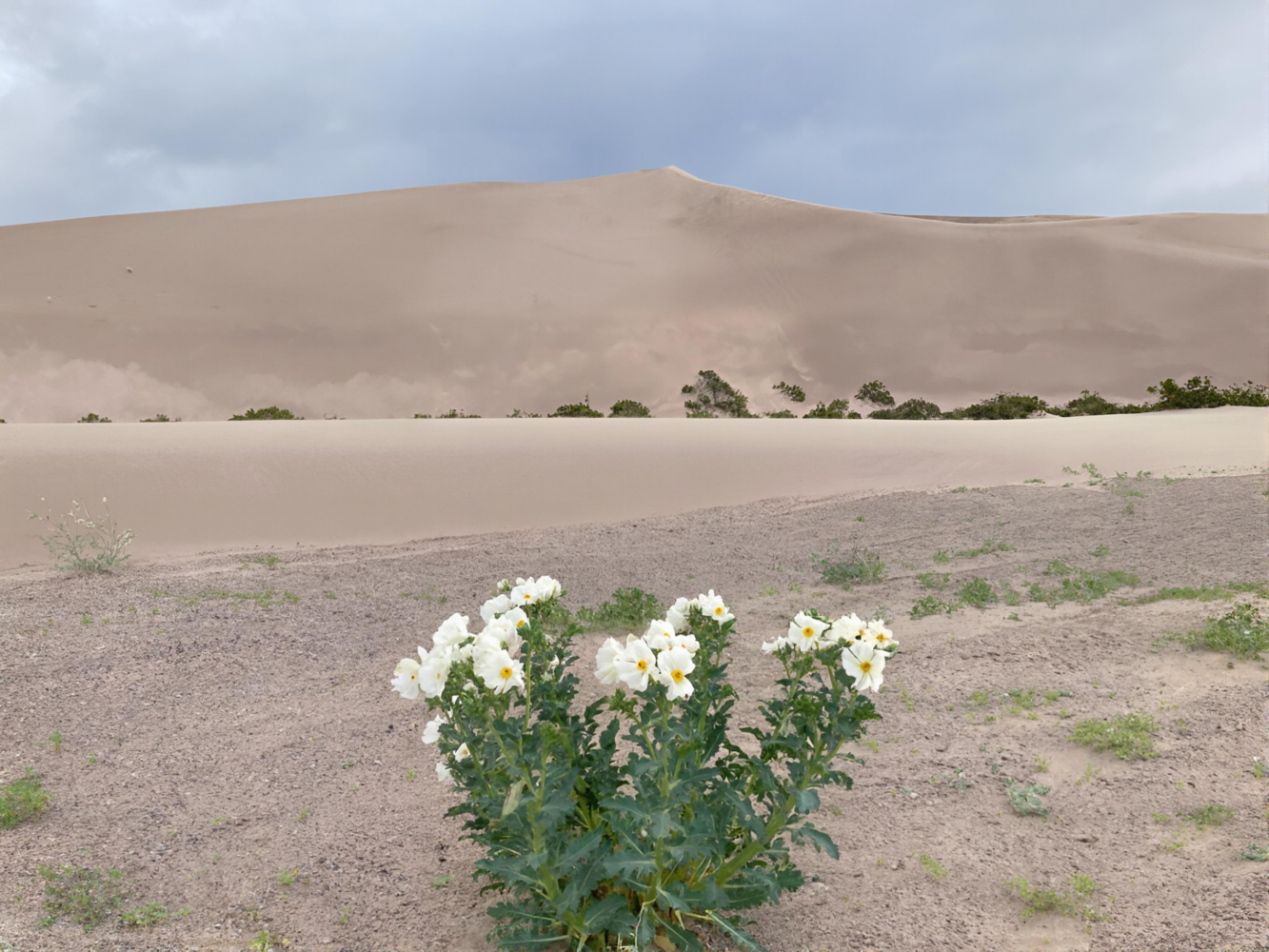
However, one does not have to travel to Africa—although you should—to experience ergs. For the North American overlander, there are several ergs that are accessible for a range of outdoor activities. If you haven’t spun your tires or sunk your boots into a dune’s golden spine, you’re missing one of overlanding’s most surreal playgrounds. Here are examples of where you can feed the spirit of adventure on your next excursion.
Great Sand Dunes National Park, Colorado
Nestled in the heart of southern Colorado, the Great Sand Dunes National Park is a sprawling, mesmerizing expanse of rugged beauty and awe-inspiring landscapes. The park boasts North America’s tallest sand dunes—Star Dune and Hidden Dune—which rise 741 feet against the backdrop of the 14,000-foot snow-capped peaks of the Sangre de Cristo Mountains. Plan on a six- to nine-hour quadricep-burning hike if you want to trek there.
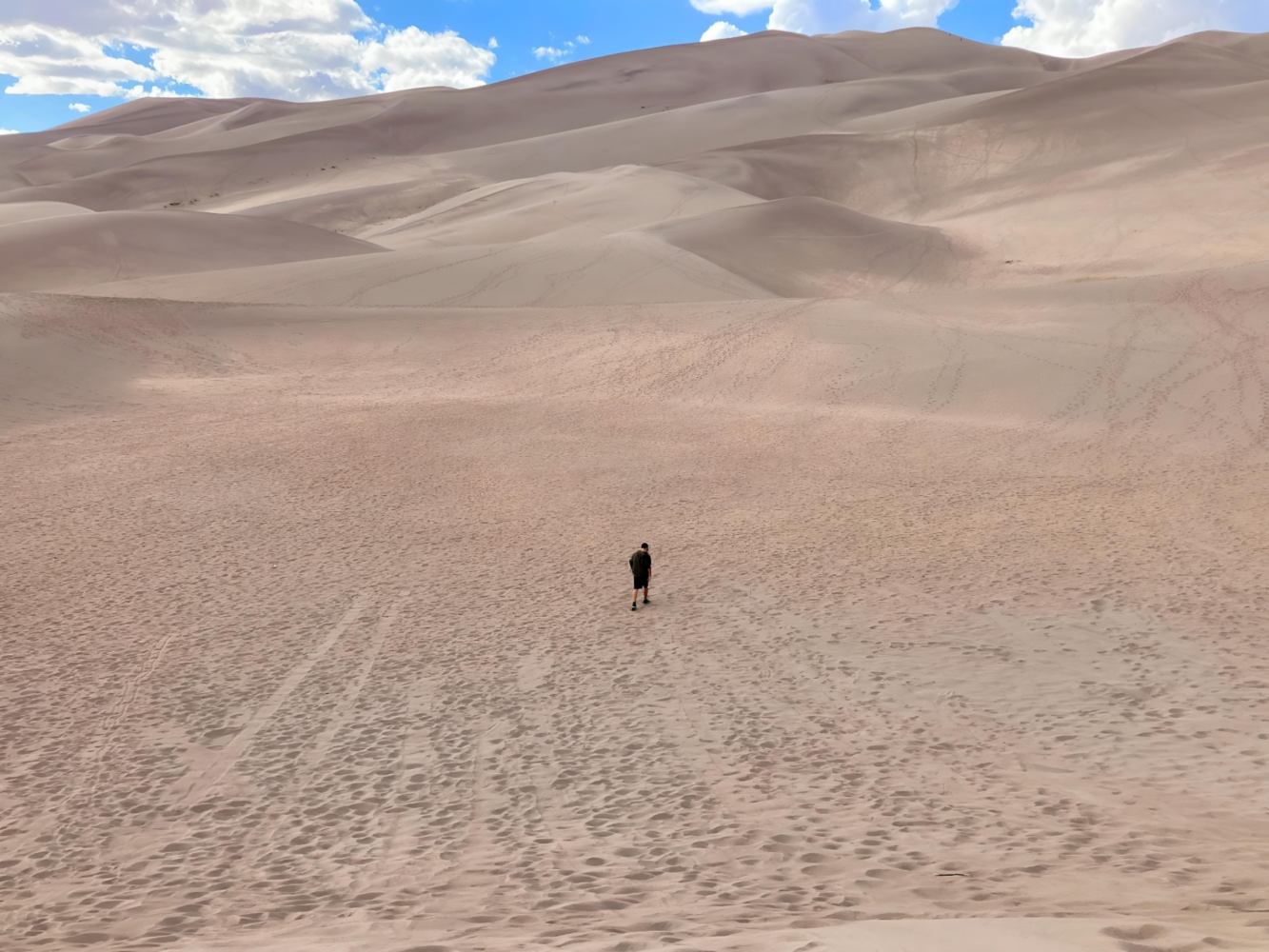
Spanning more than 30 square miles, the park offers vast and stark contrasts. From the golden, sunlit sand ridges to the verdant, cool embrace of Medano Creek—which flows seasonally—the park seems out of place amidst Colorado’s rugged terrain. Its dynamic ecosystem is a sanctuary for over 1,400 species of plants and animals, while offering intrepid adventurers opportunities for hiking its 44 miles of trails, sandboarding, and stargazing.
Nellis Sand Dunes, Nevada
Just a short drive from the glitz and glamour of Las Vegas, the Nellis Dunes Recreation Area spans over 10,000 acres of rugged desert terrain, offering an adrenaline-pumping playground for off-road enthusiasts. The area has an extensive network of trails that wind through striking landscapes of dramatic ridgelines, rocky outcrops, and dunes. Despite only reaching heights of around 50 feet, the dunes nevertheless provide some challenging climbs and exhilarating descents for ATVs, dirt bikes, dune buggies, and your 4WD vehicle.
In addition, the Nellis Dunes are also a haven for wildlife, including desert tortoises and various bird species that thrive in this arid environment. The expansive, open skies make it a prime location for breathtaking sunsets and stargazing, adding a touch of natural serenity to a Vegas’ bustling nocturnal scene. This diverse area showcases the stark, untamed beauty of the Nevada desert, offering a perfect escape for adventure seekers and nature lovers alike.
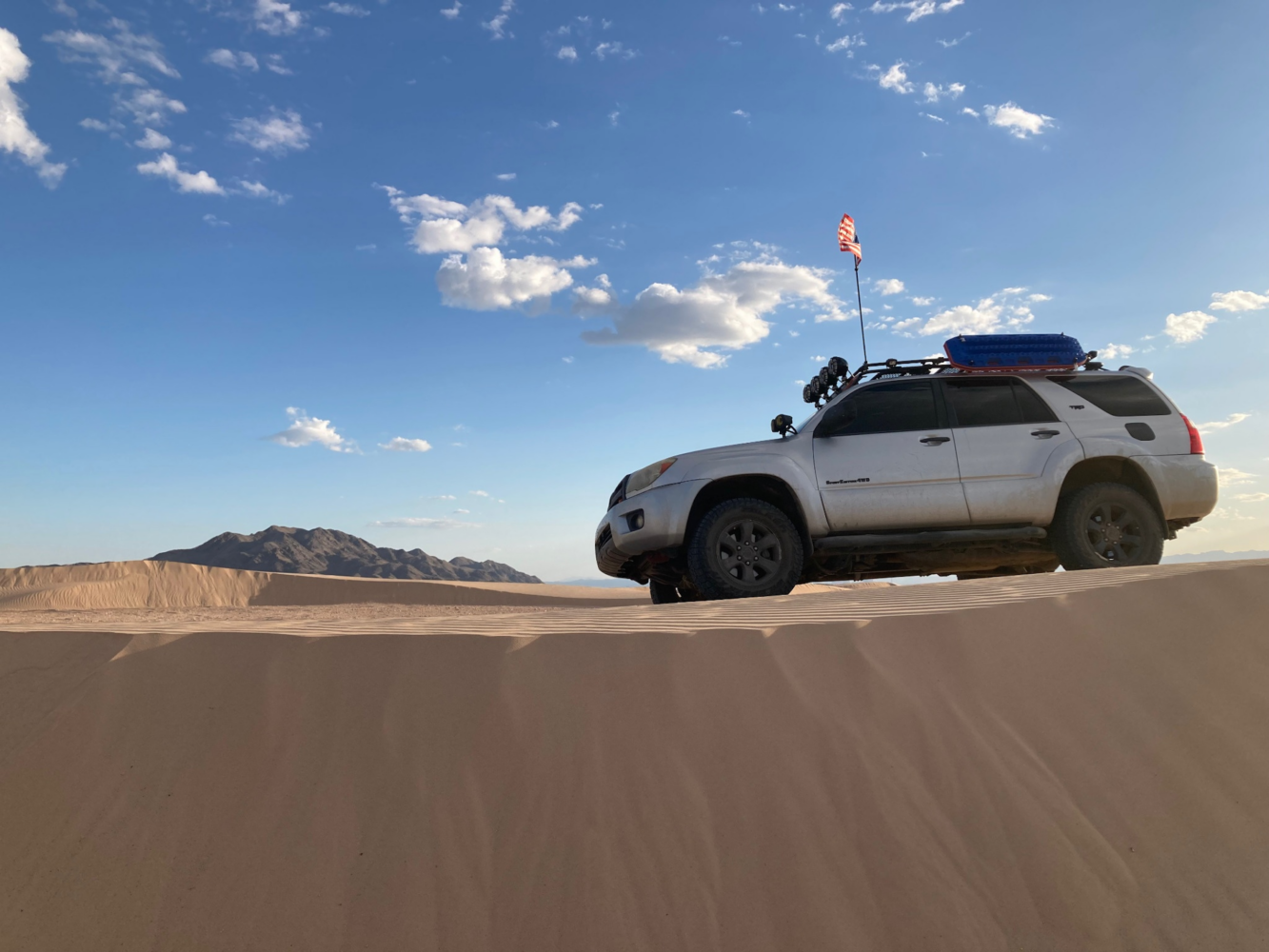
Twice, my work sent me to the Las Vegas area on business with my own vehicle. I had to skip the Strip and hit the dunes instead. The recreation area is on Bureau of Land Management (BLM) land and, unlike the national park options, charges no entry fee. If you visit on a weekday afternoon, there is a good chance of having the place entirely to yourself.
The main forces at play in the sand are flotation, traction, and momentum. One key tip is to drive as slowly as possible, but as fast as necessary. Getting that right is an art form and requires some finesse with the gas pedal. More than a few times, I got it wrong while cresting a dune, only to get bogged just before the top.
On the periphery of the main dunes, there is a network of sandy trails that are fun to zip around on. Some of them have whoop-ti-dos that allow you to test the quality of your suspension, throttle finesse, and nerve. In one section, the sand track becomes a sinusoidal half pipe, alternating with off-camber turns to the left and then to the right in several iterations. I found ripping through this at speed more fun than going to Busch Gardens.
Amargosa Sand Dunes, Nevada
Like the Nellis Dunes, the Amargosa Sand Dunes are also on BLM land without an access fee. About two hours from Las Vegas, the erg is confined to a small five-square-mile section of the Amargosa Valley, situated along Nevada’s remote western border. The sand has been blown to this area from a small bend in the Amargosa River as it winds through the Nevada Desert into California’s Death Valley. Many of the dunes rise to about 100 feet high, but the “Big Dune” towers over them at 500 feet. Although the dunes are dwarfed by Death Valley’s Funeral Mountains, once you get close, you can appreciate their sheer size.

With my coworker staying behind at the hotel to watch the NBA draft, I set out completely alone. A storm was moving out as I arrived, and the fierce wind was too strong for a dune flag. Despite shifting into 4 hi, I was amazed at the resistance I encountered. As my wheels spun, I struggled to get any meaningful momentum. To my chagrin, I discovered that in my exuberance to get rolling, I had forgotten to air down my tires! After the correction, and with windblown sand in my hair, I was soon grinning from ear to ear, like Ralphie on Christmas morning with his Red Ryder air rifle.
Unfortunately, the adjacent Death Valley National Park has an endemic problem with illegal vehicle activity, and a threatened dunegrass plant was damaged by someone dune bashing on the Eureka Dunes, which are closed to vehicular traffic. Thrill-seekers should come to Amargosa instead, though steer clear of a small demarcated area for preserving the habitat of three endangered dune beetle species. This area is beautiful, and the driving was pure bliss.
Hot Well Sand Dunes, Arizona
The small town of Bowie is a 90-minute drive east of Tucson, close to the border with New Mexico. From there, a thirty-minute drive north of town on a dirt road leads into the Chihuahuan Desert to the Hot Well Dunes Recreation Area. The trail narrows at several places due to encroaching desert vegetation. At one point in particular, anything wider than an Austin Mini will get scratched by the thorny creosote bushes. As I drove through, the sound was the cringeworthy combination of nails on a chalkboard and the screeching of a banshee.
Now that my 4Runner has the characteristic “Arizona pinstripe” souvenir, I understand why Ronnie Dahl installed magnetic armor cladding on the sides of his 79-Series Land Cruiser. Full disclosure: you can take a tar road from Bowie to the recreation area, but paved roads are boring.
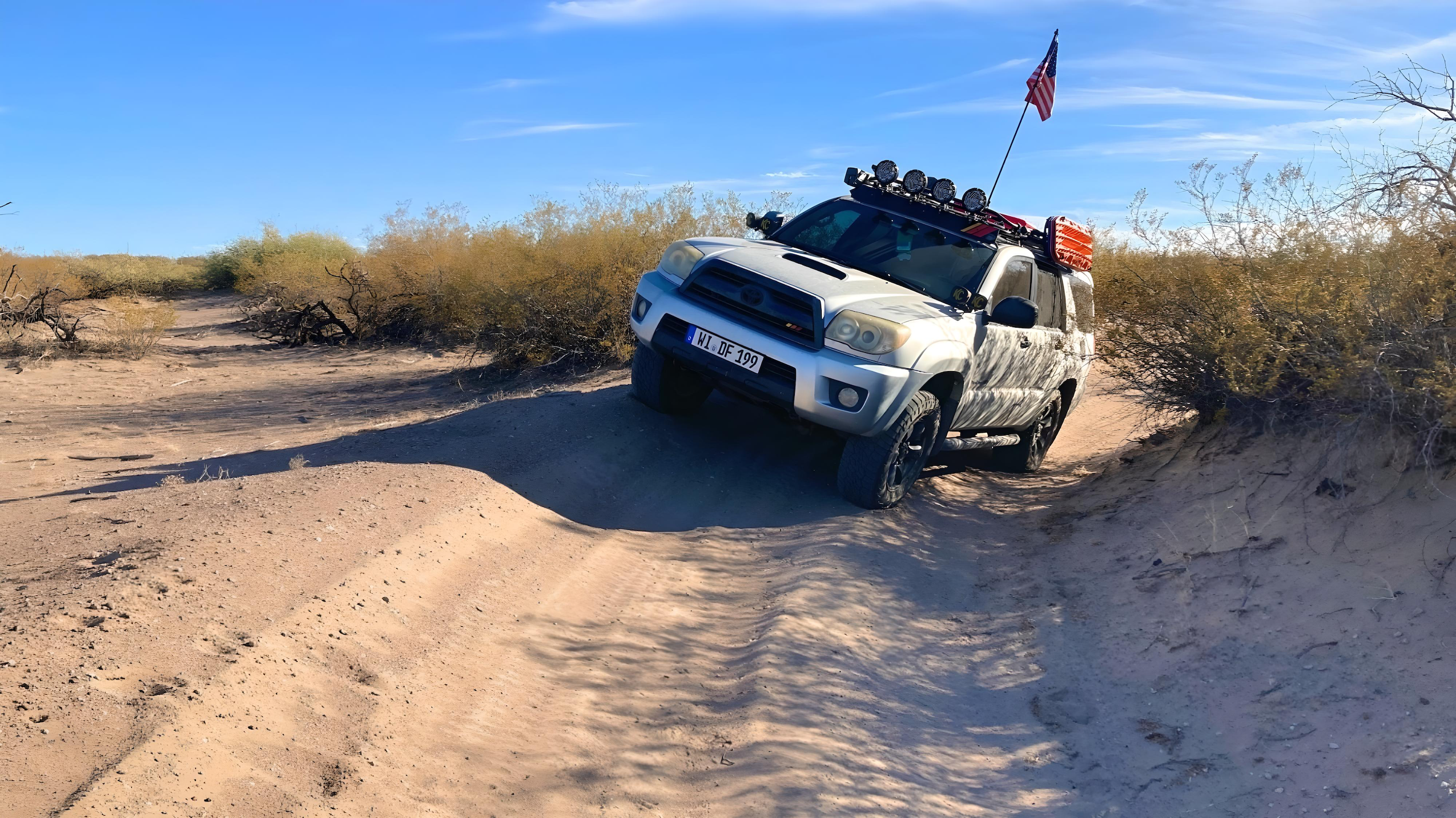
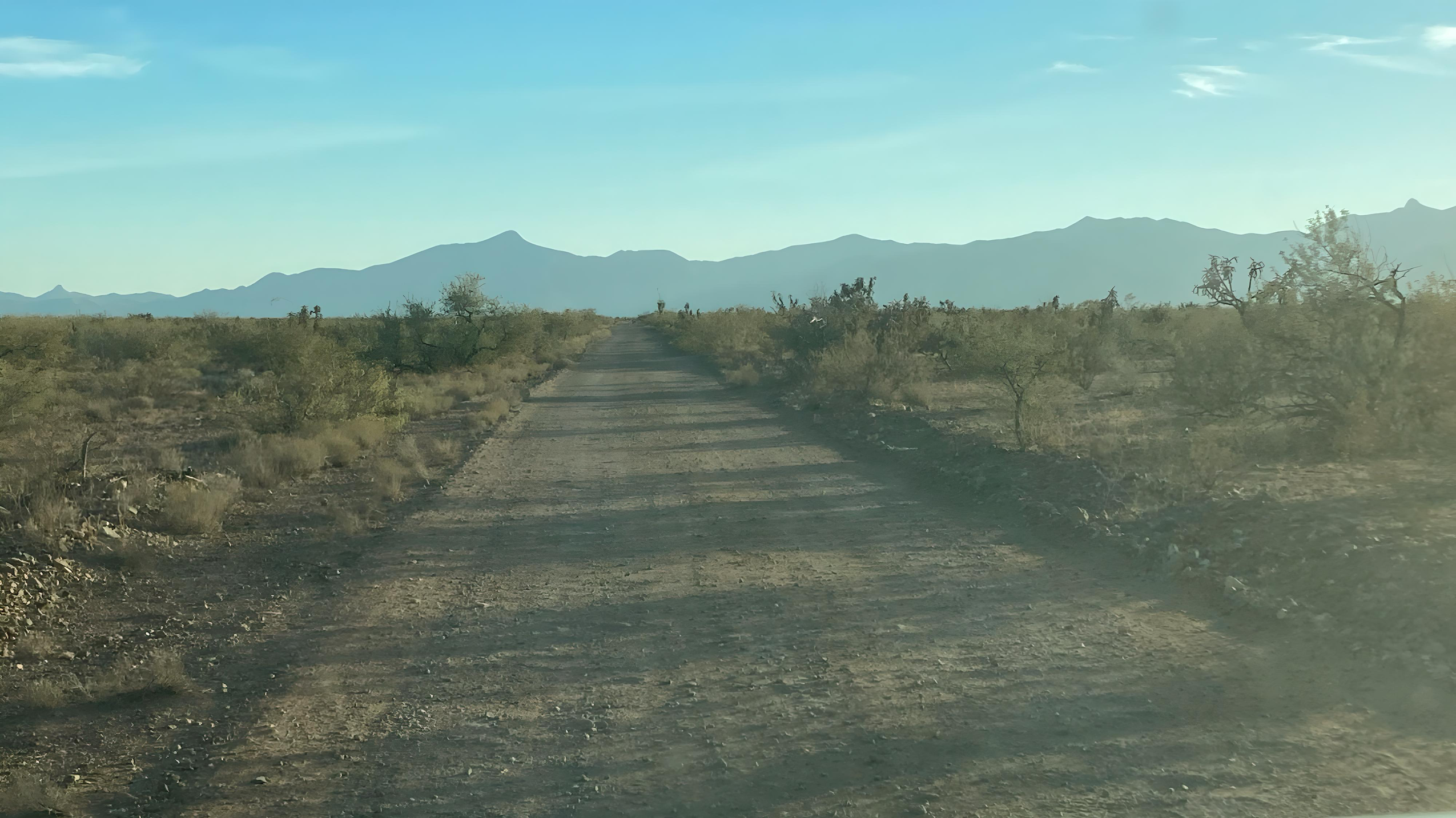
These dunes are also on BLM land, and following the pay station, my first observation was surprise at how much vegetation there was; more than any other erg system I have ever seen. Driving around, I was reminded about the importance of not driving above one’s skill set. Or, in other words, ensure you don’t run out of talent.
The highlight of the day was testing myself on the various ascents. It was here that I facilitated my first self-recovery. The sand was deep on many of the steeper sections, and it did not take long before my tires sank. Shoveling sand, I relearned, is just as backbreaking as shoveling snow. Gratefully, in remote locations like this, Maxtrax pay for themselves the first time you use them.
“Throttle lift” is passive braking by lifting your foot off the gas pedal without hitting the brakes. It allows the resistance of the sand to slow the vehicle, rather than the driver braking, which may cause the front wheels to dig into the sand. Timing the throttle lift with a dune crest takes experience, both with driving and being able to read the conditions of the sand.
The drive out was a beautiful scene, with the Dos Cabezas Mountains silhouetted against the azure sky as I bombed down the trail at 50 mph, kicking up a huge cloud of dust. The wide grin on my face would take me to my final dune destination.
Imperial Sand Dunes, California
The Imperial Sand Dune Recreation Area is the largest erg in California. More popularly known as the Glamis Dunes, the erg was formed by windblown sands of the ancient Lake Cahuilla and extends for more than 40 miles in a north-to-south band, averaging five miles wide. Often reaching heights of 300 feet, the dunes are a magnet for off-highway vehicle enthusiasts. In fact, up to a quarter-million people flock here during the peak winter season. Thus, despite the size of the dune sea, it can get crowded and noisy. However, if you are like me and can tolerate the summer heat, you will enjoy a more tranquil experience.
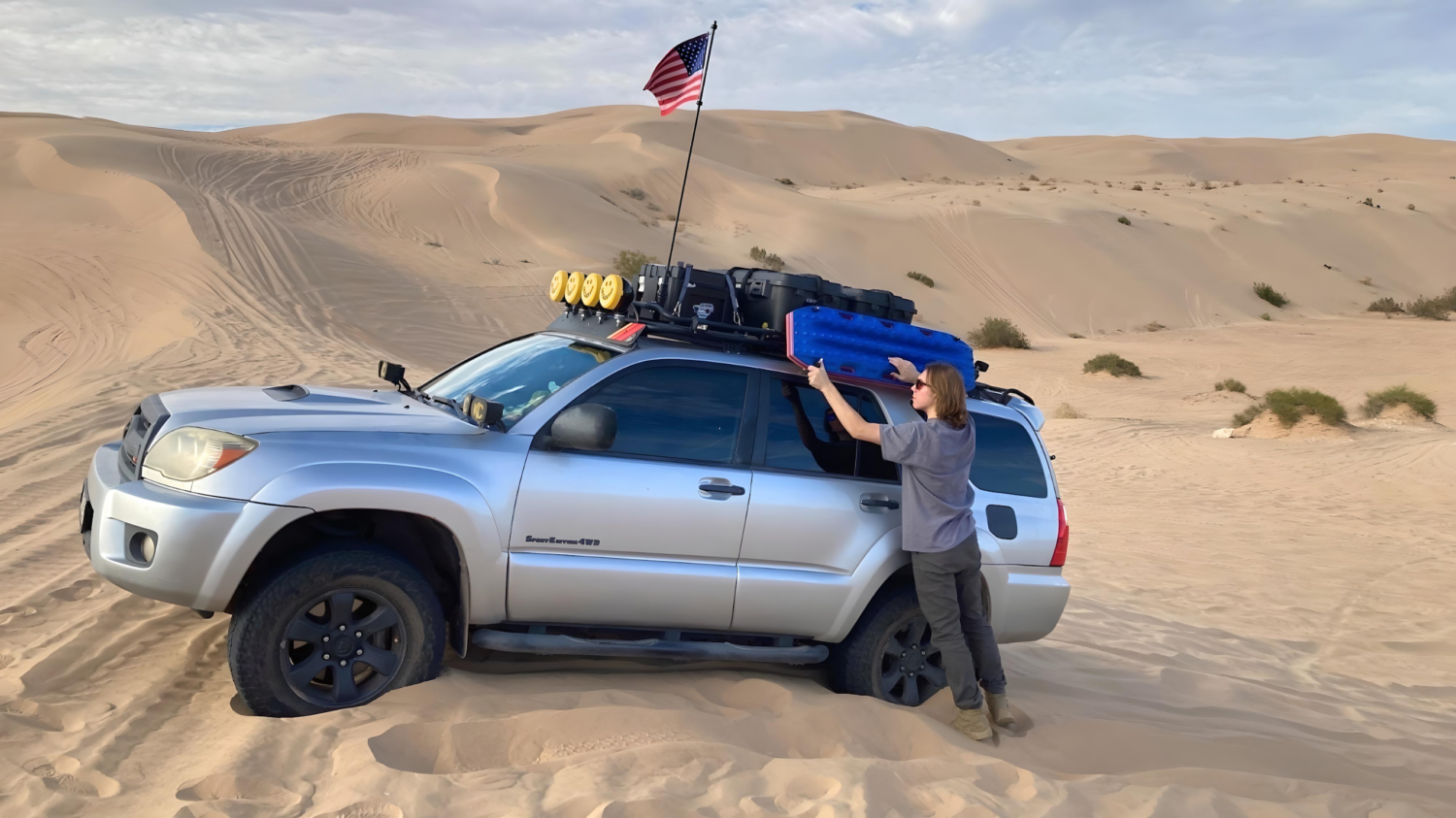
The off-road action takes place in a demarcated recreation area south of Highway 78, near Glamis, that extends south to the US-Mexico border. However, there are some dunes that are entirely closed to motorized vehicle use. The North Algodones Dunes Wilderness offers a serene 26,000-acre alternative to the fast-paced action of the main dunes, where you can enjoy solitude, hiking, and horseback riding.
In the cooler months, BLM charges a “special recreation permit fee,” meaning the “America the Beautiful” pass does not apply. Fifty dollars later, we aired down our tires to 17 psi and set off.
Navigating through dune systems takes time. Plan on getting stuck more than once, and if unsure of your route, survey the area on foot, a small section at a time. We took our time hiking up rises, assessing routes, digging, laying down traction boards, and recovering, just to make progress in unfamiliar terrain. We got stuck at least twice. During the initial recovery, my son Alan could not help but whistle in admiration at how effective Maxtrax are at lifting a vehicle up and out of a spot of bother.
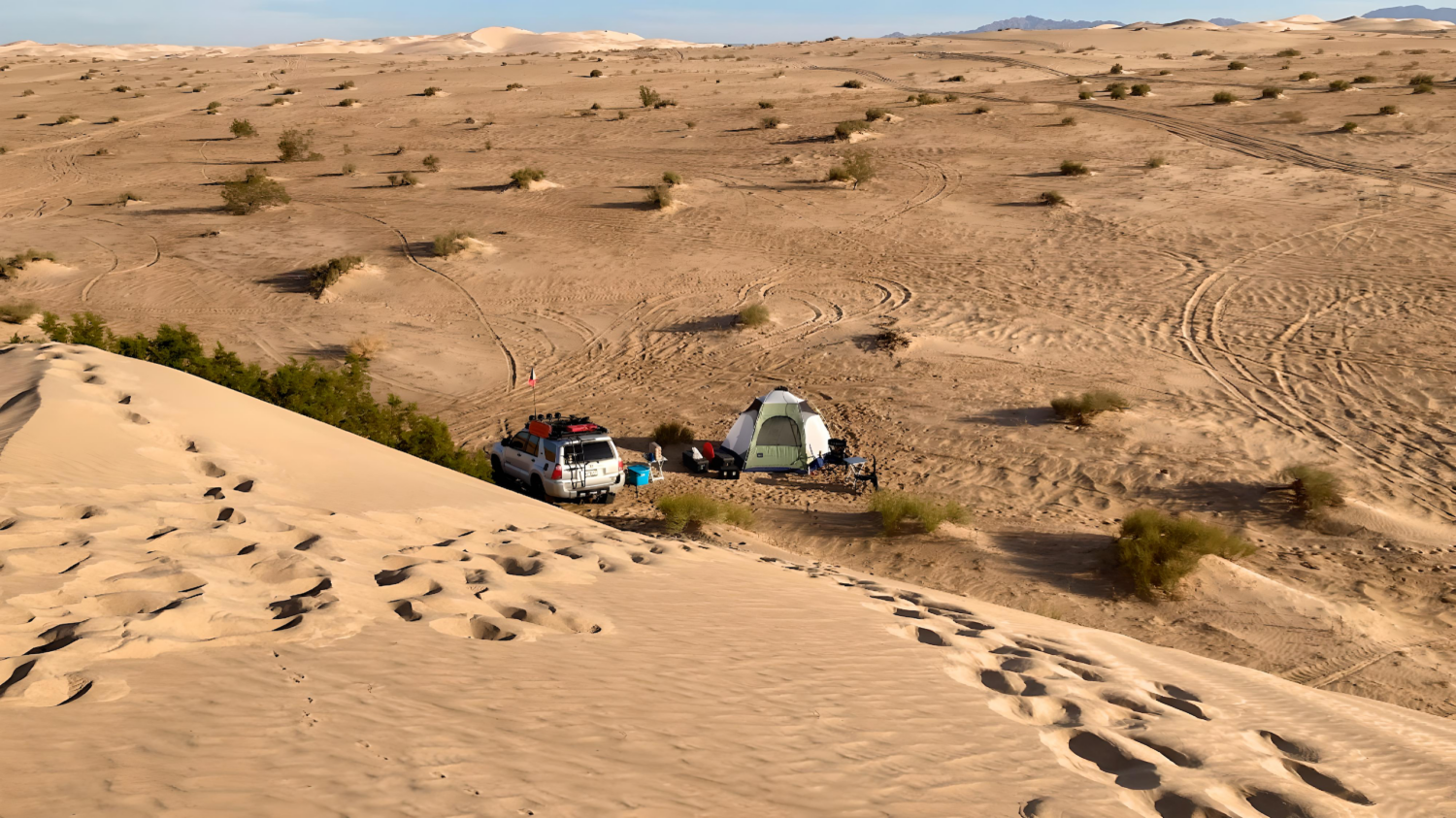
With no desire to register my 4Runner with the FAA, I opted for a more circumspect approach than the hosts of Throttle House. At one point, we found ourselves on a high dune facing a very steep descent. A group of sand rail drivers had congregated on a neighboring dune to observe—or critique—how the lone street-legal vehicle negotiated the obstacle.
Ignoring our audience, I asked Alan: “Are we making good decisions?”
“I think we can make it,” came the reply from a veiled figure in a blue turban.
Alan was wearing my Tuareg tagelmust I had bought in Morocco before he was born. Many Berber tribes wear them for cultural reasons and protection against the biting, windblown sand and oppressive Saharan sun. Since it wasn’t windy that day, I suppose he was going for the Lisān al-Ghayb (لسان الغيب) look from Frank Herbert’s 1965 science-fiction novel, Dune.
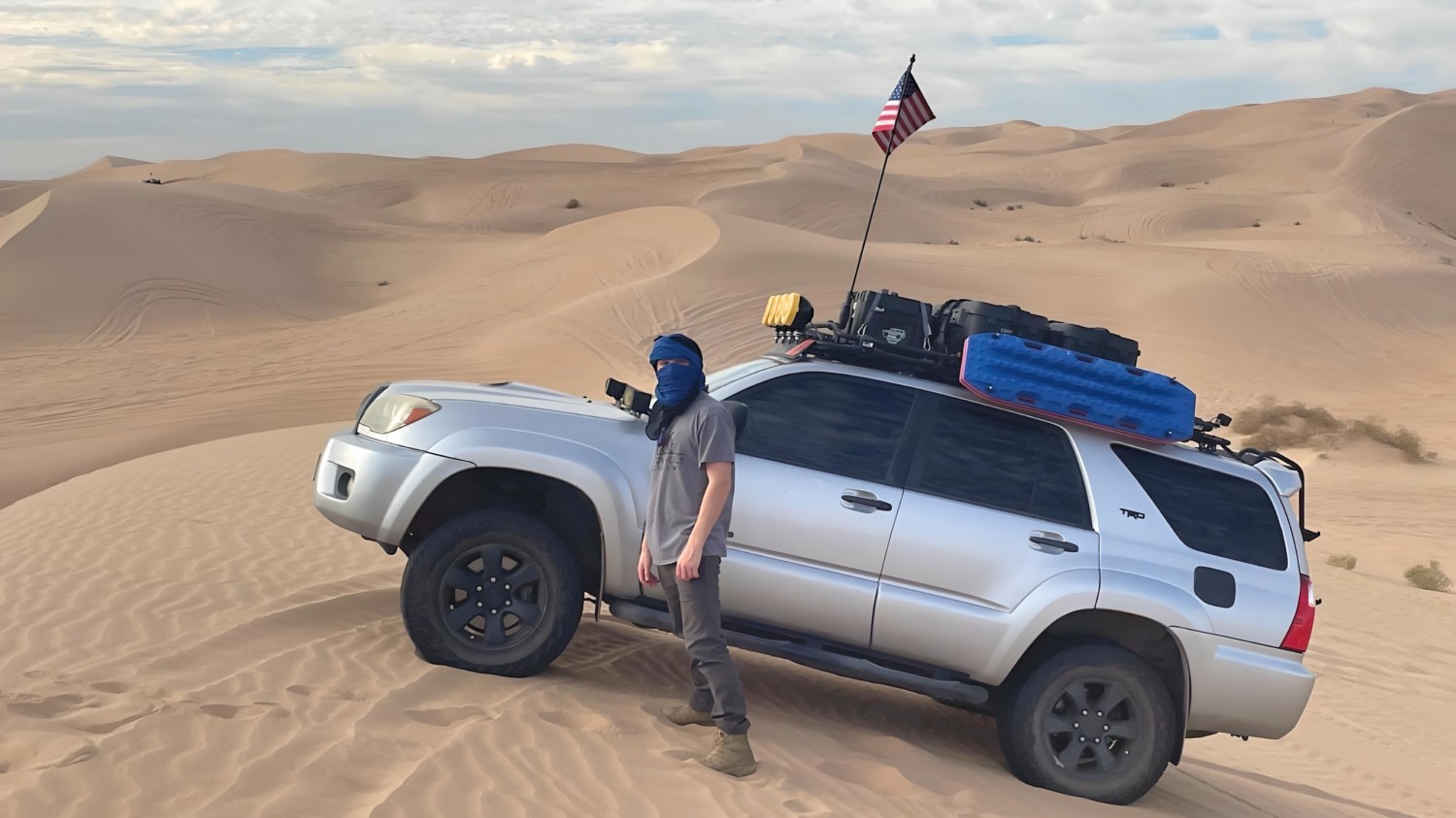
With a preemptive use of Maxtrax and an extra helping of skinny pedal, I crested the dune on the third attempt and managed to keep my 4Runner from fishtailing into a bowl near the bottom. From there, Alan took the wheel on the way to our campsite, hitting the whoop-ti-dos with a tad too much alacrity. Nevertheless, we went to sleep with smiles on our faces. Though we only spent one night here, we have plans to bash these dunes again soon.
From blinding gypsum to roller-coaster sand highways, each erg offers its own flavor of challenge and wonder. More than just scenery, sand dunes are a unique terrain with attitude. With the freedom to chart your own course and test your limits, “Big Sand” delivers a kind of magic that is difficult to replicate. So, on your next adventure, take a warranted detour and relish the throttle therapy.
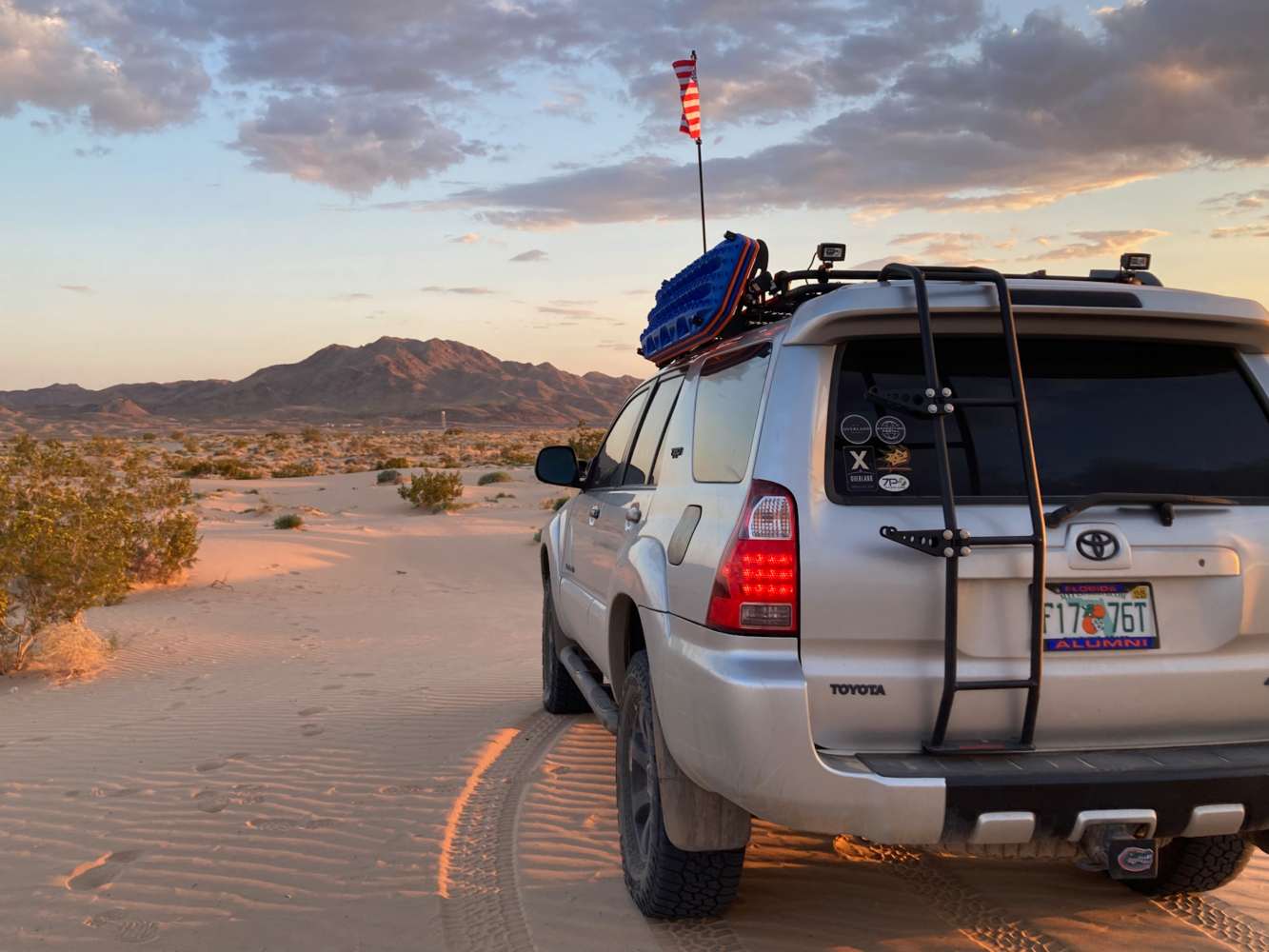
Images: David Harden
Read More: Finding the Heart of Africa
Our No Compromise Clause: We do not accept advertorial content or allow advertising to influence our coverage, and our contributors are guaranteed editorial independence. Overland International may earn a small commission from affiliate links included in this article. We appreciate your support.
