

When King County Search and Rescue (KCSARA), a nonprofit organization that has served Washington State since 1965, heads out on a four-wheel-drive rescue mission, the circumstances are rarely predictable. The team of volunteers must be prepared for any eventuality. KCSARA brings together nine independent member units under one umbrella, creating a coordinated network of motorized and non-motorized specialized teams that can be deployed for diverse emergencies across King County and beyond. Its volunteers respond to wilderness emergencies, conduct searches for missing persons in both urban and rural environments, assist law enforcement agencies with evidence searches, and provide disaster response and recovery when conditions overwhelm traditional services. These teams operate on foot, by vehicle, with mounted horseback units, trained dogs, and through technical rescue capabilities suited for rugged terrain and conditions.
Among KCSARA’s member organizations, King County 4×4 Search and Rescue (KC4X4SAR) fills a vital role in transportation and logistics. Its members operate four-wheel-drive vehicles to move personnel, equipment, and supplies into areas where standard vehicles cannot go. This capability proves indispensable during snowstorms, on forest service roads, and in backcountry terrain that becomes impassable to conventional traffic. The unit also supports disaster response, transporting healthcare professionals, emergency workers, and sometimes even patients when conditions prevent ambulances from reaching their destinations.
KC4X4SAR and KCSARA as a whole remain entirely volunteer-run. Individuals who wish to join undergo a rigorous application process, and once accepted, they contribute not only their time but also their skills and dedication. The organization operates without charging for its services, relying entirely on donations and grants. Its headquarters in Bellevue, Washington, serves as an administrative base, but much of the real work happens on the roads, trails, and backcountry of the Pacific Northwest.
The 4×4 unit’s work is not limited to emergencies. Volunteers support training events, exercises, and community activities, ensuring their skills remain sharp and their equipment reliable. These efforts build resilience across the county and strengthen the connection between the organization and the public it serves.
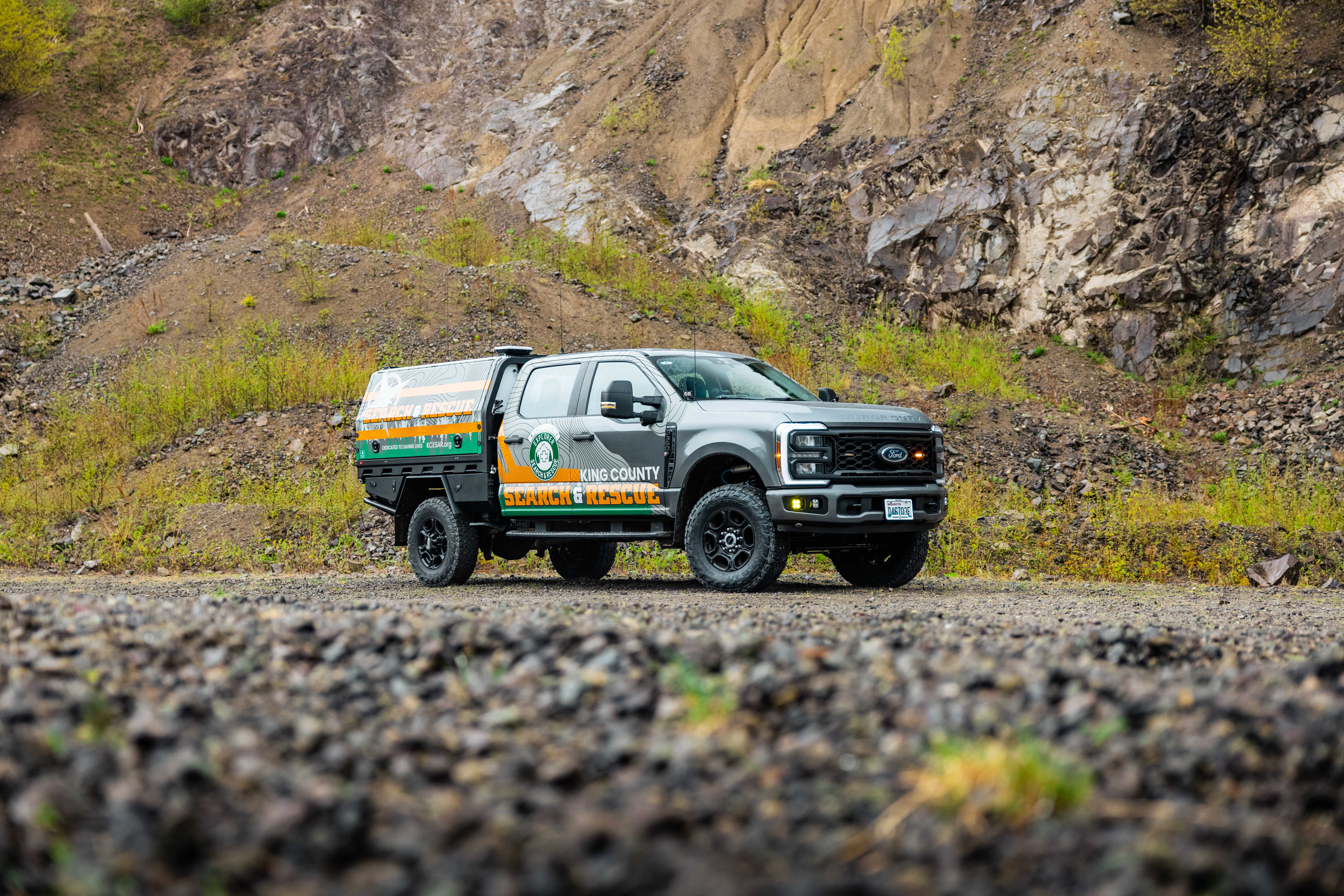
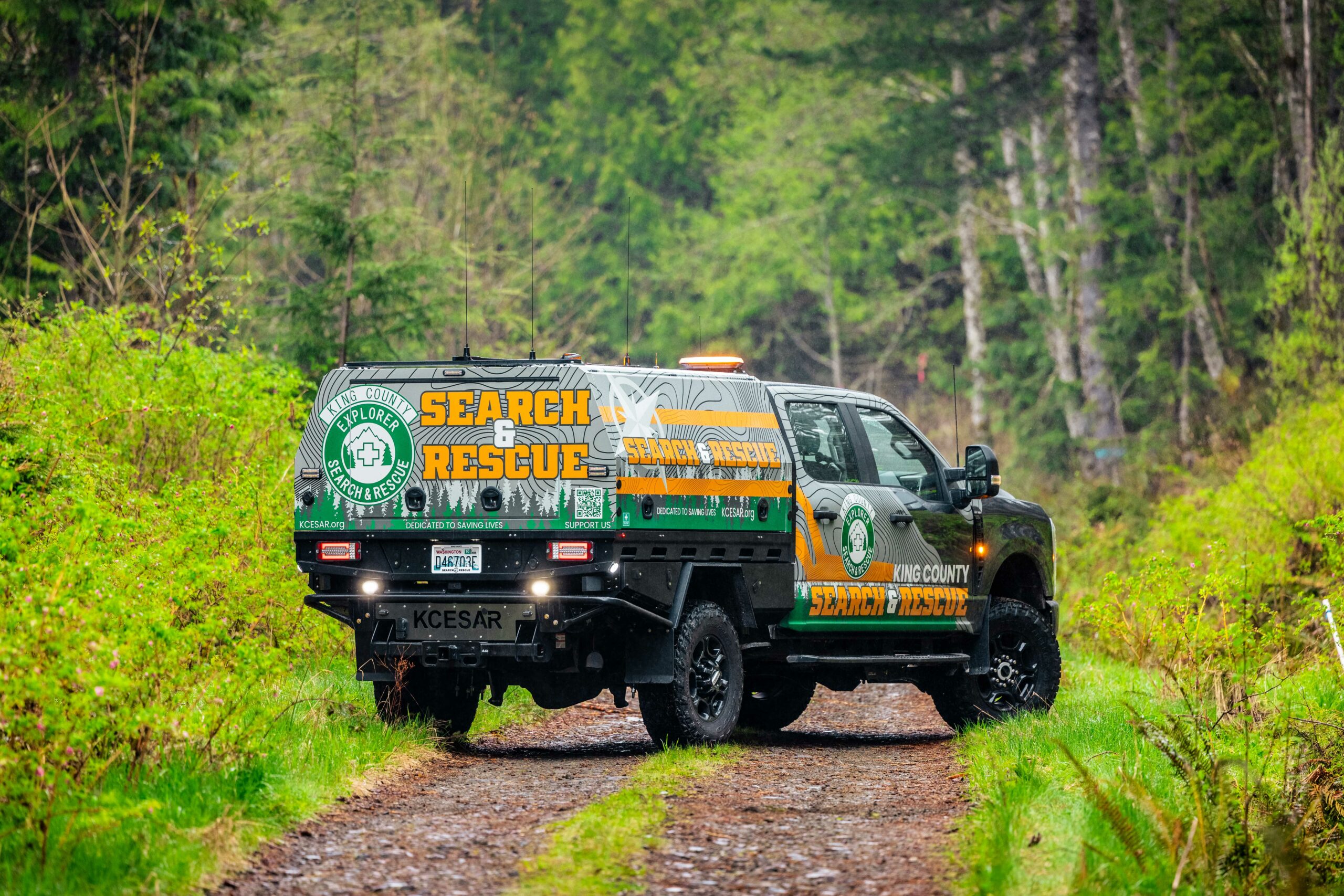
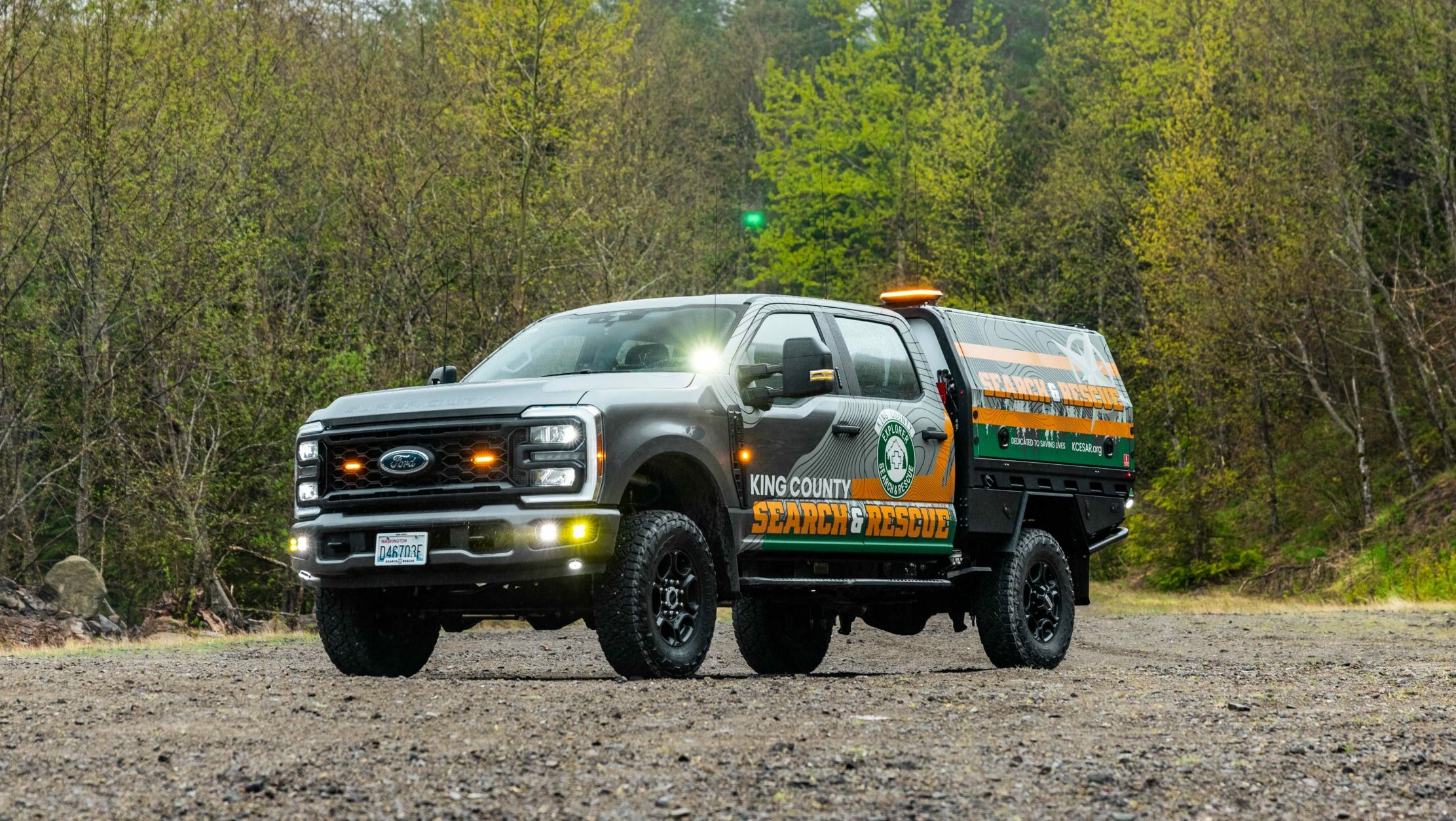
For years, a 2007 Chevrolet 1500 served as an essential element of KCSARA’s 4×4 operations. That truck provided dependable service but eventually showed its age and no longer met the demands of modern operations. Its electrical system struggled to power radios, laptops, and lighting equipment for extended missions. Storage was limited, leaving gear disorganized and difficult to access under pressure. Payload capacity was stretched to its limits, especially when carrying five volunteers along with medical kits, technical rescue equipment, and snow gear. As missions grew in complexity and the demand for reliable transport increased, the need for a modern, purpose-built rescue vehicle became clear. After more than a decade of saving, fundraising, and planning, KCSARA unveiled its new Rescue Truck, a Ford F-350 STX FX4 outfitted with specialized equipment and carefully designed systems to meet the challenges of search and rescue in the Pacific Northwest.
According to longtime member Michael Smith,
“We started saving for a replacement truck for our 2007 Chevy 1500 over 10 years ago. As a volunteer organization, we are really good at rescuing people but not as good at fundraising, so it took some time to hit our goal. Three years ago, we were close to the goal and put the proposal together for the truck and planned out the vision of what we wanted the truck to do for us. Then we hit the go button in September of 2024, ordering the truck and components.”
Fundraising required persistence. While KCSARA receives support from donations and grants, acquiring the resources for such a large purchase tested the patience and dedication of its volunteers. Yet the goal remained steady: a truck that would carry the team into the future, allowing them to save lives more efficiently and safely.
Choosing the Ford F-350 STX FX4 as the base vehicle was a deliberate decision. Payload capacity topped the list of requirements. The truck needed to carry as much as 2,000 pounds of equipment while comfortably seating five passengers. Volunteers also wanted a vehicle that would be manageable for drivers of varying backgrounds. Not every member is an experienced off-road driver, so features like 360-degree cameras and driver assistance systems added reassurance.
Cost considerations guided the final choice of trim level. The team knew they would replace the stock suspension with a custom system tuned for rescue operations. Hence, a mid-level trim that included essential features without unnecessary extras provided the best balance between affordability and adaptability.
Before finalizing the plan, Smith surveyed fellow volunteers to gather feedback on the old truck. They agreed that better organization was critical, with dedicated spaces for every piece of gear. The new build also had to deliver reliable electrical power for extended deployments. Radios, laptops, and lighting systems often outlasted available battery reserves, leaving teams scrambling. Solving these problems became a guiding principle in the design process.
The build began even before the truck itself arrived. Specialist outdoor and off-road companies rallied together to ensure the new rescue truck was built to the highest standard of performance and reliability. Redarc Electronics, Baja Designs, Bead City Detailing, Mule Expedition Outfitters, WrapJax, Nitto Tire, Carli Suspension, and Auburn Car Repair and Offroad each contributed their expertise, products, and services to transform the vehicle into one of the most capable and efficient search and rescue trucks in the region. Their support was instrumental in equipping the truck to meet the demanding challenges of rescue operations in all conditions.
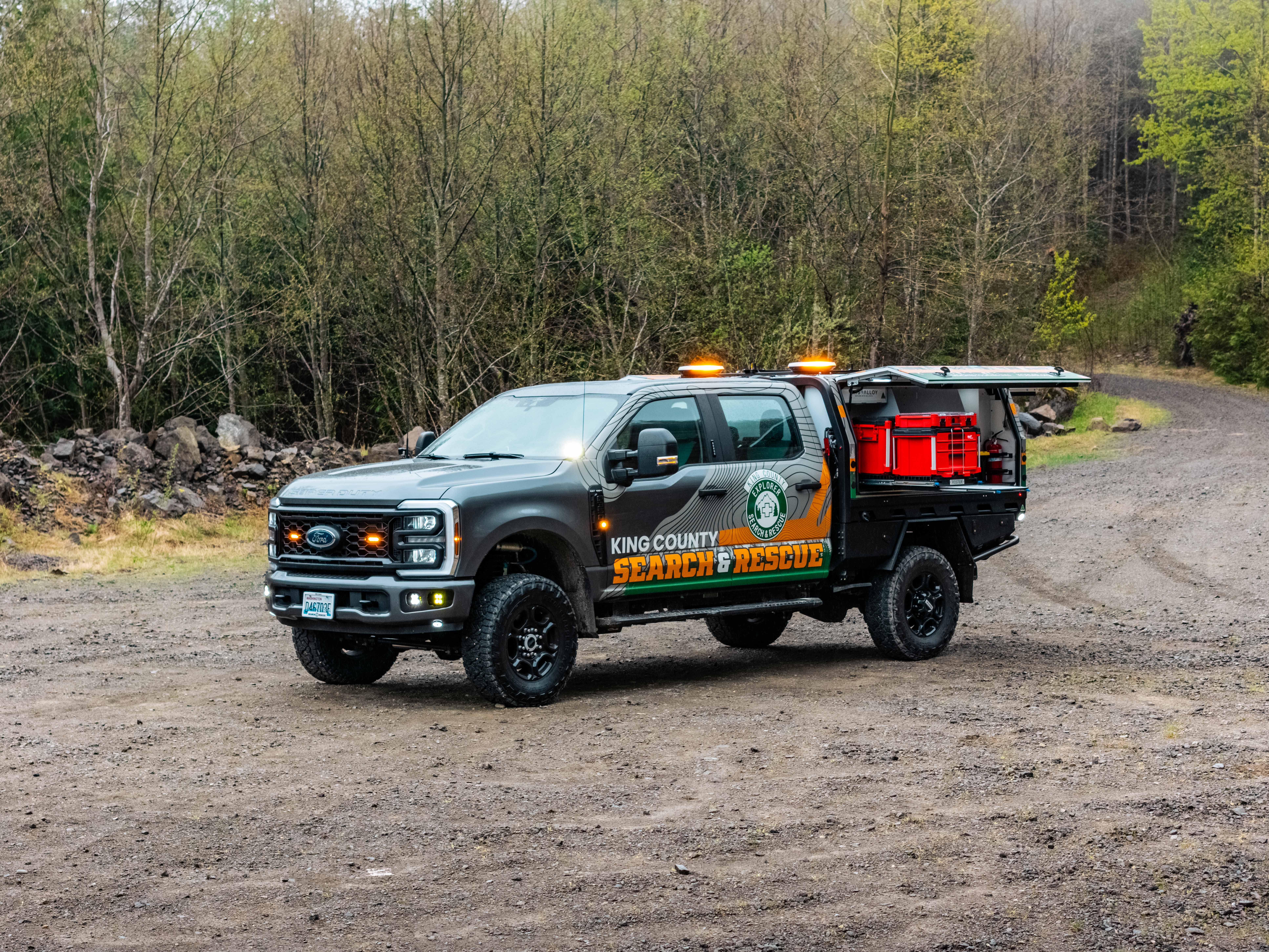
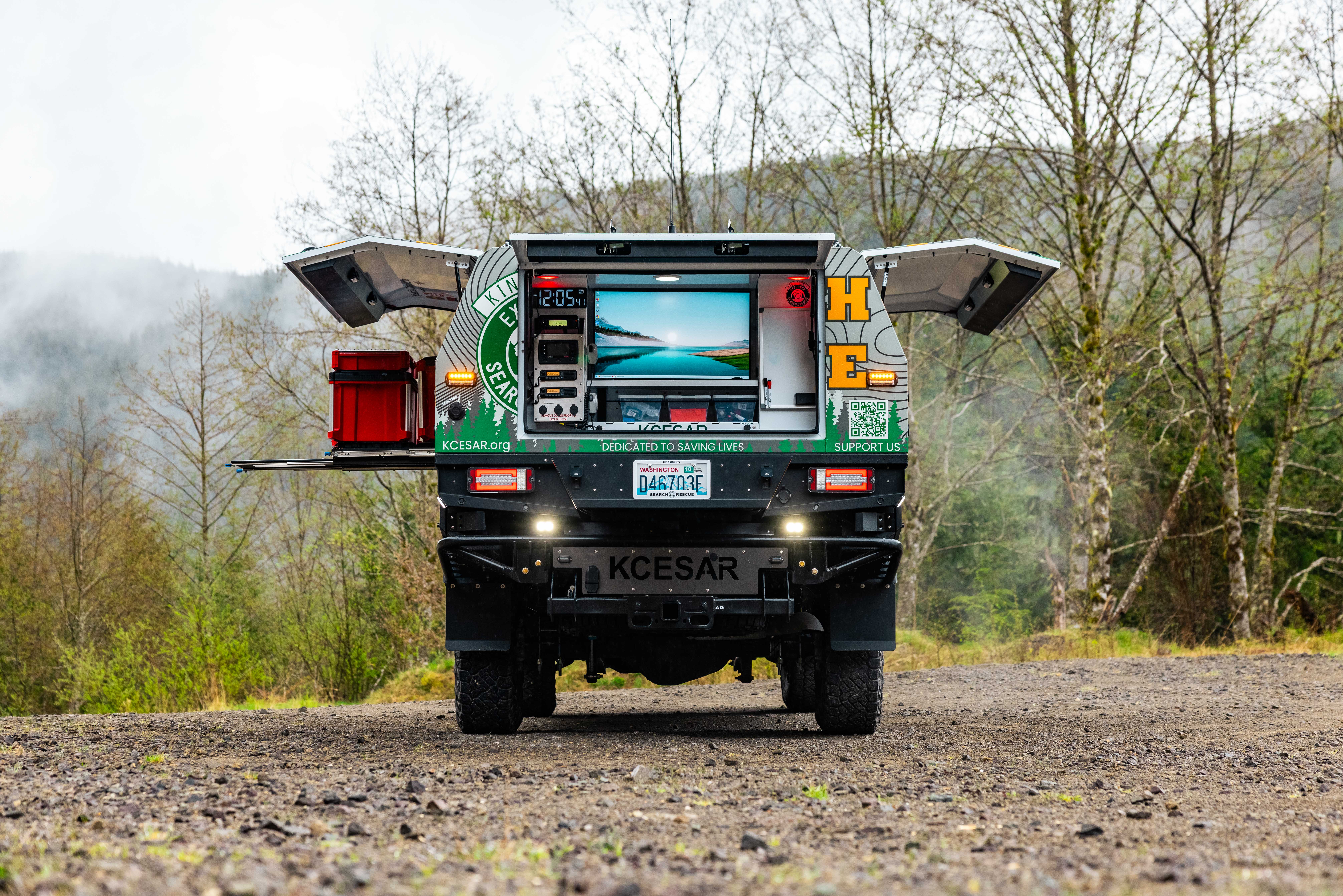
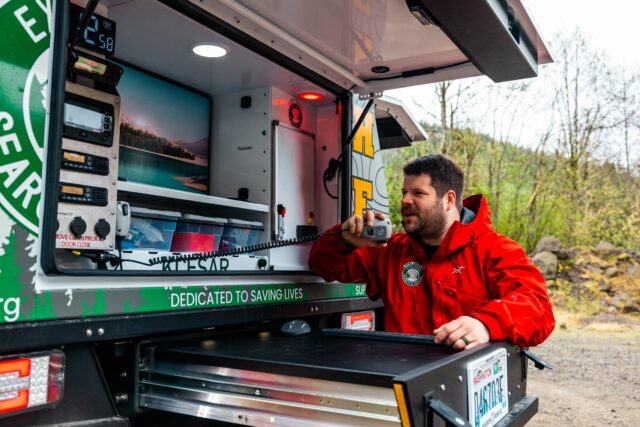
Custom shelving and interior details maximized organization. Radios, medical supplies, technical rescue gear, and snow equipment were all assigned to specific compartments, making it easier for volunteers to locate and deploy tools quickly during missions.
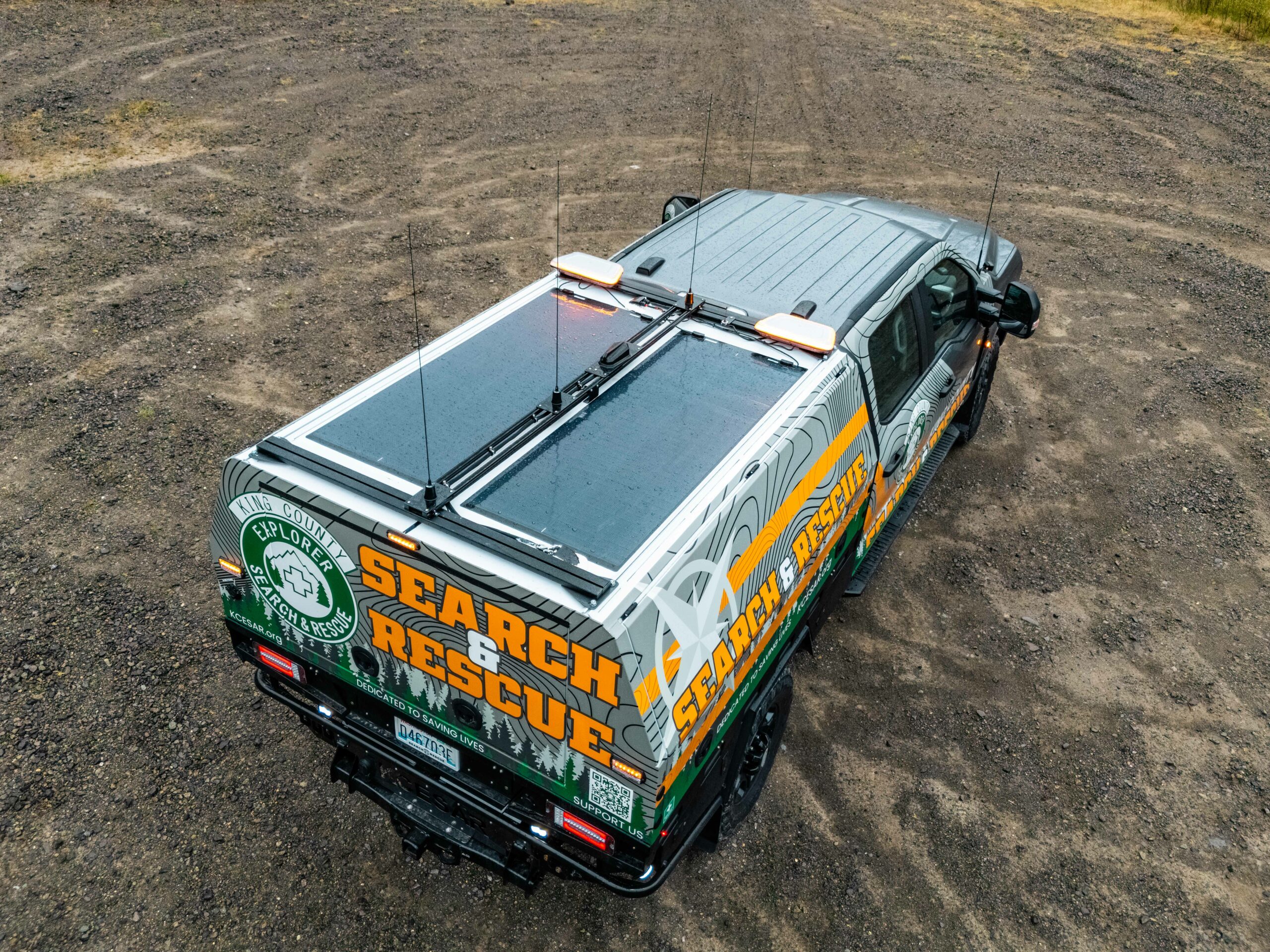
Once the truck was delivered, it was tested in stock form to ensure reliability before modifications began. The factory bed and bumper were removed and replaced with the Mits Alloy flatbed and canopy, integrating seamlessly with the electrical and communication systems already prepared.
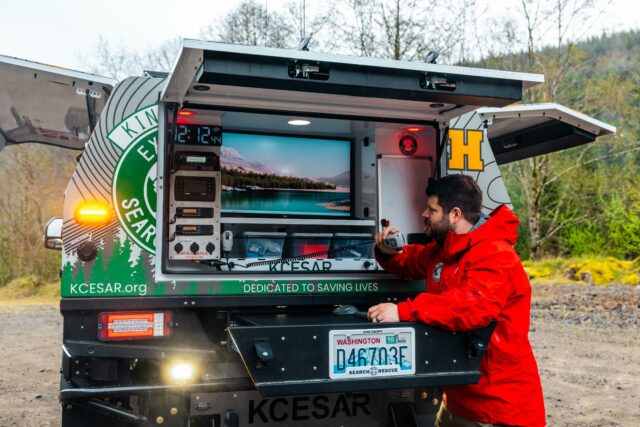
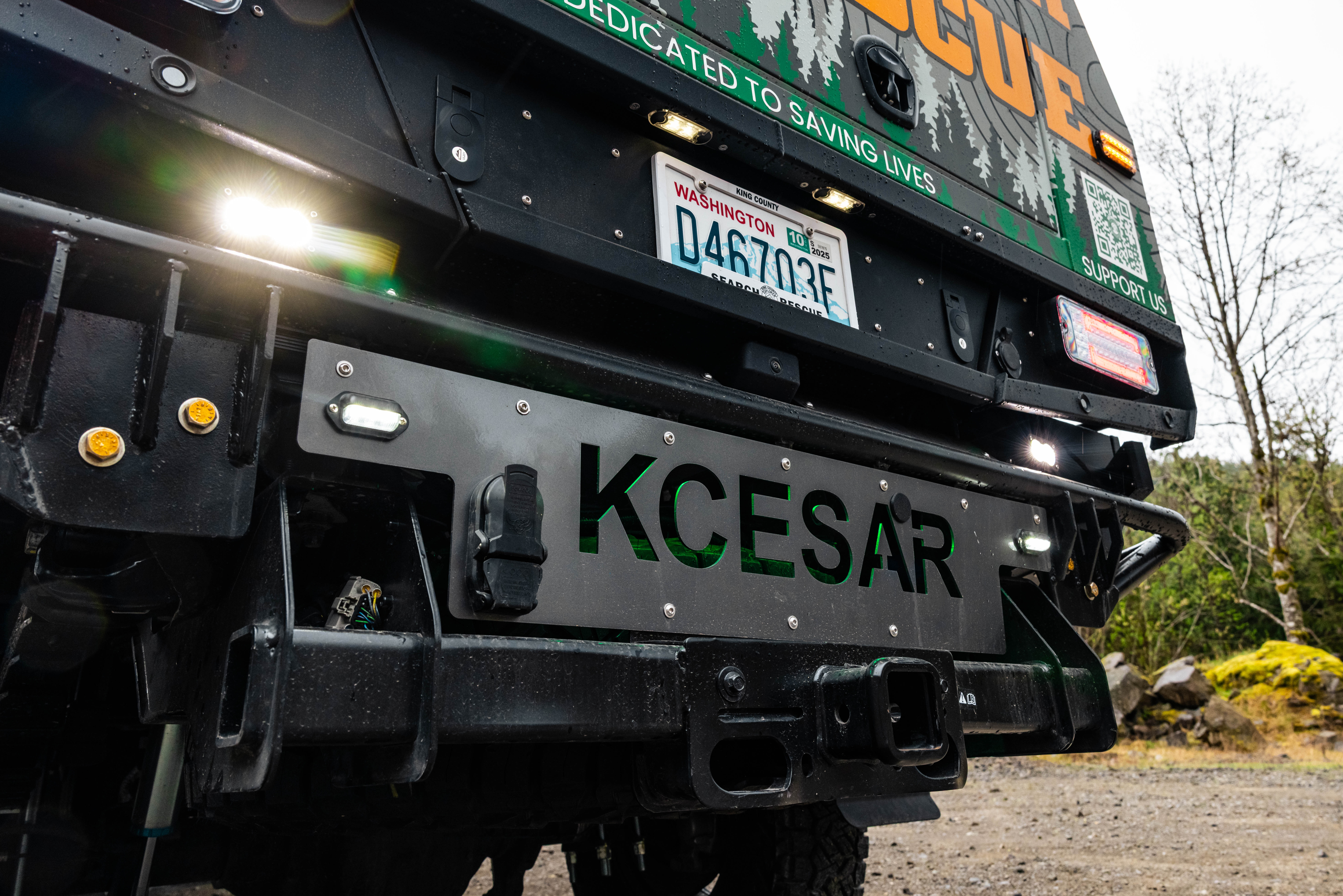
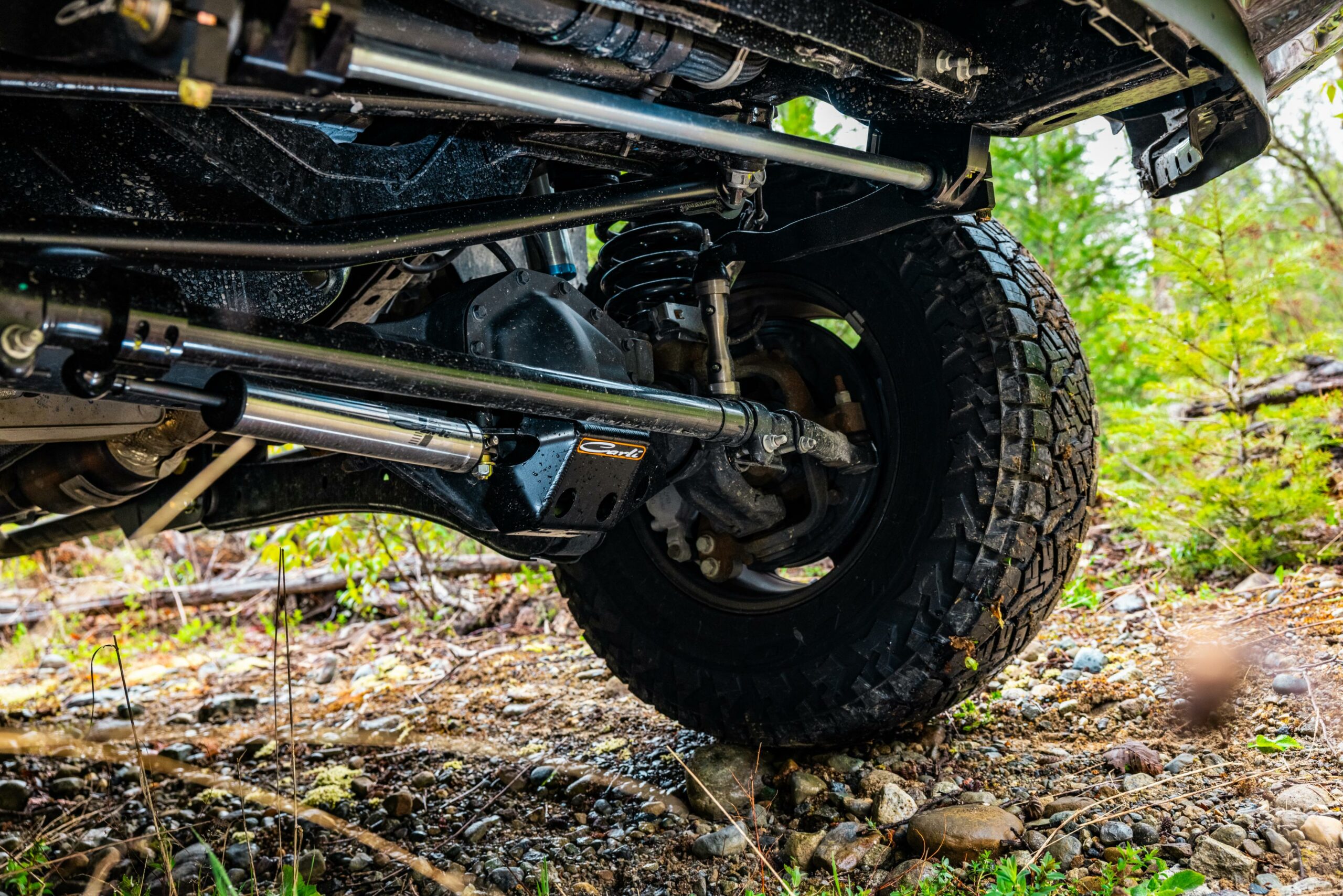
From there, the vehicle went through a series of specialized shops. WrapJax applied a custom wrap, while Bead City Detailing provided ceramic coating to protect the finish. Auburn Car Repair and Offroad installed a Carli suspension system and Nitto Recon Grappler tires, significantly improving off-road handling. A custom wrap-around rear bumper was fabricated, and factory blind spot sensors were adapted to maintain safety features.
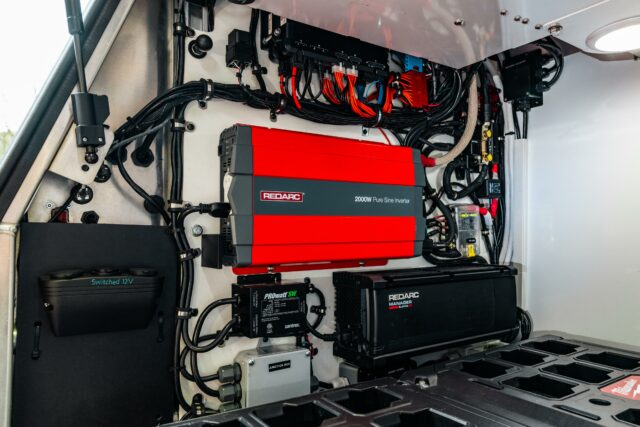
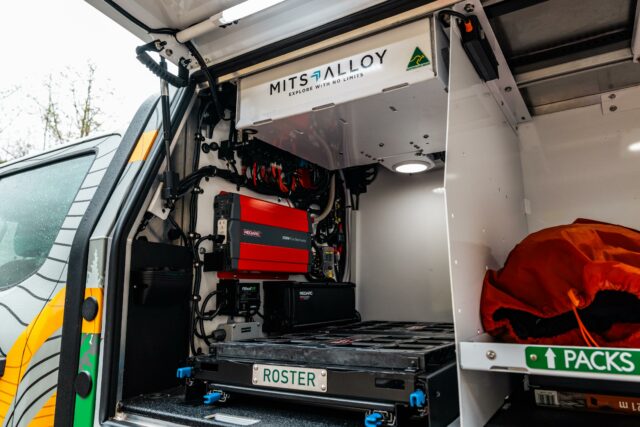
The interior also received attention. Seat covers were added for durability, and wiring harnesses were extended to accommodate the canopy’s lights and sensors. Smith intentionally kept mechanical modifications to a minimum, preferring bolt-on systems and modular plugs that could be removed or replaced easily. This approach simplified maintenance and ensured future servicing would not become unnecessarily complicated.

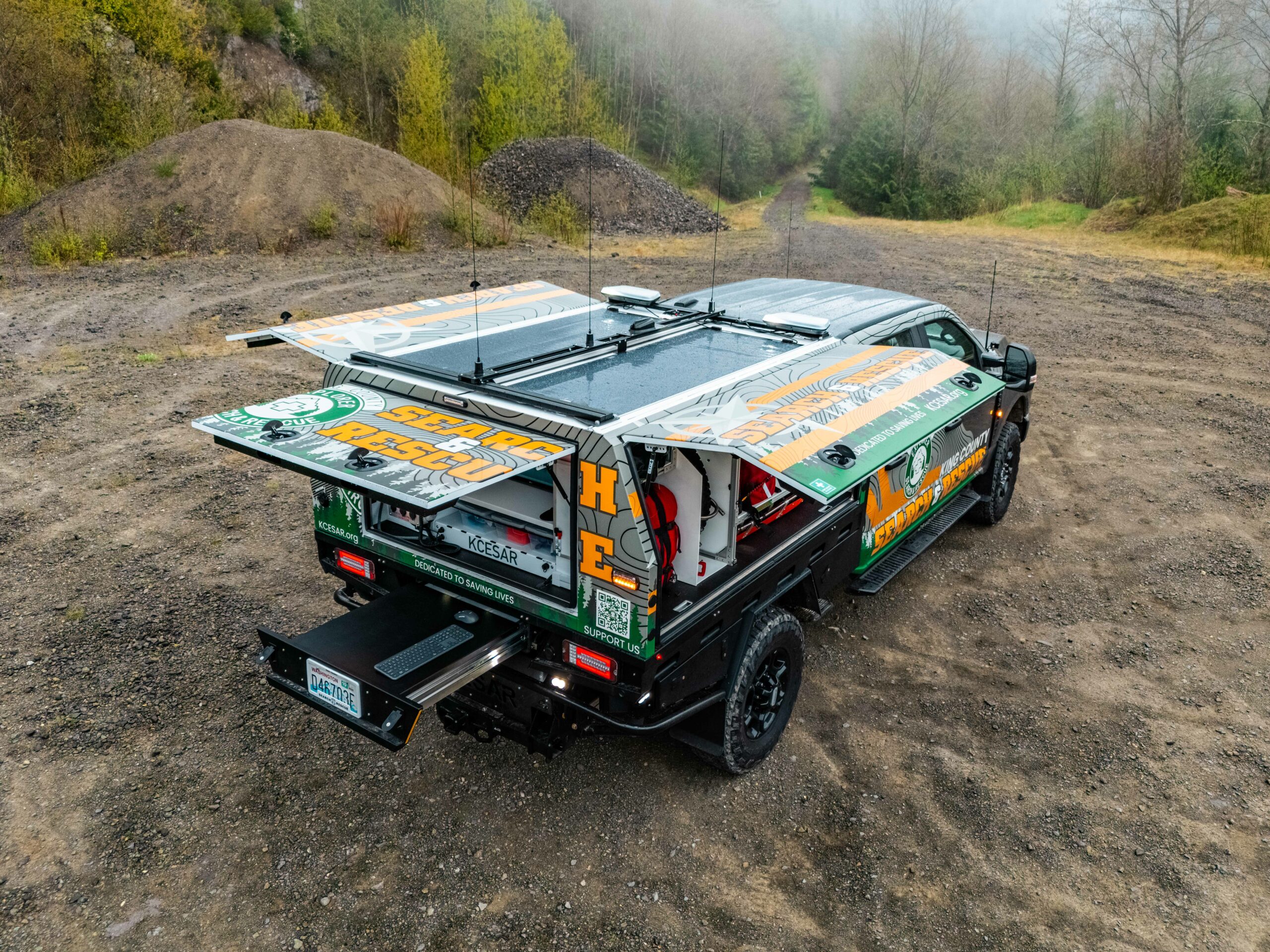
The canopy became the heart of the Rescue Truck. Aluminum partitions and shelving housed medical supplies, rescue ropes, snow gear, and technical tools. Radios and a cellular router supported communication, while a computer with a 30-inch monitor allowed for on-scene coordination. Lighting systems ensured visibility both on the road and at emergency sites.
Attention was even given to morale. A Milwaukee Packout system nicknamed the “Snackout” carried refreshments for volunteers after long missions, a small but meaningful addition that underscored the human side of rescue work.

The build required about six months of sustained effort. For Smith, who works full-time and has two young children, this meant long nights and weekends in the garage. His sons pitched in where they could, tightening bolts or helping to organize tools. His four-year-old proudly refers to the finished truck as “his Rescue Truck.” For the Smith family, the project became both a practical contribution to the organization and a personal milestone, a tangible reminder of community and commitment.
Since its completion, the Rescue Truck has already logged more than 7,500 miles in its first six months. It has traveled across King County, from remote mountain trailheads to urban greenbelts, and has been called into neighboring counties when additional resources were needed. The truck is expected to support more than 125 missions annually, in addition to numerous training events.
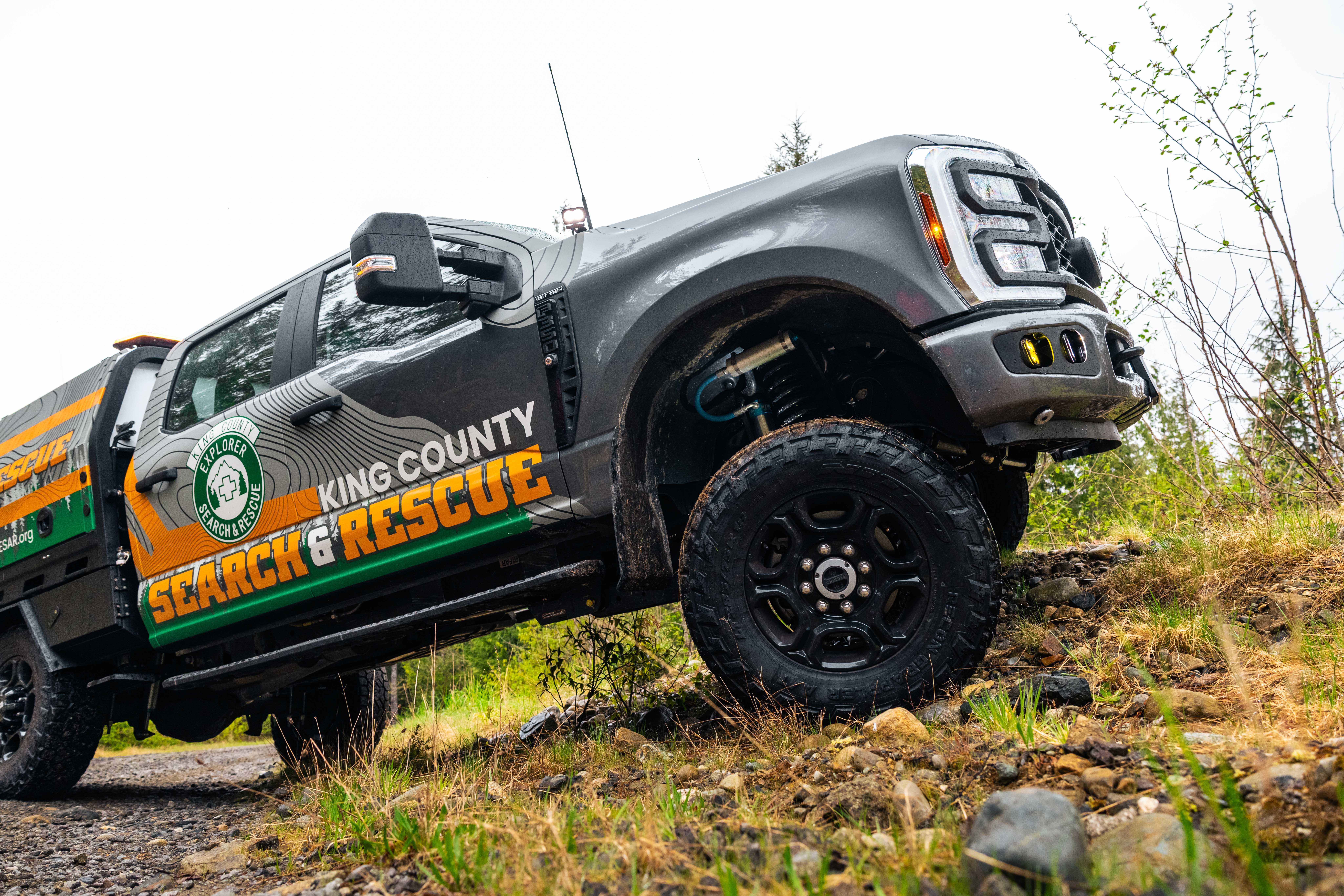
The new vehicle has proven itself in a variety of roles. In one winter mission, the truck carried volunteers and medical supplies into an area cut off by heavy snow, where a patient required urgent assistance. The combination of Nitto Recon Grappler tires, snow chains, and winch systems allowed the team to traverse roads impassable to ordinary vehicles. Once on-site, the organized storage system enabled the rapid deployment of medical kits and communication gear, thereby reducing response times.
In another instance, the truck served as a mobile command post during a search for a missing hiker. The integrated computer, radios, and cellular router allowed coordinators to track teams in the field, relay information, and manage resources effectively. These early examples demonstrate the value of the months of planning and construction that went into the build.
Even with thorough preparation, the team encountered challenges. Looking back, Smith observed that ordering a higher trim level with a factory-installed entry keypad would have saved time and effort. While they managed to retrofit one, programming proved difficult until replacement hardware was installed. Cold weather also revealed limitations in the battery system, and while a heating pad provided a temporary fix, an integrated heated battery would have been more effective. These lessons will guide future upgrades and adjustments.
For KCSARA, the Rescue Truck represents far more than a new vehicle. It embodies the persistence of volunteers who have dedicated years to saving and fundraising, the technical ingenuity required to design and build a specialized tool, and the deep commitment to public service that has defined the organization since its founding in 1965. Every mile the truck travels, every mission it supports, and every life it helps save reinforces the core principle that ordinary people, working together with determination and care, can make an extraordinary difference.
Specifications
KCSARA Rescue Truck
2024 Ford F-350 STX FX4
Power
- 7.3-liter 2V DEVCT NA PFI V8
- 10R140 TorqShift 10-speed automatic transmission

Suspension and Drive
- Carli Pin Top 3-inch suspension system
- Carli torsion sway-bar
- King 3.0 external reservoir shocks (custom-tuned for weight and application)
- Deaver XHD leaf springs with Carli fabricated shackle
- Carli high- and low-mount steering stabilizers
- 4.30 factory gears with rear electronic locker
Wheels and Tires
Nitto Recon Grappler tires, 285/75R18
Accessories:
Interior
- Plastix Plus center console with dual Icom 5061 VHF radios
- Redarc RedVision display
- Motorola APX 6500 (800 MHz) dash-mounted radio
- Wet Okole seat covers
- Auxiliary red/white dome light
- Ram and Mob Armor mounts for phones and tablets
- Multiple charging ports: USB-C (5), USB-A (5), 12-volt outlets (2)
- Factory 400-watt inverter
Exterior
- Mitts Alloy 7-foot tray conversion with three-door canopy (Linex-coated floor)
- Custom tubular rear bumper and fill plate
Lighting
- Baja Designs lighting: Squadron Pro Driving, Squadron SAE Amber Fog, S2 Pro ditch lights, S2 reverse lights
- KC Cyclone rock lights (integrated into puddle and reverse lights, controlled through Redarc TVMS Rogue)
- 360-degree amber/white emergency lighting
Electrical and Systems
- Manager Alpha 75 with Smart Battery Monitor (shore, vehicle, and solar charging with diagnostics)
- TVMS Rogue with dual RedVision displays (centralized control for lighting, comms, and systems)
- 2000-watt inverter
- 300-watt solar array, and an auto transfer switch (12–16 hours battery run time)
- DCS lithium battery – 200 amp-hour
- 2x 150-watt solar panels
- Xtreme gear-drying heater, 400-watt
Canopy and Storage
- Mule Expedition Outfitters aluminum partitions with Ultima lighting
- 80/20 extrusion shelving system for organized rescue equipment storage
- Milwaukee Packout “Snackout” on fridge slide conversion
General
- Icom 5061 dual VHF radios
- Custom rear radio stack
- Motorola APX 6500
- Computer with a 30-inch monitor and a cellular router
- Technical rescue, snow rescue, and medical gear
- Factory blind spot sensors, backup sensors, and cameras retained
- Bead City, Detailing Ceramic coating
Social media:
Facebook: KingCountyESAR
Instagram: KingCounty_esar
Resources
Photo Credit Travis Gallatin, @Gallatin_images and @KingCounty_ESAR
Read More: Overland News of the Week
Our No Compromise Clause: We do not accept advertorial content or allow advertising to influence our coverage, and our contributors are guaranteed editorial independence. Overland International may earn a small commission from affiliate links included in this article. We appreciate your support.
