

Host Scott Brady and co-host Matt Scott discuss the Principles of Overlanding for practical everyday carry (EDC) and travel gear for overland travel, emphasizing minimizing items, avoiding overtly tactical-looking clothing abroad, and complying with local knife laws. They describe preferred clothing (durable, understated jackets), sunglasses, and how smartphones have replaced many pocket items, especially for navigation, light, and secure contactless payments. Scott covers carrying knives and, in North America, occasional firearms with proper training and secure storage, while recommending buying cheap knives in-country when flying or traveling internationally. They compare electronics choices (Surface vs Apple ecosystem), highlight cloud document storage and international service with Google Fi, and advocate USB-C standardization and noise-canceling headphones. They also cover camera kits (Leica vs Canon/Sony and iPhone capabilities), luggage solutions (Pelican Air, duffels, waterproof bags, Rimowa), and vehicle “hacks” like a 12V rice cooker, Snow Peak cutting board/knife, packing cubes, and comfort items.
Overland Journal Podcast Episode #30
New to Overland Journal and want to grab a subscription! Visit Overland Journal and enter code: overlandpodcast at checkout for 20% off. We thank you for being a subscriber.
EDC focused on travel—what they carry on-person, when flying into destinations, and what stays in the vehicle.
• Clothing: Durable, warm Beyond jacket; preference for non-fragile outerwear that can handle vehicle work and campfire. • Sunglasses: Persol for optical clarity and long-term durability.
• Low-profile travel: Avoid overtly tactical clothing/gear abroad to reduce scrutiny; examples of searches at Iceland, Kenya, and observations in Tokyo.
• Core EDC: Phone as primary tool (light, music, navigation, wallet).
• Payments/security: Prefer Apple Pay/Google Pay and tap-to-pay to reduce skimming risk, especially at gas pumps.
• Knives: North America—often carries a knife; international—small sub-2-inch blade (about 1.9”) or none depending on city (NYC/London); sometimes buys a cheap knife in-country and gives it away before leaving.
• Wallet/organization: Minimal Magpul wallet; Magpul DAKA pouches for cables/documents; uses one to protect passport/currency after a rain-soaked passport caused issues.
• Firearms: North America—sometimes carries (Glock 19; Ruger LCP mentioned) with emphasis on training, safe operation, and secure storage around children; not considered for international travel. • Cloud/docs: Keep documents in the cloud; uses Google Drive; concerns raised about Adobe Creative Cloud data loss.
• Devices: Uses Microsoft Surface (Surface Book 2, Surface Go) but expects shift to iPad Pro for travel and a powerful Apple machine for editing.
• Connectivity: Google Fi praised for international reliability ($20/month mentioned); Verizon used for better local coverage in Prescott.
• Charging: Push toward USB-C to reduce chargers/cables; iPhone still uses Lightning; Sony camera charges via USB-C; Bose headphones do not.
• Headphones: Noise-canceling headphones valued for flights, loud hotels, and noisy camps/campgrounds to improve rest and productivity.
• Cameras (Matt): Leica bodies bought secondhand; Leica lenses valued for optical qualities and investment potential; Canon used as a practical “work camera” with autofocus/versatility.
• Watches: Rolex (GMT/Submariner/Explorer) discussed as globally liquid “get out of jail”/emergency cash asset; avoid gold watches; note about limits/carnets for some jewelry/gear and scrutiny with large cases.
• Cameras (Scott): Switched from Canon 5D + 28–300 to Sony a7R III/a7 III for compactness; disliked Sony 24–240 zoom; prefers Zeiss Batis primes (85mm, 40mm) and uses iPhone for wide angle; adds 100–400 for wildlife.
• Phone cameras: iPhone 11 Pro Max noted for multiple focal lengths and RAW; increasing capability may reduce need for dedicated cameras.
• Luggage (Matt): North Face duffels (long-lasting); Watershed waterproof duffel (kayak-style seal; maintains watertightness; needs seal lubricant); Rimowa aluminum carry-on with O-ring seal and built-in locks—buy once vs replacing cheaper bags annually; retains value and dents add character.
• Luggage (Scott): Pelican Air for electronics/camera gear; Red Oxx bags for vehicle use (not weather-sealed); AETHER welded-seam waterproof bags for travel.
• Vehicle cooking: 12V rice cooker powered by vehicle lithium battery; avoids loose rice mess.
• Food philosophy: Preference for eating well vs relying on freeze-dried meals; mentions Tasty Bites rice as alternative.
• Kitchen tool: Snow Peak cutting board with magnet and included knife; keeps knife protected from bouncing/dulling; about $40 mentioned.
• Storage system: Uses drawers for clothes/food/kitchen gear; packing cubes like a dresser; easier hotel transitions; laundry bag recommended.
• Comfort/media: iPad with offline Netflix; Velcro mount to camper ceiling for viewing in bed.
• Cables/charging gear: Uses Nomad durable iPhone/USB-C cables, power bricks, charging pads; avoids failures and the time cost of sourcing replacements while traveling.
• EDC principle: Consolidate, eliminate, and choose multi-use items to reduce loss, cost, and complexity; add personal comfort items (fan, spray bottle) to improve trip quality.
Matt:
Beyond Jacket
Persol Glasses
TAD Flashlight
DPX Gear Knife
Ruger LCP
Google Fi
Scott:
iPhone 11 Pro Max
CRKT folding karamit
Promethius Boyscout Folder
Magpul Wallet
Daka Pouch
Glock 19
Surface Book 2
Leica
Sony batis
Rolex GMT Sub
North Face Duffel
Red Oxx
Aether
Pelican Air
Watershed bags
Rimowa
Rice cooker
Snow peak cutting board
Packing cubes
Ipad
AT Summit
Nomad
Host Bios:
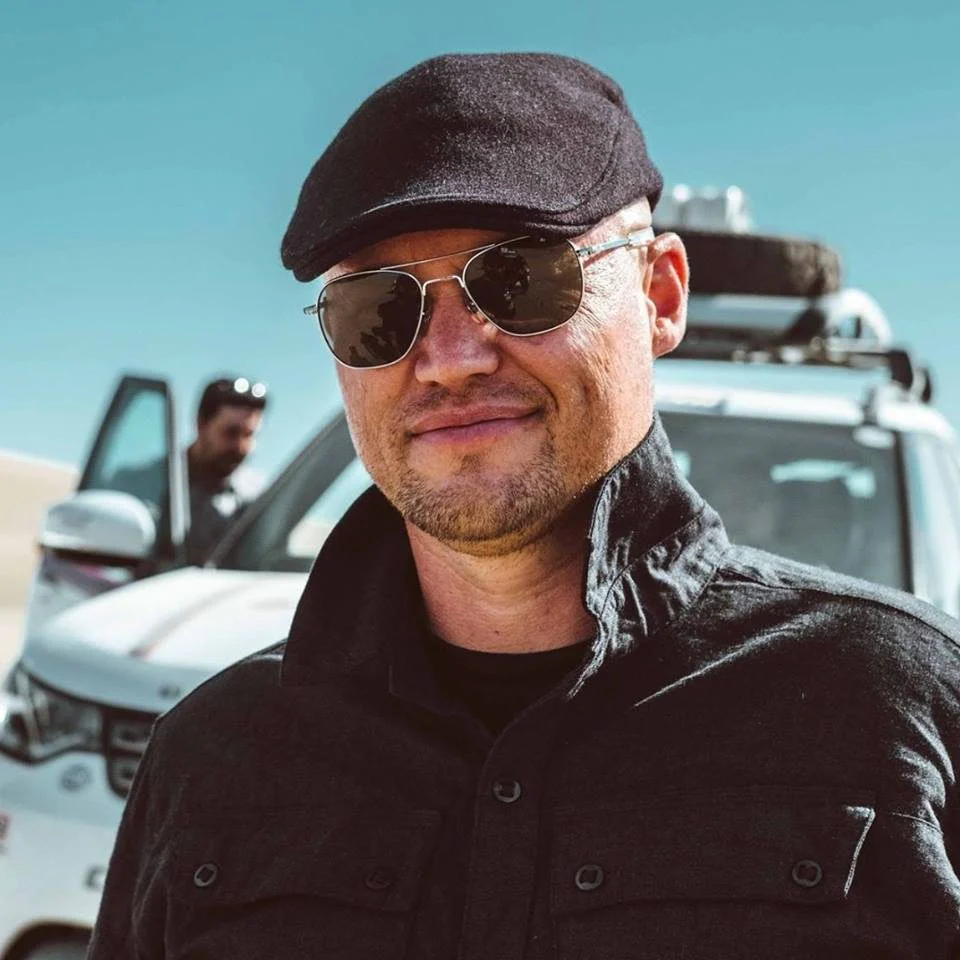
Scott Brady
Scott is the executive publisher and co-founder of Expedition Portal and Overland Journal and is often credited with popularizing overlanding in North America. His travels by 4WD and adventure motorcycle span all seven continents and include three circumnavigations of the globe. His polar expeditions include two vehicle crossings of Antarctica and the first long-axis crossing of Greenland. @scott.a.brady
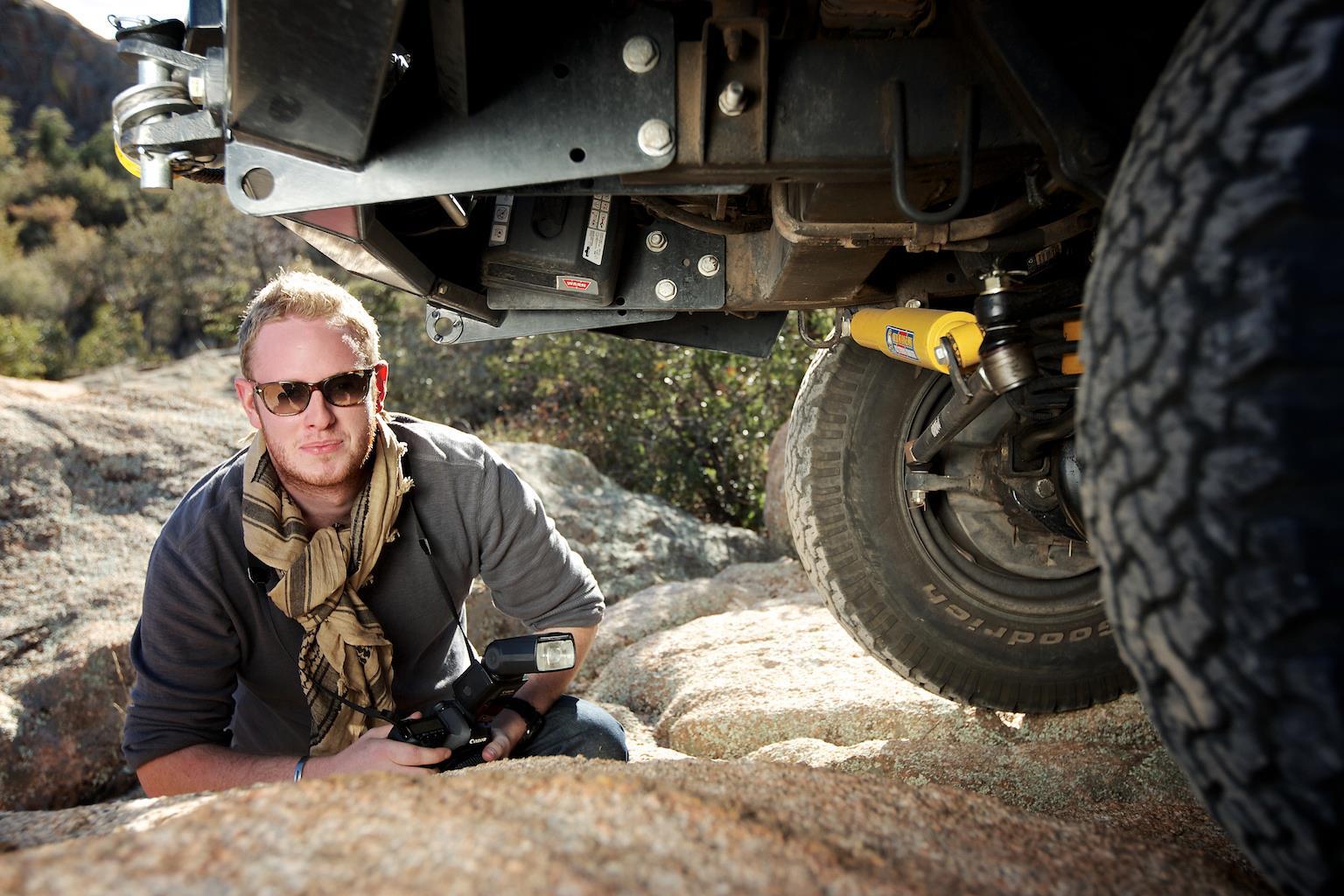
Matt Scott
Matt is a leading expert in automotive adventure. He has extensively explored the world’s most remote places by 4WD and is considered an industry authority on overland travel. He is the only American to ever become an editor of a major Australian 4WD publication and has over 15 years of competitive auto racing experience. @mattexplore
Tune in Apple Podcasts | Spotify | YouTube
The Overlander’s Every Day Carry (EDC)
Scott Brady: [00:00:00] Hello and welcome to the Overland Journal Podcast. I’m your host, Scott Brady, and I am here with my co-host, Matt Scott. And this is a new thing for us today. We’re actually- We’re
Matt Scott: going tactical. We’re talking about EDC, everyone.
Scott Brady: Yeah,
Matt Scott: exactly. Start foaming at the mouth. I don’t know. People seem to be really into the EDC thing.
I, I, I generally don’t even carry things on my person other than my cellphone, but apparently people do. Exactly,
Scott Brady: and there’s times that we do as well, so. Yeah,
Matt Scott: yeah, yeah.
Scott Brady: Totally. So we’re gonna talk about the stuff that we have on our person typically when we’re traveling. We’re also gonna talk about the gear that we bring along if we’re flying into some place, and then we’ll touch briefly on those high points of the stuff that we- Yeah
typically stick into the vehicle as well. And we’re gonna start off with Matt because he is such an interesting person, and the stuff that he brings with him- A little bit of a free kick … is so, is so [00:01:00] interesting- … that I think it’s gonna be fun to talk about. So Matt, what do you always carry on your person?
Matt Scott: You know, I mean, I, generally as a person I gesticulate wildly from one side to the other, but, um, uh, I, I’m a f- like a fair weather overlander. I, I don’t go to like Greenland in the middle of winter like you do. So, you know, typically, you know, I’m, I’m kind of the flip-flops and board shorts kind of guy. Um, you know, occasionally I wear pants while overlanding.
I, I generally try and avoid that, but I don’t know. I mean, some of the useful things that-
Scott Brady: Southeast Asia has completely ruined you
Matt Scott: Southeast Asia and Baja and Australia. I mean, are there any other places to go? Um, yeah, I don’t know. So let’s, let’s start with the opposite of those places is a jacket. Um, yeah, I, I’ve been wearing this Beyond thing that I actually got from you.
Um, I, I really like it. I like… It, it kind of has like a cool trendy camo print on the inside, so it’s hip- Yeah … and it’s cool, but it’s really, really warm. I can’t ex- I, I want to say it’s like a Thinsulate style, you know, [00:02:00] lining on the inside. It’s just really comfortable. Um, and it’s really durable too. I think w- when, when I do look for clothing I look for stuff that, okay sweet, um- shock reservoir falls off, some- some- something happens to your car, if I have to actually get underneath, I, I, I don’t want it to be ruined.
Um, so for me, a lot of those kinda, you know, I call them like the puffy jackets, have never really, you know, you know, been up to it for me, ’cause they kinda, they tear easily, you know? And
Scott Brady: they get ruined by the fire and everything getting a little sparse.
Matt Scott: Yeah, yeah. Where this thing is like, I mean, I, I feel like you could fall off a motorcycle on it, but it’s still cozy and comfy, um, which is important to me.
I mean, who doesn’t want to feel cozy and comfy? Yeah, true. But th- that’s a big thing. Um, you know, sunglasses I guess are, are a thing. I, I guess it depends what I’m doing. I, I, I’m a, I’m a stickler for optical clarity, so I really like Persol. Um, and, uh, that’s mainly ’cause of their glass lenses, I guess. Um, they, they just seem to last longer.
I, I always say, like I can’t afford to do things or to buy [00:03:00] things twice. Um, I’ve had the same pair for 10 years and they just work I, I guess. Um-
Scott Brady: Yeah, once you find something that really works-
Matt Scott: Yeah …
Scott Brady: and it’s been interesting talking about the Beyond brand. Um, we, we’ve started to use some of their stuff, and it’s, it’s been interesting to watch because, you know, in the last 15 years or so, a lot of what the special forces and recon- Yeah
and these other guys are using is coming more into the general consumer space, where people are starting to adopt a lot of these technologies and a lot of these clothing types that these operators are using. And it was really interesting talking with, with the folks at Beyond because they recognized that 10 years ago, 15 years ago, these guys were wearing this stuff, and in the beginning they kinda looked like tourists, they kind of…
It, they were a little understated, but then everybody realized really quickly, like it’s a guy in Patagonia [00:04:00] with a set of Solomons on- … he, he’s now a target. So these, these companies are making technical gear that now looks like what everybody else wears.
Matt Scott: Yeah. And, and I think that’s just the coolest thing with Beyond.
I mean, there’s, there’s definitely other brands that I enjoy that are, you know, more tactical. Um, but that, that stuff overseas, i- in my opinion, I, I, I, I actively try to avoid it. Me too. Um, I, I remember I Trying to remember where in Tokyo I was, but there was two tactical, you know, local kids, had the backpacks and all the, you know, that looked like they walked out of a 511 store.
They, they literally just got searched, ’cause it’s like, “Why, why do you… Why are you dressing like this?”
Scott Brady: Right.
Matt Scott: You know, it’s transcended from being kind of cool guy stuff to, like, um-
Scott Brady: You’re now a target.
Matt Scott: You’re now a target. Like, it… I don’t know.
Scott Brady: Yeah. One of the… I’ve had two very serious searches in all of my times traveling.
Mm-hmm. One of them was the [00:05:00] Canadian border, which that just seems to be a thing at the Canadian border, but then the other one was at Iceland. And I get off the plane, and I’ve got all of the high-speed… I look like the, like the the operator guy.
Matt Scott: That’s why I wear, uh, uh, floral and paisley shirts. Yeah. Good idea.
I, I never look like that guy.
Scott Brady: Good idea. Well, and I, I get through customs and immigration, and this guy walks up to me and says, “Hey, we need to have a chat.” And I’m like, “All right.” And he looks, and he’s got a badge, and every- he looks very serious. So we go into this little room, and he’s like, uh, “You need to disclose what branch of the military you’re in.”
I’m, “Well,” I said, “I’m a veteran. I, I was in the Air Force.” And he, he just did this full breakdown. Like, “Why are you here? What are you doing?” I’ve never had this happen before. Yeah. But I realized what was different that day, I’m wearing Solomons, I’ve got, like, the kind of tactical gear on, and I realize that I painted a target on me of military-age male.
I, I was in the [00:06:00] military, I carry myself in a certain way, and I’m wearing all of the stuff that checks the boxes, and they wanted to know why I was there, what was I doing, uh, what was my intentions. And the same thing happened in Kenya. We, we got caught for doing an illegal border crossing from Uganda into Kenya, Brian Bass and I, and next thing you know, we’re getting dressed down by the local police, and they keep telling us we have to disclose our mission.
And it’s just because we had some paracord, and we had some- Yeah … of these things that look very tactical, and I’m realizing that now I just don’t have it at all. I avoid it almost like the plague.
Matt Scott: I, I, I do avoid it like the plague because for our new video listeners, I wear Birkenstocks. The surest way to not- Not
Scott Brady: be tactical.
Matt Scott: Not be tactical. Um, I also don’t look very threatening, in my opinion. Um… Oh, that’s funny. W- what, what are some of the things you carry? I mean…
Scott Brady: Well, when, when I think about my, like, [00:07:00] day-to-day clothing, what I have on me, I, I used to have a lot more stuff in my pockets. Yeah. But it’s interesting- I
Matt Scott: can’t stand having stuff in my pockets.
Right. Like-
Scott Brady: But the cool thing about the phones is it just steadily- That’s the thing … it steadily replaces all of the stuff.
Matt Scott: Yeah.
Scott Brady: So you don’t have an iPod anymore. The iPod’s on your phone. You don’t really need to have a pocket flashlight because these LED lights on the phone are super bright.
Matt Scott: Pretty good.
I, I, I mean, I have to say that, you know, I used to nearly religiously carry, you know, some sort of light source with me. I had this little double A Triple Aught Designs flashlight kinda thing. Maybe it was triple A or something. Used to carry that with me. Used to be on my keys. N- now I just have a phone.
Scott Brady: Yeah.
Matt Scott: Like-
Scott Brady: And
Matt Scott: they really work. I guess in, in, in, you know, in, in a simple statement, what is my EDC? My phone. iPhone,
Scott Brady: yeah.
Matt Scott: It c- it can be your wallet, it can be everything. You know, we’re gonna talk about all- Do
Scott Brady: you do that? Do you have your wallet combined with your phone?
Matt Scott: 100%. I use it as much as I can when I’m [00:08:00] overseas.
Um, you know, overseas, most payments are tap and go. Um- They are, yeah … at least, at least when you’re in, you know, first, second world countries. Um, you know, it’s, it’s more secure. They’re not getting my actual credit card number. There’s, there’s nothing for them to steal since the entire transaction is encrypted and really safe.
Um, you know, I also find- I don’t know. I, I, I just really like it, I guess. I, I try and get that on all my cards these days, um, just to tap and go ’cause then there’s nothing for them to swipe, there’s nothing for them to skim. Um, I mean, if you wanna talk about actual security, I know we’re talking about knives and guns and stuff with EDC.
Use Apple Pay or Google Pay or, or, or contactless. Like, w- where are you actually going to be a victim of a crime? It’s probably when you’re traveling.
Scott Brady: Handing
Matt Scott: somebody your credit card. Statistically- Yeah … it’s handing somebody your credit card. I mean, I shouldn’t say statistically. I don’t really know. But I know that when I travel, especially in the United States, ’cause it seems every gas pump you go to is, you know, some- somebody’s [00:09:00] skimming some kind of information, even in Prescott, where we live, which, um, is pretty s- sleepy.
Scott Brady: Um- It is. And it’s becoming more and more of a problem. And I do like the fact that we can now use our phone or a watch to do payments. Mm-hmm. And in the days of now COVID, it’s m- it’s- Oh, yeah … I think a lot of that technology is gonna come into play very rapidly. It’s gonna have
Matt Scott: to.
Scott Brady: I’m seeing places that I’ve gone to for years where I used to have to slide a card or insert a card, now I can just pay with the watch or with the phone.
So I do, I do see the iPhone as being this killer app now for most of EDC. Um, when I’m, when I’m in North America, I, I tend to carry a few more things. Um, I do tend to carry a knife. Uh, CRKT came out with this pretty cool folding karambit. When I’m traveling internationally, I do have just a pocket knife.
Yeah. So I never wanna
Matt Scott: clip- ‘Cause there’s a, there’s a size depending on the country- Yeah … that
Scott Brady: you’re traveling in. Less than two inches. Yeah. 1.9 inches is a good standard for that. So I [00:10:00] have, um, I think it’s- It’s, uh, Prometheus Design Werx had this cool little, looks like a Boy Scout folder- Yeah … that they sold for a while.
Made in the USA. It’s less than two-inch blade length, and I just stick it in my pocket ’cause I don’t want the clip that shows that I’ve got a knife in my pocket. Exactly, yeah. And in a lot of, in a lot of countries, it may allow a 1.9-inch l- knife, but in some cities, like if you’re in New York, for example, you don’t wanna have a knife on you at all.
Matt Scott: Yeah.
Scott Brady: Um, there are very strict rest- restrictions, uh, around knives in New York City. And same thing with London. London, very serious restrictions around knives. So you wanna think about what is the lowest common denominator in your travels, and make sure that you comply with that for the rest of your trip so you don’t accidentally get caught with a knife.
Matt Scott: Yeah, I mean, I, I, I used to travel with a, with a knife, and now I, you know… I mean, if I’m going to Baja or something, I, I, I just like to leave knives and stuff in the vehicle. I have, like, a DPx Gear knife from [00:11:00] Robert Young Pelton. I love it ’cause it opens Amazon boxes very, very efficiently. Um, and it has a kind of a built-in bottle opener integral to the blade, and I use that quite a bit.
Um, but, you know- But
Scott Brady: knives have their place.
Matt Scott: Yeah.
Scott Brady: Per- personally- When
Matt Scott: we’re out in the field, totally … I, I don’t… I, I, I just, I’ve never traveled internationally with one. I mean, all the countries I go to, I mean, Australia, you, you don’t wanna get caught with that kind of stuff coming in. Correct. Um, you know, they’re, they’re a very, um, by-the-book kind of country.
Scott Brady: And the best way to do that, what I’ve found, is if you’re traveling into a country or if you’re doing carry-on luggage only, which, uh, Matt and I both try to do in almost all cases, when I get into country, I just buy a cheap knife. Yeah. I just go to a local store-
Matt Scott: That’s what I did in Namibia earlier this year.
Yeah …
Scott Brady: you give it to your, your buddy that you’re hanging out with. You give them the knife before you leave. Um, but in North America, I d- I do tend to carry a knife, um, on me. I, I do have a very minimalist wallet. Uh, it’s made [00:12:00] by Magpul. It carries a couple credit cards. Um, it doesn’t look tactical at all.
Yeah. It’s just, it’s just a very simple, thin
Matt Scott: wallet. Well, they, they, they use some really nice materials and, and, you know… Their, their construction techniques are relatively interesting. Like, I love those little pouches they do that are like-
Scott Brady: Oh, the DAKA pouches?
Matt Scott: Yeah, they’re, like, sealed or something.
Money. I have a few of those.
Scott Brady: Yeah, they’re money.
Matt Scott: Yeah. You know.
Scott Brady: I use them for all of my wires. And, and they’re different colors, so when you reach into your backpack, you know, okay, the, the orange DAKA pouch is for all my camera gear, the green one is for all of my wires- Yeah … and other, other stuff.
Matt Scott: You know, I, I don’t currently do this, but I, af- after this conversation, I’m, I’m gonna get one of those for all the insurance paperwork, ’cause I’ll have Mexican insurance in the car usually year-round.
Sure. And all the stuff, I can just throw it in there. “Get me the orange, get me the orange one”- Yeah … is all you have to say to your passenger. They don’t have to flick through. You have your stuff in, in order, which is generally always good. Um-
Scott Brady: I think they’re one of the best New products for every [00:13:00] traveler.
And like one of the experiences that I had in South America, I had my passport in an outside pocket on my motorcycle jacket. It… Torrential rain pour, right? And I get to my next hotel or wherever I was staying, and I pull out the passport and it was totally soaked. So now… And it, it created a problem. Like, the passport, the RFID didn’t work.
It created problems with me getting in and out of airports until I got it replaced. So what I do now is I have a, one of the small DAKA pouches, and that’s where I put my passport, put- I put my currency, and then it’s always sealed. That’s a really good idea. It’s always sealed. Um,
Matt Scott: I, I put my passport, um, through a laundry cycle or, or, or, or- Sure
something. And I had to live with that without having that e-passport thing. I mean, I think one of the cool things as Americans is there are a lot of, you know, they’ll allow Americans through the, you know, the, the e-passport lines- Right … um, or the resident lines in a lot of countries, and you just don’t get to take advantage of that, and you get thrown into the general customs line, and that’s-
Scott Brady: Way more time
Matt Scott: way more time. Way more time. [00:14:00] Do you, uh… I mean, in guns, I guess EDC is a, is a big, a big part of that.
Scott Brady: Well, I do carry a gun at times, especially if I have people with me, uh, family and otherwise, when I’m camping in North America. Uh, and I’ll just carry a Glock 19. It’s just kind of the ubiquitous- Yeah
solution for that.
Matt Scott: I have a little Ruger LCP. I, I like it. It’s made right here in Prescott.
Scott Brady: Yeah, that is a cool
Matt Scott: story. Made- Like two, two miles from here or something like that.
Scott Brady: Yep.
Matt Scott: It’s got a little laser on it. I, I, I, I always think a laser getting shone at somebody at, in the middle of the night is probably enough deterrent for them to get the point, but-
Scott Brady: Well, and I think around firearms, the most important thing, ’cause we’re not gonna make this about firearms at all, but the most important things with firearms is if you own one, invest in the training that’s necessary- Yes
to operate it safely, and make sure that the people that are with you also have that training, because they n- may need to use the firearm as well. Make sure you keep it secured, particularly around children. In North America, I do carry one. I have a lot of training in the use of it- Mm-hmm … and I [00:15:00] feel comfortable with it.
But when I travel internationally, I don’t even think about it, so- Yeah,
Matt Scott: yeah. It’s
Scott Brady: not even a consideration … just put it out of, put it out of your mind.
Matt Scott: Wow. Electronics. You’re, you’re big on the Microsoft Surface thing.
Scott Brady: Well, but I’m, I’m … Uh, like, the love affair is, is maybe coming to an, an end. I mean, one of the things about Apple is you, once you get into this ecosystem, everything works very well together.
Matt Scott: Yeah, it does.
Scott Brady: I, I think what happened for me is I had a half a million images in the Aperture program by Apple, and they discontinued that, which was … It was basically one of the first steps of them starting to abandon the creatives, and it was such a blow- Yeah … not only just because I liked the program, but it was a huge endeavor for me to migrate.
Matt Scott: I was a huge Aperture guy. I, I did not like the transition to Lightroom, and now, like, I finally get on the Lightroom thing, and now they’re saying, “Oh, you have to use Lightroom Creative Cloud.” I mean, there’s things I like the [00:16:00] cloud for, but I don’t need every single image being downloaded all the time. I just want them there.
Scott Brady: Especially since they just a few days ago had a major data failure, and a bunch of people lost their images- Wonderful … out of Creative Cloud. So it starts to make you think about are, is this really safe or-
Matt Scott: So I have written down on, under here, “Importance of the cloud when traveling.” I will- Yeah. … not talk about that one.
Scott Brady: Well, it is important, ’cause we can keep copies of all of our documents in the cloud. I use Google Drive for everything. Everything. I’ve never had a failure with Google Drive. I think Google just knows that that’s a no-go. You can never have that kind of a failure. I don’t think, I don’t think Adobe is paying close enough attention to the critical nature of imagery, and the fact that there’s never an option, there’s never a scenario where you can lose someone’s photos.
Yeah. And they just did that, and that’s gonna compromise people’s confidence in the application. But when it comes to the Surface, what I liked was the fact that all of the Surface devices, except for some of their [00:17:00] new, uh, specific laptops, but I have, uh, a Surface Book 2. The screen comes off, and I can use it to read at night.
Oh, that’s kinda cool. I have a Surface Go. In fact, it’s on the table right now. Uh, it works like an iPad, um, or it works like a, a laptop. However, I think that- No one’s gonna keep up with the innovation that’s happening at Apple. Um, their innovation is useful. The iPhone is an incredibly useful tool, and I can see within the matter of a few years, I’m gonna have an iPad Pro that I’m gonna use for travel, and then I’ll have some monster Apple machine that I’ll use for, for image and video edit when I’m back at the office.
Matt Scott: Yeah. And I, and I think while we’re talking about electronics, I always love to bring up Google Fi. Um, I, I still have a Google Fi number, although my, my primary number I did move to Verizon, um, just ’cause where we’re, we live in Prescott, the service- Better
Scott Brady: coverage. Yeah.
Matt Scott: It’s just better coverage. Um, but overseas, Google Fi is flawless.
It’s [00:18:00] $20 a month. Your phone works everywhere. Um, you know, I have to say that I, I think your phone is one of the most important travel tools. Um, you know?
Scott Brady: It’s how we use, do everything. It’s how we navigate-
Matt Scott: Well, think, think about, like, 10 years ago when you were traveling and you fly into Let’s just say Tokyo, because there’s not a lot of English.
Uh, it’s relatively hard to get around if you don’t have the information at your fingertips. H- how do you get around? It’s difficult. But now it’s just like y- you flying, oh, Uber, pick me up. Oh, hotel, okay, sweet, follow the map, it’s there. It’s just, it’s so many things in one. So I think having a phone that works and having service on it, the phone’s only as good as the service.
Scott Brady: Yep.
Matt Scott: Um, you know, arguably like Wi-Fi is ubiquitous, it’s everywhere, but is it gonna stay that way?
Scott Brady: Its days are numbered.
Matt Scott: Yeah.
Scott Brady: 5G will replace that, and then- Yeah … eventually satellites will replace that.
Matt Scott: Yeah,
Scott Brady: yeah. And we’re just gonna have it everywhere. We’re gonna be in the middle of the Gobi Desert and have, have coverage.
It’ll be- Yeah, that
Matt Scott: Tesla internet that’s coming from the sky. Um- [00:19:00]
Scott Brady: Yeah, all of that technology en- enables travel. It’s, it’s… I have had the tendency to wanna approach things as a Luddite because you think about the days gone by and you think about the fact that people crossed the Sahara in very simple vehicles and they had none of this technology, and in some ways I think they had a better experience.
Yeah,
Matt Scott: it’s more romantic. You’re not- In
Scott Brady: o- in other ways-
Matt Scott: The emails aren’t pinging you in the middle of nowhere …
Scott Brady: in other ways, we’re now able to work from the road. So technology has allowed me to continue to travel and experience the remote areas while I’m still able to stay connected to work.
Matt Scott: Yeah, you know, and I think USB-C is something, um, you know, it’s a small thing, but everything that I can get that’s USB-C, it means I only have to carry one charger.
You know, I have my, my, my little Apple brick thing that comes with the laptop. Well, I have the USB-C cable to the iPhone. That’s the only cable [00:20:00] I really have to carry these days. Pretty much I, I like that idea of a, a standardized charging-
Scott Brady: It’s such a win … protocol. It’s such a win. Even my Sony camera charges with USB-C.
Yeah. All of the devices that I carry now, including my charging bricks, everything connects via USB-C. The only thing that I have that’s non-standard now is the, uh, the iPhone requires still the, the, what is it, the Lightning connection.
Matt Scott: Yeah, yeah. I mean, I think the only thing that I have, my, my Leica doesn’t charge by USB-C.
I’m, I’m hoping that that’s in the future. I think that their, their, um, mirrorless, uh, SL2 now charges by USB-C, which is great. But, um, then, you know, the dang Bose headphones. I, I, I, I, I have to have noise-canceling headphones if you are a traveler. They are so handy whether you’re in a loud hotel, you’re camping- Such a difference
you know, a campsite, um, is loud, or you’re, you’re camping in a street. I throw those things on. It’s just provides a little bit [00:21:00] of solace and, um-
Scott Brady: And it allows us to get more work done while we’re traveling. Yeah. And if I can be more efficient and have less distractions and get more work done in a smaller amount of time, then it allows me to travel more, and that’s really the key- Yeah
at the end of the day. So you’re
Matt Scott: Yes, I guess we’ll go into cameras Cameras? Yeah. Um, so I’ll-
Scott Brady: To listen to us talk now all hours of all [00:22:00] days. She’s editing, editing videos of me jabbering. She’s now listening to transcripts, doing transcripts of our podcast. This is how people go postal, just like that. So
So tell us about your camera kit.
Matt Scott: I’m a camera geek. I mean, listen, like ca- cameras for me are as much about the experience as they are, you know, the, the end image. I– Everything I have is capable of creating, you know, fantastic imagery. Um, but I do have, I guess, two setups that I, um, that I will either both carry with me or, you know, I’ll kind of pick one.
Um, I’m a huge Leica guy. Um, I Leica those cameras. Um, h- honestly, for a few reasons. I, I buy the bodies secondhand. You know, they’re very expensive new, but, um, within a year, they lose fifty percent of their value, [00:23:00] um, and then they kind of bottom out from there. Um, but the real reason that you, you use Leica equipment is the lenses.
Um, they are… They’re just, they’re just fascinating. Like in the same way that I think people are into, are into watches because of the mechanical nature of them and the engineering and the design and, um, you know, these lenses are near optical perfection for some of them. Um-
Scott Brady: And even their imperfections make it charming.
Matt Scott: Yeah. Yeah. Like I, I just, I just acquired a, a Summicron fifty millimeter, sorry, a Summilux. Um, Leica a- applies a name to the maximum aperture that each of their lenses offers. Uh, Summicron is kind of the gold standard. That’s a, an F2. Um, and, and honestly, after Summicron, that is optical perfection.
Everything from there you’re acquiring is, is just speed and the amount of light that can come into the camera. But I, I love the… I– for, for taking photos of people or cities or culture, I, I just find [00:24:00] it’s, you know… It, it’s something that’s a little bit larger than your phone, obviously, in, in, in depth. Um, but people don’t really know what they are still.
Um, you know, those who know-
Scott Brady: They super understand …
Matt Scott: know. Um, but I mean, I guess as, you know, your Sony, for example, that’s gotten quite a bit smaller. Um, so I think anything that is a dedicated camera these days isn’t necessarily discreet. Um, but I just, I just love shooting with them, you know, particularly with my stuff in Southeast Asia.
You know, it’s easy to, you know, turn it to F11 and kind of hyperfocal distance and the, the shots that I’ve gotten that I just wouldn’t be able to get. Um, yeah, I shouldn’t say I wouldn’t have been able to get with a Canon or anything, ’cause the Canons, let’s face it, uh, it’s a better camera. I mean, it, it’s more versatile.
It has autofocus. Sure. I don’t know. But the Canon for me is more of a work camera. If I actually, if I’m like, “Okay, I have to get this shot. There’s gonna be a lot of movement. Things are gonna [00:25:00] be changing,” the, the Canon I guess is what I go for. Um, I’m, I’m lucky enough to have two systems. But my Leica stuff every day goes up in value.
Um-
Scott Brady: Yeah, I think that’s the strongest argument for it. I mean, watching when you first started buying the Leica lenses, you’ve actually made money- Yeah … on your investment.
Matt Scott: Like, quite a bit of money on some of the stuff. Um, you know, you get into these, and I don’t know how much it is the case, um, today, much like air-cooled Porsches, you know, you used to be able to buy them for five, $10,000 and now they’re 100.
Um, but there were some kinda oddballs in the lineup that weren’t desirable to the collectors that just wanted the very best. They wanted the Summilux, they wanted the Noctilux, which is a, a .95. .95, yeah. Which is crazy. Um, so when I was younger, I just, you know, instead of buying the, you know, the three or $400 Canon lens that would’ve been worth nothing down the road, um, I guess I was just lucky enough to invest in these, and [00:26:00] kinda have always bought and sold, and, um, have kinda worked my way up and made it a little bit of a hobby, I guess.
Um- Yeah,
Scott Brady: what, like an, a savings account that you can use and take pleasure in every day- Exactly … from an art, art perspective. And I guess there’s other things too that we use every day that can be an investment. Uh, we talked a little bit about watches before we start- Yeah … started recording, and, um, there are watches that are investment grade.
And they’re, they’re not only investment grade, but they have universal value globally. So if you’re somewhere in Russia or you’re somewhere in, in, in Africa and you need a get out of jail card, um, oftentimes o- the right kind of watch will do that. So you can … ‘Cause when we travel, there are limitations on what we can carry in currency, and even getting close to those limits draws a lot of suspicion.
So but if you have a watch, like let’s say for example, you have a, a Rolex [00:27:00] GMT or a Ro- Rolex Submariner on your wrist, they’re a little more understated. They’re not … You know, don’t get the gold one. Get, get one that looks a little more- Yeah,
Matt Scott: never travel with a gold watch, people. That is just-
Scott Brady: It’s asking for trouble
Matt Scott: one, people are gonna think it’s fake, and two, people are gonna think you’re a moron.
Scott Brady: Or- But … or, or they’re gonna think, uh, you know, let’s take this guy’s h- half this guy’s arm off to get it.
Matt Scott: Yeah.
Scott Brady: Uh, whereas if you, if you do wear a more understated watch from a company like Rolex, you have that get out of jail free card on your wrist at all times.
So if you need to get that emergency flight home, or something crazy happens with your vehicle and you just don’t have access to enough cash, uh, or it’s difficult to get access to cash- Yeah … um, any of those kinds of scenarios, that watch can-
Matt Scott: Any jeweler in the world will buy a Rolex.
Scott Brady: That’s right. I
Matt Scott: mean-
Scott Brady: You may not get top dollar for it, but you’re gonna be able to translate that watch into cash very quickly in most countries of the world.
And there’s also [00:28:00] that pleasure, again like the Leica, of owning something that is analog. It’s-
Matt Scott: Yeah, a- and the whole thing is just fascinating. Like I’m, I’m, I’m not a huge watch guy. Um, you know, my, my jewelry I guess is my Leica camera collection. Um, but looking at the, the Rolex stuff, like a GMT Master is like $9,000 new But you can’t find a used one for under $12,000.
Right. And if you just … If, if you’re able to find a new one, um, buy it, and you can sell it for, like, twice the money as, as a new item and travel for a while. That’s … There, there’s some interesting advice. But you can’t find them. They’re,
Scott Brady: they’re very difficult to find. If you go into most Rolex stores, there’s super limited, usually the stuff that people don’t wanna buy.
But that standard GMT or Submariner or Explorer, those watches really can be investment grade. Less so now, but if you bought one five years ago, you’ve really seen an increase in value. Yeah. But it’s nice to know [00:29:00] that you can buy something and enjoy it for a lifetime, and then give it to your kids, and they’re gonna enjoy it for a lifetime.
These are, these are really, um, special tools for travel, I think, and consistent with what you’ve done with the Leica.
Matt Scott: Yeah, and, uh, you kinda brought up an interesting point with it being a bit of a, a, a way to, to transfer currency or to have something on your, on your, on your arm that you can sell. There are countries that will actually kinda limit the amount of jewelry and things that you bring in.
Scott Brady: Where you have to have a carnet
Matt Scott: for it. You have to have a carnet for it, um-
Scott Brady: Sometimes, but typically not the watch. Like, if you’ve got just the
Matt Scott: wa- That, that kind of flies through, but I, but I have heard … You know, I, I’ve actually had it happen to me, um, again, going into Australia with camera gear. Yeah.
They’re like, “Oh, why are you bringing this camera gear? Do you have proof of it?” And eventually they realize, like, you know, I’m, I’m not selling it. I’m not- Right … I’m not there to do that. But that is something, I guess, to keep in mind with those things. Yeah,
Scott Brady: if you come in with a big Pelican case full of camera gear and lenses- Mm-hmm
yeah, it’s definitely an issue.
Matt Scott: Mm-hmm.
Scott Brady: So I guess on my camera, I, I shot Canon forever, [00:30:00] and, and I loved the Canon setup, but it was so big. I, I had a, a 5D with that 28 to 300 on it. I pretty much left that lens bolted on, on that camera for seven continents of travel. But what I wanted to do was get to something that was much more compact for use on the motorcycle.
And so I went with the Sony a7R III and the a7 III so that I have some redundancy on the bodies. And then I started off with the Sony zooms, and I ended up just not being very happy with them. They, they have a 24 to 240 that- By the time I was done with the trip to Australia, the, the lens was smoked and I didn’t get a single sharp image, uh, to my standards out of it.
Matt Scott: Yeah.
Scott Brady: So I started buying the Zeiss Batis line of primes- Yeah, those
Matt Scott: are supposed to be great …
Scott Brady: prime lenses, and, uh, I use an 85 millimeter most of the time. Uh, I have a 40 millimeter for it as well. Also have an [00:31:00] 18, but I, I find that I hardly ever use the 18 because now my iPhone has- Has that
Matt Scott: wide angle …
Scott Brady: a wide angle lens, and most of the time I don’t need this ultimate image quality out of a wide angle shot.
I’m shooting the inside of a building or I’m shooting the inside of a car, and it’s not like I’m shooting that beautiful last forever portrait of somebody. Yeah. It’s- I, I re- I just use the phone.
Matt Scott: I remember when we were in Greece and we were at, like, the Parthenon or something. Yeah. And here I am, like, you know, like, I’m having my experience with my Leicas, and that’s what I like about them.
And then, you know, I’m looking through my images and they’re like, “Look at this pho- look at what I just got with my new iPhone 11- Oh, yeah … whatever something Pro Max thing.” I’m like, “Ugh.” I know. It was so annoying. Yeah. Like, like, here I am with… I, I’m holding a car in my hands of, of, of imaging equipment and- The iPhone’s just so good.
Scott Brady: They’re really, they’re really good, and I use the… I do use the iPhone 11 Pro Max because it has three different focal lengths. You can shoot in RAW. There are [00:32:00] some great apps that allow you some manual control over, over the images in- including what, what comes with the iPhone standard for applications.
But I do find that I now only use the iPhone for wide-angle shots- Yeah … and I don’t bring the wide-angle lens with me. So I focus on having that 40 millimeter, which is the walk-around lens, and then the 85, which is what I do for portraits. And then if I’m going to Africa, where I’m gonna be shooting, uh, animal- taking photographs of animals, then I have a 100 to 400 Sony- That’s…
Matt Scott: I have that 100 to 400 for the Canon, and it’s just-
Scott Brady: It’s just great. It just works, works awesome.
Matt Scott: It’s, it’s close enough to not get eaten.
Scott Brady: Yeah.
Matt Scott: Also allows you to get a little bit wide. Yeah, I, I, I wonder how many generations we are of, of iPhone development or phone development before I, I go and I say, “Why do I even, why do I even bring this Leica for street photography?”
You know? Yeah. I touched on it earlier. Um, you know, particularly when you’re shooting culture or people or in cities or things like that, which as travelers we [00:33:00] find ourselves in quite a bit, it’s not all just remote stuff, um, any camera these days draws awareness. If, if you, if you pull up just a regular cell phone, people just walk by ’cause they’re like, “Oh-” They don’t even notice it
“It’s a cell phone.” Um, I don’t know. I’m, I’m, I’m interested in some of those, you know, Leica’s partner, uh, I think you say it Huawei.
Scott Brady: Okay.
Matt Scott: Hua-wei. Yeah, sure. Whatever the one that, um, our president has banned from the US. They’re supposed to have some, like, 40, 50 megapixel, like, cameras with a ac- like, optical zoom, and I, I wonder how far off we are from seeing optical zoom in a, in an iPhone.
Scott Brady: Yeah, they’ll find out some way to do it if… And the sensor can get large enough, and- Yeah … next thing… It’s just a technology problem now, which is something that they will solve.
Matt Scott: Yeah, yeah. Luggage. I, I’m a huge fan of these North Face duffle bags, only because I bought them at TJ Maxx, like, 15 years ago, and they’ve just never really given me a reason to look elsewhere.
I, I, I- They last [00:34:00] forever … they, they just work. I mean, I don’t know how many hundreds and hundreds and hundreds of thousands of miles I’ve flown and travel and driven and how many roof racks they’ve been strapped to on the top. Um, I, I love the duffle bags for traveling. Um, but I have to say, I, I was that guy that got really tired of, like, even though these things have, like, the, the luggage s- you know, the backpack straps on them, eventually that gets old when you’re going through a lot of airports.
I don’t know.
Scott Brady: Yeah, I tend to, I tend to carry most of my electronics in… There’s a new, uh, Pelican Air that I’ve been using.
Matt Scott: Yeah.
Scott Brady: And it’s a lot lighter, so, um, you’re not taking up so much of your available poundage w- in the luggage itself. So I tend to use a Pelican Air for all the electronics, camera gear, et cetera.
And then I will put some kind of a duffle on top of it, so then I can wheel it around. Yeah. And I use… I, I like the Red Oxx bags a lot. They’re made in the United States. They [00:35:00] will last a lifetime. The only limitation with them is weather. So they’re not weather-sealed, and in that case, I’ll use, uh, AETHER, which is a, a pretty cool brand out of California.
They, they did a bunch of welded seam, waterproof zipper bags. So I have a little backpack that I use from them, and I have a small duffle that I use from them, and I’ve probably got more air miles on those two than I do any of my other choices. But I either use Red Oxx when I’m in the ve- when I’m in a vehicle, and I tend to use the AETHER stuff- Yeah
when I’m traveling.
Matt Scott: Yeah, you know, I, I, I do have kind of a go-to, um- You know, duffle for weather. Uh, a good buddy of mine, Jeremy Womack, up in Telluride turned me on to Watershed.
Scott Brady: Oh, yeah, those are nice.
Matt Scott: Yeah, they’re, they’re, you know, they’re made for kayaks and river trips and, and that kind of thing. That’s another one of those things that I’ve had for nearly…
I’ve probably had it for eight or nine years. Um, and what’s most impressive to me is that it’s maintained its air tightness, its water tightness [00:36:00] through, through air travel. Like I, I, I always say, like there’s probably no better test for the durability of a material than to send it through checked luggage.
Like you don’t, you don’t know what’s happening. It’s getting pinched- Total … it’s getting hit, it’s getting poked. Whatever’s in it wants to come out. Um, what’s, what’s kind of cool with that is I’ll, is I’ll fill it up, um, with air and then you roll it tight- tightly closed, and you can kind of strap it down to where at least on the ground when it’s getting loaded, it’s almost pressurized.
Scott Brady: Sure.
Matt Scott: Um, that obviously goes away with altitude changes, and it’s not airtight. But for that initial, like it’s getting shoved down into the system, um, I don’t know, maybe I’m crazy, but it seems to-
Scott Brady: Isn’t it like a… It’s almost like a, uh- It’s
Matt Scott: like a zip
Scott Brady: lock … zip- zip lock kind of seal, and then you roll it up?
It is. It is. Yeah, that’s cool.
Matt Scott: Um, you, you have to be careful to… You do have to put some kind of lubricant on that, that seal, otherwise it’ll get a little bit, a little bit dried out. But with regular maintenance, those things have been great. Um, and I have to say I, I did switch [00:37:00] to a carry-on for, you know, when we’re doing these press trips or, you know, we’re flying somewhere or I’m flying somewhere and I know that, um, you know, a large portion of it is gonna be in transit, um, I, I, I bought one of those Rimowa suitcases a while ago.
I know now they’ve been like acquired by Louis Vuitton or something. That’s not, that wasn’t my interest in it. My interest in it is that for, you know, 50 or 60 or 70 years, people have been using these things because they’re an aluminum suitcase, so- They’re well sealed … they’re, they’re well sealed. They actually have an O-ring, um, around the edges.
They have locks built into them. They’re just really high quality. Um, I got tired of every year having to buy a new $100 to $200 carry-on suitcase, um- So I, I think, you know, this thing was maybe 700 bucks or something at the time I bought it, which is a lot of money. Um, but when you’re somebody that travels hundreds of thousands of miles a year, I’ve already had it for a few years, and it’s already paid for itself.
Um-
Scott Brady: Yeah. And, and [00:38:00] any dents that it gets or- just adds character to it Yeah. There- It just, it’s like a badge of honor on those things.
Matt Scott: You know, I, I, I just, I like them. They have … Well, mainly the thing that I like is just that built-in, that built-in locking system. And I know that you can get that on a lot of things, but I, I feel that it is quite secure.
You know, it is a l- it’s aluminum. It’s not a, it’s not a-
Scott Brady: You can’t cut it with a knife.
Matt Scott: You can’t just cut it open. Um, I don’t know. I-
Scott Brady: Those are a nice way to go, and it’s another thing like, like the Leica where they don’t really go down in value. So if you sell it five years later used- Yeah … you maybe lost 30% of the value of it.
I think,
Matt Scott: I think they sell for nearly double of what I paid for mine or something these days. So you
Scott Brady: probably … It’s probably, again, gone up in
Matt Scott: value. It’s probably, it’s probably gone up in value. And that- that’s like the crazy thing these days is there’s so much money in the world and arguably, um, you know- Things are a bit unfair, but people are paying double the price of a new Rolex-
Scott Brady: Yeah
Matt Scott: just, just, just to get it before somebody else. Like, um, but I [00:39:00] think as a traveler, if you’re, you know, if you’re smart with your money, um, you know, you turn those consumable items into something that’s gonna, one, just give you a more pleasurable e- experience as the end user, um, and then you end up with something that is maybe worth more down the road if you ever have to sell it.
Scott Brady: And it seems like that’s worked well for you, and there’s other people in the industry, like John Lee from Expedition Exchange. He’s always purchased these things that have future val- likely future value increases. Mm. I don’t think he does it for that reason. He’s great with that. But he, but he has timed those things, and he’s…
So he’s been able to enjoy these items for decades, and then if he does sell them, he’s actually made a profit on it instead of it needing to go to the Goodwill. So-
Matt Scott: Yeah, yeah, exactly. And, and I think, you know, again, I, I, I always say I cannot afford to buy things twice. You know, I’m lucky to be able to afford the nice thing once, um, but I don’t wanna buy it again.
Um, I, I don’t- Yeah.
Scott Brady: And it takes time and, I mean- And
Matt Scott: I don’t think that’s good for the world. I don’t, I don’t… You know, we’re all consumerists, but, um, I think buy [00:40:00] once, cry once has always been a, a really strong thing for me.
Scott Brady: So in your… What are the things in your truck? What are those little hacks that you’ve got?
Ooh, rice
Matt Scott: cooker. That’s, that, that’s been my latest thing. We, for whatever reason, we eat a lot of rice, like it’s filling. It’s, it’s, uh, you know, it’s that starchy thing that you need in your life. Um, so we bought this 12- … this, this 12-volt rice cooker on Amazon. You know, it was like the only one available, but it works.
You know, we’ve probably used it, I don’t know, 10 or 15 times, and it’s like, you know, for our… We’re, well, we’re now releasing this on YouTube with cameras. It’s this big. And what we do is I- we just put the rice that we would have normally carried, um, you know, and would have inevitably found a way to get out and coat the inside of your drawers in rice.
It’s now secure, and it’s in there, and, um, you know, we have a, a pretty substantial lithium battery in that-
Scott Brady: That can run it …
Matt Scott: in that vehicle. So yeah, I mean, [00:41:00] it’s Once it heats up, I don’t think it uses a huge amount of electricity, but, but love, love, love that. Um, you know- I
Scott Brady: just use Tasty Bites, Tasty Bite rice.
So you
Matt Scott: see,
Scott Brady: I- Instant rice …
Matt Scott: the type… I’m not French, but what I love and, and, and have kind of stolen from the French is the food. Like, what is the point of life if you’re not eating well? Yeah. Like, I was talking to this one guy and he’s like, “Which mountain house do you eat?” And I’m like- Never. What? Like, Laura, if you’re listening, I love your food.
Um, I don’t actually cook. I am, I am clueless, but I’m, I’m lucky in that situation. Another
Scott Brady: reason why you’re
Matt Scott: very
Scott Brady: lucky to have Laura in your life.
Matt Scott: Yeah, yeah, of, of, of many reasons. But, um, I, I… We also have this little Snow Peak cutting board. It’s like a, you know, maybe it’s 18 inches by 10 inches. It’s not huge as far as a cutting board goes, but the fascinating thing with it, it has a cutout and a magnet for this Snow Peak knife that’s included.
Um, and I, I’ve, I’ve had one of [00:42:00] those. I’ve had multiple versions of them. They get left somewhere or, or, or whatnot, but love those things- Those are great … because it, it keeps the knife safe when it’s bouncing around. It’s not like it’s bouncing around getting dull. Um, and, and they’re really good value. I
Scott Brady: think they’re- They’re fairly inexpensive
Matt Scott: 40 bucks.
Scott Brady: Yeah.
Matt Scott: Um, which I think some people would say is a lot for a knife that they can get, but it’s again, one of those things that-
Scott Brady: Should last a lifetime …
Matt Scott: should last a long time. What-
Scott Brady: What- Anything else? Anything else you’ve got with your little hacks in the truck?
Matt Scott: You know, I, I’m, I’m a big fan with drawers.
Um, a lot of people will put in, in my… I will say as travelers, will put their recovery gear or their f- their tools and that kind of stuff, they always put them in the drawers. Um, I, I, I think the opposite way. Um- My, my experience has told me that I spend less time unstuck than I do stuck. I spend less time not working on my car than I do working on [00:43:00] my car.
Um, and that the convenience for all of, you know, the, the convenience that I really get from the drawers is I love using packing cubes, um, to put my clothes in the drawer. It’s like having your little dresser- And then your kitchen gear too, right? In our, in our kitchen. So one side’s basically, you know, food.
Um, we do carry a lot of cooking stuff with us because we like to eat well. Um, and then, you know, the right side drawer, um, you know, we each have, you know, maybe a… I wanna say the drawers are… I should know this. I don’t know. They’re, they’re 18 inches, 20 inches wide, and we kinda give ourselves a 20 by 20 section in each one of those things, and we use these packing cubes.
Um, and it just makes life better on the road when you’re, when you’re going for a while. You know where everything is.
Scott Brady: Easy to access it.
Matt Scott: Y- if you’re gonna stay in a hotel or you’re gonna stay with friends, you just, y- you pull a few packing cubes out and you go. Um, I, I find when you’re, when you’re just living out of a duffle bag, how [00:44:00] much time do you spend like, “Okay, well, where’s the clean underwear?”
And you’re just like rummaging- Sure … around this bag. Sure. You’re looking for the lost sock. Where I know where my sock is. I, I know where my underwear are. I know where my, you know, all the essentials. Um, you know, and, and then you can have a, a laundry bag. I think having a laundry bag for traveling is just so handy.
That’s
Scott Brady: really important. Yeah.
Matt Scott: Um, you know, I, I guess, I guess my stuff is, is less, um, you know… We’ve talked about the recovery gear before and that, that kind of thing. Um, you know, I love to have an iPad with me. Um, the Netflix app you can download offline. Um, you know, so like let’s be honest, like there’s definitely those nights when you’re traveling where everything goes right and you’re, you know, you have this beautiful sunset and you have a margarita and you’re on the beach and you just fall asleep peacefully.
And then sometimes there’s those nights where, you know, you’re camping in a campground because that’s all that’s available, and some dude next [00:45:00] to you is- Has
Scott Brady: his generator running … got
Matt Scott: his generator running or whatever. So I, I stuck Velcro on the back of my iPad, and I stick it on the, the, the ceiling of my AT Summit and, I don’t know, I watch Rick and Morty to fall asleep or something.
Yeah. Like, um, or Frasier. Big on those ’90s sitcoms. Um, I don’t know, just, just little hacks. I mean, most of my stuff that, that I bring with- Those make a
Scott Brady: difference though …
Matt Scott: it’s based around comfort. It’s based around longevity. This is, uh, this isn’t a sprint for us. We’ve been traveling overland on and off several months a year for- A while?
10- Yeah. Almost a decade, yeah … almost 10, almost a decade. So I, I like those little, those little niceties.
Scott Brady: They just make things easier, and I find that the more that I reduce my kit, the happier I am as a traveler.
Matt Scott: Yeah.
Scott Brady: So I just keep eliminating things. Right. And, and there’s a couple, a couple items that come to mind that I, that I didn’t talk about.
I’ve recently gone to all of the, this Nomad gear. So they happen to be subscribers to Overland Journal. They, they [00:46:00] run a company out of California, and they make these super durable iPhone cables. They make super durable USB-C cables, these little power bricks, these little charging pads for your phone and your watch.
And I’ve just completely moved over to their kit because none of those cables fail on me. They’re really, really- Oh, that’s nice … they’re really durable. Same
Matt Scott: with Apple stuff. Yes. They always fray at the ends.
Scott Brady: These thing… And they all have straps integrated, so you can tie them up, and, and they’ve got different lengths.
So yeah, like, they’re not a supporter or advertiser. I just really like their gear, and they-
Matt Scott: It’s, it’s the little things like that, like-
Scott Brady: Makes a huge difference …
Matt Scott: like, um, we went back through Apuvo after the Land Rover thing in Namibia, um, and trying to find an iPhone cable-
Scott Brady: Yeah. Impossible.
Matt Scott: Actually, it was really easy.
That was- Was it? … wrong with that. But, but the point being that, like, I had to take an hour of my life to, like, try and find a little electronic store in the middle of nowhere. Well, that’s cool that you found it, though. Like, it was cool, but, you know, ’cause everybody has smartphones.
Scott Brady: Yeah.
Matt Scott: Um, but still the point being that it’s [00:47:00] nice to just have something y- if you’re in, if you’re in that country for two, three, four weeks, in five years, are you gonna think that it is memorable to, to buy a new phone cable?
Sure. That was a, that was an hour that I’ll never get back. Yeah. That was an hour that meant we didn’t get to the campsite that we liked.
Scott Brady: Sure.
Matt Scott: I don’t know.
Scott Brady: But little things. And it’s been fun for me to see my, all my electronics just keep getting smaller- Oh, yeah … and smaller and smaller, and it all fits in a small backpack now.
So many fewer cables because everything’s becoming standardized. So when we think about everyday carry, ask the question: What can I get rid of? What can I consolidate? What can be a multi-use item? ‘Cause the less stuff that we have with us, the fewer things we lose, the less money we even invested in them to begin with.
Oh. And then we end up with a lot more enjoyable trip. Well, thanks for all those ideas, Matt.
Matt Scott: Yeah. So- I don’t know. I mean, again, I, I, I like to be really practical with my stuff. I’m not saying don’t take recovery gear. I’m not [00:48:00] saying don’t do all of those things, but I guess what I’m… What I, what I love to tell people is bring some things that are actually for you, you know?
We have like- Make your life a little better … we have, like, a little fan in the Jeep. Well, that fan is probably our most loved thing when it’s 80 degrees at night.
Scott Brady: Sure.
Matt Scott: You know, like a little s- Move a
Scott Brady: little
Matt Scott: air … a little spray bottle. Don’t forget about yourself, I guess is all I’m saying when it, when it comes to the EDC.
That’s
Scott Brady: what everyd- everyday carry is all about. Yeah,
Matt Scott: exactly.
Scott Brady: Well, thank you all for listening, and we will talk to you next time.