

Photography by Richard Giordano and Scott Brady
The XOverland team has always dreamed big. Their ambitious expeditions and world-class cinematography have resulted in 75 inspiring episodes spanning six continents, telling stories that have changed the lives of countless overlanders. Along the way, they have also changed the lives of their expedition team members by doing hard things. To quote Clay Croft, “Adventure makes better people.”
Over the past 15 years, XOverland has undertaken significant expeditions. These included several in Alaska, across Greenland with Expeditions 7, Central America, South America, Oceania, and Africa. The goal of their flagship series of adventures has been to boldly explore the globe. The newest Milestones Expedition takes the prize, though, as they drive 25,000 miles across North America, Europe, and the entire length of the West Coast of Africa.
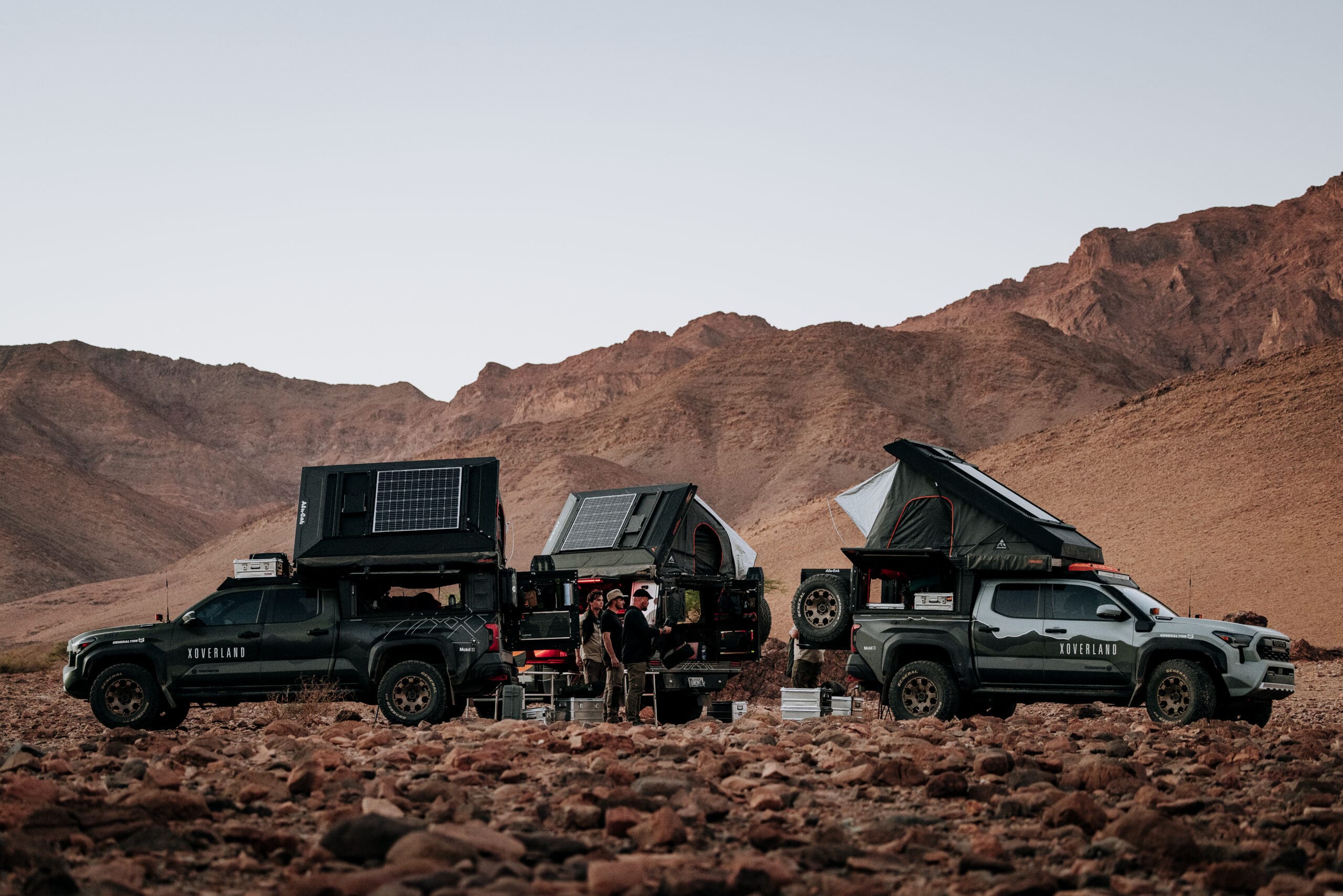
The mechanical foundation of the Milestones Expedition consisted of three Toyota trucks: a 6.5-foot bed Tundra iForce Max, a 5-foot-bed Tacoma Trailhunter, and a 6-foot-bed Tacoma Trailhunter. The truck systems faced extreme temperatures (from 10°F to 111°F), poor-quality fuel, and abusive African roads. XOverland does not leave vehicles stock; they prepare them for technical terrain and over 100 nights of camping, cooking, and remote work.
The crew’s basecamp was the Tundra, the most extensively modified of the fleet and named “Roman” for its role as the supply line for the trip. From the ground up, this truck is made to haul production equipment, feed the crew, and sleep up to three team members. That foundation begins with 35-inch General Grabber ATs mounted to 18-inch Trailhunter wheels. To help manage the weight and improve performance, a complete Icon Vehicle Dynamics CDEV system with Bluetooth app control of compression damping allowed the team to adjust suspension settings on the fly to help manage sway and control load during corrugations and on heavily potholed roads. We used the system several times a day (at times actively during intense terrain changes).

The backbone of the Tundra is the Bowen Customs tray bed, with storage compartments dedicated to the National Luna dual-zone fridge, galley, and even drone storage. Mounted to the top is an Alu-Cab habitat system with a family camper for generous living and sleeping space. It served as our mobile office for content processing, backups, and expedition logistics, all powered by a comprehensive Redarc system that includes dual 2,000-watt inverters, 450 amp-hours of lithium house batteries, and 100 amps of DC-DC charging.
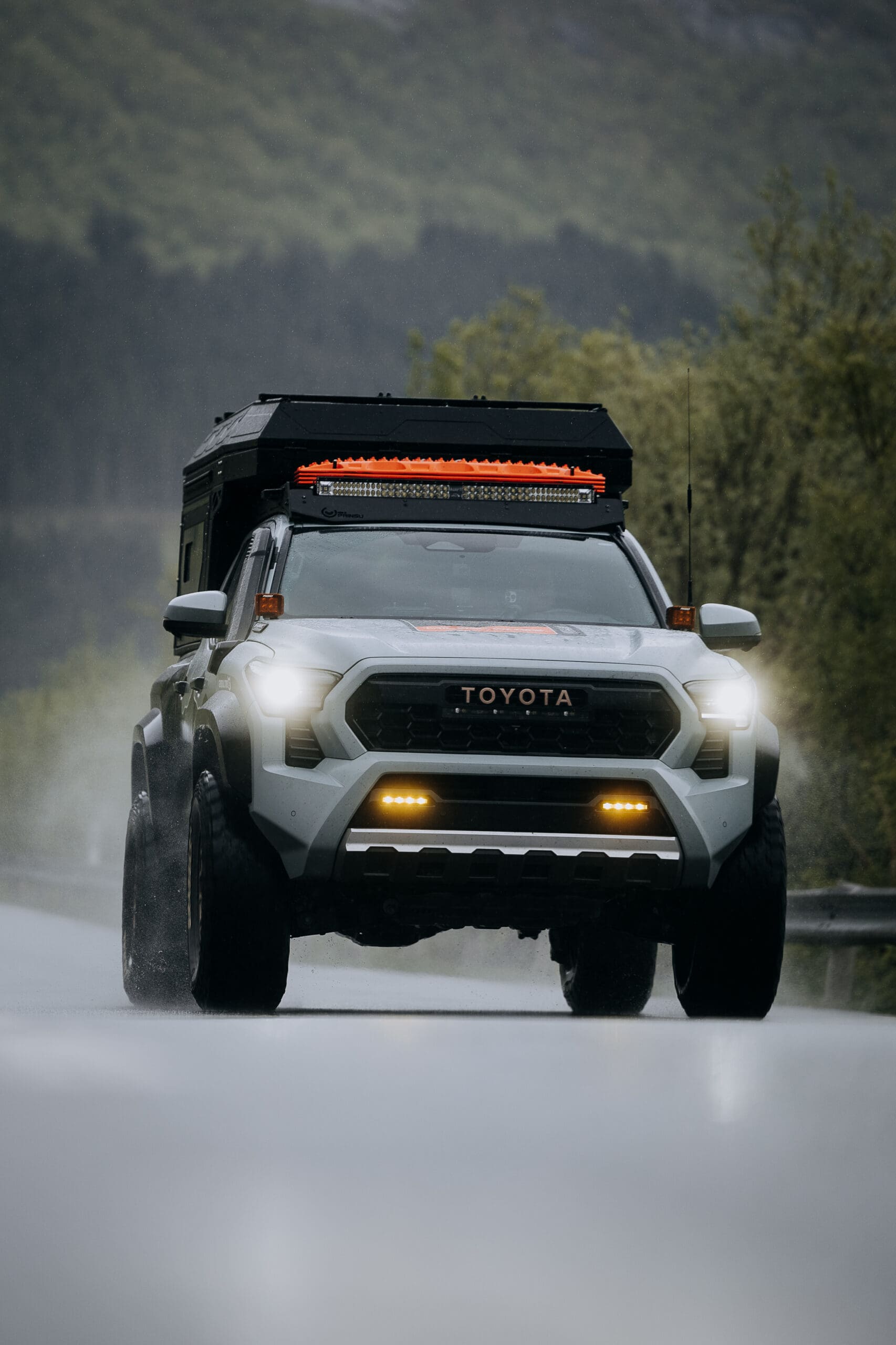
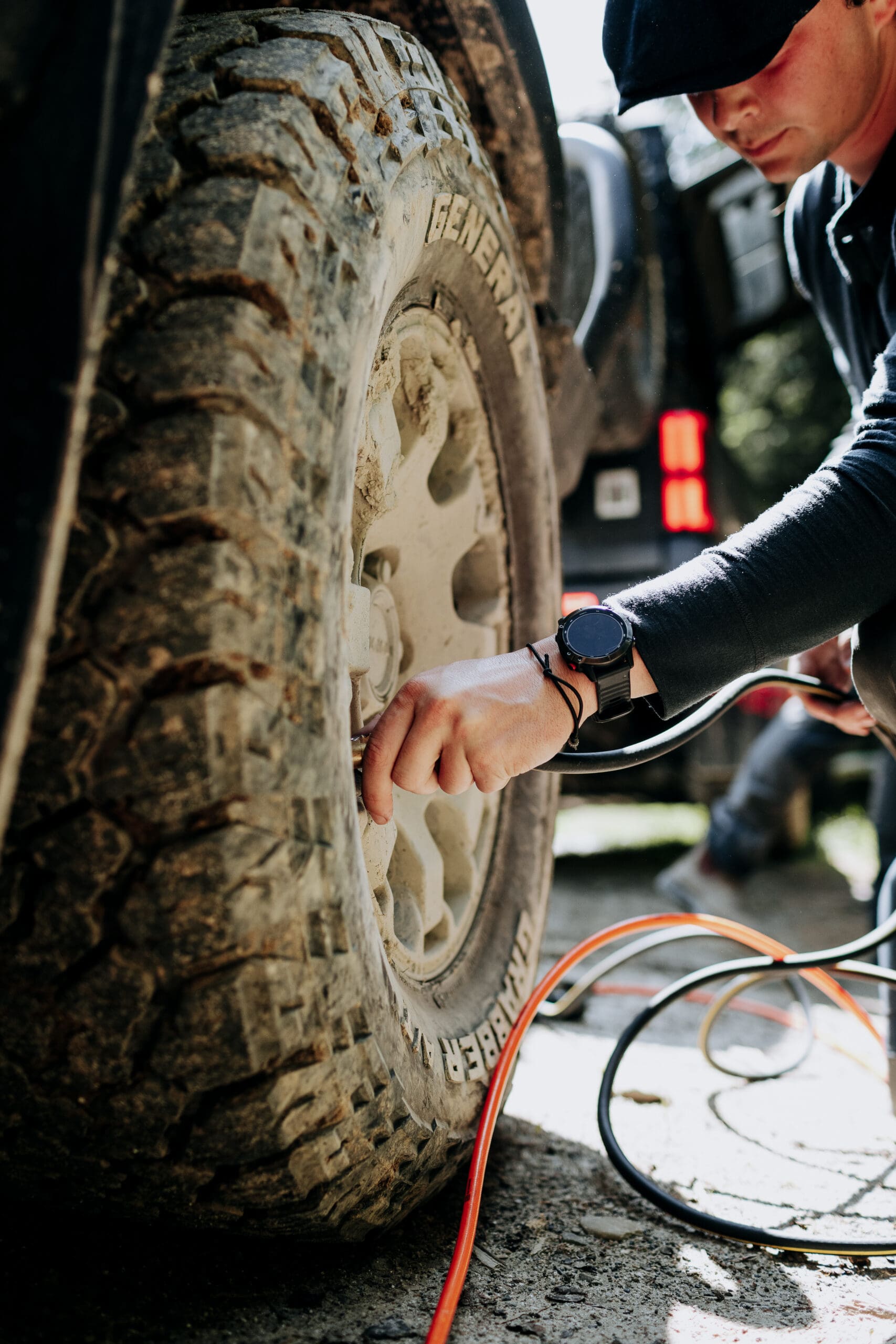
The two Tacoma Trailhunters are similar in their build, with 35-inch General Grabber ATs (same bolt pattern and wheels as the Tundra for redundancy). For phases 1 and 2, the suspension was kept stock, with only a heavier rear anti-sway bar added. To accommodate the abusive road conditions in Africa, the rear shocks were changed to ARB Old Man Emu BP51s for increased adjustability and fluid volume to survive the corrugations with the camper load. Fortunately, the Tacoma comes from the factory with most of the accessories needed for remote overlanding, like skid plates, a rear locking differential, and up to 1,400 pounds of payload.
For the habitat systems on the Tacomas, both were fitted with Alu-Cab campers, with the short-bed (“Spartan”) receiving the wedge-style camper and the six-foot-bed (“Legion”) getting the family camper. Spartan is the lightest of the convoy, and also serves as the tool and spares truck, with an array of Alubox sizes containing various hardware, spare shocks, electrical components, and tools. Tools are organized in zippered pouches and canvas rolls, with a full complement of Milwaukee power tools stored in a bin. This smaller Tacoma served as a trail scout for questionable routes and as the tailgunner in the convoy.
.
Legion has the best balance in the convoy with a longer bed and a full Goose Gear buildout on the inside. I found it to be the most flexible build with a comfortable living configuration, but with a lighter weight and more maneuverability than the Tundra. This Tacoma led the convoy for the expedition, dodging potholes and calling out hazards from the Icom radio. The Tacomas’ performance was impressive, and we never experienced a single failure of the vehicle or its hybrid drivetrain, even with poor-quality fuel. A total range of 1,000 kilometers was achieved with 100-liter auxiliary fuel tanks on each vehicle. All three truck engines were filled with the latest formulation of Mobil 1 advanced full synthetic motor oil, helping to keep them running at their best even in demanding conditions this expedition would encounter.
The expedition team is equally impressive, led by the veteran overland traveler, Clay Croft. Clay has led major overland journeys across six continents and served as our leader and director. His son, Cyrus Croft, also joined every leg of the journey as an expedition driver and social media coordinator, working each night to back up all of the footage from the day. Peter Van Stralen was present for every mile of the trip, driving the vehicles and working as the primary cinematographer. Richard Giordano is one of the most experienced travelers in the group, living full-time on the road and providing video and still imagery for the production. Throughout phases one, two, and three, other travelers joined the crew, including the legendary Land Cruiser expert and professional driver, Kurt Williams, and I served as a driver and fixer. Over the course of the phases, more than 13 team members traveled with the convoy.
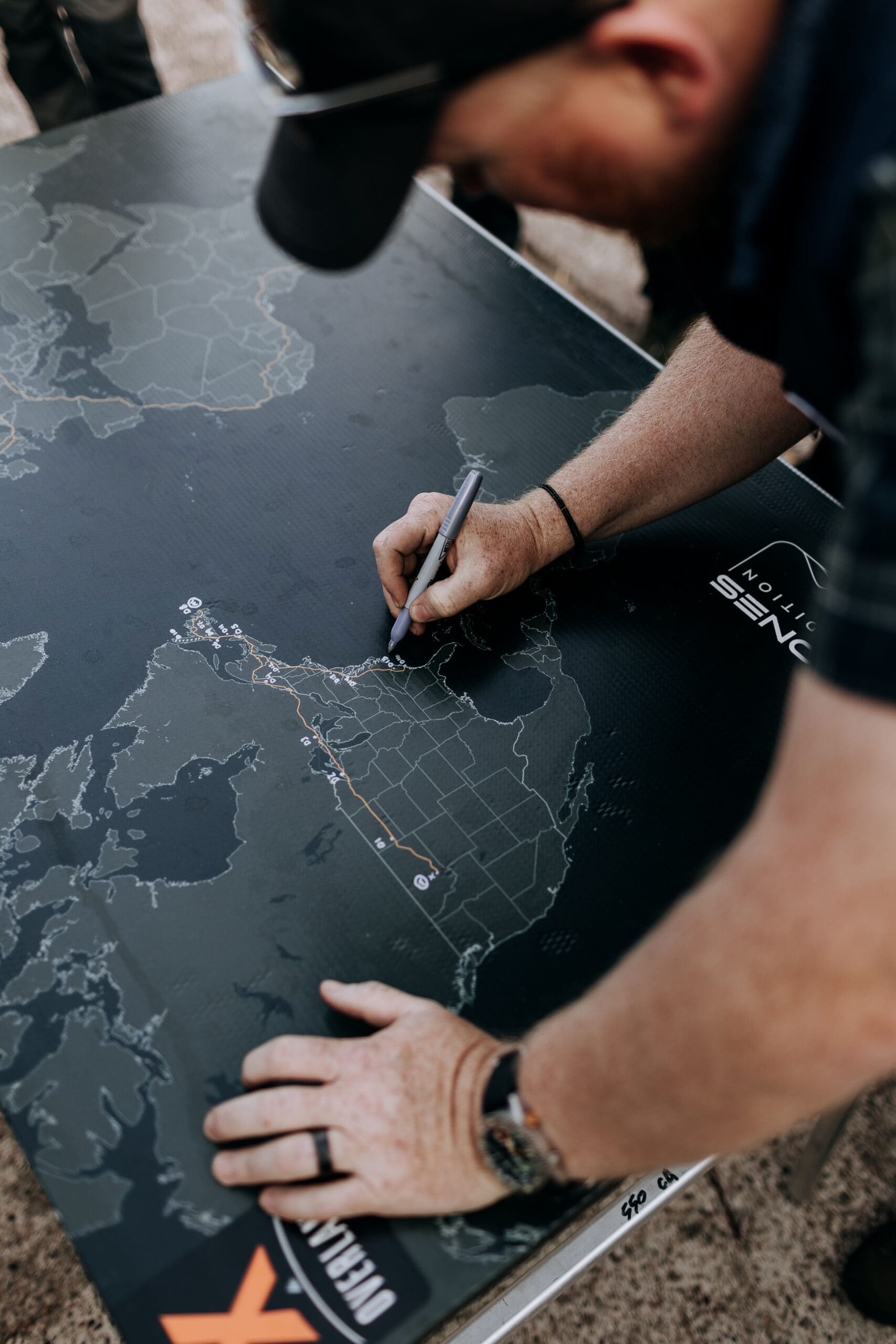
For phase one, the team left the X-Hangar in Bozeman, Montana, and drove across the USA. They crossed into Canada to begin the first segment, which also served as a shakedown for the trucks. This allowed them to test all modifications, accessories, and processes for the international miles ahead. Once the trucks were proven, the team entered eastern Canada, traveled through New Brunswick and Nova Scotia on the Trans-Canada Highway, and boarded the ferry for Newfoundland. XOverland’s goal has always been to explore the globe’s remote corners. By crossing Newfoundland, they reached the easternmost point of North America—Saint John’s.
Phase two was even more ambitious, shipping the trucks from Charleston, South Carolina, to the United Kingdom. This set the stage for exploring from London in the south to Scotland in the north. The UK is rich in history, so the team traded low-range trails for ancient castles, museums, and beautiful campsites. All that effort north paid off, and they made it to John o’Groats. It is a famous fishing village in the extreme north of the UK (the furthest point north on a road) and is known as the “Land’s End” for many expeditions. Next came the ferry from Scotland to Amsterdam and the long trek north to Nordkapp, Norway. This put the team at the northernmost point on a continent in the world. Phase two was completed by transiting Finland, the Baltics, Poland, and Switzerland, before arriving in Germany and long-term storage of the trucks. Additional supplies would be shipped in, and the vehicles would be prepped for the most ambitious journey yet: a north-south crossing of West Africa.
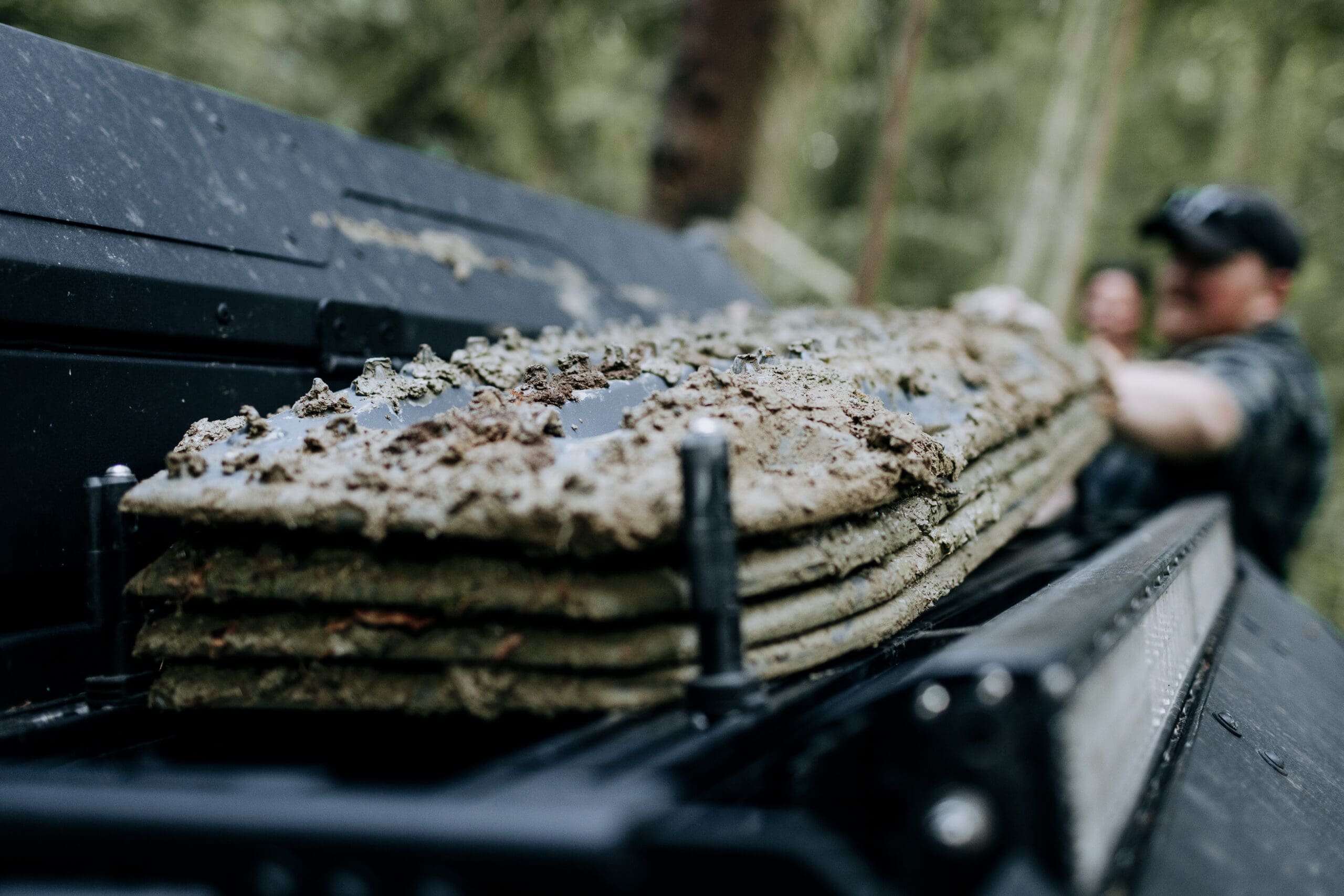
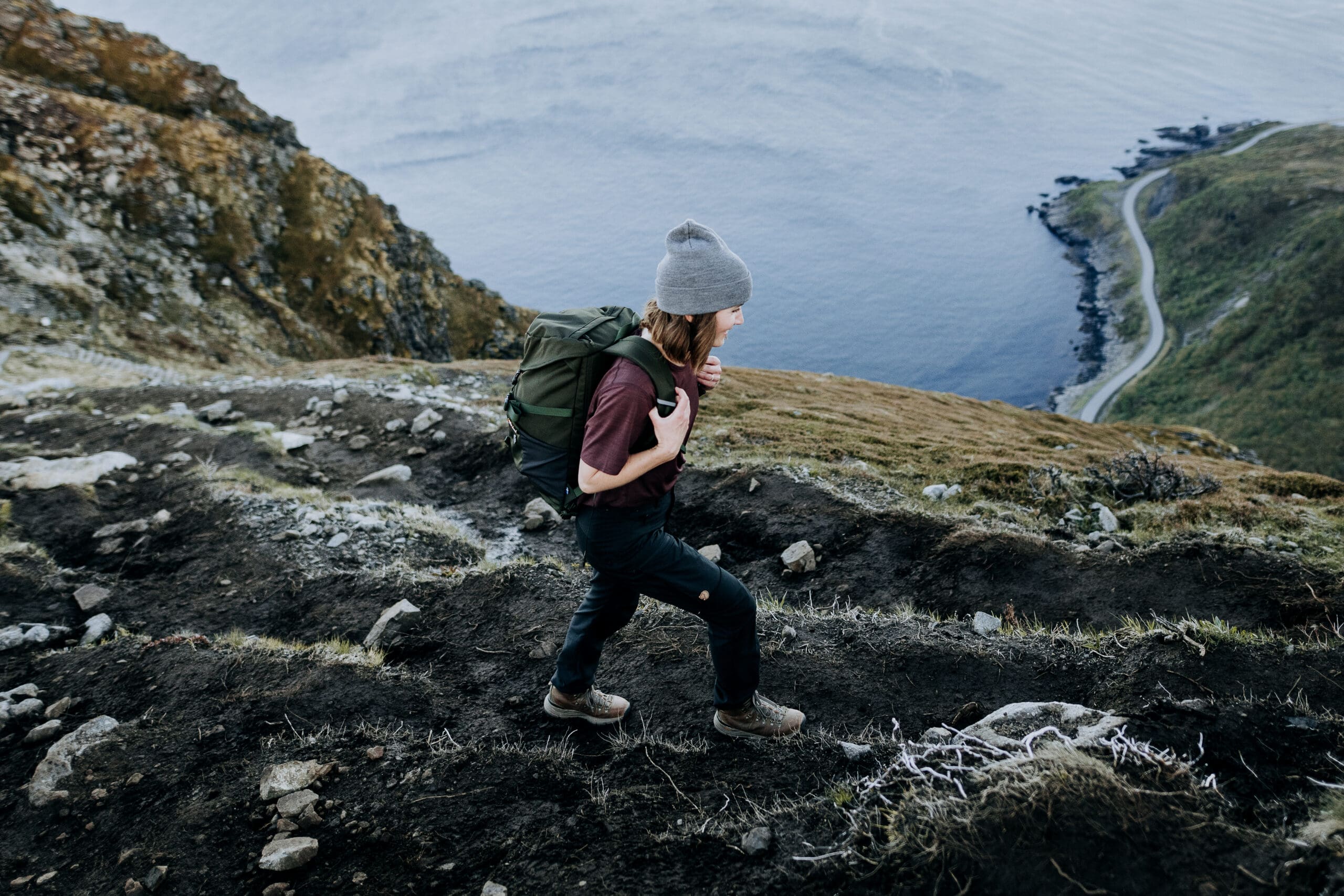
In September 2025, the XOverland team flew into Germany to make final preparations for the expedition south, installing BP51 shocks on the rear of the Tacomas and completing a thorough inspection. Issues with shipping meant the General Grabber mud tires did not arrive, so the decision was made to complete all continents with the same all-terrain tires. Further delays compressed the schedule, causing the team to make a dash south through France and Spain to catch the ferry across the Mediterranean for Tangiers, Morocco, and the start of phase three.
On October 4, I landed on the runway in Marrakech, a city I had come to love in my numerous adventures in Morocco and the Sahara. It felt like the perfect rendezvous point with the team, and I set about arranging visas and the initial logistics for Western Sahara and Mauritania. In the dusty, cobblestone streets of the medina, I sat at a coffee shop and waited for the team to arrive. Just at sunset, the weary drivers rounded the corner, and we spent the next few hours drinking tea and enjoying a tagine on the rooftop to the sounds of evening prayer. The team was now complete and ready to push south.
Over the next 70 days, we would navigate some of the most challenging bureaucracy on the planet, with 30 border posts through 15 countries, and countless embassies, consulates, checkpoints, and visas to contend with. Our timing allowed us to thread the needle of the rainy season in the north, as the downpours began in the equatorial south. We drove over 12,000 miles through Morocco, Mauritania, Senegal, Guinea, the Ivory Coast, Ghana, Togo, Benin, Nigeria, Cameroon, the Republic of Congo, Cabinda, the Democratic Republic of the Congo, Angola, Namibia, and finally South Africa. Ultimately, we arrived at Cape Agulhas and the southernmost point on the African continent.
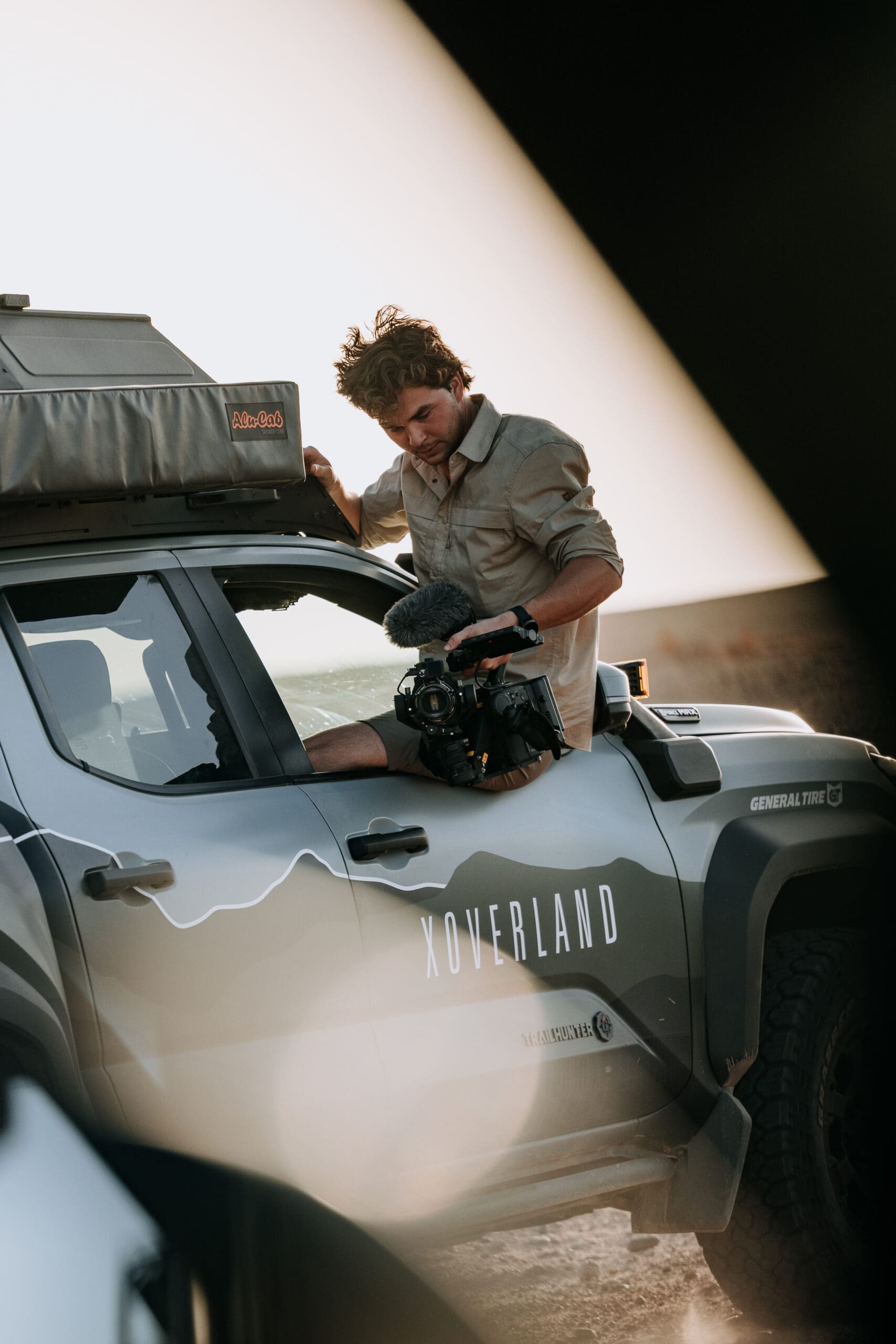
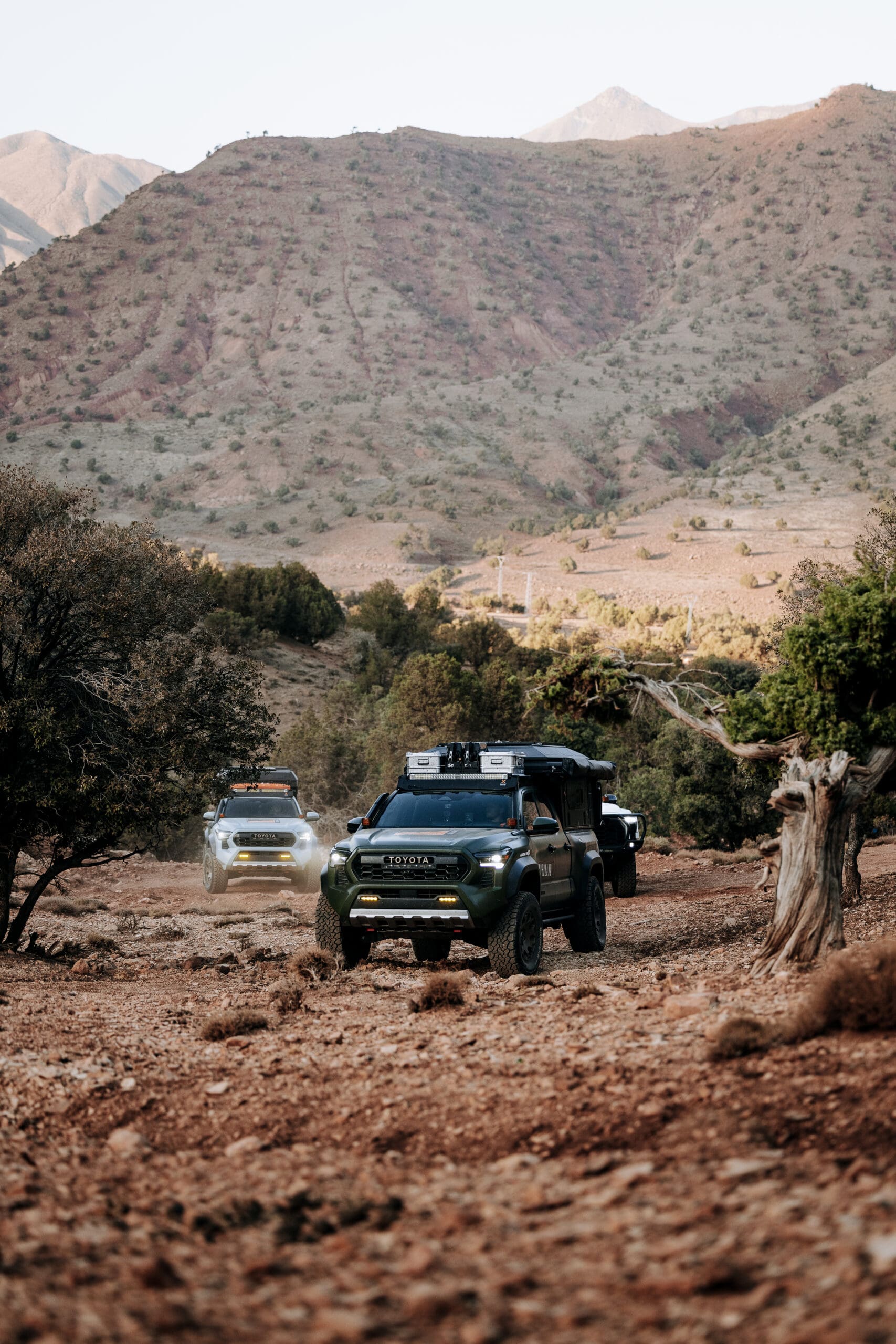
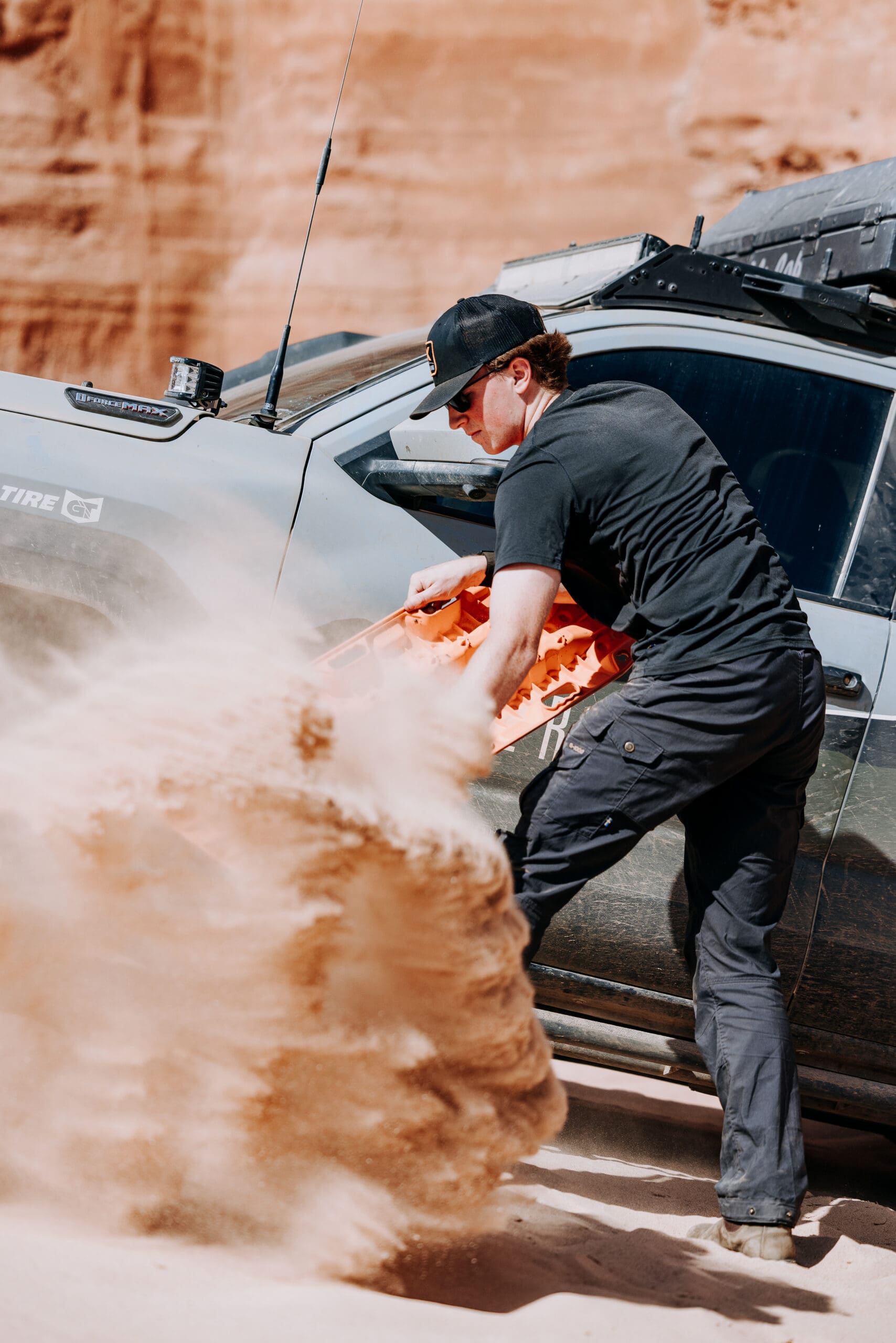
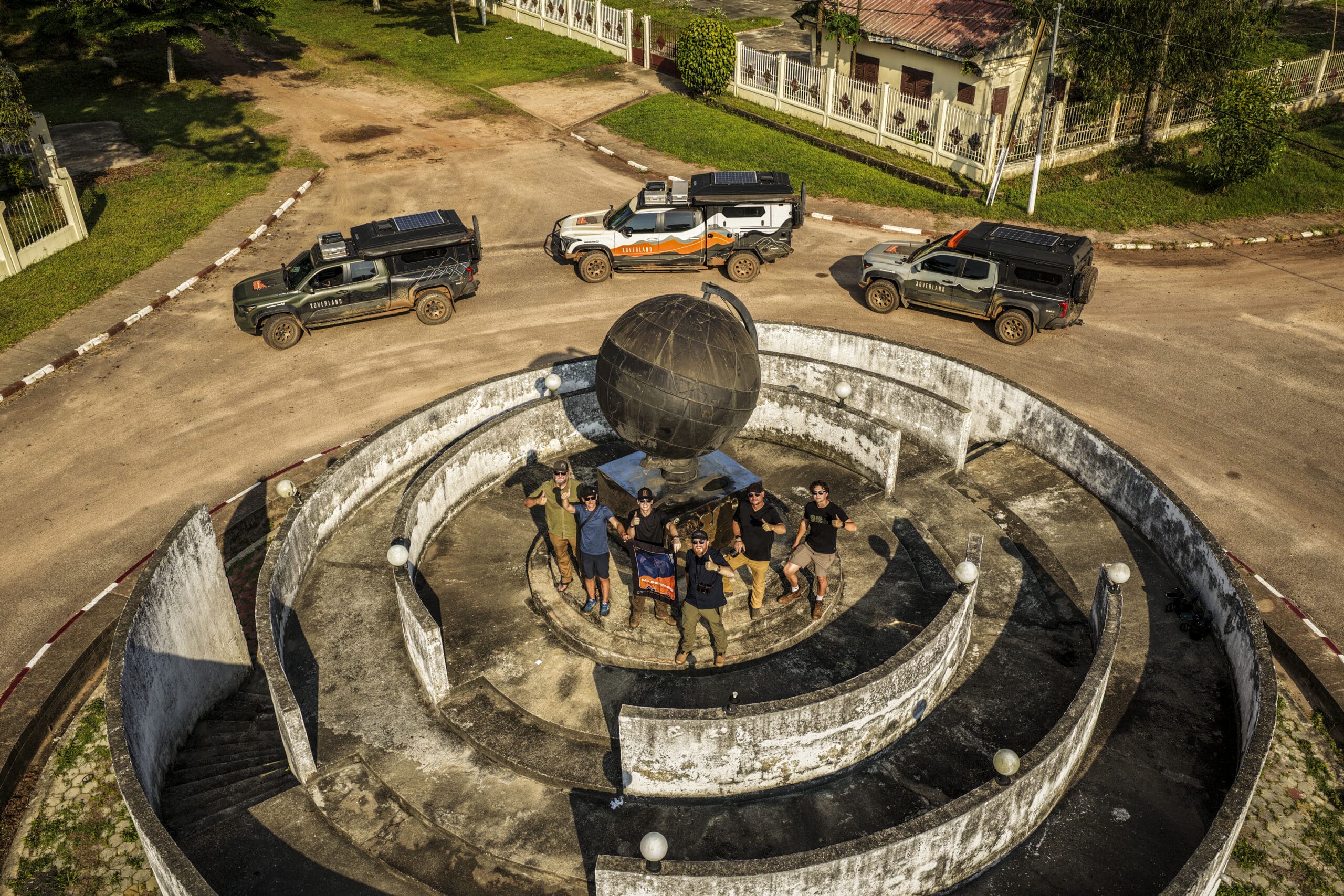
The stories from this expedition can fill volumes and will be shared in detail with future articles in Overland Journal and in video with the XOverland Apex series launching this week. This trip proved to be an incredible testing ground for the new hybrid Toyotas, and we had zero failures throughout. We also abused the General Tire all-terrains across some of the worst roads on the planet, all without a single flat. It was an honor to participate in this incredible expedition and travel with such accomplished and skilled travelers. The motto of the Milestones Expedition was to Boldly Explore. What will be your next milestone?
Editor’s Note: This article was originally published in Overland Journal’s Spring 2026 Issue.
Our No Compromise Clause: We do not accept advertorial content or allow advertising to influence our coverage, and our contributors are guaranteed editorial independence. Overland International may earn a small commission from affiliate links included in this article. We appreciate your support.
