

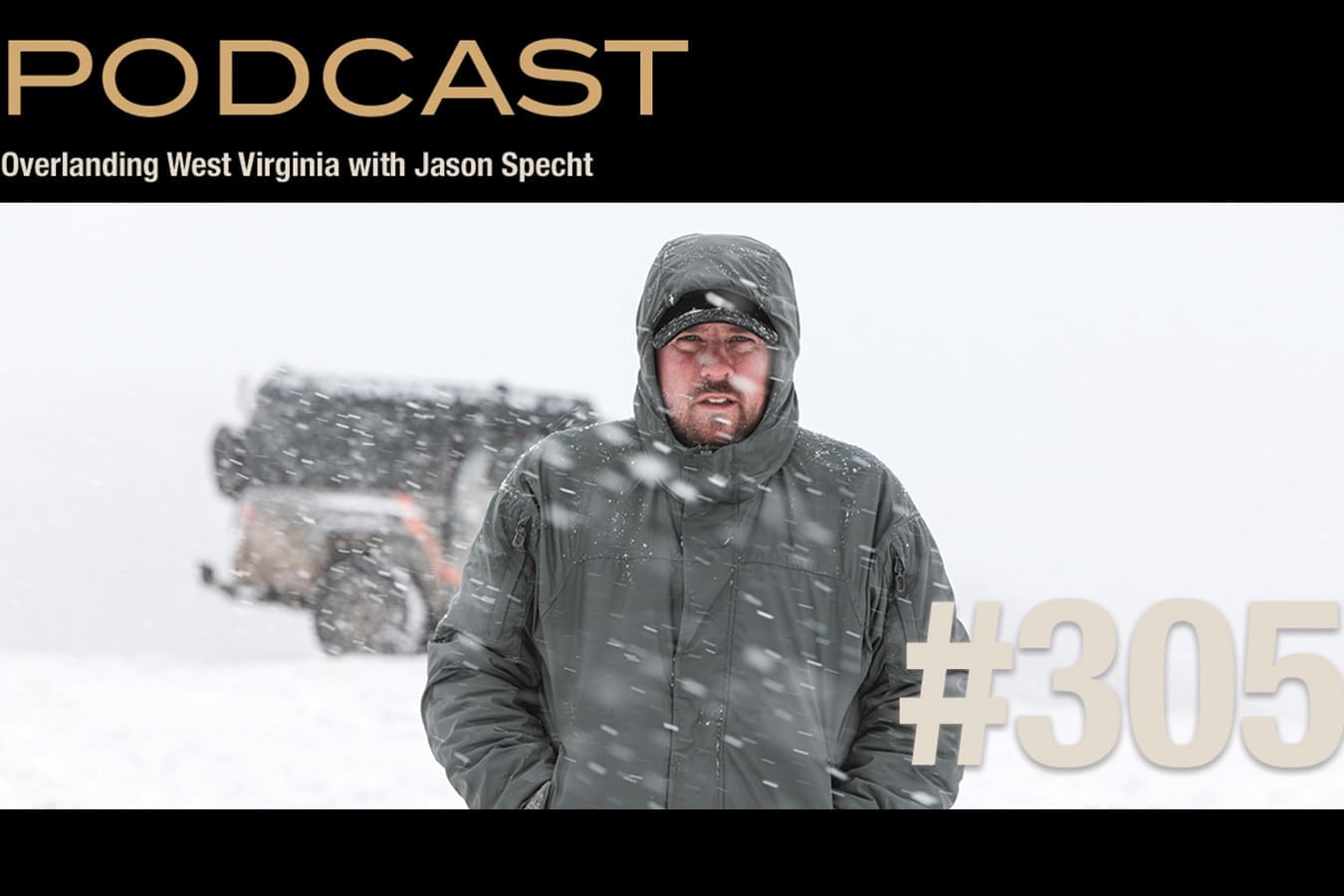
Overland Journal Podcast host Scott Brady talks with Jason Specht of Mountain State Overland at historic Camp Cheat about his origins in scouting and gear preparedness. They compare overlanding in the East versus the West, highlighting narrower trails and multi-sport integration. Specht shares route highlights like Canaan Loop and the TransAmerica Trail, emphasizing responsible travel and micro-groups. The episode explores Camp Cheat’s connection to “The Vagabonds”—Henry Ford, Thomas Edison, Harvey Firestone, and John Burroughs—who visited in 1918. Speck also discusses his Tacoma setup, community events like Adventure XFest, and the importance of guide standards and safety.
Overland Journal Podcast Episode #305
The Overland Journal Podcast is brought to you this week by Nitto Tire, Overland Journal Magazine and Hankook Tire
New to Overland Journal and want to grab a subscription! Visit Overland Journal and enter code: overlandpodcast at checkout for 20% off. We thank you for being a subscriber.
Guest Bio:
Jason Specht
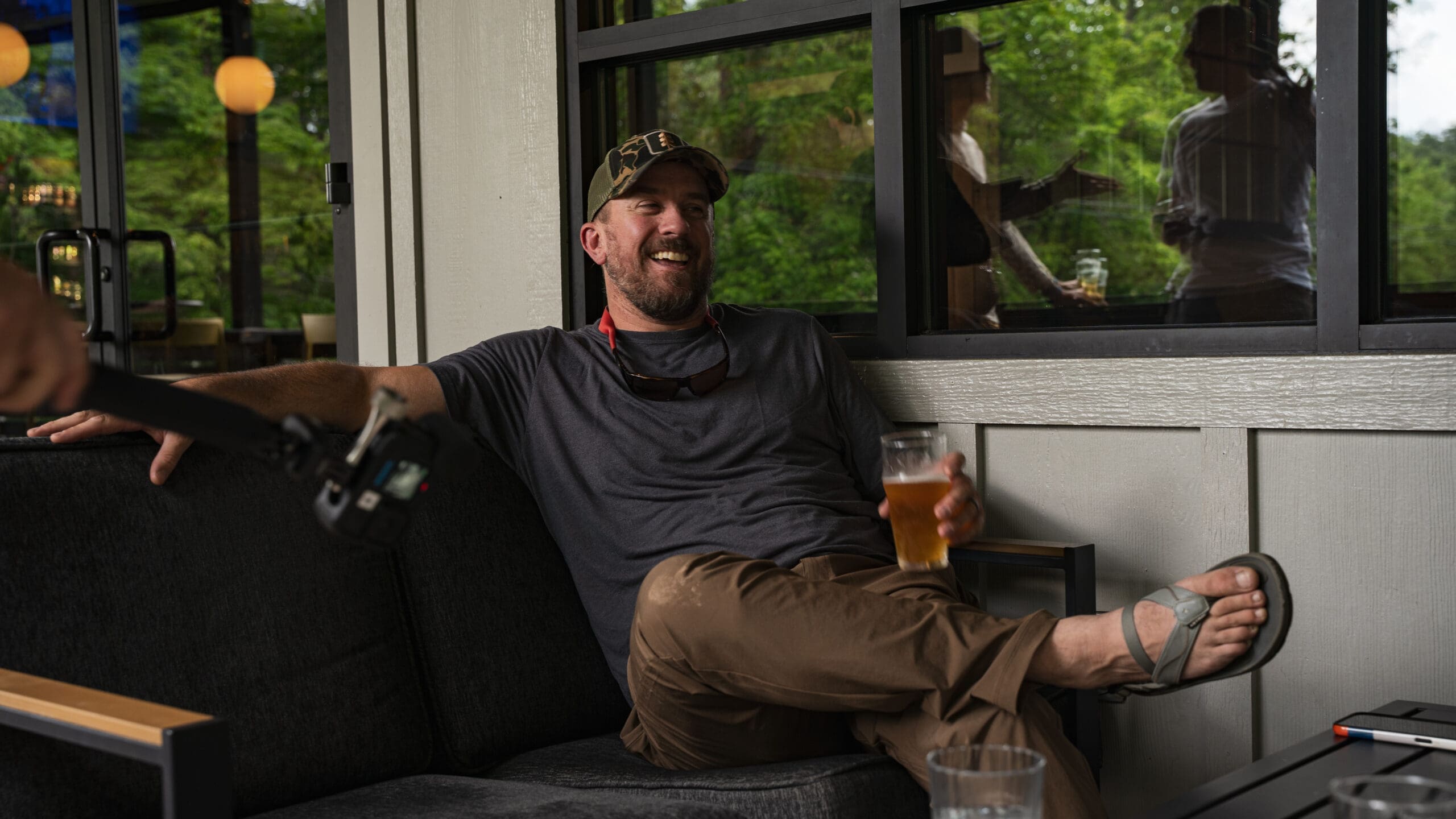
Jason Specht is a West Virginia-based overland adventurer, filmmaker, and entrepreneur who founded Mountain State Overland in 2013. He has established a major presence in the overlanding community by documenting vehicle-based travel and off-road exploration through hundreds of inspirational videos. Mountain State Overland integrates media production with guided adventure experiences, providing curated trips and outdoor lifestyle content focused on responsible backcountry travel. Specht and his team promote a philosophy that prioritizes the journey over the destination, encouraging enthusiasts to use their vehicles to discover remote landscapes. Through storytelling and film, they inspire a global audience to embrace exploration and experience the outdoors responsibly, making vehicle-based travel a gateway to new discoveries.
WEBSITE | Mountain State Overland |Instagram | Facebook | YouTube
Host Bios:
Scott Brady
Scott is the executive publisher and co-founder of Expedition Portal and Overland Journal and is often credited with popularizing overlanding in North America. His travels by 4WD and adventure motorcycle span all seven continents and include three circumnavigations of the globe. His polar expeditions include two vehicle crossings of Antarctica and the first long-axis crossing of Greenland. @scott.a.brady
Year Two of The Big Thing Is On!
Tune in Apple Podcasts | Spotify | YouTube
Transcription:
Scott Brady: [00:00:00] Hello and welcome to the Overland Journal Podcast. I’m your host, Scott Brady, and I’m here with Jason Specht. Now, Jason has been in this industry for a very long time. I’ve enjoyed watching his videos. They’ve done trips around the country but they really specialize in the East Coast, and West Virginia in particular, and I’m having a great time right now at Camp Cheat.
So this is a historic lodge, and Jason’s gonna tell us all about this incredible story of people like Henry Ford and Edison going out and overlanding in the early 1900s. So Jason, th- thanks so much for being on the podcast today.
Jason Specht: Absolutely, Scott, thanks for having us.
Nitto Tire: And a special thanks to Nitto Tire for supporting this week’s podcast The Terrain Grappler G3 is the third generation of one of overlanding’s most trusted all-terrain tires.
[00:01:00] A new compound and tread pattern delivers improved wet traction and a three-peak mountain snowflake certification. Improved uniformity reduces road noise while still ensuring performance on the road and in the backcountry. And for even bigger news, the G3 is now available in up to 37-inch sizes. But my personal favorite is the new 255/80R17 that I’m testing on my Quartermaster.
This is the first all-terrain available in that size. And since payload matters, the G3 is lighter than most competitive all-terrains. Nitto backs the G3 with their best treadwear warranty ever. That means 70,000 miles for hard metric sizes and 55,000 miles for LT
Jason Specht: and flotation. For more information, visit nitotire.com.
Thanks, Nitto.
Scott Brady: [00:02:00] Well, let’s, uh, let’s talk through a little bit of your backstory. I mean, I, I’ve known you, uh, we’ve met a few times in the past, but I don’t know your whole story. So what first got you interested in the outdoors?
Jason Specht: Oh, wow, the outdoors. You know, I grew up, you know, playing in the woods behind the house.
Scott Brady: Sure.
Jason Specht: Um, building forts just like most kids in rural America, if they have woods and forests in their backyards. Sure. But, uh, was a Boy Scout, an Eagle Scout. I would say that, that propelled me into, with the wilderness and backpacking and- Mm-hmm … that’s kind of where everything started was, you know, what can we do, human-powered pursuits.
Fell in love with white water and, you know, hiking and slowly kind of adapted that into, you know, using my vehicle to get myself places. And, uh, that’s kind of where it all started. As a team, you know, and the, the whole Mountain State Overland Project that started on the banks of a river in West Virginia.
Um, and us reflecting on, you know, other people that were, you [00:03:00] know, showcasing this overland lifestyle and this hobby. Um, so that was really the drive. The outdoor, recreation has been a big part of my life.
Scott Brady: The Boy Scout thing is, I mean, I was in the Boy Scout for a small period of time, and, uh, I just remember learning a lot from that.
I remember going to Catalina Island and, you know, I think as a young, as a young man, it’s really important, or as a young boy in many cases when you kinda get started into it, but it’s just such an important time of, of your life to be outdoors, to learn skills, to work, to learn to work as a team. You know, I grew up in Los Angeles, so I was in the city.
So to be able to go with my dad out on a scout trip, um, and learn something or, or just be a little uncomfortable I think is important. What would you say are, some of the things that the scouts, taught you that you’ve, brought throughout your whole life?
Jason Specht: Um, I think it just opened up a world of opportunities for me in general [00:04:00] preparedness.
Yeah. Like, I mean, just, you know, the motto is, like, be prepared.
Scott Brady: Yeah.
Jason Specht: You know, it built confidence. It built know-how. You know, everything from, you know, starting a fire to properly packing your backpack so you can, you know, lug the weight over 20, 30, 40 miles, right? So, those simple things, understanding equipment.
Talk about equipment, I mean, if we talk about that with overlanding, the options are- Yeah … endless, right? Sure. And I think that, you know, it really opened me up to being comfortable generally. There was merit badges about everything, some things you didn’t wanna learn about. The project itself for, you know, Eagle was very time-consuming.
We were under the gun, under stress, like, right before my 18th birthday. I remember all that very vividly. Um, but more, more importantly, I think just general preparedness. Yeah.
Scott Brady: Was there a favorite merit badge that you got, one that you look back and like- … “That was cool”?
Jason Specht: I know my least favorite-
Scott Brady: Let’s do that
Jason Specht: was, was personal finance. And [00:05:00] I think that’s still my weak point today. Ah,
Scott Brady: that’s fair. That’s fair. Um- We all have our strengths.
Jason Specht: Yeah, I don’t know really what would’ve been my favorite. I think the wilderness, as we t- start talking about Camp G here w- we’ve got, uh, our friend Rick Stowe is out with our guests right now.
They’re foraging, you know, through the wilderness, and he’s teaching them, you know, how to build a bow and drill and, you know, how to start a fire with flint, you know? And, um, that, that experience, I was actually watching Rick and thinking, like, it was so cool when I was a Scout and I was doing wilderness survival, and they just stuck us out in the woods with a box of matches, and they said, “We’ll come check on you guys in the morning.
Good night.”
Scott Brady: Wow.
Jason Specht: And so we had to build our own little fort. And we had, like, a, one of those sleeping sacks or whatever, you know, the emergency blankets, right? Yep. But I was like, yeah, that was fun ’cause that’s what I did as a kid when we first started talking, was, like, we went out and we built forts in the backyard.
You know, that’s just what we did, so that was my favorite.
Scott Brady: And I think that, you know, for those that [00:06:00] are listening, uh, w- when you consider the equipment that you’ve purchased through the years it’s the training and the testing of the stuff in the field that is one of the most important components of it.
I think the more that we learn, the less stuff that we actually need to bring. But, y- you know, if you’ve, if you’ve got a winch on your vehicle, when’s the last time that you used it?
Jason Specht: Yeah …
Scott Brady: not when you’re under duress and you’re stuck, but, like, let’s set up a scenario.
Jason Specht: Yes.
Scott Brady: Um, I’m gonna set up a scenario where we’re pretending that the vehicle is stuck, and I’m gonna pull out all my gear, and next thing you know, like, oh, shoot.
Like I remember I took that shackle out and I let Jim borrow it or whatever. Uh, if we, if we use our equipment and when we’re not using it in anger, we’re not using it under duress, when we’re using it in a training environment or in a testing condition that’s so important to keep those skills sharp.
Jason Specht: Yeah, and it’s like you said, like what did you get out of scouting that’s helped you be where you’re at today? It was like feeling [00:07:00] comfortable about using the equipment. Yeah And you know, the winch is a perfect example ’cause everybody feels like they need to have it. Yeah. But when was the last time you spooled it out?
It’s not packed with mud. Is your, is your remote, if you have a remote, is it… Where is it? Is it charged? Is it ready to go? Is your abrasion guard- You know, squished up in the spool. Like, you can’t… Can you pull it out? Like, all of that stuff, ’cause when, when, when things go sideways, you need to be prepared, right?
Like, that’s the whole idea. That’s right. So we’re constantly, you know, on these trips that we do, we walk our th- our guests through all of that in the beginning, and saying, like, “You have all this equipment. Let’s get your recovery equipment out so it’s there when we need it, so we can improvise and we can handle this matter and get you out safely and quickly.”
Scott Brady: One of the things I love from this morning, uh, with the, the, teaching Rick is doing is all the things that they’re using the knives for. Like, they’re doing notching, and they, they w- had to go out and get a basically a whittle stick to try a bunch of different techniques. And, you know, he talked a lot about [00:08:00] safety.
He talked a lot about kinda making sure that there’s no one around you that you might accidentally injure, and then w- how to be really careful about not injuring yourself. But you think about at the end of the day today, these people that are… And we’ve got about 20 people here, don’t we?
Jason Specht: Yeah, 16 guests, and we have six, uh, yeah, staff members, and then there’s actually staff that are cooking dinner- Yeah … for us here, too,
Scott Brady: so there’s quite a few y- people that are learning this skill today.
Jason Specht: Mm-hmm.
Scott Brady: Uh, and they’ve probably never used their knife in that way. They’ve opened a lot of Amazon boxes, I’m sure.
Mm-hmm. But, like, how many times do we really use our knife to create something? In this case, I saw them, creating, um, you know, kindling for starting a fire. Yeah. They’re learning how to use the blade properly. And that’s one of the things when I saw the, the lineup for this trip, I’m like, that is really cool to be able…
Or even tomorrow to be able to go out and do some fly fishing. And I’m, I’m starting to learn through the years that’s one of, that’s one of the big differences [00:09:00] between overlanding in the West and overlanding in the East. I think that you guys in the East do a really great job of incorporating other things into the trip.
Jason Specht: Yeah.
Scott Brady: History.
Jason Specht: Yes.
Scott Brady: You know? Yeah. I, I remember touring a w- you know, this is with, uh, Bowlers up in Vermont- Oh, right … but I remember tour- touring a, you know, a, a maple tree, you know, a ma- maple factory, you know, where they had all the lines coming out of the trees. Hanging through
Jason Specht: the forest-
Scott Brady: That was amazing
Jason Specht: and you were driving underneath of them. Yeah,
Scott Brady: absolutely. It was super amazing. Yeah. So, in your experience, ’cause you’ve done a lot of traveling out West and, of course, traveling out h- here East a lot- … what do you find are the major differences, not only in the experience, but in the, in the people that are overlanding in your customers?
you find are the differences?
Jason Specht: I think I think we could talk about, a little bit about that, and include also, like, the difference in the landscape. Like, so, we’re very fortunate on the East Coast to have lots of moisture.
Scott Brady: Yeah.
Jason Specht: Um, so we can have a campfire every night.
Scott Brady: Yeah.
Jason Specht: [00:10:00] There are some exceptions, you know, at times and we like to cook over the fire.
That’s definitely a luxury that we have here.
Scott Brady: Sure.
Jason Specht: We have lots of, you know, public roads that cross creeks, and streams, and things like that, and that’s all done responsibly. You know, but y- as far as the people go, I don’t think, you know, it’s any different. I think, um, you know, I think you have a lot of bigger rigs out west, ’cause you’ve got wide, vast, open landscapes- I’ve noticed that
without trees, right?
Scott Brady: I’ve noticed that. Not very many full-sized trucks here just because the trails are quite narrow.
Jason Specht: Yeah, they are. We have lots of forest roads here in West Virginia in particular. When you get up into Vermont and things- Yeah … like that, as you’ve experienced, the Class IV roads are really tight.
Scott Brady: Yeah.
Jason Specht: Um, but it’s not out of the ordinary to have… We got a Tundra out here right now. Sure. Two Tundras, actually, uh, both with alley cab units on ’em. So they, th- we got clearance for it. You know, sometimes there’s trees that are down. It’s not uncommon for us to… I think Jerry from Timbo Tusk was on a trip with us two years ago.
We were in [00:11:00] Utah, and he was kinda laughing because we had chainsaws. He’s like, “I go with people all the time, and they got chainsaws, and they never use ’em.” I was like they don’t live on the East Coast.”
Scott Brady: Sure.
Jason Specht: Um-
Scott Brady: Or even in the Pacific Northwest, the ti- Yeah … the nu- amount of trees- Oh, yeah … I’ve had to winch or cut out of the way in the Pacific Northwest, too.
Jason Specht: Yeah, vast. You’re right. Yeah. I mean, even on the last trip that we did here in March we cut down 15 trees. cut out of the way 15 trees. We didn’t cut down 15 trees- Yeah, sure … but we cleared them i- you know, in conjunction with winching, you know, winching them out too. So that’s, the, that’s ordinary for springtime as we’re clearing the path, you know, for other, motor vehicle enthusiasts.
Side-by-sides are real big here in West Virginia as well. So we’re kind of like, kind of forging the way for everybody when we go on some of these tracks so that they can go and they’re like, “Oh, I don’t have to worry about cutting these trees down. Somebody did it for me.”
Scott Brady: One of the things I really enjoyed about the conversations so far is, you know, you’ve got a lot of [00:12:00] very interesting professionals that are here.
You know, people that have in some cases, very high-stakes jobs or they’re working in the government or you know, they’re running their own business or they’re, managing finances for, for entire families. So these people are under a lot of pressure. You can tell. And they’re, they’re also relieved to be out in nature right now- Yeah
’cause they’re otherwise are in a, on a commute in a g- in gridlock,
Jason Specht: yeah. It’s, uh, was really interesting this morning as Rick was leading the, first bushcraft session and watching all of these, grown adults on vacation, but in a class setting outside beside a tarp, carving with knives and doing it the right way.
And just watching and observing, you know, these people being instructed and just- Mm-hmm … loving every minute of it. Yeah.
And like you said, you know, they’re, We get a lot of, um, DC folk. We get a lot of traffic from North Carolina even New England now too, [00:13:00] and in the Southeast too.
Mm. So down Atlanta, we’ve got some folks from Ro- Rome, Georgia here too. But just a wide variety of like, different, lifestyles, you know, family scenarios, careers, and that’s what’s most interesting. You’ve got a doctor sitting beside a software engineer sitting beside a account manager- Yeah
sitting beside, you know, whoever. And we’re in this fantastic- three-story lodge from the, you know, late 1800s right now. It’s amazing.
Scott Brady: Yeah, and the history is, I mean, just when Jim, from OK4WD, I’m, I’m traveling, for those that are listening, I’m traveling with Jim from OK4WD down here from, from New Jersey, and we, drove the Grenadier and stopped at a bunch of these little towns along the way.
And, you know, you go to get coffee, and you walk by an inn from 1736. That is cool.
Jason Specht: Yeah.
Scott Brady: You know, I live in a very old home by standards of the West, and it was built in 1914. So- Yeah … you know, it, you know, hundreds of years [00:14:00] newer, and it’s a very old home in Arizona.
Jason Specht: Yeah.
Scott Brady: Uh, but out here it’s a pub.
Jason Specht: Yeah. You know, and then there’s, there’s… We’ve had this conversation a couple times, you know, specific to this area, West Virginia, I feel like a lot of the rich history is more recent than other states along the East Coast. Mm. Like, you would talk about, you talk about lumber and coal mining still, happening today.
You know, a lot of that, you know, history on the New River in Thurmond, West Virginia, where, where all the big timbering was done- Yeah … up here in Canaan Valley and stuff like that, that’s all very recent, you know, within the last 100 years. Oh, interesting. Sure. This wasn’t, like, 200, 300 years ago. This was…
It feels- not too far away. Yeah.
Scott Brady: Very virtual. You know what, an interesting thing for me, and I’m really grateful to be here in West Virginia, my, my grandfather, my mom’s dad he grew up incredibly poor. And he grew up in West Virginia. Like, they called it the earl- the West Virginia settlers.
Like, these [00:15:00] were … they, they just didn’t have a lot of resources, and his dad died very young. And, you know, his mom, his mom couldn’t afford to feed him, so she took him into the recruiter’s office as was, as World War II was ripping. She lied about his age.
Jason Specht: Oh, wow.
Scott Brady: And off he went, ’cause she couldn’t afford to feed him anymore.
Mm-hmm, mm-hmm. So, you know, I have never had the opportunity to really spend time in West Virginia and think about I … And I was trying to do some research before I came. Like where was my grandpa living, yeah. And there wasn’t a lot of information. He didn’t even have a birth certificate, which is why she was able to, you know- Yeah
fib about his age. But pretty incredible the history here, and even that touches my own life and my own family history.
Jason Specht: Yeah,
Scott Brady: wow. Yeah. Very cool. But I’ve never really had a chance to, to drive around and check it out, so this is really cool.
Jason Specht: This is cool. We’re glad you’re here. I mean, this is, um … West Virginia is a very special place to me.
And, you know, we’re really focused on, community and, you know, introducing people to all the [00:16:00] opportunities that are here. Yeah. ‘Cause there’s endless recreational, you know, opportunities here in the state.
Scott Brady: Well, and you’ve done a great job of that. You’ve done a great job of really fostering community, and I’ve seen you do that through a bunch of ways.
You have fantastic videos that you … That document your adventures in the east and in the west. I mean, around, around the country. Uh, but then you hold these events on a regular basis that brings in people and starts to expose them to overlanding. So you’ve really found a way, … And that you support sponsors, and you help develop product and test product and document it.
So you’ve found a way to, to create a really great business. But one of the things that I was really curious about is if you could think about somebody from the west or somebody who’s moving out east, ’cause surprisingly there’s a lot more people now moving east, uh, from the west, uh, because there’s y- more affordable housing.
You know, there’s great history. You know, you could … A lot of lakes and, if you like the water. You know, there’s a lot of reasons to move back east. But if you were to give, like, a, uh, a top three to [00:17:00] five … And let’s take as much time as we need, ’cause I think people listening will find it fascinating. Three to five great trips.
I mean, just epic overland trips. They don’t have to include a bunch of four-wheel driving, but if they do, that’s great. But, like, what are your top three to five routes along the west, or along the East Coast that you think are the ones for people to check out?
Jason Specht: Well, so we have, we have a catalog of, you know, different routes that we host specific to our guided trips.
There’s that as a resource. We’re always willing to help people- Yeah … you know, if they’ve got questions about things.
Scott Brady: And is that on your website, or?
Jason Specht: We, it’s pub- people will just email us and ask us- Oh, got it … and contact us- Okay, got it … or ask us questions. You’re starting to see things with OnX, people publishing- Mm-hmm
some routes and locations. You know, a popular location in West Virginia, which many people know about, is Canaan Loop in the Canaan Valley area. Hopefully we’ll be taking you through there on your visit. There’s- Let’s
Scott Brady: talk about that a little bit. What’s… Tell me about the loop and what do you see [00:18:00] along the way, and is there dispersed camping available, those kinds of things?
Jason Specht: Yeah. So, so there the loop road is a public road that starts in, Black Waterfalls State Park, um, and then navigates into National Forest and then ends out, you know, on pavement. So it’s a loop starting from pavement, and then ending at pavement, right? So it’s a combination of, kind of gravel, uh, rough sandstone, black water, creeks and springs that you drive through, which is really cool.
It’s a nice experience. Um, not anything that’s uberly, uber technical. Um- That’s
Scott Brady: okay …
Jason Specht: but it’s beautiful. As long as the view’s beautiful. Yeah. It, it feels like you’re kind of in a rainforest at times.
Scott Brady: Yeah.
Jason Specht: Um, you know, we have a lot of rhododendron and mountain laurel in this state. Um, so you’re constantly, like, you know, pushing through, you know, these y- this vegetation.
It, uh, right now there’s actually construction on the upper end of Canaan Loop. But there’s another road that leads into that. So tho- those two routes, you know, these two roads I’m talking about, [00:19:00] I think are available on onX. Um, you know, I’ve been trying to work with the Forest Service and Tread Lightly to encourage, you know, onX to actually have them, you know, direct traffic one way so that we can maintain our impact on the land.
Mm-hmm. ‘Cause sometimes you’ll run into other vehicles. But, you know, you’re out in Utah on BLM on some of these tracks, and they’re really narrow. Yeah. You still gotta find a way. Somebody’s gotta back up. Somebody’s gotta move out. Yeah. Um, but this area is very sensitive to if you get off trail, you get bogged down, and then- You could do a lot of damage … those tracks stay there. Yeah, you could do a lot of damage. Um, so we try to constantly advocate that. Whenever we run trips through that area we break down our group into micro groups, so we don’t drive with more than five vehicles on any of our trips.
Scott Brady: Mm.
Jason Specht: So we break that group down into two or three vehicle groups.
And then we stagger them by like 30 minutes, so it gives them an opportunity to pass through in case there’s on- oncoming traffic. Sure. And then we send the next groups [00:20:00] through. So, we’re… we loved Canaan Valley, but you know, we’re really focused on kind of protecting that. Yeah. So that’s, that’s a beautiful area.
You know, there’s, there… e- endless opportunities in the Spruce, um, and Seneca Rocks National Recreation Area. I think there’s like 300 miles of total gravel. I couldn’t believe how beautiful those rocks were. I mean- Yeah … and there was a, a… Jim and I stopped there. Seneca Rocks, yeah. Yeah. Yeah. Jim and I stopped there, and there was this like 100-year-old, general store still run by the same family.
Scott Brady: I think they were getting ready to prep generation number six to run the store. You know, and they had a, they had a cash register in there made out of bronze and brass and metal from like the early 1900s. It was awesome.
Jason Specht: Yeah, the creaky wood floor.
Scott Brady: Yeah.
Jason Specht: Yeah.
Scott Brady: That was so cool. And it, it was it looks like it’s a really popular place for, you know, for rock climbers and people to get out and explore.
That’s great.
Jason Specht: Yeah. The, uh, Seneca Rocks area is beautiful, and so that area is a in, in conjunction with the Spruce [00:21:00] Knob Recreation Area, so they call it the Spruce Knob-Seneca Rocks National Recreation Area. And then Spruce Knob is the summit of West Virginia, so it’s the highest point- Hmm … in the state.
And then once you get on that plateau, there’s some sections that you would drive through pasture lands that you’d feel like you were in Ireland.
Scott Brady: Wow.
Jason Specht: You know, not too far from, from there in Canaan Valley is Dolly Sods Wilderness. So we’re, we’re not talking too much about overlanding routes right now, but the Dolly Sods Wilderness is kind of like an Alaskan tundra landscape as well.
Scott Brady: Wow.
Jason Specht: Um, and there’s a lot of cool, you know, history about how that land became what it was. There’s the Mid-Atlantic BDR, which runs through through West Virginia, basically down along the border of Virginia too. Um, and- And how long
Scott Brady: is that route approximately?
Jason Specht: I don’t know how long that is. I think that’s a couple hundred miles or so.
Yeah, sure. I haven’t driven that, but we’ve been on a lot of those roads. The Trans America Trail starts-
Scott Brady: It does …
Jason Specht: not too far away from here. Yeah. And we’ve spent a lot of time on the Trans America Trail over the years. Um, so there’s a good opportunity to-
Scott Brady: [00:22:00] That’s one of the coolest things I’ve done in my life.
I mean, if s- someone has a chance to, ’cause it takes about five or six weeks to do it, even on a motorcycle, ’cause you’re gonna, you’re gonna be on 5,000 miles of dirt.
Jason Specht: Yeah.
Scott Brady: It’s unbelievable.
Jason Specht: Yeah, it is. You know, and but there, there are so… S- specific to this state, West Virginia, there are so many roads and places to travel that are earthen surface, gravel, dirt.
And then, you know, by chance a lot of the time when we map routes, we find, abandoned roads that are, you know, very primitive. Mm-hmm. You know, that’s when it gets really fun. I think the, the most exciting thing for us about overlanding, as we’ve, you know, been doing it since like 2012, 2013 and, kind of creating this business, is the discovery process.
You know, I think people really are excited about like, “I wanna overland now. I want to build my truck now and I want a route so I know where to go.” For me, overlanding is discovering. Mm. It’s like [00:23:00] building a route using Google, pinning two points and finding the windiest back road you possibly can, and then seeing what happens.
And then when you get out there and you actually have to put it in four-wheel drive, or you have to cut a tree out of the way, or you’re scurrying to find a campsite in the middle of the night- Sure … like that’s when it gets really exciting. Mm. You know, that’s when it’s really special. So I try to talk people through that, but, you know, there’s so many resources out on the internet now you know, to help you build those routes and those locations or, that you wanna go, but I try to preach that because that’s really what’s fun.
Scott Brady: And there’s a lot of people that live- out east and they’re looking for a place to go.
I mean, some of our most popular content was, uh, we published a series of routes in Texas, and they’re just… Like, no one had really put the content out there. Mm-hmm. You know? And next thing you know, you got, like, an article with a million views. It’s like, it’s just unbelievable how [00:24:00] hungry many parts of the country are for these kinds of routes.
It’s just not, not really available. You think about Arizona, there’s lots of great documentation and books and, there’s three different books that cover the same route. Whereas, uh, here, there’s just not as much information, so it-
Jason Specht: There’s not. You know, I, I remember going to Charleston for the first time to kind of advocate for adventure travel.
And I was standing up in front of the crowd introducing, you know, who we were at Mountain State, and it was, like, 200 people or something. And I was just like, you know, “We’re… We love this state so much. We’re so happy to get people to come here and explore, you know, the Mountain State.” And it was just kind of quiet, and then people…
I didn’t know how to take it.
Scott Brady: Yeah.
Jason Specht: Because these are all locals that, like, live here, and they’re like Yeah, but we don’t want people to come. Not that they- Gotcha … not are inhospitable, but they just like, “This is our secret,” yeah, interesting. I mean, in West Virginia, driving the roads I like to I get this from farming out in [00:25:00] Nebraska, like everybody waved at everybody.
When you’re driving down the road, lift two fingers off the steering wheel. Yep. And that was always like it shows to me that people are welcoming you in their space.
Scott Brady: Yep.
Jason Specht: And that’s what’s funny though, you know, I had that experience at the capital, but everywhere I go in West Virginia, I always, I gauge my environment wherever I go by waving at people all the time.
Mm-hmm. See, like, what’s this place like, right? So you start waving, and people just wave back. And people pull up to the gas station, they wanna know what your truck’s all about. Sure. Like, “Where are you going? Where have you been? What are you guys doing?” So you know, it’s, it’s fantastic. Yeah.
Scott Brady: Oh, I would agree.
I mean, so far it’s just been beautiful. I mean, the fact that we’re in a… And we’re gonna shift the conversation a little bit towards where we’re at now and, and this story of the vagabonds and everything else like that. But you know, we’re in a, we’re in a lodge ca- I mean, you can see these rough-hewn beams and it was originally a single story, and they added on a little bit more to it later.
But you can tell even [00:26:00] if you look at the outside, uh, the fi- the fireplace, the chimney stack. I mean the, the lower bricks or the l- the lower stones you know, you could… They were produced in a totally different way than the upper ones.
Jason Specht: Yeah.
Scott Brady: Um, you could see that they were driving, metal stakes and stuff like that into ’em to chip ’em off and totally, they look totally different than the higher ones.
That’s
Jason Specht: wild.
Scott Brady: It’s super cool.
Jason Specht: Yeah. I think what’s really cool here, too are some of the, the size of the logs- … in this hand hewn, log lodge. It’s definitely not a cabin.
Scott Brady: Yeah.
Jason Specht: You know? It’s like really big. Yeah. And you can’t see it on the video if you guys are watching, um, but in the dining room area, there’s a log that’s easily two and a half inches or two and a half feet thick.
Right? So, it’s fantastic and so well-maintained. I was blown away when I walked in here the first time.
Scott Brady: Yeah. What an incredible venue, and it’s just… And the fact that there’s room for camping and it’s pretty easy to get to. Beautiful little [00:27:00] drive to get back in here and you can, be, could be fly fishing in the morning and having a fire in the evening.
But let’s talk a little bit about how this what is this trip about? Ta- let’s dig into the history. Let’s talk about Camp Cheat and why it’s here, and who are some really interesting gentlemen that came and- explored here 100 years ago just about
Jason Specht: Wow. Yeah. So we, we pass this place pretty regularly on our trips, and I’ve known about it before we really started to do overlanding.
And, uh, always thought it’d be cool to have some sort of experience here and bring, you know, a limited group of folks. This is not you know, it, it only houses 23 people. Like, that’s it. Sure. We had heard about this place and When we started kind of thinking about what we could do to create an experience, we had this vision of, like, multi-sport activity- in conjunction with overlanding, but having a nice meal to come home to in this [00:28:00] epic w- you know, remote wilderness landscape. But when we started doing the real research, I knew that there were some very important people in our history, in American history, that actually came and stayed here. I just didn’t know the whole story, right?
Mm. So it was Thomas Edison Harvey Firestone, Henry Ford, and naturalist John Burroughs, right? Right. Sure. So, those guys, the story is just amazing. For those such important people in, uh, innovation i- and in the American Industrial Revolution to go camping together in Model Ts and drive from Dearborn, Michigan for two, two and a half, three weeks, and come down and explore and spend, a large portion of their time in West Virginia is pretty cool, and they stayed here.
So by accident, right? Yeah. So, they were traveling down from Dearborn. They had a vehicle breakdown in Elkins and it was raining, and they were just tired of [00:29:00] getting rained on. They were dusty and dirty. So they sent some people out with the mayor of Elkins, I believe, and he said, “Let me take you to this lodge, and you guys can check it out.
Maybe you can stay here.” Mm. And they came here and saw it, and they were like, “This is gonna be great.”
Scott Brady: It’s gonna be perfect.
Jason Specht: And, um, they stayed. They ran a very tight schedule, so I don’t think they were here much longer than just the day and then leave- left the next morning. But they showered, and they, they shaved, even though Thomas Edison didn’t want anybody to be cleaned up and dapper.
He just wanted everybody to grow long hair- Yeah … and live outside. Sure. He was very against, you know, people, ex- you know, accepting or embracing the modern luxuries of their time, even though they had batteries and lights at their campsite, which is crazy too. But to be able to come and stay in the same lodge that these guys sat in, and honestly, some of the furniture in here is the same furniture that they s- sat in and had a [00:30:00] fire in the same room, is super special and the connection it has with overlanding.
Scott Brady: It really does, and they were, they were doing that. They were doing the purest form of it, and very, very early, ’cause that would’ve, that was you know- 19 is what-
Jason Specht: Yeah, 19, early 1900s. Yeah. So this, this particular trip they came down here was 1918. ‘
Scott Brady: 18. Yeah. I couldn’t remember if it was eight- ’18, 1918 or 1919, but yeah.
Jason Specht: Yeah, their first, uh, kind of formal out- or informal trip camping together was, I think, in 1914. They went down and stayed in the Everglades of all places. Wow. Like, to go down to stay in the swamps-
Scott Brady: Sure …
Jason Specht: and camp. Now you’d think, wow, that would be really buggy, lots of snakes. But they had a great time.
They took their wives, and their wives insisted that they went on every trip after that too. And I think they got away with actually going out for, with just the guys. Of all the pictures, there’s one on the wall right here, it’s just the guys standing
Scott Brady: there.
Jason Specht: Yeah, sure. Yeah, so that, that linked with overlanding and, you know, they they in essence [00:31:00] pioneered motor camping, right?
Yeah. Which is, you know- Some
Scott Brady: of the photos are great. Oh, the photos- You know, they got, tarps set up over the back of the trucks, and they got, like, an improvised campground. And like you said, E- Edison brought along battery, a battery, and he brought along lights. You know, could you imagine someone here in West Virginia that didn’t have power?
Jason Specht: They probably didn’t. Th- I don’t think this place had power. Yeah.
Scott Brady: Could you imagine?
Jason Specht: Yeah. They had oil lanterns. It would’ve been like- Yeah …
Scott Brady: it would’ve been like something, something out of a, another planet.
Jason Specht: Well, if you saw somebody, ’cause that’s what they did, they just found places along the side of the road to camp, or they’d ask permission from a farmer.
Sometimes they couldn’t because they didn’t know who the farmer was. Sure. So they’d just set up. And if you were a farmer sitting in your house and you saw lights off in the distance-
Scott Brady: Could
Jason Specht: you imagine? … when nobody has lights, you’d be like, “What is going on right now?”
Scott Brady: Could you imagine?
Jason Specht: No, yeah.
Scott Brady: Or even just, I mean, how rare automobiles would’ve been at that time still.
Jason Specht: Yeah.
Scott Brady: They were still quite rare at that period of time. I mean, I mean, even my little house in Prescott, you know, it was built in 1914, and it was built with a stable on it [00:32:00] because there, you know, they didn’t own a, a car. So you know. Mm-hmm. It was well before, I mean, it never ended up with a garage, but it did have a stable at one point in time.
Jason Specht: Yeah. Yeah. Yeah, it’s, it’s wild, you know? You know, to think that they took Model Ts, they put canopies on the back of them. They equipped one as being a refrigerator truck. Uh, they had a ward- they had a wardrobe truck with pullout drawers and cabinets. Um, I think the, there was a food truck that actually had a, a tap on the outside of it so you could get water.
I mean, you look at all these rigs that we have parked out here.
Scott Brady: Sure.
Jason Specht: They all have exactly the same thing, and this was a… We’re, we’re talking, you know, early 1900s, 1910s, right? Yeah. So, they were that passionate about it, and they had the flexibility and probably the income and, you know, to be able to do things like that, where maybe some- some people couldn’t.
But they, it didn’t matter. They created it, right? Mm-hmm.
Scott Brady: They wanted that experience.
Jason Specht: They wanted that experience. And, for those, for those four guys to [00:33:00] get together, put all their self-interests, their self, their businesses aside and collaborate and work together and create opportunities that would benefit one another, that really says something about what it does to be outside sitting around a campfire.
Scott Brady: And you’re seeing your customers doing that right now.
Jason Specht: Right now, 100%.
Scott Brady: On this trip. Yeah. You know, they’re all chatting, talking about life- learning, learn about each other’s businesses.
Jason Specht: Yeah
Scott Brady: but kinda turning some of that off too.
Jason Specht: Yeah, totally. So, you know, you had Harvey Firestone. That speaks for itself, Firestone Tires, right?
And you have Thomas Edison. We know Thomas Edison. We know Henry Ford, yeah. And then there was John Burroughs.
Scott Brady: So- And I don’t know much about him, so let’s talk a little bit about him.
Jason Specht: So John Burroughs was a naturalist of his time. He was a book- or, uh, he was a writer, he was an author. And he was an artist as well.
He liked to, uh, draw and trace, you know, things that he saw in the wild. Um, and he was a poet. And so he was the guy [00:34:00] that would be like, “Hey, Henry, this is a a woodchuck,” or, “Hey, Henry, this is, you know, an osprey,” or, “There’s- Sure … a bald eagle,” or, you know, “Here’s, here’s some morelle mushrooms,” or, “Here’s some ramps,” you know?
Yeah. And he was that person that really helped them connect and inform them about wildlife and the nature in their surroundings. So they weren’t just driving aimlessly, they were being educated and they were, they were opening their minds to opportunity, um, I think there was some innovation of some rubber that was used for Firestone from those ad- from those adventures, you know, together.
Um, I think just general open-mindedness about the environment. Like Burroughs, he was such- You know, so connected with environment. He hated the Model T. He hated the invention of the automobile ’cause he thought it would, like, destroy society. And Henry Ford was, he befriend- befriended John Burroughs ’cause he was a fan of the author and he [00:35:00] was actually a bird watcher too.
And so Henry Ford said, “Why do you hate cars so much?” And he said, “‘Cause they’re gonna destroy modern society as we know it. You know, it’s not gonna be the same anymore.” And so Henry Ford said, “Well, let me just give you a, a car, and then you can tell me what you think about it.” So Henry Ford just sent him a Model T.
Scott Brady: Oh. Um,
Jason Specht: and he fought with it and struggled with it. I think he ran it into a barn at one point in time. It’s really interesting. There’s a lot of stories. But there’s just… Yeah, just as we’re talking right now, I’m looking at this picture on the wall, these guys sitting out here on the Shaver’s Fork, where we’re at right now, and probably laughing about the same thing.
Scott Brady: Not a week goes by that someone doesn’t reach out to ask how, uh, they can help support the podcast. Uh, we are supported entirely by Overland Journal, the magazine. So when you become a subscriber to the Overland Journal print magazine, you get this beautiful book, uh, that comes in five times a year.
It also gives you access to our digital archive. [00:36:00] And it’s well over 100 pages of gorgeous images and detailed testing and adventures from around the globe. So if you go to overlandjournal.com and you subscribe to the magazine, use the code OVERLANDPODCAST, and that’ll get you 20% off. It’s only available to our podcast listeners.
We don’t advertise it anywhere else. Um, and then you help us to maintain that independent employee-owned journalism, um, that we have been famous for. So it allows us to conduct those tests without any advertorial. Another way you can help out too, I produced a book, uh, last year with Simon & Schuster called Overlanding 101.
You can find it on Amazon or Barnes & Noble or even your local bookstore, and that encompasses my decades of travel around the world, all of my mistakes and failures and, and the lessons that I’ve learned in traveling around the globe. Um, many of those, um, that you hear on the podcast have been distilled down into print form with great lists and beautiful imagery.
Uh, so you can [00:37:00] find that, uh, at your local bookstore. Overlanding 101. And thank you all for listening and for supporting us so much throughout these years. Now we talk about AI. Yeah. They
Jason Specht: were
Scott Brady: talking about cars back then.
Jason Specht: Yeah, right. Right. Totally.
Scott Brady: Yeah. History repeats itself time and time again. So let’s talk a little bit about some of the trucks that you use, you’ve used through the years.
Like, what’s your, what’s your current setup and and how did you, uh, how did you put it together?
Jason Specht: So I’m a big fan of Tacomas. I’ve had, uh, several Tacomas. This current platform we’re on right now is a 2025 Off-Road Premium and we have a ModCap, Alu-Cab ModCap on the back of it. Nice. Um, we’ve, uh, built out the entire rest of the truck with ARB, uh, front bumper step rails on the side, skid plate, and the new ARB winch on the front, too.
So that’s all we’re doing. So w- we’re going to build out a kind of a modest interior, you know, for our travels. Um, we’ll be going to Overland Expo West [00:38:00] here in May. Yeah,
Scott Brady: soon.
Jason Specht: Yeah, s- here soon. It’s crazy. It seems like it’s all happening at once. Then we’ll come home. We’ll mount, you know, this family camper on the truck, and then my wife and my son and I, we’re going to Oregon for 30 days and living out of the truck.
Scott Brady: Awesome.
Jason Specht: Um, it’ll be kind of a rally between now and then. Um, but the-
Scott Brady: And will you go to Pacific Northwest when you’re up there?
Jason Specht: Go to the next one? Yeah, so what, what we’re gonna… Uh, it’s actually gonna be the same time, but we’re doing our seventh season of Hammer Down filming after that, so it’s conflicting with that weekend.
But it… We actually… Yeah, we’ll be starting Hammer Down on that weekend of Overland Expen- Expo PNW. But I’ve had the h- the whole catalog of Alu-Cab products. We had, like, the 15th Kaya Camper. You know- Okay … it was like we had the original Kaya Camper. It was a silver edition, uh, when they had the silver option.
We’ve had the Explorer Canopy. Uh, we’ve had, you know, the Gen3 rooftop tent. We had the Canopy Camper when it came out. Um, I’ve had the Mo- ModCap with the two [00:39:00] sleep top. The ModCap with the family top and the ModCap with the family top is just fantastic, especially- It’s incredible how big it is, though
um,
Scott Brady: it’s like- It’s so
Jason Specht: big up there … when you got a full family, it’s great, but when you’re by yourself, if you’ve got an upstairs and downstairs- Mm-hmm … it’s amazing. I just, I love it. You know, we spent 37 days in Newfoundland living out of it last year and really got intimately connected with the product – Yeah, sure
you know, like, um, and really came back with some positive feedback for, you know, how you, how you cab USA team and OK4WD. Yeah. Um, you know, from that to try to create some more opportunities to, you know, further improve a great product. But, uh, that’s what works really well for us. Like, for our guided trips, like, you know, it’s important for us to stay organized, to get good sleep, to be comfortable, to be quick.
Scott Brady: Yeah,
Jason Specht: sure. Um, you know, when you’ve got five other trucks with you on a guided trip, you know, as a guide, you need to be ready when they’re ready, and it’s easy if you needed to… If you need a couple minutes more sleep, you can, because you know you can just [00:40:00] hop out of the truck and close it up and be done with it in seconds.
Yeah,
Scott Brady: they do button up really quick.
Jason Specht: Yeah, they really do. And, you know, very, very happy with the product. But yeah, I love my Tacomas.
Scott Brady: Yeah, T- I mean, that was how I started really, was with a Tacoma. Yeah. 2004.
Jason Specht: I remember your Tacoma.
Scott Brady: I loved that thing.
Jason Specht: Yeah. I
Scott Brady: mean, it was way too heavy.
Jason Specht: Yeah.
Scott Brady: It was way too heavy.
But we learn, we all learn that along the way. Sure. Start off by bu- bolting everything on it, and then you realize, like, ah, maybe that doesn’t work so well anymore. Yeah, yeah. Doesn’t work so well anymore. You dial it back a little bit.
Jason Specht: Yeah, we’re trying to focus on the weight of this vehicle consistently through the build.
Mm. Right? So we build it with a contour canopy first as kind of a touring mode to kind of just to show people what that con- what that transition looks like.
Scott Brady: Yeah.
Jason Specht: But we’re really trying to focus on how we construct the interior so we don’t, we try not to exceed, you know, the gross vehicle weight.
Yeah. Right? So I think that’s really important to us, ’cause that’s always a talking point people like to talk about and bring up. “Well, it’s over,” you know? And we always can justify with heavier [00:41:00] suspension and larger braking systems and- Mm-hmm … you know, transmission tunes and regearing and things like that.
But at the end of the d- at the end of the day, the vehicle is designed to carry so much weight. So I, I appreciate that.
Scott Brady: I wish there was a way for… I wish there was a way, like in Australia, where we could, you know, do a gross vehicle weight up- upgrade on these trucks, some of these trucks. I think some of them lend themself well to that, like a Tacoma or a Quartermaster or whatever.
You, you’d think you’d be able to recertify it a little bit higher, higher weight. I just don’t get- And some
Jason Specht: don’t, too.
Scott Brady: Yeah. Yeah. Yeah, some just aren’t really well suited to that. Yeah, I was worried about it, about as a business. You know, it’s like, if, if you run into… If you get in an accident- Is your insurance gonna really cover you if you’re 1,000 pounds overweight?
Jason Specht: Yeah, well, I mean, we’ve, we had that happen. We learned a lot about insurance. I think, uh, Eric, who’s on, Mountains and Everyone team, he’s also learned a lot about insurance too, and, like, how to properly insure your vehicle.
Scott Brady: Yep.
Jason Specht: Um, the right steps to take. I think there’s always been an opportunity for the right insurance company to do that [00:42:00] correctly.
But, you know, at the end of the day, you could have the best insurance in the world, but it’s the person who hits you. Yeah.
It all depends on their insurance.
Scott Brady: Yep. Exactly.
Jason Specht: So if you run your truck into a wall and you have good insurance, you’re g- you’re gonna sit fine.
Scott Brady: Yeah.
Jason Specht: If that person’s uninsured or- or
Scott Brady: under-insured
Jason Specht: or under-insured- Yeah, sure … then you’re, it’s gonna be tough to figure that out.
Scott Brady: Yeah. Yeah, that could be a real, a real challenge, for sure.
Jason Specht: Yep.
Scott Brady: Let’s talk through you know, you’ve been doing this a long time now. You said, 2012 timeframe, you got fired up doing this. What are the, two, three, four things that you’ve really learned along the way that kind of have become tenets for you that you then share with your customers or fellow travelers or on your YouTube series?
What are some of the things that you have really learned along the way that have made a big difference for you as a traveler?
Jason Specht: I think one I hit on was like experiencing it for yourself. You know, that, that true sense of exploration of, like [00:43:00] finding that road. Maybe getting some advice from somebody, but going out and aimlessly finding a place to go-
Scott Brady: Mm
Jason Specht: in a state that you haven’t been before and figuring out how to get there. Like, I think that sense of excitement, that… I know that sense of excitement is what got me into this, lifestyle-
Scott Brady: Yeah, that makes sense …
Jason Specht: created this business, and like, that’s what I preach the most. And anytime when we’re talking around campfires with our folks, like I’m always saying that.
I think number two is community. I’ve talked with you about that here. Yep. You know? You know, community is so important, not just, And it’s not about, it’s not about me at all. It’s about creating really good experiences for people to just connect- … outside of their space. I feel like it’s like my, it’s like my duty to give people those opportunities.
And people come on guided trips with us, then they can go to… We host a community event without any vendors. It’s just come [00:44:00] camp, explore, cave, orienteer, overland.
Scott Brady: What’s the name of that event again?
Jason Specht: That’s Adventure XFest. Adventure XFest. And-
Scott Brady: What time of the year is that held?
Jason Specht: We host it, uh, around September 11th- Okay
every year. Okay. Um, and it’s held on Spruce Knob, the highest point in West Virginia. Cool. So, but they’re very… It’s like a, it’s kind of like this Camp Cheat experience but even more laid back and comfortable. You know, we have agendas for kids and things like that. I think our youth is extremely important to, The approachability of outdoor recreation- Mm-hmm.
Yeah … and giving kids an opportunity to go camp, and just get out there with their parents. You know, it makes the parents feel good ’cause the kids are having fun. So the community piece of it is extremely important to me, and, um, I’ve always been one to always embrace that and create an opportunity for those people.
And honestly, like it takes a lot of work to film, and it takes a lot of work to make content, but just do it at your own pace. Don’t stress [00:45:00] yourself out because you’ll get to a point where it’ll tax you and you’ll question, right? So I always tell people that, you know, are thinking about, like, starting up a YouTube channel or starting up a social media channel is always just, like, “How do you do it?
How do I get there?” is what they wanna know. And I just said, “Always focus on what you can maintain.” Because once you get to a point where you think you can do more, you need to maintain that.
Scott Brady: Mm-hmm.
Jason Specht: And that can weigh heavy on your shoulders. And if that starts weighing heavy on your shoulders, you’re not having fun anymore.
Scott Brady: Yeah. It stops really being a trip anymore, huh?
Jason Specht: Yeah.
Scott Brady: You’re really, you’re work- you’re working harder than you do in your day job.
Jason Specht: Yeah. I’ve got a great team of guys that support Mountain State Overland, and we all work really hard, to create experiences like this. We had a fun, um, opportunity a couple years ago where we actually opened up applications and people submitted video [00:46:00] applications.
Um, and then we put them through an overland challenge games, and we called it the Overland Games. And we hosted a series of you know, challenging, stressful situations that they had to navigate through, and they would accrue points and we would, in theory, end up hiring two of the guides. Well, we just fell in love with all of them.
Sure. So we brought them all on, you know? That’s awesome. And we were just like, “We can’t.” That’s awesome. And it’s like –
Scott Brady: They’re
Jason Specht: all great … I remember when we were done, and we were like, “Well, I guess it’s you guys.” And then the other guys are just sitting there like Oh man, really? And then I was like, “Oh, we’ll figure it out.
Let us just think about it a little bit more.” So, without them we couldn’t do what we do. Yeah, sure. And it’s always been fun and manageable to the point that, if we’re happy, our guests are happy- Yeah … and they’re having that experience with each one of our guides. Yeah. You know, we wanna have that.
You know when you go to a restaurant and you like, you really like it, but the next time you go to that same restaurant at that same chain, I’m not gonna mention any [00:47:00] names, but you have that same experience at each of those restaurants you go to. That’s what we want each of these guided trip ex- experiences to be- That standard of excellence
no matter who-
Scott Brady: Yeah, sure.
Jason Specht: That standard of excellence has to be there, because that’s why people come back. That’s why we have such a high return rate is because we are focused. People know exactly what to expect. And then they watch the video and they say, “These are who these guys are anyway, so I know what to expect when I go as well.”
So, but-
Scott Brady: I can see it here. I mean, you know, you had your team, mixing drinks last night, and you had other parts of your team, you know, interacting and helping. I mean, they helped me haul my bags in. I mean, just, they just jumped right in to support. And they did it across, not just for me, they did it for everybody that’s here.
So I think you guys have, have made it feel very welcoming. Yeah. It just, it’s fun. I think everybody can sit back and be like, “That was really cool.” You know? Like, “That was really fun. Did you see how they really enjoyed [00:48:00] that when you set up the bar the way it was with your menu?” Yep. And, you know, I think it was a really nice touch.
Jason Specht: You know, people are having a really… We’re always talking about, “Do you think they’re having a good time? Do you think they’re having a good time?” We’re always focused on that, and that’s what drives us. And a special thanks to Hankook Tire for supporting this week’s podcast. With summer underway, head over to expeditionportal.com for Jeep Beach vibe inspiration.
Hankook Sponsor: Our team spent the weekend with Hankook Dynapro Tire at this year’s 2026 Jeep Beach week in Daytona, Florida, and took a look at their Wrangler 392. Look for Jeep Beach 2026 when you go to expeditionportal.com. Well, I can assure you that everybody’s having a good time, ’cause that’s what I’ve heard across the board.
Yeah. Had some great conversations last night. These two ladies are getting ready to go do a big adventure in Africa, so we were talking about that, and they’re [00:49:00] awesome. And, showed them how to use their exhaust break today this morning. And, and I’m just totally enjoying it. You’ve done an incredible job, and the fact that this is available for people to come out and have an experience where they don’t need to have…
spend all that time getting ready or research or whatever. They can, work with a great team like yours and, and come out and have a wonderful experience, and then head back to work, you know, the next week. But that’s a pretty rare thing to find. It’s difficult to find that level of execu- execution around guiding.
I mean, there’s lots of great guides in the world, but they tend to really focus on, “I’m gonna guide someone, you know, over the Mojave Road,” and, but- Sure … you’ve got a much broader experience that people are having here.
Jason Specht: Yeah. So the guide thing is kind of interesting because we’re, constantly going to Charleston every year in February, March, while they’re in session-
Scott Brady: Yeah
Jason Specht: At the Capitol and, you know, lobbying for responsible adventure travel, right? Sure. So, you know- We got side-by-sides are crazy. Like, they’re all over the [00:50:00] place in West Virginia, and you can drive-
Scott Brady: Yeah, it’s probably in Arizona too.
Jason Specht: Yeah. And I, I think it’s I think it’s great. It’s getting people outside, you know.
I don’t have any opinion on that piece of it, but I think there needs to be some ed- education. And the thing is, is like we can force publications and force marketing, and force all of that. But it’s gonna take a, it’s gonna take generational, like, knowledge before that ’cause they’re coming from, you know, we can drive anywhere on anything to, like, now we have these extremely powerful machines that will go anywhere, so we’re just gonna…
You know, so there’s a, there’s an education opportunity there. And so we’re constantly lobbying, not against that by any mean, but lobbying for legislation in this state to, to qualify standards for, for guide services. Mm-hmm. There are guide service expectations for, like, the national forests.
Um, we’re using public roads, and we’re using state roads. So if we use, public, um, campgrounds and things like that, we pay [00:51:00] commissions for that. So as far as the guiding goes in this kind of unique niche thing that we’re doing here in West Virginia, there’s a big opportunity for the state to create legislation that requires guides to have licenses, to have insurance, to have proper, s- wilderness first aid training, um, so that we can ensure that there’s the right people doing it, right?
Mm-hmm. And I think I’m willing to pay a fee for that. Like, I’m willing to invest and budget in that every year. Yeah. I’m gonna invest in my team-
Scott Brady: Yeah …
Jason Specht: so that they’re trained and things like that. But we, we really desperately need that in this state. And, um, because as, as this grows and, overlanding becomes more popular or maybe, you know, it transitions into other opportunities for people, we need to be focused on how to do it and how to do it responsibly.
Scott Brady: Yeah, and that’s, that goes a long way. It starts to set standards, ensures people have better experiences, safety improves. Um, you have less conflict with other [00:52:00] multi-use, uh, users that are out there on the trails. I think that’s the biggest challenge that we face with, uh, the technology that’s available in the side-by-side space, is that the speeds are just so high.
You know, in a national forest road in the United States, the speed limit’s 25 miles an hour. Mm-hmm.
And people don’t know that. And it’s rarely enforced, so, it just, you know, you got, you got that elderly couple that’s just out trying to hike- Hunting
Jason Specht: for mushrooms or-
Scott Brady: Yeah, or whatever they are
onions in the woods And, you know, and, you know Yeah … and that’s just, it’s-
Jason Specht: Yeah …
Scott Brady: they could get injured or it could be a really bad experience for them. So I just think as, as an industry, we need to continue to reinforce the fact that responsible use is gonna allow for long-term use.
Jason Specht: Mm-hmm.
Scott Brady: Um, if we’re irresponsible with it and people driving like maniacs, then they’re just gonna shut it down.
Jason Specht: Yeah, I mean, I, I, as a kid, like I, I had a lot of fun . You know? Yeah. I learned lessons.
Scott Brady: Yep.
Jason Specht: And then I, as I grew up, I knew what I should and shouldn’t do. What we have right now is we have adults [00:53:00] getting into a hobby where they weren’t youth-
Scott Brady: Yep …
Jason Specht: you know, making mistakes- Right … and doing things the wrong way and learning.
So there’s a clear opportunity for us to, And that’s what we do, like everybody signs a Tread Lightly agreement when they come on a trip with us. Like, they know what our rules are, you know, they know what the rules of Tread Lightly are, and so we enforce that and we talk about that. Like, that’s really important.
And I feel like we’re doing that ’cause those people are touching people that are in the space and they’re seeing somebody doing something and being like, “Yeah, you probably shouldn’t do that.”
Scott Brady: Like- Yeah. It’s how you create a new standard and- Yeah the industry will be better off for it-
Jason Specht: Yeah, I think
Scott Brady: so
in my opinion, for sure. Absolutely. All right, well, let’s, uh, let’s kinda ask you a couple more kinda wrap-up questions. I, I know you’re a, a big reader. Let’s make sure we give the name of the book for this, that you kinda ran this whole trip around, and then any other of your favorite books, either of this region or, or, uh, [00:54:00] travel.
So what was the, what was the book that you gave out to all of us?
Jason Specht: Yeah, you put me on the spot. I think it’s The American Journey by Wes Davis.
Scott Brady: I think so.
Jason Specht: Yeah. Um- I think so … there was another one, I think it’s called The Vagabonds. I’ve, and that’s V-A-G-B-O-N-D-S. The Vagabonds, and that refers to Henry Ford, Edison, Firestone, and Burroughs.
Yeah. They referred to themselves as The Vagabonds. Like, that’s- Yeah, sure. So if you wanted to learn any information about, you know, these four characters traveling in Model Ts across the country, and they went to California too, it’s crazy you can read either The American Journey by Wes Davis or, uh, The Vagabonds.
I can’t remember the name of the author. Yeah, sure. Um, but I read both of those books and, you know, when we put this trip together I said, “We need to give everybody The American Journey because, chapter eight in the book highly details almost by turn and location, across the bridge they turned right, you know, and drove up the hill.
Like, you can almost kind of, you feel like you’re trying- you’re tracing their experience. Mm-hmm. Yeah, sure. Um, there’s a lot of [00:55:00] really interesting history about West Virginia. I, I couldn’t give you any specific, uh, book titles. Oh,
Scott Brady: that’s okay. Yeah. But if there’s one that comes to mind, you
Jason Specht: know.
Yeah, so- We
Scott Brady: always like to ask that question.
Jason Specht: Yeah. There’s, there’s not any one in particular that comes to mind. I think there’s one called, I believe it’s called The Last Forest. And it talks about, you know, logging, in West Virginia’s history- Yeah, sure … um, specific to that. Uh, there’s, you know, we have, well we had, I think, the most, you know, recent national park added to the state.
Scott Brady: Oh, cool.
Jason Specht: Uh, added to the state the New River Gorge National Park, uh, which is a beautiful place. And again, there’s a lot of history there, a lot of fun stuff we can talk about. But, uh, yeah, those are some great resources. Like I said, the history here is very recent. It’s really cool to find gems like this and read about it and then come see it.
Scott Brady: Yeah, super awesome. So, uh, how do people find out more about coming along on trips like this? Uh, which I would highly recommend. I’m already having a great time. We still got a [00:56:00] couple days left to go. Uh, how do people find out more about coming along on trips like this? How do they find out more about, uh, the video series that you guys put out?
Uh, how do they get connected with you and your business and your community?
Jason Specht: So mountainstateoverland.com. I mean, you can hit all of our socials from there. Um, we’re msatoverland on, On, uh, Instagram and Facebook and everything. But mountainstateoverland.com, that’s where you can, you know, find a guided trip.
You can watch our videos, you know, on YouTube. You can, you know, join, in experiences like this. You know, Adventure X Fest is coming up, for September. Um,
Scott Brady: which is- That sounds like a great start for someone-
Jason Specht: Yeah, it re- … to come
Scott Brady: to that event.
Jason Specht: Yeah, it’s, it’s a good pri- we’re trying to keep it, we’re trying to keep it the same…
We’ve kept our guided trips at the same cost for five years. So we make tweaks to these events and these trips so that we can maintain that cost, ’cause, things are … The prices of things are just increasing. Yeah. You know, so it’s important that we give people [00:57:00] more value and maintain the cost, in my opinion.
So if we can create ways to do that, we’ll always do that. And Adventure Access is a… Adventure X Fest is a, pretty, grand scheme of things, pretty cost-effective. Great opportunity to meet people in the Mid-Atlantic region, you know, southeast region- Mm-hmm … you know, here of the, of the United States.
Scott Brady: Awesome, man.
Jason Specht: Yeah.
Scott Brady: Well, thank you so much for being on the podcast. It’s been great to spend more time with you. I’m really looking forward to what the rest of the weekend is gonna bring about. I… You just told me about a cool little trail that walks up, walks up the river, so I might go for a hike after we wrap up.
I, I feel like I’m on vacation, man. It’s crazy. This is
Jason Specht: supposed to feel
Scott Brady: that way. It’s cra- I c- I’m trying to decide between a, a hike and a nap, so.
Jason Specht: Yeah. Well, after the chili we just ate, everybody fell asleep here on
Scott Brady: the river, so. Did they?
Jason Specht: Yeah.
Scott Brady: That’s great. Yeah. That’s great. Awesome. Well, thanks again.
Thanks, Scott. And we appreciate you all listening, and we’ll talk to you next time
Our No Compromise Clause: We do not accept advertorial content or allow advertising to influence our coverage, and our contributors are guaranteed editorial independence. Overland International may earn a small commission from affiliate links included in this article. We appreciate your support.