

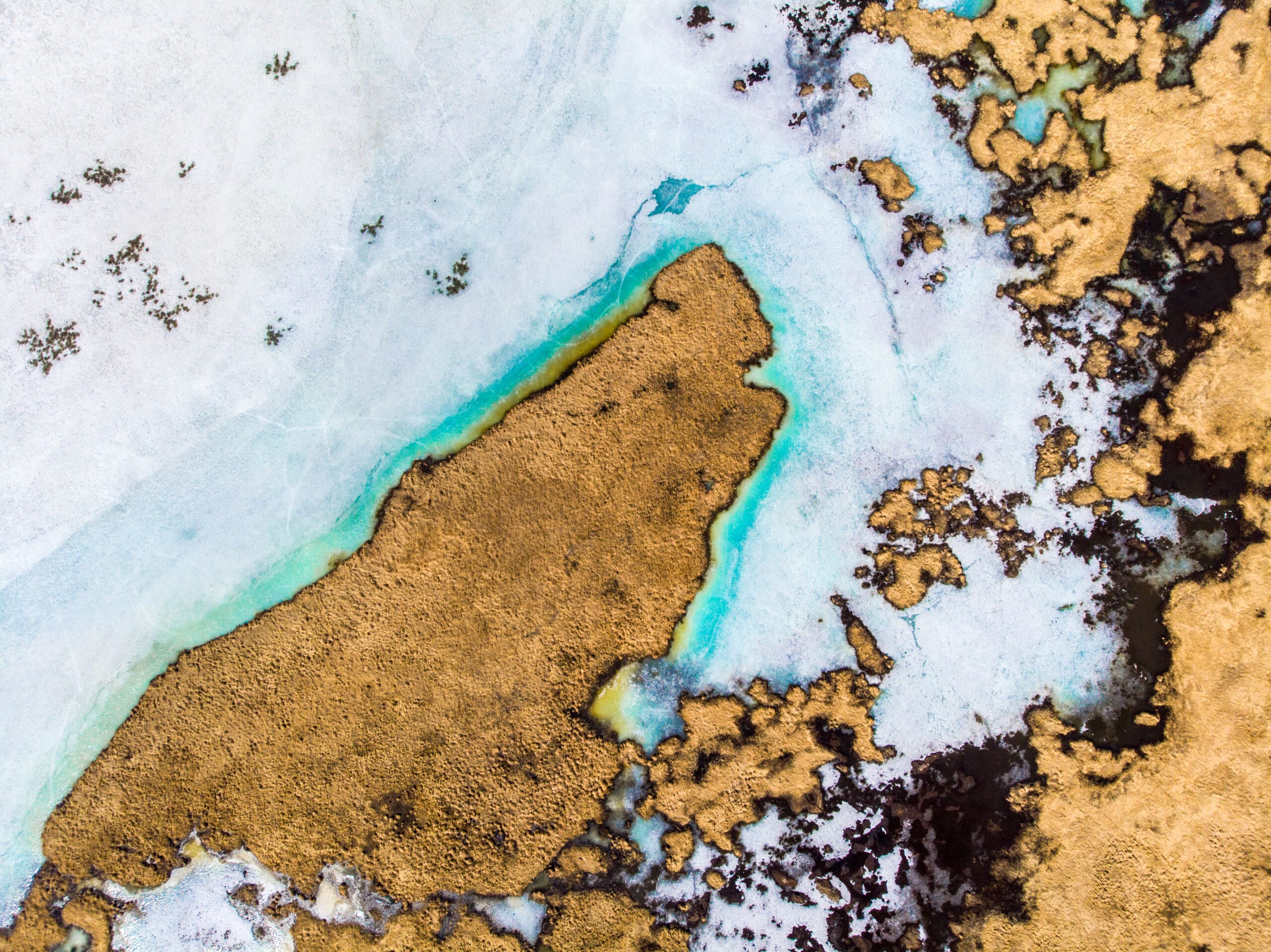
Photography by Coen Wubbels
We are called by the wild, the spaces where we can turn 360 degrees without seeing another human, paved road, electric wire, or crop field. At times, though, we misunderstand history while we crave for calm. We begrudge other humans intruding onto land that used to be “undiscovered.” But this is largely a mythical narrative. People have inhabited the coastlines, forests, and grasslands for thousands upon thousands of years. If anything, the change lies in humanity’s impact on the land. It used to be light and difficult to trace—tracking was a practiced skill handed down from generation to generation. Today, our collective impact is jarring: tire ruts, wind farms, and oil slicks. These we long to escape, though we are the cause.
So it is in the tundra. This biome is the coldest on Earth, characterized by low rainfall, lack of trees, low biodiversity, high winds, and shallow soil supported by underlying permafrost that remains frozen year-round. Arctic tundra covers the Earth’s northern swath between the taiga (northern forests) and the permanent ice caps of North America, Europe, and Siberia. Alaska’s coastal region and about half of Canada are tundra. There is also alpine tundra, atop high mountains such as Washington State’s North Cascades and the páramo of South America.
The tundra ecosystem demonstrates an incredible connectedness of species. Lichen, buried beneath snow during winter, is a key food for caribou, muskoxen, and Arctic hares, who dig down to reach it during the coldest months. The lemming, a small rodent, is a primary prey for snowy owls and Arctic foxes. As lemming populations fluctuate, which they do significantly every four years or so, their predator populations also change. Some shorebirds time the hatching of their eggs to correspond with insect availability, monitoring the hatching of larvae with a scientific precision I don’t begin to understand. Biodiversity is so low in the tundra that each species matters, beginning with plant life we might consider nondescript, like lichen.
Yes, considering how barren it appears, the tundra is surprisingly sensitive. Its impressionable, low biodiversity and slow growth make it particularly vulnerable to long-term change. Here are positive steps you can take to treat the tundra with care when you visit.

Hike Lightly Like the tender cryptobiotic crust of the desert, the tundra has its own sensitive skin. Mosses act as insulation for permafrost, the ice-rich earth below the shallow top layer that stays frozen year-round and traps carbon from the atmosphere. Footprints—and tire tracks—can leave scars for years. Because of this, hikers should walk on solid ground, like rock surfaces, whenever possible.
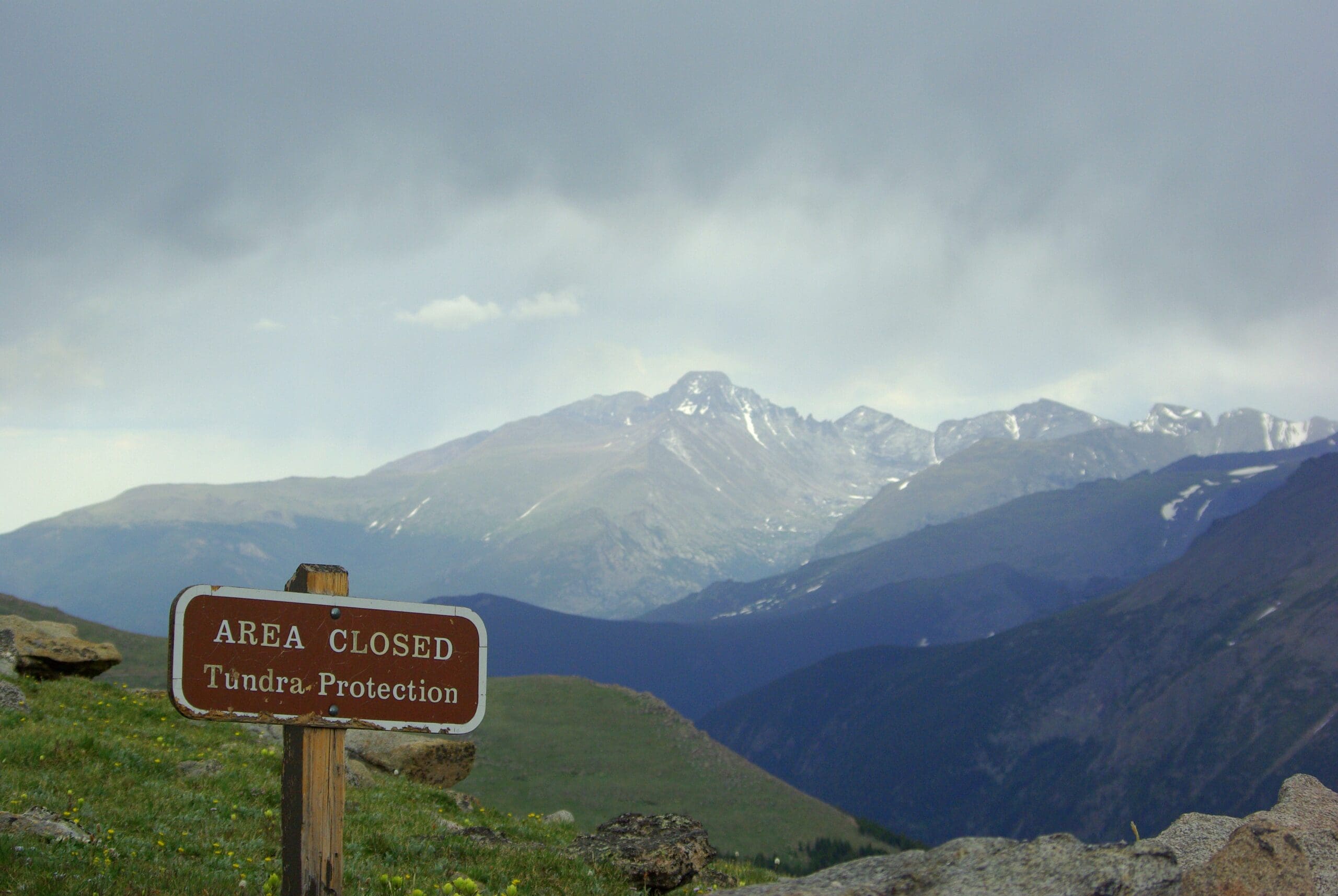
Heed Signs and Land Boundaries Though many overlanders fancy themselves expert naturalists (you should hear me pontificate on the trail), the reality is we don’t always know the importance of what we’re looking at. Signs and land boundaries along roadways and within our mapping applications are purposeful and should be regarded. Rather than adopting an attitude of blissful ignorance when choosing a campsite for the night, we should consider ourselves guardians of the surrounding environment.
Offer Wildlife the Right of Way Famous tundra roadways are relative newcomers, products of the previous decades. Alaska’s Dalton Highway began as a supply road in 1974, and construction on the all-season highway to Canada’s Tuktoyaktuk wasn’t approved until 2013. On the opposite side of the world, Norway E69 arrived in Nordkapp in 1956. These roads we dream of traveling fragment wildlife habitats, but animals’ instincts to follow migration routes continue. To protect ourselves, our vehicles, and animal species, we should follow posted speed limits and stay alert. Along seemingly interminable tracts of road, we should avoid driving while fatigued when our senses are dull.
Support National Parks and Sanctuaries According to the Federal Lands Recreation Enhancement Act, many national parks in the United States are permitted to keep 80 percent of entrance fees collected from visitors. Canada also reinvests park entry fees into its park system. Instead of avoiding sites with fees, we can consider our visits as contributions to ongoing conservation.
Visit While You Have the Chance I’ll never forget the first time I visited a glacier. I was about 14 years old, and my family was in the middle of another road trip from Texas (where we lived) to Yellowknife, where my parents got married in 1981 using dog sleds and wearing fur-lined parkas. Somewhere around Banff National Park in Alberta, the glacier’s retreat was marked with small wooden signs: this was the size of the glacier when my great-grandparents lived, my grandparents, and look how far I’ve had to walk uphill to reach the ice. The football field of exposed rock made my sensitive adolescent heart feel loss, the poignant lack of something I would never get to see. Like coral reefs and rainforests, the tundra is changing. As permafrost melts, it releases the carbon gases it once trapped, feeding the cycle and leading to further melt. Now is the time to venture out and appreciate everything you get to see.
Remember, Ecosystems Don’t Have Boundary Walls And what about those who never intend to see the coldest, most barren regions of our planet? Our collective actions, wherever we are, impact the airways and waterways that reach the Arctic and alpine tundra. We can protect and plant trees to trap pollutants before global air currents sweep them to the north. We can turn our air conditioner a couple of degrees higher, alter our diet, hang our clothes to dry instead of using the machine, or whatever small sacrifice applies.
In June 2023, I pitched a single article that would examine our collective environmental responsibility as travelers. I wanted to answer the question, “As international overlanders, what do we owe our host countries and the natural world they inhabit, if anything?” After what was reimagined as a five-part series, I think you know where I landed: a place where we’re willing to set aside our consumer mindset and willingly contribute to ecosystems we will soon leave.
The step beyond is mentorship, a necessary component if we want these conservation principles to reach those younger or newer to the overlanding lifestyle. Once upon a time, I didn’t know the importance of choosing disturbed campsites, utilizing established fire pits instead of building my own, traveling in small convoys rather than large groups, or burying waste to a specific depth. I had to learn all of those things over time. My hope is that this series has empowered you and given you the tools to do better in the future.
Get Involved
I’ve highlighted five distinct ecosystems within these pages: Beaches and Oceans (Spring 2024), Forests (Fall 2024), Deserts (Winter 2024), Grasslands (Spring 2025), and now Tundra. Each piece included a practical list of action items for your next visit. Our conservation involvement as travelers doesn’t need to be complicated. It comes down to acting on what we know—even when no one is watching.
Editor’s Note: This article was originally published in Overland Journal’s Winter 2025 Issue.
Our No Compromise Clause: We do not accept advertorial content or allow advertising to influence our coverage, and our contributors are guaranteed editorial independence. Overland International may earn a small commission from affiliate links included in this article. We appreciate your support.
