

To honor the 20-year anniversary of Overland Journal, we are revisiting special heritage content in the upcoming 100th issue of the magazine. Originally published in Overland Journal’s Summer 2008 issue, this article is part of that celebration.
Photography by Roseann Hanson, Jonathan Hanson, Scott Brady, and Brian DeArmon
August 31, 1996 – Baboquivari Mountains, southern Arizona.
It’s a hot, muggy summer day—the best kind, when the normally dun-colored hills are bristling green and alive with butterflies, flowers, and birds, a gift from what we call monsoon rains. Lifelong cougar hunter Jack Childs, his wife, Anna Mary, and hunting partners Matt Colvin and Gavin Weller were working their hounds in these remote, rugged mountains two hours southwest of Tucson. The terrain is so fractured and steep, it can take hours to cover just a few miles.
The dogs had picked up a scent and were baying hard up in the oak-and-juniper-dotted rhyolite crags above. But something sounded wrong—the dogs were frantic, their calls more urgent than normal. Two cougars? Cubs?
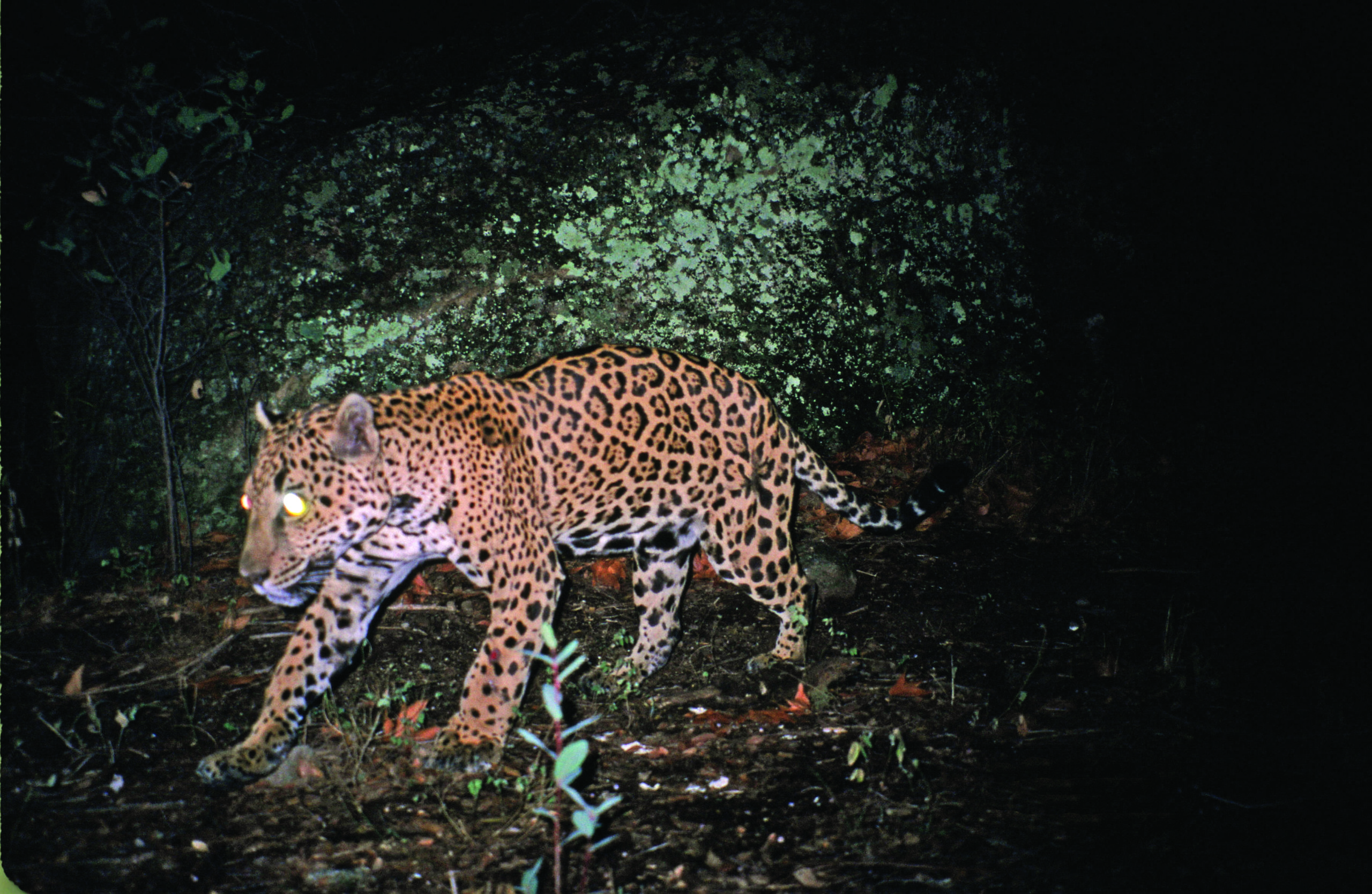
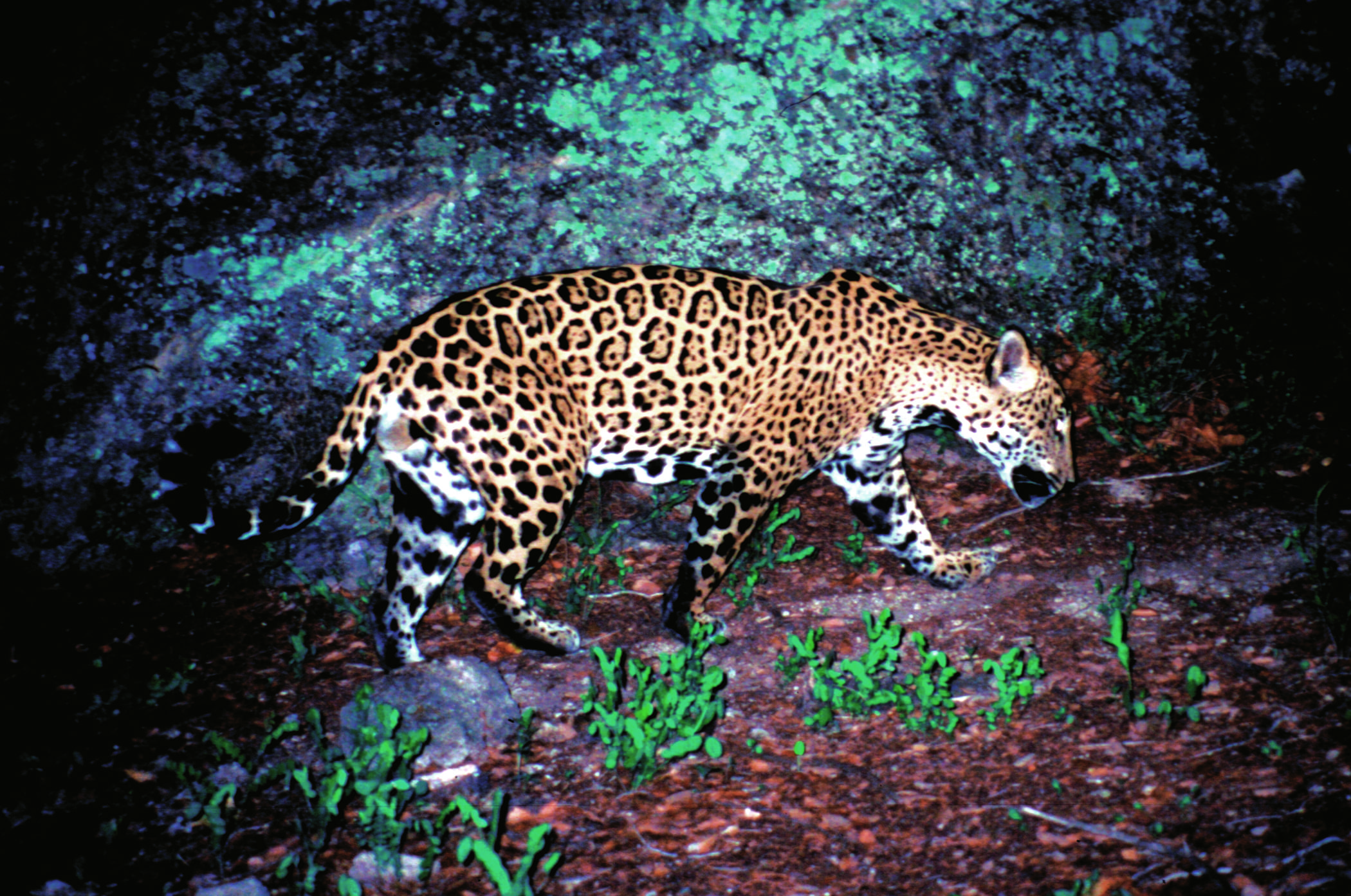
Scrambling up the scree slopes, the hunters gained the ridgetop to find their dogs had treed not the expected mountain lion, but a large male jaguar—El Tigre stared balefully down at them.
As the legend goes, Jack put down his rifle and picked up his video camera.
And his life was changed forever.
Panthera onca, the jaguar, is the largest cat in the Western Hemisphere. Males average 5 to 6 feet in length and can top 200 pounds. By contrast, male cougars in the Southwest rarely exceed 150 pounds. The cougar is long and sleek, with tall legs and a smallish head, but the jaguar’s blocky head sits atop powerful shoulders on stocky legs with large feet.
Jaguars are perfectly suited to climbing, swimming, and crawling in order to capture their preferred prey: peccaries, deer, livestock, and even caimans. Jaguars are “roaring” cats, with a larynx adapted to make a guttural, cough-like call that resonates across even forest landscapes (much like a very loud leopard’s call).
Like all cats except African lions, jaguars are solitary, and come together only to mate; females raise their cubs on their own to an age of about 12 to 18 months. The territories of males might take in parts of female territories, but males don’t share territories—they will fight to hold their ground.
As the cubs mature, males will disperse out of their mother’s home range and strike off to find their own stomping grounds, challenging other males to rights to their land and females.
Most people relate the jaguar to tropical Brazil or Belize, where it has gotten the most press. But historically the range of El Tigre has been from the southwestern US to southern Argentina. A science workshop held in Mexico in 1999 on the status of the jaguar revealed that jaguars have been lost from over half their range since 1900, with most of the loss occurring in Mexico and the US in the north, and in Brazil and Argentina in the south. Most of the loss is due to deforestation, conversion of land to other uses, and killing of the cats and their prey.
As one of the top predators in our hemisphere, the jaguar has been a cultural icon for power and spirituality for millennia. The Maya believed the jaguar’s spotted coat symbolized the night sky, while Amazonian people believed them to be a connection to the spirit world because of their reflective eyes. The Aztecs fed the hearts of sacrificial victims to jaguars.
Today the jaguar is a powerful symbol for wildness, spurring passions across cultural boundaries, from environmentalists to livestock growers to scientists to regular citizens. Despite being listed as an endangered species in the US by the US Fish and Wildlife Service in 1997, jaguars are still in extreme peril, particularly because we continue to fragment their habitat.
This is what brought 10 of us together in May 2008 to learn as much as possible about the status—and fate—of this incredible predator that some think might be returning to the American Southwest.
Our exploratory team comprised myself, a conservation and business consultant working in North America and East Africa, along with my husband, Jonathan Hanson, executive editor and co-founder of Overland Journal; Scott Brady, publisher and co-founder of Overland Journal; Jack Childs, retired land surveyor and mountain lion hunter; Cathryn Hilker, founder and director of the Cat Ambassador program and Angel Fund at the Cincinnati Zoo and a leader in big cat conservation (particularly cheetahs); Kathleen Maynard, volunteer with the Cat Ambassador program and wife of Thane Maynard, the zoo director; Lily Maynard, daughter of Kathleen and Thane; Gabriel Paz, Arizona Game and Fish Department officer; Marisa Rice, senior hydrologist with Pima County Water Resources; and Brian DeArmon, education chairman for the Overland Society, a new service organization aiding conservation efforts through education and four-wheel-drive transport assistance.
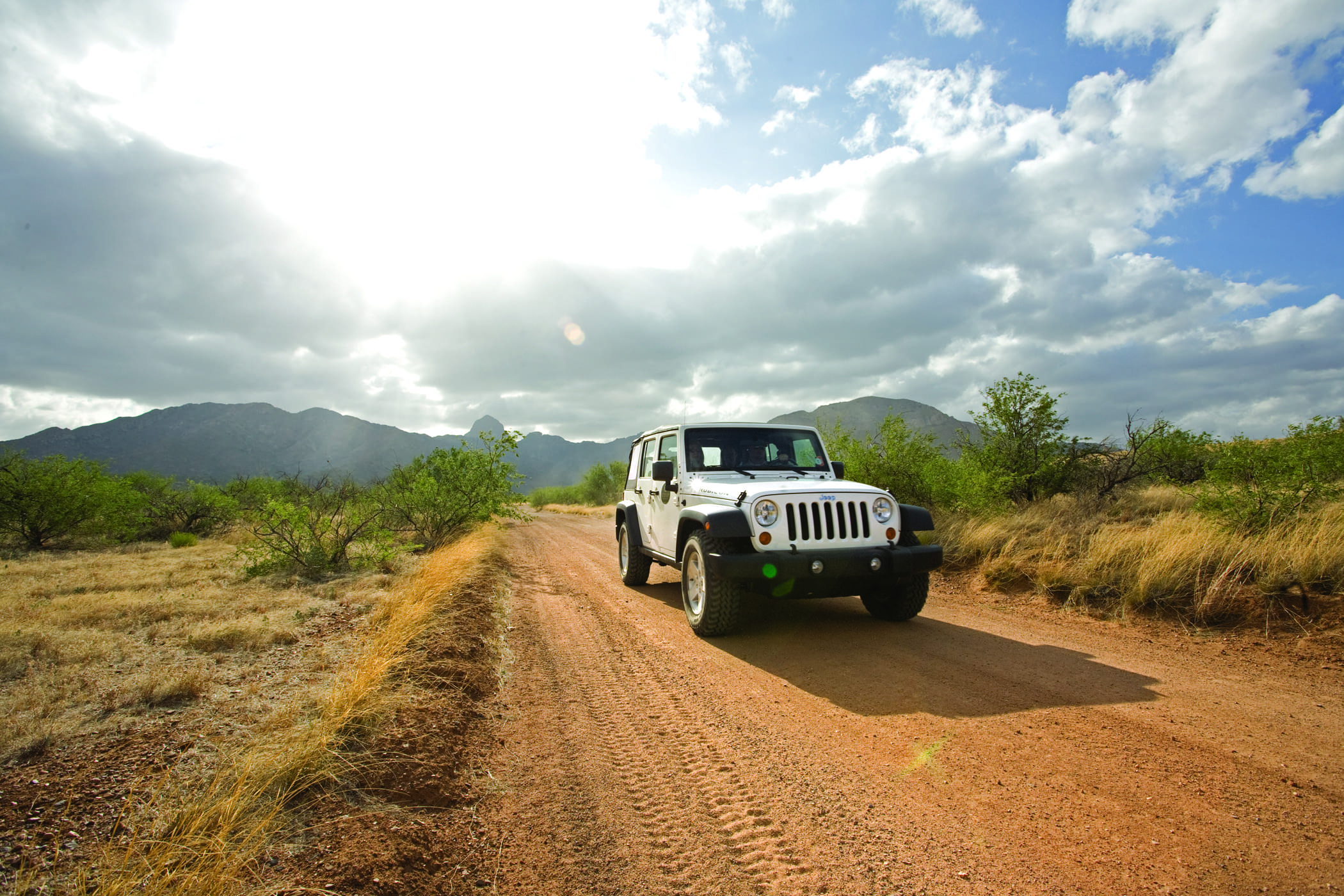
Our goal was to explore overland along the Arizona-Mexico border, visiting key people involved in conservation, as well as sites where jaguars have been recorded in the last 14 years and where conservation efforts are underway—and where the new border wall has been erected. We wanted to learn as much as possible about the natural history of this elusive cat, its habitat, and interaction with other native wildlife. We began in Brown Canyon, in the Baboquivari Mountains opposite the ridge where Jack and his friends videotaped their first jaguar in 1996. We were on the Jaguar Trail.
When we picked up the Cincinnati crew at Tucson International Airport, the weather was distinctly un-May-like for Arizona: Storm clouds streamed in from the west on a 40 mph gale, the temperature hovered at 65°F, and rain spattered our windshields as we headed west on Arizona 86.
Brown Canyon was added to the 118,000-acre Buenos Aires National Wildlife Refuge in 1995, and Jonathan and I were lucky enough to live there from then until 1998 as volunteer caretakers. It would be great to return, and show the team this subtropical canyon with Sierra Madrean influences—tall sycamores, oaks, junipers, catclaw thickets, agaves and cactuses, rare reptiles and birds such as vine snakes and gray hawks, and lots of cats, including jaguars, mountain lions, and bobcats.
While we lived there, we had five visual encounters with cougars, and regularly tracked a single female in whose territory we lived. We knew when she bred, had kittens, and hunted, and found her kills many times. And we’re certain we heard a jaguar calling one night in late 1996—though at the time we did not know what it was, as Jack’s sighting remained secret for some time.
I hoped to share a glimpse of a cougar with Kathleen, Lily, and particularly Cathryn, who has never seen a cougar in the wild, although she has lots of face-time with cougars. As the trainer for the Cat Ambassador program, Cathryn has raised dozens of big cats, from cheetahs to tigers to ocelots, all of whom lived at her Ohio farm while learning to be ambassadors for the zoo’s education program. Her cougar, Carrie, was one of her first cats.
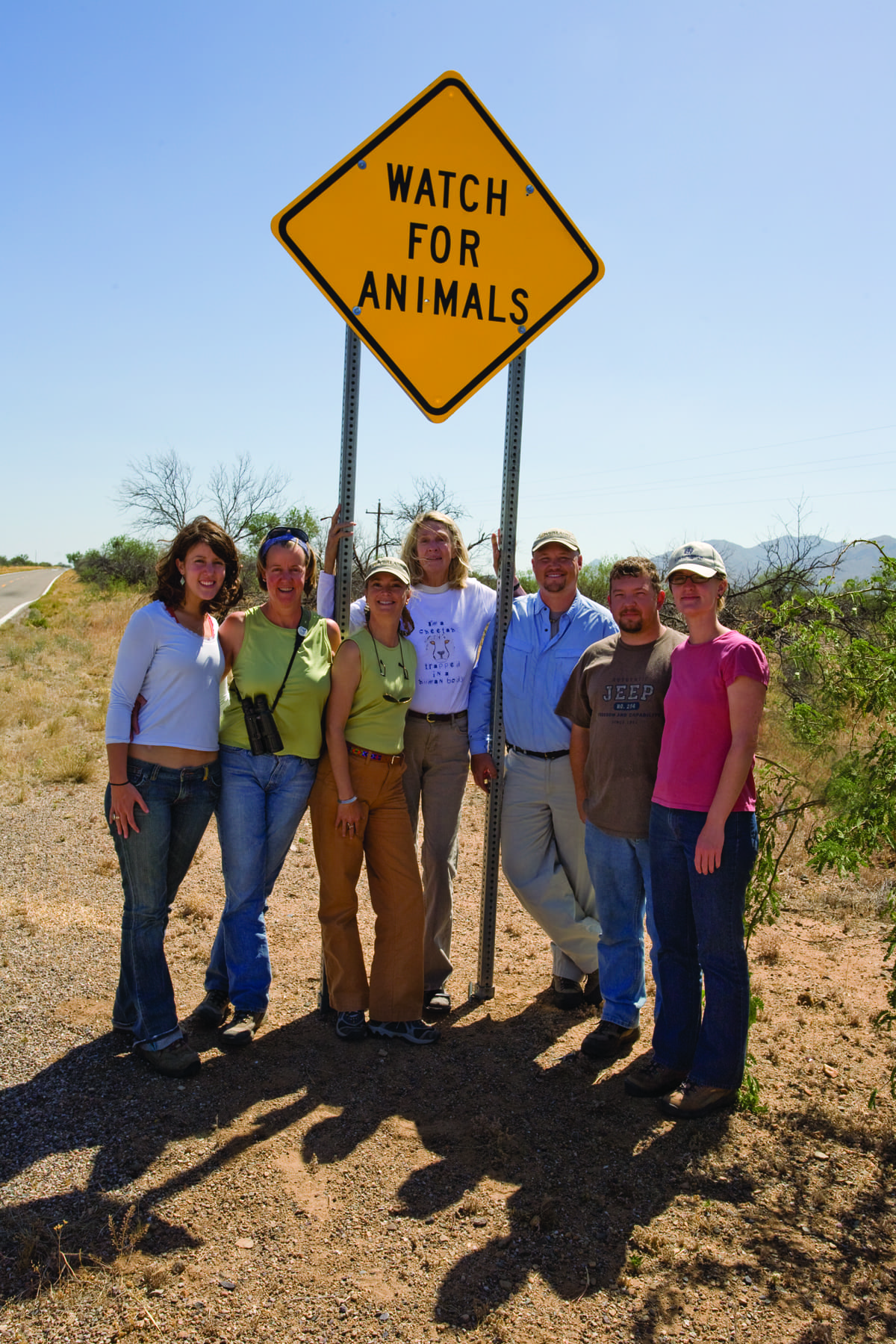
We set up base camp at the Brown Canyon Environmental Education Center, a comfortable stone lodge in the upper canyon, just above the creek. That evening we sat around the fireplace while winds raged in the canyon walls above and rain fell onto the metal roof, and talked about how each of us came to be interested in cat conservation.
“I was a professional horsewoman for years—fox hunting and training horses—and then I met a cheetah,” Cathryn said. “It changed my life. From then on I dedicated my life to that cat.”
Speaking on the magic of big cats and why they affect us so much, Kathleen said, “Cats like cougars and jaguars are the representations of the ‘wild’ for us humans. A predator is about life and death. We humans have a primal fear of predators; as primates we’re genetically coded for this. Even today we’re no more removed than we were in the earliest times from this fear, which is triggered by these predators—and we’ve dealt with it worldwide by exterminating them.”
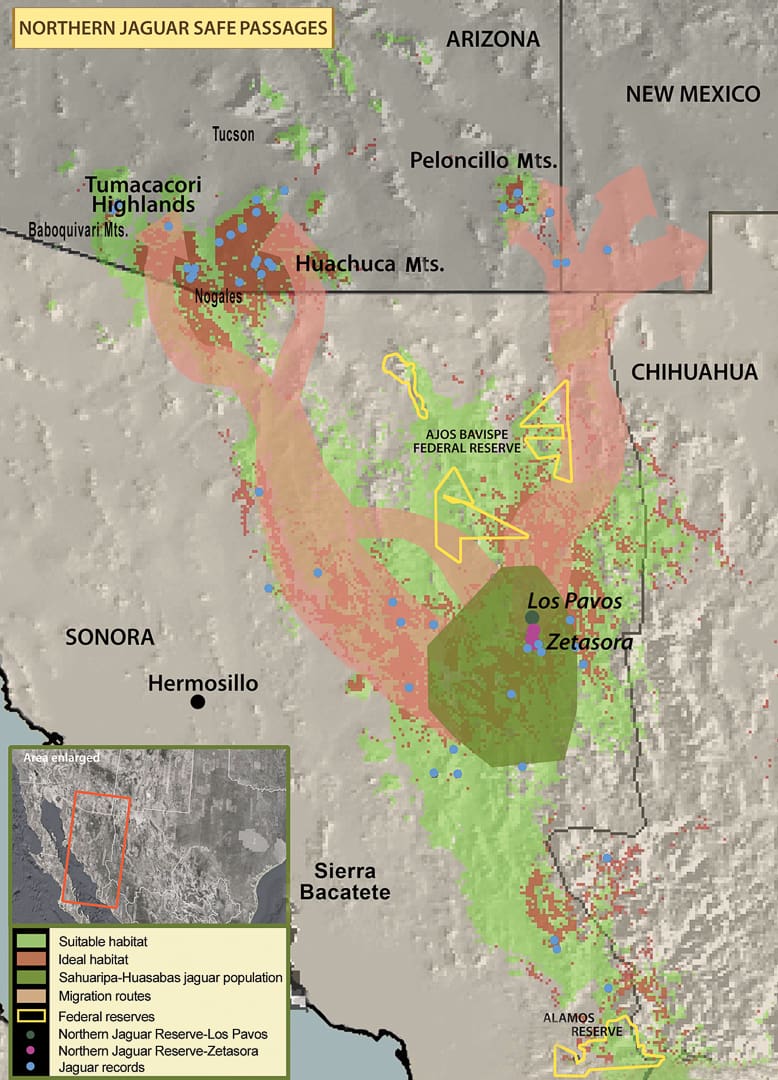
That is the story of the jaguar in Arizona. In the book Borderland Jaguars: Tigres de la Frontera, authors Dave Brown and Carlos A. López González surveyed the last 100 years of documented jaguar sightings—either photographs or skins. There were 65 occurrences. Three were kittens, and 28% were female, the last of which was killed in the central White Mountains in 1963. A graph of the documented occurrences showed that since 1970, the sightings dropped markedly. The reason is thought to be that in 1969 the state of Arizona passed a law protecting jaguars from hunting (including an $850 fine). Prior to that, jaguars were considered pests to livestock growing, and hunted for bounty. So hunting (and thus documentation) both diminished, but also went secret—it’s unlikely it ceased altogether.
When the Endangered Species Act was passed in 1972, the jaguar was listed in Mexico but not in the US, because it was assumed to be extinct here. One interesting fact is that there has been no female documented since 1963, and so it’s still widely thought there is no breeding population in Arizona. The nearest confirmed breeding population is in the western slopes of the Sierra Madre, around the Ríos Yaqui and Aros, only about 125 miles due south of Douglas, Arizona. Jaguars are still being killed at an alarming rate in Mexico.
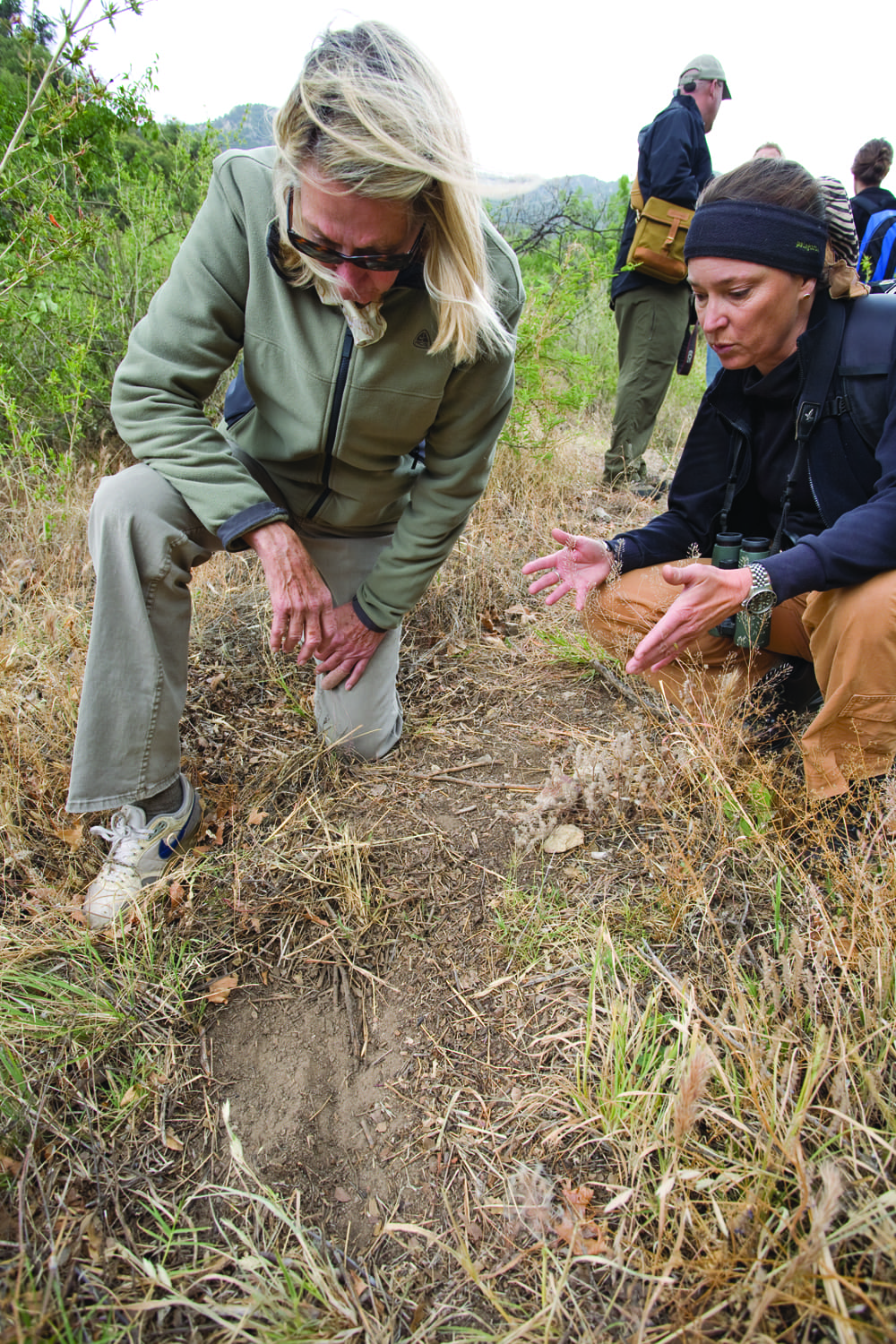
The next morning we set out early for a hike up the canyon, looking for big cats. The sun had just cleared the canyon wall, and we were still bundled up against the cold wind and threatening dark rain clouds. Not more than a quarter mile up the creekbed that is thick with catclaw, mimosa, hackberry, and sycamores, we came upon a very fresh pile of big cat feces (also called scat) in the middle of the trail—still practically steaming, not more than a few hours old.
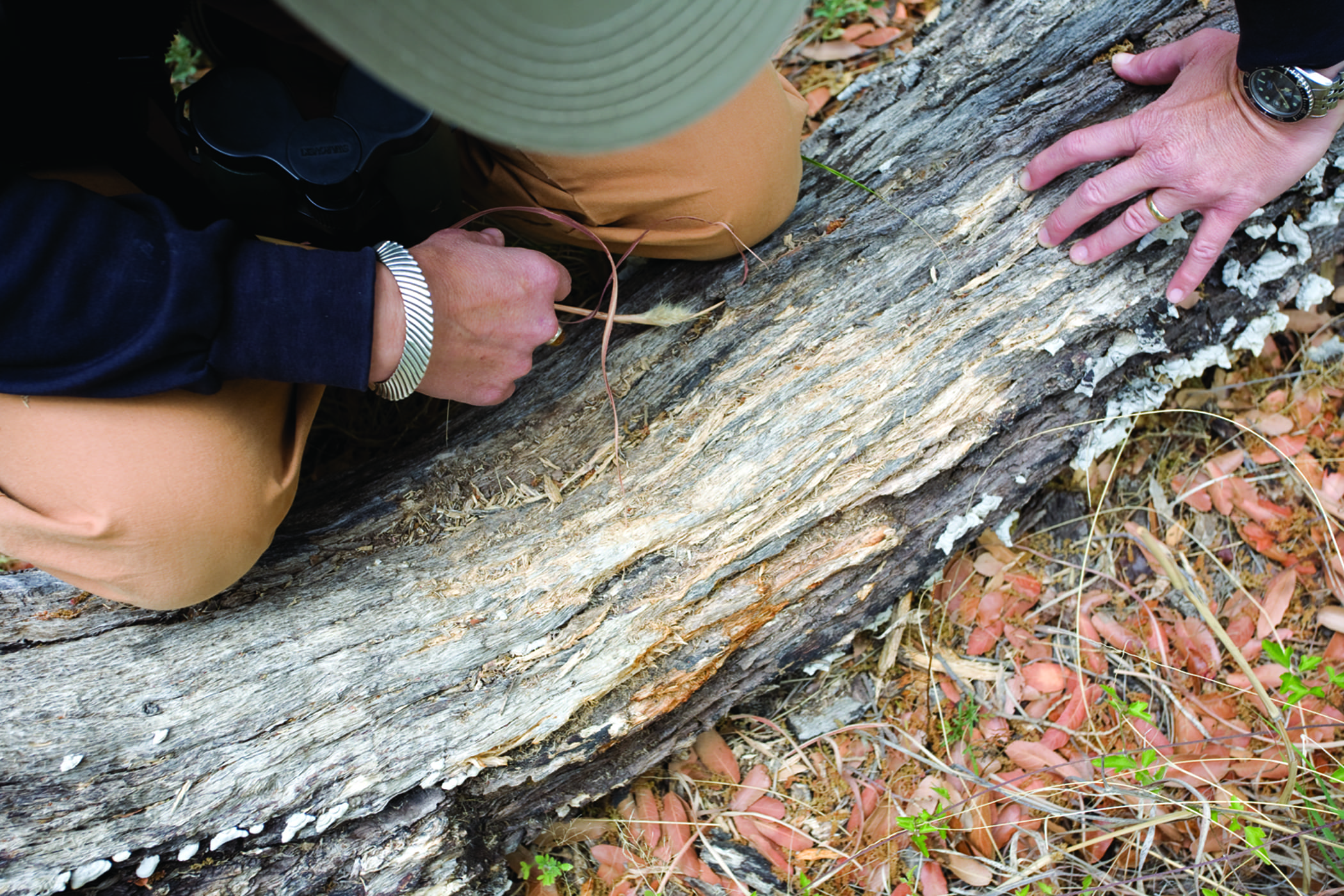
A few paces away was a scrape—a pile of leaf litter next to the trail that cats such as cougars pile up and then urinate on. These are scent markers or “signposts” to communicate to fellow cats or other species, particularly about territory boundaries. The top of the scrape was still wet. For the rest of the morning we scanned the hills for signs of a cat, keeping as quiet as possible. Occasionally a few drops of rain clattered in the trees while the sun played hide-and-seek with clouds. On the two-mile hike we found no fewer than 15 scrapes of varying ages, two more older scat piles, and one fallen log that has lots of claw marks on it (a big-cat scratching post) and lots of big cat activity—most likely cougar, although jaguar was of course a possibility, having been previously recorded in this area. New and heavily used trails sliced through the rocky hills heading north to a spring on the other side of the ridge, used by migrants and drug runners or ‘mules.’
Fourteen years ago there was no migrant activity in the canyon, but the continued decline in Mexico’s economy and the commensurate increase in northward migration, as well as changing Border Patrol enforcement strategies, have forced more people into the remotest of terrain. Border issues have ignited passionate wars of words—and physical conflict—in our region. Millions of people cross the border into the US where they readily find work; many are aided by people smugglers who charge as much as $2,500 per person (representing an estimated $2.5 billion in revenue per year). Drug smuggling is even more massive, with a smorgasbord ranging from marijuana to heroin to cocaine, and now meth. Many billions of dollars’ worth of people and drugs.
Local residents are sick and tired of the trash, the trails, the human waste, the crime. The borderlands swarm with border agents and their trucks, helicopters, ATVs, checkpoints and guard towers—all adding to the war zone feeling along our borders. And then there is the fence. Desperate to show some sort of effort to stem the impossible flood of people and drugs, Congress passed the Secure Fence Act and President Bush signed it into law on October 26, 2006—calling for 698 miles of mandatory fencing along the Mexico border. Although specific funding for the fence has been delayed, nearly $1.2 billion in Department of Homeland Security funds for “border security” are available. And in April this year, DHS announced it would waive more than 30 environmental and cultural laws to speed construction of the wall. Eighty miles of the 12-foot-tall steel barrier have already been built in southern Arizona, seven in the region where the jaguars have been crossing.
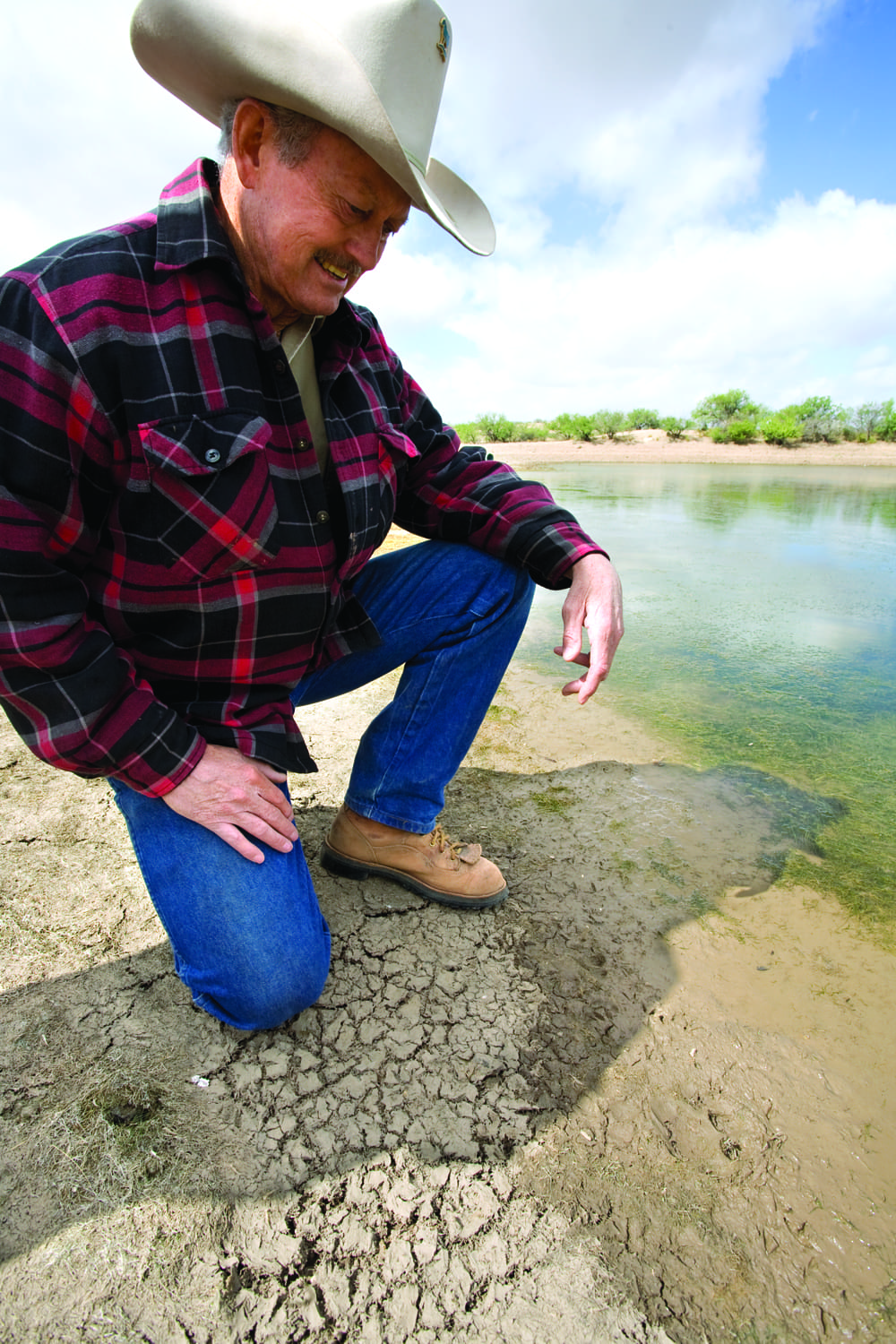
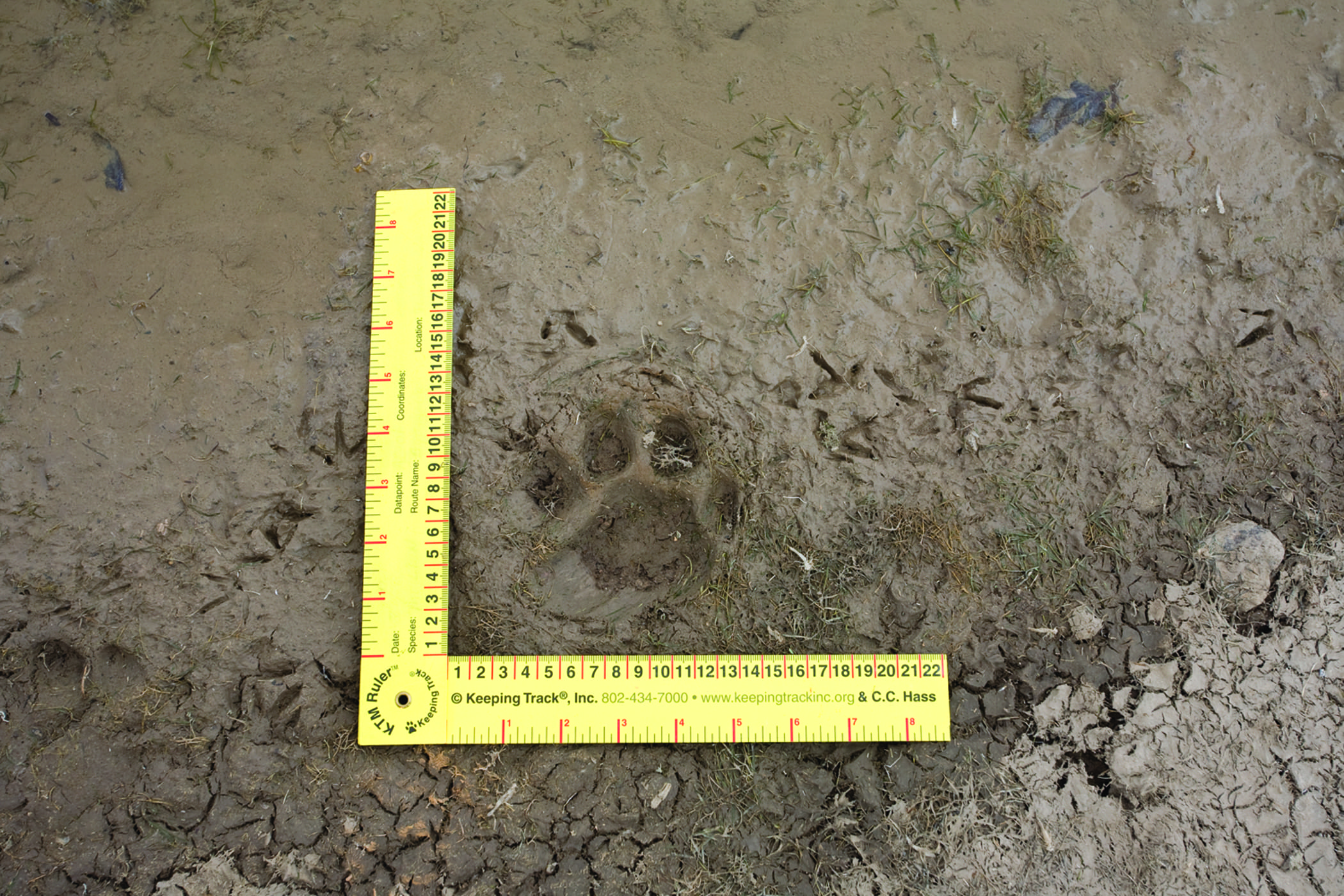
“What do you think? Is it cougar?” Cathryn asked Jack Childs. We were crouched in the mud at the edge of Champurrado Tank, a large cattle pond on the southern slopes of the Sierrita Mountains. Two big cat prints nudged the edge of the water, which was riffling in the breeze. A long silence. Too long. My heart leaped—jaguar? They were big, and the central pad very large—one of the characteristics of jaguar paws.
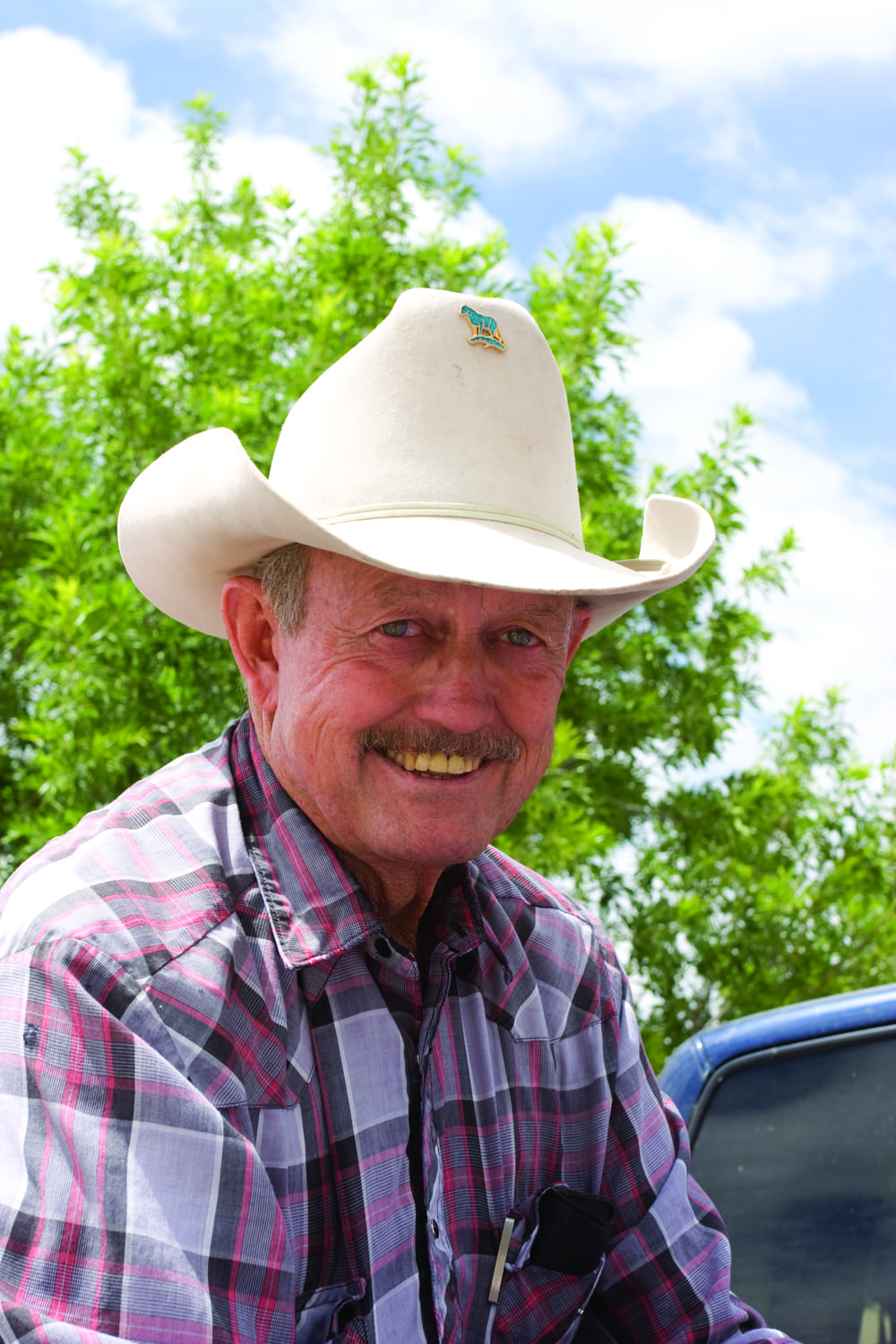
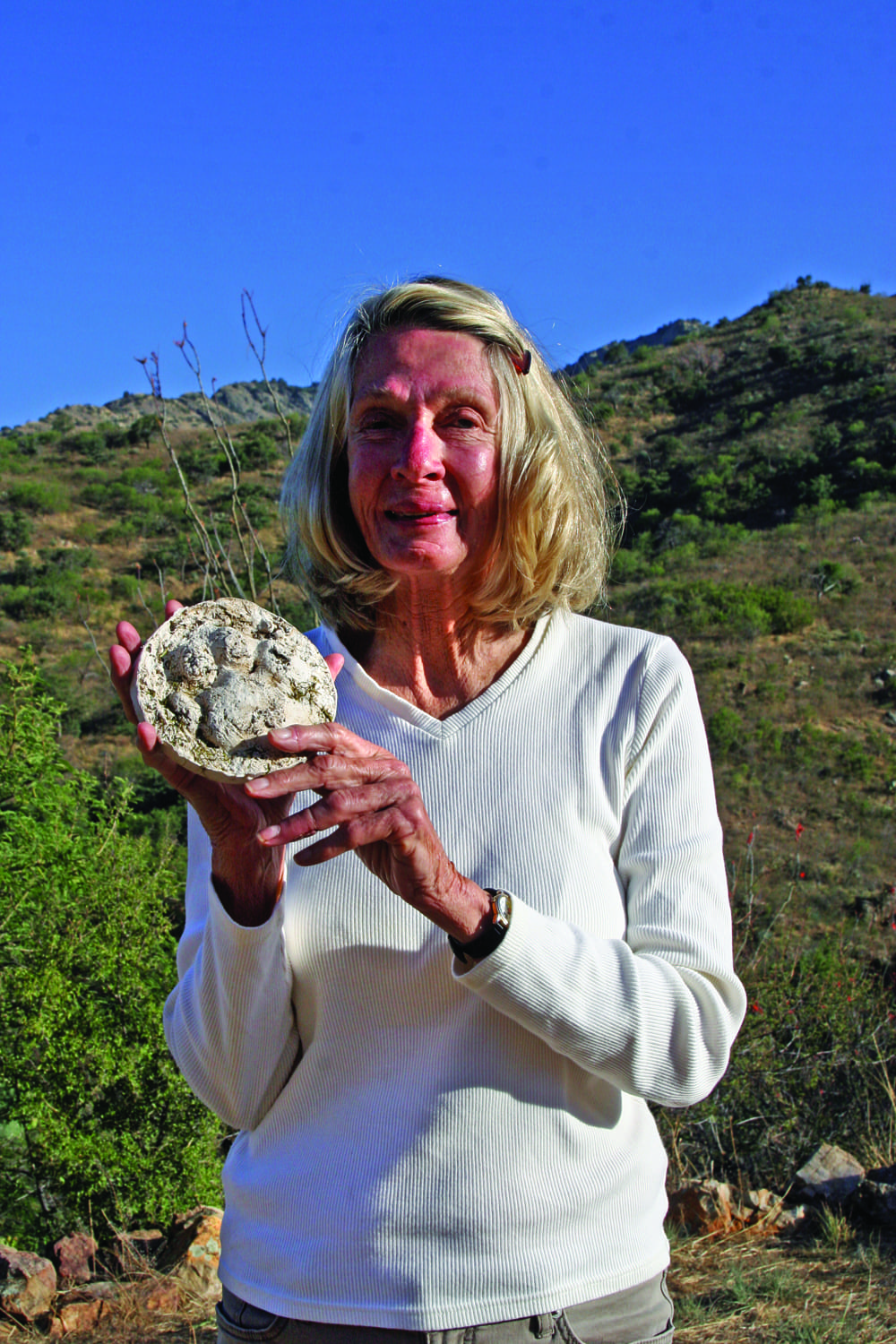
Jack cocked his head. “Probably cougar, a big one, but see how it’s slid down toward the water, and the mud exaggerates size.” Jack gave a tutorial to the group on how to tell different species’ prints apart, and then we poured a plaster cast of the print. Jack and Arizona Game and Fish officer Gabe Paz, who I have known for 15 years, had met us at the Marley Ranch headquarters, and we’d bumped over 10 miles of backcountry ranch roads to the tank and to see several of the 50 hidden digital motion-sensor cameras that Jack and his partners maintain throughout the Tumacacori Highlands.
Jack is a member of the collaborative Arizona-New Mexico Jaguar Conservation Team, which initiated a monitoring project in late 1996 by supplying five remote cameras to him and to Warner Glenn, a rancher and cougar hunter who also photographed a jaguar earlier in ’96 in the Peloncillo Mountains on the New Mexico border, a different male than the one in the Baboquivari. Jack and his wife, Anna Mary, expanded their monitoring efforts in 2001 to become the Borderlands Jaguar Detection Project, seeded with their own money and later grants from sources such as the Wildlife Conservation Society and the Phoenix Zoo. The Jaguar Conservation Team supported the research and the Arizona Game and Fish Department furnished film, batteries, and developing for additional camera stations. Game and Fish officers such as Gabe are invaluable for assisting with landowner relations, Jack said.
On December 9, 2001, one of the cameras captured an adult male jaguar in Arizona about 6.5 kilometers north of the Mexican border. On August 7, 2003, 20 months later, the same jaguar was photographed again at another monitoring station 6 kilometers farther north in the same mountain range—jaguars’ spots are as unique as fingerprints.
In 2004, Humboldt State University graduate student Emil McCain began his master’s thesis research on the project. The effort has since increased from 13 camera stations to 50, and the search effort encompasses a larger area of more remote and inaccessible mountains and includes track and scat collection transects. Between June and December 2004 the Borderlands Jaguar Detection Project captured 14 photos of jaguars. To date there have been 89 jaguar “events” (65 photographs and 24 sets of tracks). Jack and Emil have authored the first comprehensive scientific paper on jaguars at the northern portion of their range—and were the first to calculate a jaguar’s home range in the Southwest (525 square miles), as well as to verify the year-round presence of jaguars in the US (Journal of Mammalogy, 89(1):1–10). This is an impressive list of accomplishments for a true grassroots effort, compared to the large, staffed organizations that, despite significant funding, have added little to jaguar science (though plenty to the written material on the need for jaguar conservation).
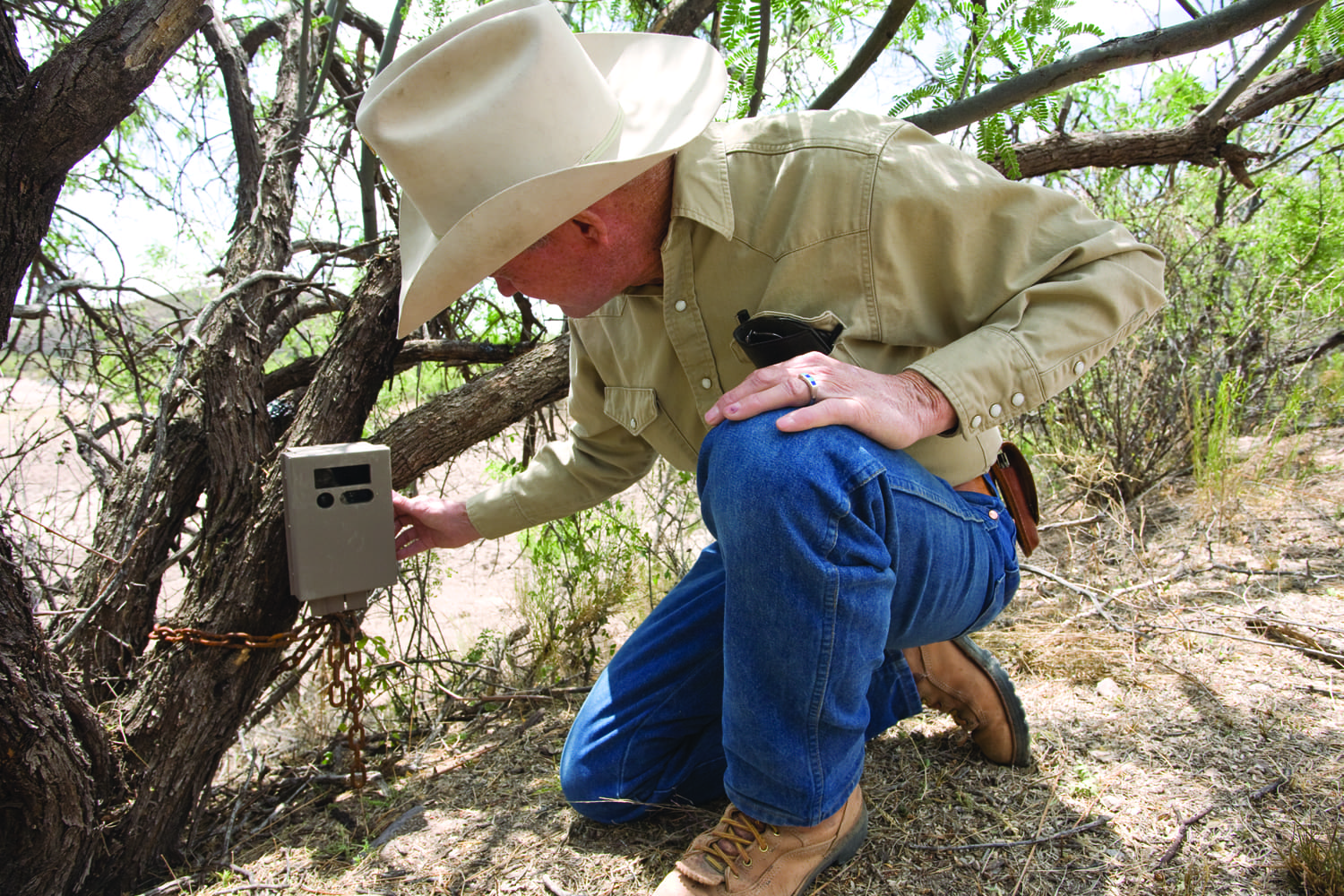
Our group hiked up into the brush surrounding the tank, in a natural terrain “funnel” where one of the trip cameras is mounted to a tree. Cameras capture everything from migrants to wildlife such as deer, skunks, foxes, cougars, black bears, turkeys, opossums, and bobcats. “I think there could be a viable Arizona population of jaguars, if we wanted it,” Jack said. “Obviously, they are here. The nearest core breeding population is in the Río Yaqui, only 150 miles away. One theory (about the males in Arizona) is that these are ‘surplus’ males from the core populations, who circulate around a huge region, from time to time returning to Mexico.”
Of course, it’s not just about jaguars. The big spotted cats, Kathleen urges us to remember, are “umbrella” species, meaning if you protect habitat for an animal that uses such a wide landscape, you protect many species. Jack said: “If you save the jaguar, you’ll save the cougar, and the wild turkey, and the ‘possum. People come to hear me talk about jaguars, but I end up telling them about the biodiversity. This jaguar, no matter how much publicity it gets, is not any more important than the ‘possum.” Cathryn, with her characteristic disarming Midwestern directness, got to the main question we’d all been thinking: “So what about this dumb border fence?”
“The impact of the fence is unstudied,” Jack said. Though he admitted that the main jaguar, Macho B, has not been recorded since July last year, when the fence was completed. The immediate positive effects of the fence have been on the southern end of the wildlife refuge, keeping out Mexican cattle and stopping smugglers’ cars, both of which were having a huge negative impact on the land, according to Fish and Wildlife biologist Mary Hunnicut, who we had talked with earlier. Mary admits that the barrier—which is 12 feet tall with tightly spaced bars—will permanently cut off deer and mammals like cougars and jaguars that used to use this region.
While we ate lunch in a dense mesquite thicket, our group talked more about the wall. Cathryn’s work in southern Africa to save the imperiled cheetah has many parallels, including barriers. She witnessed firsthand the devastation to wildlife when massive fence barriers were put up in Botswana, ostensibly to protect domestic animals from disease. Wildlife died by the hundreds of thousands, trapped by the fence. Cathryn helped establish the first cheetah reserves—huge privately owned ranches—in Namibia. These, and the research, education, and outreach they provide, have been instrumental in saving one of Africa’s great cats.
Talk turned to what the immediate future holds for jaguars in North America. Dave Brown said it well: “We need reservoirs, not remnants.” Like Cathryn’s Namibian effort, a group called the Northern Jaguar Project recently raised several million dollars to purchase two ranches in the Río Yaqui region where part of the core breeding population exists—along with ocelots, river otters, military macaws, and cougars. “[The jaguar] is a living myth. People can embrace this. There is a joy of knowing they are here—I’ve never seen a polar bear, but it gives me great joy to know they are there,” Cathryn said. “Everything here has a right to be here,” Jack said of the wildlife of our great borderlands. “God put them here for a reason. We need to give them a chance.”
May 24, 2008 – Arizona-Mexico border, just east of Sasabe
We stand on US soil looking south into Mexico through the steel bars of the border wall. It stretches as far as we can see east and west. An insurmountable, impermeable barrier to all terrestrial wildlife such as mule deer, pronghorn, Coues’ whitetail, javelina, cougars, and jaguars—but not to humans Where we stand are hundreds of footprints where people have dropped down into the US from the top of the fence and rushed off into the desert grassland to the north, bound for Phoenix or Chicago or New York, wherever work awaits.
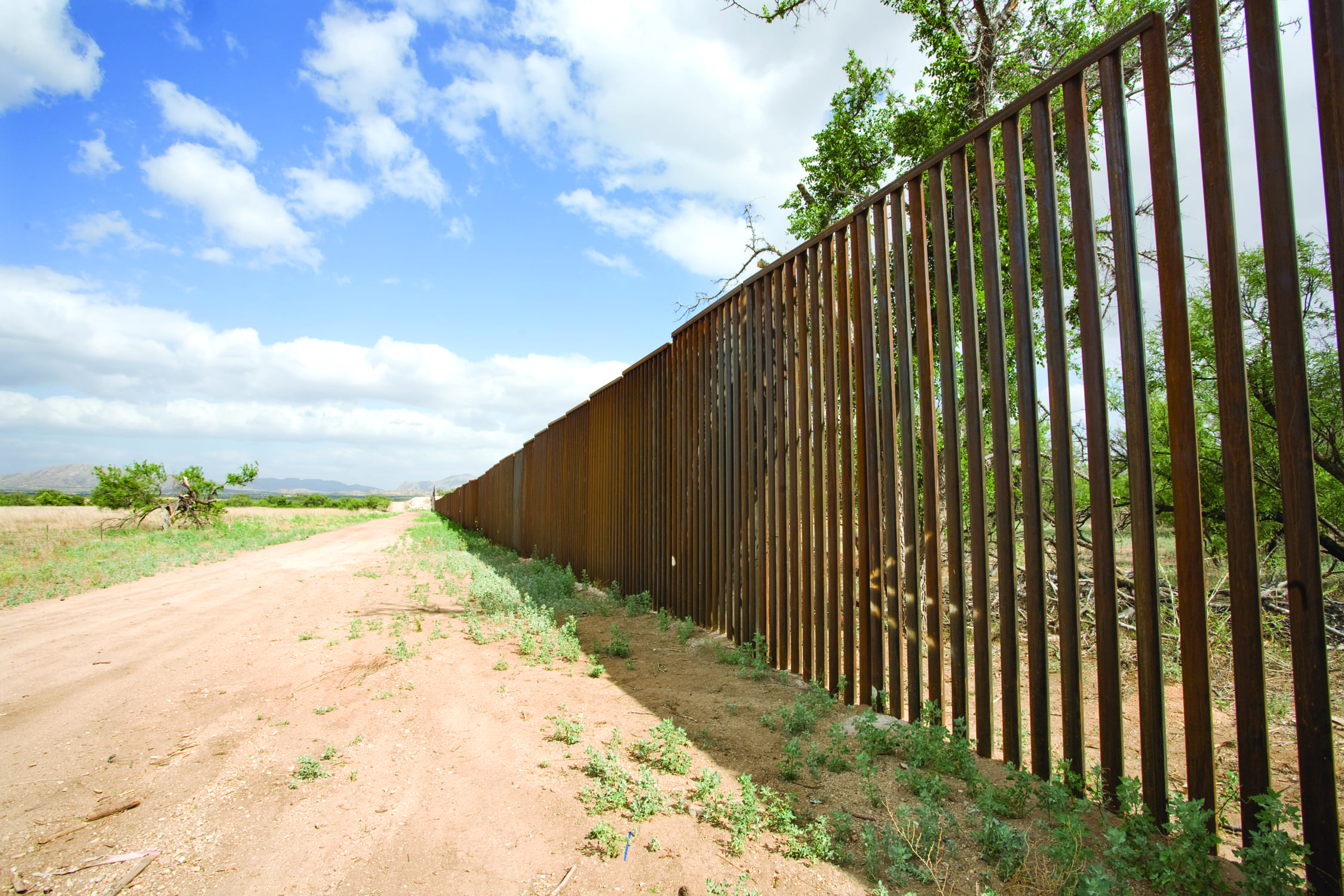
The drug smugglers don’t bother going over; they cart along gas torches. Humankind has built walls as long as we have been humans, to keep “undesirables” out—Hadrian’s Wall, the Great Wall of China; and to keep people in—the Berlin Wall, the walls of the Warsaw Ghetto. But they do not work. The walls always come down. Our border wall will not last, believes Dr. Peter Warshall of the Northern Jaguar Project. Like all others, he said hopefully, it will come down. But it will take time before any resolution will solve our border woes enough to bring down the wall. And by then, will it be too late for southern Arizona’s jaguars? I am left to wonder how we can ensure the future of our rarest cat and its brethren, the cougars and the many animals of the borderlands, if we do complete a 700-mile barrier across the borderlands? Like Dave Brown said, we need reservoirs not remnants. I’m personally hoping future generations will be able to enjoy jaguars in the US once again.
“Good fences make good neighbors,” wrote Robert Frost in “Mending Wall” . . . “Before I built a wall I’d ask to know / What I was walling in or walling out, / And to whom I was like to give offence. / Something there is that doesn’t love a wall, / That wants it down.”
Resources
Borderlands Jaguar Detection Project swjag.org
Northern Jaguar Project northernjaguarproject.org
Wildlife Conservation Society and Panthera Foundation savethejaguar.com, panthera.org, wcs.org
US Fish & Wildlife Service, Buenos Aires National Wildlife Refuge fws.gov/southwest/refuges/arizona/buenosaires
Coronado National Forest
fs.fed.us/r3/coronado (click on the map, the Tumacacori Highlands are west of I-19; click “Scenic Drives” and “Ruby Road”)
Special thanks to support from:
- Overland Society
- Buenos Aires NWR
- Bonnie Swarbrick and Mary Hunnicut
- Zamberlan Boots
Our No Compromise Clause: We do not accept advertorial content or allow advertising to influence our coverage, and our contributors are guaranteed editorial independence. Overland Collective may earn a small commission from affiliate links included in this article. We appreciate your support.