

Last week, a short video circulated of two riders celebrating the completion of their overland builds by spinning up their electric dirt bikes on front-mounted trays bolted to their trucks. It was a slightly absurd moment, but also a revealing one. Electric bikes are increasingly finding their way onto overland vehicles, not as novelties, but as practical tools. They are compact, relatively light, capable on technical terrain, and require far less maintenance than their combustion counterparts—an appealing combination for those already managing the complexity of a fully equipped expedition vehicle.
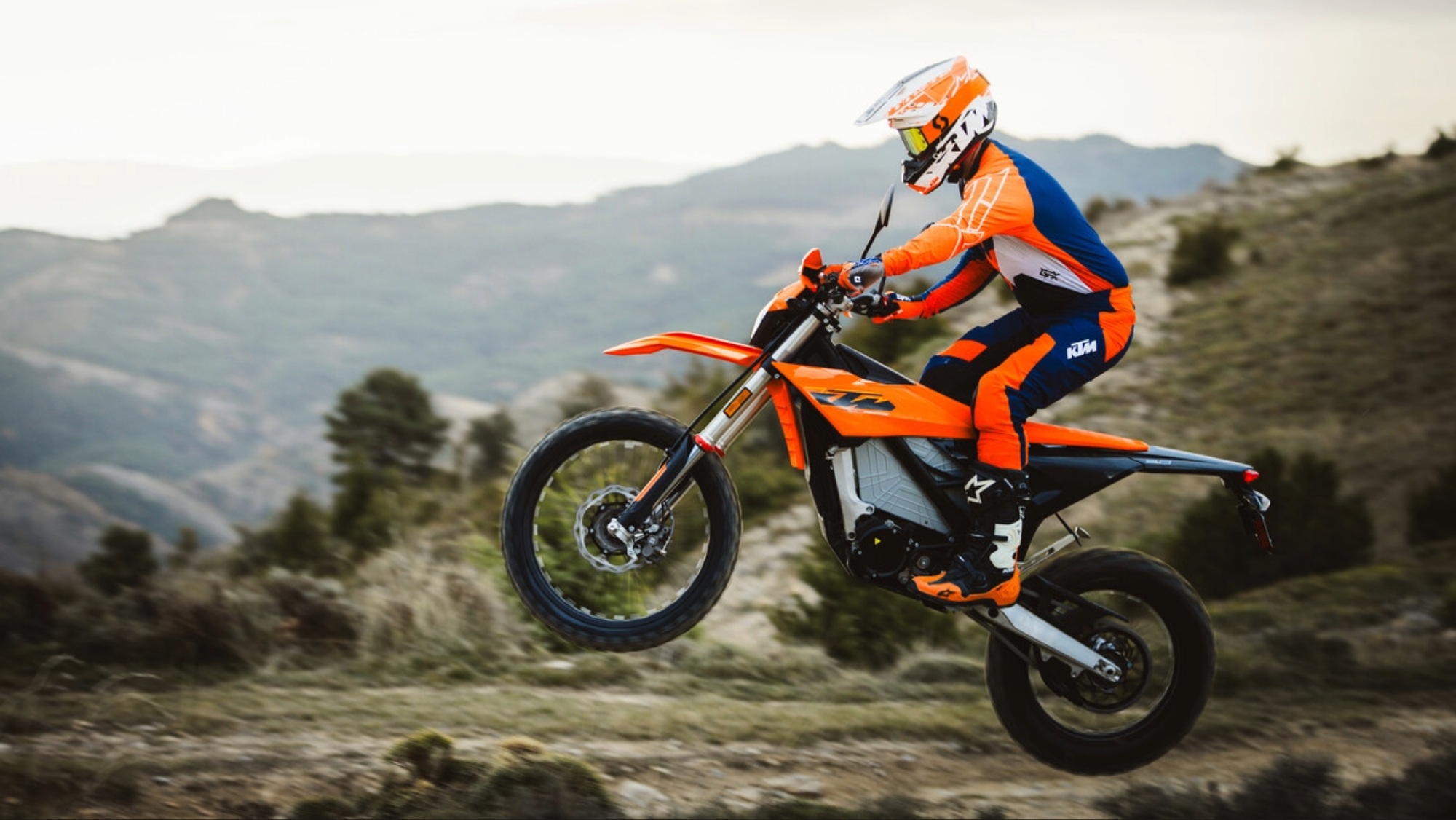
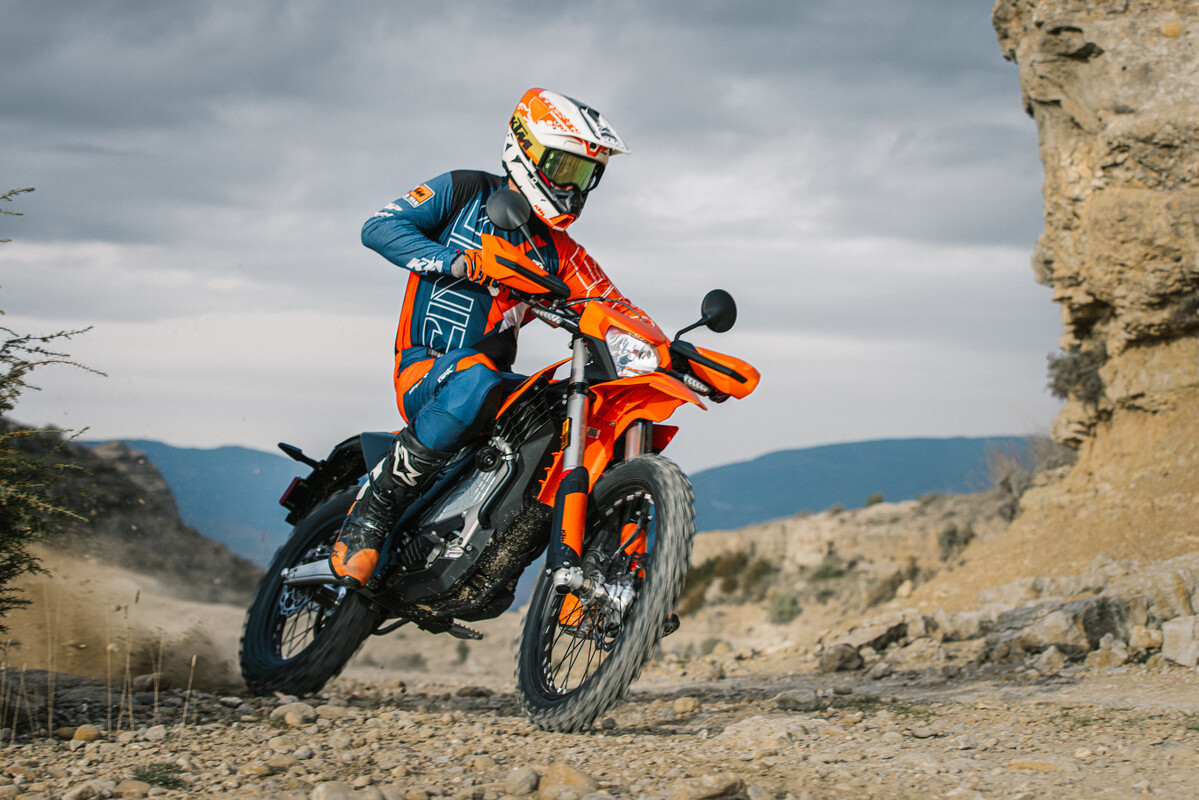
For riders who prioritize trail access over extended road travel, this shift makes even more sense. Against this backdrop, KTM has introduced the 2027 iteration of its Freeride E, refining a model that has long served as the brand’s entry point into electric off-road motorcycling. Positioned as a lightweight dual-sport capable of both trail riding and limited on-road use, the updated Freeride E underscores KTM’s continued investment in electrification while maintaining a clear focus on agility and usability rather than outright performance.

At the core of the 2027 Freeride E is a revised electric powertrain that produces a nominal output of approximately 8.3 kilowatts and a peak power figure of 19.2 kilowatts, equivalent to roughly 26 horsepower. Torque is listed at more than 37 newton-meters, delivered instantly as expected from an electric motor. KTM claims a top speed of 95km/h (59mph), reinforcing the bike’s intended role as a technical trail machine rather than a high-speed dual-sport.
Power delivery is adjustable across three riding modes—Eco, Normal, and Sport—allowing riders to tailor output to terrain and battery conservation needs. Complementing these modes are selectable recuperation settings, which enable varying levels of regenerative braking to improve efficiency and extend range.
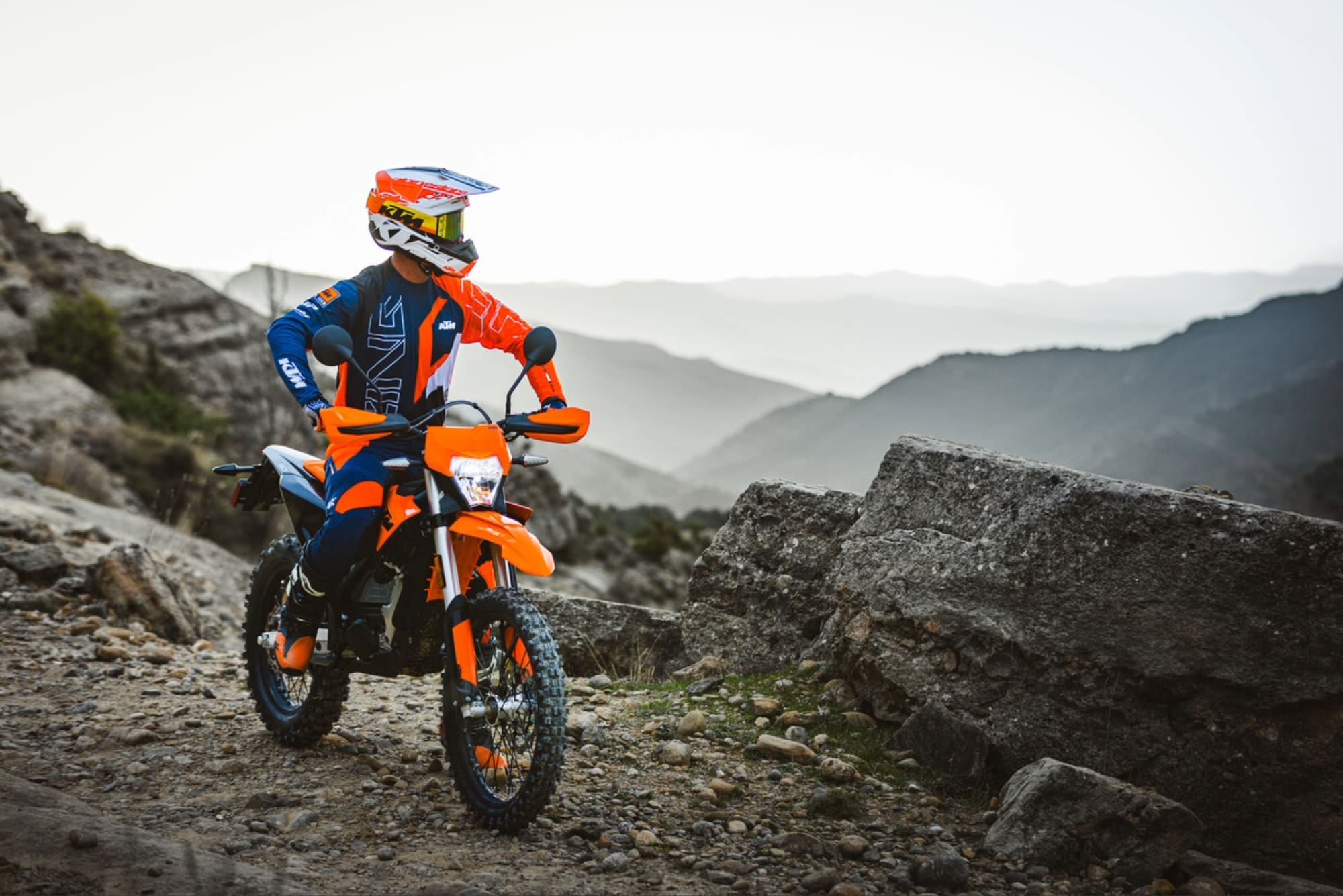
A significant update for 2027 is the battery system. The Freeride E is equipped with KTM’s MX50 lithium-ion battery pack, now offering approximately 5.5 kilowatt-hours of energy capacity. This represents a notable increase over earlier versions and contributes to a claimed riding time of between two and three hours under typical enduro conditions, depending on riding style and terrain. The battery itself weighs around 29 kilograms and remains removable, allowing riders to swap packs in the field or charge separately from the motorcycle.
Charging times vary depending on the equipment used. A standard 660-watt charger can replenish the battery in several hours, while an optional higher-capacity charger can significantly reduce charging time to approximately 1.5 hours. KTM also notes that the battery is designed to withstand up to 1,000 charge cycles before experiencing notable degradation, a figure that aligns with current expectations for lithium-ion systems in this segment.
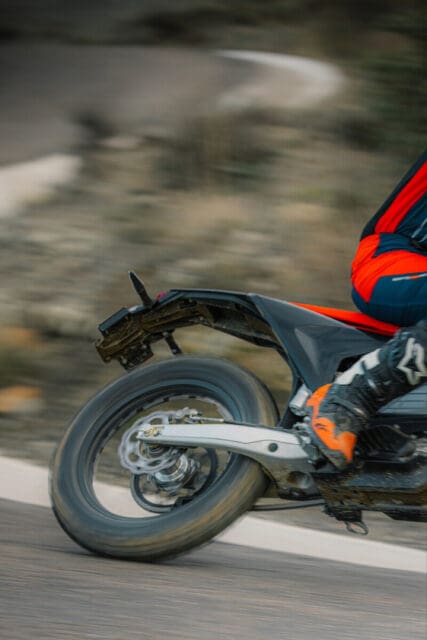
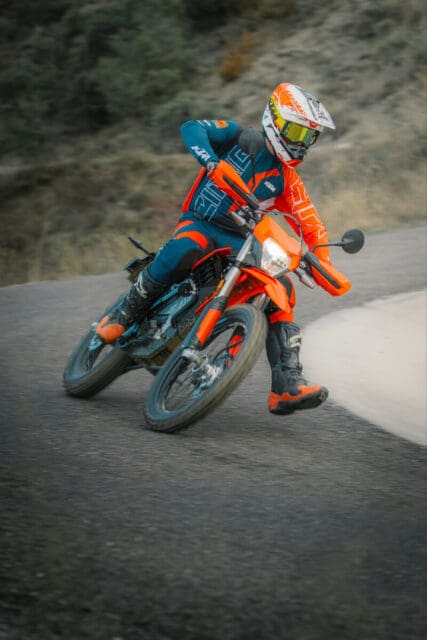
The chassis remains consistent with KTM’s off-road pedigree, utilizing a chrome-molybdenum steel frame paired with a lightweight composite subframe constructed from aluminum and glass-fiber-reinforced materials. The overall weight is approximately 112 kilograms (247 pounds), placing the Freeride E among the lighter options in the electric enduro category. This low mass, combined with a seat height of around 910mm, contributes to the bike’s emphasis on maneuverability in technical terrain rather than long-distance comfort.

Suspension duties are handled by fully adjustable WP Xact and Xplor components, with travel figures suited to enduro riding. The motorcycle rides on a 21-inch front and 18-inch rear wheel combination, fitted with off-road tires, while braking is managed by a conventional disc setup.
Electronically, the Freeride E remains relatively straightforward. It incorporates traction control, a rollover sensor, and a simple interface for selecting ride modes and monitoring battery status. The system avoids the complexity seen in some higher-performance electric motorcycles, aligning with KTM’s intention to keep the bike accessible and focused on off-road riding fundamentals.

One of the more notable developments for the 2027 model is its full road legality in the United States, broadening its usability beyond closed-course riding. This positions the Freeride E as a bridge between traditional enduro bikes and emerging electric dual-sport offerings, particularly for riders seeking quiet operation and reduced maintenance.
While it does not aim to compete with higher-output electric machines, the Freeride E occupies a distinct niche. Its relatively modest power output, lightweight construction, and swappable battery system suggest a motorcycle designed for technical trails, short excursions, and environments where noise and emissions are concerns.
Read More: Fly and Drive South Africa
Our No Compromise Clause: We do not accept advertorial content or allow advertising to influence our coverage, and our contributors are guaranteed editorial independence. Overland International may earn a small commission from affiliate links included in this article. We appreciate your support.
