

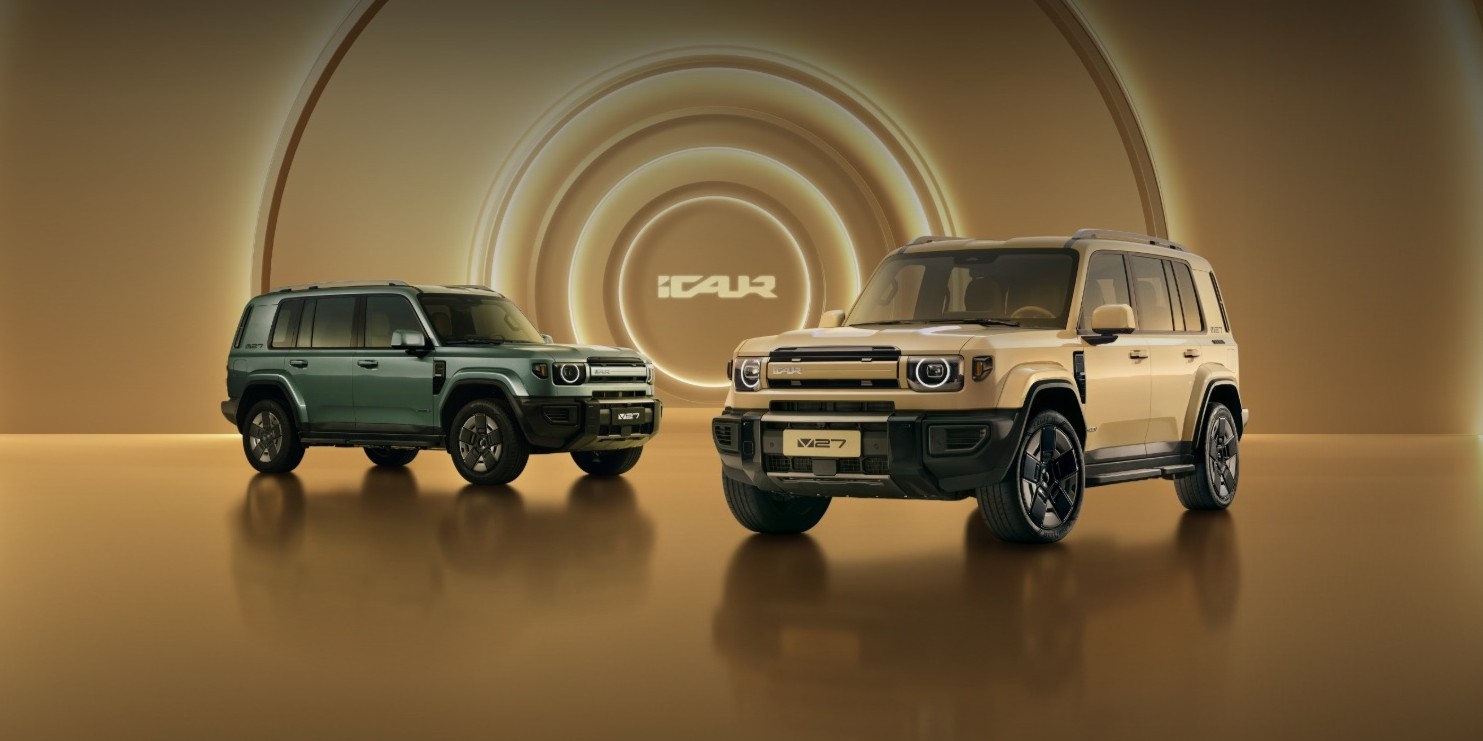
China is pushing assertively into a global automotive industry long dominated by manufacturers from the West and Japan. That progress has been rapid, but it has also drawn scrutiny, particularly around design similarities and, at times, questions of intellectual property. The iCaur, for example, carries visual cues reminiscent of a Toyota Land Cruiser. Whether this is intentional or simply part of a broader industry trend—where multiple brands are revisiting classic 4×4 forms—is open to interpretation.
At the same time, the company’s branding leans heavily on global imagery. Its “values” page features Western faces in design and production settings, while a closer look at leadership reveals a management team based entirely in China. This contrast reflects a familiar tension among manufacturers seeking international appeal while still defining their own identity. It is not unique to one brand, but rather part of a broader transition as Chinese automakers move from imitation toward establishing a more confident and distinct presence in the global market.

As manufacturers such as iCaur and CFMoto continue to develop more sophisticated and competitive products, two trends are becoming clear. First, the long-standing perception that Chinese manufacturing equates to lower quality is gradually being challenged. Second, if Chinese brands continue to deliver reliable, well-equipped vehicles at highly competitive prices, they will continue to gain increasing market share from established players already facing pressure in a rapidly evolving industry.
Chinese automaker Chery has expanded its push into electrified vehicles with the introduction of the iCaur V27, a mid- to full-size hybrid SUV designed to bridge the gap between traditional off-roaders and modern electric mobility. Positioned as the flagship model of the iCaur sub-brand, the V27 combines a “retro-inspired” design with a range-extender electric powertrain, targeting buyers who want long-distance capability without the limitations typically associated with fully electric vehicles.
[EDITOR’S NOTE: We’re sorry, this image has been removed.]
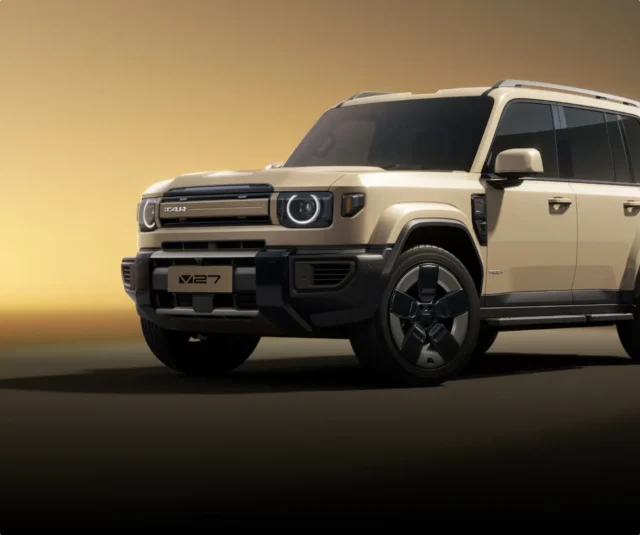
The V27 made its global debut in Dubai in late 2025, with production beginning in China in early 2026 and initial rollouts focused on markets such as the United Arab Emirates, the wider Gulf region, and South Africa. This launch strategy reflects a clear emphasis on regions where long distances, high temperatures, and limited charging infrastructure continue to shape vehicle choice.
At the core of the V27 is a range-extended electric vehicle (EREV) system. Unlike conventional hybrids, the 1.5-liter turbocharged petrol engine does not directly drive the wheels. Instead, it functions as a generator, supplying electricity to one or two electric motors depending on configuration. This setup allows the vehicle to operate primarily as an electric SUV while retaining the ability to extend range using conventional fuel.
Performance figures place the V27 firmly within the upper end of the segment. Dual-motor all-wheel-drive versions produce up to 449 horsepower and 372 pound-feet of torque, enabling acceleration from 0 to 62 mph in approximately 5.9 seconds. Rear-wheel-drive variants offer lower outputs but still deliver competitive performance for a vehicle of this size.
Range is a key selling point. Depending on configuration and testing standards, the V27 offers an electric-only driving range of approximately 93-124 miles, supported by a lithium-iron-phosphate battery with a capacity of up to 34.3 kilowatt hours. When combined with the petrol generator and a 15.9-gallon fuel tank, the total driving range approaches or exceeds 620 miles, with some estimates reaching around 745 miles under optimal conditions. This extended range positions the V27 as a practical option for long-distance travel in regions where charging infrastructure remains inconsistent.
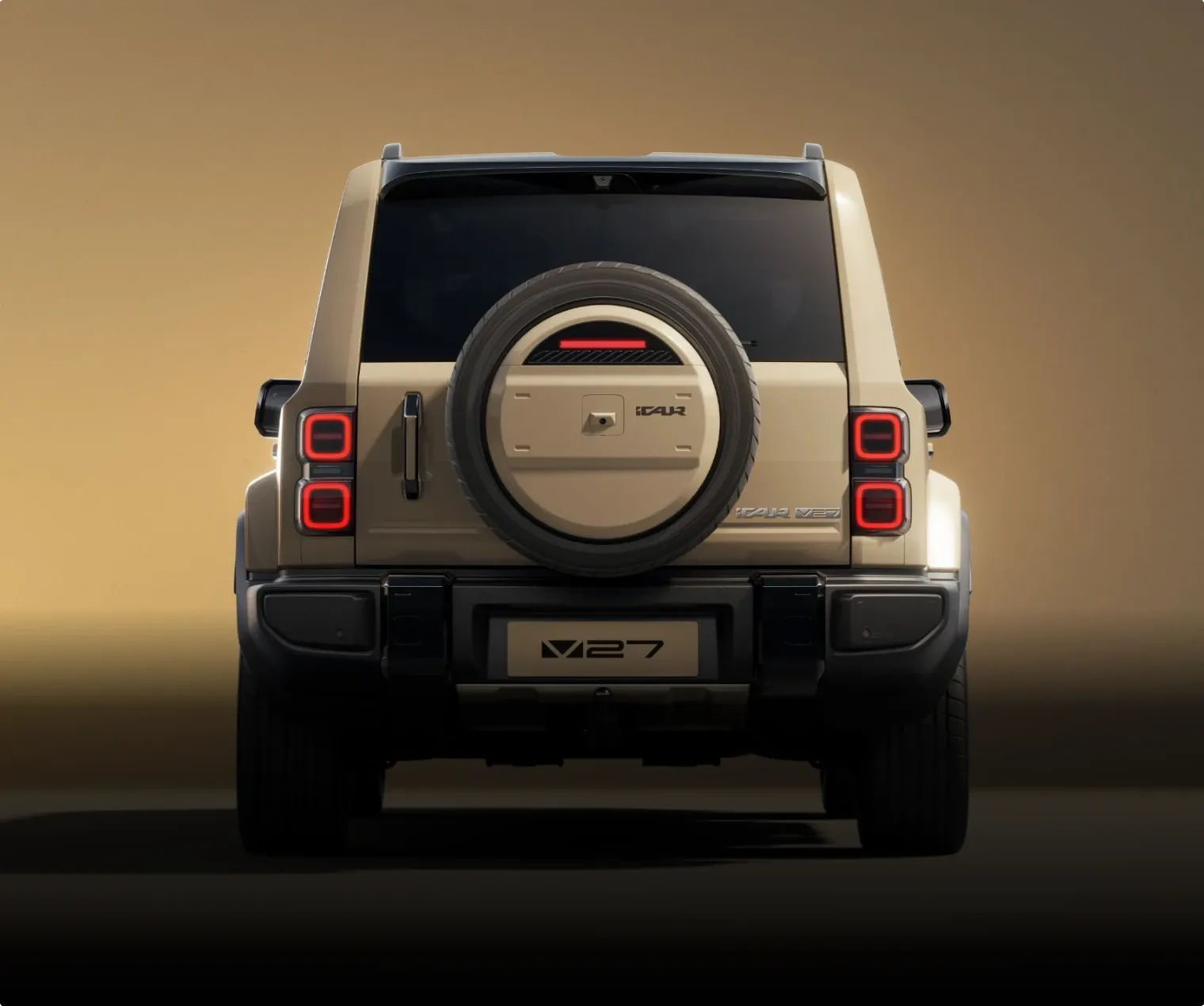
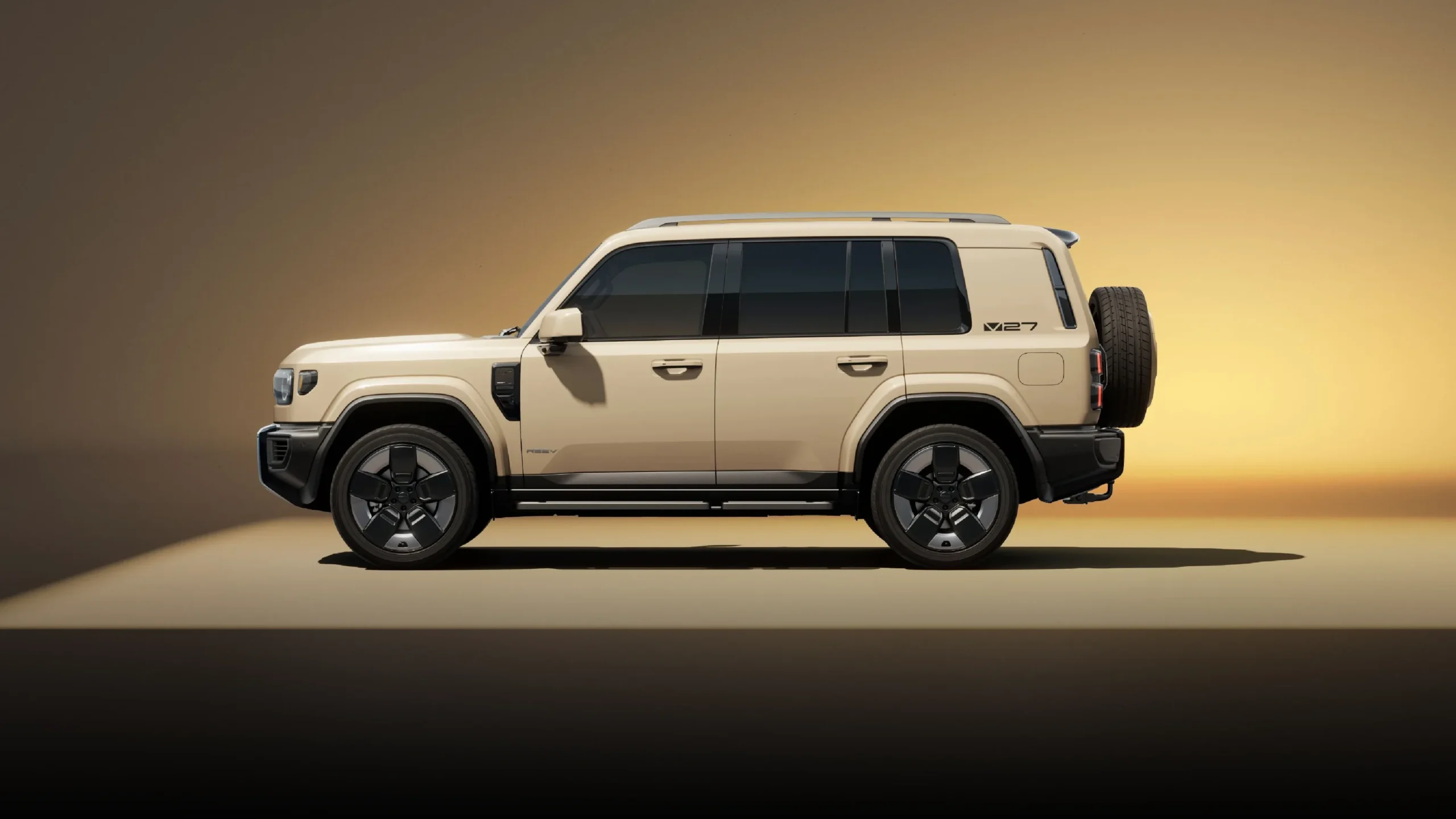
Dimensionally, the V27 aligns with established large SUV benchmarks. Measuring roughly 16.4 feet in length with a wheelbase approaching 114 inches, it offers a five-seat layout with an emphasis on interior space and comfort. The exterior design adopts a square, utilitarian aesthetic, with cues that echo traditional off-road vehicles, including a rear-mounted spare wheel, an upright stance, and simple body surfacing.
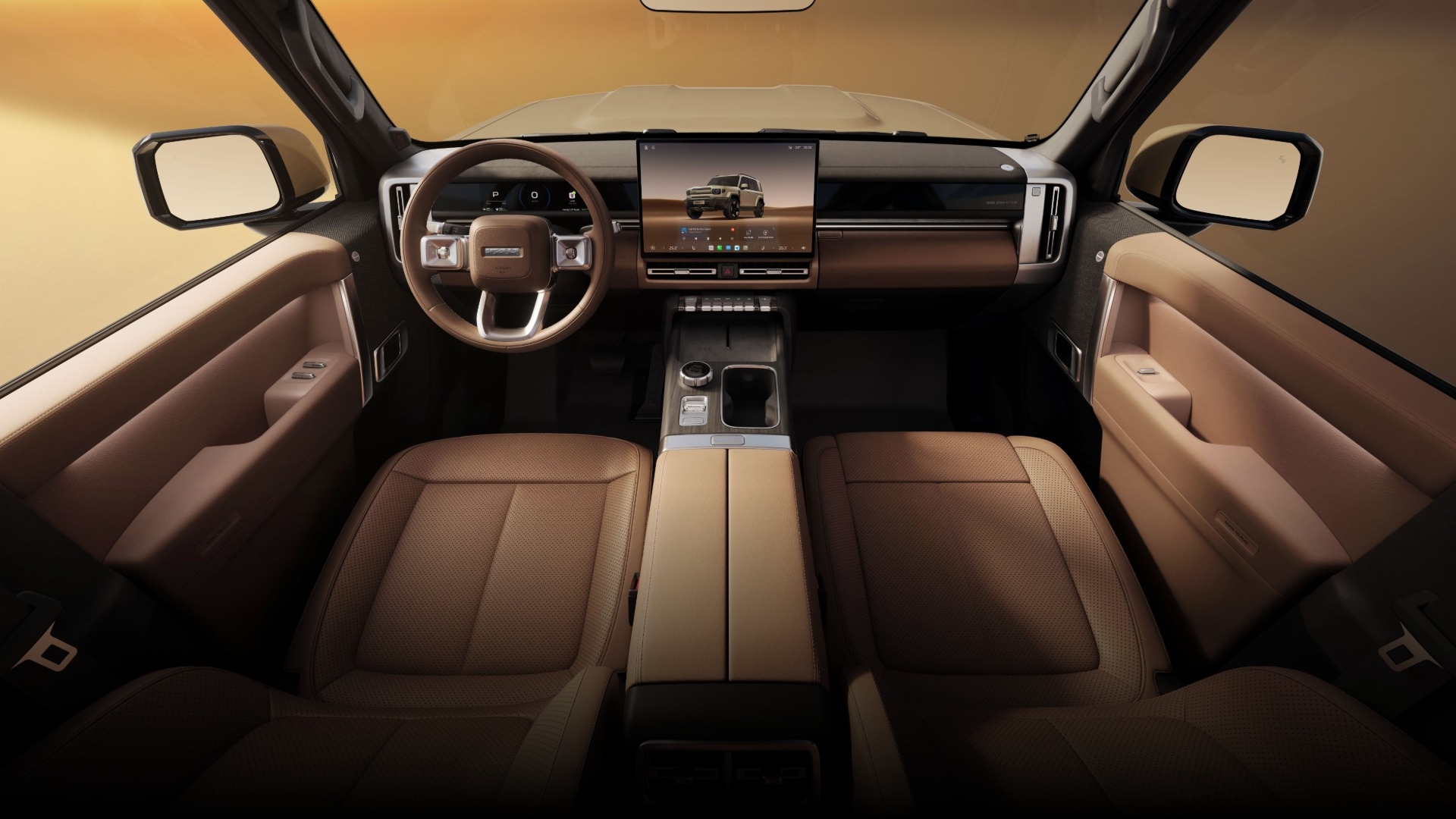
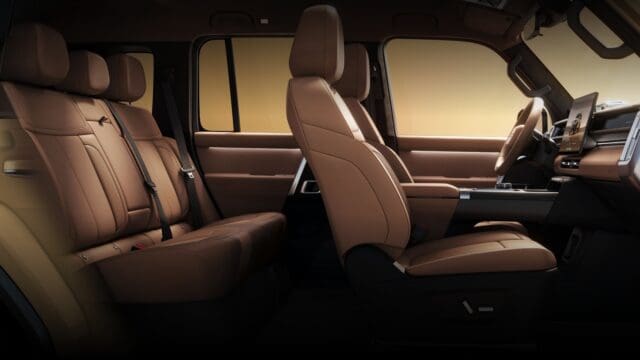
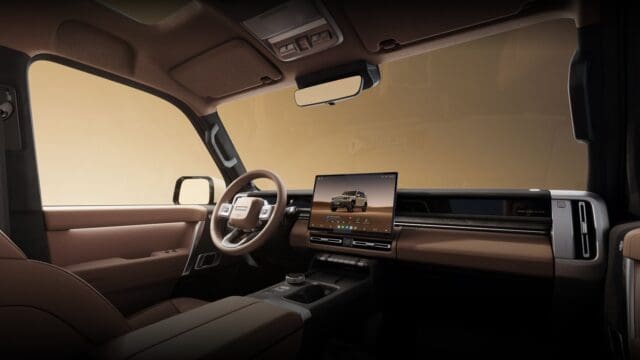
Inside, the V27 features a technology-focused cabin, incorporating large central infotainment displays, multi-speaker audio systems, and configurable ambient lighting. Higher-spec variants include advanced driver assistance systems, panoramic roof elements, and optional LiDAR-based safety features, reflecting the increasing role of digital technology in the segment.
Pricing in the UAE market begins at approximately AED 135,000 for rear-wheel-drive models and rises to around AED 165,000 for higher-spec all-wheel-drive versions. This positions the V27 below many established large SUVs, including traditional body-on-frame models, while offering a combination of electrification and performance that is less common at this price point.
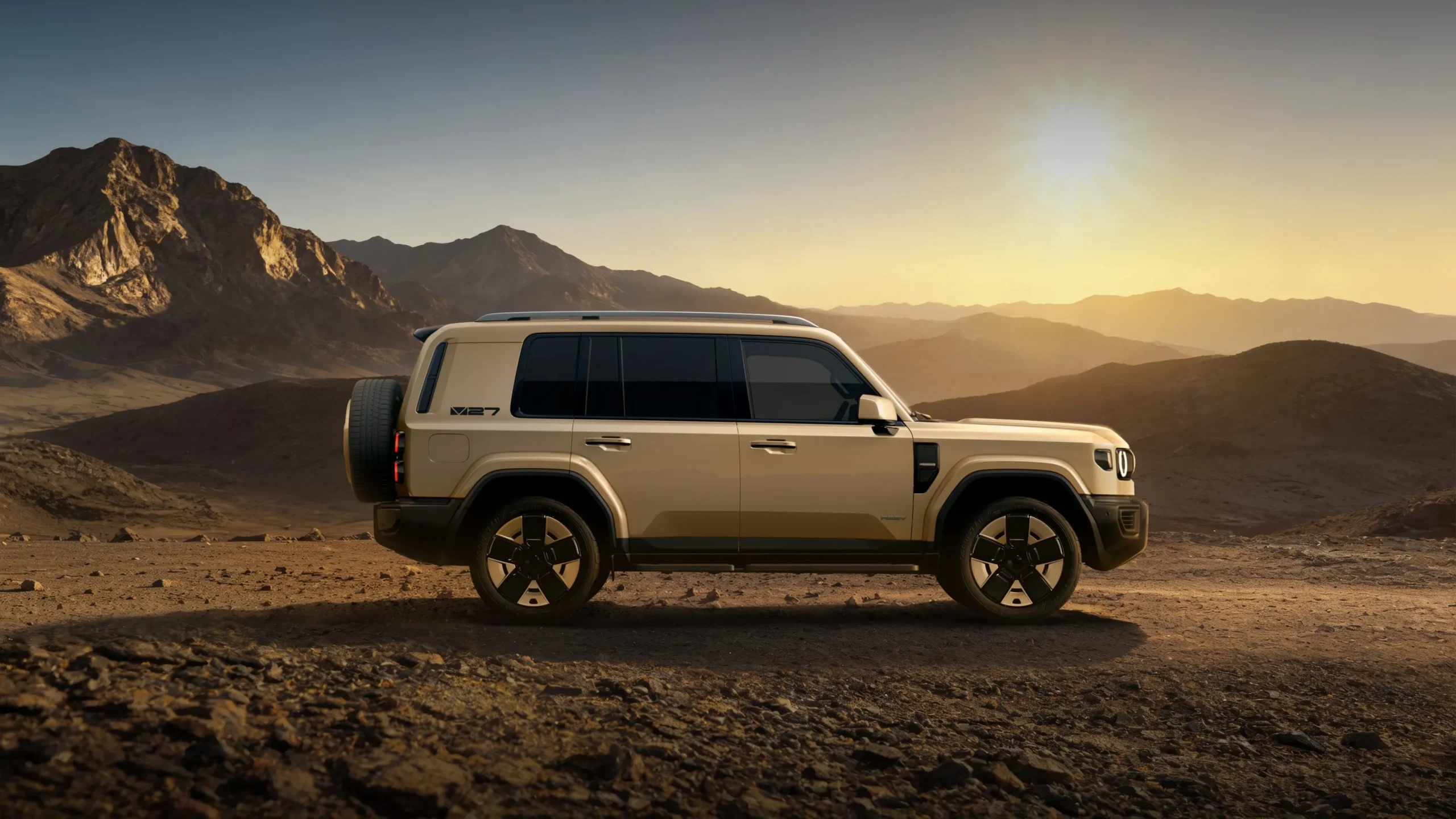
Chery has positioned the iCaur V27 as a competitor to vehicles such as the Land Rover Defender and Toyota Land Cruiser, though its focus is less on extreme off-road capability and more on versatility. With ground clearance of around 8.3 inches and available all-wheel drive, it is suited to light off-road use and unpaved roads, but it is not intended to replace dedicated off-road platforms in more demanding environments.
Read More: Fly and Drive South Africa
Our No Compromise Clause: We do not accept advertorial content or allow advertising to influence our coverage, and our contributors are guaranteed editorial independence. Overland International may earn a small commission from affiliate links included in this article. We appreciate your support.
