

Almost a decade ago, I left my Defender parked up and headed out for a morning walk across the plateau above the sandstone spires of Cappadocia, Turkey. The night before, we had sat beside a small campfire, sipping wine and watching a white camper on the far side of the valley search for a place to settle. Eventually, they worked their way across and camped a respectful few hundred feet from us.
The next morning, I wandered over and met the Swiss couple inside. They had been overlanding since the 1970s, and their Bremach-based camper reflected that kind of hard-earned experience. It wasn’t flashy, but it was right. The sort of vehicle shaped by miles rather than marketing.

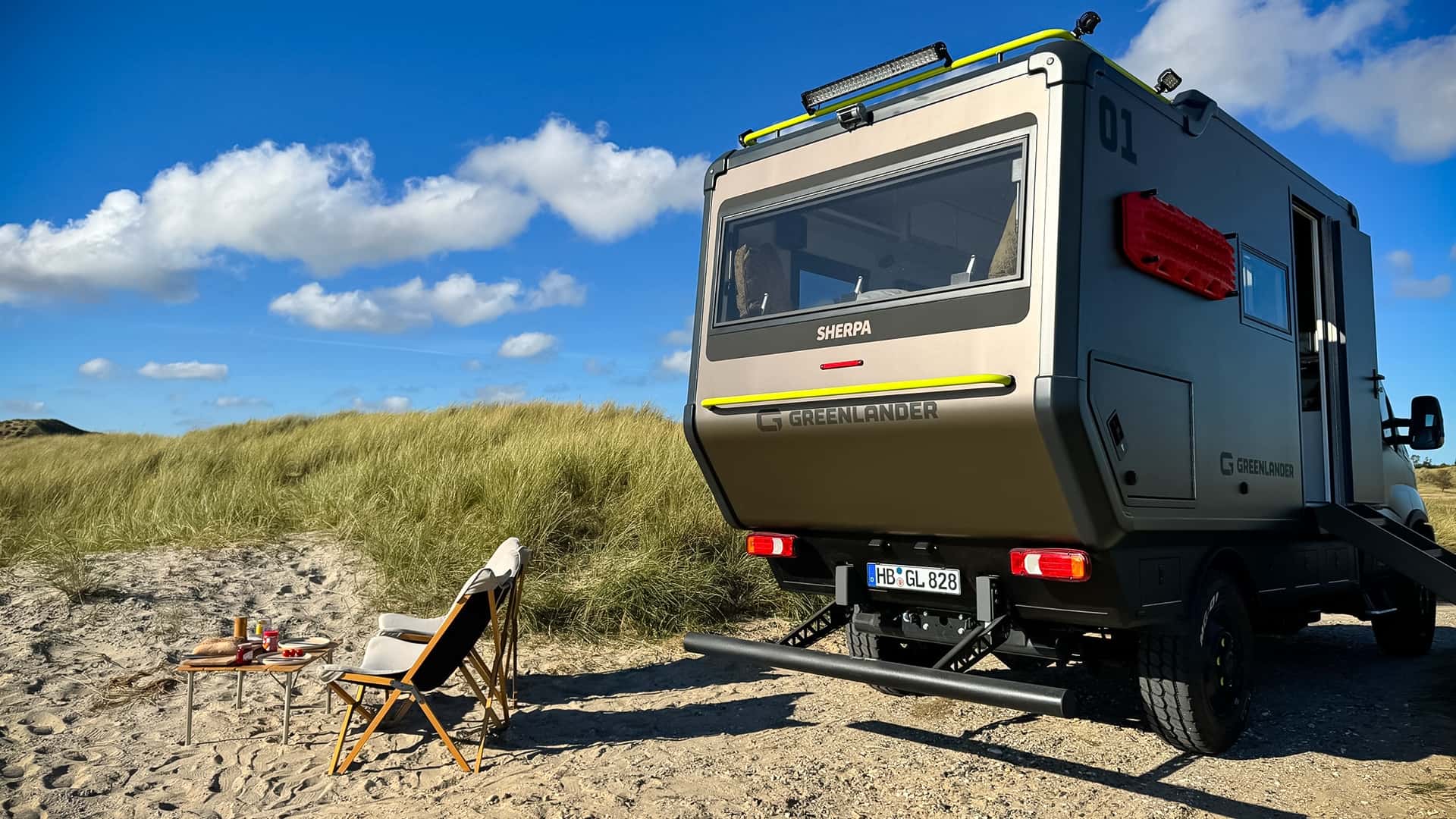
I couldn’t help but think they would have appreciated something like the Greenlander Sherpa. It feels like a modern interpretation of that same philosophy, just executed with a far more generous budget. The Sherpa has been making the rounds on social media, and it is not hard to see why. Clean lines, a capable base vehicle, and a build quality that appears precise and considered all contribute to its appeal. Whether you like it or not, it is the kind of vehicle that gets people thinking about their own builds and what is possible when experience and resources align.
European startup Greenlander is entering the overland market with a distinctive approach, combining sustainable materials with contemporary expedition capability. Developed from the technological foundation of Greenboats, the company’s flagship product reflects a broader shift toward more environmentally conscious manufacturing in the camper segment. What stands out is not any single feature, but the balance. The Sherpa does not rely on gimmicks. Instead, it combines a usable kitchen, a functional bathroom, a comfortable sleeping area, and enough storage to make long-term travel realistic.
Founded in 2021, Greenlander focuses on building 4×4 expedition vehicles using natural fiber composites. Rather than relying on traditional fiberglass, the company utilizes materials such as flax and linen combined with bio-based resins to create structural components that are both lightweight and renewable. This approach is the result of more than a decade of research and development, originally undertaken by Greenboats in search of alternatives to synthetic composites.
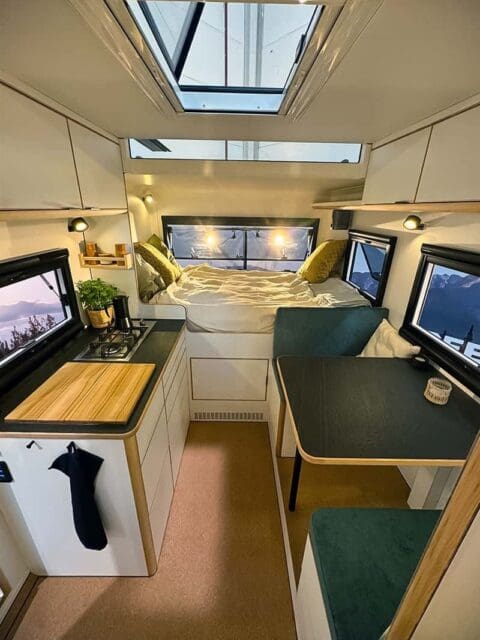
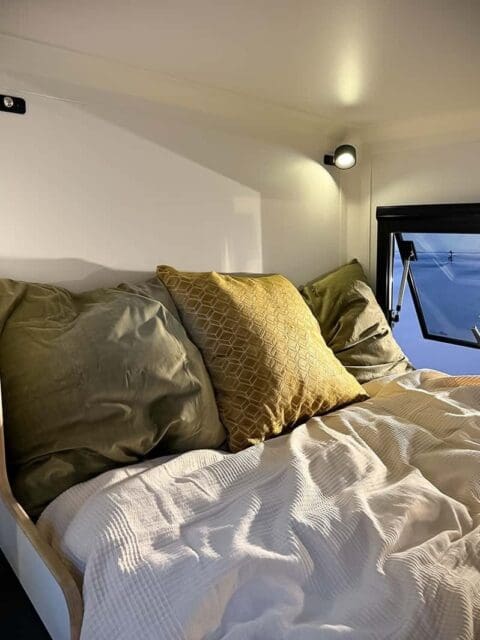
At the center of the range is the Greenlander Sherpa, a compact expedition vehicle designed to balance livability with off-road capability. According to the manufacturer, it is spacious enough for extended travel while remaining manageable in urban environments and tighter terrain. Inside, the Sherpa feels more like a compact apartment than a traditional expedition box. The layout is straightforward, but clearly informed by real-world travel. Up front, there is a proper dinette with opposing benches and a central table, which converts into an additional sleeping space if required. Behind that sits the main bed, measuring approximately 6.56 by 4.59 feet. It is generous for the vehicle’s size, although taller occupants may find it a little tight.
Storage is handled sensibly rather than excessively. A large drawer system sits beneath the bed, complemented by overhead cupboards and additional side storage. It is enough for long-term travel, provided you pack with a degree of discipline.
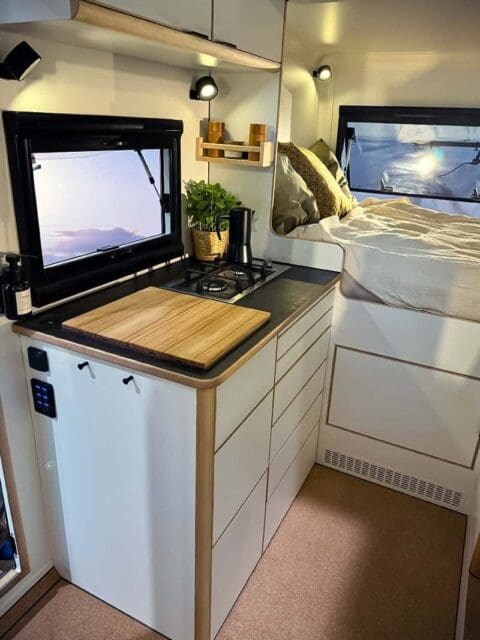
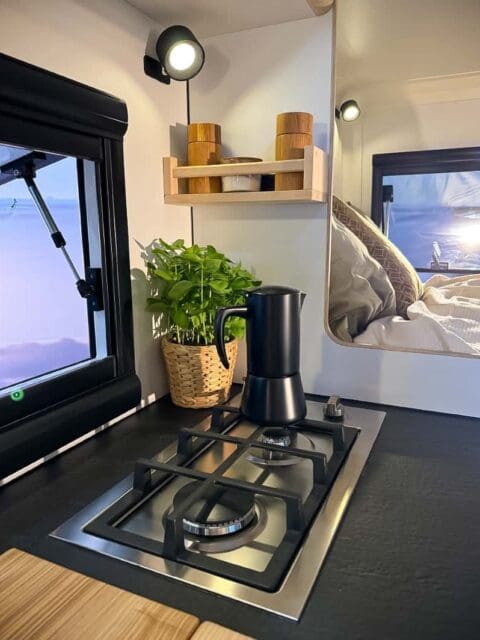
The kitchen, positioned opposite the dinette, is practical and well-equipped. It includes a stainless steel sink, a two-burner gas hob, a gas oven, and a 90-liter compressor fridge—more than adequate for an extended time off-grid. Multiple drawers and cupboards reinforce the sense that this is a space designed for regular use rather than occasional weekends away.
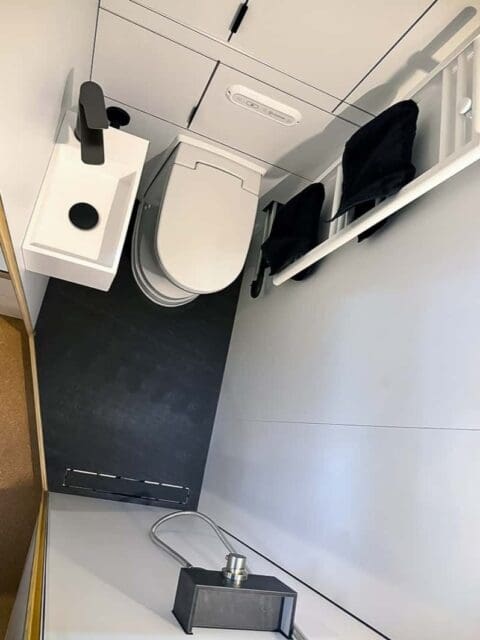
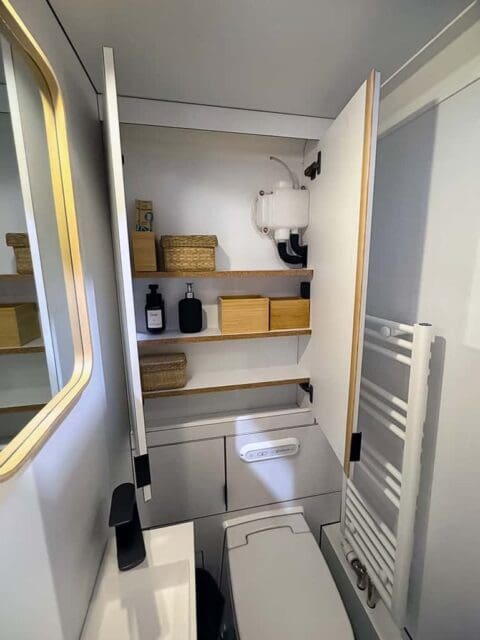
The bathroom is compact but complete, featuring a fixed sink, a proper shower, and a composting toilet as standard, with ventilation via a roof hatch. It is a straightforward, functional setup that works without unnecessary complexity. Water storage includes internal tanks as well as insulated external capacity, indicating a clear focus on extended, self-sufficient travel.
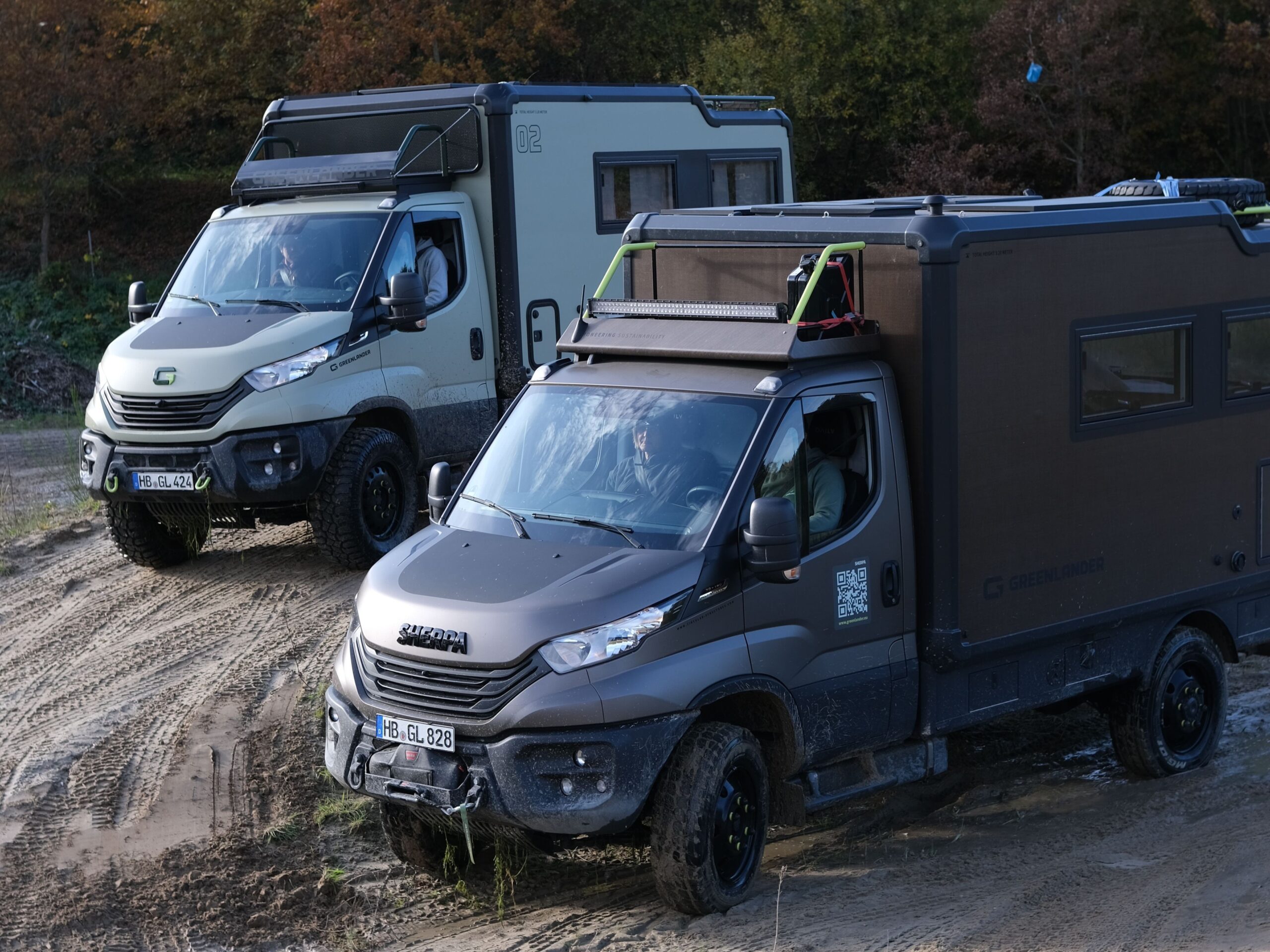
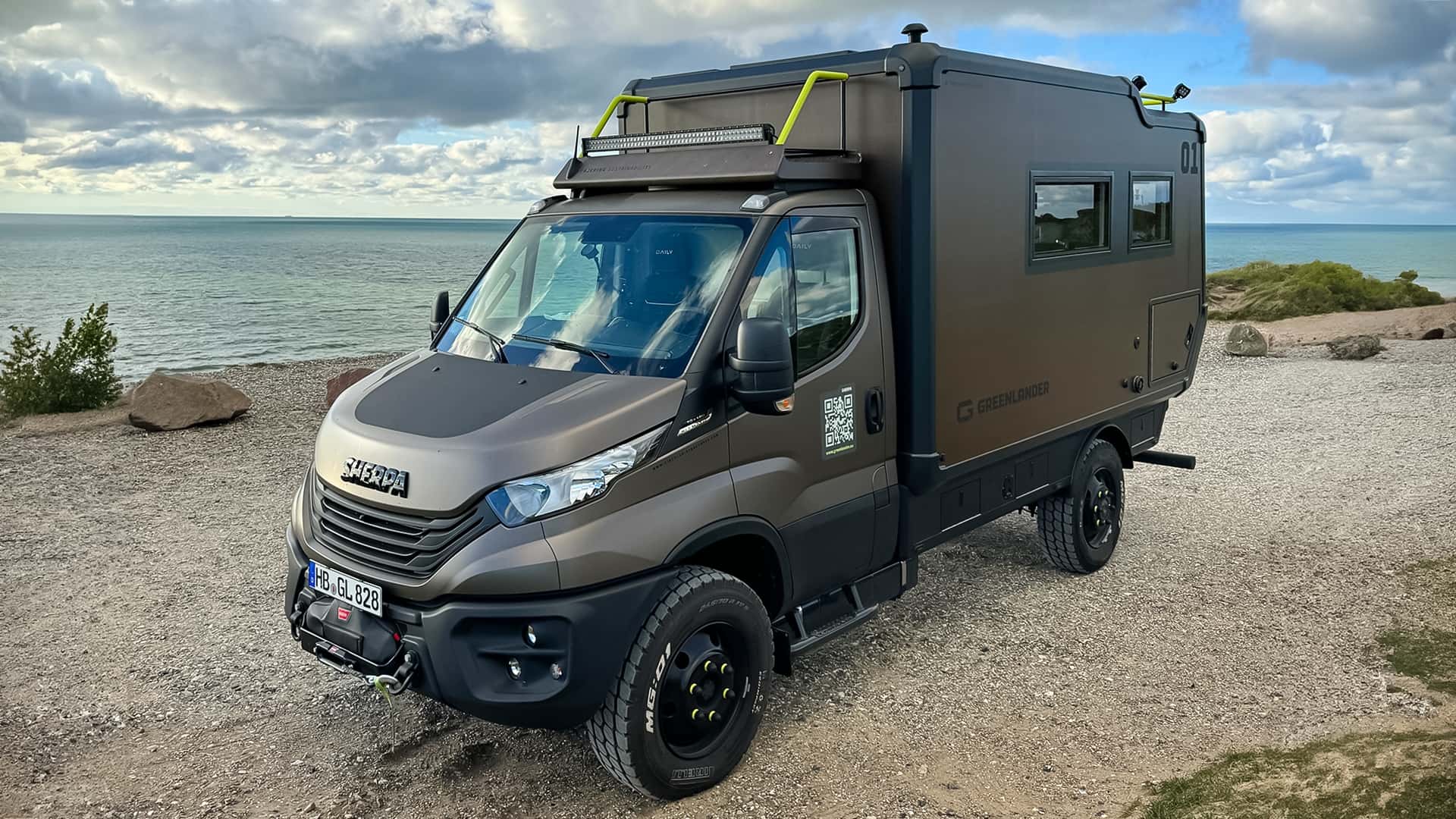
Externally, the Sherpa is built on either an Iveco Daily 4×4 or Mercedes-Benz Sprinter AWD platform, both proven commercial bases with credible off-road capability. This choice alone speaks to the vehicle’s intended use—it is designed to travel, not simply to impress.
Externally, it avoids the overbuilt, military aesthetic that many expedition trucks fall into, while still offering the hardware required when the road deteriorates, and proper overland travel hardware is available in a considered, modular way. Roof rails, storage solutions, bike racks, and awnings can be specified to expand usability without overwhelming the design. Stainless-steel roof and rear rails provide practical mounting points for additional gear. Protection and recovery equipment are also available, including bull bars, underride protection, and a winch. These are not purely aesthetic additions but reflect an expectation that the vehicle will be used in environments where self-recovery is part of the equation.
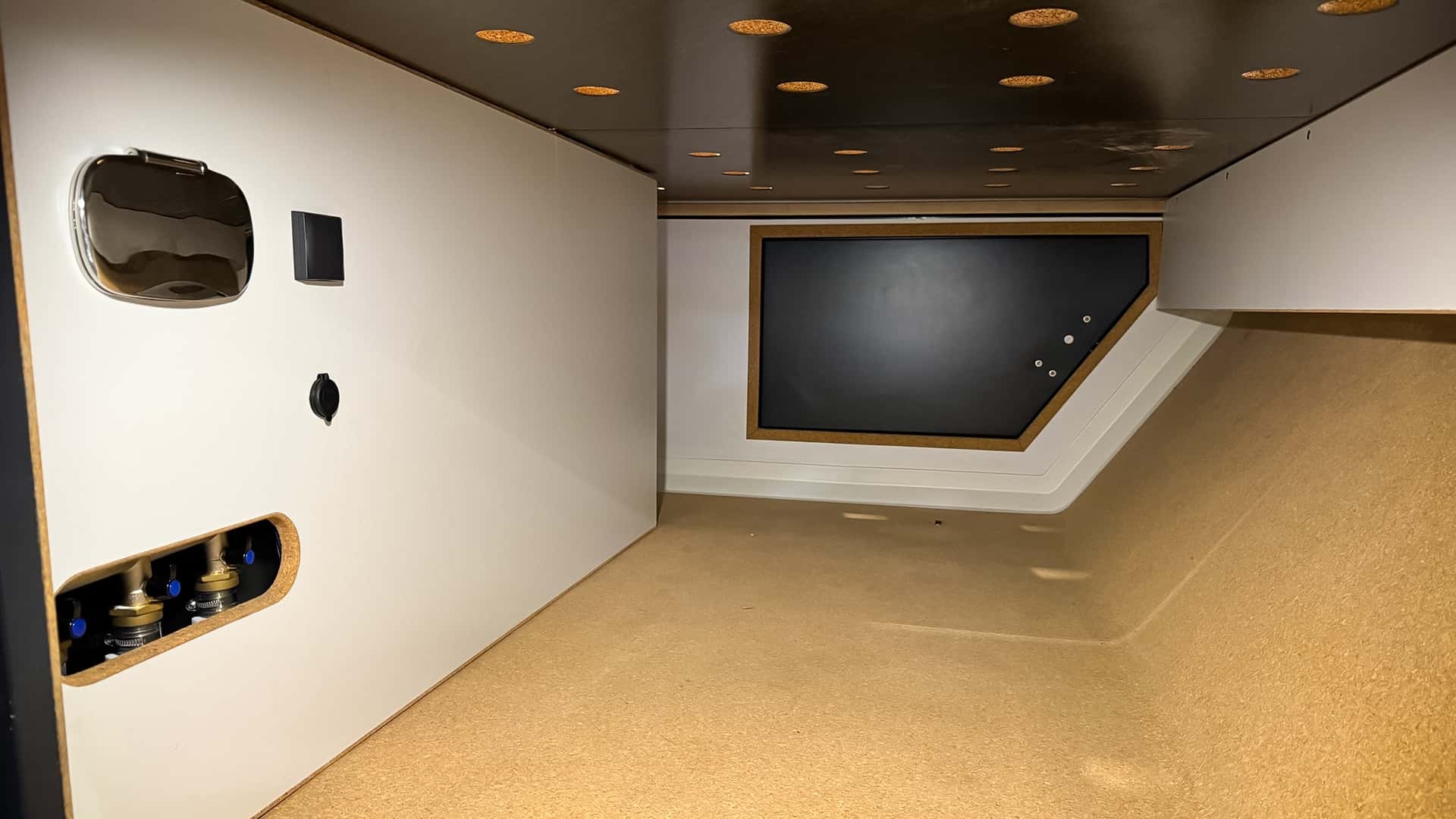
At the rear, a dedicated “garage” storage area provides space for tools, recovery gear, or bulkier items that are better kept out of the living space. Integrated power outlets add further practicality for charging equipment or running auxiliary systems.
Energy and connectivity have also been addressed with typical modern solutions. Solar, larger battery systems, inverters, and connectivity options such as 5G Wi-Fi or Starlink can be specified, positioning the Sherpa somewhere between a traditional expedition vehicle and a mobile workspace.
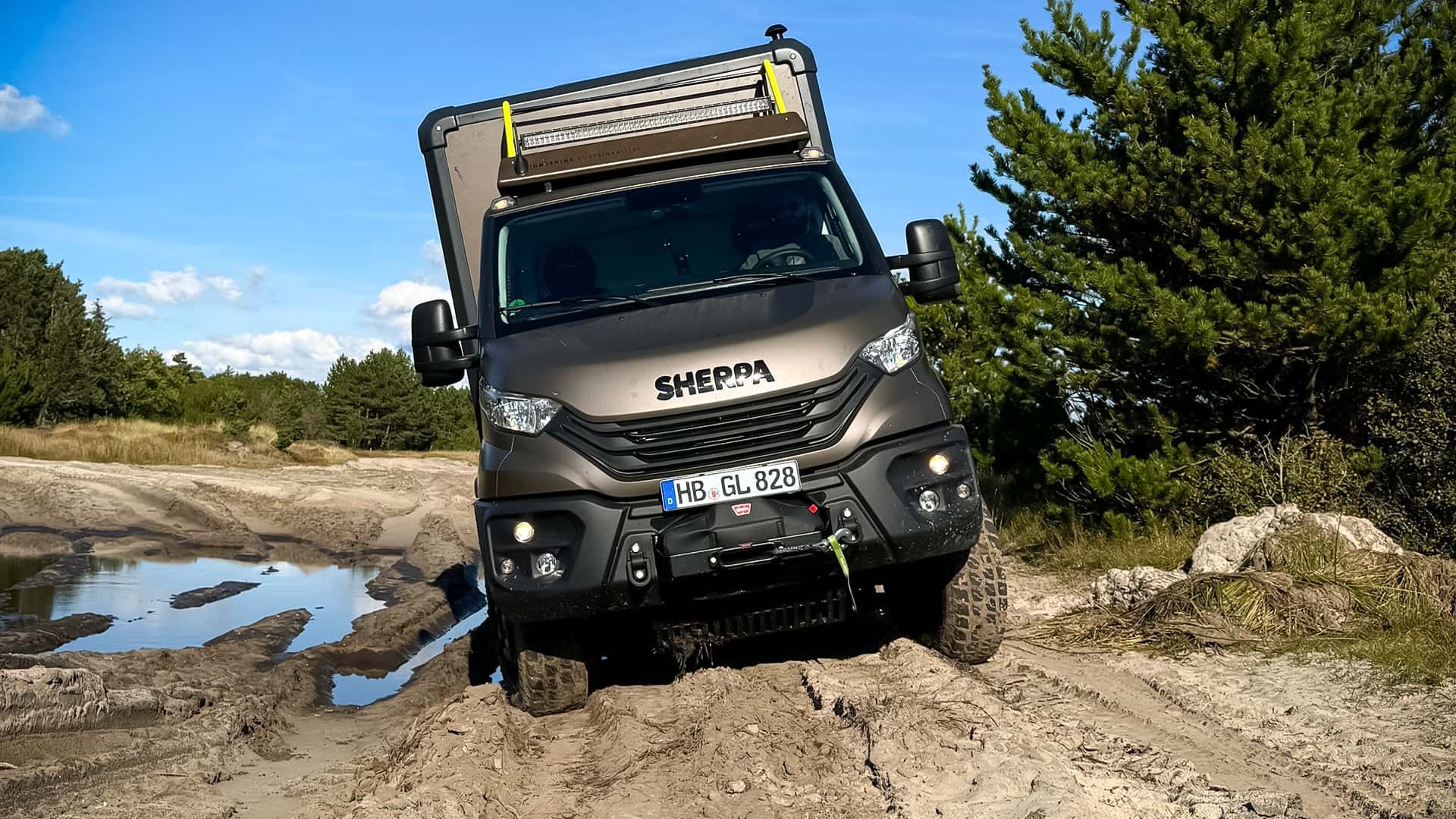
The Greenlander Sherpa is, on paper, a vehicle designed by people who understand both sides of overlanding—the romance of the idea and the reality of living in a box for months on end. What would make it perfect? A rear deck would go a long way toward it. In real terms, by the time most buyers spec the vehicle for serious long-term travel (solar, batteries, connectivity, recovery gear), it is reasonable to expect the Sherpa to land within the $300,000 range—which is okay if you’re a wealthy Swiss couple, but definitely way out of reach of most of the overlanders I know.
Read More: Overland News of the Week
Our No Compromise Clause: We do not accept advertorial content or allow advertising to influence our coverage, and our contributors are guaranteed editorial independence. Overland International may earn a small commission from affiliate links included in this article. We appreciate your support.
