

To honor the 20-year anniversary of Overland Journal, we are revisiting special heritage content in the upcoming 100th issue of the magazine. Originally published in Overland Journal’s Winter 2015 issue, this article is part of that celebration.
Photography by Coen Wubbels
“A shout! They found gold in Mahdia!” a newspaper vendor cried. Locals were hovering around, all wanting to hear the latest news. Who was the lucky guy who found a gold vein, a bounty that would ensure him millions of dollars? We had stumbled upon a unique event—the last “shout” (or “lash”) had been years ago—and we were determined to see the discovery with our own eyes.
Guyana’s Gateway to the Interior
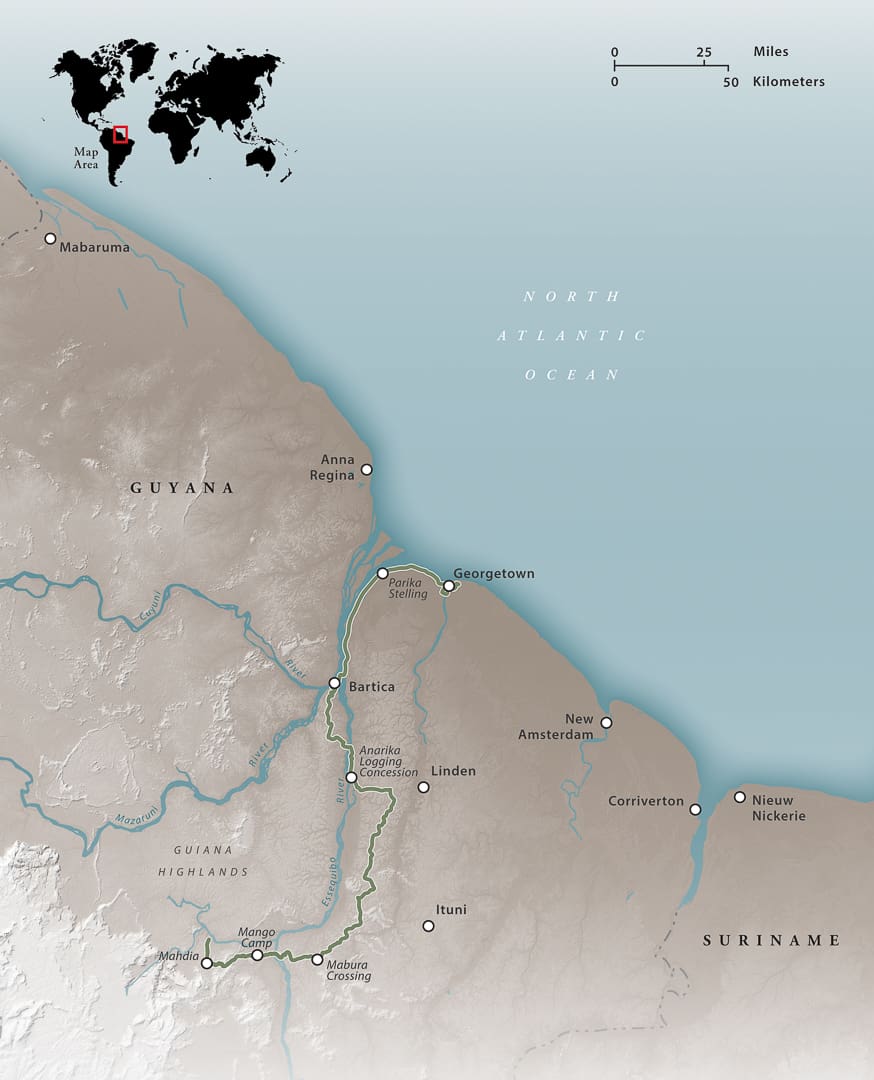
We prepared ourselves for a challenging journey into Guyana’s tall timber and stocked up on fuel, food, and drinking water. From the capital of Georgetown, we took a seven-hour ferry ride to Bartica, a frontier town and the gateway to Guyana’s interior, a region home to great numbers of legal and illegal gold mines.
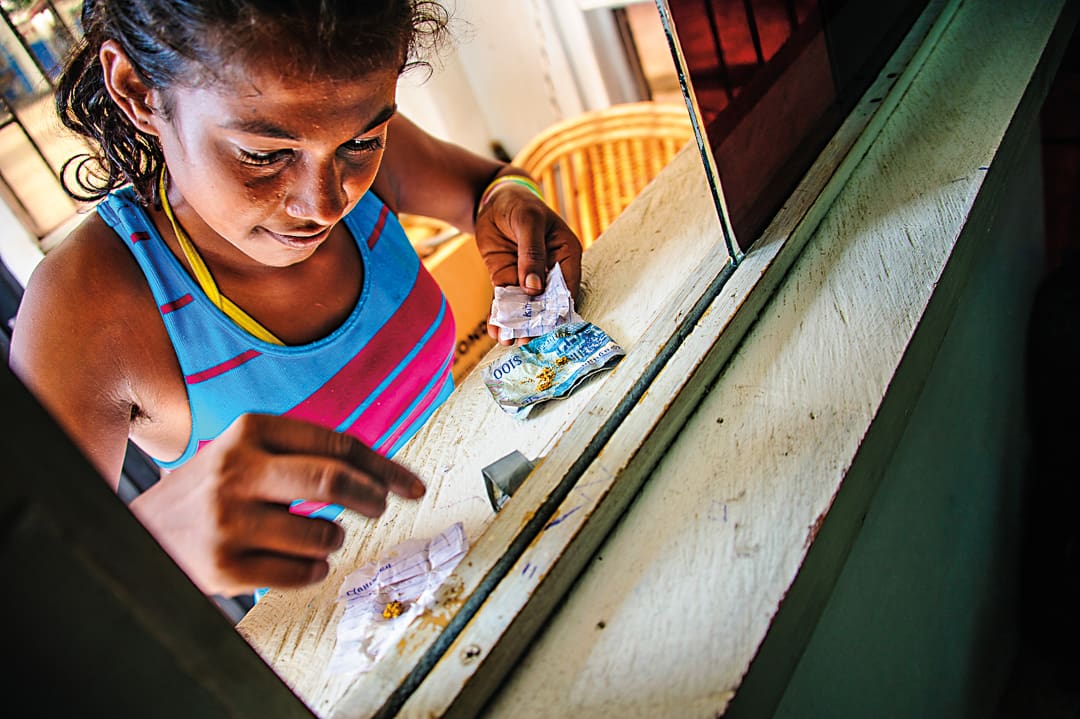
Miners come to Bartica to drink, gamble, find a girl, and of course, sell their gold. Buyers have inconspicuous-looking offices with signs stating their line of work: “We buy gold.” The buildings are monitored by security cameras, and the offices are typically furnished with a couch, TV (showing a Bollywood movie), large wooden desk, fridge, and coffee maker. After asking around for nearly a day, a young Brazilian named Fabricio invited us into his air-conditioned inner sanctum, located behind a series of doors.
Refining
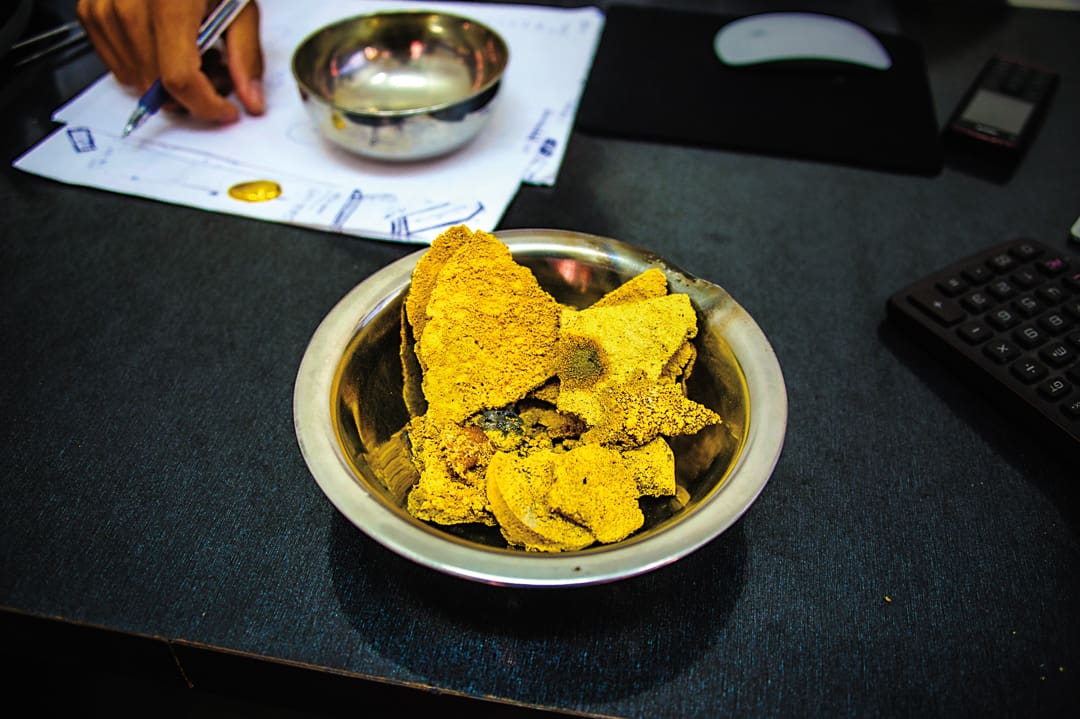
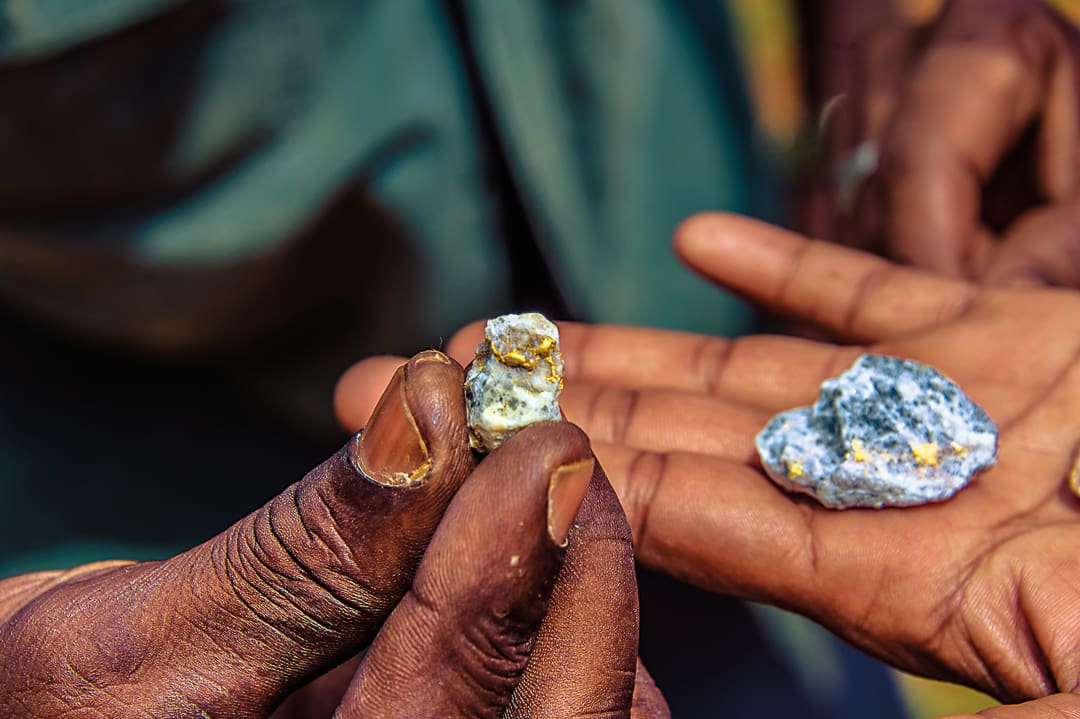
Fabricio pulled out a bowl containing what appeared to be worthless chunks of something. The value of that “rubbish” was over $15,000 USD. You’d better know your business when dealing with such numbers. The dirty material had already been smelted in the mines to remove the mercury. The use of mercury is legal in Guyana, but the material is expensive: $250 USD per kilo. If not for environmental reasons, money is a strong motivator to use it efficiently.
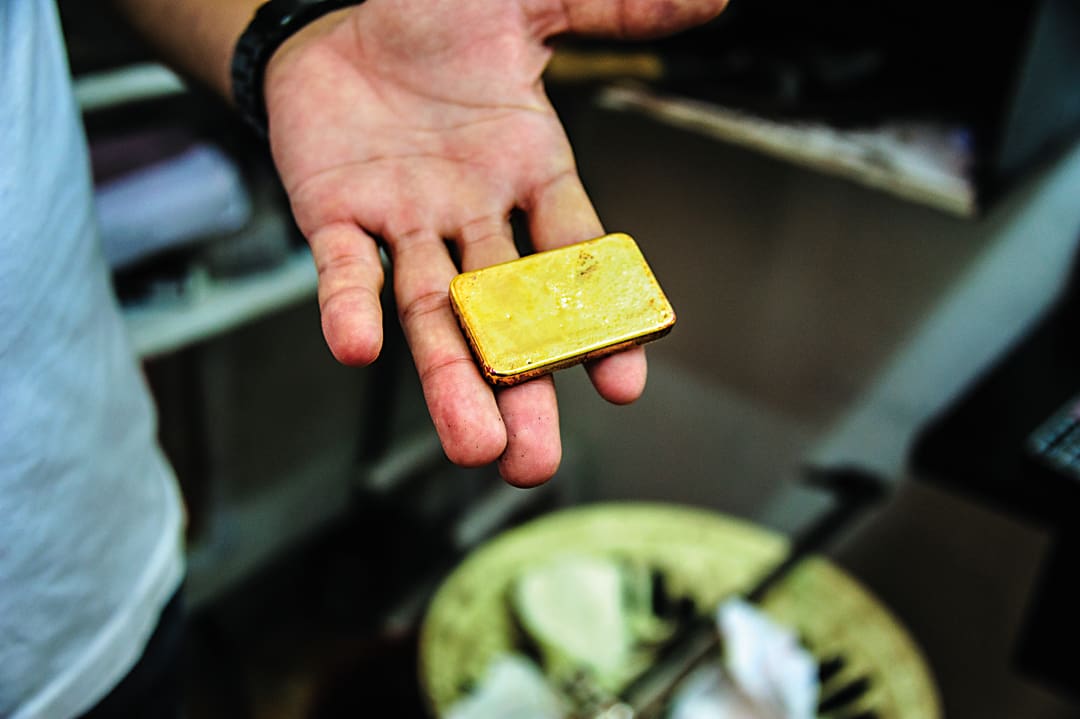
Fabricio lit a large torch and melted the chunks into a nasty-looking, boiling concoction. He added a dash of borax, which glues sand, dirt, and dust together so that it can be easily scraped away. The remaining liquid solidified as soon as it was poured into a mold. Fabricio picked it up with a pair of pincers and cooled it in a bucket of water. And there it was, an ingot of 300 grams of solid gold. Coen wanted to take a picture. “Sure, no problem. Take it outside so you’ll have better light,” Fabricio suggested. Such trust! Not only in us, but in all of the others who could simply snatch the bar out of our hands while Coen was taking his photo.
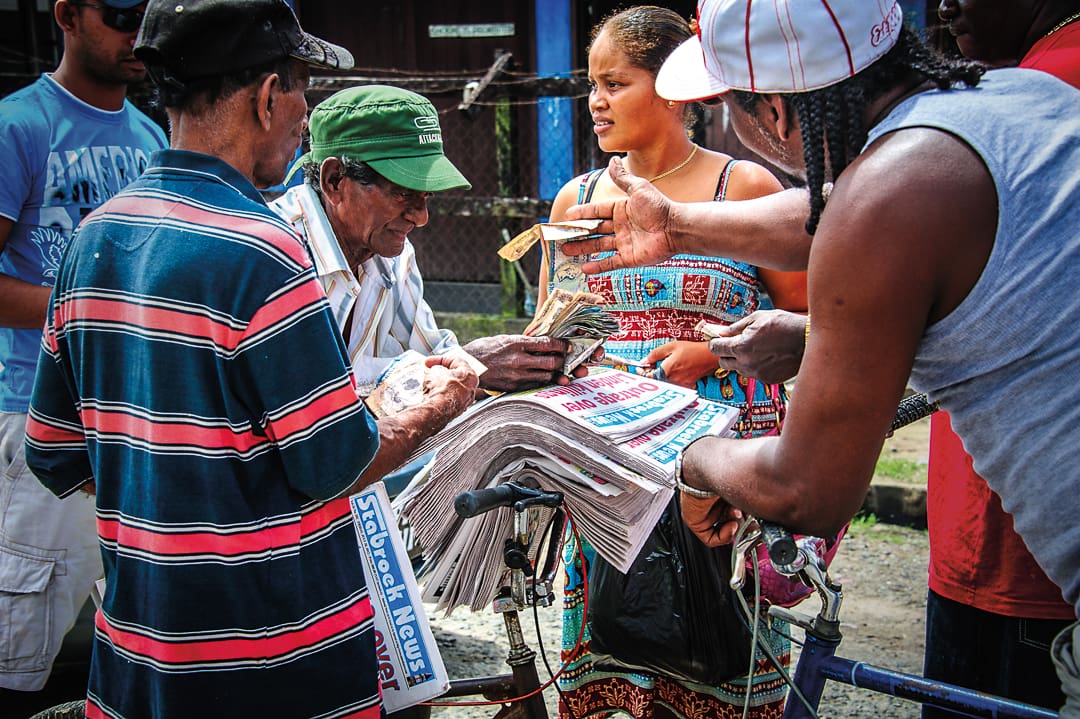
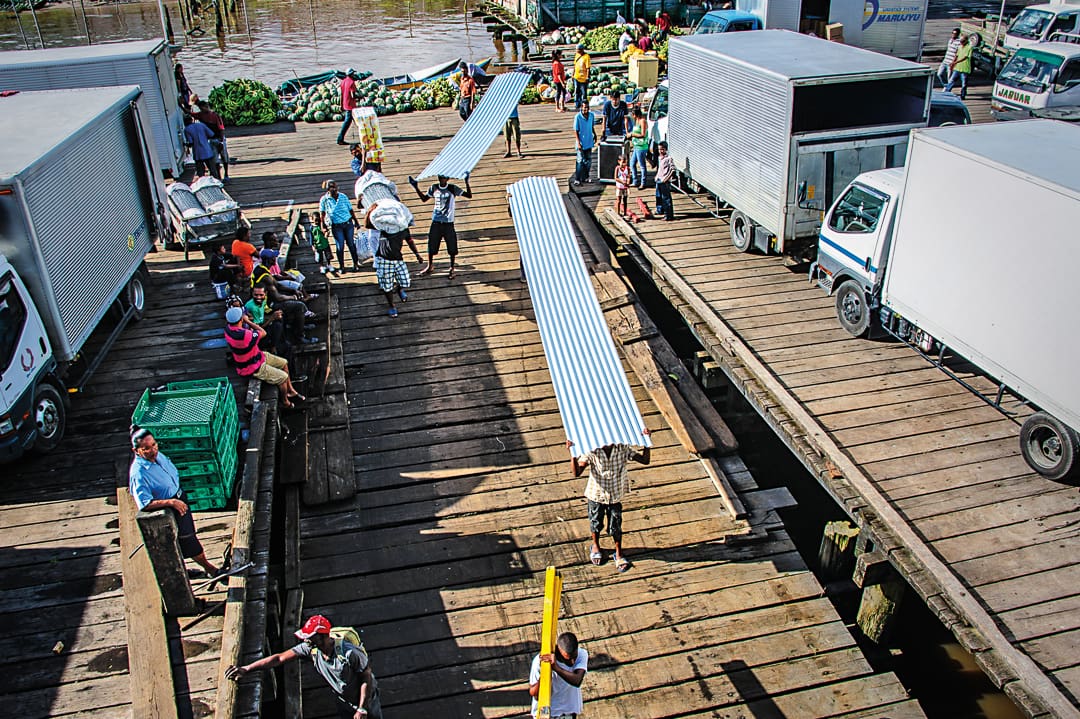
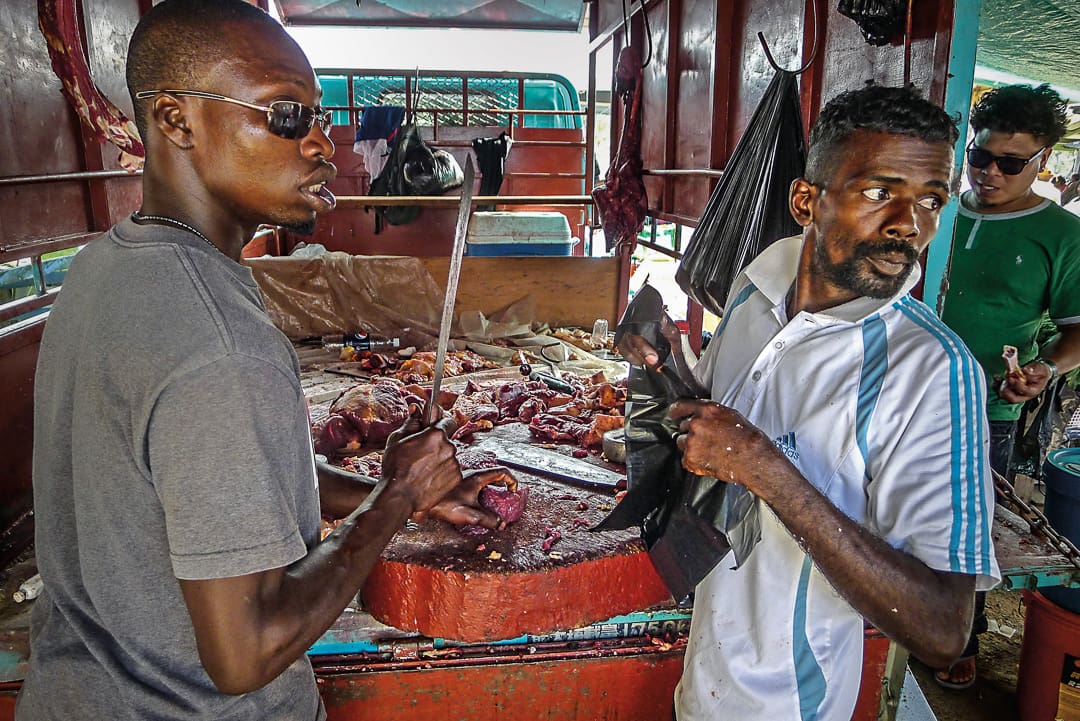
Fortunately, Bartica was not a dangerous town. Gold mining has been largely legalized in Guyana, and with it came proper security measures and safety regulations. The town resounded with vibrancy, a pleasant chaos of trucks and cars driving up and down, blocking the road in the process. Curbside stalls and vans filled the streets, displaying their wares of iceboxes, tabletop stoves, buckets, jerry cans, an array of lanterns, heavy equipment, and boots.
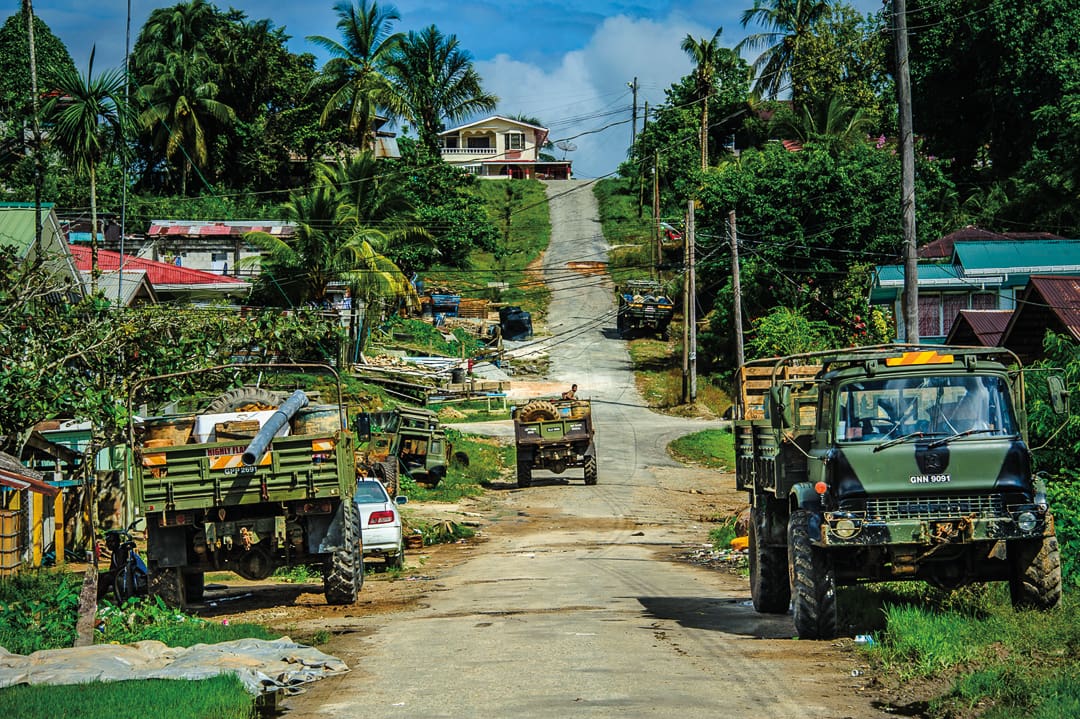
The most common trucks used to transport drums of fuel, spare parts, and other supplies to the mines are green Bedfords imported from England (until 1966, Guyana was a British colony). The humongous trucks have spring-over axles, giving them more clearance on the deeply rutted tracks that characterize the region. Although most trucks must date from antiquity, no driver really seems to know how old his vehicle is.
Finding Mahdia
We stayed three days in Bartica, wandering the streets, chatting with locals, many of whom invited us for a soda or beer. Then it was time to move on and check out the real thing: gold mining. Mahdia was the place to go, people told us. The question was how to get there. The only track on any map that connected Bartica and Mahdia, the Potaro Road, no longer existed. An already week-long strike on the country’s main throughway blocked all traffic going north to south, cutting off a second route. That left us with one option—to cut straight through the rainforest via the Shamira and Mango Crossings.
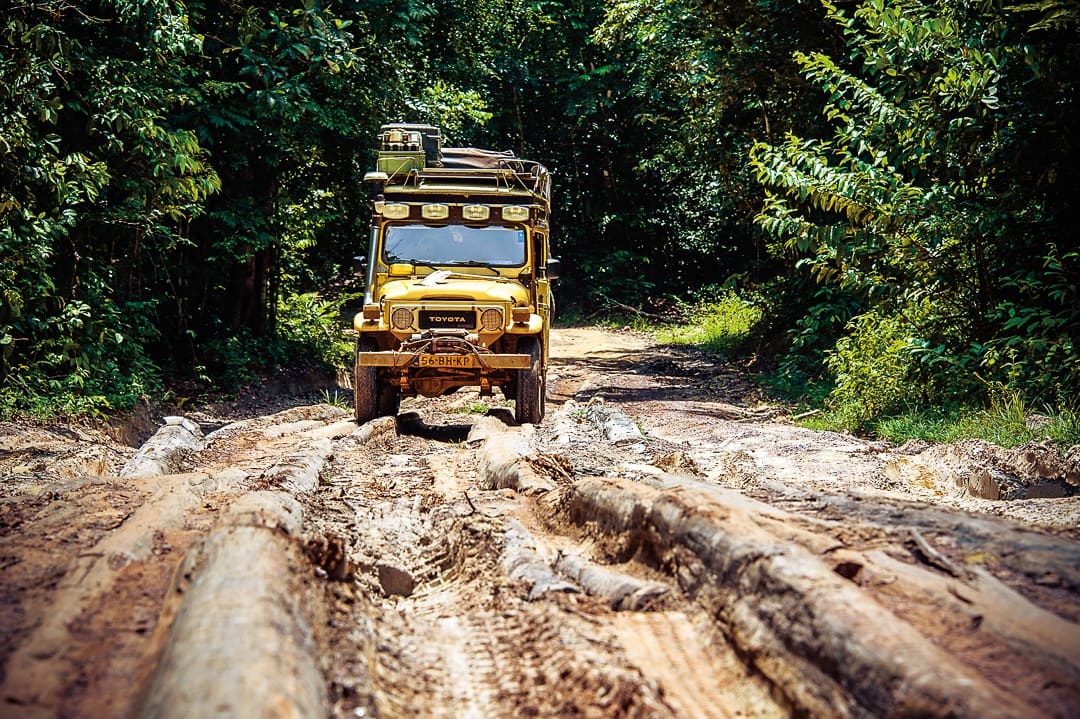
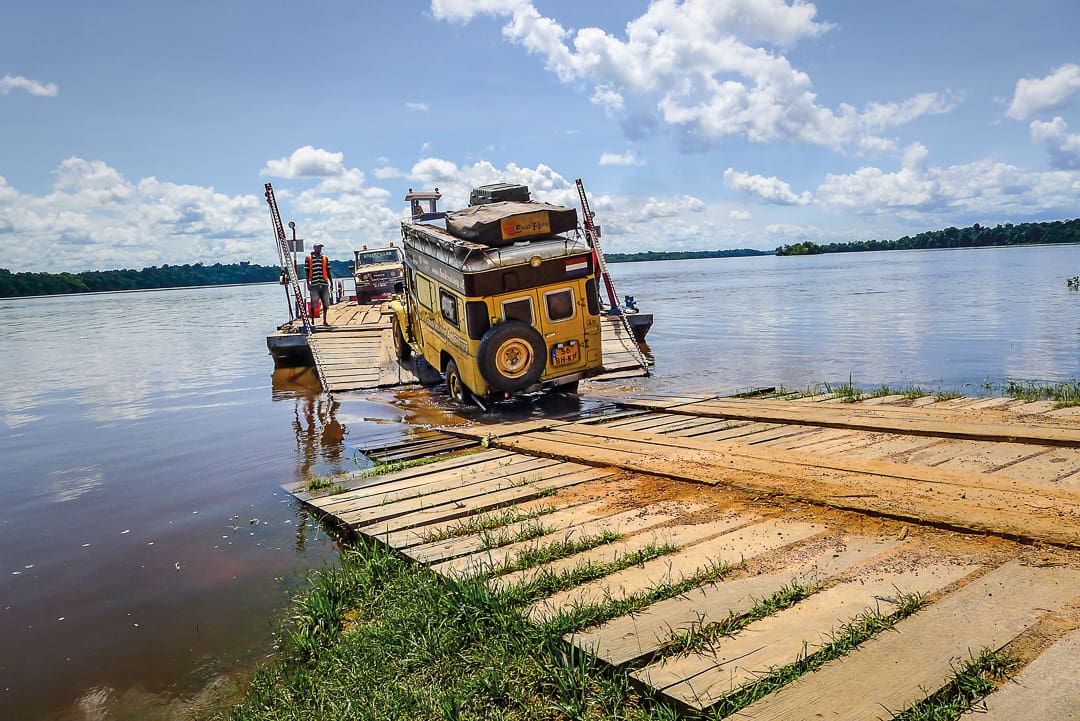
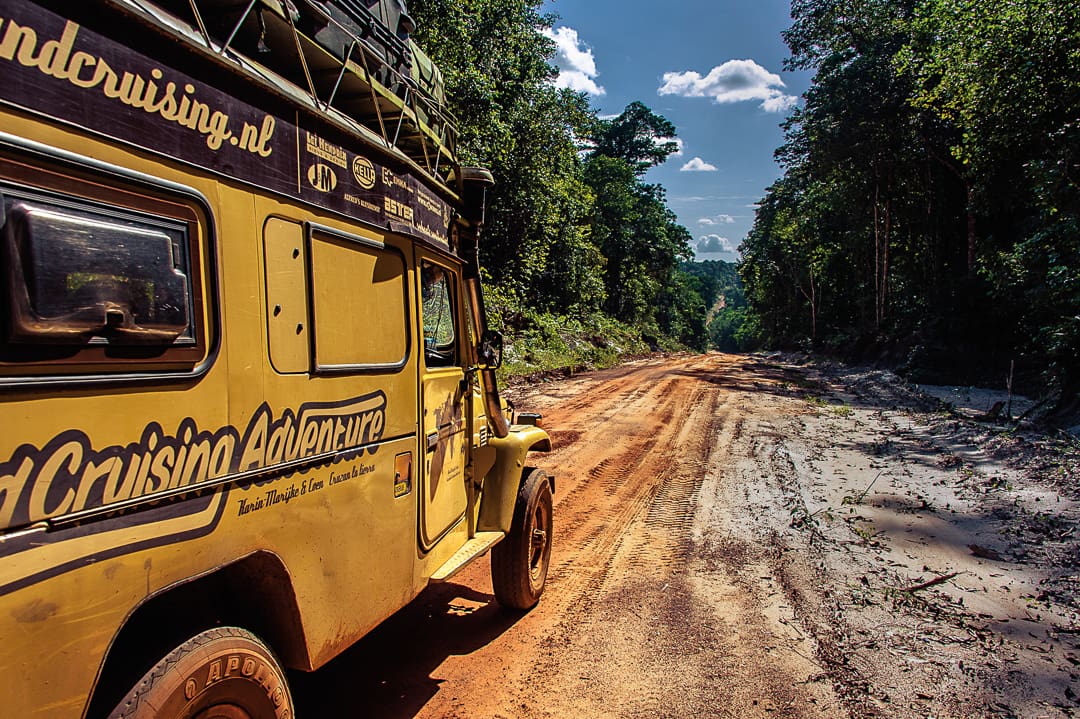
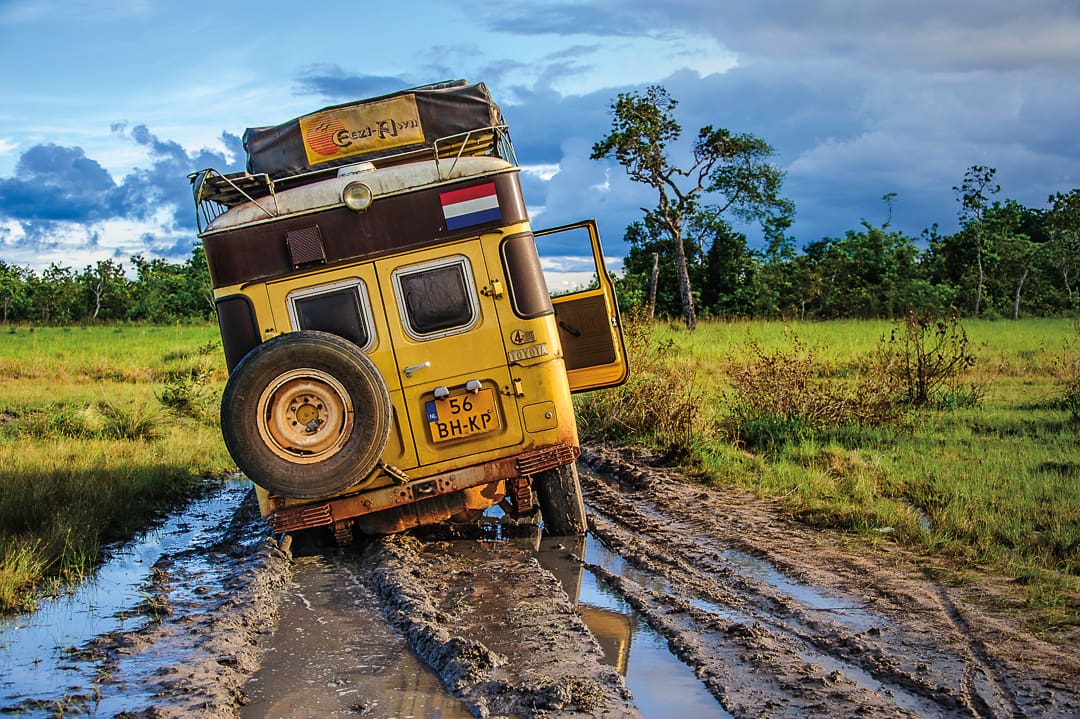
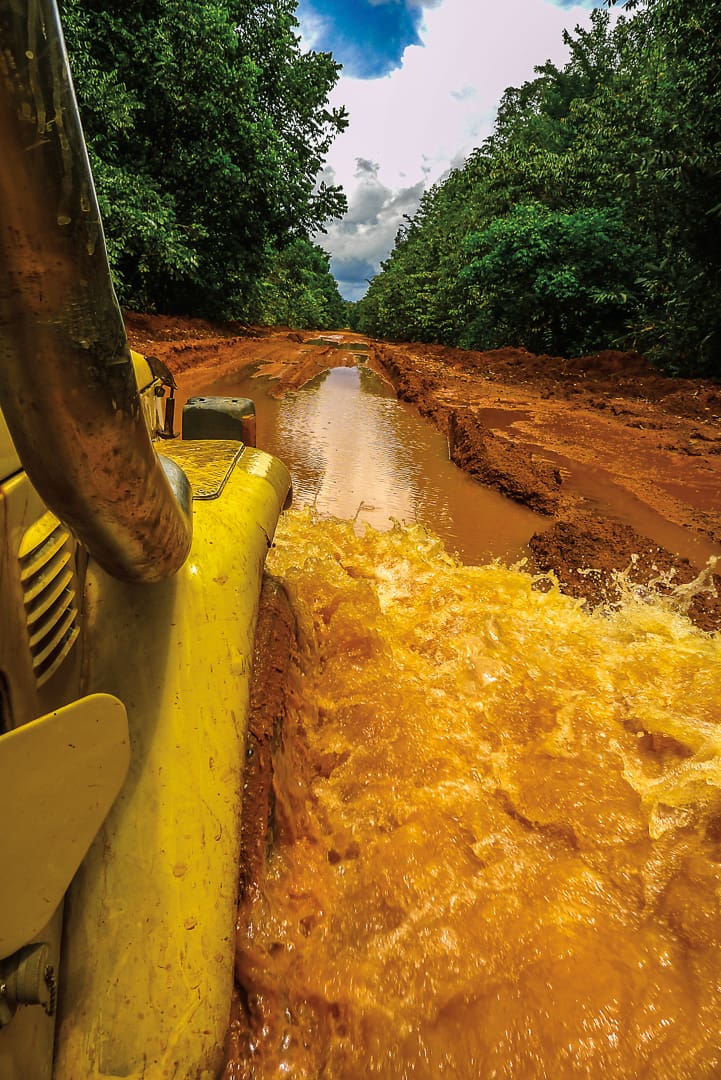
We topped up our supplies and set out in a southerly direction. Soon we found ourselves swerving around potholes on a laterite road, which alternated with stretches of sifting yellow sand. In shady parts, where the sun couldn’t penetrate, we slogged through mud tracks. The Land Cruiser was performing well, taking all obstacles with ease and grace. We didn’t have a proper map, and the route wasn’t on our GPS, so we depended on occasional Bedford drivers to point us in the right direction. At the Shamira Crossing, the river was wide, and there was a strong current. The ferry couldn’t reach the riverbank, so the Land Cruiser waded a few meters through deep water and drove on without a hiccup. From the other bank, it was a gamble to pick the right tracks that would lead to our destination—like finding your way in a labyrinth.
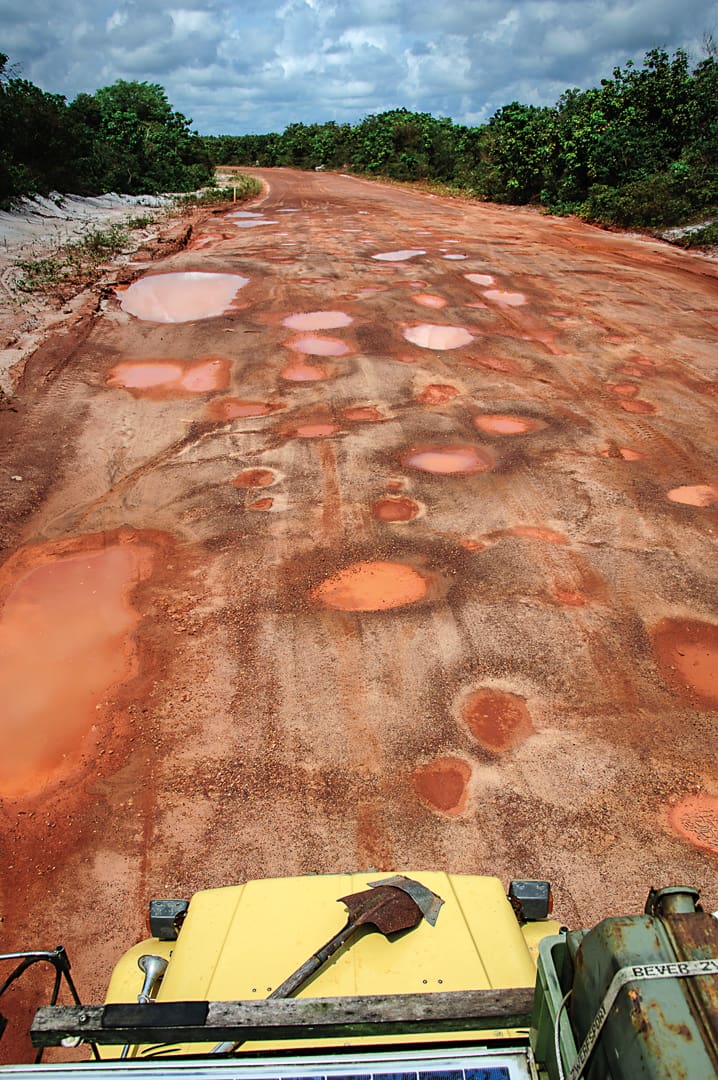
We came across a logging concession where we could camp for the night. The morning felt refreshingly cool, and hundreds of birds were twittering their early morning songs. It felt good to be here, far away from the modern world, knowing we were about to reach the back of beyond where few people travel. There was something soothing about the rocking motion of the car as we drove on the laterite road. Clouds came and went; the sun peeked through, illuminating the red sand, black gravel, mud tracks, and rutted trails—a green ocean of dense rainforest all around us. Lining the road were thick brush and low trees, with pools of blackened water occasionally flooding the shoulder. Throughout the route, we encountered no traffic except for two men on foot, one carrying a bicycle. The only other traveler was a 2-meter-long green snake, moving lazily in the middle of the road. Detecting the vibrations from our approaching tires, it vaulted up in a 180-degree turn and sailed off into the forest. Startled by the acrobatic reptile, we coasted to a stop and turned off the engine for a break. We took in the silence of the natural world around us, our solitude interrupted only by the sound of screeching crickets. It was as if civilization had vanished, leaving only the jungle, this dusty track, and our faithful Land Cruiser.
Antonio’s Gold Mine
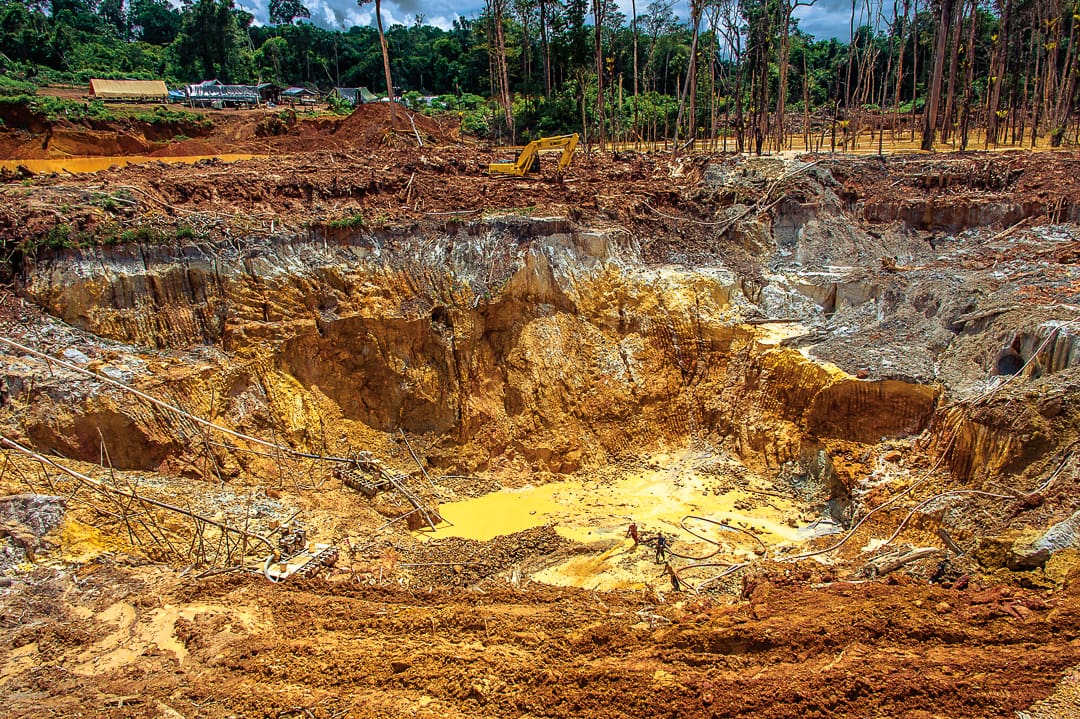
After two days of driving, we encountered our first excavation pit. Its appearance caused Coen to hit the brakes hard, sliding the Land Cruiser to the edge of the road. A man wearing a cowboy hat looked up, revealing a deeply weathered face and glaring eyes; his dogs snarled at us with suspicion. It took a while to dispel the miner’s mistrust. This is understandable, given that foreigners with cameras often mean negative media coverage of the gold mines. We explained who we were and our curiosity about his business. It probably helped that we spoke Portuguese and had extensively traveled his home country of Brazil. After a bit of chatting, his scowl relaxed. “Okay,” Antonio said. “I’ll show you around. Follow me.” Ten minutes later, we were standing at the edge of the pit studying the carnage within. From the air, it must look as if Guyana’s rainforest has caught a grotesque skin disease, as throughout the forest’s green body are these yellow pockets of earth, bare and infested.
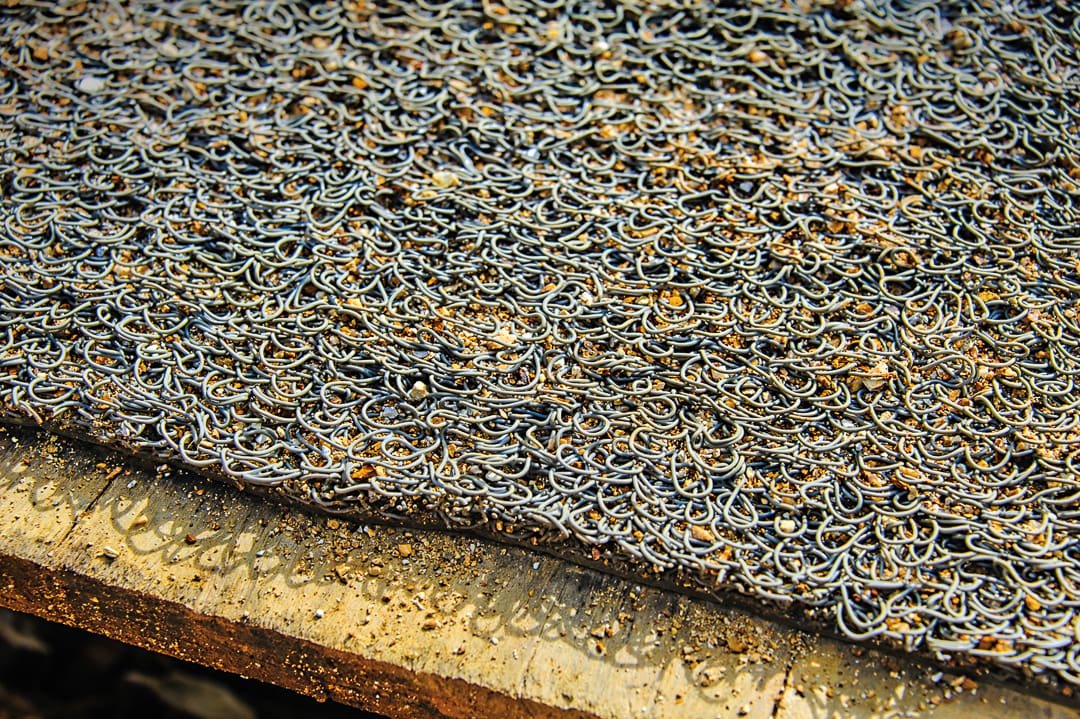
At the base of the 30-meter earthen wall, two miners needed all their strength to manhandle their hoses, bucking them back and forth as chocolate-brown water burst at full force. They calculated where to aim the continuous flow of water, breaking up large clumps of sand; when nothing remained but a piece of rock, a third worker would grab it and throw it on a pile. Two generators dominated the soundtrack of this tortured landscape. Without a thought, I followed Antonio through a bath filled with yellowed runoff and lined with “magic mats,” as miners call them. These pads catch gold dust and flakes from the water that comes rushing through the sluice box at full force. I am walking on gold, I thought. It was a startling idea. On second thought, wading through gold might be a better way to describe it.
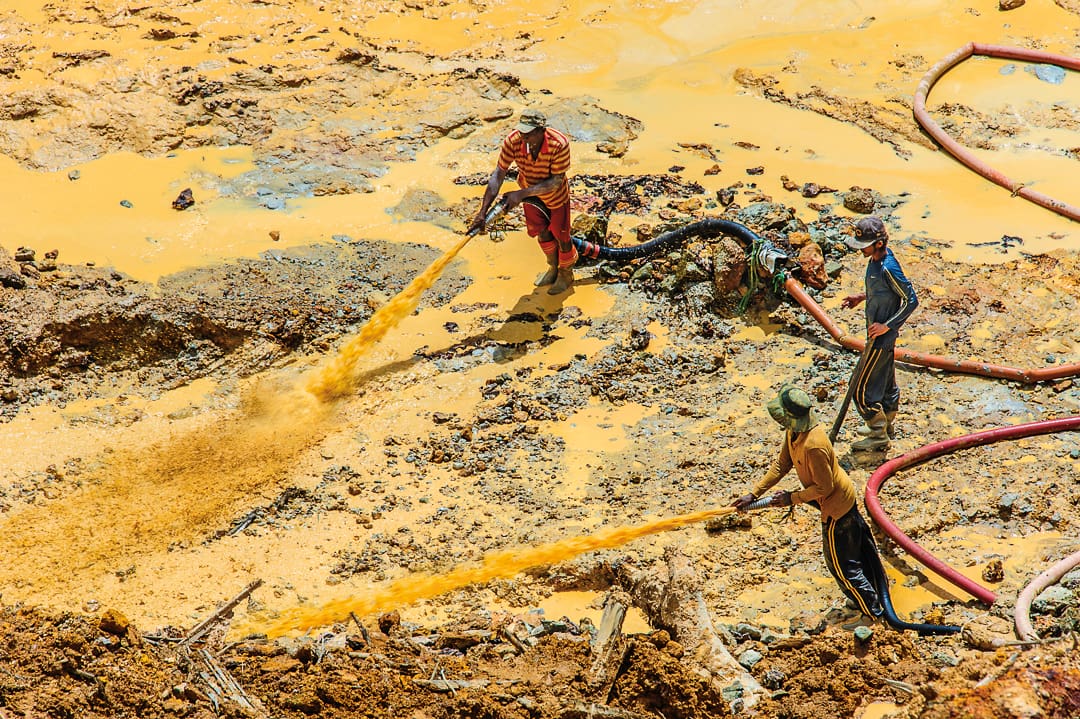

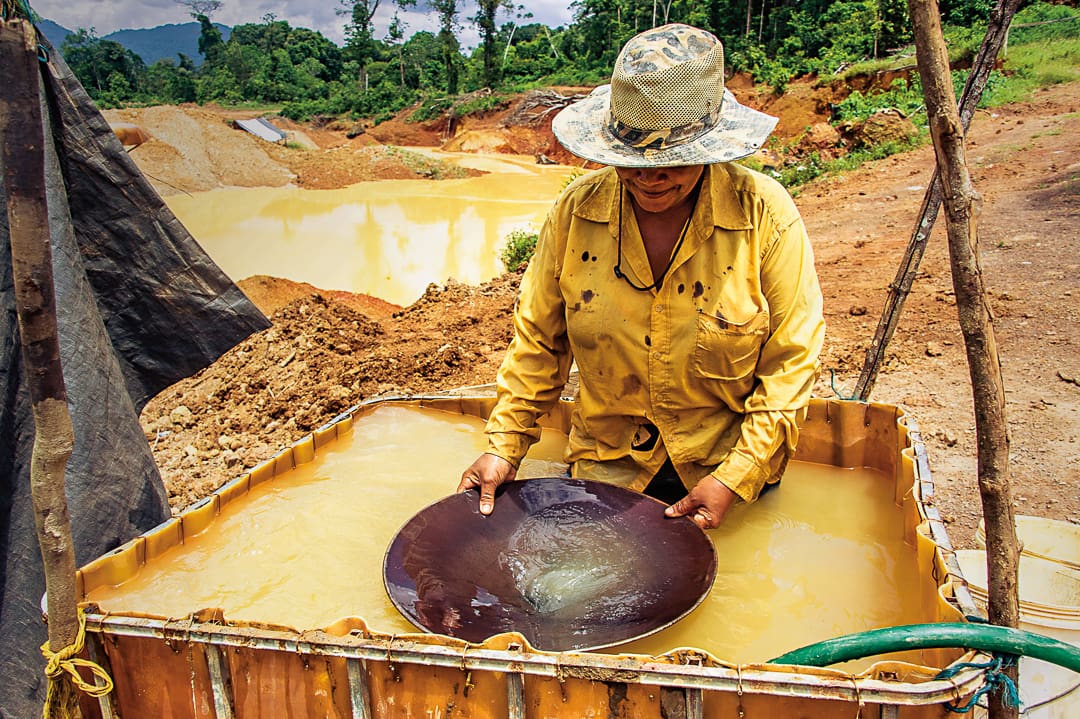
The region is home to Guyanese and Brazilians who work well together. Antonio was very specific about this: “I don’t allow Guyanese to do the hosing; they’ll screw up. Only Brazilians know how to handle it. On the other hand, the Guyanese are the best at working those excavators; Brazilians will ruin them.” Many Brazilians are illegal, largely because it may take years to get their paperwork in order. “Corruption, corruption,” Antonio sighed. “Everything takes ages in this country. My mine is legal, and I pay taxes, but to get the proper permits for my workers I have to return to Georgetown constantly, signing more papers, paying more money,” he explained.
Mahdia
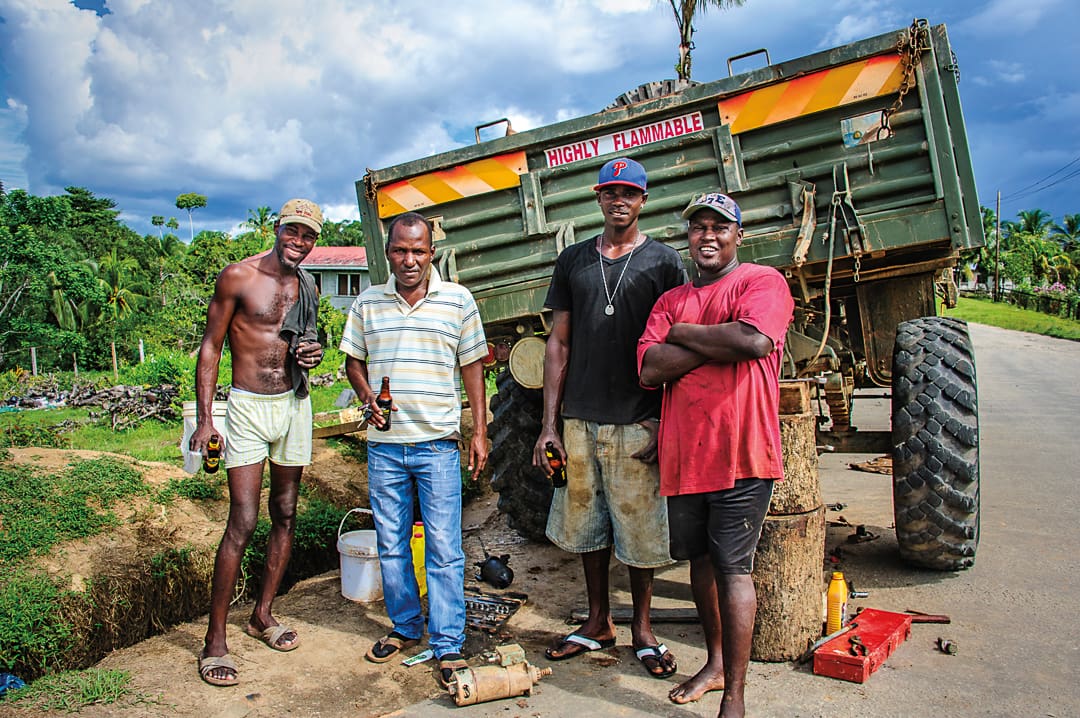
After finishing our tour and enjoying a hearty Brazilian meal in the mining camp, we said our goodbyes and drove the last kilometers to Mahdia. The place felt relaxed, safe—a far cry from anything potentially resembling a “gold fever” town. Contrary to most places in South America, the houses had no burglar bars. Not one. Some had a rickety fence around the garden, but that was probably to keep dogs out, or the goats in. We talked to all kinds of people—miners, taxi drivers, and policemen—who were eager to share their part of the world with us.
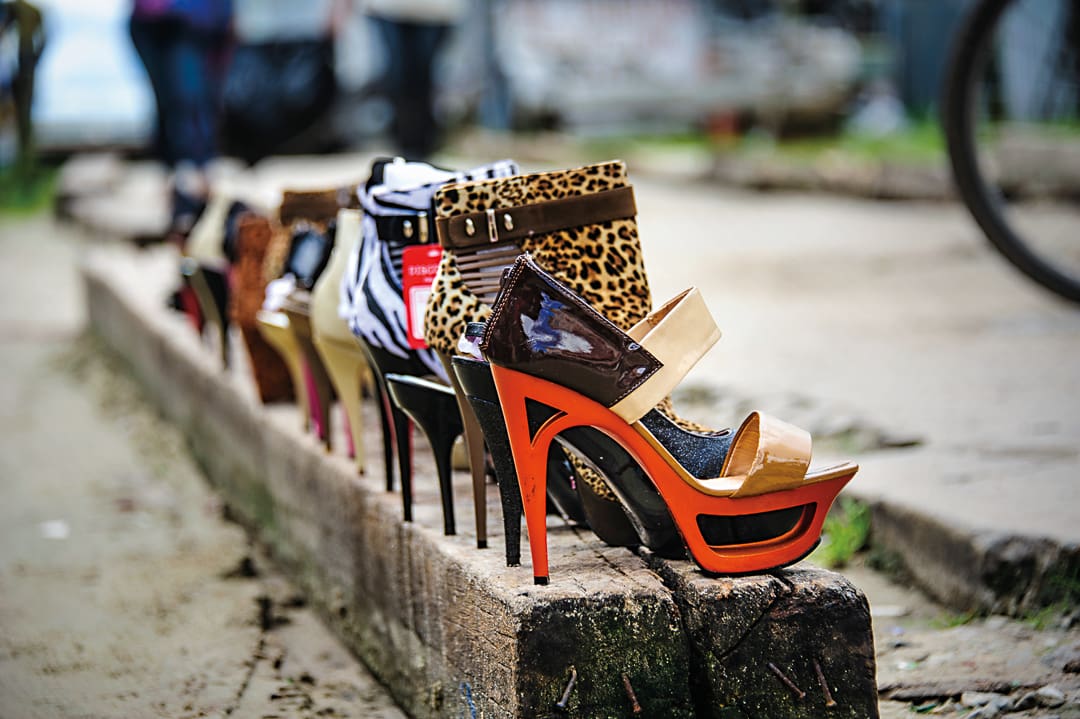
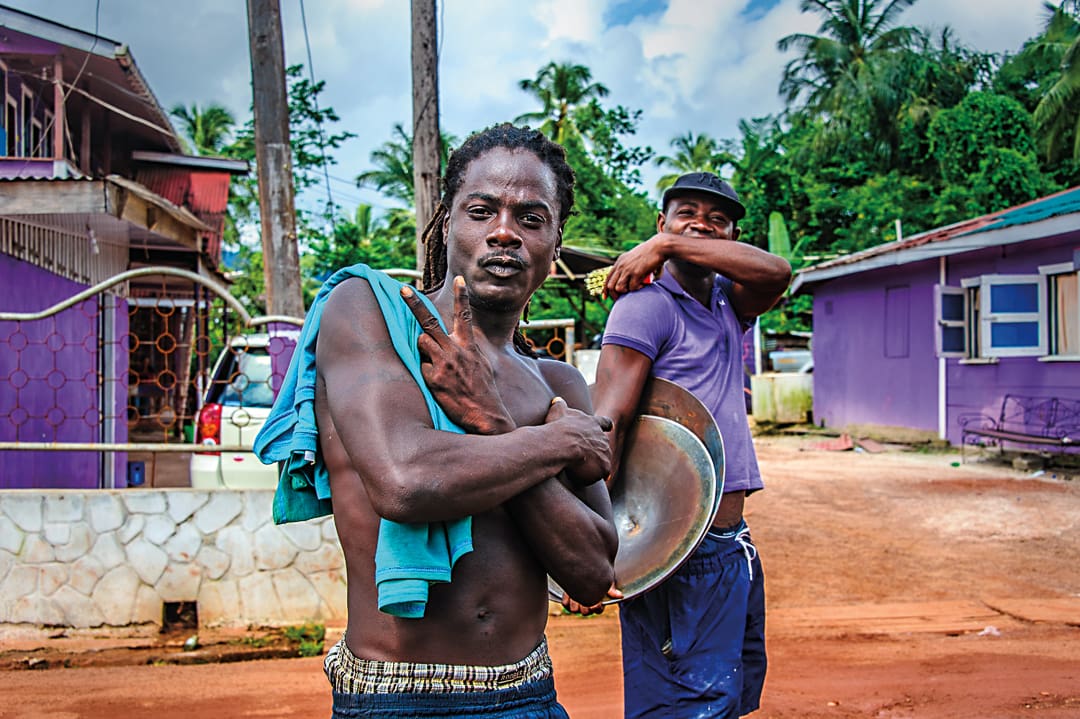
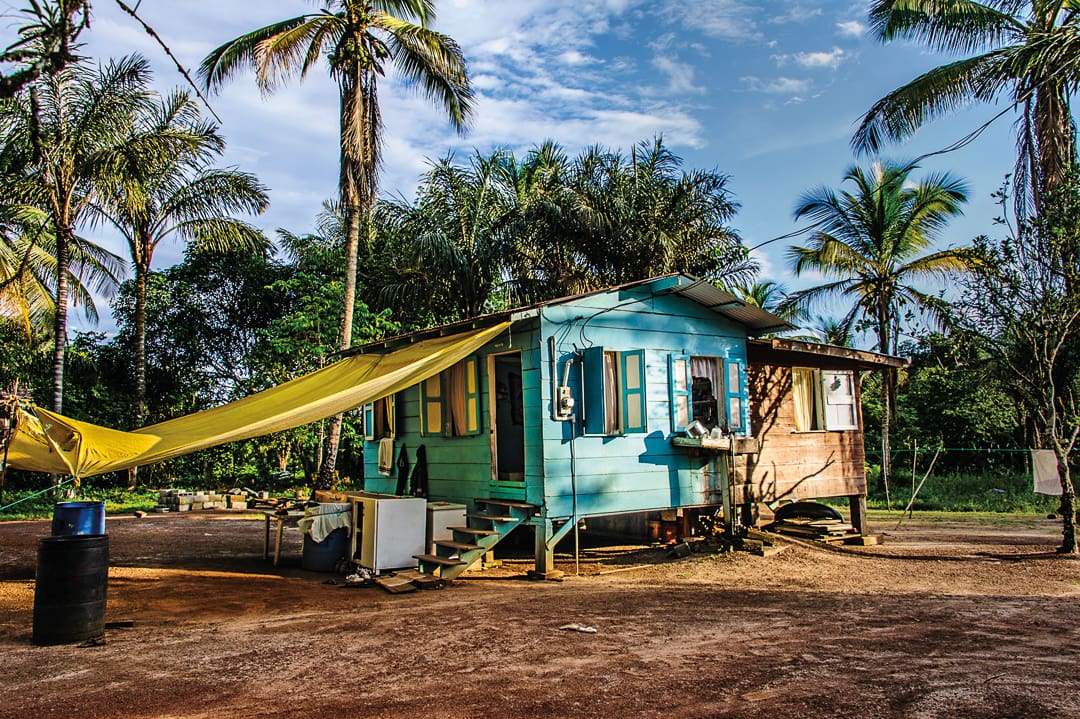
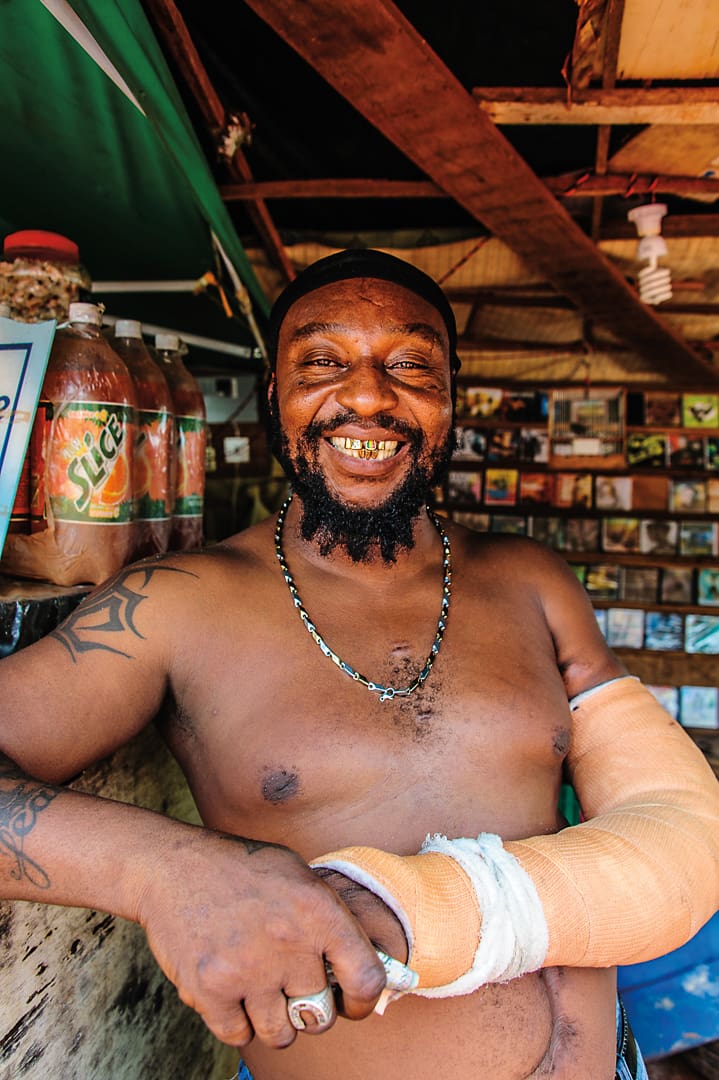
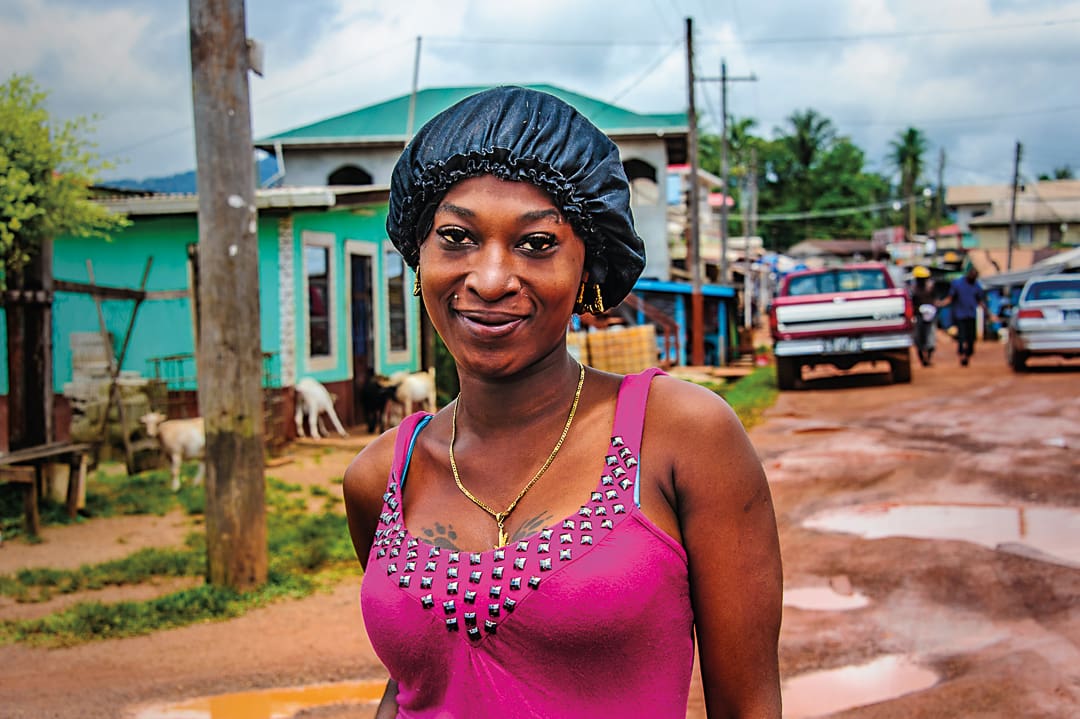
Shops attracted the interest of workers with illegal DVDs, fancy-looking clothes, and fridges stocked with beer. Women tried their best to catch a miner as a husband, or perhaps just for the night; dressed in shorts, tank tops, and high heels, they picked their way around the potholed road and leaned against the walls.
We met Roger Hindt, who is the “Godfather” of sorts for Mahdia. He became rich at 17 and, in short order, lost his entire fortune; then he moved to Mahdia and ultimately built the town. He had lived there for 21 years, knew everything and everybody, and owned the sole hotel in town as well as the biggest supermarket. Hindt was also in charge of the bush pilots flying between Mahdia and Georgetown.
The Shout
As in Bartica, the shout continued to be the talk of town. This is what all miners hope for and dream of. This is why they live in the rainforest, sleep in hammocks, suffer from malaria, and pray to be spared a fatal snakebite or lethal disease. They struggle through mud, wade through streams, and cut down undergrowth, hacking paths through suffocating vegetation. Three weeks prior, one guy struck it lucky.
We drove to the shout nine miles further down the road, now referred to as the “Nine-mile Shout.” We parked the Land Cruiser next to a hut and hiked uphill, since it was impossible to drive up the slick, muddy track; a supply truck in front of us had gotten stuck and needed to be pulled into camp by an excavator. Around a curve we spotted open-sided tents. Tough-looking, bare-chested, and unshaven men lazed in hammocks. One of them, built like a brick wall (think Mr. B.A. from The A-Team), walked up to us.
“Are you the boss?” Coen asked. The man introduced himself as Tyler and listened to what we had to say. “No problem, I’ll get you someone to guide you around.”
Within a few minutes, we became acquainted with Blake, a soft-spoken, friendly guy dressed in shorts and rubber boots, his muscled body tattooed with animals and glistening with sweat. A gun was stuck in his shorts.
Down the Pit
The mine was in its early, preparatory stage. Charley, the excavator, was maneuvering the engine that would pump up the slush to the sluice boxes. The whole process would take another couple of weeks. “The forest is like a human body,” Blake explained. “The trees and roots are like its veins running all over the place. Gold runs through that body as well, and sometimes it hits the surface, which they call a shout. This means there’s a ‘string,’ and that is where the mining begins. If we’re lucky, she runs just below the surface for a good distance, but if not, if she disappears into the earth, we will have a hard time hunting her. If the men don’t know their job and don’t dig a proper pit, the whole place may collapse, and accidents will follow.”
The initial harvest would be 100–300 ounces per day, waning to around 50–70 ounces per day, which is still extremely lucrative. I remembered Antonio talking about a harvest of 4–8 ounces per week. None of the workers knew how long they would be able to mine here. Some shouts are only productive for months, while others continue for years. It was all about following the vein until it ran dry or connected to an adjacent claim.
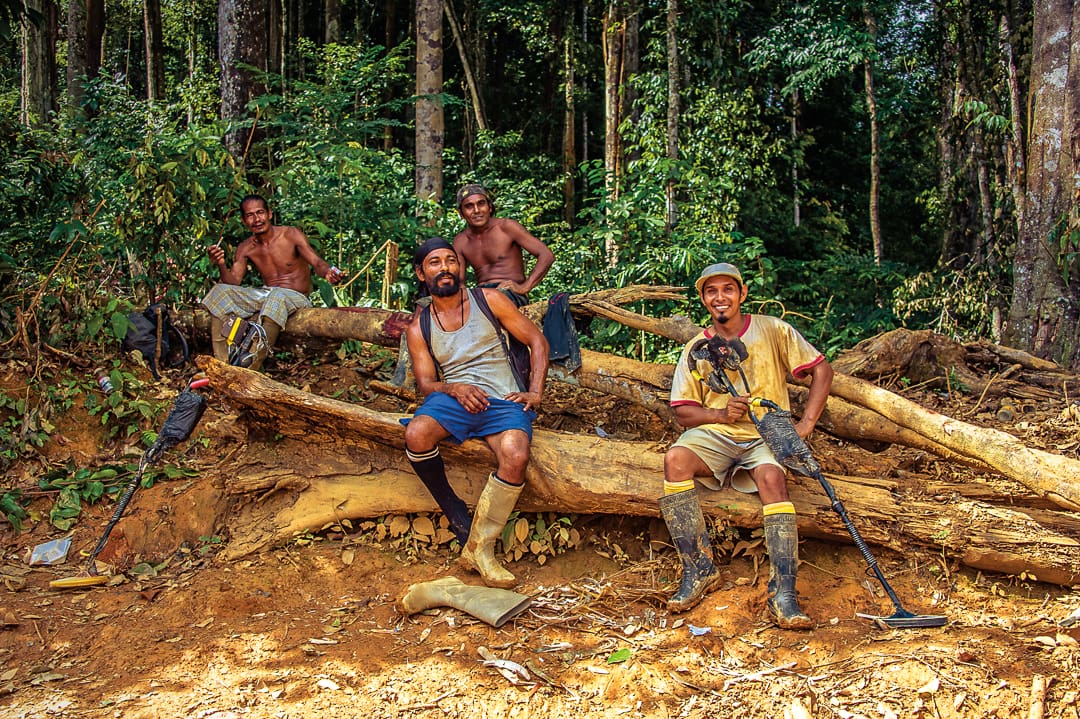
We saw dozens of people walking around, but Blake said only eight were hired by the company. The others were “pork knockers” (freelance gold hunters) trying their luck. “That’s how it goes. The string is ours, but others can search around the vein. Like sparrows pinching breadcrumbs, they scavenge around the discarded piles of earth. As long as they are not in the way or steal, that’s okay with us. We all started out like that.” I found his remark interesting and particularly thoughtful. In this rough, Wild West world, there is still room for kindness. Live and let live. He looked at us with a smile. “You could try your luck as well if you want to. All you need is a metal detector, patience, and determination.”
Was that why we were here, to actually join the gold fever? Coen and I concluded that while it had been fabulous to watch every single step of the mining process, we had already struck it lucky 12 years ago when we decided to leave our suburban lives and swap them for life on the road. Our journey hadn’t come to an end here; many more adventures awaited us. We said our goodbyes to the miners of Mahdia and set our course for more of the world’s treasures.
Our No Compromise Clause: We do not accept advertorial content or allow advertising to influence our coverage, and our contributors are guaranteed editorial independence. Overland Collective may earn a small commission from affiliate links included in this article. We appreciate your support.
