

Ford has confirmed that its forthcoming midsize electric pickup will carry a starting manufacturer’s suggested retail price of $28,350, excluding a $1,595 destination charge. The resulting entry price of $29,945 places the four-door truck just below the $30,000 threshold and positions it as an electric alternative to compact gasoline-powered pickups and crossovers, and as a direct competitor to the headline-grabbing Slate EV.
Ford’s pickup competes with the Slate primarily on affordability, but the two trucks follow very different philosophies. The Ford is effectively a conventional five-seat, well-equipped electric pickup sold near $30,000, while the Slate is a smaller, two-seat workhorse that keeps its price low by making many familiar features optional.
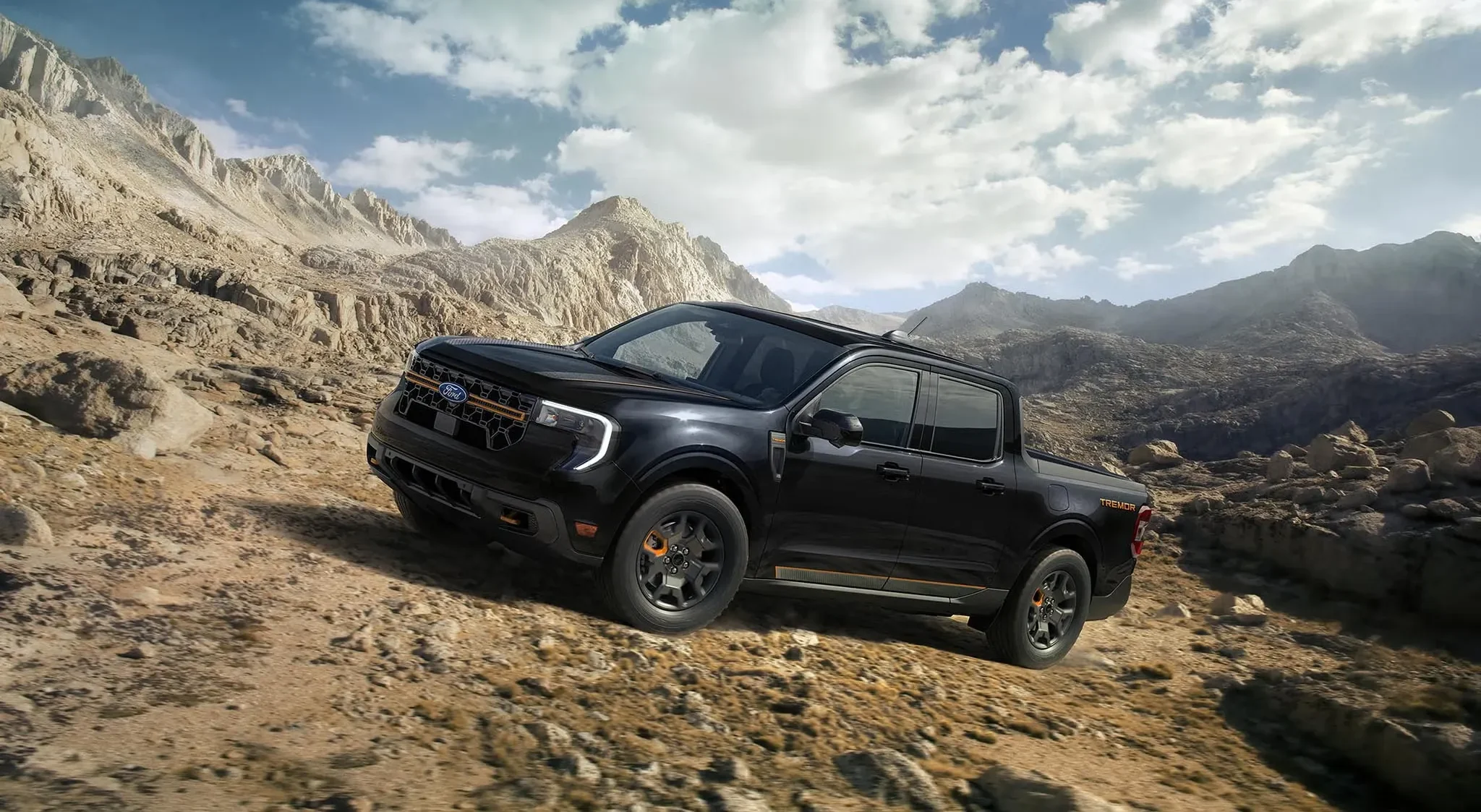
Maverick EV
The Ford Fathom’s base price applies to a model fitted with the standard-range battery. Ford has not yet disclosed its capacity, estimated driving range (anticipated to be sub-300 miles), charging speed, power output, payload rating, or towing capacity. A larger battery will also be offered, although its specifications and additional cost remain unconfirmed and, according to reports, the Fathom will be available in both rear-wheel-drive and all-wheel-drive configurations.
Although Ford describes the new vehicle as a midsize pickup, its relatively compact dimensions are intended to make it suitable for commuting and everyday family use. As stated above, the cabin will accommodate five occupants and, according to the manufacturer, provide more passenger space than a current Toyota RAV4. Cargo can be carried in both the open bed and a lockable front trunk, giving owners separate areas for larger equipment and items that need protection from the weather.
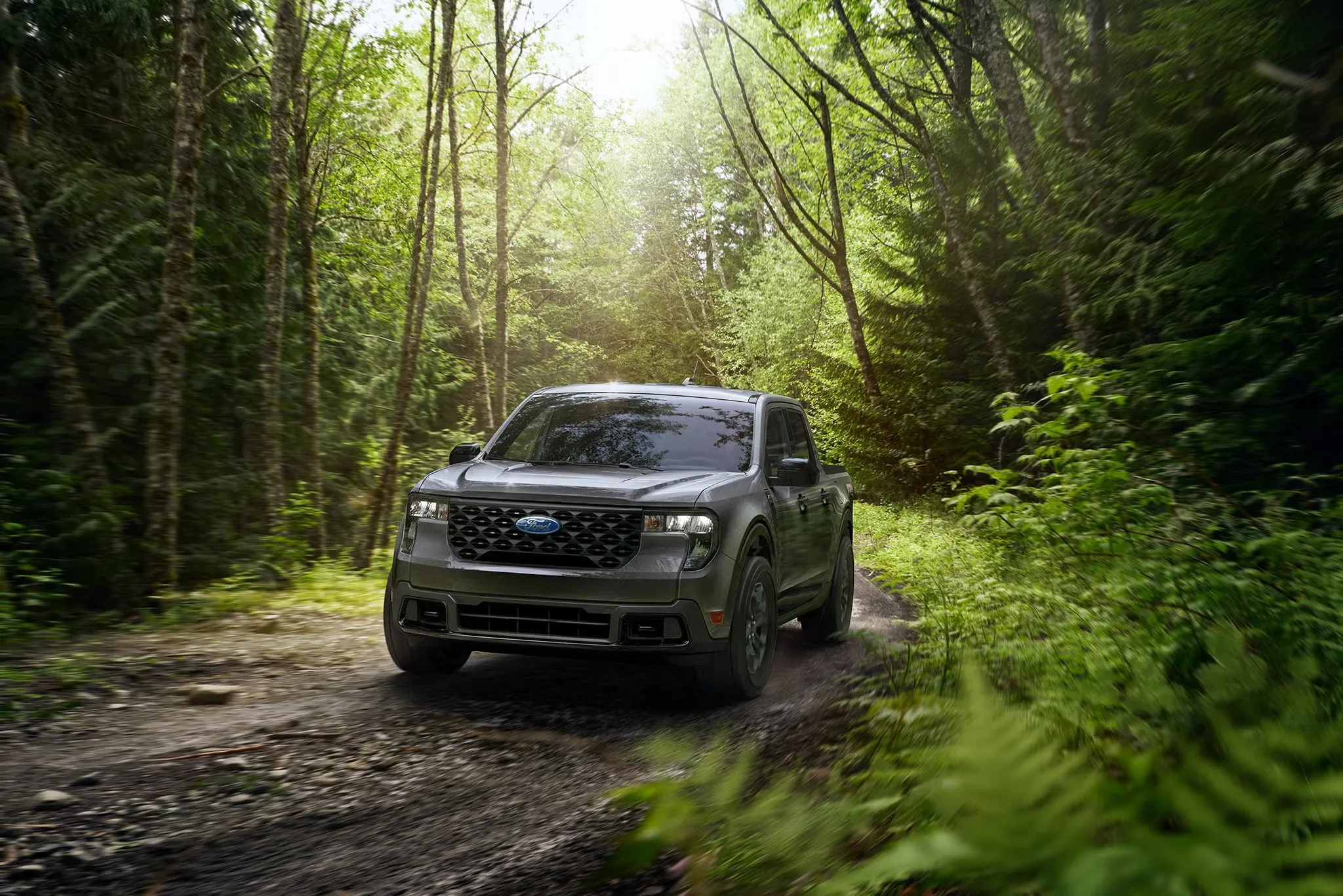
Maverick EV
The truck will be the first production model based on Ford’s Universal Electric Vehicle Platform. Unlike some low-cost vehicles that reach their target price by removing common equipment, the new pickup is expected to include power-operated features, a large central touchscreen, a digital key, Apple CarPlay, Android Auto, and an integrated version of Apple Maps. The navigation system will be able to account for charging stops and prepare the battery before arrival at a suitable fast charger.
Ford will also install the hardware required for its BlueCruise hands-free highway driving system. Access to the system may require a separate purchase or subscription, meaning the technology’s inclusion does not necessarily make the service standard at the advertised price. Over-the-air updates will allow Ford to revise vehicle software and add or improve compatible functions after delivery.
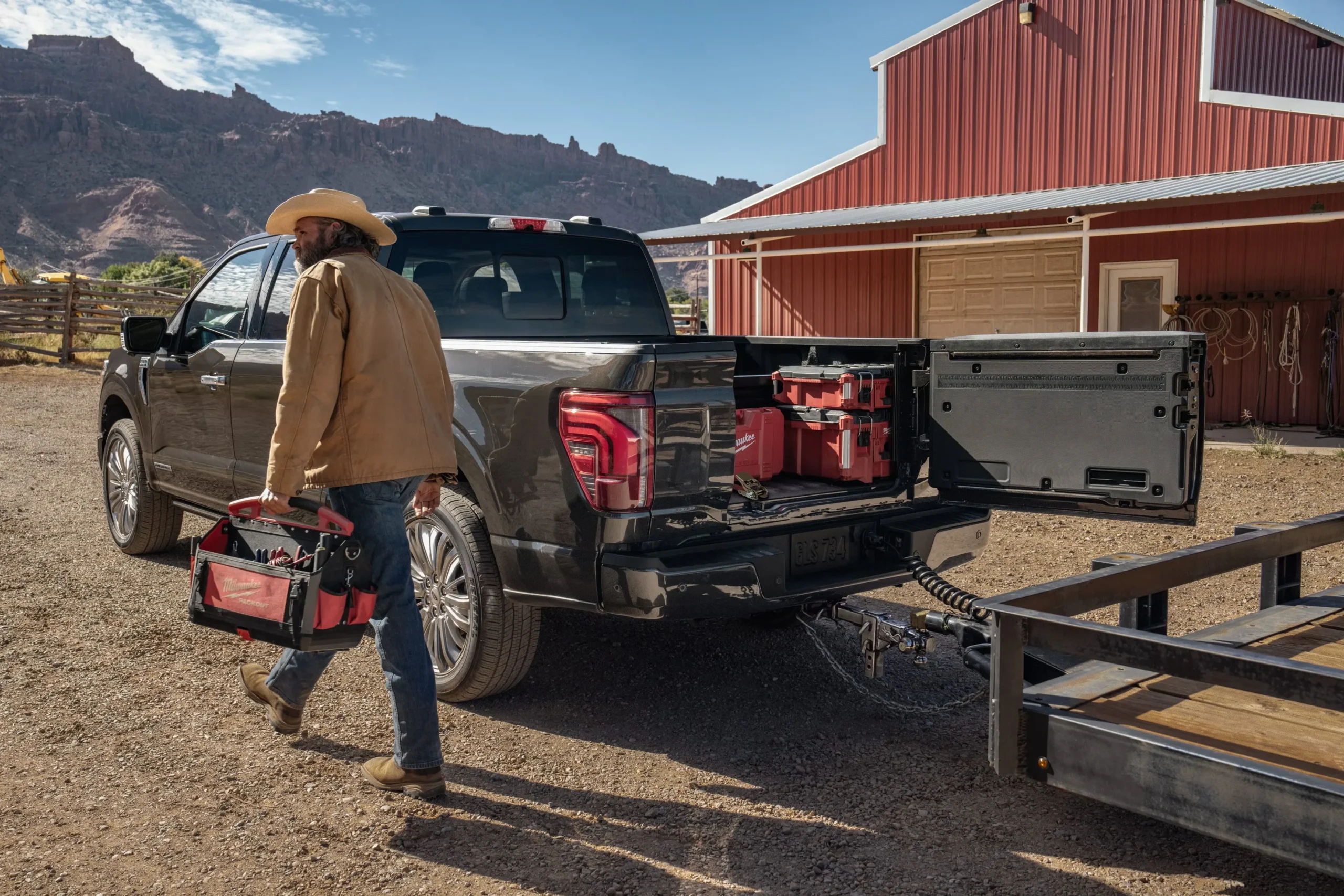
F-150 EV
Bidirectional charging is another planned feature that allows the truck’s battery to power tools, camping equipment, household appliances, and other compatible devices. However, Ford has not disclosed the system’s output, required accessories, or the truck’s projected range. If the standard battery offers limited range, its usefulness for remote travel may be constrained. Powering equipment at camp would further reduce the energy available for the return journey, making the feature most practical when reliable charging infrastructure is available near the destination.
Performance figures also remain preliminary. Ford previously stated that the truck would be capable of accelerating from 0 to 60 mph in a time comparable to a Mustang EcoBoost. Its battery will be mounted low in the structure, creating a low center of gravity. At the same time, the immediate torque delivery associated with electric motors should provide suitable performance for urban driving and carrying moderate loads. Whether the entry-level truck will use rear-wheel or all-wheel drive has not yet been disclosed.
The platform uses a lithium iron phosphate battery pack containing neither nickel nor cobalt. The pack forms part of the vehicle’s floor and contributes to its structural design, helping reduce weight and free up cabin space. Lithium iron phosphate chemistry generally offers a combination of durability, thermal stability, and comparatively low production costs. However, it typically stores less energy by weight than some nickel-based battery chemistries.
The confirmed $29,945 price, including destination, makes the pickup less expensive than many current electric vehicles and close in price to a conventional Ford Maverick. However, the eventual value of the truck will depend on its range, charging performance, payload, towing capacity, drivetrain configuration, and the equipment included with the standard model. Those details are expected closer to its full public debut and planned 2027 launch. Ford has now established the price and broad features, but the most important practical specifications remain to be announced.
Disclaimer: Ford has not yet released official images of the Fathom EV. Images shown are of other Ford EV models.
Read More: Norton Atlas Brings a Historic British Name to the Middleweight Adventure Market
Our No Compromise Clause: We do not accept advertorial content or allow advertising to influence our coverage, and our contributors are guaranteed editorial independence. Overland Collective may earn a small commission from affiliate links included in this article. We appreciate your support.
