

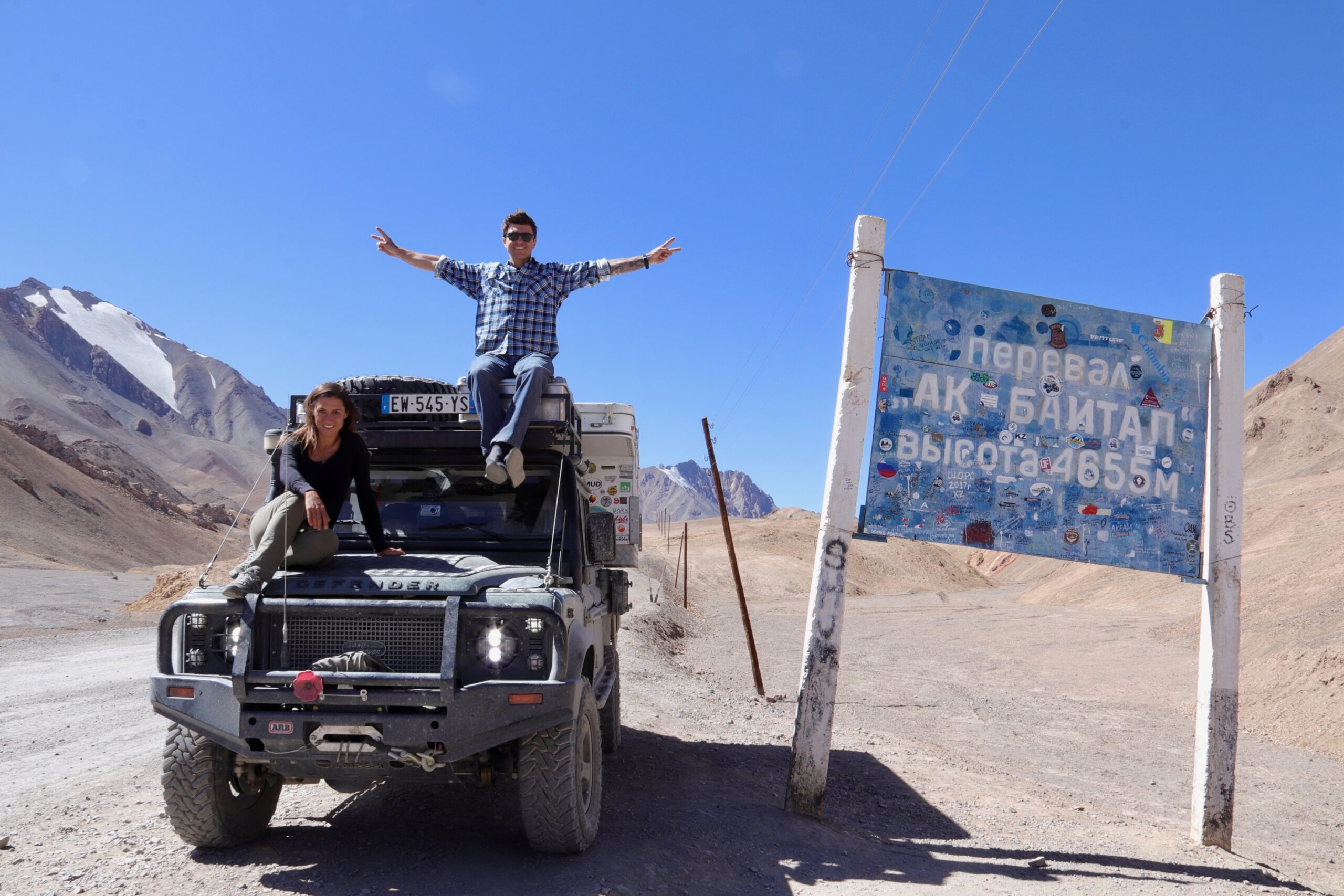
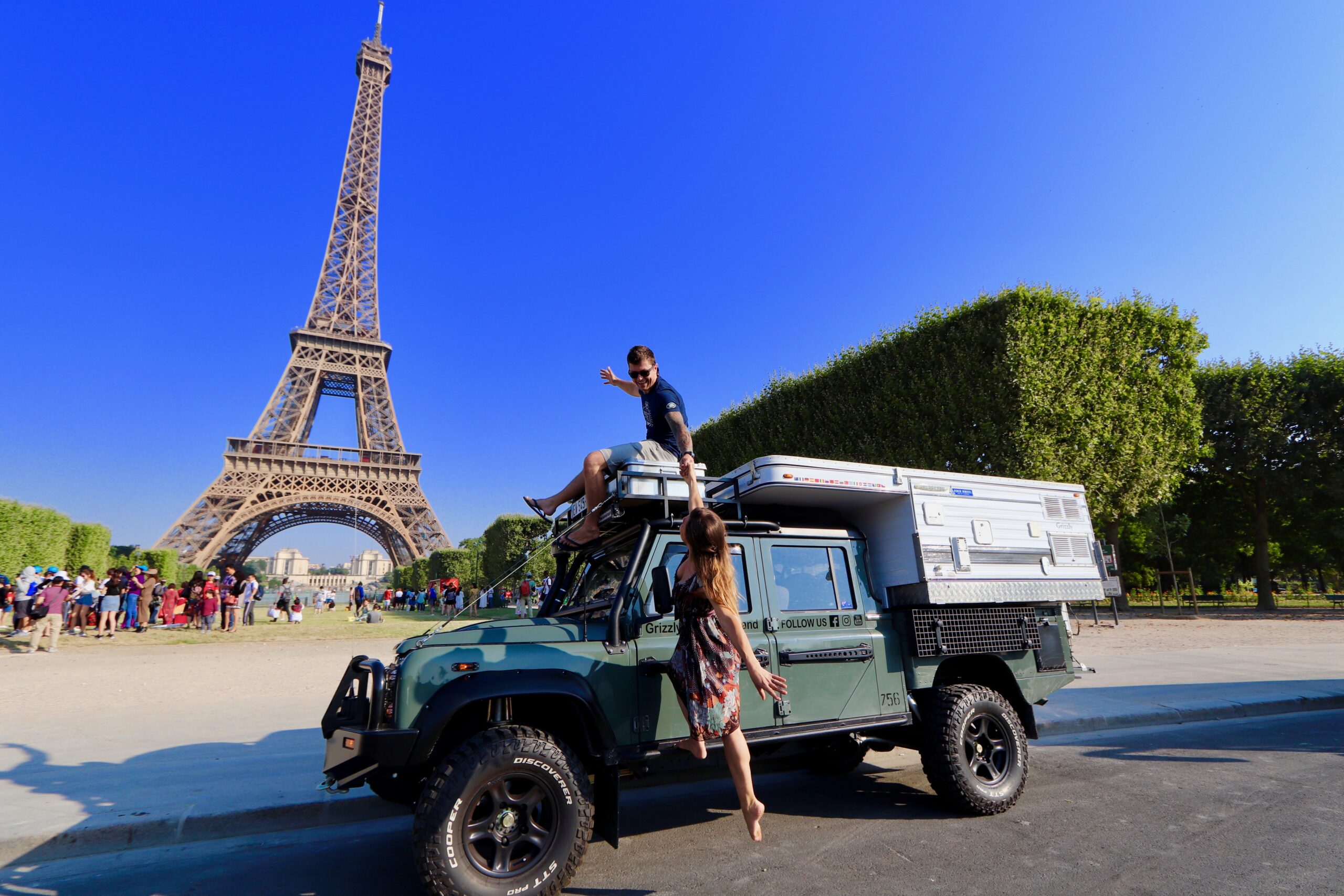
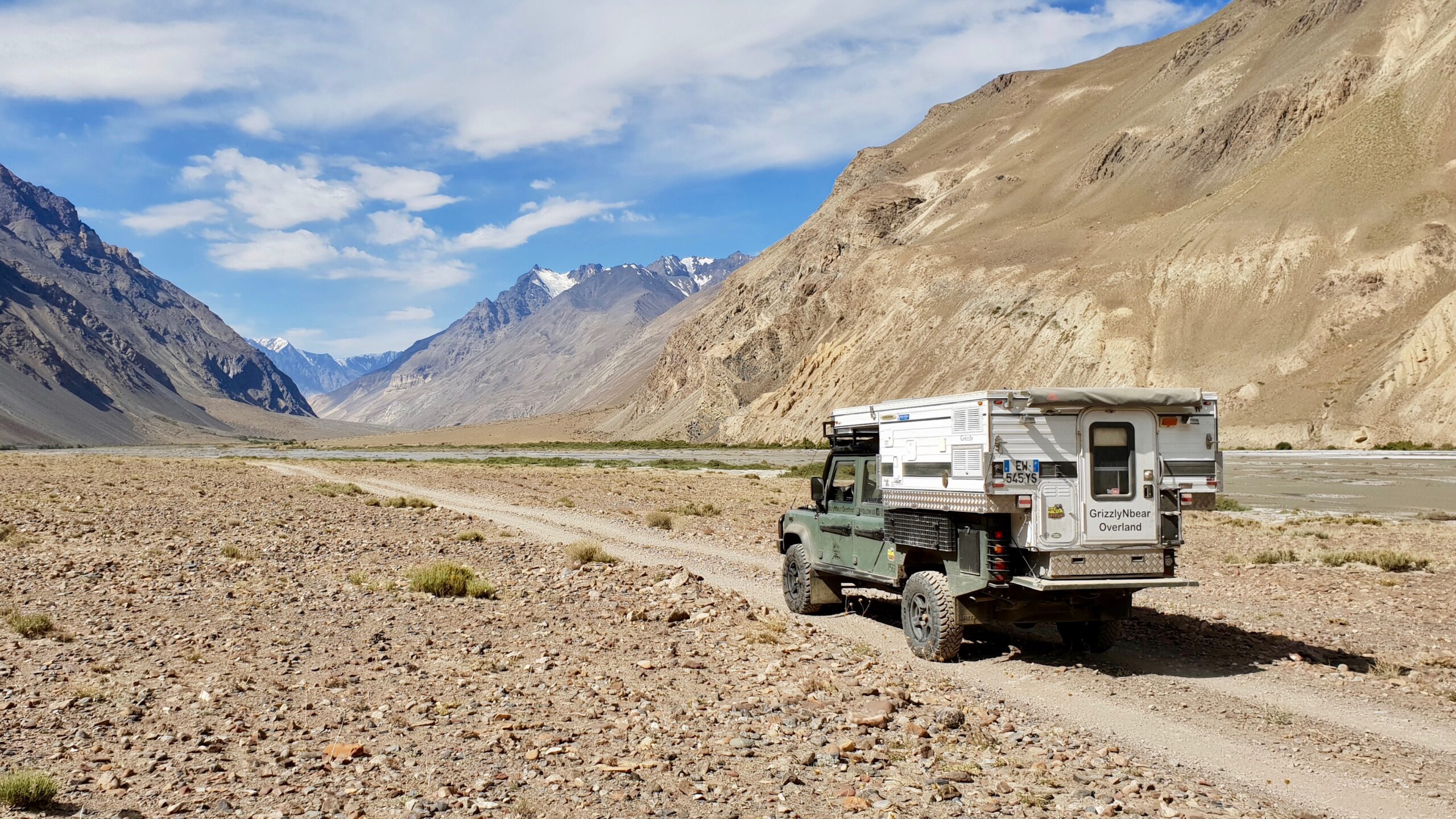
The American author Annie Dillard wrote, “How we spend our days is, of course, how we spend our lives.” The 2025 Overlanders of the Year, Leigh and Stephanie (Steph) Dearle, live this idea fully. Since 2017, they have traveled full-time in their Land Rover Defender (“Bear”) and Four Wheel Camper (“Grizzly”), covering more than 242,000 kilometers across 50 countries. What began as a trip has become a way of life. For nearly a decade, they’ve chosen the art of slow travel, invited us along through their YouTube channel, and used their expertise to give back to rock climbing communities they visit.
With more than 300 episodes on their YouTube channel, Steph continues to document their experiences from Europe to Central Asia, Africa, Australia, and beyond. Their longevity and commitment to the core values of overlanding—people, places, and culture—place them alongside previous Overlander of the Year recipients such as Drive Nacho Drive, Landcruising Adventure, Four Wheeled Nomad, and Mali Mish.
Leigh and Steph inspire others to get outside, follow curiosity, and say yes to adventure, even when it feels uncomfortable. I am certainly one of their many fans, as their long-distance hikes, climbs, and journeys across the planet have deeply influenced me.
Life on the road has distilled many lessons for them, but a handful rise to the surface again and again:
- You will never see it all—and that’s okay.
- See fewer places, but experience them fully.
- Smile and wave; people are beautiful.
- Less is more.
- Take care of yourself and your equipment.
Congratulations to Leigh and Steph, our 2025 Overlanders of the Year.
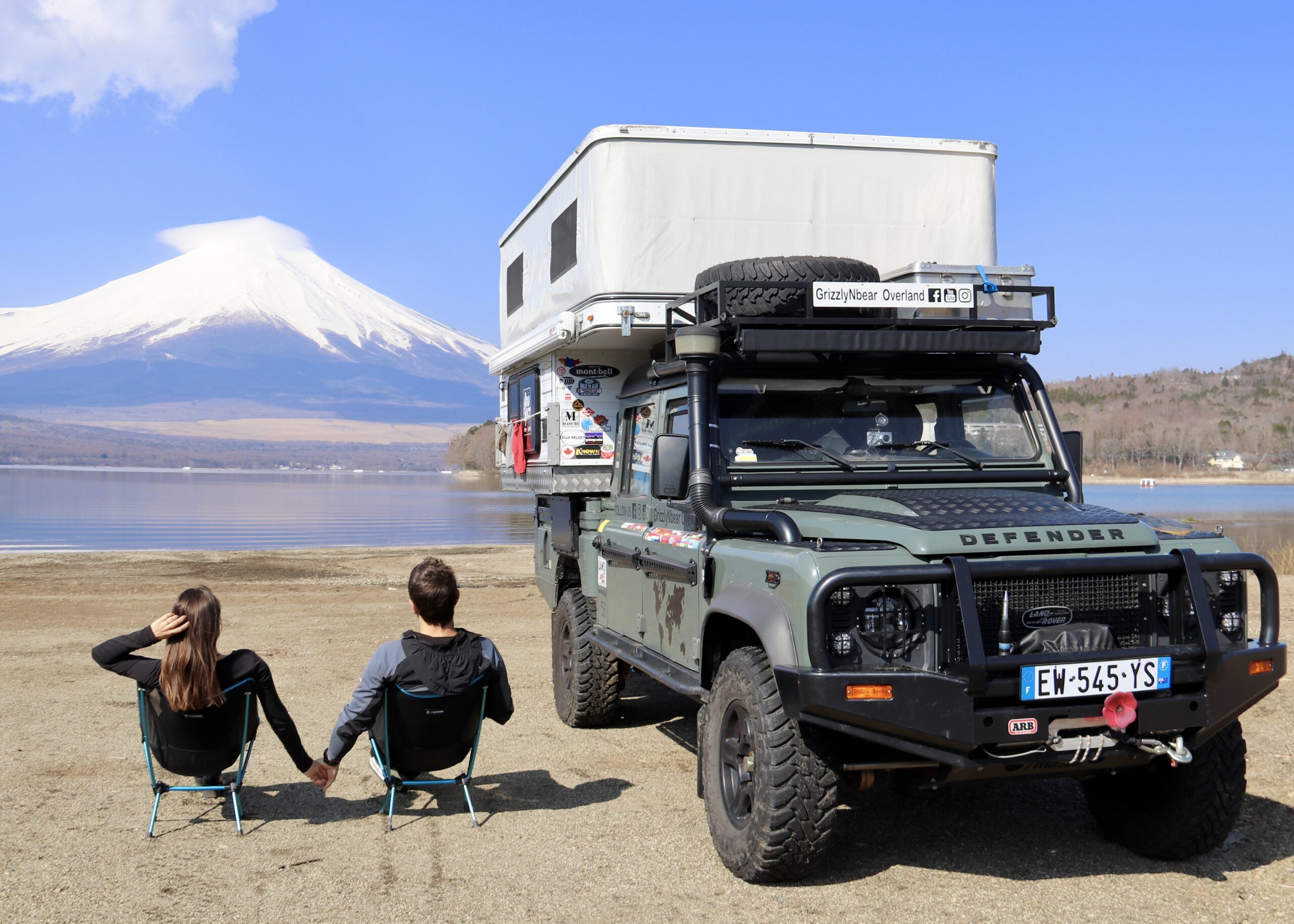
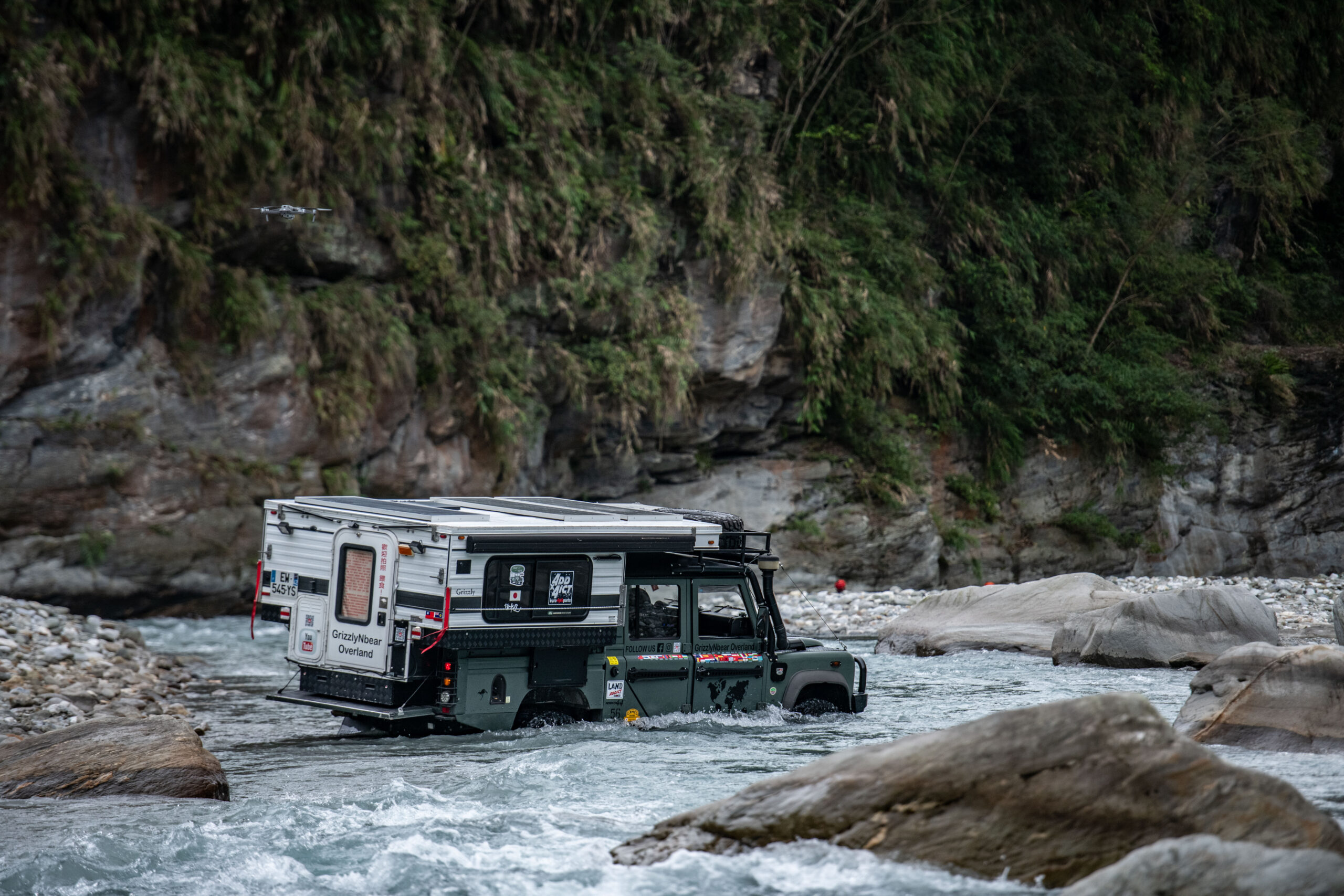
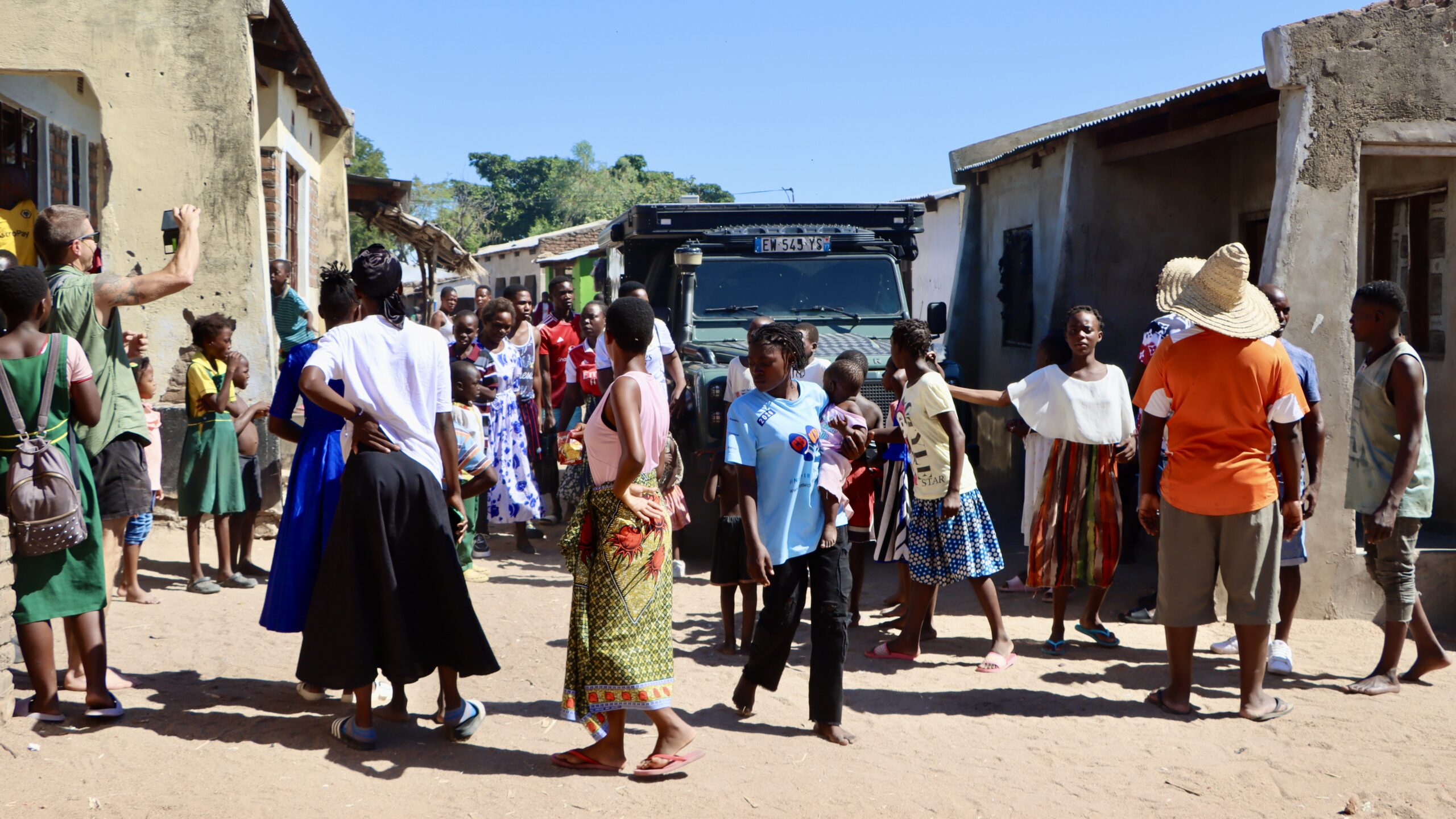
Your initial experience with overland travel stemmed from your mutual passion for rock climbing. How did you blend the two?
Steph: Leigh and I met in 2009 in Thailand. Soon after, I moved to Australia. It has always been about traveling, really.
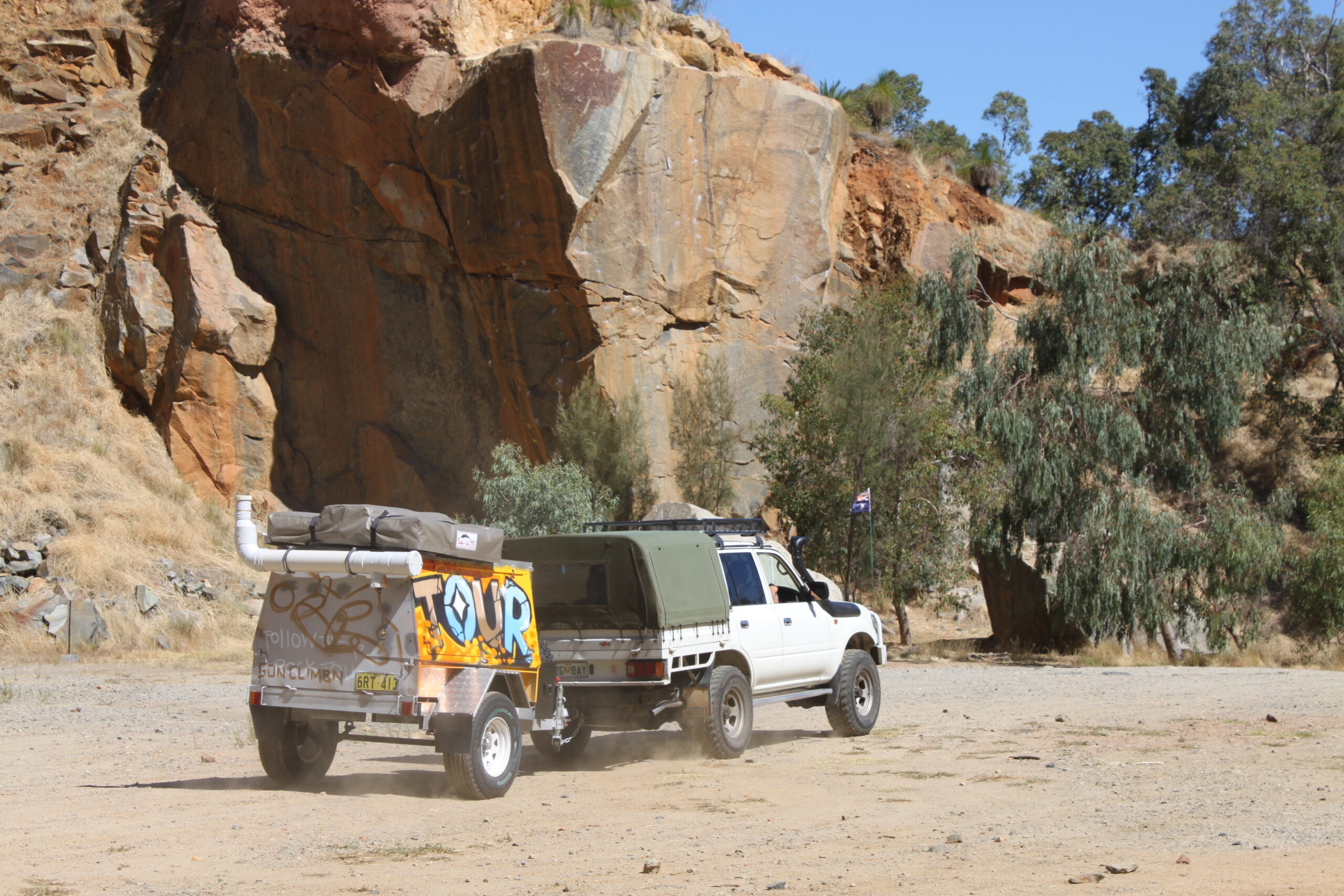
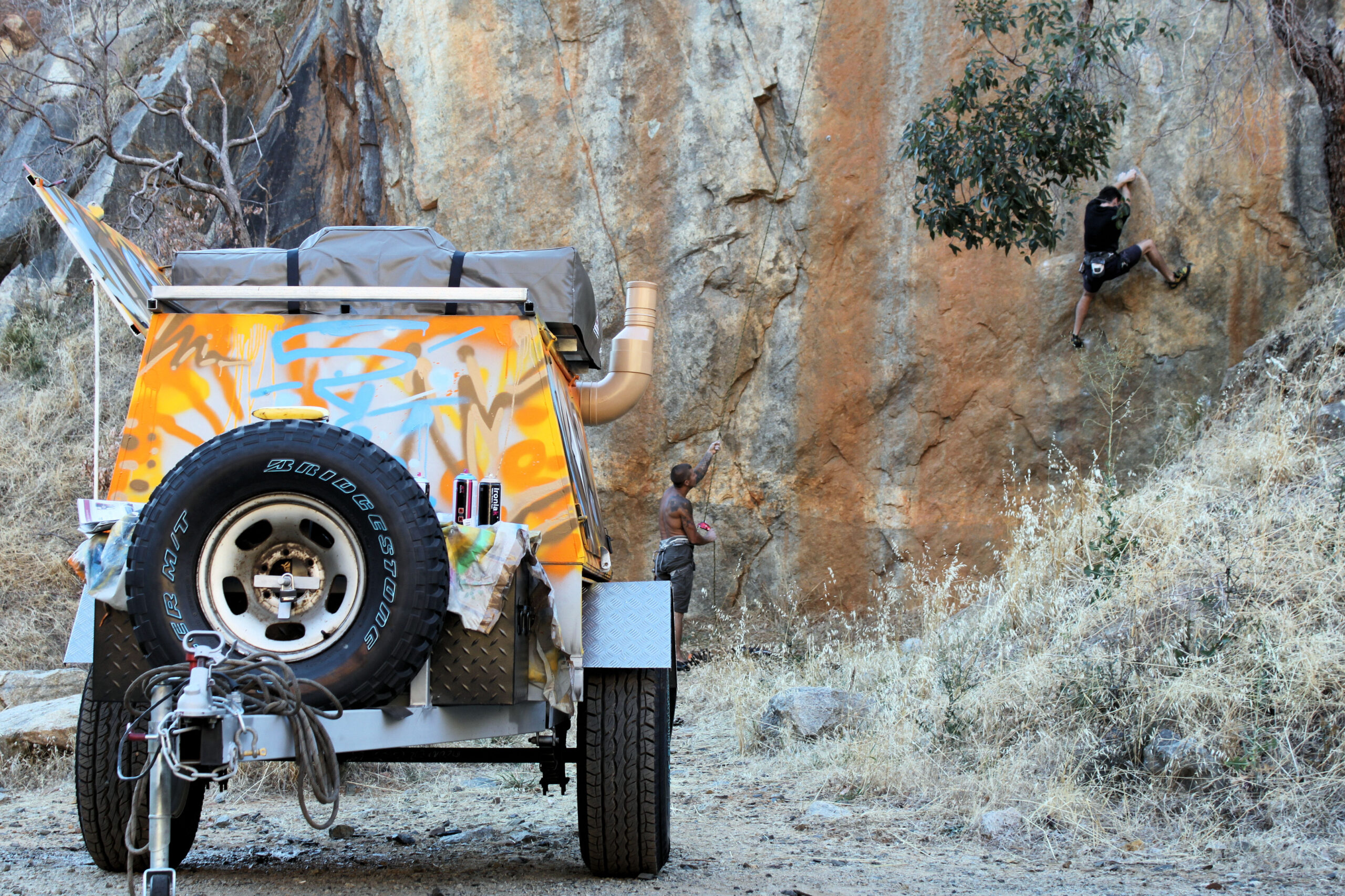
Leigh: It certainly has. I grew up in a semi-rural area on a farm in Australia, so I was around 4×4 vehicles from a very young age. I used to head away on annual camping trips with the family. It’s a massive part of Australian culture, so it was already a part of my life when Stephy came out. She went from the fancy streets of Paris to living out of a trailer in Australia with a Toyota at the time (I had an 80-Series). We decked that out and traveled Australia for a couple of years, living out of a rooftop tent and a self-made camping trailer. Absolutely clueless about anything, pretty much. But it was always based on the rock climbing trip. So we would drive around, going from climbing area to climbing area within Australia to start with.
Steph: We also did that in Europe with a shorter wheelbase Land Rover. We would pick a destination within a country and stay in the same place for months, because it was all about rock climbing. But it was that journey in between where we started to discover the people of the world, their kindness, and the cuisine—we really enjoyed that. We made it from France to Turkey, but didn’t know we could continue, so we returned to France.
By the time you reached Turkey, you wanted to continue, but didn’t know what was possible. What was the turning point?
Leigh: After the trip to Turkey, I went back to work. I was working in Angola at the time, and I was working with an Australian guy. I explained to him what we’d been doing over the past couple of years—you know, just moving around Europe, Eastern Europe, and as far as Turkey, and how we both wanted to keep going. Why couldn’t we drive our car around the world?
My buddy, Jai, an Aussie guy, said to me, “Haven’t you heard of that South African family? They’ve been doing it for years with a Defender 130.” He couldn’t remember the name, so we jumped on Google. Graeme and Luisa Bell’s names pop up, and I see that Graeme has written a book all about this. So I ordered the book, Travel the Planet Overland. Got that in the mail, read that cover to cover, and I was like, oh my God, this is possible. We can do this. We can drive our own car around the world.
In 2017, you began your journey around the world in a 2010 Land Rover Defender with a Four Wheel Camper. What worries or concerns came to mind as you set off?
Steph: My biggest concern at the beginning was the cost of fuel. But actually, you don’t drive that much. We drive less than someone who goes to work every day. Sometimes we drive a lot, but on so many days we don’t.
Leigh: Stephanie was concerned we were just going to run out of money instantly because of fuel, and I said, well, we don’t need to travel so fast, we don’t have a deadline. I know a lot of people who have 12 or 24 months—even three years—but there is an end. And we said, no, we will just go extremely slowly. In nine years of overlanding, we’ve only put 130,000 kilometers on [our Defender]. In other parts of the world, like Central Asia, fuel can be far more affordable than what we’re used to in Australia and Europe. So the money went a little bit further on fuel, that’s for sure.
Steph: Fun fact: the most affordable fuel we encountered was in Angola, where it was 13 euro cents a liter. Here in the Middle East, it’s about 60 euro cents per liter.
What were you most excited about?
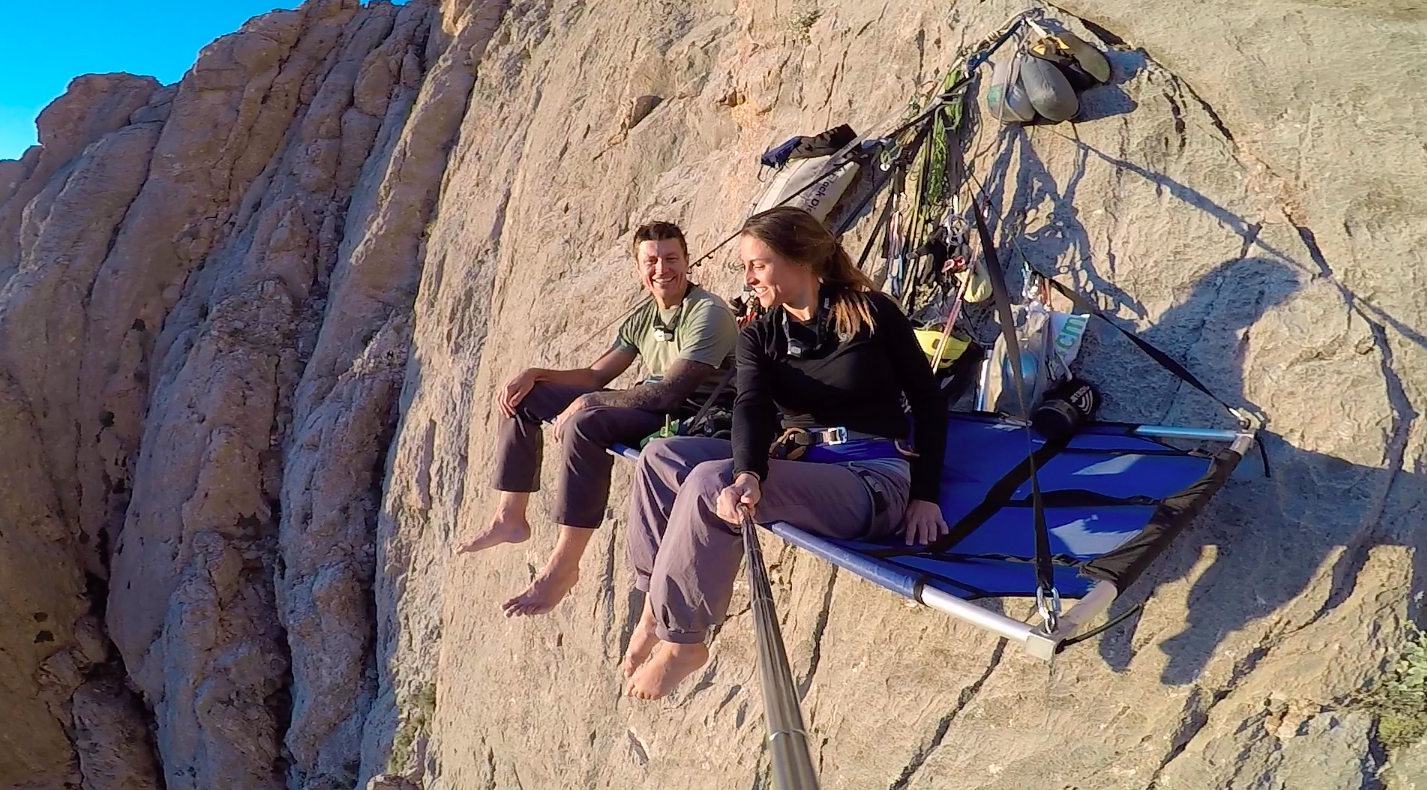
Leigh: For me, it was rock climbing. At this stage, we were also starting to get into hiking a little bit more. Rock climbing dominated for 12 or 13 years and is still a big passion in our lives, but we also started to enjoy longer-distance hiking trips. Plus, we were heading into countries with some of the most beautiful hiking and opportunities in the world.
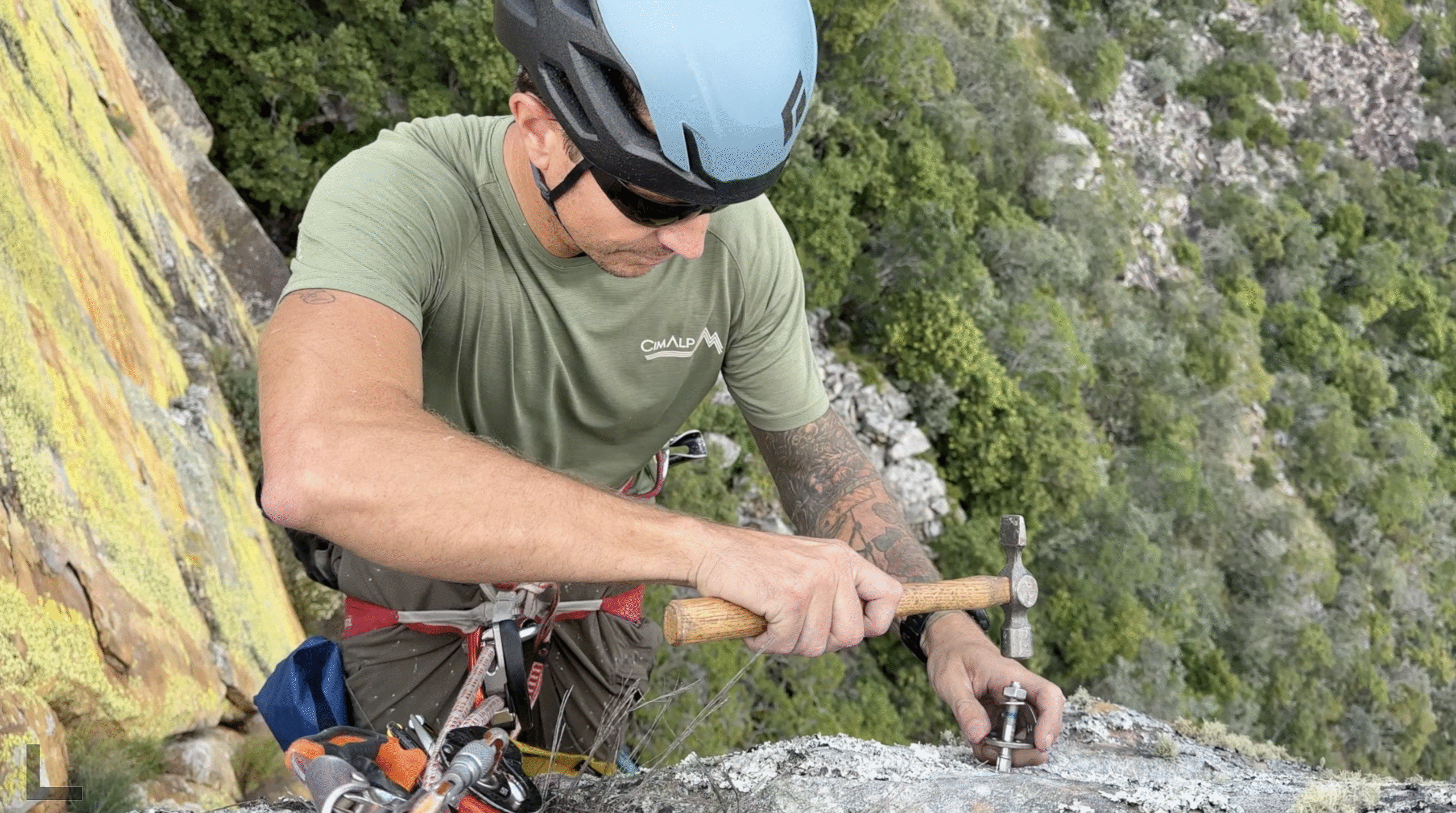
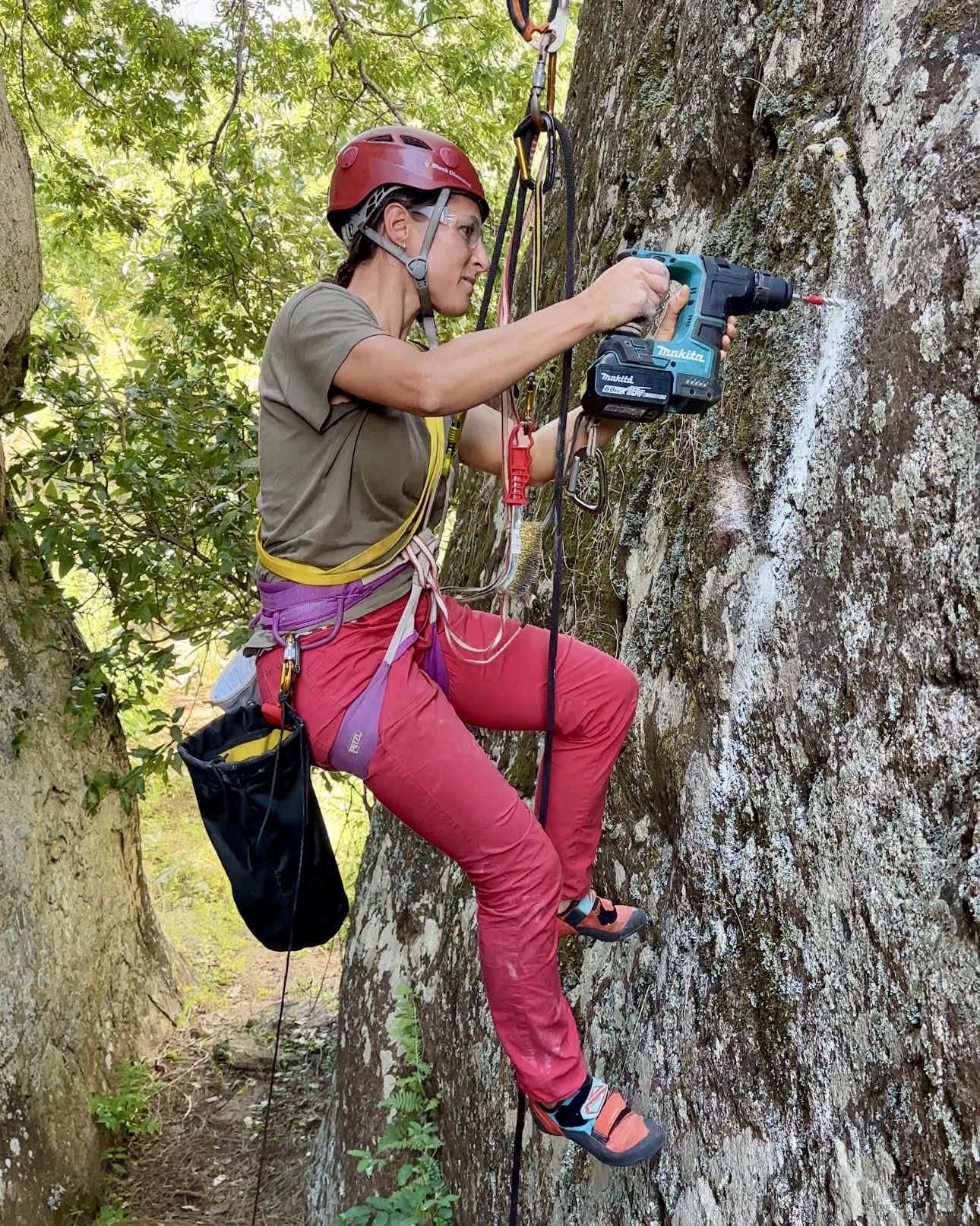
You’ve developed new climbing routes in areas all over the world, including Australia, Georgia, Japan, Angola, Zimbabwe, and Malawi. What, specifically, was the importance of the climbing route you developed in Malawi?
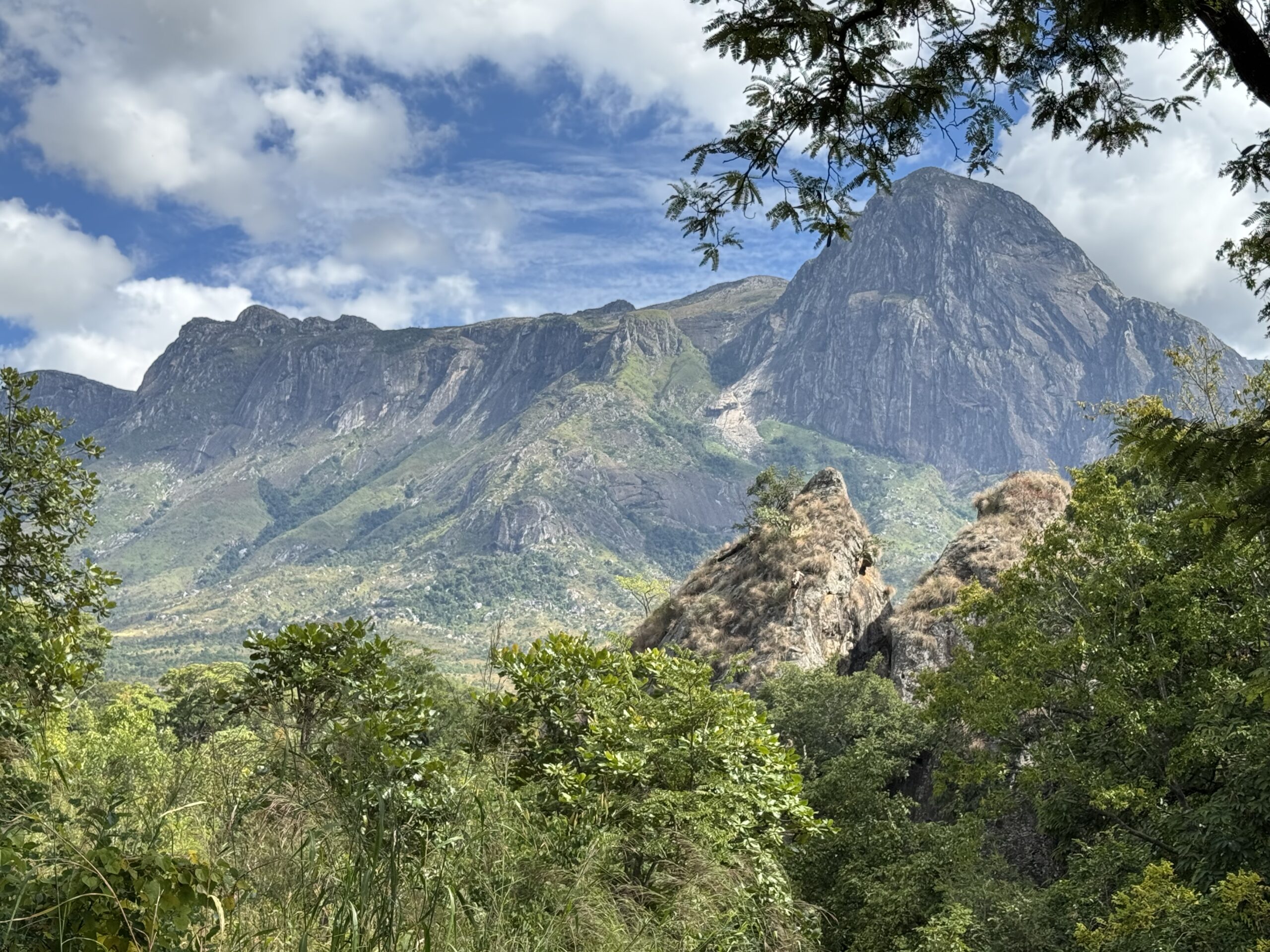
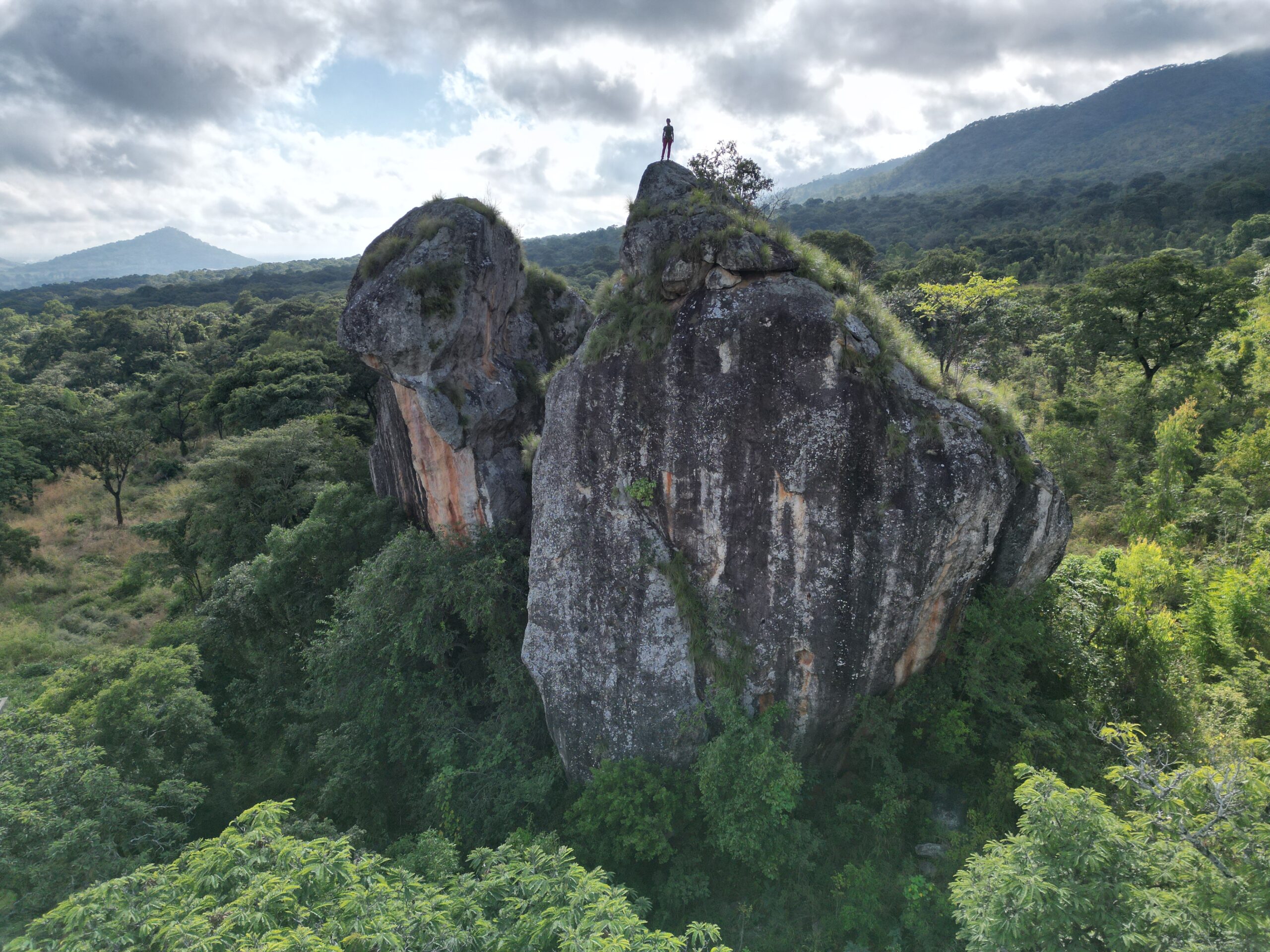
Leigh: This one’s been very special, and it’s in a place called Mulanje. Malawi has a cool but very small climbing community. There is unlimited climbing potential in that country, not just in the region we went to, but all over, from north to south, east to west. The place is just filled with massive granite domes, boulders, and mountains.
We went there with the intention to bolt a big wall, but when we got there, the place was just so overwhelming. The biggest wall is 700 meters higher than El Capitan in Yosemite. It’s enormous. It’s a 1,700-meter high face climb. Instead of focusing on this massive wall, we decided to develop a smaller climbing area that people with a limited amount of equipment—which is often the case in Africa—can enjoy in this magnificent setting that they can hike to every day.
We found a small area close to camp, with a river nearby. Since leaving, we’ve received so much great feedback from the Malawi climbing community, thanking us for developing the area, and [saying] that they now have somewhere to go climbing in Mulanje that’s not dangerous. These other climbs are so committing—you need to be a professional alpinist to tackle this sort of thing. But now locals can go to a smaller area in Mulanje and enjoy it, including learning to rock climb, as we put up a couple of very easy routes for that purpose.
You’ve also completed quite a few long-distance or through-hiking routes. What are some of your greatest memories on the trail?
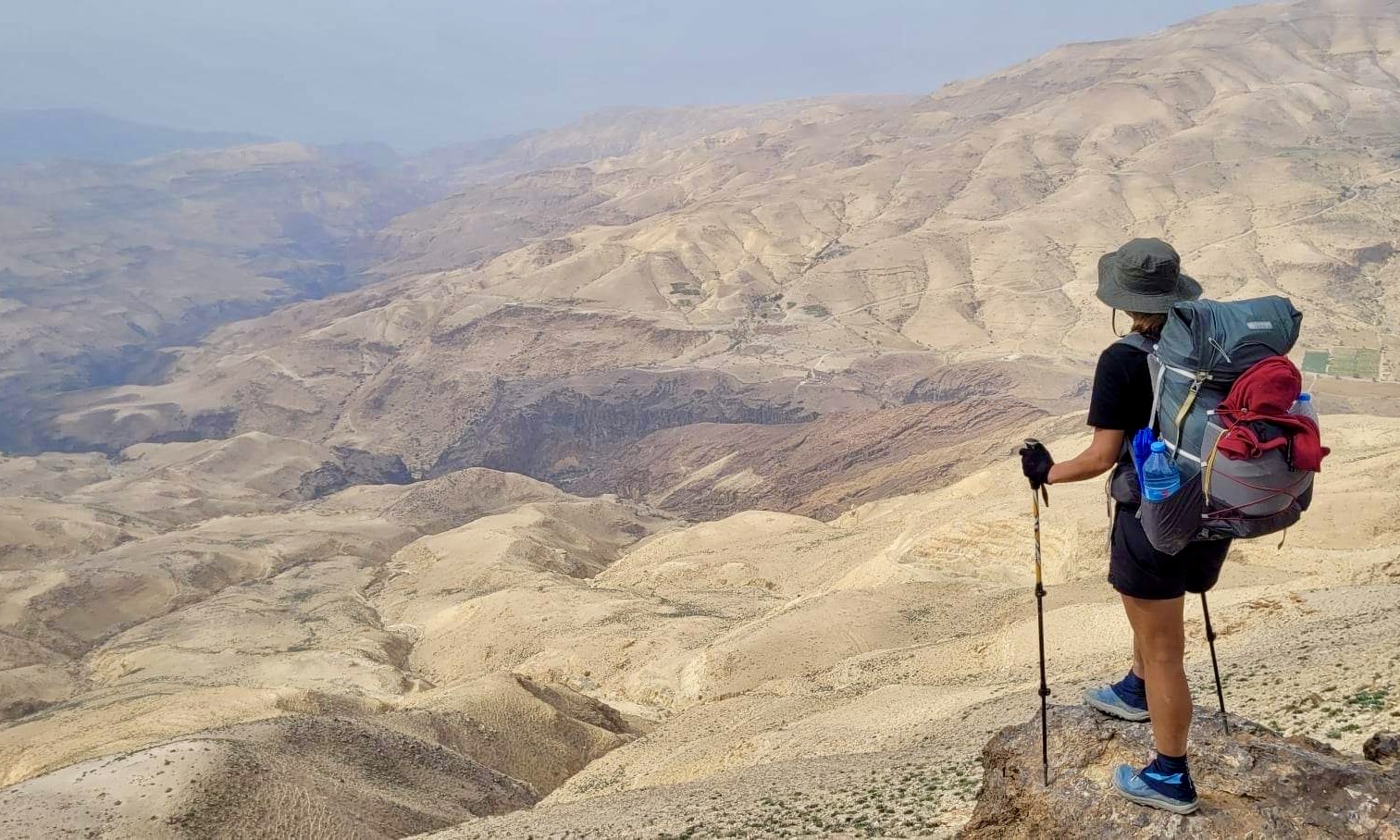
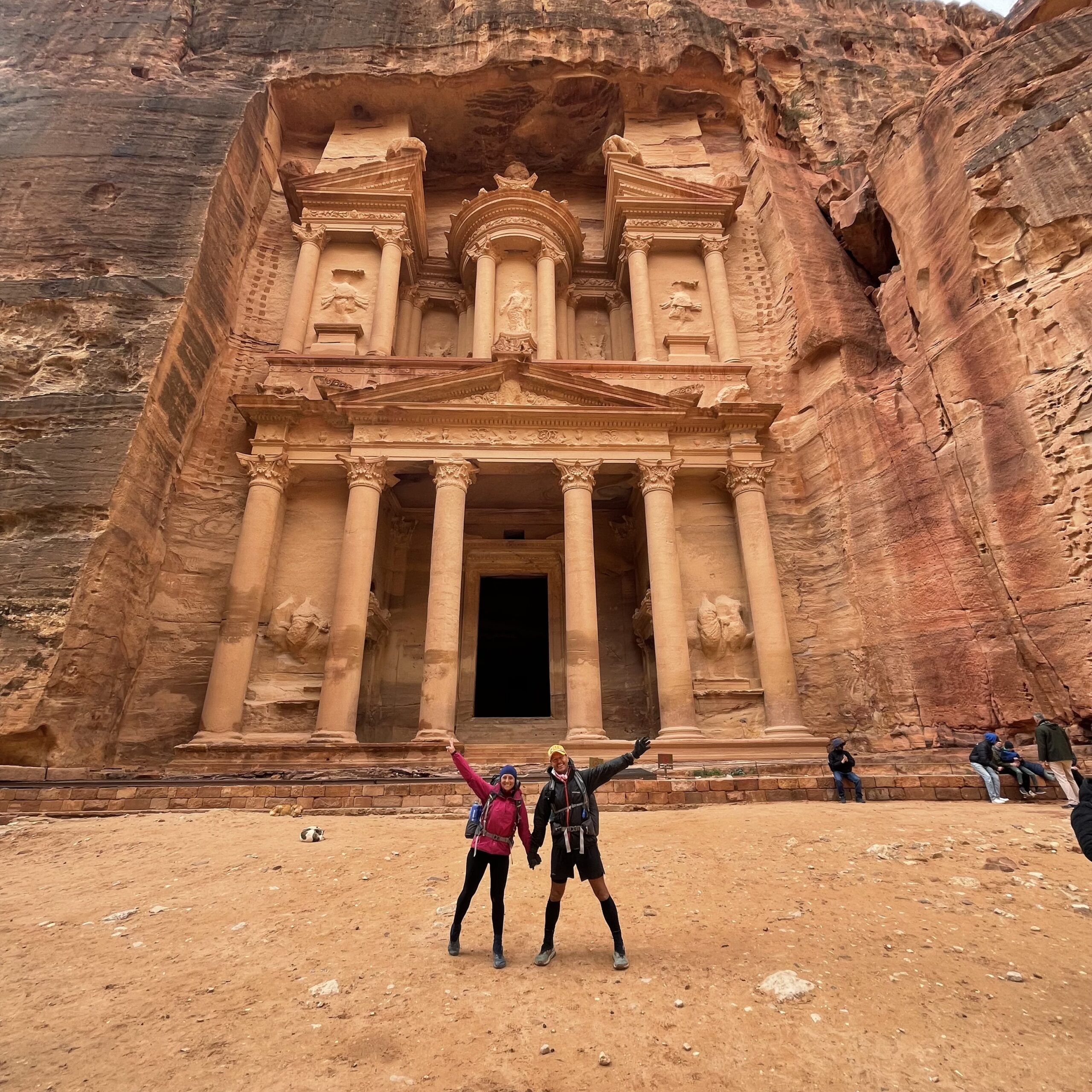
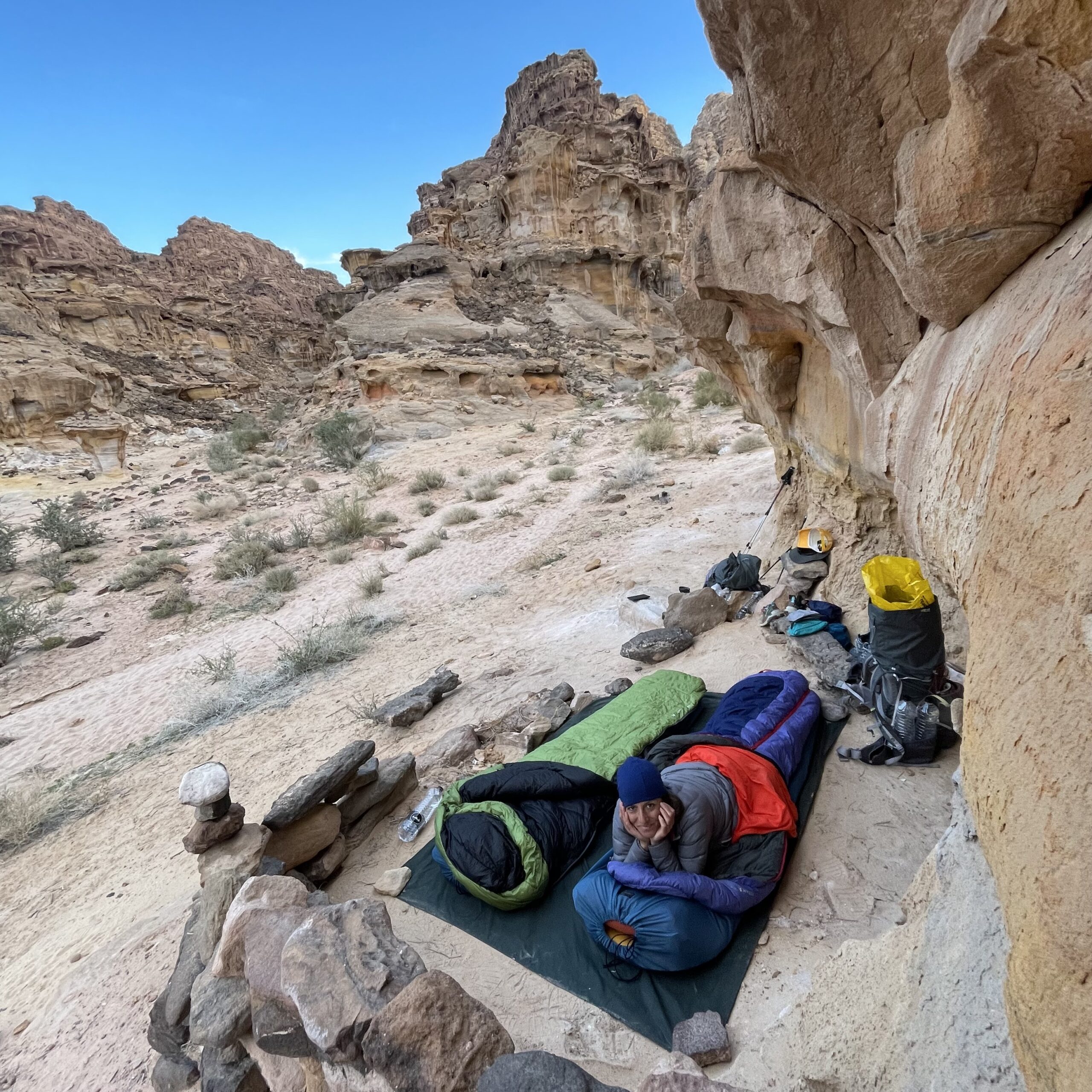
Steph: Three years ago, we hiked the entire length of Jordan, 800 kilometers, from the north, in Umm Qais, to the south, in Aqaba. To this day, it was the most amazing experience, including the scenery, remoteness, challenge, historical sites, and the hospitality and kindness of the people. Everything was just very special.
Leigh: Coen and Karin of Landcruising Adventure inspired us to do the trail, so we thought of them a lot while we were doing the hike. It was challenging too, because only around 20 percent of it is marked, so you really need to know how to navigate. There are limited water supplies. It was a big challenge. And the dogs. There were a lot of nasty stray dogs attacking us every day, but that was the only downside to the Jordan Trail.
What was it like to travel in Afghanistan?
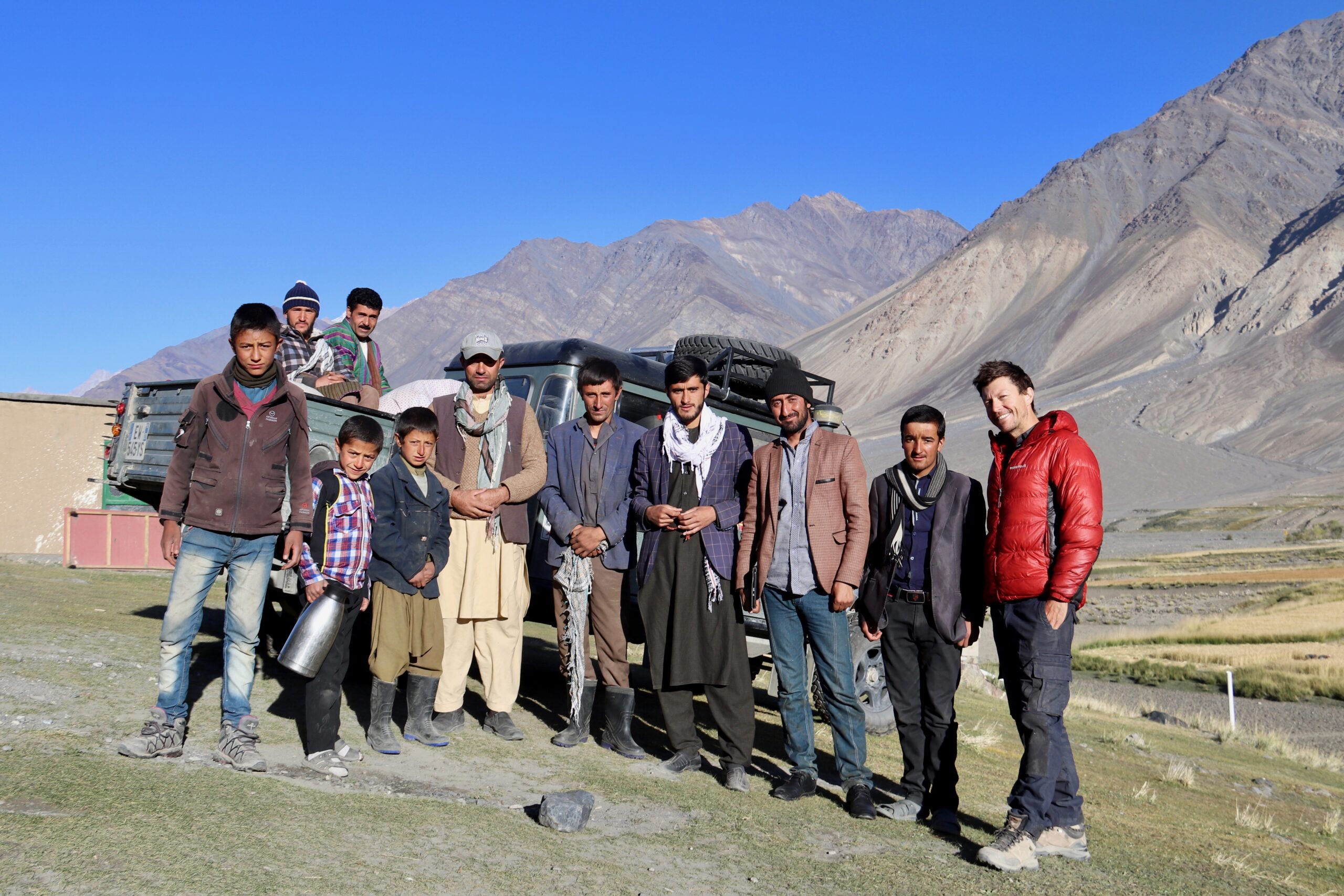
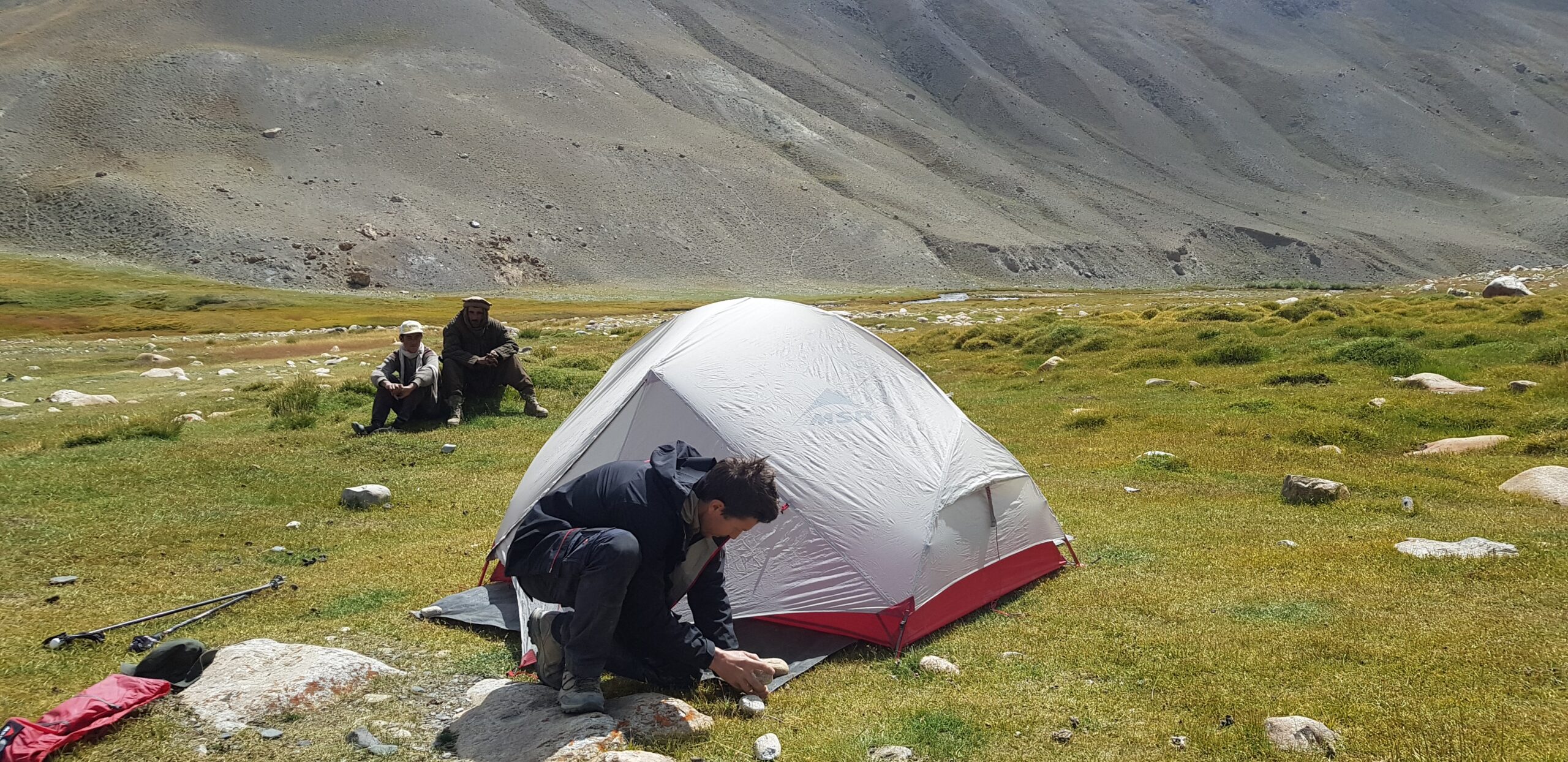
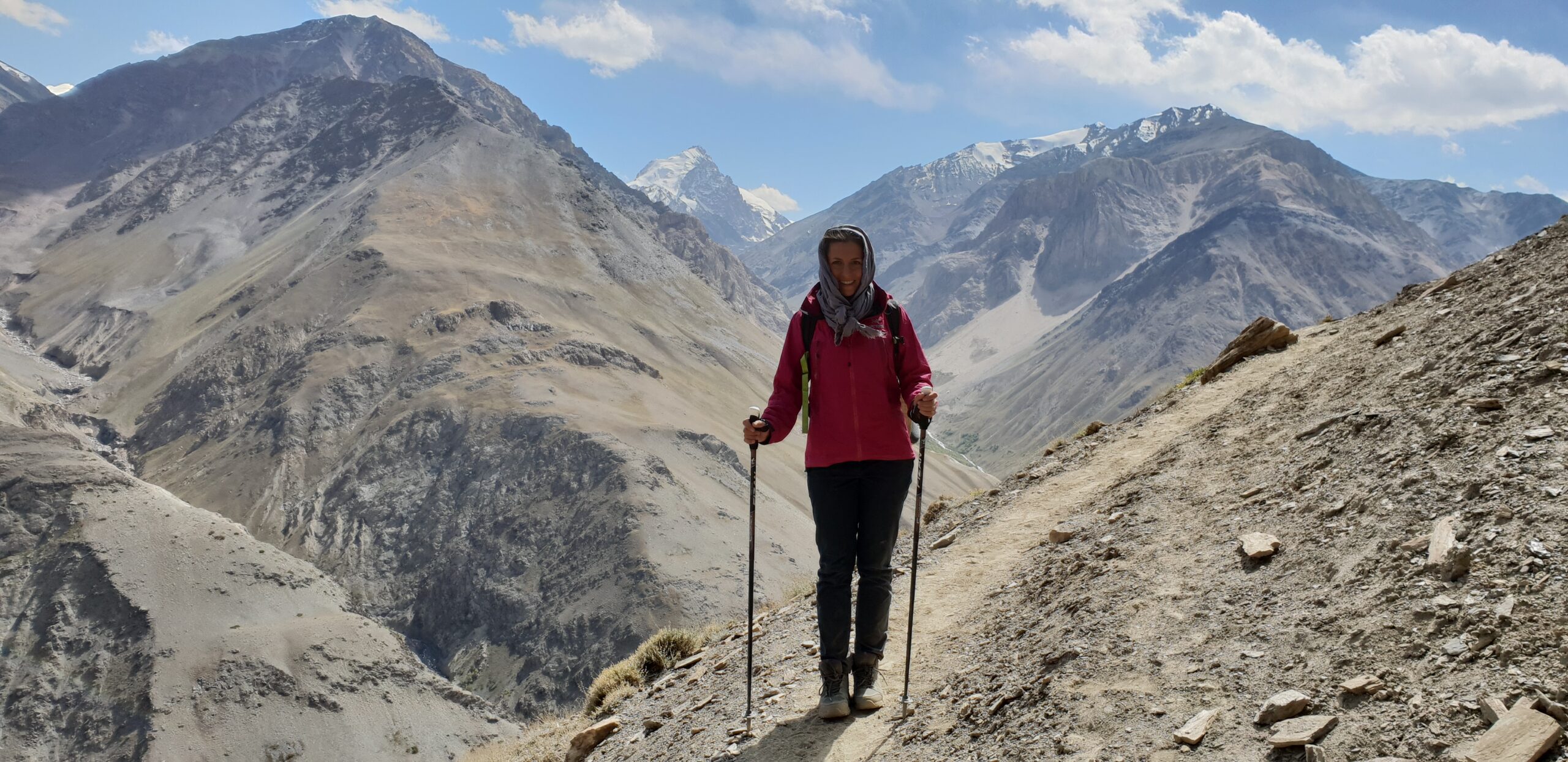
Steph: We crossed the border from Tajikistan and explored the Wakhan by vehicle, and then spent 10 days hiking deep into the mountains, almost reaching the Chinese border. We were absolutely blown away by the incredible landscapes.
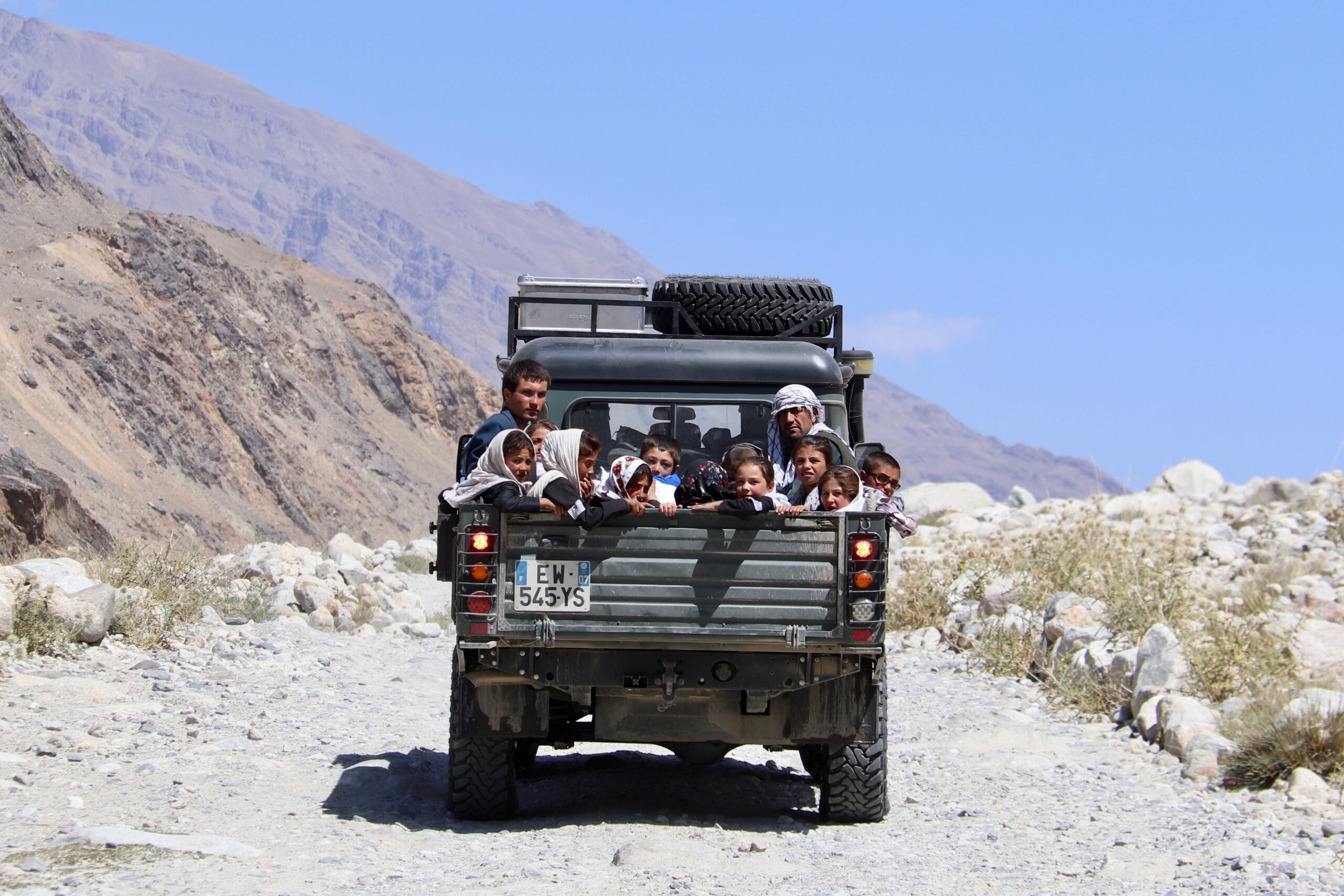
The culture was similar and yet different from what we’d experienced in other parts of Central Asia. The men were confident and always asking for their photo to be taken. The women stayed apart as is their culture, and we respect that. The children were just awesome, chasing us along the road and taking us for tours of their villages with pride. The food was basic but tasty, and was served on the floor of the living area in the houses we were invited into, which often happened after we had given people a lift to their village.
We hiked to a remote Kyrgyz village in northeast Afghanistan, which at the time was only accessible by foot. There has since been a road built to the area, which made it even more special that we visited before this happened. Life is tough in this remote part of Afghanistan, but the people are positive, resilient, and welcoming.
The kindness and hospitality of the Afghan people were just amazing, and another reminder that we cannot judge a country from what we are shown through the media and other sources. We were welcomed with open arms by every person we met along the way. We visited in 2019, at a time when the country was not seeing many tourists, let alone overlanders.
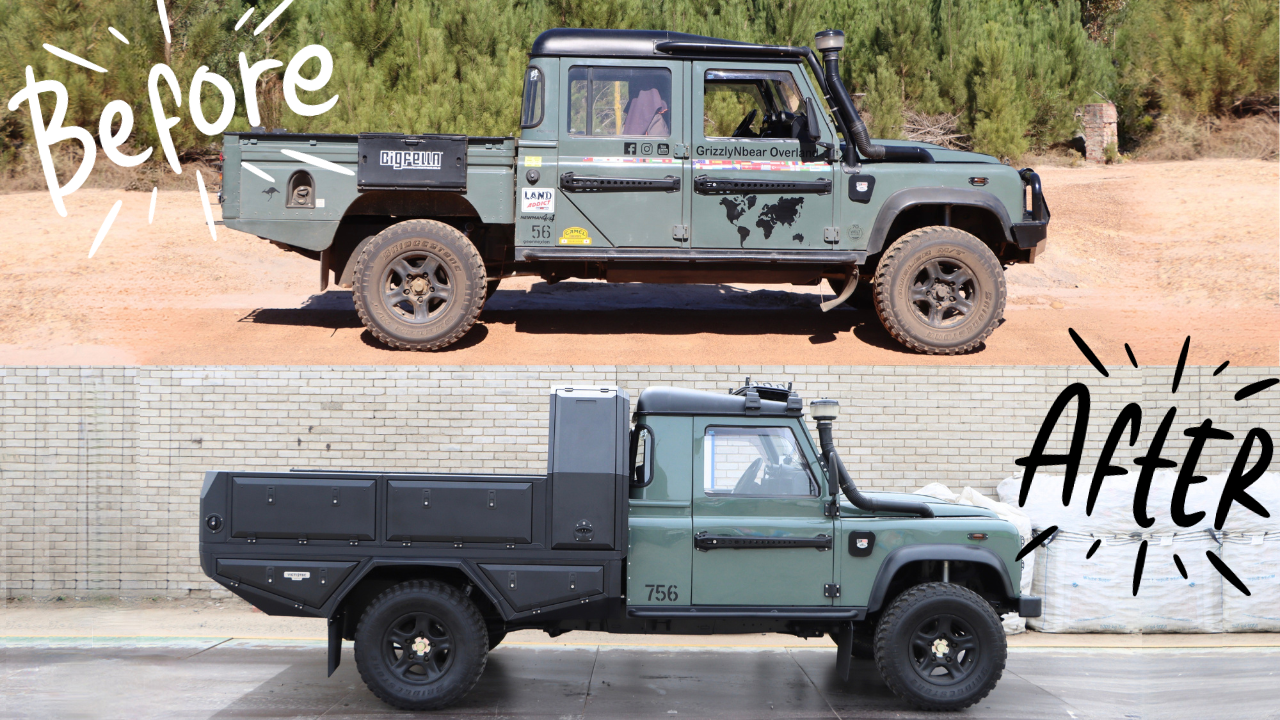
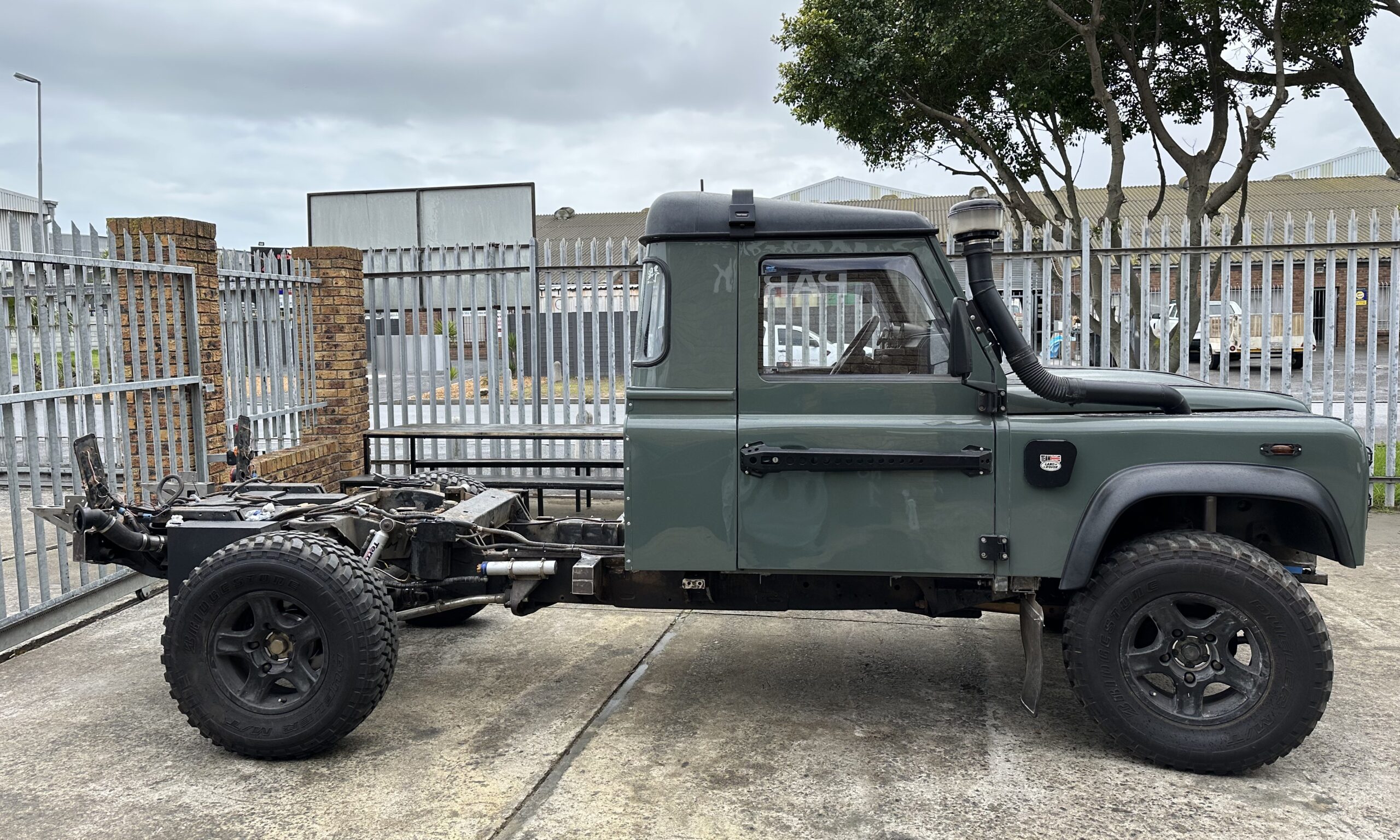
With the help of a team in South Africa, you completed a massive overhaul of the Defender and camper to better suit your travel style. The changes you made were a result of years of overlanding experience. I’m curious—which modifications have been the most impactful?
Leigh: I say this often: what is perfect for us doesn’t suit everybody because everybody travels differently with different passions. We built the ultimate overland vehicle for our needs, but that’s come through experience. It didn’t happen the first time. It took years of traveling overland to figure out our style of travel and what would suit the rebuild.
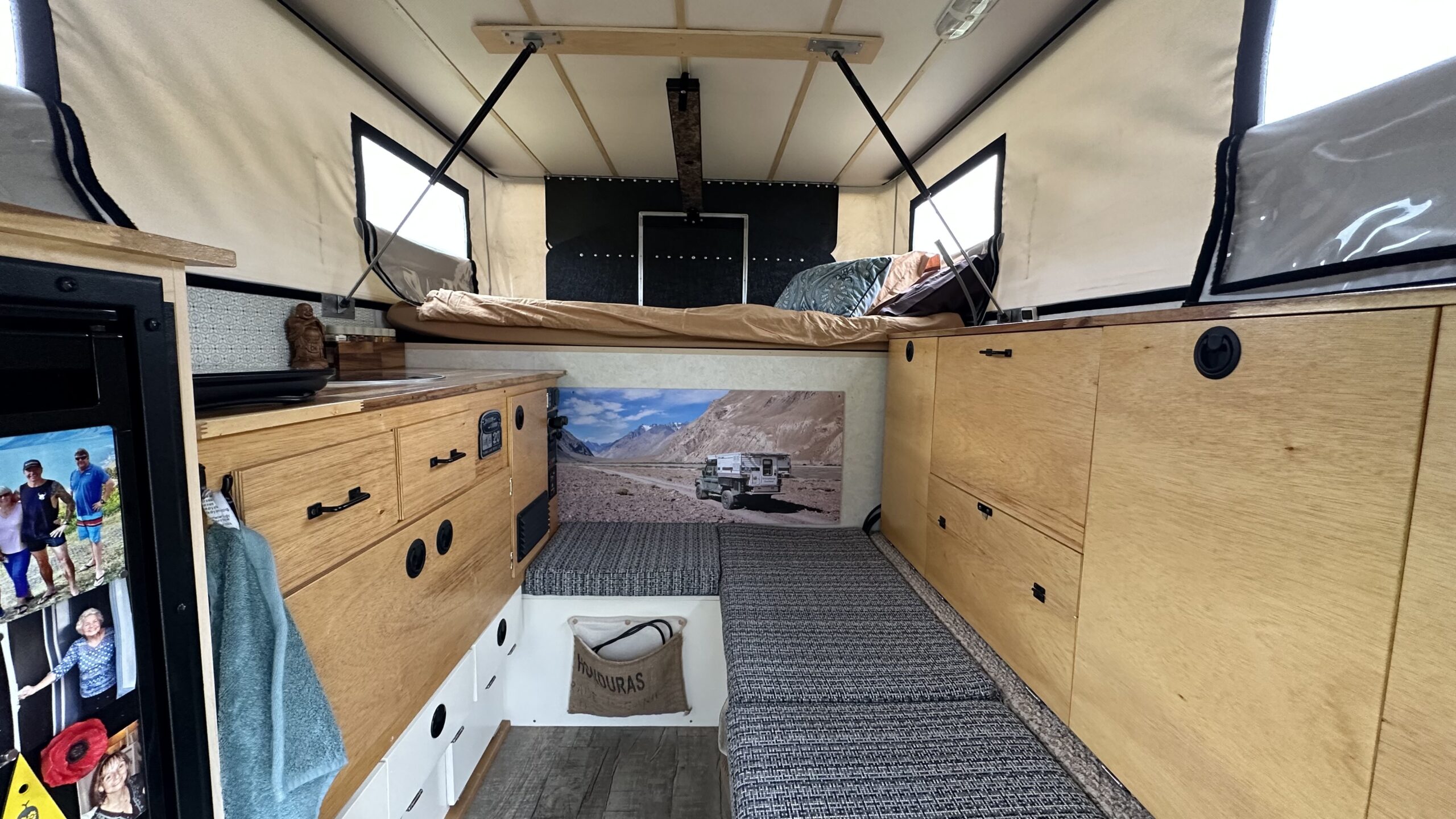
But we wanted to be better organized. We had rear seats, and it was always a mess back there. The original idea was to keep seats in the back for family or friends visiting, or for picking up hitchhikers. But we didn’t have so many people coming to visit, and we were very rarely picking up hitchhikers—it just wasn’t happening. My dream build was to move the camper forward for a better center of gravity and remove the spare tire from the roof.
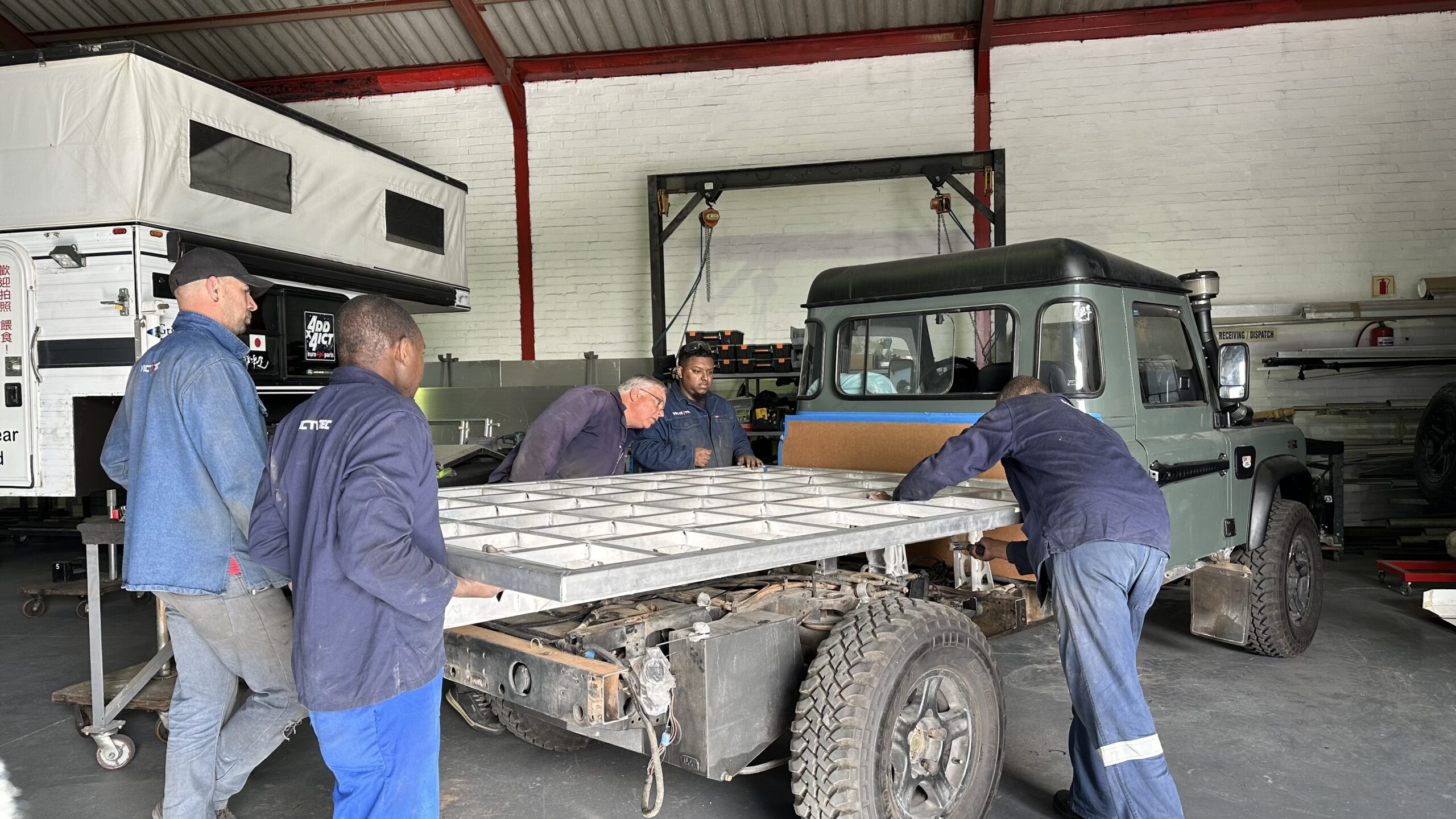
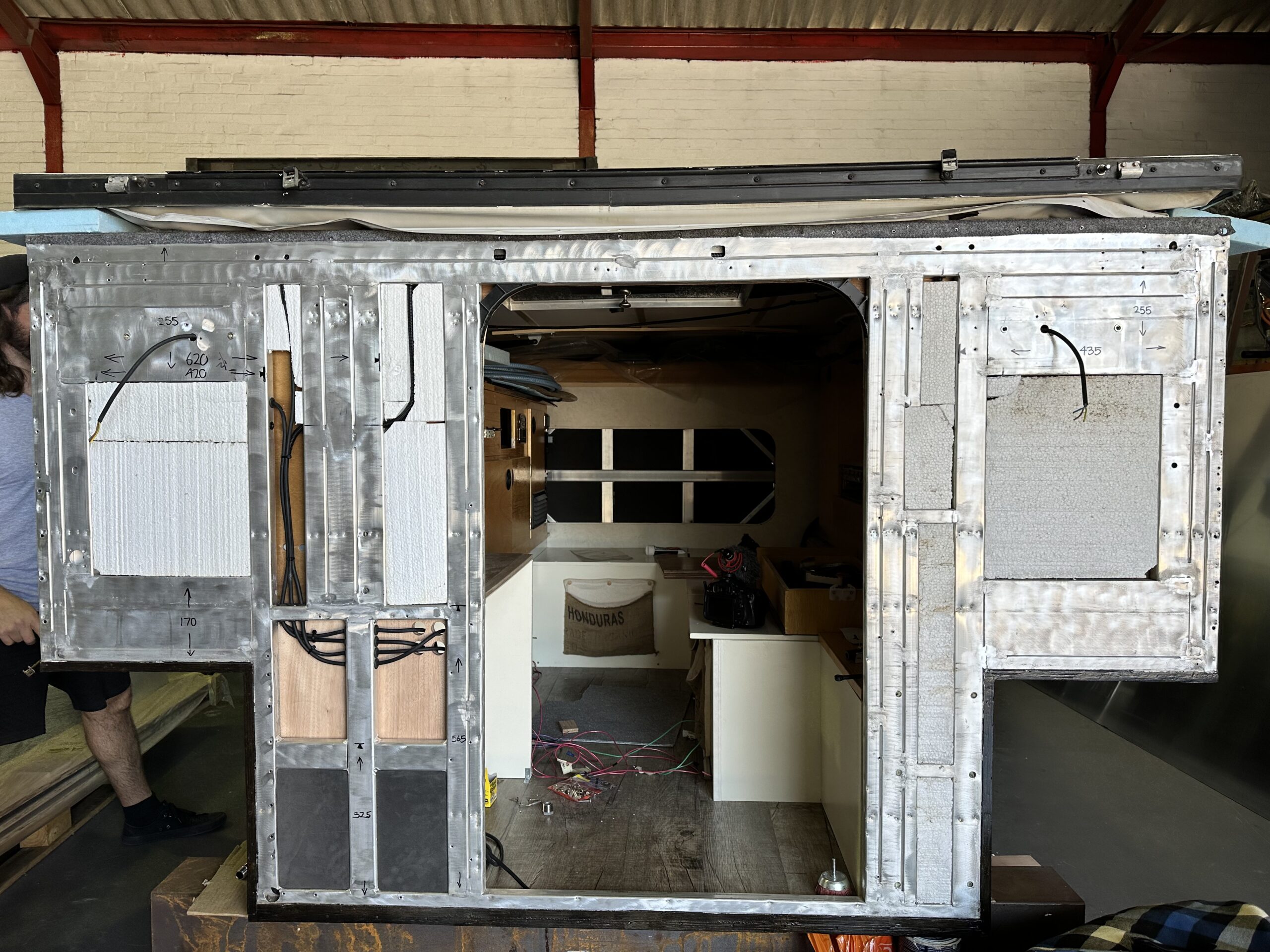
We didn’t want to store camping equipment inside the camper, so we wanted exterior storage space. To add the flatbed with side storage boxes and a garage box, and to modify the cab from a four-door to a two-door, required cutting the car in half and stripping it all back to the chassis. It was such a cool and fantastic experience to be involved in the design from the ground up. It’s been one year since the rebuild, and we feel like we’ve got through the worst of the teething issues. That’s normal, though. You can’t pull something apart completely, put it all back together, and expect everything to be perfect.
The rebuild has made our day-to-day living so much easier. Packing up was always very quick, but now it’s more efficient. It took a long time, but we know where everything is stored. And the connection we made with the guys at Victitec, spending so much time at the workshop—it was emotional when we reversed Bear under Grizzly and lowered that camper, and it fit. Everybody was so nervous. Those guys had put everything into this vehicle and were so proud. Knowing this passion went into our vehicle, which is also our home, was just fantastic.
Leigh, you’ve worked in the offshore oil and gas industry for many years. How do you create a balance between work and overlanding?
Leigh: There is a balance because we have to consider where we’re going to end up with the car. Does Stephy stay with the vehicle in that country or in an Airbnb? In Central Asia, the hostels cater to overlanders with very nice parking areas. So Stephy would often just live and stay with the camper. She loved it.
It’s rotational work, so if I didn’t do this job, we wouldn’t be able to travel like we do or for as long. It’s not for everybody. It’s a challenge. And I go away for a month at a time. Sometimes Stephy returns to France. We recently bought a house in the French Pyrenees. We don’t go there very often, but it’s been cool to have that base, and it isn’t going anywhere. We still spend far more time traveling out of Grizzly and Bear than we do at the house, and we’ll continue doing this while the passion is still strong.
Steph: I have two very good memories. One was in Bishkek, where I stayed in two different hostels. Every day, I met travelers, and it was super social and great. Then there was the rebuild [in South Africa]. We didn’t have a vehicle, so I was staying in an Airbnb. We really have to be careful about the duration of the import of the car. But with Leigh going to work, it also brings some breaks from overlanding, which keeps the passion alive. You miss it.
You’re early-morning people, typically hitting the road by 6:00 a.m. How does this help set up your day?
Steph: In the camper, we sleep east to west, so Leigh has the side he can get out of bed on because he wakes up before me. He makes coffee, checks his email, and soon after I wake up, we start driving, hiking, or climbing at sunrise. Sometimes we come back from our activity, and people aren’t even starting their day, so that feels good.
Leigh: We love it. I just love the mornings. I like to train in the mornings too. I’ll get up and might go for an early morning run. I’m often running in the dark or training with my head torch on. I’ll do a little training routine if we’re not climbing, try to keep fit a bit, because it’s challenging to maintain a routine when you’re traveling, so you’ve got to be disciplined.
But being early morning people has affected our journey because we can’t really travel with others. It sounds rude, but our time is just so far out from most other travelers that we haven’t been able to convoy and travel alone. We prefer to start driving, watching the sun come up, then stop early to enjoy the afternoon and explore the region we’re in. It’s just the body clock. I’ve always been an early riser. We recently traveled with an awesome three-vehicle Australian Troopy convoy. One of the guys was ex-military and an early riser.
You mentioned your morning training routine. How difficult is it to incorporate exercise into your schedule (for example, in the heat, achieving consistency, predators, etc.)?
Steph: I don’t do workouts so much anymore, but when Leigh goes to work, I focus on YouTube programs of weights or something. When we’re traveling, I don’t do so much. Like this morning, we went swimming in the ocean, so we try to keep active.
Leigh: I think it’s a big question, and it comes up a lot from other overlanders, and we’re always interested in how other long-term overlanders keep fit and healthy.. It’s not for everybody. I think it’s something you need to think about if you’re going to travel long-term, because you can sit in a car a lot, and also, we’re not so strict with what we eat. We like to enjoy our food, and for us, it’s an important part of overlanding.
I did run quite a bit in Africa, but depending on where you are, it’s in the back of your mind [wild animals]. But again, Africa is like Australia—when people talk about predators, these days, there aren’t many places in Africa where the animals are still in the wild, unfortunately, because of human expansion and population growth. The dangerous animals are mostly in national parks. Running in Taiwan was problematic due to street dogs; I had to carry a stick because the dogs would attack me.
Who inspires you and why?
Steph: For me, a big, big inspiration is Coen and Karin of Landcruising Adventure—for the long-distance hiking part, mainly. They stayed with me in Bishkek in 2018. We watched the movie, Wild, and they were telling me about that long-distance hike in Jordan and how the toothbrush has to be cut in half to have the weight removed, and how they don’t take pillows, and all these things. I was fascinated.
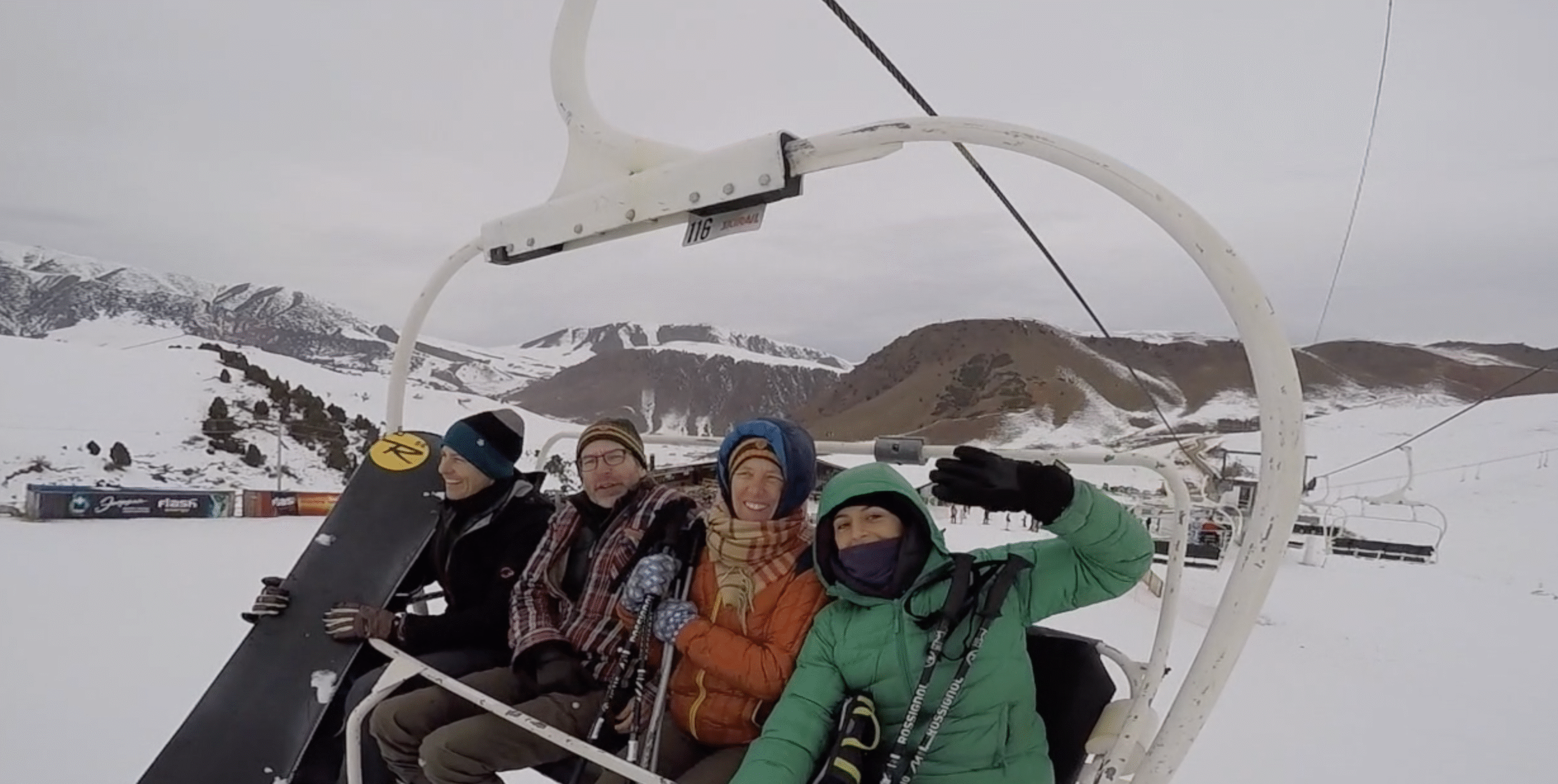
Leigh: I think also Coen and Karin. What I learned from them was the art of slow travel. They’re big believers in that. We had a fantastic time, the four of us, going rock climbing in the morning and then snowboarding and skiing in the afternoon in Kyrgyzstan. I remember Coen telling me a story about how, when they started, they wondered, ‘How long are we going to do this for? Are we going to have a deadline?’ Their original plan was to do the full Pan-American. Nine years later, they still hadn’t left South America, and they just loved it. I thought that was so inspirational.
Steph: And the fact that it is OK to take breaks [from travel]. To stop, pause, to enjoy it again. There are no set rules. It’s not like, you’re an overlander, you shouldn’t stay in a cabin for a month. You can. You can go on a long-distance hike and visit your family for a month if you need to. There are no rules to this.
Leigh: There’s nothing to prove to anybody. We’re doing what we love. Karin and Coen taught us so much about this life-work balance and keeping the passion for overlanding strong for the long term. We love those guys.
Our No Compromise Clause: We do not accept advertorial content or allow advertising to influence our coverage, and our contributors are guaranteed editorial independence. Overland International may earn a small commission from affiliate links included in this article. We appreciate your support.
