

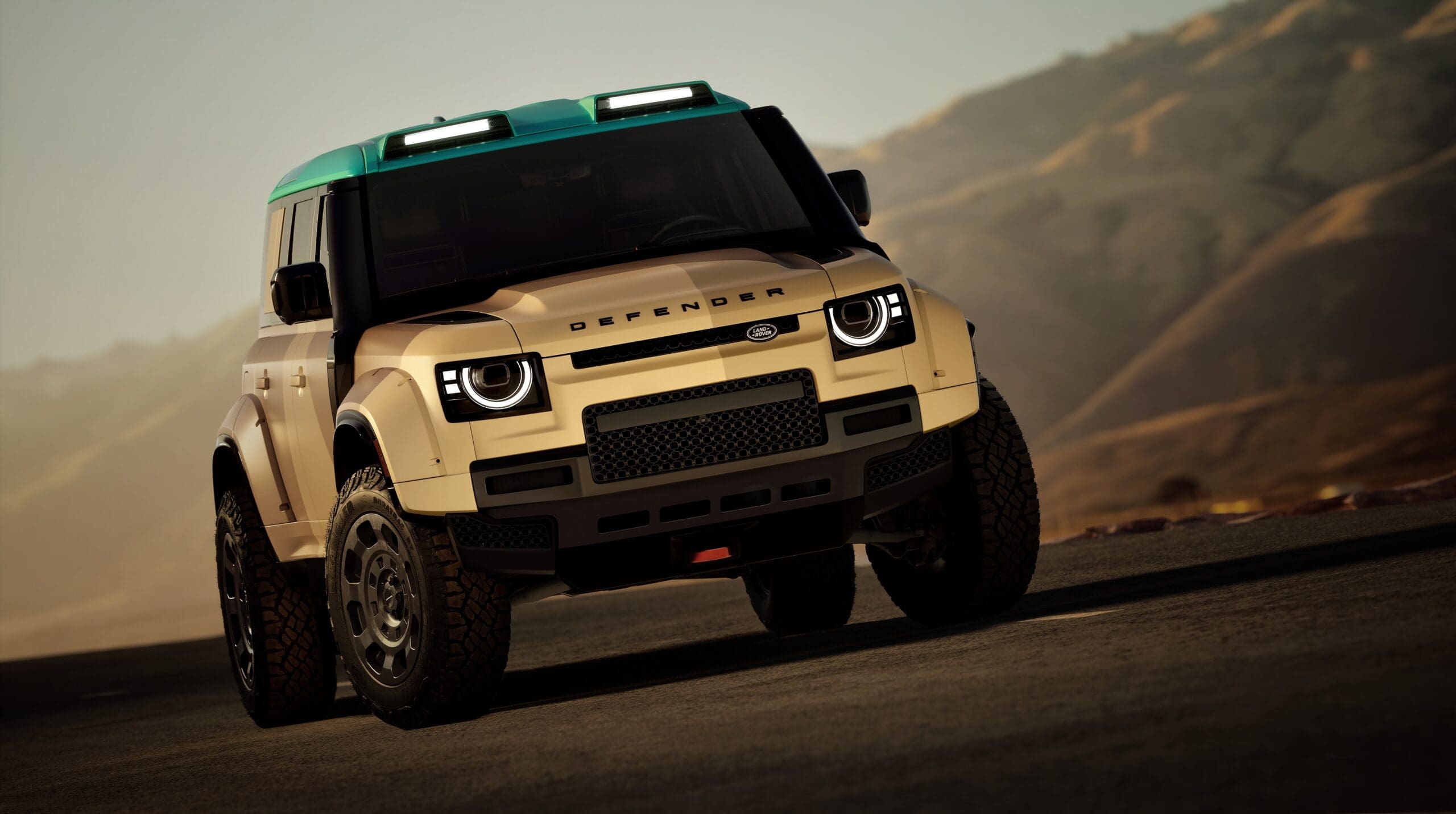
The “new” Defender has faced controversy since its launch, having been given the nearly impossible task of replacing a legend. Critics (myself included) argued that it was too modern, relied on too many electronic control units, and would never prove as dependable or capable as the classic model. My experience with the L663, however, has been nothing short of excellent. I have enjoyed every moment behind the wheel, and its off-road capability is astonishing. Although the classic Defender was a giant of the off-road world, it never made a comparable impression in rally competition. That is where the L663 has recently excelled, delivering a Dakar performance that surprised many and answered some of the skeptics. JLR has now revealed the Defender Dakar, a limited-production, road-legal model developed from the D7X-R that won the Stock class at the 2026 Dakar Rally. Unveiled in design-preview form at The Quail, A Motorsports Gathering, during Monterey Car Week, it combines the rally vehicle’s basic architecture and powertrain with equipment suitable for public roads.

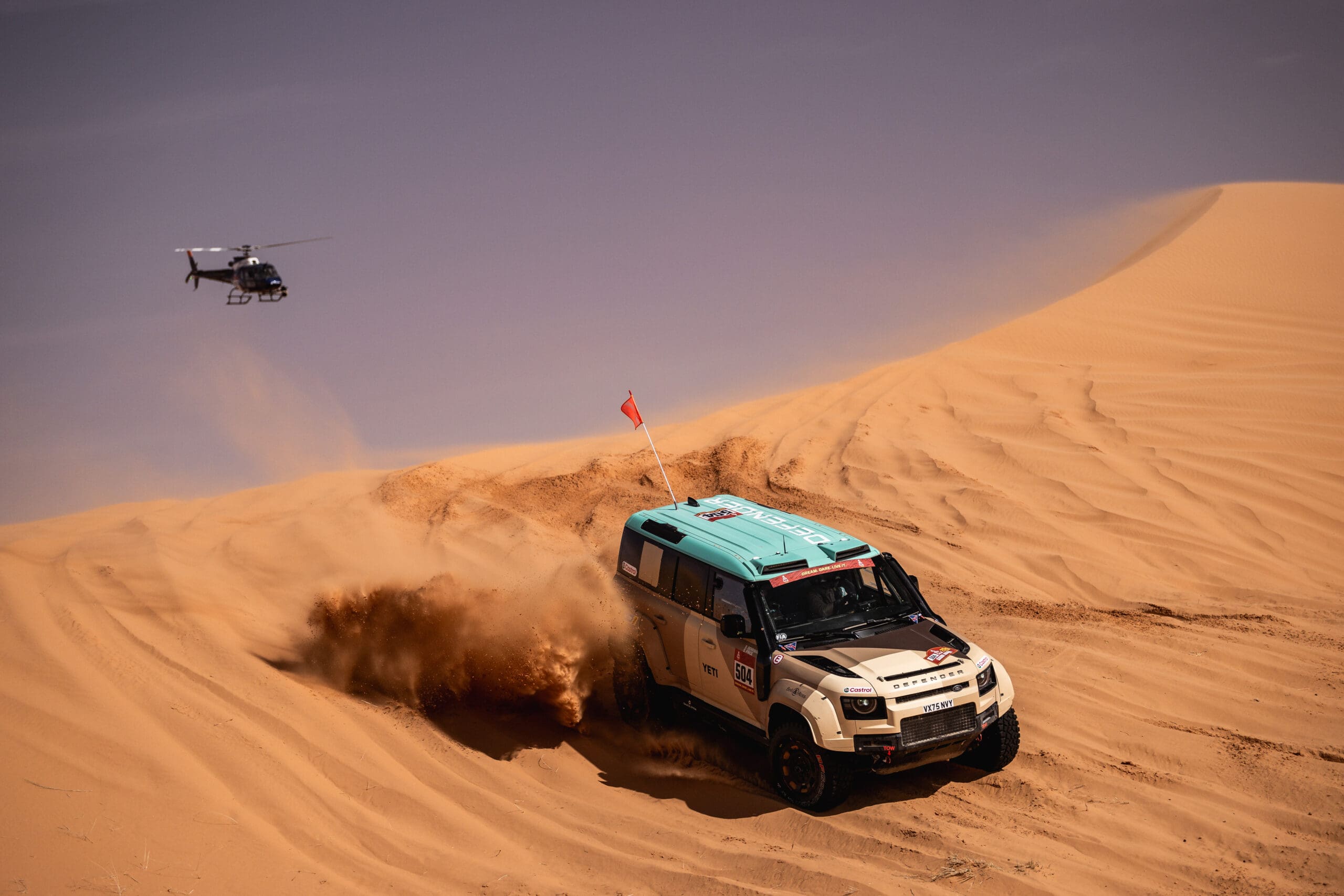
The Defender Dakar traces its origins to the Defender Octa, which provided the foundation for the D7X-R. The competition vehicle made its debut at the 2026 Dakar Rally, where the Defender entered three examples in the newly established Stock category. After 14 days of competition, the vehicles finished first, second, and fourth in their class. The team also secured a first-, second-, and third-place sweep on 10 of the event’s 13 stages.
Together, the three D7X-R vehicles covered approximately 24,000 kilometers, or 14,913 miles. That experience provided Defender’s engineers with an opportunity to evaluate the platform’s cooling, suspension, body structure, transmission, and driveline under sustained desert conditions.
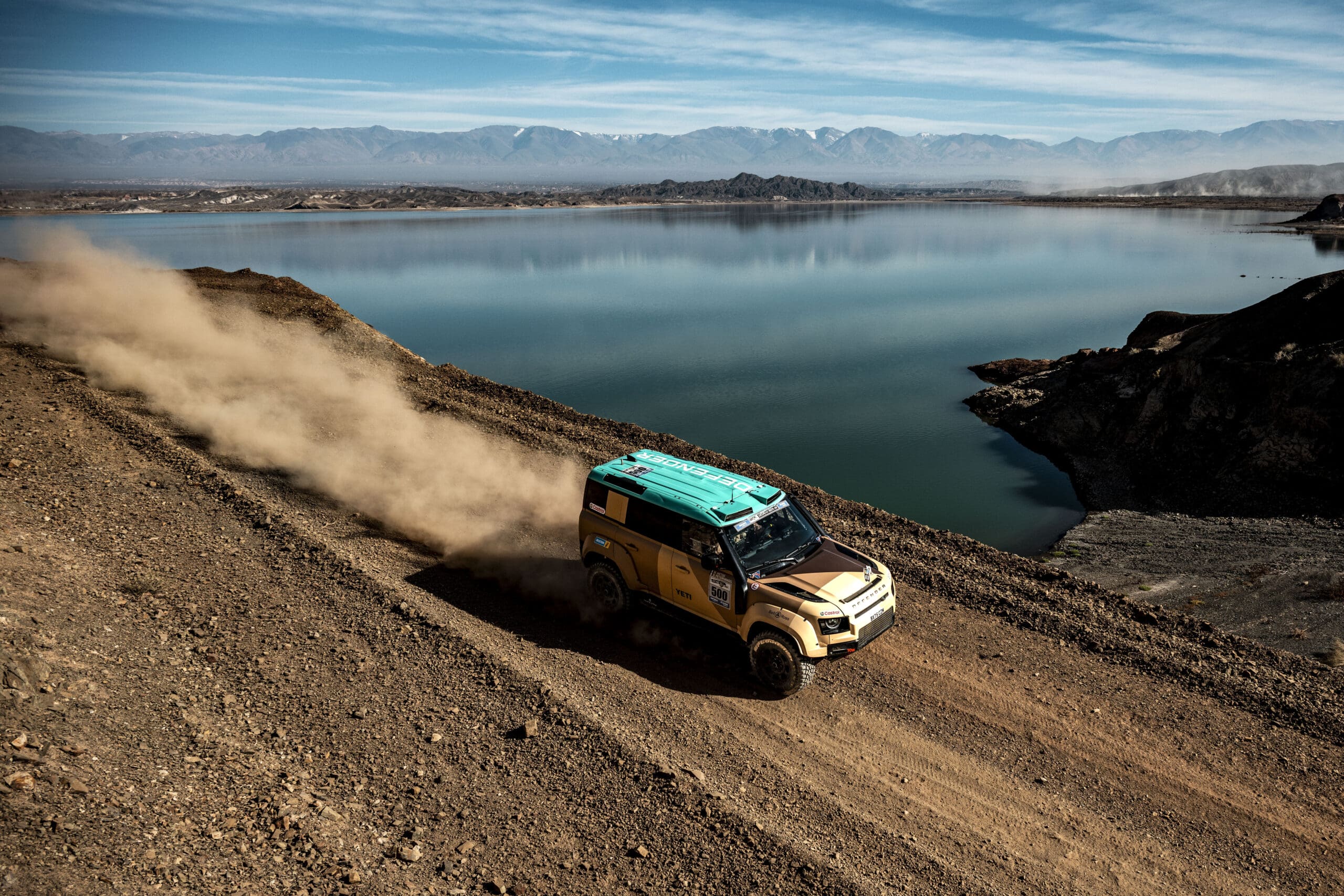
The road-going Defender Dakar will retain the D7x body architecture, transmission, driveline, and 4.4-liter twin-turbocharged V8 used by the competition model. However, because the production vehicle will not be restricted by the same racing regulations, its engine will deliver the full output available from the Defender Octa powertrain.
Defender states that the Dakar will produce 626 horsepower and 553 pound-feet of torque. The vehicle will also receive an upgraded cooling system intended to support its greater output and anticipated use in demanding environments.

Substantial chassis revisions distinguish the Dakar from other members of the Defender range. It features a wider track, greater ride height, revised suspension geometry, and coil springs paired with Bilstein advanced dampers developed using motorsport experience. Defender has not yet published complete suspension-travel, ground-clearance, or overall-dimension figures.
The vehicle will ride on newly designed forged 20-inch wheels fitted with 35-inch advanced all-terrain tires. This combination should provide increased clearance and a larger contact patch on loose surfaces, although it will also require corresponding revisions to the bodywork and suspension.

Its terrain-management system will include new Dunes and Gravel driving modes designed around the conditions encountered during rally-raid competition. Defender Dakar will also adopt Flight Mode, a control function originally created for the D7X-R. The system is intended to prepare the vehicle for smoother, more controlled landings after its wheels leave the ground. Defender has not yet provided a detailed explanation of how the production version will coordinate the dampers, throttle, braking, and other electronic systems.
The exterior reflects the vehicle’s competition background without precisely reproducing the D7X-R. Roof-mounted light pods, a fixed metal roof, carbon-fiber raised air intakes, and a carbon-fiber hood are among its most visible features. Wider wheel arches with exposed fasteners accommodate the expanded track and larger tires, while a tailgate blanking plate and prominent mud flaps add further rally-derived details.

Lower-body protection includes an enhanced metal front undershield and additional underbody armor. These components are intended to shield vulnerable mechanical parts when the vehicle is driven over rocks, sand, and uneven ground.
The principal launch color combines a Dakar Sand body with a Yanbu Turquoise roof, drawing directly from the appearance of the class-winning D7X-R. Narvik Black and Alaska White will also be offered, while an optional matte protective film will provide an additional layer of bodywork protection.
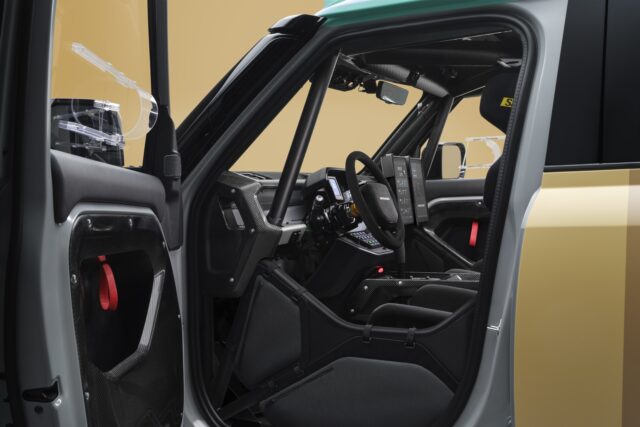
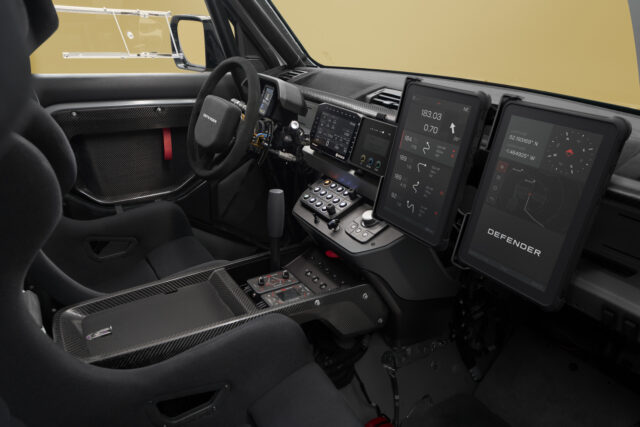
Inside, the Defender Dakar will use a 2+2 seating configuration rather than the five-, seven-, or eight-seat layouts available in other Defender models. The front seats have been designed specifically for the Dakar and incorporate styling influenced by competition vehicles. Four-point racing harnesses will be available as an option, while storage behind the seats will be arranged to accommodate helmets.
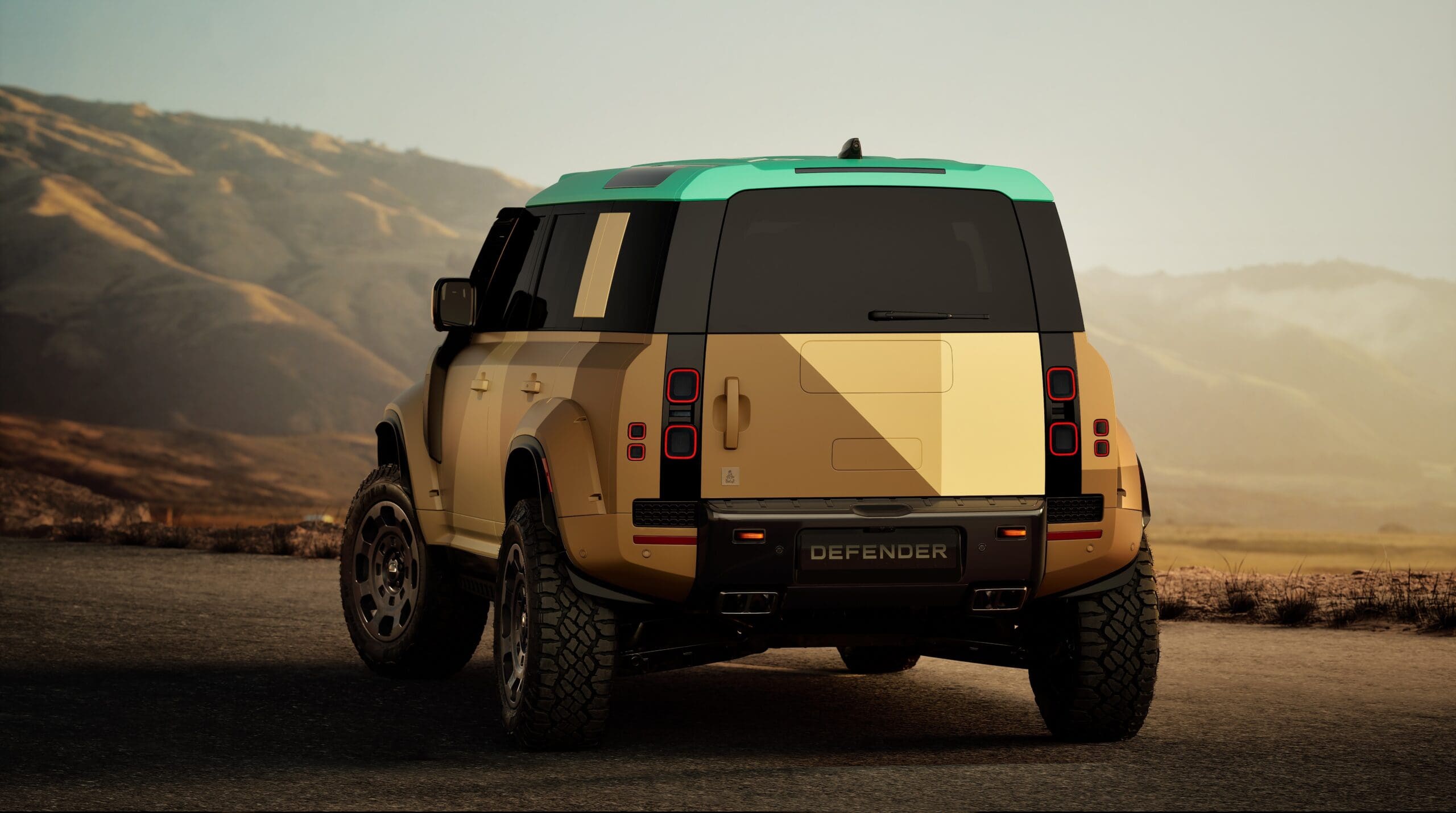
The cargo area will include dedicated mounting points for a spare wheel and an air compressor. These features suggest that the model is intended to offer more than a cosmetic interpretation of a rally vehicle. However, its eventual practicality will depend on payload, cargo capacity, tire availability, and final equipment specifications.
The Defender Dakar follows the North American introduction of the modern Defender and the subsequent expansion of the range to include the 90, 110, 130, and Octa. Defender reports that more than 130,000 examples have been sold in the United States since the model returned to the market.
Pricing and total production numbers have not been disclosed. Defender is currently collecting registrations of interest and expects reservations to open in early 2027. Further technical specifications will be announced during the 2027 Dakar Rally in Saudi Arabia.
Read More: Norton Atlas Brings a Historic British Name to the Middleweight Adventure Market
Our No Compromise Clause: We do not accept advertorial content or allow advertising to influence our coverage, and our contributors are guaranteed editorial independence. Overland Collective may earn a small commission from affiliate links included in this article. We appreciate your support.
