

Photography by Michael Ellem and Scott Brady
Australia looms as an explorer’s sentinel, terra incognita to the mind, with vast expanses stretching across a sea of sand, spinifex, and rock. This most ancient of continents is also replete with contradictions, with Tasmania pressing into the Roaring 40s at the south and Cape York clawing into the tropics at the north. Despite its proximity to Papua New Guinea and Asia, Australia remained hidden from the rest of the world until 1770, when Captain James Cook sailed into Botany Bay.
Admittedly, my aspirations for exploring Cape York were far more pedestrian than those of Cook, Flinders, and York himself, but I did my best to equal their enthusiasm. In 2018, I borrowed a Land Cruiser from HEMA Maps and pressed as far north as time and the weather would allow, camping at Yule Point. I had taken the road less traveled and was rewarded with the rarest of encounters—a wild cassowary busted through the brush just in front of my bull bar and ran with me for 20 meters or so before disappearing into the bush like a velociraptor of the Cretaceous Period. I had no idea they could disembowel a man with one blow of their five-inch, razor-sharp claw.
The stories of Darwin, Japanese invasions, and 4-meter crocodiles mesmerized me, but I had fallen well short of my goal to reach Cape York. That dream would lie dormant for nearly a decade, waiting for the right invitation. That call eventually came last spring, when ARB announced their 50th anniversary and the goal of leading an adventure to the northernmost point of Australia. My opportunity had arrived. We would drive four expedition-prepared vehicles from Cairns to Cape York—the hard way.
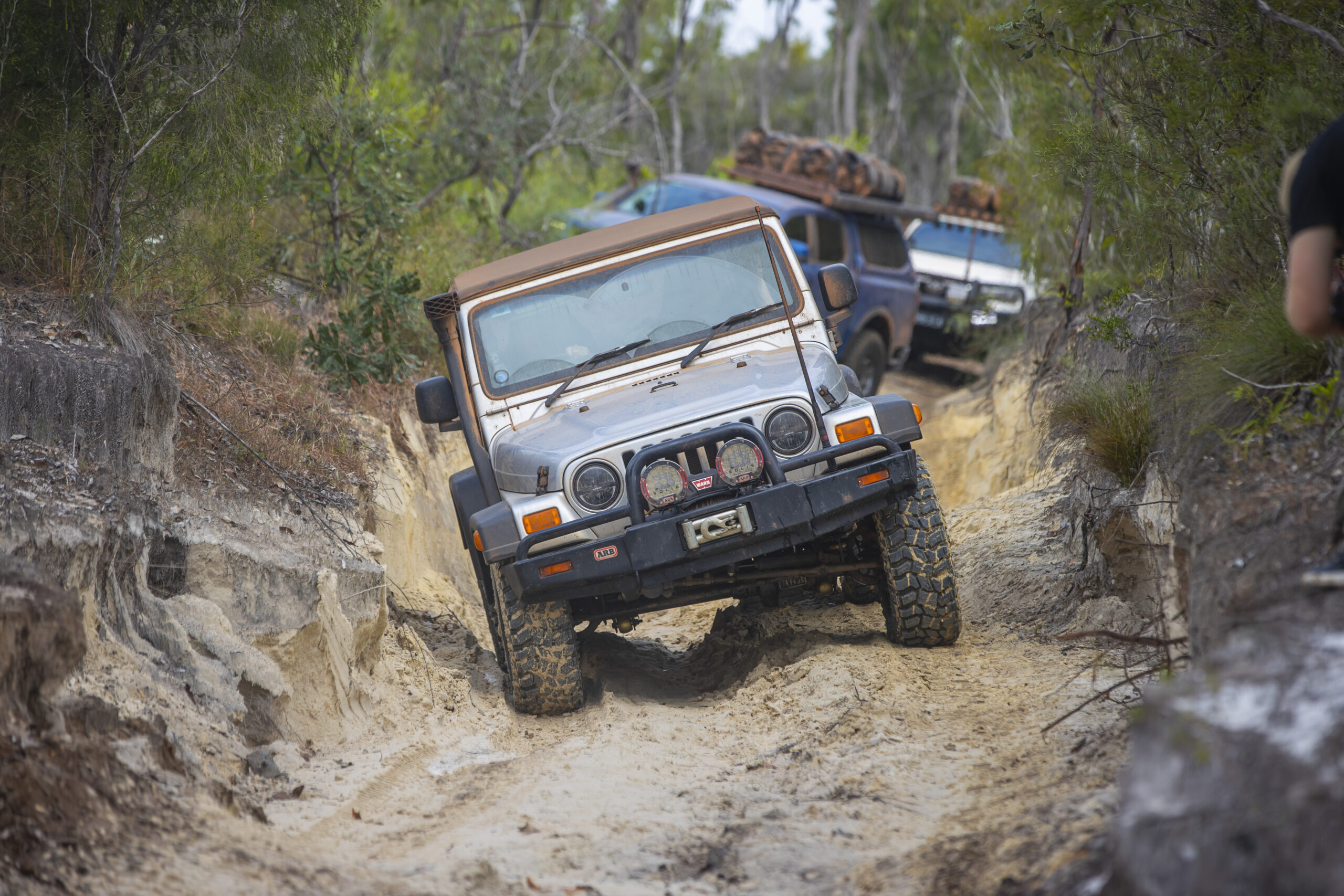
Flying into Cairns, I made my way to the ARB store, a sight to behold for most overlanders, with its showroom packed with travel and 4WD accessories, and an entire shop to install them all. Back in the garage, four fully built ARB project vehicles, including a 79-Series Land Cruiser, a 200-Series Land Cruiser, a HiLux, and a Ford Ranger awaited. All were lifted and ready to take on the mud and deep water of the Cape. In addition, two long-term ARB dealership owners were joining us in their classic 4WDs, which included a 105 Land Cruiser and a Jeep TJ Wrangler.
We laid out all the gear and started packing for nearly 10 days on the road. Anything we forgot, we would need to live without. With the trucks loaded, I was assigned to the new HiLux and set up my phone for days of podcasts and audiobooks. Give me coffee and a tome on history, and I am a happy driver. The trip north started easily enough, on a few hundred kilometers of bitumen towards Cooktown.
When Captain Cook set eyes on the east coast of Australia, he was the first European to encounter the coastline of Terra Australis Incognita. Cook used the opportunity to map the coastline in detail over four months, ultimately claiming what was known as New Holland for the British Crown, laying the foundation for future penal colonies and forever changing the lives of Australia’s First Peoples.
Cooktown was our first destination on the trip north, marked by Captain Cook’s impact with a reef and subsequent 45 days of repairs on the Endeavour River. The crew spent its longest period on shore, interacting with the Guugu Yimidhirr people and recording biological and scientific discoveries. These interactions continue to inspire legions of explorers and travelers to visit Australia, including our troop of intrepid overlanders.
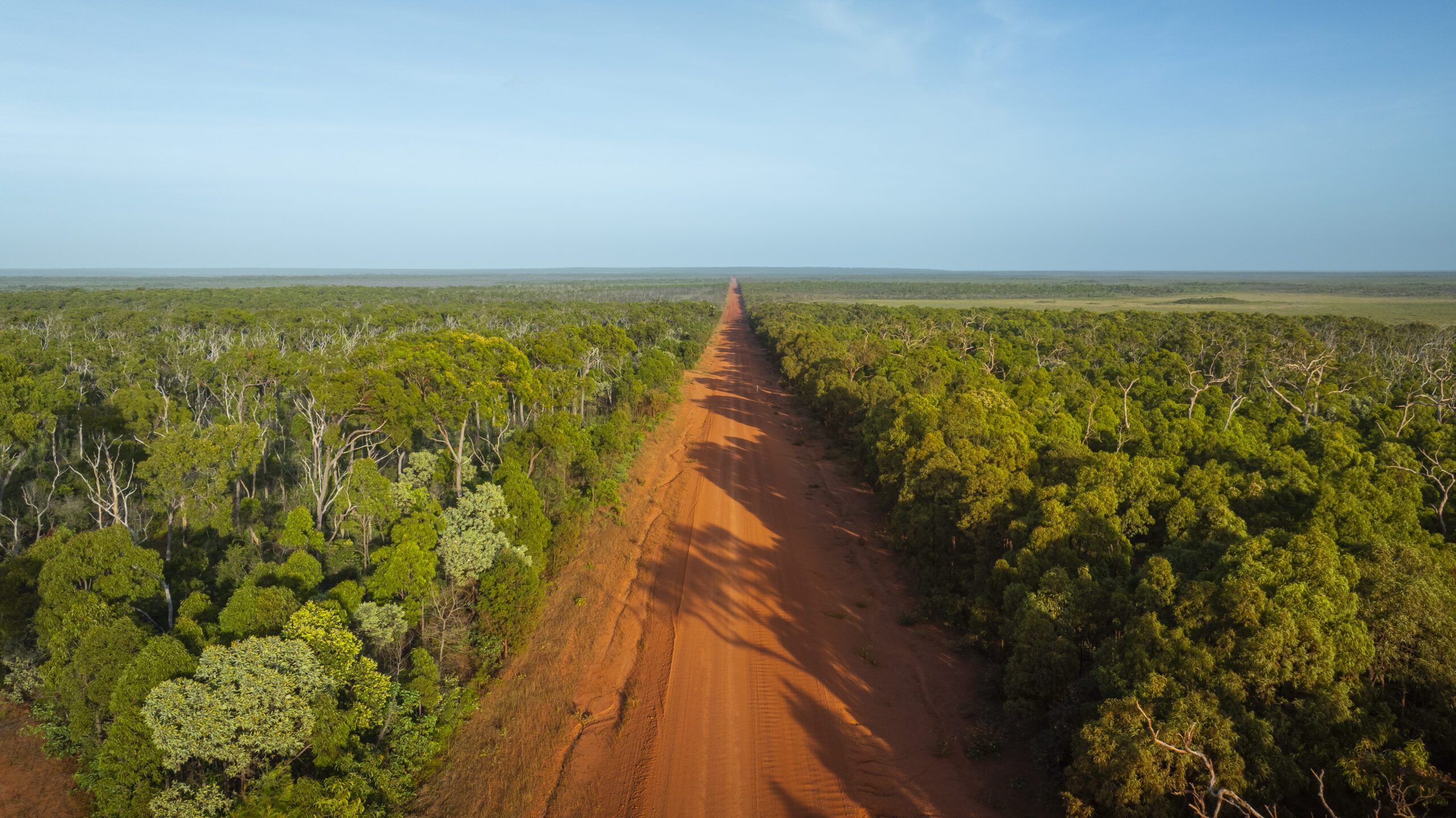
The drive along the northeast coast of Queensland did not disappoint, with its subtropical vibe, empty beaches (mostly due to crocs and jellyfish), and charming towns. At each stop, we were able to find a small bakery for a coffee and a pastry. This route ultimately reconnects with the northbound development road; it’s a few days’ slog from one remote roadhouse to another for fuel, camping, and a meal. We departed the main road at Bramwell Junction and linked up with the legendary Old Telegraph Track.
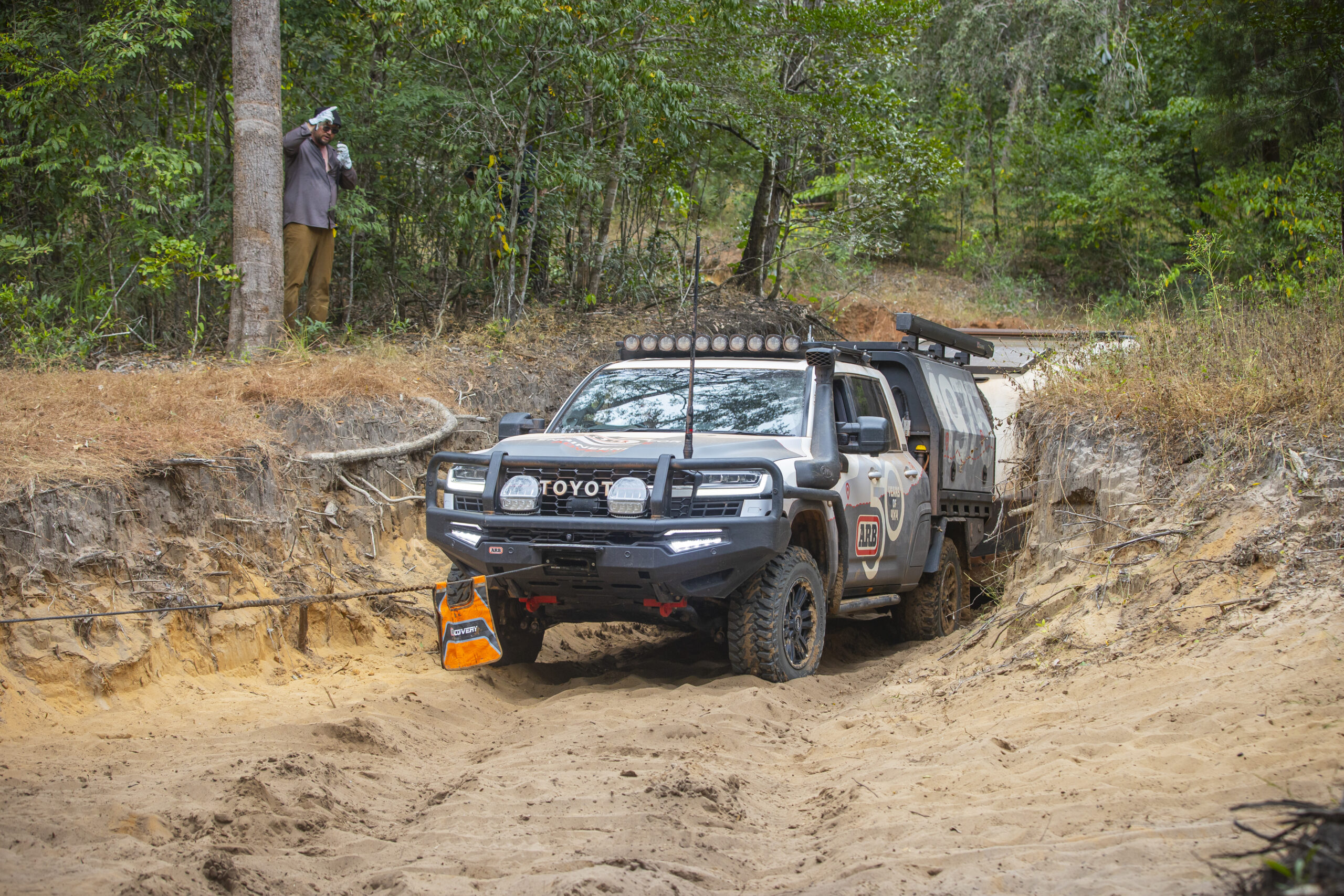
Within minutes of the station, the track degrades to a 4WD road with tight clearance between trees and muddy bogs. The lead 70 Series on portal axles with 37-inch tires was stuck by the second hole. The driver’s side rear had dug deep against an earthen ledge, sending the passenger-side front end skyward—the entire Toyota kept from rolling by the back corner of the Mits Alloy tray. The team jumped into action, pulling the winch line and further stabilizing the VDJ79. The Warn winch strained against the stiction, abrupt ledge, and weight of the Toyota before finally pulling it free. Would this quagmire serve as an omen for things to come?
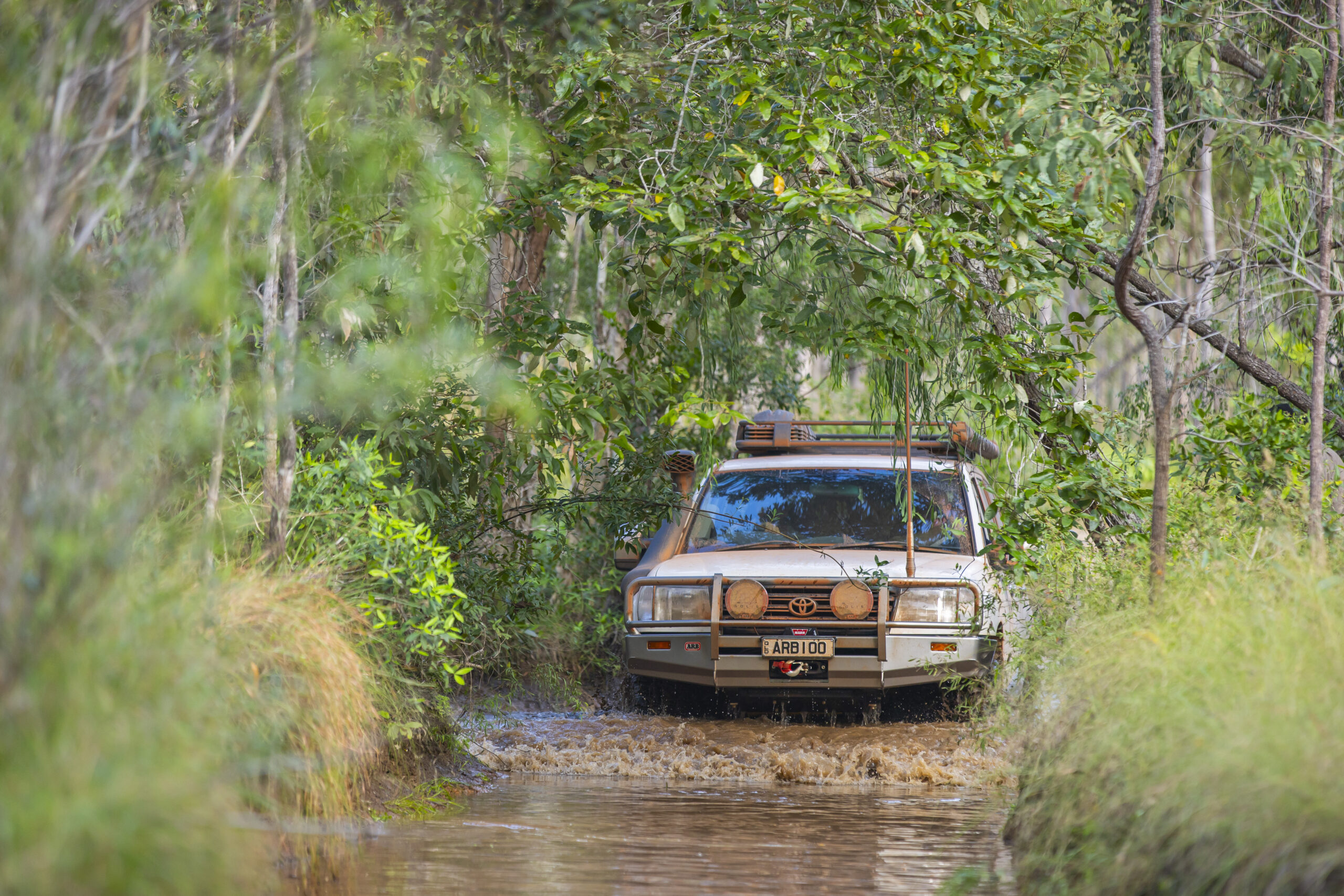
With some trepidation, we continued forward, dropping into one water hole, creek, or bog after another, but we were making progress. The water crossing at Palm Creek was our next challenge, with spotters wading into the crocodile-infested waters to find the deep holes, sand traps, and hidden rocks. The drivers dropped in one by one, heeding the precise instructions as water surged over the hoods, followed by a steep exit climb on wet tires. Locking the rear axle of my HiLux, the truck clambered up the shelf, even dragging the skid plate briefly on the deep ruts.
At Cockatoo Creek, the stretched 300-Series Land Cruiser dropped into a long mud bog and quickly mired to the middle of the doors. With the water slowly rising in the cab, Lachlan coordinated the recovery effort from behind the wheel, spooling out the winch and locking all three differentials. The stuck scenario was exacerbated by the Earth Camper trailer hitched to the back, creating a 5-metric-ton anchor. Within minutes, the Land Cruiser was slowly moving forward, the gentle rocking of the wheel and turning of the tires aiding the truck out of the ruts. Once out of the bog, Lachlan opened the door, and we all watched the water pour from the footwells. Fortunately, the 300 continued to run, though with a few more warning lights decorating the dashboard.
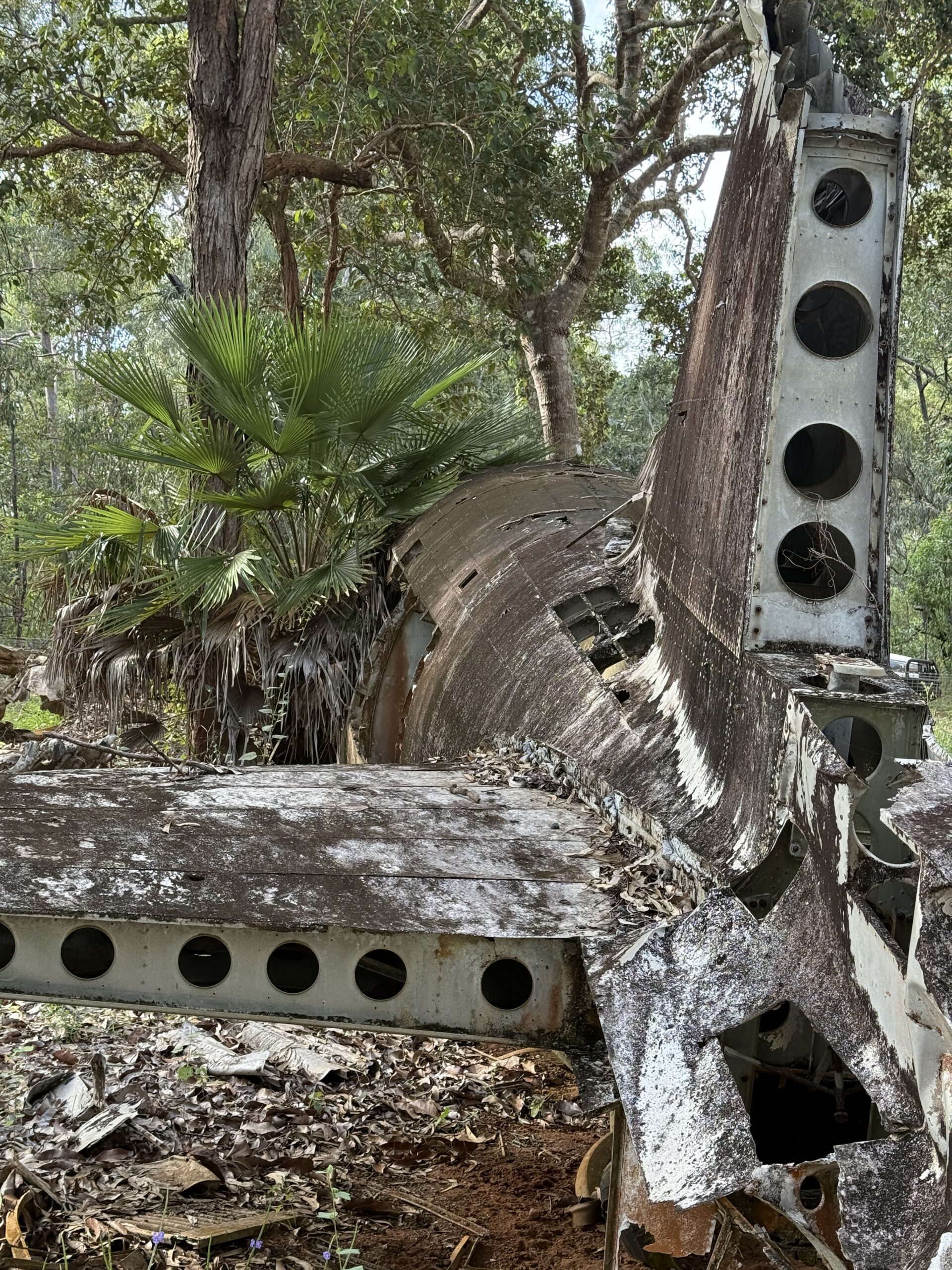
The Overland Telegraph Line was a series of communication projects that crossed the great deserts and, in the case of Cape York, extended to the country’s northernmost point. The 1883 survey of the Cape York Peninsula was only the fourth expedition by land to the northern tip, but it served to link Brisbane to this northern outpost and, ultimately, to the rest of the world. Eight telegraph stations linked communications. After over 100 years of service, the line was eventually replaced by microwave transmission in 1987.
Along the route, I encountered numerous galvanized steel poles that were 140 years old, although most of the wire and insulators were long since pilfered. The determination of the early Australians was humbling, as they undertook extreme endeavors to explore and develop the country. We made a few camps along the way, which added context to the plight of the assigned lineman workers, who often lived for months at a time in the humid, remote conditions. We had the advantage of roof tents, refrigerators, and advanced navigation tools.
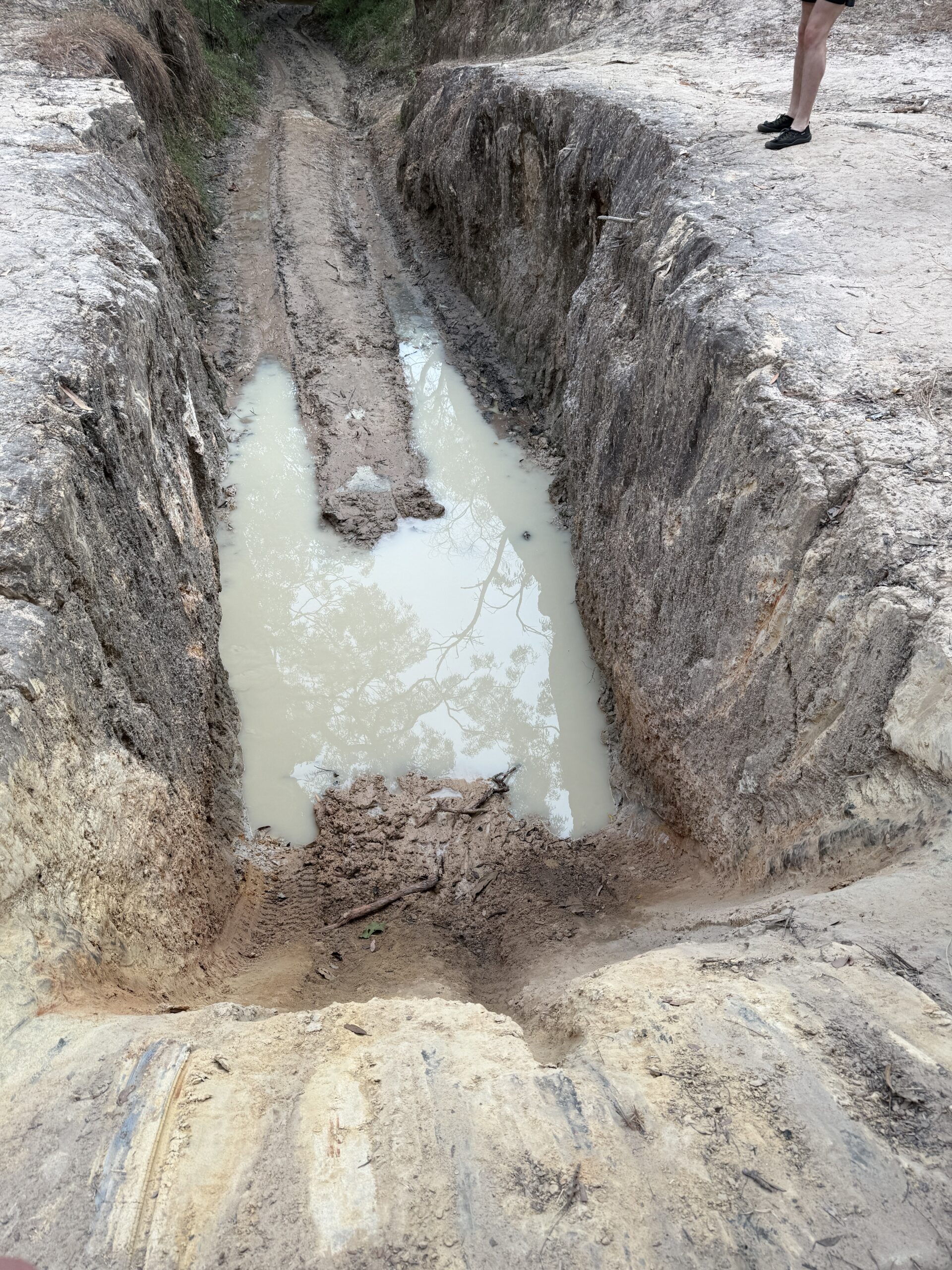
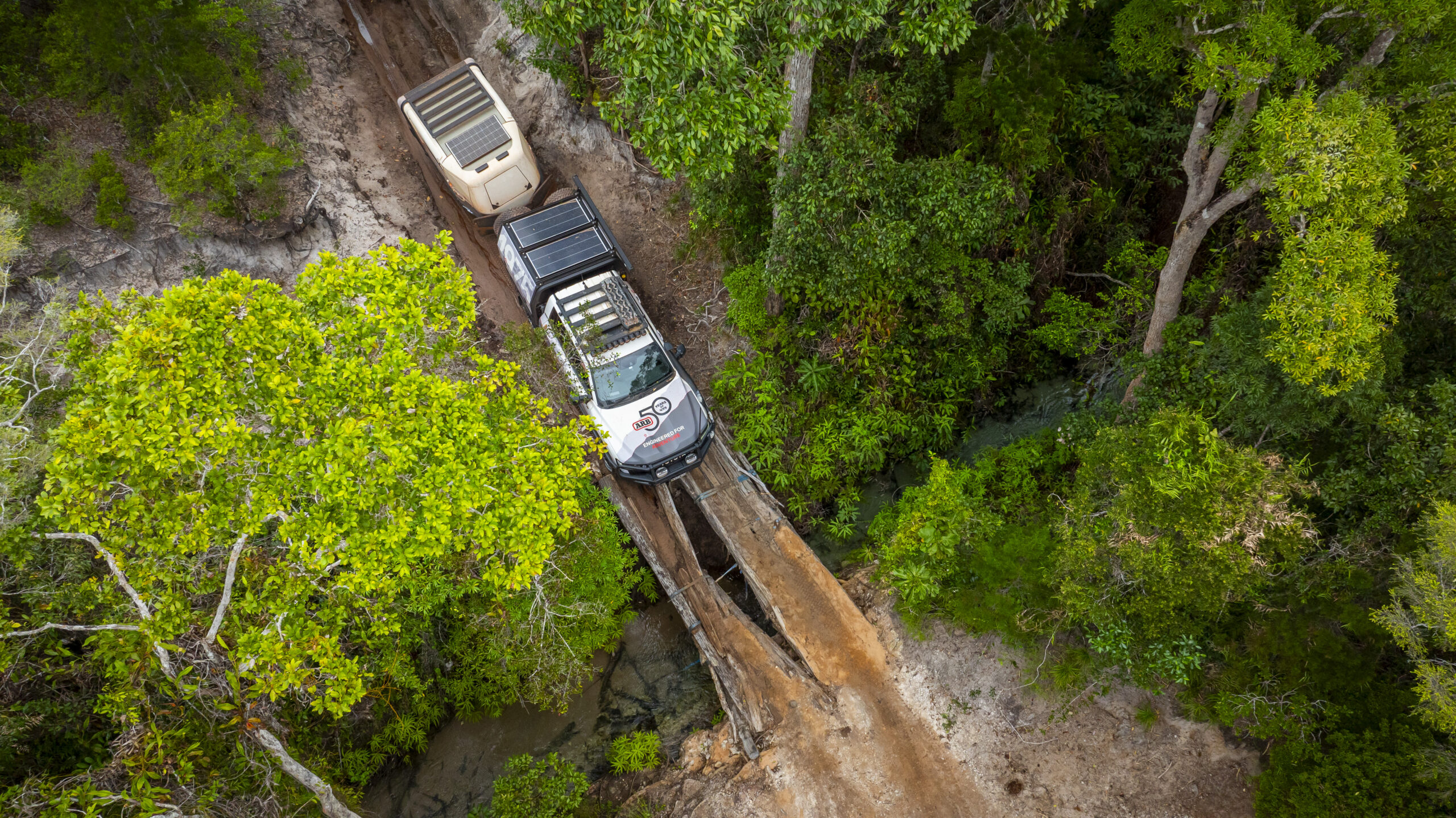
Another challenging crossing was Cypress Creek, which combined deep cross-axle obstacles with a steep drop in and slick mud. There were several dramatic wheel lifts, and the trailer needed to be gingerly brought down to ensure the top of the camper didn’t impact the canopy of the tray bed on the 300 Series. It was extremely tight, but it worked. We staged the 79 Series to help pull the 300 free once it dug into the axle grease mud. With that obstacle complete, we continued to the hand-lashed Cypress Creek Bridge, which looked like something straight out of the Camel Trophy.
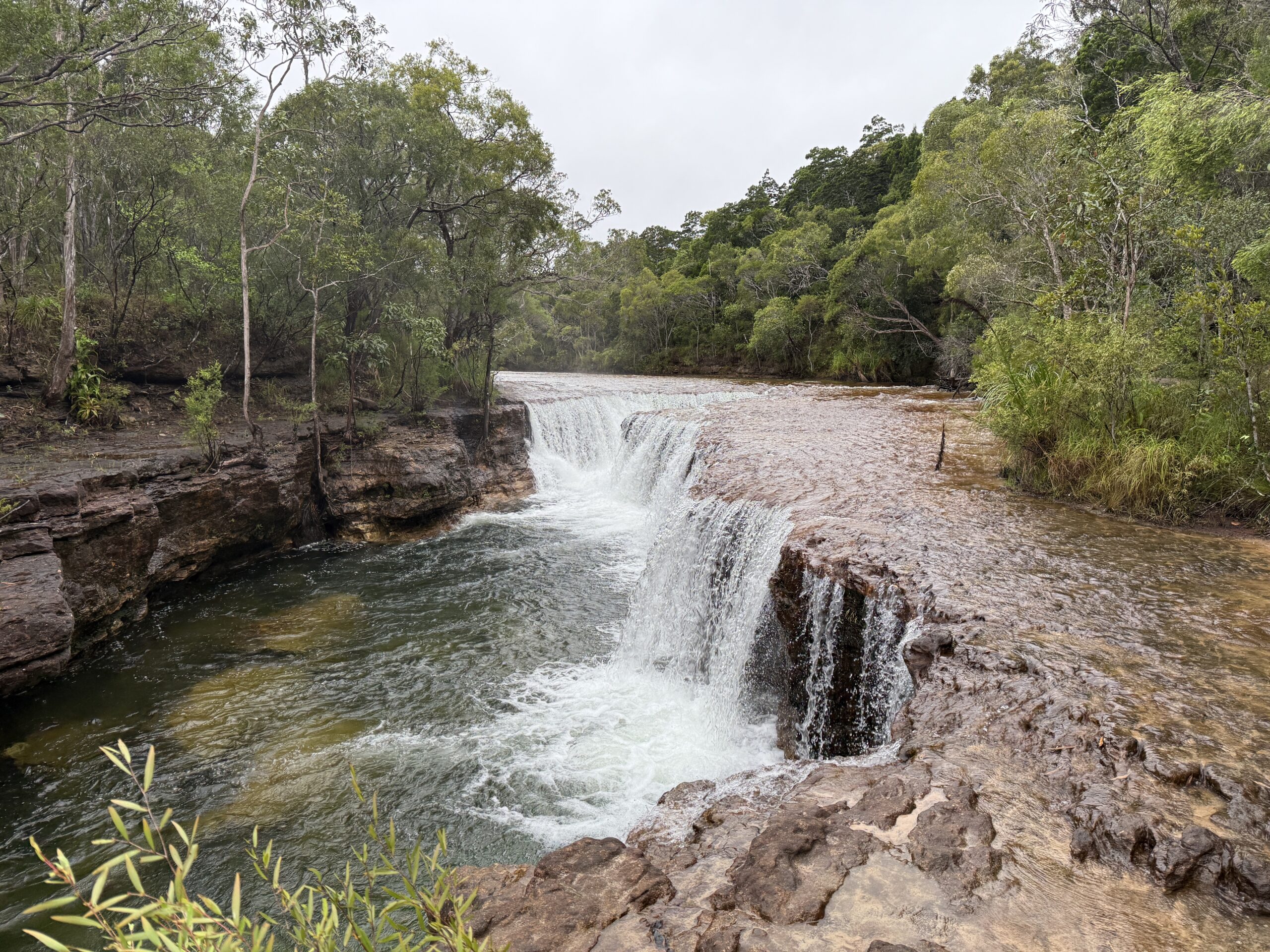
With these obstacles out of the way, we made camp at Eliot Falls and took an early morning hike to the crystal clear pools and rushing waterfalls. A few areas seemed safe to dip my toes in, although I never stopped scanning the water for crocodiles. The morning also brought the anticipation of the last major obstacle, the water crossing at Nolan’s Creek.
The crossing is infamous for drowning engines and wrecking egos, and our day would be no different. On our approach, we encountered an older gentleman who had crossed the river solo in his Nissan and damaged the motor. He had been in camp for nearly a week attempting repairs. The same day, we crossed a father and son who attempted the route without a snorkel and hydrolocked their rental Ranger. We all sat with anticipation, wondering how our team would fare.
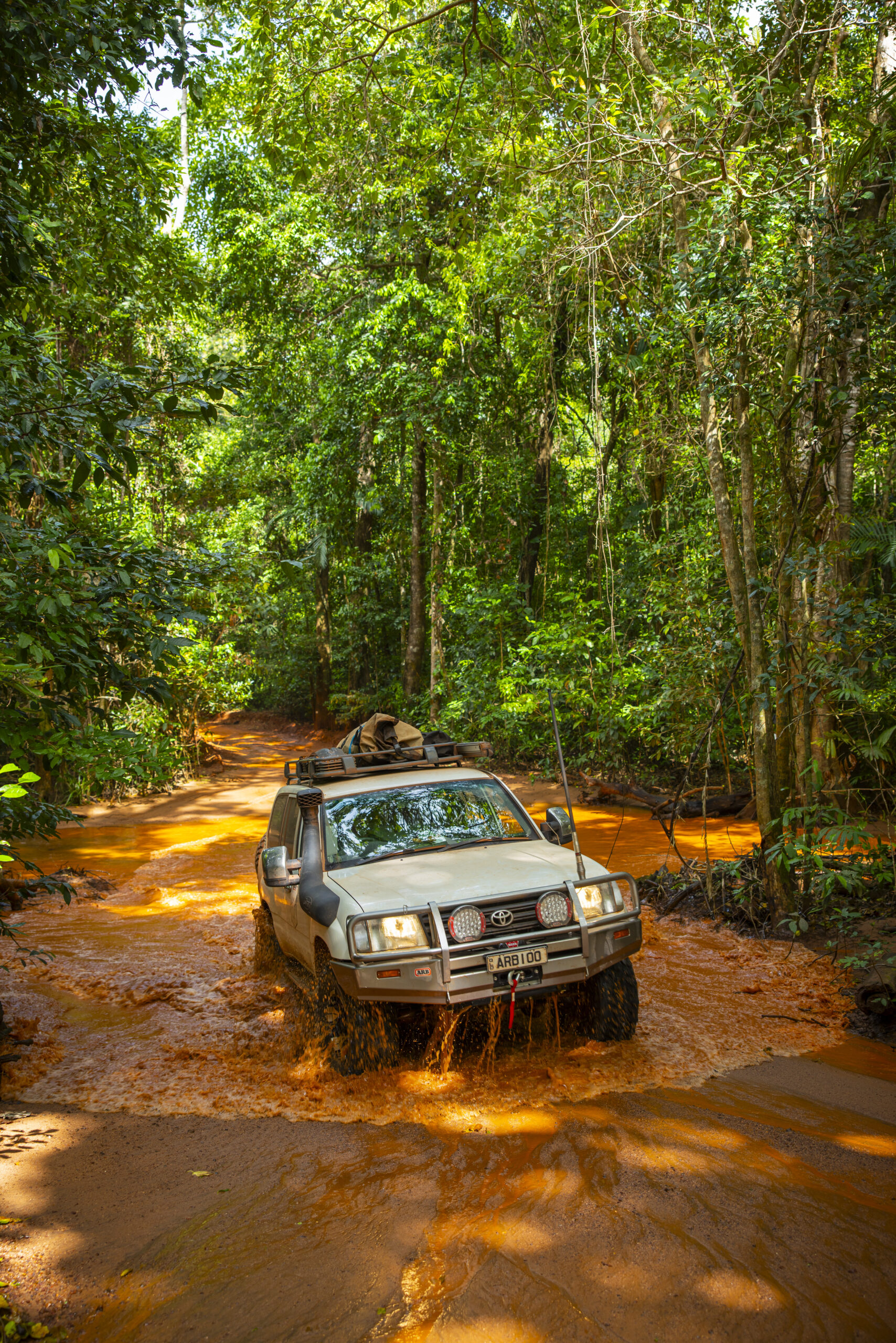
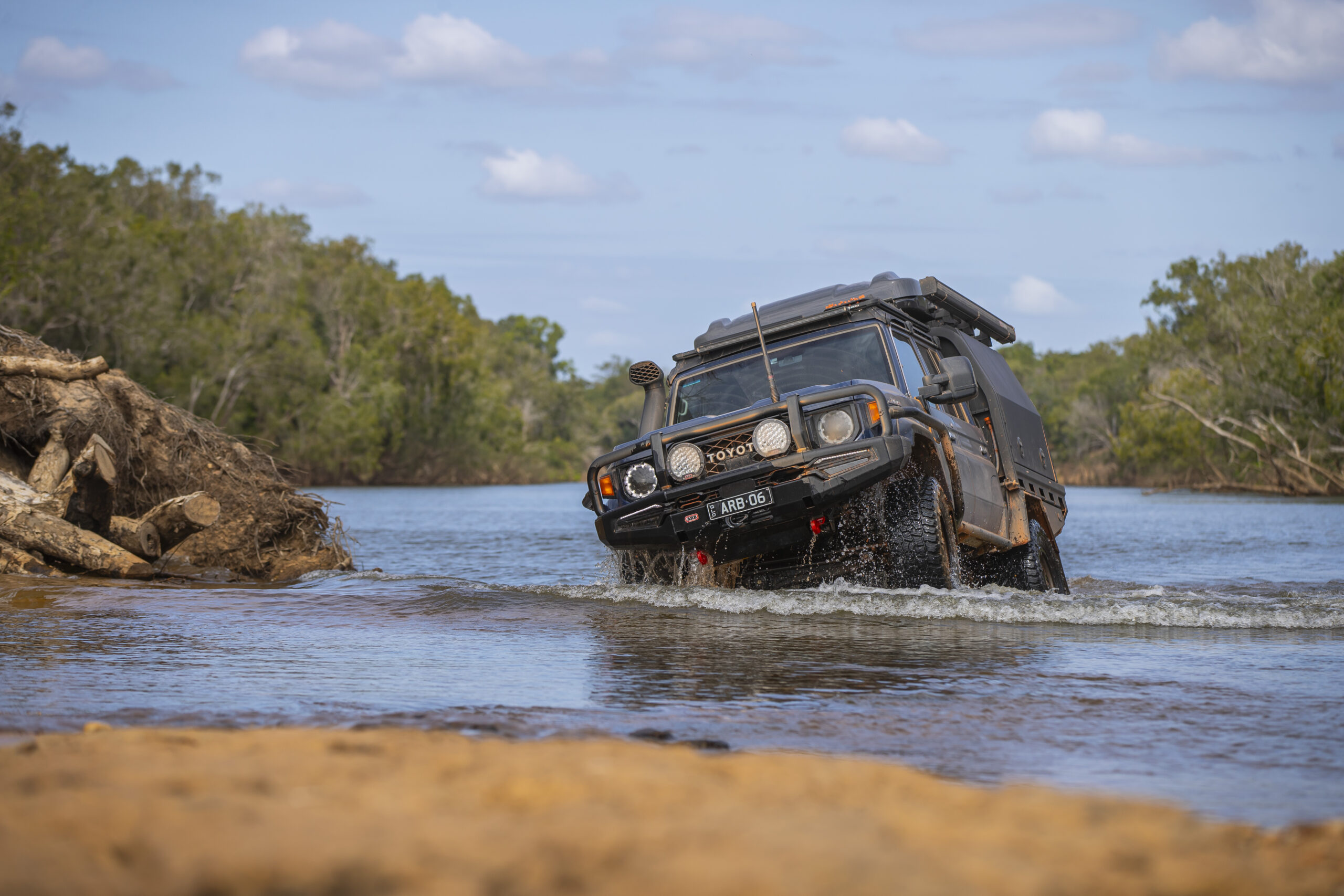
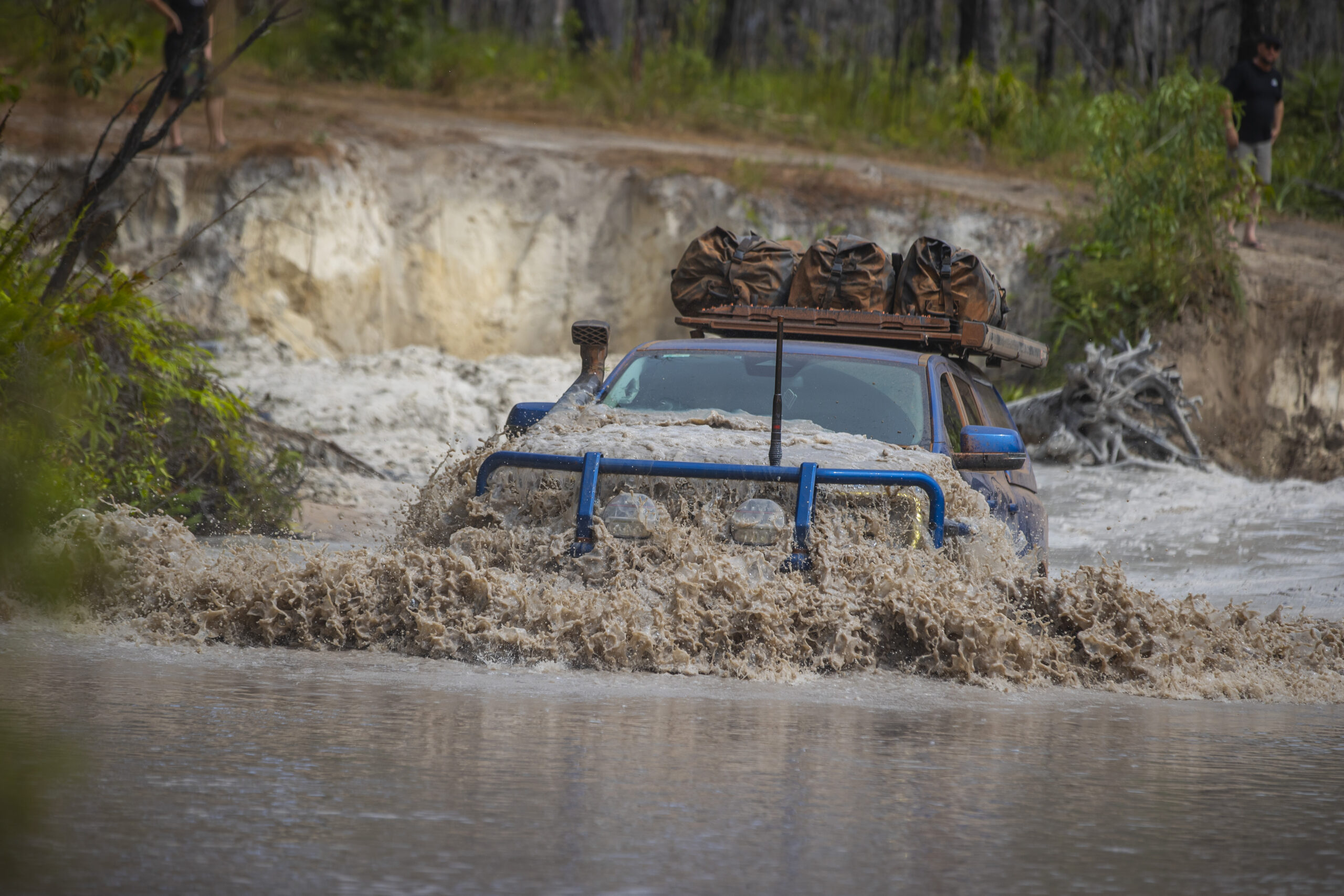
We were lucky to have several veteran Old Telegraph Track veterans along, but it didn’t help our confidence knowing that each of them had drowned a vehicle before in the crossing. I would drive the 79 Series across the river, preparing the truck by lowering the PSI to 8 in the front tires and 10 in the rear. In general, the Land Cruiser is taller than other vehicles, so the snorkel sat at nearly 7 feet in the air. When the nose dropped into the hole, I applied a steady throttle, the front tires churning slowly through the soft sand as water rose above the hood, and then came crashing against the windscreen. The weight of the Toyota kept it planted and clawing forward through the deepest section before climbing up the sandbar and to the opposite bank. I could only reply to the screaming spectators with, “You gotta love a Toyota.”
Last to cross was Steve with the Jeep Wrangler—the lowest in the group and the only one with a petrol motor. He is a good driver and has a lot of experience with the track, but the vehicle was the most likely to float or hydrolock. Immediately upon entering the hole, the Jeep leveled out and started to float, slowly drifting downstream. Steve kept the tires turning, but there was no grip, and even though the Jeep was slowly sinking, it wasn’t fast enough to let the tires hook up. In a stroke of genius, Lachlan (one of the spotters in the water) grabbed the front bull bar and pulled the Jeep toward the sandbar by hand. Like a boat pulled to the dock, the Jeep slowly progressed and exited the hole. It was a small miracle that it didn’t hydrolock, but the entire body tub was filled with water.
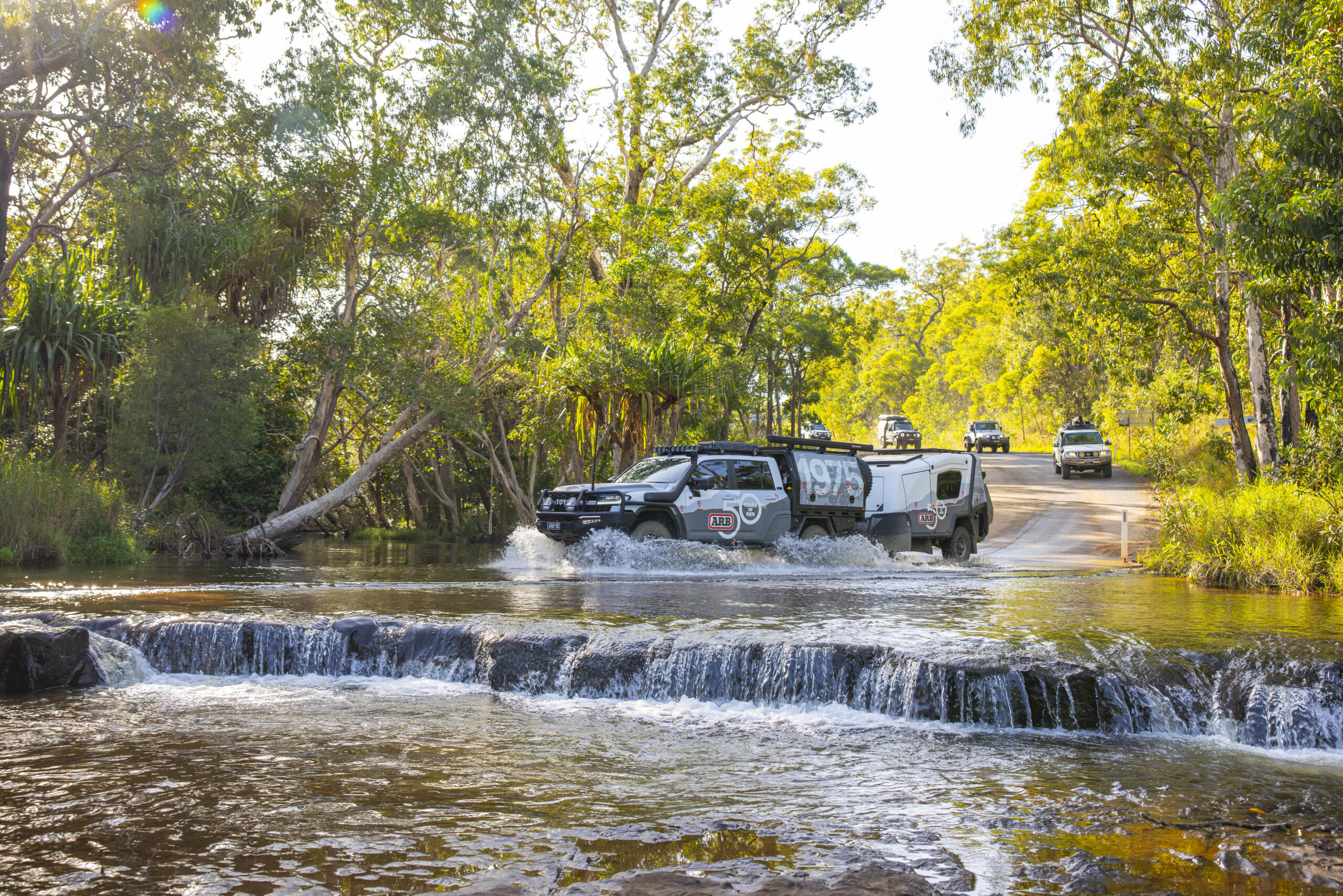
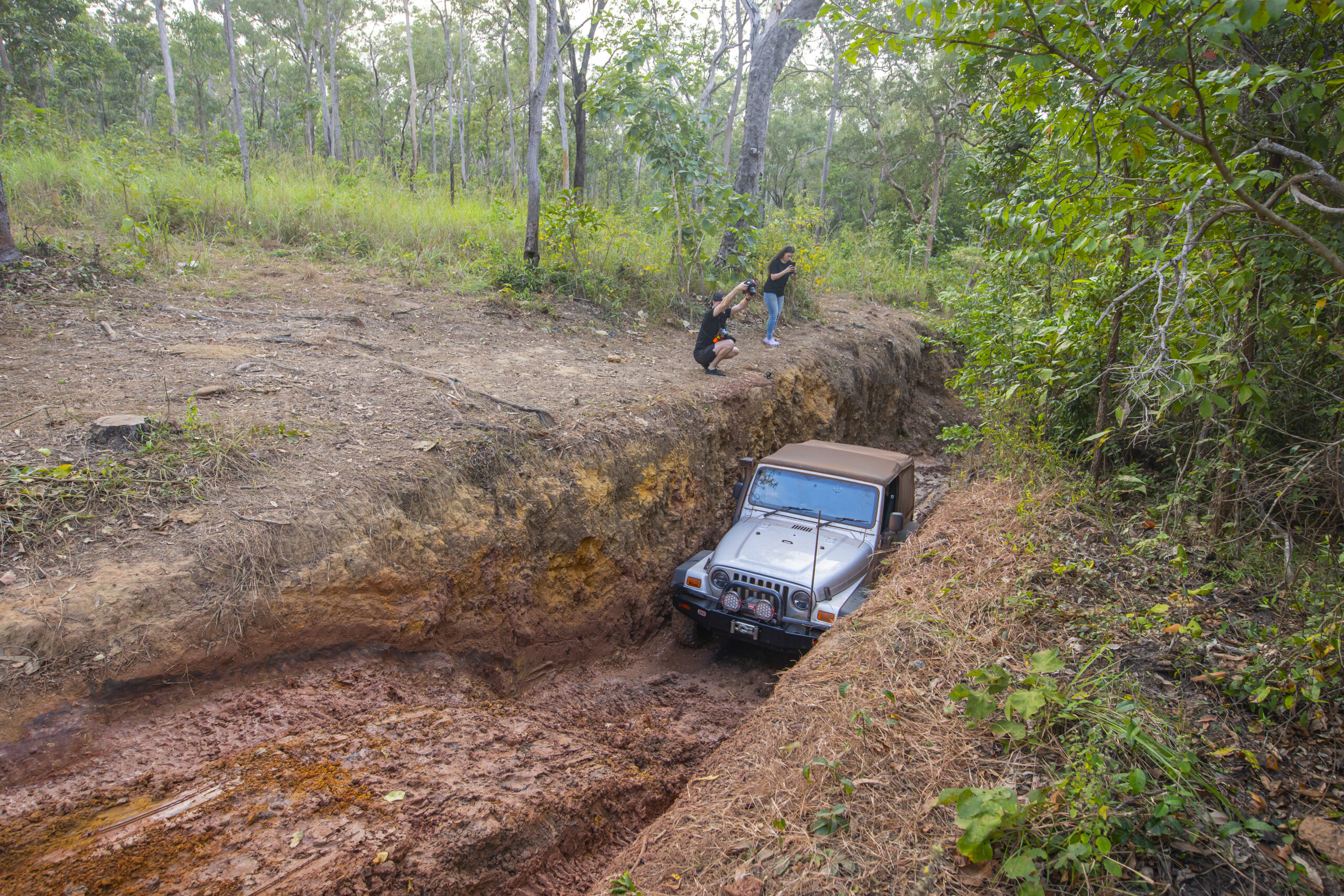
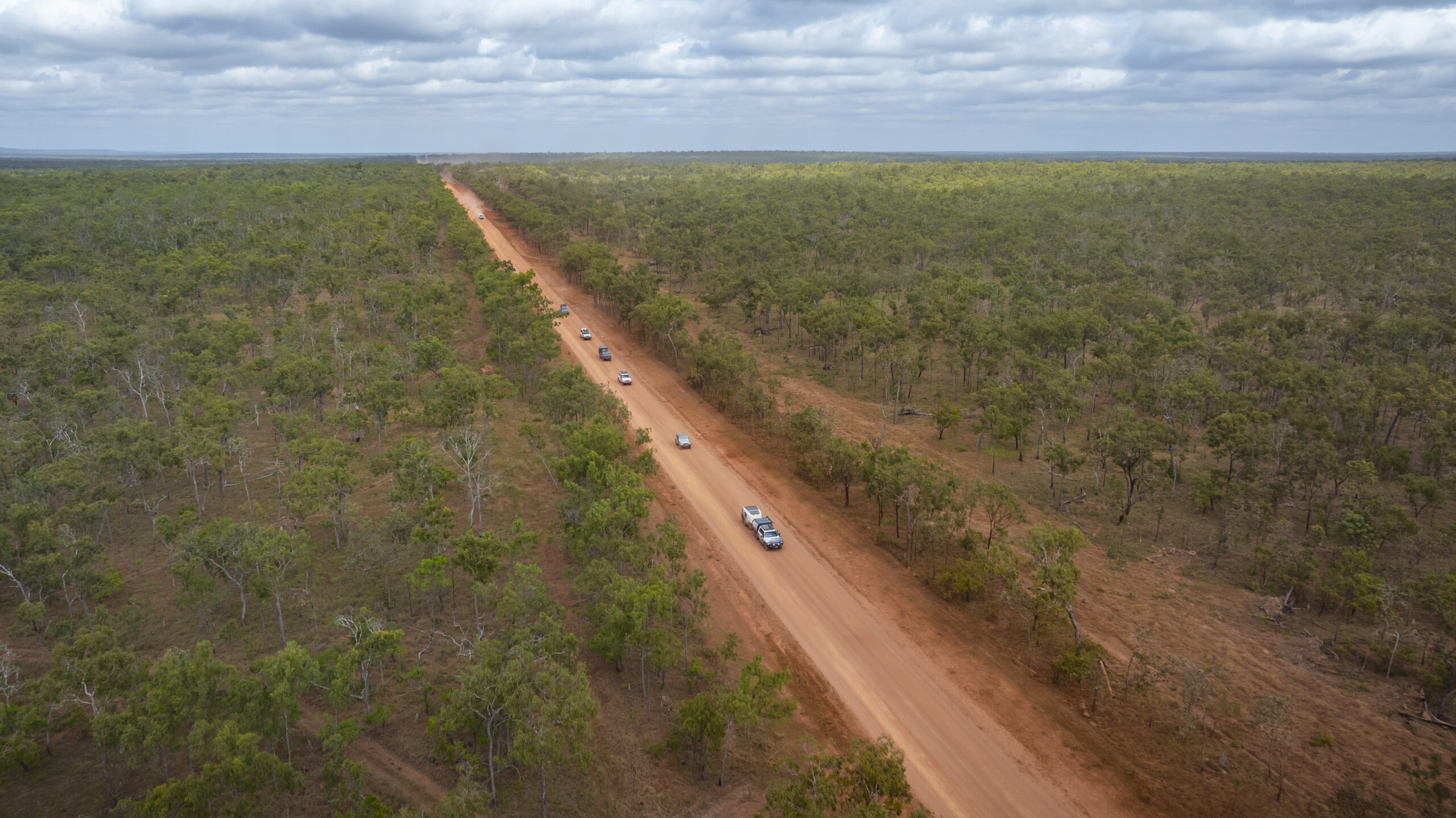
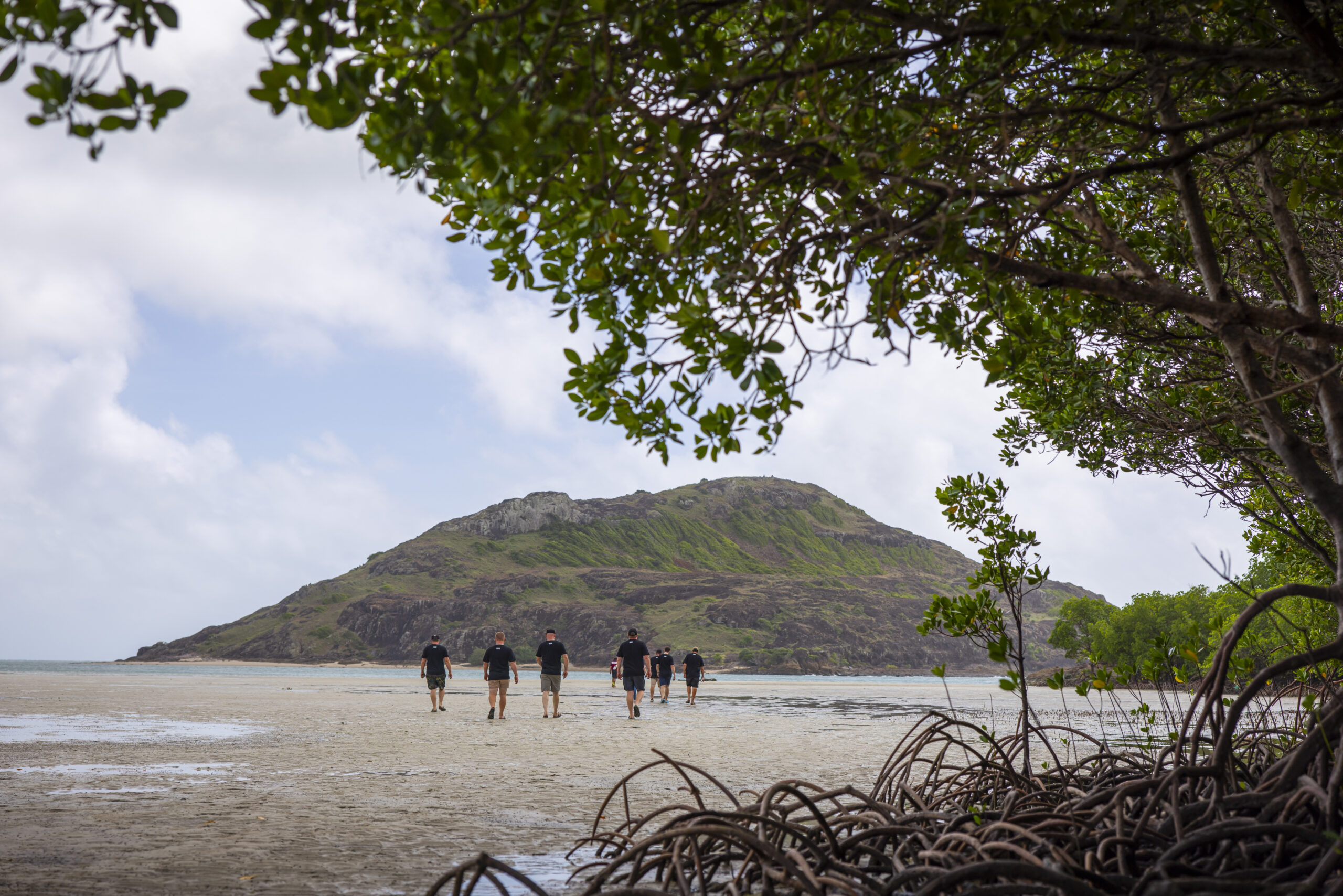
It took several hours to regroup, dry out the vehicles, and prep for departure. It felt like a celebration, enhanced by the relief of having cleared a major milestone along the trip, and the anticipation of another two days of driving to reach the northern tip of Cape York and our final camp at Cable Beach. We settled into a convoy and started making the push north. It was a meaningful moment for me, finally visiting an area I had long aspired to see, while also finishing my south-to-north crossing of Australia, which started at Cockle Creek in Tasmania in 2018. This trip also celebrated ARB’s 50 years in business and its products, which have served my trips well worldwide. As I watched the sunset over Punsand Bay, I couldn’t help but reflect on Andy and Roger Brown being inspired to start their business from their own trip to Cape York five decades prior. As with most adventures, the journey seems to come full circle, and this moment was no different. Just keep an eye out for the crocs.
Editor’s Note: This article was originally published in Overland Journal’s Gear 2026 Issue.
Our No Compromise Clause: We do not accept advertorial content or allow advertising to influence our coverage, and our contributors are guaranteed editorial independence. Overland International may earn a small commission from affiliate links included in this article. We appreciate your support.
