

For almost 130 years, the automobile has been built around the fundamental assumption there would be a human inside controlling the machine.
In every vehicle ever made, that human sits behind a steering wheel, presses an accelerator to go faster, and pushes a brake pedal to slow down. They have buttons, switches, and levers to control the machine and to notify other drivers of their intentions on public roads. Even as cars have become increasingly computerized and even fully electric, that basic relationship between human and machine has stayed constant.
Until last week.
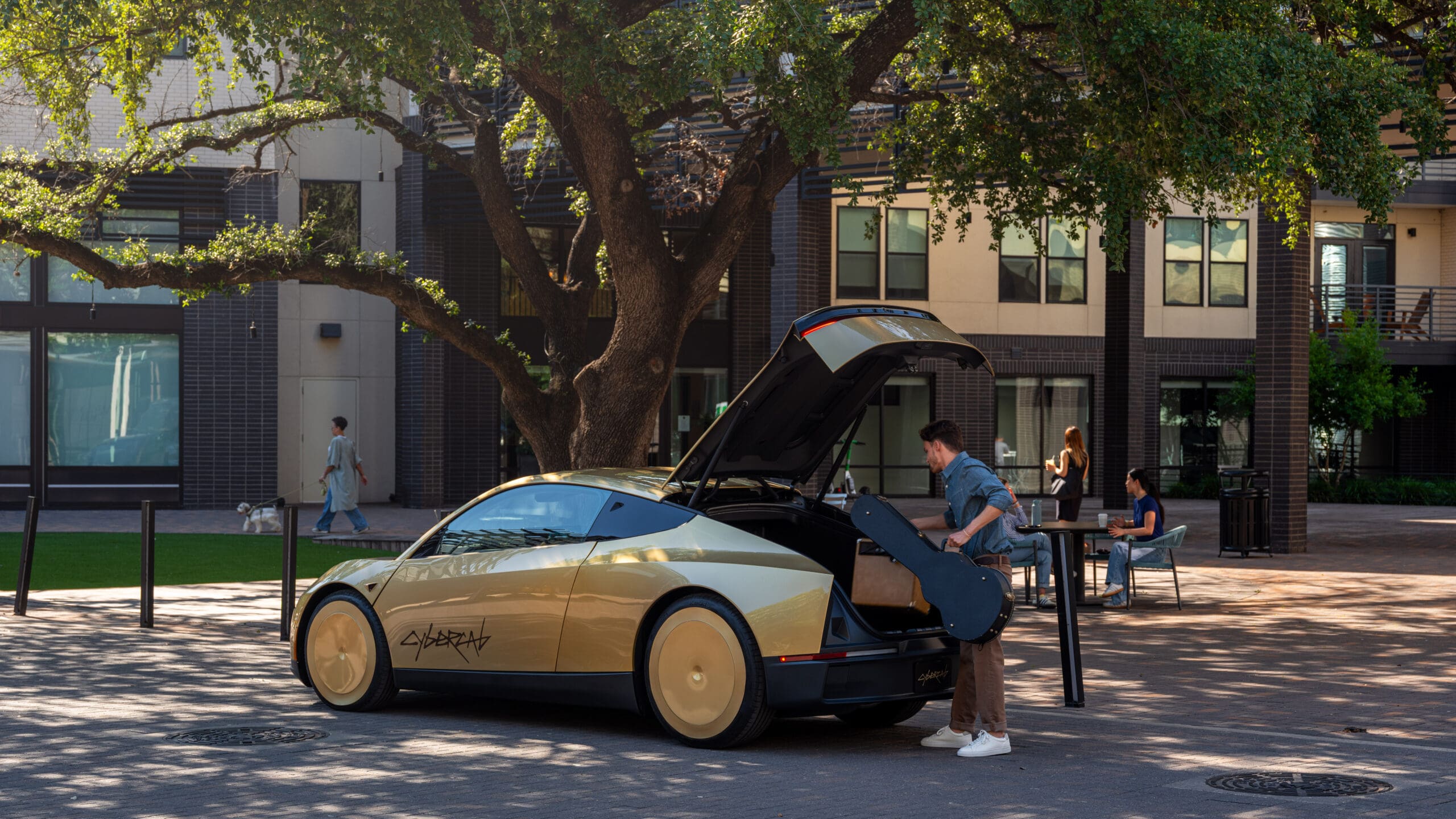
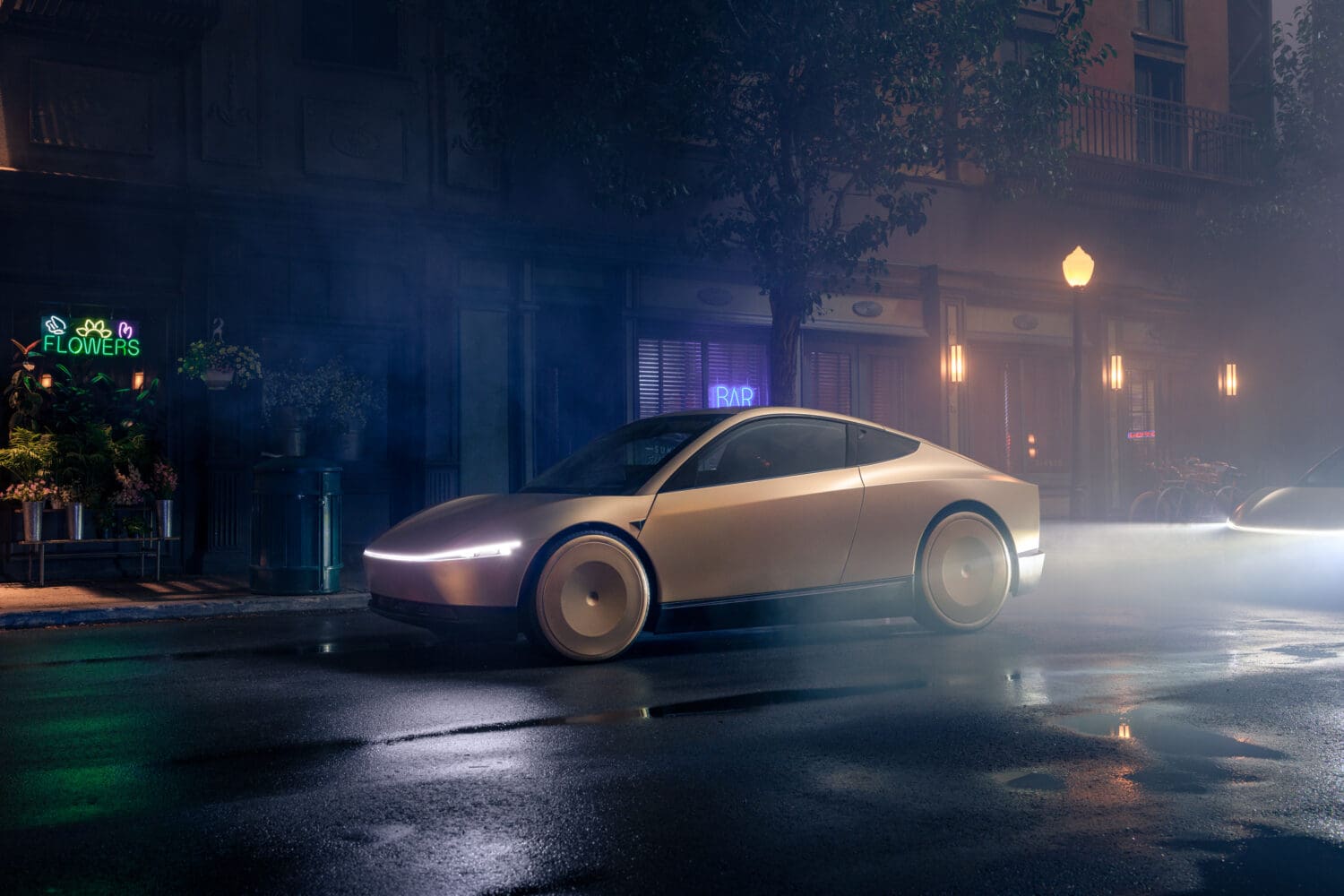
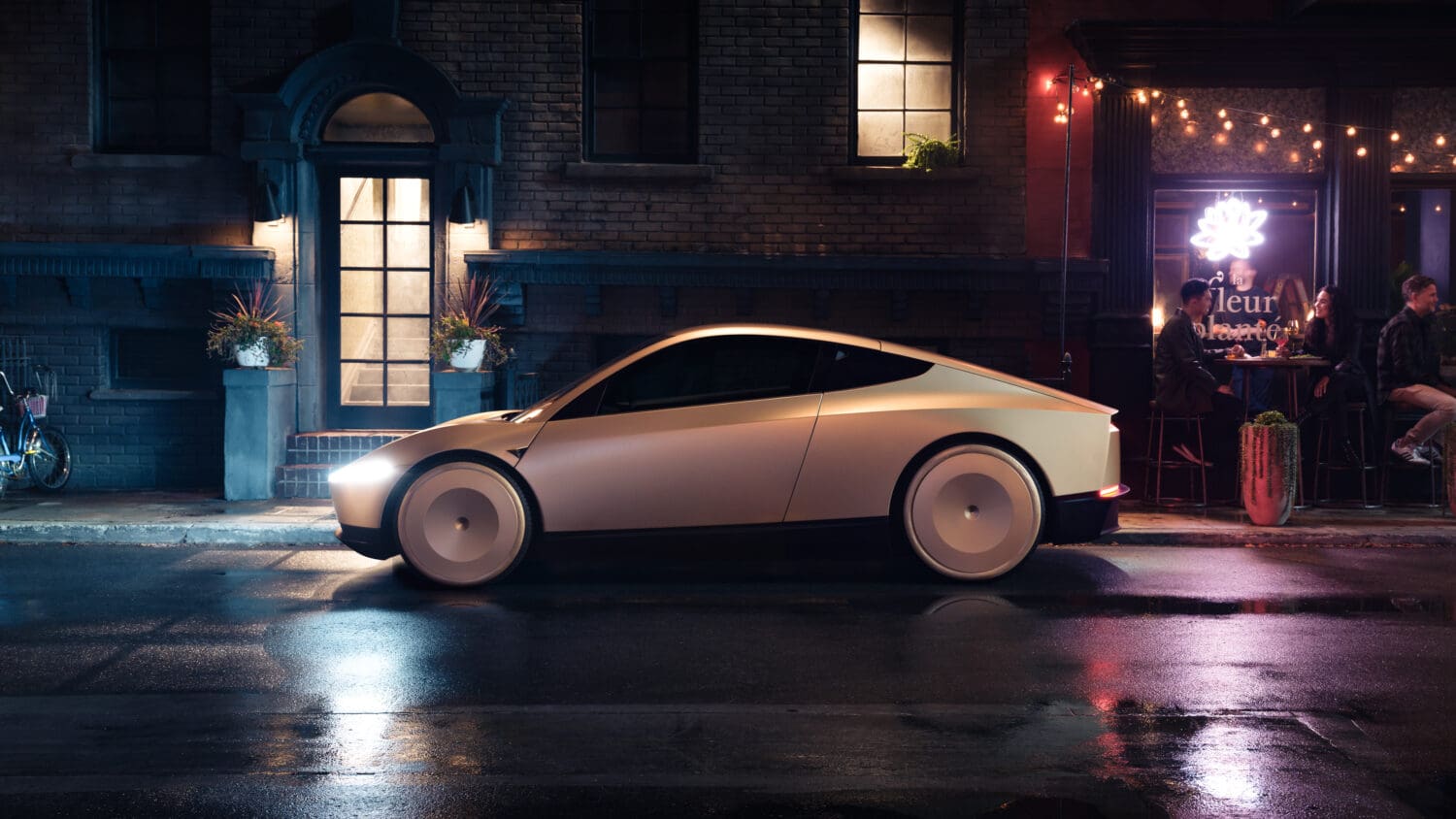
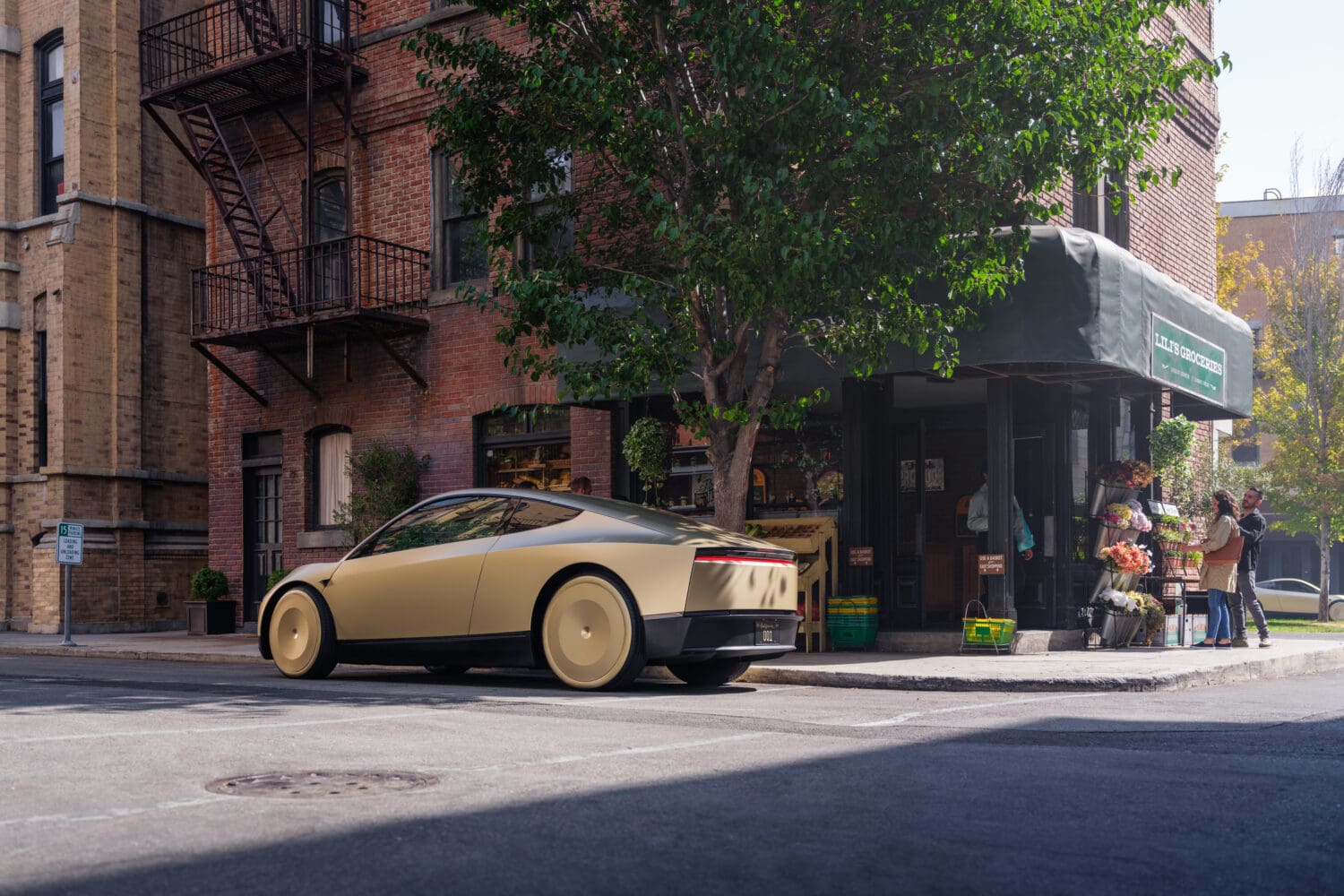
Tesla’s new Cybercab has begun carrying everyday passengers in a 288-square mile region at the core of Austin, Texas. The mind-bending part is that it is doing so without a steering wheel or any pedals. It has no turn signals or human controls of any kind. It is a two-seat fully-autonomous electric vehicle designed from the beginning to operate as a robotaxi rather than as a conventional car. As you read this, more than forty-five autonomous Cybercabs are ferrying passengers around Austin.
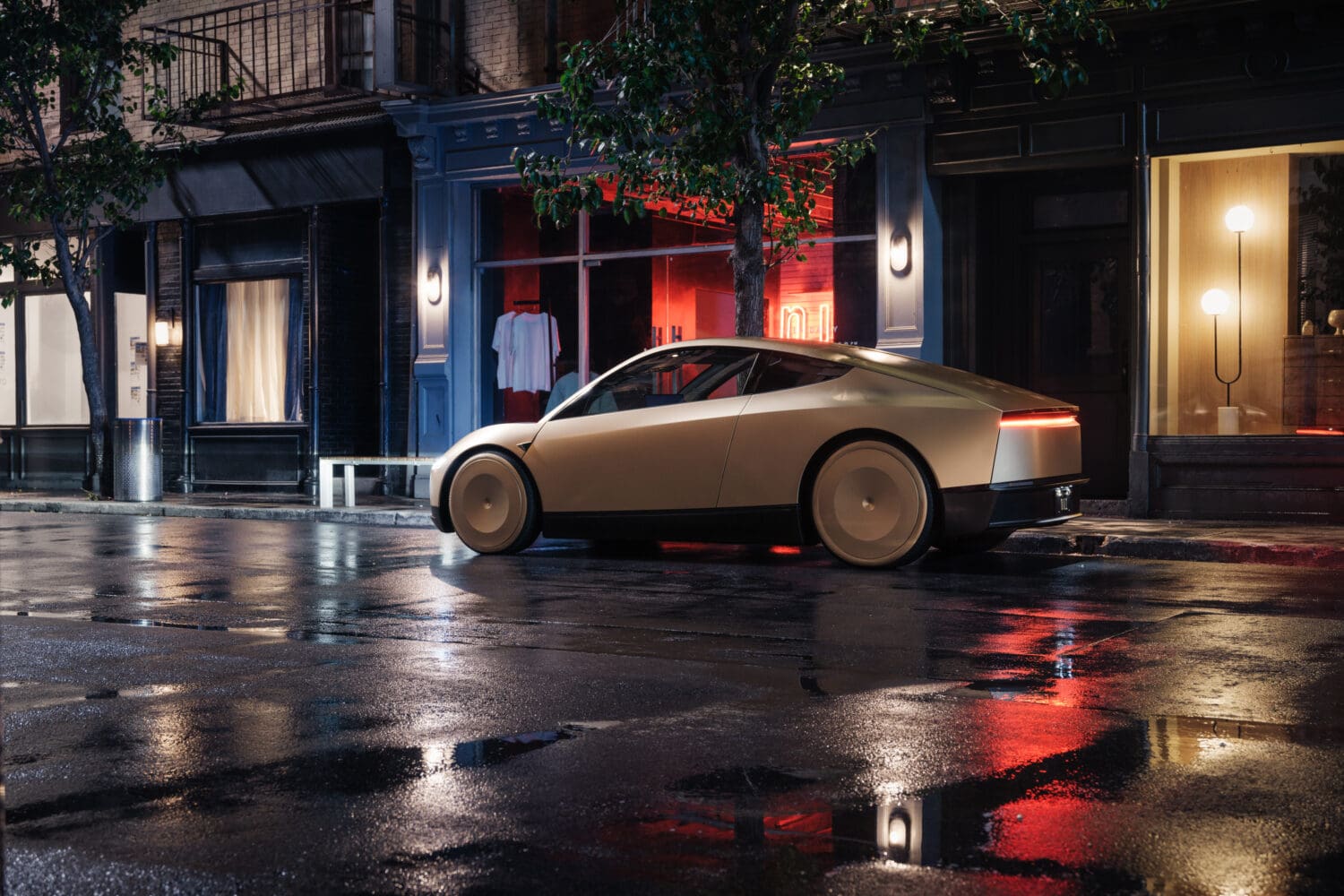
While the images in this article may look like AI renders, I can assure you this is a real vehicle driving on public roads right now, and thousands of ordinary people have already taken rides in them. While the lack of human inputs is the headline, it is just one of the tricks up the sleeve of Tesla’s latest creation.
Building a car differently
Tesla has been talking about changing the way cars are manufactured for several years, and while they’ve made incremental improvements here and there, Tesla claims the Cybercab is finally taking a massive step forward.
Perfected by Henry Ford himself, the assembly line has been the way vehicles are made at scale. It starts as a collection of empty panels and structures and finally rolls off the end as a finished automobile. This happens inside assembly buildings that are millions of square feet in size.
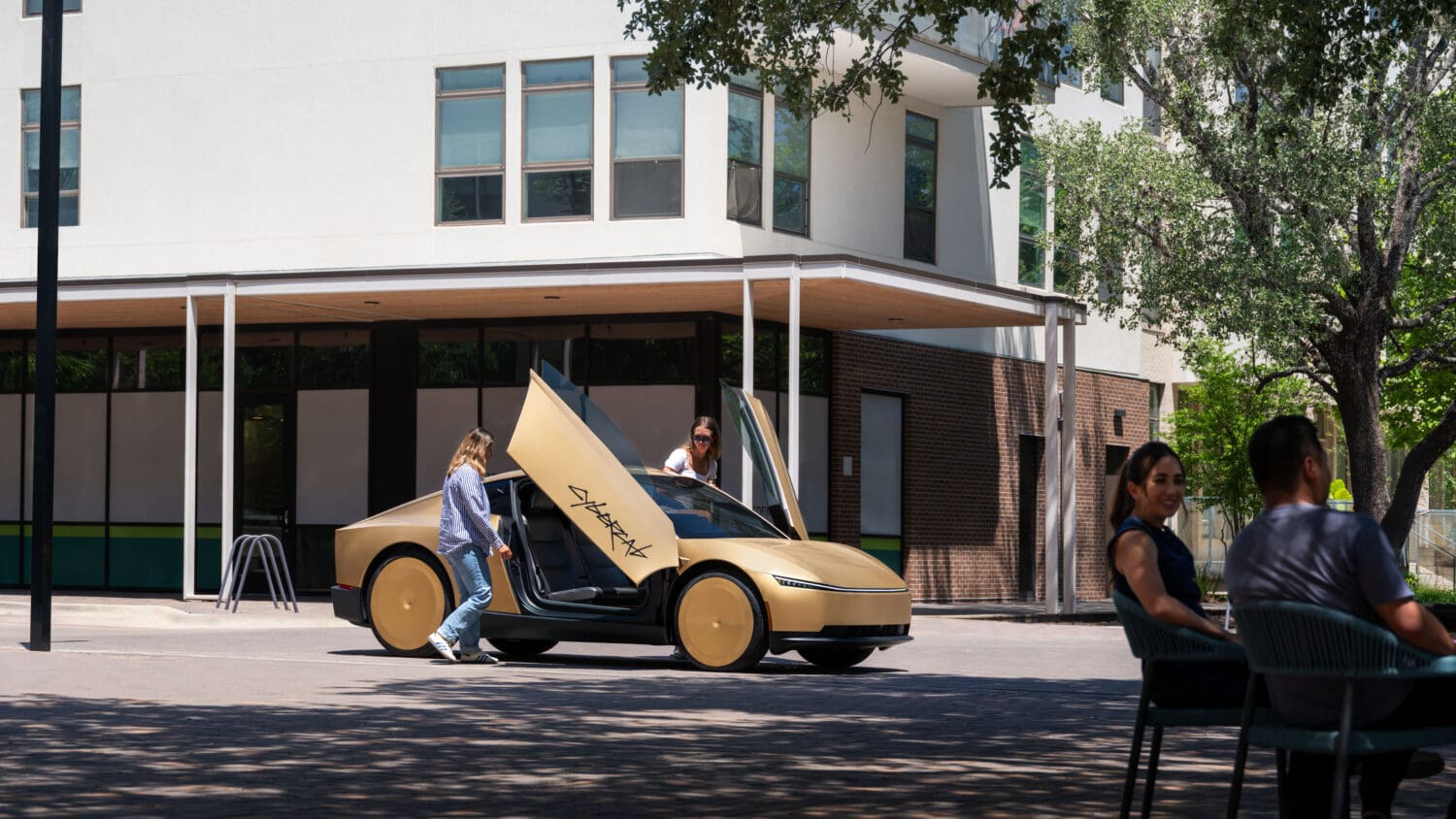
Instead of building the entire vehicle progressively along one long line, major sections of the Cybercab are built independently and brought together at the end in one final “assembly” step. Because all Cybercabs are the same color and identical trim levels, there is no need to match any given vehicle piece with any other, massively reducing complexity. Factory footprint diminishes and production times are shortened by as much as 50%, ultimately reducing cost.
Under the skin
A conventional vehicle has a surprisingly large number of components whose entire purpose is to connect the human to the machine. The steering wheel connects the driver to the steering system, pedals connect the driver to the throttle and brakes, and so on.
Not only does the Cybercab do away with these systems, it improves on what remains.
Always looking to reduce complexity, Tesla have done away with conventional hydraulic brakes that require fluid, lines, a master cylinder, and maintenance. Much like its larger cousin the Cybertruck, Tesla have once again opted to use a 48 volt architecture for the low voltage side of the vehicle. That means everything in the vehicle that traditionally runs on 12 volts now runs on 48 volts. The upshot is electrical current can be reduced by a factor of four, using much thinner and lighter wiring harnesses and increased efficiency.
On the interior, reports say it feels less like a car and more like a comfortable two seater couch with a giant TV. Because there is no driver position, both seats are simply passenger seats, and neither is more important than the other. There is also no glove box, and in a change from Tesla’s normal formula, no front trunk. Cargo can only be stowed in the rear trunk, which provides just over 20 cubic feet of storage.
Designed for hundreds of thousands of miles of near continuous operation in a massive taxi fleet, many of the traditional wear or trouble items in a regular vehicle simply don’t exist on the Cybercab. The traditional list of recommend spares for a long overland expedition simply do not apply to this vehicle. Instead of making the car easier for a human mechanic to understand and repair on the side of the road, Tesla is attempting to eliminate as many mechanical systems as possible and replace them with electronically controlled systems that can be monitored and managed by software.
Will that actually make it more reliable? Only time will tell.
I certainly don’t expect the Cybercab to replace the Wrangler, Land Cruiser, or Bronco anytime soon. However, I do think it’s only a matter of time before some (or all) of Tesla’s design and manufacturing ideas show up in those vehicles.
What Regulations?
After just a single evening of operations, The National Highway Traffic Safety Administration (NHTSA) opened an investigation into Tesla’s self-certification of the Cybercab as a road-legal vehicle. The agency is examining whether Tesla properly determined that certain federal safety standards did not apply to a vehicle that lacks conventional human controls. Because no human is driving it, the vehicle has no rearview mirrors. It has no stalk for turn signals, and no way to move it into drive or reverse. These things have always been required by NHTSA for a road-going vehicle, and now Tesla are challenging those assumptions.
If a vehicle has no driver, what should the regulations require?
What About Overlanding?
This is where the Cybercab becomes personally interesting to me. I’ve spent a couple of decades driving to the most remote corners of five continents around the globe. After spending three years travelling around Africa, I know just how much of an overland journey is actually spent driving. There were plenty of days when driving is the adventure, and I loved every minute. There were also more days than I can count where it was simply work, and it was an exhausting grind.
After eight or ten hours behind the wheel, watching potholes, livestock, motorcycles, pedestrians, and everything else that can appear in front of a vehicle, the idea of simply sitting back and looking out the window becomes more than a little tempting.
Imagine crossing a huge desert landscape while being able to look around rather than constantly watching the road.
Imagine being able to take photographs while moving.
Imagine traveling through a spectacular mountain range and actually being able to watch it instead of concentrating on every bend.
While there will be a lot of arguments about when this technology will be reliable to actually drive anywhere on the planet in any weather, my software engineering background has me firmly believing it’s only a matter of when, not if. It might be five years, ten, or even twenty, but I have no doubt it is coming.
If we assume the technology will actually work reliably one day, it could make long distance travel much less stressful, but I don’t think it would ever be my cup of tea. Part of the appeal of traveling around the world in my own vehicle is the connection I feel between man and machine. I learn how the vehicle sounds, what the tires are doing, and every little creak and groan. I feel the suspension articulate under me while crawling in and out of washouts, and I feel engine revs climb faster than road speed when I break traction on loose gravel.
For me, that connection is a big part of the adventure.
But I have to acknowledge I grew up in the era of the internal combustion engine automobile, and I’m a bit of a petrolhead. My two-year-old will likely never have a driver’s license, and it would be good for her health if she never has to stand at a gas station inhaling fumes while pumping toxic chemicals.
I also have to acknowledge that for some people, a fully autonomous overlander will be utterly life changing. I’m thinking of those who can’t get a driver’s license because of a disability, injury, or medical condition. Someone who has spent years depending on family members, taxis, or public transportation could potentially get into an autonomous vehicle and simply tell it where to go. Older people could continue traveling after they no longer feel comfortable driving. Suddenly, the entire world will be open to them. For millions of people, autonomous vehicles could eventually provide a level of freedom that conventional automobiles never could.
The most important part about all of this, is that the minute the wheels stop turning, their adventure can be as rich and rewarding as mine have been in every way that matters–eating street food, talking to locals, learning new languages, exploring UNESCO sites, waterfalls, mountains, new cultures and everything else that comes with exploring new parts of the world.
Driving the vehicle is just one tiny aspect of a long overland expedition.
The beginning of something bigger
I want to be very clear. The Cybercab is not an overland vehicle.
With just over five inches of ground clearance, two seats, limited cargo space, no tow hitch or four wheel drive, and a design optimized around urban autonomous transportation, it is almost the opposite of the vehicles most of us would choose for a serious expedition.
To see what really matters, we need to look into the future.
Whether Tesla succeeds with Cybercab remains to be seen, and there are undoubtedly going to be plenty of very loud voices arguing on both sides. The regulatory questions are real, the technology still faces enormous challenges, and autonomous driving will have to prove itself over millions of unsupervised miles.
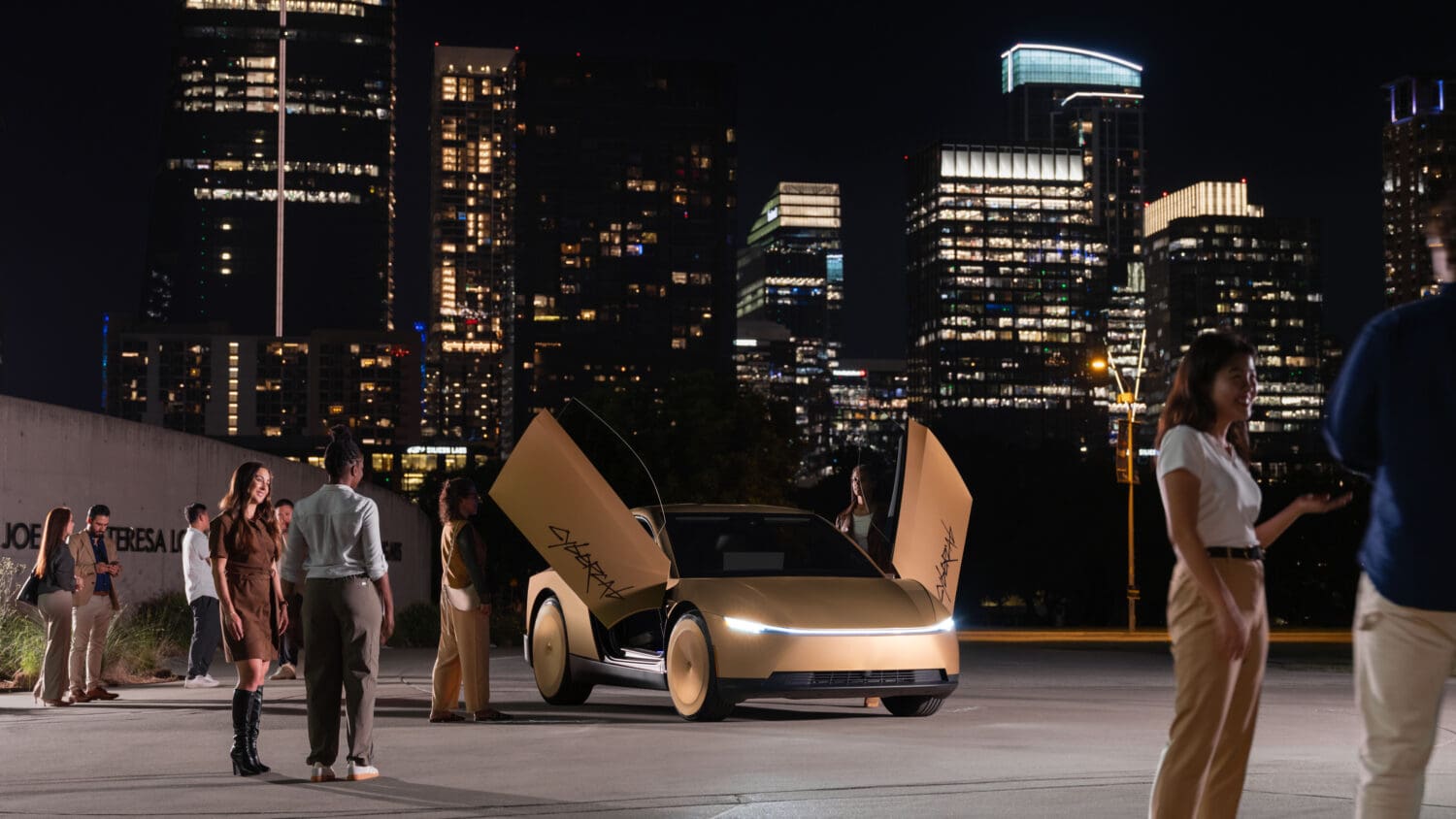
If we take anything away, it should be this: Today, a production automobile without a steering wheel and pedals is carrying people on public roads. For the first time in more than a century, the fundamental question is no longer how we build a better car for a human driver, but how we build better transport that doesn’t need a driver.
When autonomous vehicles eventually become capable enough to leave the pavement and explore genuinely remote places, the definition of an overland adventure could change forever.
Personally, I still want to drive my own vehicle around the world. But I’ve got grey hair and enjoy getting my hands dirty with an oil change. There’s no escaping the reality that represents–I’m out of touch, and the future is built for those younger than me. It is easy to imagine a future where more people than ever before get to experience the same places I have, simply because they no longer have to be the ones behind the wheel.
I always like to remember overlanding is not about vehicles. They are just tools used to take us to incredible places.
Read More: Hyundai Confirms New Body-on-Frame Pickup
Images: Tesla
Our No Compromise Clause: We do not accept advertorial content or allow advertising to influence our coverage, and our contributors are guaranteed editorial independence. Overland Collective may earn a small commission from affiliate links included in this article. We appreciate your support.
