

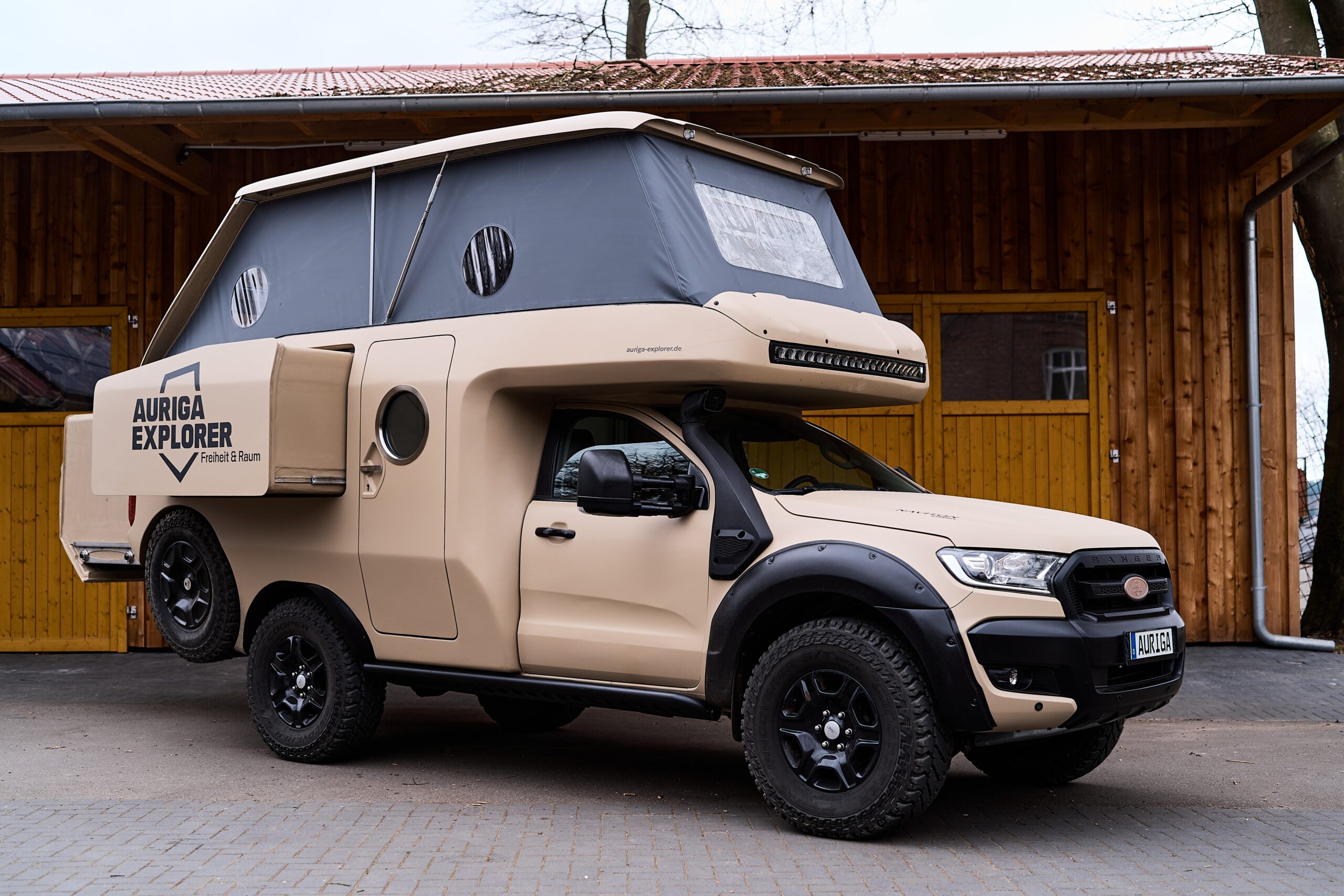
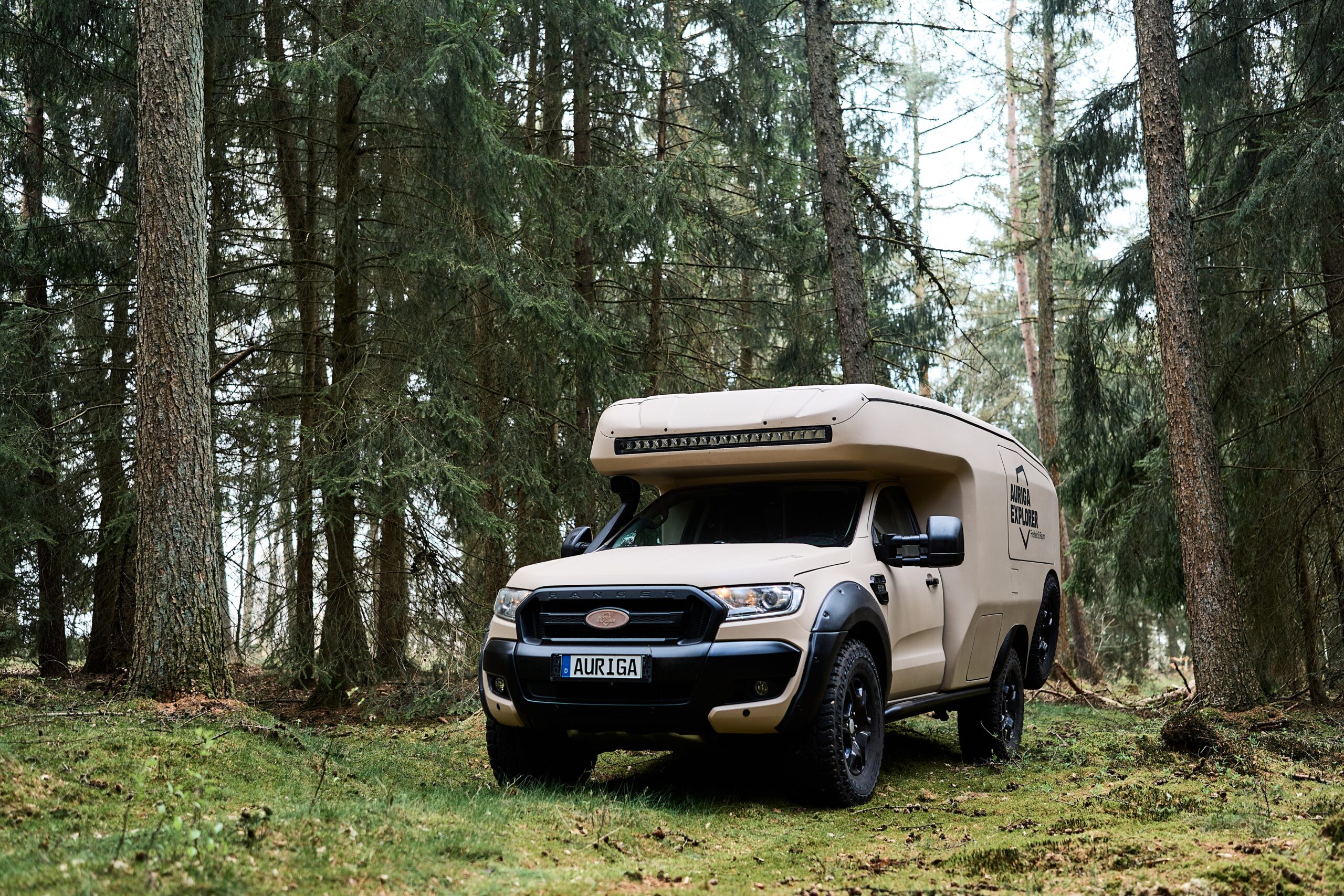
Auriga Explorer, a German startup founded in 2023, has announced the upcoming launch and production phase of an expedition vehicle that blends compact proportions with genuine off-road capability and the comfort of a self-contained living space. The design stands out in an increasingly crowded segment, relying on the expansion of its pop-top, drop sides, and rear garage to transform into a surprisingly spacious interior. While capable of accommodating a small family, the layout is more realistically suited to a couple—or perhaps a solo traveler with a generous beer supply (the beer reference will make sense after watching this YouTube video). Auriga describes the concept as a “revolution in overlanding,” positioning the vehicle as a distinctive fusion of pickup utility and mobile-home comfort. Distinctive it certainly is—you’ll either love it or you won’t—but there’s no denying that this vehicle stands out as genuinely unique.
Frank Haltermann is the design engineer and managing director of Auriga Explorer as well as the owner of A&A Logistik Equipment GmbH & Co. KG, a German company specializing in the manufacturing of transportation and logistics equipment since 2018. It is his vision and expertise that have brought the Voyager to life, and the camper is very much a passion project.
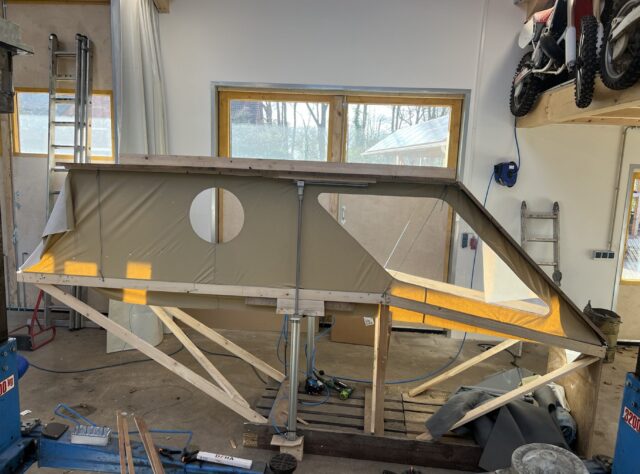
According to Auriga, the transformation of the camper takes only a few moments and is activated “at the touch of a button.” In its road mode, the vehicle remains compact and agile; once deployed, it provides interior comfort comparable to that of much larger expedition rigs. Auriga emphasizes that the folding and expanding modules are integral to achieving both mobility and spaciousness.
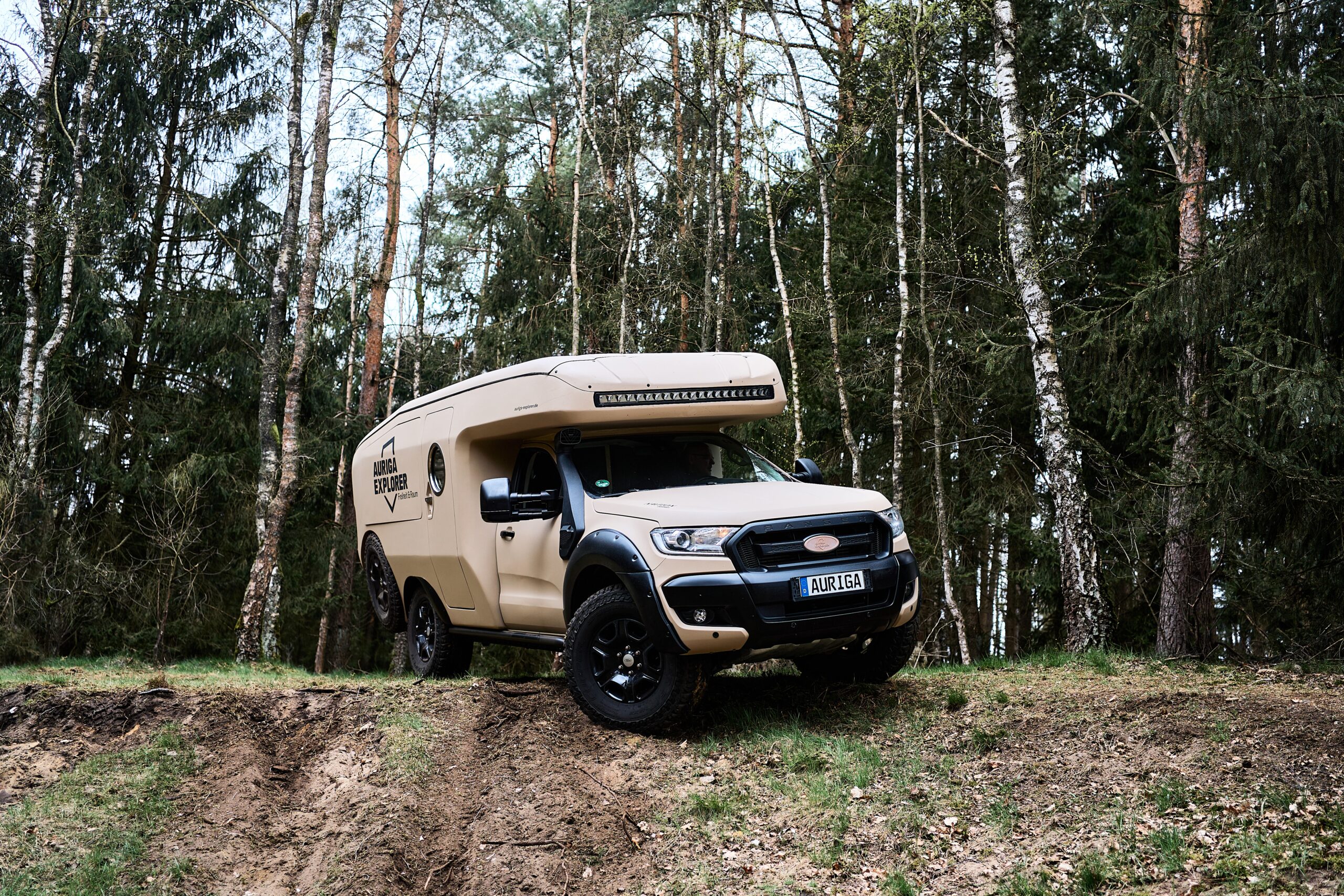
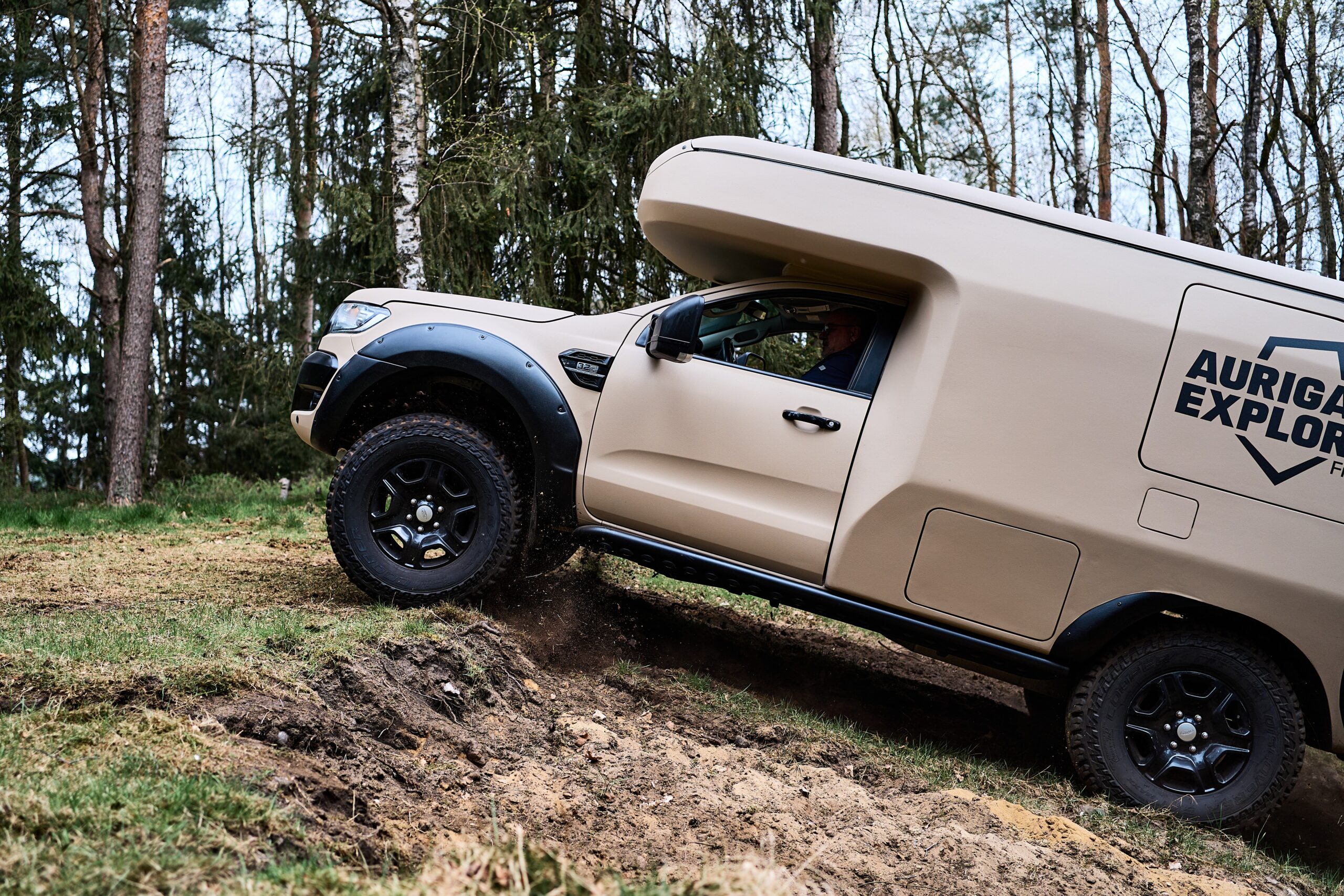
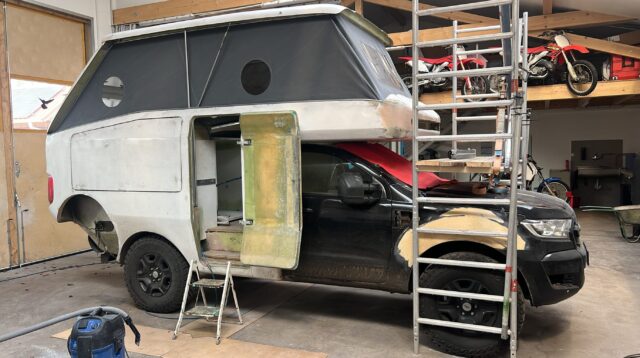
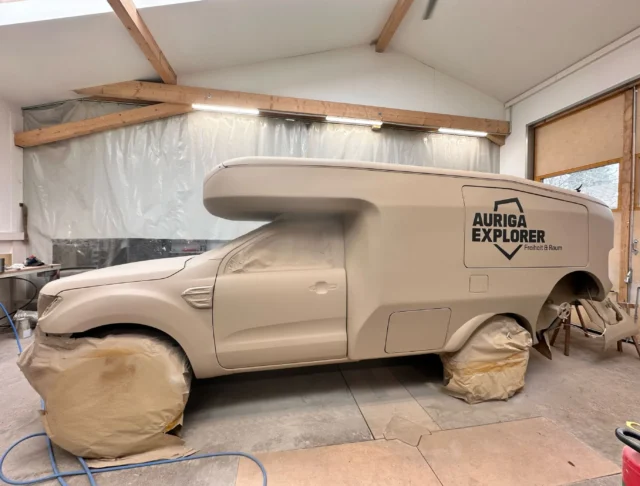
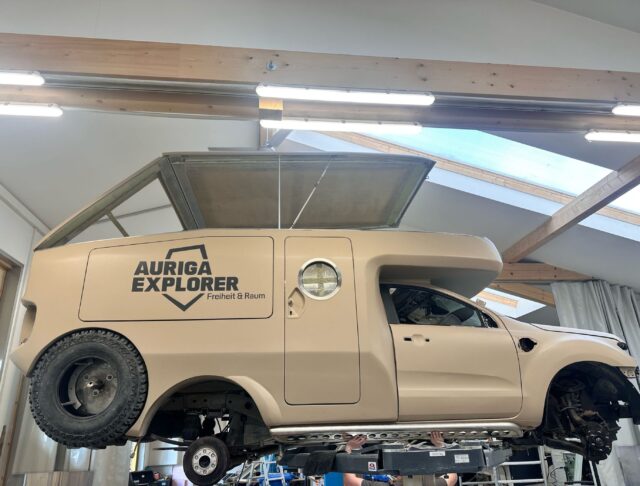
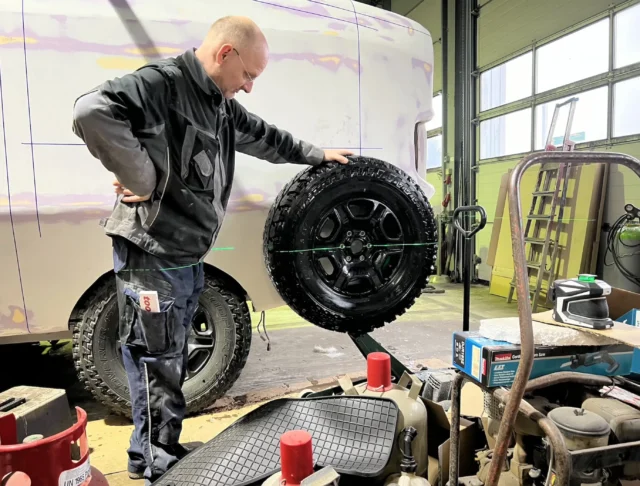
One of Auriga’s primary aims is to maintain the vehicle’s gross weight below 3.5 metric tons while simultaneously delivering strong off-road performance. The shell of the cabin is constructed from glass fiber-reinforced plastic (GRP), a composite material the company says offers a combination of low weight, structural strength, weather resistance, and thermal insulation. The fiberglass composite exterior, according to the manufacturer, resists UV exposure and temperature variation and is easier to maintain and repair. The choice of GRP helps keep the vehicle light enough to navigate mountain passes and rural roads. We appreciate the integration of the spare tires into the rear structure, though it raises the question of whether two spares are truly necessary in this era of reliable all-terrain tires—and whether that valuable space might have been put to better use.
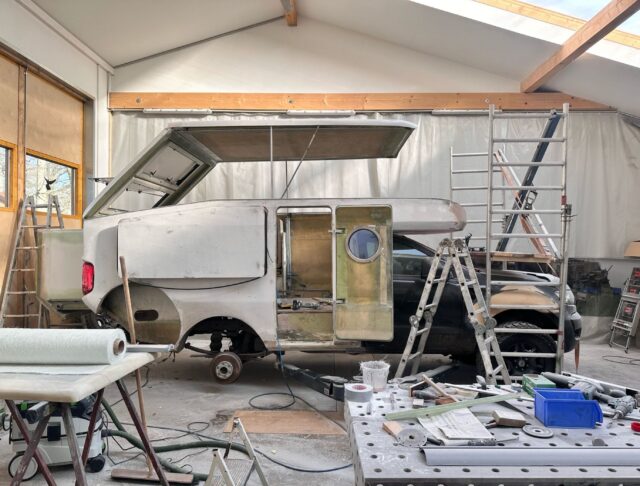
Auriga Explorer offers its modular system on both the Ford Ranger and Volkswagen Amarok platforms, and accommodates requests for alternative base vehicles upon direct inquiry. The company emphasizes that every configuration is engineered to fit within a standard overseas shipping container—an often-overlooked but crucial feature for international travel. For global overlanders, particularly those based in Europe, this design consideration significantly simplifies logistics and expands the possibilities for worldwide exploration.
Inside, the Voyager is laid out to accommodate up to four people through a mixture of fixed and convertible sleeping areas. Two primary berths are located in an alcove, each measuring two meters in length. These can be folded independently, allowing use of the living area even when one occupant remains in bed. Additional sleeping capacity is achieved by converting the rear seating area into a bed measuring approximately 2 meters long by 1.5 meters wide.
Auriga’s interior, which could use a designer’s touch, includes a compact but fully equipped kitchen with a diesel stove, two burners, and an oven, enabling more advanced cooking tasks, such as baking pizzas, in remote settings. A shower module is integrated into the cabin’s entry zone; fold-out walls and a removable floor convert that zone into a wet space. The system uses a water-circulation loop to continuously treat and reuse water during a shower, reducing demand on onboard reserves. A dry separation toilet is also integrated, designed to conserve space by retracting when not in use.
Storage solutions include dual-side slide-outs containing cabinetry for clothing and gear, as well as a hanging-closet unit adjacent to the kitchen. The vehicle also features a substantial under-floor “garage” compartment for stowing outdoor equipment, camping supplies, or recreation gear. The central seating group is designed for flexible use—whether for dining, socializing, or games—and can host up to six people.
Auriga reports that in drive mode, the modular elements retract to maintain efficient aerodynamics and off-road maneuverability. In deployed mode, the pneumatically extended roof provides about 2 meters of vertical headroom and an interior floor area of approximately 8 square meters.
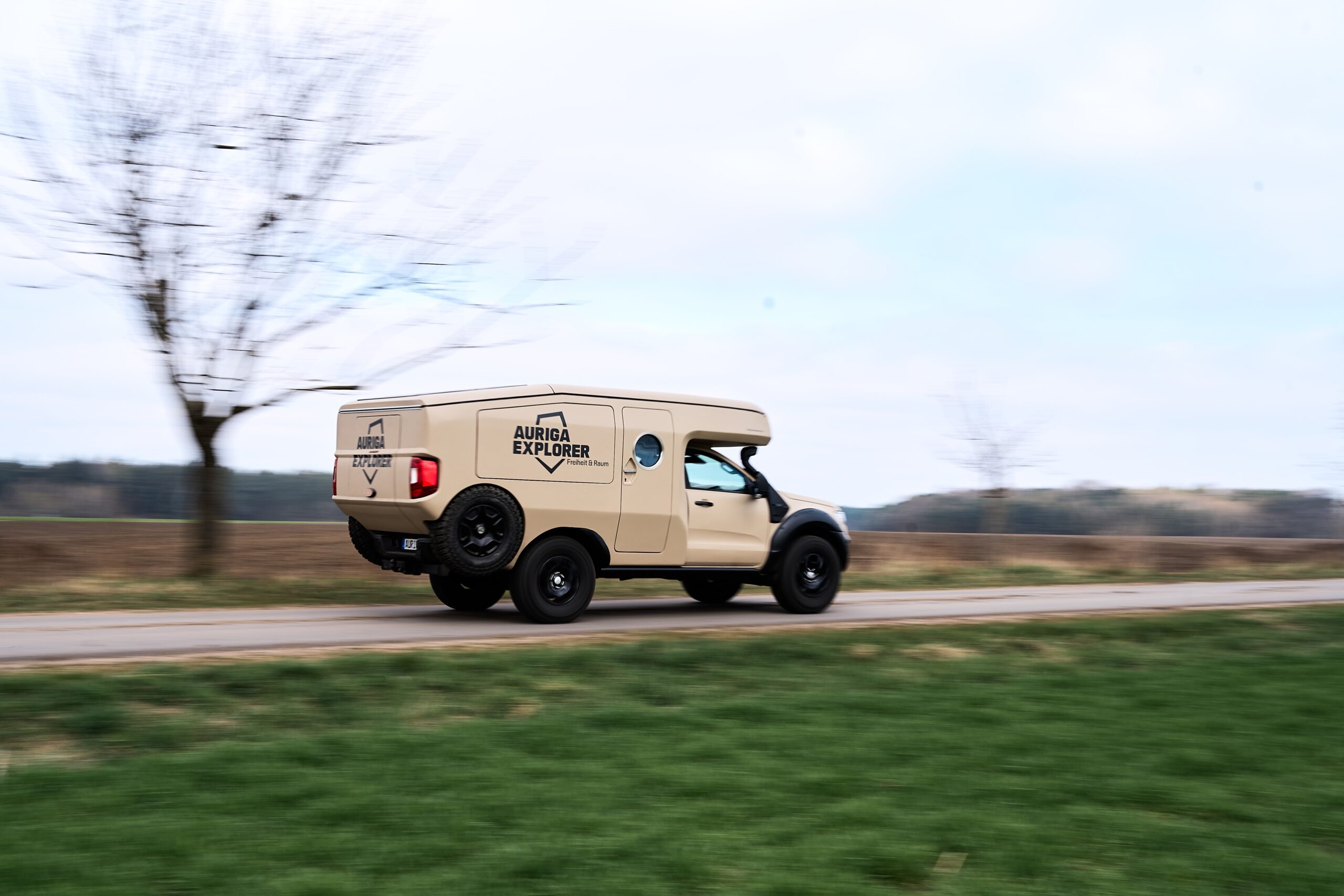
Auriga Explorer markets itself as a vehicle that bridges the gap between standard overland vehicles and full-length expedition rigs. Through expandable modules, it aims to deliver both a compact footprint and a comfortable living environment. The firm anticipates production to begin following completion of prototype validation, with the first vehicles expected in late 2025, likely limited to the European market.
Our No Compromise Clause: We do not accept advertorial content or allow advertising to influence our coverage, and our contributors are guaranteed editorial independence. Overland International may earn a small commission from affiliate links included in this article. We appreciate your support.
