

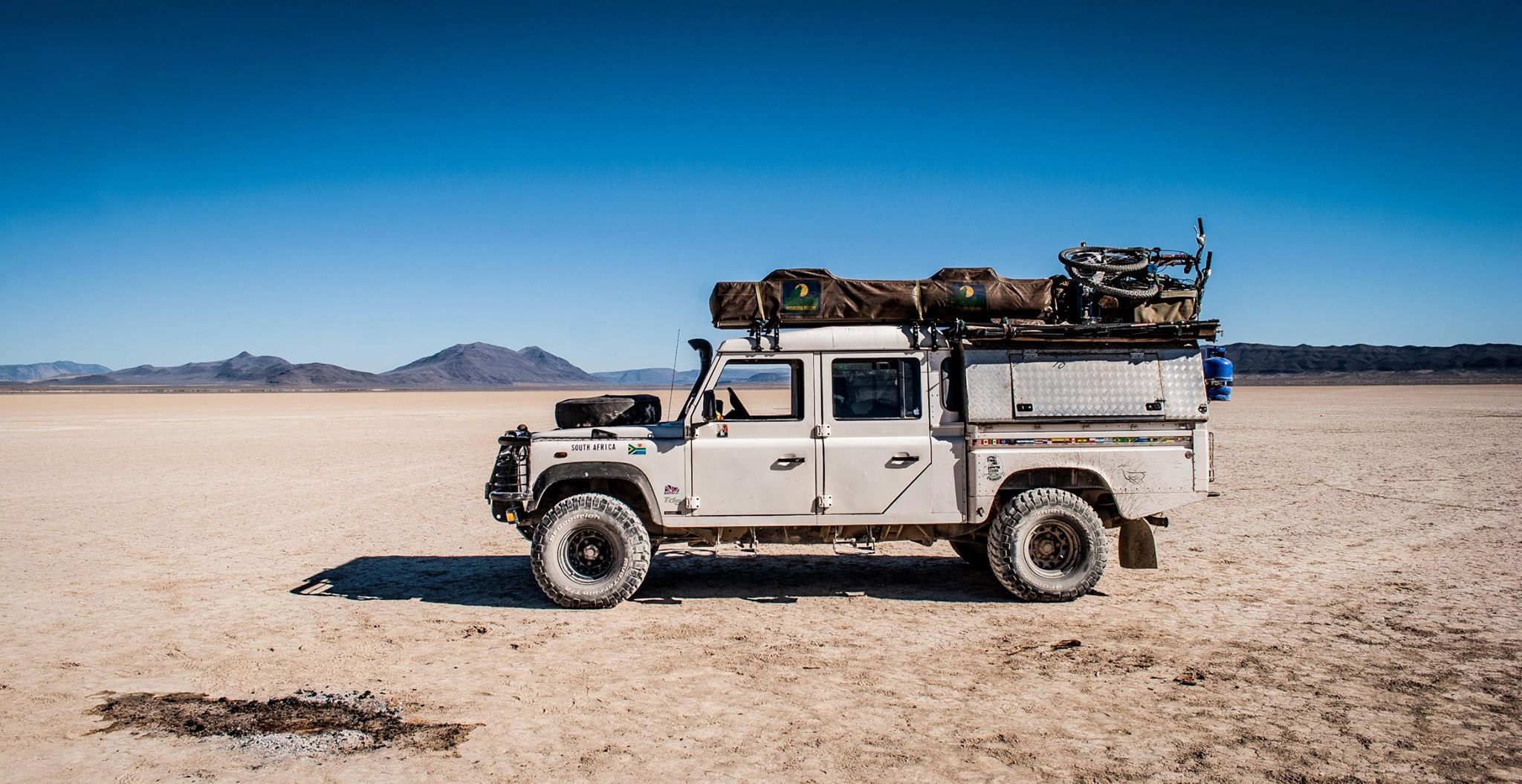
The age-old question of which vehicle is best for overland travel is a hot topic. Some prefer a brand-new vehicle with low mileage, modern tech, and ultimate comfort; others swear by their tried-and-true (hopefully) trusty vehicle they’ve owned for a long time, one they know how to service and repair, and one that, typically (but not always), costs less. We caught up with two international overlanders and authors, Overland Journal contributor Dan Grec and Expedition Portal 4WD Senior Editor Graeme Bell, for their takes on the subject.
Graeme Bell:
Back in 2021, Dan Grec, the knowledgeable, well-traveled, and highly respected engineer by trade and training, wrote an article for Overland Journal and Expedition Portal explaining why he travels in a modern vehicle and why you probably should too. I agree with him that modern vehicles are generally more comfortable, capable, and reliable than older vehicles. However, we have, writing as we do about modern overland vehicles most days of the year, noticed more and more vehicles being offered with the term “overland” liberally splashed about the marketing and the press releases.
The rub is that most of these vehicles are woefully inadequate for the type of overland travel we enjoy, the type of travel that takes us far from civilization and across many national borders. These new vehicles will invariably require the purest fuel, feature AWD or 4WD, and have tricked-out and upgraded suspensions, all-terrain tires, recovery points, underbody protection, and a host of electrical gizmos and gadgets. These upgrades are all quite appealing as standard equipment on factory-built vehicles for domestic travel, but that often does not equate to real-world usability when far from a dealership with a computer and a team of technicians trained to remove the dashboard to replace the AC filter. Not all modern vehicles are created equal, and undoubtedly, some brands are better suited to long-distance overland travel than others—nod to the Expedition 7 Land Cruisers.
Dan Grec:
I expected to ruffle a few feathers when I wrote about using new or old vehicles, and I’m happy Greame is continuing the discussion. I thoroughly enjoy sitting around a campfire with a fellow overlander discussing border crossings, street food, and the pros and cons of various vehicle platforms. Graeme has been on the road with his family across multiple continents for a couple of decades and has an immense amount of experience, knowledge, and expertise. I have nothing but respect and admiration for Graeme, and I’m also proud to call him a friend. In the spirit of a good campfire session, let’s keep the discussion going with some back and forth between Graeme and me.
THE COOL FACTOR
Graeme:
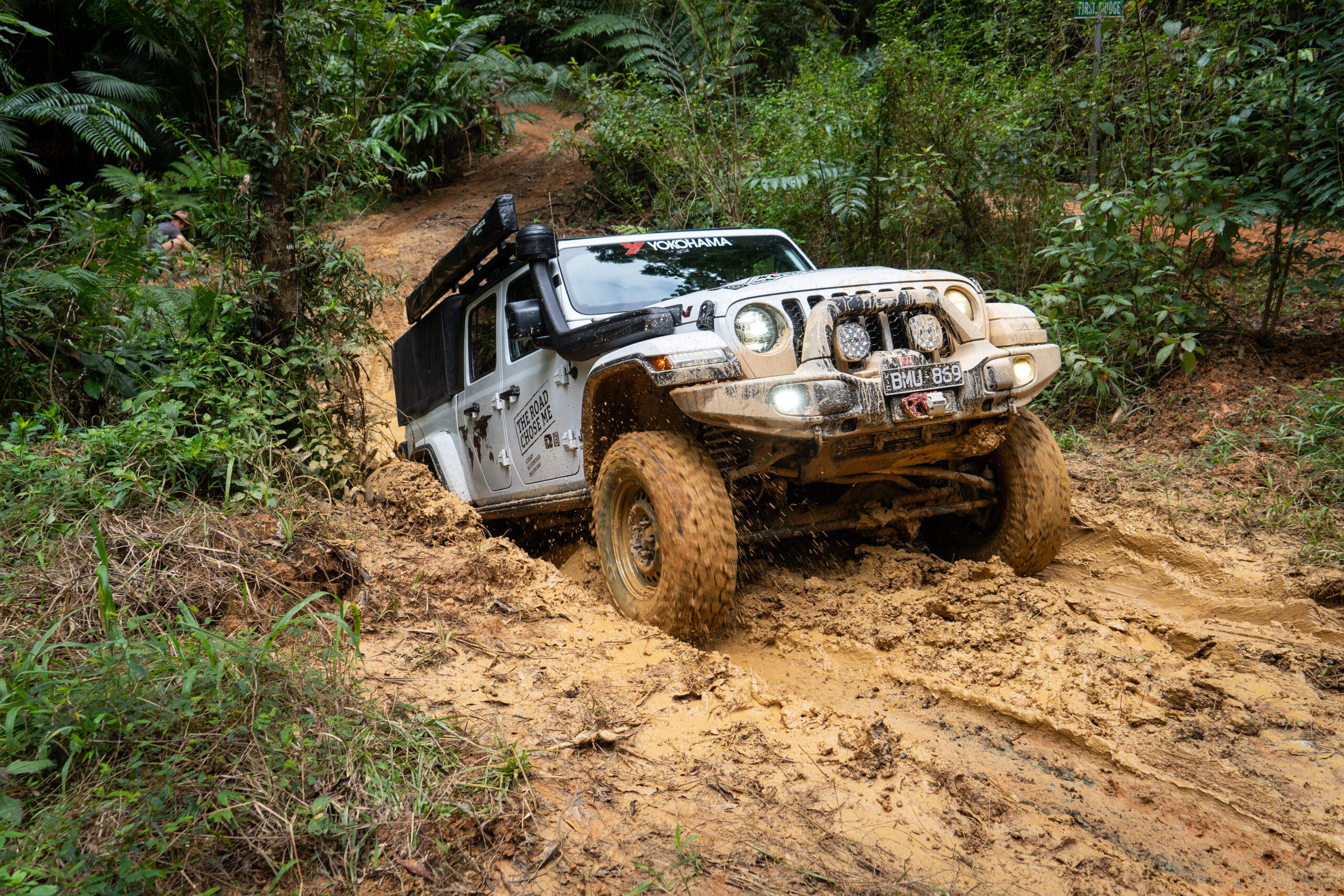
Old trucks, on the other hand, tend to be less comfortable and less reliable than new vehicles, depending on vehicle history and maintenance. Still, they are the vehicles of choice for many long-term, long-distance overlanders. Why? The classic Land Rover Defender, Toyota Land Cruiser, and G-Wagon are the kings of vehicles that have proven their mettle over decades across the most hostile terrain, with an unbeatable “cool” factor. We will park them at camp in front of the view so that we can enjoy looking at them over the campfire.
Old trucks tend to be cool trucks, and traveling in a vehicle that turns heads and elicits waves and smiles is a reward that is quite unique. My classic Defender is filmed on the freeway, and often has locals gathered around it, which leads to them welcoming us to their homes. A Dodge Ram does not inspire the same response. And, to be honest but not too cynical, a cool vehicle is good for exposure on social media, a plus for many travelers, especially those who are seeking fame, but, more importantly, for those who are trying to earn an income as they travel. There is a reason our Defender has adorned the cover of almost all my books, and those are the books that sell best.
Dan:
I agree with Graeme wholeheartedly. Old trucks do tend to be cool trucks—at least the ones that aren’t overheating. There are a few modern vehicles that have achieved the same status, namely the INEOS Grenadier and Quartermaster. I also need to mention that my modern vehicles have adorned the cover of Overland Journal a few times over the years.
On the popularity of old vehicles, however, I have to disagree with Graeme. Ten or twenty years ago, older vehicles were the go-to choice for a global expedition, but time rolls on, and things have changed in the last decade. We’ve had the Expeditions 7 team driving new Land Cruisers to all seven continents, the Expedition Overland crew in a rolling fleet of new vehicles, and a host of others driving new vehicles to the most remote corners of the planet without issue.
The old vehicles are still out there, but as they slowly turn to rust and require more maintenance, they’re being replaced by modern vehicles with computers and creature comforts.
RELIABILITY, BREAKDOWNS, AND MAINTENANCE
Graeme:
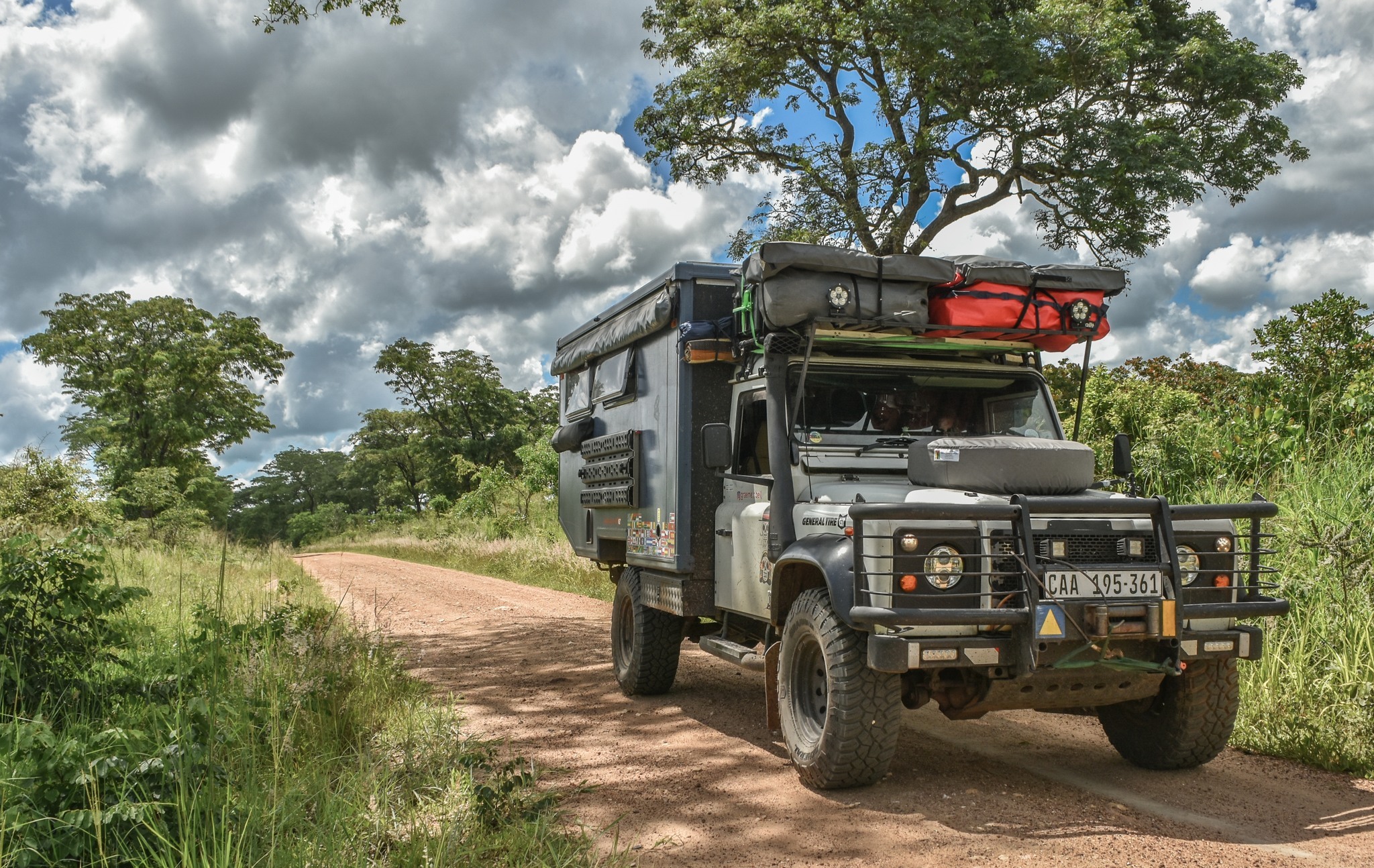
Modern vehicles are generally reliable, as Dan has proven. No one expects a 5-year-old or younger vehicle to be anything but faultless for at least the first 50,000 miles. By contrast, old trucks can be much less dependable as they will have likely traveled many thousands of miles over the last 20 years. Land Rover is known to make mechanics out of drivers (I know this firsthand), and even Toyota, the king of reliability, is not immune to the march of time and hard work. The difference between new and old vehicles becomes crystal clear when either suffers a breakdown or a “bush” repair becomes necessary.
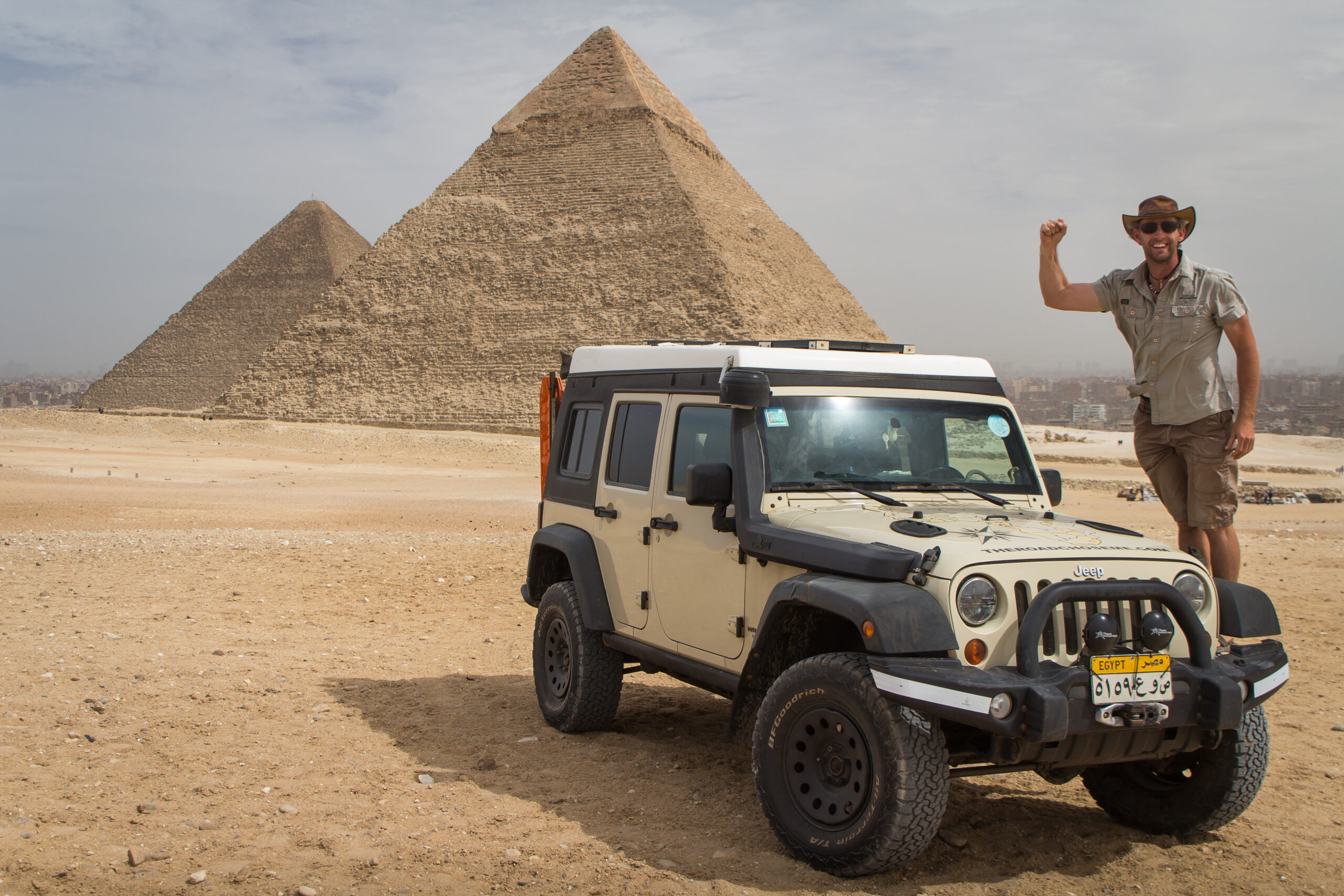
Dan was indeed fortunate to have not suffered any mechanical breakdowns as he explored the length and breadth of Africa in his secondhand 2010 Jeep Wrangler. But, the million-dollar spare parts, courier fee, and customs duty question must be asked: what would Dan have done if he had suffered a catastrophic mechanical or electrical failure while jungle deep in the Congo? No doubt, knowing Dan, he would have found a solution and been back on the road within a couple of weeks, albeit with his travel budget ravaged. As we know, that never happened to Dan. But the questions we must ask are: was Dan very lucky, extremely well prepared, or was his Jeep simply bulletproof?
Dan stated in his 2021 Overland Journal article that modern vehicles tend not to overheat, but my experience in Salt Lake City during a heat wave, helping a mechanically inclined couple cool their overheating modern Jeep squatting in a puddle of its own micturate in the parking lot of a Mavericks gas station, suggests otherwise. Unfortunately, Napa and O’Reilly’s do not have branches on every Congolese corner, and limp-home mode is at the top of the nightmare list for many a long-distance, intercontinental overlander. Perhaps not all modern vehicles are equal.
Dan:
I can’t argue with facts and logic, and in this case, Graeme is spot on. Older vehicles are likely to suffer more breakdowns and require more maintenance simply by virtue of being older, but, as Graeme points out, the flip side is that major repairs are rarely a problem even in the most remote regions of the globe. The saying goes that old vehicles can be fixed with fence wire and a hammer, which is probably almost true.
There is no doubt that a major ECU problem would have stopped my modern Jeep dead in its tracks around Africa, and parts and repairs may have been costly. I believe these issues can be mitigated, or at the very least minimized, by carefully selecting a stout and robust vehicle platform with global support. Take, for example, a modern Tacoma or Tundra, a popular vehicle for domestic overlanding. These North American pickups do not share engines, transmissions, axles, or brakes with the ubiquitous HiLux, and Toyota dealers worldwide cannot source parts for them. In my opinion, that makes them a bad choice for global travel.
On the other hand, the 2011 Wrangler Rubicon I circumnavigated Africa with is sold everywhere that has a Jeep presence, and it comes with identical mechanical parts. (All Wranglers sold worldwide are built in Toledo using the same parts.) And while Jeep doesn’t have an official presence in every country in the world, I did spot more than I expected to in Africa, with official dealers in 24 of the 35 countries I explored, and unofficial support in many more. Parts and support were never far away—not that I ever needed them.
Even still, it’s easy to dismiss my faultless lap of Africa in a modern Jeep as pure luck, which I’m not too big to admit. I’m convinced there’s more to the story, however, so let’s do a quick recap of my adventures in modern vehicles to date.
I started out driving 40,000 miles through 17 countries from Alaska to Argentina in a small 2-door Jeep. With fuel injection, ABS, and airbags, that little Jeep was fairly modern, and after two years of adventure on the Pan-American Highway, I never once turned a wrench.
The icing on the cake: I bought that Jeep for $5,000 and sold it for $5,000 at the end of the expedition, with 120,000 miles on it. Not only did it take me to incredible places without a single mechanical issue, but it was also free. That’s pretty lucky.
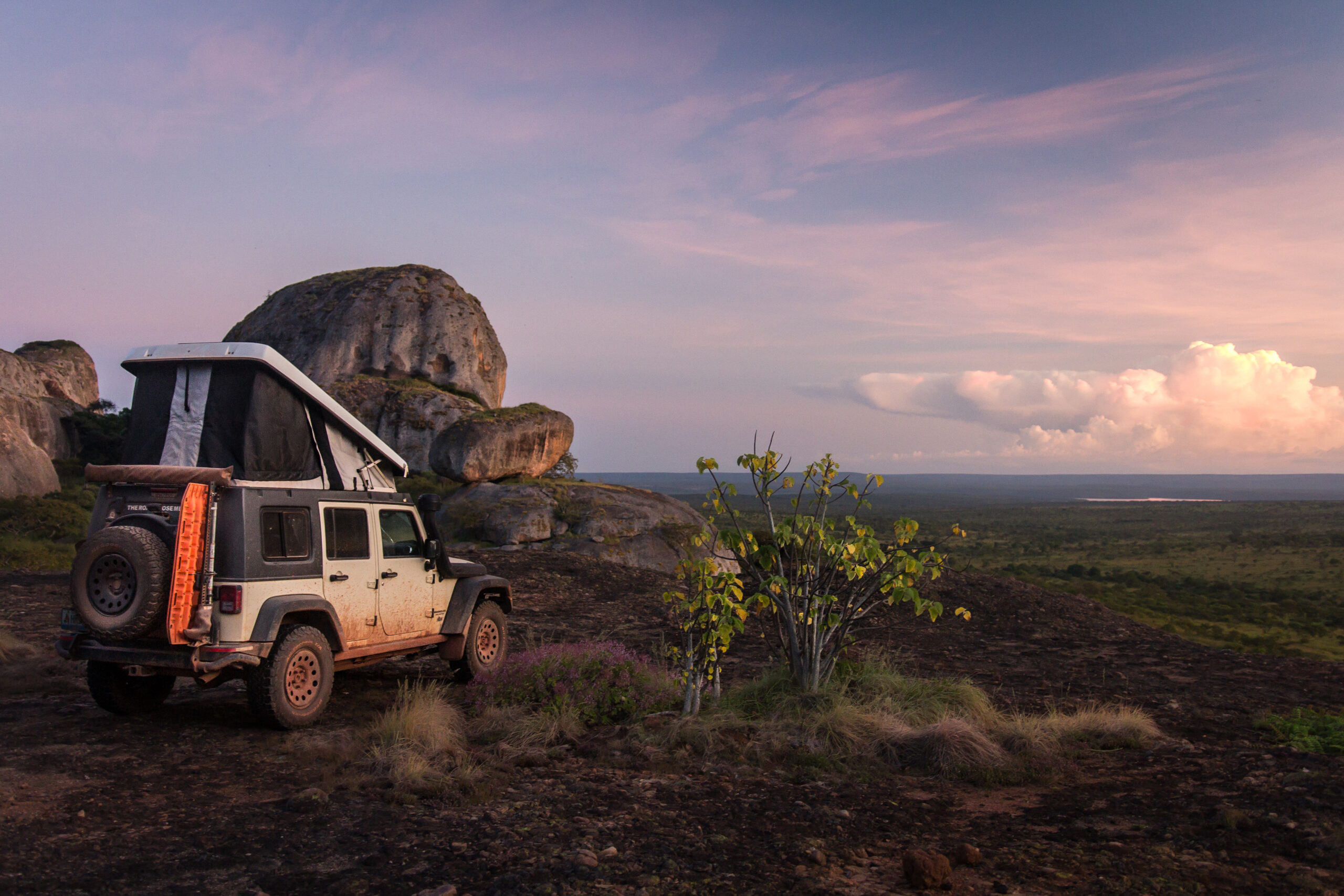
For Africa, my Rubicon Wrangler was five years old and not only had ABS, fuel injection, and airbags, but also stability control, traction control, power windows, keyless entry, air-conditioning, and even heated seats.
Covering more than 54,000 miles through 35 countries in Africa over hellish corrugations, dust, mud, sand, and intense heat is no easy task, and the Jeep took it all in stride. Even after rolling the Jeep in Uganda and running out of gas in Zambia, it never had a single mechanical issue beyond routine maintenance.
After Africa, I criss-crossed North America five times, exploring into the Arctic Circle, and the Jeep now serves as my winter transport in snowy Canada. With over 220,000 miles on the clock, the Jeep has seen as many -40°F starts as 110°F days. To this day, it has never failed to start and take me on incredible adventures, and I’ve still only completed routine maintenance. Again, that’s pretty lucky.
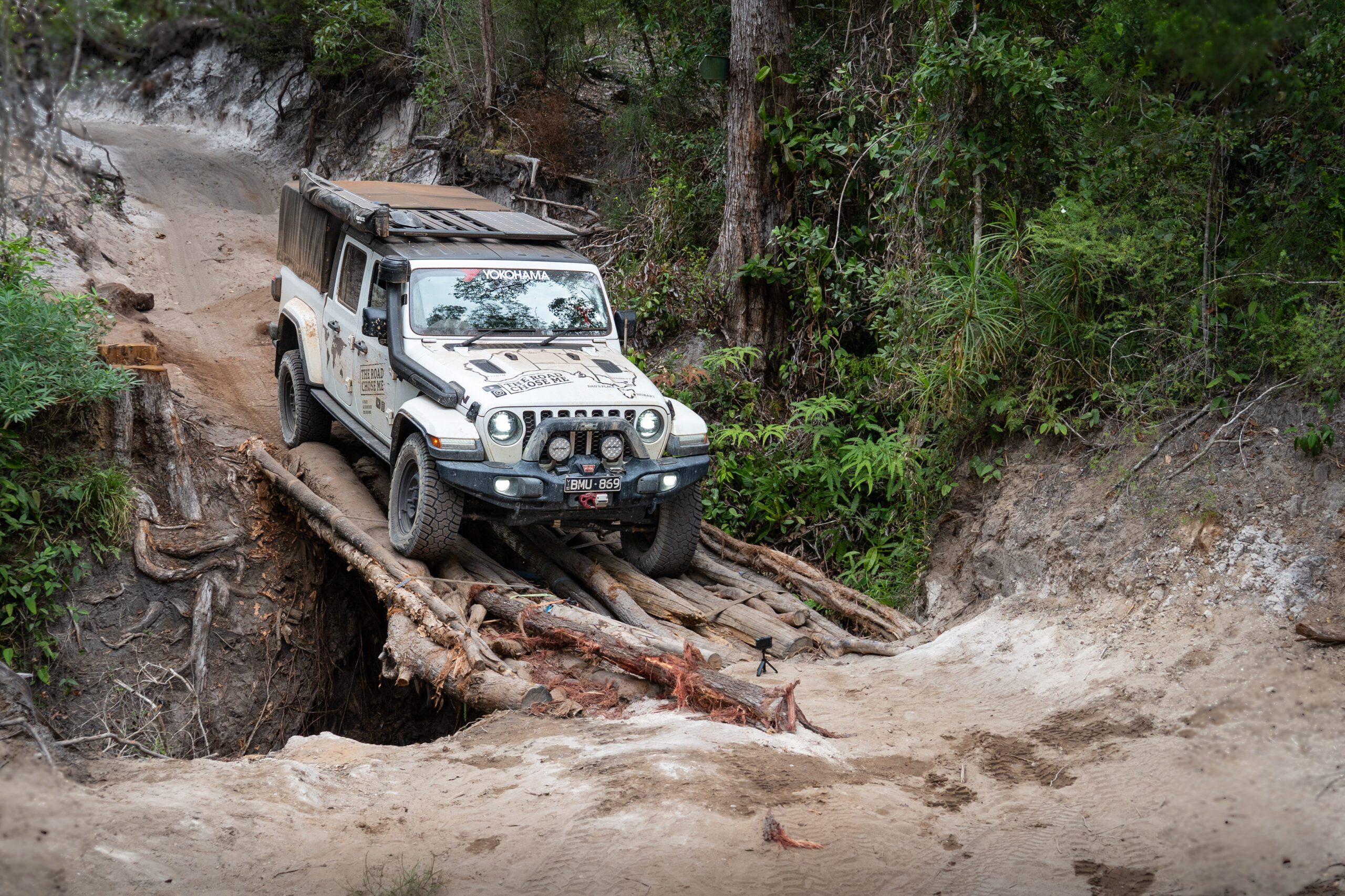
I bought a new Jeep Gladiator Rubicon for Australia, with so many creature comforts, it even had a heated steering wheel and Bluetooth audio. I tackled the hardest and most remote tracks Australia has to offer, from extremely deep sand on Fraser Island to the insane 4x4ing and deep river crossings of the Old Telegraph Track. I crossed a thousand dunes in the Simpson Desert, endured the world’s biggest corrugations on the Gibb River Road, and finished off with 1,050 miles on the world’s most remote road, the Canning Stock Route. Over 10 days, I never saw another person or vehicle, and literally trusted my life to the Gladiator. After 36,000 miles of adventure, I again never once turned a wrench. More good luck, it seems.
And now I’m in the final stages of my latest expedition in a 2021 EcoDiesel Wrangler camper, covering more than 25,000 miles across 12 countries and three continents. Spanning from the northernmost regions of Iceland in early winter to the Sahara Desert in North Africa, this Jeep has again been utterly flawless with 65,000 miles on the clock.
Either I’m so lucky I need to buy lottery tickets, or there is more to this story than just luck.
BUSH REPAIRS AND PARTS
Graeme:
My classic 2003 utilitarian Land Rover Defender has one ECU (Electronic Control Unit) as it is driven ever forward and occasionally backward by the relatively modern Td5 motor. Using an ancient Nanocom diagnostic tool, I am able to plug into the ECU, read and clear faults, read live data, adjust fueling, and access the vehicle’s alarm and immobilizer. I have also equipped the coolant header tank with an additional sensor that warns when the coolant is low before the engine overheats; this has been my wisest modification.
In contrast to the old Defender, the new Land Rover Defender has a total of 85 ECUs, and while there are diagnostic tools commercially available, it is unlikely that anyone but the most technologically savvy overlander would be able to disable the immobilizer in the Congolese bush. And I have yet to see anyone attempt a crossing of West Africa, for instance, in a new Defender (that said, Kingsley Holgate and his team did travel from South Africa to Egypt with three new Defenders, with the backing of Jaguar Land Rover). Which begs the question, if modern vehicles are preferable for overland travel, are some brands better suited to such a journey than others? This is a highly debatable subject that falls outside the purview of this article.
Trucks older than mine have limited electronics and no ECUs at all, which makes them ideal for bush repairs. Newer vehicles are specifically designed to be repaired by qualified mechanics working in high-tech workshops, and a transmission failure in Guatemala cannot be repaired in a campsite with the help of a German traveler and a couple of cold drinks. Central locking, air-conditioning, electric windows, and an immobilizer/alarm are the minimum expectations in a modern vehicle and, in many cases, can be retrofitted to old vehicles at a cost. We live without these comforts, and yes, they do make life easier until, for instance, the immobilizer immobilizes the vehicle while you are camping in the far reaches of the Namib Desert (we have figured out how to disable the immobilizer and the alarm using our OBD2 Nanocom).
It is impossible to carry all the spare parts you may or may not need while traveling, and Murphy’s Law often dictates that the parts you need are usually not the parts you are carrying. Driving a 2006 Dodge Ram with a 5.9 Cummins in Belize, I managed to drive into a drainage ditch in the jungle and bend a front lower control arm. After extracting the old girl, we drove to a Mennonite-run auto parts shop and had the choice of three control arms. This was possible because old American trucks are loved by farmers and transport companies throughout Central America. In Morocco, we suffered a severe clutch failure while exploring the Rif Mountains in our classic Defender and were eventually able to have the vehicle towed by tractor to the nearest town, where we sourced a new clutch and had the work done for the princely sum of $120 (the work was not done well, but that’s another story). Classic Defenders and Toyota Land Cruisers are used throughout Africa by the military and NGOs, and while there is an entire street in Dar es Salaam dedicated to Land Rover parts, you will struggle to find spare parts for modern or exotic vehicles, let alone a qualified technician to install those parts.
Dan:
Graeme raises excellent points here as well. Older vehicles are simpler and easier to repair, and parts are easier to source. While all of that is true, I’m not sure that it actually matters or is the most important aspect of vehicle choice.
I’ve met hundreds of overlanders exploring the globe, and I’ve noticed each expedition is shaped by how their personal adventure unfolds. One Bosnian I met was hyper-focused on securing visas for onward travel because their passport didn’t grant them visa-free entry to a single country. Others are plagued by medical problems (trust me, malaria is no fun), and still others struggle with communication due to speaking only an uncommon language.
The Land Rover drivers? Well, they’re easy to find, even when they’re not lying in the dirt under their vehicles. On a handful of occasions, I pulled into a campsite or overland hangout around Africa, and before I could shut off the engine, someone would ask how I sourced parts for the Jeep. Before we had even shaken hands or exchanged names, they wanted to know about spare parts.
These people were consumed in trying to source spare parts for their vehicles, and were staggered that I could circumnavigate Africa in a vehicle with less parts availability. That is because they were Land Rover drivers.
I jest, but I’m also completely serious.
Of all the Land Rover drivers I met going around Africa (and there were dozens), I never met a single one who hadn’t suffered a multitude of breakdowns and hadn’t had to rebuild an engine, a gearbox, an axle, a transfer case, or some combination of the above. A few had done them multiple times.
Because of the endless need for parts and repairs, Land Rover owners tend to think that constantly repairing and working on vehicles is an integral part of a major overland expedition. For them, the ability to easily source parts around the world is critical to their success, and they simply can’t understand that it doesn’t apply to other vehicles.
Rather than driving a vehicle that requires constant parts and repairs, I’ve chosen to drive ones that simply don’t need them.
Of course, it is inevitable that my luck will run out, and I will experience a major failure somewhere remote. When that eventually does happen, I’m confident I’ll find a way forward. We’re not living in the dark ages anymore, and forums and Facebook groups contain an enormous wealth of information about these vehicles. Rock Auto ships parts anywhere in the world in less than a week, at prices that don’t break the bank.
Even if a major breakdown kept me off the road for months to the tune of many thousands of dollars, I’d still be vastly better off than the amount of downtime and expenses suffered by many driving older vehicles.
FUEL CONCERNS
Graeme:
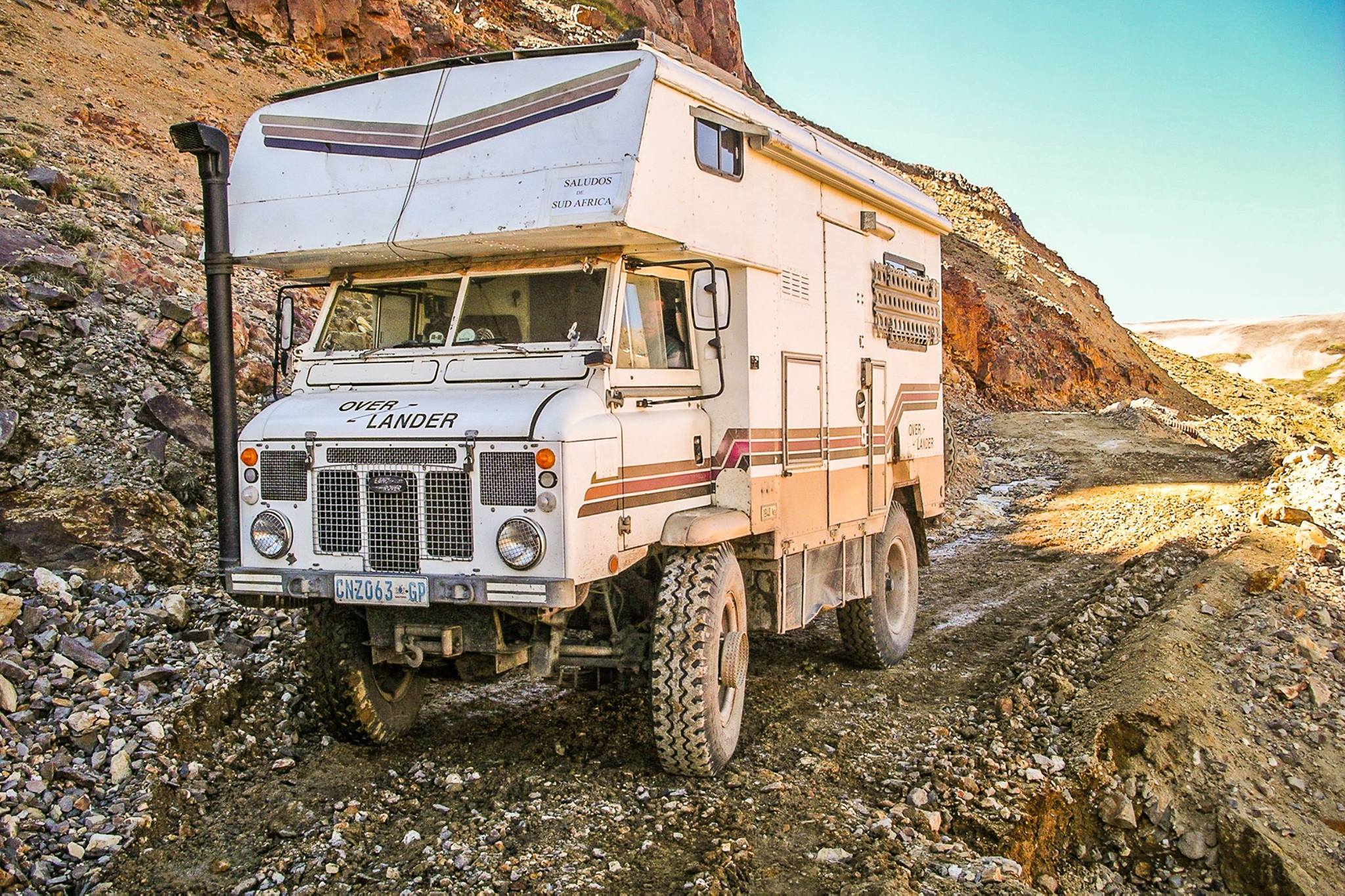
Speaking of Tanzania, high-quality fuel is usually unavailable in the Majority World, but an old diesel Land Rover can run on cooking oil if it has to. During our travels around the world, we have filled the tank with the most suspicious diesel in the most suspicious places, and the old girl would just keep on chugging along, no matter the dismal quality of the fuel. It is true that we have had to change the fuel pump five times over the last decade, but that is a small price to pay for the ability to go literally anywhere (and we always carry a spare fuel pump). Old gasoline-fueled trucks are generally able to do the same, and wherever there are Chinese motorcycles, which are everywhere, there will be gasoline. Newer vehicles are a lot more sensitive to the quality of fuel, and many require additives such as AdBlue, which is not available globally. Yes, you could carry the additives in the quantities required for the distance to be traveled and arrange for their replenishment along the route, but there is always the risk that they will not be available when needed should all not go to plan. To be fair, Dan’s experience has proven that fuel availability is less of a concern if you choose a modern vehicle with a suitable engine.
Dan:
While Graeme raises a valid concern about fuel quality, he is operating on outdated information. A decade ago, the requirement for ultra-low sulphur diesel and AdBlue/DEF was a real problem, and made modern diesel engines unworkable for much of the Majority World.
The situation has changed dramatically in recent years as countries around the world adopt new fuel standards. Hundreds of overlanders have now driven the length of the Pan-American Highway with the latest Euro6-compliant diesels without issue. Ultra-low sulphur diesel is available in every country except Bolivia, and AdBlue/DEF is easily sourced, sometimes even directly at the pump. Bolivia is the big holdout, though many people report that running the lower-quality diesel for a few tanks’ worth doesn’t cause problems.
The United Nations publishes an annual report on the state of diesel quality around the world, and the picture is pretty good and improving rapidly. It is always worth remembering that Majority World countries are currently developing faster than any country ever has at any point in history. Things are changing fast.
Just last month, I was in Tunisia, in North Africa and had no trouble buying ultra-low sulphur diesel and AdBlue/DEF for my EcoDiesel Wrangler. That being said, I wouldn’t drive a gasoline vehicle that requires premium fuel, and I steer clear of forced induction that adds additional heat to squeeze out more performance. After almost two decades on the road, I have never once wanted more horsepower at the sacrifice of mileage or reliability.
ADAPTABILITY
Graeme:
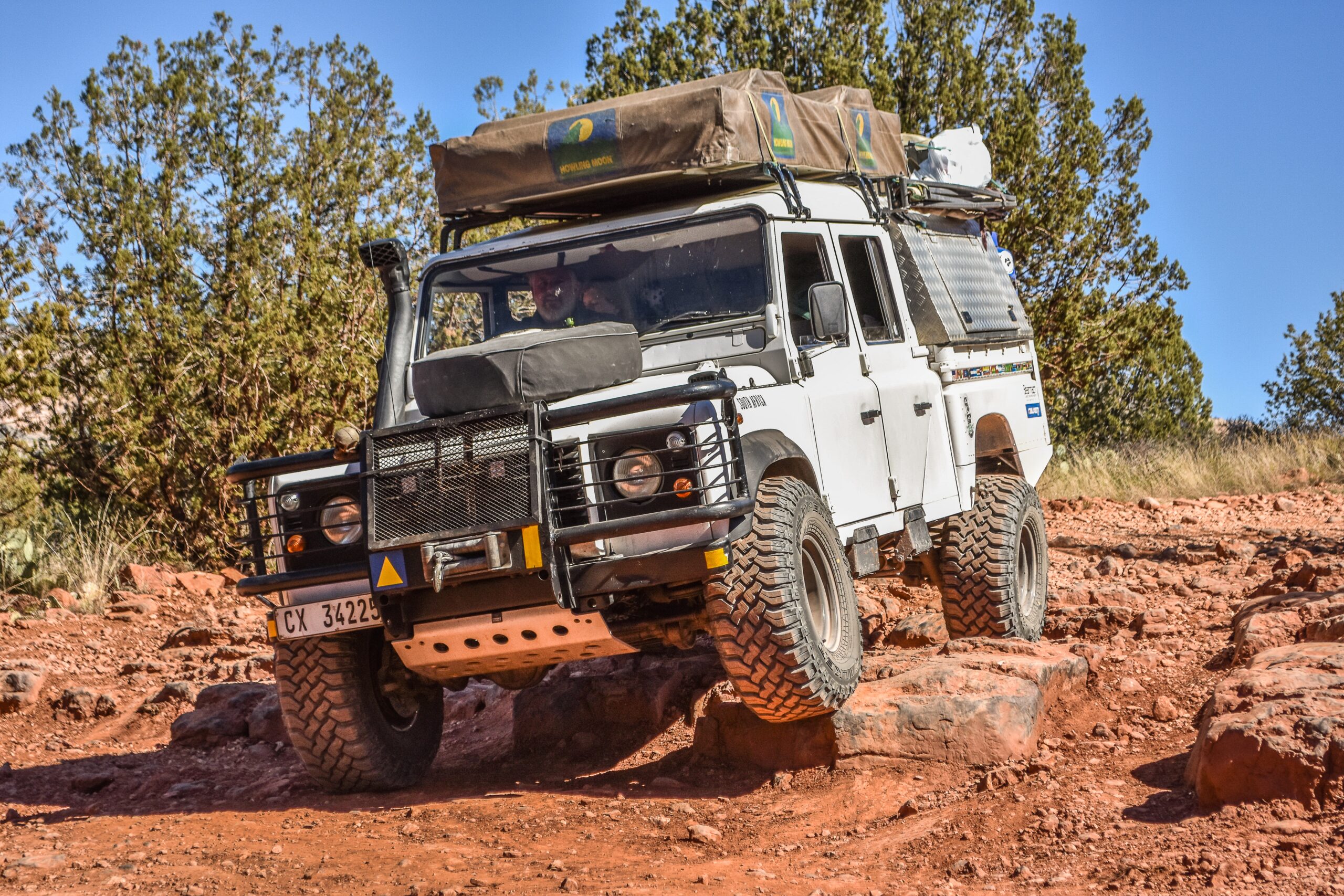
In terms of adaptability, my 2003 Defender is like Lego; I dismantled the rear of the vehicle in a day with minimal cutting in preparation for installing a composite-panel camper box. Before the camper conversion, I was able to equip the vehicle with a variety of affordable or homemade accessories, drilling and bolting with impunity. Any older vehicle designed primarily for military or agricultural use will be similarly simple, robust, and adaptable, as adaptability is a cornerstone of the fundamental design. While there are a lot of manufacturers who design and build overland vehicles on new base vehicles, it is almost always within the restrictions of modern vehicle design.
Dan:
It’s true; a huge benefit of the classic Defender is its Lego-like construction and ease of modification. The ability to dismantle the entire structure of the vehicle with just a few wrenches is a neat trick that is simply not possible with modern crash-safety standards, integrated airbags, and so on. For those who love to customize their builds, older vehicles have a clear advantage here.
That being said, I can say from experience that cutting modern vehicles in half isn’t any harder; it’s just more nerve-racking. An angle grinder doesn’t care how new the sheet metal is.
COST
Graeme:
Vehicle cost is a deciding factor for many, especially those who plan to travel far on limited resources. Some older vehicles are highly desirable, and we have all seen old trucks being sold and bought for exorbitant sums. The solution is to buy the older vehicle that is most affordable in your region; a 2006 Dodge Ram can be picked up for less than $ 20,000 in the USA, and for the same amount of money, you can purchase a well-cared-for TDI Defender in the UK (or South Africa) or a 6-cylinder 4.2L diesel Toyota Land Cruiser down in Australia, bearing in mind that these will generally be high-mileage vehicles and will invariably require a healthy budget for repairs and modification for overland travel.
If, for instance, you are an American and have plans to travel Africa and beyond in a classic Defender or Toyota, my advice has always been to fly to South Africa, buy, repair, prepare, and equip the right-hand drive vehicle there, and slowly work your way back to the US where a 25-year-old vehicle with the original engine and frame can legally be imported. You may well find that the vehicle’s value in the US is double its purchase price, and you could sell it for a profit if desired. Modern vehicles are generally more expensive to purchase and equip, so what makes them less suitable for long-distance overland travel? Well, we can’t fix them! Actually, that’s not true; we can fix them, but at what cost?
Dan:
I like Graeme’s point that older vehicles are cheaper, and therefore make a major expedition achievable for the 99 percent of us who are budget-constrained. While this makes sense on paper, and given the right circumstances, it can be true, as always, it’s a case of buyer beware.
As an example, I recently spoke to Ria of Roaming Reckless. She bought a 1997 ex-military Defender 110 with the legendary 300TDI turbo-diesel engine and only 61,000 miles, the very definition of “cool” overland vehicle. Ria bought the Defender for $25,000 in the States and hit the road excited for new adventures. Unfortunately, she suffered a host of breakdowns and shoddy repairs, and had three months of downtime for a rear diff rebuild, a shredded clutch fluid line, a broken fuel pump, and an incorrectly installed timing belt that almost destroyed the engine. The repair bill was north of $17,000.
In the two years since then, Ria told me she’s had “a couple other big breakdowns” that included getting the suspension in order and a lot of wheel bearing/shock replacement from off-roading. To put that in perspective, Ria spent the same amount of money on a single breakdown of her Defender as I spent to buy a 5-year-old Jeep Wrangler Rubicon that I then used to circumnavigate Africa over three years without a single breakdown. With only 61,000 miles on the clock, her Defender required suspension and wheel bearing rebuilds, while my Jeep spent years on the worst corrugations, mud, and heat on the planet without a problem.
Buyer beware, indeed.
PERSONAL BIAS AND CONCESSIONS
Graeme:
At the end of the day, I am admittedly biased as I bought my classic Defender in 2009 for $8,000 and spent at least another $20,000 converting it into a camper after four years living in a rooftop tent in South America. I have raised my children in that vehicle and intend to continue traveling with the Landy until either it or I can go no further. The problem with modern vehicles is that they eventually become old vehicles and will need to be replaced, whereas a well-loved, well-maintained, uncomplicated, and mechanically straightforward older vehicle can last a lifetime.
Overall, I side with Dan. A modern vehicle is best for overland travel, but only if it’s the right tool for the job. I read his article with a tinge of jealousy, envious of his vehicle reliability, airbags, and crumple zones, and his freedom to explore and enjoy the local sites while I lay under my Land Rover fixing yet another oil leak, blown bush, wheel bearing, or diagnosing yet another problem. I agree with Dan that it is better to travel with a reliable vehicle with modern conveniences, while acknowledging that a reliable vehicle is only reliable for so long before it must be significantly repaired or replaced.
The trick to traveling with an old vehicle is to be mechanically competent and to meticulously prepare it for the road ahead. An old vehicle can be reliable and cost-effective if the savings earned in purchasing a good, solid, and well-maintained vehicle are invested in making it reliable. We only really started having mechanical issues with our Defender when we pushed her hard at elevation (15,000+ feet in the Andes), and suffered an oil-cooler failure that led to a chain of events that have taught me the greatest lessons I would otherwise never have learned.
Before that failure and the vehicle reaching 10 years of hard work age, we had traveled Southern and East Africa, made multiple trips from Cape Town to Malawi, from Uruguay to the top of Brazil, and down to Ushuaia and up to northern Argentina without ever touching the toolbox. The skills we have learned driving our now-old Landy halfway around the planet in gigantic circles have given us the confidence to continue traveling in a similar manner, knowing that, while inconvenient, we can solve the vast majority of our mechanical issues ourselves in the process, saving valuable travel resources and with the confidence to travel even further afield.
Dan:
Overall, it’s difficult to disagree with Graeme’s message of choosing the right tool for the job.
As Graeme mentions, many new vehicles sporting the “overland” badge are really not up to the challenges posed by global overland travel to remote regions of the planet, and buyers looking to explore the world should carefully research the suitability of any vehicle platform. Vehicles with more computers than the space shuttle need not apply.
While I swap vehicles as often as I swap continents, I’m envious of Graeme holding onto his pride and joy, and that he has been able to have such wide-ranging adventures in a single vehicle. Even Ria, after all the trials and tribulations of Land Rover ownership, had no hesitation in saying she wouldn’t trade her rig for anything. No doubt about it, there’s something funny about those old Land Rovers, or at the very least Land Rover drivers.
I said at the outset that I have nothing but respect and admiration for Graeme, for a long list of reasons. At the top of that list may just he his ability to keep his trusty Land Rover running for all these years.
…
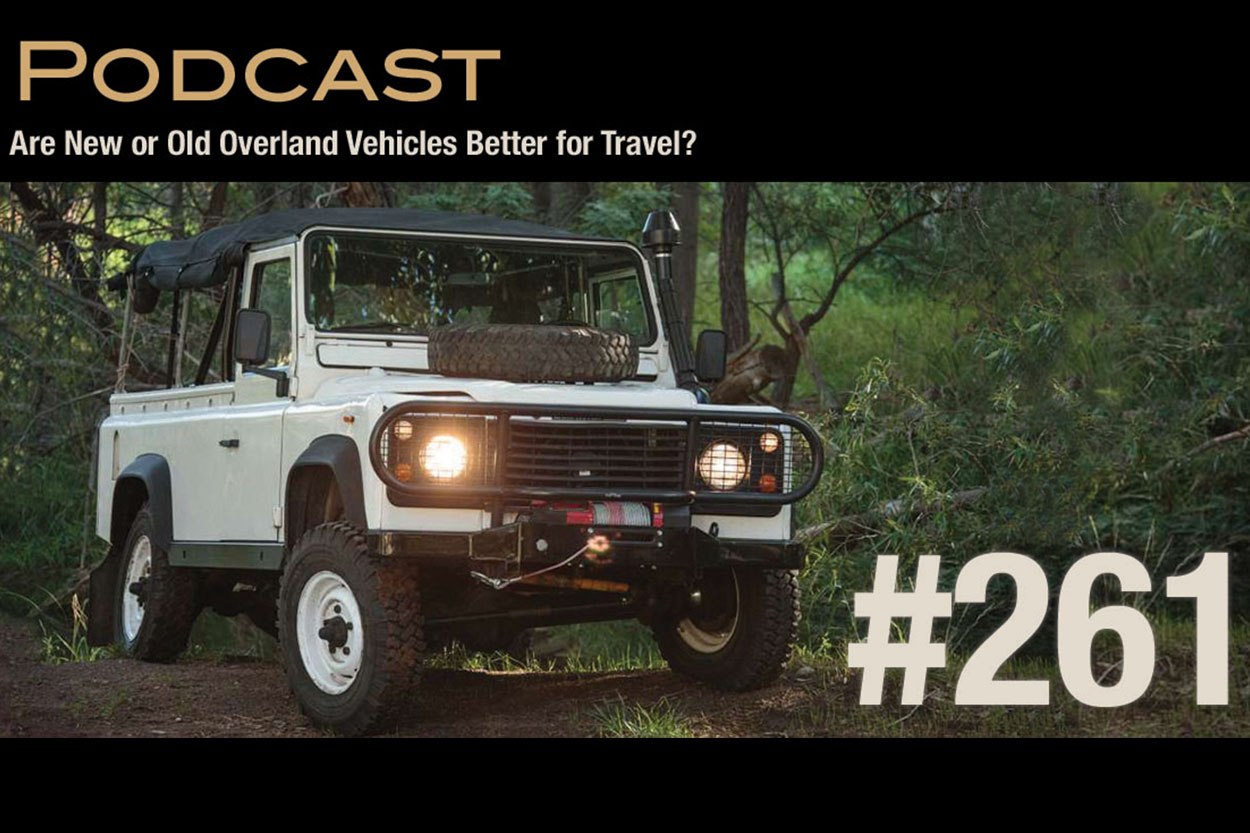
For more on this topic tune into Episode 261 of the Overland Journal Podcast: Are New or Old Overland Vehicles Better for Travel?
Our No Compromise Clause: We do not accept advertorial content or allow advertising to influence our coverage, and our contributors are guaranteed editorial independence. Overland International may earn a small commission from affiliate links included in this article. We appreciate your support.
