

Photography by Valentina Vallinotto
To honor the 20-year anniversary of Overland Journal, we are revisiting special heritage content in the upcoming 100th issue of the magazine. Originally published in Overland Journal’s Summer 2024 issue, this article is part of that celebration.
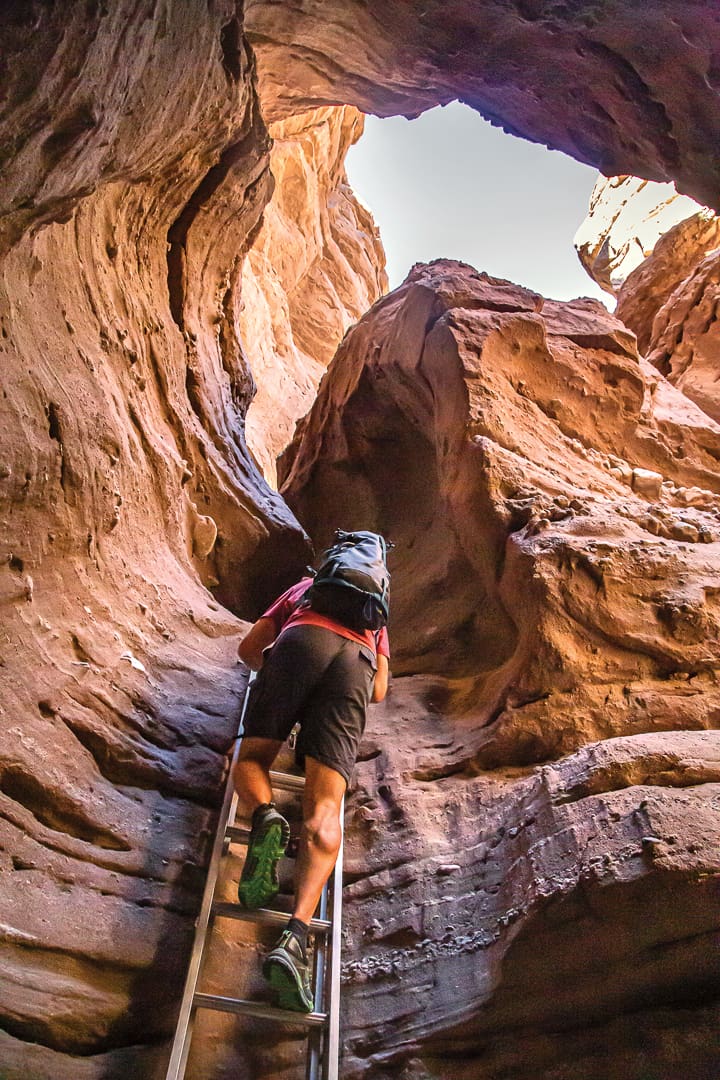
This rope looks like it will hold me—famous last words, I thought, gripping the faded cord and leaning back over the drop. I wriggled down the constriction with my feet blindly seeking out ledges in the sandstone notch, scraping my arm against the abrasive rock. Twenty feet lower, and I was on the canyon floor, gazing up at the sliver of blue above. I turned around to find my companions waiting in the shadows and returned their grins. We were in it now.
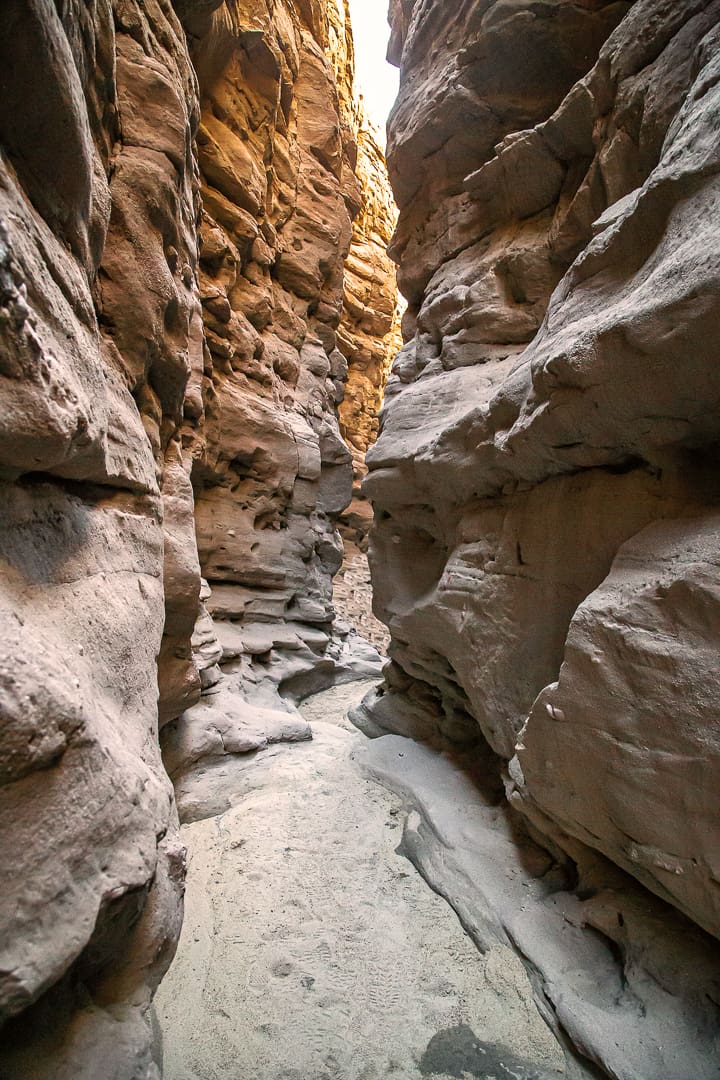
“It” on the microscale was the unimaginatively but accurately named Ropes Canyon in the Mecca Hills Wilderness, a slot canyon requiring equal parts writhing, squeezing, and rope-wrangling to negotiate. “It” on the macroscale was a 10-day overlanding expedition in the deserts of southern California, a nearly 600-mile traverse of Joshua Tree National Park and Anza-Borrego State Park. I was back to explore these wilderness expanses after passing through on a road trip a couple of years ago. Having glimpsed the scale, I longed to immerse myself in the vast landscape with a special group of friends who shared an appetite for adventure.
The trip was a global conclave organized around a reunion of colleagues from distant reaches. Representing the United States were Frank Marley, a search-and-rescue specialist from Alaska, and John Bradley, a Denver alpinist. Dr. Jaana Gustafsson, a geophysicist, joined us from Stockholm. All four of us work in Greenland, where John met his wife, Tinka. Although home is Seattle, I flew the Union Jack and was excited to welcome Valentina Vallinotto, an Italian safari guide and photographer, into our crew.
Valentina was our secret weapon. She had traveled in the area and had a trove of waypoints, campsites, and insider knowledge that was invaluable in planning our route. Over a series of video calls between Seattle and Turin, we plotted an itinerary spanning a spicy buffet of terrain and activities. On paper, it looked great, but how would it play out on the ground?
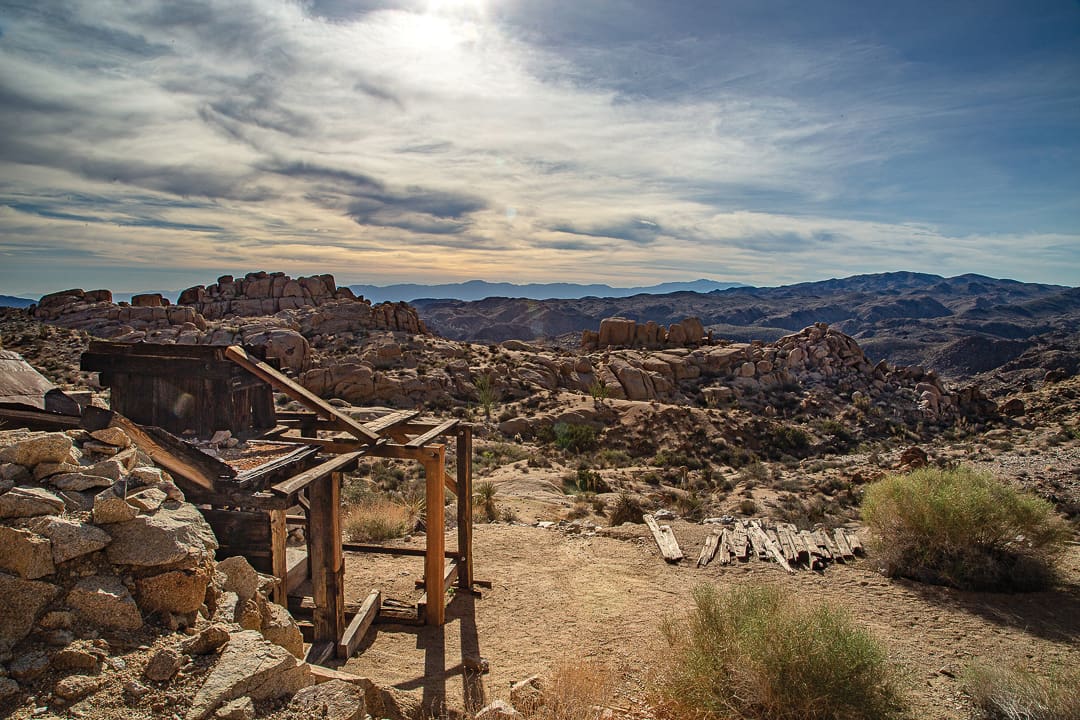
I picked up Frank and Valentina from LAX, and we oozed through the treacle of evening traffic. At 2300 hours, we passed the town of 29 Palms and collapsed into tents in a gulch tucked into the north side of Joshua Tree National Park on BLM land. Awakening to a pink sky, we topped up fuel and water and began our climb toward the park through an abandoned mining district. Heading for a pass through the Pinto Mountains, we twisted along rust-red rocky tracks. From our high point, we could see the transition zone where the Mojave Desert tumbled into the Colorado Desert, contrasting arid seas sweeping toward opposing horizons.
Nobody else was out here, and we ambled along, savoring an empty corner of a park that saw over three million visitors in 2021.
Our trio took a detour at Cottonwood Spring to scramble up Mastodon Peak before exiting the park to camp above Chiriaco Summit. Valentina and I agreed we should reach camp an hour before dark to enjoy our ritual of sundowners. Being a fellow Scotch drinker, Frank endorsed this plan.
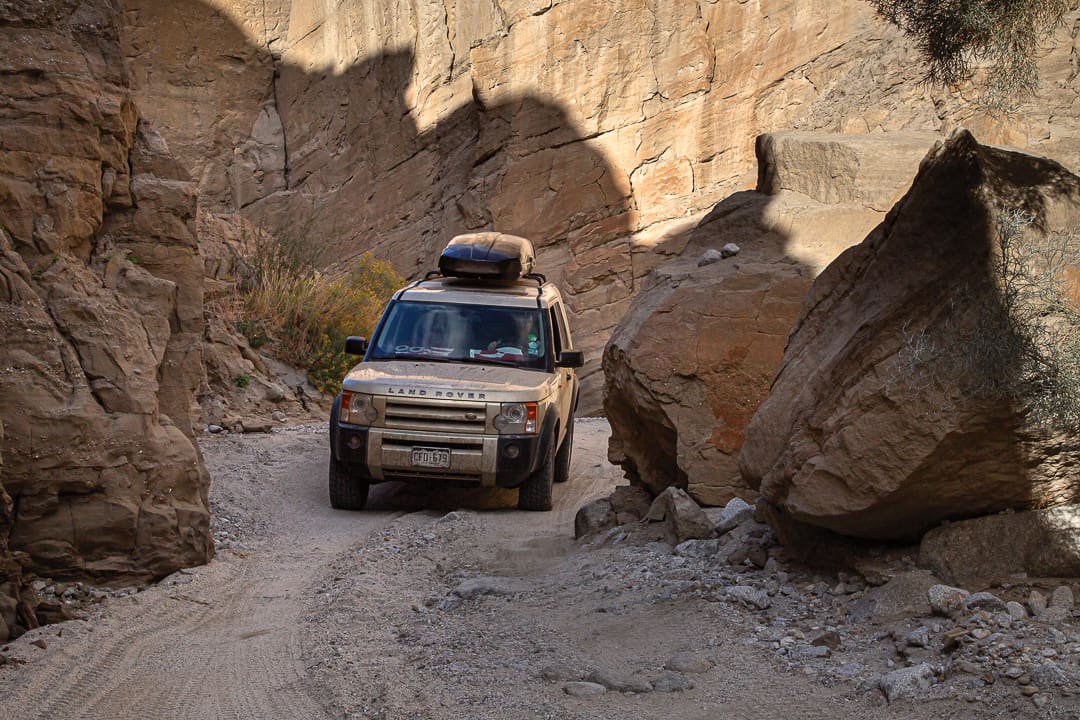
I woke to rose-colored skies and John’s dusty but trusty LR3 parked beside my tent. They had rolled up at some point during the night, and instead of pitching tents, John, Tinka, and Jaana were slumped against the steering wheel and windows. My joints ached just looking at the contortions. Jaana recounted in her clipped English and wry Swedish humor how they couldn’t find the key to the rooftop storage box containing their camping gear. “It’s always something. Nothing changes.”
Our team had forged its bonds in the frigid temperatures and scouring winds of eastern Greenland. John, Frank, Jaana, and I had met on an expedition in search of a US Coast Guard plane that had crashed in 1942 during a rescue mission and was now buried—we thought—beneath the ice of Køge Bay. Between us, we’d been there 16 times, hiking hundreds of miles across glaciers with sensory equipment and dodging crevasses. The others had been back more recently, but I hadn’t seen Jaana in years.
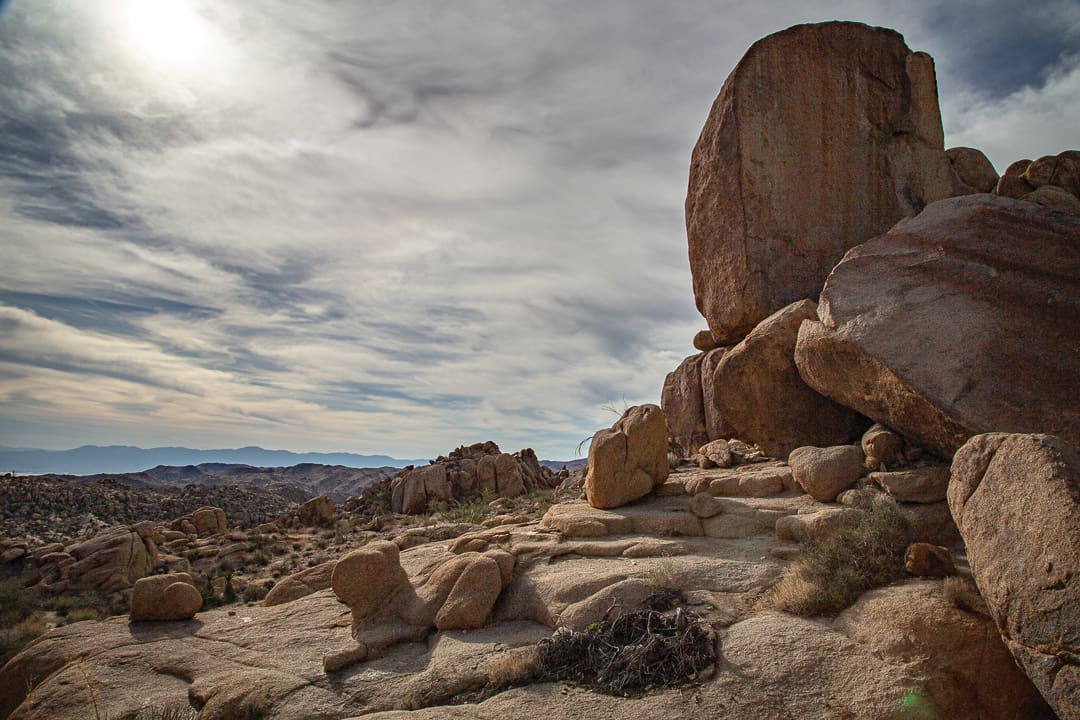
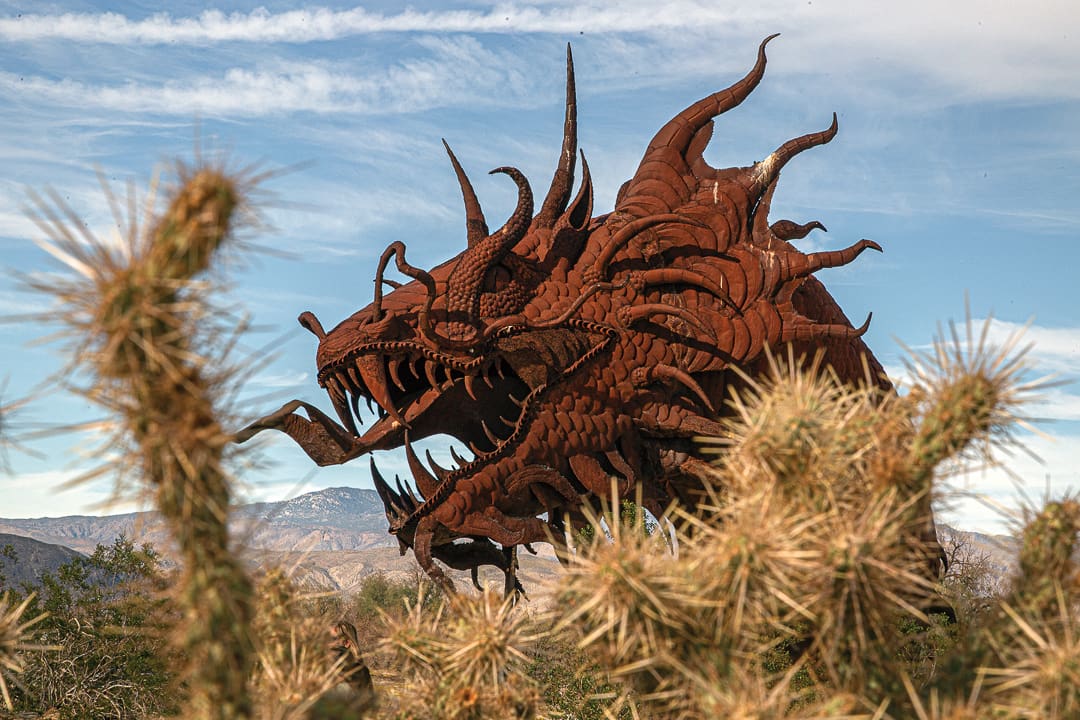
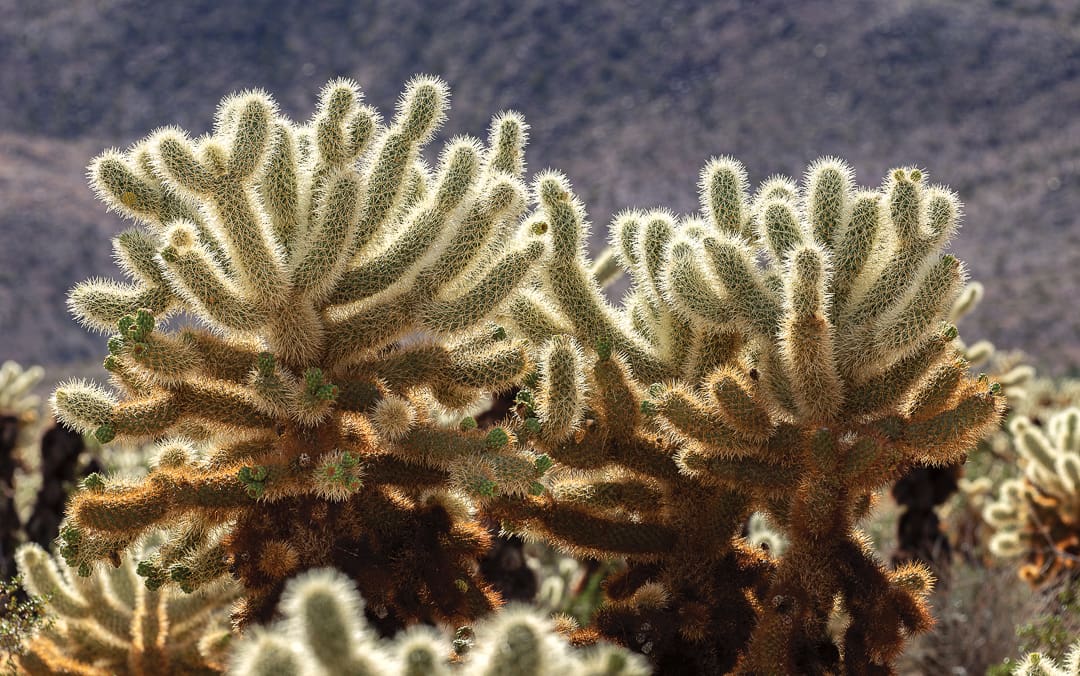
With much to catch up on, we relaxed in camp except for John, who methodically hunted for the wayward key. Valentina and I had planned for short days to maximize flexibility, a low-stress strategy paying immediate dividends. Still keyless, we deferred that problem and headed into the park. The landscape was completely new to Tinka, whose home of snow and sea was a world away from cholla cactus gardens, spiny groves, and towering spires of golden granite. It was also novel for Jaana, and we felt no shame stopping at crowded points of interest to experience the majesty of the landscape.
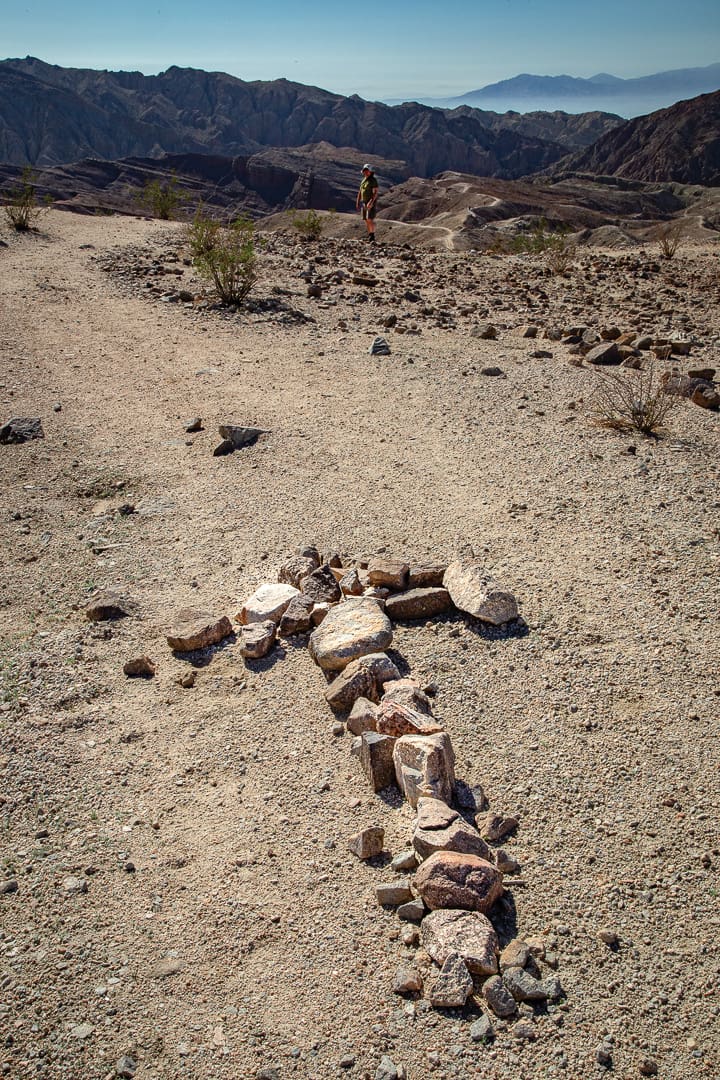
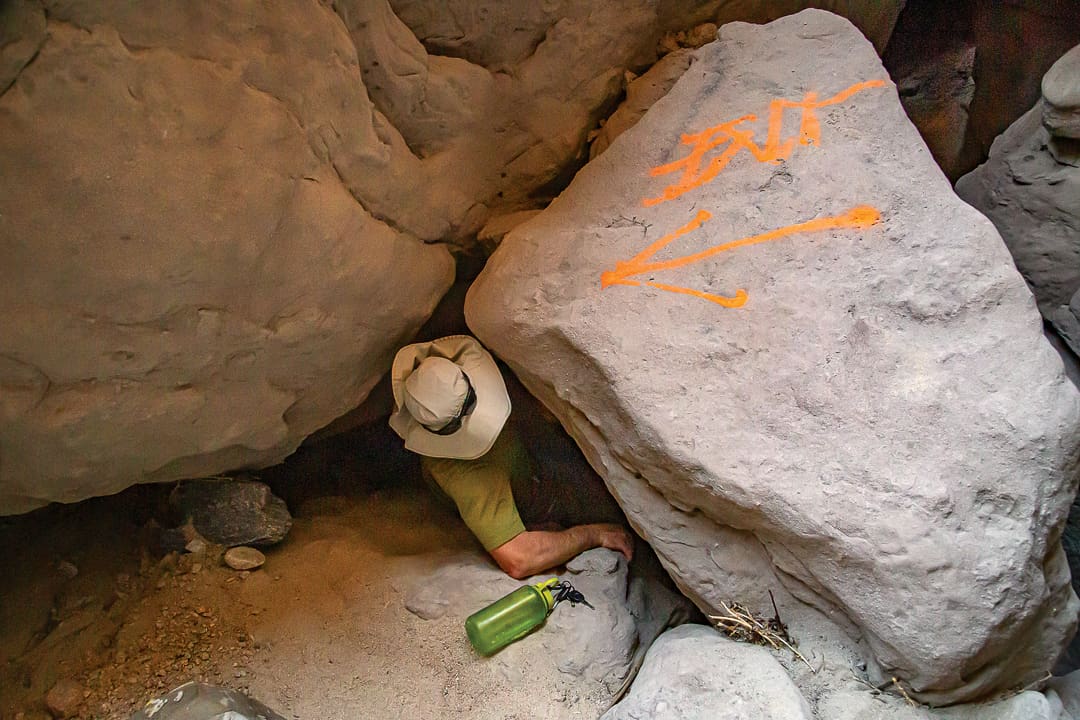
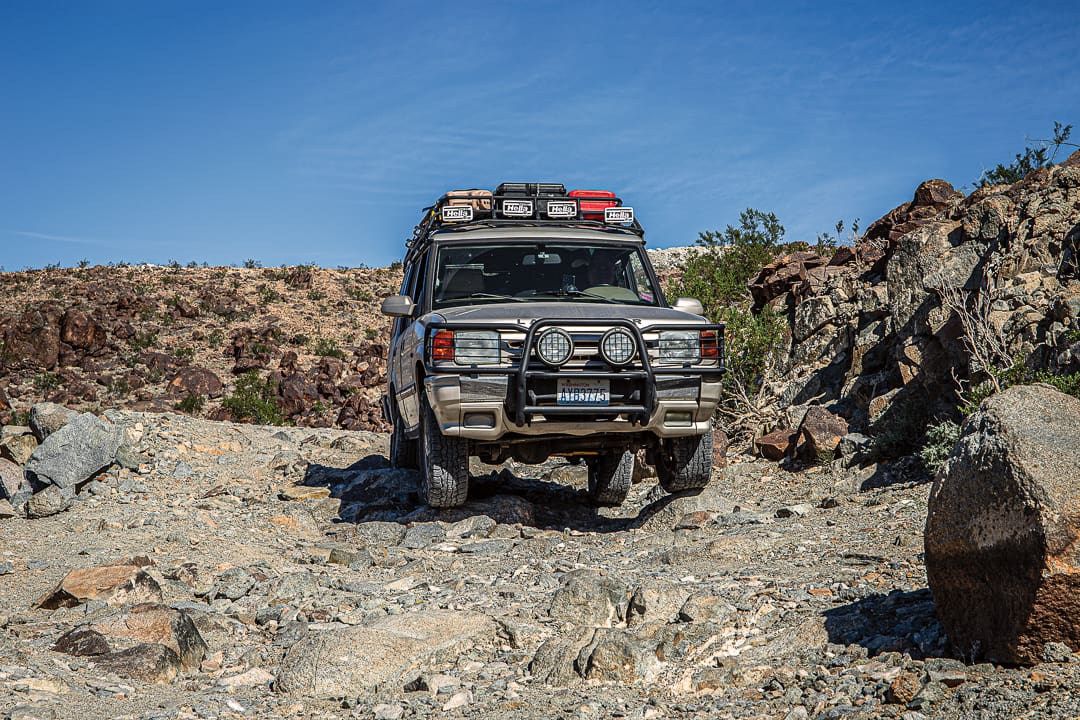
We left the park through Berdoo Canyon, whose battlements of gray boulders and rock ledges deflect any tourists who wander this far. The lonely gorge, streaked with shadows, emptied into a BLM wasteland that was a combination junkyard and shooting range. Hastening past a gauntlet of automatic gunfire, we made for camp at the furthest reach of Painted Canyon to the south of the park. John and Frank departed for San Diego, where a replacement key awaited. John’s tent was beside my Disco the next morning—it would have been a long trip if that mission had been fruitless.
The acoustic cadence of Ropes Canyon was a refreshing departure from driving, and like the terrain we motored through, it conjured broad smiles. The transition between parks led us past the Salton Sea, and we turned west with the Mexican border in view. Another night on BLM land lacked the park’s splendor, but the solitude and the price were right.
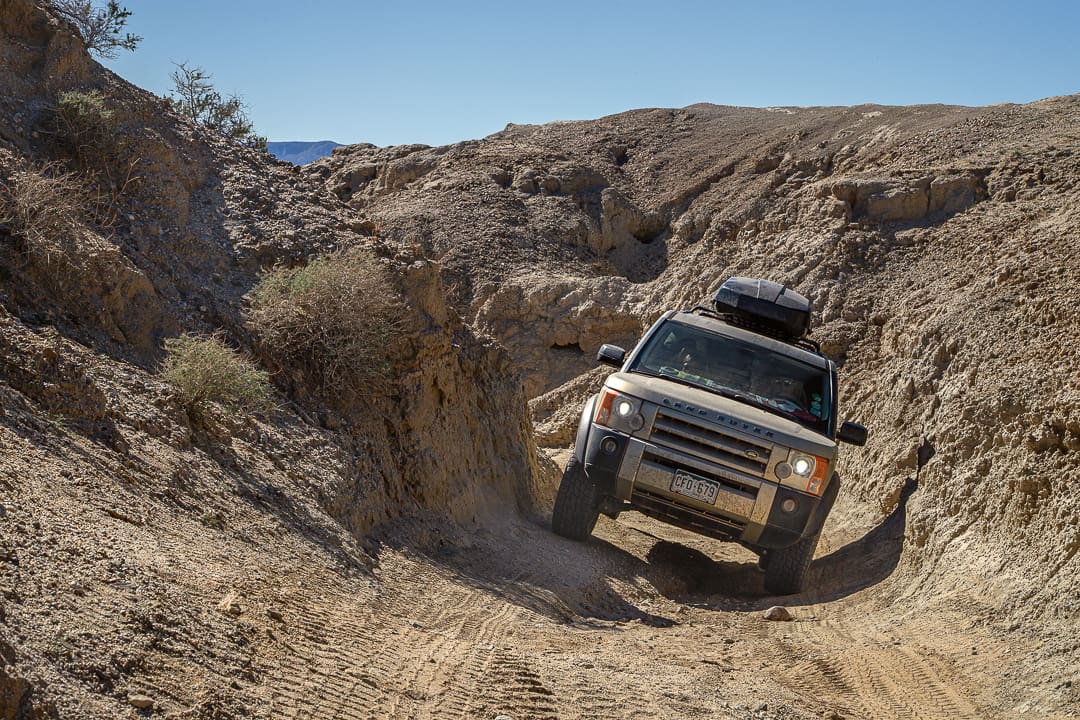
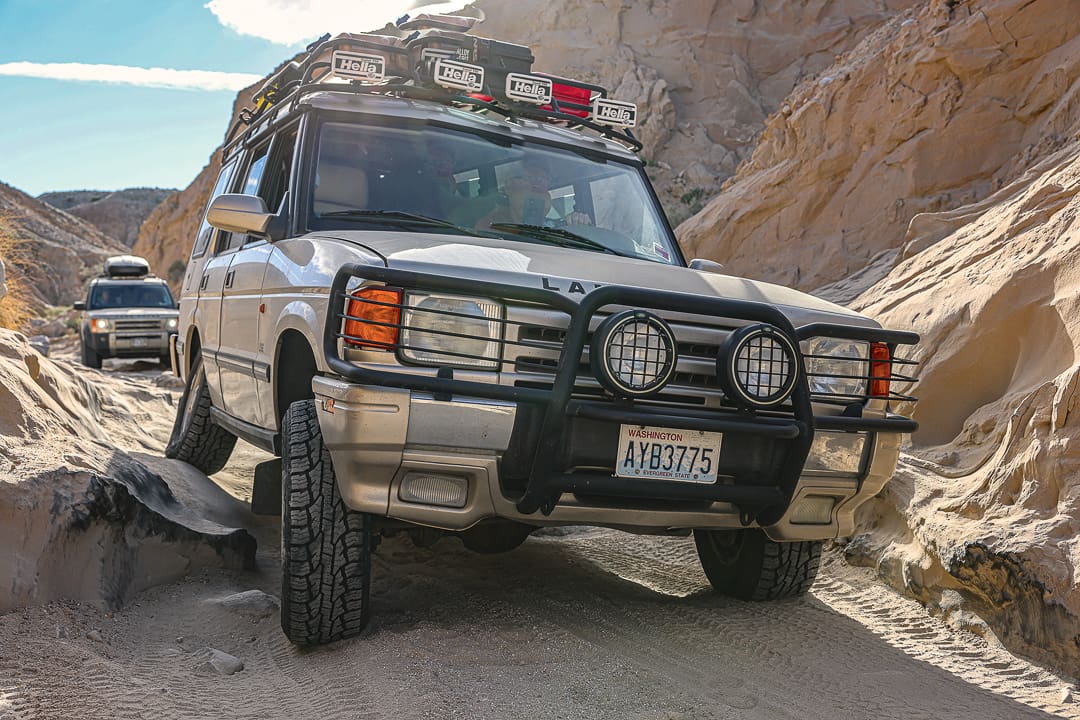
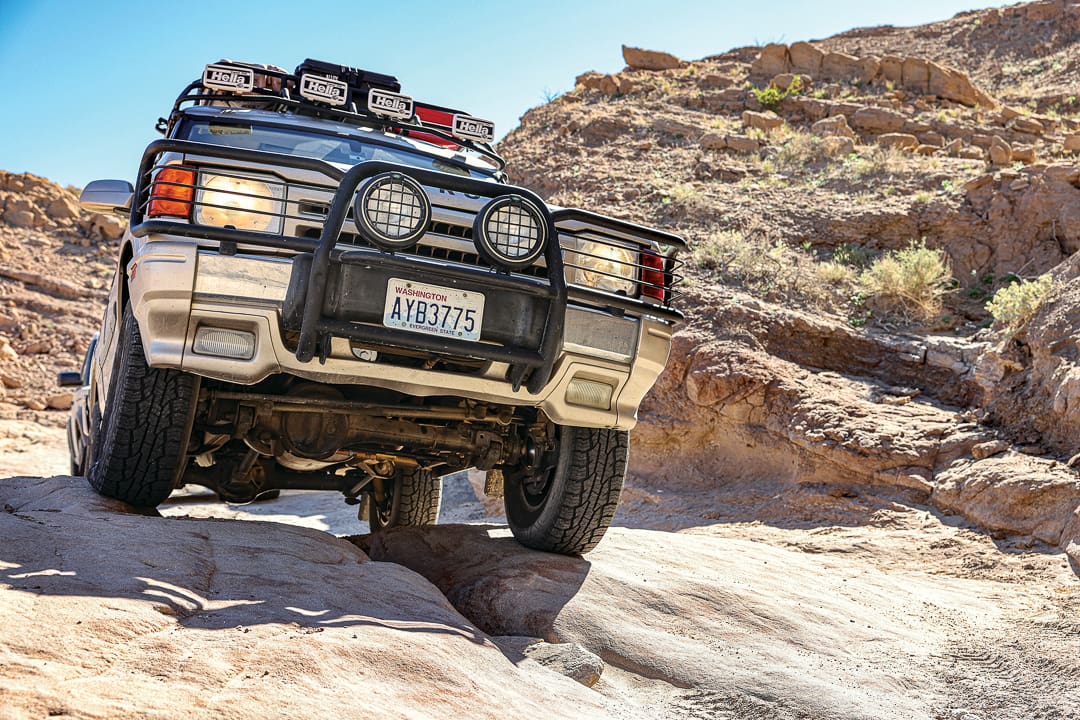
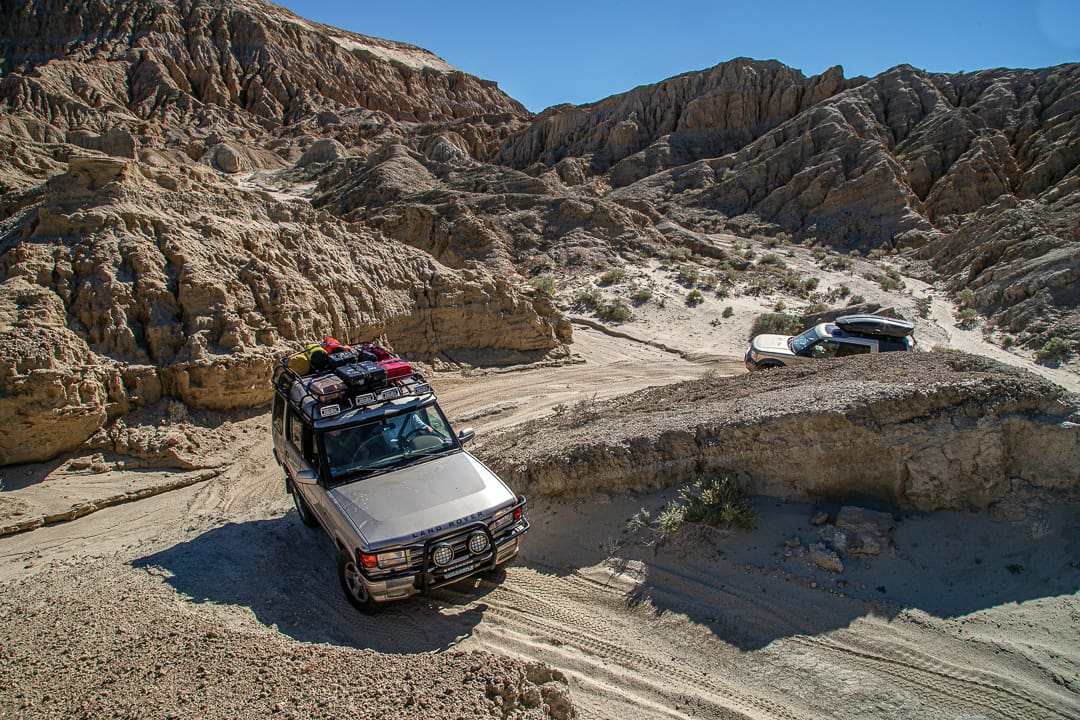
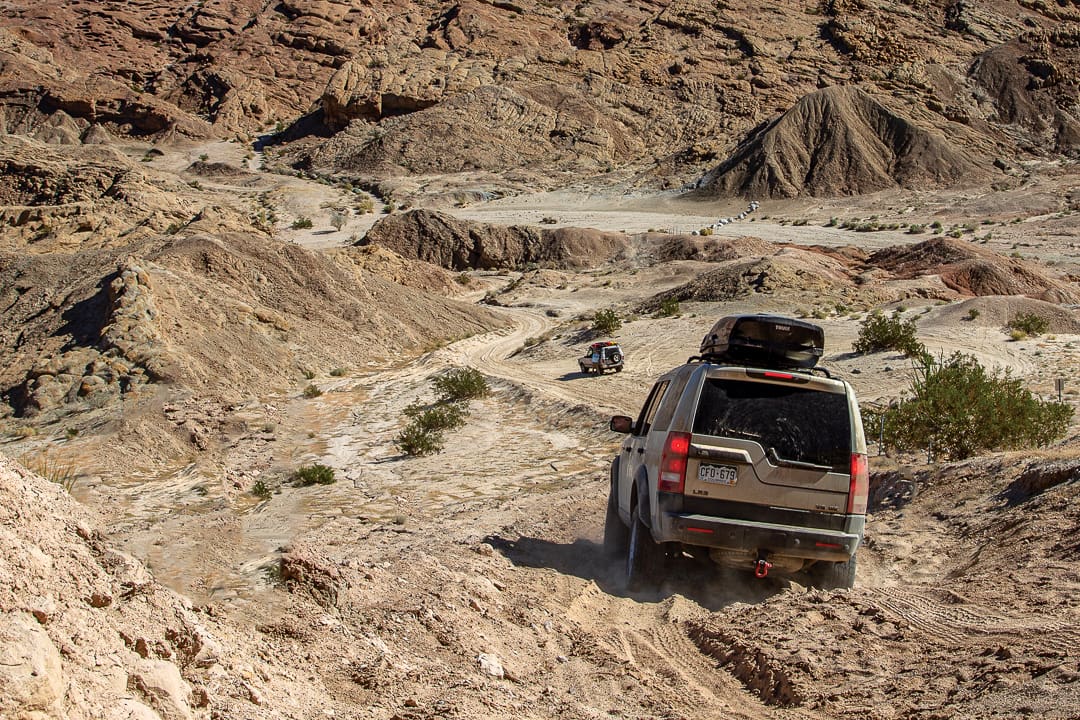
Valentina pointed us into a twisting series of canyons carved into the sunbaked mountains. Their convoluted passages distorted my sense of direction. We bobbed through shadows of imposing mud cliffs, and the terrain opened into a parched mesa punctured with flowering ocotillo and cholla. We scouted the first technical descent, a point of no return. Creeping down the rutted trenches of Diablo Drop-Off, my suspension creaked under full articulation. With my eyes glued to Valentina’s hand signals, the terrain was a blur, but Tinka made it look effortless in the LR3.
At over 900 square miles, or roughly the size of Luxembourg, Anza-Borrego is the largest state park in California. If it were a national park, it would be the 18th largest of 63, but you wouldn’t know it in the cozy confines of Sandstone Canyon. As its walls closed upon us in a radiant embrace, we crawled over the boulders of a vehicle-wide constriction called The Squeeze to reach its empty terminus. Arriving on a November weeknight yielded the prize of having the entire canyon to ourselves. Tinka laid out a smorgasbord: cheeses, grapes, gherkins, charcuterie, fig jam, and our nostalgic favorite—potato tjips from Greenland. Laughter reverberated off the cliffs as our chairs sank into the soft sand.
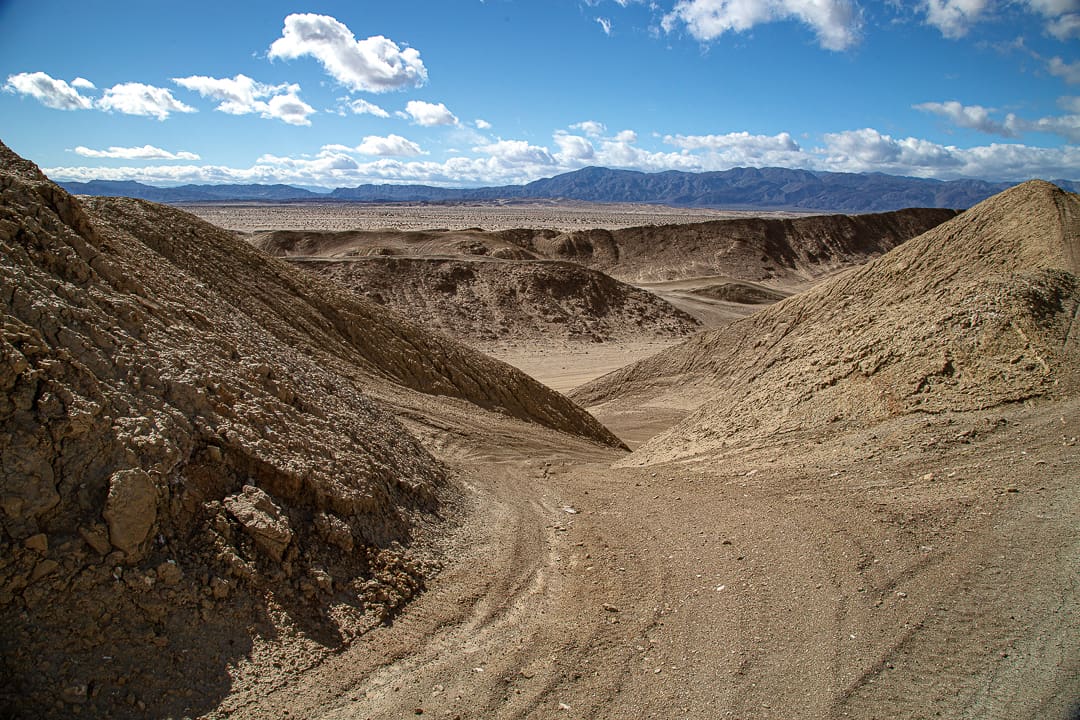
We resupplied in the bustling desert community of Borrego Springs and regained the track in the Ocotillo Wells State Vehicular Recreation Area. Wide, rolling, dusty expanses replaced the imposing canyons. The paradox of this landscape was its sense of isolation in proximity to the irrigated golf courses of Borrego Springs and the baking shoreline communities along the shrinking Salton Sea. The place was empty on a Wednesday, yet the spiderweb of trails splayed across the dry hills told of heavy traffic. The search for oil in the last century yielded only disappointment. The legacy of that ambition is scarcely noticeable, as the resource is now a vast open playground for motorsport enthusiasts.
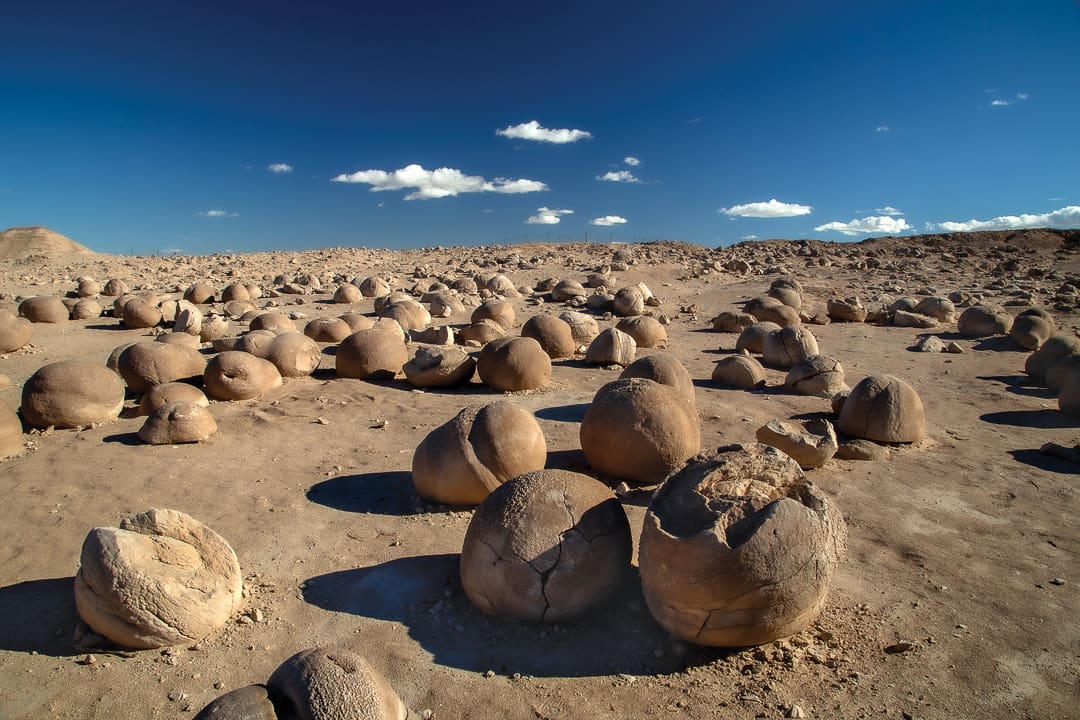
We camped in the emptiness of San Felipe Wash, where we all stood in silence to watch the full moon rise, glowing like molten steel as it climbed above the motionless desert.
Coyote Canyon called, and we bounced up its boulder-choked crux to gain the open upper reaches peppered with blooming ocotillo, barrel cacti, and a palm spring whose dry leaves rattled in the breeze and smelled of tobacco. Camped in the back of Sheep Canyon, we bundled up after the early sunset. The dancing fires from rekindled friendships warmed us as the full moon slinked over the canyon’s far ramparts, casting cold shadows in its ethereal light.
While our Greenland crew had instantly resumed intuitive communication learned from collaborating in 70 mph winds and snowstorms, Valentina brought fresh energy to the group dynamic. She and I shared similar childhoods of exploring remote corners of Africa on overlanding trips with our families: she in the northern reaches, me in the southern. It was invigorating to hear new stories and a different musical tone of laughter among our familiar notes.
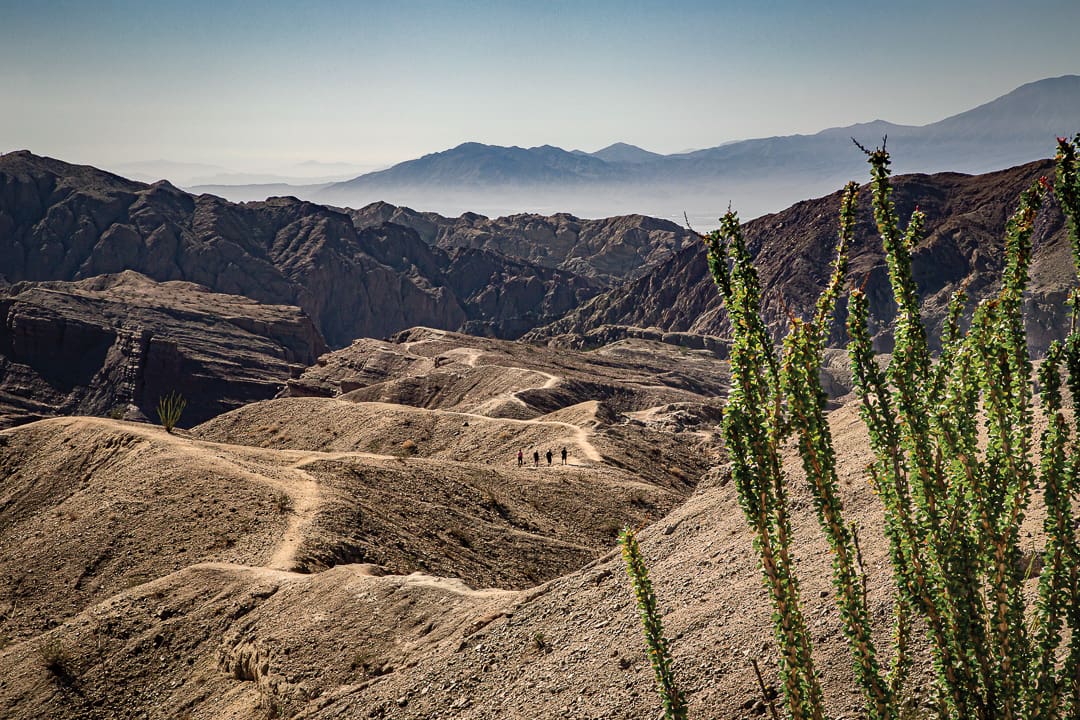
With the weekend upon us, we encountered uphill traffic during our descent of the canyon. We continued east to Inspiration Point for a vista across the entire Ocotillo Wells expanse we’d circumnavigated a few days earlier. The glowing afternoon light splashed across a sea of red desert, its water-carved crenellations spreading to the shimmering horizon. Over the preceding days, we had experienced one canyon at a time, enclosed within its creased walls, squeezing through its coarse grip. Now we could see all of them, compressed, chiseled, and spilling into the hazy distance. We stared in silence, each of us rapt in our absorption of the grandeur of scale across time and space. These are the moments of awe at Earth’s beauty and our place in it that motivate our journeys and make the toil worthwhile.
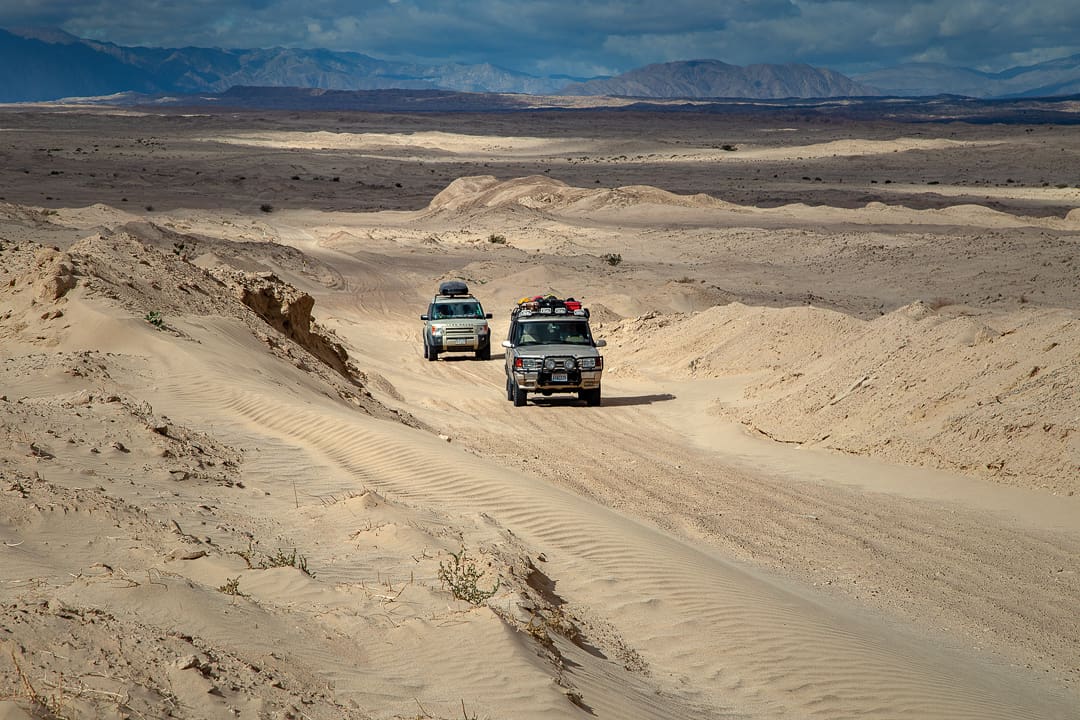
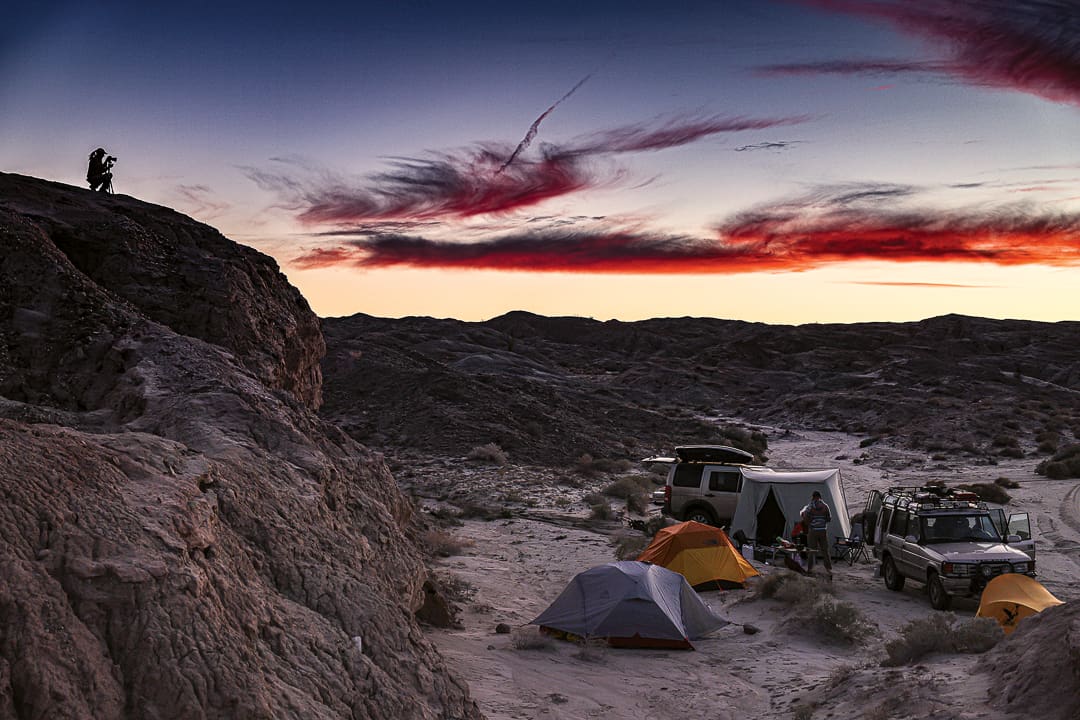
We tore ourselves away from the escarpment to seek out our next camp. A cozy bend in an empty side canyon became home for the night, and we shared Frank’s Alaskan reindeer sausage as stars filled the sky. Our final trail day brought us back to the microscale of convoluted canyons as we wound through Tectonic Gorge. My grip on the wheel tightened as we approached the start of the canyon. Limited sight distances and blind corners were a recipe for collisions with oncoming motorbikes, a couple of which we only narrowly avoided.
The wind scraped across the dusty barrens of the Salton Sea staging area, and clusters of RVs huddled together, fortified homes for the crowds of riders charging across the desert. One look around, and we returned to Painted Canyon for the night. Having escaped the drone of two-cycle engines, a college discotheque emerged across the wash from us, its colored light projector splashing across the sandstone walls like a Mad Max rave.
Frank, Valentina, and I made an early start for LAX, and after dropping them off, I turned the Disco north to Pinnacles National Park. We reluctantly withdrew to our distant corners, wishing we had another 10 days in the desert but grateful for quality time spent together. If we’re lucky, the road of life is long, and we get to share the journey with friends. This trip was a valuable reminder that the treasures of overlanding aren’t the distances covered, but the connections forged among our fellow travelers. California was a world away from Greenland, making it an ideal setting to recharge ahead of our next Arctic expedition. Yet the solitude and starkness of the landscape foreshadowed a similar experience in a contrasting environment at the edge of the ice sheet. It was a taste of what was to come at a very different temperature. Whatever the glacier held, we had the bond of the desert tying our community together.
Our No Compromise Clause: We do not accept advertorial content or allow advertising to influence our coverage, and our contributors are guaranteed editorial independence. Overland Collective may earn a small commission from affiliate links included in this article. We appreciate your support.