

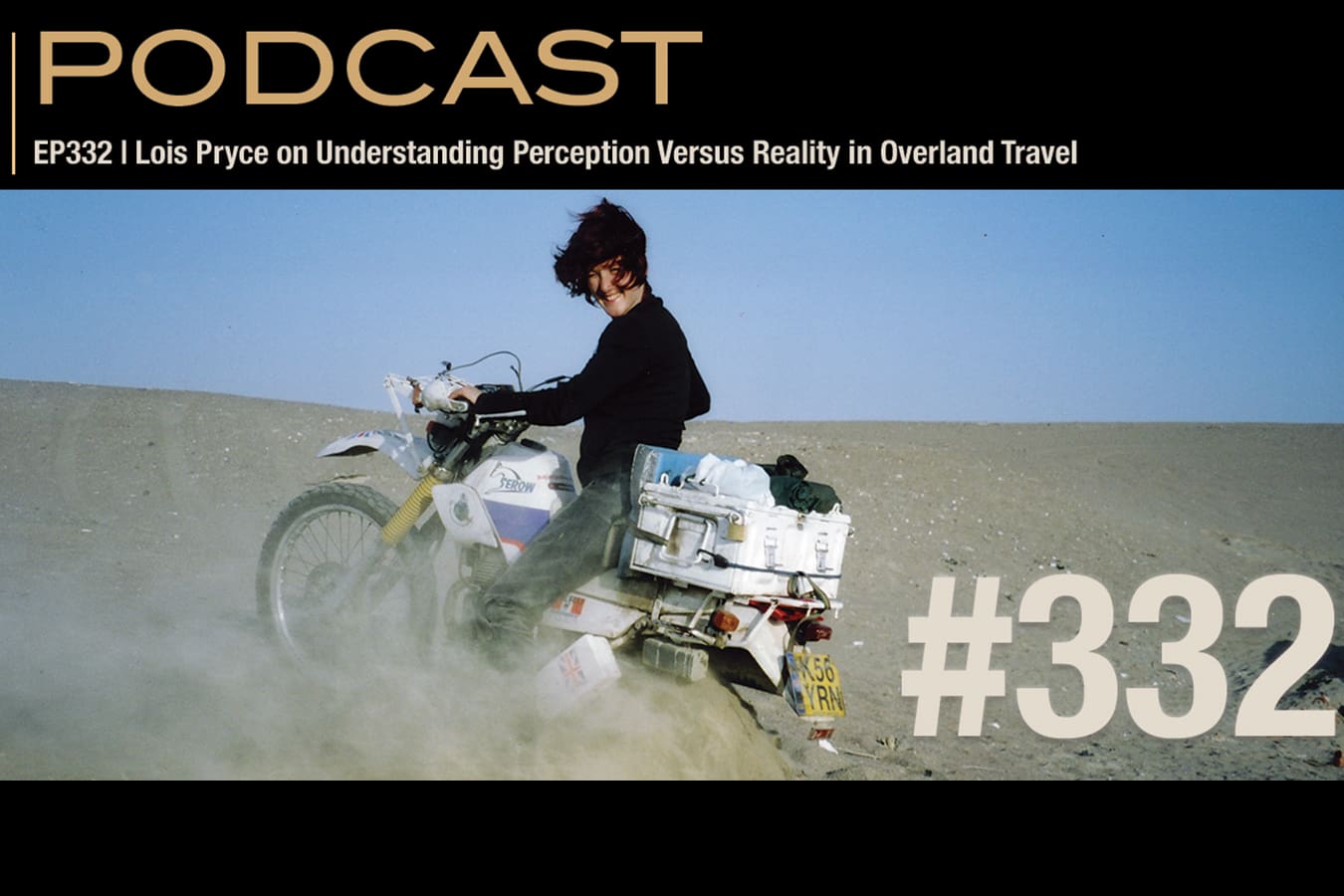
Overland Journal Podcast host Ashley Giordano interviews writer and solo motorcycle adventurer Lois Pryce as part of Overland Journal‘s 20th-anniversary celebration. Pryce shares insights from her iconic journeys, including riding from Alaska to Tierra del Fuego and traveling from London to Cape Town. She reflects on overcoming fear, building resourcefulness, and experiencing the overwhelming kindness of strangers across the globe. Pryce discusses her Yamaha motorcycle setups, a thrilling Congo train story, her travels through Iran that inspired her book Revolutionary Ride, and making BBC radio programs. She also offers rapid-fire travel advice, discusses living aboard her 1901 Thames barge, and previews an upcoming Sahara expedition to Algeria with expert Chris Scott.
Overland Journal Podcast Episode #332
Tune in Apple Podcasts | Spotify | YouTube
The Overland Journal Podcast is brought to you this week by Hankook Tire and GME Radios
For additional heritage content and news, sign up for Overland Journal’s Weekly Dispatch: overlandjournal.com.
New to Overland Journal and want to grab a subscription? Visit Overland Journal and enter code: overlandpodcast at checkout for 20% off. We thank you for being a subscriber.
youtube.com/watch?v=2nd0EV3ZcAc&feature=youtu.be
Guest Bio:
Until 2003, Lois Pryce worked in the London music industry, culminating in a role at the BBC. After passing her motorcycle test, she left to ride 20,000 miles from Alaska to South America. Her book Lois on the Loose launched her career as an author and travel writer. Next, she rode from London to Cape Town, resulting in Red Tape & White Knuckles, excerpted in the New York Times. Her book Revolutionary Ride chronicles her 3,000-mile solo trip around Iran. She writes for the Guardian, Telegraph, and CNN, teaches writing for the Arvon Foundation, is a Royal Literary Fund Fellow, and judges the Edward Stanford Travel Writing Awards.
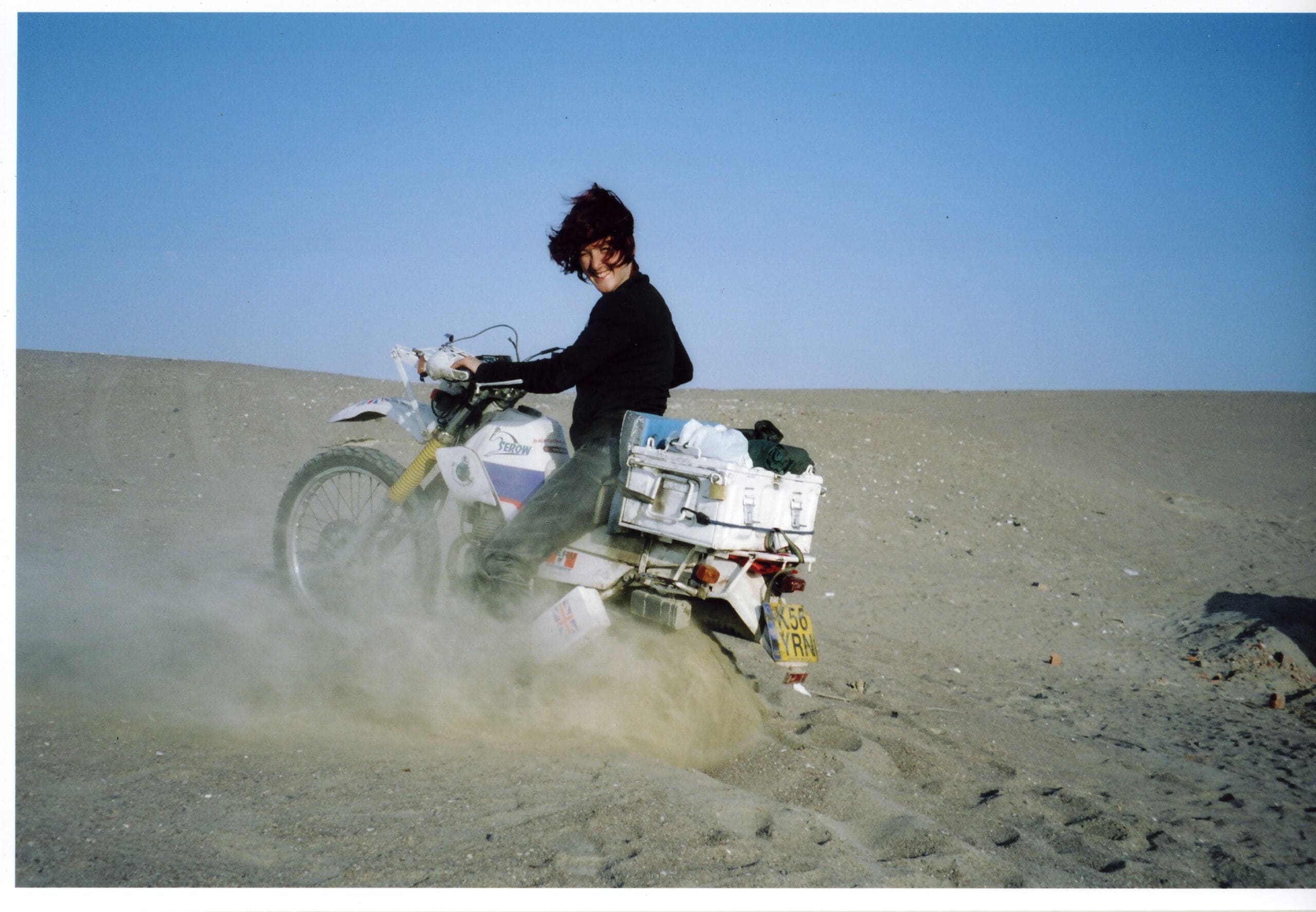
Lois Pryce: Website | Instagram | Facebook | Substack
The Omidvar Brothers: Iranian Overlanding Pioneers Who Circled the Globe
Host Bio:
Ashley Giordano
Ashley Giordano’s first foray into overland travel involved a 48,800-kilometer journey from Canada to Argentina with her husband, Richard, in their well-loved but antiquated 1990 Toyota Pickup. Currently cruising along the iconic Silk Road in a 2008 Toyota Tundra, her full-time navigator duties are rewarded with bowls of plov and lagman noodles, hikes in the Tian Shan, and countless cups of fragrant Tashkent tea. As senior editor at Overland Journal, you can usually find Ashley buried in a pile of travel books, poring over maps, or writing about the unsung women of overlanding history, including her enduring inspiration, Barbara Toy. @desktoglory_ash

Our No Compromise Clause: We do not accept advertorial content or allow advertising to influence our coverage, and our contributors are guaranteed editorial independence. Overland Collective may earn a small commission from affiliate links included in this article. We appreciate your support.
Transcript
EP332 | Lois Pryce on Understanding Perception Versus Reality in Overland Travel
Ashley: [00:00:00] Hello and welcome to the XOVERLAND Journal Podcast. I’m your host, Ashley Giordano. As XOVERLAND Journal approaches its 20-year anniversary, we’re catching up with some of the people who’ve helped shape this community, sharing stories, lessons, and adventures that brought us here. With that said, my guest today is writer, author, and solo motorcycle adventuress, Lois Price.
Welcome to the podcast, Lois.
Lois: Thanks for having me. I can’t believe it’s 20 years already.
Ashley: Right? And I think you’ve been on the podcast but very, a very short one with Scott from your- Mm … boat home.
Lois: Yeah. Uh, when he was in London that time. Yeah, I can’t remember but it must be- 15 years or something, 10 years.
Yeah, a long time
Hankook: And a special thanks to Hankook Tire for supporting this week’s podcast. What’s it like when over 20,000 Jeeps and more than 50,000 people get together in Pigeon Forge, Tennessee? We [00:01:00] joined Hankook Dynapro Tire to capture the awesome energy of the 2026 14th Annual Jeep Invasion. Keep an eye on expeditionportal.com for our upcoming event recap and get inspired.
Thanks again, Hankook
Ashley: I did- didn’t mention you also were writing for The Guardian, Observer, Telegraph, um, but you have three books, Lois on the Loose, Red Tape and White Knuckles, and Revolutionary Ride. So busy writing. Um, what have you been up to lately?
Lois: Well, I’ve been making quite a few radio programs for the BBC here in the UK.
Um, so that’s been quite fun, and that’s sort of moving writing into a different arena, um, which is quite interesting from a writing point of view. Writing books is one thing, writing articles is another, and then writing for radio is quite different, so I really enjoy learning all those different skills.
Um, and I’m off to Algeria in two weeks, um, with Chris Scott, who I’m sure many of you listeners and readers of Overland Journal will be familiar [00:02:00] with. He, he’s a, a hero of mine, an old friend, um, and of course the author of The Adventure Motorcycle Handbook. He’s also one of the leading Sahara experts in the world, and he’s leading a tour in the Sahara.
So I’m going along and writing about that for a certain newspaper here in the UK. So yeah. So in two weeks time I’ll be, uh, I’ll be in the Sahara Desert in Algeria, which is, uh … And I was there exactly 20 years ago on my motorbike. So it’s kind of, yeah- 20 years ago … it’ll be interesting to see how that’s changed.
Yeah, I know. I can’t believe it . But yeah. Wow. 2006 I set off from London to ride to Cape Town and drove, uh, rode through the Sahara, through Algeria in 2006, and now it’s 2026. So it’s like, how the hell did that happen?
Ashley: Wow. Oh, that’s so incredible. And are, are those trips by motorbike as well or is he doing by 4×4 vehicle?
Lois: So this one … Yeah, this is, um,
Ashley: 4×4 Yeah, this
Lois: one And yeah, the, the one that I did with, with on my bike, on my Yamaha TTR 250, but this is, um, [00:03:00] uh, 4×4 and also walking. We’re gonna be trekking.
Ashley: Oh, nice. Yeah.
Lois: And, uh, camels and
Ashley: all that stuff. Oh, my gosh.
Lois: So yeah, it’s, uh, it’s gonna be great.
Ashley: I’m gonna keep my eye on that one and see if he runs it again, ’cause that sounds really, really cool.
Uh, so fun fact You live on a long boat. Are you still living on a long boat?
Lois: Well, it’s, it’s, technically it’s a barge, uh, a Dutch barge.
Ashley: Oh, it’s a barge. Ah, cool.
Lois: It’s a Dutch sailing barge, so it’s very old. It’s, uh, was built in 1901. Um, so yeah, 125 years old. Um, and we bought it in Holland, in, in Amsterdam, and sailed it back to the UK.
And, uh, yeah, it’s, um, still going strong.
Ashley: Oh, cool. Uh, so if t- people are listening in, that, that’s giving them some flavor of where you’re coming in from. So you’re sitting in, in your b- in your barge-
Lois: Well, I’m technically- … floating while we speak … I’m not on the boat right now. I could be, actually. I could walk down [00:04:00] the garden.
But no, I’ve got, uh, in the garden… So the b- the barge is on the River Thames, and we’ve got a g- a garden there, you know, mooring that it’s on. And then in the, uh, at the end of the garden is a little hut, uh, which is where I am now, which is where I play my banjo and do my writing, and it’s very cozy.
Ashley: Oh, neat.
Lois: Yeah. Oh, that’s great. I don’t know, I don’t know how much you can see. So it’s what we would call in the UK a shepherd’s hut. They’re like little,
Ashley: um, little huts on wheels that, that were built for shepherds to use in the, in the Back in the day, so I wanna talk about all of your trips, and I wanna talk about wr- the writing classes that you’re doing, you’re hosting, and a lot of other things. But I wanted to start back, um, in your childhood because I want to know if there [00:05:00] were any indications or previews as a child of what your interests were or your personality or what set you up for this life of grand adventure.
Or was it not that case at all?
Lois: Yeah, I’ve wondered about that as well because I think obviously when you’re young you just go along with whatever’s normal and, and do what your parents do to, tell you or whatever. Well, not that I would say good. But, um, from, from the point of view of traveling and adventure, I was always out, keen to be outdoors.
I always loved outdoors and water particularly, so I suppose that makes sense why I’ve ended up on a boat for all these years. But I, when I was a kid, um, my parents were quite sort of gung ho and they, they, they were very kind of outdoorsy too. Uh, but when I was 13, uh, me and three female friends, all of us 13 years old, we all went on holiday together on our bicycles on a road trip to around Cornwall, which is like the southwest cor- corner of England, very beautiful [00:06:00] part of England.
Um, and we had no, um, plans. We just cycled around and slept in, in barns and knocked on the door of farmers and, and houses and, “Can we sleep in your field?” And, uh, and our parents had no idea where we were. This is our school holidays, and we were away for a week. And you think, God, four th- 13-year-old girls with just no plan except just to ride around the country lanes and see what happens.
And I suppose I, I look back on it and I think, well, actually, that’s kind of what I basically started doing for the rest of my adult life. So maybe it was kind of put into place there. But really, I mean, that’s amazing ’cause now most, uh, you know, parents, they would no way would let their daughters do something like that.
So I grew up in that era where it was quite common for kids to just roam freely and I, and I really benefited from that, I think. You know, it teaches you a lot, uh, to be resourceful and, and to, and y- also to trust people and learn when to trust people and trust yourself and all of that stuff. So I [00:07:00] suppose the leap from being that teenage, young teenage girl doing that to then sort of setting off on my motorbike to ride from Alaska to Argentina isn’t that much of a leap, I suppose.
And then from a point of view of writing, I was always a massive reader. I mean, I would have five books on the go at one time when I was a kid. You know, I’d l- I’d just never stop reading. Uh, and I think, uh, I n- I’ve never studied writing, uh, uh, you know, formally. Um, but I think just all that reading, um, you absorb it by osmosis.
It seeps into how to tell a story and what’s interesting, and it gives you a curiosity- Uh, so I think that putting the two together, it just seemed natural that I, suppose I would write about my travels even though that was never, like, the official plan. I didn’t set off and think, “Well, I’m gonna write a book.”
It just kinda happened, and then it was like, oh, okay, so that’s what, that’s what it’s all been about up until this moment.
Ashley: Yeah. Amazing. And you were working at the B- BC when you decided to leave to do the Pan American [00:08:00] trip. What was your life looking like then, and what kind of gave you the idea that that was a possibility?
Lois: Um, yeah, so my work at the BBC wasn’t actually, uh, journalistic or, um, associated with that side of the BBC. I was working for their music, um, department, so I was kind of their record label. So I was choosing, uh, CDs and, and BBC music and programs, which is g- you know, it’s an interesting job. I’d worked in the mus- music industry in London up until then, um, and music is a big part of my life.
It always has been, and um, I play music. And so that was… It was a good job, but it was still essentially a, a nine, you know, a nine-to-five office job, Monday to Friday. And by this point I was heading for 30, and I just thought, um, you know, I can’t do this for the rest of my life. Um, I, I, I, you know, I had the itch, but I didn’t quite know how to scratch it, and a lot of my friends had, you know, they’d, they’d kind of had a gap year.
They’d gone backpacking or something and then gone to university, and that was the sort of standard [00:09:00] route that everyone, uh, in my peers were taking. But I left school when I was young. I left school at 16 and started working straight away in music jobs. And, and then ended up in this job at the BBC, which, you know, it, it was a great job and it had all the, all the good things going for it, but- I just knew that I needed more, and I knew that I didn’t ever really wanna do that kind of backpacking gap year thing.
It didn’t appeal to me. I like to have my own wheels. And by, by chance, just by coincidence, around that time I’d learned to ride a motorbike. So I didn’t learn to ride until I was in my late 20s, so it was quite late in a way. Um, and once I did that, that was this light bulb moment when I realized, oh, okay, this is how I can do- I deal with the itchy feet.
You know, this is the way to do it. This is the way to see the world. So I knew I didn’t wanna just sit on buses going around the place. Um, and of course, as we all know, a motorcycle is the, is the finest way to get around, and you’re right out there in the thick of it, and, um, it’s easier than bicycling. So [00:10:00] it, it all added up.
Yeah. So it really was this kind of moment, okay, boring job, itchy feet. Now I’ve got a motorcycle license. Oh, it all makes sense. And so that’s when I handed in my notice and decided that I was gonna ride somewhere. And initially I thought, I’m gonna ride around the world, you know. But then I realized I probably didn’t have enough money to do that.
So I looked at the map and I thought, well, I’ll do half of the world. And that route, you know, from the top to the bottom, essentially from Alaska down to Tierra del Fuego at the, in the southern part, in the southern tip of South America, um, is a fantastic journey to see a, a huge amount of variation and to, to have, you know, all that land mass apart from obviously the Darien Gap.
But, um, you know, you get a bit of everything. And so, and a lot… I love America. Um- bad in the UK, but, you know, I’d grown up as a, we all had, I think, in the UK sort of in, in awe for American music and culture and writers and design and, yeah, so I really wanted to go to the West Coast in America for more of this, [00:11:00] like, music point of view.
So I started, decided to start in the top and make my way down. And um, and so that’s what I did.
Ashley: I think it’s so interesting the cross-cultural appreciation. Um, so I’m- Yeah … not from the US, I’m from Canada, but all of the things that came in from the UK that we’d be like, “Oh my gosh.” You know, like Art Attack.
Yeah. We’d watch Art Attack on TV or- … you know, there’s so many different ex- I know.
Lois: Yeah, yeah,
Ashley: totally. So many random- I mean- … things.
Lois: Yeah. Well, I suppose ’cause we share the language and, and just everything. You know, growing up in the ’80s, everything American was cool. Yeah. We all wanted to be American. We all wanted to go to America.
We loved the cars and the bikes and the ev- you know, the, just everything. And obviously it’s slightly heartbreaking, uh, the way things are going over there now. But I still have a huge fondness for, for, uh, for that country and the people there, and I, I love it. And I, I really miss it. Yeah. So I hope to go back soon.
Ashley: Yeah. It is, it’s an incredible country, that is for sure. Um, and I bet that that journey [00:12:00] prepared you for the next leg, because that’s such a great route to gain experience and learn about yourself before you tackle something maybe a little bit more difficult. And so for you- Like- … going to Africa next, do you feel like it prepared you a little bit?
I’m sure it must have.
Lois: Yeah, that’s a really good point, actually, because I did say when I was in Africa, crossing the Sahara or the Congo, whatever, “Oh my God, if I, if I’d done this as my first trip, I don’t know if I’d have made it.” Because, you know, the only way to learn how to do an overland adventure is to do an overland adventure.
So by the time I got to Tia Duogo I knew what I was doing. So it was like, uh, but it was a great one to learn on, like you say. And also I think going north to south on that journey made sense, because obviously I started out in USA and Canada, English-speaking countries where I could get anything I needed for the bike and all of that kind of stuff.
And, you know, the, those first few weeks, even months can be quite, you know, just disorienting. I’ve never lived like that before. I’d never lived, uh, you [00:13:00] know, nomadically, traveling just with, you know, a couple of bags of stuff. That was it. And I was like Part of the reason I wanted to do it was to find out if I was the kind of person that could do it.
You know, so it, it was, it was a good way, good way to start and I, I think it became pretty clear early on that I definitely was the kind of person that could do it and that I loved it. Um, but it gave me that kind of three month, uh, to get to the Mexican border and then of course things get, uh, more challenging there.
But then they’re also more exciting, but I was sort of ready for that by that point.
Ashley: Nice. What were the biggest surprises on that journey for you that you were like, “Oh, I didn’t even expect this at all”?
Lois: I think the, the biggest surprise wa- well, I mean, there, there’s many and they sort of u- unfold as you go really, because you really don’t know what to expect.
It, it… Unless you’ve been on the road like that for a very, very long time on your own, you don’t know what it’s like. Um, so I loved the novelty of it. And- You know, I thought I would be, you know, I don’t [00:14:00] know. I mean, I, I think before you go there is a lot of, of fear. You know, will I be, uh, lonely, scared? You know, I don’t remember really feeling any of those things.
I, I just, I, I lapped it up. Um, and I think it, it, it just brings out the resourcefulness in you and, and that is really the appeal is finding yourself in these potentially difficult situations sometimes and, and having to get your way out of them just using your wit. I really enjoy that aspect of it, and I think that really was kind of the main motivation.
So I suppose that, that was, um, a surprise. That it, I mean, I don’t know if it’s a surprise, but it was a re- rewarding experience to find that, that, that I had that in me. Um, and, um, yeah, I mean, what, trying to think about this. I suppose the other sort of surprise, of course, is that you’re fed, we’re all fed so much fear.
Um, and certainly when I was traveling through the USA heading towards the Mexican border, every time I told someone where I was going, they’d be horrified. And as a-
Ashley: Yeah …
Lois: single [00:15:00] female, you know, you know, I’m sure you’ve had this a million times yourself, but yeah, especially as a solo woman, you’re like, “Oh my God, you’re going to Mexico.
They’ll rob you and attack you and rape you as soon as you cross the border.” And of course, nothing could be further from the truth. And this happens again and again and again, and it’s like this never changes. You know, the country you’re in will tell you that the next country is dangerous and you’re gonna have a terrible time, and then you get there and it’s great.
And then they can’t believe you came from the previous country, which they tell you is horrible and full of dangerous people. Oh, God. Yeah. You guys should just, like, get to hang out a little bit more, you know. People are pretty much chill and friendly around the world. That, that’s really the upshot of it.
They’re really nice over there. Yeah. Yeah, exactly. Everywhere, you know. Yeah. And I think never was this more the case than when I went to Iran, but, and that’s down the line, but we’ll come to that. But yeah, that is a recurring thing, and when you don’t know, you believe it. That’s the thing, and I’ve, I’ve…
and I real- you know, I believe the scare stories. You know, I, I’ve got a active imagination, which is a good thing when you’re a [00:16:00] writer, but you know, people would tell me about these, all these awful people and places and I sort of believed them and then I had to get over that fear and, and go for it anyway, and then discovered, you know, that that, of course it was nothing like that.
So I think that’s probably the biggest and the best surprise of all.
Ashley: Totally. Yeah. Yes. That’s a great point. Really great point. I love what you said about- Every border crossing, they’re like, “Oh my gosh, I can’t believe that you came from Mexico- … and Belize.” And then El Salvador- Yeah. That’s true … they’re like, “I can’t believe you came from Belize.”
It’s just- … it’s funny. But the relationships, I guess, you know, as people living there are different with their neighbors than they are somebody passing through. But it is nice to have that sense of surprise at or, or what- or whatever every time you go in, and you’re like, “This place, you know, I’m having a great time here too.”
Yeah. So yeah, it is, it’s a good- Yeah, it’s
Lois: true … thing
Ashley: to remember And
Lois: you are, of course, you are coming at it from a, as an outsider. You’re, you know, you are… I- and you’re right. When you’ve got [00:17:00] neighboring, neighboring relationships, that’s different. Um, but yeah, as an outsider, people are generally pleased to see you.
I mean, that’s my experience. And they, and they, they have a pride- Um … in their country, and they kind of want to make sure you have a good time, and so they want to make sure you’re okay and… And so I, I always felt that, that people were happy that I was there, and they wanted to… They wanted me to leave their country saying that I’d enjoyed that, that place.
So, um, and that, that’s, yeah, the same all over the world, every culture.
Ashley: Agreed. Yeah. That’s been my experience as well, which is great. Um- Yeah … yay. Was it on the Pan American Adventure you were traveling with somebody else?
Lois: Well, yeah, a few people actually along the way, and I think one of the quite, I think, the nicest things- Yeah
about motorcycle travel is that it, it’s a very friendly community, and there’s a real camaraderie with motorcyclists. I’m sure there is with, you know, bicyclists as well and, and four-by-fours or whatever. But obviously, motorcycling was my choice, uh, of, of transport, [00:18:00] and so I tapped into that world. And this is all pre-social media.
Um, we had, um, Horizons Unlimited website, which was, you know, this, like, great but clunky kind of forum where we could meet up with each other around the world, and that was really nice. Um, but even if you just run into a- another motorcyclist on the road, you always stop, you always say hi. You end up riding together.
You’d, you know, hang out together and stuff like that. So that was, that was it. And so I ended up riding with a girl called Rachel, who was a French motorcyclist, also on a 250, so we had small bikes together, which was nice. Um, and she kinda came and went throughout the journey. Um, and then a woman I knew vaguely in London came out to meet me in Peru and was gonna ride the rest of the trip with me to, uh, Tierra del Fuego, but that did not work out so well.
And she, um, actually ended up having a terrible crash around, um, on the- shores of Lake Titicaca in Bolivia and nearly died, and that then ended quite the- Oh, no … drama, as you can imagine. Yeah. Yeah. [00:19:00] So she sort of- Yeah, well- … rode face, face first into a cliff. Yeah. Yeah. Wow. Oh my gosh. So then, uh, suddenly I was, like, tackling, um, Bolivian healthcare, which is, again, is, um, not something you really wanna be doing.
So, and this was, you know, 20 odd years ago, so yeah. So that was pretty rough. Um, so, and then I rode the rest of the journey from Bolivia to Tierra del Fuego alone, except then I met up with the French girl again, who did the last leg with me, which was really nice. So yeah, it, it was a good mixture really looking back.
I had to, I, I was alone all of, um, uh, Central America, and through, uh, the USA, but I visited friends in the USA on the way. So it, so it was kind of like a nice mixture of being on my own and with other riders. But, um, yeah. I mean, I set out to do the journey on my own, and that was really important to me that I didn’t go with a companion.
I d- I wanted that challenge of sort of making it work by myself.
Ashley: It’s really nice. I love that balance [00:20:00] because you get things from traveling together with another person or people that you wouldn’t necessarily get if you’re by yourself. But then obviously there are the rewards of traveling solo. And when you’ve been gone for a while, when it’s a long trip, it’s so great to have conversations with other people other than yourself or your partner, and, um, those relationships on the road can develop into long-term friendships.
It’s, it’s super nice. Yeah.
Lois: Oh, yeah, I totally agree. I mean, I’m still friends with people I … Yeah, still friends with Rachel, the French girl, and I’m still friends with people I met on the road in ev- every trip that I’ve done. Um, but yeah, I think there’s, there’s a lot to be said for both, and I just think it depends what stage you’re at in your life because now I don’t have the urge to, to, um, to travel solo anymore.
You know, I’ve been, you know, married for 20-odd years, and mo- even though my trips were … I’ve done solo trips while being married, I just, I don’t have that need to prove anything to myself. You know, I wasn’t really, I wasn’t caring about proving [00:21:00] stuff externally. It was more for me, like I wanted to know if I could d- pull it off.
And so I suppose, you know, you do that, and then now you … I, I’d much rather travel with Austin, my husband, or friends or whatever now. So but I’m really glad that I did do, do those, uh, first few trips on my own.
GME: And a special thanks to GME for supporting this week’s podcast. When you’re miles from cell service, communication isn’t a luxury.
It’s essential. Introducing the new GME XRS-660-U, a premium handheld GMRS radio built for serious overlanders. Made in Australia and engineered for the harshest conditions. It features built-in GPS, Bluetooth connectivity, a sunlight-readable full-color display, class-leading two-watt speaker, and rugged IP67 protection.
Whether you’re leading the convoy, spotting mates on the trail, or exploring [00:22:00] off-grid, the XRS-660-U keeps you connected when it matters most. Upgrade your communications game and discover the new GME handheld today. You can visit them at gmeus.com. Again, you can reach them at gmeus.com. Thanks again, GME.
Ashley: And you alluded to the bike that you were traveling with On that journey, how was that different from the bike you were traveling on through Africa? And what was your setup? Yeah. Did it change from one to… Yeah.
Lois: Oh, yeah. Yeah. I think, you know, probably like every, every traveler, constantly tweaking the setup and never quite getting it right.
You know, there’s no perfect bike, really. I- I’m quite short, so I wanted a small bike, and I, with the, uh, being on my own, I wanted to make sure I could pick the bike up. So I was riding a Yamaha XT225. So that’s like a small dual sport bike, um, with a nice low seat. Um, I had… I just… Because this was, uh, before you could kind [00:23:00] of buy stuff for adventure motorcycling that was kind of custom, you know, that was sort of available, um, commercially.
So I just made all my own luggage out of old army surplus stuff and bicycle things. I just, I just took the panniers off my bicycle and stuck them onto my motorbike. Um, and just had dry bags, you know, canoe bags full of stuff strapped on here and there and, uh, and then extra, you know, like Jerry cans and petrol in it.
You know, they were a total shambles really. It was all bungeed on and just, like, made the best of it. It was fine. Um, but yeah, I mean, it’s a small bike obviously. I don’t mind that. I, I, I’m not in it for the speed. I’m much more in it for the exploratory side of things. Um, and so for me a small dirt bike makes more sense Um, but yeah, obviously it’s pretty slow going on through the motorway.
Like on the, um, the highways, you know, the freeways in, like, Los Angeles, I was like the slowest vehicle on the road. But in a way it’s, it’s good to be on a small bike ’cause it forces you to take the small roads, which as we all know is where the fun is. [00:24:00] So, um, so it was, it was fine most of the time.
Struggled a bit in the Andes, um, because of the altitude. So, um, I’d go really slowly when I was at, like, 15,000 feet above sea level. But, um, but you know, made it. It’s tough, it’s a really super tough little dirt bike. And, um, yeah, got there. Um, my second trip through Africa, I thought, “Oh, well, yeah, maybe I’ll take the advice of everybody and get a bigger bike.”
So I upgraded an extra 25 cc to a 250. So then I was riding a Yamaha TTR 250, which is again, another, just another good, tough Yamaha, uh, dual sport bike. Uh, I could put a really big tank on that one. That’s why I chose it. Um, had a 22-liter, um, tank that I put onto the Sahara. Um, and I lowered it ’cause it’s very tall, and that bike was absolutely brilliant.
I mean, obviously the journey was, like, half the distance, so London to Cape Town is about 10,000 miles. And the journey that I did through the Americas was more like [00:25:00] 20. Um, but- Mm … it’s 100 time, 100 times tougher. You know, the, that, that Africa journey, it, like, just way, way tougher. So, um, but yeah, the bike, nothing went wrong with it.
I set, I prepped it all. Um, I always set off with, like, all the consumables brand new and the top quality that I could get. So like chains, brake pads, cables, all of that stuff. Um, and I didn’t, I didn’t even have to adjust the chain until I got to Cape Town, so that was pretty impressive. And, you know, at this point, I dunno what it’s like in Africa now because I know there’s been a lot of road building, but really there was very little tarmac, as we would call it in the UK, or asphalt, I suppose you say in the States.
Except at the top, you know, North Africa and Tunisia, and, uh, and then at the bottom in Namibia and South Africa, there’s proper sealed roads. But everything else was just, like, mental. You know, just sand in the desert and mud in the jungle and, and, like, yeah. So it is basically like the biggest dirt ride that you’ll ever do.
Um, but the [00:26:00] Yamaha TTR was really good. Really good. Um, so I used the same again, not the same bike, but the same model. I bought another one, ’cause by the end of Africa it’s pretty worn out. Um, and I used the same- Yeah … one again to go to Iran.
Ashley: Awesome. Did you have some b- bike mishaps along the way your, during your Africa trip?
Or was it pretty-
Lois: No …
Ashley: pretty good?
Lois: No, uh, none at all.
Ashley: Yeah, that’s nice. Good.
Lois: Yeah.
Ashley: Great.
Lois: Yeah, yeah, amazing. Yeah. I mean, uh, it was, it was low mileage- … when I set off. You know, I think, uh, in Africa I set… It was… It wasn’t new. I didn’t buy the bike new. I bought it secondhand, but it only had, like, a few hundred miles on it, I think.
Um, and because I prepared it all with brand-new parts, they could easily do 10,000 miles Without, without anything failing. Yeah. The only things that went wrong was, like, obviously in the Sahara it’s super dusty, so, like, you got, you got dust in your controls, and, um, it, it, like in the starter switch and stuff like that.
But that’s just cleaning it out, um, [00:27:00] you know. But nothing catastrophic at all. So it… No, no, no, totally brilliant bike. Yeah, so highly recommend the- Fantastic … KTM as a trail bike. Yeah.
Ashley: I like that because then you can focus on the journey and the people, and you’re not… I mean, I think it’s, you know, there’s an adventure involved when something goes awry with your vehicle or your, you know, your bike or your pushbike, but the time you’re not spending on dealing with that is f- Yeah
you can go do something- It, it’s- … fu- fun.
Lois: It’s true, isn’t it? I mean, i- in a way. I mean, like, the first trip I, I had a few, I did have a few problems and needed to take the bike to, to be repaired along the way. I mean, obviously it was a much longer journey. Um, I was on the road for 10 months then. Um, and of course those are, you know, it’s like Ted Simon says, uh, “The interruptions are the journey.”
So in a way you’re like-
Ashley: Yeah …
Lois: especially if you’re writing about it, you’re half torn because, like, if it all goes smoothly, then there’s n- there’s, like, nothing [00:28:00] happens. Yeah, well, that’s not true. There’s always something happening. But, you know, when something does go wrong, if you break down or something, you know, you have to go to a, um, get the bike into a shop and then you do something else or, or you get lost even, you know, that is where the interesting things happen.
But at the same time, ah, you don’t want the breakdown, you know. It’s a nightmare and you’ve got to fix it on the road and all the rest of it. So, so it’s like kind of you’ve got to try and look on the bright side if it does go wrong. And, and generally it usually means that you’ll do, something interesting will come out of it.
But it also can be a colossal pain in the ass. It’s true.
Ashley: Yes. And, or you’re, you’ll meet people you would never have met otherwise. It’s,
Lois: yeah. Exactly. Someone stops by the side- It’s a thing … of the road, they say, “Yeah, I’ll fix your bike.” They put it in the back of the truck, then they invite you to a party or something.
You know, these, these things have happened to me, and those are the great moments that you remember. Um, but obviously when your bike has actually just, like, died in the middle of nowhere, that is hard to kind of think on the, on the bright side. But yeah, it’s true.
Ashley: Um, what year did you do the Africa trip?
I’m trying to [00:29:00] get a sense of, like, what was going on at that time on the continent.
Lois: Yeah, so, um, yeah, I, I left London to October 2006. So yeah, exactly 20 years ago. And, um- Wow … and I rode, uh, for the, in about four months I was on the road. So I came back in the spring 2007. Um, so it was, yeah, it was, um, relatively peaceful time, you know.
It wa- it was just before, you know, the kind of, Al-Qaeda really took over in, um, i- in North, in North Africa. And I remember I, I found out later I was the last- group that was allowed to, well, not group, but I was the l- last of the kind of, you know, travelers that were, uh, was able to travel through Niger without a, an escort.
I, I heard about travelers- Wow … coming after me that had to be, had to have a military escort through Niger. And I think in 2003, ’04, there’d been a, a, some kidnappings in Algeria. So after that, uh, they wouldn’t let people travel without, um, an, a, [00:30:00] without a guide. So in Algeria, I, I met up with some other people in a truck, and they had a guide, and I just tagged along with them, um, because you weren’t allowed to travel independently.
I think, I don’t think you ever have been since then in Algeria, actually. Um, and then Niger was still able, I was still able to travel independently there, but then that changed pretty soon after that because of the kind of terrorism threat. And it’s been, you know, it’s been pretty tricky ever since all over that, that part of the world.
It’s a constant, you know, one thing’s blown up here, one thing’s blown up there. So with Africa, you have to be always ready to be, like, altering your route or, you know, like, you know, going in at one border crossing in- instead of that one. And, you know, it, it, it’s very volatile, obviously, as you know, especially in the North African countries.
But, um, no, it was fine, and I was very fortunate that, um, Angola had just opened up a little bit after a massive civil war that had gone on for 27 years. Um, and so it, it wasn’t accepting tourists then. I, I, I don’t think it does even now. But I was allowed to get [00:31:00] a transit visa. It was only five days, which was maybe completely full-on, you know, trying to cross the country in five days, especially if they were having the most insane thunderstorms.
They had the worst flooding that they’d had in like 10 years, and it was like coincided exactly with my five-day transit visa. So that was difficult. And of course, the whole country’s still covered in landmines because the civil war’d only just finished, so lots of them hadn’t been cleared. Um, so it was- Oof
pretty hairy. Yeah. But it was, uh, probably my favorite of the co- African countries because the people were so lovely, and they were so thrilled to see, uh, visitors again. I remember an old guy, like a grandfather, in the street, hugged me in the street and said, “I never thought we’d see tourists in Angola again.”
You know, ’cause he’d lived there- Oh, my gosh … during the war probably for, like, half of his life. It was really, it was, I’ll never forget it. He was so lovely. And the people were just so friendly and so open and welcoming and, you know, the, the country was in a right mess. I mean, there were tanks everywhere.
This, uh, how, you know, all the [00:32:00] buildings had got bombed, you know, half destroyed by bombs. Gunshots every, you know, um, you know, in all the signs. And I mean, just, yeah, like proper war zone. Um, but they’re just the loveliest people. It was really great, yeah.
Ashley: What were some highs and some lows from that trip?
Lois: The high was crossing Algeria. From a motorcycling point of view, that is like the most exciting motorcycling I’ve ever done. It was just fantastic dirt biking in the mountains, in the Hoggar Mountains in Algeria. And just the sheer immensity of riding across the Sahara Desert. I mean, there’s nothing like that in the world.
I love deserts. Um, and, but, you know, being a Brit, I’d never been to one until I got to Baja, really. That was like my first desert experience, and I just fell in love with it immediately. Um, so I’m always happy to be in the desert. Um, but yeah, the Sahara is like the, um, the mother of all deserts. So to, to ride [00:33:00] across it, I think that’s the kind of like, you know, o- on every motorcyclist’s sort of dream trip is, like, crossing the Sahara, if you, if you’re an overland motorcyclist.
So that was great. Um, then the low point probably was, uh, in the Congo. So I ro- I, I went down the west coast, which is, um, through the, the two Congos, Republic of Congo, Democratic Republic of Congo. And, um, I got into a bit of a sticky situation there where I was forced to… I wasn’t allowed to keep riding. I got stopped by the, the army, and they forced me to get on a train because they said the roads were dangerous.
And you, you never know how much of this is true, but it was like I had no choice in the matter. Uh, and I was forced to sit on this flatbed wagon for nine hours with a troop of very drunk, stoned Congolese soldiers with AK-47s and lots of booze and weed. None of, none of which I was allowed to partake in, sadly.
But, um, yeah, I had to sit there and watch them getting, like, wasted [00:34:00] and waving their guns around. And then they made, they forced me at gunpoint to give, give them my chocolate biscuit. Uh,
Ashley: Oh my God.
Lois: So that was… So it was pretty scary. And I m- I was trying to get to the capital, Brazzaville. Uh, and like I said, they wouldn’t let me go on the road.
So I got on this train, and the train sort of chugged away, and I was sitting on this open flatbed wagon. It was sort of sort of chugged off into the jungle. I was like, you know, literally nobody in the world knows where I am. And this is pre mobile phone, you know. I mean, well, not pre. I probably did, people did have mobile phones, but I didn’t have a mobile phone with me.
You know, it was like there, there, no… I had no tracker. You know, I just used maps. Um, so no GPS, nothing. And I was like, something happens here, that’s it. You know, no one will ever know where, where I went. So that was, yeah, that was pretty tough
Ashley: You’re like, “It’s been a good ride, but…”
Lois: Yeah, exactly. Ugh. It’s not how I wanted to end it.
Um, but- No … you know, it’s ag- it, it’s, [00:35:00] again, it’s like it reminds you, though, that a lot of the time it’s your imagination that is causing the problems. It’s like in Alaska I was camping in a, in my tent in the snow, and I kept hearing these sounds around the tent I was convinced was either a mad axeman or a bear.
Uh, these thudding, like what sounded like foot, you know, feet, feet sort of stomping around my tent, and I was convinced that I was going to be mauled or hacked or something. And I finally got up the urge to, you know, the, the, the courage to, to look out, and it was lumps of snow falling off the tent ’cause it had snowed so heavily in the night that the tent, the head snow was so heavy that it was falling in big clumps off my tent and making these mas- what sounded like really loud noises.
And I’d imagined them to be, you know, the footsteps of a mad ax murderer or a, you know, a, a rampaging bear. But of course it was neither of those things. And so it, that was a really good lesson for me ’cause it was very early on in, in my first trip. It’s like, you know, the reality [00:36:00] versus what’s going on in your mind.
You have to keep, keep control of your mind, uh- True … and not let it spiral, and that’s like sh- really, really useful lesson. Um, especially if you are one, uh, you know, have an overactive imagination. Um, so again, I- Yeah … thought a lot about that time in the, yeah, in the train in, in the Congo and think, you know, all, all that I would imagine, all, all the bad stuff was in, in my head.
Nothing actually happened. It, it was all in my head. Right. Yeah. Yeah. So it’s like-
Ashley: Yeah …
Lois: have to keep, keep an eye on that.
Ashley: Yeah. I’m always curious about that, like how people manage fear when they’re traveling. Yeah.
Lois: Me too.
Ashley: Mm-hmm. Um, how do you let that not consume you? Because your body’s reacting. I mean, I guess you could practice meditation when you’re being questioned or held at gunpoint for your- Yeah
biscuits. You know? Like, how do you… Do you just go into zen mode? Like, I don’t know, but it’s something to- Yeah … to think about. Mm-hmm.
Lois: Yeah. I, [00:37:00] I, I would, I probably would be a bit calmer now. I mean, I was scared, um, and I remember feeling like very in a sort of animal response, like, um- th- th- the kind of i- my intuition, which I really trust, always trust, um, told me stay still.
Like, I, I remember that being the sort of the message that my body was telling me. Just stay still-
Ashley: Mm …
Lois: stay quiet. And that’s like an animal response, isn’t it? Like a, a, you know, you would just, like, pause and, like, just stay alert. So it’s like, that’s what I did. I just sat there super still and super quiet for hours.
But then I got hungry, you see, and I wanted to get my biscuits, and so I, I was making, like, sort of cautious movements towards my, my pannier where my biscuits were. But the rustling of the foil packet is what alerted the, the soldiers. And then they’re all like, “Oh, what’s going…” You know, then they started taking notice of me.
And then they’re like, “Oh, well, there’s been smoke and loads of weeds,” and they’re like probably a bit, [00:38:00] bit hungry and like, “Hey, she’s got biscuits.” Hungry. You know?
Ashley: Oh, God.
Lois: So I was like, “Oh, shit,” you see. I should never have, um, should never have reached for the biscuits. I should have just sat out. ‘Cause, like, when I was quietly sitting there at the, in the corner, they weren’t taking any notice of me.
But that was, yeah, that was… You’re, you’re right. That was the animal response. I think at other times, you know, a different approach would be required. Like, sometimes it’s actually better to be friendly and chatty and smiley, and that I think is often- Mm-hmm … a good, um, a good approach when you’re, say, at a, a border, something like that, and you can sort of win them over, which is why I always wear a open-faced helmet.
Then you can immediately make eye contact and smile at people, and that can defuse so many situations. So something like that, like if you get pulled over by the police or if you’re at a border and the guy’s causing trouble or whatever, then you can get rapport going. But these soldiers- Yeah … well, they were, like, beyond rapport, you know?
I mean, these guys, they, they seemed like the worst sort of things in the [00:39:00] world. So I didn’t think I was gonna, like- Yeah … win them over with a few jokes, you know?
Ashley: Oh, dear. Good stuff. Uh, great. So you finish your Africa trip, pop the cork in South Africa, and then, um- Yeah … tell me how you came about Iran. Like, how did that trip happen? This story, like, I’ve… Is amazing. It’s just, like, so much happenstance and right place, right time, and co- almost coincidence, I feel like.
But it’s… Yeah, it’s really cool. It’s a really cool example of this is, like, the thing that you were supposed to do and because of all of these things- Yeah … that fell into place at once. Anyway,
Lois: over to you. Yeah. And I, I, I
Ashley: think- Take it away … it’s a
Lois: good lesson in, like, uh it is a good lesson in, um, taking opportunities.
No, like noticing opportunities and then taking them, like, when they appear. [00:40:00] And I, and I think they appear more and more if you’ve got your eye out for them, then they come to you. So I, yeah. So I came back from Africa, and I must admit, I was so… That was a pretty grueling thing. It was the hardest thing I’ve ever done.
That’s it. Um, and so I didn’t, uh, go on another trip for quite some time. I, um, except for riding across America in a Ural sidecar, which was more just like a jolly, really. That was the fun bit. But I didn’t… ‘Cause that was with my husband. I didn’t do any solo trips. But I was kind of starting to get the itch a little bit again in around 2011.
So I came back from Africa 2007, and then it took a few years to kind of have that urge again. But I didn’t… Uh, there was nowhere particularly, you know, nothing particularly calling me. But then I w- happened to be in London, where I live, on, on my motorbike, the one that I’d ridden around Africa on, and it looked like a gnarly, old, you know, overland bike.
And at this time, we were, Britain and Iran were having a big spat. And, you know, when are we not having a big spat? But this was a real big one. And, um, I, uh, I was in London. I happened to have parked up [00:41:00] near the Iranian embassy because I was meeting my brother who was at college in, who had worked at the, um, Imperial College nearby.
So just parked nearby the a- the embassy. It’s in that kind of part of London, e- embassy region of London. Uh, and when I came back to my bike after meeting my brother for lunch, there was this note on the bike that said, um- I like your bike, you know, which is like, ’cause it, you know, quite distinctive. And at first I thought I’d just be another motorcyclist because, you know, we all sort of in the world of overland motorbikes, we kind of all know each other.
And, and at this stage there was, there was kind of not many of us around, especially not in London. So we sort of even know each other’s bikes and stuff. So I thought that’s what it was, but it was from an Iranian guy and there’s a lot of Iranians living in that part of London in Kensington. And the Iranian embassy at the time was closed because they’d all been kicked out of London and they’d kicked us out of the Iranian embassy, our embassy in Tehran.
So there’s this big diplomatic spat going on and it said, “Have you ever been to Iran on your motorbike? Don’t believe that what, what, you know, the, the [00:42:00] headlines or whatever, don’t believe what you read about Iranians. We are not terrorists, and, um, then you should go to…” Yeah, it was just this funny little note and I was like, “Well, that’s quite funny.”
And I didn’t really think anything of it. And, um, but then I started thinking about it ’cause my instinctive response was like, oh my God, you know, don’t know about that. That sounds a bit yeah, we’re going to Iran on my motorbike, you know, ’cause we’ve all been fed these, these stories about Iran And however much I like to think of myself as a sort of worldly traveler type- Yeah
you know, they, they, those things they feel, they, they, they still sort of drip feed into your subconscious, into your brain. So the idea of me riding a motorbike to Iran was scary. And then I thought to myself, “Well, come on, Lois. Of all the things that you know is that if something’s scary, then that means that you’re, you’re…
it’s just ignorance.” The fear and ignorance are the same thing really. They come from the same place. So I thought, “If you’re scared, you should go and find out what, what it’s really like.” So that was the motivation- Yeah … I suppose really was like, you know, I’ve been to all these places [00:43:00] that people told me not to go to, El Salvador, Colombia, Angola, C- C- um, Congo, whatever, um, Nigeria.
You know, they, they… all of these places people have got horror stories about it. You go there and sure enough, it’s, it’s nothing like you’ve read in the newspapers, you’ve seen on TV. Nothing like the scare stories that everyone tells you. And so I thought, “Well, maybe Iran is the same.” I mean, I wasn’t sure, you know.
I did still think that I would be, like, stoned and thrown out of the country or something. You know, I just thought, “What are they gonna make of me, a British woman riding a motorbike?” Because at that time it was illegal for I- for Iranian women to ride motorbikes even. So, but I thought, you know, people have been to Iran on motorbikes, you know.
I, I, I knew of a few people, and I knew people had always said that they’d enjoyed it. So I thought, “Okay, I’ll give it a whirl.” So I did, and I rode out there. I mean, it took me a while to get a visa. Uh, it was 2013 when I finally was able to go. And then I remember riding across Turkey and thinking, “I’m assuming this is it.”
You know, I was really nervous. [00:44:00] And I just thought, “I’m just gonna get, like, arrested or, like, I don’t know, thrown out of the country or just harangued by loads of raging ang- angry Islamists or something.” And across the border I knew it was like, oh my God, I mean, I could not have been more wrong. Just this tidal wave of warmth and hospitality and honestly, fun.
Like, when I think of Iran, I just think of how much fun I had there and with the Iranian people, and just, just the best. It was just the best. It was my favorite country, and I, I went… ended up going back. I w- I’ve been three times. Um, I haven’t been able to go since my book came out- Mm-hmm … ’cause obviously I’m probably on some kind of a, a list now.
Um, but yeah, Brits aren’t allowed in- Yeah … anymore without guides. But I was very lucky to just get this window of 2013 to ’16 where I was able to go a few times, um, when Obama was in power so the nuclear deal was happening, so the relations were sort of softening a bit. They were opening up, and British, uh, I was like the last Brit really to be able to travel independently [00:45:00] there, um, on, under my own steam or my own vehicle.
Ashley: Wow. ‘
Lois: Cause now if you, if you, well, I don’t think-
Ashley: Timing is everything …
Lois: you can go now. Yeah, it’s really, really lucky. Right. Right. It was like this tiny window in, um, you know, which now is w- is over. And, um, you’d have to go with a guide- Yeah … or I don’t even think you’d get in now. But yeah, I was just so, so lucky, and it really changed me in the best possible way and really made me rethink everything that I thought I knew about Iran, about the Middle East, about me, about my, uh- Mm-hmm
approach to things, about how we get our information and our news. And, um, and it made me write a, a book about it, which is very different to my other books. And it really, I, I, it really im- just enhanced my life so much having been there and having got to know so many fabulous Iranian people in Iran but also here.
Like, because all the I- so many Iranians have adopted me since I wrote that book. I get a [00:46:00] lot of invitations to go and have dinner with Iranian people, which is nice, ’cause the food’s amazing.
Hankook: And a special thanks to Hankook Dynapro Tire for supporting this week’s podcast. Hankook was recently at the Off-Road Expo in Costa Mesa, California, showcasing some interesting trucks and their tire lineup, and Expedition Portal was along for the ride.
Check out our video and story online as we hang out with Joel Dulak and learn about his King of the Hammers experience racing his 1989 Suzuki Samurai. I mean, how cool is that? They were on Hankook Dynapro MT2 tires. Thanks again, Hankook.
Ashley: What are some of the things that you learned, you were saying you learned about yourself or where you consume media, what were the mo- like, the biggest takeaways there?
Lois: Well, just that we really have to be careful where we get our information from and question everything. And I think, you know, I suppose I would’ve known that a little bit in the, you know, from my other travels, but I’d [00:47:00] never seen it with such clarity, um, until I went to Iran. And I really remember thinking, “Oh, okay, so we’ve been lied to.”
You know, it was really re- very clear like that. Um, and that was the motivation behind- Mm-hmm … writing my book. I remember coming back and thinking, “I need to write a book about this because people don’t understand.” Um- And everywhere I went, this phrase which is from the note c- you know, people would say to me, “We’re not terrorists, we’re not terrorists.”
They had this very clear idea. They’re very, very aware of how they were perceived in the rest of the world. Um, and Iranians are very switched on- Hmm … very, um, educated, cosmopolitan, entertaining, very great, you know, fun, a- extrovert people. So if you’re someone that likes stories like I do, and talking and listening and hanging out, it’s just the best company because they’re just great company and they’re the best conversationalists.
So I just learned so much. Um, [00:48:00] and I just, it was such a pleasure to be, uh, around those people and, and hear their stories. And it, but also heartbreaking because of the, the situation they’re, they’re living under is just truly horrific. Um, and every, every story that I heard from all kinds of people, men, women, all ages, country, city, everywhere, you know, they’re just living under that regime.
It’s just so unfair and so brutal, and I just I felt I needed to write about that and sort of share it with the world. And I just feel that was almost like my calling in life really is to try to make people understand that Iran isn’t what we see most of the time on, on the news or on the, kind of, well, on social media these days.
Right. But yeah. Um, yeah. Yeah. So it had a profound effect on me. I mean, it sort of g- um, altered me, you know, on a kind of cellular level it felt like. Um, yeah, I’m, um, I, I love it. I love, uh, yeah, love it. I love everything about it.
Ashley: That’s so awesome. [00:49:00] And you’re in touch with people… Are you in touch somehow with people that y- like friends that you made or contacts you have that are there now?
Lois: Yes, still, still very much so. Some of them have, have moved, uh, ba- uh, away, you know, ’cause of the war and everything and obviously just- Mm-hmm … trying to get away from the Islamic Republic as well. Um, some of them are living in England now. Some have moved to America. Some are living in Turkey. So you know, it’s, it’s a shame.
It’s just like this incred- incredible people and such a wealth of, of brilliant minds and, and, and brilliant people. Um, it’s just really heartbreaking. So yeah, it’s, it’s good to stay in touch with people. But, um, but yeah, it was really important to me to write that book ’cause my other two books had been about me, you know?
It’s like, yeah, I, I’m like young and up for it- Right … and having crazy adventures and, and that was the kind of ethos, you know? It’s like escape the day job, go on a wild adventure, crazy shit happening to you, you know, which is great. You know, there, there’s a place for those books. Um, but I, you know, I’d written two of them and I thought, “Well, I can’t just keep writing the same book.”
And [00:50:00] Iran ma- you know, as soon as I literally crossed the border I realized that Iran is more interesting than I am. I was like, “I have to write about this.” And there was no other book like it. There was no other book like it, you know, ’cause most people haven’t been able to go to Iran. You know, there, there…
There’s not many contemporary- Right … travel books about Iran telling the stories of, from the mouths of the people that live there and what it’s like. And so that became my, um, impetus obviously with the story of a motorcycle road trip, uh, uh, you know, a- along the way. But, um, and it just means a lot to me when Iranians write to me and say, you know, “I give, I give this book to all of my British friends or my American friends so they can understand what it’s like.”
Or, uh, people write to me, you know, like a, an Iranian- Oh … uh, girl living in England who have got English boyfriends. They’re like, “Oh, I, um, I give, I gave m- your, my boyfriend your book so he understands what my country’s like.” And you know, it, it just means so much to me and I, I’ve had emails from English people as well saying, you know, [00:51:00] “Your book made me see Iran and Iranians d- completely differently, and your book made me a better person.”
And I just feel like, okay, that- Good. That, that sort of makes it all worthwhile. That’s what it’s all about, really. Yeah.
Ashley: Totally. Very
Lois: important-
Ashley: Yeah. Wow …
Lois: place. Yeah.
Ashley: Powerful. That’s really, what an honor. Yeah.
Lois: Yeah. I
Ashley: really think it- Nice work, Lois … it
Lois: was an honor.
Ashley: That’s great.
Lois: Thank
Ashley: you. Beautiful.
Lois: Well done.
Ashley: So, um, we will include a link to Revolutionary Ride in the show notes, as well as Lois on the Loose. Thank you. And Red Tape and White Knuckles so listeners can check out your fabulous books. Um, but in addition to your fabulous books, you also have been a contributor to Overland Journal for quite some time.
Um, I’m curious- Yeah … out of all of the articles you’ve written for the magazine, what is your favorite and why?
Lois: Yeah. I, I, I would love to sh- say thank you to, uh, all you guys, because I’ve had the chance to write some [00:52:00] really interesting articles, which I’m sure, you know, probably wouldn’t have been published in, in, you know, The Guardian or the other places that I write.
You know, it’s been an opportunity to get really in depth into great travel stories, and I’ve wrote a lot of historic travel stories. So I’m really interested in historical ex- expeditions. Um, so yeah, I, I’ve, I, I’ve had a great time writing for you, for Overland. It’s been brilliant. Um, so I wrote about Wally Byam’s, um, Airstream caravan that he did round the world, which is like the most insane thing.
Um, I wrote about Robert Fulton Jr., who was, uh, did the, you know, round-the-world trip in the ’20s, I think. American motorcyclist. Brilliant, brilliant guy. Um, Theresa and, Theresa Wallach, who was the first woman to, well, first person to ride to, to Africa with a motorized vehicle. Her and her friend Florence, they, they rode their, um, sidecar outfit in the 1930s.
So all of these things have been great fun. Um, I think my favorite is probably coming back to the [00:53:00] Iranians, is this, w- the one I wrote about the Ahmadbar Brothers who were Iranian explorers. Yeah. And they did around-the-world journey in the 1950s, ’60s on two British bikes, actually Matchless bikes. And oh, just incredible, incredible stuff they did.
Um, living with tribes and Eskimos and getting in… I mean, just getting into the most crazy adventures. And they became celebrities in Iran because in pre-revolutionary Iran they had a TV show, weekly TV show. Everyone tuned in, you know. For, they were like the, w- we have a kind of, a guy in the UK called David Attenborough.
He’s a big, uh, explorer from, super famous. He’s like 100 years old. So they were like the equivalent of that. And then, um, they made these fantastic TV shows and films, and then when the revolution happened, their career came to a halt. They weren’t allowed to be on television anymore. And so that was it. Uh, but I went and met them and, um, met, well, one of them still living in Tehran and, um, and sort of became friendly with him and- Um, he [00:54:00] was just such a great guy.
Like, a really archetypal epi- the epitome of the great Iranian in that really good fun, really open-minded, um, adventurer. Just, just brilliant. So I really loved writing that one, and I just feel their story should be more known, um, ’cause they’re really not, not that well-known outside of Iran. Totally. Ex- yeah, except amongst…
You know, there, there are a few of us, you know, who are, like, interested in old expeditions like we are, but, um, you know, they, he, they should be world famous. So that, that’s another one of my missions is to spread the word about them. But sadly, he died this year, so the- they were both dead now,
Ashley: both Oh, no.
Oh.
Lois: Yeah. Yeah.
Ashley: That’s too bad. So a lot of the heritage content from former years is going on Expedition Portal, and so that is one of the articles that’s going on, so people can check it out. And I will, of course, put the link in the show notes again. But I was just very- Yeah … impressed with the variety of photographs.
And d- Yeah … like, they were busy taking [00:55:00] photos, and good quality photos throughout the whole trip. And the, I was just very impressed ’cause that doesn’t happen all the time with those historic pieces. And so the layout and just all of the images wh- that were captured of their experience w- just blew me away, and it, yeah, it was just really, really wonderful to see.
Lois: Yeah, that’s a good point, actually, because, like, the Teresa Wallach that I was talking about, she, you know, filmed a bit of her journey but it’s just sort of shaky 16 mil footage. It’s great to see it but it’s not something you could do much with, and she didn’t have many stills. But yeah, they were really dedicated documentarians, the, the Omar Zarbadas.
Amazing photos and their footage, ’cause I’ve, I’ve got their films as well, and we showed them at the f- film festival here in the UK. And it’s amazing. You know how hard it is to be on the road on most parts and to be stopping and capturing that. I mean, they were just really, really talented and dedicated people.
Yeah. Very, very great guys. Yeah, I went to, to their museum. He had a museum in Tehran- Oh … so, and had all of, all of the stuff from [00:56:00] his travels, you know. Including, like, shrunken heads from the Amazon, like human shrunken heads
Ashley: Wow. Oh, wow
Lois: You probably wouldn’t be allowed, you wouldn’t be allowed to have that in a museum in Europe, but like, in Oman it’d be going, yeah.
Ashley: No.
Lois: It was pretty crazy. Poisoned ar- poisoned arrows that they’d got from the tribes and yeah, amazing. And they still had their original motorbike and, um, yeah, it was really cool. But unfortunately the museum- Oh, cool … has been damaged by a bomb, um, a couple months ago.
Ashley: What a shame.
Lois: Oh, yeah.
Ashley: What a shame.
Yeah. Uh-
Lois: Yeah …
Ashley: yeah. That sucks. There are no words. It does. Yeah. There are no words.
Lois: No. Oh,
Ashley: yeah. Yeah. Uh, yeah. So next, before we wrap up, I’m gonna take you through a series of rapid fire questions I’d like you to answer. Yeah, sure. Okay. What was your [00:57:00] most ingenious repair?
Lois: Oh, I once used, um, like a grill from a barbecue, um, to protect my luggage from the exhaust pipe.
Ashley: Nice
Lois: It was shaped like a fish
Ashley: I like that. Oh my gosh. Our people are worried about the gear they bring, sometimes myself included. Before you leave you’re like, “Oh, man.” But you can make anything work. That’s fabulous.
Lois: Yeah.
Ashley: Uh, best food.
Lois: Oh, best… Oh, best food. I remember having a fantastic meal in Honduras of all places.
I think I was just starving and it, the border crossing had been really, really awful. And there was this one cafe in this really grotty border town, and I just thought, “Oh, God. I’m never gonna get anything here.” I’d been, I’d been at the border for hours. And I went in, there was no menu or anything, they just put a plate of food down and it was delicious.
It was, like, [00:58:00] beans, refried beans, and sour cream, and yeah, it was really just fabulous. And that, that always stays in my mind as a, a really great meal.
Ashley: Ugh, nice. Uh, worst illness.
Lois: Oh. I had a terrible bit of food poisoning in Panama City where I, I was in a bar and they had, uh, like, complimentary bowls of seafood, like welts of stuff on the bar.
I mean, what a mistake. I mean, really shouldn’t be eating anything like that that’s been given away free in a bar anywhere, but… So yeah, I had a few of them, and my God, I lived to regret that. Yeah. I won’t go into detail. Oh. But actually, in my first book- No … there’s a lot of detail about it, and it involves my socks, but I’ll say no more.
Ashley: Sorry. Oh, dear. That could also be a most ingenious repair, I’m assuming.
Lois: Well, yeah. I, in some ways, yeah.
Ashley: Ugh.
Lois: Always [00:59:00] improvising. Um, best budget
Ashley: tip.
Lois: Oh, budget tip. I mean, I think quite a lot to be said for taking a small bike for that, or a smaller vehicle for that point of view because your fuel costs- Mm-hmm
especially if you’re going for long distance, you know, then it really makes a difference. Um, and just, I, I just say I don’t buy into the whole, you know, gadget and gear mentality. Just wear the normal clothes that you wear at home and just set off in them. Just wear the boots that you would just go for a walk in, you know?
You’ve got all the gear and got everything you need to do it. And also, once you’re on the road, you can buy stuff that you need in all the countries that you’re going to anyway. So I’d just say, um, yeah- Mm-hmm … uh, don’t, don’t, just don’t get into that whole kind of shopping mentality.
Ashley: Uh, yeah. That’s good advice.
I literally wore out my jeans and my Blundstone’s boots, and those I wear everywhere, so it’s not like- Yeah, exactly. Like, you’ve got- … Overland [01:00:00] specific. Yeah. Um, you know- It’s all you need,
Lois: isn’t it? Yeah.
Ashley: Um, current favorite piece of gear. Speaking of gear, this could be anything. This is funny. It’s like the opposite question, but- Yeah, yeah
there are pieces of gear that are great
Lois: Yeah, I mean, I’m really not a gearhead, you know? So I’m very simple. Um, I’ve just got a good Leatherman. I’ve got a good head torch. I’ve got an amazing sleeping bag. I, that probably is my, like, one bit of gear that I really have splashed out on. I’ve got a Rab four-season sleeping bag, uh, that I’ll be taking to the Sahara with me in a couple of weeks, and it’s so amazing.
And I slept- Yay … I did a test sleep in it last weekend, and it was four degrees up on a hill in the UK and freezing cold, and it was, I was toasty all night. So yeah, I think that’s probably something that isn’t worth scrimping on is, is a sleeping bag.
Ashley: Agreed. Uh, biggest inspiration?
Lois: Well, I would say Austin, my husband [01:01:00] obviously.
He’s a big round-the-world traveler too, and, uh, we’ve, you know, been together a long time. And so we have a similar ethos, kind of very much DIY ethos. So I guess we’re kind of on the same page, yeah. And also I would say Chris Scott, because I read his book, The Adventure Motorcycling Handbook, when I first came up with the idea of doing a motorbike trip, and I didn’t know anything about it.
I didn’t know anything about motorbikes, didn’t know anything about travel. I just thought it sounded like a fun thing. I found his book in a bookshop, and I loved it so much because he’s so, m- like low-key, non-macho about it. He makes it all seem possible. Is it- Yeah … he, he’s funny. It was just such an inspiring read and I would…
I couldn’t read it at nighttime ’cause I was so excited I couldn’t sleep. But I would just look at it and I s- would think, “Well, if these people can do it, I can do it.” And he ma- you know, his book made me feel like that. And I always try to, um, impress that idea upon people. This isn’t for superheroes. You know, it’s not for, for people that [01:02:00] y- have got some special skill.
It’s like normal people can do this. And he, and his book made me feel like that. So I’m, I’m always indebted to him and inspired by his approach. And also, um, it’s the Ahmadvards or, or Iranian Ahmadvards, brothers that we were discussing. I love him. He is just such a great human being, or was I should say now that he’s died.
But their motto, uh, when they went on the road in 1954, they painted this onto their front mudguards, um, fenders you say in America. Um, their mo- motto, and they wrote it in Persian script and in English, all different, all relative, and that was their like life ethos about human beings. Like say no more, you know?
And that, and that for me sums up what was so great about their trip, their open-mindedness. And it’s, to me it’s a very Iranian approach, and that’s the kind of… what I experienced in Iran mirrored that as well, and I think that’s not something that you hear about Iran very much. So, um, so I love that approach.
Uh, and that [01:03:00] they also, they were quite sort of goofy. Um, you know, ’cause it, people get very po-faced about traveling, like it’s all sort of serious and meaningful and everything. But the, and there’s always room for a bit of, um, you know, silliness. So-
Ashley: Right …
Lois: they kept that going as well. Yeah, it’s like this is meant to be fun, right?
Ashley: Yeah.
Lois: So those are my three influences.
Ashley: Yeah.
Lois: That’s a long, a long a- a long answer. Sorry.
Ashley: It’s okay. I love that. That’s so great. Um, yay. Yeah. Well, what’s your favorite book you’re reading right now, or your favorite all-time book before we wrap?
Lois: Ooh, what, a travel book?
Ashley: Could be any book.
Lois: Oh, my good Lord. That is a hell of a question.
Ashley: I know.
Lois: I got so, I got so many.
Ashley: I know. It’s impossible.
Lois: It is
Ashley: It could be- I mean, my
Lois: favorite-
Ashley: Your favorite right now too My favorite right now … or what you’re reading now that you’re enjoying
Lois: Yeah, yeah. W- well, uh, I’m reading a book by an author called John Boyne at the [01:04:00] moment, um, which is good. But my favorite book that I’ve read recently, I loved Demon Copperhead by, um, Barbara Kingsolver.
I thought that was a brilliant, brilliant novel.
Ashley: Ooh,
Lois: yeah. Yeah, so good. Freya Stark’s books from the 1930s, that she, she did a lot of really intrepid trips on her own around Iran and the Middle East. Um, so I love her books. I love Wild by Cheryl Strayed. I th- I, I think I reviewed that in the Overland Journal when it first came out actually, and I thought, oh- I think you’re right, yeah
boring book about a woman going on a walk, you know? I thought it was gonna be like, hmm, boring walk book. Oh, it’s brilliant. Brilliant- … example of really, really good storytelling. Um, and my all-time favorite novel is an English novel called The Go-Between, um, which was, uh, set in Edwardian England. Um, and it was made into a, a, a film actually, uh, uh, in the ’70s, but that’s my favorite novel of all time.
Ashley: Ooh. I have to go add that to my list now, my [01:05:00] very long list.
Lois: The Go… Yeah, yeah, that’s the problem, isn’t it? The Go-Between by L.P. Hartley is the author. It’s, um, written in the ’50s but set in Edwardian England. Yes, it’s great.
Ashley: Wonderful. Well, thank you, Lois, for coming on the podcast. It’s been so great to speak with you, and I would love to have you back because I feel like we s- scratched the surface.
Um, so yeah, thank you. Sure. Thanks for coming and being a part of OJ for a long time and writing fantastic articles that are timeless. And- Oh … shout out to a lot of the trips that have gone before us. So yeah, thank you.
Lois: Thank you. Well, thanks for having me, and yeah, thanks to Overland Journal for giving me those opportunities to write these articles which, you know, I’d, like I said, wouldn’t maybe appear anywhere else.
Uh, I think it does give people a chance to have these lovely long form stories and get into historical expeditions which, you know, would otherwise be forgotten, and showcase what people are up to now, and beautiful photography [01:06:00] always. And yeah, it’s a great, it’s a great mag, and long may it continue.
Ashley: Honor the 20 year anniversary of Overland Journal. We are revisiting special heritage content in the upcoming 100th issue of the magazine. As to stay in the loop, sign up for the new Overland Journal newsletter, which I’ll put in the show notes, and head to Expedition Portal for more bonus heritage content.
And big shout-out to Lois for joining me, and to the listeners, thanks so much for joining, and we’ll catch you next time