

To honor the 20-year anniversary of Overland Journal, we are revisiting special heritage content in the upcoming 100th issue of the magazine. Originally published in Overland Journal’s Summer 2015 issue, this article is part of that celebration.
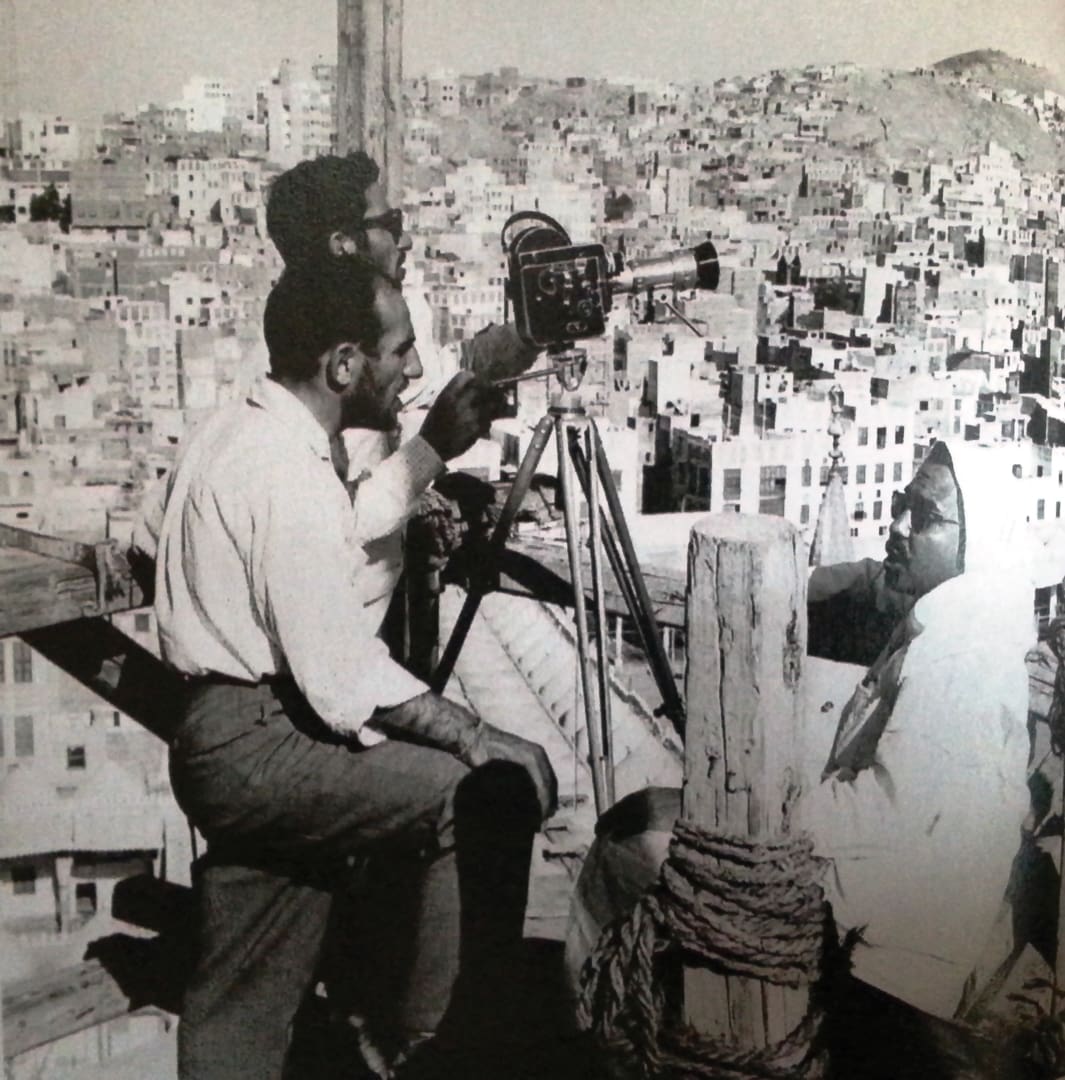
With special permission from the mayor, the Omidvar brothers were allowed to film the holy city of Mecca.
We have celebrated many overlanding pioneers and the significant treks they have accomplished: Robert Fulton Jr., Theresa Wallach, Wally Byam, and Danny Liska, to name a few, who have all made trail-blazing journeys and inspired others to follow in their tyre treads. Reading this list of names, it is easy to assume that all the great travellers hail from the UK or North America. But what about explorers of other nationalities, whose exploits never reach the English-speaking world? Since our view of adventure and exploration tends, inevitably, towards the Anglocentric, it may come as a surprise that back in 1954, far away in the Middle Eastern metropolis of Tehran, two young Iranian brothers were preparing to set off on one of the most audacious and adventurous expeditions of the 20th century.
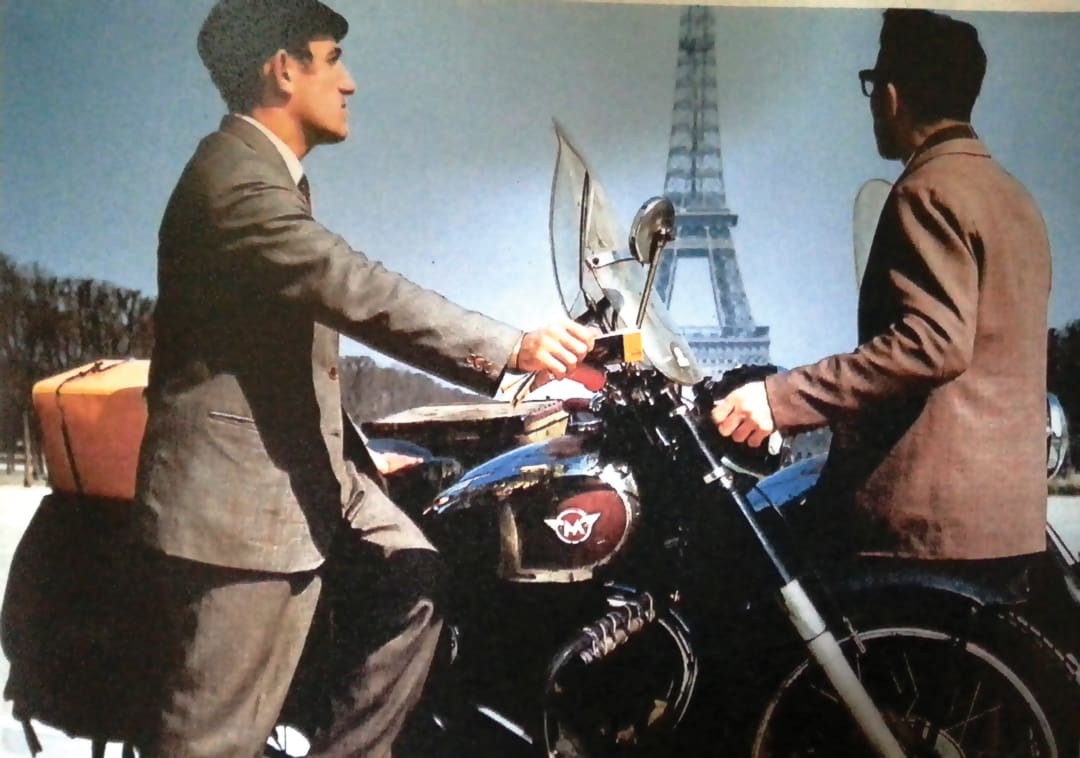
Iran is not typically associated with pioneering exploration. These days, thanks to decades of political machinations between our governments, its reputation is that of a pariah state with a dubious human rights record and a penchant for nuclear weapons. But back in the 1950s, Iran was a modern, outward-looking country with economic and political links to the West. It was from this setting that Issa and Abdullah Omidvar, two brothers in their early twenties, set out astride their British Matchless motorcycles on a 10-year journey to explore the globe and document its most primitive tribes on film.
Issa and Abdullah were not seasoned travelers, elite anthropologists, or professional filmmakers. They were simply two inquisitive young men who wanted to learn more about the world. More significantly, they were not European. By the mid-1950s, the writing was on the wall that the end was near for heavy-handed European colonialism. It is clear that the Omidvars’ non-colonial status and open-minded, gentle approach—which was summed up in their book All Different, All Relative—was a great asset to their explorations, especially in their interactions with the native people they encountered. Sadly, to travel with an Iranian passport nowadays means an onslaught of searches and suspicion, but it was positively an advantage 60 years ago.
The brothers left Tehran on a sunny August day with a fresh breeze gently blowing from the Alborz Mountains. Their friends and family held a copy of the Koran over their heads as they rode away, calling out messages of good luck, soon to be replaced by what the brothers describe as the “earsplitting sound” of their motorcycles. Almost immediately, an oncoming trucker warned them that the road ahead was washed out, but they continued undeterred, focused only on the grand adventure they had dreamed of for so long.
In the opening lines of their book, they state: “We were two brothers; young, brave, passionate, and full of hope. We were taking the first steps of the journey of a lifetime towards remote and unknown lands and were fully aware of the many difficulties and hardships, both mental and physical, that lay ahead of us.”
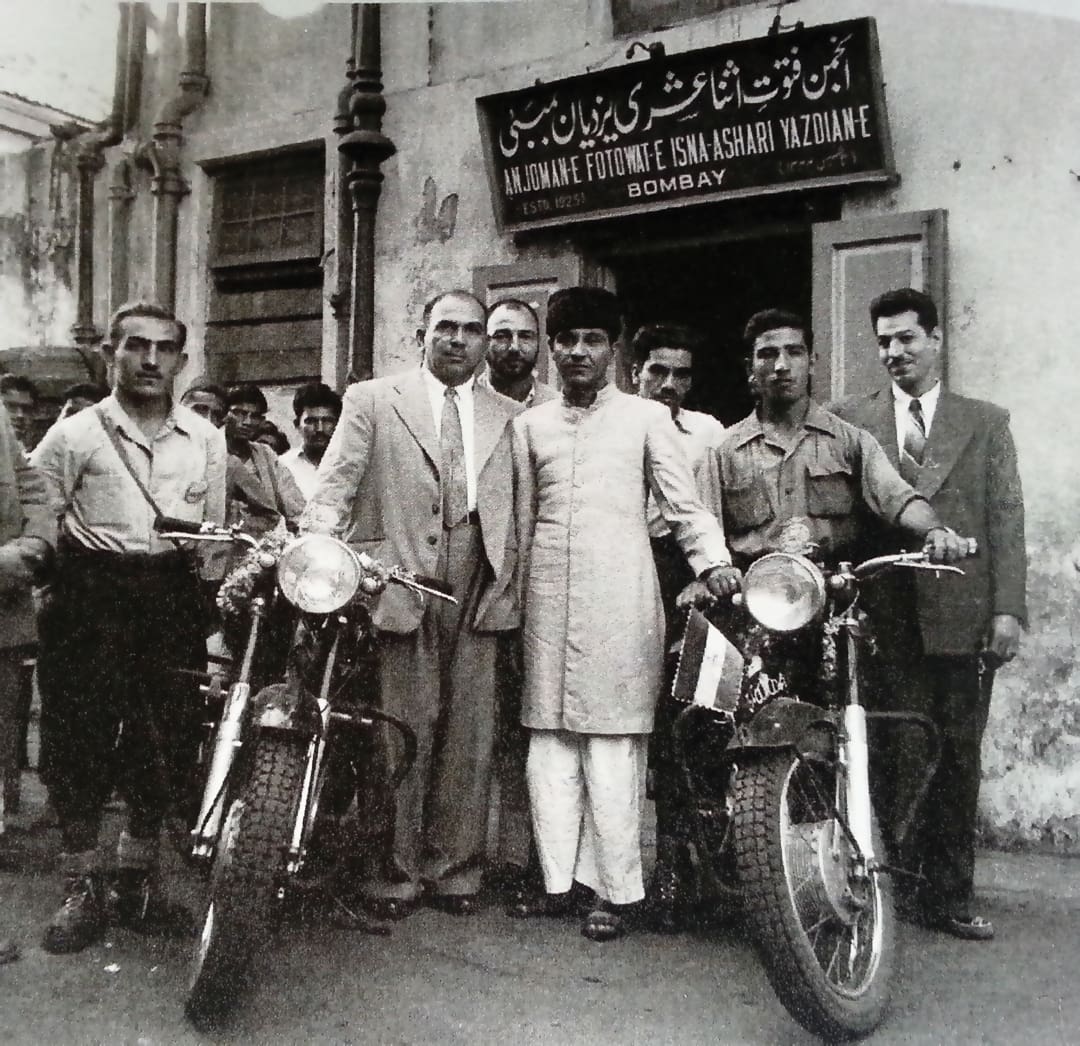
A 1954 meeting with members of the Yazd Islamic Association who live in Bombay, India.
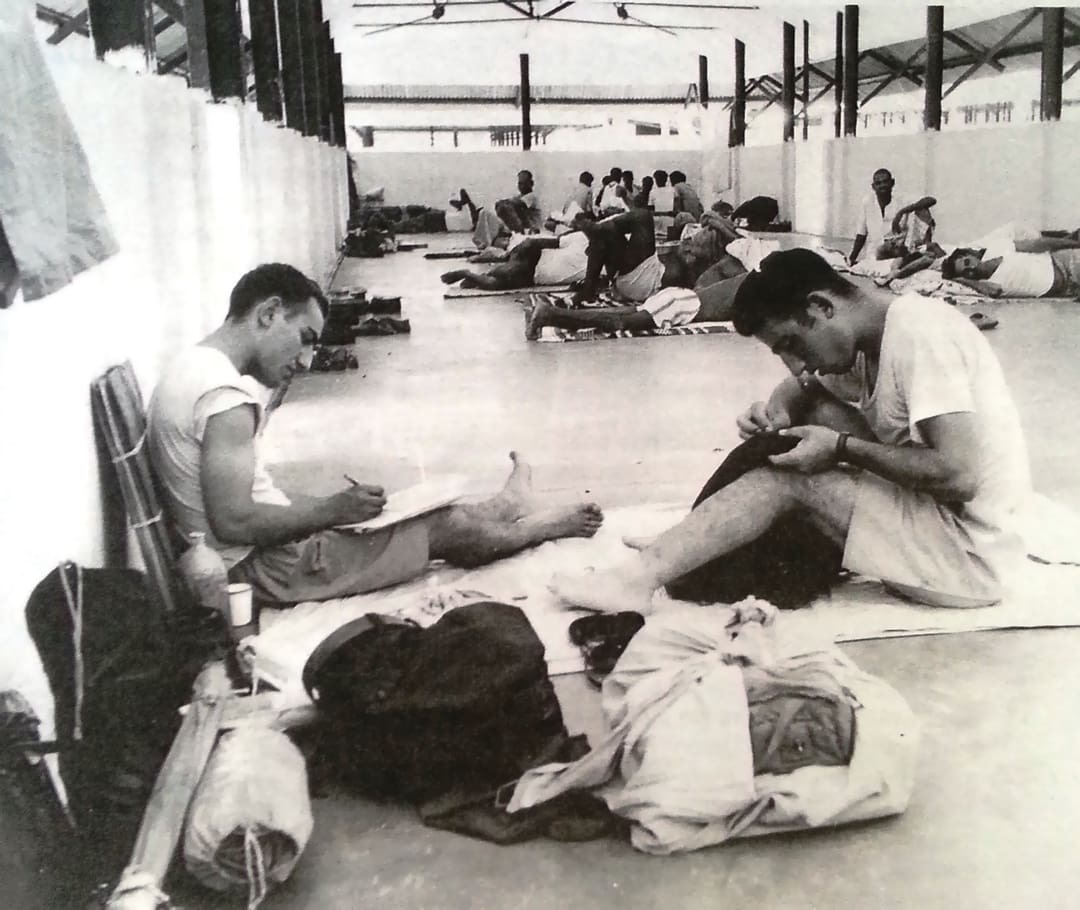
On a journey that would test them to their limits and see them face death on more than one occasion, a washed-out road was the least of their worries. Their route took them east into neighbouring Afghanistan and Pakistan, and then to India where, being keen mountaineers, they made a grueling climb in the Himalayas. This early side adventure almost saw their trip come to a premature end when they nearly died in a snow-blocked cave. Their perseverance was rewarded when, upon returning to civilization in Darjeeling, they got to hang out with none other than the legendary Sherpa Tenzing Norgay and Indira Gandhi.
Having left Tehran with just $90 each, the plan was to fund their travels by giving presentations at universities and other establishments along the way—they had packed their motorcycles with Iranian handicrafts and photographs of historic sites for this purpose. Combined with their novelty status, this meant they would often find themselves being hosted by dignitaries, politicians, and even royalty, in a style that cannot be imagined by travelers in today’s heavily touristed world.
Right from the start, their journey was clearly going to be a tough one, with all the usual challenges of an overland motorcycle trip. But it is obvious that their motivation lay less in the chest-beating heroics of adventure riding and more in their curiosity for other cultures, particularly the traditional myths, beliefs, and rituals of the communities they would visit. Their narrative is refreshingly free from macho posturing, and the hardships they encounter are downplayed with charming modesty and mischievous humour.
From India they made their way to Tibet, which at that time was cut off from the rest of the world and considered a mysterious and “prohibited” land. They threw themselves into their role as amateur anthropologists, taking part in elaborate Buddhist ceremonies and rites. But they also found a land bound by superstition. Its people lived in utterly primitive surroundings and without paved roads, electricity, or telephones, and were suspicious of outsiders. They write, “In this region, not only the car, but the wheel, could not be seen. Goods are transported by animals or strong, indefatigable people.”
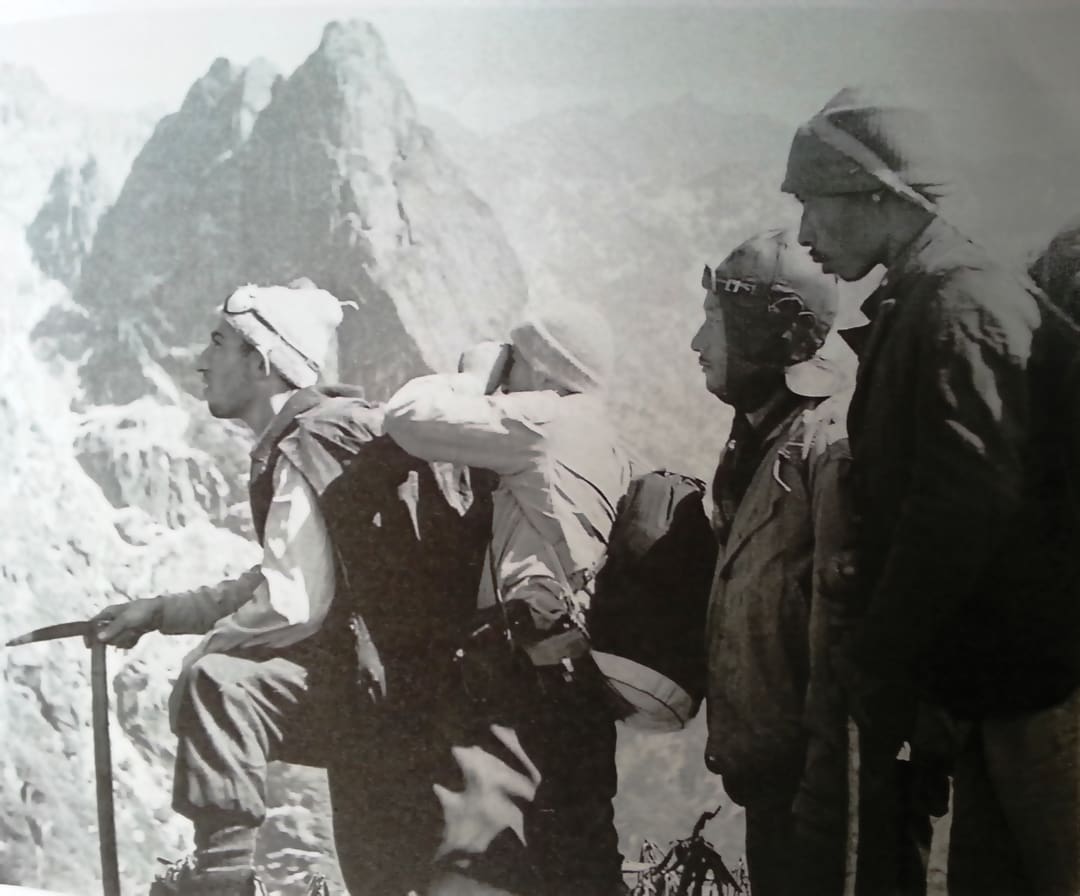
Climbing the Himalayas near Noursing Summit.
Little did they realize that their visit was to coincide with a significant event in Tibet’s history. As they crossed the borde, they came upon the bizarre sight of a brand-new car chassis being carried on the shoulders of 25 sherpas, its wheels and engine being transported by mule. They discovered that the car had been carried for 32 days over 12,000-foot mountain passes and was being presented to the Dalai Lama by Mao Tse-tung as a declaration that Communist China intended to extend its influence into Tibet. Life in this ancient land was about to change forever.
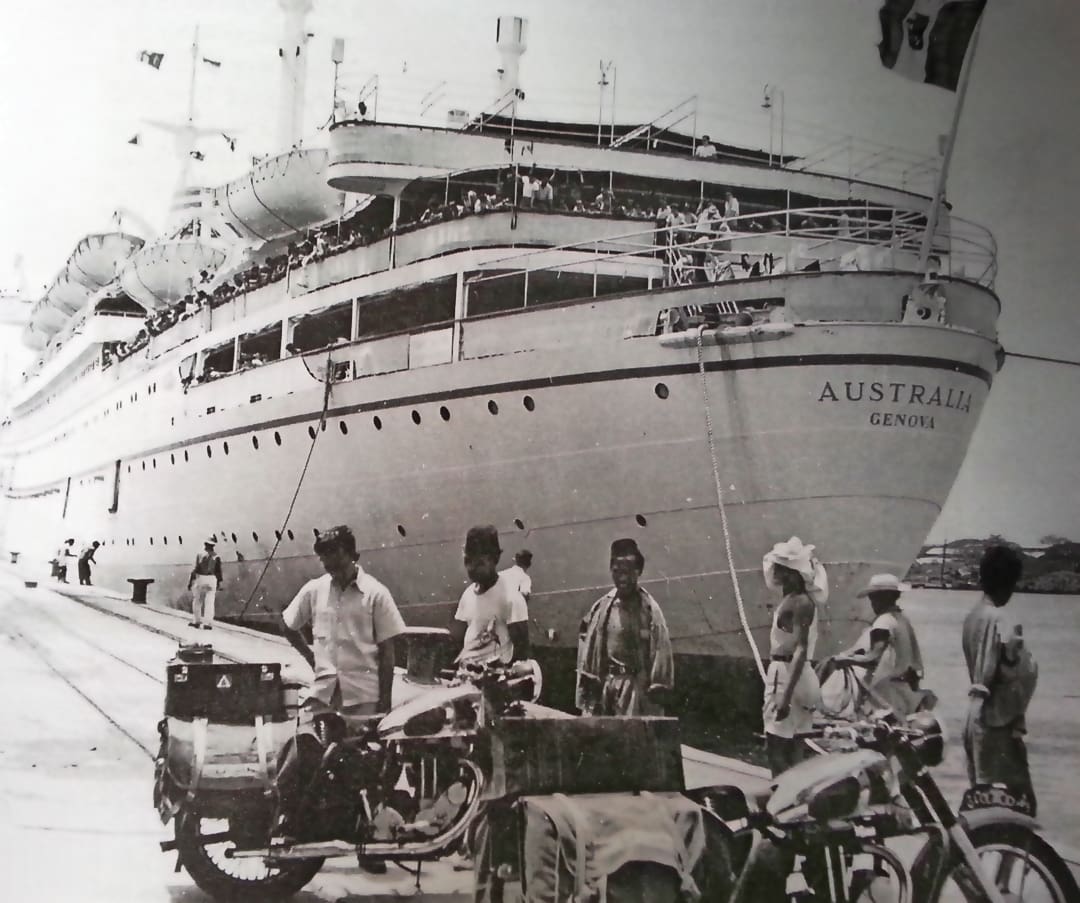
From Tibet they continued through Burma and Malaysia, tackling bandits and political unrest along the way, and then to Indonesia and the alluring exotica of Bali before boarding a ship bound for Australia.
Iran has prided itself on being “neither East nor West,” a statement that has become the country’s unofficial motto. Geographically, it stands poised between the two hemispheres, never aligning itself with either, which has led to its strong sense of Persian identity. The Omidvar brothers are the embodiment of this position. As sons of pre-revolution Iran, they were in the rare position of being able to view the fast-changing world of the mid-20th century through impartial eyes, free from a dominating worldview. They were young and curious, and their book and films show the thoughts of two open minds that are eager to investigate and slow to judge. But in Australia, they found their tolerance stretched.
They were welcomed off the boat in Perth by a seemingly friendly man who invited them to stay at his house, a proposition that was familiar to them after their travels through Asia. The man disappeared soon after, but dinner was sent to their room that night as well as breakfast the following morning—with a bill tucked under the teapot! This sly move left them totally shocked. Feeling deceived and jaded, they set off into Australia across the vast Nullarbor Desert to the booming city of Sydney.
In Sydney, a friend told them of an elderly British man who had visited a dentist to have dentures fitted but suffered a heart attack and died in the dentist’s chair. The dentist had the body removed and promptly sent a bill to the dead man’s family for the dentures. This ruthless treatment of a fellow man was clearly alien and distressing, and evoked a rare outburst of strong opinion: “We had felt the deep affection and humanity of poor and needy people in Asian countries many times. So such a lack of human sentiment was something we could not digest. For the two of us, who had just come from Indonesia, one point was clear: nations who had suffered under colonialism for ages, despite all the hardships they had to face, were much kinder and more humane!”
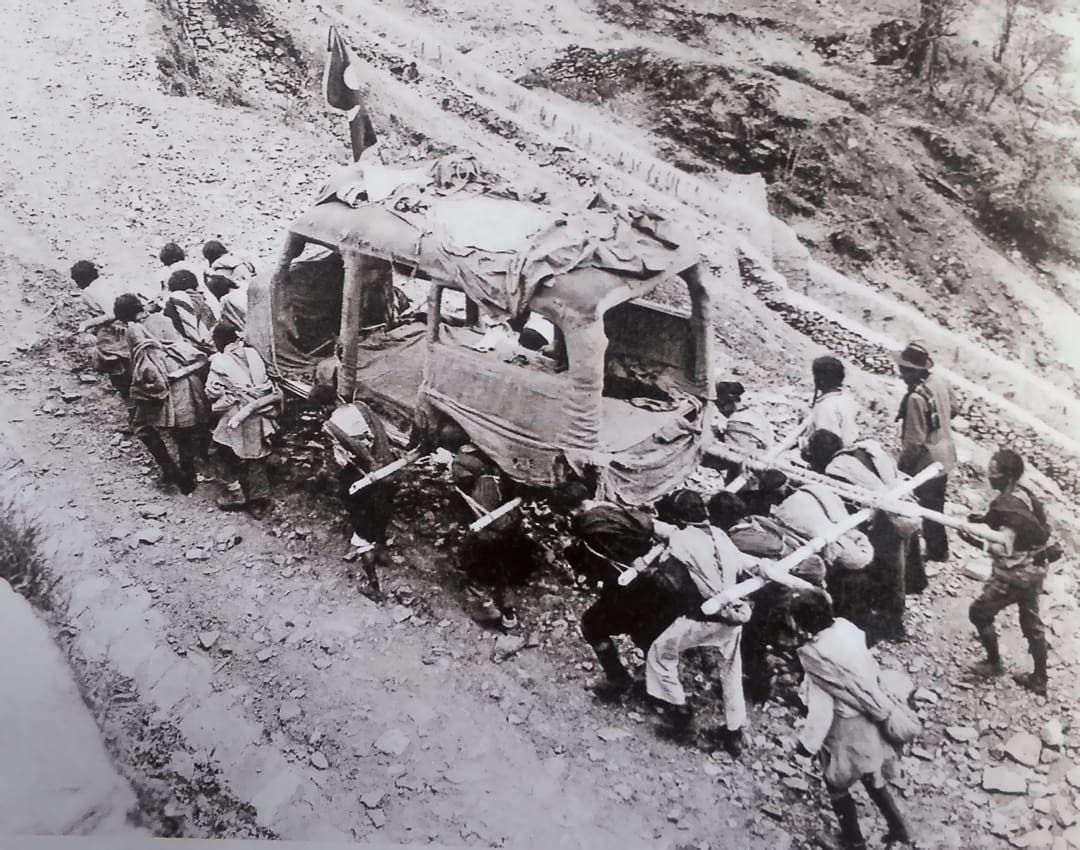
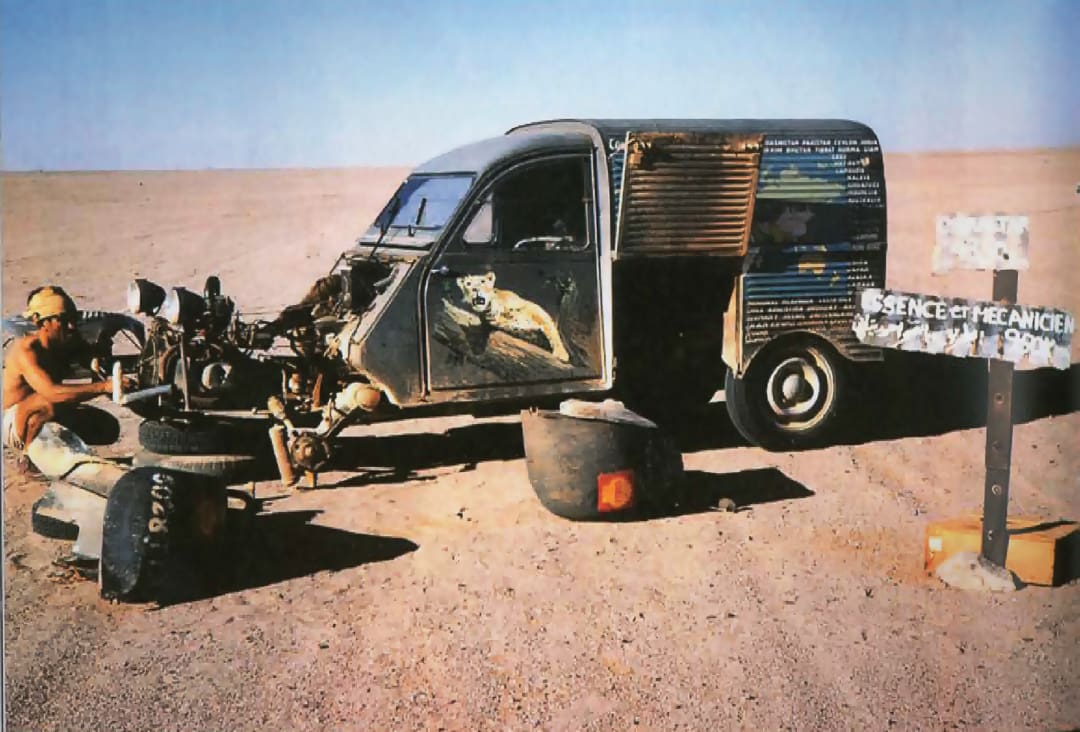
The brothers witnessed the first car to arrive in Tibet. It had been sent from China and needed to be dismantled and hand-carried to the 17,000-foot elevation city of Lhasa.
They left Australia for the Philippines and pioneered what is now the classic gap-year trail, travelling through Vietnam, Laos, and Cambodia, and eventually landing in Siam (Thailand). In their usual audacious way, they headed straight for the top, to the minister of public relations and promotions, with a letter of introduction. It is obvious they knew how to open doors, but their goal was bigger than blagging a fancy dinner or invitation to an ambassador’s party. They were acutely aware of something that can easily be forgotten in today’s globalised world: how the small, human interactions between citizens of different nations can be the seeds of change. The minister congratulated them on their journey and agreed that these cultural exchanges were the makings of international harmony, to which they gushed in rather elaborate but charming English. “Yes, unfortunately at present, the feeling of hatred is growing among nations and the human community is being endangered. It is only through cultural transactions that the horizon of peaceful coexistence can be expanded, and the sacred aim that brought us two brothers to your beautiful country is nothing but this sublime goal.”
Reading their words today, one can’t help but wish that they were echoed by the current leaders of their country.
The narrative of fast-paced action slows down at this point, but for all the right reasons. After appearing on national TV in Thailand, they were invited to meet a beautiful but lonely Siamese princess who befriended them. A whirlwind of youthful desire fills their diaries with 10 pages of emotional yet sweetly chaste prose. The effect is one of being swept along in a classic fairy tale, and you can’t help but feel happy for the boys. After all, what’s a rip-roaring adventure yarn without a dash of romance? And with an Asian princess to boot!
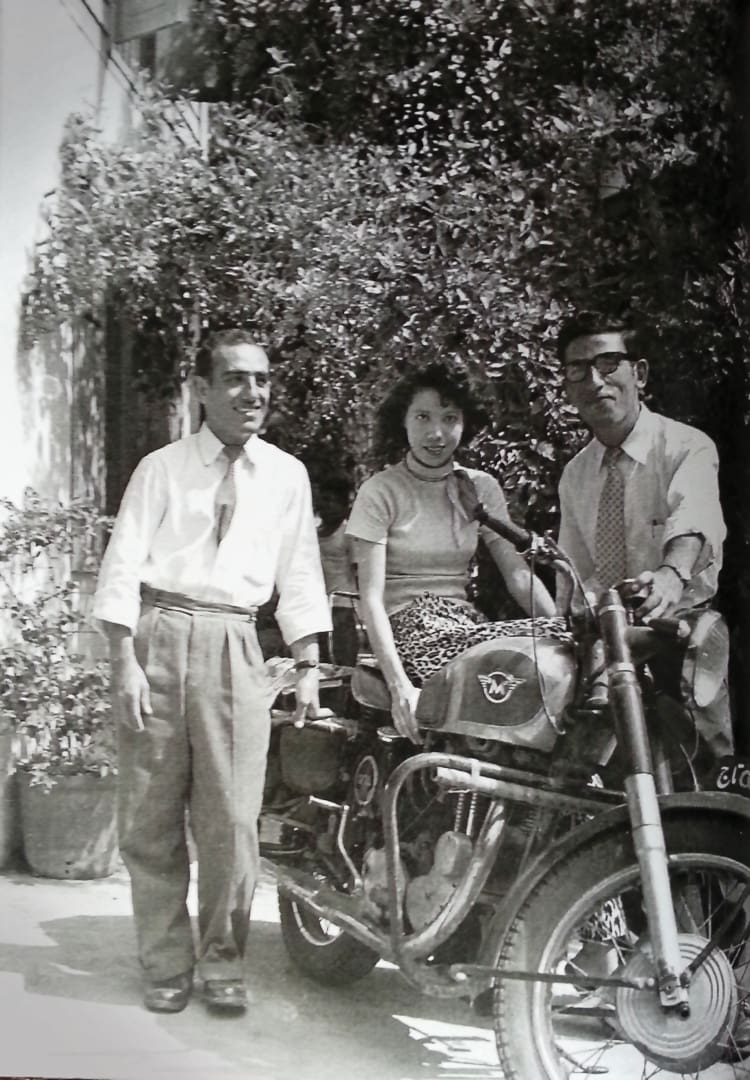
The Omidvar brothers alongside Siamese Princess Koon Tao in Bangkok, Thailand.
Maybe on-the-road liaisons are all the more poignant because they must end in a painful farewell. Sure enough, on Christmas Day 1956 they bid goodbye to their tearful Thai princess with much anguish of their own. They boarded a ship for Hong Kong “in a gloomy atmosphere with an unknown sorrow clawing at our hearts.” To make matters worse, upon arriving in Hong Kong, the exotica and high emotion of their time in Siam were replaced by the utter drudgery that all overland travelers must experience at some point—paperwork.
Though they had originally planned to enter the mainland, it was made clear that their US visa application would be jeopardized should they visit Communist China. They instead continued to Japan, which involved filling in no less than 38 forms. The world may have changed significantly in the last six decades, but the phenomenon of global politicking messing with the plans of the innocent overlander remains a time-honoured tradition.
The Japanese, like the Iranians, are famous for their hospitality, and the boys were well looked after by everyone they encountered. But their overwhelming memories of Japan were of the horror of Hiroshima … only 11 years after the event and still fresh in the minds of all Japanese. At a memorial site of the explosion, people came to lay flowers. It was here that they met an old man who was crying into his “fragile, dry hands.” He recounted the day of the bombing and the gruesome scenes he had witnessed. His description was so terrible that the Omidvars could no longer bear to listen or observe the scenes of grieving people that had come to pay tribute. “We felt dizzy, our bodies weighed down, and we were choked with grief. How much more could we tolerate, witnessing the suffering of the people who had experienced such a tragic incident?”
A memorial stone at the site bore an engraved message in Japanese, “Oh humanity, rest in peace, for this mistake will never happen again.”
This sentiment is echoed in a passionate plea from their book. “The children of today who will be the fathers of the future, stay away from wars and aggression, and try to establish and fortify the spirit of peace in the world.”
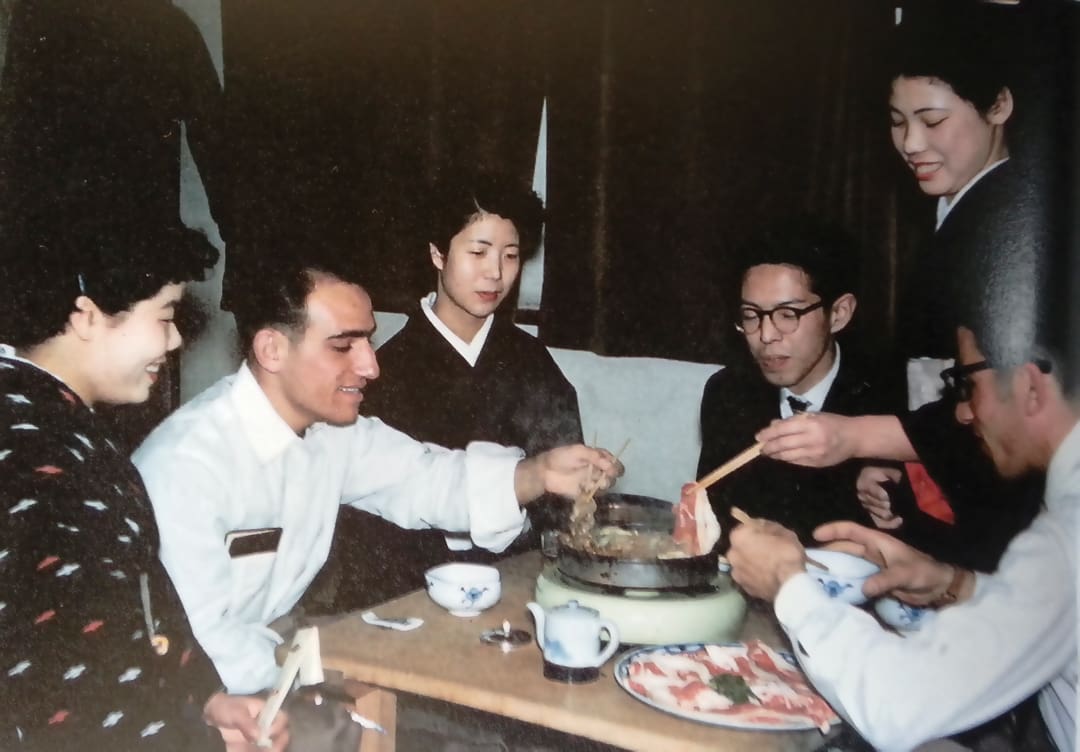
To read these words from such optimistic, young Iranian men, who felt they could spread some good with their travels, is both inspiring and saddening, especially knowing how the remainder of the 20th century unfolded.
From Japan they headed for Alaska. Their intention had been to travel via Siberia, but in the mid-50s, as with China, the communist Soviet Union was a no-go area if they wanted to enter the US. Instead, they loaded themselves and their motorcycles onto a Japanese fishing boat headed to the Aleutian Islands. It was a daring journey. After seven days of tortuous navigation and brutal seas they landed on an island, thankful to be alive and with no idea where they were.
In the late 1950s, there were still many remote tribes in the Amazon, Africa, and elsewhere that existed as they had done for centuries, entirely without influence from the Western world. The brothers were aware that this situation would not last much longer, and it was this fragile other-worldliness that inspired them to document vanishing cultures. What is so impressive is that they managed to carry out these studies as nothing more than interested amateurs. There were no formal invitations, fixers, or support from academic institutions. They just showed up and embedded themselves amongst various tribes, often at great personal danger.
The brothers got themselves to Anchorage, and in their typical style of cultural immersion, immediately found work as gold prospectors to fund their travels. But before heading south for the comforts of the Lower 48, they spent six months living with the Inuit. Here they learned to kayak, travel with dog sleds, catch fish, and build igloos, often in -50°C temperatures and with ice storms blowing through the long, dark days. Their spirits remained high, and the pleasure they got from taking part in a lifestyle so alien to their own is apparent in their enthusiastically detailed reports. They were particularly struck by the cooperative nature of the Inuit community, where personal belongings mean nothing. They write, “Everything belongs to everyone. When they hunt something, no matter who hunted, everybody takes a share. Yet everybody does his best to hunt more … real cooperative style of living, one could say the Eskimos are the true socialists.”
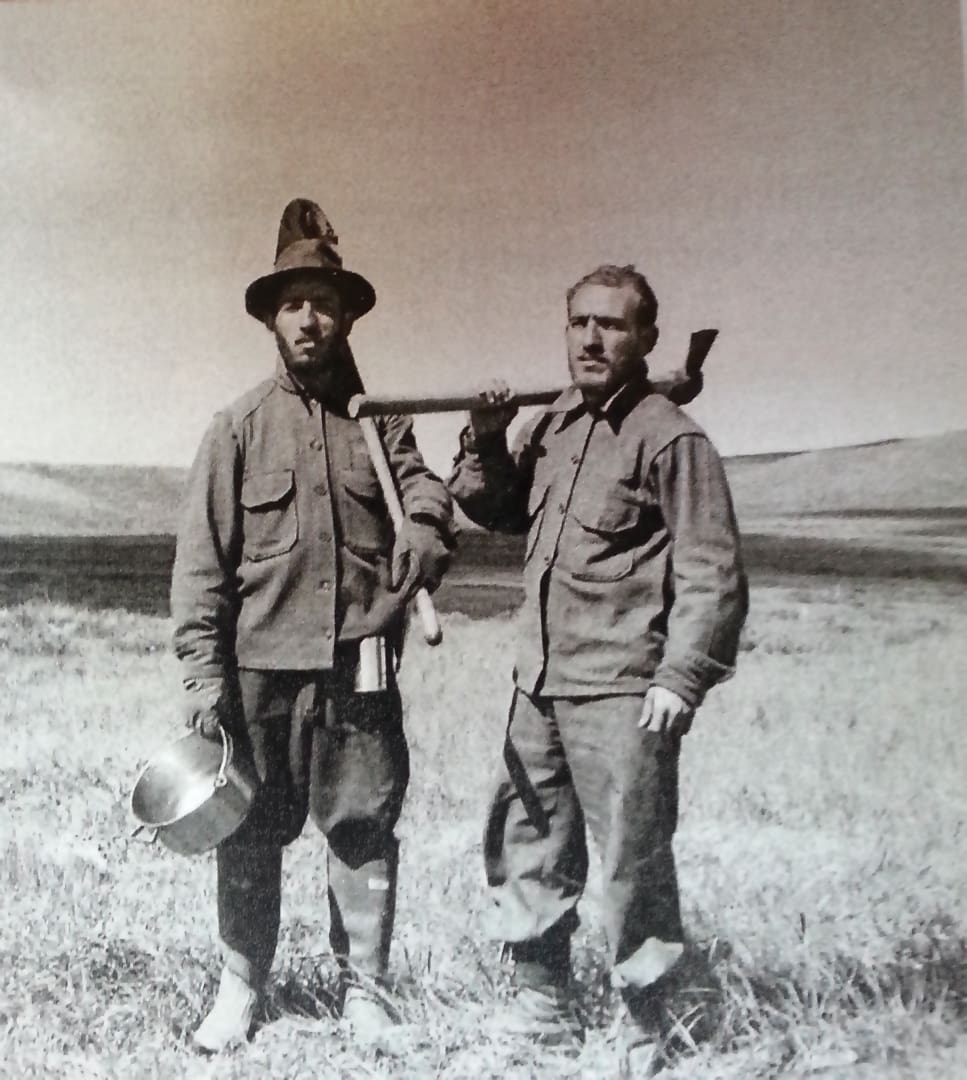
The brothers worked as gold prospectors in Alaska to earn money to continue their travels.
The only moment when their enthusiasm wavered was after the Inuits‘ inherent hospitality extended to the brothers being offered two wives for a night. Aside from the moral issues, they were deeply put off by the fact that the Inuit never took baths and cover themselves in whale blubber to keep warm. They wrote about finding themselves in the close confines of an igloo and being approached by the two women in question. “At that moment such a disgusting smell overwhelmed us that we were about to vomit!” Feeling distinctly uncomfortable about the situation, they feigned illness, prompting the Inuit to turn their attention to nursing them back to health—an awkward situation avoided and no feelings hurt!
It seemed like a good time to bid farewell, and the brothers set off once again, this time in the only direction possible: south along the recently built Alcan Highway. Their return to the modern world coincided with a distinctly modern problem—getting hit by a car. After three years travelling across half the world, their first road accident of the trip happened in Spokane, Washington, where an elderly lady in a Studebaker knocked Abdullah off his motorcycle. Whilst recovering in the hospital, he was visited by a young man who introduced himself as the driver’s son. He insisted that the brothers come to stay with them, a gesture that made a deep impression on Abdullah. “His invitation really touched me. That was the highest level of humanity and forgiveness. When that young man invited me to his house, I was thinking what would happen if all the nations of the world followed the path of peace and friendship? What would happen if they put aside their weapons and loved each other!”
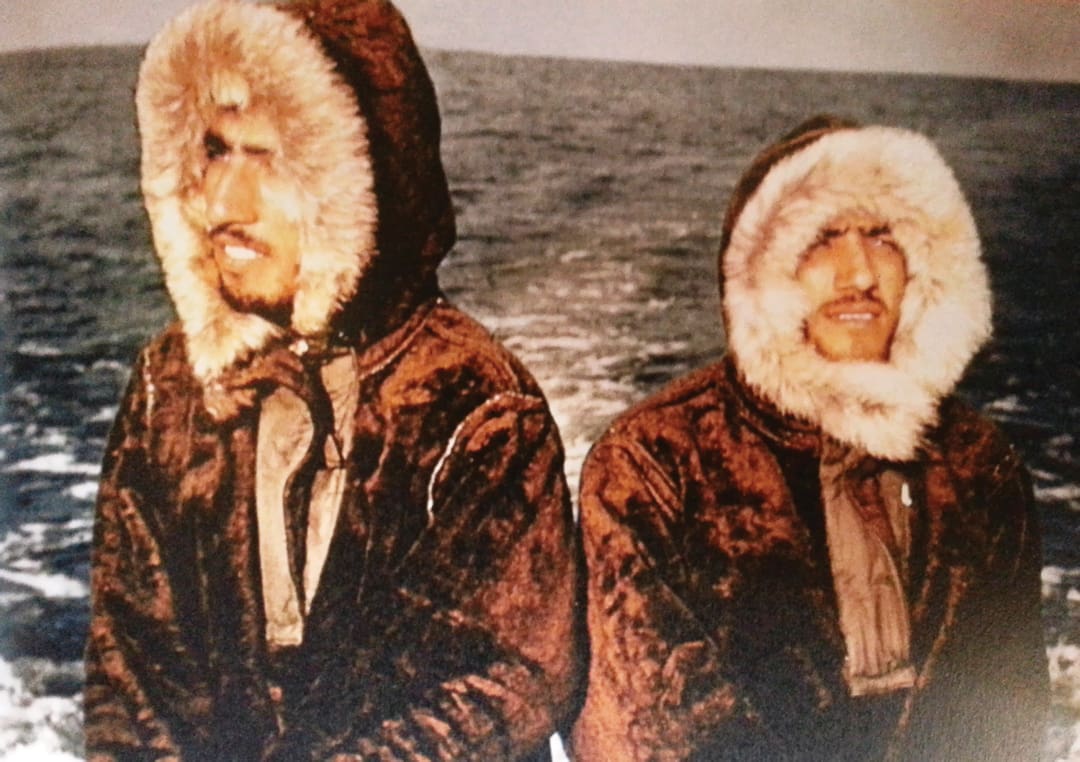
The boys were the original hippies, spreading the message of peace and harmony down the West Coast, 10 years before the Summer of Love.
As all Pan-American travelers know, California is a hard place to leave, but you have to keep moving on. They entered Mexico, where they learned Spanish and became acquainted with the delights of tequila; some things never change. Their journey continued ever southwards through Central America on the rough roads of the nascent Pan-American Highway. Now conversant in Spanish, the brothers had no problems understanding the demands for bribes at the border crossings, as well as the incorrect directions given to them by the well-meaning locals.
This Latin American action was just a warm-up for what was to be the biggest challenge of their journey so far. In late 1958, the brothers entered Colombia and embarked on an expedition into what they describe as the “green hell of the Amazon.” They loaded their equipment into a dugout canoe equipped with a small outboard motor and entered the jungle, travelling along a tortuous network of rivers they likened to the blood vessels of a human body. Their plan was to investigate and live among remote Amazon tribes, namely the Yagua and head-shrinking Jivaro, the most feared of all tribes.
Hiring local men from a Catholic mission as guides, they ventured deeper into the jungle. At night, the howls of wild animals, shrieking birds, and biting insects kept them awake. By day, they tackled piranhas, poisonous snakes, and clouds of flesh-eating bees. Eventually, after many days travelling, they came across the Yagua. This fearsome tribe stood gathered together on the riverbank, entirely naked and staring at the canoe of strangers. The Omidvars boldly went ashore bearing gifts of matches, salt, and jewelry, until they received a wary invitation from the chief to set up camp in one of the tribe’s malokas, or circular straw huts.
Here they lived for almost two months, gaining the trust of the tribe until they were allowed to film them and take photographs.
This in itself proved a cultural minefield. Concerned that the naked bodies of the tribeswomen might upset the Muslim viewers back home, they tried to persuade the ladies to wrap colorful cloth around their exposed body parts. The women sensibly explained that they had nothing to hide or be ashamed of, but they did take a liking to the cloth and used it to decorate their homes.
They settled into a routine with the Yagua, hunting in the jungle with poisoned arrows and blowguns, and barbecuing their quarry of monkeys, turtles, and birds over the fire at night. These feasts were washed down with plenty of chicha, a local moonshine made from mashed bananas (rather than corn), and fermented with saliva. “It didn’t taste so bad if you didn’t care how it was made,” the brothers commented lightly. After 50 days with the Yagua, they had truly “gone native.”
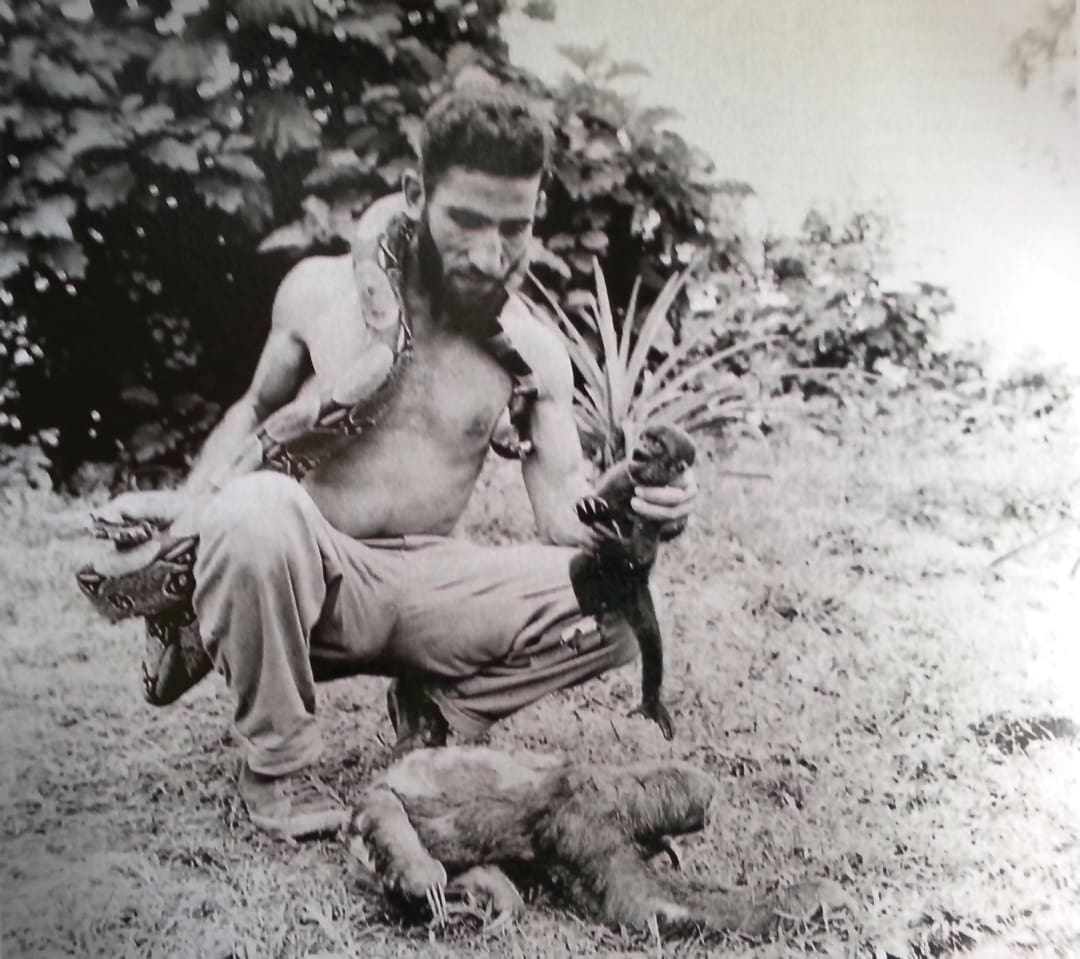
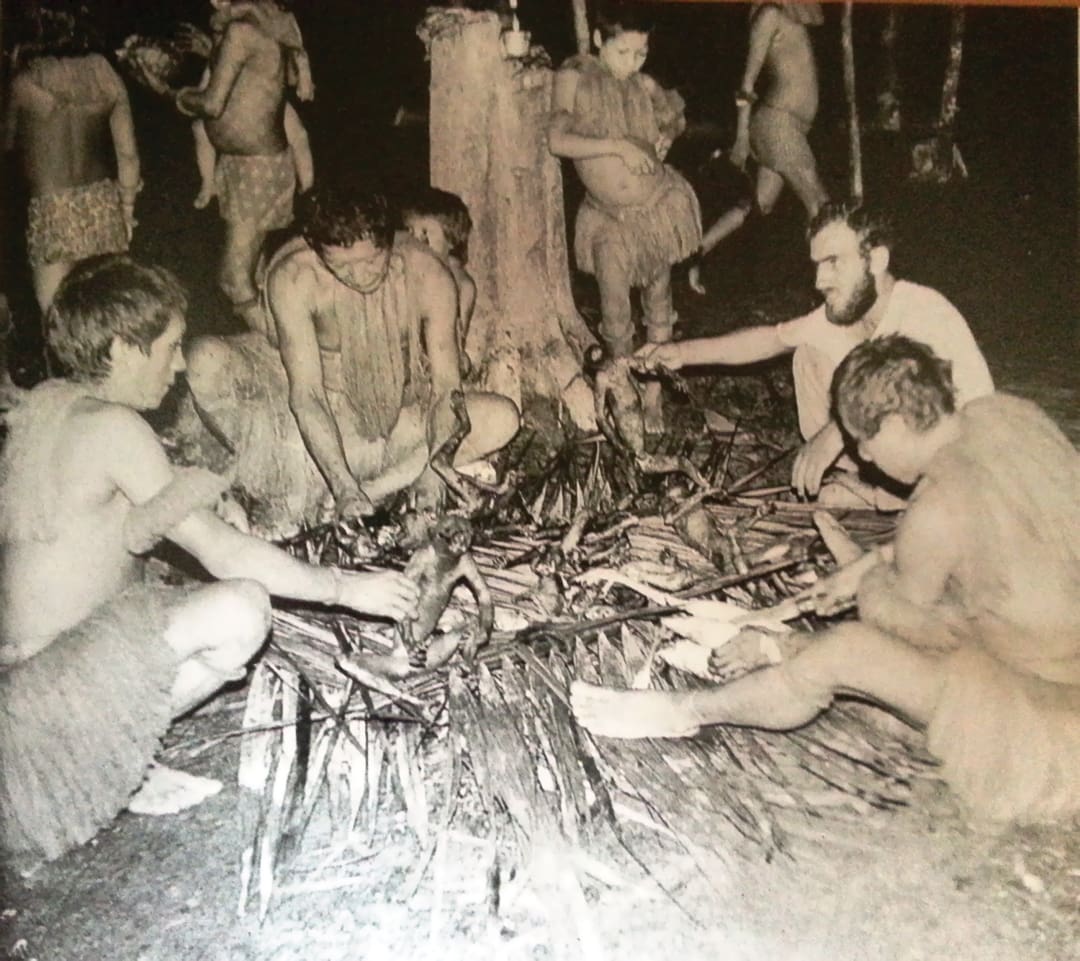
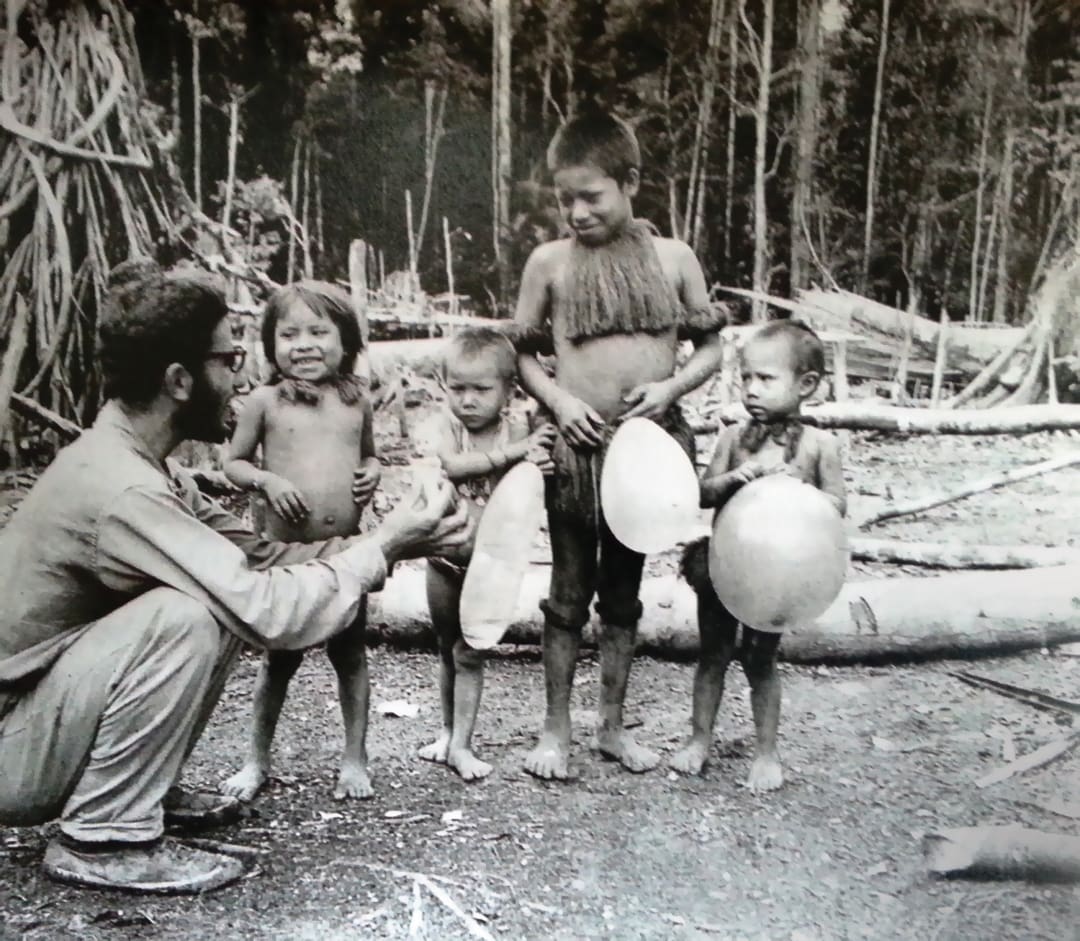
The next part of their plan was to seek out the infamous Jivaro tribe. “Don’t go! You will never come back alive,” their guides pleaded. Stories abounded of Westerners—geologists, missionaries, and a German explorer—who had disappeared in Jivaro territory and later, of shrunken blond heads being paraded through the jungle.
After four days in the canoe,they came upon the Jivaro in a clearing. “They were staring at us and we were so scared that we did not know what to do. We could readily admit that we were frightened, but since we were positive and hopeful people, we tried to welcome the danger by joking and laughing with each other. Abdullah joked, “As I have blond hair they will start with me to complete their collection. They will come for you too of course, but you’ll have to wait a bit!”’
The brothers made their usual gifts and were welcomed cautiously by the chief. The first few weeks were trouble-free, despite discovering a collection of shrunken heads, including that of the infamous blond-haired German. Time was spent studying, documenting, and taking part in Jivaro traditional rituals and hunts. They found the tribe to be “primitive and brutal, but simple people who believed in good and evil spirits.”
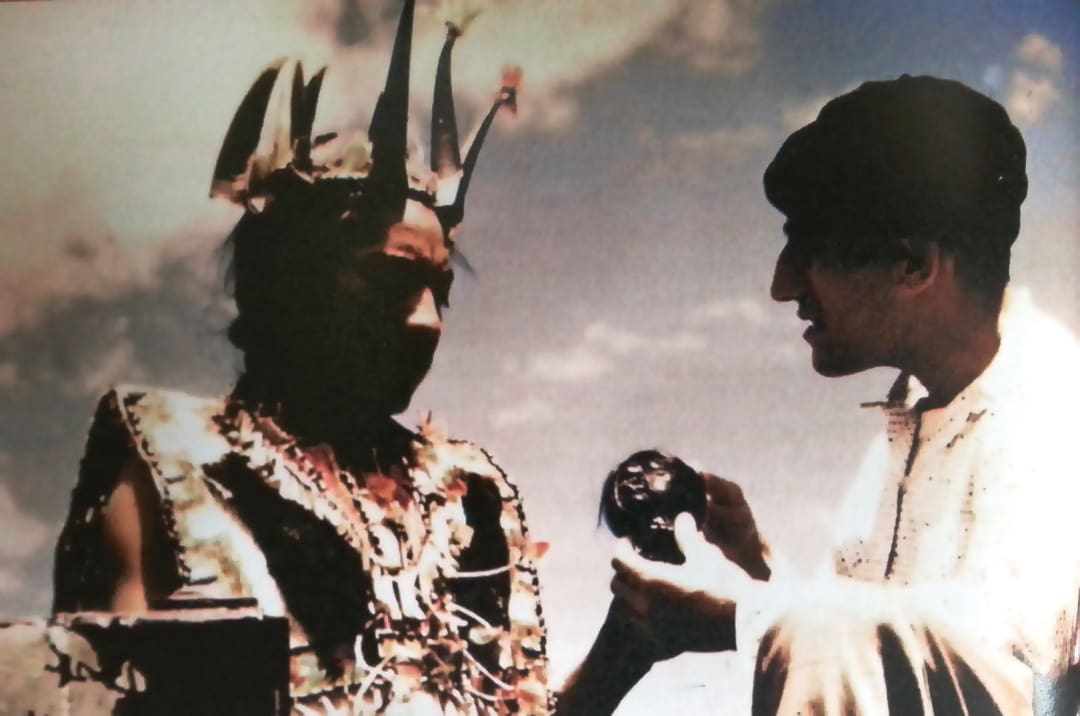
The chief of the Jivaro tribe shows a shrunken head to Abdullah Omidvar.
The seemingly pleasant situation became questionable when a female member of the tribe gave birth to a baby boy. The men of the tribe began a celebratory ritual that started with painting their bodies and dancing around the baby with their spears, chanting and singing. As each hour went on, the chanting and dancing became more frenzied; the men now fuelled by chewing coca leaves and drinking chicha. After two days of nonstop celebrating, they became wild and a brawl ensued. It was out of control, and the Omidvars, as well as their guides, were getting worried.
Just before sunrise on the third day, the guides came running to the brothers, shouting at them to get in the canoe as quickly as possible. The hopped-up and drunken Jivaro had been overheard hatching a plan to shrink the Iranians’ heads. It was time to move, and move fast. Bearing spears and blowguns, the Jivaro were already surrounding them. The brothers and their guides threw themselves and their belongings into the canoe, fired up the outboard motor, and sped away amongst a hail of poisoned arrows, spears, and blow darts. After such a near-death experience, one would imagine the brothers would have opted for cozy hotel rooms for the remainder of their South American travels. They had spent six months in the Amazon forests, and by their own admission were keen to return to civilization, adding blithely that they were also “quite happy to return to the modern world with our heads a normal size.”
But they remained as keen as ever to live within the tribal communities of Peru and Ecuador: the Quechua and the Aymara. Here they encountered some resistance, as the indigenous people of the Andes, after their experiences at the hands of the Spanish, had little trust in white men. With their usual perseverance, they immersed themselves in the communities—possibly a little too successfully. Once again they were offered two women, only this time it was more serious; the suggestion being that they would marry them. Relying on their previous tactic, they feigned illness, which created exactly the same situation as with the Inuit. The shaman was called and a series of dubious “cures” were attempted. Fortunately, a festival for the Inca emperor was about to begin, and while the tribe was preparing for the festivities, the brothers quickly packed up their sleeping bags and disappeared into the night.
Footloose and fancy-free again, they continued through Chile and on to Easter Island, which provided them with the opportunity to write a long and heartfelt chapter on their thoughts on Darwinism and the theory of evolution. Modern thinkers and always ahead of their time, in Brazil they raised a burgeoning problem. They noted overpopulation and predicted (accurately, as we now know) a future of too many cars and a plundering of natural resources. They also put forward a case for birth control in developing countries to ultimately prevent what they describe as “a looted planet.”
From Brazil, they sailed to London where they spent a rainy week before heading for Paris. Here they acquired a 2CV from Citroën, which they drove back across Europe to Iran. They had been away for seven years and were greeted at the Turkey-Iran border with much jubilation by family and friends. But this was a temporary touchdown, as the adventure wasn’t over for the Omidvar brothers. Just three months later, they set off once again, this time in the Citroën to explore Africa.
Heading west from Iran, they crossed the Persian Gulf to Saudi Arabia, where they hatched a typically gung-ho plan to drive across the Arabian Desert. This was despite warnings from the Saudi king, who cautioned them, “I know my country well, and I know how this desert has taken the lives of many.”
Sure enough, they got lost in a sandstorm, ran out of fuel, and ended up with their car sunk in the sand. Exhausted and dehydrated, they began to fear for their lives and took photos of themselves for those who would find their bodies. They lamented, “If some day our lifeless and decomposed bodies were found in that frightful desert they would recognize us and know what had happened. But in the depth of our souls a weak light was shining and we were still hopeful, expecting a savior.”
Their prayers were answered when they saw a caravan of Bedouin nomads in the distance. Summoning their last drops of energy, the brothers ran towards them and collapsed unconscious on the hot sand. These “kind and hospitable Arabs” gave them camel milk and food, and put their beasts of burden to work pulling the Citroën out of the sand and towing it for two days until they could find fuel.
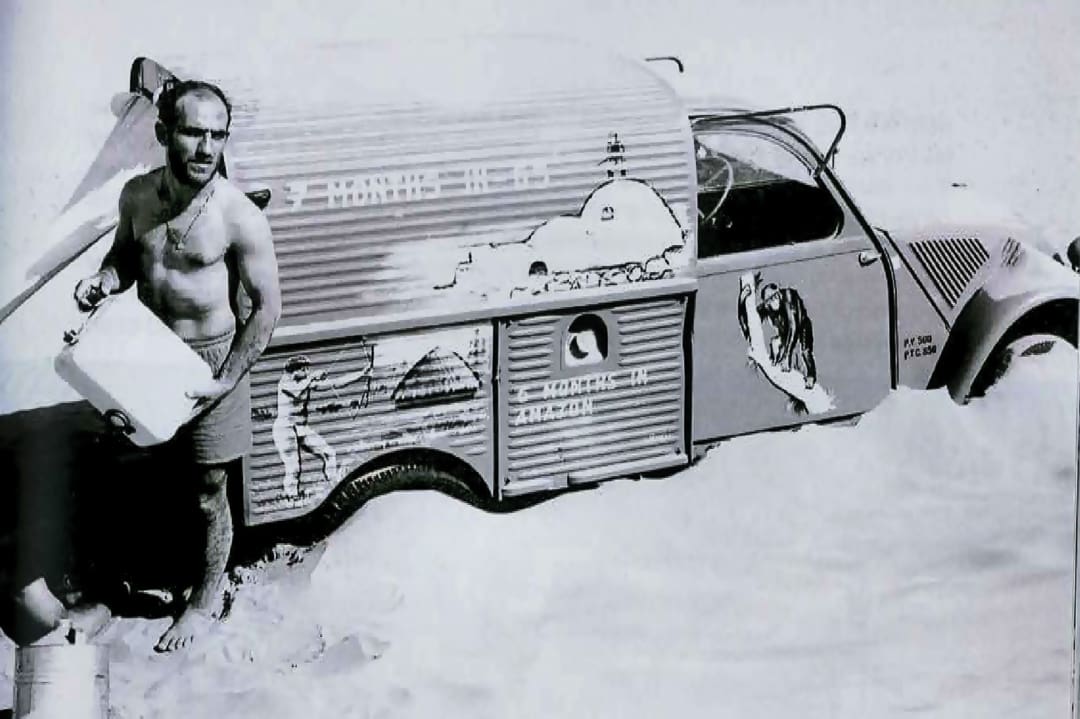
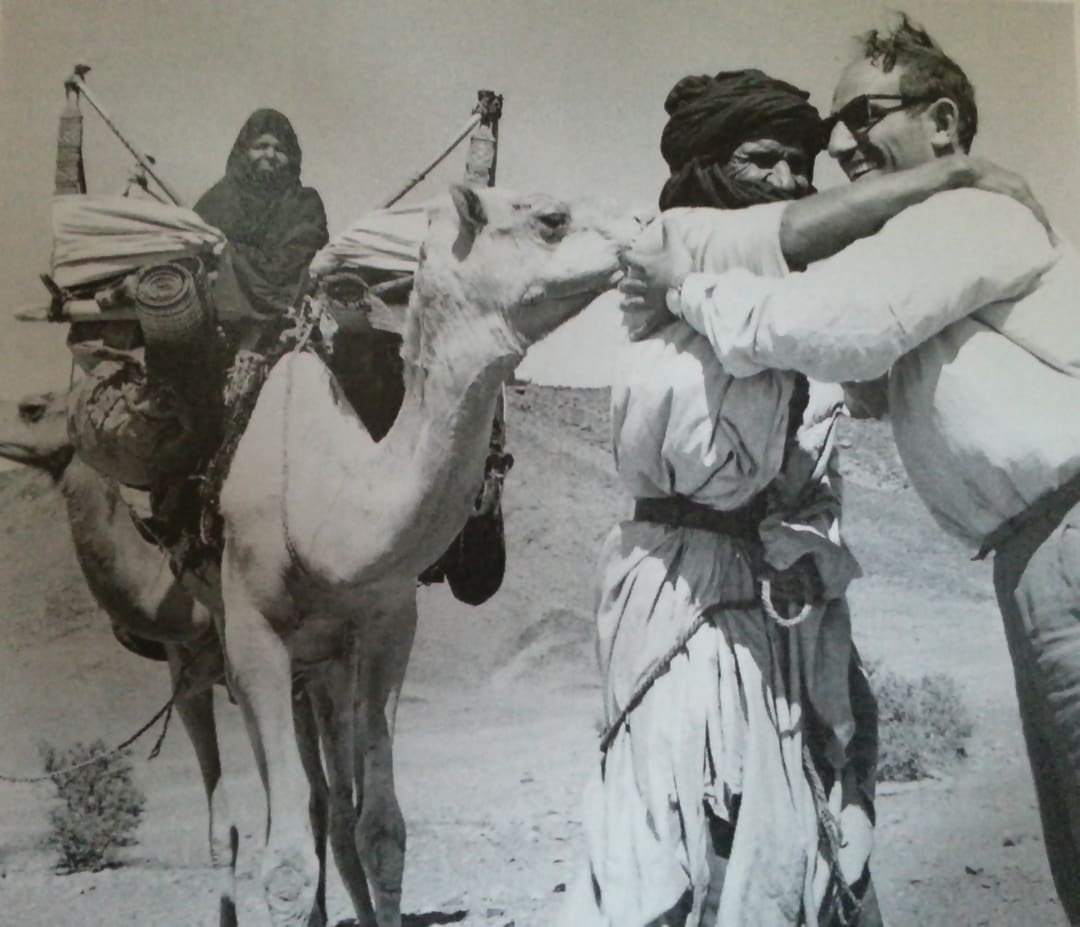
The Bedouin nomads in the Saudi Arabian desert rescued the brothers from certain death.
After escaping the lethal clutches of the desert, they made a pilgrimage to Mecca, where Abdullah managed some clandestine filming by pretending that the whirring camera under his robe was the sound of his artificial stomach (following recent surgery). They were then hosted by Osama Bin Laden’s father, an unimpressive man they described as rather strange. “He was not so knowledgeable, was not educated, and had never left Arabia. Yet he had three private jets.” After two months in Saudi, they left the port of Jeddah for Sudan, where they began their ambitious exploration of Africa.
The Dark Continent was in turmoil in the early ’60s, as wars of independence were being waged in many countries against their European colonial masters, who were now plainly on the back foot. The Omidvars arrived in the middle of this chaos to find borders closed and war zones springing up amid a fresh tide of African bureaucracy, all of which played havoc with their travel plans. Nonetheless, they managed a circumnavigation of the continent, dodging the bullets of freedom fighters in Algeria and Angola, and being attacked in Zanzibar when they were mistaken for Arabs. Their most disturbing experience, though, came in apartheid South Africa, where they were shunned and discriminated against by the white population for being Asian, and by the blacks for being white.
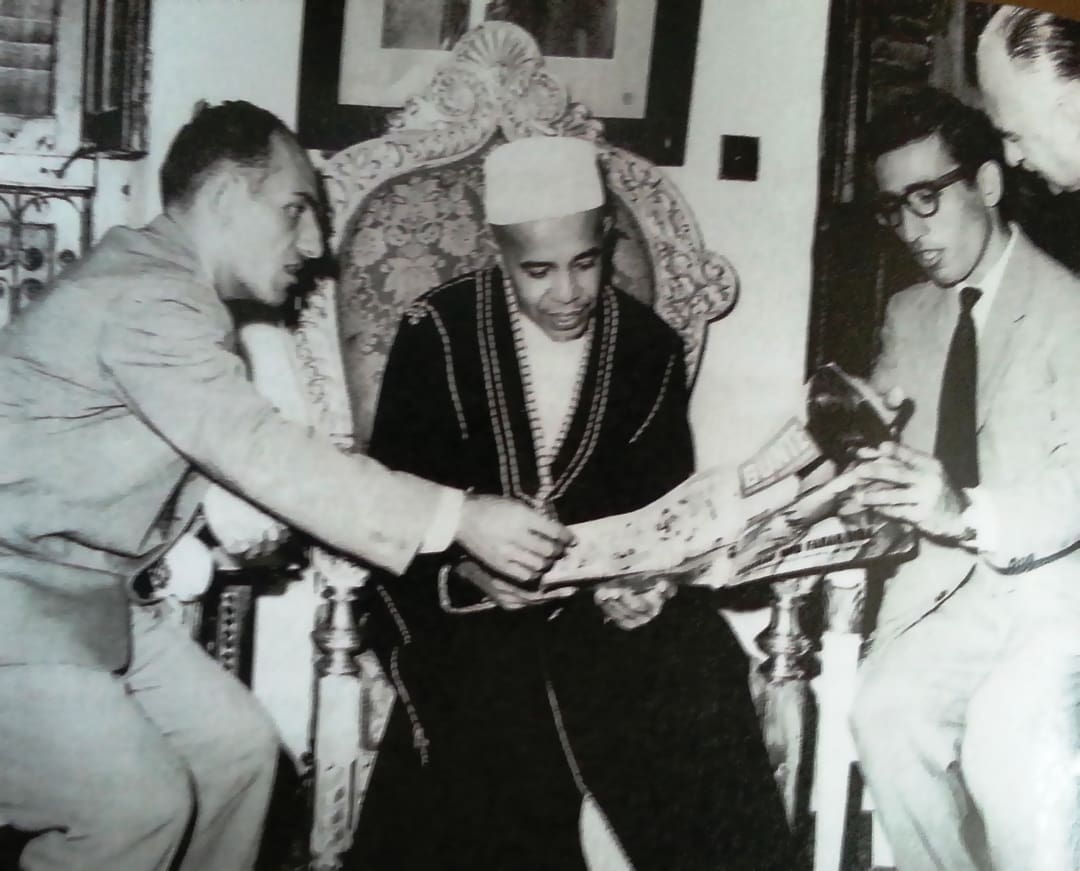
Meeting the sultan of Zanzibar island in the Indian Ocean.
Their curiosity of indigenous remote tribes remained strong. Whilst in Africa, they managed to immerse themselves with the Pygmies of the Congo and the Sara people of Chad. In South Africa, they took part in a ritual with a Malay dervish that involved Abdullah, never the passive observer, having metal spikes passed through his cheeks to the soundtrack of frenzied drumming and wild chanting. “Not only did I not feel any pain, I felt a strong power within myself,” he claims in the book.
It is this image of Abdullah—his young face punctured with spikes in the pursuit of squeezing every experience out of life—that sums up why their expedition is so impressive. Their journeys went far beyond that of even the most famous explorers. There are, of course, many fearless adventurers with great stories, but what elevates the Omidvars is their humanity and humour. Every gut-wrenching incident is not only tackled with bravery, but also with sensitivity. They are more likely to crack a cheeky joke at a difficult moment than ramp up the bravado, and their genuine warmth for humankind is a heartwarming thread that runs through their entire narrative.
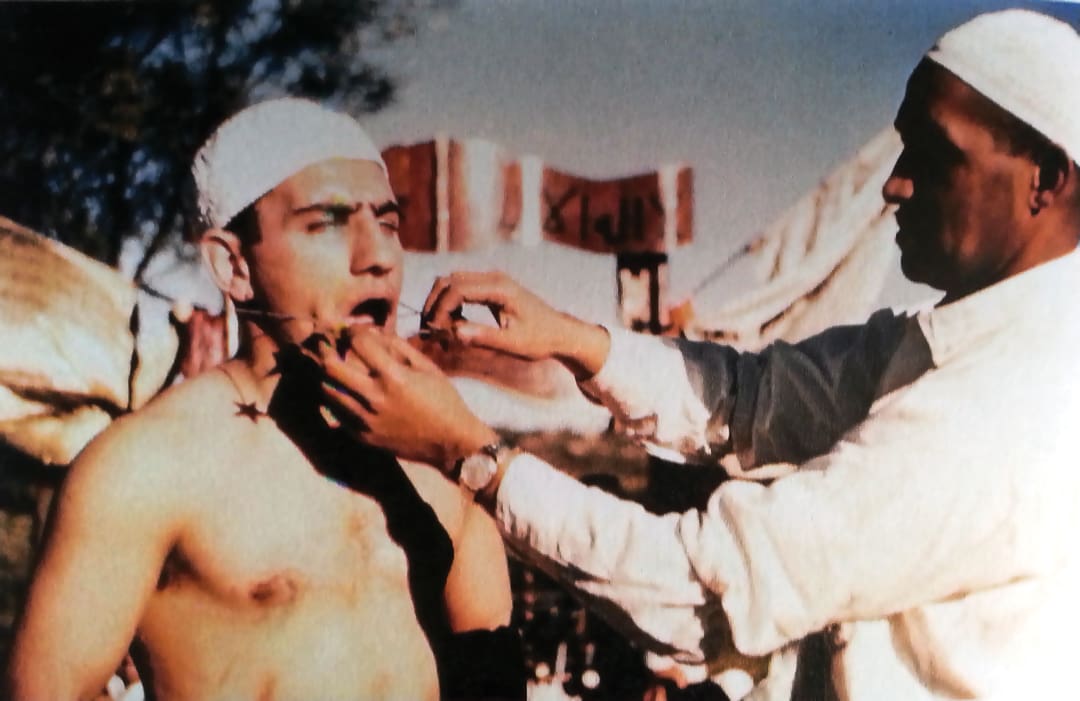
In South Africa a caliph passes metal spikes through Issa’s cheeks as part of a tribal ceremony.
After travelling around the entire African continent, including crossing the Sahara, they returned to Iran. It had been 10 years since their original departure. Nobody in Iranian history had ever made such a journey. They became national heroes during the late 1960s and 1970s, and their films were shown at cinemas and on television—a Sunday evening fixture in many Iranian homes. But rumblings of dissatisfaction were underway in Iran, and when the Islamic revolution came in 1979, the brothers’ worldly views and open-minded humanitarianism were no longer in favour. As predicted, the footage of bare-breasted tribeswomen was deemed un-Islamic by the new hardline regime; their films and images would never again be shown in Iran.
Issa remained in Iran and now oversees their museum in Tehran. Abdullah married a Chilean woman and set up a film production company in Santiago. Their book has been translated into English and Spanish, and their films, which are now being discovered by an international audience, are available on DVD. In 2013, I had the great honor of meeting Issa in Tehran. He remains witty, charming, and still possesses a twinkle in his eye that comes from having truly lived one’s life. Issa and his brother Abdullah set off with excitement, were faced with uncertainties, danger, and fear many times along the way, yet continued to follow their passion—which is surely the essence of every great adventurer, no matter what part of the world they are from. Issa wrote at the end of their journey, “Reaching a goal requires effort and risk, and without risk man can never experience true love. Indeed, risk strengthens the spirit of endurance in man’s life.” omidvar-brothers.com
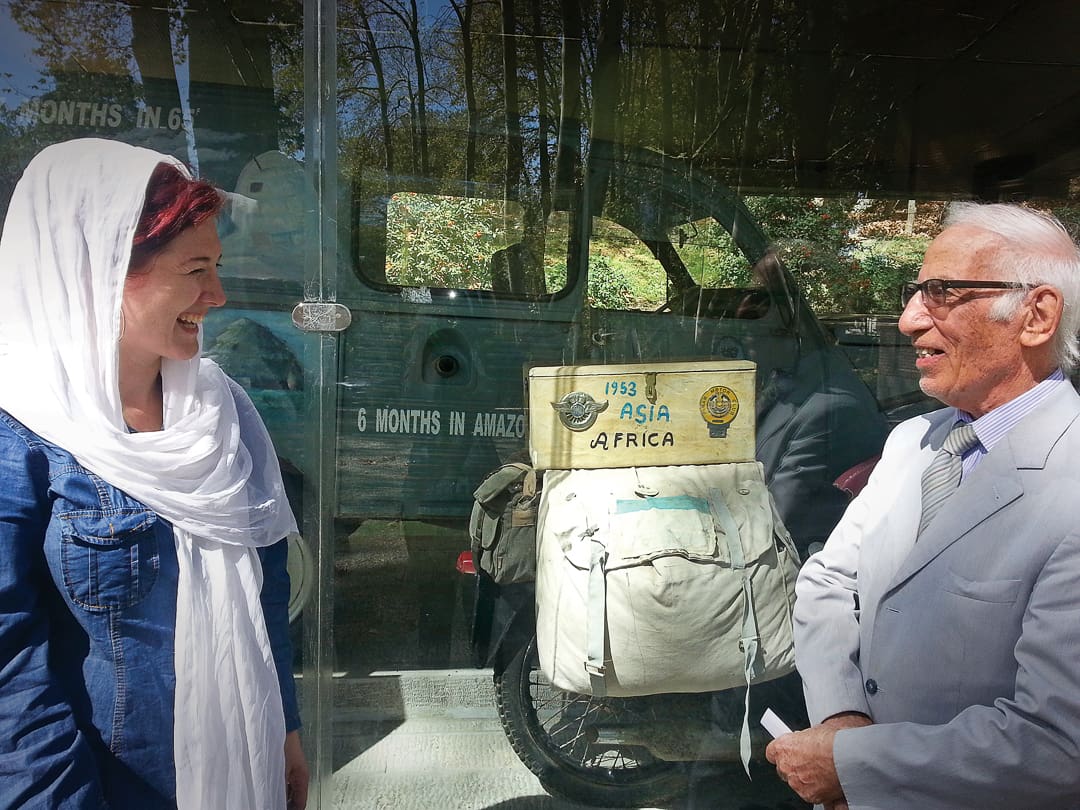
In 2013, author Lois Pryce met Issa Omidvar at his museum in Tehran.
Our No Compromise Clause: We do not accept advertorial content or allow advertising to influence our coverage, and our contributors are guaranteed editorial independence. Overland Collective may earn a small commission from affiliate links included in this article. We appreciate your support.