

To honor the 20-year anniversary of Overland Journal, we are revisiting special heritage content in the upcoming 100th issue of the magazine. Originally published in Overland Journal’s Fall 2023 issue, this article is part of that celebration.
Photography by Jason Spafford
Sequestered in one of the world’s most striking Shangri-La corners, north of the Annapurna mountain range, Upper Mustang is Nepal’s last vestige of the Tibetan empire. The people of Thakali, Gurung, and Tibetan origin keep their cultures and customs devoutly alive, practicing mainly Buddhism in its purest form and conducting sky burials, courtesy of the vultures, among other rituals and festivals. Falling into the past, we trekked through remote Himalayan villages dating back 600 years, overnighting in mud-floored “teahouses” that emanated a hole-in-the-ground rustic charm. We reached as far north as the Last Forbidden Kingdom of Lo Manthang, the walled city that served as the controlling trade junction between the Himalayas and India centuries ago.
“Big” was how a friend described the terrain to us beforehand. The unfolding landscapes were indeed reminiscent of the high-elevation steppe of the Argentinean Andes, the parched but mineral-rich Grand Canyon, Iceland’s dark, dramatic peaks, and even the lush Scottish Highlands at times. While our limbs recovered nightly from the oh-sweet ache, we stayed humble to the diverse Tibetan plateau on which we rambled.
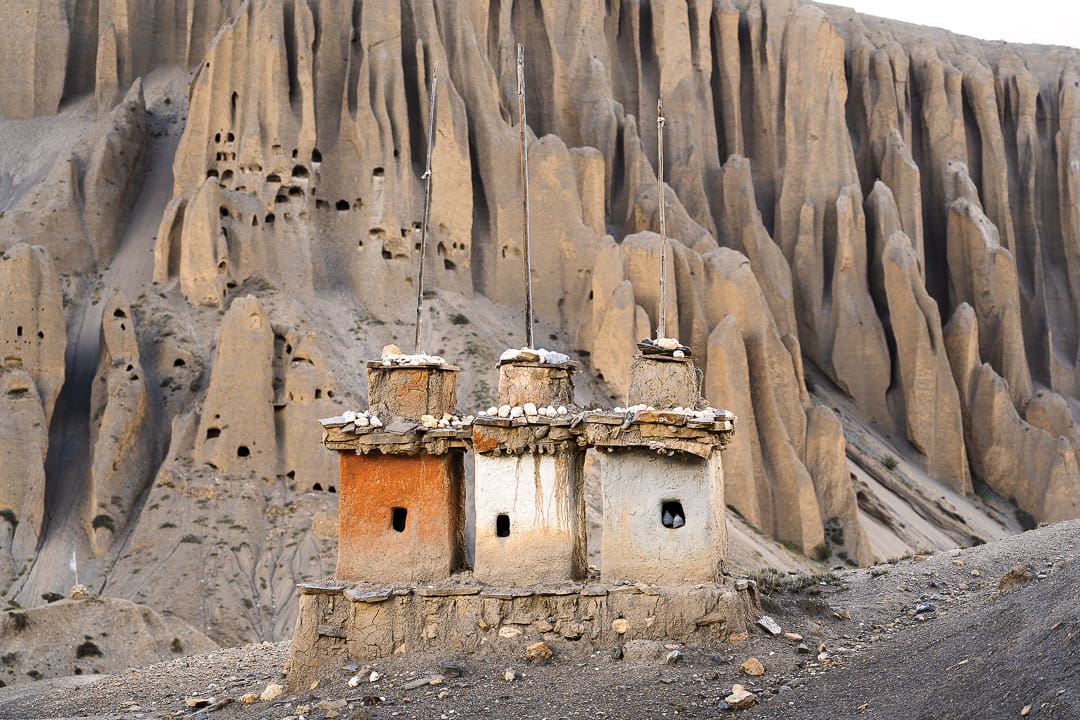
Wind-sculpted cliffs and sandstone pillars are home to the man-made Sky Caves that once housed a civilization of prehistoric settlers. Buddhist chortens (shrines) and opulent monasteries are nestled below sharp ridgelines stretching scallop-like to a high-desert horizon. It’s a desolate land that time forgot, the stuff of every undaunted trekker’s dream.
Despite not having hoofed it at this elevation and enduring distance previously, we devised an ambitious 105-mile through-hike, slated to take us from Kagbeni in the valley of the Kali Gandaki River to the Shija Jhong Caves of Chhoser, close to the Chinese border. Gratefully, our guide, Sarki, agreed not only to keep us off the busy road and map out a circuitous bang-for-our-buck route but also, during the journey, lead us on a lesser-trodden path for three days, wild trekking from Lo Manthang to Chhusang. Our efforts didn’t go unrewarded. It was the most impactful part of the trip due to the full sensory experience of a region that takes your breath away. In the wild yonder, imposing peaks scraped the sky. The landscape was serenity itself.
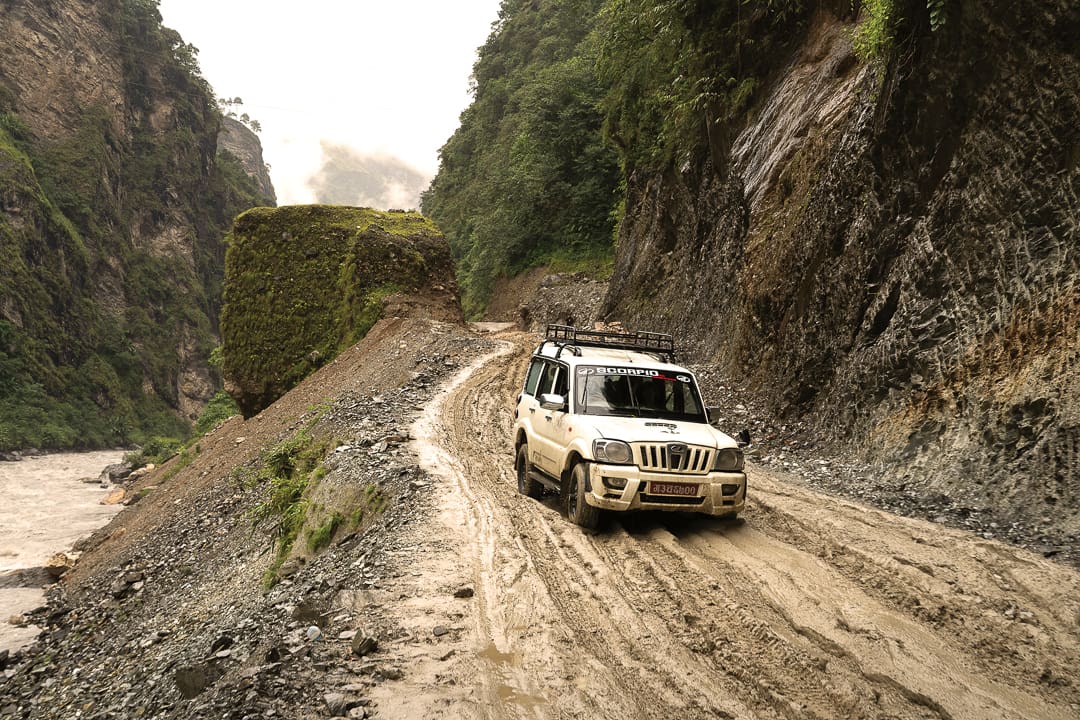
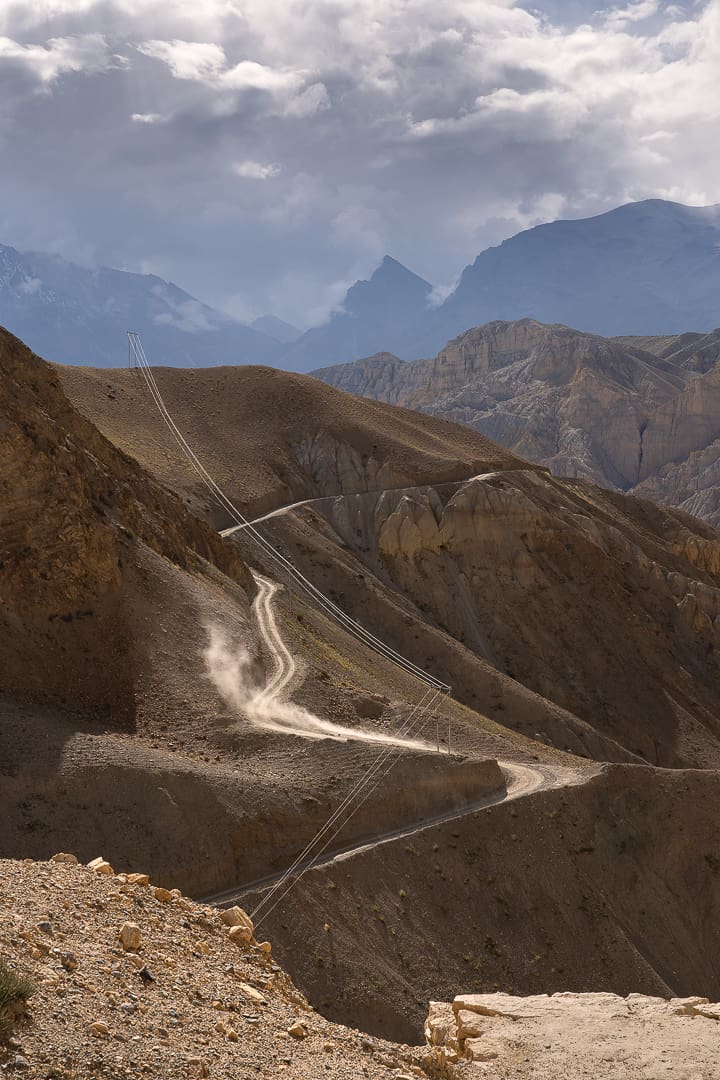
From Pokhara, we accessed the restricted region by chartering a jeep on a rough, often narrow 4WD track. The adventure was soon underway as our ride bore witness to multiple landslides gushing down from the mountaintops, building strength to wipe out whatever stood in its path—perilously commonplace in the prolonged rainy season.
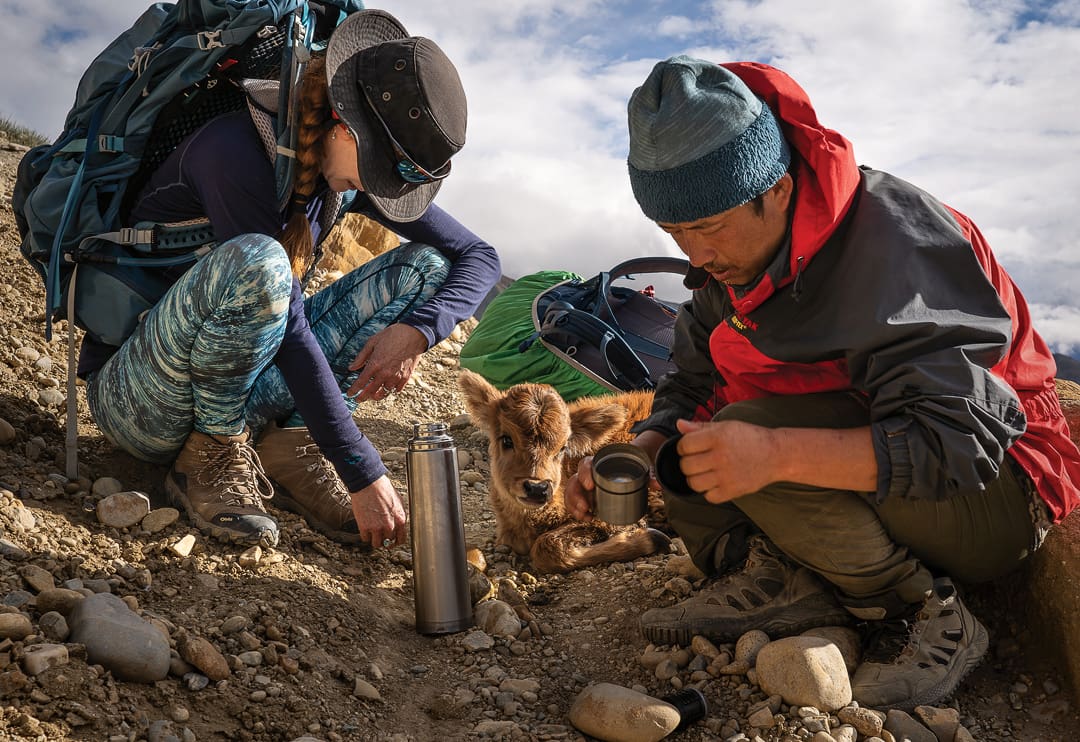
Fortunately, dampened spirits are a foreign concept to the locals. The landlocked country has an entirely native, heart-warming, and human offering: its “brand smile.” The inhabitants’ expressions beam unwaveringly, despite spending hours lugging water, foraging grass for cattle, and fetching yak dung (a traditional biofuel for fires). After we rescued an abandoned calf on our penultimate day, carrying it down an abrupt 2,300-foot scree-covered descent, and reunited it with the mother cow in Chhusang, the farmer thanked us in the Nepalese way. She cupped our hands individually in hers to her forehead and bowed with gratitude, nourishing my heart.
Further through-treks in the Nepalese Himalayas look promising on the horizon, although it’s hard to know how they will compare with Upper Mustang. Aside from the Khumbu region near Everest, there are exploration options in Langtang, Manaslu, and Upper Dolpo. The tropical expanse of the foothills is perhaps the country’s best-kept secret. Some places have still never felt the press of a foreigner’s foot. And then there are the elusive Raute and Janajati, heralded as the last nomads and known for subsistence hunting of macaque and langur monkeys. There’s so much to seek and find.
Nepal should continue to dream big. Its image should rightfully revolutionize from being known as a small, developing country in southern Asia to one that is future-facing, graced with a youthful vibrancy supplemented by a diversity of over 100 cultures. It will cost stakeholders serious investment and more lifetime than I have left to do any justice in seeing everything below Nepal’s improbable skyline—wide and trackless with the promise of glory present since time immemorial.
(Clockwise from top left)
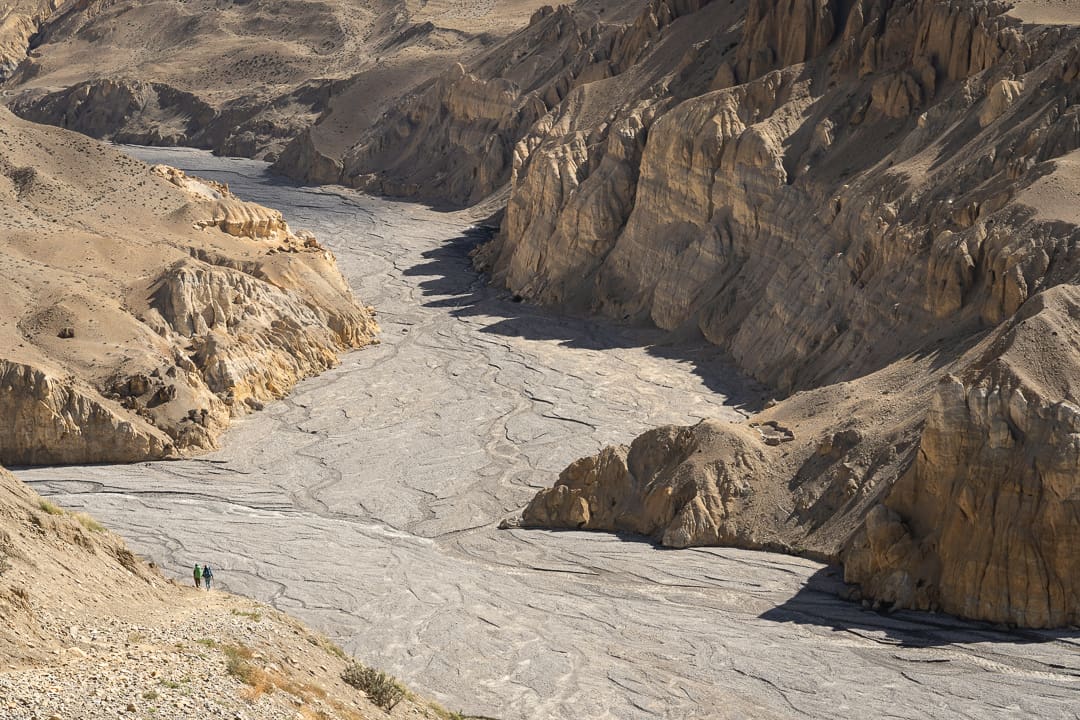
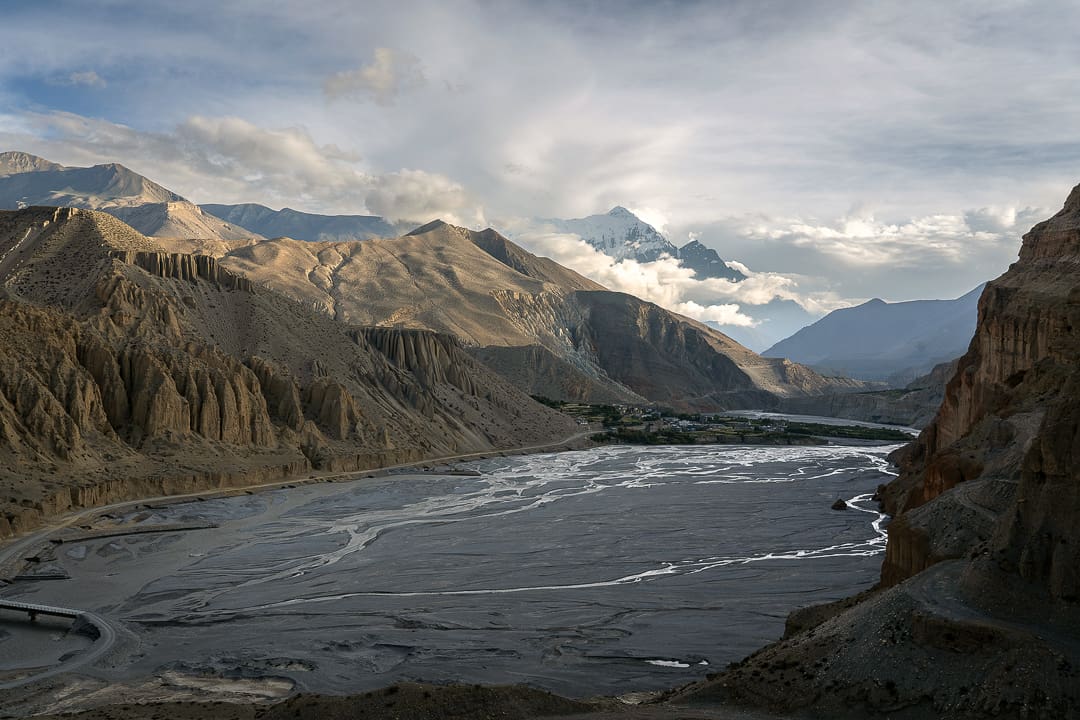
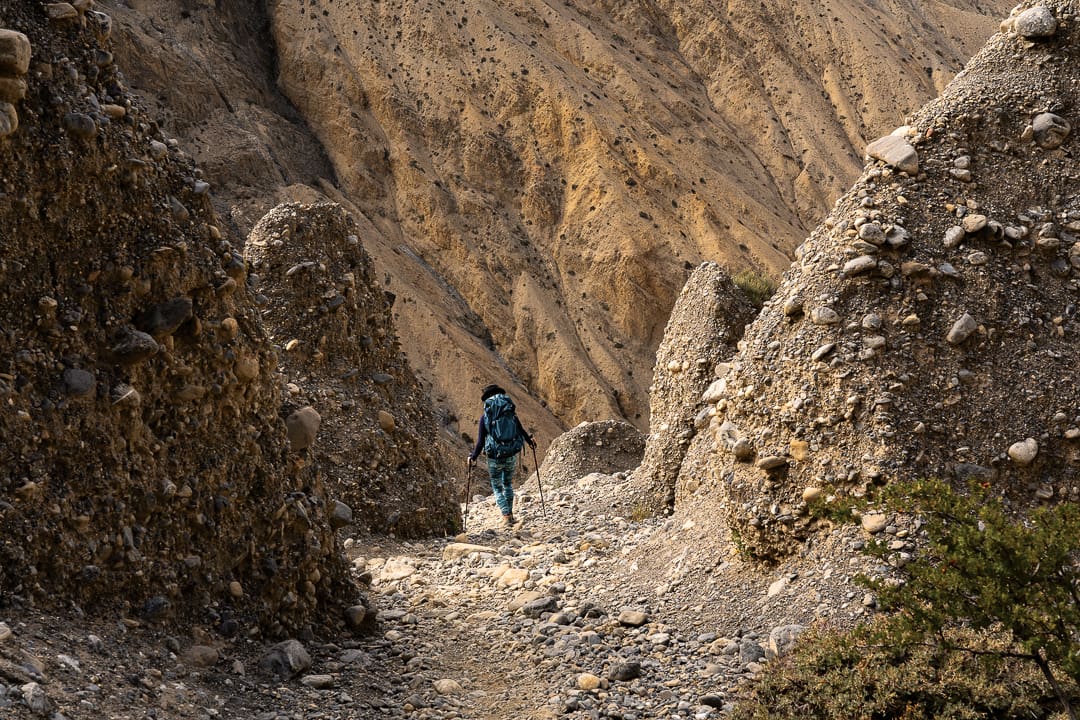
Traversing the Dhechyang Khola valley, the path unfurled, revealing breathtaking vistas of the Himalayas. We picked our way over the riverbank and kept a keen eye out for shaligrams, ammonite fossils characterized by their black coloration.
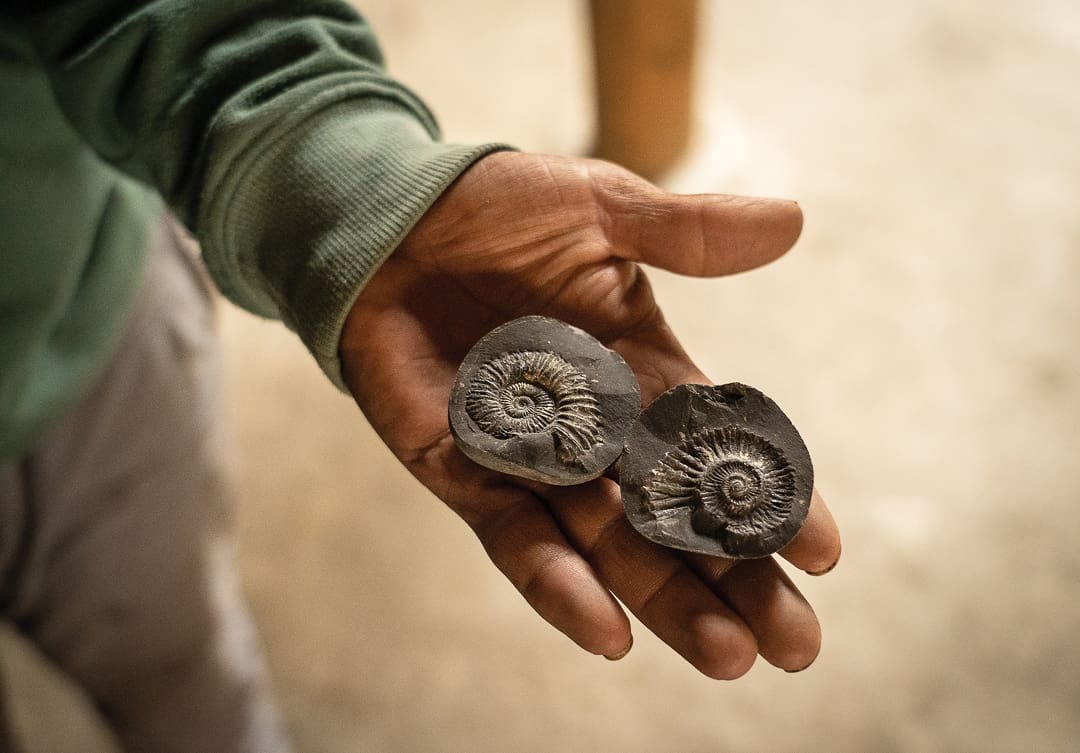
We trudged slowly along the trail on the challenging ascent to Nyi La—a rugged path of stone and dirt, occasionally punctuated by playful boulders. We stumbled upon a private collection of impeccably preserved shaligrams and acquired these two.
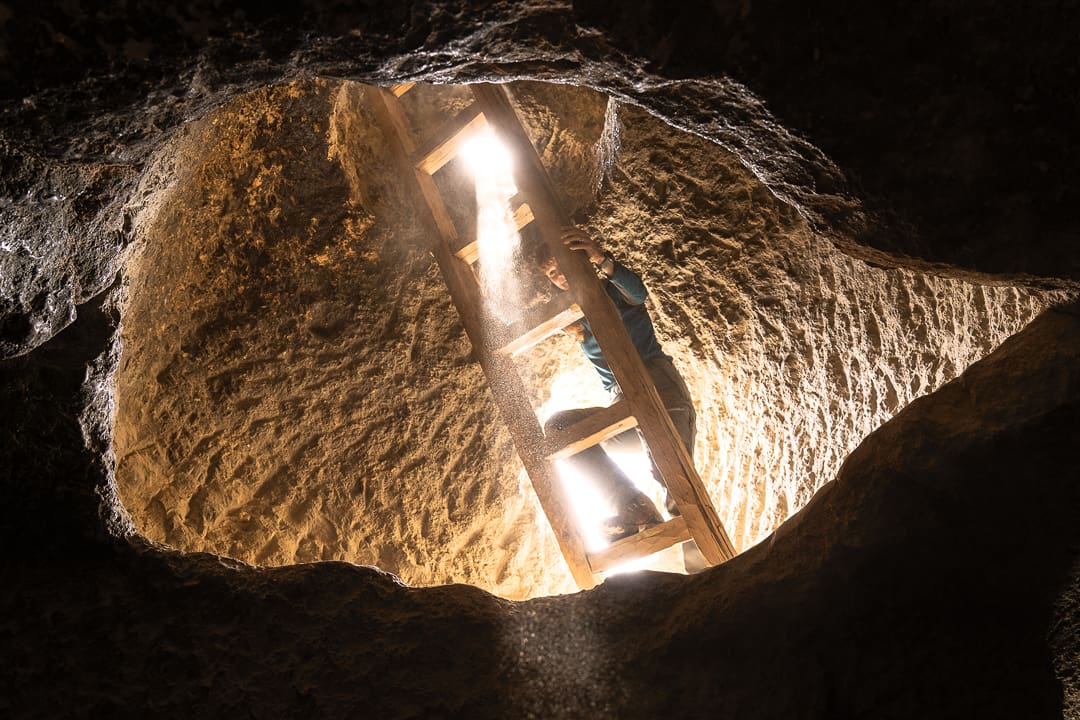
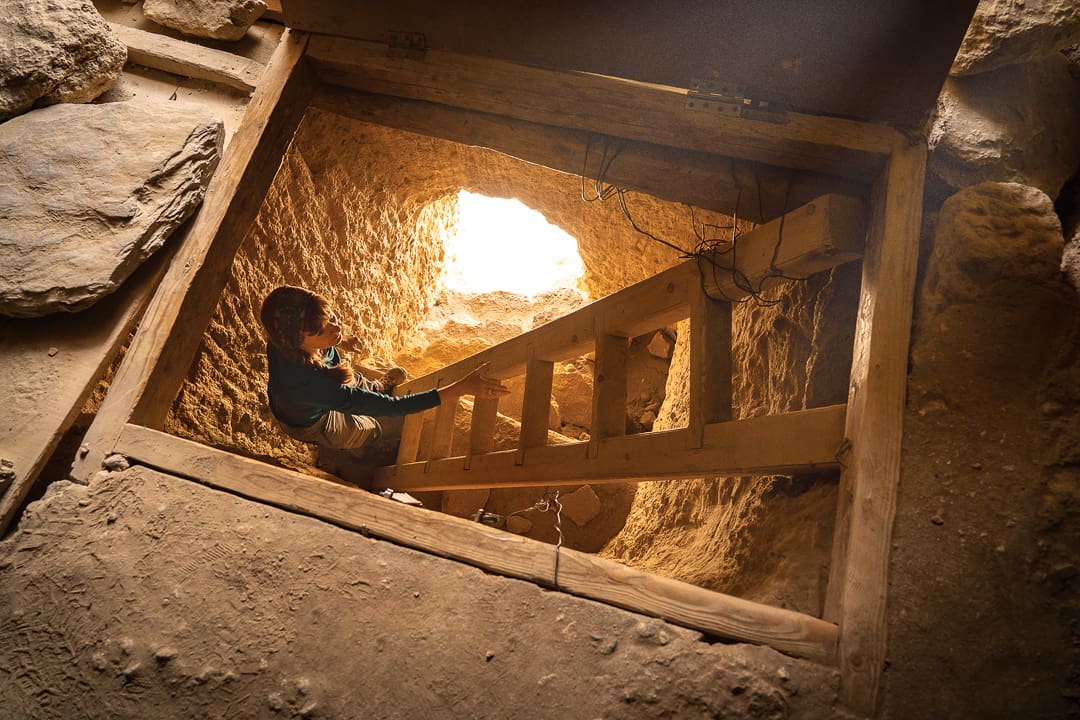
Departing Lo Manthang on a rest day, we embarked on a three-hour hike along a dusty dirt road to reach the renowned man-made Sky Caves within Chhoser village. Perched upon a lofty cliff, the captivating Shija Jhong Caves trace their origins back approximately 3,000 years.
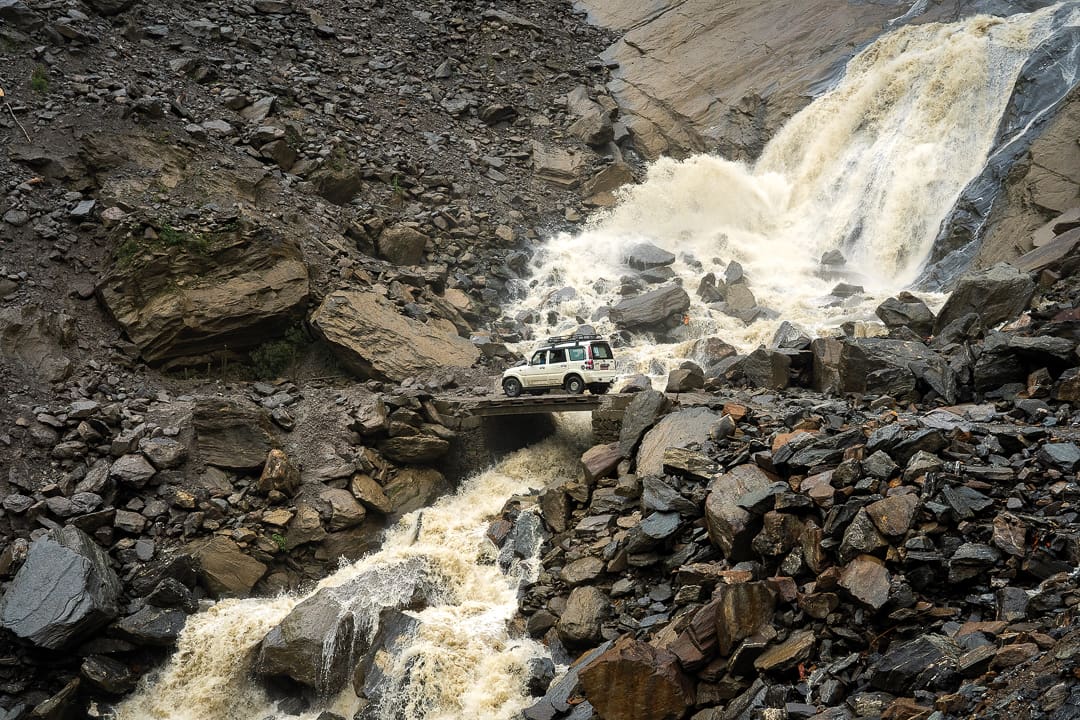
Monsoon landslides pose a significant threat to both local communities and visitors. On our ride to Kagbeni’s trailhead, the deafening roar of landslide-induced waterfalls echoed through the valley, a stark reminder of our vulnerability to nature’s raw, relentless power.
(Clockwise from top left)
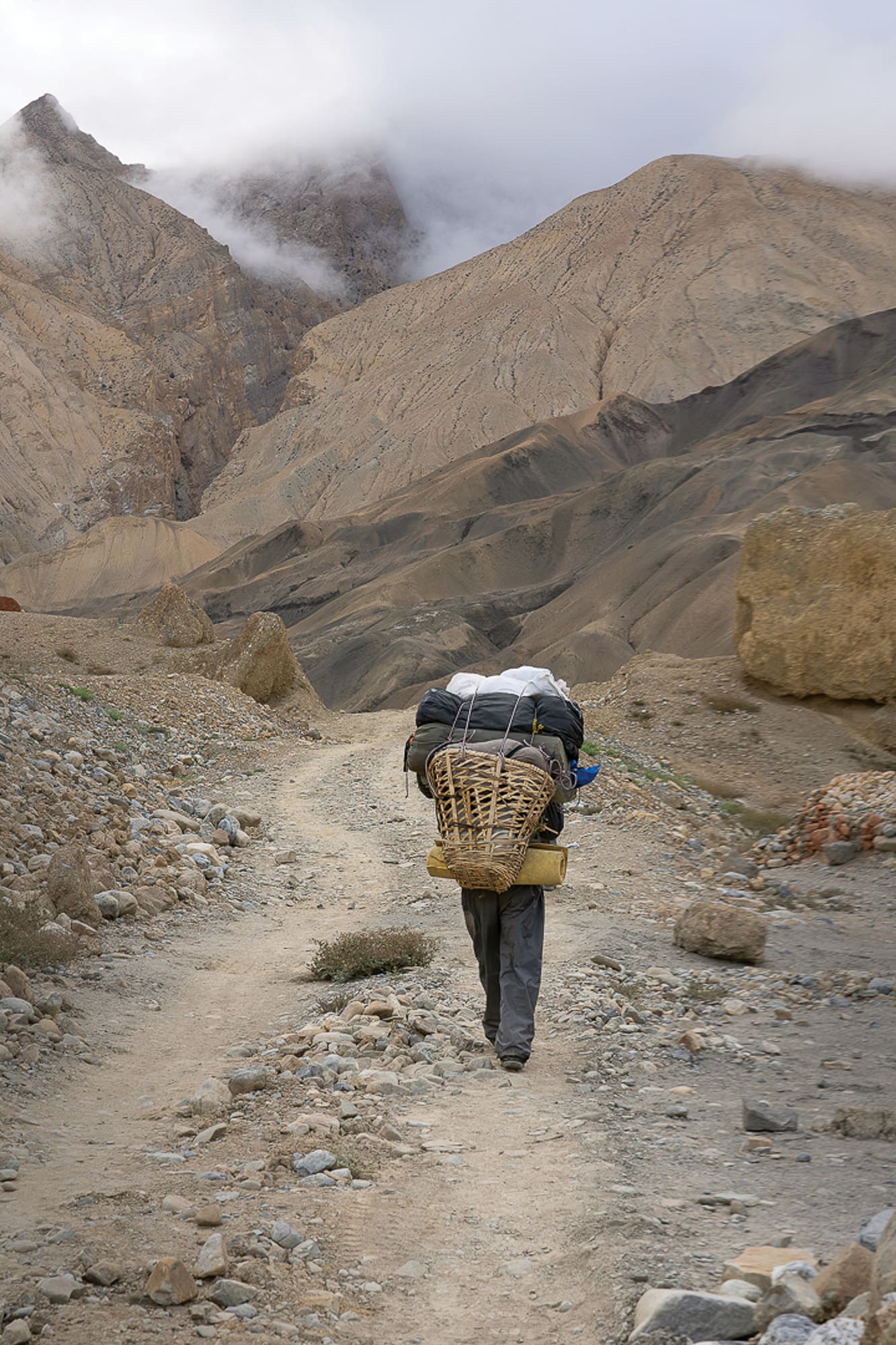
Alone on the dusty roads between Lo Manthang and Chhoser, a woman carried a doko. Meticulously crafted, the conical bamboo basket is a vessel for transporting goods, a symbol of sustenance and livelihood, and a reminder of the simplicity of daily rhythms.
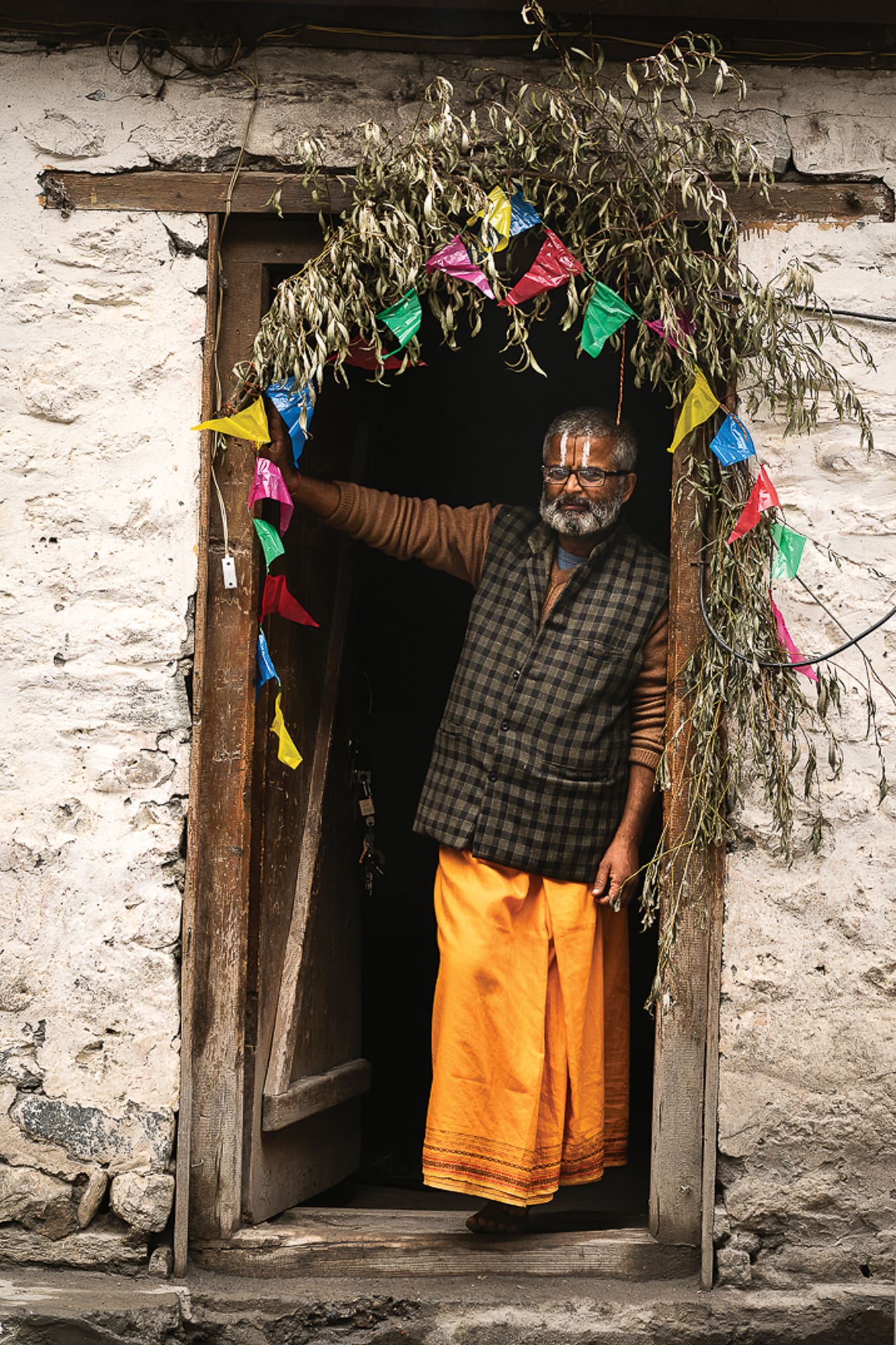
From September to October, Kagbeni is renowned for the sacred period of Pitru Paksha. The lost souls of the forefathers are recovered from the depths of hell and steered toward the celestial realms, bestowing blessings upon the entire family.
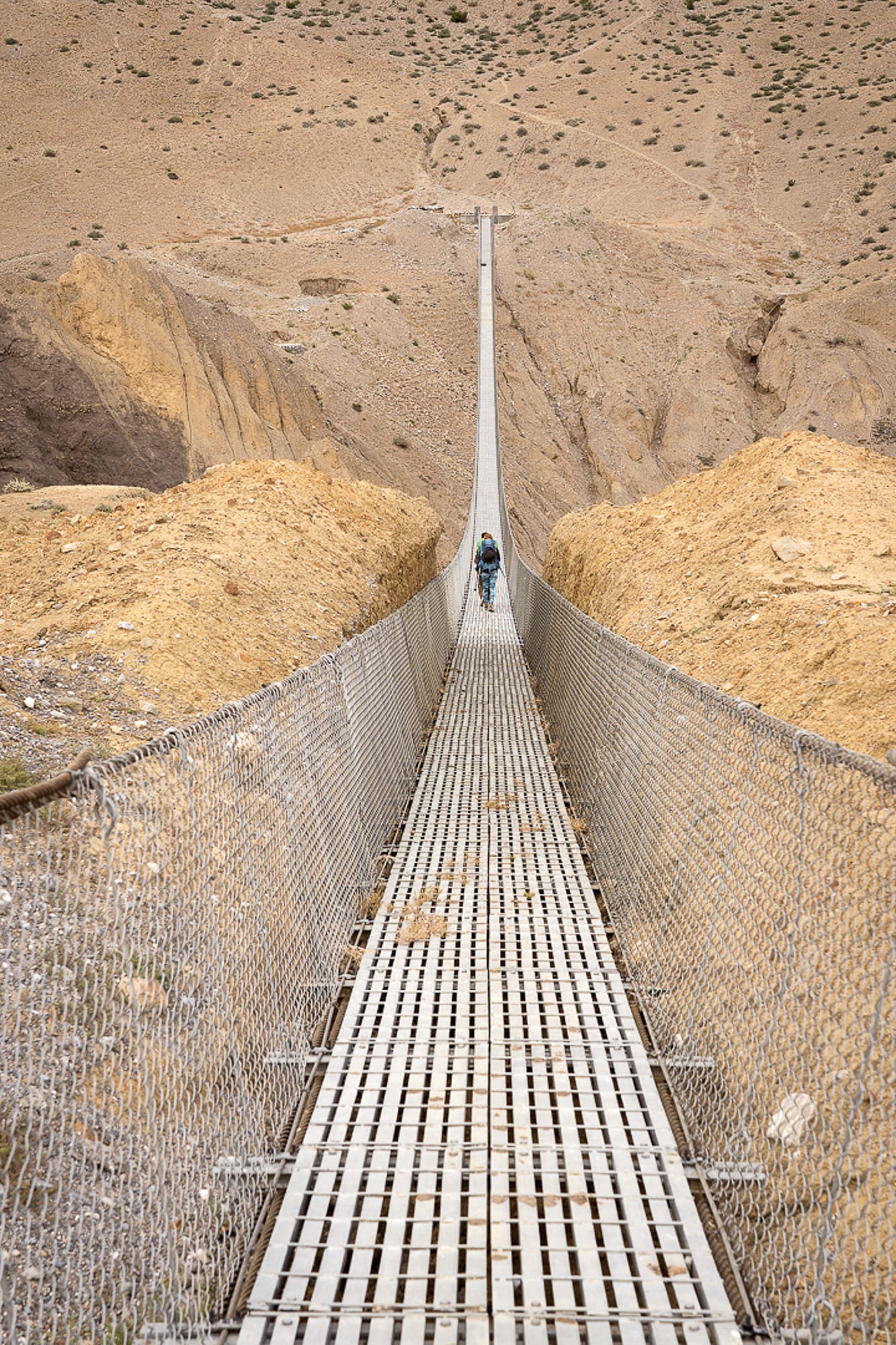
Upper Mustang’s long footbridges are engineering marvels that span great distances over deep chasms and roaring rivers. These awe-inspiring structures serve as vital lifelines, connecting families, friends, and neighboring communities between remote villages.
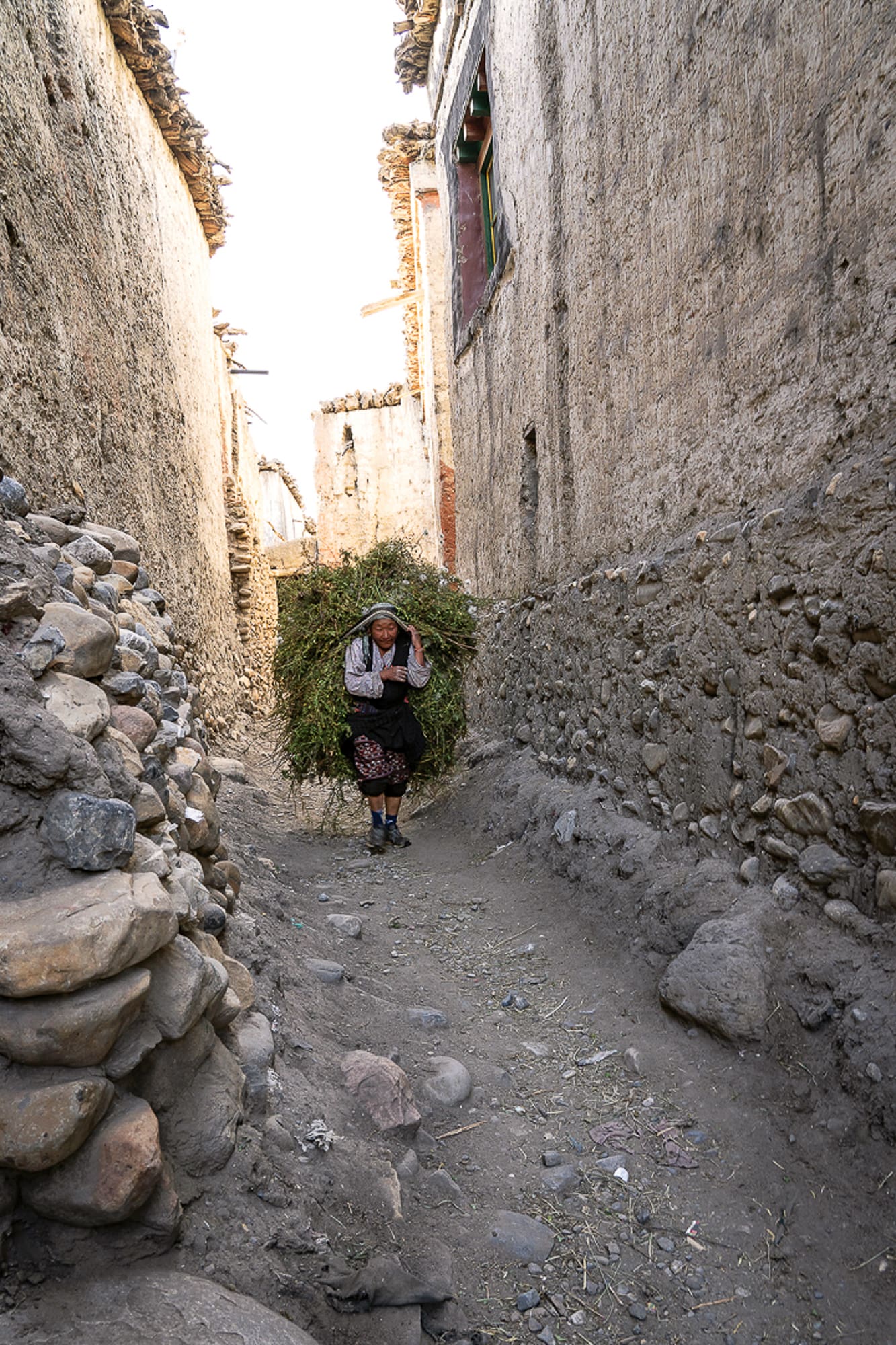
In the streets of Lo Manthang, an elderly Nepalese woman shoulders an immense burden of grass for her beloved donkeys in a quiet act of devotion.
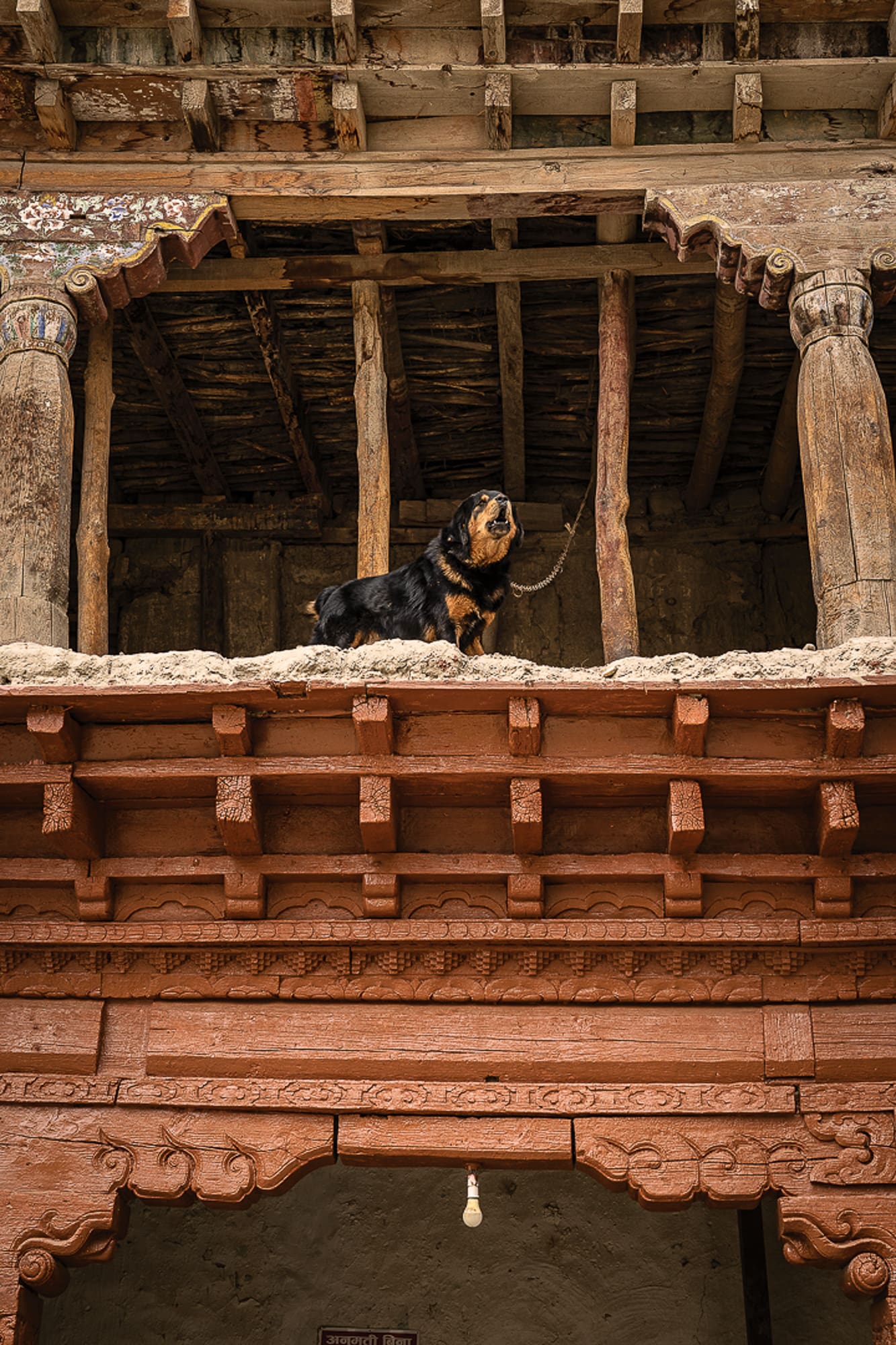
Amidst the timeworn stones and weathered walls of an old temple in Lo Manthang, a mastiff found solace and companionship, embodying the spirit of loyalty and guardianship.
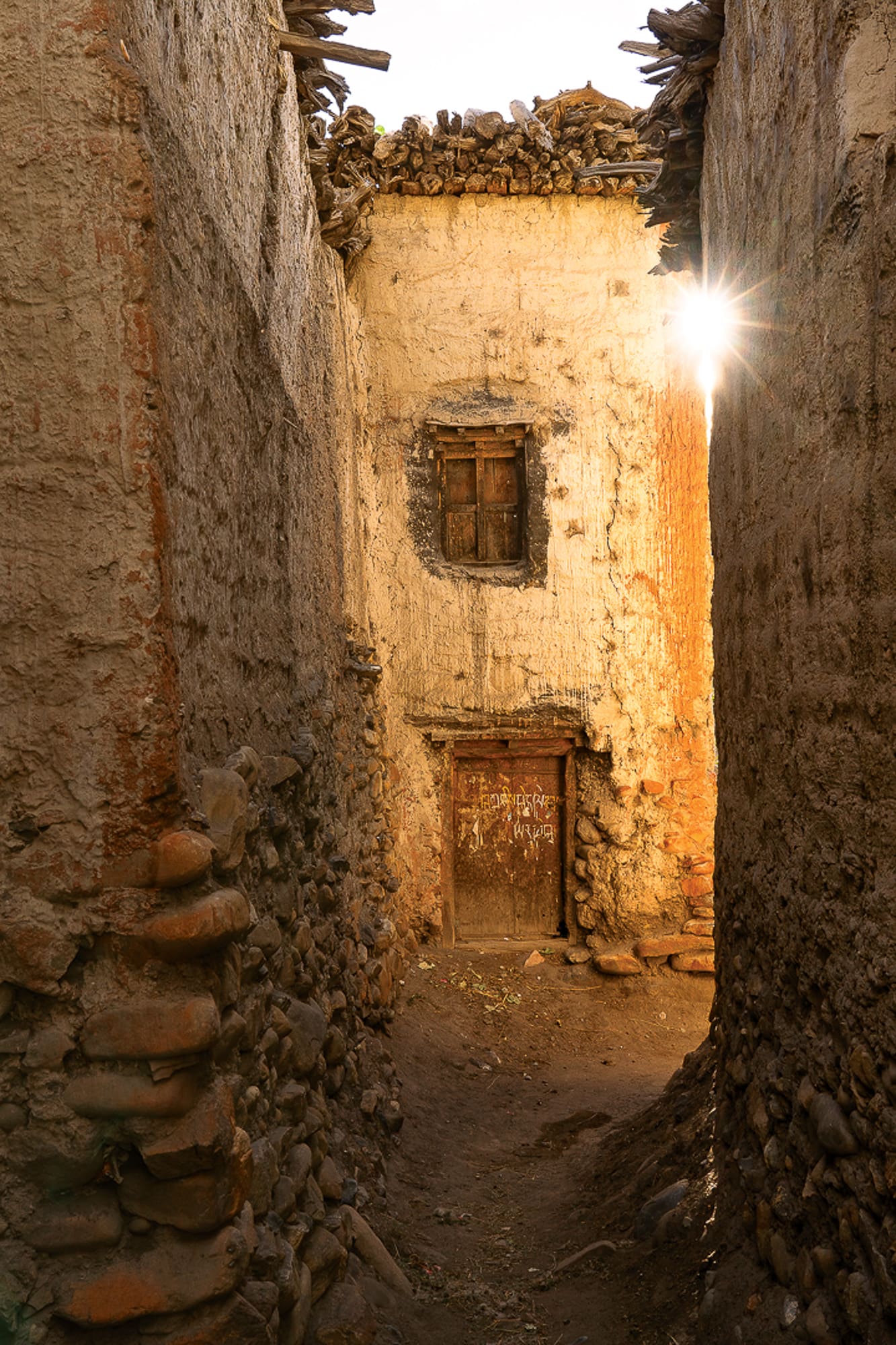
The streets were a tapestry of well-worn paths, their surfaces trodden upon by countless feet over the ages. The fading light cast enchanting shadows on the old facades, accentuating the labyrinth of hidden nooks and intricate details.
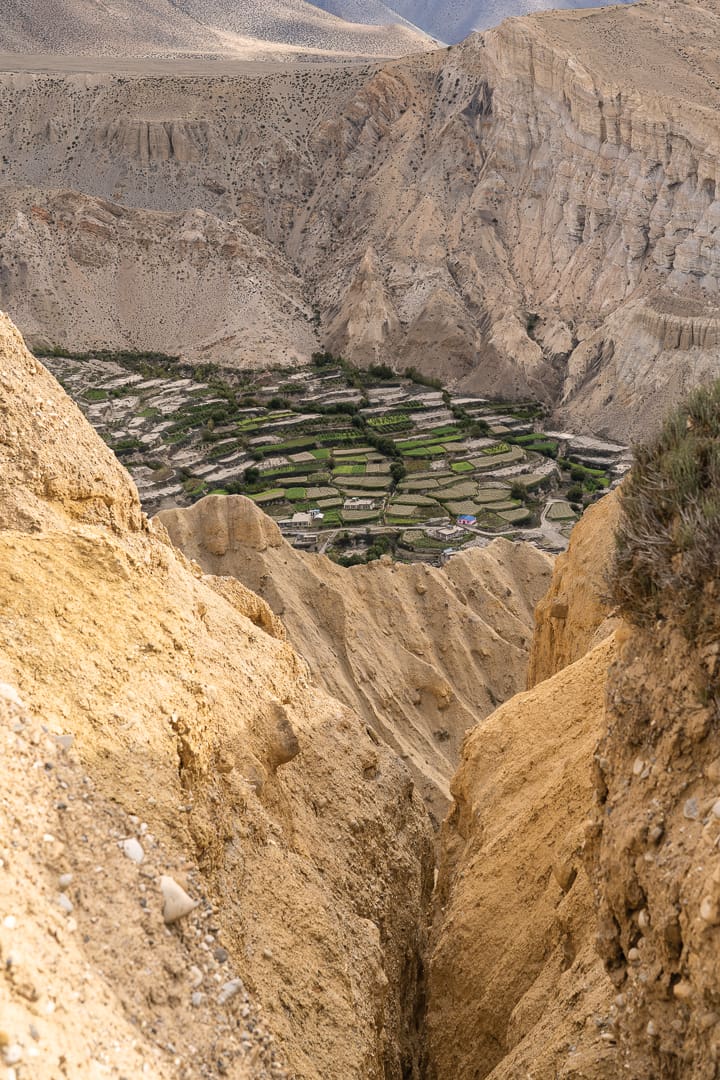
These verdant fields popped in contrast to the arid landscape, painting an unexpected scene against the Himalayan backdrop.
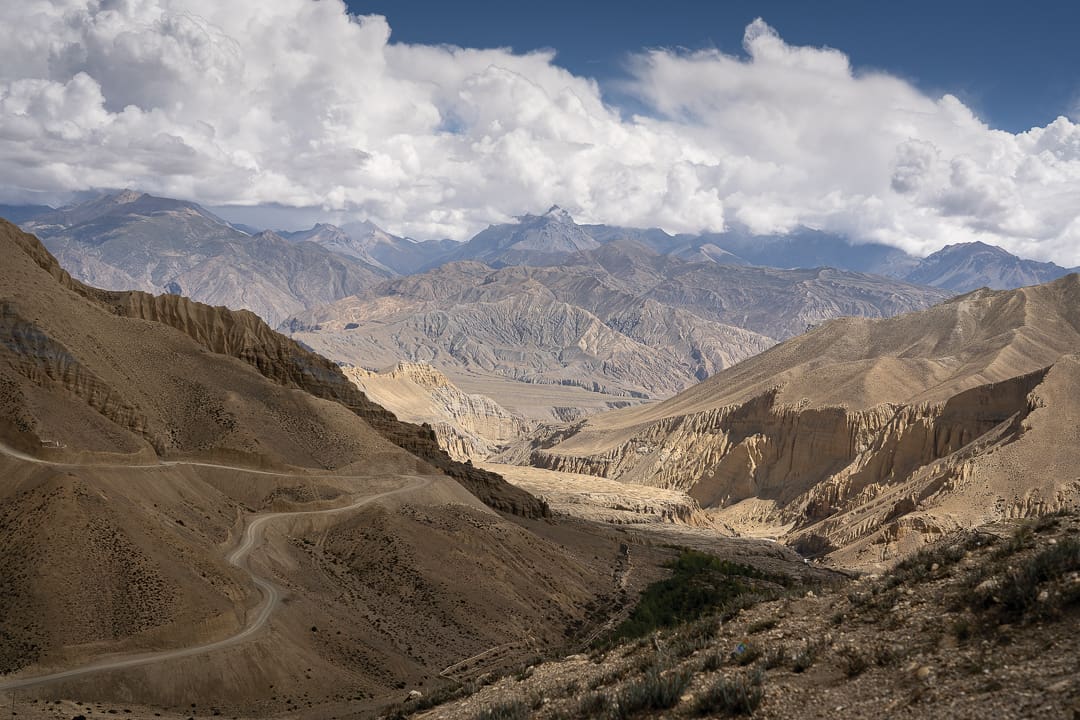
The awe-inspiring trek from Yara to Tangge revealed untamed beauty, offering a mindful glimpse into a world where time has stood still, and remarkable adventures on foot perpetually beckoned.
(Clockwise from top left)
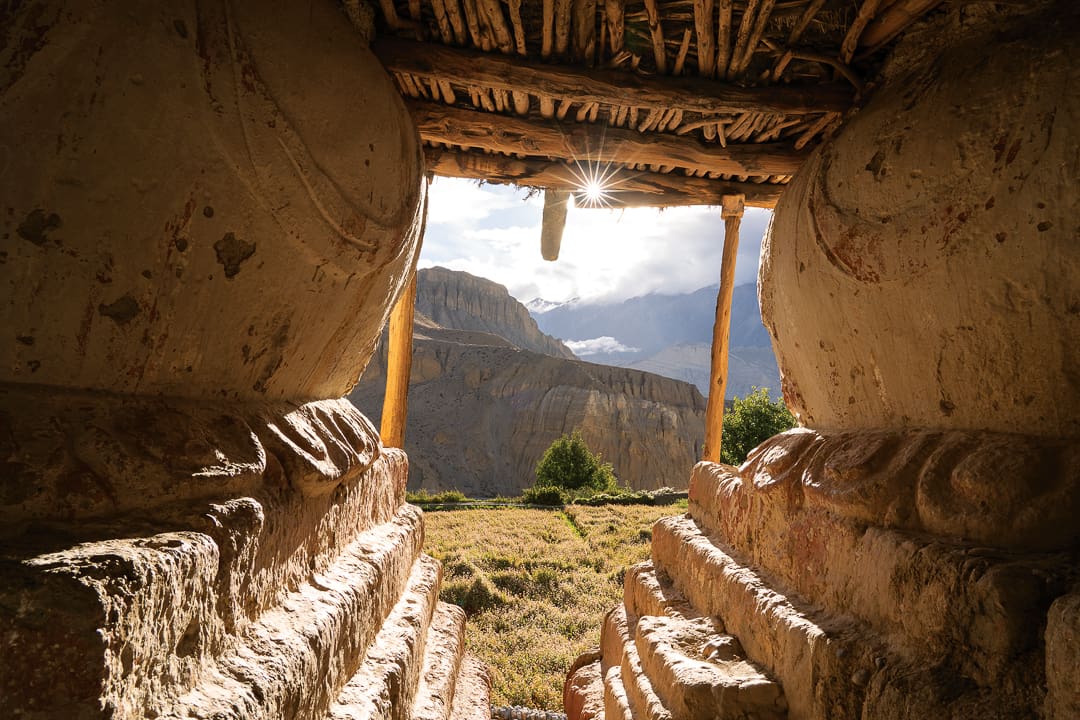
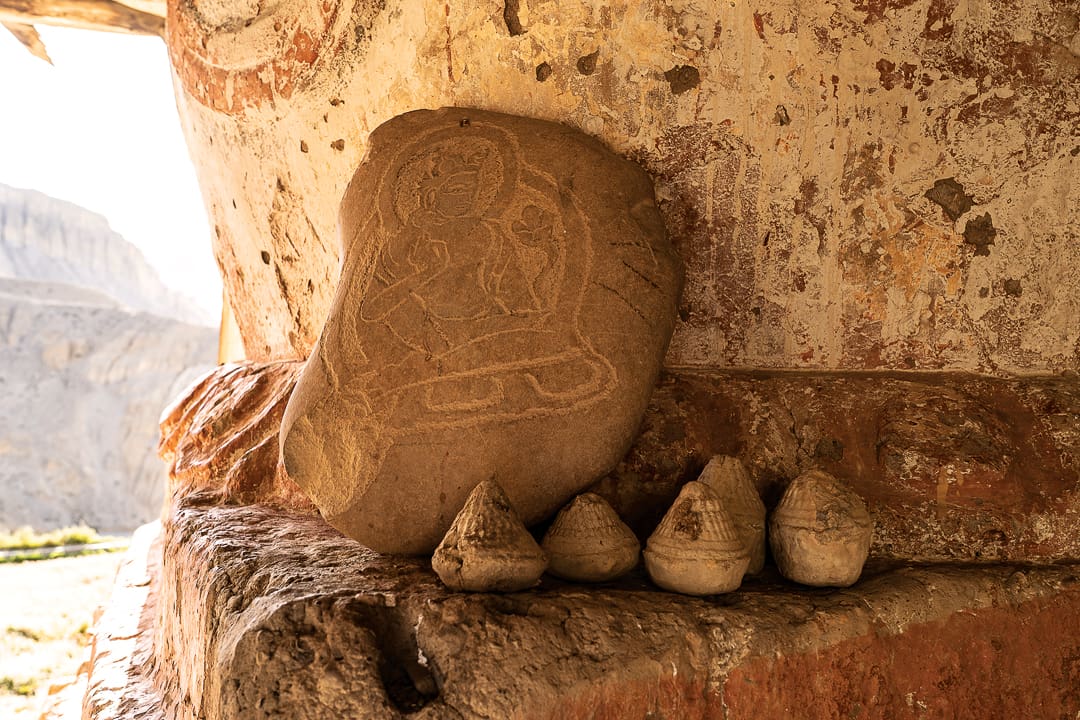
Age-old engravings on stones adorned the revered chorten sites. Amidst the serene landscapes and towering peaks, these inscriptions serve as a portal to a bygone era, preserving the wisdom and aspirations of those who came before.
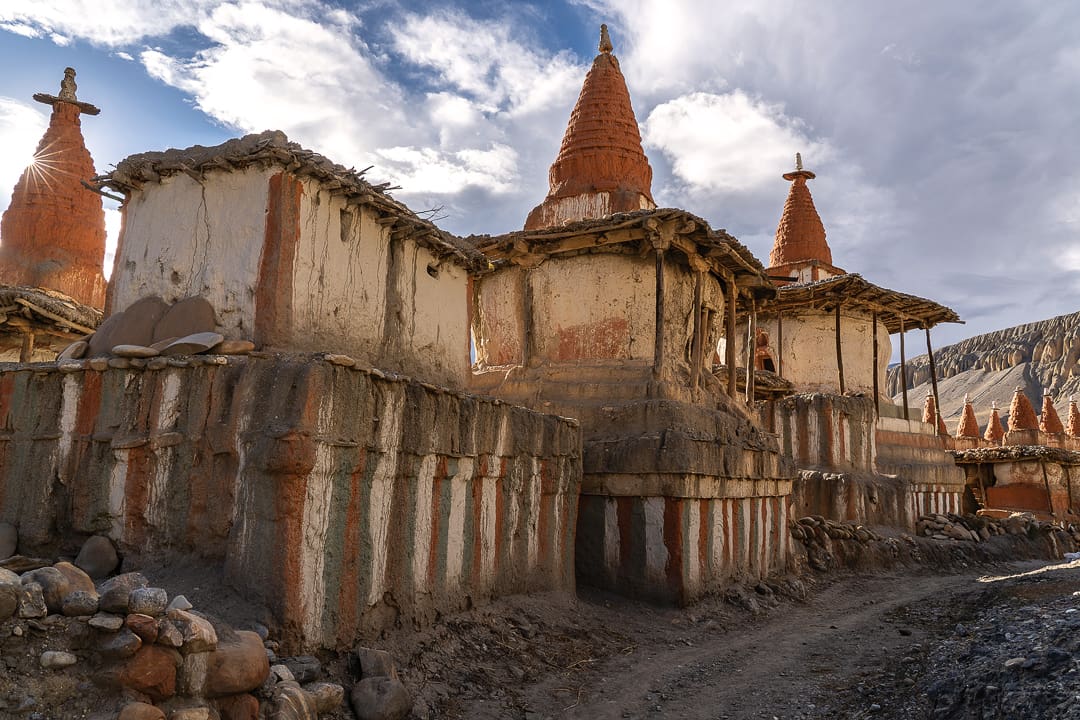
The chorten’s weathered exterior told tales of pilgrims who have sought solace and enlightenment from within its walls through prayer. Such litanies cannot be static if they are to make it to the heavens. Like spinning a prayer wheel, one must always orbit these sanctuaries clockwise.
These Tibetan inscriptions convey prayers, mantras, and verses, acting as guardians of spiritual energy within the holy chortens, inviting us to join in the collective harmony of the sacred space.
Vibrant stripes graced this chorten’s outer walls, painted in vivid red, white, blue, and yellow hues that represent elements of Buddhist symbolism, conveying blessings, protection, and spiritual aspirations.
The Shija Jhong Caves in Chhoser were discovered in the last 30–40 years and contain the remains of time-honored and surprisingly diverse cultures that used the Mustang region as a salt-and-rice trade route. Utilized as dwellings 2,000 years ago, their original purpose was for burial.
Our driver, who called himself the “Off-Road King,” didn’t seem fazed as he negotiated the muddy slip-and-slide track littered with fallen boulders and loose rocks. Parts of the rig were obliterated altogether upon reaching our end destination.
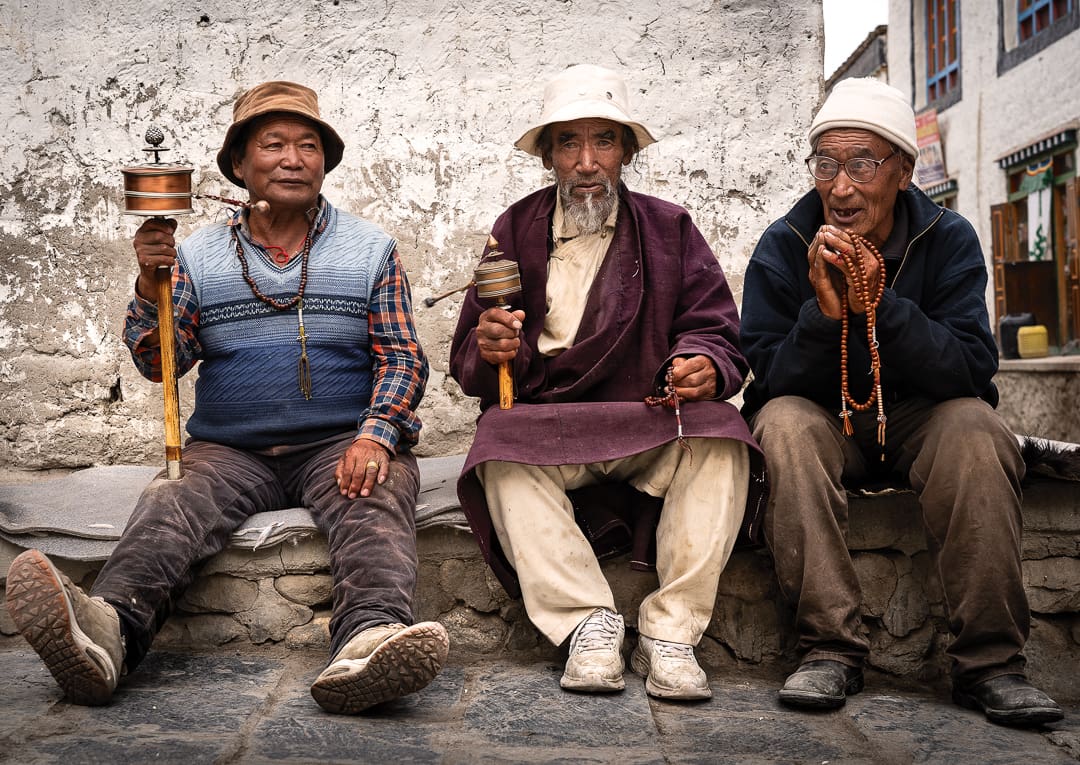
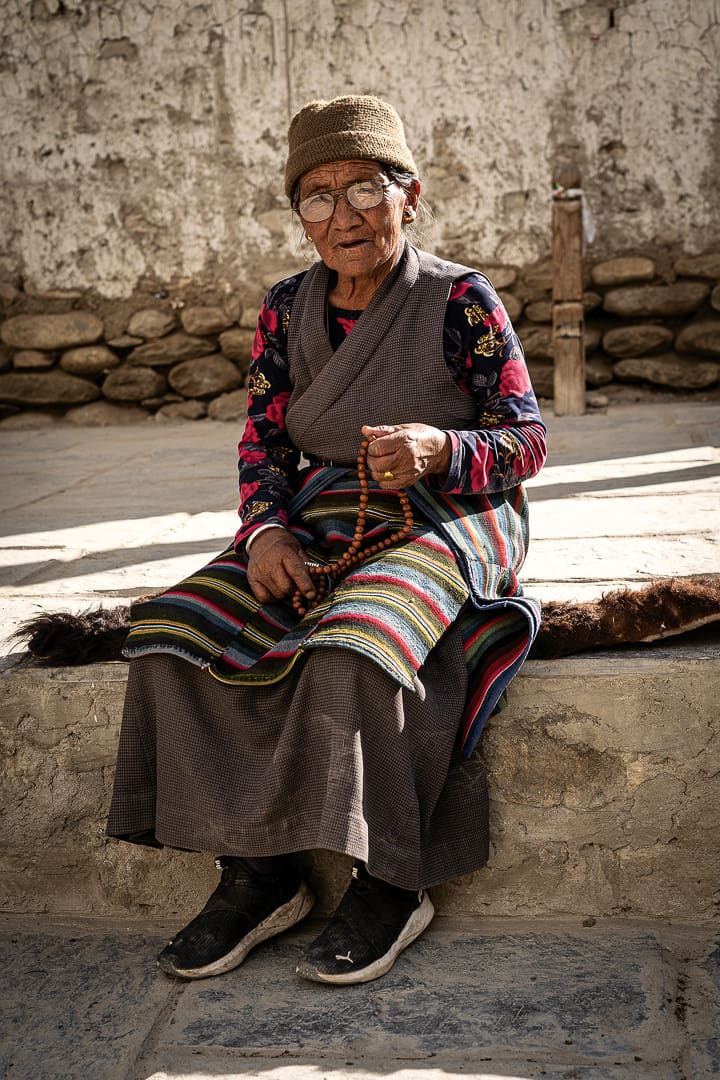
Prayer beads, or mala, are tangible tools for counting and focusing prayers. Typically, each bead represents a mantra, a sacred syllable, or a deity. The repetition of Oṃ Maṇi Padme Hūṃ, the vocalization of the five elements of earth, water, fire, wind, and air or sky, cultivates mindfulness during prayer and meditation.
(Clockwise from top left)
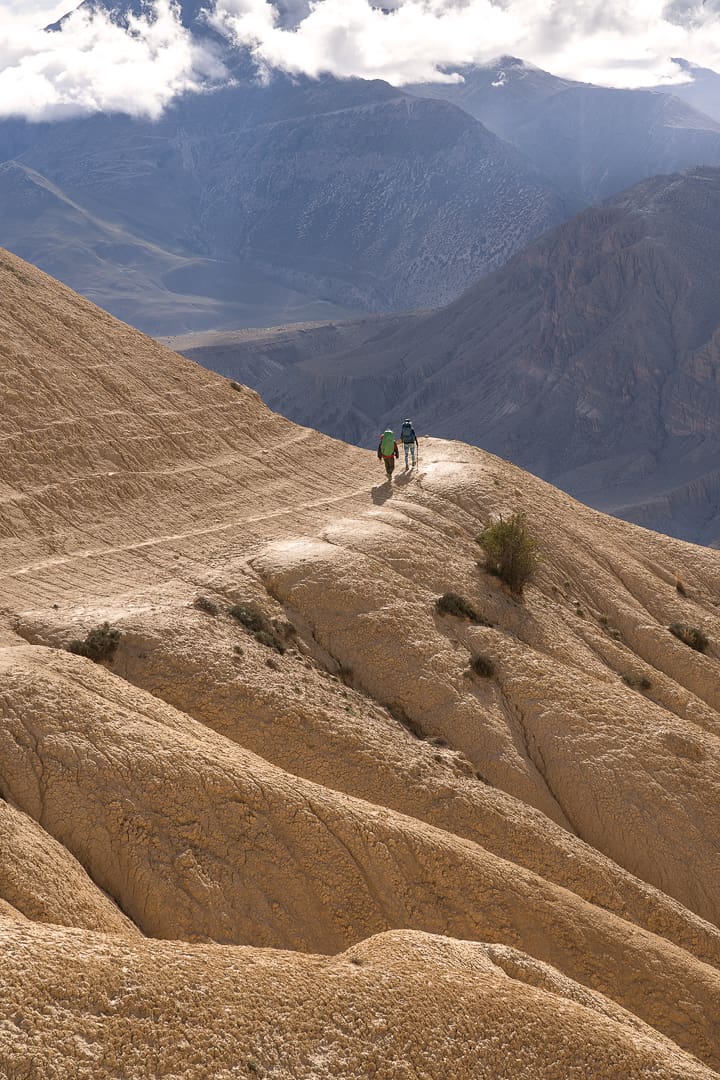
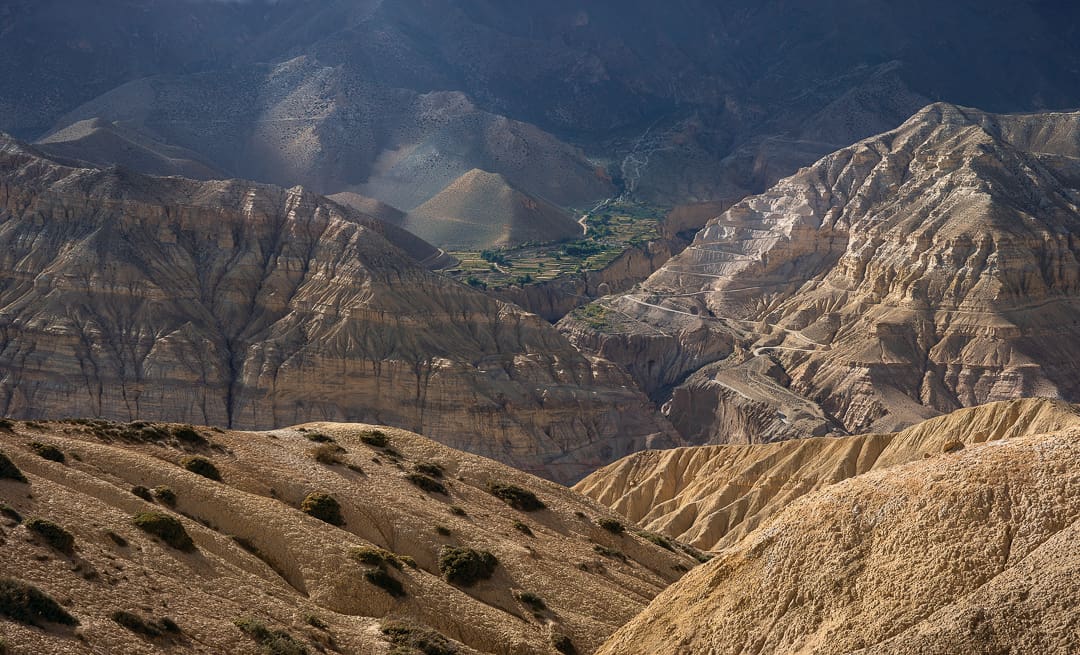
Embarking on the trail towards Tangge, we found ourselves on a path that wound through arid valleys. The terrain appeared as if it had melted, yet its texture was firm, with smooth surfaces and jagged edges. Scattered across its expanse were numerous caves, offering intrigue and shelter.
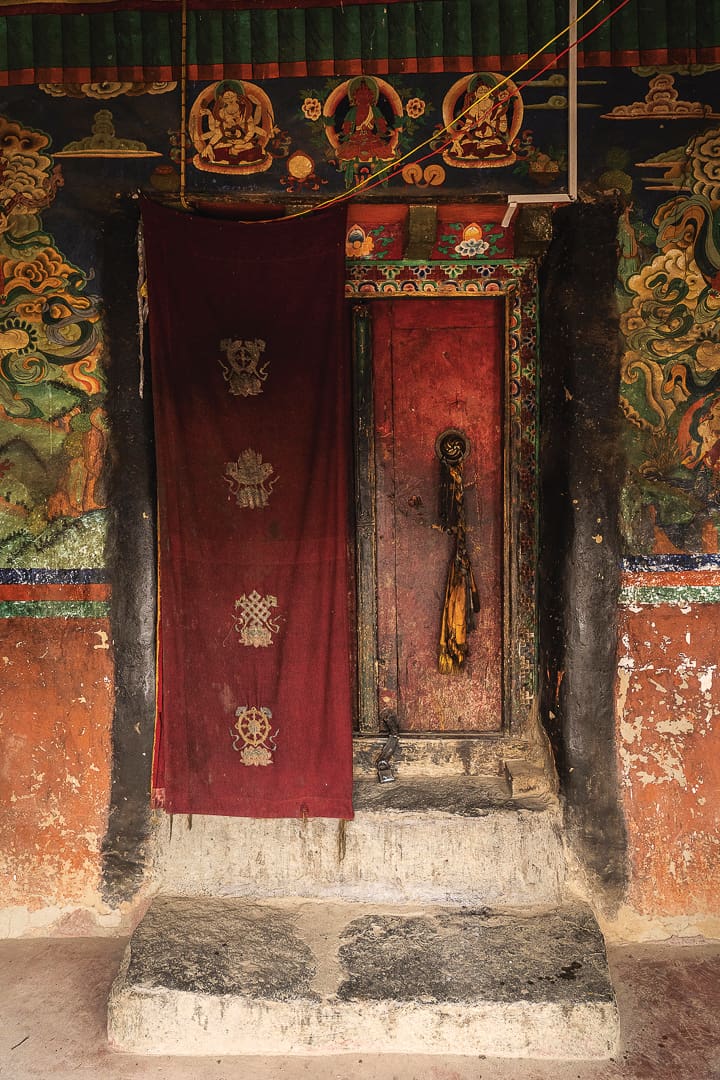
Stumbling upon ancient monasteries that clung to the mountainsides, we took a moment to soak in the atmosphere at Ghar Gompa, an 8th-century example built by Guru Rinpoche, who founded Nyingma, the oldest Tibetan Buddhist tradition.
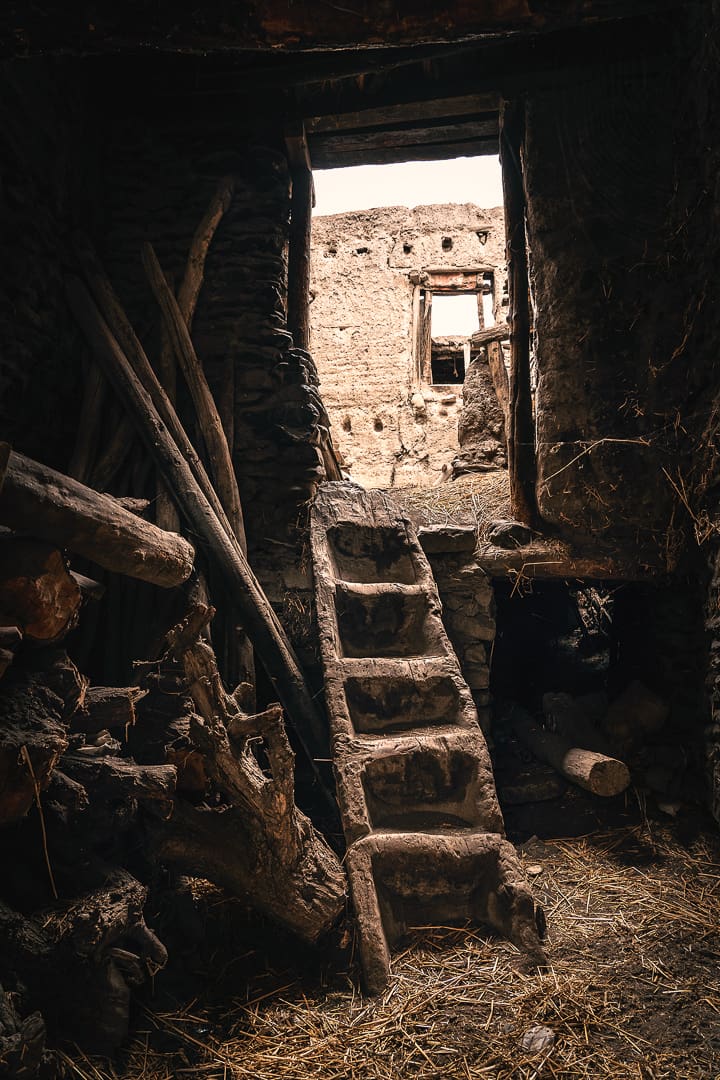
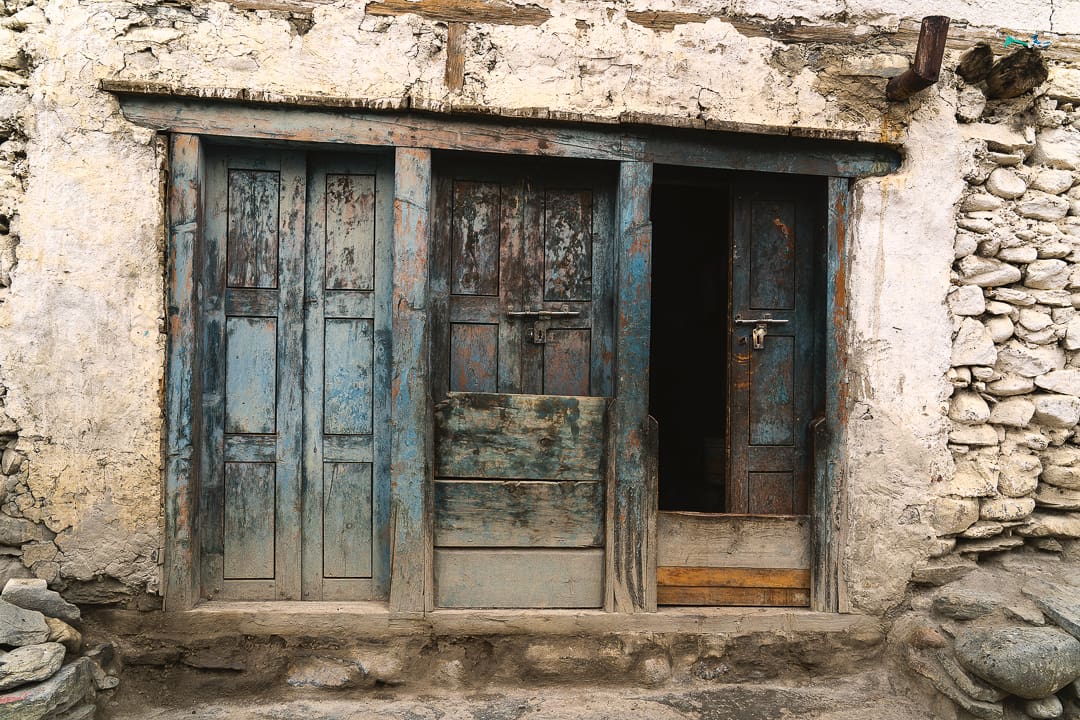
Upper Mustang’s landscape is dotted with simple dwellings that embrace the essence of a brutal yet harmonious way of life. These humble abodes, built from rocks, clay, and wood, demonstrate the unique cultural heritage and resilience of the people who call this region home.
As we ascended higher on this day, the vistas began to open out, showcasing a panorama that captured the essence of the Himalayas. The interplay of light and shadow created a dance of ever-changing hues, painting a canvas of extraordinary beauty.
The patterns woven into this traditional dress fabric symbolize the connection between the wearer and her heritage. Inspired by the surrounding natural world, the vibrant cloth brought a burst of color to the scene.
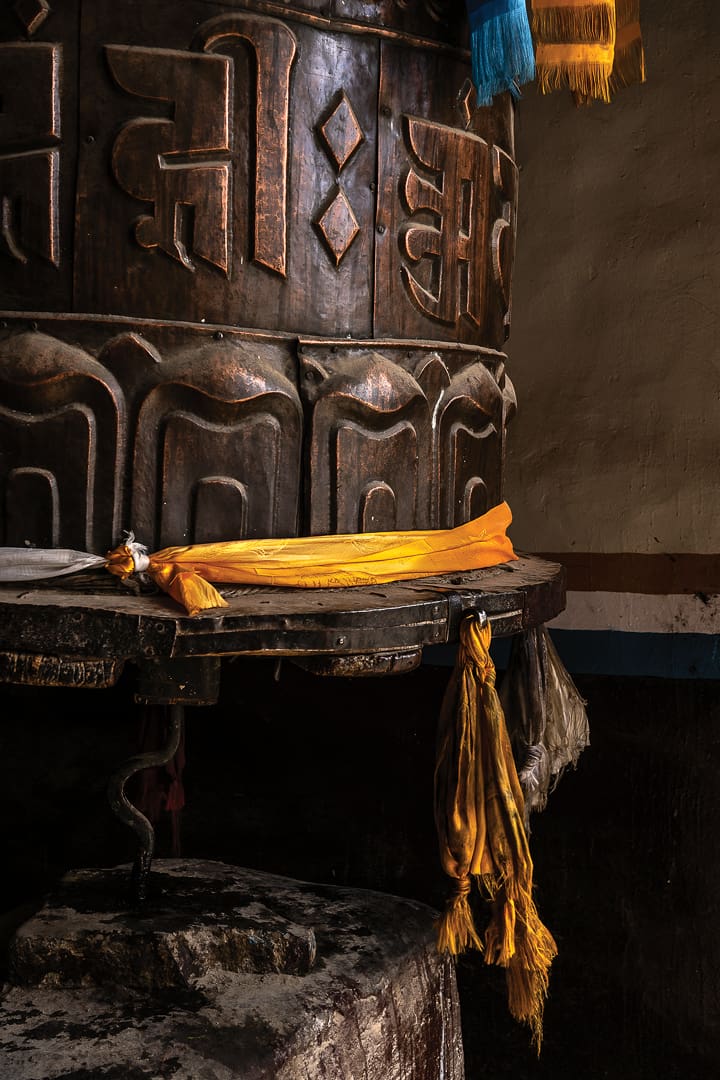
Several meters high, these magnificent, ornately adorned prayer wheels act as powerful conduits for prayers and blessings. Spinning a prayer wheel invokes the power of the prayers and mantras inscribed upon its facade.
(Opposite, clockwise from top left)
Upon reaching each day’s resting place, a sense of accomplishment washed over us. The through-trek was a pilgrimage of the spirit, a land voyage that transcended the physical realm and took us on a transformative adventure.
The trek from Yara to Tangge was not without its challenges and demanded dig-deep physical endurance and a spirit of absolute willingness. But with each labored step, the rewards multiplied.
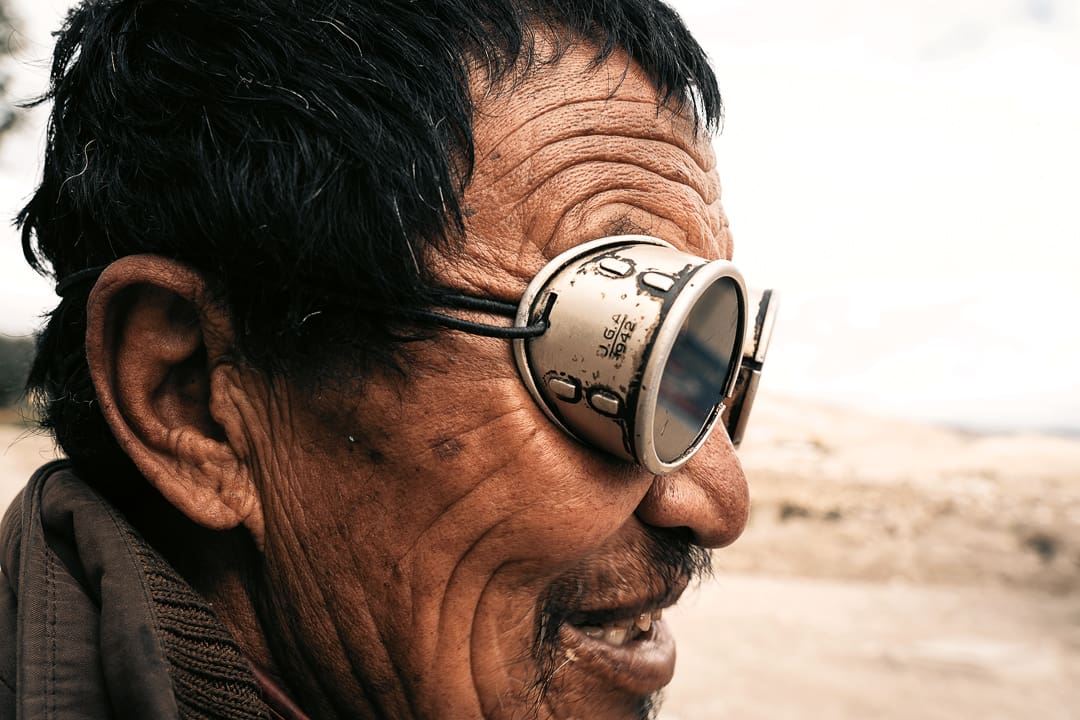
One charming character we met in the walled city of Lo Manthang had a face full of years as wrinkled as aged leather. We dialed into the pride he took in his steampunk-looking glasses from 1942, the year imprinted on one of the sides, further adding to their allure.
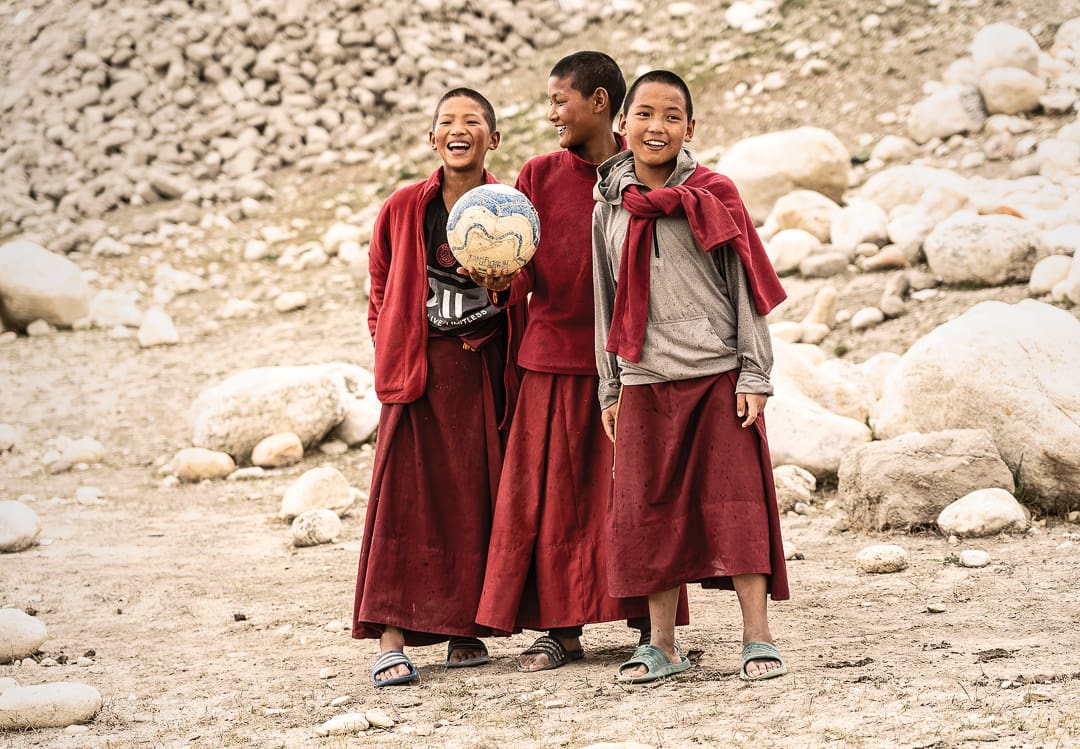
These innocent souls, adorned in crimson robes, looked out with curious eyes, bestowing us with radiant smiles. Despite their tender age, they embodied a profound dedication to their spiritual path, imbibing the teachings of Buddhism.
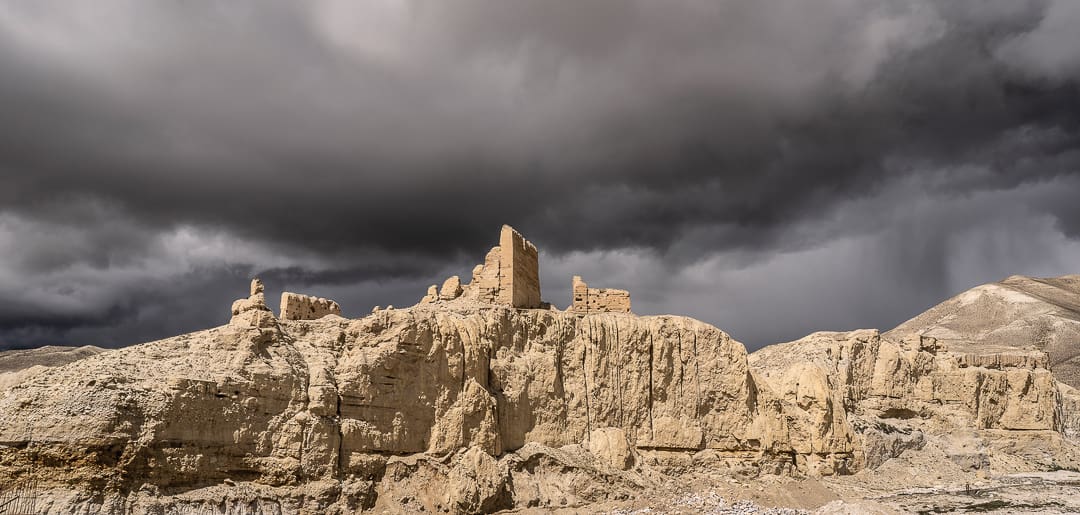
These ancient ruins near Chhoser lay shrouded in mystery, their weathered remnants standing as silent observers to the passage of time. Bearing the marks of centuries, their eroded facades hint at past grandeur.
On the trek’s final leg, we discovered an inert, two-day-old calf abandoned by its mother. Determined to help, we embarked on a grueling kilometer-long descent over loose scree as Sarki, our guide, carried the fragile creature. A compassionate farmer in Chhusang cared for the calf temporarily, until it could be reunited with its mother the next day.
We found a hearth crackling with fire inside this dwelling’s walls, where a family gathered to share stories and nourish their bodies with warm meals. The fragrance of juniper incense lingered, carrying with it a sense of tranquility.
Our No Compromise Clause: We do not accept advertorial content or allow advertising to influence our coverage, and our contributors are guaranteed editorial independence. Overland Collective may earn a small commission from affiliate links included in this article. We appreciate your support.
