

Photos by Dan Grec and Dietmar Zepf
To honor the 20-year anniversary of Overland Journal, we are revisiting special heritage content in the upcoming 100th issue of the magazine. Originally published in Overland Journal’s Gear 2019 issue, this article is part of that celebration.
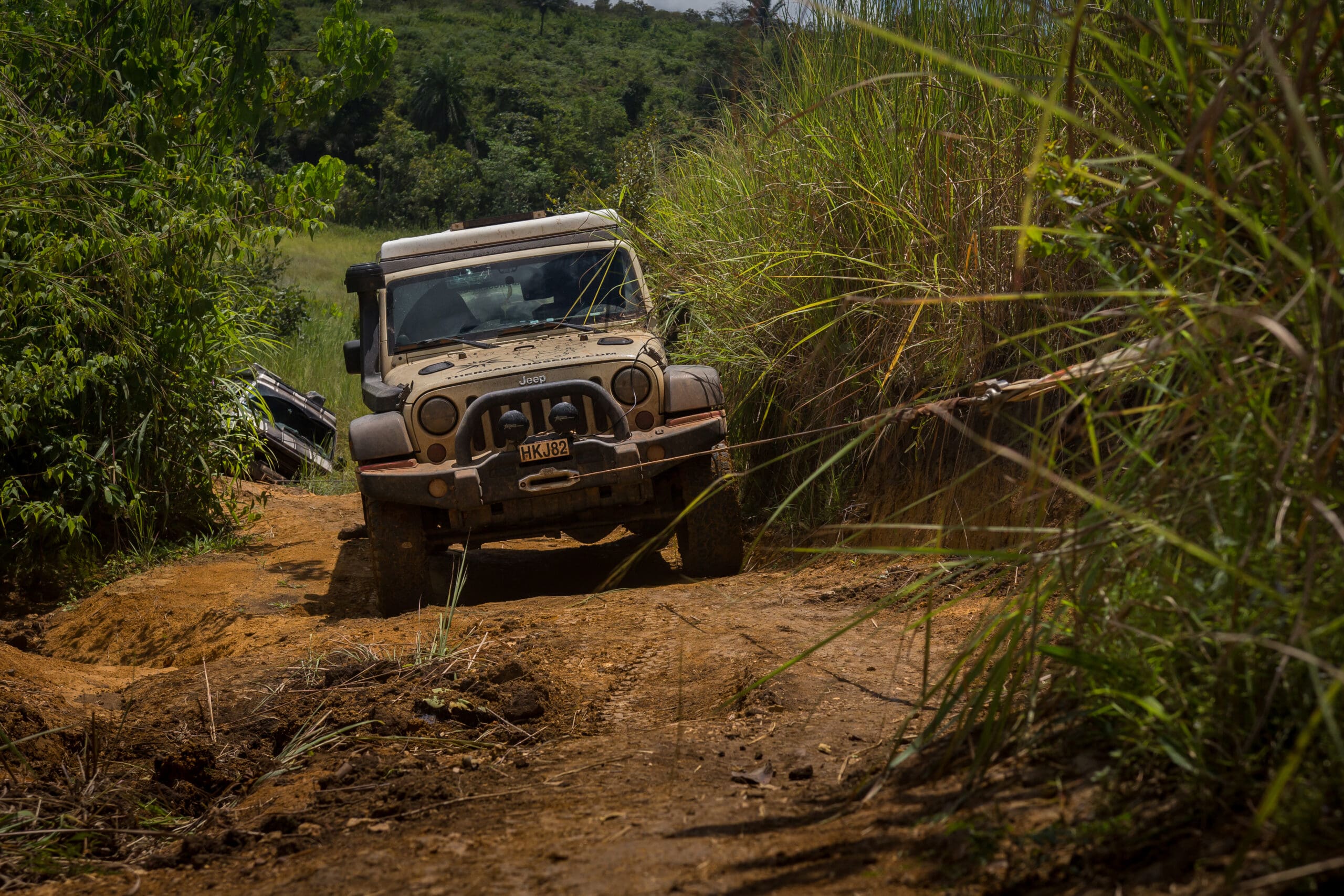
My thumbs-up is answered with two honks, so I gently ease off the clutch. The slack goes out of the tow rope, and I barely notice the additional dead weight the Jeep is hauling; such is low-range first gear in the Rubicon. I’m towing a pickup—loaded with food sacks and locals—that has broken down in the worst possible place. We’re on a narrow, slippery clay hill with dense jungle encroaching all around. We have stamped out of the first Congo, but are still crawling through the large no-man’s-land, and are technically in no country on Earth.
Slowly but surely I climb, with the Toyota and its many passengers always looming large in my mirrors. I can’t help but smile as we crawl across the dotted line on the GPS indicating the international border between the two Congos. A Jeep Wrangler is towing a stricken Toyota Land Cruiser from one Congo to the next. I’m certain the hundreds of people who told me to sell the Jeep and buy a Toyota didn’t see that coming.
Deepest, Darkest Africa
At over 905,000 square miles, the Democratic Republic of Congo (DRC), formerly known as Zaire, is the stuff African legends are made of. Countless epic tales, such as Joseph Conrad’s Heart of Darkness, are set there. Africa was often referred to as the Dark Continent because so much of it, including Zaire, was unknown since it hadn’t yet been explored, represented on old maps by enormous solid black areas. Modern-day DRC is widely believed to hold the richest mineral reserves of any nation on Earth; trillions of dollars of diamonds, gold, and rare earth metals lie undiscovered, and it’s estimated to contain over five billion barrels of oil. Despite this immense wealth, or possibly because of it, the DRC is one of the most dangerous countries.
King Leopold of Belgium first enslaved the region in 1884, setting the scene for a long line of destructive figures who pillaged and exploited in any way they could. The infamous President Mobutu ruled with a brutal iron fist for over 30 years and is estimated to have embezzled up to $15 billion. While his family flew on Concorde for weekend getaways in Paris, millions of his countrymen suffered and died as a direct result of his cruelty. In 1997, Mobutu fled the country, leaving behind “a feral state of lawlessness and brutality,” famously described by author Tim Butcher.
Kinshasa, the capital, ranks among the 10 most dangerous places on the planet. Citizens are protesting the lack of a promised presidential election. Knowing he will be voted out, President Kabila is indefinitely pushing back the election. Demonstrations in Kinshasa can quickly turn violent and typically mean burning cars, shooting, and rioting in the streets.
While the DRC isn’t the safest place to explore, it contains vast swaths of the planet’s most remote and least-explored regions. For this reason, I have long felt drawn to the Congo, and I’m approaching it with a mixture of awe, respect, and fascination.
To Cross the DRC
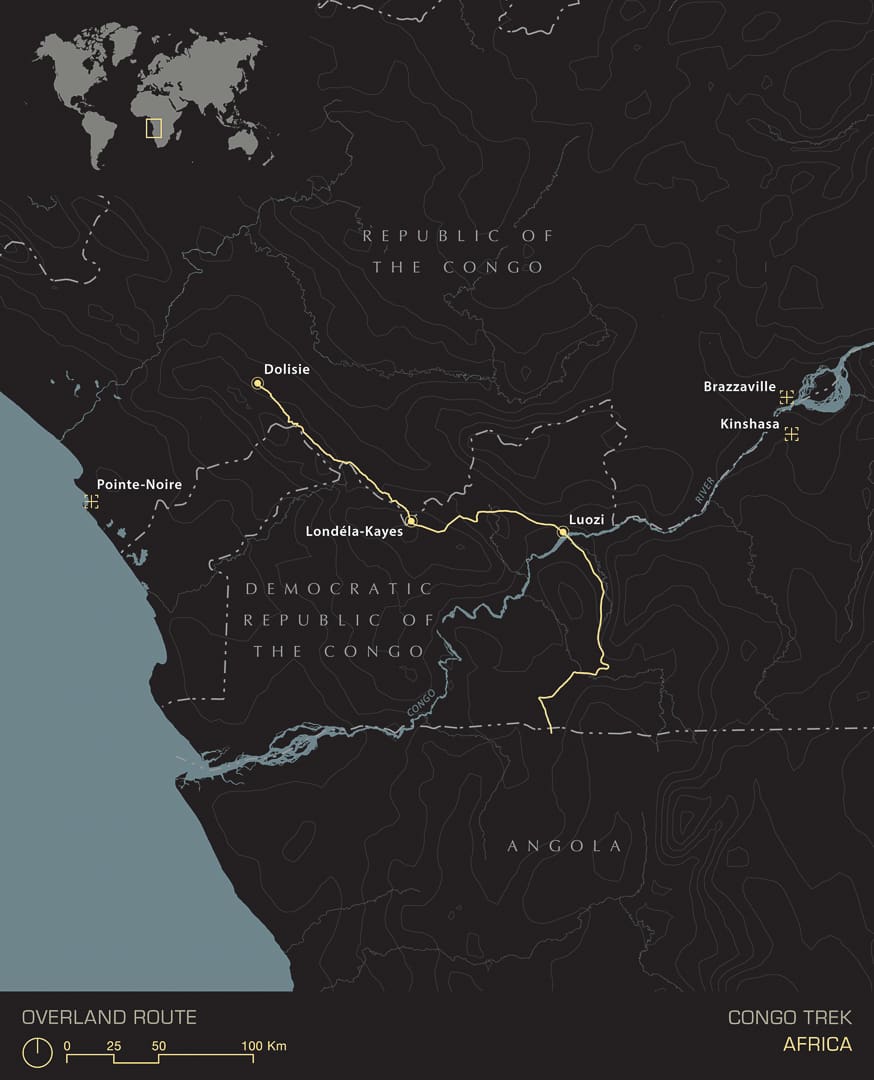
There is no getting around it—traversing the West Coast of Africa requires crossing the DRC. My challenge is to find a safe way to do so. Usually, a river as big as the Congo would mark the international border between two countries, though this is not the case with the Congo River. Downstream of Brazzaville and Kinshasa, the river is wholly contained within the DRC, so even if I can successfully cross to the southern bank, I will still have many hundreds of miles to travel.
After scouring maps and planning for months, I focus on a seldom-used route that I’m well aware is at the upper limit of my capabilities—and that of my Jeep. Leaving Dolisie in the Republic of Congo, I will move south to Londéla-Kayes to exit the first Congo. From there, I will attempt to drive the smallest tracks to a border crossing that may or may not function, before hundreds of miles on virtually nonexistent and muddy roads to the mighty river. I hope to use a ramshackle ferry to cross, followed by another hundred miles to reach the Angolan border.
If it rains, all bets are off, as it is entirely possible that zero vehicles will be able to get through during the months of heavy rain. The dangers are real, and the chance of recovering the Jeep if it gets seriously stuck is, for all intents and purposes, nil. This is a heavy decision; the DRC is no joke.
In Dolisie, I again team up with my German friends Dani and Didi, who are also looking to cross safely. We very much enjoy each other’s company and make a great team—always using our heads rather than being the proverbial bull at a gate. Like my Rubicon, their beefy Sportsmobile is equipped with a winch and front and rear lockers. Given what lies ahead, the 37-inch mud terrains look very appealing. As we load up on supplies, fully expecting to be alone for up to a week, I’m relieved to have friends with me for the biggest challenge of my life.
On the Brink of Disaster
Knowing we’re driving into the worst conditions we’ve ever encountered, Didi and I think it wise to put the lighter Jeep in front. If I get into trouble, at least he can winch me backward. If the tables were turned, however, we both fear the Jeep would have no chance of winching the heavy Sportsmobile to safety.
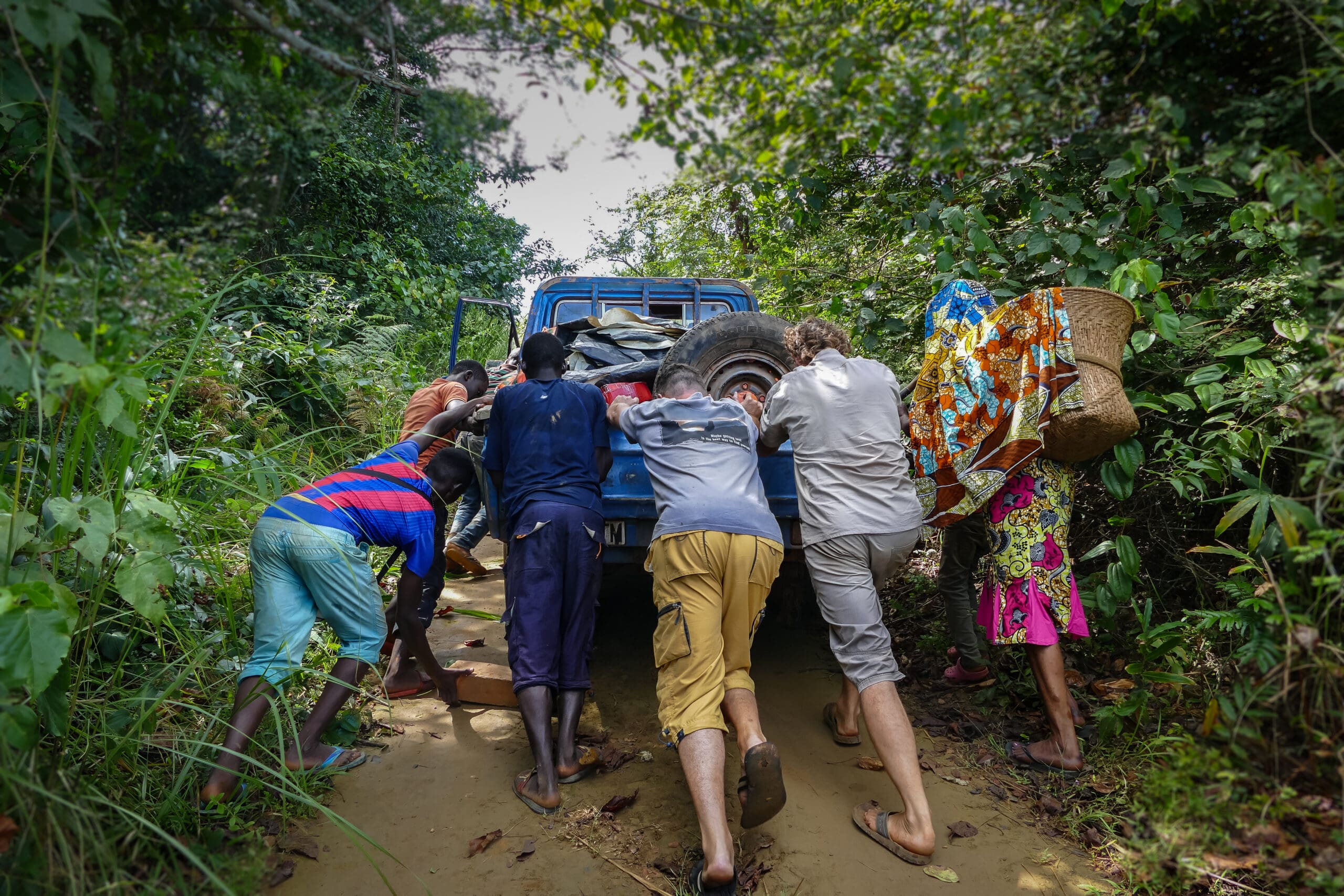
We head out of the Republic of Congo before camping the night in front of the police station in Londéla-Kayes. In the morning, the road quickly deteriorates into a slippery mess, and it’s not long before we encounter a stricken Land Cruiser blocking the way. After we struggle to push the Land Cruiser forward, I squeeze by in the Jeep, and we rope the two vehicles together. After towing the vehicle over the crest of a hill, we glide downhill; when the driver pops the clutch, the engine rumbles to life. Evidently, it runs; it just doesn’t have a starter motor. After we bid farewell, I feel butterflies in my stomach as we dive deeper into no-man’s-land. I have been dreaming of the DRC for years, and I feel a sense of excitement and also trepidation to be all-in. We don’t have a double-entry visa for the previous Congo, so there is no turning back.
For a few miles, I pick the way through grass taller than the Jeep before we discover what might be a road and slowly creep through muddy gullies, always aiming south. In one such gully, I gingerly crawl up a steep and slick incline. With its narrow track and no wheelspin, the Jeep skirts a major washout in the center of the road.
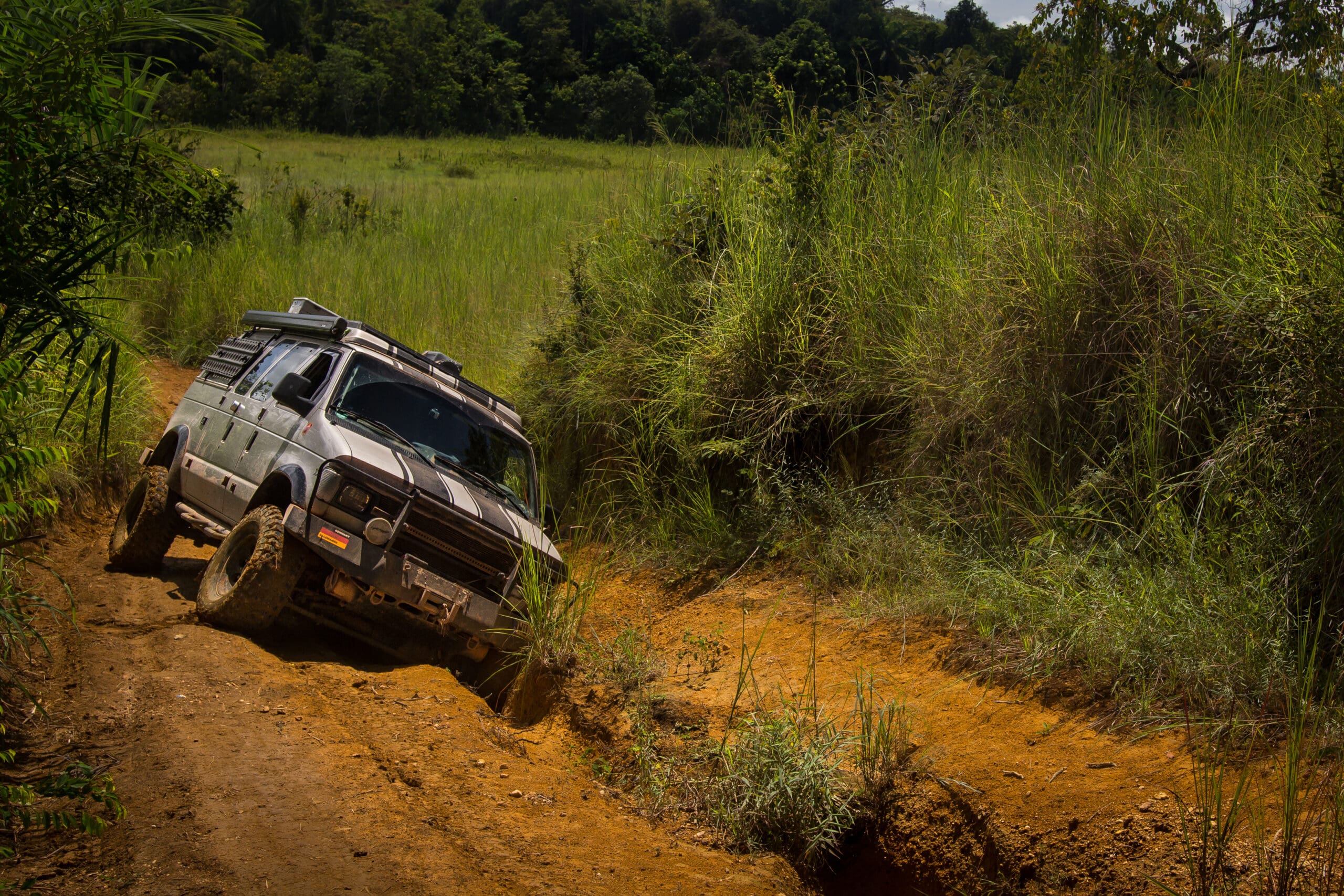
Didi, however, is not so lucky. The combination of a wider path and increased weight proves his undoing. The immense torque of the big diesel causes the tires to break loose, resulting in the rear sliding sideways into the washout. Watching in my mirror, I’m relieved to see the Sportsmobile wedge into the washout at a 45-degree angle rather than flopping right over.
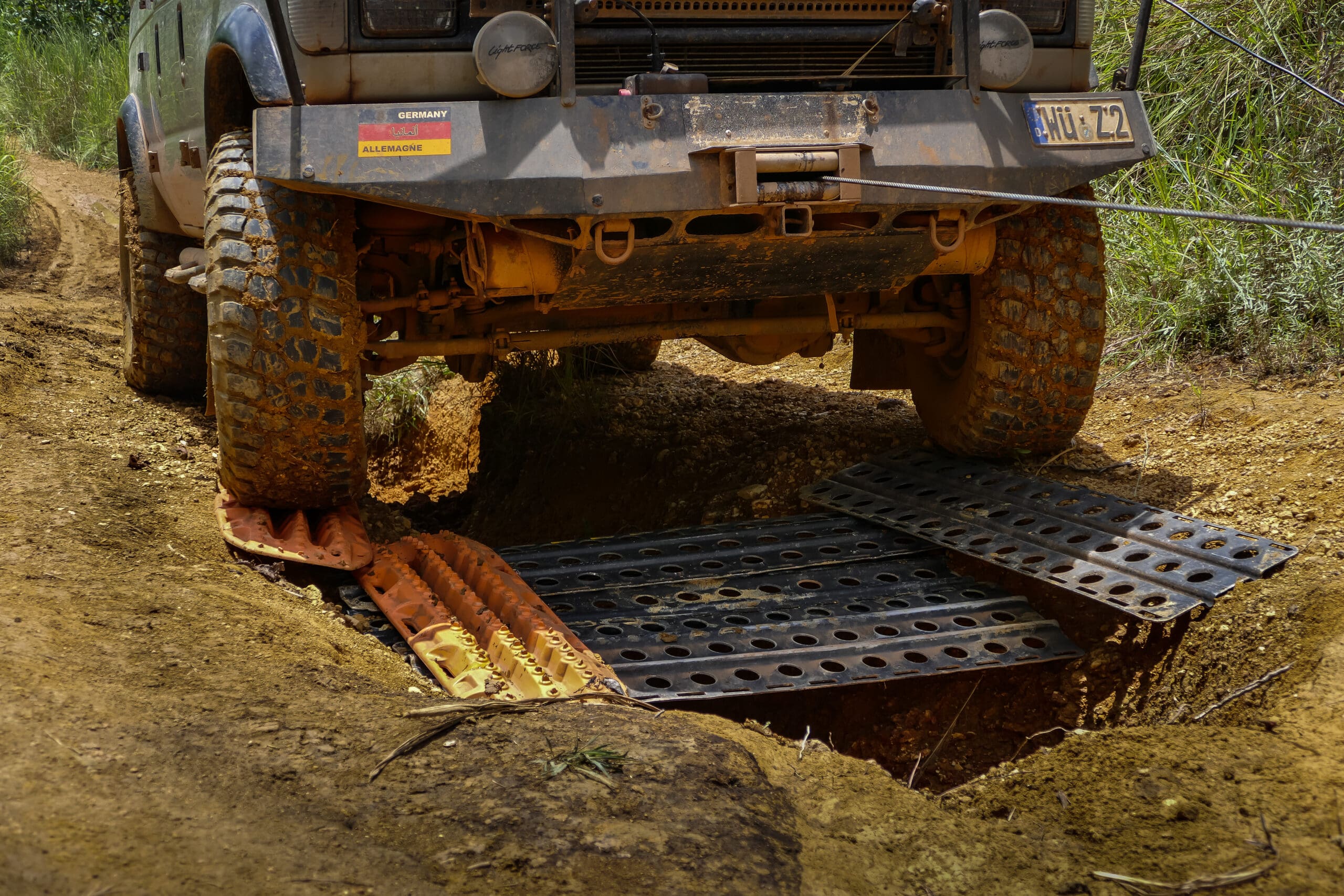
After calming our nerves and a quick team meeting, we make a plan and get to work. Using my winch, we secure the Jeep to a small tree—the only one in sight—and Didi secures his winch to the rear of the Jeep. We use all six of our combined traction mats to bridge the washout and create a level surface the Sportsmobile will have to climb through. We are soon pouring sweat in the scorching sun, and each of us is thankful for the endless supply of cold water we have stockpiled in our fridges. A small crowd gathers to watch the show, all smiling and waving happily.
When we’re all set, I take a moment to evaluate our situation. Legally, we are in no country. We are way off the map and GPS, somewhere between the two Congos. I am stomping on the brake pedal so hard my leg is cramping, and the cooling fan in the Jeep has not cycled off once, so hot is the engine even at idle. Behind and below, the 12,000-pound Sportsmobile is winching off the back of the Jeep, causing it to buck and squat under me. I watch anxiously in the mirror as a front tire rises dangerously high into the air, and I begin to worry the Jeep will slide backward.
Slowly and surely, the monster van inches forward, while Didi keeps a close eye on progress. Unbeknownst to him, the far rear tire is exceptionally close to sliding back into the washout, dangerously approaching disaster. One very observant local man shouts “Stop,” to our great thanks.
I knew the DRC would be an immense challenge, but this is ridiculous. We’re not even there yet. When the van is finally free, and we’re putting away equipment, the Samaritan comes forward to introduce himself. We’re grateful for his timely intervention, to which he replies, “On ensemble.”
Into the DRC
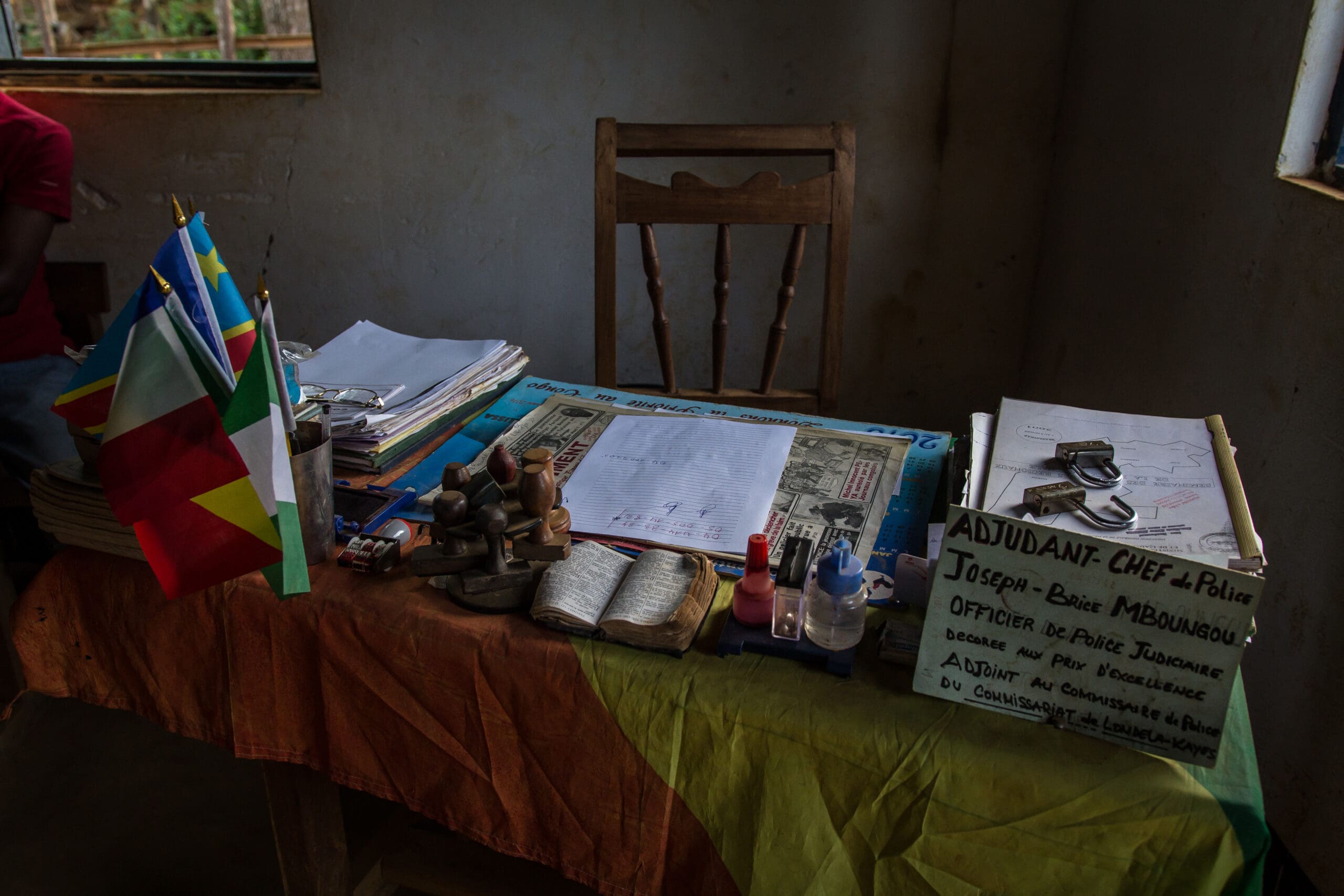
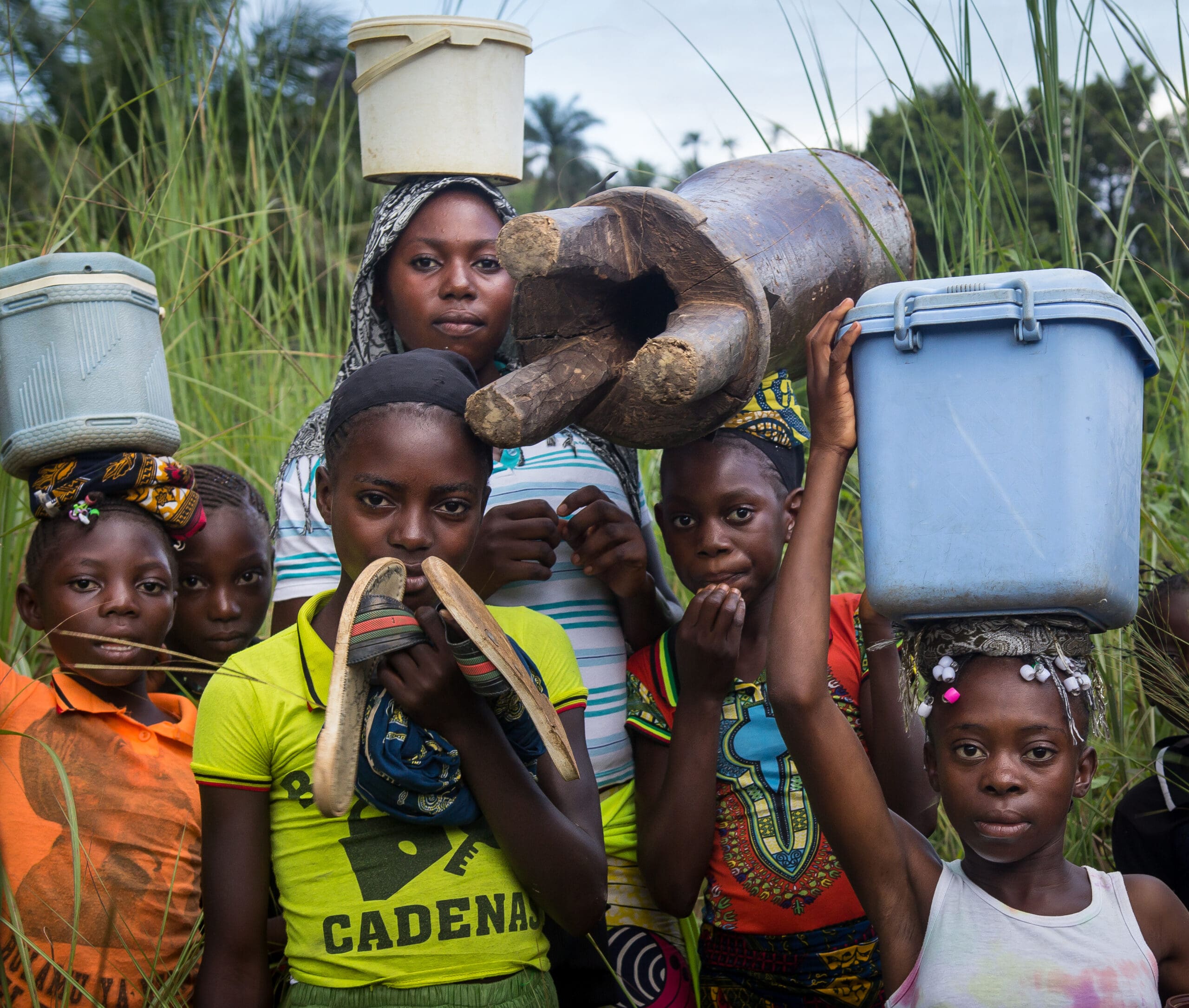
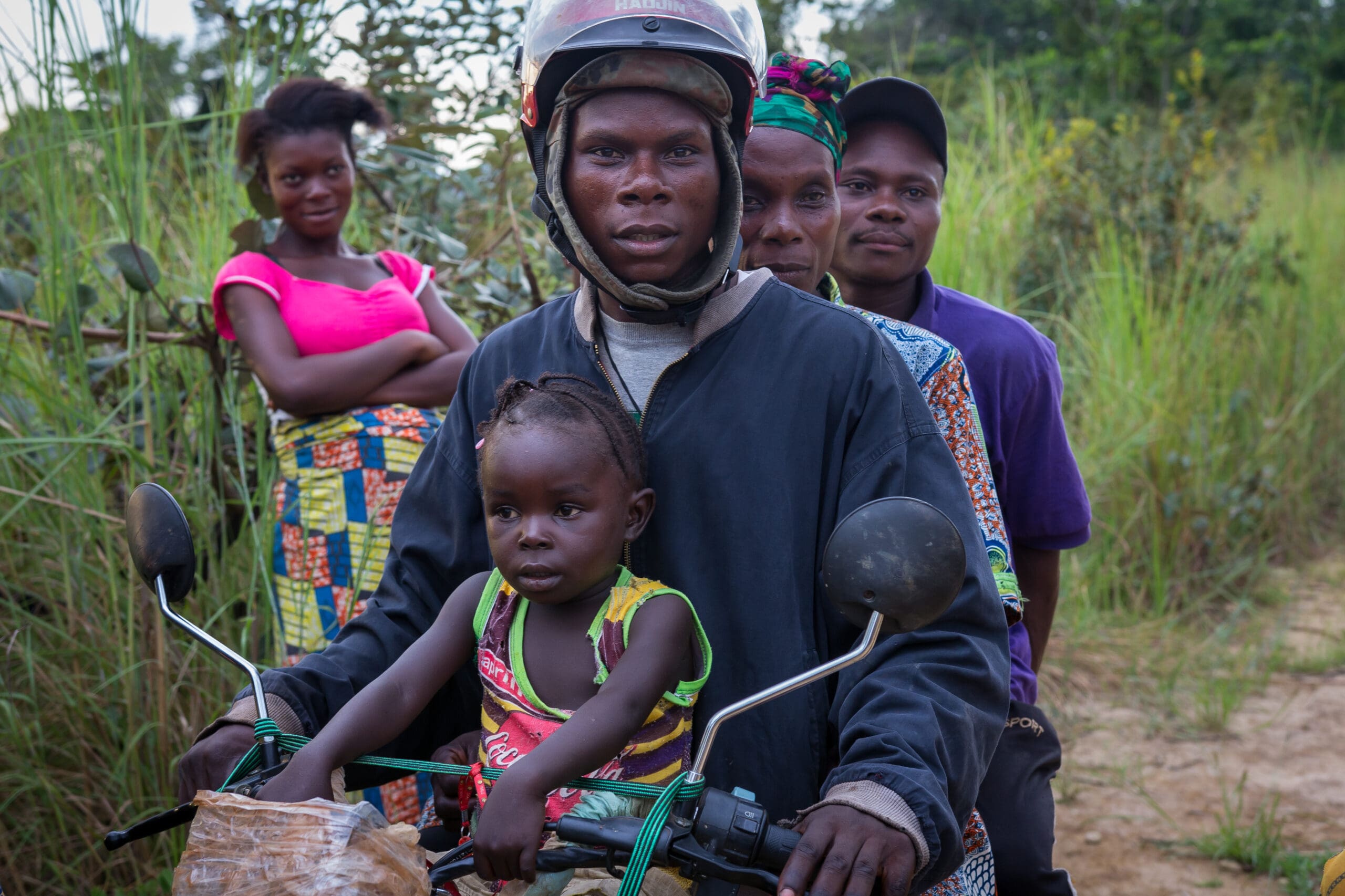
After successfully extracting the Sportsmobile, and treading carefully through more deep mud pits, we arrive at a sizeable mud-hut village. At the edge of town, we stop at a large stick across the road, apparently the immigration post. Soon a crowd of smiling children and adults forms, and after looking around, I sense the DRC is different than anything I have experienced in Africa. Children and adults alike openly display glee and joy, barely able to contain themselves. Their openness and welcoming manner radiate a kind of unspoiled innocence.
Even the village feels different—the main street is wide and airy, and all buildings are well maintained and spotlessly clean. Most strikingly of all, and for the first time in West Africa, I cannot see a single piece of trash.
A smiling man steps forward to declare himself the immigration representative, eager to welcome us to his country. The slender man is nervous and shy, and I sense he is concerned about the long, detailed immigration form he hands each of us. He spends a painfully long time explaining how and where I should complete my form, but after seeing his confusion and watching him point to the wrong line on multiple occasions, I realize this man cannot read or write. Though he is the official and clearly needs the forms to be completed correctly, he cannot do so himself. I now understand his worry and repeatedly assure him we are following his instructions to the letter.
After many false starts and three identical and time-consuming explanations, he is eventually satisfied and grants us permission to enter the country. Although he proudly carries a small stamp, he is unwilling to mark our passports, explaining we can get entry stamps farther down the road.
Deeply concerned about bribery in the DRC, we have no intention of entering without the correct stamps. The always-prepared Germans produce an ink pad, and with the help of the gathered crowd, we sway the opinion of the now very helpful man. As I have come to learn in West Africa, once you convince a couple of bystanders of your point of view, they will enlist the gathered onlookers, and finally the person in charge.
The crowd insists we will find an actual road, and so we forge ahead, completely ignoring the GPS. Five minutes later, still hotly pursued by a group of playful children, we stop to write the date across the fresh stamp. It’s not every day you get to write in your own passport.
Bigger Tracks
We continue south on a severely overgrown motorbike track through the jungle. Mile after mile, both vehicles tear and scrape through the tangle on both sides, and when I snag a guard flare on an unseen tree stump, it tears in half, almost coming off completely. I repeatedly ask villagers on foot if this is the correct way, and a 15-year-old boy climbs aboard for a ride into the bigger town. He assures me we are on an actual road, but I have never seen a road anywhere on Earth as small as this.
When we finally reach the east–west road, children again surround the vehicles, smiling, cheering, and jumping around as if they might burst with joy at any moment. My passenger spots his sisters in the crowd, and they are clearly impressed that he is riding in a 4WD instead of walking today.
Again, the town is immaculate; this must be because here you cannot actually purchase anything that would make trash. There is no store, there are no Cokes or plastic bags for sale, and I doubt anyone has money for them anyway. For the first time in my life, I am so remote that there is no possibility for trash.
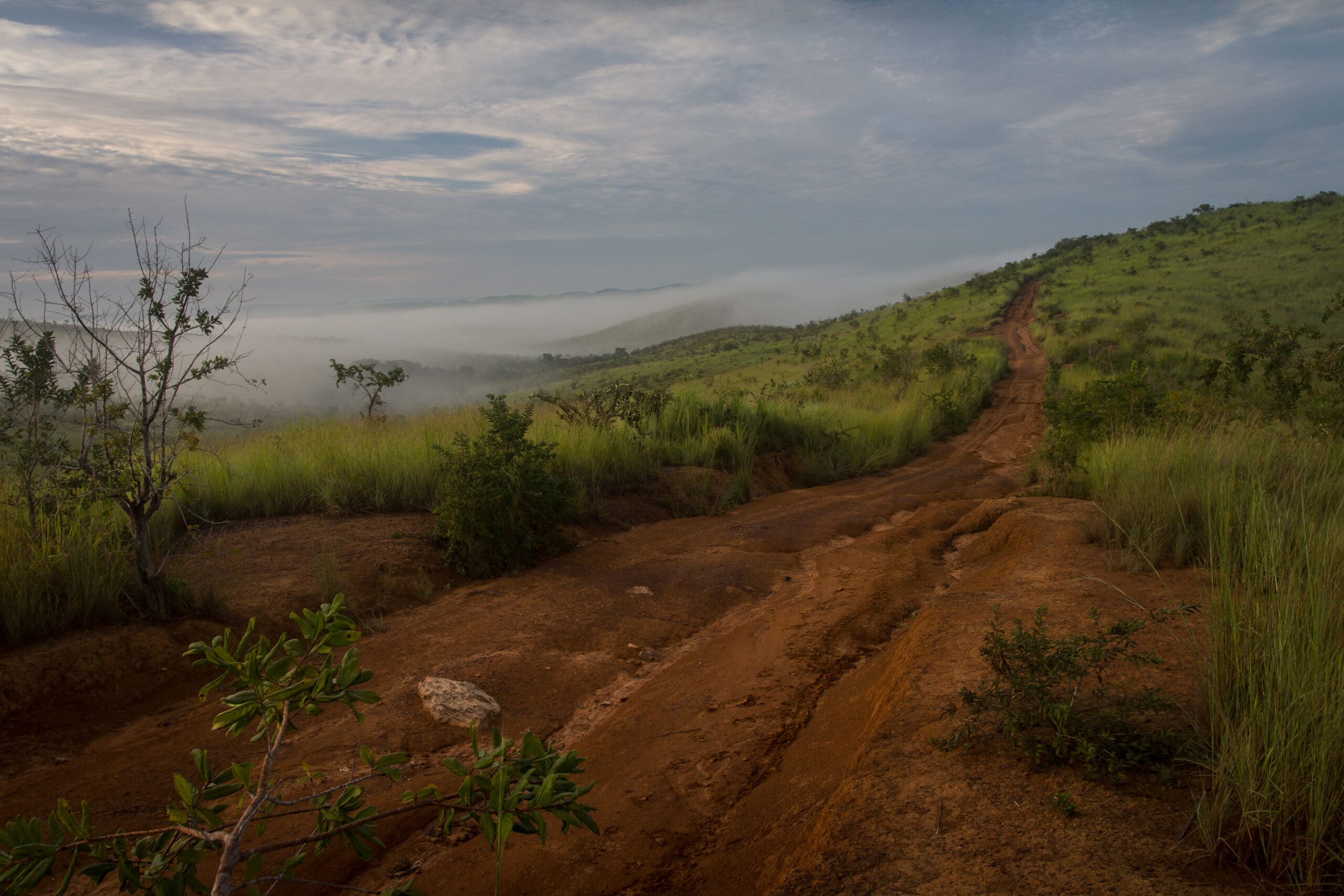
It’s apparent this road sees more traffic, though I quickly realize more traffic means deeper ruts and longer, churned-up mud pits. The ruts are extremely deep and wider than the track of the Jeep, leading me to suspect only the largest 4WD trucks pass this way. Progress is slow as we bump along the severely washed-out path, through deep mud and the occasional river crossing that laps at the hood of the Jeep. The sun beats down relentlessly long into the afternoon. After a full 14-hour day, we haven’t seen another vehicle.
We turn onto a small spur and make camp in a clearing a few hundred meters in. In less than 10 minutes, a crowd of bystanders materializes from nowhere to set up a fierce staring ritual. The 30-odd children and adults stand a few yards away and fix on our every move with intense curiosity. They giggle and squirm with excitement when I answer their questions and ask questions in return, though it’s clear there is no way to satisfy their fascination with us and our vehicles. Not a single person takes their eyes off us until it is pitch black—more than an hour later.
It’s still staggeringly hot and humid when I climb into bed and search for sleep, my first night officially in the DRC. I am utterly exhausted after the biggest and most difficult day of expedition in my life, though I briefly manage a broad grin before fatigue penetrates to my bones and wins over.
Stuck in the Mud
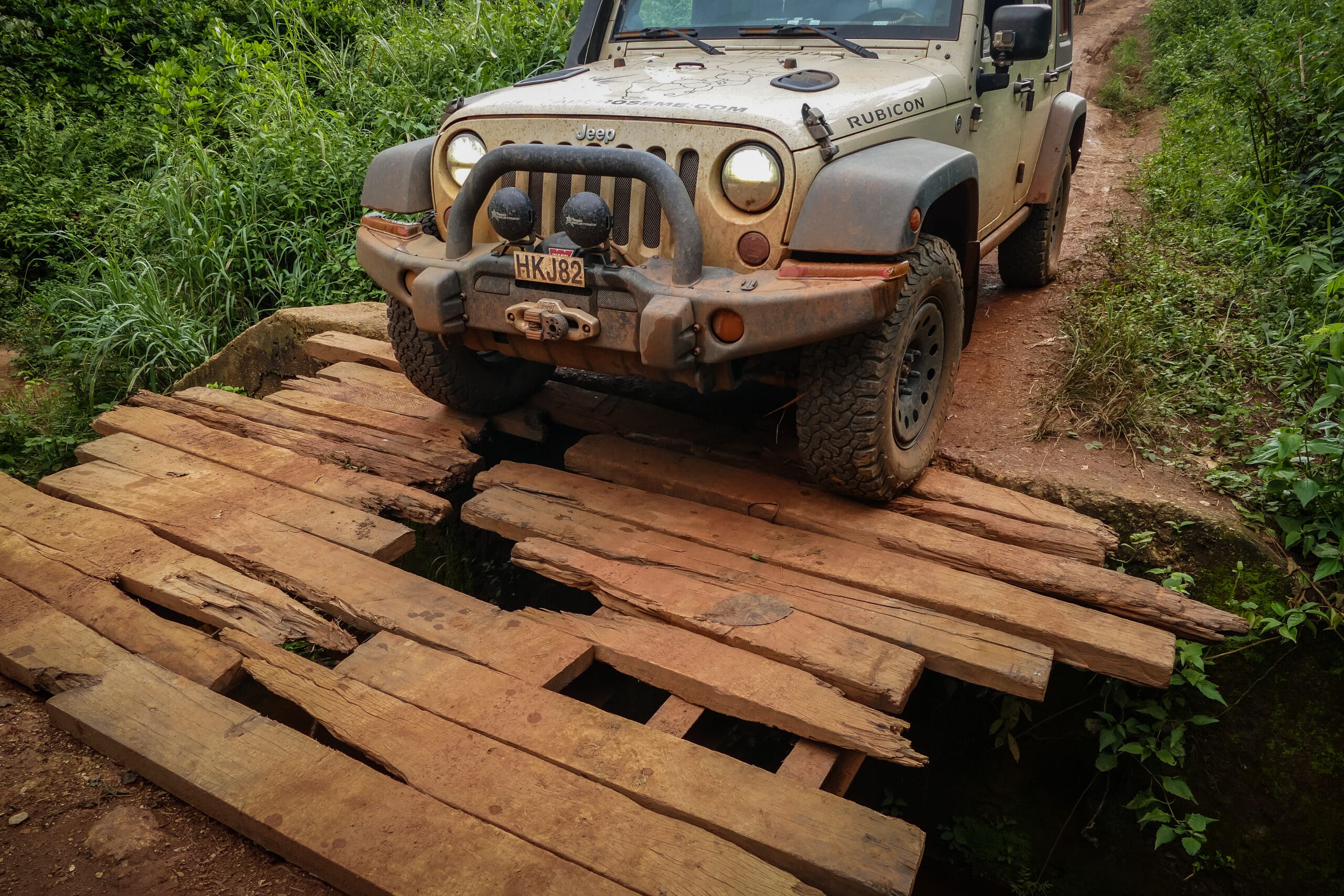
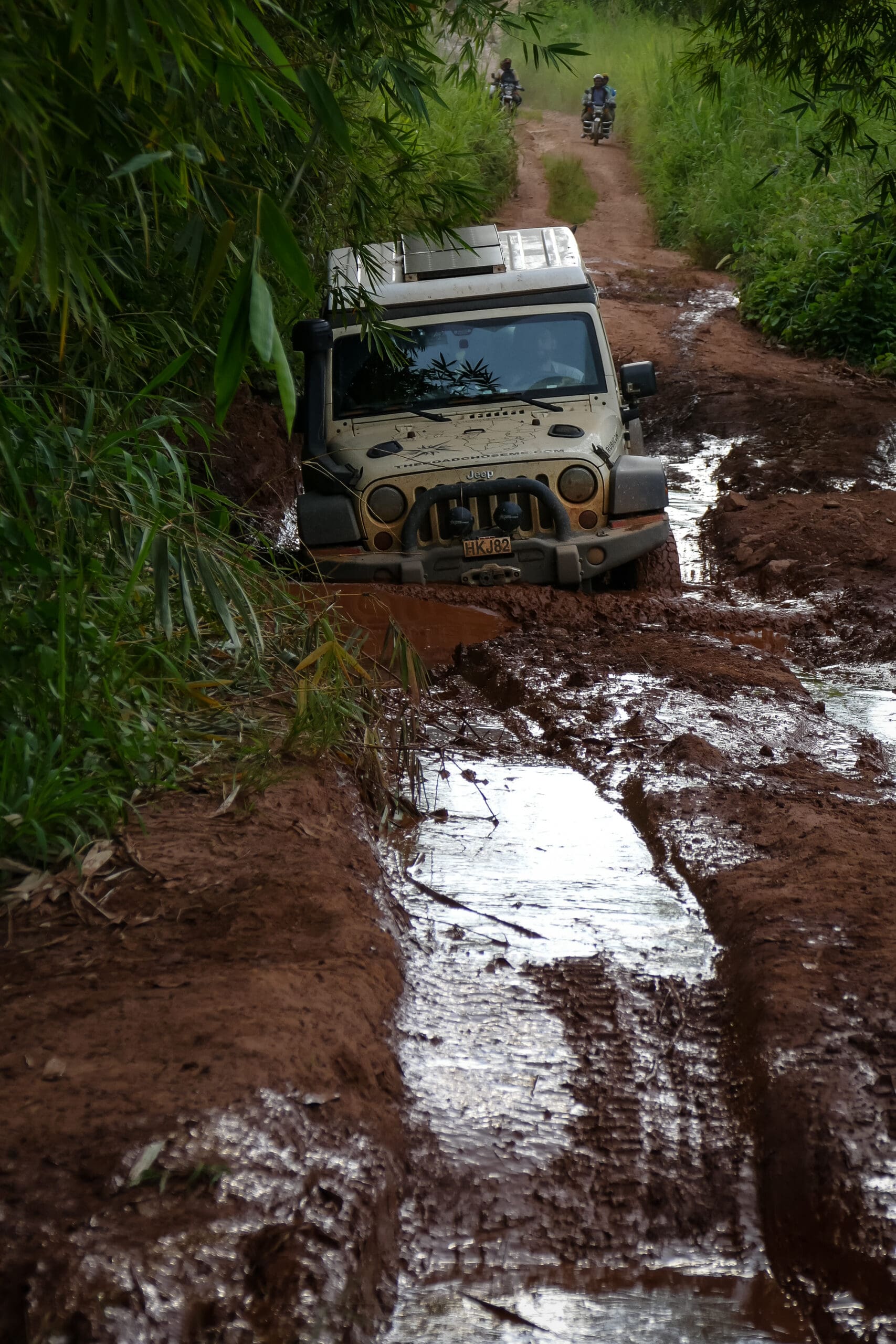
We’re on the move soon after sunrise, eager to beat the heat of the day, and before our curious neighbors can return. The main east–west road picks up where it left off; it’s occasionally a decent gravel road, occasionally a series of deep washouts to be carefully navigated, and occasionally a mud pit hundreds of yards long. Thankfully, none of the water crossings prove too deep, and with both front and rear lockers, neither vehicle has any difficulty maintaining forward momentum.
Late in the afternoon, I am encouraged to see a truck on the side of the road and take that to mean the road from here is passable, and also that if there are any bridges, they can support our weight. Didi correctly points out that the truck is abandoned and it is impossible to know how long it has been sitting there.
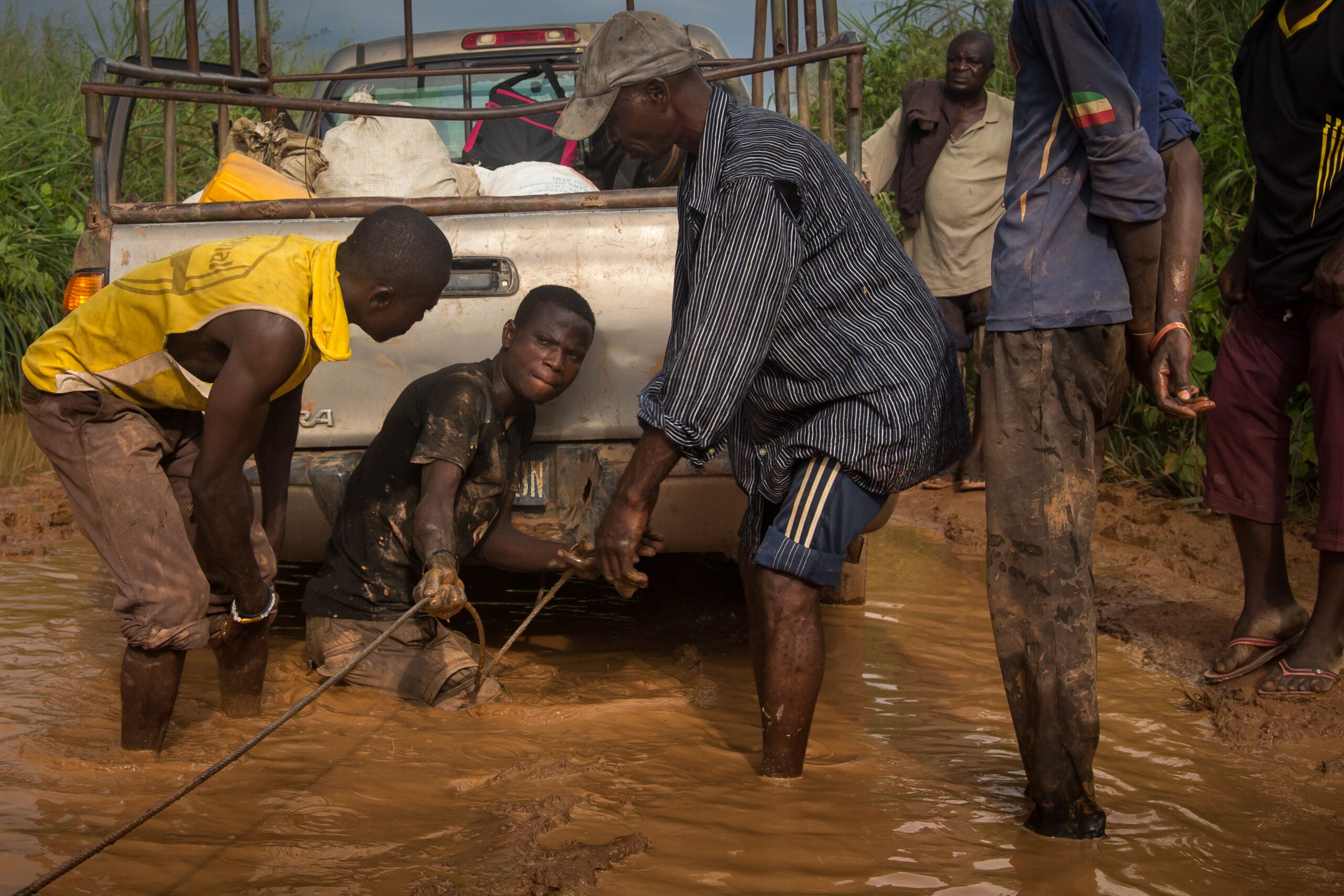
Enormous storm clouds had been building in the near distance since midday, and the first huge spots of rain hit the windscreen, just as we come upon a battered old pickup truck stuck in the mud blocking our path forward. Around 20 people were riding in the back, and now they all mill around, eager to get underway. I walk through the knee-deep muck to the driver, who explains that the pickup runs okay, though it has no starter and is stalled in the thick mud. Quickly, we form a plan, and the driver almost shakes my arm off with his enthusiasm. We will winch the pickup backward and squeeze past before pull-starting it onto the dry road beyond.
As soon as we unspool the winch cable, men dive into the mud to search for a suitable attachment point, apparently unfazed about getting completely covered in mud. The gathered crowd is obviously entertained by our antics, and while we work, entire families traveling on small motorbikes sneak past, their riders showing expert skill in the slick mud.
When the pickup is running on dry ground, each and every person is overflowing with thanks, all repeating the mantra, “On ensemble.” I watch as the pickup dives full speed into the next mud pit and can’t help wondering how long it will be before we run into them again.
Afternoon has turned to early evening, and so soon after, we pull off behind a couple of large brick buildings hoping to make camp before the light fades completely. The buildings have a familiar feeling I can’t quite place, though somehow it doesn’t seem very important just then with the weather bearing down. As I finish cooking dinner, the skies let loose a downpour of monumental proportions. I bail inside the Jeep to escape and soon feel comfortable and relaxed. I’m extremely happy with my Jeep-house setup and the modest interior living space it affords. Escaping the weather at times like this maintains a small measure of sanity, and I happily move around inside eating dinner and reading a book, perfectly dry and mosquito-free.
Force of Immigration
I wake multiple times in the night to thunder and heavy rain pounding on the fiberglass roof, and I wonder about our friends in the pickup. In the morning, I finally understand the nature of the buildings we’re camping behind when children in uniforms arrive—they stare in silent fascination as I make coffee and move around. Soon, a man I take to be the teacher wanders over, happy to welcome us before assuring me repeatedly that it’s no problem we camped in the schoolyard.
When I first dreamed of driving West Africa almost 10 years ago, one small town stuck in my mind, and I have thought of it often since. Luozi is perched on the high banks of the Congo River and is famous in overlanding circles for having one of the only functional ferries to cross the river. I can’t help but grin like mad as I bounce along the potholed and muddy main street. It’s hard to believe I have actually driven my Jeep to the Congo River.
Not long after we pull into town, a very large man in an immaculate military uniform says in no uncertain terms that we must go with him to immigration. He is not making a request, but rather a command. He is at least 6 feet, 5 inches tall, barrel-chested, and speaks in such a way that ensures his orders are followed like gospel. With his appearance, stern manner, and deep scowl, he embodies the Nasty African Warlord character from a B movie. He does not smile.
Across town, we are forced to wait while the big man yells at his partner and assistant before storming around the immigration building, making his presence felt. Something feels off to me, and I sense it’s a big show for our benefit. My French has improved leaps and bounds, though I don’t let on, and we all pretend to speak only English. When finally calm, he begins a meticulous examination of every page of our passports. Finally, he questions Dani for her details before writing them at a painfully slow pace onto a familiar immigration form.
Finally done questioning Dani, he rocks back in his chair with a triumphant grin. Clutching her passport and the newly completed form, he says an entrance stamp will cost $10 USD each. Proud to have the upper hand, he leans back further and grins wider. In English, I politely explain that we already have entrance stamps and therefore do not require his services today. A flicker of shock passes over his face, and I see him hesitate, unsure how to proceed.
In an attempt to regain control, Didi reaches across the table and takes his passport, instantly offending the man. Calmly, without raising his voice, the official demands the passport be returned before lecturing us that all passports are under his control. We will get them back only if and when he says so, and not a minute sooner. West Africa runs on authority and respect, and we have not satisfied his need for it today.
When all three immigration forms are complete, the big man yet again demands we pay. Now very accustomed to this game, all three of us smile and sit back in our chairs without saying a word to each other or our friend. We make it abundantly clear we have all the time in the world, and we’re perfectly happy to spend it crowded in his small office. Left with no choice, the big man hands over the passports before dismissing us with a wave of his hand.
To Cross the Mighty Congo River
Back in town, I wander the small market, hoping to buy basic food supplies. The money changer is easy to spot, and we strike up a conversation as I change $20 into Congolese francs. When I ask where I can buy bread, the man drops his giant wad of cash before walking through the market with me. He has walked a full block away from what is easily $10,000 in cash lying in the open but is not concerned in the least. Theft is not a thing here, he explains. Everyone knows everyone, and they are all in this life together. On ensemble.
A stone’s throw from town, the river itself is staggeringly big, more like a lake in appearance. From a distance, it looks beautiful and clean, though up close it flows quickly and smells like a sewer. Men wash motorbikes on the muddy banks while fishermen repeatedly pull up nets with nothing but plastic as a reward for their efforts.
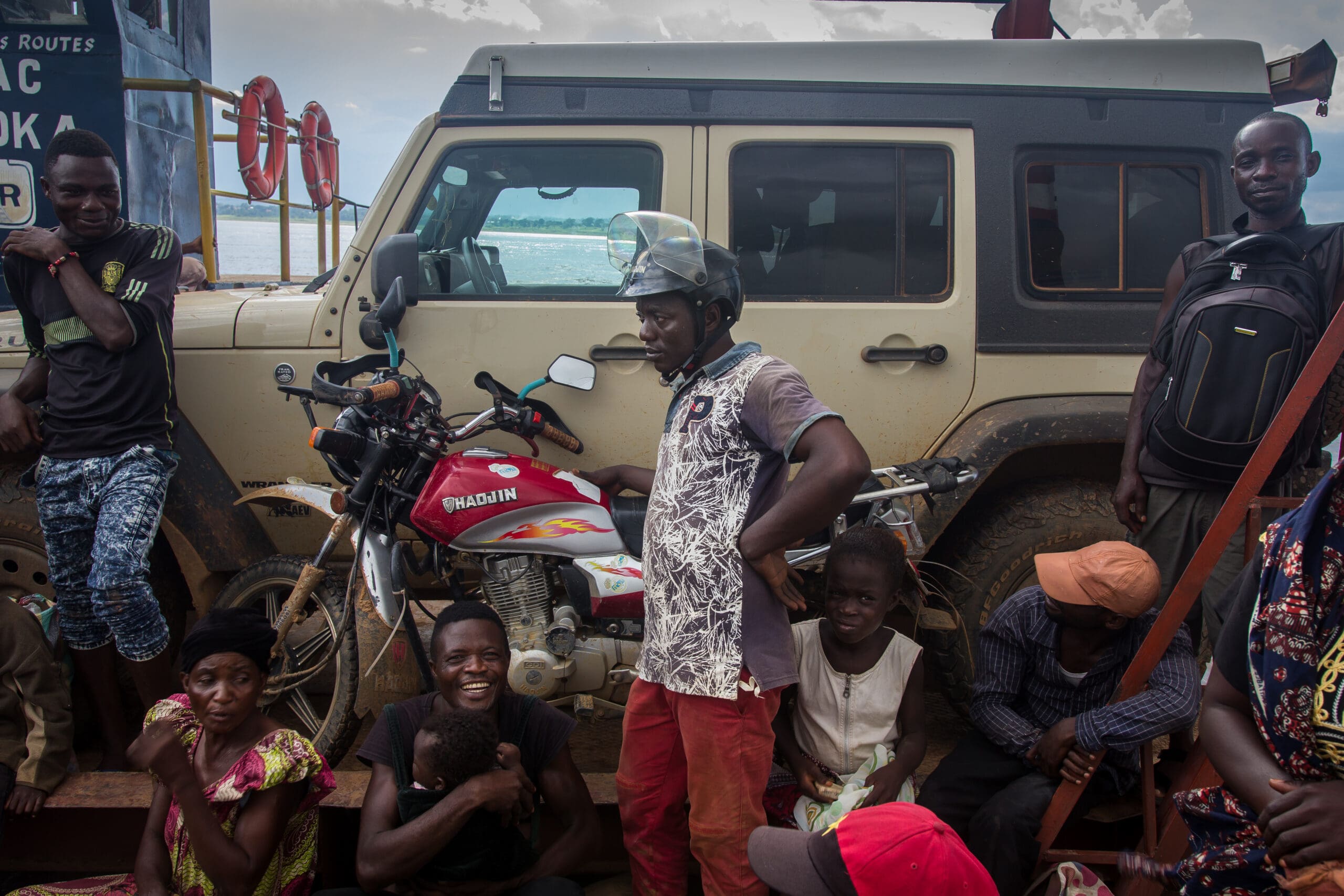
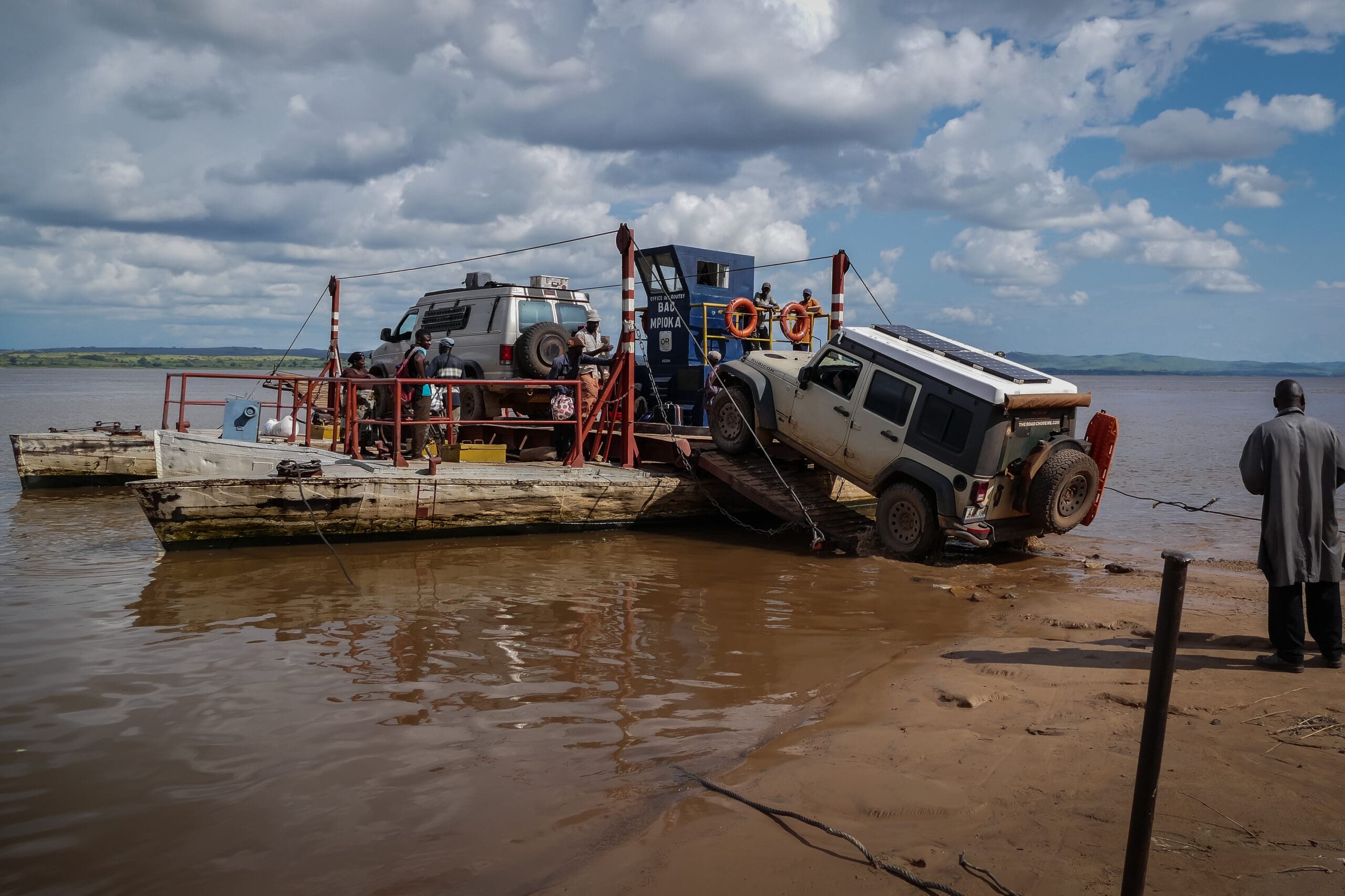
From the second the ferry lands on the shore, a furious scramble begins with people, motorbikes, food sacks, chicken cages, and even a dog moving off and then onto the craft. The massive Sportsmobile is first, and I’m relieved to drive up the steep loading ramp to find just enough length for the Jeep. Nobody asks or seems to care about our combined weight.
The instant our two vehicles are on board, the ferry begins to move, with last-minute foot passengers and motorbikes scrambling aboard however they can. The ferry is nothing more than two pontoons welded together with scrap steel and a big diesel engine belching clouds of thick smoke. I purchase a ticket for the 20-minute crossing from a talkative guy who happily writes out a receipt—only $14 for both the Jeep and me, and not a hint of bribery or price inflation.
The big diesel engine screams, and I soon find myself chatting to the foot passengers, crew, and even the captain, who is proud I want to climb up onto the bridge to talk with him. Colossal storm clouds brew on the horizon, and I see the odd bolt of lightning hit land. The wind in our faces swings from stiflingly hot to pleasantly cool, a sure sign of the storm we are quickly approaching.
The friendly ferry crew deposits us in a severely dilapidated shantytown on the southern banks of the Congo River. I take a long look around and savor my position on the globe. I’m not out of the jungle yet, though it feels great to know nothing significant stands between me and Cape Town at the southern tip of the continent. After a few hundred yards, the town ends, and we’re once again crawling forward on a severely potholed and muddy track. We know with certainty we’re on the right track—it’s the only one.
Truck in the Mud
The days begin to blur as we crawl through mud pits, dodge washouts as big as the Jeep, and find small side tracks to camp each evening. We manage to sidestep the biggest of the immense thunderstorms, though they are always visible on the horizon, boiling and churning from midday onwards.
Vehicles are few and far between, and the ones we do encounter are literally falling apart and severely overloaded with food sacks, and people hanging on anywhere they can. Early one morning, we find a heavily-laden transport truck stuck on the uphill side of a small mud hole. We’re able to pass by before stopping to ask if they need any help. The driver explains the truck runs just fine, but again it does not have a starter, and he stalled on the short uphill. It’s so heavy and the mud hole so steep that the 10 men traveling on it have not been able to push-start it. They have been lying in the shade for three days, hoping help would arrive.
Didi and I both suspect the truck is too heavy, though we decide to spool out the winch cable and try anyway. Immediately, the men rush from the shade to help and offer encouragement, excited at the prospect of rescue. As Didi winds up the big PowerPlant, we hear all kinds of nasty noises before the truck has so much as twitched. Unfortunately, we’re outgunned on this one, and I feel terrible explaining to the driver and assembled men that we are unable to help.
Not upset in the least, every man takes the time to shake hands individually and convey their thanks to us. It’s clear how much they appreciate the effort, and again I feel certain they would have helped if the tables were turned. Although they returned to the shade looking dejected, each man was sincere with his thanks for our efforts. On ensemble.
We Are One
As my time here comes to an end, I can’t help wondering if all of Africa was once like the DRC is now: outrageously happy and kind people looking out for one another and working together to achieve shared goals in possibly the toughest conditions on Earth. They do this day in and day out, against all odds. Their tidy mud-hut villages have virtually no infrastructure or development of any kind, which does not appear to bother them in the least. So kind and gentle are they, that I continually felt they wanted me to ask for help, simply so they could give it.
I planned our crossing of the infamous DRC under the assumption we would be utterly alone. I anticipated days slogging through the mud, entirely relying on our wits, determination, and supplies to see us through. I thought our only two options in the event of a serious problem would have been to solve it completely on our own or to stare failure in the face.
While I was right about the mud, I was completely wrong about having only ourselves to rely on. We were rarely far from warm, generous helpers who were all too happy to chip in and give assistance whenever possible. It was a pleasure to lend a hand in the small ways we could, and I have no doubt the favor would have been returned if we had needed it. The Congolese know they always have each other to rely on, and this gives them the courage and determination to tackle each grueling day.
I hope we, as overlanders, can learn from this approach. We don’t all need to bring everything we can imagine when we set off into the unknown. As a community—and with the help of a few friendly locals—we can work together to achieve shared goals, just as Dani, Didi, and I did to cross the DRC successfully.
After only a small taste, I am thoroughly engrossed by this mightiest of African nations.
Our No Compromise Clause: We do not accept advertorial content or allow advertising to influence our coverage, and our contributors are guaranteed editorial independence. Overland Collective may earn a small commission from affiliate links included in this article. We appreciate your support.
