

Photography by Sinuhe Xavier, Scott Brady, Ho Chung, and John Lee
To honor the 20-year anniversary of Overland Journal, we are revisiting special heritage content in the upcoming 100th issue of the magazine. Originally published in Overland Journal’s Winter 2012 issue, this article is part of that celebration.
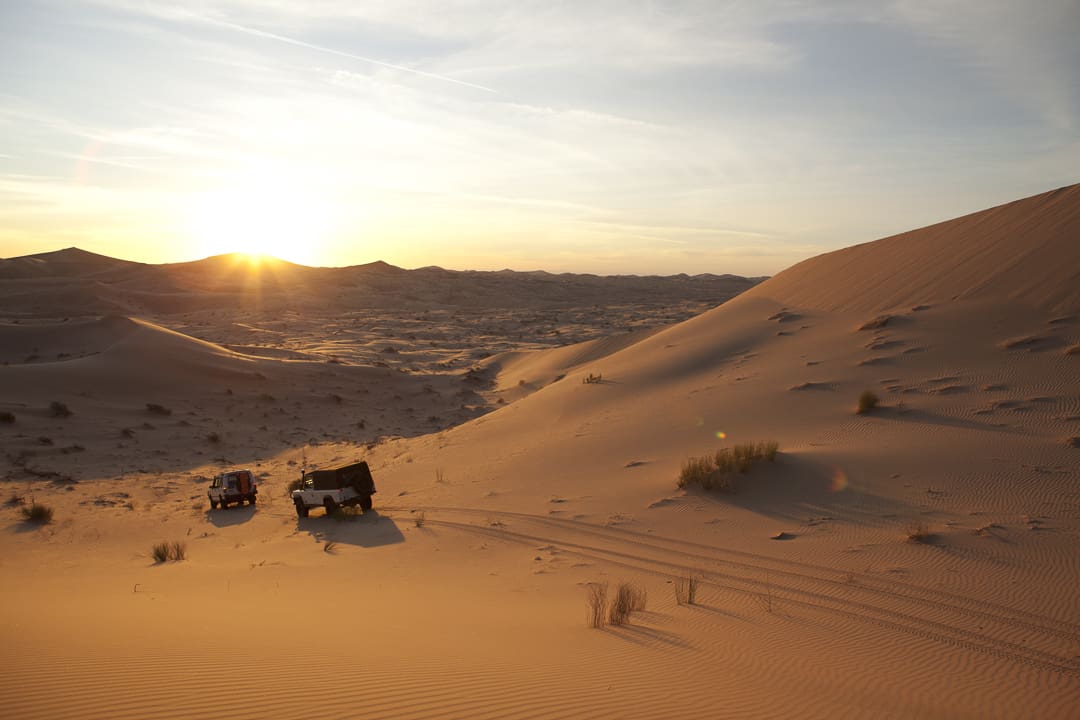
The evening glow of the setting sun faded across the western horizon, its blue hue slowly replaced by the soft light and flicker of the fire we had built in the shadow of a crescent dune. We were completely alone, worlds away from our busy lives north of the border. Not a sound could be heard in this remote, forbidding place, deep in the largest sand sea in North America, yet less than a day’s drive from the Hollywood sign. We had entered the Altar Desert, a stunningly beautiful, yet shockingly inhospitable place.
El Gran Desierto de Altar is the only active erg dune system in North America, and it is huge: 5,700 square kilometers stretching from Yuma, Arizona, all the way to the Gulf of California. The dunes we were crossing are a product of the Colorado River, which during the Pleistocene Period gouged the deepest canyon on the continent: the Grand Canyon. Over the millennia, the river’s torrents carved through ancient sandstone and bedrock, sweeping their sediment south into the Gulf of California—enough to form a delta covering hundreds of square miles. A second force of nature, the chubasco (Spanish for the strong winds of the rainy season), transported the sands east, dispersing them at the foot of the Sierra Pinacate.
I had tossed the idea of crossing the Altar Desert to a group of friends, all Land Rover owners and perpetually interesting conversationalists. Among us were a world-class cinematic director and photographer, a Land Rover mechanic and Special Forces driving instructor, a chain-smoking Defender 90 owner, a world authority on German hose clamps, and a knife-wielding Korean BBQ master who speaks five languages. We had assembled an array of great Land Rover coiled vehicles ranging from a 110 Mod diesel and 2004 G4 Discovery to a Defender 90 Wagon and V8 Discovery I (lest I forget the Range Rover Classic with a failing Borg-Warner transfer case). We set a date and meeting point—a waypoint at the base of the dunes. The trip was on.
It was my first experience driving across the Altar Desert. Within just a few miles of entering the dune system, we were completely isolated—not a single influence of man could be seen. The power of nature was felt deeply by everyone on the team. As dusk yielded to night, we looked across vast starlit dune fields in all directions. In the days to come, we would be traveling across ancient particles of sand, transported by water and wind, from Arizona, Utah, and Colorado. Morning could not come soon enough.
With an exceptional photographer like Sinuhe Xavier in our presence, our adventure may be better told through the lens rather than the pen. Follow along with us as we cross El Gran Desierto de Altar.
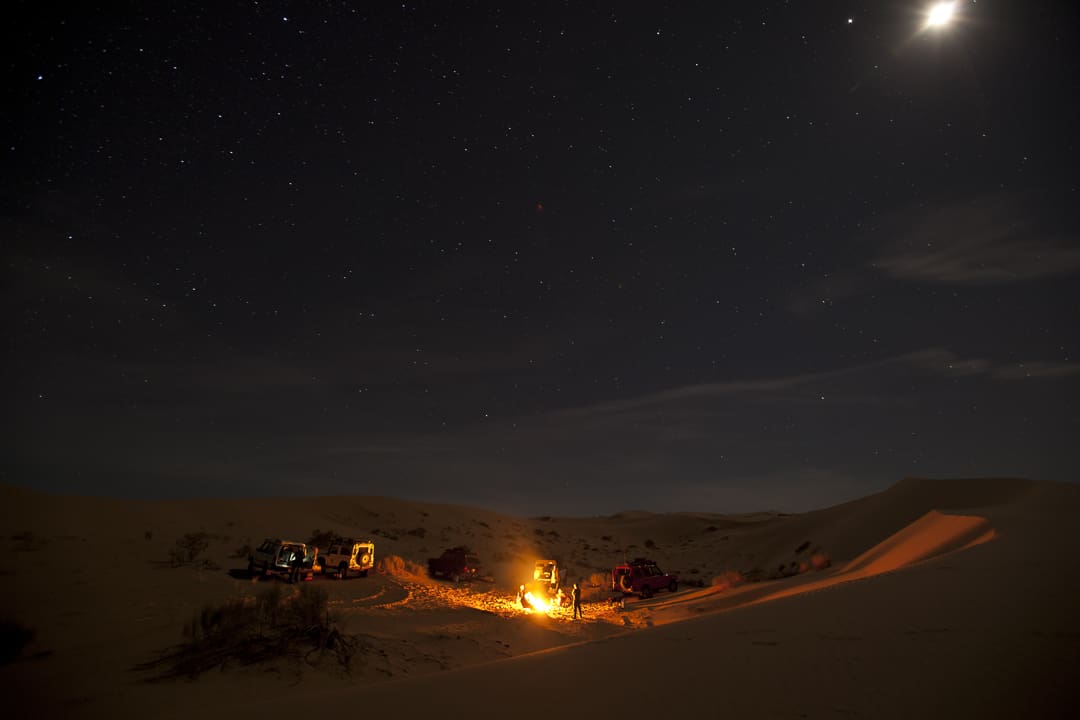
With not a sound to be heard or distant light to be seen, camping in the middle of the largest dune system in all of North America certainly gives a sense of remoteness. We were completely alone.
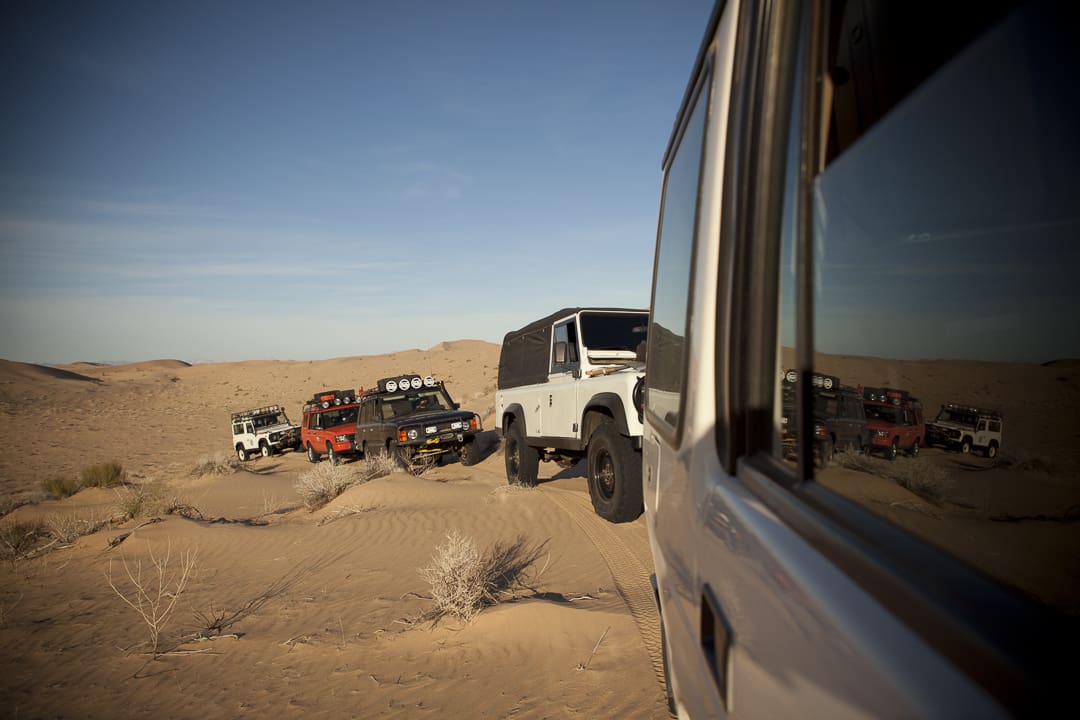
A group of well-loved and maintained Land Rovers constituted our convoy. We realized early on that we had each of the coil-sprung, solid-axle Land Rovers that were imported to North America. The vehicles had minimal modifications and relatively small tires. At the correct air pressure, it was impressive how well these Land Rovers performed in the sand.
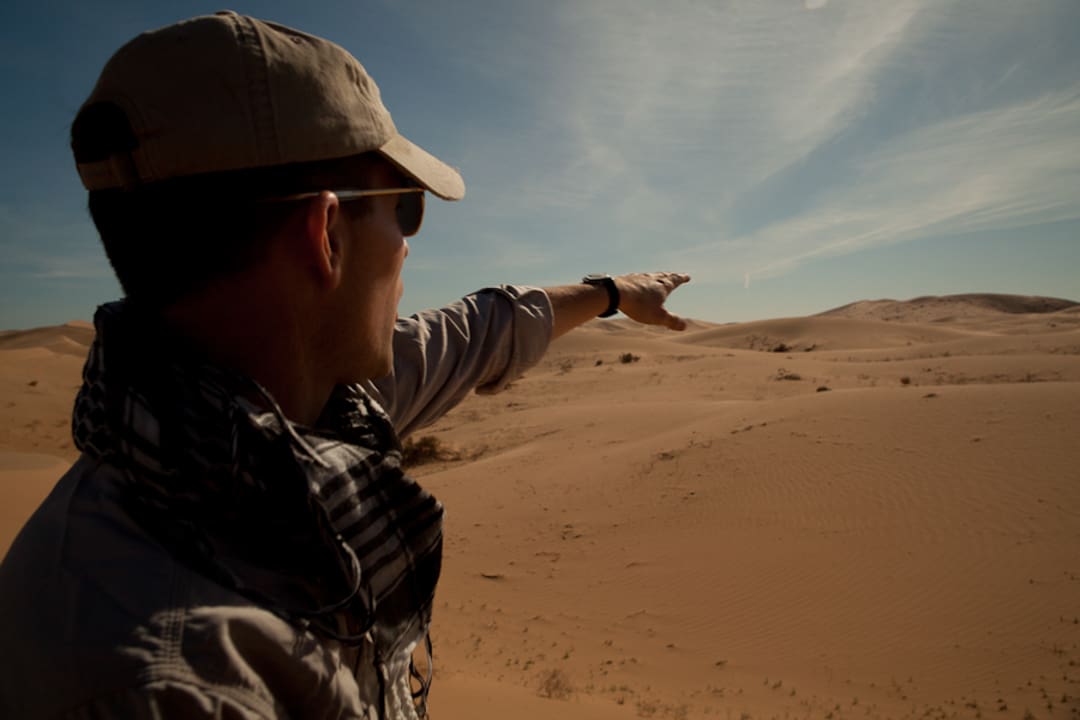
Jack surveys the challenge ahead. Driving in a straight line through the dunes wasn’t possible, so we followed a set of waypoints I assembled by surveying Google Earth.
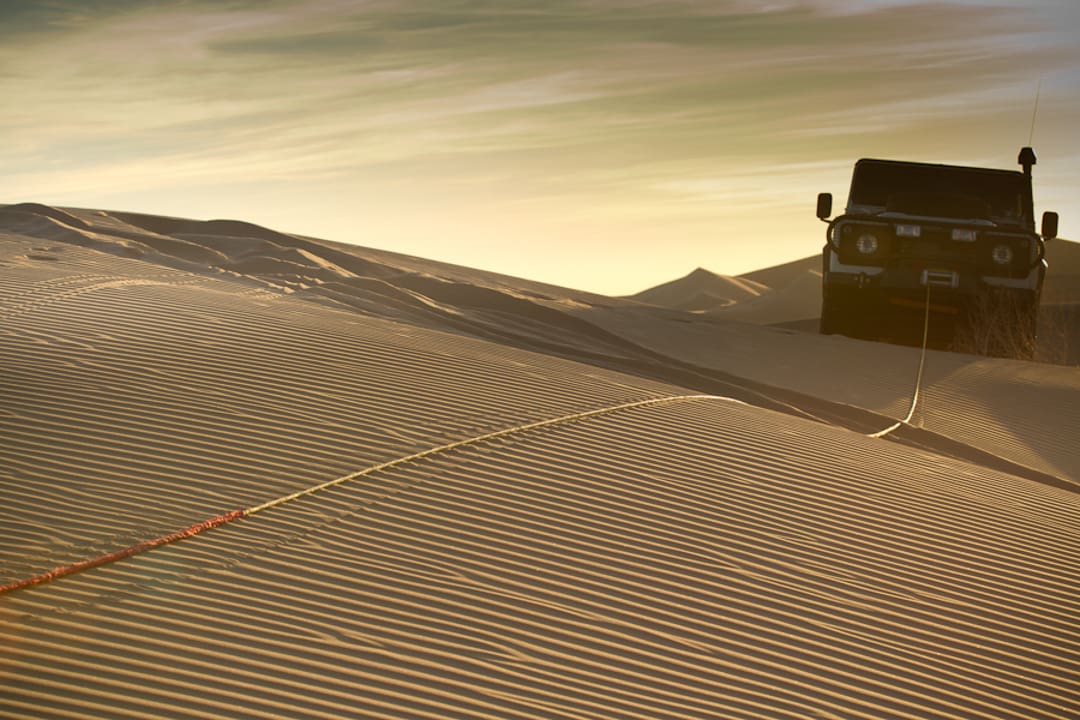
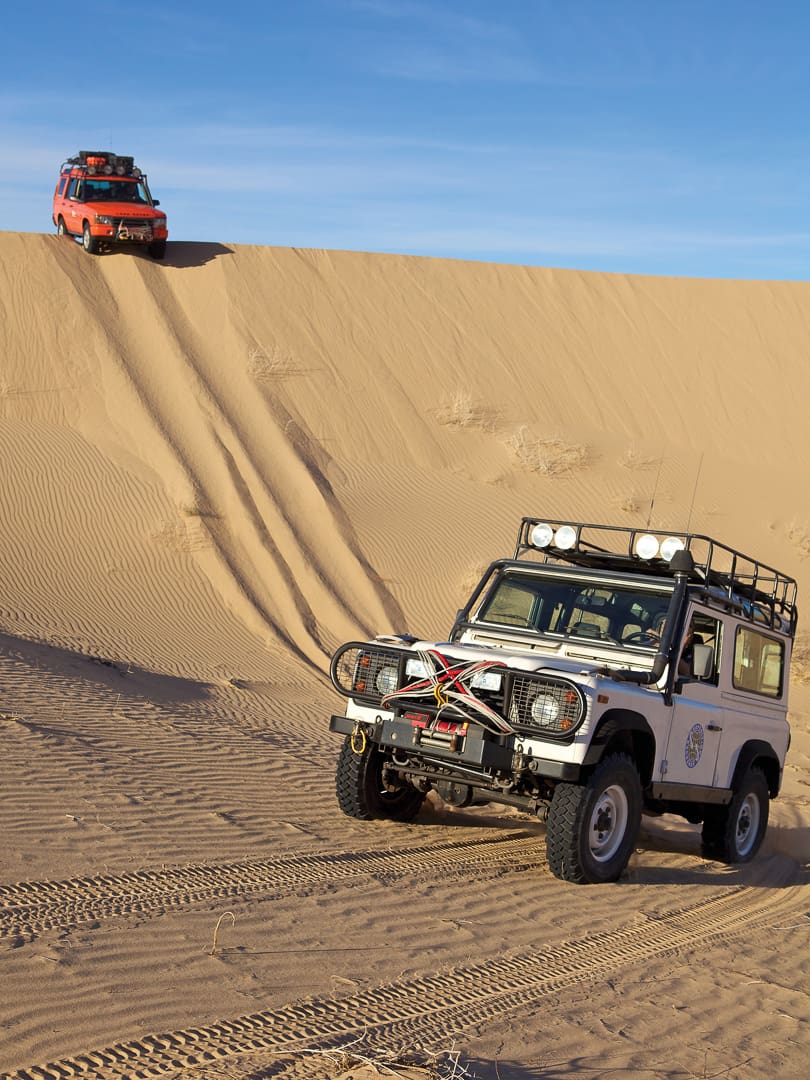
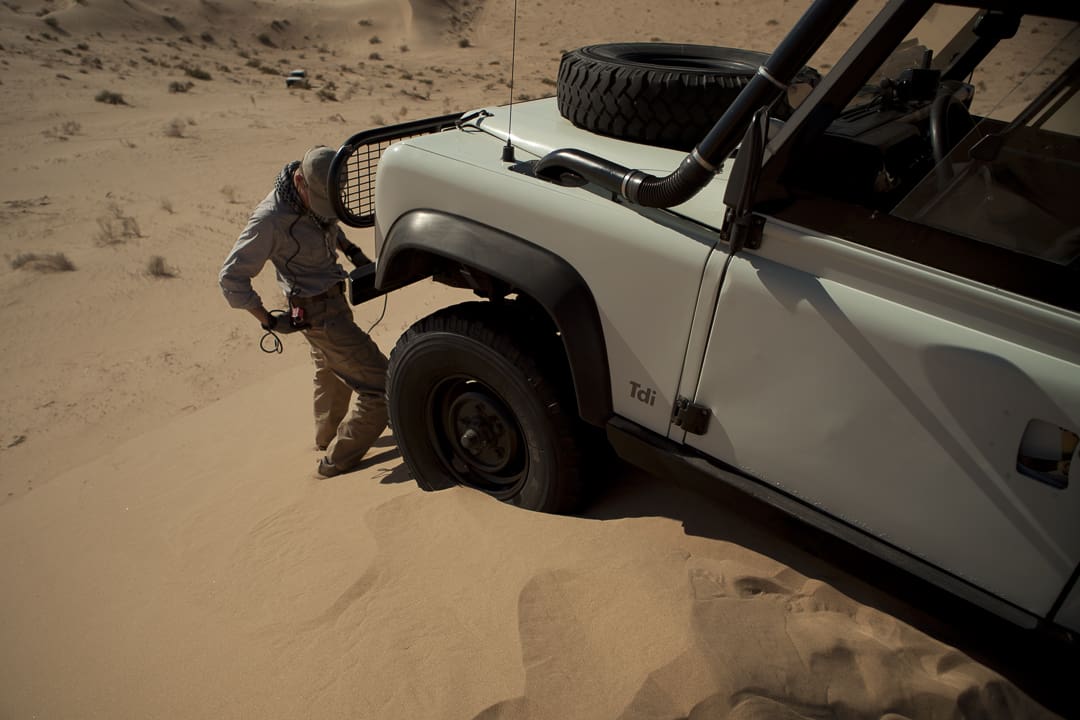
.The critical angle of repose is the steepest angle at which granular material will hold before sliding down. With sand, this angle depends on prevailing winds, granule size, and moisture content. Some of the leeward dune slopes were impressive and could be dangerous if not approached with care. With the driver hanging from the seatbelt and providing minimal steering and braking input, slow progress ensured the best result.
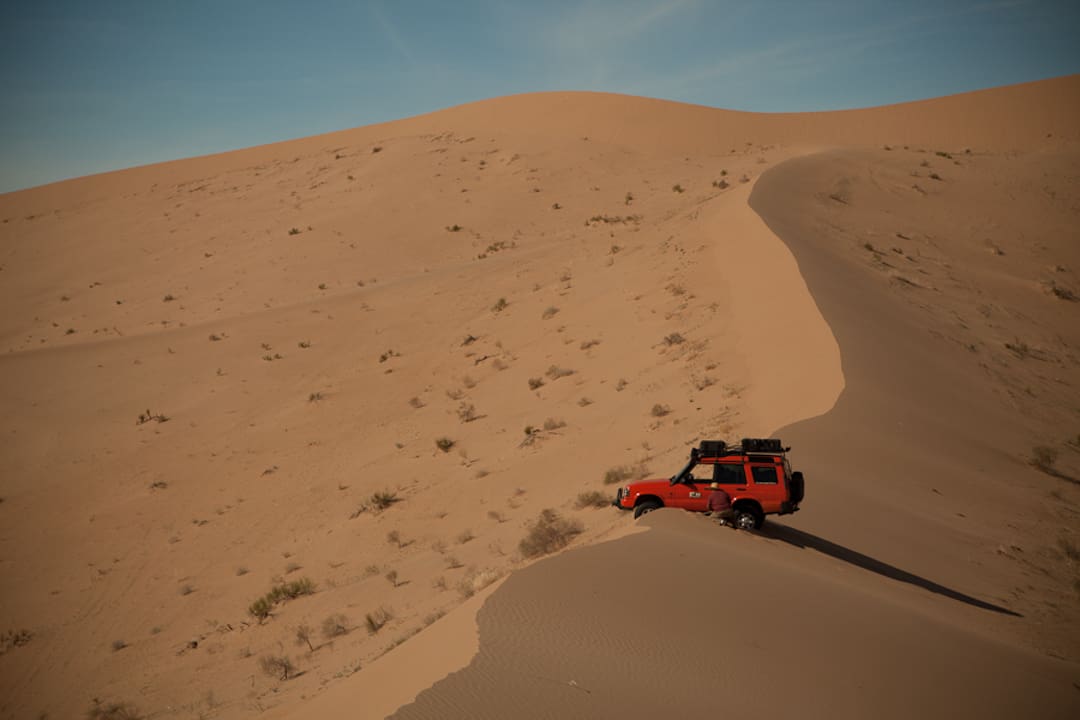
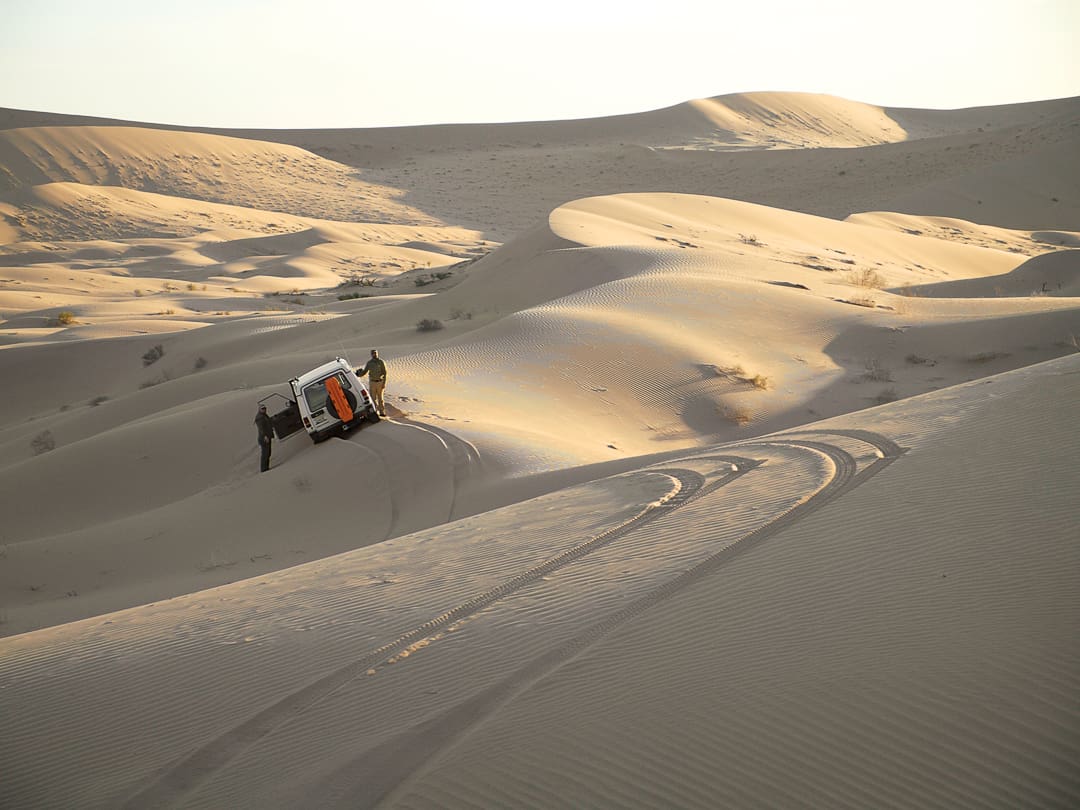
Getting stuck was part of the experience, and we all had our turn (except Greg in the Range Rover Classic). Several vehicles ended up high-centered on the crest of a dune, which resulted in a lot of digging and winching. It added to the adventure and gave us an opportunity to test and improve our skills. I wish we had gotten stuck more.
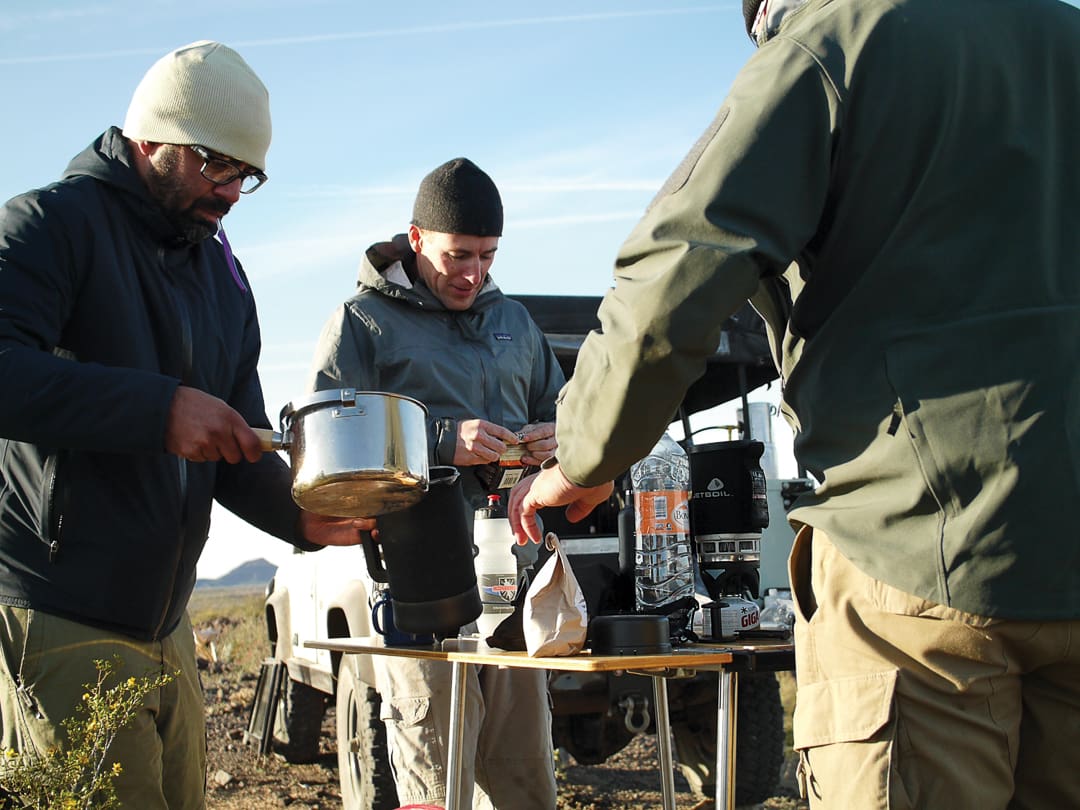
One of the best things about camping is the camaraderie you share with your fellow travelers. Here we prepare breakfast and coffee before setting out for another day in this stunning arid landscape.
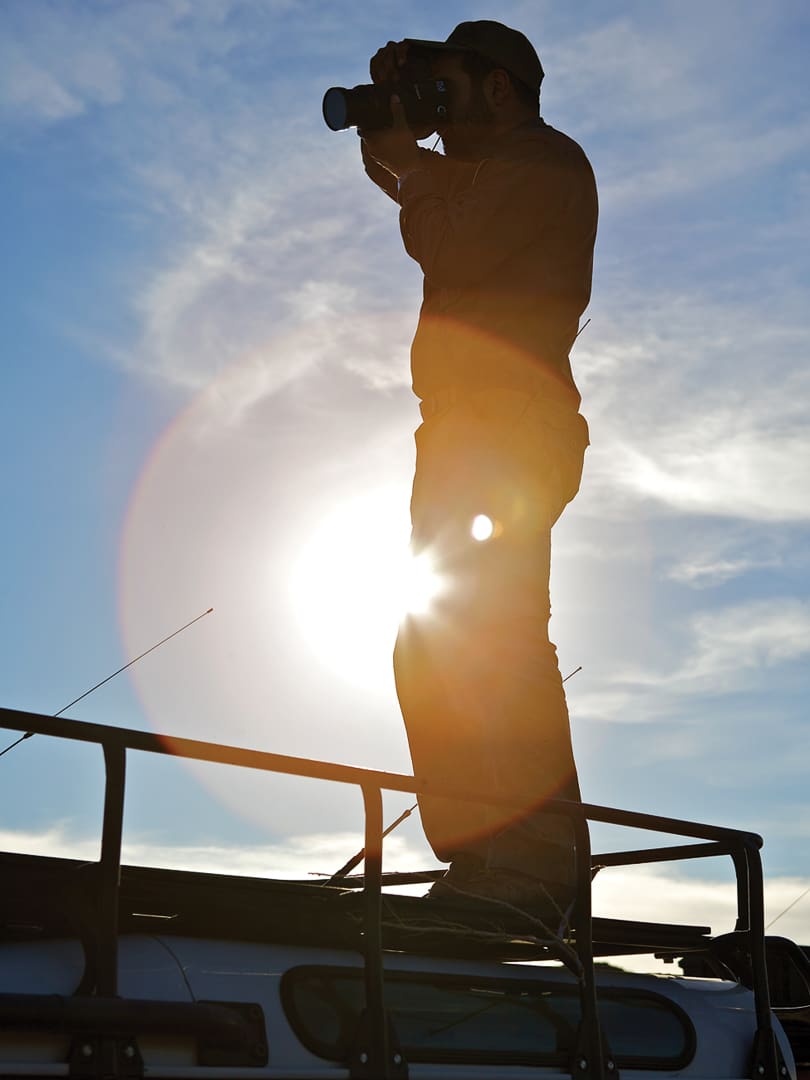
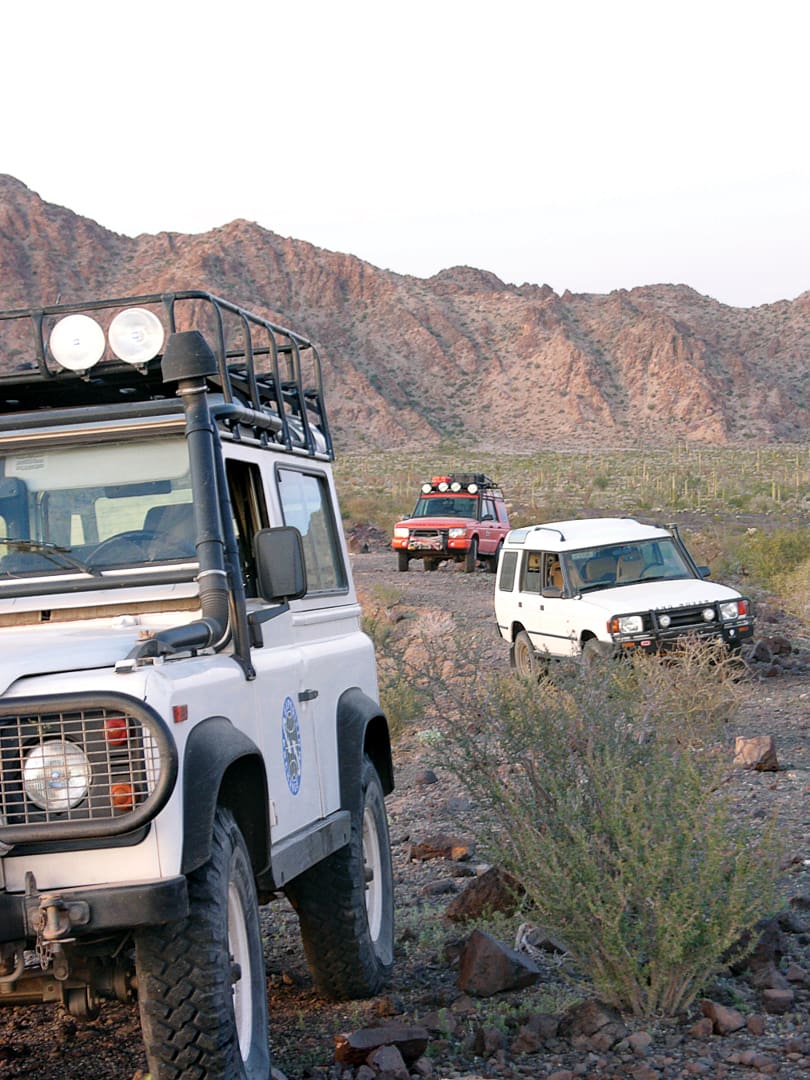
Sinuhe performs his symphony of light, lens, and shutter, chasing the sun’s rays into the evening.
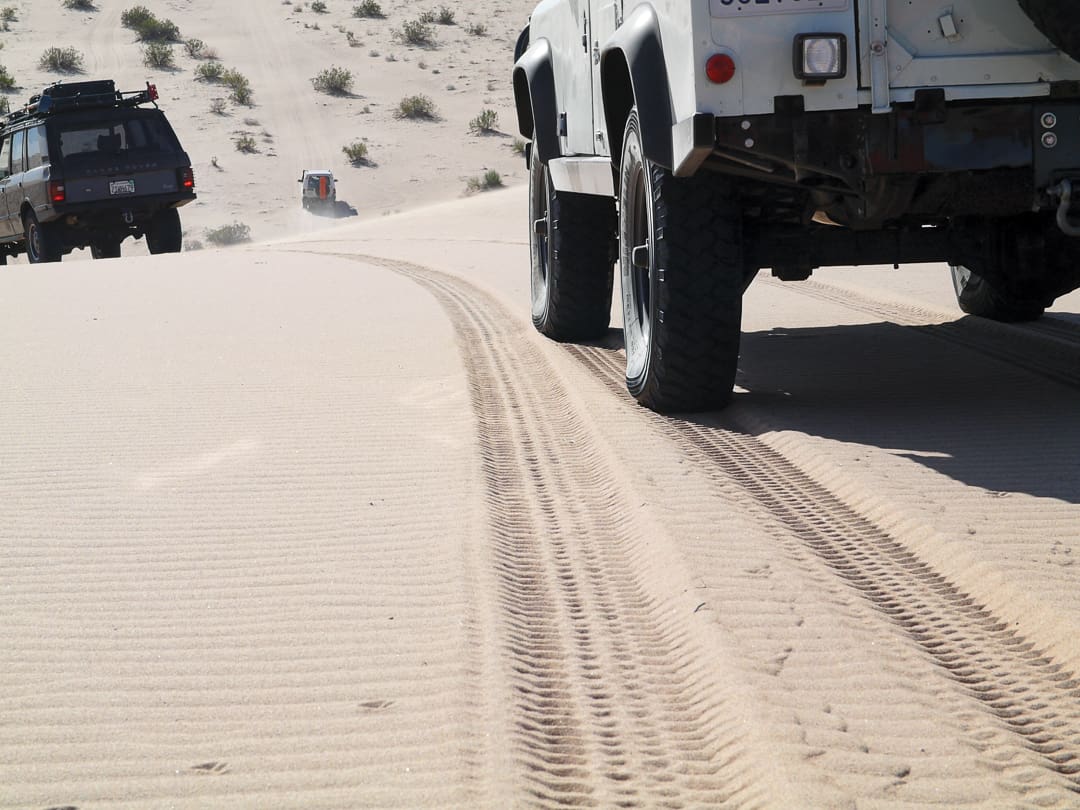
The Michelin XZLs were terrible in the sand, but it didn’t really matter—they looked perfect on the Defenders. Though the all-terrains performed best, the most important factors were proper air pressure and application of power. My Discovery, with a combination of a mild tread tire, 10 psi, and a high-revving V8, owned the dunes. It has been nearly seven years since we started our 1995 Discovery project, and it still serves us well to this day.
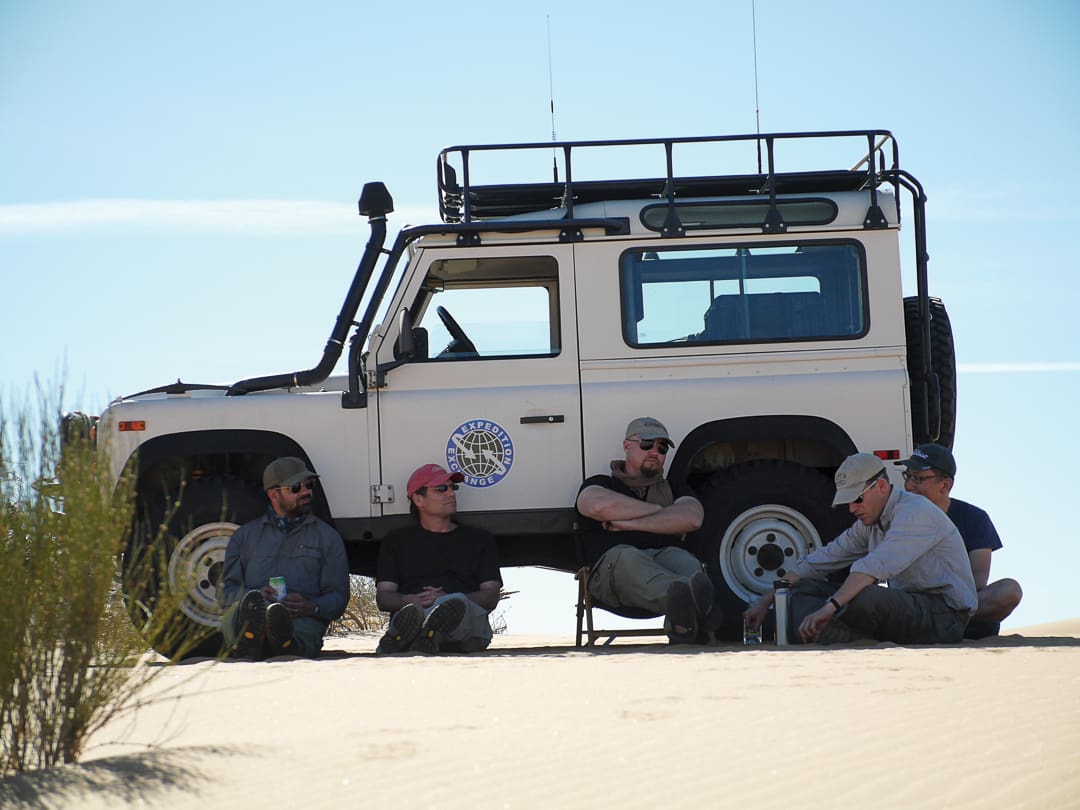
Shade in the desert is a precious commodity. Fortunately, our travel days were relatively short, allowing the group to relax and debate the important things in life, like food and cars.
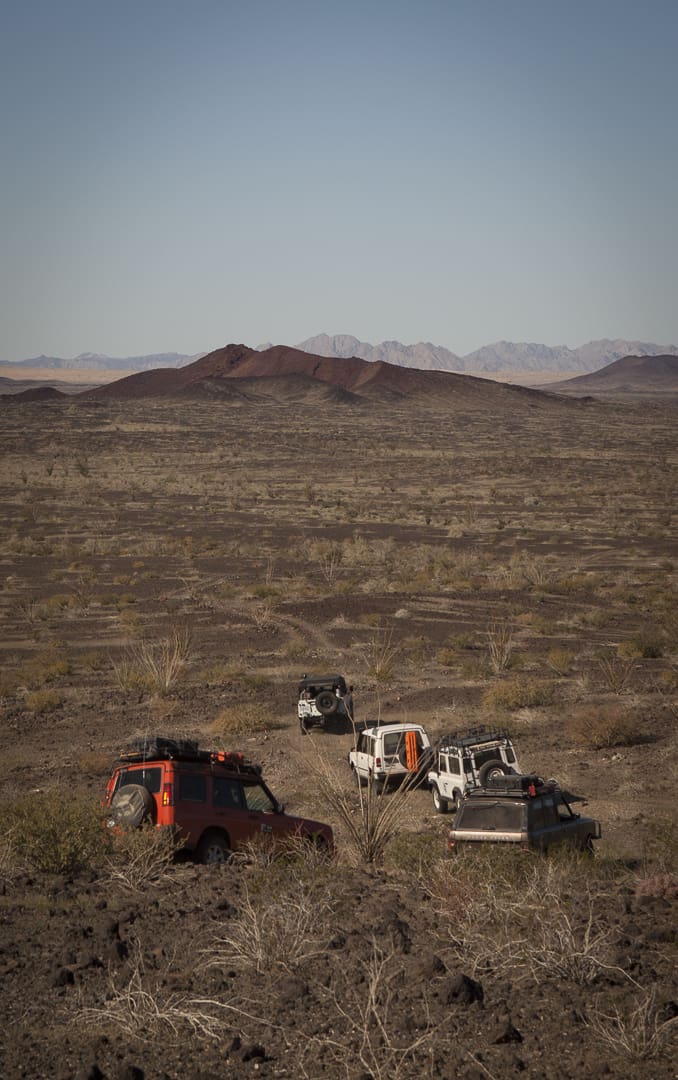
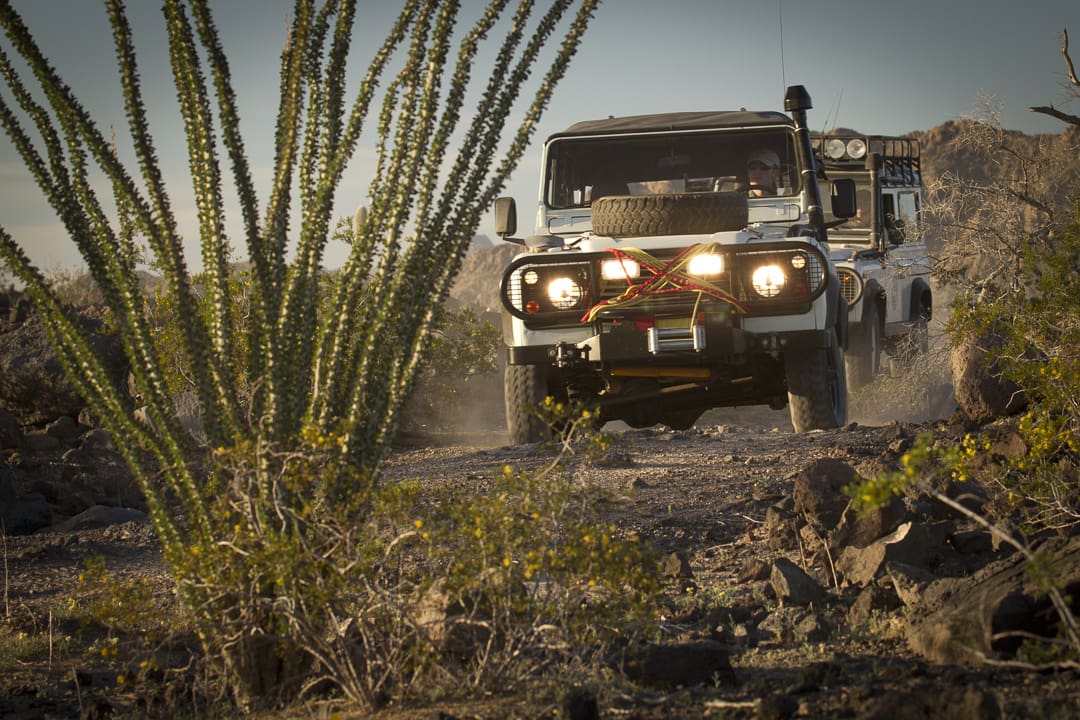
Transitioning to the Sierra Pinacate, the route through the maar craters is rugged and beautiful.
It is an incredible pleasure to travel through the Sierra Pinacate. I am thankful for the first trip Al and Bob invited me on to this remote and beautiful region of Sonora. The road isn’t difficult, but it does require attention to keep from puncturing a tire. The dunes in this region can be explored on foot, but otherwise, all vehicle travel must remain on existing tracks.
The two Defenders looked at home in the desert and performed to their pedigree. Fortunately, we did not encounter a single mechanical failure, not even a flat tire.
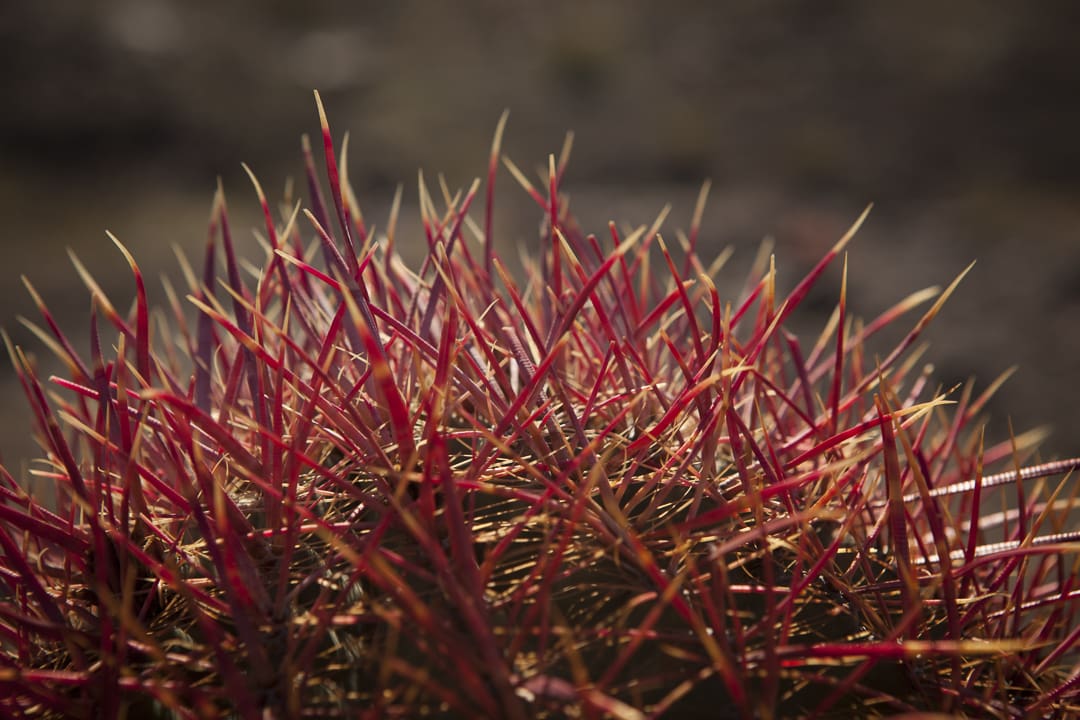
“Survival of the fittest,” a phrase coined by British philosopher Herbert Spencer after studying Darwin’s Theory of Evolution, is perfectly suited for harsh, arid regions like the Gran Desierto de Altar and Sierra Pinacate. Fauna is limited to the hardiest of species, and thorns or needles protect almost every form of flora.
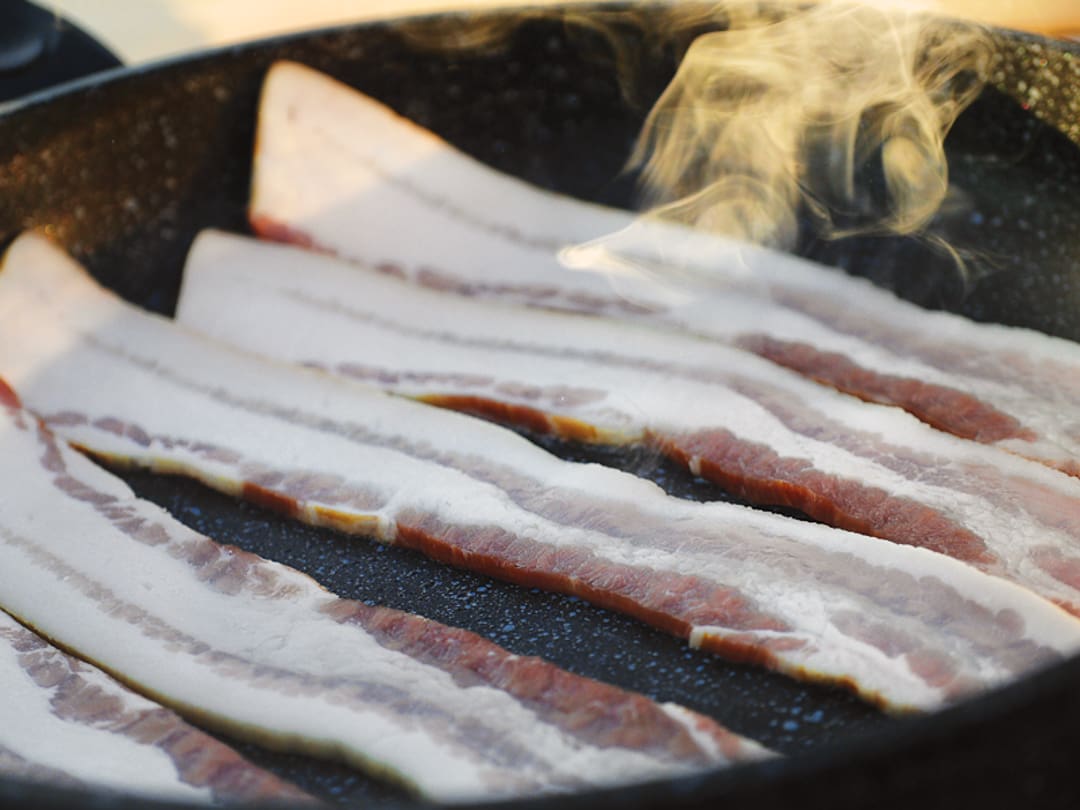
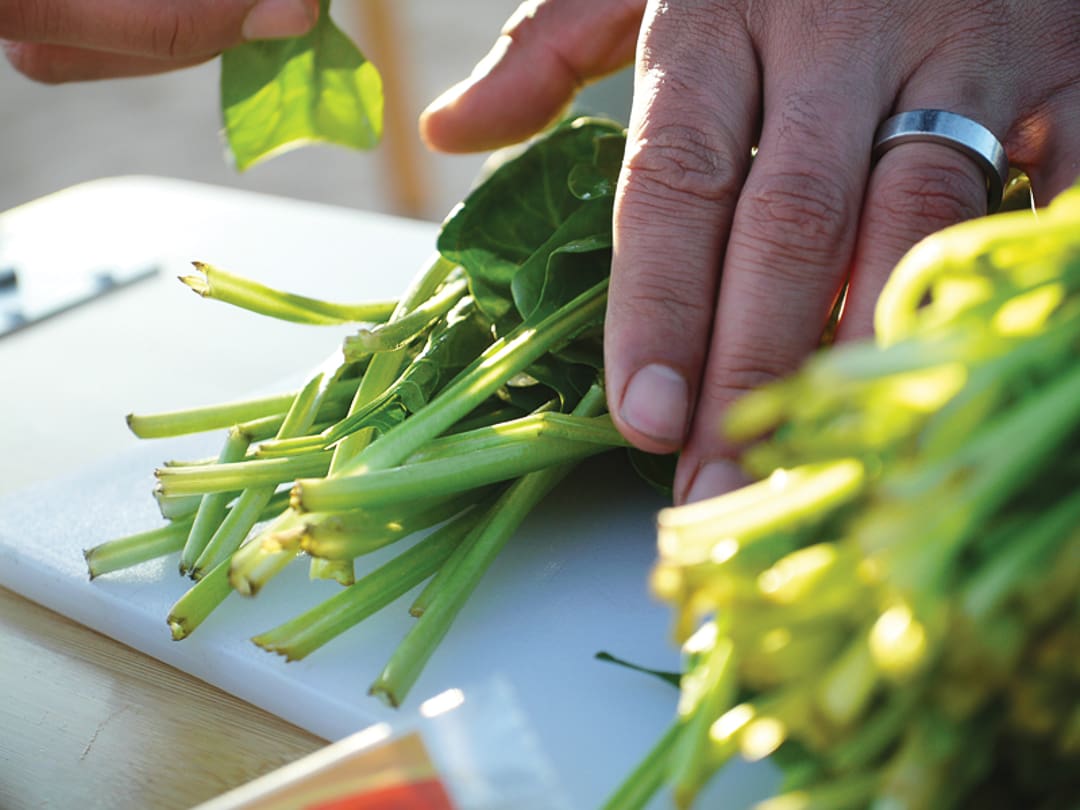
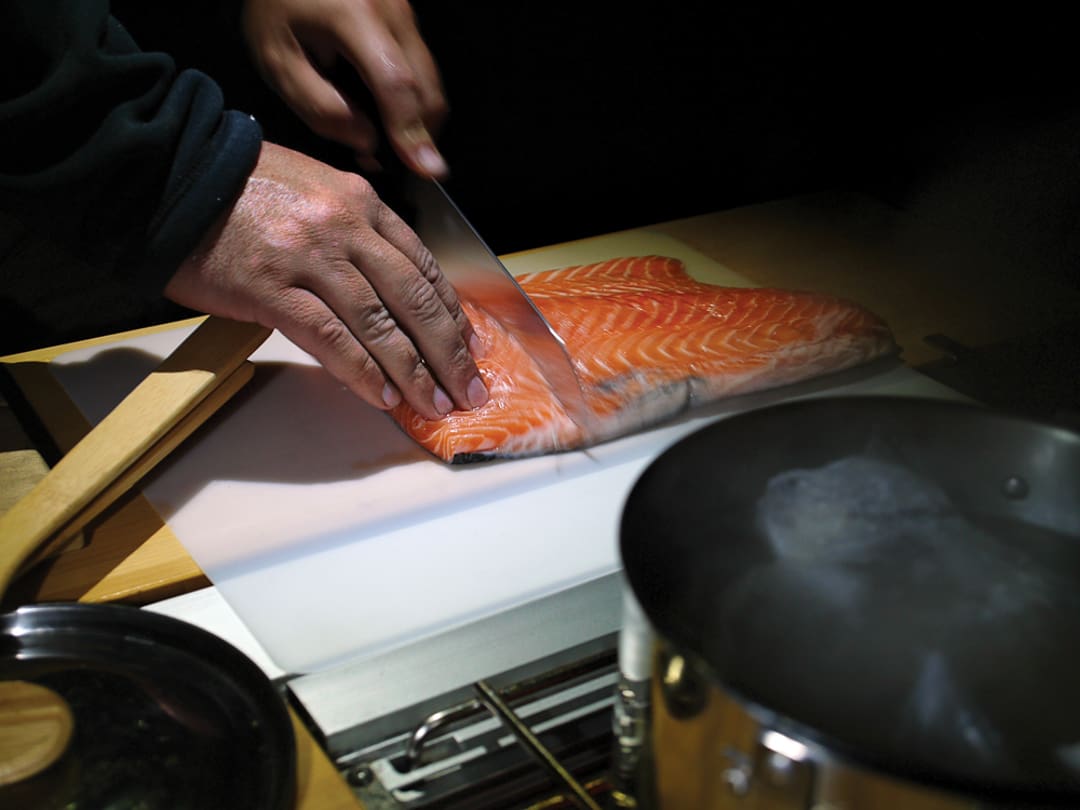
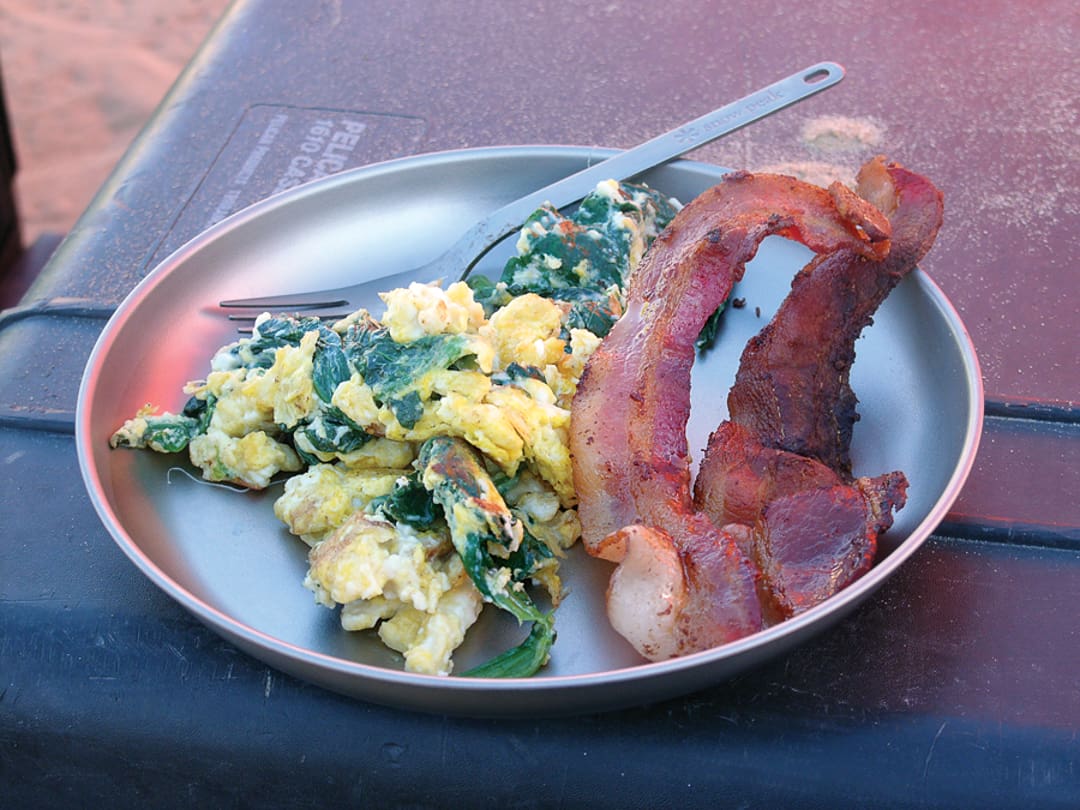
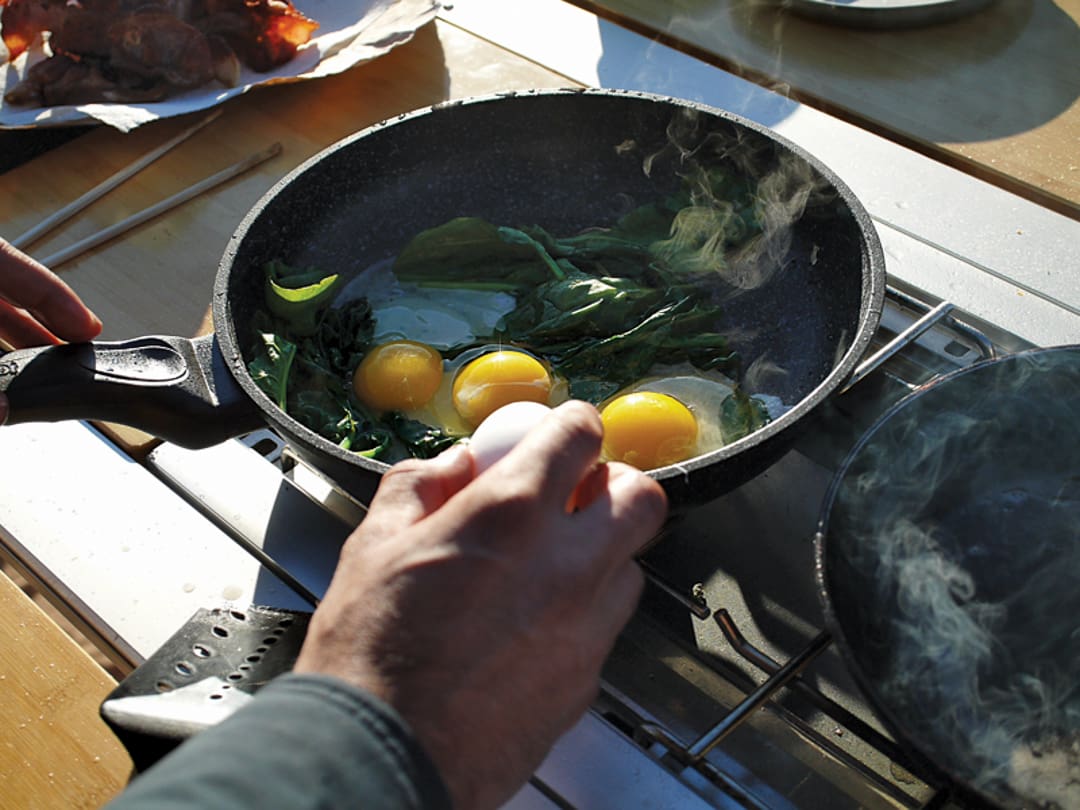
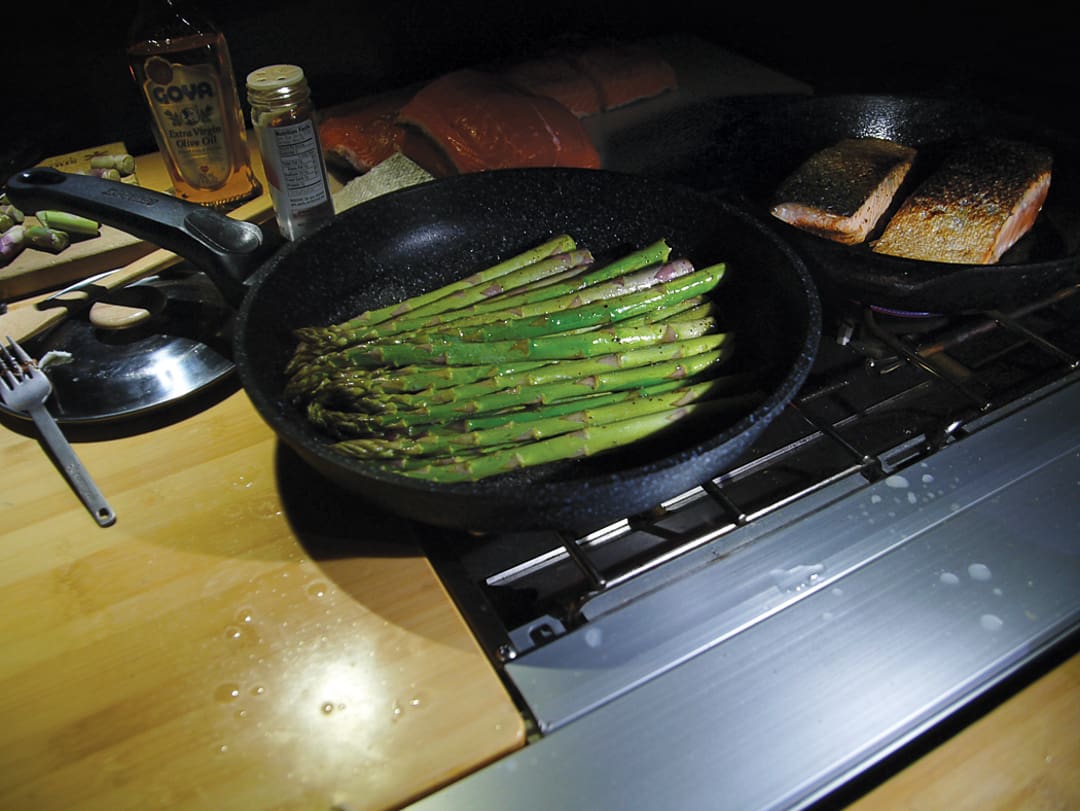
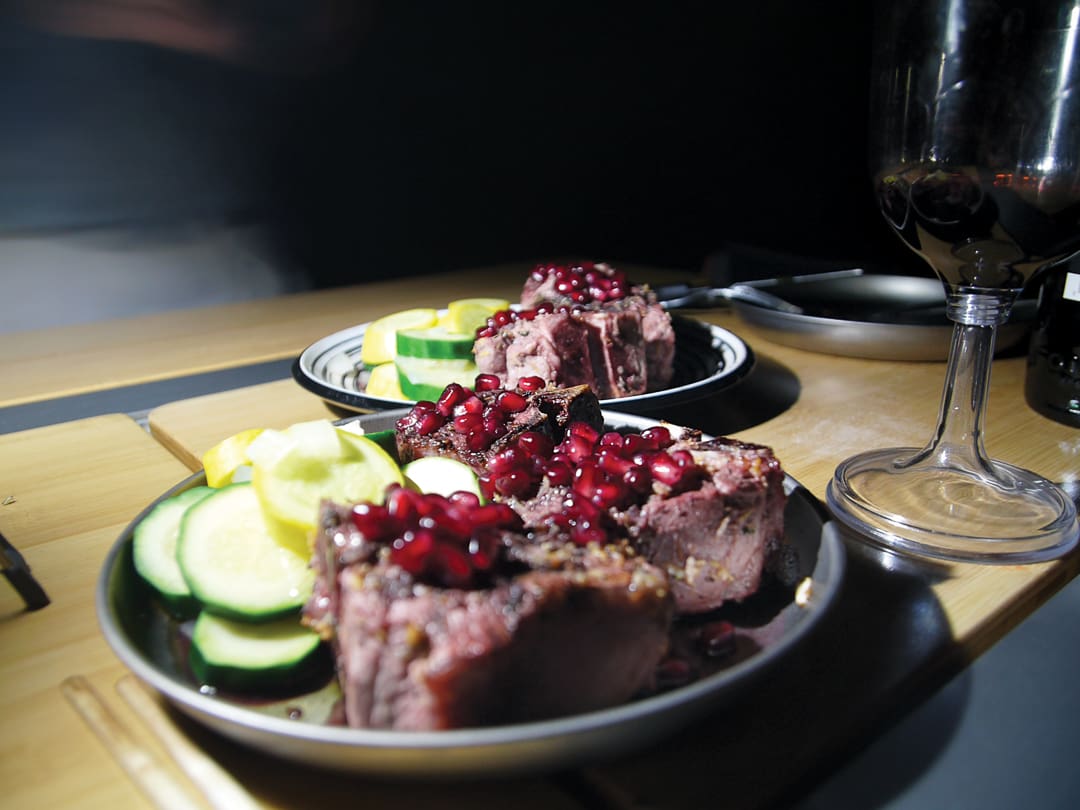
In some circles, people compete with how big their tires are and how much articulation their suspension has. We’ve learned that a simple, thoughtful vehicle is more than sufficient for remote exploration, but our competitive spirit flared up around the campfire and our Snow Peak BBQ Box. Cooking is always a pleasure when camping. Calm weather prompted our group to take its culinary efforts to the extreme. The meals were incredible.
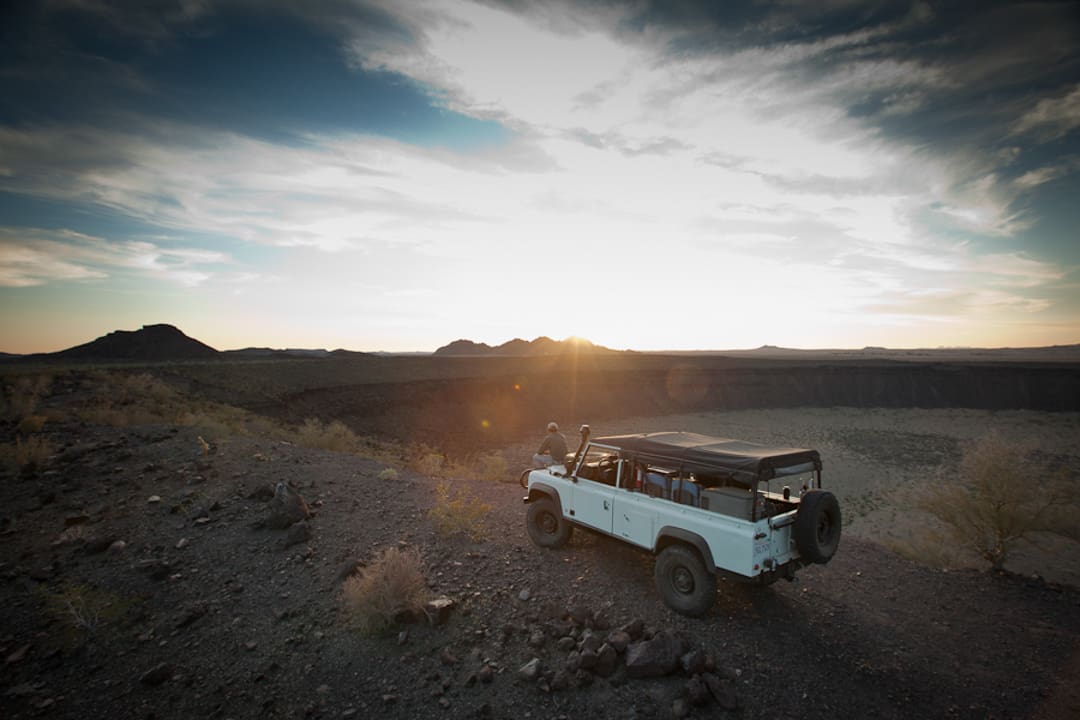
From atop the bonnet of his 110 Defender, Jack looks south into the maar crater as the setting sun disappears behind the Sierra Pinacate. We had experienced a wonderful, challenging, and scenic journey through a rarely visited landscape. As with most trips, the last night’s discussion evolved into plans for our next adventure—to points further south.
Resources
Getting There: The Altar dunes are open for vehicle recreation west of 114° 18’. East of that longitude is the Biosphere Reserve. Two-track trails lead into and out of the dunes; staying on them prevents damage to the flora. Do some research on Google Earth to determine which of these roads will suit your entry and exit points. We encountered many locals playing on the dunes, and all were friendly and helpful. It is critical to note that this area becomes very remote very fast. Any group entering should be fully self-sufficient, fully prepared, and experienced with sand travel. You will be entering the dunes at your own risk.
Trails: Numerous trails in the Sierra Pinacate provide access to the maar crater sites. Start any visit with a trip to the visitor center at KM 73 on the Sonoyta Highway 8 to Rocky Point. Staff there will have the most current information on which routes are open or require special permission. Additional information is available at elpinacate.conanp.gob.mx.
Our No Compromise Clause: We do not accept advertorial content or allow advertising to influence our coverage, and our contributors are guaranteed editorial independence. Overland Collective may earn a small commission from affiliate links included in this article. We appreciate your support.
