

To honor the 20-year anniversary of Overland Journal, we are revisiting special heritage content in the upcoming 100th issue of the magazine. Originally published in Overland Journal’s Gear 2019 issue, this article is part of that celebration.
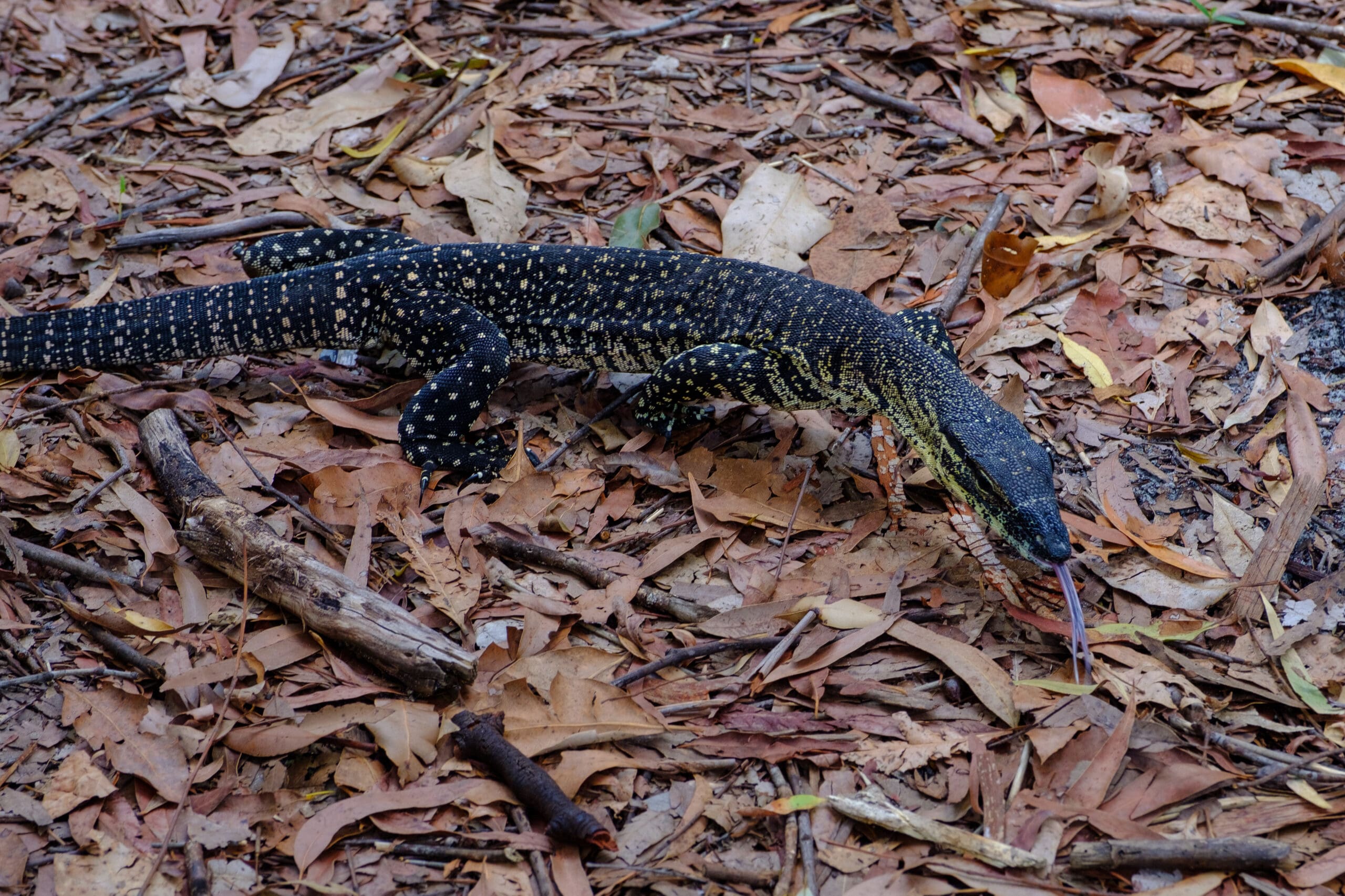
“Hey guys, no one panic, but a snake is heading your way.” I looked at James and, with more than a little concern, said, “Wait, what?” “Yeah, it’s a red-bellied black,” he replied, “so stay back; it’s deadly.” Great. I had crossed the entire continent without seeing a single snake, and now when I was finally relaxed on a beach, one decided to show up for the party. Fortunately, James was used to this and shooed it off with a flashlight and stick.
We went back to eating dinner and casually discussed how screwed we would have been if it had bitten one of us way out in the middle of nowhere. That’s when I spotted the snake once more, slithering behind the rest of the team toward their feet. This time it was their turn to jump, and everyone scattered into the light on the safe side of camp. We redoubled our efforts to scare the thing off, but the venomous reptile continued to circle the camp, slithering into the light from unexpected angles. It was more than a bit unnerving. The jet-black snake was nearly impossible to see amongst the decaying branches and leaves on the ground, and I began to feel like the star of some horror movie waiting for impending doom.
Eventually, we realized something more drastic was needed, so we unloaded the sand flag from the Land Cruiser and handed it to James. As he inched closer to the snake, encouraging it to go back into the brush with the end of the flag, it became more aggressive. With one fluid motion, James used the flag to scoop underneath the snake and sent it on a first-class flight away from camp. As we breathed a sigh of relief, I hoped that would be the last of our lethal visitors for the trip, but somehow I knew it wouldn’t be.
Of Myth and Legend
According to the Butchulla people, the story of K’gari began thousands of years ago when the world was still new. The powerful god Beiral created mankind but had no place for them to call home. He sent forth a messenger, Yendingie, along with the goddess K’gari to form the oceans, islands, and mountains that cover the earth. Together they crafted a planet of unequaled beauty, but K’gari fell in love with her work and pleaded with Yendingie to let her stay. Unable to dissuade her, the great messenger agreed, but on the condition that she could not remain as a shining white goddess. Instead, she was transformed into a dazzling island, surrounded by the trees and flowers she loved, dotted with mirrored lakes so she could see her home in the sky. It was in this form that she stayed and remains today.
K’gari, pronounced gurri, means paradise in the Aboriginal language, but most people know it as Fraser Island. Like many four-wheel-drive enthusiasts, I first learned of the island by watching Australian YouTube channels, but those videos only offered a glimpse of this spellbinding place.
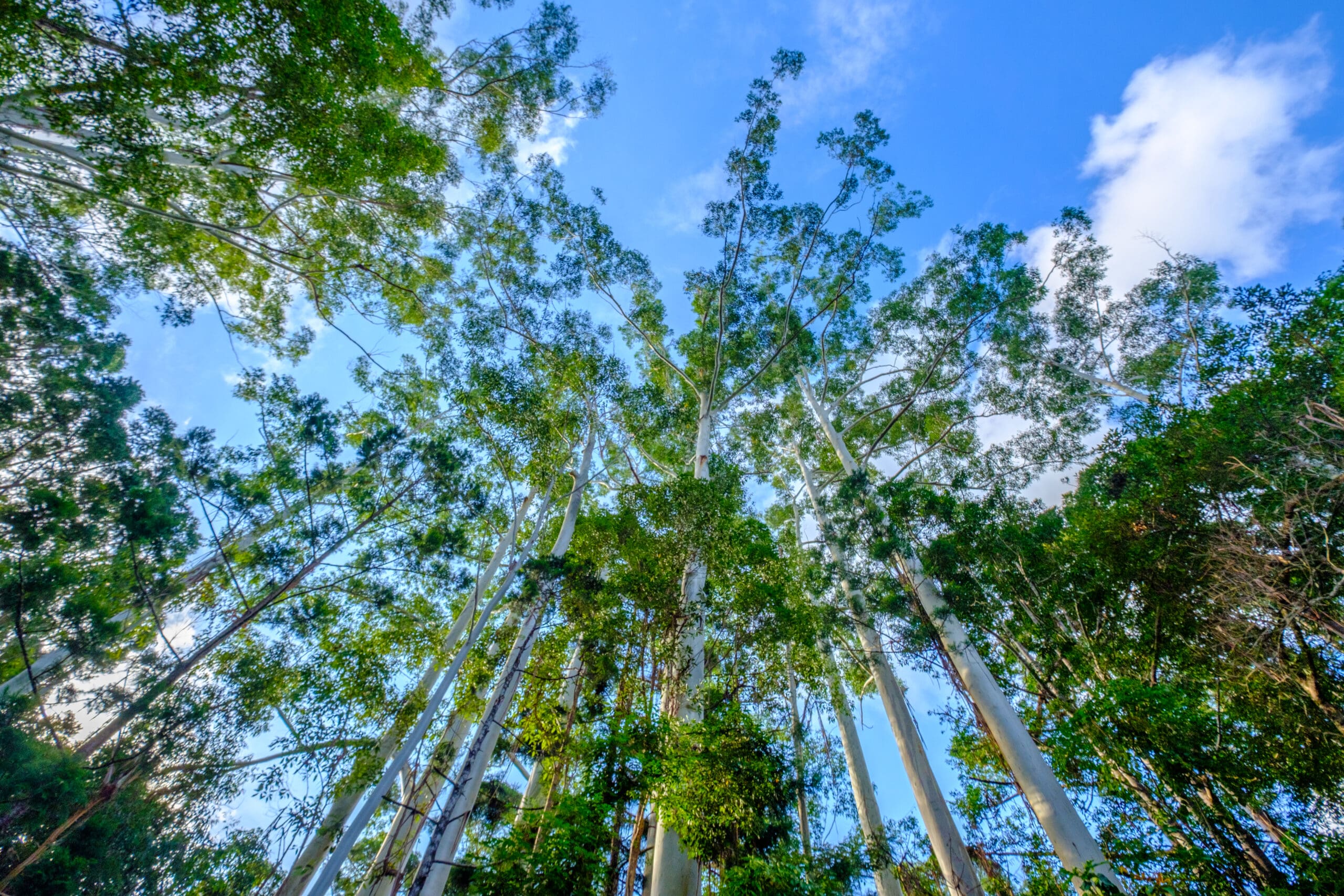
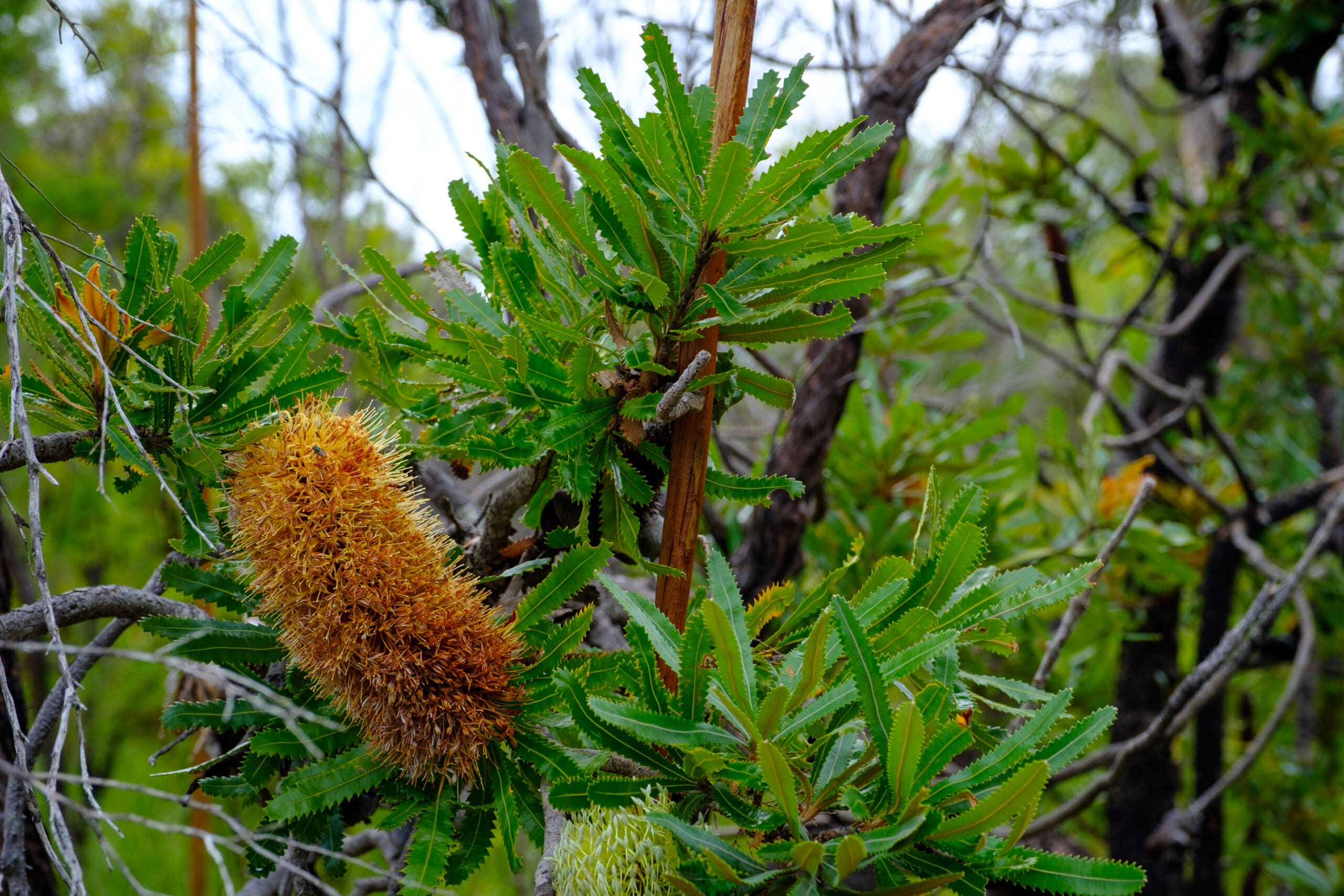
At 710 square miles, K’gari is the world’s largest sand island and arguably one of the most alluring. It is dotted with stunning lakes, sugary beaches, enormous dunes, and, despite its lack of traditional soil, an abundance of life. Thanks to mycorrhiza—fungi present in the sand—rainforests, mangroves, peat swamps, and eucalyptus have been able to thrive. The resulting tropical haven became an ideal home for a diverse array of birds, fishes, and reptiles, as well as one of the purest lines of dingoes in existence. These features helped it earn UNESCO World Heritage status, as well as protection under the Great Sandy National Park. Not a bad résumé for such a small place.
With a week to spare in the land of Oz, I decided to hitch a ride with Hema Maps to discover the side of Fraser not seen on YouTube. We were to float in its hidden lakes, explore its forgotten beaches, and hopefully show people that this place is more than just a beach.
Shimmering Seas
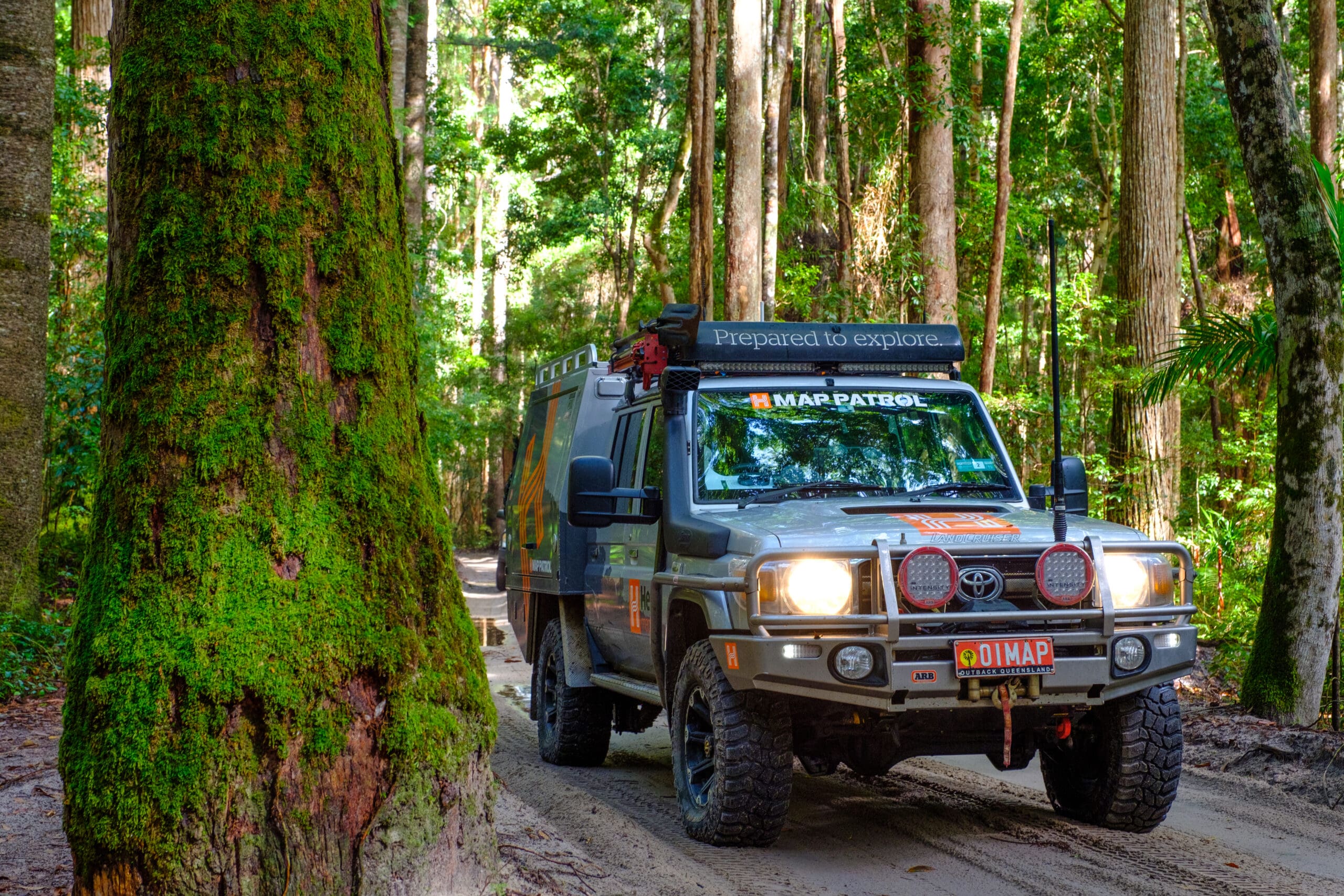
There are no bridges or roads to K’gari. To access this unpaved paradise, you need to take a ferry, one that’s a far cry from the large transport ships most of us know. These vessels run ashore at Inskip Point on the mainland, requiring vehicles to be driven down the small peninsula and onto the ramp they lower to the shore. It’s an awesome experience, as long as the soft, churned-up sand doesn’t bury your truck to its frame—a very real risk. I knew there was a strong possibility of getting stuck here going into the trip, but I hadn’t considered that I was driving a Hema-branded truck, which meant everyone on the point would be watching. If I were to botch this short drive, there would be no mercy online. I tried not to think about it as we prepared to head for the boat, but then my phone beeped with a message from my girlfriend. It read, “Did you know there’s an entire Facebook group dedicated to people getting bogged on Inskip Point? It’s hilarious and has almost 200,000 followers. It would suck to get posted there. By the way, good luck!” Helpful, very helpful.
I rolled onto the beach prepared for what I could only imagine would be quicksand designed by the devil himself, but to my very pleasant surprise, it wasn’t much different than the beach driving back home. We cruised out to the ferry with ease and rolled aboard the ramp, feeling a little giddy for having gotten off so easily. I parked the Land Cruiser in our designated lane and made my way to the bow to watch the short transit across the channel. After a few minutes, a low rumble emanated from the deck, and the ship lurched away from the shore, its flat front end battering against the waves, sending a cool mist into the air. I breathed in deeply, savoring the smell of salt, the pitch and roll of the ship, and the resplendent coastline closing in. I was already falling for K’gari, and based on what I had seen of its “challenging conditions” so far, it would be smooth sailing from here on out.
Famous Last Words
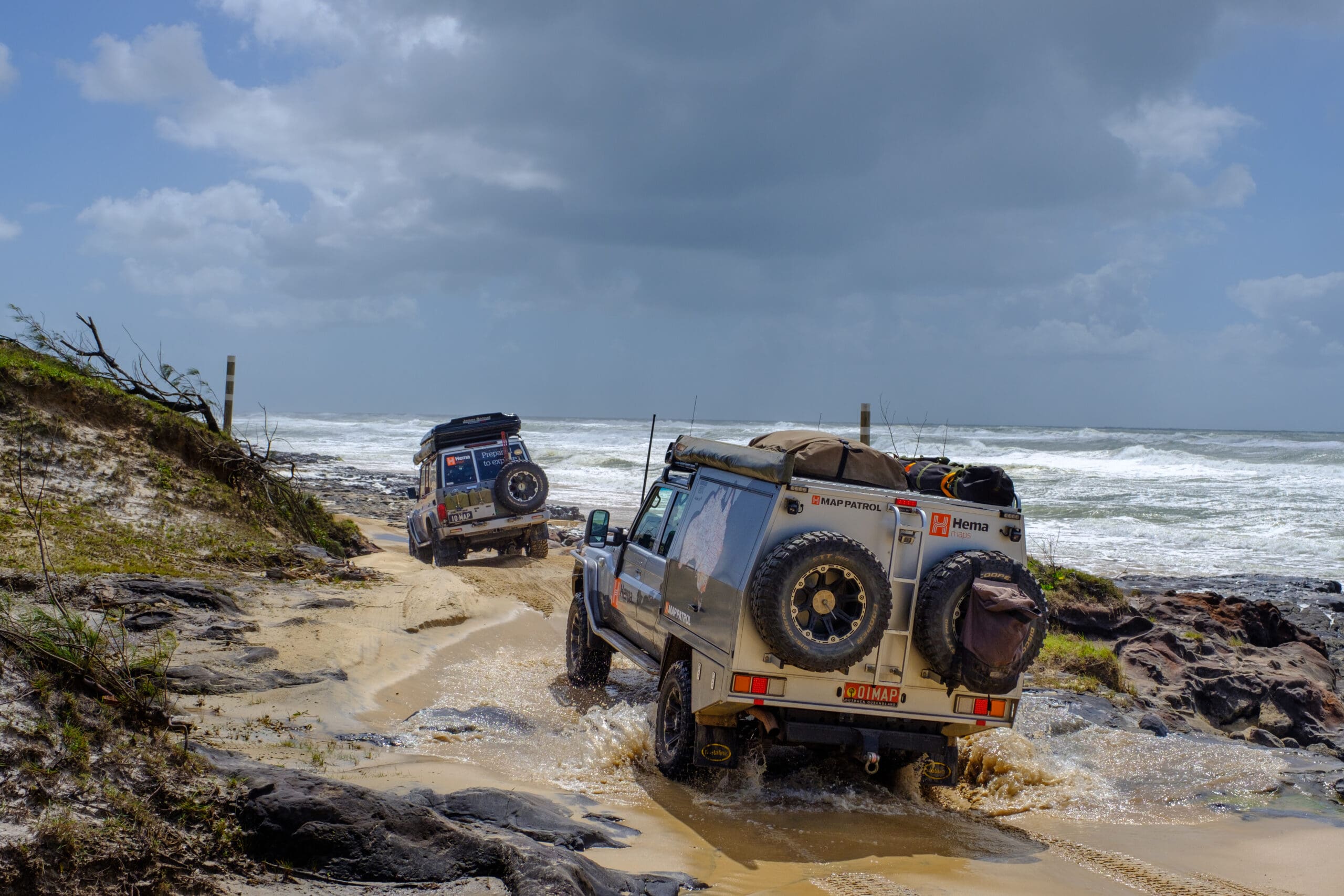
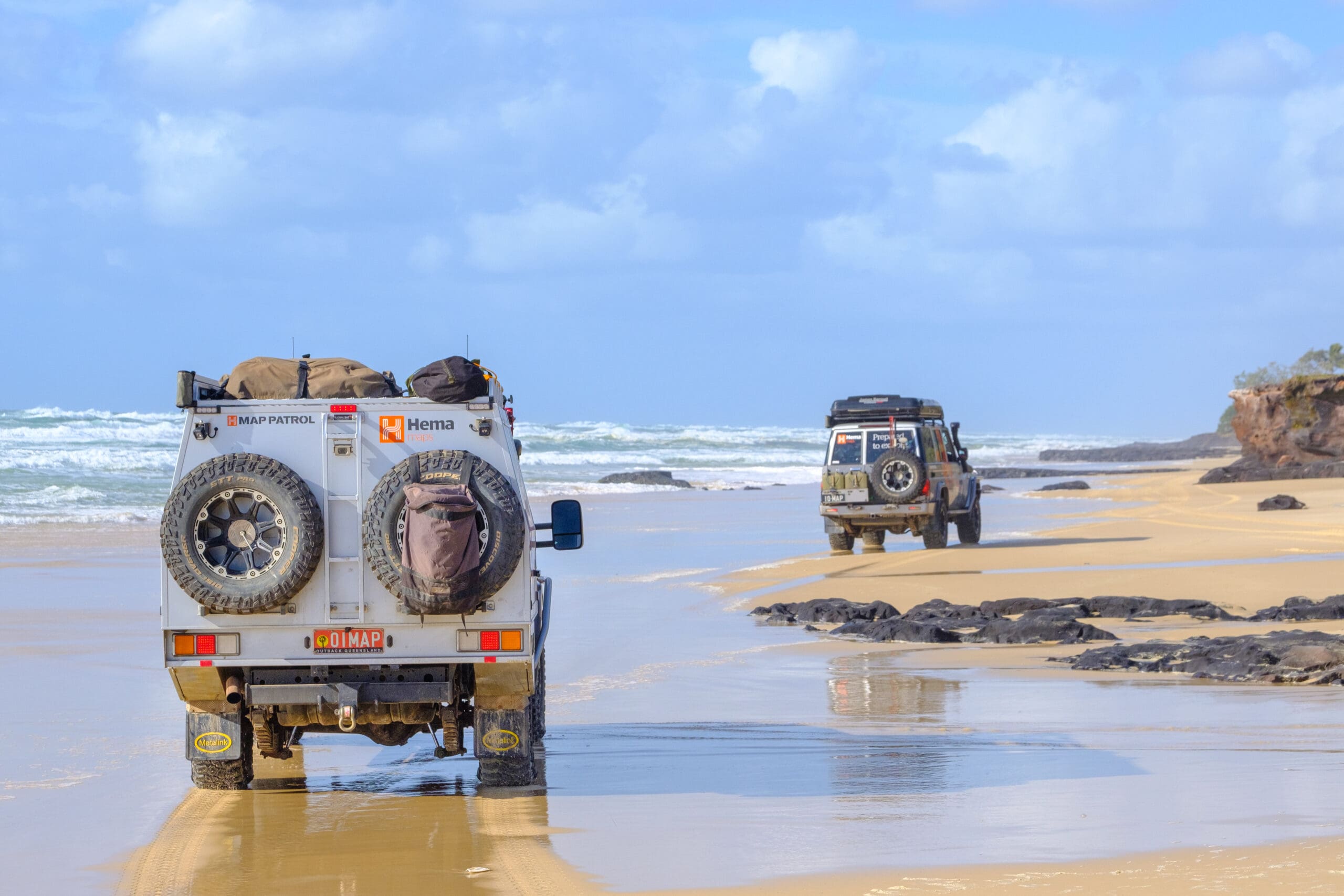
“You guys are sinking pretty bad.” “I know, I know!” I responded as I dropped yet another gear while the sand sucked away my momentum. It was our second day on the island, and we had just begun our journey down one of Fraser’s long beaches. The high tide was still a ways off, but an unexpected storm surge had brought the surf too close for comfort, and it was now a race against time before our route was cut off. I was eating my words about smooth sailing as quickly as the sand was devouring our truck. Suddenly, traction returned, and I felt the turbo-diesel V8 spool up, throwing power back to the tires, allowing me to shift up once more. Through the blur of the wiper blades, furiously beating the water off the windscreen, I could see our destination: a small inlet that led into the interior. “Almost there,” Micah called from the other truck. A sandy two-track leading inland appeared, and we turned for it, disappearing into the thick foliage.
The Goddess K’gari
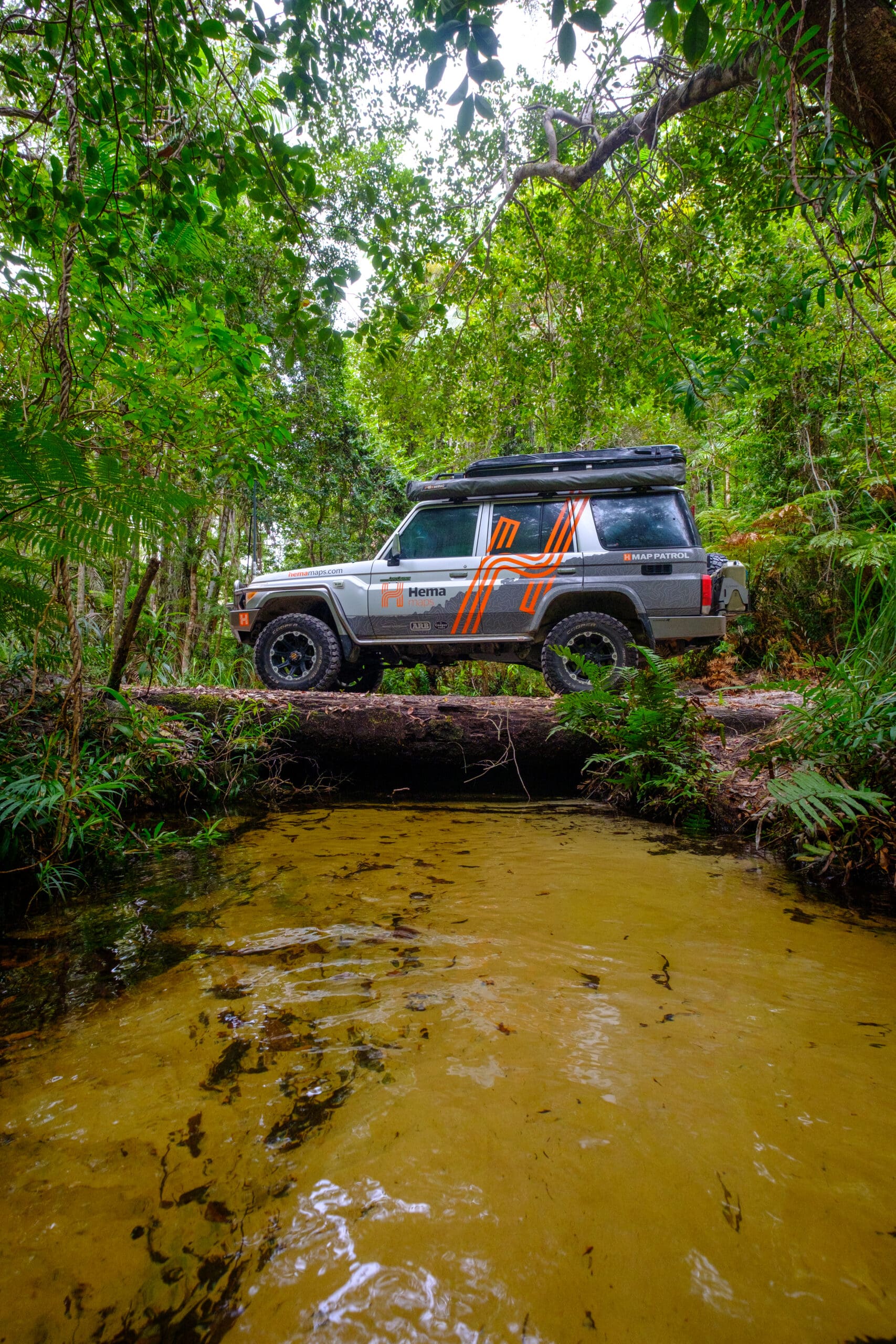
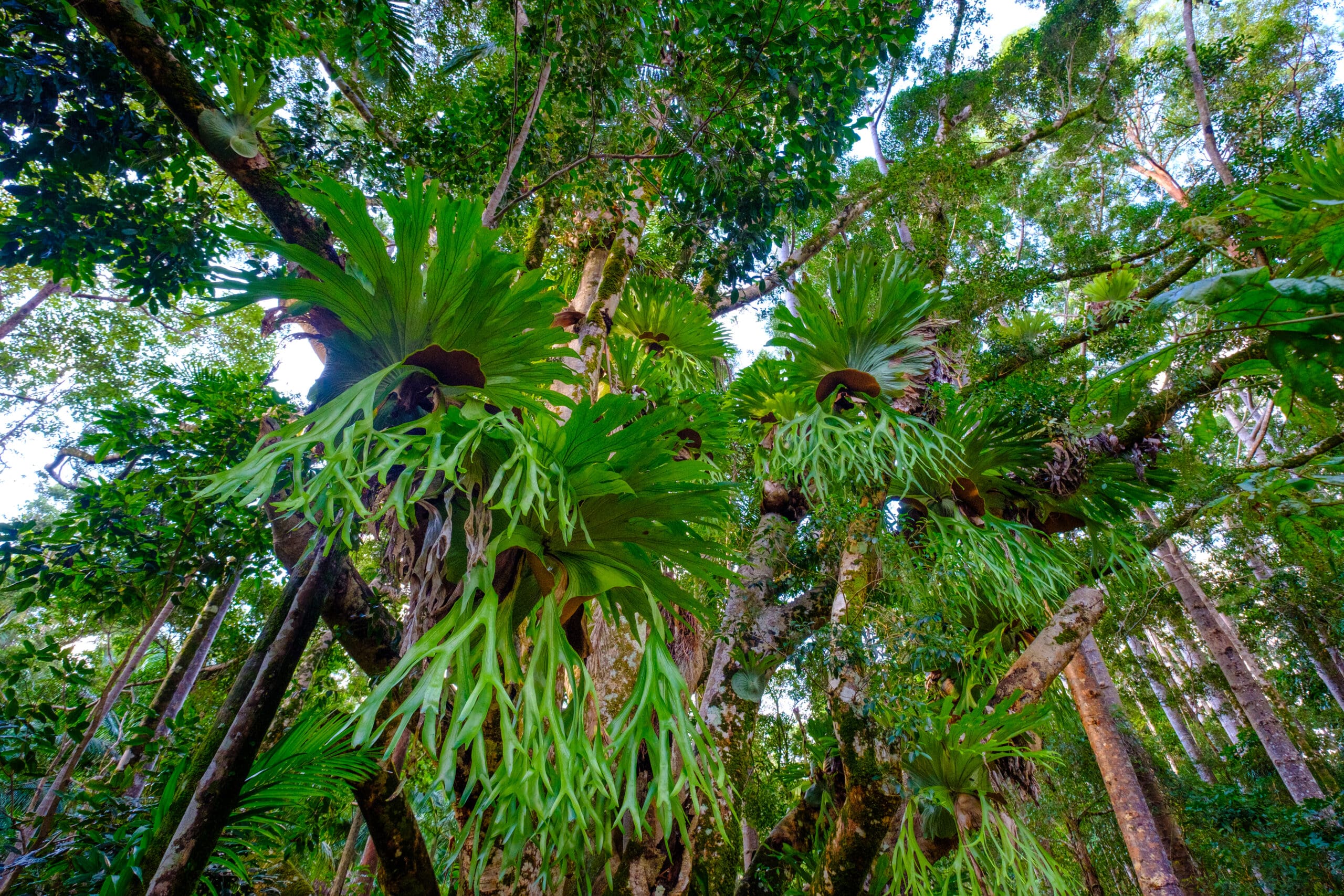
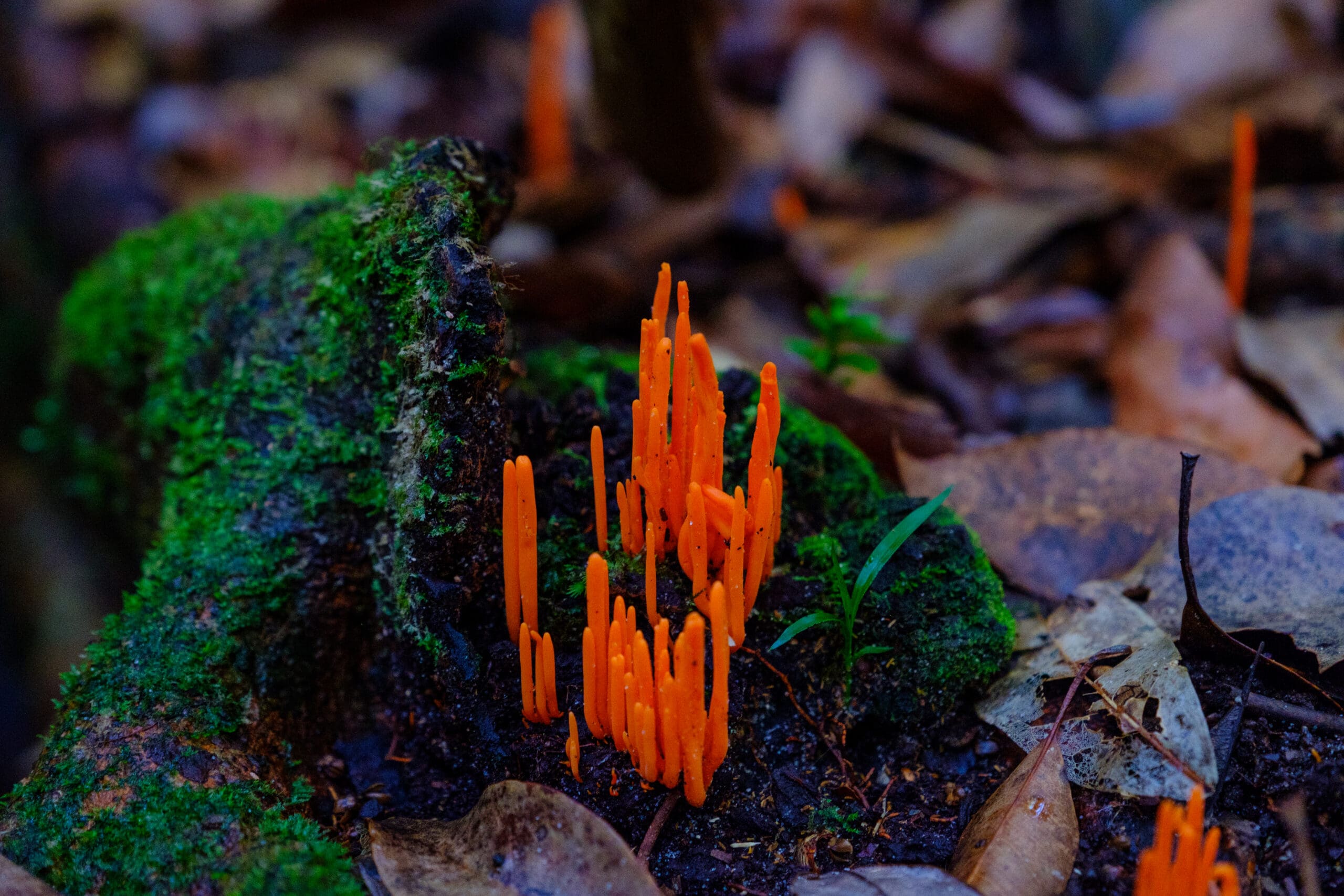
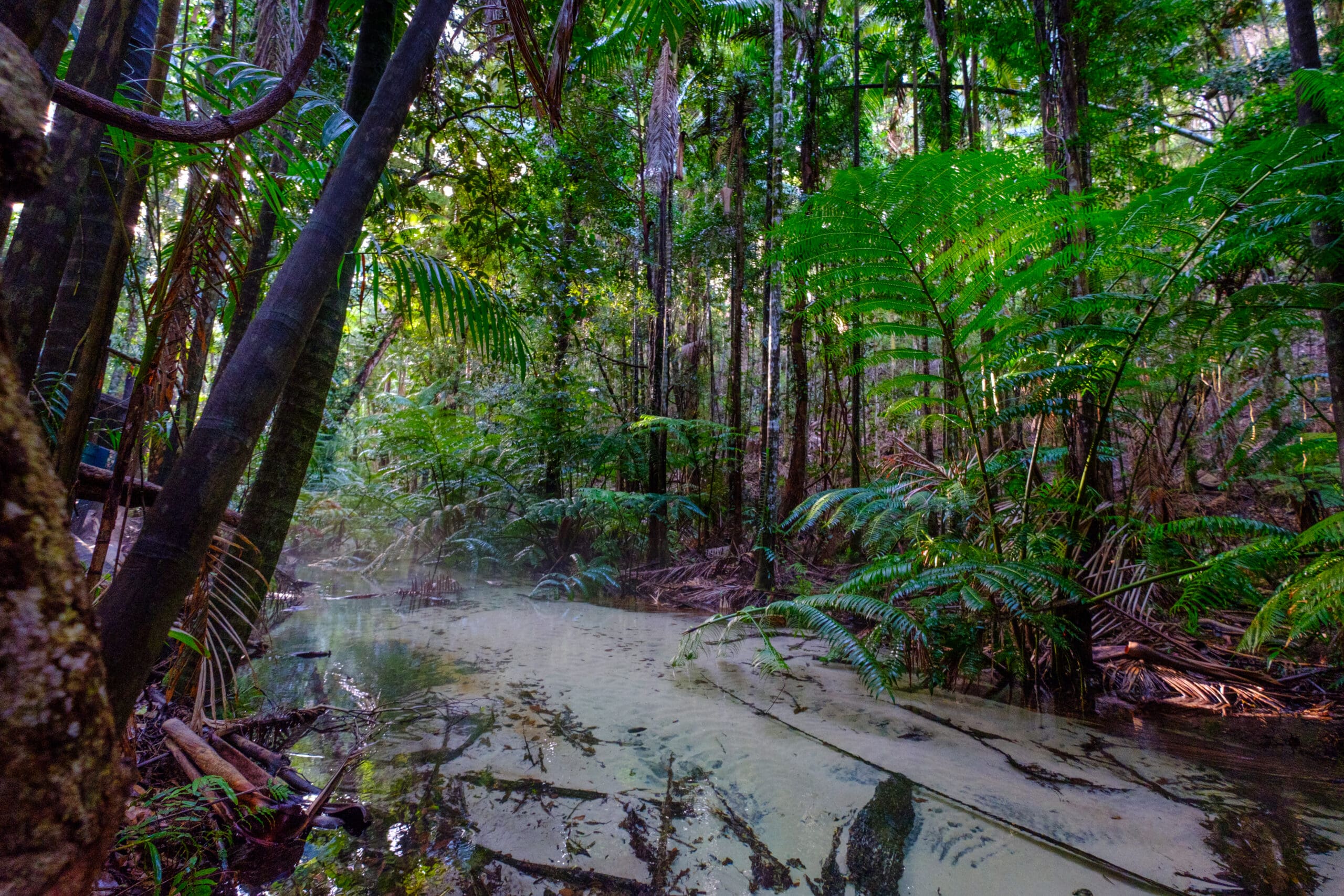
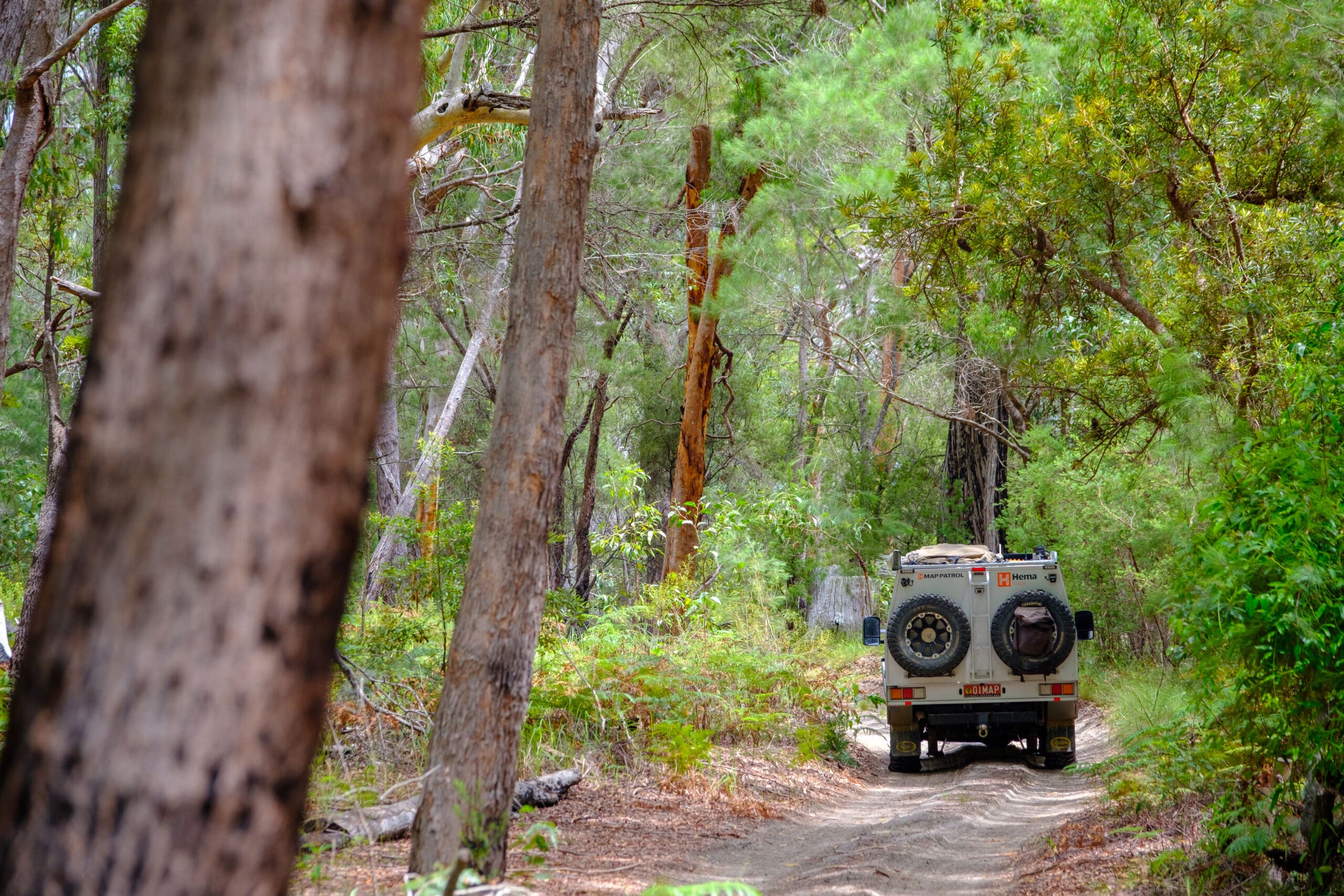
Suddenly, the roar of the surf was gone, the wind became a gentle breeze, and a vibrant paradise surrounded us. Deep green ferns and bushes covered the earth, with splashes of orange, yellow, and pink from flowers and mysterious fungi. Enormous trees towered overhead, with otherworldly epiphytes cascading down their trunks, and colorful birds darting between their branches. This was the side of Fraser I was looking for. The trail wove through the rainforest like some grand snake, and other serpents of crystal-clear water intersected our path and danced along it. Occasionally, we would get out and walk the misty banks of these creeks, which felt more at home in a Tolkien novel than in the real world. Due to their translucence, from a distance, you couldn’t even tell they were there save for the gentle babbling sounds reverberating off the rocks.
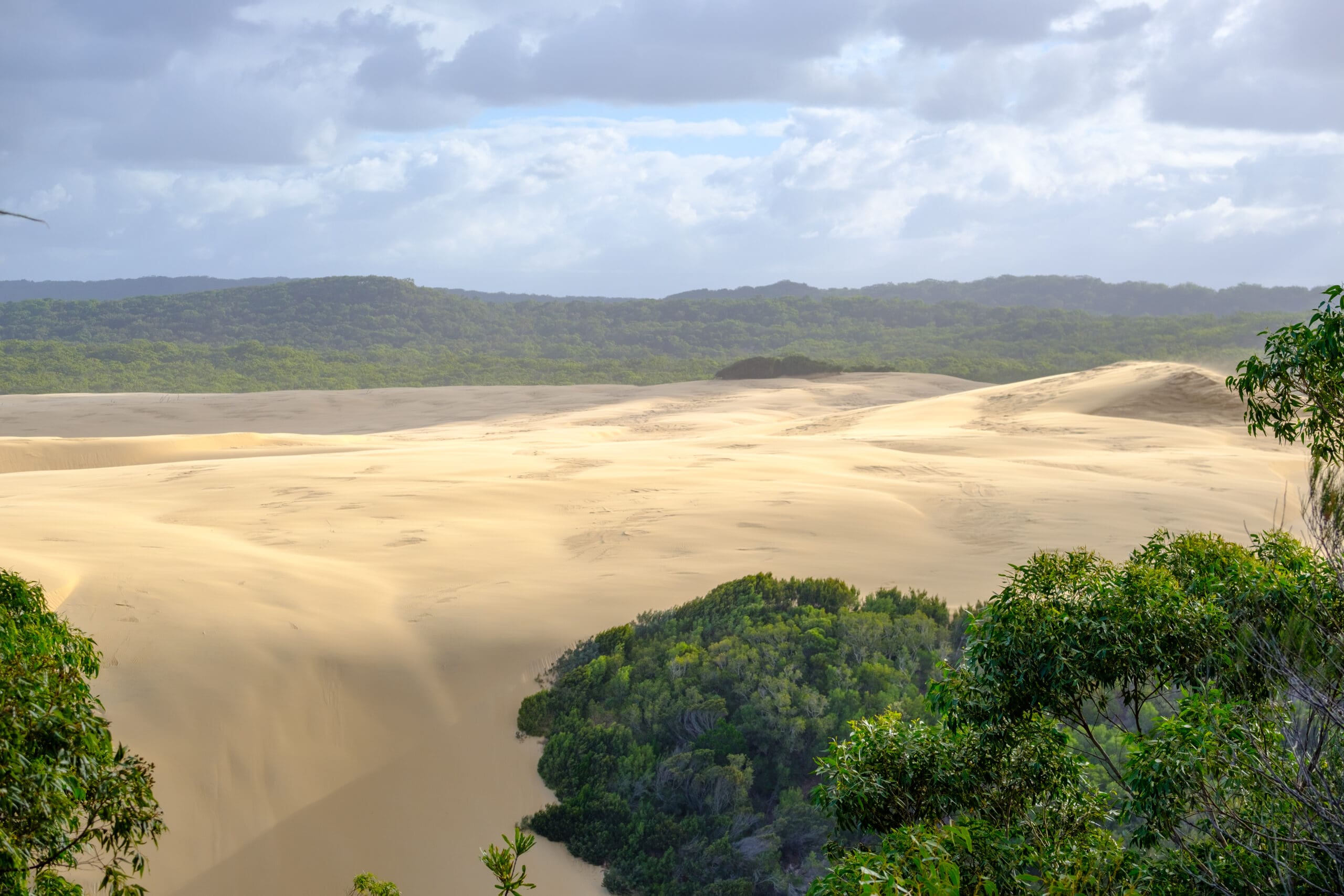
Despite their beauty, these waterways paled in comparison to the island’s freshwater lakes, K’gari’s mirrors to the sky. These shimmering jewels were believed to be holy places by the Aboriginals and still hold special meaning in their society today. Some sit high in the cradle of snow-white sand dunes, perfect reflections of the blue sky above, while others called perched lakes appear tea-stained from the gradual buildup of decaying plants. Barrage types like Lake Wabby are even more unique. They are slowly being swallowed up by sandblows with each passing day and will eventually disappear entirely under their shifting mass.
Out of all the oases on the island, it was Lake McKenzie that captured my heart. Its waters appear crystal blue even on a cloudy day, and in the heat of summer, diving into their depths is heaven.
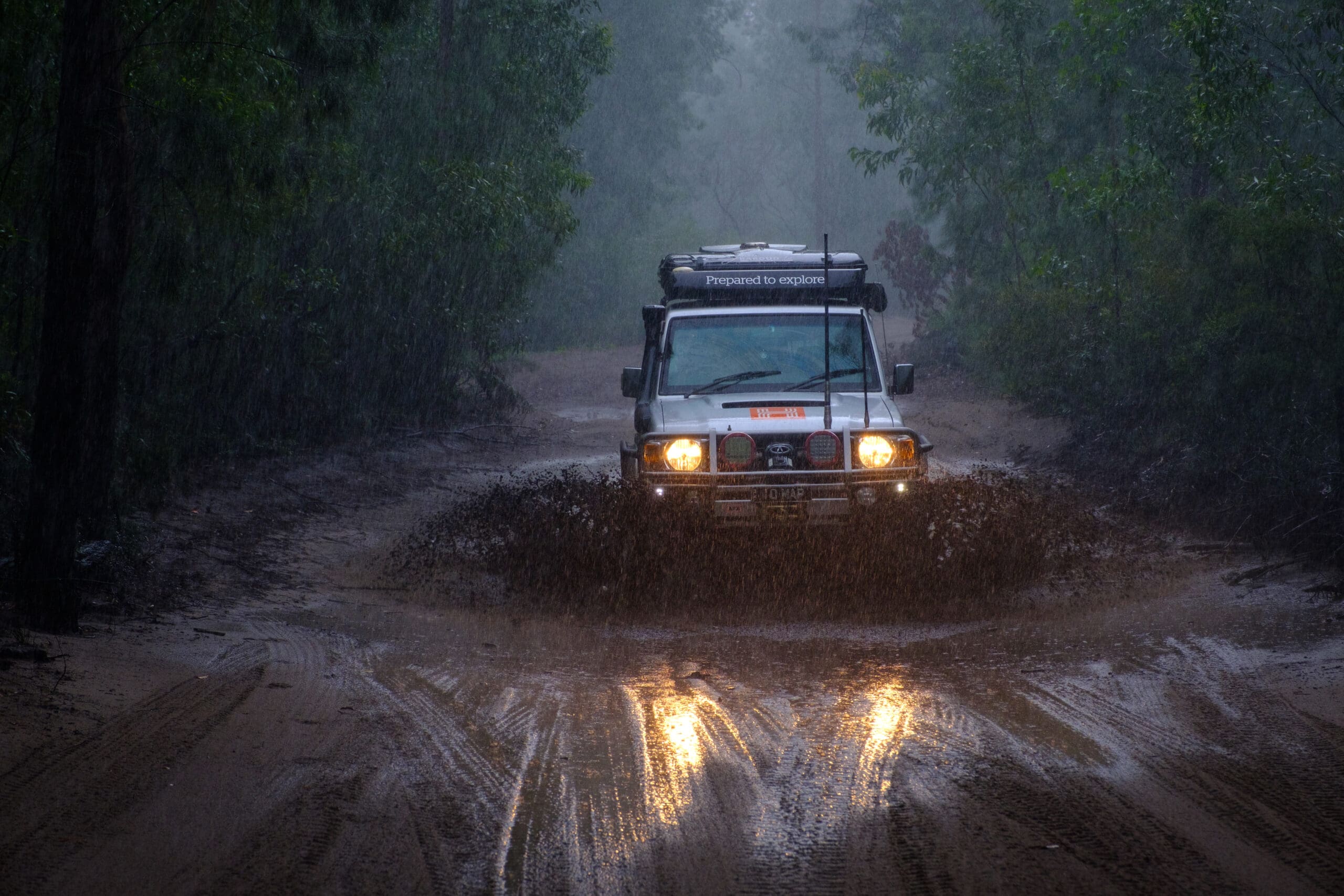
Sadly, I was only able to walk McKenzie’s soft sandy shores for an hour before the storms closed in. Fraser is a rainforest after all, and each day brought showers and occasionally downpours to quench the land’s thirst. As a cascade of droplets began to fall, we ran back to the vehicles and set out for our camp. I was thankful I’d be using a rooftop tent instead of the swag; it promised to be a soggy night.
Trouble in Paradise
I awoke to the dull roar of rain on the tent and listened as yet another storm rolled over the island. Grabbing for my watch, I realized it was nearly one in the morning, and every muscle in my body screamed to go back to bed. I knew I couldn’t. We had left our awning up outside to keep things dry while we cooked dinner, but based on the splashing sounds, it was rapidly becoming an aboveground pool. Something had to be done to prevent it from breaking altogether, so I grabbed my shoes, unzipped the tent, and began to descend the ladder. About halfway down, memories of the red-bellied black snake flashed in my mind, and I decided it would be prudent to take a light. I reached into the tent, grabbed a headlamp, and turned it on. There, about 2 feet below my sandals and exactly where I was going to step, a brown snake was coiled around the ladder. I stood watching as the creature uncurled its body and made its way toward the forest, clearly annoyed at being disturbed during its big night out. After several minutes, I overcame my newfound paranoia, hopped off the ladder, folded up the awning, and jumped back into the safety of the tent. I lay there listening to the rain for hours, thinking about the death I had narrowly avoided. For all of its beauty, this island certainly wasn’t without risks.
The dangers of K’gari span far beyond snakes. Jellyfish fill the coastal waters, some of which are Irukandji, tiny and nearly invisible specimens that will often take your life. Some can even wash up on the beach and inflict the same fate long after they pass. Sharks provide further reason to stay on the shore, though numerous insects and reptiles will be there waiting. Then there are the dingos, which, while cute, can be aggressive under the wrong circumstances. Like many parts of Australia, Fraser is a breathtaking destination awaiting exploration, but caution and a level head are always required, and a bit of good luck doesn’t hurt either. We’d be counting on all three for the next day, as our plan was to cross the island on trails with unknown conditions. Eventually, as the faint glow of dawn illuminated the horizon, I drifted back to sleep, wondering what the day would hold.
Sands of Time
We departed just a few hours later and tracked down one of the main trails to the town of Eurong, the island’s largest hub. Of course, that’s not saying much since K’gari has a whopping population of 194 people, but there is fuel, food, and a mean cup of coffee, which I desperately needed after the previous night’s events. We took advantage of the town’s cell service to call home, check in with our offices, and let the caffeine do its work—then it was time to load up. The thrum of the diesel Land Cruisers resumed, and the team turned back toward the interior, the shoreline sinking into our rear views.
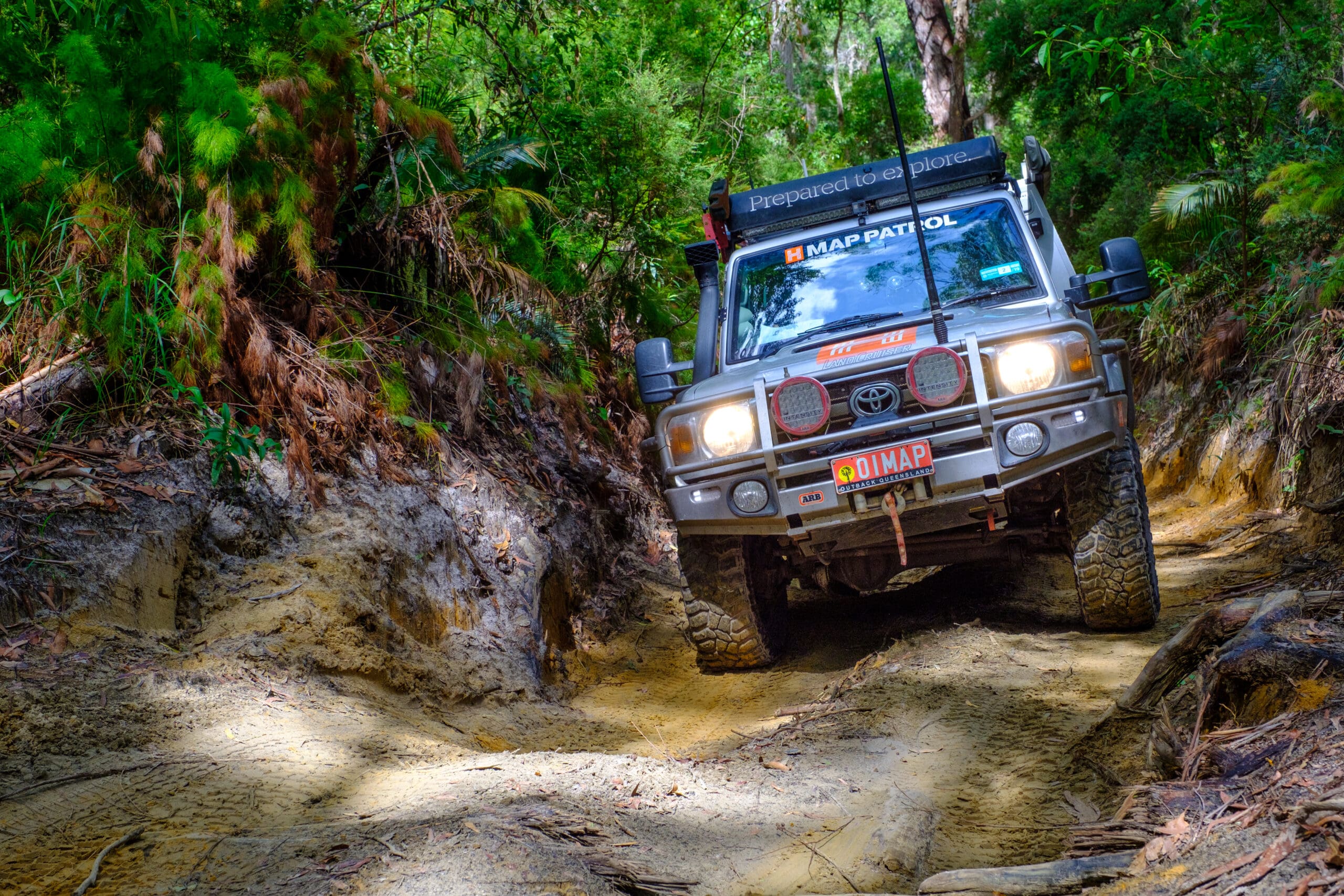
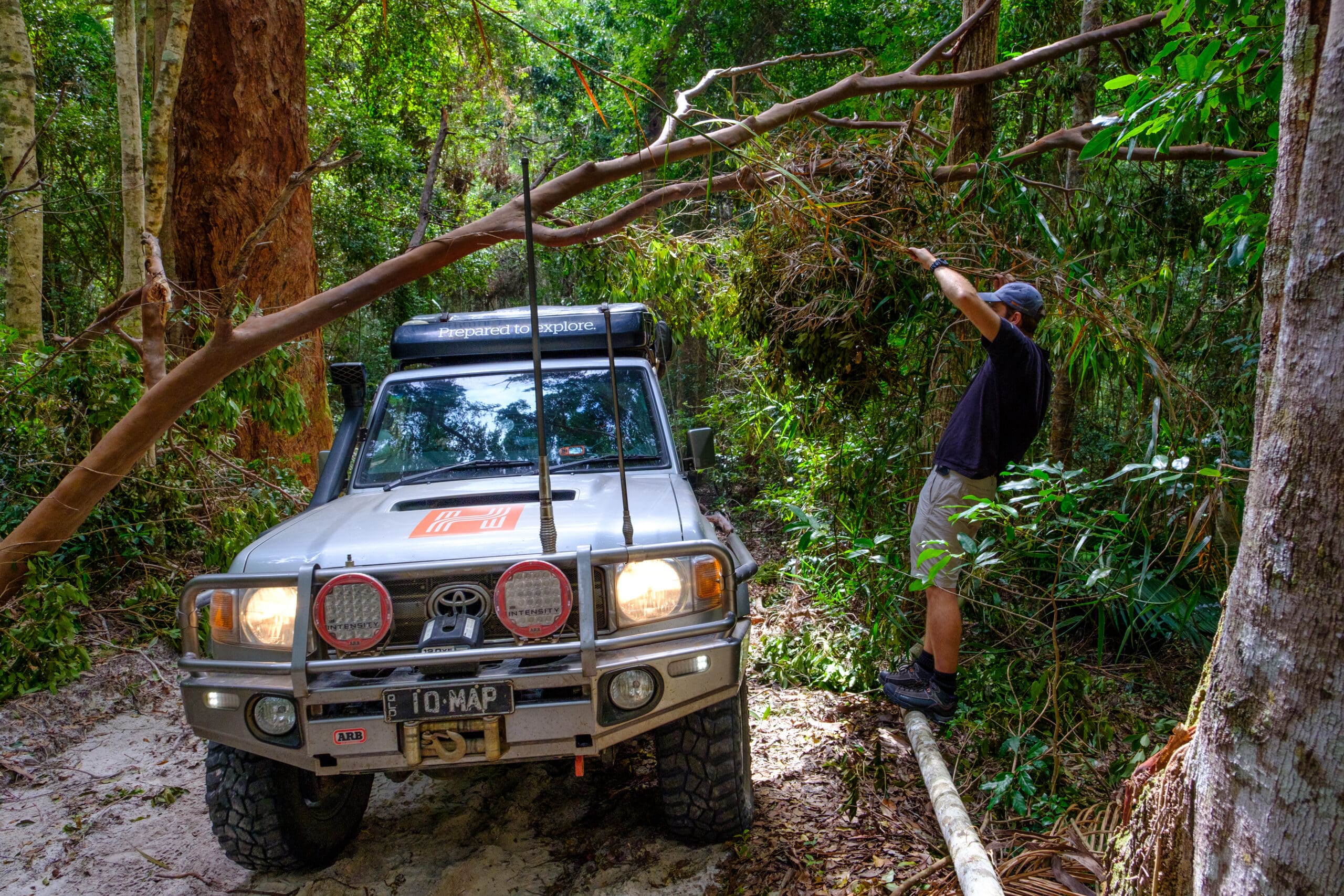
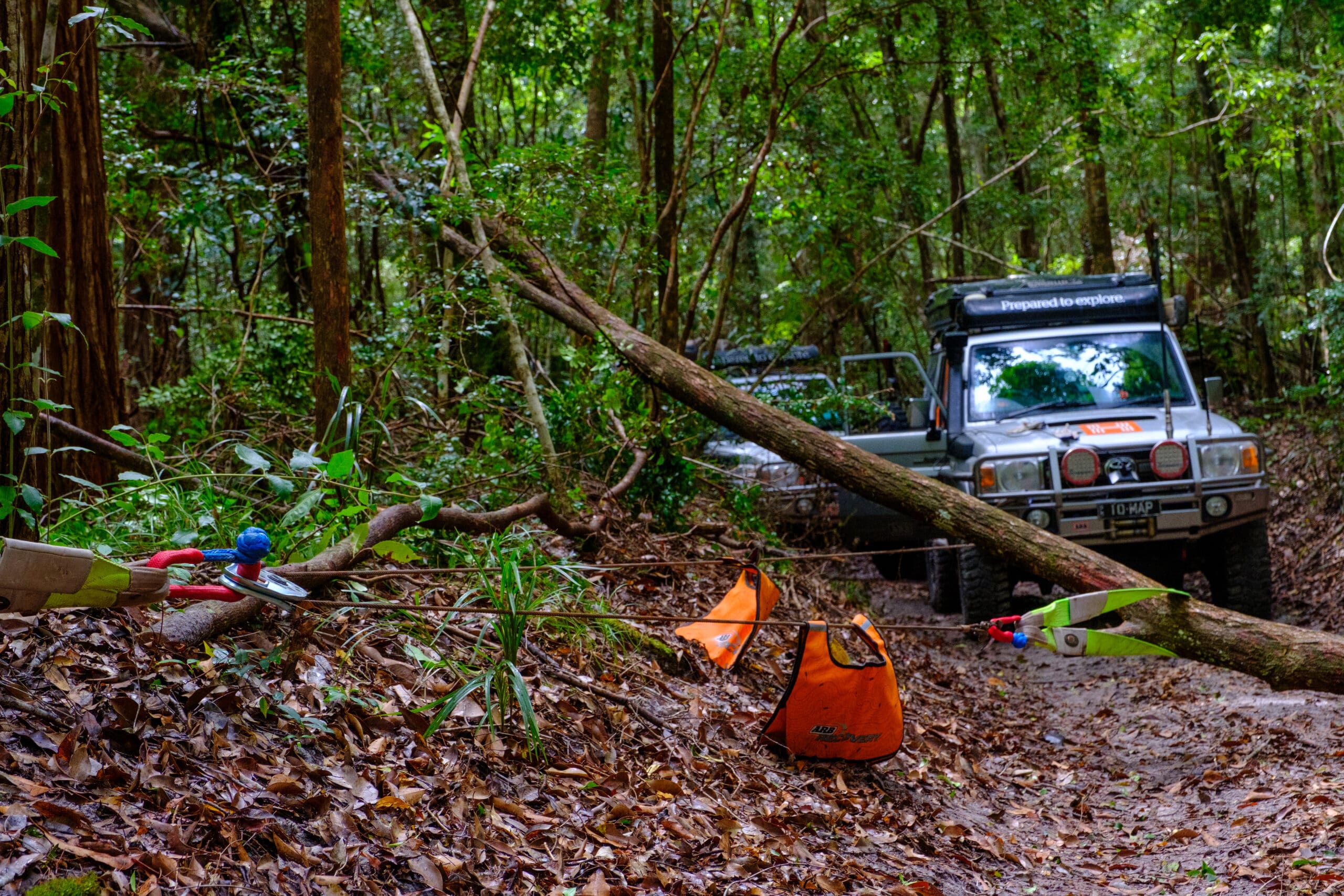
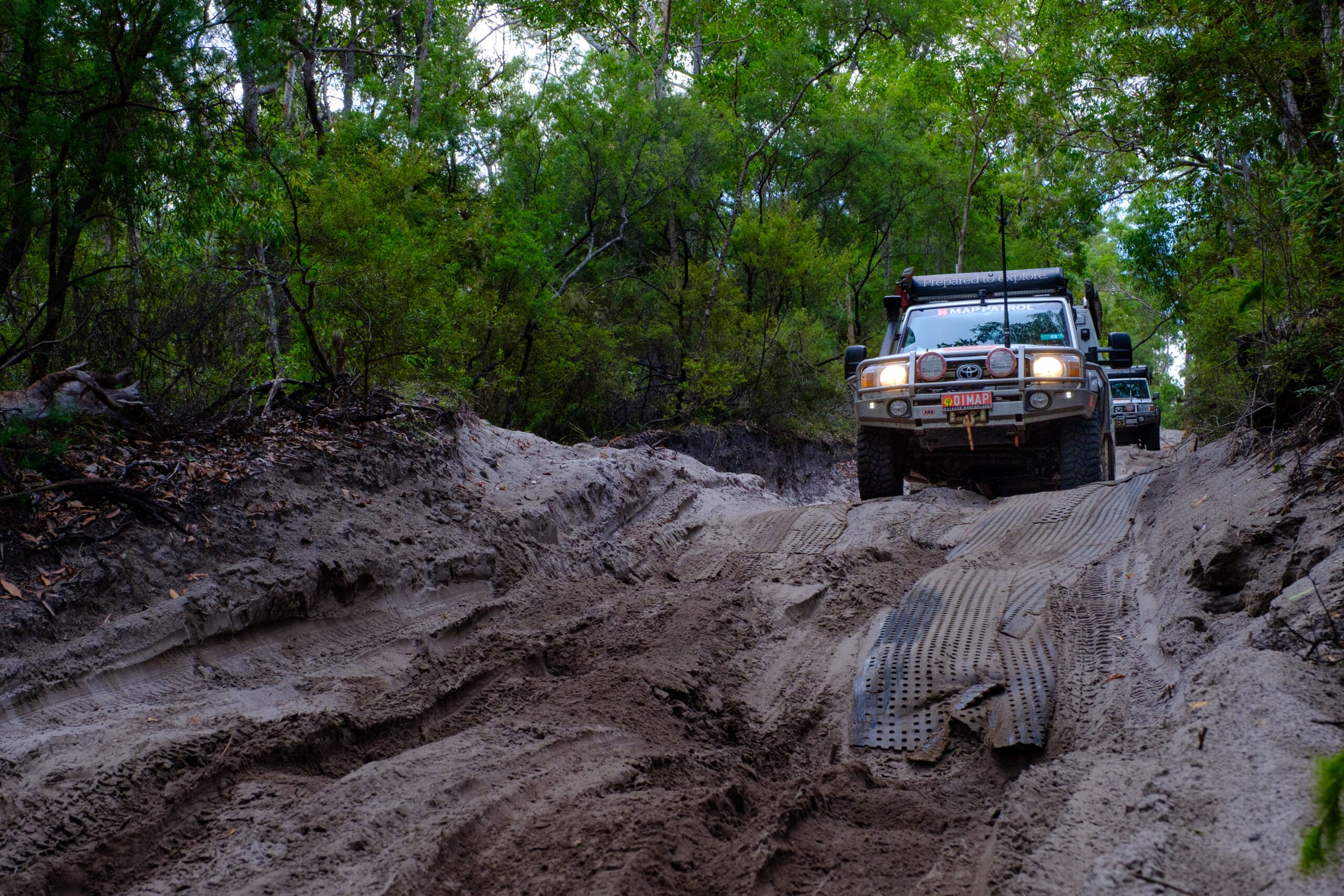
At first, the trail seemed fairly well maintained, its sandy surface reinforced with wooden beams, mats, and sheets of steel, but the farther we pushed into the green abyss, the more conditions deteriorated. Before long, our friendly two-track was narrow, off-camber, and full of washouts. Roots protruded from the sand like great blockades, and clusters of branches and ferns stretched out to bar our way. Hour after hour passed by, consumed by a low-range ballet of drivers carefully weaving through the undergrowth, passengers bending back branches, and everyone cutting away debris.
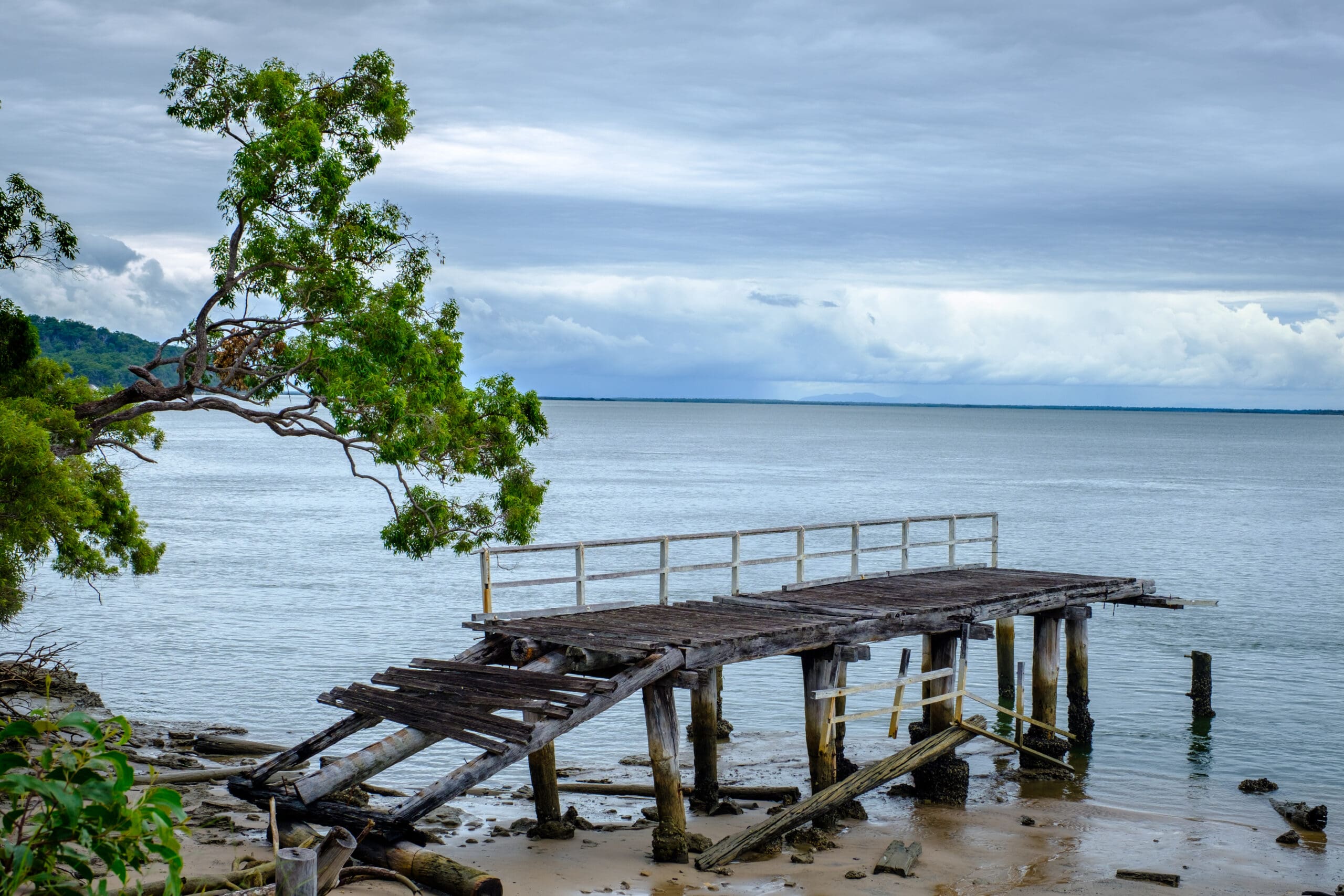
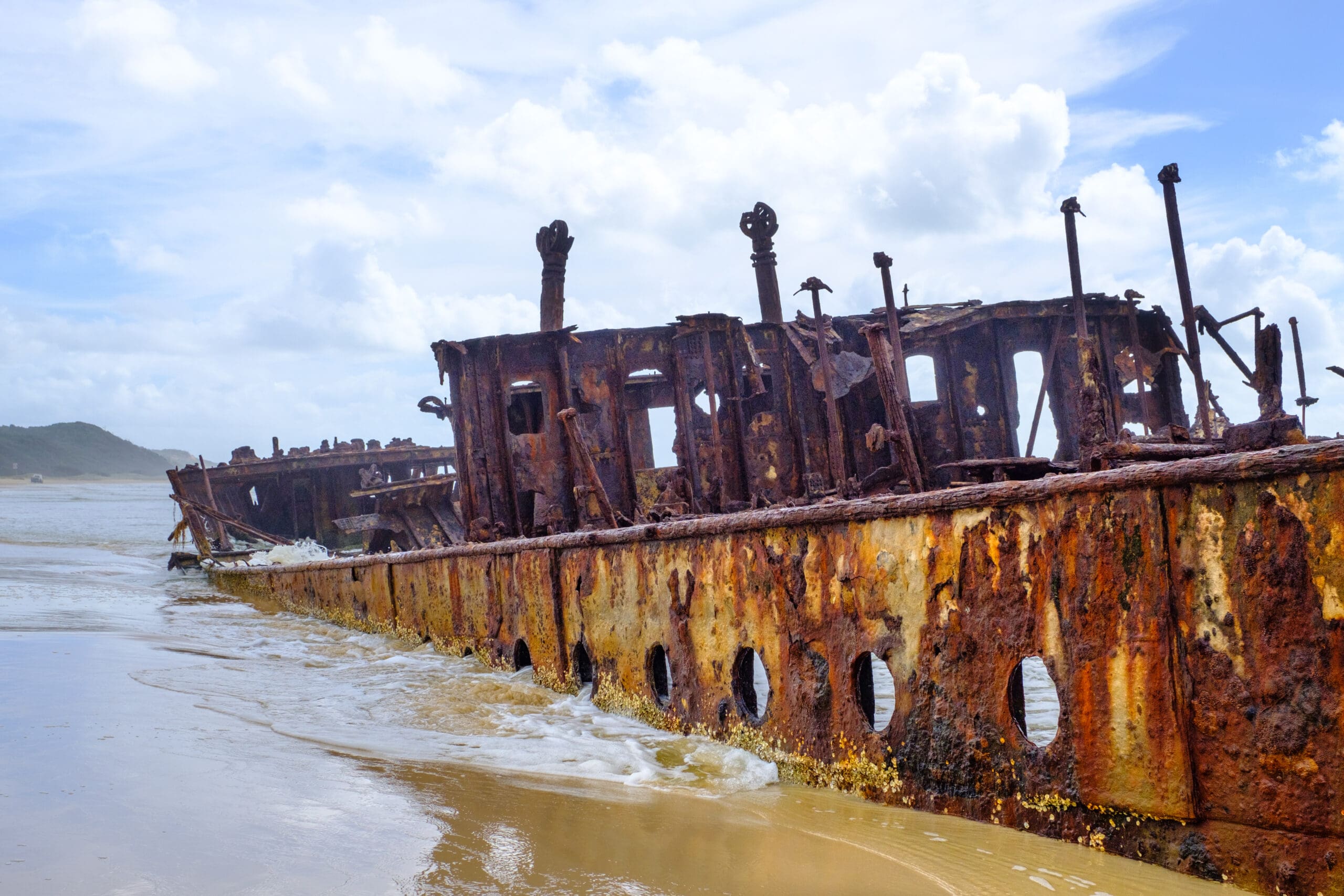
It’s amazing when you think about it. In the grand scheme of time, this road we were traveling was quite new, yet it was already fading back into the jungle. For all our might, we can never truly tame nature. It will reclaim its territory, and our roads, bridges, and buildings will crumble back to the dust from which they came. Driving across Fraser is a constant reminder of this. With each mile, you’re engulfed by encroaching flora, then, every so often, the island lifts its green veil, revealing a dilapidated image of our fleeting efforts. On the coast, we spotted the decaying form of a dock with great wooden pylons rotting beneath it. The pier hung eerily in the air, awaiting a ship that would never come, and passengers who would never depart. Here and there, old boat ramps and buildings were slowly being consumed, and we quickly discovered that not even our Land Cruisers were immune. The island seemed to reach out and grab them with vegetation, while roots and rocks beat on their tires, trying to slow the pace. Eventually, they succeeded, cracking a rear wheel and forcing us to replace it in the stagnant heat of the tropical climate. It would seem that for every ounce of beauty, this place has an equal amount of brutality. Nowhere is that more clear than on Fraser’s eastern shore, where the ghostly form of the SS Maheno comes into view.
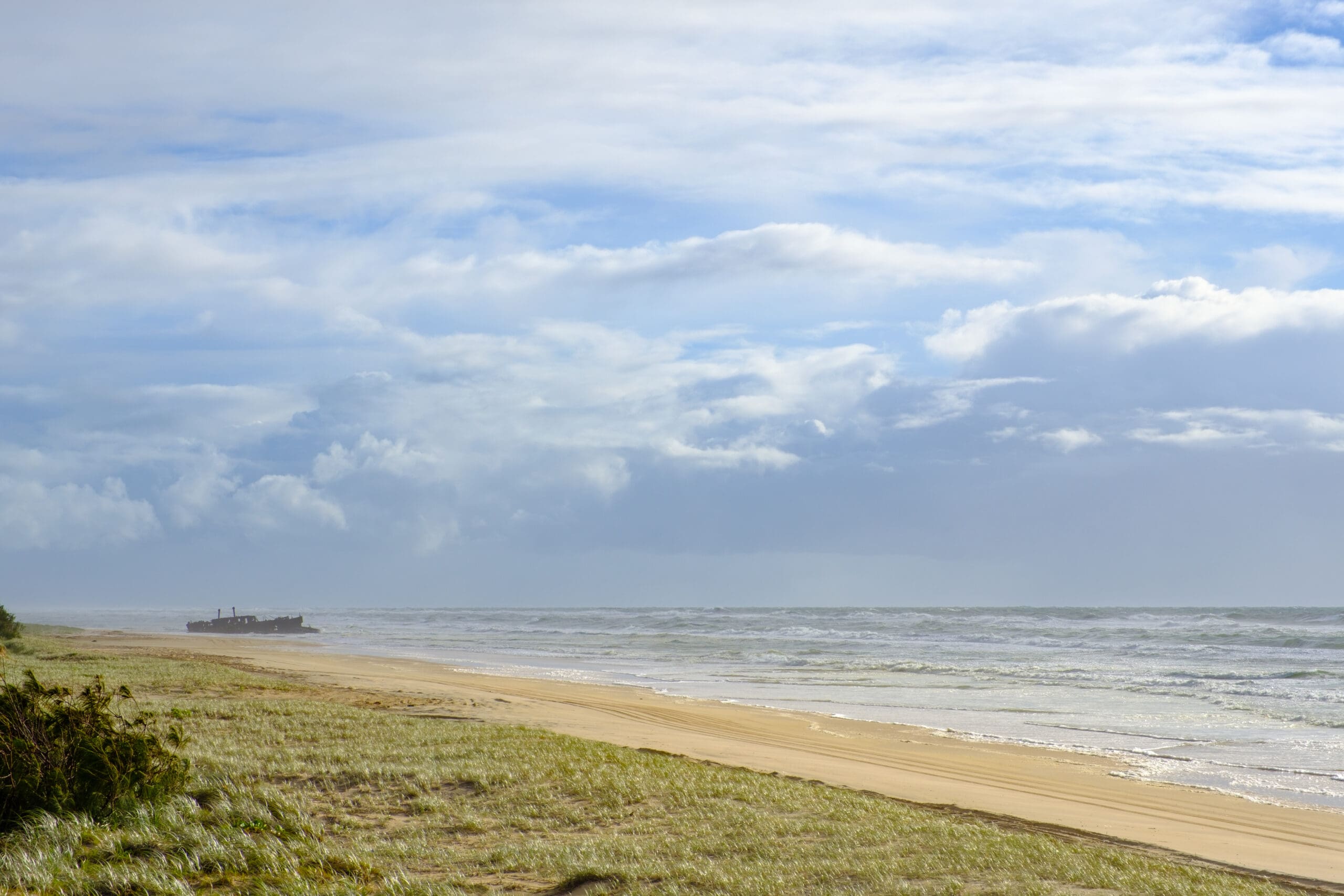
Once a glorious ocean liner hailing from New Zealand, the Maheno is now a rusting hulk, slowly disappearing into the sands with the tide. Built in a Scottish port in 1905, the ship spanned 400 feet from tip to stern and regularly carried passengers in opulent luxury around Australia, New Zealand, and even across to Canada. Of course, that all changed when WWI began. To support the Allies, it was modified into a floating hospital, serving worldwide until her eventual conversion back to a commercial liner in 1918. By 1935, the Maheno was nearing the end of its life and was sold to a new owner in Osaka, Japan, a sale that would lead to her demise.
On July 7, the Maheno was being towed when the cable snapped in the midst of a cyclone, breaking free from the other ship with eight men stuck aboard. It drifted into the storm and was lost from sight until an aircraft spotted the craft beached on the shores of Fraser Island three days later. Salvage efforts began, but after several failed attempts to refloat the vessel, the crew and owner surrendered to the island, and the Maheno was left to rot on K’gari’s shores. Today, its only passengers are the mussels that cling to the heavily oxidized hull, and the fish that dart in and out of the shattered portholes.
A Hidden Treasure
Our final camp wasn’t far off, a sandy cove tucked behind the crests of windblown dunes. We made our way to this sheltered spot in the failing light, and then hiked to the top of a hill to watch as the sun rolled beneath the waves. Looking down the beach at the Maheno’s shadowy relief, it suddenly occurred to me that this could be the last time I visit this island. I took a moment to soak in every detail, the rumbling crash of the distant surf, the lights of four-wheel drives flashing over the beach, and the caws of tropical birds overhead. I thought of the misty creeks we had crossed, the impenetrable jungles filled with a cacophony of birds and insects, and, of course, the clarity and majesty of the freshwater lakes. For some, this place will always be just a beach, a place to rip around in their trucks and drink beer on the weekends. Little by little, though, others are beginning to see K’gari for what it is—a tropical wonderland, a place to be treasured, and as the Aboriginal people always knew, a paradise.
Our No Compromise Clause: We do not accept advertorial content or allow advertising to influence our coverage, and our contributors are guaranteed editorial independence. Overland Collective may earn a small commission from affiliate links included in this article. We appreciate your support.
