
Overlanding has always benefited from adjacent markets, with many attributes and needs shared across backpacking, fly-fishing, military, hunting, fishing, and adventure travel. These categories can introduce solutions from the incubation of fresh perspectives. As Clay Croft and I were driving down the length of West Africa, I took note of the thoughtful features on the sun visor organizer. It was a product we had used daily during the trip, managing documents, Sharpies, toll receipts, and even a few tickets awarded from questionable infractions. Clay asked what I thought, and my enthusiasm was evident—“It is so useful!”
Little did I know that Clay had launched a plan to bring a series of accessories to the overland community, designed and manufactured in partnership with Fish Hunt Fight (FHF), a premium equipment brand out of Bozeman, Montana. The FHF story is compelling. Founder Paul Lewis spent 20 years with the Gallatin County Sheriff’s Office, rising to team leader of its multi-agency Special Response Team. He is also an avid outdoorsman, hunter, and overlander, committed to solving the unique challenges across multiple disciplines. And all this gear is designed and built in the United States.
One of the most important considerations for a vehicle build is loading and lashing: making sure that everything has its place, is easily accessible, and is secured in the event of a rollover or accident. This is a discipline that Clay has refined while circumnavigating the globe, often living and working out of a 4WD for months at a time. There is nothing more frustrating than misplacing your passport or not being able to find the winch controller—the new Drive Line from FHF and XOVERLAND was designed to address just that.
The Bulkhead ($105)
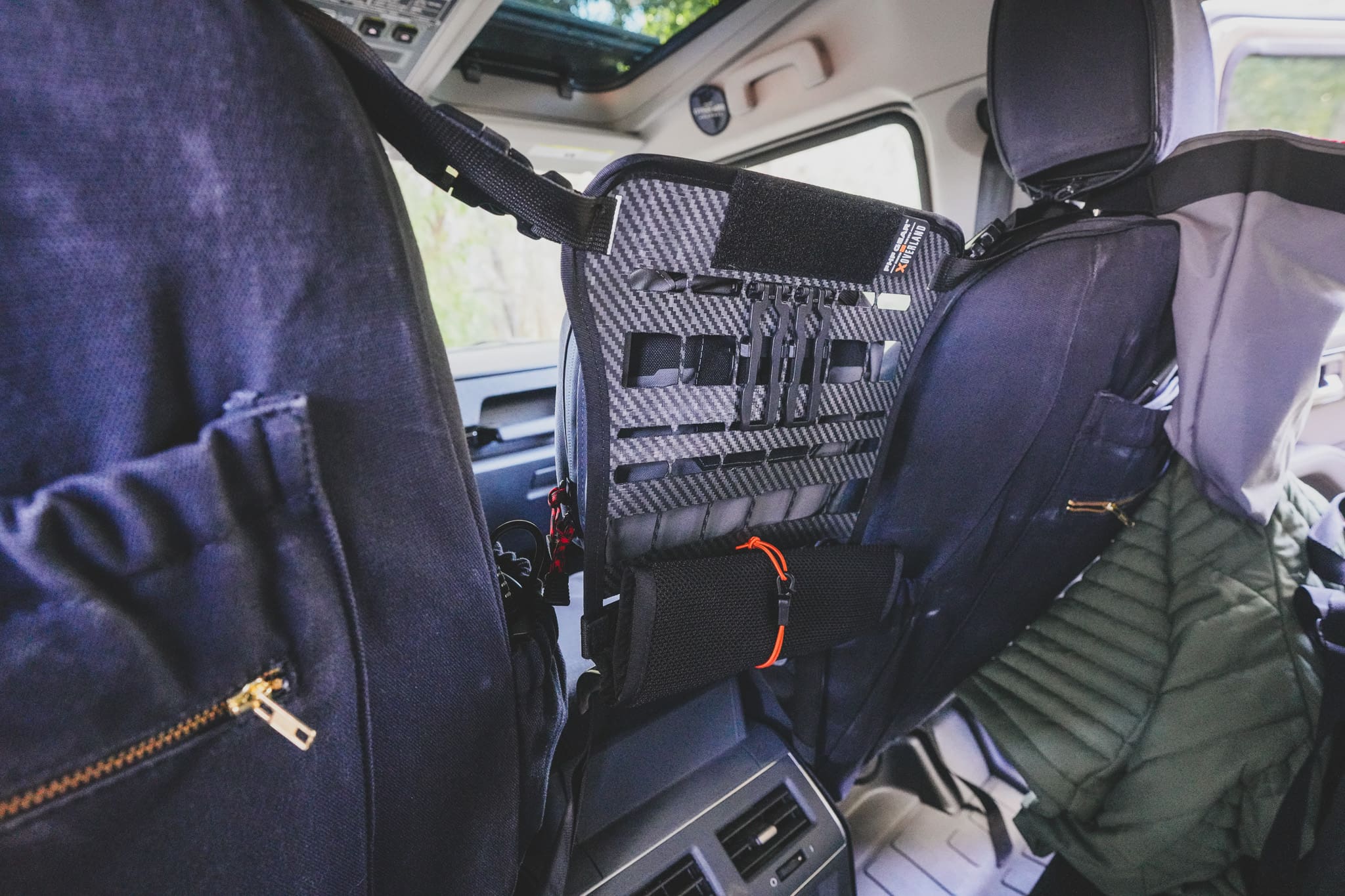
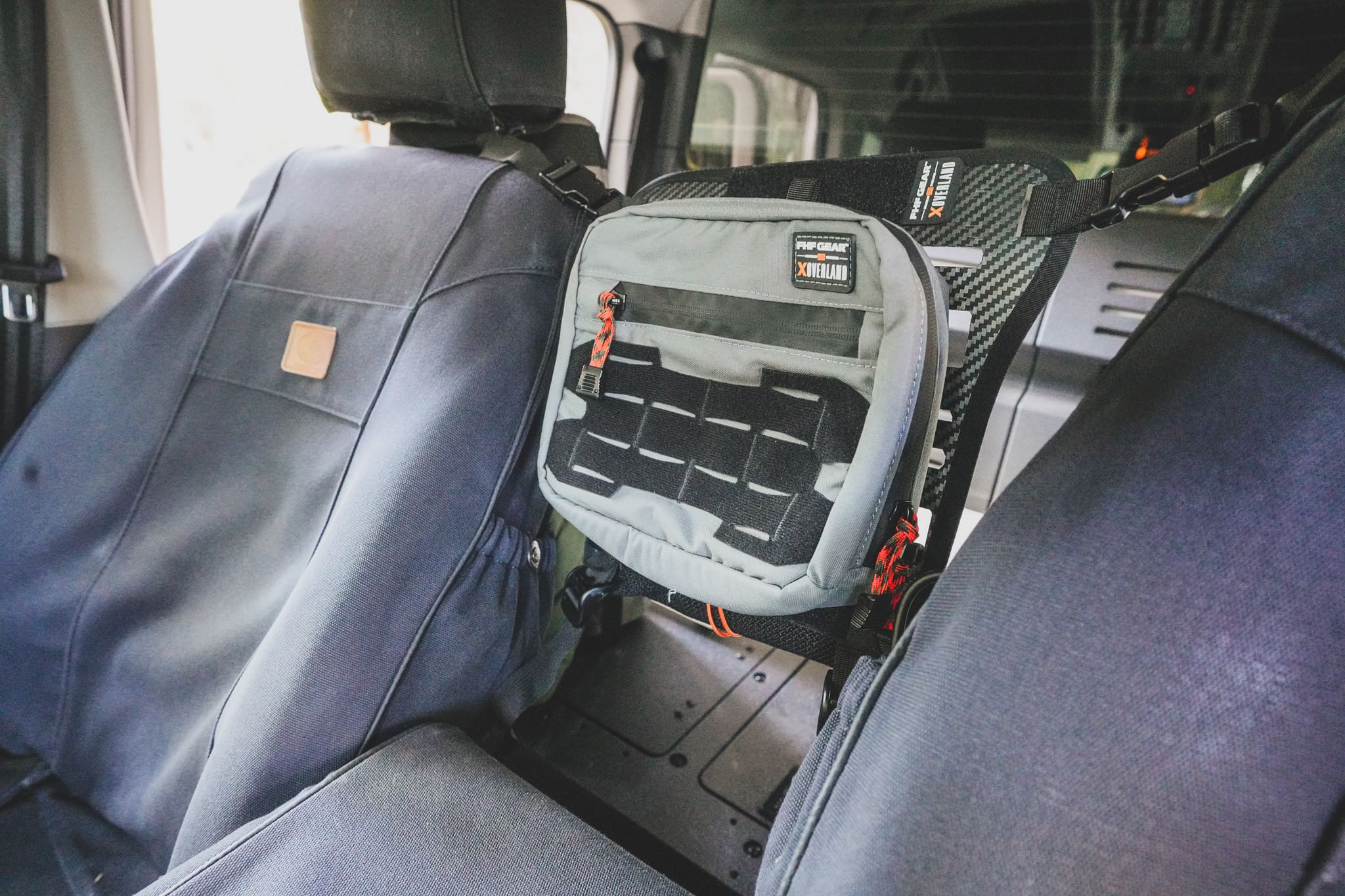
The Bulkhead is the foundation of the system, mounting between the two front seats and anchoring to the seat rails and headrests with multi-point nylon webbing, Duraflex buckles, and coated aluminum hooks. The panel is a semi-rigid woven thermoplastic composite with a laser-cut MOLLE grid, stiff enough to carry loaded pouches without sagging on washboard. It is offered in two sizes: the mid-size version is 12 inches wide and 10.5 inches tall at 10 ounces, and the full-size version is 15.5 inches wide and 10.5 inches tall at 12 ounces. A removable mesh stash pouch is included, and the Waypoint GP clips directly to its face. In use, it works as a barrier between the cab and the rear seats, keeping gear (and the dog) where they belong under hard braking. The one compromise is that reclining either seat while the Bulkhead is installed can be difficult while underway and can put excessive strain on the buckles if the occupant is unaware. Fortunately, unclipping the top buckle solves the problem quickly.
The Quick Cache ($75)
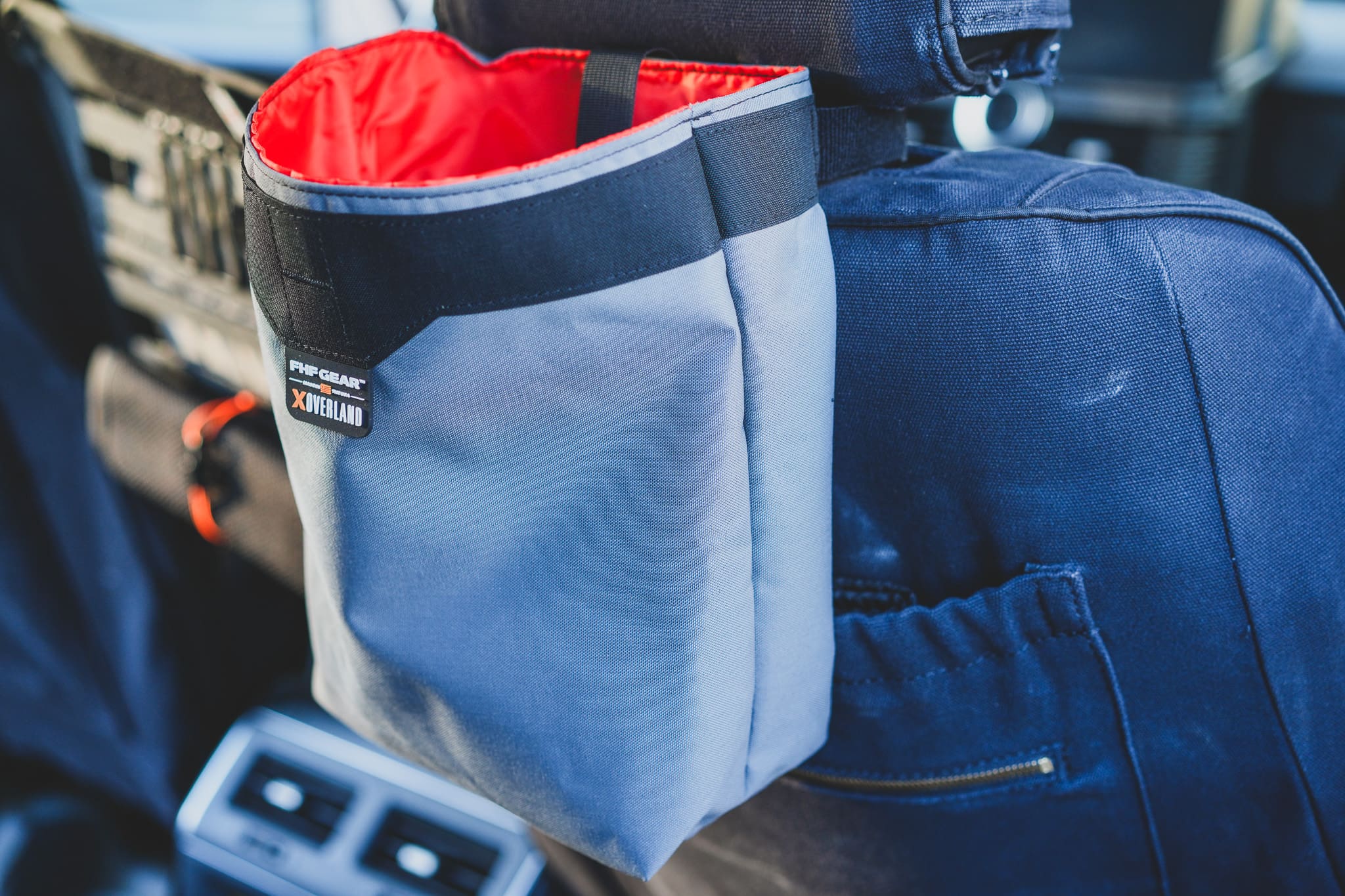
The Quick Cache mounts to the back of a headrest with hook-and-loop straps, or to any soft MOLLE panel using FHF’s Snapcor buckles. When not in use, magnets hold it rolled flat against the seat, and it deploys in one motion into a 300-cubic-inch bucket with a semi-rigid opening. The exterior is water-resistant 500D Cordura, the interior is 200D nylon pack cloth, and the lining inverts for cleaning, which matters after a few weeks of dust and spilled trail mix. It measures 8 inches wide, 10 inches tall, and 4 inches deep, and weighs 4 ounces. Mine lives behind the passenger seat, and it is where the drone and controller go between flights or it can also fit my camera with most lenses (that is how I used the cache in Africa).
The Horizon ($85)
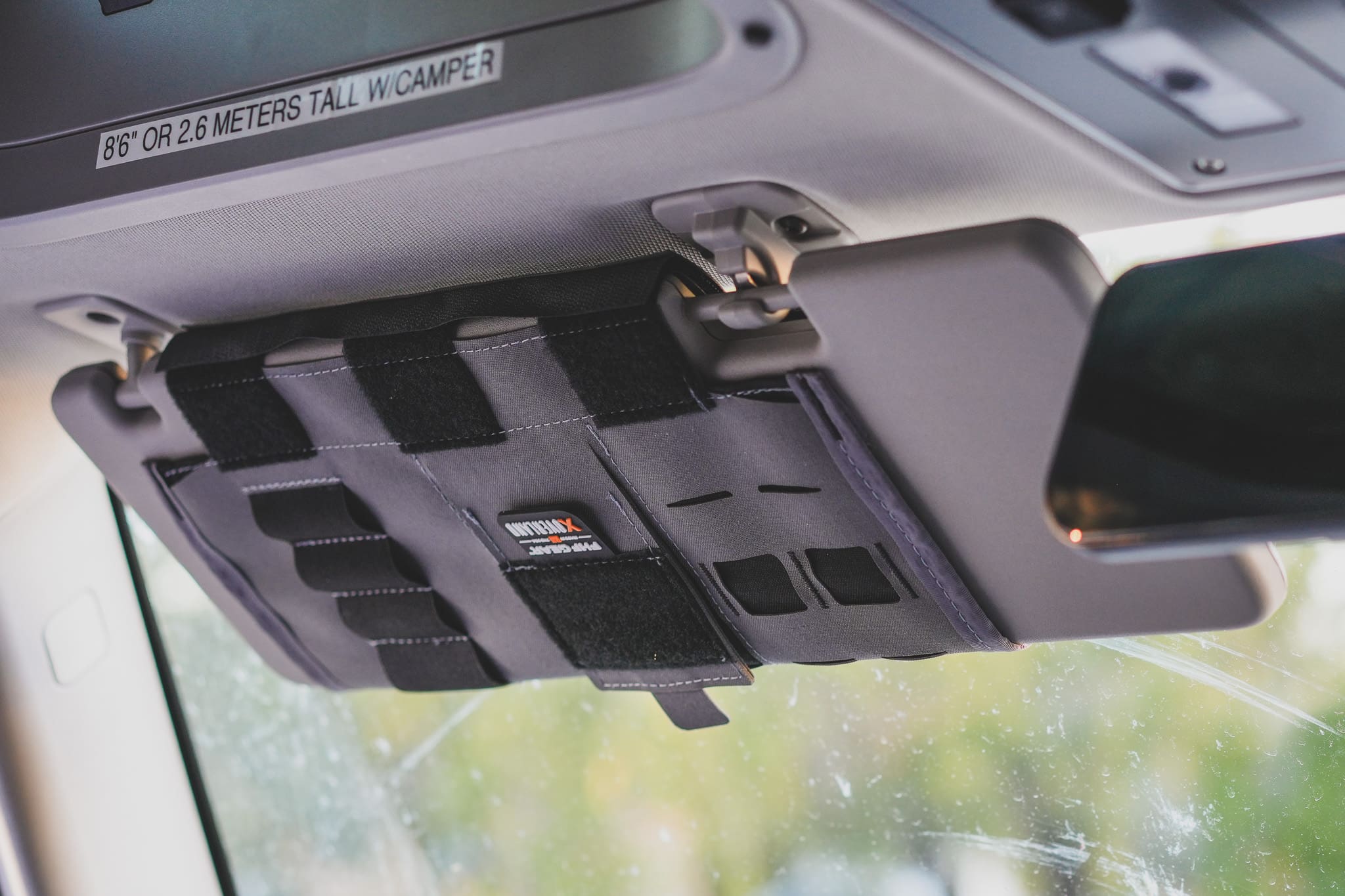
The Horizon is the visor organizer that started the conversation with Clay, and its design draws directly from law enforcement patrol vehicle setups. It wraps the sun visor with hook-and-loop straps, sitting flush to eliminate bounce, and fits visors between 6 and 9 inches tall. The face is laser-cut laminate with two MOLLE panels, a loop panel for patches or hook-backed organizers, a magnetic flip-down card organizer, four elastic loops, and a clear vinyl window. It measures 13 inches wide and 5.5 inches tall and weighs 5 ounces. Mine carries the registration, insurance card, and other vehicle documents behind the window, with Sharpies and pens in the loops and a field notepad tucked under the hook-and-loop panel for analog notes. At a border post or police checkpoint, having those documents in hand without digging through the glove box makes a difference.
The Waypoint GP ($135)
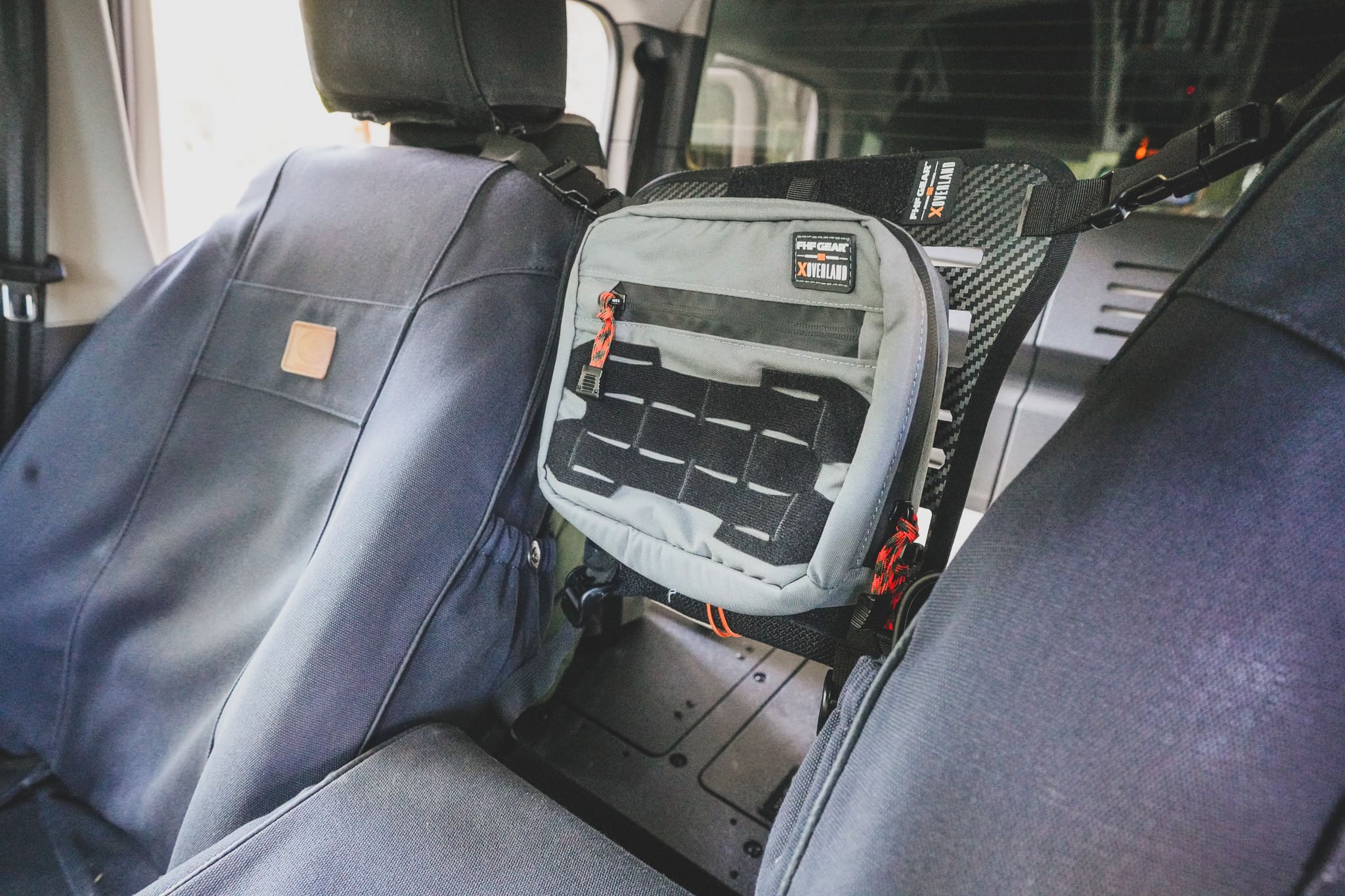
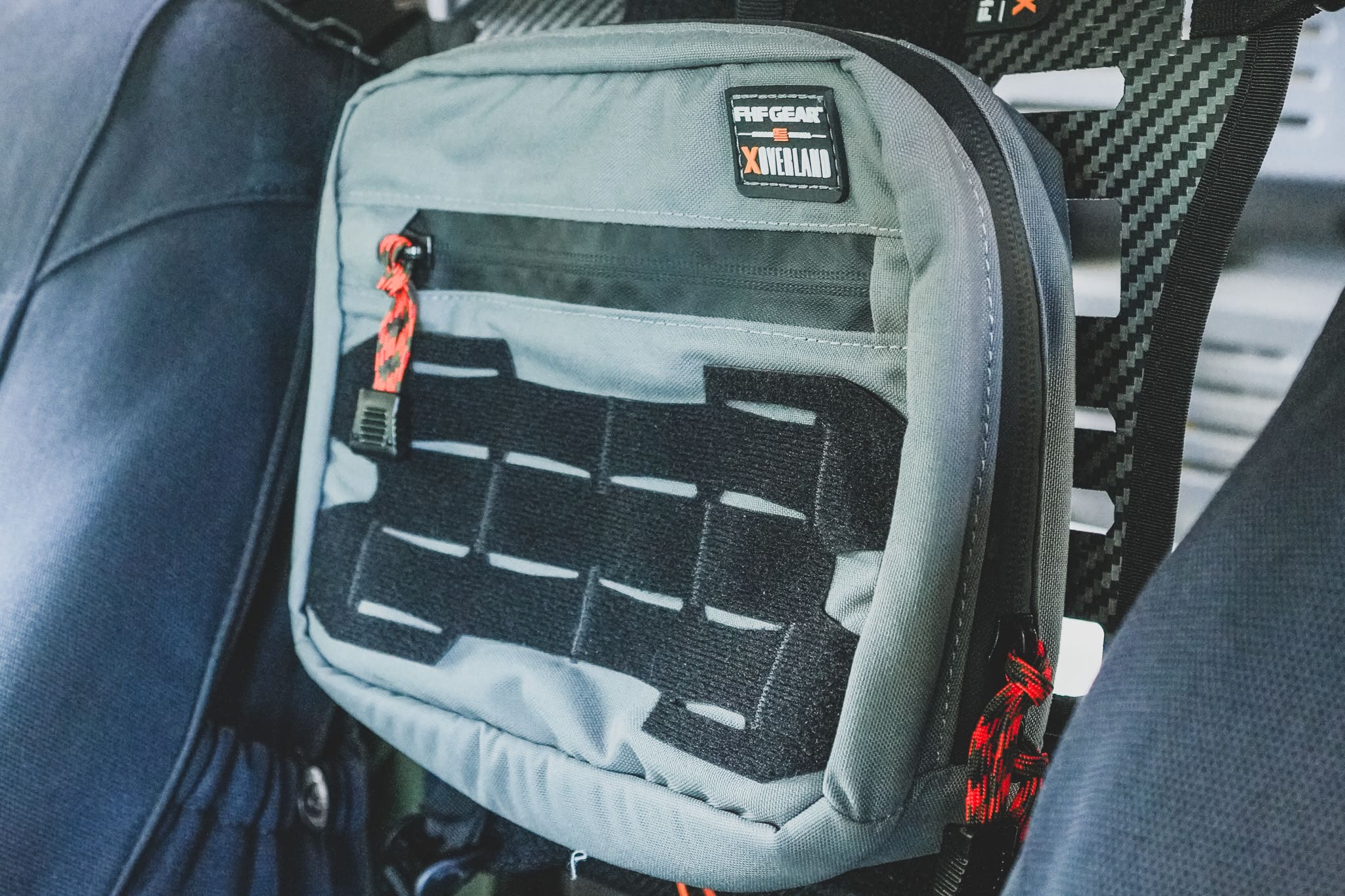
The Waypoint GP is a general-purpose pouch that clips to the face of the Bulkhead with FHF’s Snapcor buckles, which carry a 67-pound load rating and fit any two-column MOLLE panel. Mounted between the seats, it is accessible from all four doors, and it releases quickly (though not with gloved hands) when it needs to come with me. The shell is 500D Cordura with YKK AquaGuard zippers on both the main compartment and the front pocket, glove-friendly cord pulls, and laser-cut MOLLE on the face. Inside are two zippered pockets, mesh dividers, and a loop lining for hook-backed organizers. It measures 9 inches wide, 7 inches tall, and 3 inches deep, and weighs 11 ounces with the buckles. I use it for the winch controller and the tools I reach for most, which means the controller is always in the same place. I’d like to see a version without the MOLLE panel on the front to minimize the tactical styling, but this was an easy fix with a few fun patches.
The Stage Tote ($225)
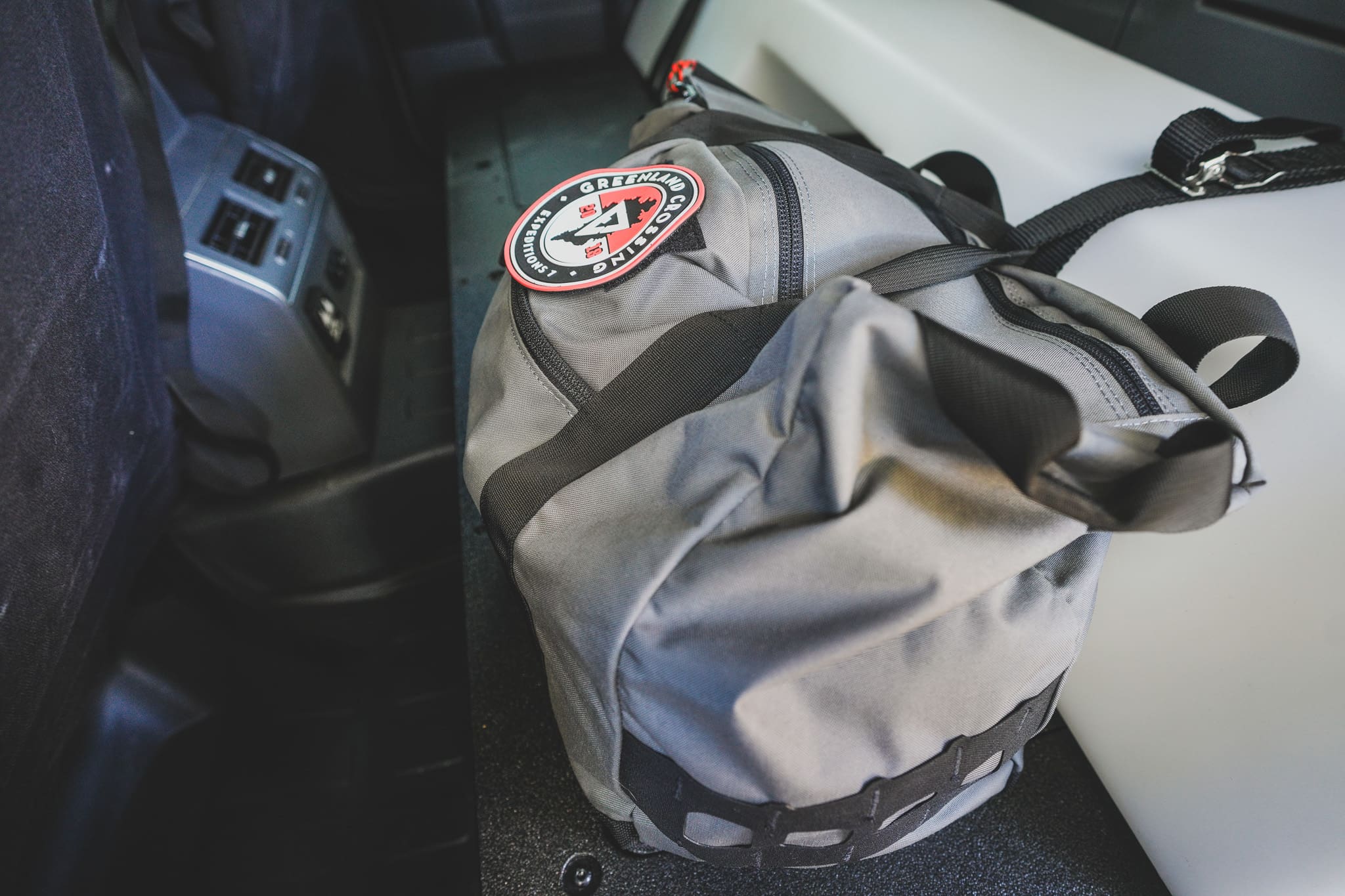
The Stage Tote is the largest piece in the system, a 33-liter tote built from 500D Cordura with a 200D nylon pack cloth lining and a cross-linked polyethylene foam bottom that adds structure and protects the contents. The wide, dual-zippered opening makes it easy to see and reach everything, and there are two external zippered pockets, an internal sleeve that keeps a water bottle upright, and laser-cut MOLLE points for additional pouches. It measures 12 inches wide, 17 inches tall, and 10 inches deep, and weighs 1 pound 5 ounces. FHF designed it to stage gear in the garage and carry it straight to the vehicle or camp. I packed mine with recovery gear, which makes it simple to move from truck to truck. The bag swallowed all my standard getting-unstuck gear, including a winch line extension, a kinetic energy recovery rope (KERR), and a proper pulley block.
The Flex Med Kit ($275)
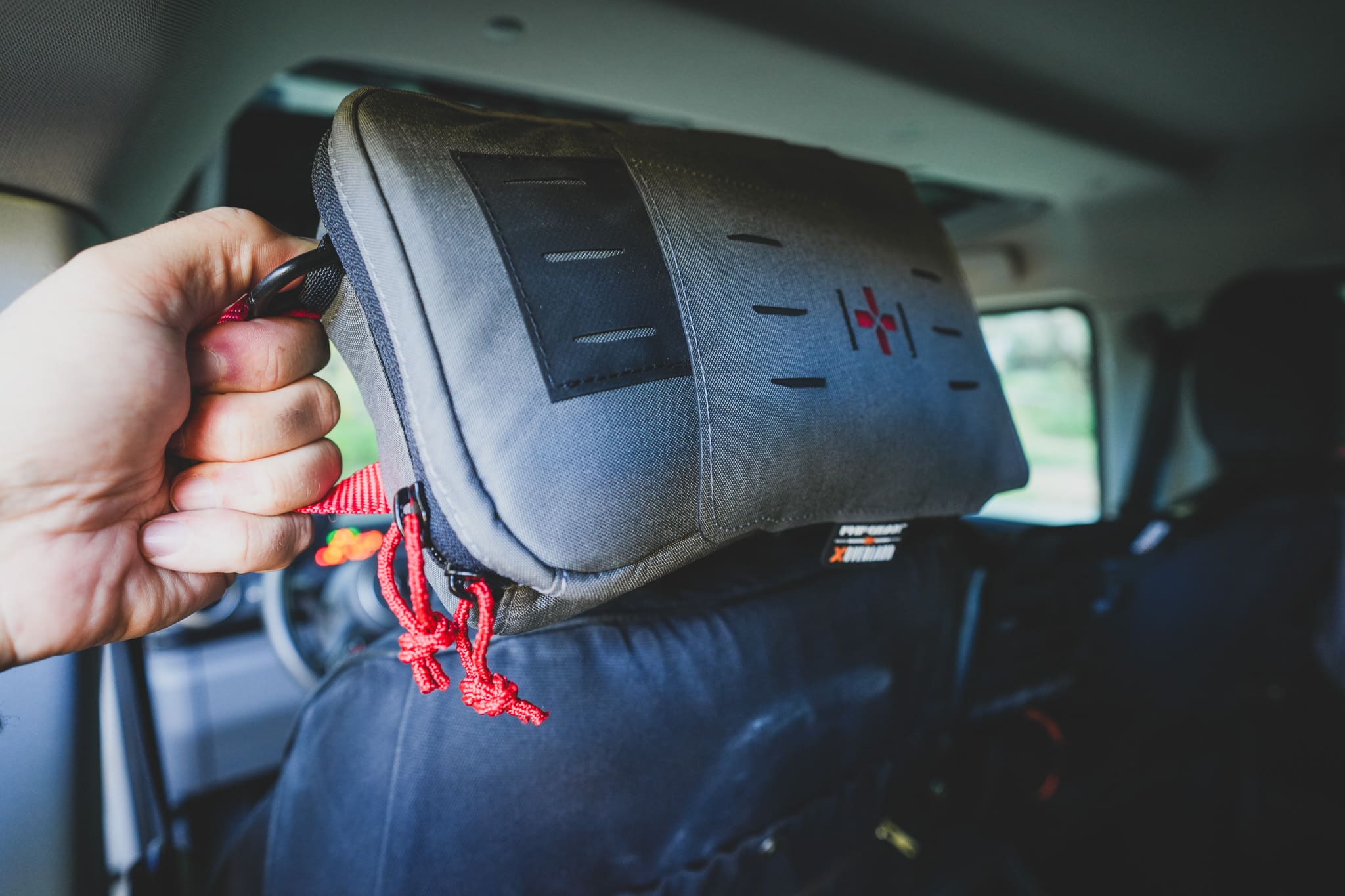
The Flex Med Kit is one of the highlights of the system. It mounts behind a front headrest with the included straps, or to the Bulkhead using the Snapcor buckles, and a high-friction HANK backing keeps it in place on washboard while still allowing it to pull free quickly. Red pull tabs on both sides make it ambidextrous, so it can be removed from either front seat, and a stowable shoulder strap converts it into a sling bag when moving on foot. The exterior is laser-cut laminate with MOLLE on the top panel for a tourniquet sleeve or secondary tools, and inside are a hook-and-loop tourniquet sleeve, an IFAK insert, and zippered mesh pockets. It measures 9 inches wide, 7 inches tall, and 3 inches deep, and weighs 1 pound 15 ounces when fully stocked. The pouch is sold empty, and I recommend adding the North American Rescue (NAR) Vehicle Med Kit ($125), which includes a C-A-T tourniquet, a QuikClot Z-Fold bleeding control dressing, NAR wound packing gauze, a Persys 4-inch emergency trauma dressing, a HyFin Vent chest seal twin pack, a Super XL dry sterile burn dressing, a minor care bandage kit, and two pairs of responder gloves. On my vehicle, it rides on the driver’s headrest, but it should always be on the headrest of the occupant with the most emergency medical experience.
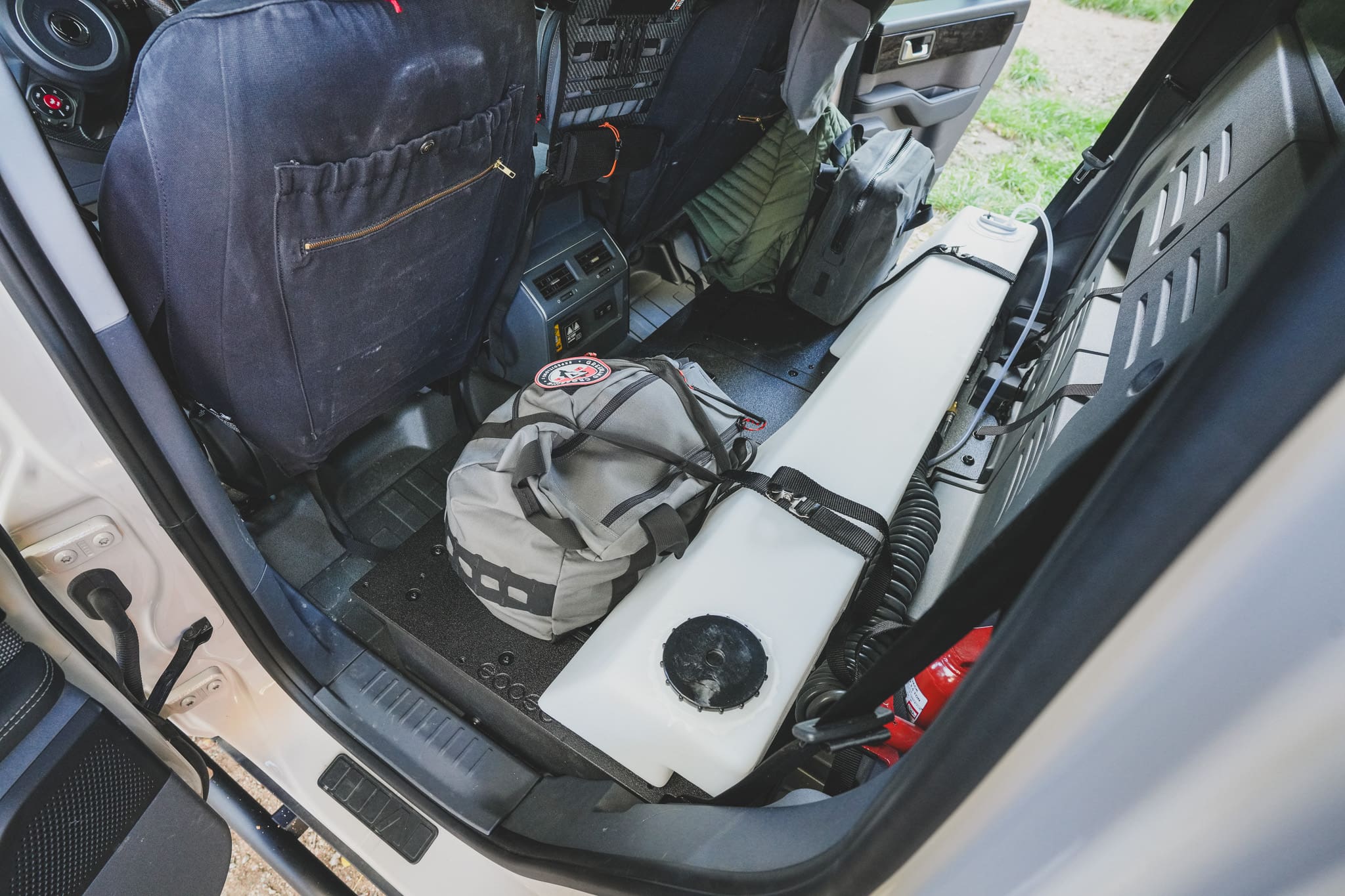
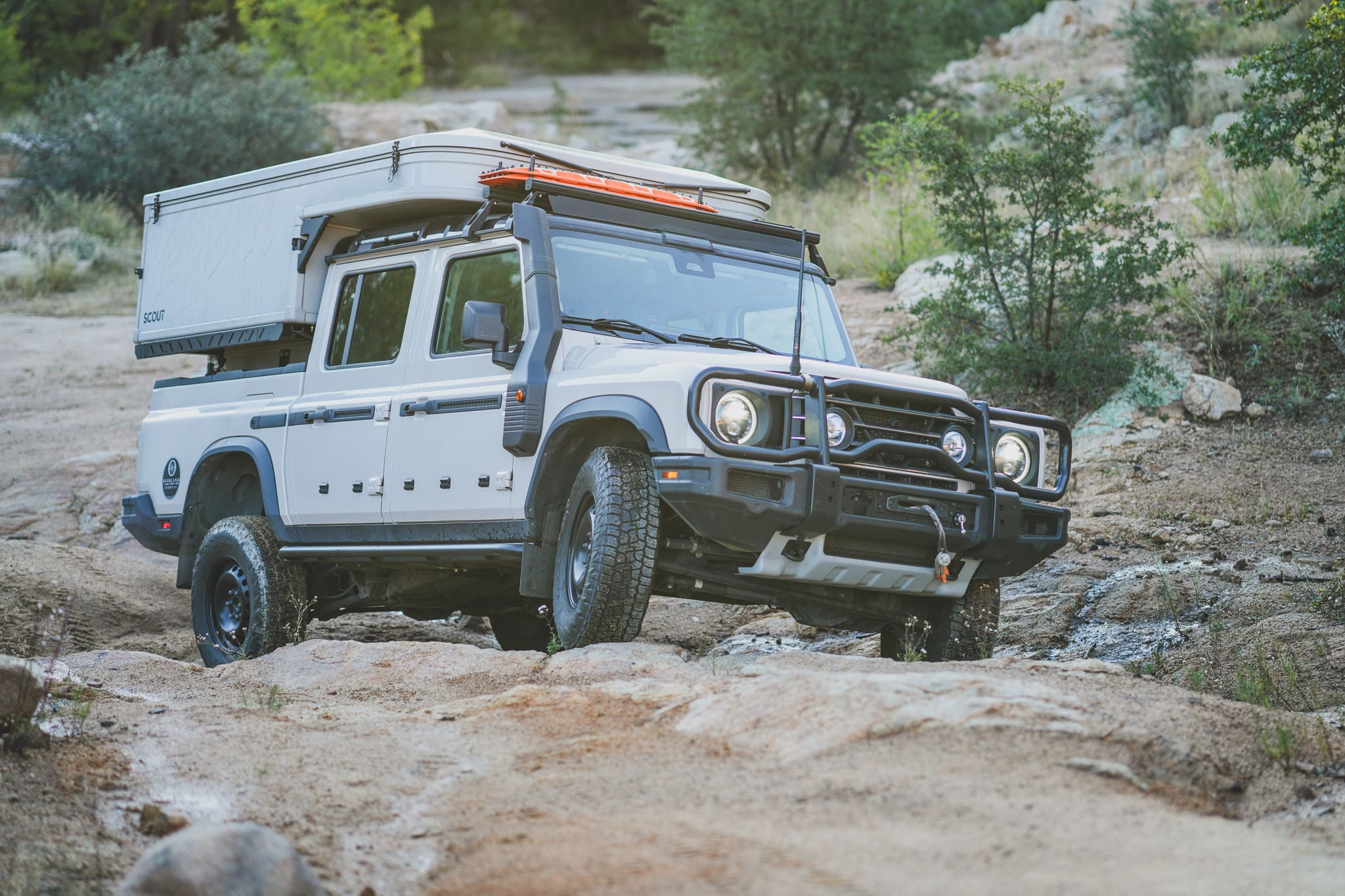
I have used a few of these pieces for months without a single failure, including the Quick Cache and Horizon across 16 countries. This gear is designed to be lightweight, durable, and functional. It also helps that FHF chose a neutral color (tacticool is worth avoiding in certain countries, trust me), and the gear looks great in a wide variety of vehicles. I installed all the pieces in the Quartermaster in about 15 minutes, then loaded my recovery gear in the Stage Tote. It lashes to my Goose Gear system and keeps everything close at hand. My criticisms of the kit are limited, but we will report back after a long-term test. It is exciting to see Clay translate so many of his lessons learned on the road into new products and innovations. You can find more information on FHF and the Drive Line here