

To honor the 20-year anniversary of Overland Journal, we are revisiting special heritage content in the upcoming 100th issue of the magazine. Originally published in Overland Journal’s Summer 2019 issue, this article is part of that celebration.
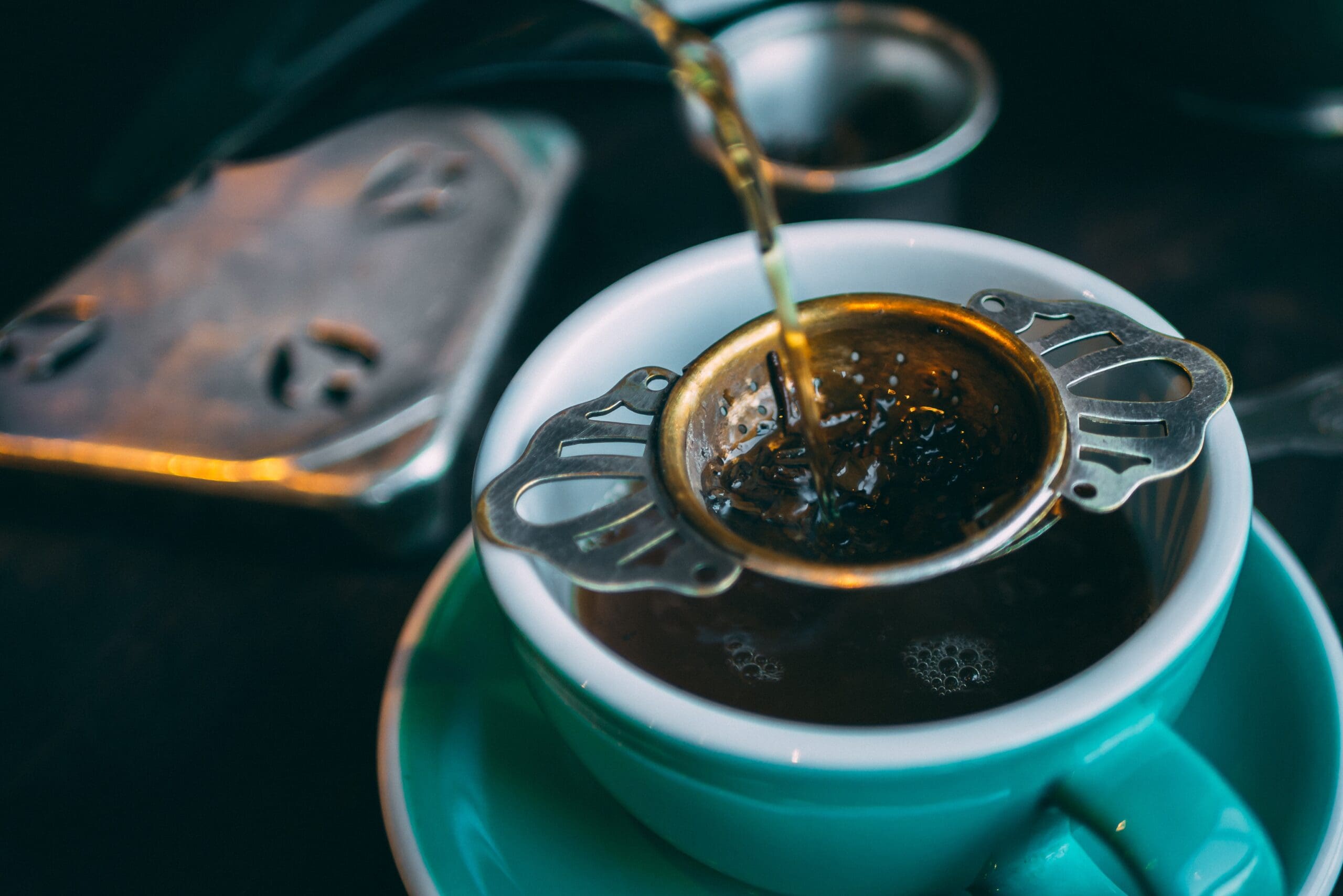
I’ve had a few travel dramas in my time, but on my latest journey, a serious misfortune occurred. The road trip was an impulsive decision; “Let’s drive to Portugal,” I said to my husband (motivated mainly by avoiding a long list of home improvement tasks), and within a couple of hours we’d thrown a few things in the back of the car and were bidding farewell to London, heading for the overnight ferry to France. It wasn’t until we were halfway across the English Channel that I realized my disastrous error. I’d forgotten the tea bags.
Ask any British traveler which “home comfort” item they always take on the road, and they will inevitably name their favorite brand of tea. And I have to admit that whenever I’m asked what I miss the most when away from home, a proper cup of tea is right up there with friends and family. But it’s not just a British thing. Although we are rightly known as a nation of tea drinkers, it has been a reassuring feature of my world travels to discover that we are not alone in our obsession. Certainly across Asia, North Africa, and the Middle East, chai is the liquid that accompanies and enhances every social situation, be it personal or business, with strangers or friends.
Wherever tea is drunk, its role is so much more than simple hydration. Like some kind of liquid magic, it simultaneously soothes and stimulates and is both warming and refreshing, making it the perfect beverage for all climates and times of the day. But it has a social, even spiritual function too. Tea is used to punctuate, ruminate, celebrate, and commiserate. From Britain to Japan to Morocco to China, nothing important, or indeed unimportant, can happen without tea—no work, social event, or business deal; in fact, no human interaction that lasts longer than a few minutes. The format may be different around the world: in Iran, it is drunk black and sweet in tiny glasses; in Morocco, it is made with mint; and in England, it is served with milk (much to the horror of just about every other tea-drinking nation).
Although we Brits now claim tea as our national drink, it is the Chinese we should thank for its discovery. Legend has it that in 2737 BC, Emperor Shen Nung, also a renowned herbalist, was sitting underneath a Camellia sinensis tree while his servant boiled water for him. A few leaves drifted off, landed in the boiling water and behold, the world’s first cup of tea was brewing. Whether there is any truth in this, we shall never know, but we do know for sure that tea containers have been found in tombs dating from China’s Han Dynasty. Shortly after this, Japanese Buddhist monks studying in China acquired a taste for the local brew, bringing it back home with them, which in turn led to the creation of Japan’s famous tea ceremonies. It wasn’t until the Dutch and Portuguese began trading in the Far East in the 16th century that tea appeared in Western Europe, and even then it was a rare delicacy—a drink only for the wealthy due to its high price.
In typical imperious style, the British were late to the (tea) party and then commanded total domination. The British East India Company had a monopoly on importing goods from outside Europe and in the mid-17th century began shipping tea back home to a population which until that time were a nation of coffee drinkers. In 1658, the first advertisement for tea appeared in a British newspaper. Available for purchase in a London coffee house, it was referred to as the “China drink, called by the Chineans, Tcha, by other nations Tay, alias Tee.” London’s coffee houses were upmarket establishments where men discussed business and politics, while women were more likely to be found drinking their tea at home. In this era of exploration and discovery, tea brought a whiff of Eastern exotica to gloomy, grey London. It was still the preserve of the upper classes, partly due to its prohibitive cost, but it was beginning to be seen as aspirational, having been given a royal endorsement by the wife of Charles II, a Portuguese princess and tea addict. Now every social climber wanted to be a tea drinker, and the East India Company began shipping it in as fast as the Chinese could pick it and pack it. Our national drink had come home.
One of the main reasons for the high price of tea was the crippling tea tax charged by the British government. And like any expensive and desirable commodity, it didn’t take long for a black market to emerge. Tea smugglers cashed in on the new craze, creating a vast organized crime network, at one time illegally importing 7 million pounds of tea into Britain in one year. As with any illegal drug trade, the quality of the tea suffered as the smugglers strove to increase their profits, “cutting” the pure tea with other leaves and even sheep’s dung to make it look more convincing. In 1784, in a progressive move, the new British Prime Minister William Pitt the Younger slashed the tax. No more clandestine deals in dingy alleyways for British tea addicts. Legal, quality tea was suddenly affordable to the masses, the national addiction boomed, and the smuggling ended overnight.
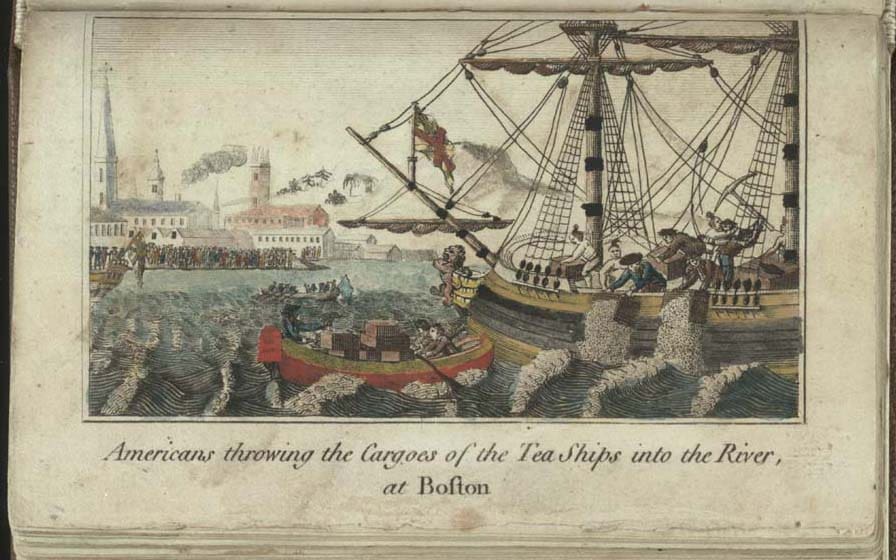
But trouble was brewing across the Atlantic. The British had the whole trade sewn up in their favor with the Tea Act, which allowed them to ship tea into America (still a British colony in those days) without paying tax, thereby undercutting local tea merchants. The result of this dissatisfaction was the famous Boston Tea Party protest. Amid cries of “No taxation without representation,” angry American merchants boarded the British tea ships and threw the containers of tea into the Charles River. It was the catalyst for the American Revolution. And frankly, you’ve never been able to get a decent cup of tea there since.
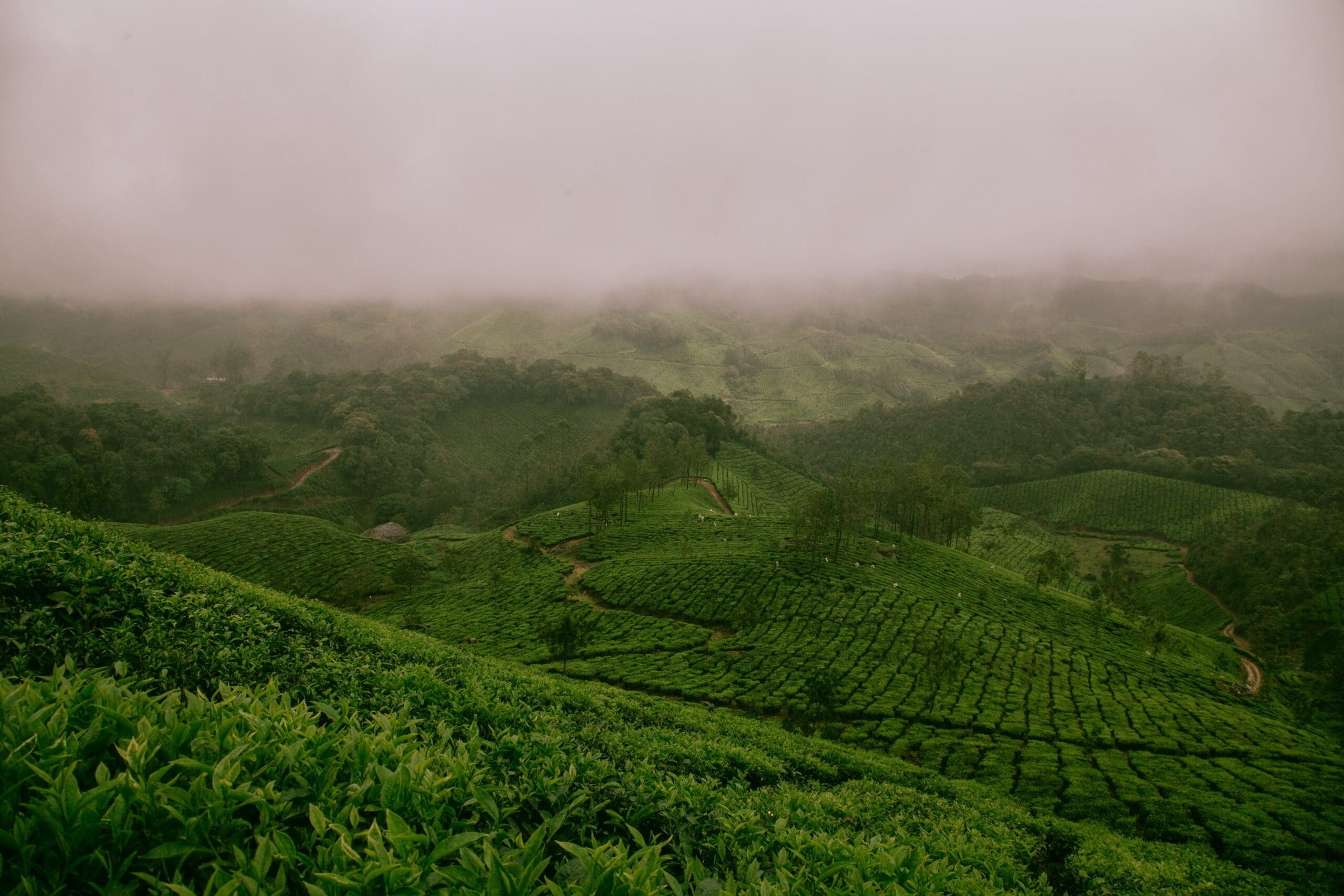
Back home, millions of British citizens were now consuming an average of a pound of tea a year. The British government, keen to maximize the potential of this booming and fashionable trade, decided to break China’s monopoly and set about creating their own plantations and tea trading posts in the colonies of India and Ceylon (now Sri Lanka). The Chinese guarded their trade secrets closely, so this mission was conducted by stealth. In 1848, Scottish botanist and plant hunter Robert Fortune was sent out to China on an undercover operation to acquire the mysteries of its tea plantations and factories. Disguised as a Chinese merchant in full Mandarin dress, Fortune travelled to remote parts of the country, often where no European had ever visited, undertaking what we would now call corporate espionage. His mission, as instructed by the British East India Company was to not only glean the heavily guarded secrets of tea growing and processing but to steal the plants and seeds, technically the property of the Chinese Empire.
In 760 AD, Chinese writer Lu Yu wrote the first poem about tea, the “Ch’a Ching” or “Classic of Tea,” and it was with his words in mind that Fortune embarked upon his assignment.
The best quality tea must have the creases like the leather boots of Tartar horsemen,
Curl like the dewlap of a mighty bullock,
Unfold like a mist rising out of a ravine,
Gleam like a lake touched by a zephyr,
And be wet and soft like earth newly swept by rain.
Fortune’s black ops mission was successful. He returned with his illicit acquisitions but also the alarming discovery that the Chinese had been adding poisonous chemicals to the tea bound for export, not out of malice but to add color, as they believed this to be to the tastes of the Western market. This discovery made an even stronger case for creating a 100-percent British-owned and controlled tea industry, and soon the Indian provinces of Assam and later, Darjeeling became home to vast tea plantations under the control of the British Empire. Meanwhile, back in Britain the average annual tea intake had risen to 6 pounds per person. Business was booming.
With this new supply and demand came the age of the tea clippers: fast, sleek, triple-masted sailing crafts that could outrun the old trade ships. With the market no longer dominated by the Chinese, the tea trade became a free-for-all with British and American boats racing to be the first to deliver their cargo from the Far East up the River Thames and into the Port of London. Tea became the first internationally traded commodity, and England’s capital city was the center of the action, home to the quarterly London Tea Auctions. These were loud, raucous affairs that took place at the headquarters of the East India Company. The tea prices were set “by the candle”— the auctioneer would light a candle at the start of each lot, the riotous bidding would commence, and the final price was decided by the moment the candle burned out. Tea was sent from China, India, Ceylon, and Africa for the sale, and by the 1950s, a third of the world’s tea was sold at the auction. Apart from breaks for both World Wars, the tradition lasted until 1998 when technological advances in commodity trading put paid to the need for a room full of clamoring businessmen.
With the British history of exploration and its role in the tea trade, it is no surprise that tea and adventure are inextricably linked in the national psyche. When Ernest Shackleton arrived in Antarctica, he made a poignant discovery among the remains of Captain Scott’s camp: an unopened tin, its writing still legible—Tower Tea, the Choice Blend, Indian and Ceylon. It had been the drink of choice for Scott’s ill-fated expedition. In 2010, to commemorate the centenary of Scott’s Terra Nova expedition, British tea company Typhoo (who had provided the original tea for Scott’s team) raised funds to preserve the wooden hut built by Scott on Ross Island in Antarctica. They also produced a commemorative tea. Named Captain Scott’s Extra Strong Blend, it replicated the original formula (although packaged in tea bag form for the modern age), and if you happen to be in England, you can find it in Tesco supermarkets. For those with more expensive tastes, the upmarket department store Fortnum & Mason of Piccadilly sell their very own Explorer’s Blend of tea, apparently “an intrepid combination of flavours and styles from the four corners of the tea-producing world.” Explorer’s Blend is available only at their Heathrow Airport store, aimed at today’s jet-setting traveler rather than hardcore polar explorers but still, it illustrates that the connection between tea and travel remains as intrinsic as ever.
Tea features in many of my favorite travel memories, usually in the form of a welcome from a stranger in an unknown land. So it is strange, as I sit writing this with my ubiquitous mug of tea next to my laptop, to think of the high drama, subterfuge, protests, scheming, and skullduggery that has occurred over the centuries to bring me this humble hot drink on which I rely so heavily.
Whether you’re a diehard loose-leaf traditionalist or a shameless teabag squeezer, whether you put the milk in first, last, or not at all, the concept is the same—it’s more than just a drink; it is a ritual that is both ceremonial and comforting. And for travelers in an increasingly divided world, an offer to take part in this time-honoured ritual is an important and universally understood gesture: the caffeinated version of a peace pipe. Tea crosses borders, creates bridges, and brings strangers together, if just for a sweet, fleeting moment. This is why your teabags are the most essential item on your packing list. Forget them at your peril.
Our No Compromise Clause: We do not accept advertorial content or allow advertising to influence our coverage, and our contributors are guaranteed editorial independence. Overland Collective may earn a small commission from affiliate links included in this article. We appreciate your support.