

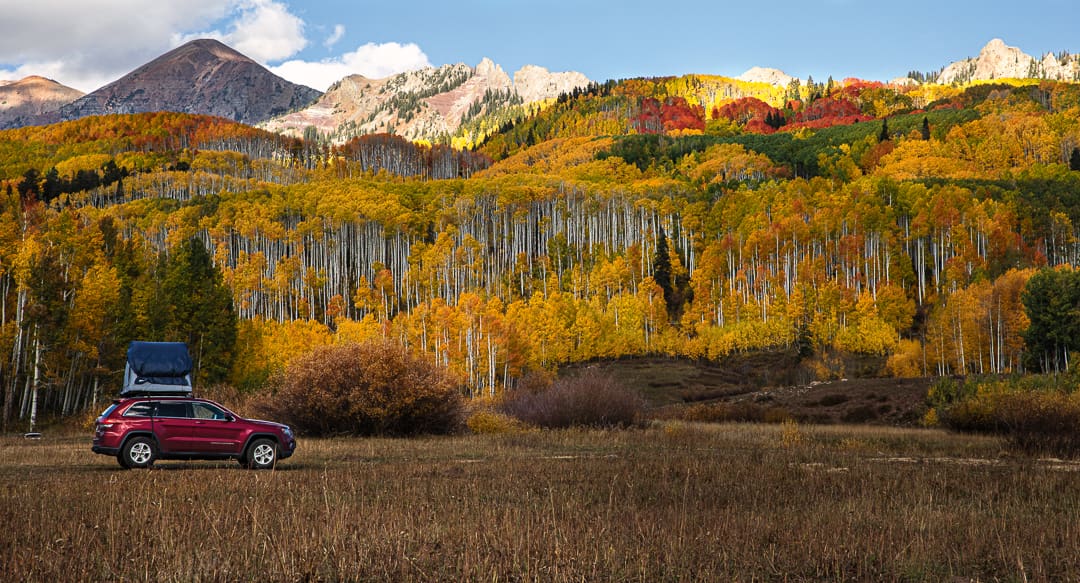
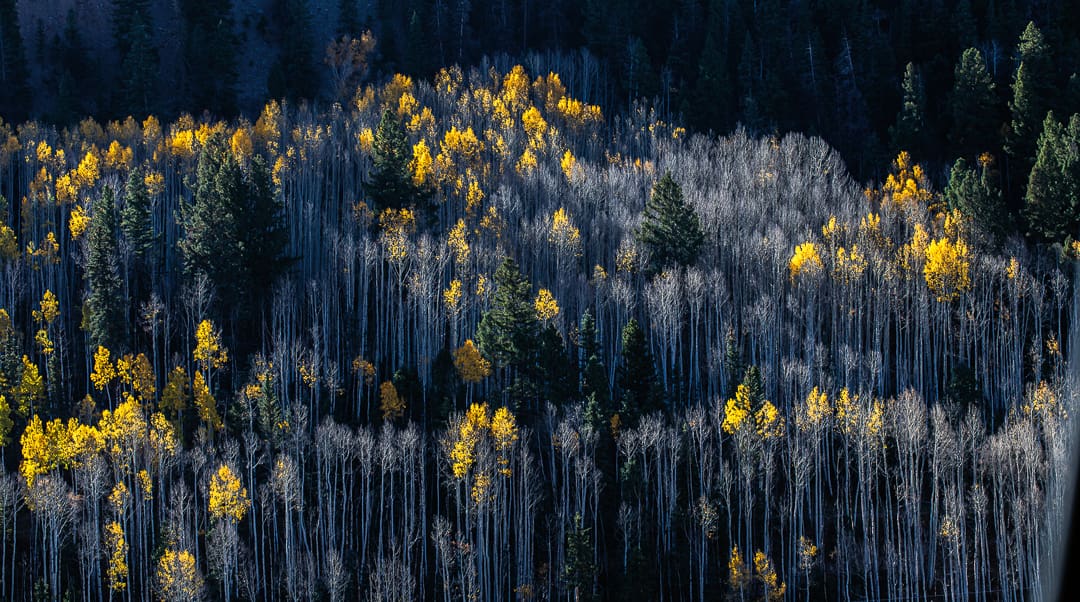
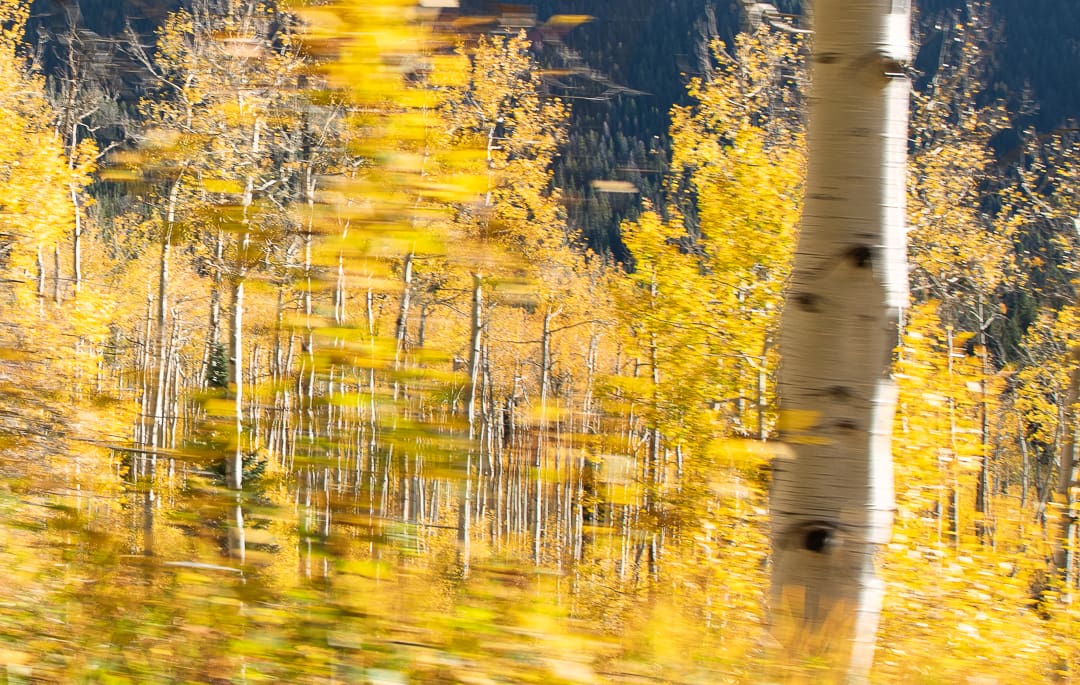
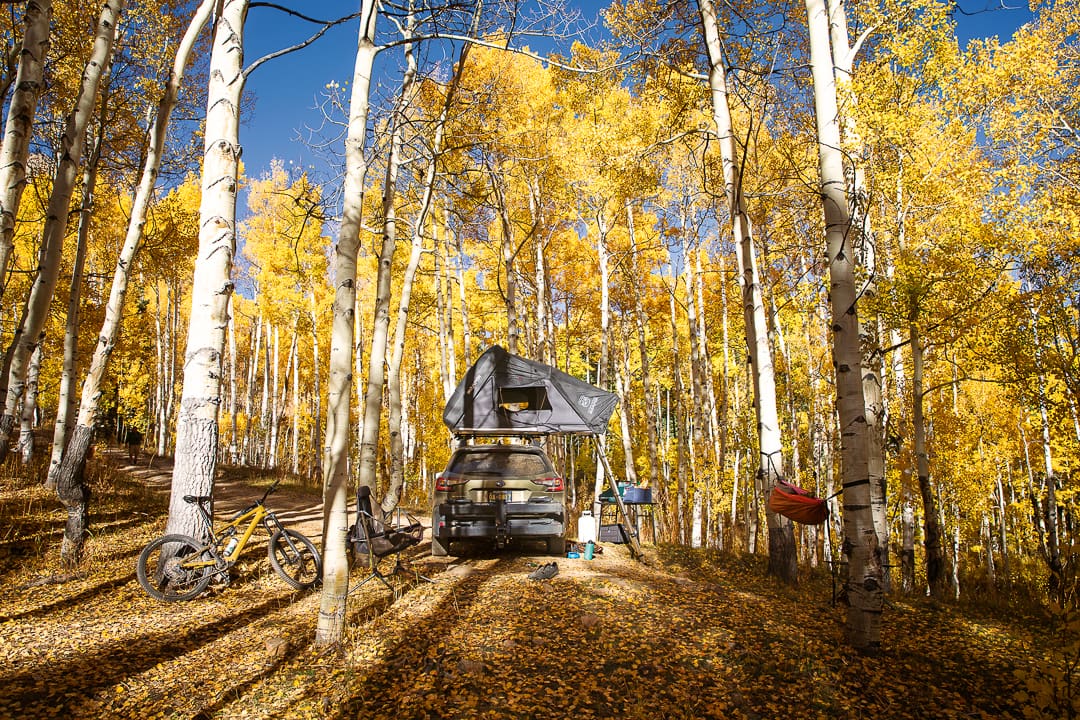
The last twinkling mustard-colored leaves from a small grove of Aspen trees clung to the bone bark at a campsite perched high above Brush Creek, a few miles from Crested Butte, Colorado. It’s a treat to take a hammock nap in a grove like this, because we don’t have many aspens in Oregon, where I’m from. But the reason I like this site is its proximity to a network of mountain biking trails that helped make this region famous. From the brutal climb up to Teocalli Ridge and the blissful bombardment back down it, to a delightful zigzag of concentric circles in the other direction, each trail rewards its rider with ever-changing views of the Elk Mountains and the sweeping, stunning valley into which they drain.
I had always imagined Colorado’s outdoors to be a crowded place, loved too hard by square-jawed outdoorspeople who had already discovered every jagged peak, forest grove, and mountain pass, who had spent months meticulously planning out their excursions, clogging campsites. I couldn’t just drive to the Rocky Mountain state without research and reservations, expecting to find idyllic campsites a few scant yards from its best trailheads, could I?
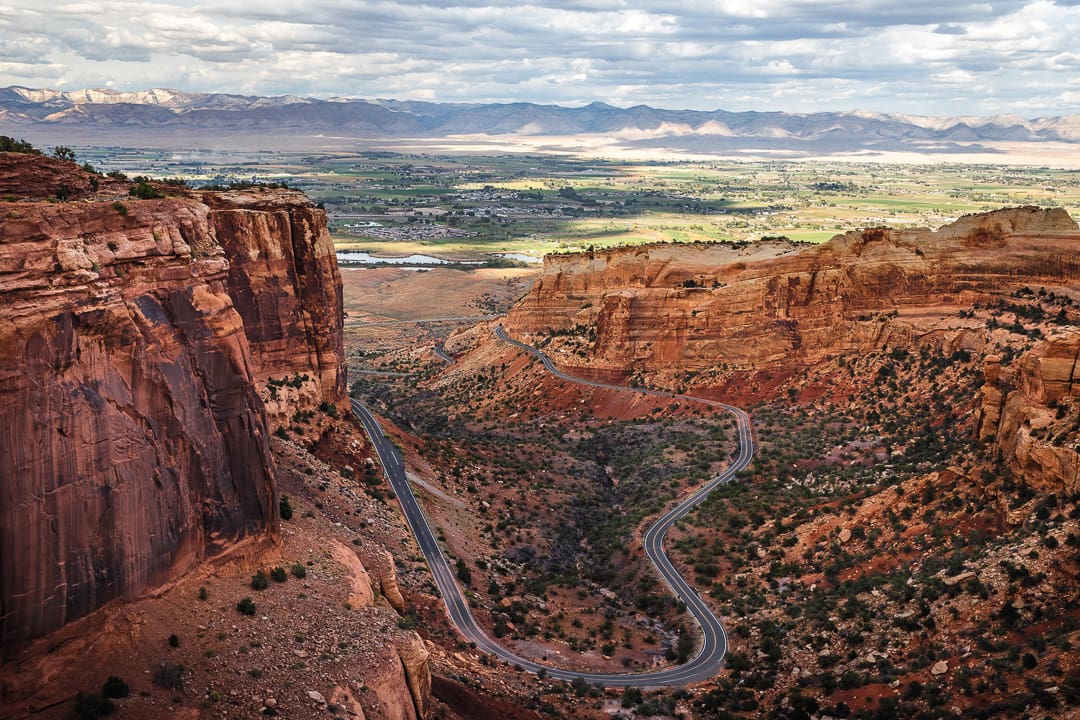
Over the past few years, I have discovered a secret: people tend to clear out in the fall, which is arguably Colorado’s best season. Kids go back to school, the rivers are largely too low for whitewater rafting, and the snow has yet to beckon skiers and snowboarders to the legendary slopes of Aspen and Telluride. Even when the leaf peepers descend upon the state to snatch photographs of peak season, there’s still enough public land to accommodate interlopers like me. Crisp evenings make some of the country’s best hot springs a balmy way to catch the last light of day.
By the fall of 2025, I was sure I had mastered the art of overlanding in Colorado, after two years crisscrossing the western half. On my first journey here, I’d lumbered to Denver and Colorado Springs in a rented Toyota Tacoma, before rolling south into the Arkansas River valley to explore Salida and into the San Juans for Pagosa Springs, then back east again. There were stunning landscapes, cool hotels for alternatives to camping, a surprisingly dynamic food scene in resort towns like Aspen, and a bounty of hot springs in the mountains. Everywhere I went, I spotted places I vowed to return to in the Ram Promaster I built out in 2020.
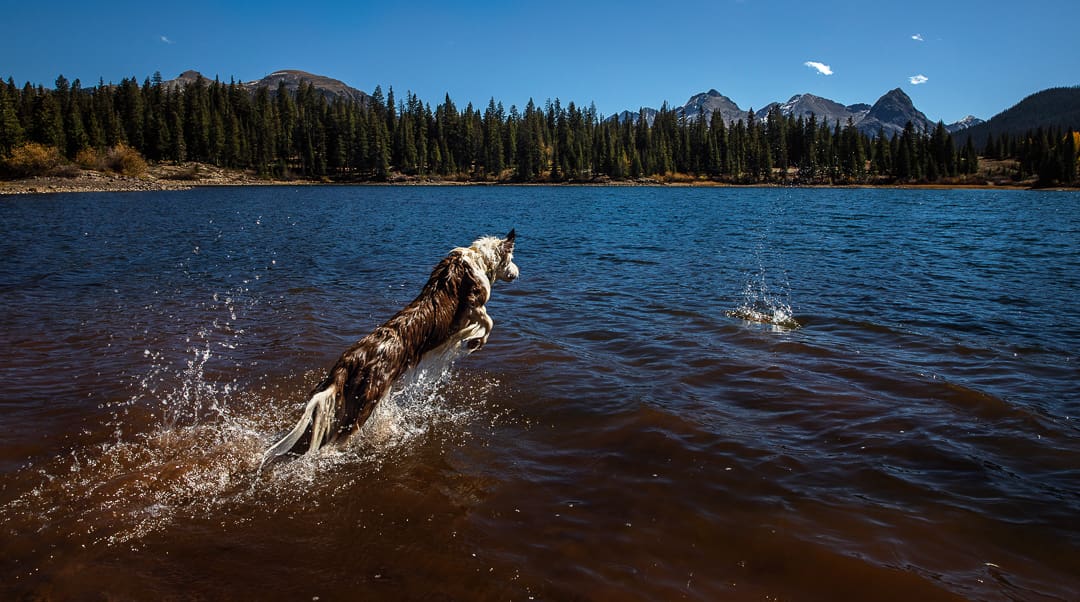
I returned with the van a year later and learned some new lessons. Too much time in lovely but bougie Aspen and Telluride, not enough in the towns with the trails most suited to the rollercoaster single-track I coveted. I wanted to camp far enough away from people that my border collie, Alsea, could roam around off-leash without pestering neighbors to throw sticks for her, and I wanted to be as close as possible to trailheads, so I didn’t have to pack up on a riding day and drive somewhere.
I also wanted to try it in my Subaru Outback. After five years, I had sold the van. Renting it out took up more time than I wanted, repair bills were climbing, I’d built the bed in it too short for my 6-foot frame, and its front-wheel drive kept me out of campsites I could only ogle from afar.
In the van, I had the hard-shell, streamlined iKamper Skycamp Mini 2.0. The included mattress is much too thin for me, but the rooftop tent pops open and sets up in a flash, and the rainfly is already attached, so I put it on the Subaru. A swap with a brand-new Exped MegaMat Duo solved the mattress problem, although it would have to be stored in my hatch. I traded out the van’s excellent but bulky camp kitchen for a shorter gear storage box from Radius Outfitters, and wedged my Dometic CFX2 cooler into the space behind the driver’s seat. By the time I’d squeezed in a propane tank, a Dometic water jug, three batteries and a power console from DK2, the Snow Peak Takibi Tarp Hexa shelter, a propane-powered firepit from Howl, the MoonShade portable awning, a NEMO Dagger Osmo tent (in case I wanted to camp somewhere without opening up the RTT), a camping chair, a small tote for dry goods and a tiny chair and table from Helinox, there was barely enough room for Alsea in the back of my Outback. Even if only for the extra cargo space, it was clear, looking at my stuffed, sagging, overloaded SUV, that my next vehicle setup would be a truck and camper. It would be the Outback’s last big journey, and I was asking a lot of it.
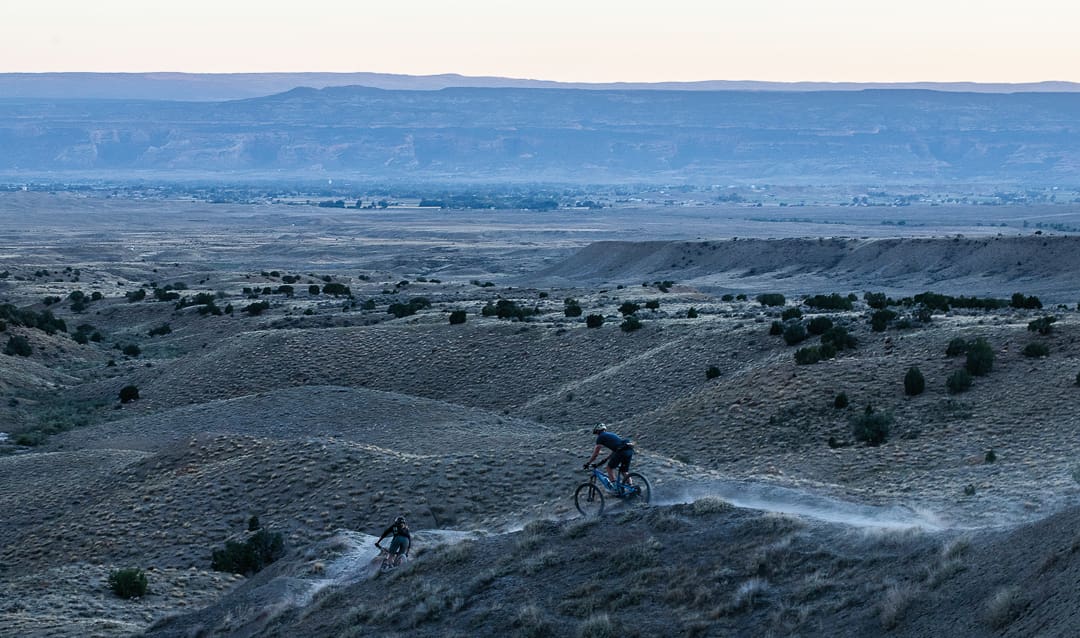
I had a pretty good idea of the itinerary for the month-long trip. I would pick up a new mountain bike, the Specialized Turbo Levo SL, break it in at my favorite trail network near Portland, Post Canyon, and then barrel on to Boise to crash in a rustic little yurt for the night. Next was Park City, Utah, a good stopping point between Idaho and my first destination in Colorado: Fruita, home to a sprawling high-desert Bureau of Land Management campground where every site is but a few feet from the trail network in the North Fruita Desert.
I punched through a heavy thunderstorm to get to Park City, but I didn’t have to worry about setting up camping gear that night, bound for the ghost town of a ski resort that was Deer Valley. Fall is arguably the resort’s slowest season, as most people travel here for crisp powder in the winter and early spring, not to see the leaves change or ride the beautifully designed trails all around the city. I headed to Heber City for a gorgeous ride in the Riverview Trail System, whooshing through tunnels of pink petals that had begun to drop from rows upon rows of cherry trees, the trail soaked with just the right amount of moisture from the storm I’d arrived in.
With a full kitchen at my disposal, I spent the next day prepping a batch of taco fixings and pesto pasta so that I could get to camp in Fruita with easy-to-reheat food and downsize the bulky groceries I had no space for in the car. On the way to Colorado, I stopped to ride along the shores of Strawberry Reservoir, on a ride that serves up one waterfront vista after another. I dropped a pin at the trailhead for next time, where a perfect dispersed camping spot lay, and motored off again for the Grand Valley.
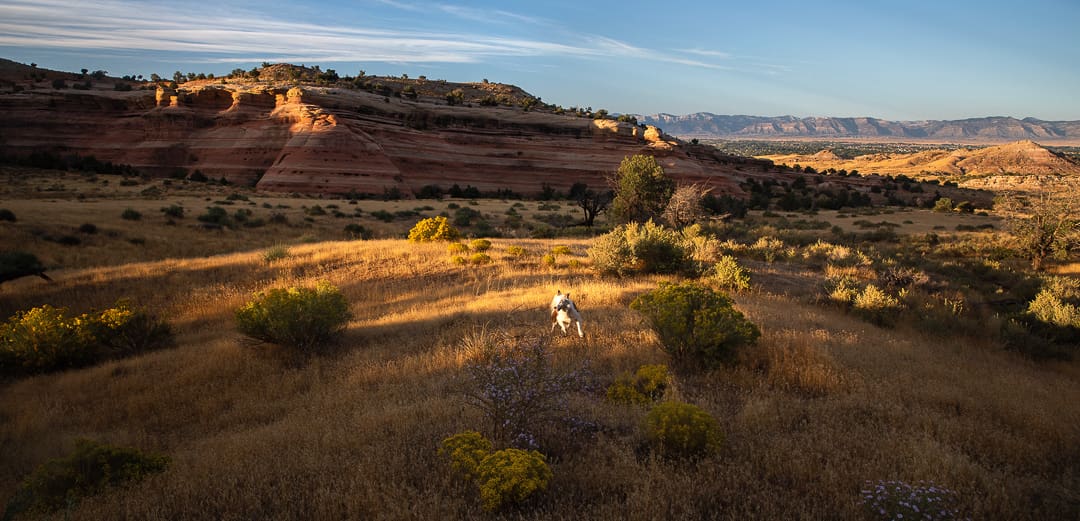
Fruita was my first opportunity to sprawl out and arrange the perfect campsite, a chore I’d been looking forward to for the past year. I parked the Outback at the base of a small knoll with a picnic table and a series of thirsty-looking juniper trees. It took an hour and a half to set everything up, but in the end, I had a camp fit for a king.
Had I been in the van, my whole living area would have been stuck in the gravel parking lot at the base of the small hill. With this setup, I sat perched on a plateau with views of the Book Cliffs to the north, Grand Mesa to the east, and the Colorado National Monument to the south. The discovery that I’d forgotten to bring a camp stove didn’t dampen my spirits, even as that was going to require packing up the tent and driving 40 minutes into Grand Junction and a Walmart to buy one. I felt like I had perfected overlanding. I was giddy to have sold the van.
That night, a storm blew in from Utah, pelting my tent with rain from the predawn hours until it was time to crawl out in the morning and see what was wet. Alsea had demanded to be let out in the middle of the night, but she avoided the weather by scooting under the car. The rain was a blessing, transforming trails from dust to a nice, tacky dirt. I fastened booties on each of the dog’s paws, and we blasted up and down the system, grinning even through the climbs.
On my last night in Fruita, I picked up a rental bike for a friend who flew in from Portland to spend a few days riding and hiking with me. “You’re like a professional camper,” he told me as we arrived at camp, and I beamed with pride. We carved the trails as the sun set and then again the next morning, before heading east to Palisade, and the wine country there that most people have never heard about.
For the next couple of nights, my buddy and I stayed at the Estate House at the Carboy Winery, where we met Barbie Graham, who moved to Grand Junction from the Bay Area, where she’d worked as a sommelier. If you knew about Colorado wine, she told us over a tasting, you knew it to be mediocre and probably too sweet. But this valley is about the only place in the state where grapes grow, because the Grand Mesa, the world’s largest flat-top mountain, blocks freezing weather from the Rockies. And as wineries have changed hands over the past couple of decades, the wine keeps getting better.
The next day, I dropped my friend off back at the airport and headed for Crested Butte, an impossibly cute town over the jaw-dropping Kebler Pass. Colorado’s epic mountain passes are special in that you’re not just looping around one mountain, or even three or four. In much of the state, there are a half-dozen peaks everywhere you look, so pass after pass weaves you through one majestic scene after another. The mountains seem to go on for eternity in all directions.
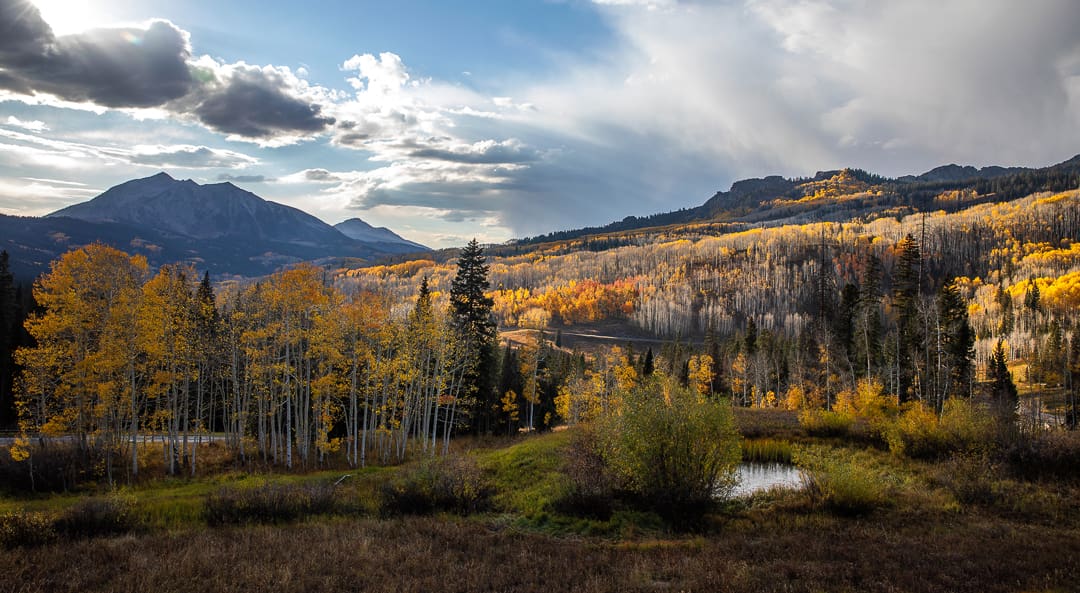
Within minutes of leaving Grand Junction, I was on a dirt road filled with forests shimmering with every color in autumn’s rainbow, spread out in the Gunnison Valley, where beautiful blankets of scenery lay around every turn. The hills were bursting with color, the vibrant yellows of ubiquitous aspen trees combined with orange, red, and purple. After a couple of hours on the road, I arrived in Crested Butte, where nature’s grand exhibit proved even more magical than it was the first year I visited.
Leaf peeping, as they call it, is a crapshoot; you may find bursts of color everywhere if you hit it right, but you might arrive too early or late. Residents are known to be agile at this game, scanning highway cameras and Instagram postings to decide which weekend they might pack up and see the leaves in their prime. But if you’re coming from farther away and need to plan a trip a few months in advance, you need a little luck.
.
I’d camped in 2024 outside of Crested Butte proper at Brush Creek, in a small aspen grove that sat 100 yards above the creek, as far up the rough road as the van would take me. This year, I was eager to see if my Outback could push further up the hill and away from the cacophony of mooing cows I knew would keep me awake in the rooftop tent. I put the Subaru into “X-Mode” and crawled past the site, terrified as the vehicle lurched its way up and over the cavernous potholes in a road marked “4×4 only.” After 150 yards, the car reached babbling Brush Creek, maybe 8 inches deep. If I wanted to go further to a series of choice campsites I’d seen on my bike in 2024, I’d have to drive across that creek. My hitch-mounted rack was already bottoming out every 10 yards, and I chickened out, barely turning around at the entrance to the creek, then loping back to the original site and those noisy bovines.
We made it through the chilly (30°F) first night in the mountains with one casualty: a mouse had somehow wriggled its way into the small opening of my water bottle and then failed to wriggle its way back out again. Right before I took a gulp, I discovered the poor critter in there, drowned.
As soon as I rode into a section of the trail close enough to get a cell signal, I learned that the third weather system of the trip was on its way in. Between the cows and the cold, I decided to pack up camp after two nights in the forest, and after one more night of camping in a different place with a decent cell signal, I’d book a hotel in town, at Eleven Scarp Ridge. Not long after I checked in, the skies opened up, dumping an inch of rain on everything within a couple of miles of Crested Butte. I took a sauna and a swim in the hotel’s cozy spa and munched on the charcuterie board that the staff serves for “apres,” before tucking in to a few episodes of Squid Game on their projector screen.
“That’s not camping,” a mountaineer friend of mine ribbed me when she saw my Instagram stories from the hotel, and I didn’t argue with her. At this elevation and with this setup, I didn’t intend to spend every night of the trip outdoors, especially not during a 36-hour thunderstorm. I might have the gear to stay dry, but sitting under a tarp for a day and a half with nothing to do but watch the rain fall sounded like misery to me. Last year, I’d made a similar call; even with the comforts of the van, the house batteries were all but dead, my 30-gallon tank was drained, and the hot tub at another stunning boutique hotel in Crested Butte called Vaquera House was calling my name. Sometimes it just makes sense to take a break from roughing it.
On the full day I had in between those nights at Scarp Ridge, Alsea and I headed south to Gunnison, where only a passing hailstorm threatened to ruin the day. I biked a beautiful area called Hartman Rocks, which reminded me of California’s Alabama Hills, but with fun single-track crisscrossing the landscape. There were BLM sites here and there, meaning I’d found another spot where I could ride out right from camp. I made sure to drop another pin before heading back up the mountain.
From Crested Butte, I went south, dropping back out of the mountains and into the desert, through Gunnison and on to a campsite at one of my favorite places on Earth: Orvis Hot Springs. With its beautifully manicured grounds, a 112°F “lobster pot” tub right next to a proper 50°F cold plunge, a community kitchen stocked with excellent tea from Montana, and a view from camp of the San Juans, Orvis was a mandatory stop, and another place I could spread out a bit. This time, I attached the Moon shelter to the car, laid out the kitchen on a deck some people pitch tents on, and settled in for a soothing soak after dinner as a supermoon rose across Highway 550.
This more civilized campsite came with tradeoffs. Instead of cows interrupting my sleep, it was rowdy neighbors and an incessantly barking dog. When I tried to take a post-soak nap the next day, the pop-pop-pop of a shooting range across the highway blocked my attempts at relaxation. I pined for some insulation and a fan, and for some mystical blend of privacy and amenities. At 7,000 feet of elevation, it was also another cold couple of nights. So cold that when I woke up each morning, a quarter-inch-thick frost had coated everything that wasn’t covered, including on the ceiling of my tent, from the condensation Alsea and I created as we slept. As much fortune as is involved in timing out fall colors, so it goes with the weather in Colorado, where you can experience a 40°F temperature swing in a single day and everything Mother Nature can throw out, from hail to thunder and lightning to high-UV heat.
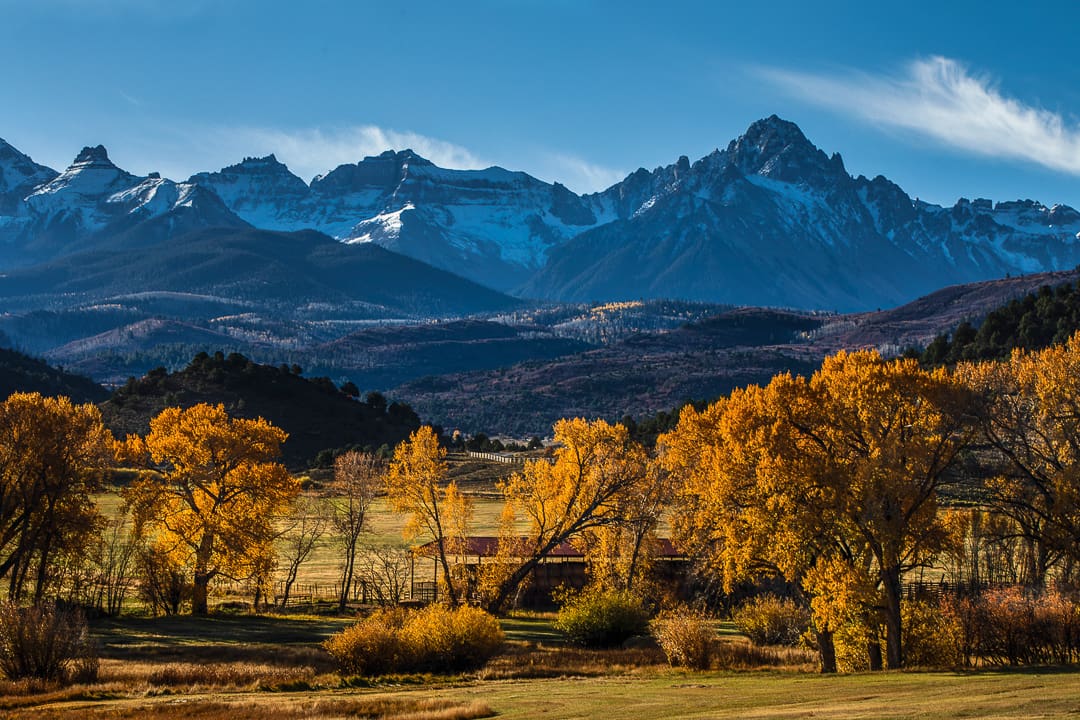
No matter how well you plan and pack, it still takes at least a week to settle into the rhythm of the road, where everything sets up easily and quickly and exactly the way you want it. I shook the ice off my tent and packed it up quickly so I could beat everyone to another one of my favorite networks in Colorado: the Ridgway Area Trails (RAT). Each named for some famous rat or mouse, the system is just my style—not super technical, with flowy, stupendous views of the San Juans at every turn, and on this morning, we had it all to ourselves.
After a few more nights in near-freezing temperatures, I found another ghost town of a ski resort to hole up in through another impending storm: Purgatory Resort, a half hour north of Durango, my favorite Colorado town. The drive to Purgatory served up another sensational series of fall color landscapes, and the view from the hotel room reminded me of the Swiss Alps. Purgatory lies 20 minutes away from another tried-and-true thermal bath, Durango Hot Springs. It’s like jumping into a warm (or piping hot, depending on which tub you choose) glass of champagne, because the resort pumps medical-grade oxygen into the water. The nanobubbles help oxygenate the skin and speed injury recovery times (so they say), and while I have no idea if that’s true, it’s amusing to brush the bubbles off your skin underwater.
The next morning, Alsea and I headed back up the highway toward a gnarly trail system I both looked forward to and dreaded. All of the routes lead up to Engineer Mountain, a mythic slab of quartz trachyte visible only to those willing to tackle a brutal 2,000-foot climb to its base. Even when you get there, the ridgeline trails that spur off in four different directions from the mountain all offer some degree of difficulty, be it patches of thick mud or technical drops. We tried each spur until I got tired of mucking around, then poked our way back down the mountain again.
Then came another storm, this one the biggest of the trip. Alsea had been limping a bit on and off the last few days, so I took it as a sign from Nature that we should catch up on some photo editing and writing and stay indoors. By the time it reached Colorado, it was only rain, but I saw an inch in the forecast for everywhere between Durango and Moab, where I was headed. Plan A was to camp somewhere around Cortez and ride Phil’s World, but the storm forced a change of plans, as it had in 2024, when a big snow event scared me out of Telluride.
I checked the weather forecast for every place within a four-hour radius, and the storm’s path was too big to avoid. So on to Moab I went, to a campground I could trust would have open sites even on a Saturday afternoon arrival. I pulled into an open spot and set up camp, happy to stay put for two whole nights. At 1 a.m., a powerful thunderstorm blew in, shaking the tent with 20-mph winds before dumping rain on us.
We caught enough of a break in the rain the next day for a ride right from camp, the trails not too soaked for my bike to leave tracks, the slickrock sections immediately dry. But the rain returned the next night, leaving me only an hour between showers to pack up without having to stow a bunch of gear wet. I spent the last six nights of the trip indoors, first at one of the brand-new casitas at Hoodoo Moab and then at the newly renovated Boise’s Inn at 500 Capitol.
It was an unexpected development to spend so much of the road trip out of the elements. I had been looking forward to coming back to the gorgeous public lands in Utah and Colorado, setting up blinged-out campsites, warming myself by the Howl fire as Alsea and I watched every phase of the moon rise. But the weather in this part of the world is intense, requiring a roll-with-it attitude. Maybe next year, in my truck and camper setup, I’ll finally get overlanding right.
Editor’s Note: This article was originally published in Overland Journal’s Fall 2026 Issue.
