

This article is presented by Montana.
If there’s one sound in the off-road world that guarantees fun times ahead, it’s the hiss of tires dropping air pressure. This comforting realization hit me as I admired the rugged peaks surrounding us and listened to my all-terrain tires drop from 36 PSI to 20. My three friends and I had 36 hours to cross roughly 100 miles of gravel, mud, and any terrain other than pavement, all along Montana’s Gravelly Mountain Range. We had high hopes of seeing a variety of wildlife (this range is known to hold dense populations of elk and grizzly bears, along with mule deer, whitetail deer, and antelope), making a delicious and involved camp dinner, and learning just how much landscape we could appreciate in under two days.
Airing Down South of Bozeman
As soon as we turned off Route 287 south of Bozeman and onto the gravel we yearned for, it was time to soften our rides. We had no plans to rock crawl, but agreed that airing down our tires would make the adventure that much more comfortable and ease concerns about flat tires.
Our crew consisted of Andy with his Toyota Tundra (outfitted with a remodeled Four Wheel Camper), Jakob with an FJ Cruiser, Tim with a similar FJ Cruiser, and me (Roman), with a Lexus GX 460. Given that this mountain range is known for its impressive grizzly bear numbers, we all had bear spray at the ready, and there were a few firearms amongst us. Admittedly, it was comforting that none of us would be sleeping on the ground; we liked to tell ourselves that we were out of reach from predators by sleeping on top of our vehicles.
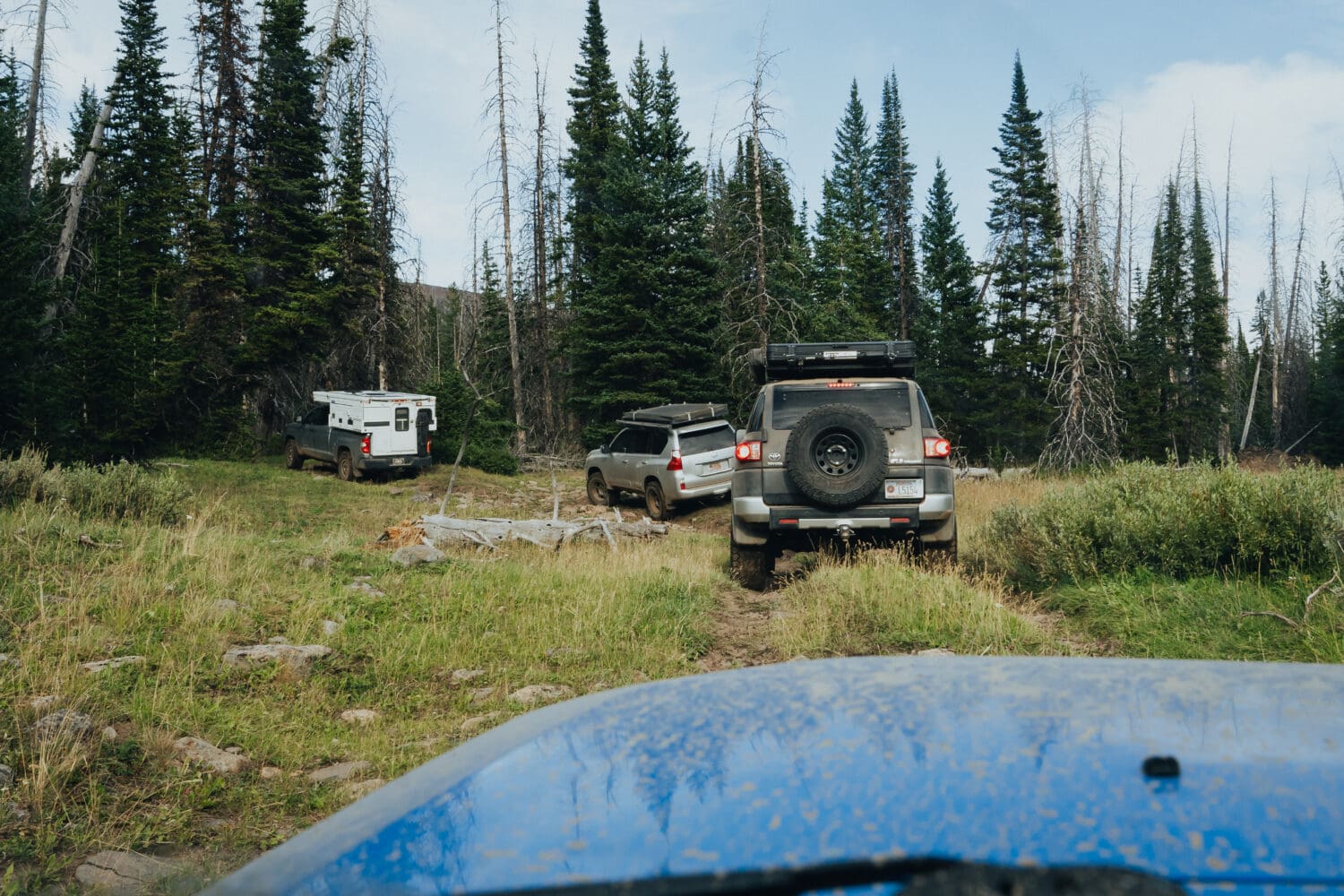
Andy took the lead of our caravan in his Tundra, and despite being weighed down with a camper, he never used it as an excuse to drive slowly. We had a lot of miles to pack on in such a limited timeframe, and having modified suspension on all four vehicles, we made the most of the minimal traffic and fun winding backroads.
Cabins, Backroads, and an Incoming Storm
First on our list was to locate an abandoned cabin that Andy had found via onX Offroad, and it was a comical sight to pull up to about 30 miles into that first afternoon. While the cabin was certainly many decades old, there was a modern tow-behind camper right beside it, which left us scratching our heads. The property also contained old agricultural equipment, an old Unimog full of character, a natural spring of sorts, and a rather rustic outhouse. We hung around the area for a half hour, admiring the seemingly ancient construction of the cabin and the ingeniously simple spring system set up for fresh water.
As the afternoon crept on, the sky darkened to an ominous blue, with thunderheads and puffy clouds becoming more prevalent than the bluebird sky we started the adventure with. Over our radios we discussed potential campsites and debated if we’d rather settle somewhere less scenic if it meant getting camp set up before the rain landed. Somewhere between indecisiveness and excitement, we agreed to continue driving despite the threatening storm in front of us.
As the navigator for this trip, Andy led us on a narrow and overgrown offshoot with a campsite at its dead end that looked promising on our maps. Little did we know what we were in for. Five minutes into the trail, we were throwing our vehicles’ transfer cases into 4-low and embracing fresh pinstripes on our paint. There were boulders, roots, and soft soil that quickly turned to mud.
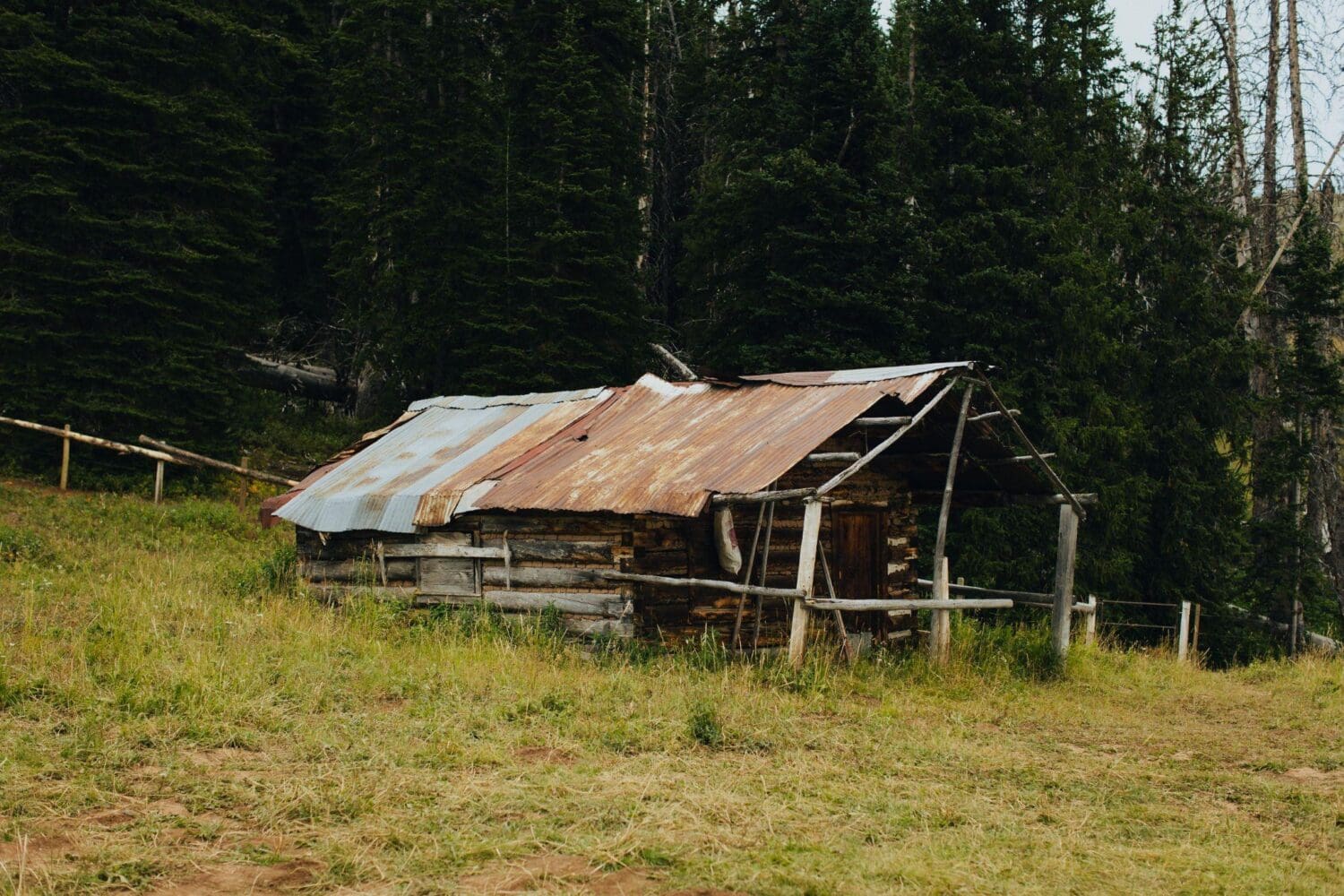
But the cherry on top was stumbling across another, much smaller cabin. It was surrounded by downed trees and slightly supported by perpendicular logs keeping it upright. Inside we found a rusty bed frame, an unopened can of beans that had to be at least 30 years old, and an abundance of rusty nails. We admired the piece of history before deciding it was ultimately too sketchy to camp nearby at the top of the hill, as the incoming rainstorm would make for an unpredictable and muddy exit in the morning.
Camp Beneath a Double Rainbow
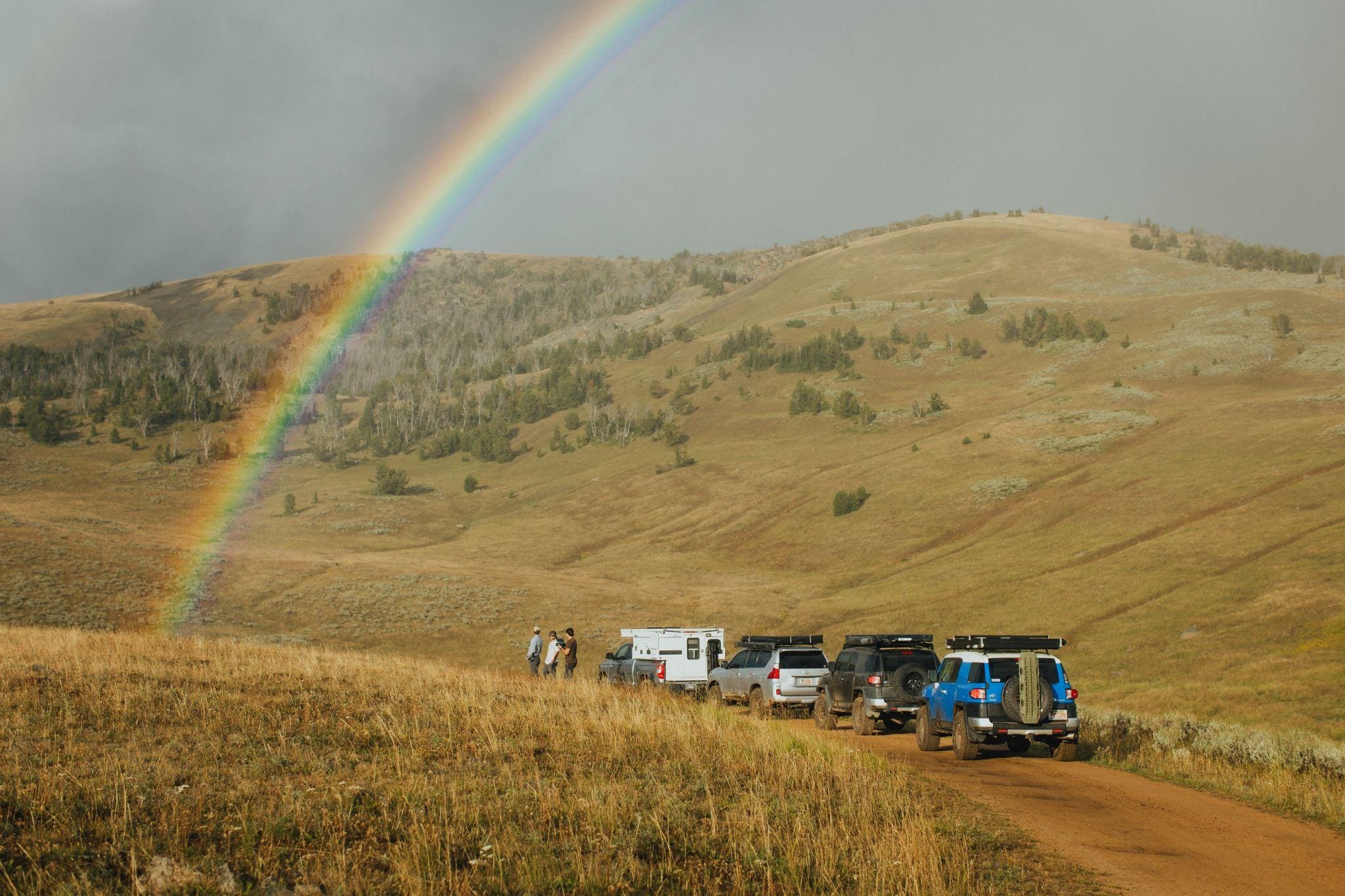
Having agreed on a hiking trail we’d visit after breakfast the following day, we decided to drive on and get closer to that trailhead. Our persistence was rewarded handsomely, as we treasured a massive double rainbow that arced over the road. We wound up at a beautiful and open area with an established fire pit that was just more than a stone’s throw from where we’d hike.
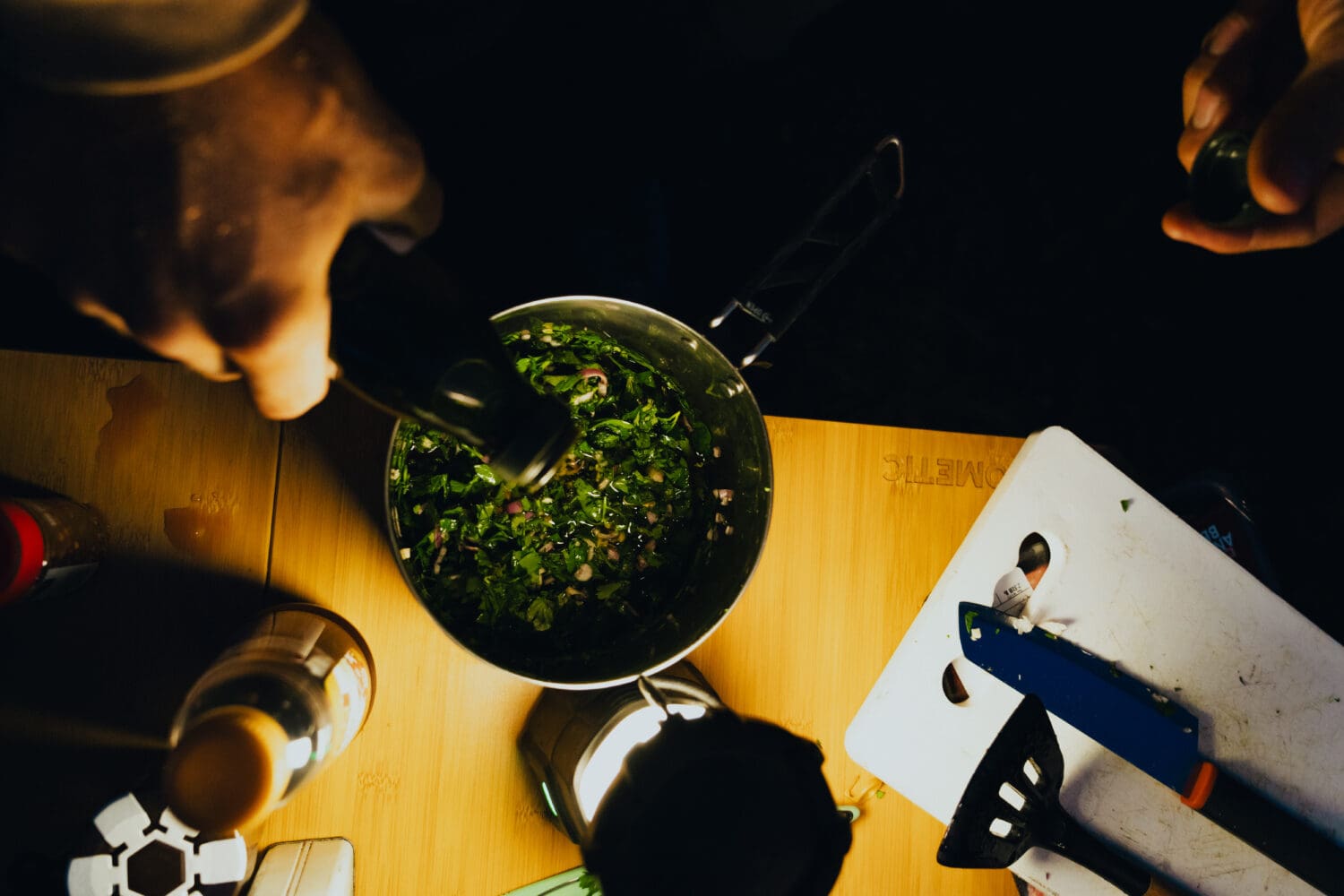
It was 8:00 p.m. by the time we were popping our rooftop tents and the four of us were famished. Luckily we had a ridiculous amount of steaks to look forward to, along with potatoes and Tim’s specialty—a flavorful chimichurri concoction. With that said, seven steaks took serious time due to only having a Coleman two-burner stove to cook with. About an hour later, we sat surrounding our Howl fire pit (pesky fire bans!) and relishing the hearty meat that we’d been looking forward to eating all day.
A Morning on Foot
Coffee hits harder when camping deep in the backcountry; there must be science somewhere proving this. Following a short sleep, we circled up in the morning and compared how many hours we managed to rest with several rounds of coffee in hand. Breakfast was simple—yogurt, granola, and bananas was all we needed after overindulging the previous night.
After our brief morning meal, we left our campsite on foot and read the maps at the nearby trailhead. With no particular end in mind, we hiked for an hour and chatted about everything from hunting and off-roading to our favorite aspects of calling Montana home. Though the hike didn’t take us to an iconic view, we appreciated the variety of trees and rugged stone peaks surrounding us along the way. Late summer tends to be pretty dry in Montana, but we were lucky enough to see everything powerfully green and lush from the previous night’s moisture.
A Final Cast
Following our hike, we pressed on and decided our next goal was to catch a fish or two with our fly rods. Two hours later, we sat in our camp chairs with freshly made sandwiches and tied flies onto our rods beside a famous tributary of the Madison River. It didn’t take long for Andy to land a beautiful brown trout and we were quickly reminded why this state is known for its valuable fly fishing opportunities.
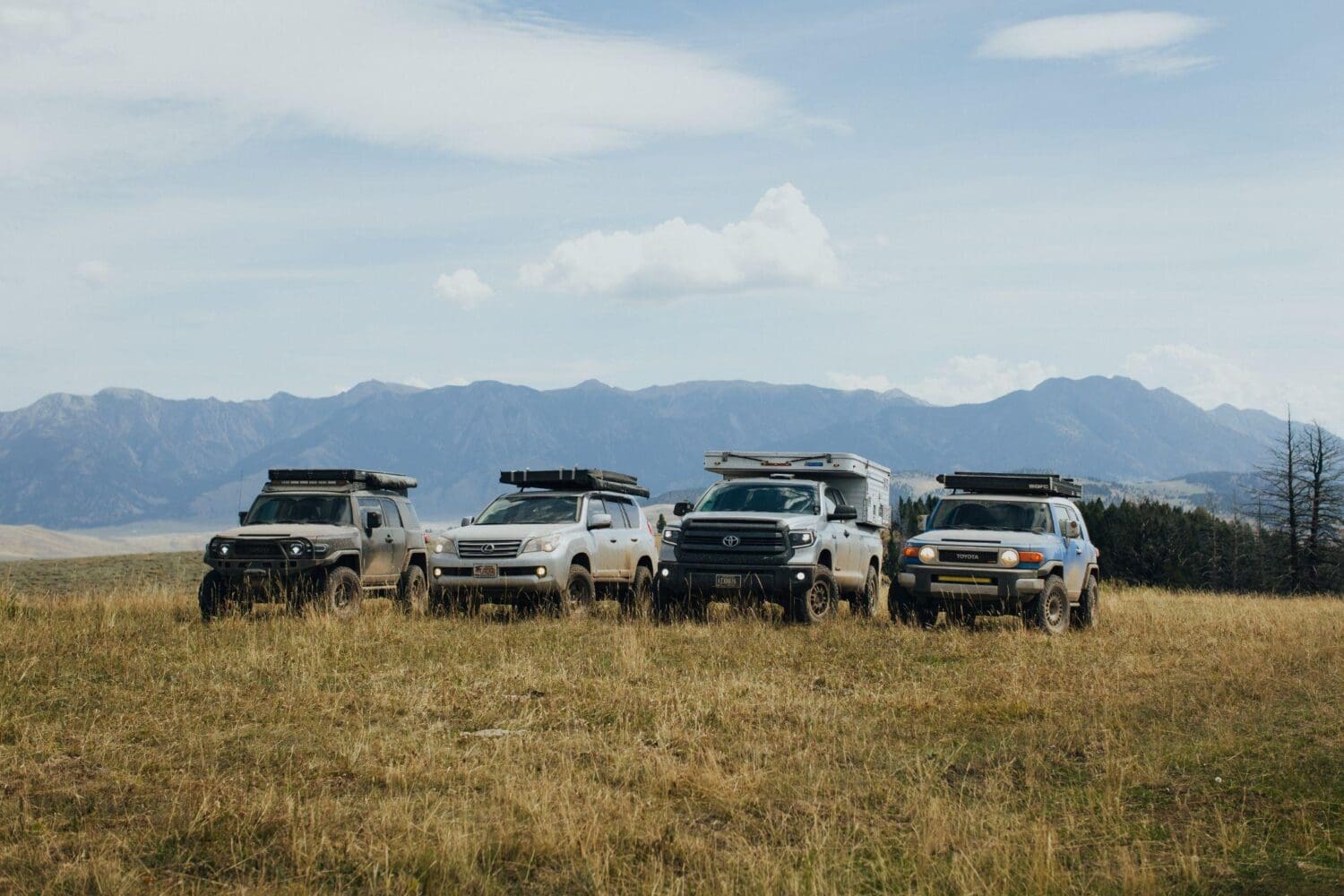
Feeling accomplished, the final 25 miles of dirt whizzed by and I couldn’t wipe the grin off my face. As the end of our adventure came into view, I found myself reflecting on how special the past 36 hours had been. We saw a handful of other folks recreating throughout the entire trip and relished the lack of cell phone service or Wi-Fi availability. These days it’s a real privilege to unplug for a full day, and I was well aware of the responsibilities that would pop up on my phone as soon as LTE was gained again. As our crew aired our tires back up beside the highway that would take us back to Bozeman, the four of us excitedly talked about our highlights of the trip and how antsy we’d be to do it all over again.
