

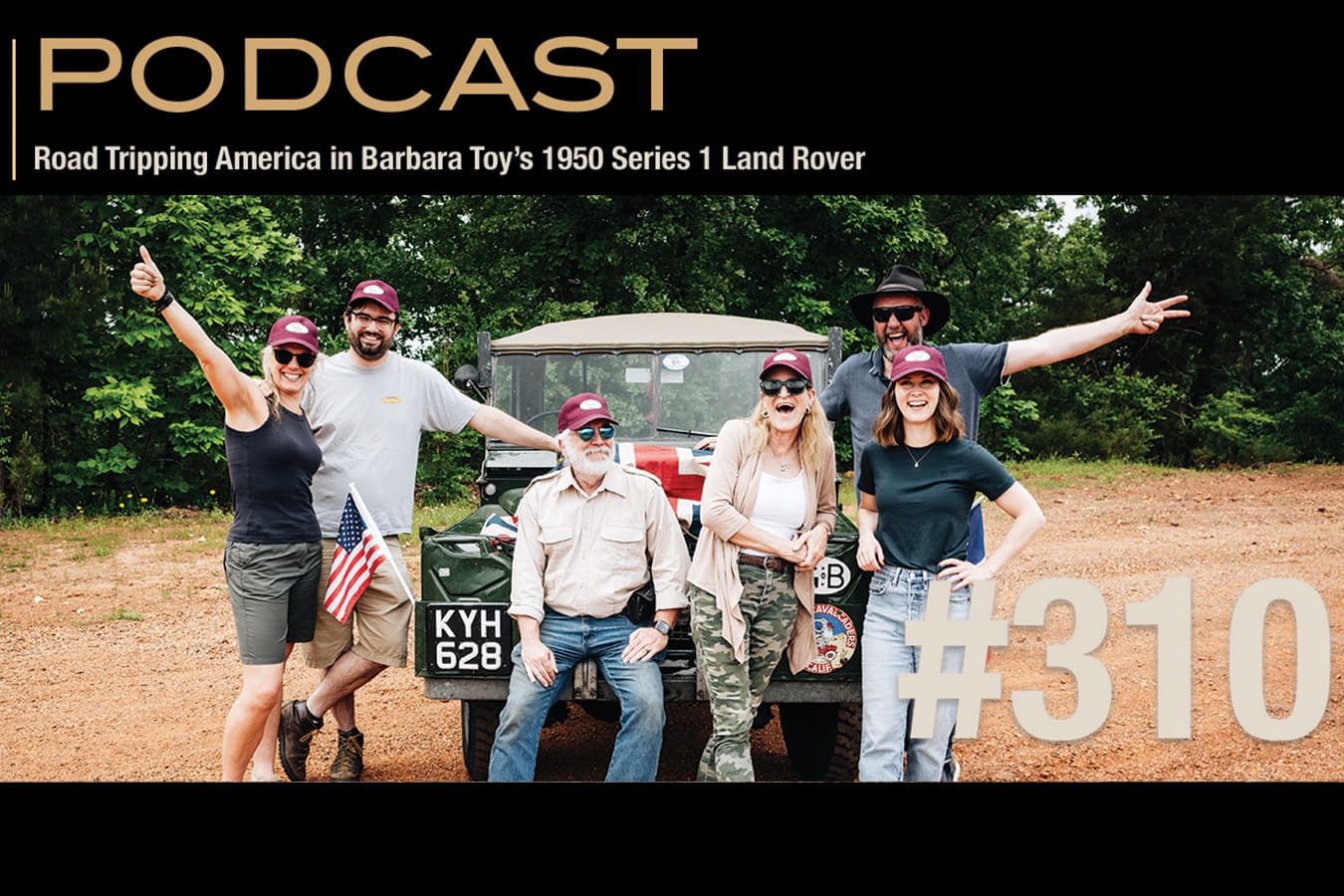
Overland Journal Podcast host Ashley Giordano welcomes Bill Cooper, Greg Fitzgerald, Amy Johnson, Tom Pickford, and Laura Stacey to discuss their trans-America road trip in Pollyanna, Barbara Toy’s iconic 1950 Series I Land Rover. In this episode, the group relives the journey, including the importance of Barbara Toy’s overland travels throughout the 1950s, the origins of the Barbara Toy Tribute Run, and the power of saying yes to unexpected opportunities.
Overland Journal Podcast Episode #310
The Overland Journal Podcast is brought to you this week by Nitto Tire, Overland Journal Magazine , Hankook Tire
New to Overland Journal and want to grab a subscription! Visit Overland Journal and enter code: overlandpodcast at checkout for 20% off. We thank you for being a subscriber.
Guest Bios:
Bill Cooper | Bill Cooper is a largely imaginary figure who plays with Land Rovers in various parts of the world.
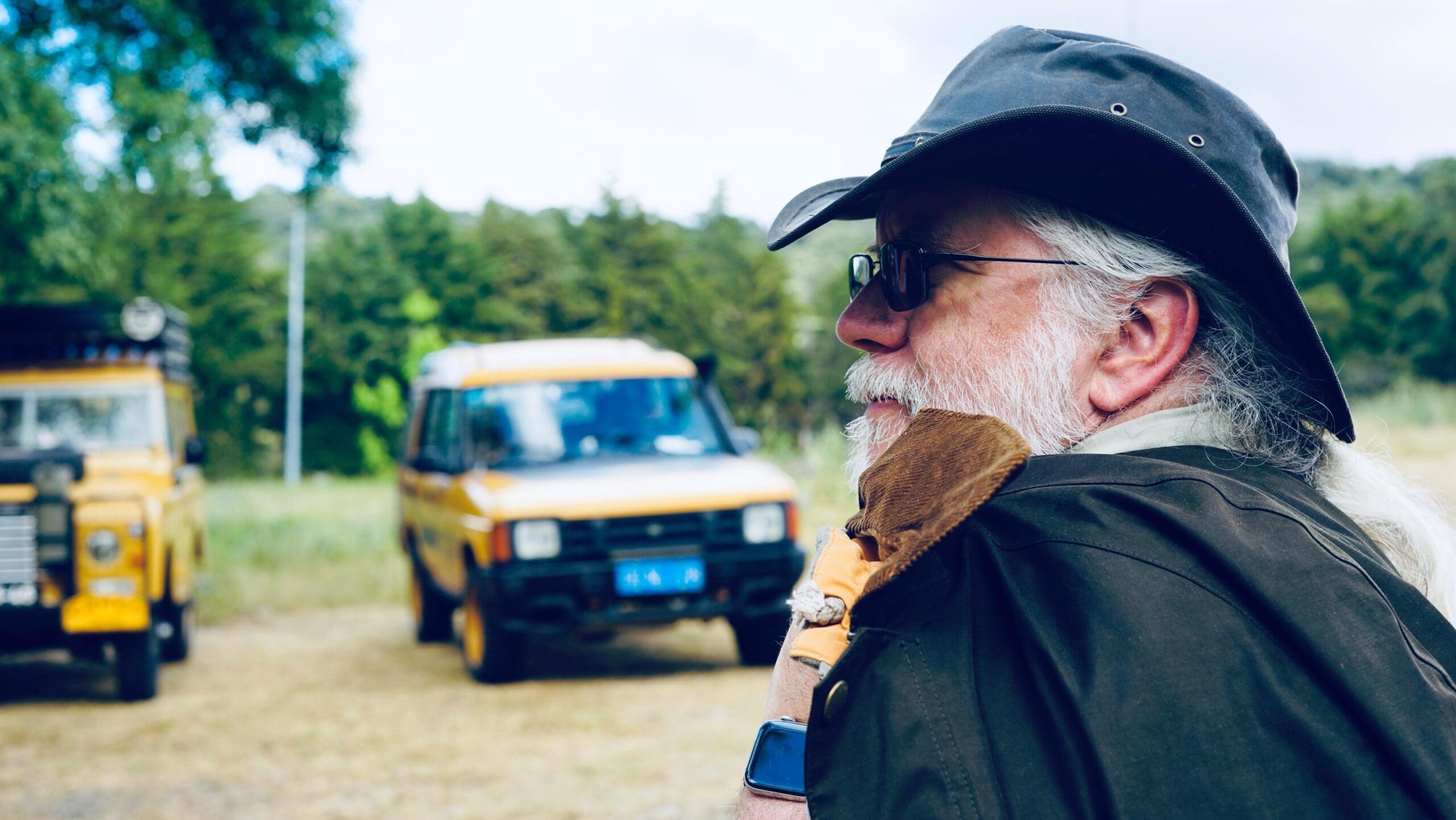
Greg Fitzgerald |Greg Fitzgerald is a New Jersey-based writer, photographer, and explorer. He is a life-long Land Rover enthusiast, and although he’ll explore the backcountry in any vehicle, he’s happiest behind the wheel of something with the green oval on it – preferably his LR3 or Discovery 1. When he’s not on the trail, he can be found somewhere on the coast on his quest to photograph every lighthouse in North America. You can find him on Instagram at @haveroverwilltravel.
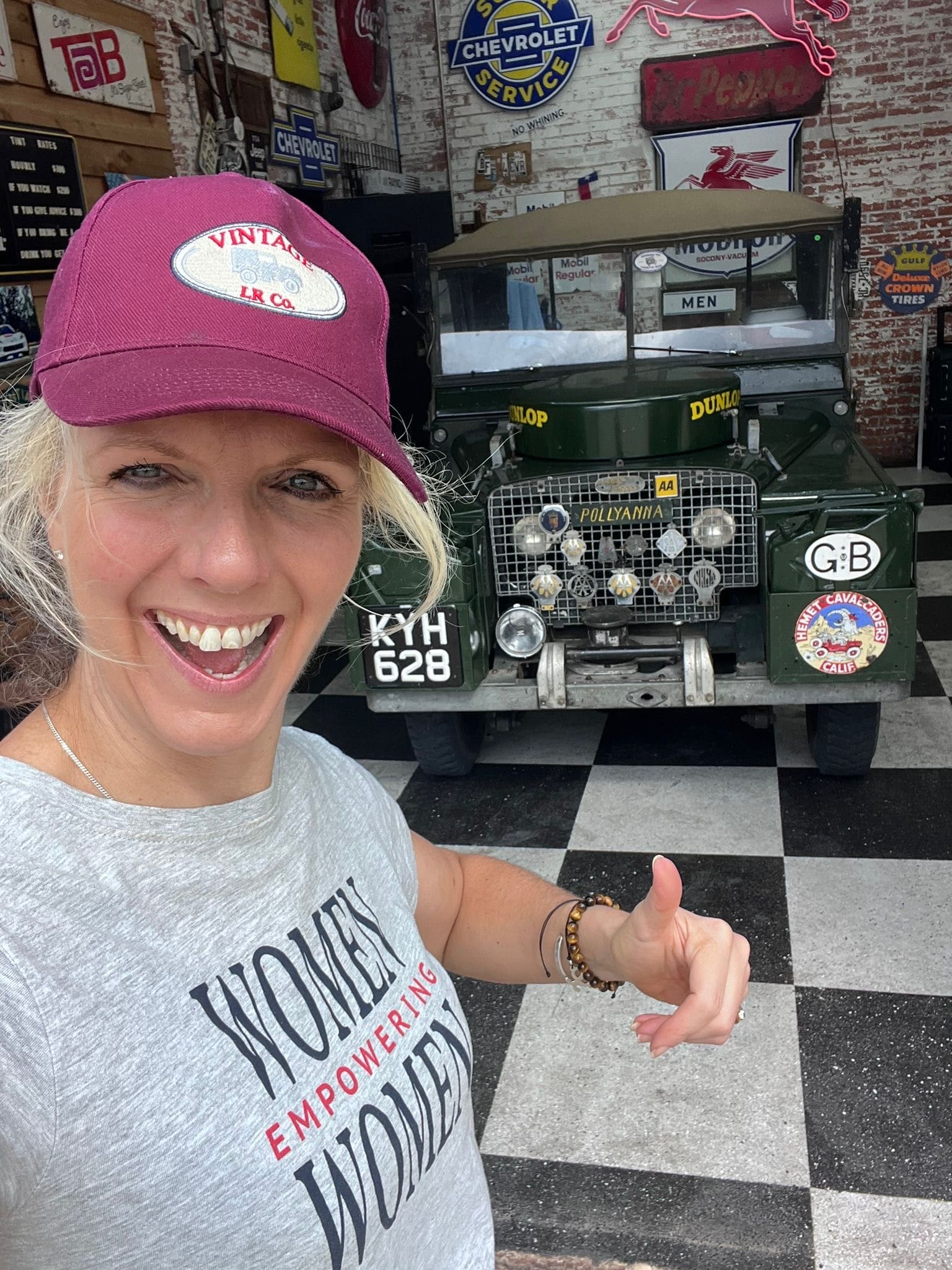
Amy Johnson | Founder of Feel Good Wellbeing Ltd., with a background in social work, training, leadership and postgraduate teaching, I’m passionate about helping people improve wellbeing through education, prevention of burnout and compassion fatigue, and holistic wellness support. I’m an adoptive mum, and alongside my wellness business, I mentor others in creating flexible income streams. Outside of work, I’m a triathlete, outdoor swimmer and lover of adventure (especially travel!), community and personal growth. @feelgoodnotcompassionfatigue
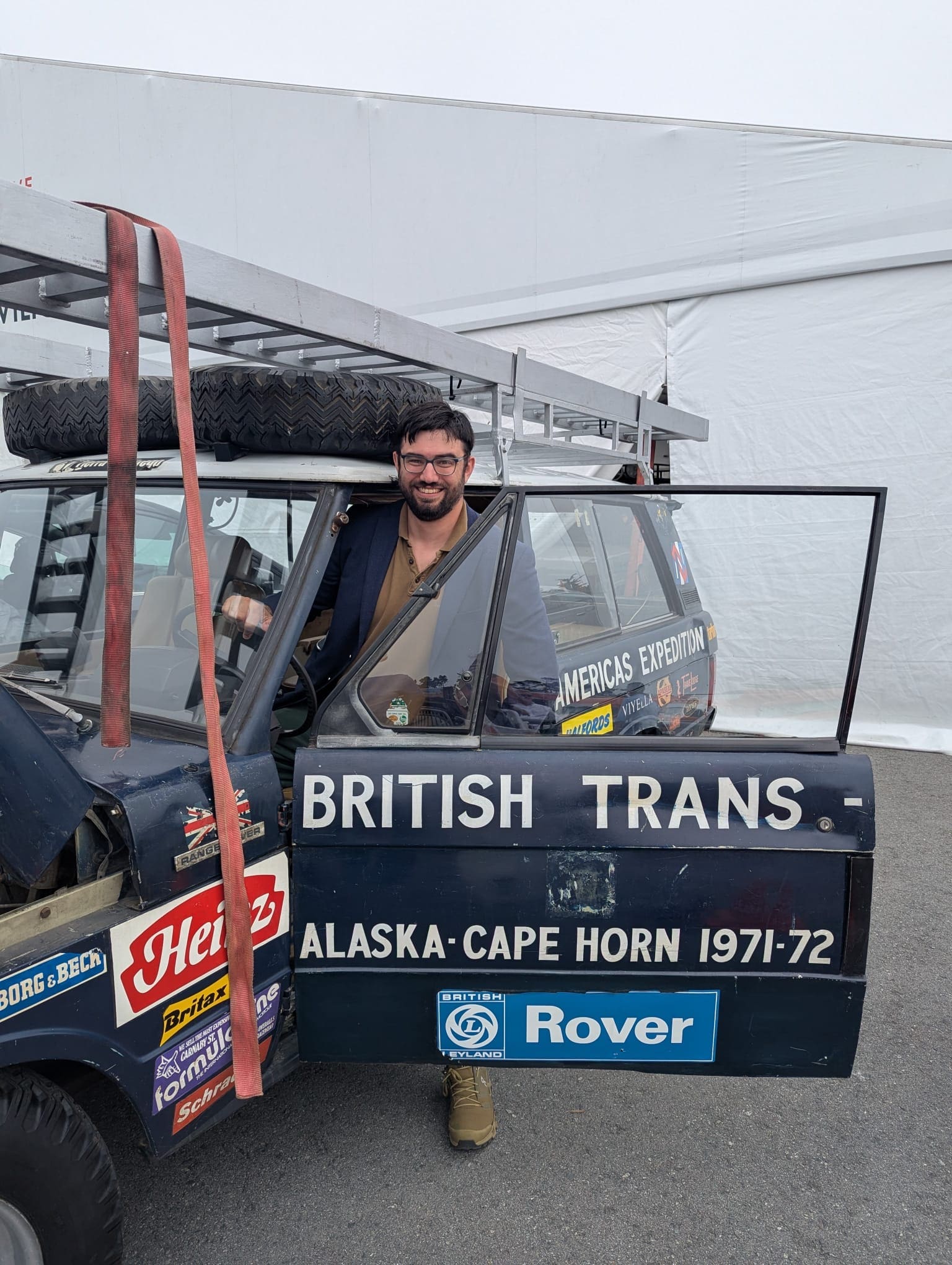
Tom Pickford | Tom Pickford is the founder of Vintage LR Co and a lifelong specialist in early Series 1 Land Rovers. Raised in a family deeply connected to Land Rover history since the 1950s, Tom developed his passion from an early age, originally learning to drive in Pollyanna on his grandfather’s farm. He began restoring classic Land Rovers in the mid-1990s and established Vintage LR Co in 2017, offering bespoke restorations, engine rebuilds, and specialist expertise for vintage Land Rover enthusiasts worldwide. vintagelrco.uk
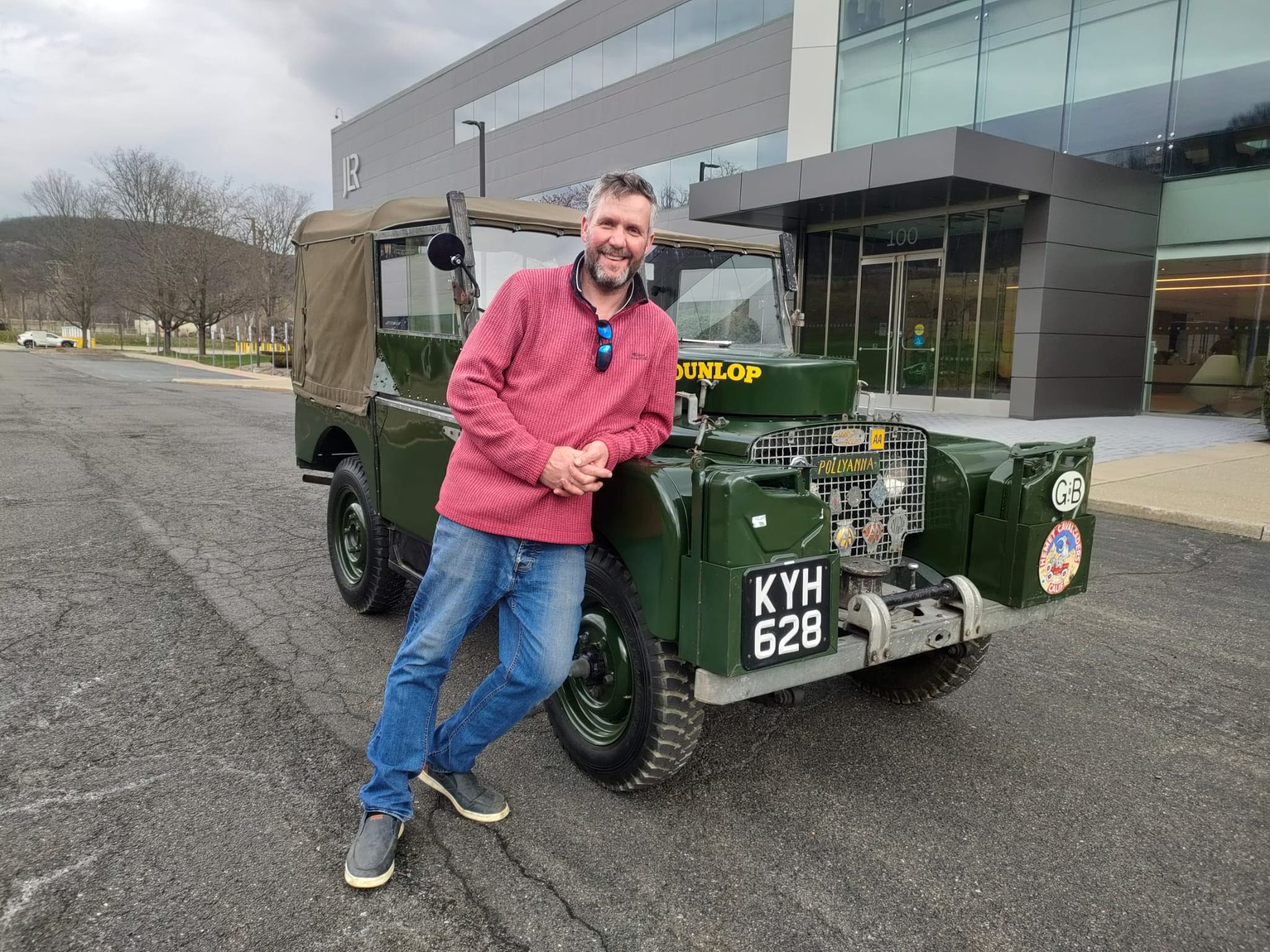
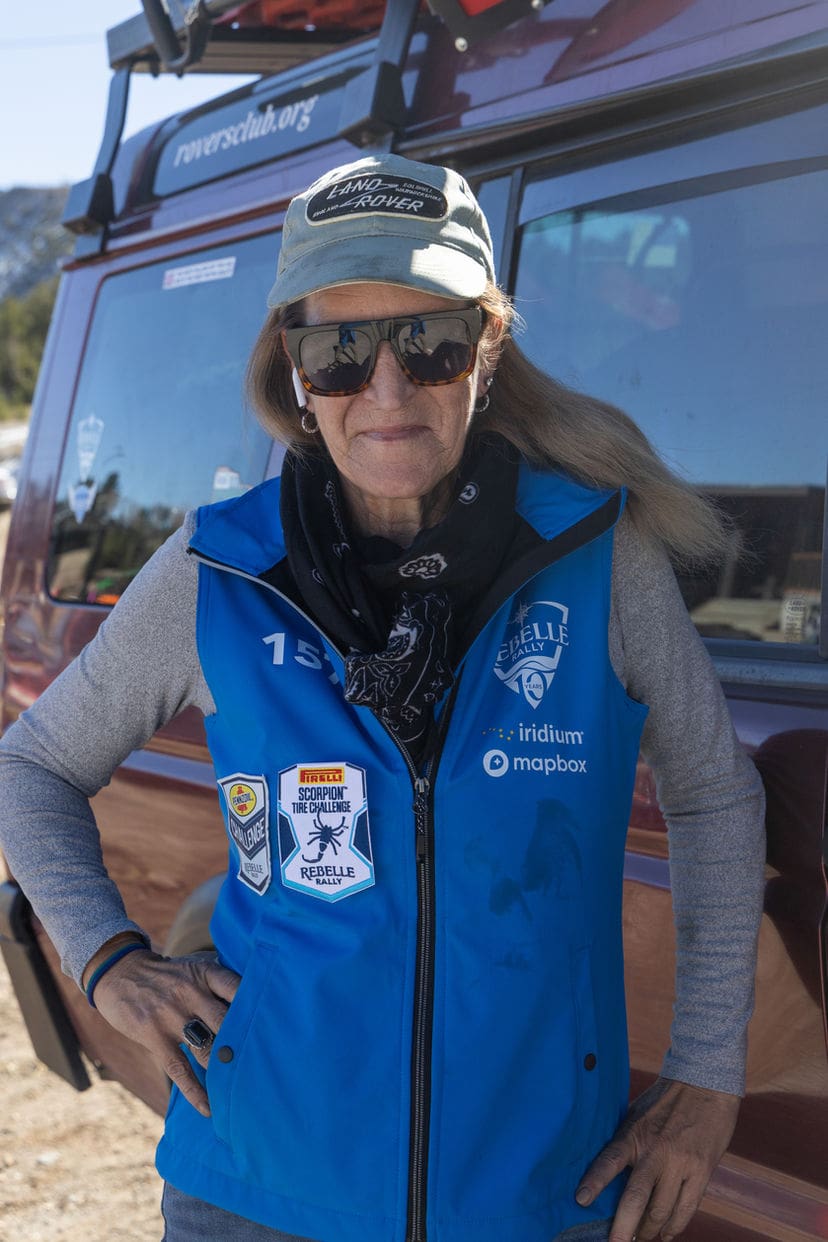
Laura Stacey | I’m the founder and driver behind The Nor’easters, a women‑led overland and rally brand built on grit, curiosity, adventure and the unmistakable soul of my Land Rovers. After running my own marketing company, I traded strategy decks for rugged trails and off‑road courses, chasing the kind of inventure that reshapes you. Now every mile fuels my mission to inspire women to pursue dreams once deemed “not for them” and claim their place in their driver’s seat. @the_noreasters
Barbara Toy Archive | Finding Barbara Toy Instagram | SCARR Texas Rovers + Barbara Toy Tribute Run | Meeting a Legend: Barbara Toy’s 1950 Series I Land Rover | Traveling the Incense Route with Barbara Toy
Host Bios:
Ashley Giordano
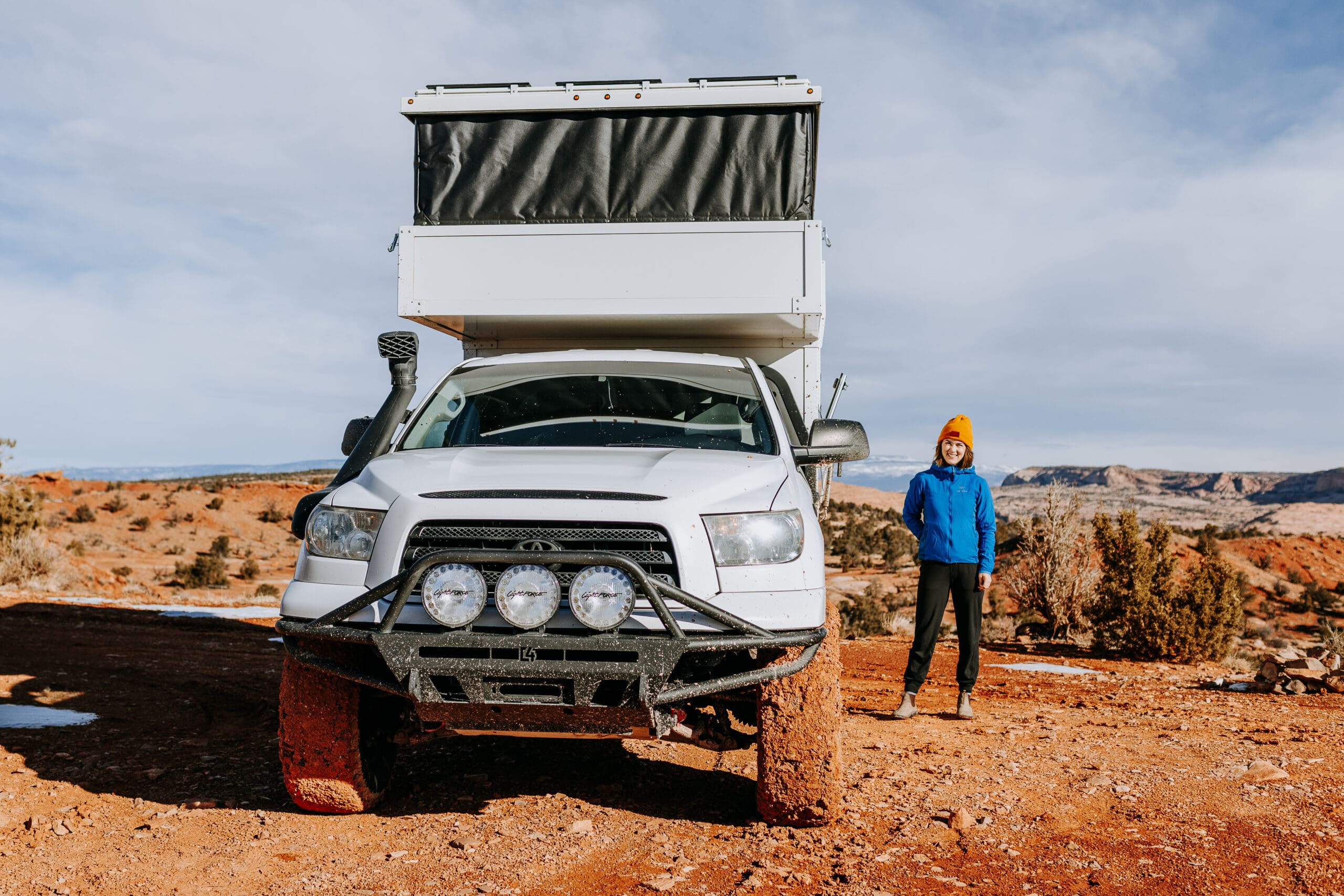
Ashley Giordano’s first foray into overland travel involved a 48,800-kilometer journey from Canada to Argentina with her husband, Richard, in their well-loved but antiquated 1990 Toyota Pickup. Currently cruising along the iconic Silk Road in a 2008 Toyota Tundra, her full-time navigator duties are rewarded with bowls of plov and lagman noodles, hikes in the Tian Shan, and countless cups of fragrant Tashkent tea. As senior editor at Overland Journal, you can usually find Ashley buried in a pile of travel books, poring over maps, or writing about the unsung women of overlanding history, including her enduring inspiration, Barbara Toy. @desktoglory_ash
Our No Compromise Clause: We do not accept advertorial content or allow advertising to influence our coverage, and our contributors are guaranteed editorial independence. Overland Collective may earn a small commission from affiliate links included in this article. We appreciate your support.
Tune in Apple Podcasts | Spotify | YouTube
Transcript
Pollyanna with ash intro
Ashley: [00:00:00] Hello, and welcome to the Overland Journal Podcast. I’m your host, Ashley Giordano, and today I’m joined by a full stack of guests, Bill Cooper, Greg Fitzgerald, Amy Johnson, Tom Pickford, and Laura Stacy, a crew who recently retraced part of Barbara Toy’s route across America in none other than her very own 1950 Series 1 Land Rover, Pollyanna.
Pollyanna is the very vehicle that Barbara Toy used to complete the journey in 1957 during her round-the-world expedition. In this episode, we’ll dive into who Barbara Toy was and why she is such an important but overlooked figure of Overland history, how her 76-year-old Land Rover tackled the freeways of America in 2026, and the significance of finishing the trip at the Texas Rovers Scar event for the annual Barbara Toy tribute run.
I was very fortunate to [00:01:00] join the team for the New Orleans to Texas section of the trip, and I must say it was incredibly special to be in Barbara Toy’s vehicle through many of the places she drove through so many years ago. Ah. Well, I enjo- hope you enjoy this episode, and thanks for tuning in.
Nitto Tire: And a special thanks to Nitto Tire for supporting this week’s podcast.
The Terrain Grappler G3 is the third generation of one of Overlanding’s most trusted all-terrain tires. A new compound and tread pattern delivers improved wet traction and a three-peak mountain snowflake certification. Improved uniformity reduces road noise while still ensuring performance on the road and in the backcountry.
And for even bigger news, the G3 is now available in up to 37-inch sizes. But my personal favorite is the new 255/80R17 that I’m testing on my Quartermaster. [00:02:00] This is the first all-terrain available in that size. And since payload matters, the G3 is lighter than most competitive all-terrains. Nitto backs the G3 with their best treadwear warranty ever.
That means 70,000 miles for hard metric sizes and 55,000 miles for LT and flotation. For more information, visit nitto tire.com. Thanks, Nitto.
Ashley: Welcome, everyone. So we’re making Overland Journal podcast history today with five guests span- spanning multiple time zones, and this is a reunion of sorts as we last saw all of each other in Texas.
So let’s start with some introductions. Tom, would you like to start?
Tom Pickford: I am Tom Pickford. I own Pollyanna, and I’m sure you’ll hear more about me later.
Ashley: Perfect. And you’re calling in from somewhere in the UK?
Tom Pickford: Yeah. I’m calling from Bicester near Oxfordsh- [00:03:00] in Oxfordshire from the UK.
Ashley: And Amy, you’re next.
Amy : Hello. Hello, everybody. So I’m Tom Pickford’s sister, so I grew up with Land Rovers. I have since… My career and my adult life’s t- taken me away from Land Rovers, but what we’re gonna talk about today is taking me straight back into the Land Rover world and reminisce loads. So more about that in a few moments.
Ashley: Yay. Thank you for joining. And where are you coming from today?
Amy : From Menorca, which is where I am with… Brought my mom on holiday for a week.
Ashley: Amazing. So let’s go to another time zone in America. Greg Fitzger- Gerald, please introduce yourself.
Greg : Uh, my name’s Greg Fitzgerald. I’m a, quote-unquote, “Barbara Toy scholar,” also a Overland writer, who you might have seen a byline from every now and then before.
And I’m calling in from Warren Township, New Jersey.
Ashley: Thank you. Up next is Bill.
Bill Cooper: Bill. Oh, I’m Bill Cooper. I’m, uh, not Tom’s sister, and I’m calling in from New Jersey as well, [00:04:00] in the US, and I guess that’s it.
Ashley: And that’s it. Thank you, Bill. We’ll talk to you a little bit later as well. And last up is Laura.
Laura: Hello, I’m Laura Stacy, and I am the tag-along of the group. We’ll hear more about that soon. And I am calling in from the City of Brotherly Love, of Philadelphia.
Ashley: Awesome. Thank you guys so much for making the time, uh, to chat with me on the podcast, and I’m really excited to dive into this trip that we all did together in a 1950s Land Rover.
And we’ll get into all of that, the route why it’s important, who Barbara Toy is, why she was important, and yeah, some other little tidbits like the power of saying yes at the last minute. And Bill’s run a similar trip, so we’ll chat with him about that. Yeah, and big moments big events, and the Barbara Toy tribute run.
Um, Tom, we’ll start with you. Let’s chat about the history and your connection to Barbara Toy and Pollyanna.
Tom Pickford: Yes. Barbara bought Pollyanna back in [00:05:00] Christmas 1950, and then, um, pretty much decided at that moment that she was gonna go off and travel through the Middle East… through, through North Africa and the Middle East to Baghdad.
And then she continued… She kept Pollyanna basically till 1958 when she was, uh, given the ch- opportunity to get a new Land Rover from, from the Rover company. Although she didn’t really ever want to do that, but, you know, you can’t stop progress. So Barbara carried on traveling till the ’70s. And then in the early ’80s was, she was informed by the present owner of Pollyanna that he, that, that Pollyanna was still around, which she had no idea.
She couldn’t– She wasn’t allowed to buy it back. Then basically, long story short, but the, the guy that had, had Pollyanna in the ’80s, he died by ’88, ’89, and Miss Toy, Barbara, got, uh, the opportunity to, to buy Pollyanna back [00:06:00] from the estate. She subsequently then decided to go to a local Land Rover dealer to see whether they would fix up the 38-year-old Land Rover, but obviously they’re only really interested in new cars.
So, uh, she was directed to go into a club which existed called the 1947 to ’51 Land Rover Register, which my, my father was a part of. Because of our locality, like we’re in Oxfordshire and Barbara lived in Oxfordshire as well at the time, she… My father was well-placed with his Land Rover workshop to, to, to help put Pollyanna back on the road.
So this sort of happened in, uh, late ’89 and, and into the nine- into 1990 so that’s where our family connection started in back then. And then, um, and then yeah, we just continued to, to look after Pollyanna, used Pollyanna [00:07:00] as well, drove Pollyanna to Switzerland in 1998 for the 50th anniversary, uh, with permission from Barbara.
And then Barbara as we know, passed away in 2001, and her– the only close family she really had were two nephews who, who basically said to me and my father that we’d like Pollyanna to stay with you. From 2001 till, till present day, Pollyanna’s carried on staying with us and, I like to think being used in a similar way that Barbara intended back in 1950 when she wanted to buy a, a, a vehicle to go overlanding with That’s, that’s, that’s the story so far
Ashley: And you have, uh, quite the experience with Land Rovers yourself, and so she’s in very good hands.
But you have a, a shop, and you take care of and restore Land Rovers [00:08:00] as well.
Tom Pickford: Yeah. It’s, um, it, it’s all sort of become a way of life because, I mean, I was born, um, born in 1976, and my dad from the start was taking me on a Saturday afternoon to the workshop, to my dad’s workshop. So I grew up going to, to work as we called it in our house.
And, um, and then, you know, as, as time goes on, you get interested and, and I, I used to start the engines for my dad when he was servicing and repairing car, Land Rovers and so on. And yeah, so, but what, what I’ve always had a… My dad really, we just always had an interest in, in the older Land Rovers, the Series Ones.
Principally now I just decided to specialize on only Series I Land Rovers. A workshop full of work and plenty to be doing. If I’m not rebuilding engines, there’s vehicles to be working on and restorations to be doing. So, so it’s sort of somewhat a way of [00:09:00] life now really.
Ashley: I love that. And then, so for the listeners that aren’t familiar with Barbara Toy, she wrote a bunch of travelogues documenting her adventures, and one of those books is called Columbus Was Right.
So Greg, could you tell us how the route that she undertook in the US in that book inspired this trip and how it came to fruition?
Greg : Absolutely. The, um, the first catalyst for this trip was that Pollyanna came to the US last summer for the Pebble Beach Concours d’Elegance, where we had a display, or Land Rover had a display of 10 expedition vehicles from, uh, throughout their history, and the thesis of the display was that they were celebrating 75 years of exploration.
The anchor point of that display, of that 75 years, was Pollyanna, which undertook Barbara’s first expedition departing in December of [00:10:00] 1950 Her fourth expedition, or at least the fourth expedition that resulted in a book, Columbus Was Right, was around-the-world trip. So it was across Europe through Greece, through the Middle East, India, down to Singapore, only a couple of months behind the famous first overland trip that did it in ’55, ’56.
She left in ’56. From Singapore, she took a boat to Australia. She was Australian by birth, so it was kind of a return home, and spent a significant amount of 1957 in Australia. In the autumn of 1957, she took a boat to America and arrived in San Francisco around the end of October, and kind of the problem with that is that I don’t wanna call it the best way to cross America, but perhaps the most iconic way to cross America would be to go across the Rockies, across [00:11:00] Utah, Colorado, you know, across the Great Plains.
And keep in mind, this is 1957. No I-70, no Eisenhower Pass, none of that, so you’re relegated to more traditional back roads, federal highways, and smaller passes, and by late November, early December, that was a no-go. So she ended up taking a very southern route that brought her to the edge of the country. So she went from San Francisco to Los Angeles, and then across Arizona, New Mexico.
She was already, by the time she got there, she wanted to go to the Taos Ple- Pueblo. She was already snowed out of that by the time she got there, and then she went to Lubbock, Texas, down to Houston, across the Gulf Coast to Jacksonville. At Jacksonville, she drove Pollyanna on the beach, and by hitting the Atlantic at that point, became the first person to drive a Land Rover around the world, possibly a bit by accident, but she ended up doing it.
And from there, she [00:12:00] drove up to New York, and then after a bit of time in New York, shipped, um, herself and the vehicle back on a, a ocean liner back to the UK, finishing the circle So we kinda have two things. We have this, this American road trip that’s documented in her book, and we happen to have for the first time in many decades, Pollyannas in America.
So we have, Tom is at this point putting piece A and piece B of the puzzle together. Piece C is that the Texas Rovers Club has an event that they hold in April called SCAR, the South Central Area Rover Rally. And at that event for the past 10 years, they’ve been holding a women’s only off-road run during the rally, which we’ll talk more about later, called the Barbara Toy Tribute Run, in tribute to Barbara and her pioneering role in adventure as a woman.
So we had A, B, and now we have [00:13:00] C. And so it all came together to bring the vehicle back on the classical route that Barbara had driven in ’57 in reverse as far as Texas. So we started in New Jersey at Jaguar Land Rover’s North American headquarters in Mahwah, and after some diversions, you know, because half of us are from New Jersey here, so we had to do some service calls, headed down the Atlantic Coast through Northern Virginia, Eastern North Carolina, coastal areas of South Carolina and Georgia, down to Jacksonville, where we were able to arrange special permission actually, thanks to Laura and her connections, to replicate that driving on the beach moment from 1957.
From there, we then headed west along the Gulf Coast to New Orleans, where Ashley joined us.
Ashley: Yay.
Greg : Yay. That was… Yay. And then we drove across Louisiana, where she’d left quite a number of anchors for us to retrace in the [00:14:00] book, down to Galveston Which was also an anchor in the book. From there, we started to diverge from the route to route ourselves toward Dallas and Gilmer, Texas, where this event was.
And we took about three days to get there, not following the historic route. So we think that we probably did about as well as we could. We only touched about 15 miles of interstate, and when we touched interstate, it was only out of necessity. Um, there, there’s a couple areas, especially on the Gulf Coast, where you need to use the interstate to cross a bayou or a river or something.
Either there are no US highways left anymore ’cause they got merged into the interstate to consolidate infrastructure or just something like that. That was the only time we used an interstate between New Jersey and Texas,
Ashley: and it was nice because the book, um, has some specific spots or hotspots where- Yes
you could definitely get in and you know that she was there for sure. [00:15:00] So you were all coming together for this trip, and at the beginning you met at Bill’s place. And Laura, you were a last-minute addition. Tell me more about the power and significance of saying yes to something unexpectedly and at the last minute.
Bill Cooper: Well, I’m pretty sure they’re gonna have to clean her before she ships. Yeah. I don’t think customs is gonna let her out.
Tom Pickford: They would, they would… Well, cust- customs wouldn’t let her out. Like, normally they, they don’t care in Aus- Australia what they export, and then it’s the d- the receiving country that designates as to how clean they want, and we will take anything.
Anyway.
Bill Cooper: No, we’ve had- That’s actually- … we’ve had that before where they don’t, But we’ve had problems in both directions.
Tom Pickford: Have you? Anyway, we’re safe,
Ashley: so I’d expect nothing- No one even checked our camper when we sent it over. No one even looked inside
Tom Pickford: when we got to
Ashley: England. In the UK.
Tom Pickford: Yeah.
Ashley: Bill, this was not the first time that you’ve run the Barbar toy route in the US.
Can you tell me a [00:16:00] little bit more about the trip that you did in the past and how it was different from this one?
Bill Cooper: Yeah. So back in 2022 my wife and I decided… We, we had known about Barbara for, for several years, decided more people should really know about her. Um, I had the brainstorm of taking, uh, my 1951 80-inch Land Rover, uh, very similar to Pollyanna and to recreate her North American drive as best I could.
As Greg alluded to, the original route, first off, Barbara was not overly clear in her books. They weren’t travelogues in the sense of, “Oh, take this road, go to this town, go do this.” Her books were more about her experiences, the people she met. So you sort of have to infer, well, okay, she was in San Francisco, and then she went here.
She most likely, in 1957, these roads [00:17:00] existed, so she most likely took this route, and same across the whole thing. So using some maps that I had, we, we more or less laid out as best we could the route she took across North America. As Greg said, she went San Francisco down to LA, across the south, and then up to New York.
Now, for logistical reasons, ’cause I am based in the northeast, we did the route the reverse. So we went New York, Jacksonville, across to LA, and then up to San Francisco. The main difference is in this route with Pollyanna, we, uh, we stopped in Texas, whereas I continued all the way across through the southwest and up, up the California coast.
Beautiful moments was on the California coast, going up the Pacific Coast Highway. We met up with the, some of the California Rover enthusiasts, so it was quite a sight to see three or four Series 1s, at least one 2A, completely holding up traffic on the Pacific Coast Highway, making lots of friends in about a mile of backup.
But, [00:18:00] hey. They got over it.
Ashley: And then on this trip, how did it differ? You’re with quite a few more people, in a different vehicle. You’re in Barbara Toy’s actual Land Rover.
Bill Cooper: Well, the biggest difference was obviously having Pollyanna herself, which, which sort of made the whole trip a little more special.
You know, there was those moments, and I’m sure, you know, Greg had several on, on when he was driving, where you sort of have that impression, especially going along the Gulf Coast and some of the stretches where things haven’t changed drastically. Or Ashley, you were with me when we were running over past the oil wells Tom didn’t see.
You had those glimpses of, “Okay, this is really not horribly different from what she saw.” Um, another special point came in, actually it was after the main trip when Greg, Laura, myself, and my wife, we took Pollyanna into New York to sort of recreate the very ending of Columbus Was Right, where we drove her down Fifth Avenue, up Park Avenue, past the park.
Mike Bishop pointed out that, you know, I’m [00:19:00] probably the only person besides Barbara herself to have driven Pollyanna down Fifth Avenue. So that was sort of a, a special point, and Greg got some great pictures. I haven’t seen the finals, but we saw the previews. Greg got some great photos from the whole trip.
So in any case, other than that, the, the trip itself was pretty similar. You know, you’re traveling at Series 1 speeds, and you’re more or less sticking to back roads. We jumped on a couple more interstates when we did the trip, partly because we hit some closed roads and a closed bridge we hadn’t anticipated, and so had no choice but to jump on interstates, uh, in several spots.
Other than that, it was actually a very similar, similar sort of trip.
Ashley: Uh, what did it mean to you to do parts of the trip and drive in Pollyanna?
Bill Cooper: Well, it, it, it did make it a little more special knowing that, you know, you’re, you’re sitting in a vehicle that you know Barbara drove, that she covered tens of thousands of miles in.
It did add something. I mean, I’ve got [00:20:00] years of driving Series truck experience. I’ve probably put 150,000 miles on driving Series trucks in various spots and all over the place. So the, the magic was in something, a vehicle like Pollyanna, which is probably one of the most iconic Land Rovers, or should be one of the most iconic Land Rovers out there.
More people should know about Barbara and Pollyanna, I feel, than, Oxford and some of the rest of these things, but-
Ashley: Agreed, yeah. And also, I love how you’re the OG, Bill. You were doing this before it was cool. You were doing this trip a long time ago, before we all got involved- Yeah, well- … almost
Bill Cooper: We did this particular trip before, although Barbara beat me by about 60 years.
But, I’ve been drive- I’ve, I’ve owned Land Rovers for 40-something years now, and been driving Series trucks for 40-something years, which is probably long for a US-based person. You guys in the UK that grew up with them, yeah, you’ve got me beat. But-
Ashley: Laura, at the beginning of the trip, you joined the crew on a whim.
Tell me more [00:21:00] about the power and significance of saying yes at the last minute.
Laura: It was, well, it was very last-minute, obviously. You know, I’d met with the guys, been, told by Tom that, yeah, I could ride in Pollyanna, exciting. That kind of set the stage for me to say yes, I think. It planted the seed as they asked a couple more times.
And it was hard. As much as we’re taught to say no and create that boundary and- Say no. Saying yes is hard a lot of times too, and in this case it was very hard for me. I had my daughter with me. I had no clo- well, I had a few items of clothing ’cause it was o- overnight, maybe two, in Richmond. I wasn’t prepared for this, so saying yes was very difficult.
It was very difficult, but once I did, it was amazing. It empowered me, if that makes any sense. Saying yes was probably the best thing I’ve done in a long time. Not an easy yes, but it [00:22:00] was really the best yes I could have done. It was, as my daughter had said and I’ve stated before, it was a blessing I didn’t know I needed.
Ashley: And you were driving, uh, the Land Rover that you competed with in the Rebelle Rally last year. Uh, tell us a little bit about that truck.
Laura: Salty is probably the love of my life, my first Land Rover. I think everybody loves their first Land Rover. He is a 2000 Discovery 2 that we had … He’s been built up for a couple years.
We just, as any Land Rover person does, you just keep adding and tinkering and wrenching and doing. So we had built him out last year and done a complete body swap on him. As I say, I took him to the spa and gave him a makeover, and, uh, rebuilt him and rebuilt his air lockers and all for the Rebelle to be able to handle the dunes and the territories that we were gonna go through out on the West Coast that we’re not necessarily used to here.
I use the air lockers a lot on this [00:23:00] side, but he definitely enjoyed the West better than the East, believe it or not. He performs much better at, out there than he does over here. That was interesting to figure out.
Ashley: Were there some, um, additions or modifications that you had made for the Rebelle that came in particularly handy for this trip, like the fridge or anything else?
Laura: Oh, my refrigerator goes everywhere with me. I couldn’t live without my Dometic refrigerator. That has been with Salty for a long time. I, I’m a creature of comfort. I like my little comforts and, yeah, I always make sure I have my refrigerator. I did remove the back seats for the same reason as I’m not a camper in tents and whatnot, and I’ve been sleeping in the back seat for many years.
And we finally decided that I was just gonna remove the back seats and, um, they’ve stayed out because I’ve got a platform bed back there, my refrigerator, and it just makes overlanding and life so much easier that way. More comfortable. So other [00:24:00] than that- For sure … there weren’t a ton- I love that … of modifications.
Ashley: So yeah, great message.
Laura: Yeah, the only other thing I added on to him that made life easy at the Rebelle was a Golden Rover’s aluminum table in the gate. And that became our map table, which actually worked out really well for us. So there weren’t- Nice … a ton of modifications.
Ashley: And how was it joining a crew of people?
I mean, I know you were familiar with Bill. Did you know Greg, Amy, or Tom before you came on this trip?
Laura: I did not. Greg and I had talked briefly during an interview for the Rebelle. I had not met Tom. I knew of Tom, and, um, I did not even know about Amy until we were on the road and Tom informed me that she would be joining us, which was really fun.
But as the trip went along, we all just became what I call the Fab Four, and then the Fab Five when you joined us in- NOLA. Polly’s Patrol, as I like to say. And then of course we grabbed [00:25:00] Amy in Texas, which just rounded us out and, I didn’t know what I was getting into. You never know. That’s a long trip to take with people, close quarters, and I don’t think we had one fight the whole time or disagreement or cross word with each other.
We all just blended and did really well. I think there was one time I snapped at you and Bill in Galveston, and that was more due to traffic than it was us as a group. But other than that, I don’t think there was ever a cross word or anybody was cranky the whole trip, which was amazing.
Ashley: Yeah, it was a lot of fun.
And, uh, what a great way for a bunch of, I would say, like mostly strangers to come together and go road tripping together. So, um, yeah, it was a lot of fun. And on that note, Amy, you came over from the UK to join this trip. I know you had some other fun things going on in the US while you were in the United States.
[00:26:00] Um, but what made you wanna join this trip?
Amy : Yeah. So I, I run a, a wellness and a training business and, and partner with a global brand, and the conference was in the States, so brilliant. Exactly great and absolutely perfect timing to be able to join this crew. And I mean, I love travel- traveling, and it was just too big an opportunity to acclimatize with the world of Land Rovers, spend some quality time with my brother who, you know, as adults and life, you know, we don’t, we haven’t spent a lot of time together for years and years and years.
And the connection back to 1957 that, you know, we’ve heard about was incredible, and obviously the Land Rover theme resonating my childhood. So all in all, it was just, yeah, a really kind of special way to circle back to that. And on hearing and learning about the connection with the Scar Rover event, and of c- course, the Barbara Tribute [00:27:00] Run that’s been run- running for 10 years, amazing.
So to kind of hear about that, but to actually have the opportunity to experience all that was, was absolutely brilliant. So yeah, having, and obviously having Pollyanna there and there was just so much, there were so many reasons to be there. There really, really was. And like you were just saying, then- bringing, you know, like a bunch of strangers together, but there was reason and purpose for everybody to be there.
Like there was, there was over the years, people have connected to the Barbara Toy story, all of you, in so many, in different stages and different, times. And then this event, it was like this event brought everybody together. Yeah, amazing, and, and brought everyone together to do the road trip.
And, you know, what have we got left is friends for life. So yeah, it’s amazing.
Hankook: Not a week goes by that someone doesn’t reach out to ask how they can help support [00:28:00] the podcast. We are supported entirely by Overland Journal, the magazine. So when you become a subscriber to the Overland Journal print magazine, you get this beautiful book that comes in five times a year.
It also gives you access to our digital archive. And it’s well over 100 pages of gorgeous images and detailed testing and adventures from around the globe. So if you go to overlandjournal.com and you subscribe to the magazine, use the code OVERLANDPODCAST, and that’ll get you 20% off. It’s only available to our podcast listeners.
We don’t advertise it anywhere else. And then you help us to maintain that independent employee-owned journalism that we have been famous for. So it allows us to conduct those tests without any advertorial. Another way you can help out too, I produced a book last year with Simon & Schuster called Overlanding 101.
You can find it on Amazon or Barnes & Noble or even your local bookstore. And [00:29:00] that encompasses my decades of travel around the world, all of my mistakes and failures and the lessons that I’ve learned in traveling around the globe. Many of those that you hear on the podcast have been distilled down into print form with great lists and beautiful imagery.
So you can find that at your local bookstore, Overlanding 101. And thank you all for listening and for supporting us so much throughout these years.
Ashley: Very cool. I’m wondering what surprised you along the way during the journey, whether it was the actual physical driving of Pollyanna, whether it was a- the event of Skaar or the things you were seeing and doing along the way, what were the surprises?
Amy : The first surprise, which all of you that are very familiar with Series 1s, you know, I get into a Series 1 Land Rover once a year, every August bank holiday with my dad and we do a bit of road tripping and that sort of thing. But like, yeah, I got into… I was like, “Oh my goodness, it’s so loud. How on earth can we talk above this noise for the…”
But you just get so [00:30:00] used to the noise, don’t you? You just… It becomes second nature. But at home I drive electric car, so it’s so quiet by comparison. So that was, that was the first surprise. But yeah, I think, oh gosh, there was just
so much. I mean, I guess in terms of kind of the actual America, you know, driving, you know, such an old Land Rover on such modern roads, you know, is so tiny compared to s- like the big trucks and the stop signs, which are really hard to navigate if you’re not familiar with those. Yeah, and then the kind of
And getting into kind of the rock and roll of, the, the, the, the nature of kind of, you know, the food stops, the fuel stops, the getting out in the morning, you know,
getting ourselves to bed at night, like you’re saying. Living, living in amongst each other close proximity for, you know, a few days and stuff. But yeah, it was … I think the surprise was, the biggest surprise was just, like you say, just being with strangers, coming together through a, a meaningful connection and purpose between us all [00:31:00] that had then g- really quite profound, yeah, im- like experience and impact for all of us.
Ashley: A beautiful thing to say. Yeah. Lots of fun, and I’m sure Barbara would be very stoked and was maybe above looking down, being like- … “What are these crazy people doing?”
Amy : I think so.
Ashley: Cool. Yeah. The noise, I’m so glad you brought that up because, yeah, it was so loud, and I haven’t spent too much time in a Series 1, on that note, Tom, how did Pollyanna fare on the American freeways, and how did she run? Give us some statistics and some insight.
Tom Pickford: Well, on the whole I think she performed pretty well. Like, um, there’s always the milestones that you go through on a journey, and um, the first milestone is just getting to the first gas station.
So that was a mile or two down the road from the Jaguar Land Rover North America HQ. So we did first fuel, and then, and then we [00:32:00] drove to, to Greg’s to Greg’s house was our first stop that night. You, you know, she hadn’t been used for, for six months, been just sat in a showroom. She coughed and spluttered a little bit, but then, then, then ran pretty, pretty normally as I would say.
The overall trip was, um, was, was gonna be around 3,000 miles which we, which we covered in, in two weeks. With a, with a, a one, I’m gonna say at least one day where we didn’t drive her at all. Um, so we– that was a sort of an average of 235 miles a day. Problems that we incurred driving a 75-year-old Land Rover, just, just covering the miles, you’re gonna have a few technical issues, which I, I was, I was pretty proud to say that I felt that my instincts kicked in very quickly on a couple of o- [00:33:00] occasions.
We’d fitted North American spec indicators to Pollyanna last year, so flashing brake and side lights. And, um, unfortunately, we got a a wire trapped on the rear light which caused a, a, a short, um, and damaged one of the wires. But w- I was pretty quick on that so hopefully it hasn’t caused too much damage there.
And then the most… As when I, when I first met Bill, I, I said to him within 10 minutes of being with him, I said, “The only, the only thing I think I’m gonna have a problem with on this trip is, is the fan belt,” because Pollyanna has a, a Capstan winch which drives directly off the front of the engine. So it’s makes it quite difficult to put a, a, a fan belt on.
And, and my father and I have been dis- discussing doing this job for, approximately, I’m gonna say five to [00:34:00] 10 years ’cause we were just like, “One day we’re gonna have to do this.” So we had a belt with us, which is half the battle. Anyway, we were on one of the dreaded interstate freeways, which, which Greg alluded to earlier, and we were going, we were heading into New Orleans.
We were still, I would say, a good half an hour outside of New Orleans, but we, we could only go on the interstate, and we’d just got into, I’m gonna be correct with my geography here, Lou- state side for Louisiana.
Bill Cooper: Yep.
Tom Pickford: And we’d always stop to take a picture of all the state, state borders and with Pollyanna sat by them.
So, so we pulled up, Greg was driving, and then I was just like, again, my instincts was like I just wanted to look under the bonnet. Looked under the bonnet, and then there was just no fan belt there And so it’s like, “Oh, well, that’s, that’s, um, that’s that then.” [00:35:00] So we, we, we weren’t with everybody else, but everyone has sort of, uh, accumulated around us and…
But it was on a day, Pollyanna is a very– I like to think she’s quite a cautious, caring Land Rover. And so it happened to be a day where we’d only covered 160 miles that day. We had a bit of spare time, and the next day we were gonna have a day off. So the fan belt snapped probably on the best day that it could have done ’cause it didn’t affect our scheduling too much.
But it did take three hours of, of Bill and myself removing the front Capstan winch and then wrestling with the, the new fan belt, which is ever so slightly thicker than the original ones, and to try and get them past the, the mounts. Not to bore people too much, but it, it, it basically, it took us… I think we spent 45 minutes, Bill, didn’t we, really, just trying to get the belt to sit in the right [00:36:00] place.
And, um, yeah, anyway, we got there. That was the worst thing that had happened really on, on, on the 2,850-mile journey was that, which was expected. So, you know, if you expect trouble, then you’re usually, covered. You’ve covered yourself, and then I think we, I think we fueled up 16 times, I’m gonna say, roughly speaking.
We probably averaged about 20 miles per ga- per US gallon, ’cause you gotta remember the US gallon’s smaller than an, uh, imperial gallon in the UK. And we consumed, um, I’m gonna say 14 liters, I think 14 liters of oil over that on an engine that as far as I know, you’ve not… I, I was s- I was talk- we were talking on another podcast and I said, “We’ve never done anything to this engine.”
And then obviously the cue is that, the cue is that something will go [00:37:00] wrong. You never talk about your engine when you’re overlanding, do you? You know, ’cause it’s the most important thing. So I did, and then, But as I say, we were covered. So yeah, we, we burnt a bit of oil, but as I say, that engine is a remarkable engine in Pollyanna.
As far as I know, nothing’s ever really been done with it since, since the ’60s. So, um, yeah, so, so I think on the whole, we’d done Pollyanna and obviously the preparation for the trip, we, we did very well.
Ashley: Agreed. Agreed. It was so fun when we filled up with fuel. I’m not familiar obviously with a Series I Land Rover, uh, before this, and I didn’t realize that the fuel tank was like right under the driver’s seat.
So that was kind of a fun little experience at the fuel station, watching how one fills up a Series I Land Rover fuel tank and where all the fuel
Tom Pickford: is. And obviously, and obviously everybody else is observing you around. This is just not a normal thing. So yeah, we didn’t have a lot [00:38:00] of interaction, but the, people do l- quite often ask, especially the, it’s always the, the attended service stations when you get out and they wanna fill up and then they…
You get out, take the seat out, lift the flap, and then, you know, you fuel underneath and they’re like, that’s when you usually get the comments. Yeah.
Ashley: For sure. I wanna shoot it over to Greg now. So this was your first time driving Pollyanna. You, uh, there’s personal significance for all of us, but I think for you as well, so I’d like you to speak to, um, the impact of this trip on you based on your experience looking into the history of Barbara Toy and Pollyanna.
Greg : Absolutely. So the other half of my career behind the, beyond the automotive and overland writing side is historic preservation. I’ve always been a history nerd. Kind of in whatever field I find myself in, I, I latch myself onto the historic side of it. So I’ve always been very into [00:39:00] Barbara Toy. My, my prior career in life was also in the publishing business in New York, so I’ve also always had an affinity for books.
So Barbara Toy, bringing Land Rovers, books, and historic adventure together was always something that really drew me. And the one thing that drove me nuts ever since I found out about her 15 years ago was that you were never able to really access the books. Barbara was a prolific writer. She was not exactly smashing the top of the New York Times bestseller list, and most of her books have been out of print.
They maybe had one printing in the ’50s and ’60s and have been out of print ever since. When I came across her, there had only been one book republished, which was this one, Traveling the Incense Route. This was a 2009 reprint of this book, um, The Highway of the Three Kings, and that was pretty much all that was accessible.
It is not a Pollyanna book. It’s actually one of her latest books. And everything else, when you see a Barbara Toy book come [00:40:00] for sale, if you even see them come for sale, especially the earlier ones, you’re talking $400, $500. And quite frankly, as I’m about to get to, we’ve done a lot of work to elevate her over the past couple years.
It has dried up the market for the earliest books, and I haven’t gotten a good price barometer in a few years on these earliest books because since we’ve elevated this story, they really haven’t come up for sale. So I think there were a lot of personal things, too. Barbara has really become a part of my life since about 2019 in trying to reproduce these books, and probably the person who knows that on this podcast better than anybody is, is Ashley because she and I have worked together for many of these years trying to get these books republished.
And we were successful in 2023 by getting In Search of Sheba her trip across East Africa in the late 1950s, republished by John Murray Press, the original publisher. This was an [00:41:00] incredible lift. To have this book back in print and back in the public conscious is incredible. Unfortunately, this is also not a Pollyanna book.
This was undertaken in the series two that replaced Pollyanna So we’re still working on getting more books republished. So personal significance, obviously just having Pollyanna here in the country. I flew out to Pebble Beach last year just to see the vehicle, not realizing at that point that Tom and I would really hit it off that weekend and how this would build.
Another thing which we’ll kind of t- tap into at the end, I think maybe a little more, we’ve started a website, barbaratoy.com, which is gonna talk about the history of Barbara, but we’ll touch on that later. So being able to drive Pollyanna, to drive it across America, a country which I obviously live in and love, having been on a lot of these roads, to experience them at this pace, to be forced into a slow road trip across the country.
I’ve always wanted to do a, as William Least Heat-Moon called it, Blue Highways trip across America. But if I take my LR3, it’s really [00:42:00] easy to skip the first 400 miles close to home. And I think it was really, you know, this is gonna get really sappy, but it was really special to me to have Ashley there for the last week and a half.
Through this Barbara Toy thing, we’ve become very good friends, and we, you know, talk almost every day on WhatsApp and stuff, but we never get to hang out ’cause Ashley’s always living in a camper in Kyrgyzstan or something. So, um, we, we’ve really gotten to hang out very little for how much we talk.
So we got to spend a week and a half together in Pollyanna. There was one day that you and I were driving across Acadiana, the southwestern Cajun part of Louisiana, which is one of the more documented parts of the book. And we’d just finished visiting what’s called the Evangeline Oak, um, which is a Acadian cultural touchpoint in the, in Louisiana in St.
Martinville. And we’re driving on roads that we’re really starting to realize were part of the book. These were almost certainly roads that Barbara had been on. Unchanged territory, you know, [00:43:00] just incredible places. You and I are driving there, the sun is setting, and I’m like We made it. We made this all come together, elevating this story, and it was just such a special moment for me, having put a lot of work into elevating this story.
Ashley: I wanna take it back over to Laura, because I wanna talk more about the funny moments and some of the highlights of the trip and the biggest laughs. ‘Cause we all, if I can speak for everybody, I personally had so many laughs on this trip, and it was so much fun. So what were some of the most hilarious moments, Laura?
Laura: We laughed. I think that was one of the biggest highlights of this trip. I, I just, we laughed constantly. I think one of the funniest parts was, you know, the four of us in New Orleans, and it’s Greg’s favorite part. I mean, I actually had to bring the monogram poncho to New York City as the first night we were, you know, in New Orleans, and we decided to go to dinner.
[00:44:00] We’re walking down the street towards Canal Street, and I’m like, “Well, thank God I had my monogram poncho with me.” I didn’t think twice about it, and the guys just about died. They lost it, and I was just like, “Doesn’t everybody carry their monogram poncho with them?” And from that point on, I mean, Greg just, he constantly…
It, it hasn’t died yet. Greg asked me, “Do you have the monogram poncho?” And it came to New York City with us. It will show up in a photo with Pollyanna in New York City. It had to come along. I think another one that cracks me up, and I repeat it constantly, I’m sorry, Ash, is, “It’s okay, I’m 40 years old. I can do this.”
And that was you doing your laundry. I was… you would come up and ask Greg and I for change. You didn’t wanna go to the front desk and ask her for quarters when we were in New Orleans, and you’re finally like, “It’s okay, I’m 40 years old. I can do this.” That’s [00:45:00] another one that I just die on. And then the following morning, you know, Greg and I went and had this great Michelin breakfast, and I get back and I WhatsApp Tom like, “I’m doing my laundry.”
I’m like, “Oh, I need to do laundry. Where are you?” He goes, “I’m at the bar, and it’s got washing machines in it.” And I was just like, “You gotta be kidding me.” I mean, so next thing I know, I’m in an Uber going to a bar, having a beer, and doing my laundry with Tom. I mean, we- these things just went on through the whole trip.
I mean, they were just, every day it was something else to laugh about I got to experience a lot. I think New Orleans was probably the funniest though. It made me realize how old I am and naive, you know, when I went and checked on Pollyanna. Just these instances happened over and over again. I think people thought we were crazy.
Every restaurant we went into, [00:46:00] and Ashley, you documenting our meals before we could eat. It just was on and on. I mean, I, I s- I’ve never laughed so much. I don’t know about the rest of you guys, but I definitely had a lot of laughs.
Ashley: Yeah, that’s a sign you’re having fun, it’s a good road trip, and you’re with the right people for sure.
Yeah. Greg and I had an armadillo experience and, uh, there were just other funny things like the guys getting reprimanded by you, I think Laura, when I was taking a picture above of our breakfast and I was standing on a chair. Yes. And you’re like, “How dare you not give her a hand down?” But it’s all good- Exactly
because I don’t need a hand because I’m 40 and I could do it. Yeah. So yeah, to be fair, I’m scared of asking for change sometimes, but I’ve done a lot harder things than laundry. So-
Amy : I know. That’s so cute …
Ashley: good times. Yeah. Thank you, Laura, for sharing that. I loved it. And we’re gonna head over to Amy now.
Let’s talk more about the Scar [00:47:00] event and the Barbara Toy Tribute Run. And we have s- a few ladies that started the, uh, Barbara Toy Tribute Run about a decade ago, and I’d love to hear more about the impact on the event on you, and also the women around you. You were chatting with a lot of ladies on that event, and I think that, that it’s really important to them, and seeing Pollyanna was important, and getting out on the trail.
So I’d love to hear from you about that.
Amy : Yeah. It was amazing how this had been running for, for, like you say, a decade. And I’ve, I suppose more in kind of recent years, been really passionate about female empowerment and about, positive psychology and, and the positive mindset. And, and, and tha- those are all things that, of course, Barbara, her story brings all of that to the forefront.
And it was just such a powerful reminder of, you know, what legacy and inspiration and impact on … That one life and one vehicle can have, and the influence that it can have on [00:48:00] so many individuals. Let me talk about the Tribute Run itself. Women were saying, so over the last 10 years, obviously having a female-only Tribute Run, it’s, like, only women behind the four by
Behind the driver’s seat, in the driver’s seat, behind the, behind the wheel. And they were saying, you know, some of them were saying, you know, “Well, I’ve always just got in the passenger seat, because that’s what we do.” Whereas, you know, and actually it was like, “Oh, I can have a go,” and, “Yeah, why not? I should have a go.”
And then it was a bit like, you know, people … Wom- some of the women talked about, you know, nervousness and fear of that, of wanting to do it, but then feeling a bit like, ugh. Um, particularly ’cause some of the, you know, the, the trails are quite hairy as well. Like, I’m not used to those. The trails, they were
Like, I was gripping on for dear life at times, but only because in my head, totally a mindset issue. Did not feel unsafe, but just me just thinking, you know, “Oh.” Anyway, that aside. But yeah, they, they talked about, you know, facing kind of their fears, and actually then really, really enjoying [00:49:00] it and, and loving, you know, the off-roading and how some of them had gone on to buy their own trucks now.
And you know, all saying that … You know, the ones I spoke to were supported by their by their partners to do so. Um, and yeah, so I think it … Yeah, the kind of legacy and impact of Barbara Toy do- It, it, it really just, she just, it just still really, really impacts because obviously having events like that have ke- has kept her, her, so much meaning of her life alive.
And it’s not, I think, you know, it’s not… It, it goes far beyond also just the 4×4. It’s, you know, it’s… can relate to so many different women’s lives, and, you know, it’s the… One of the, her classic quotes from her life is, “Life is gloriously free, and if you really want to do something, nothing and no one can stop you.”
Which is so [00:50:00] true, but there’s so many barriers often. And a lot of the time it’s in our mindset, of course, but there are also, you know, we know we don’t all live in completely equal societies yet, et cetera, et cetera. So, you know, that message that just can be given to women to remember that we, you know, we are free, is an incredible legacy to leave behind, and a message that can inspire women to pursue whatever they want to in life and face that, face that fear.
So the road trip and the tribute run, I think, really did symbolize, so much of that, and it was just really so special to be a part of it.
Ashley: Yeah. Shout out to Laura Shacklett and Sarah Caldwell for starting the Barbara Toy Tribute event 10 years ago, and welcoming us, uh, warmly to that event. And it wouldn’t have been possible without them starting it.
And the look on their faces, uh, when they saw Pollyanna for the first time was, was pretty special. Cheers.
Amy : Yeah. Yeah. And the story goes back, doesn’t it? Because they, [00:51:00] how they, again, how they found out about Barbara, just looking for a name on the internet for, a, a, a Landra, a Land Rover, basically.
And up popped her story and and we know, putting her name in now, you know, Greg’s articles come up and, and, you know, other media that yourselves have all written, which is, you know… So it’s all, it’s there. But yes, you know, they, again, kind of everyone, all these kind of different connections that have brought everyone together for this, you know, one event, for this 10th anniversary.
Amazing.
Ashley: Yay. Yeah, it was my first Land River event as well, and I felt very welcomed, and everybody was super friendly. It was a lot of fun. Um, I had some delicious moonshine, and I think it was- Some other pasta dish that was delicious, and, uh, yeah, I, I had a great time. I would love to go back. Yeah. So I wanna shoot it over now to Bill, and I know that you visited some other Barbara Toy spots in the world.
Can you share a little bit more [00:52:00] about your trips and experiences in other places that Barbara Toy’s been?
Bill Cooper: Uh, sure. I guess there’s, there’s two main pieces. Unfortunately, with this particular trip that we were kinda short on time and, and things, so we could only do about half. It would’ve been nice to get out to the western part of, of the US where Barbara drove.
Um, as I said, we, we had done it in 2022, and there’s some locations that Barbara does describe. There’s even photos of her driving through the West in the Wigwam Hotel, which is basically giant concrete teepees that were hotel rooms back in the ’50s. The Grand Canyon and things like that.
It would’ve been nice to be able to get Pollyanna out there, and who knows? If Tom gets adventurous, maybe something’ll happen in time. The other big one, and one that was actually a special one, was in 2023 my wife and I took a trip to Gibraltar. [00:53:00] Now, when Barbara started her adventures and she details this in her first book, Fool on Wheels, she actually, right after buying Pollyanna and getting her ready, she shipped Pollyanna to Gibraltar To get ready for her drive across North Africa.
And she wound up being held up because of the rains. You get flooding in, in Morocco and across Tend, um, Algeria and whatnot. So she had to delay for a week or two, and she wound up staying in The Rock Hotel. Well, when my wife and I went to Gibraltar, we stayed in The Rock Hotel, which doesn’t look any different than it did back in the ’50s.
It is an absolute art… It’s a gorgeous art deco, great food. You sit on the little balconies. You’ll overlook the harbor. There’s Morocco in the distance. But in any case, when we pulled up, we were actually in our Camel Trophy Freelander. The bellman, who is an expat Brit, loved the truck and insisted we park it right in front of the hotel, which in A Fool on Wheels, [00:54:00] is where Barbara was sitting with Pollyanna, and she was checking the oil or doing a, a tinkering with a few things.
When, uh, a gentleman who was living in the hotel, they referred to him as Brigadier Firebrand, strode up to her and then said, “What’s this I hear about you driving off alone across North Africa?” And she started to s- answer, “Well, I…” And he immediately jumped on her, “You’re nothing but a fool, a fool on wheels,” and he stormed off.
So I think that sort of set the tone of her next several books, and it also helps illustrate, I think, some of what several people who knew Barbara referred to her as tenacious. She was one of these people that when she had an idea, she set her mind to it. She was gonna do it, and very little was gonna stop her, authorities or anything.
So being in this spot roughly where that occurred, staying in this hotel was kind of a special thing. I think there are future plans for Pollyanna.
Ashley: Yes, we’re definitely [00:55:00] gonna get into that next. One more question for you, Bill. So we’re talking about places and how they’re- Mm-hmm … tied to Barbara Toy and her history.
Let’s talk a little bit about things. So there’s, uh, some things that are in Pollyanna that are mentioned specifically in her books and have some history tied in with them as well
Bill Cooper: Yeah. The, uh, the, the two main, when you first look in Pollyanna, you’ll see that there’s this, this wooden stick hanging from the, from the bar in the dashboard, and then there’s a little pair of red shoes hanging from the rear view mirror.
And she actually does mention both of those in the beginning of Columbus Is Right. The stick is actually an Algerian policeman’s truncheon that she was given, and I think it may have even been on this first trip across where the policeman thought she should have something to protect herself. And she was given this Algerian policeman truncheon, which stayed in Pollyanna.
I’m impressed that it’s still there. And the same is true for the shoes. They were Greek,
Amy : Greg, if I remember correctly.
Bill Cooper: A souvenir she’d picked up earlier [00:56:00] on, and she mentions them in, in Po- so we don’t know for certain when they wound up in Pollyanna, but we’re fairly certain it was fairly early on.
But it was just a token of Barbara’s and they, they meant something to her. And again, it’s another piece that it’s amazing that they’ve stayed with her. Um, another thing you’ll see in there is a little first aid kit that she mounted, and that’s been there… again, we don’t know exactly when that went in.
I don’t know, Tom, if you know for sure, but I think it was fairly early on. Yeah, I mean, the wooden box that sits in there. Again, at the beginning of Columbus Was Right, she describes, ’cause she was asked several times, she describes some of the things she carried along with her, and all of these items are in there.
She describes the wooden box in the, in between the seats that she did for safety with the little latch on it. The the wooden box, she put a wooden cover across the back of Pollyanna so she could hide things underneath. Ironically, we had done the same thing with our 80 inch before we did the trip, and it was before I’d actually read that part of the [00:57:00] book.
We had put the wooden box in the back ’cause the same thing, when you’re driving a soft top Land Rover, there is no such thing as security. So we bolted in a lock box between the seats in the front, and we put a wooden cover with a hasp on it in the back for the exact same reasons. Yeah, I, I, I’m blanking if there may be anything else in there from The modifications she did for the doors.
The passenger door could only be opened from the inside, which stymied a few people when they wanted to hop in the truck and they realized there was no way to open the, open the, uh, the passenger door. The little furniture key latch on the driver’s side with its big old skeleton key, it looks to be actually it’s an old furniture, like a, a dresser drawer latch.
Again, just a practical solution to what’s, what’s normally not an issue. Yeah, Gr- Greg, Tom, I can’t think of- The badge … anything else. The b- oh, the, the badge. The, uh, the, uh- Okay … Calico, or the, excuse me, the Hemet Cavalcaders. One, one of the sort of neat souvenirs that Pollyanna carries is on the front [00:58:00] right now, there’s a large, uh, enameled badge for the Hemet Cavalcaders Jeep Club, and this was a, a Jeep club she ran into.
It was actually the Calico Ghost ca- Ghost Town in California. She ran into this club, and she wound up spending a little bit of time with them, and they were so impressed by this woman driving across. Now, the- they gave her one of the club badges off of one of their trucks. Now, this was sort of special because the Cavalcaders had a club policy that those badges were never to be handed out to anybody, non-club members, and they were always turned in.
If you left the club, you had to give back the badge. The fact that they gave one out was actually quite impressive, and it’s also quite impressive that it’s still with Pollyanna. I think it’s been mounted in a couple of different spots on Pollyanna over the years. It was originally on the wing, then it was on the side, and then now currently Tom has it on the, uh, on the jerry can holder, which was not there originally.
It’s such a- Yep. Go ahead, sorry.
Ashley: It’s such a testament to [00:59:00] Tom and your father for keeping the vehicle in the original… You know what I mean by original, like keeping the important sentimental things- Minds … intact for people to enjoy.
Bill Cooper: Yeah. Realistically- Yeah … Pollyanna is still Pollyanna. I mean, she’s been maintained.
She’s stayed running where parts have been replaced. But for the most part, Pollyanna is Pollyanna.
Ashley: Yeah, I love that so much. Let’s talk a little bit more, Tom, about next steps. Bill alluded a little bit to the future and what would you like to see happen next?
Tom Pickford: Yes. Obviously we, having successfully done this little trip- My, my head gets, um, thinking about what we should do next ’cause, um, it’s, um, well, it was a success the whole trip.
And so looking, moving forwards we thought next year in 2027 we’d like to [01:00:00] maybe go to, to D- to Gibraltar and to the Rock Hotel to take Pollyanna there. So we will ferry her down to Spain. Obviously this, this wasn’t what happened in 1950. Barbara, Barbara ferried Pollyanna all the way around to Gibraltar, whereas we’re gonna go into probably Santander and then go across to Barcelona.
There’s a Land Rover party that happens there every October, which is a fantastic event. And I’m talking, these are ideas at the moment, so we, we, we will be working on these in the next few months. You know, possibly we would like to do a Barbara Toy tribute, uh, run in, in Spain and then, um, and then drive down to, to Gibraltar and take up residence for a weekend in, in the Rock Hotel.
And, um, and then we’re, we’ll see what goes on from there. So that’s 2027. [01:01:00] 2028, I’m, I’m, uh, working with the people in Australia ’cause it’s the 80th anniversary of, of Land Rover being launched. And we will look to probably take Pollyanna, I would like to think, to back to Cooma, New South Wales, uh, where for, since the 40th anniversary, they’ve been having a Land Rover gathering there i- in Cooma in the Snowy Mountains.
And the nice thing about that town is, is, is Barbara mentions going through Cooma in, in 1956 in, when she started, when she was in Australia. There’s a connection there with, with, uh, with Pollyanna, uh, historically. So that’s, that’s 2028 We’ll see in 2029 maybe there could be scope to, to do the other half of the, the other half of the American journey, maybe ending up back at Skar in, [01:02:00] in 2029.
But yeah, it’s good to have some, it’s good to have some plans, so, plans and dreams. If you haven’t got either then, what have you got?
Hankook: And a special thanks to Hankook Tire for supporting this week’s podcast. With summer underway, head over to expeditionportal.com for Jeep Beach vibe inspiration.
Our team spent the weekend with Hankook Dynapro Tire at this year’s 2026 Jeep Beach week in Daytona, Florida, and took a look at their Wrangler 392. Look for Jeep Beach 2026 when you go to expeditionportal.com.
Tom Pickford: We’ll see.
Ashley: Fantastic. So glad to hear there are some future plans for Pollyanna, and she’s not sitting around idly waiting for something.
I don’t know what, but she’s gonna be ready for the next adventure, so that’s quite exciting. Yeah. Greg, I’d love you to share where can we find [01:03:00] everybody online? What are resources if you wanna learn more about Pollyanna, or you wanna learn more about Barbara Toy, uh, where should people go on the interwebs?
Greg : Um, the first resource that Tom and I are starting to develop is going to be a website, the Barbara Toy Archive at barbaratoy.com. We have, through various places, through the research that Tom and Ashley and myself and others have done, a lot of information about Barbara, a lot of information about her books, a lot of information about her life beyond the books.
There has been a biography published called Which Way Now by a woman named Leslie Wildman, who befriended Barbara’s nephew, who ended up moving into her house after she passed. And when he passed, she helped his widow clean out the house and, and discovered Barbara’s story at that point, and kind of was able to salvage as much as she possibly could out of the house of Barbara’s writings, [01:04:00] possessions, everything that she could.
So if you, if you wanna read the books, as I said, there’s, there’s two that are pretty accessible. This, uh, Traveling the Incense Route, a reprint of The Highway of the Three Kings, is out of print, but easily available on used bookstores. And then In Search of Sheba is, um, still available new only in the UK, but easy to either get international ship.
There’s now some used copies in America you know, wherever you are it’s, it’s pretty easy to find that online somewhere and relati- uh, very affordable Our goal with the website is going to be to summarize some of the earlier books that are just completely inaccessible. Ashley and I continue to be on this major quest to get them republished, but until then, we wanna tell the stories and, uh, tell where she went, how she went there, kind of a, a CliffsNotes of the entire story of each of these books so people can understand the breadth and the scope of what Barbara did.
If you’re looking for a little more, [01:05:00] Ashley has a couple articles that you can find on Barbara on Expedition Portal from over the years if you go on Expedition Portal and search the archives. And if you do a Google on Barbara, I’ve written a few things that come up. But I think this website is gonna really start to be…
That’s our big goal for the rest of this year, is to start to tell the story in a digital way. You know, we’re in a new era. You look at how these stories have evolved from, print books sold only in one part of the world, to early internet to, you know, now being, deeply ingrained in a multimedia digital environment is what we’re working on next.
Ashley: All very exciting stuff. Thank you, Greg. Um, and also thank you guys for joining me on the Overland Journal podcast today. I will put all those links in the show notes, and also everybody’s bios and Instagram handles and any websites. Please feel free to check those out in the show notes. We’ve listed them.
I guess I best go join [01:06:00] this group of kids outside the camper playing an intense game of football. And, uh, yeah, thank you to Laura, thank you Greg, thank you Amy, Bill, and Tom for joining me. Thank you. It’s been such a pleasure- Yes … to connect with you guys again after the trip. Indeed, mate. And I’m stoked, stoked for the next one.
Amy : Oh, that was great. Thank you, Ashley. Really
Bill Cooper: lovely to see you all. Thank you, Ashley.
Amy : Yep. Thank you. Thank you, Ashley