

Many years ago, an octogenarian English friend of mine—who remains fitter than many people half his age, suggested buying an armored Land Rover for overland travel. At the time, I dismissed the idea. Armored vehicles are heavy, expensive to maintain, and hardly ideal for crossing continents where fuel economy and payload matter. However, after several encounters with armed men during our travels in Africa, and more recently in Mexico, the concept seems considerably less far-fetched than it once did.
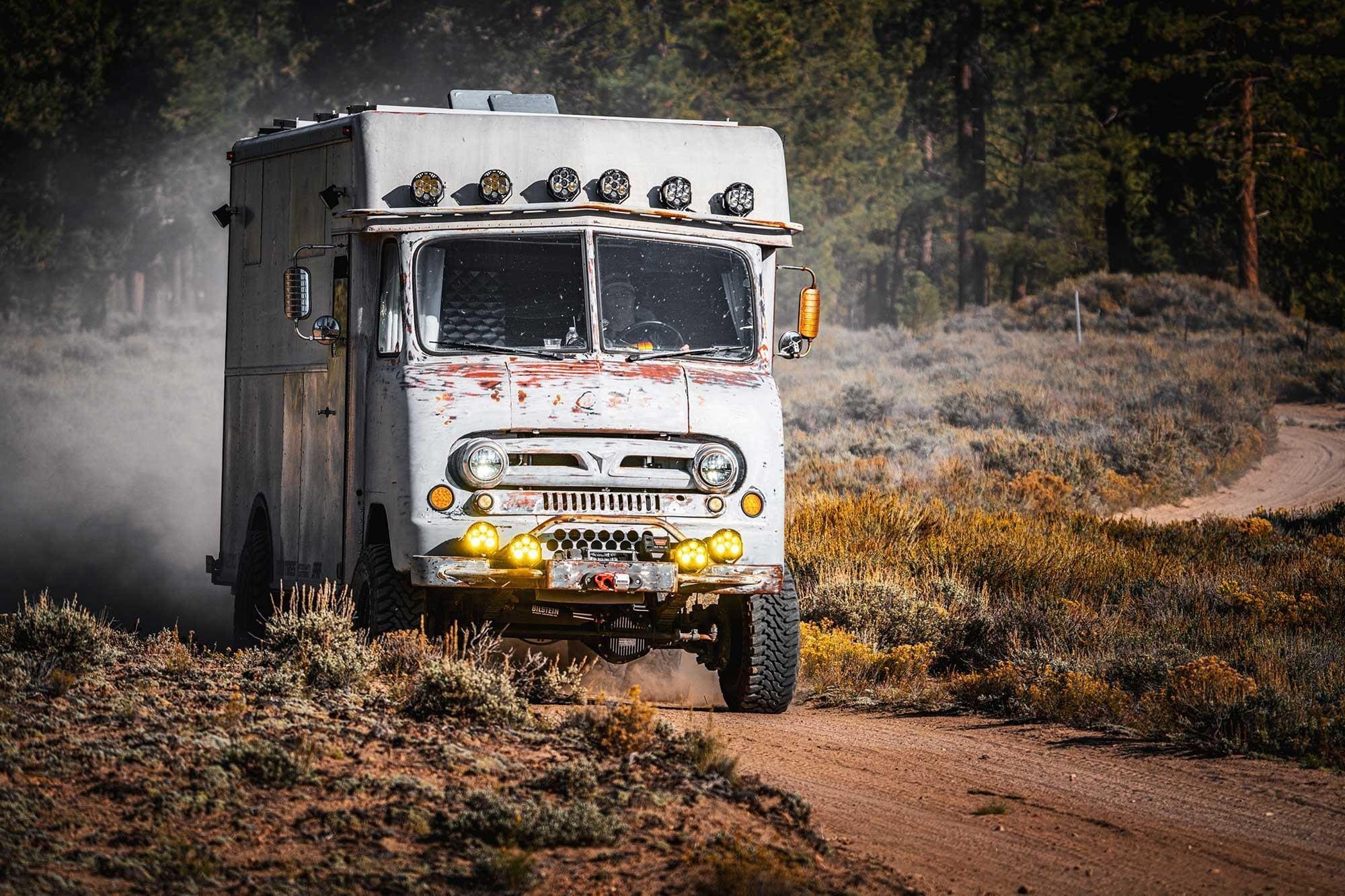
The overland community has never lacked creativity, but few builds combine history, engineering, and practical expedition capability as effectively as Chuckles Garage’s 1953 Ford “Nuke Van”. Built in 2020 around an exceptionally rare Cold War-era emergency response vehicle, the project preserves an unusual piece of American civil defense history while adapting it into a fully functional four-wheel drive expedition camper capable for extended travel far from paved roads.

Rather than restoring the vehicle to factory specification, Scott Birdsall of Chuckles Garage chose to preserve its historic character while modernizing virtually every mechanical system beneath the hood. The result is an overland vehicle that remains recognizable as a 1950s government response truck, yet delivers the reliability, drivability, and off-road capability expected of a contemporary expedition platform.
The van itself has an unusual origin story. During the height of the Cold War, governments across the United States invested heavily in civil defense infrastructure designed to respond to the possibility of nuclear attack. Among the specialized equipment commissioned were mobile radiation survey vehicles intended to enter contaminated areas following an atomic explosion. According to Chuckles Garage, only three examples of this aluminum-bodied Ford step van were constructed for the California Office of Civil Defense, and the Nuke Van is believed to be the only surviving roadworthy example.
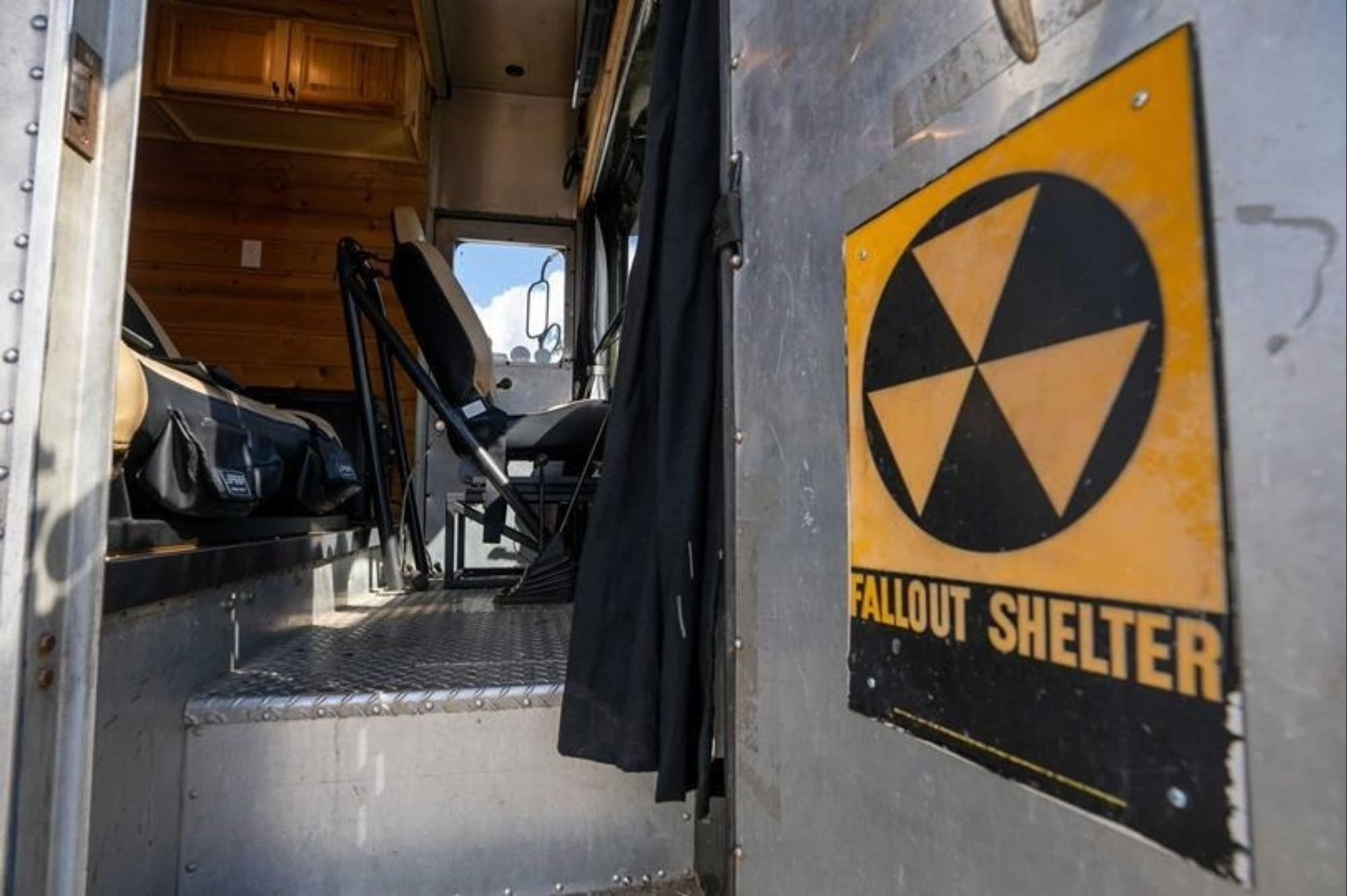
Its original mission was a serious one. Equipped with lead-lined sections and radiation-monitoring equipment, the vehicle was designed to transport personnel tasked with surveying fallout zones after a nuclear detonation. Fortunately, it was never required to perform that role. After government service ended, the van passed through several owners and served a variety of civilian purposes, including time as a mobile recording studio, before eventually falling into storage.
When Birdsall acquired the vehicle, he saw an opportunity to create something entirely different. Rather than turning the van into a showpiece intended only for exhibitions, he envisioned an overland camper capable of genuine backcountry travel while respecting the vehicle’s historical significance and preserving 70 years of precious patina.
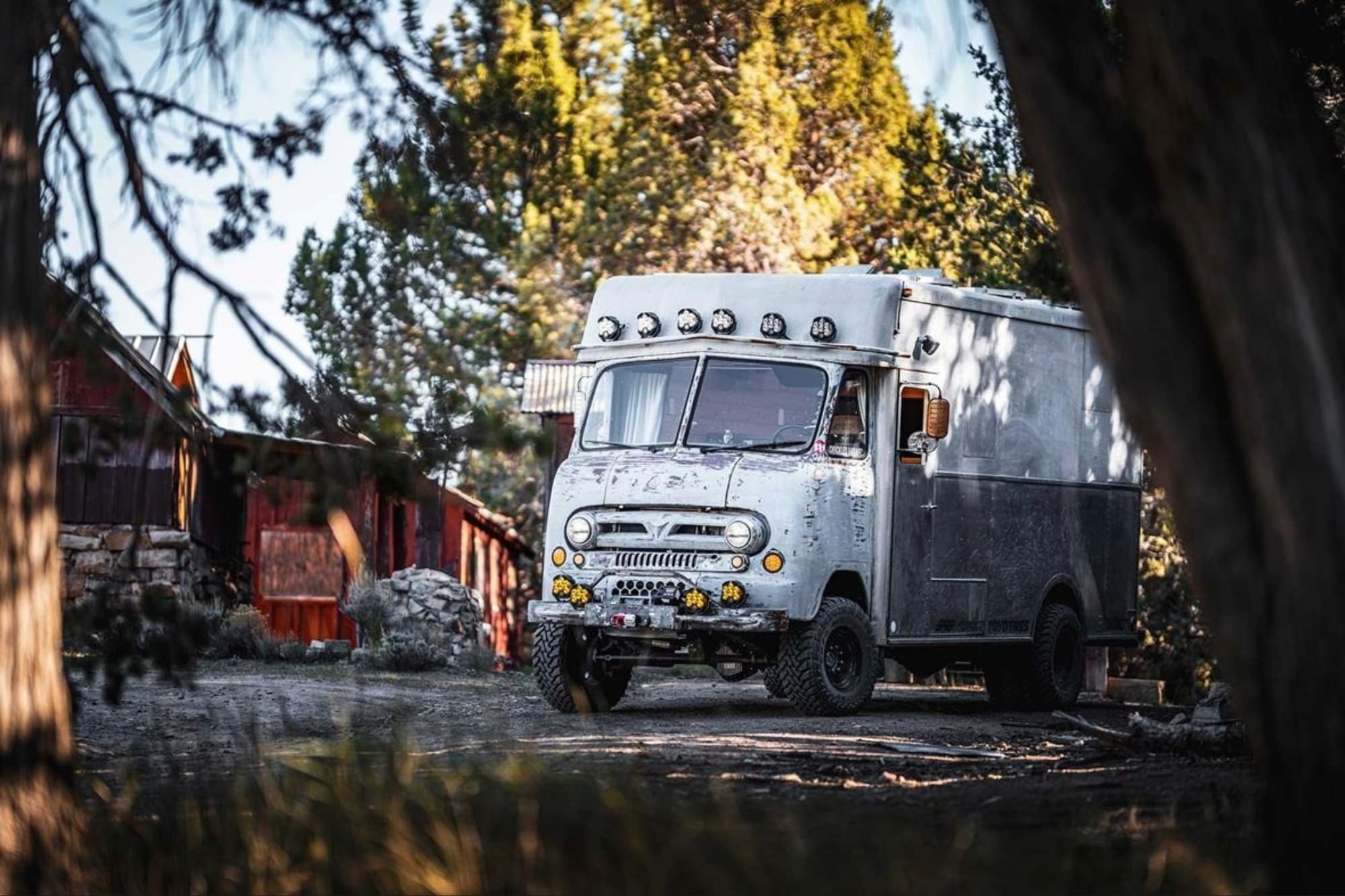
That philosophy is evident throughout the build. Externally, much of the van’s original industrial appearance remains intact. The boxy aluminum body, military-inspired proportions, weathered finish, and unmistakable 1950s styling immediately distinguish it from modern expedition vehicles. Rather than disguising its age, the restoration embraces decades of service, giving the van an authenticity that cannot be replicated through artificial patina or reproduction bodywork.
Beneath that historic exterior, however, almost every major mechanical component has been modernized.
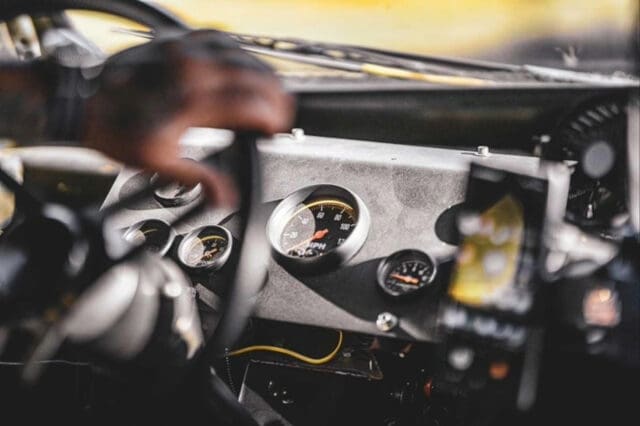
Power comes from the well-known Cummins 5.9-liter 6BT turbocharged inline-six diesel engine, one of the most respected diesel powerplants in the overland world due to its durability, worldwide parts availability, and relatively simple mechanical design. Our personal experience has demonstrated the remarkable durability of this engine. We drove a 6BT-Dodge Ram-powered Nimbl Camper from the heat of a Central American summer to the Arctic in winter. Apart from a frozen engine breather, the 6BT never missed a beat. Chuckles Garage equipped the engine with performance upgrades, including an ATS Aurora turbocharger, larger injectors, and a free-flowing exhaust system. The combination reportedly produces approximately 250 horsepower while delivering around 700 pound-feet of torque, emphasizing low-speed pulling power rather than outright performance.
For an expedition vehicle weighing substantially more than a standard pickup, torque is arguably more valuable than horsepower. The diesel’s broad power band allows the heavy van to climb steep grades, negotiate technical terrain, and cruise comfortably on highways without placing excessive stress on the drivetrain.
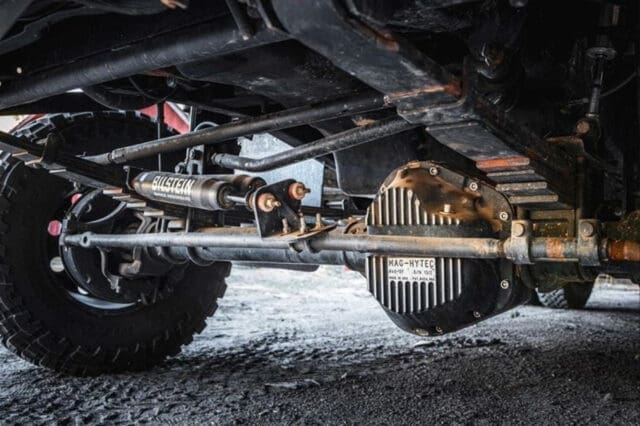
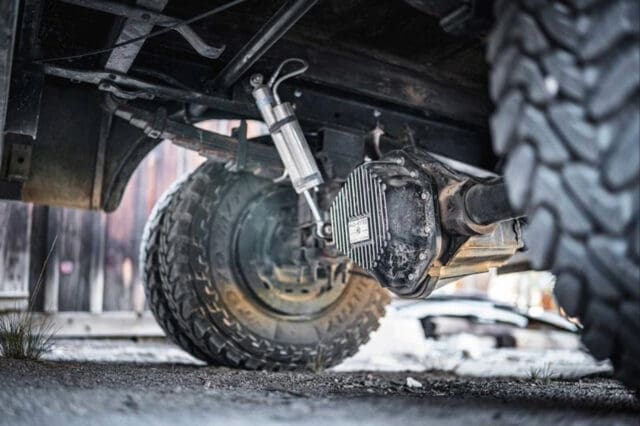
Equally significant is the conversion from two-wheel drive to four-wheel drive. The original government vehicle was never intended for demanding off-road travel, but the Chuckles Garage build incorporates a heavy-duty drivetrain more commonly associated with purpose-built trail rigs. A New Venture NV4500 five-speed manual transmission transfers power through a divorced NP205 transfer case to a Dana 60 high-pinion front axle and a Corporate 14-bolt rear axle. These components have long-established reputations for strength and serviceability in off-road applications, making them logical choices for a vehicle intended to travel far from repair facilities.
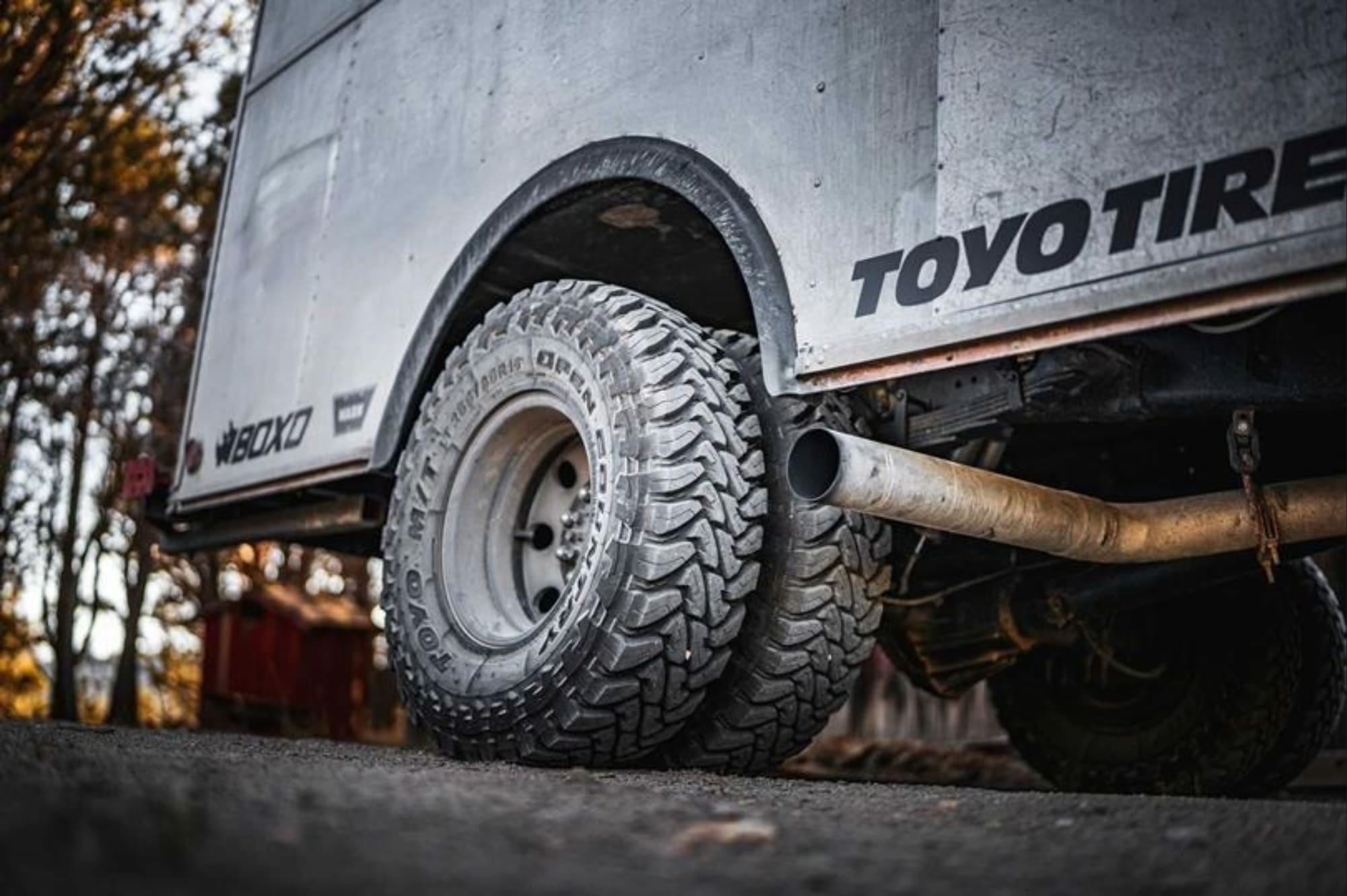
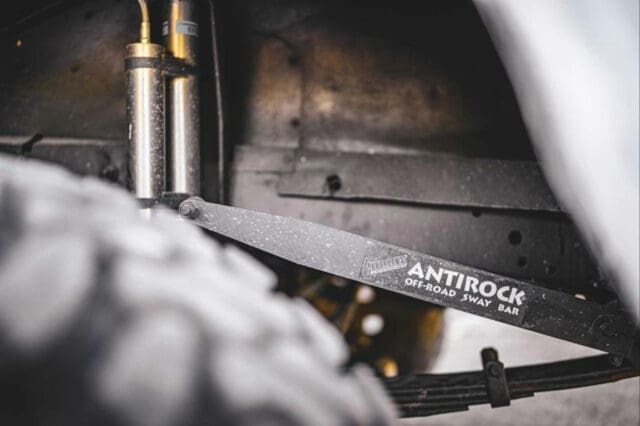
The suspension received an equally comprehensive redesign. Reinforced chassis sections improve rigidity, while heavy-duty leaf springs and Bilstein remote-reservoir shock absorbers help control the vehicle’s considerable mass over rough terrain. The van rides on 34-inch Toyo off-road tires that provide additional ground clearance while maintaining reasonable highway manners.
Although the Nuke Van possesses obvious novelty value, its mechanical specifications demonstrate that it is much more than a historical curiosity. The selection of proven commercial-grade drivetrain components reflects an understanding of expedition travel, where reliability and ease of repair often outweigh maximum performance.
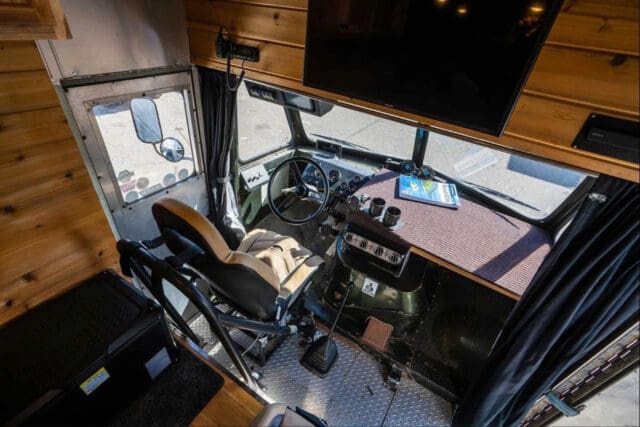
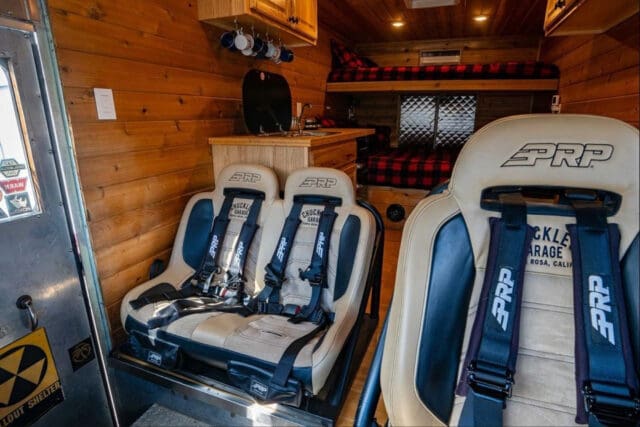
The interior has also evolved dramatically from its original government configuration. Instead of retaining the sparse workspace once occupied by radiation-monitoring equipment, Chuckles Garage created a compact living space intended for extended travel.
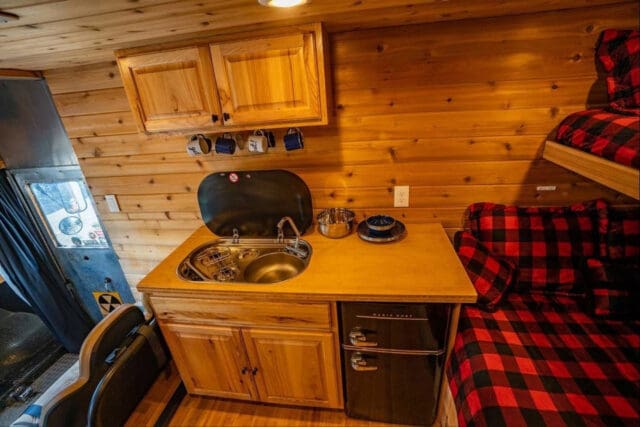
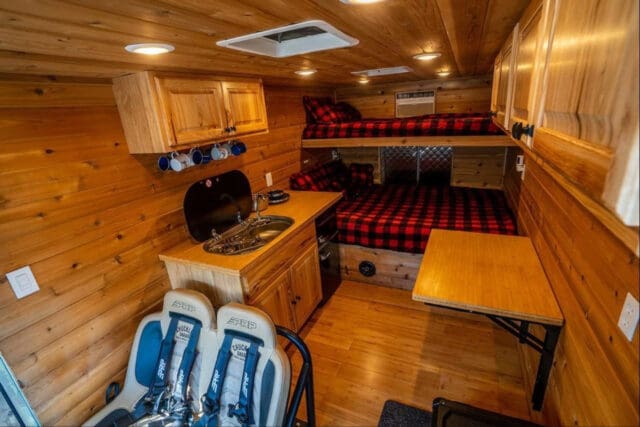
Natural wood finishes soften the otherwise industrial character of the aluminum body, producing a cabin that feels more like a traditional camper than an emergency response vehicle. Sleeping accommodations, practical storage solutions, a compact galley, and other expedition essentials transform the once utilitarian workspace into a comfortable mobile base camp. Reports indicate that heated flooring, insulated walls, and carefully integrated cabinetry contribute to year-round usability without compromising the vehicle’s vintage character.
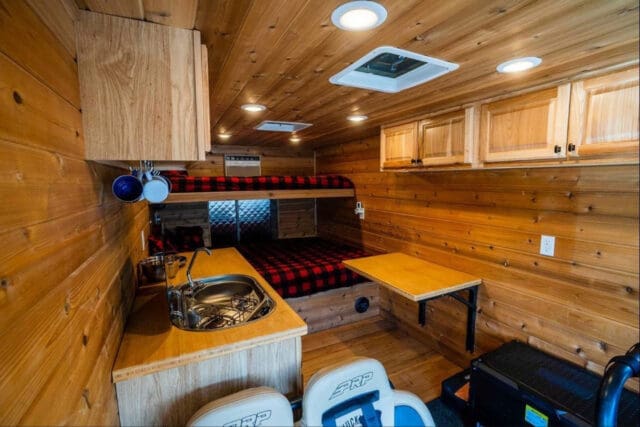
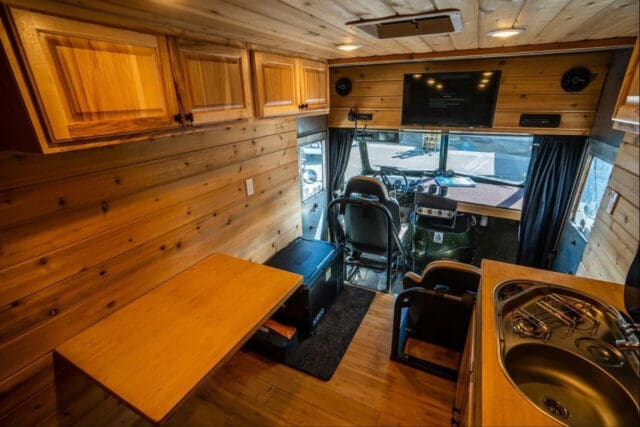
Unlike many contemporary overland campers who rely heavily on electronic automation and luxury features, the Nuke Van follows a more restrained philosophy, which we approve of. Its appeal lies in mechanical simplicity, thoughtful craftsmanship, and durable materials rather than extensive digital systems. That approach aligns closely with the preferences of many experienced overland travelers, who often prioritize field serviceability over technological complexity.
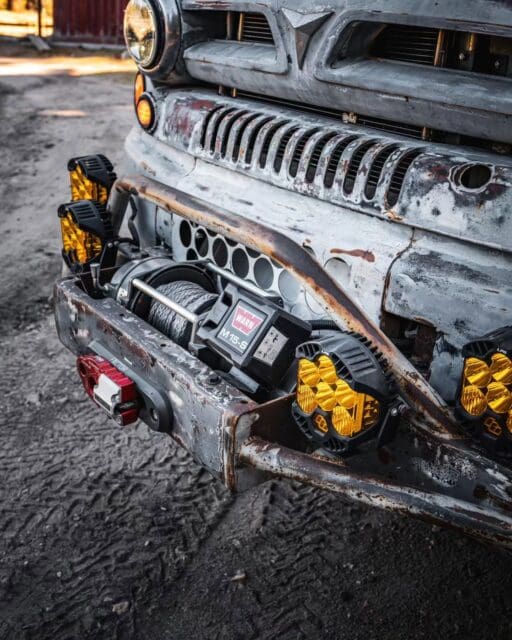
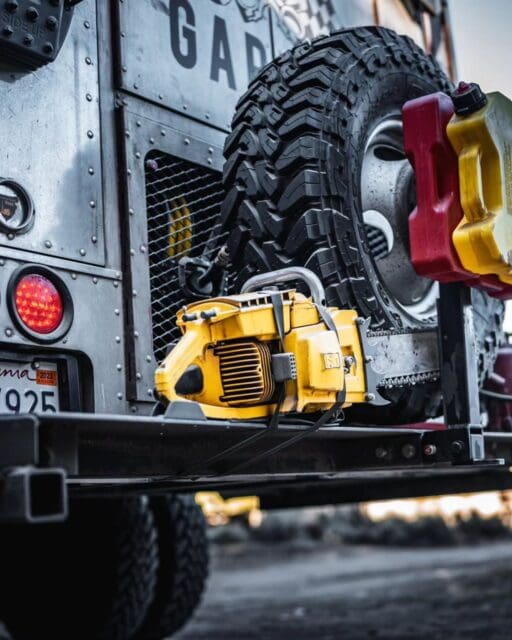
Another aspect contributing to the van’s popularity is its authenticity. Numerous custom overland builds attempt to create vintage aesthetics using modern vehicles. The Nuke Van takes the opposite approach by preserving an authentic historic platform while discreetly incorporating contemporary engineering where it improves reliability and usability.
Its history is visible throughout the vehicle. Original bodywork, government markings, evidence of decades of use, and even battle scars have largely been retained rather than erased during restoration. Those details remind observers that the van once represented a genuine piece of Cold War preparedness rather than a design exercise inspired by that era.
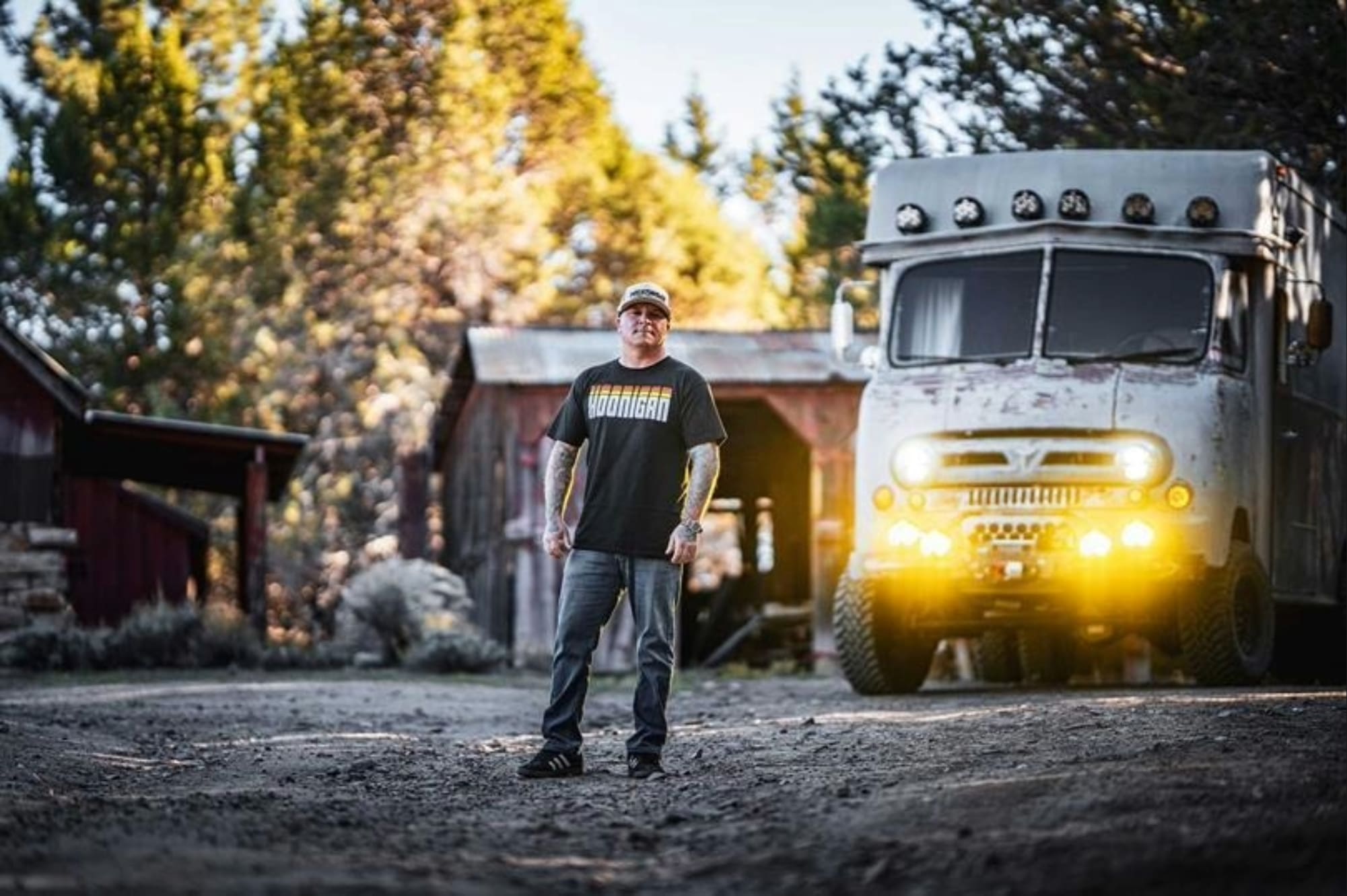
Scott Birdsall himself is well known within American motorsport and custom fabrication circles. Through Chuckles Garage, he has developed a reputation for building unconventional vehicles that combine engineering excellence with distinctive personalities. His projects have ranged from record-setting diesel-powered race trucks to classic restorations and highly customized off-road machines. The Nuke Van continues that tradition by blending motorsport-grade fabrication with historical preservation and practical overlanding.
The project also reflects a growing trend within the overland community toward preserving historically significant commercial and military vehicles. While classic Land Rovers, Jeeps, and Toyota Land Cruisers remain popular foundations for expedition builds, interest has expanded to include fire trucks, military transports, utility vehicles, and commercial vans that offer unique character alongside substantial cargo capacity.
The Nuke Van occupies an especially unusual position within that movement because its original purpose was so specialized. Few surviving vehicles can trace their origins directly to Cold War nuclear preparedness, making this Ford as historically interesting as it is mechanically impressive.
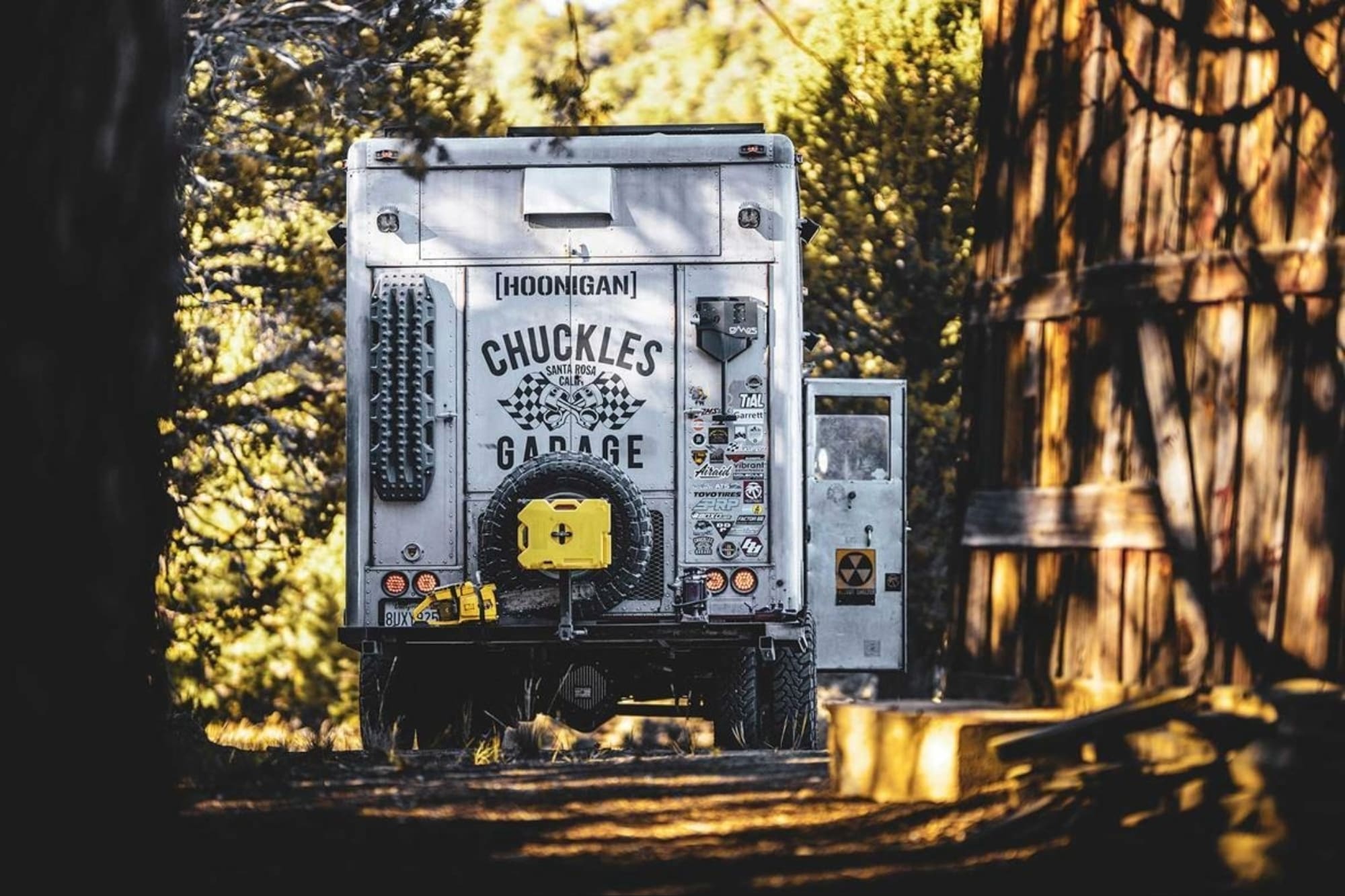
Despite its size and unmistakable appearance, the finished vehicle appears designed for genuine travel rather than occasional exhibition. The diesel drivetrain, robust axles, practical living quarters, and carefully engineered suspension suggest a vehicle intended to accumulate miles rather than remain behind ropes at automotive shows.
For the broader overland community, the Nuke Van demonstrates that successful expedition vehicles do not necessarily require the latest chassis, advanced electronics, or premium luxury interiors. With thoughtful engineering, proven mechanical components, and careful craftsmanship, even a seventy-year-old government surplus vehicle can be transformed into a capable platform for modern exploration.
Chuckles Garage Facebook (the garage does not run a website)
Read More: Overland News of the Week
Our No Compromise Clause: We do not accept advertorial content or allow advertising to influence our coverage, and our contributors are guaranteed editorial independence. Overland Collective may earn a small commission from affiliate links included in this article. We appreciate your support.
