

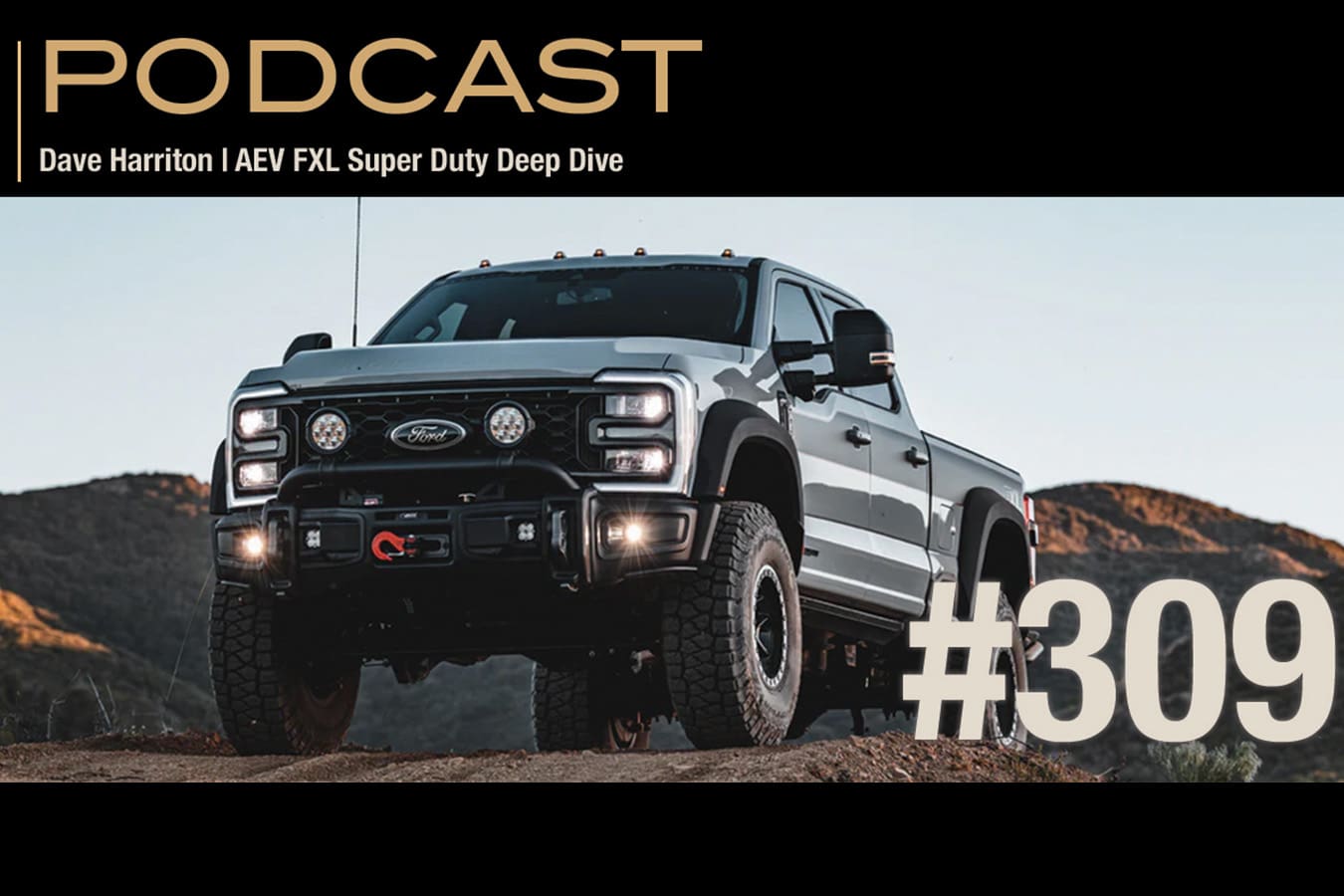
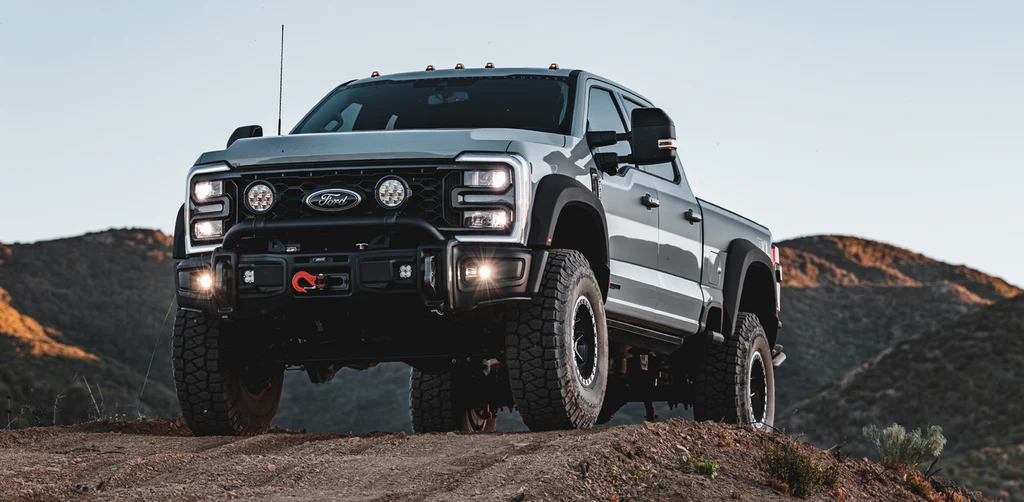
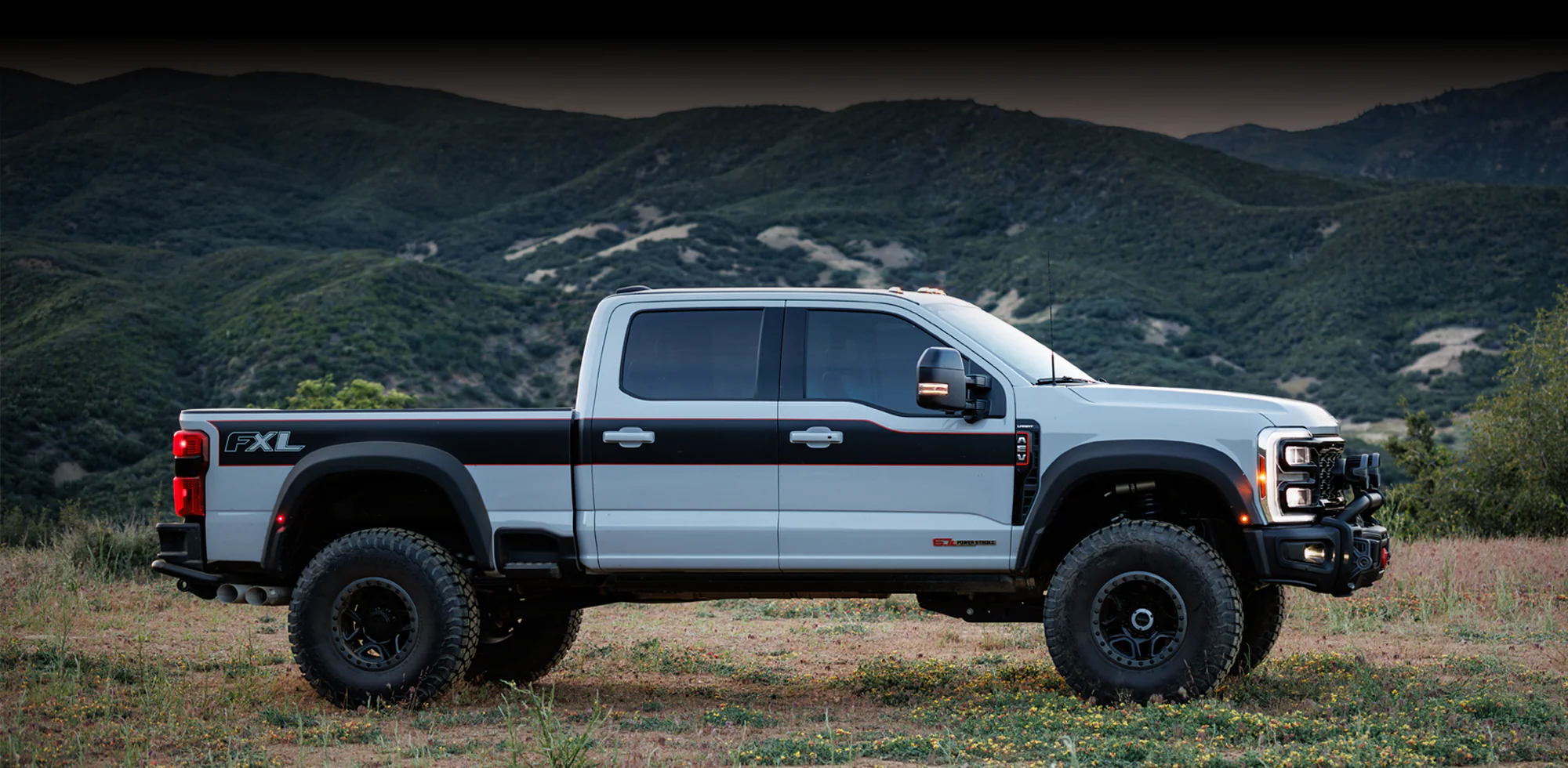
Overland Journal Podcast host Matt Scott and AEV’s Dave Harriton discuss the new AEV FXL, a Ford Super Duty heavy-duty truck program following AEV’s Ram and Chevy/GMC lines. They address brand loyalty, regional preferences, and modern truck capabilities. The FXL will be sold as complete VIN-stamped, warrantied dealer trucks and as individual parts starting early June 2026, beginning with bumpers, wheels, and flares, followed by Bilstein-tuned AEV 8100 suspension. Engineering topics include ADAS integration, cooling, 20,000-lb winch packaging, modular bumpers with replaceable wear bars, and a reinforced rear bumper. They also cover squared flares, beadlock-capable HD wheels, F-rated 40-inch towing tires, upcoming 450/550 super-single options, a brush guard, spare tire carrier development, and snorkel design challenges.
Overland Journal Podcast Episode #309
The Overland Journal Podcast is brought to you this week by Nitto Tire, Overland Journal Magazine , Hankook Tire
New to Overland Journal and want to grab a subscription! Visit Overland Journal and enter code: overlandpodcast at checkout for 20% off. We thank you for being a subscriber.
Guest Bio:
Dave Harriton
Founded in 1997 by Dave Harriton, American Expedition Vehicles (AEV) has evolved from a small Montana garage into a global leader in OE-quality aftermarket parts. AEV is a success story in American manufacturing, with over 90% of its products built within 200 miles of Detroit. Specializing in vehicles like the Jeep Wrangler and Ram, AEV employs a total-integration approach to ensure every component—from stamped steel bumpers to advanced suspension lifts—works in harmony. By passing rigorous OE-level testing, AEV improves vehicle drivability on both highways and rugged terrain. Dedicated to innovation and craftsmanship, AEV remains the gold standard for high-performance off-road and overland adventure equipment, maintaining a steadfast commitment to quality that is proven worldwide.

Host Bios:
Matt Scott
Matthew is a leading expert in automotive adventure. He has extensively explored the world’s most remote places by 4WD and is considered an industry authority on overland travel. He is the only American to ever become an editor of a major Australian 4WD publication and has over 15 years of competitive auto racing experience. @mattexplore
Tune in Apple Podcasts | Spotify | YouTube
Transcript
Dave-Harriton_Podcast_1
Matt Scott: [00:00:00] Hello, and welcome to the OVERLAND JOURNAL podcast. I’m your host Matt Scott, and we’ve got Dave Harriton on the podcast again today. Always good to have you. We’re gonna be talking about the new AEV FXL, which is the next, I guess, the next evolution of AEV’s big heavy-duty trucks.
Dave Harriton: Yeah, it’s kinda the last in the trilogy.
Matt Scott: Yeah, ’cause you guys obviously have Ram. You started in, like, 2013 on that you were saying?
Dave Harriton: Correct.
Matt Scott: Personal favorite of mine. Had a couple. You went into Chevy and GMC, so you can get those. I mean, those are factory assembly line built trucks, which I think is really cool and notable. Like, I don’t think there’s really anybody else in the industry that has that level of integration on the OE side-
Dave Harriton: Yeah
that AEV- No, it’s, it’s, it is quite a truck from the for an OEM offering, just to be offered through the factory, fully validated, fully crash- Yeah … tested, everything’s done.
Matt Scott: I think that [00:01:00] Chevy or the GMC is the most comfortable full-size truck that I ever bought with those DS- DSSV spool valve shocks, the Multimatic stuff.
I mean, Multimatic’s crazy. Like, I always feel like people, like, geek out on Fox or Bilstein or whatever, but they don’t understand, like, the level- … of technical valving that these guys are doing- … for motorsport. Like…
Dave Harriton: Yeah, the DSSV shock is v- just not understood. I wouldn’t say misunderstood, just not understood.
Matt Scott: Yeah.
Dave Harriton: It’s an amazing shock because the, the fluid’s not going in and out of the shock. The fluid’s going around in a circle in the shock, so it’s basically impossible to overheat, and it, it always kinda hurts my soul a little bit when I see somebody take a Bison and take those off and put a, you know, a standard shock on it.
Matt Scott: Well, ’cause they’re basically just, like, a tube with, you know, some, like a valve stack and a little hole or something. Like, it’s really throwing a lot of stuff away, but… I mean, they’re using, like, the Multimatic stuff on like, the Ford GT program uses it for Le Mans. Like, it’s insane.
Dave Harriton: Yeah, they mostly do [00:02:00] race cars.
Matt Scott: Yeah.
Dave Harriton: Um- I
Matt Scott: mean, they built the Ford GT. They built- Correct … the new uh… What’s the new Mustang? The crazy one. The
Dave Harriton: GTD.
Matt Scott: The GTD. Yeah. They built that. Like-
Dave Harriton: Which has Multimatic shocks. Yeah.
Matt Scott: Yeah. Yeah.
Dave Harriton: It’s, it’s an amazing shock. Unfortunately, in our industry it’s just not quite understood-
Matt Scott: Yeah …
Dave Harriton: well enough, but…
Sponsor: And a special thanks to Nitto Tire for supporting this week’s podcast The Terrain Grappler G3 is the third generation of one of overlanding’s most trusted all-terrain tires. A new compound and tread pattern delivers improved wet traction and a three-peak mountain snowflake certification. Improved uniformity reduces road noise while still ensuring performance on the road and in the backcountry.
And for even bigger news, the G3 is now available in up to 37-inch sizes. But my personal favorite is the new 255/80R17 [00:03:00] that I’m testing on my Quartermaster. This is the first all-terrain available in that size. And since payload matters, the G3 is lighter than most competitive all-terrains. Nitto backs the G3 with their best treadwear warranty ever.
That means 70,000 miles for hard metric sizes and 55,000 miles for LT and flotation. For more information, visit nitotire.com. Thanks, Nitto
Matt Scott: But we’re here to talk about the FXL which is based on the Ford Super Duty. Correct. We’re sitting in a Ford Super Duty right
Dave Harriton: now. Yep.
Matt Scott: I think, you know, one of the things you said to me early on when this program was about to be announced is, you know, you can make a Ram…
You could make the world’s coolest Ram, which I think you kinda did, and that’s still never gonna be enough to convince a Ford guy to buy a Dodge, to buy a Ram.
Dave Harriton: Yeah. In heavy duty pickups the, brand loyalty is, is-
Matt Scott: Everything … [00:04:00]
Dave Harriton: yeah, it’s really, it’s hard to com- or comprehend how strong the brand loyalty is in full size trucks- Yeah
especially in the heavy duty world. And then also, um, we noticed that it was very geocentric.
Matt Scott: Mm.
Dave Harriton: So, like, you know, this part of Canada is all Ram, and this part of, Texas is all Ford or maybe even say all f- all of Texas is Ford. But there’s very, very, very strong geocentric locations- Mm … for heavy duty trucks.
And we also had a lot of customers just asking us for Ford. Yeah. And, you know, it was something we, we never had the time or the… Just never really had the time or the knowledge to do it. Yeah. And then it, we kind of were wrapping up the GMC, the next generation Chevy and GMC, and we had a little bit of time.
And we looked at it, and we s- we’ve looked at it several times. I’ve, you know, we’ve got probably CAD data going back to 2009.
Matt Scott: Yeah. Okay.
Dave Harriton: We’ve looked at it a couple times. And anyway, this time we looked at it, and we had the experience, we had the knowledge. And we felt like now was a good time to, to do that with [00:05:00] Ford getting all the ADAS-
Matt Scott: Yeah
Dave Harriton: and, uh, you know, the radars going in. And it just, it opened up some opportunities for us that we felt like we had the right amount of experience to, to jump in.
Matt Scott: I think that these heavy duty trucks, they’re always kinda leapfrogging each other. You know? Like, I think Ram was really hot for a while. Like, I, I personally like the Rams.
You know, we were saying earlier, they’re kinda like a scaled up Wrangler chassis. Mm-hmm. You know, they’re really technically capable off-road. I think Ford has these insane drivelines. 500 horsepower. Yeah. 1,200 pound feet of torque, and then they have this 10-speed transmission that’s in… Geez, it came out in 2010.
It’s pretty proven now. That FXL, which is on 40s, I mean, it hides them so well, but it’s gotta be a beast for towing.
Dave Harriton: Yeah, I mean, I, honestly I think they all these trucks now, they’re all, let’s just call it 1,000-plus pound feet of torque. Chevy’s slightly less, Ram’s right there, Ford’s a little higher.
All of them have good transmissions now.
Matt Scott: Yeah. [00:06:00]
Dave Harriton: Um, the Ford and the Chevy transmission, they were developed the same time.
Matt Scott: Oh, I didn’t know that.
Dave Harriton: You can’t say they’re the same 10-speed, but they’re very, very similar.
Matt Scott: Really similar, yeah.
Dave Harriton: The new Chrysler A- AP transmission- So it’s
Matt Scott: not a A- HP.
Interesting.
Dave Harriton: Yeah, HP is high performance. Forget what AP is, but it’s more built for towing.
Matt Scott: Yeah.
Dave Harriton: It’s the sa- it’s very similar. Yeah. It’s got a PTO, um, and it’s built for the, it’s an 8AP1050.
Matt Scott: Yeah.
Dave Harriton: So it’s built for that torque. But w- you know, since the Ram got that transmission in ’25, I would say they’re, like every one of these trucks, people are always asking me which one’s the best, which one’s your favorite.
I don’t think you can go wrong. I think that, honestly, pick the best dealer in your area. Mm-hmm. You know, if you’re not brand loyal, just pick the best dealer in your area, and I think that’s why the geocentric popularity has developed. Yeah. I think there’s just good dealers in certain areas, and they’ve developed a loyal following.
I,
Matt Scott: I always notice, like, when I’m going up to the Tetons or something, I’m driving through Idaho, it’s like every vehicle is a GM product. [00:07:00] Hmm. Like, every truck. Like, you really do start to notice it in different areas, like-
Dave Harriton: Yep …
Matt Scott: living in Arizona, I don’t see a lot of Chevys. Like, I see a lot of Rams, I see a lot of the Fords.
Dave Harriton: Mm-hmm.
Matt Scott: Um, I think it’s just good for people to have options.
Dave Harriton: It is, and, you know, I know some people would get disowned by their family if they bought a Ford.
Matt Scott: Isn’t it funny how, like, so much of it comes back to, like, your like for me, like if I drove a Chevy, like I, I just have this image of my dis- like of my-
my father disapproving me and like, his, his face is popping up in a cloud or something next to me, like.
Dave Harriton: Yep.
Matt Scott: I I don’t know, but I’ve actually been really like Chevy has been doing so much I think with their products. Chevy, GM, GMC, sorry, I kinda use them interchangeably. They’re so quiet inside.
Yeah. Like, I drove the Baby Bison, like the, it was the AT4X AEV edition Canyon. I couldn’t believe just how tight that car was. Like,
Dave Harriton: that’s what I’m saying. Almost all the, like, there, there’s not, I don’t think any of these cars have a fault, like [00:08:00] on the heavy-duty trucks. Yeah. They are all so comfortable, so powerful.
They’re ready for anything in any weather.
Matt Scott: Yeah. I
Dave Harriton: mean, in, in my opinion, the heavy-duty truck, if you don’t live in an inner city, if you don’t live in a very urban environment, and you can, you can drive a heavy-duty truck, I really can’t think of anything more comfortable and regardless of the brand.
Matt Scott: I just sold, I’m on my third Prospector XL now.
Dave Harriton: Right.
Matt Scott: Which is, I have horrible vehicle ADD. I don’t suggest that. I shoulda just kept my first one, but- I was in a Grenadier, and I don’t know why, like, I just kinda, like, had this idea that, you know, the Prospector was gonna be so much harder to drive even though, like, I’ve had ’em. But it’s, like, easier to drive than the Grenadier.
Like, they’re not… I also think, like, when you lift these things and you put the big tires on ’em, there’s something that kinda happens to ’em to almost make them more drivable. Like, they feel a little more light on their feet or something. Like, I don’t… I can’t put my finger on it, but [00:09:00] they’re just nice to drive.
They’re so comfortable. I think they’re super luxurious. Yeah, once you’re used to 1,000 pound-feet of torque, it’s hard to- It’s hard to go back … really hard to, you know, come up the hill here and- Yeah …
Dave Harriton: downshifting, you know? Or, yeah, it, it does become kind of-
Matt Scott: Well-
Dave Harriton: Yeah …
Matt Scott: and, like, it is bar none in the United States, maybe globally, the most competitive segment of automotive.
Like, you know, like, there’s pro- there’s a segment of, like, economy cars that’s very, competitive for price, but these trucks have budget. They have room and dollars for engineering, and they have, like, insane volume. There is… if the F-150 or the Super Duty is bad it’s such a large thing.
Like, that’s bad for America, right? But these companies are always kinda pushing each other on. And like I was saying, they leapfrog, right? I think Ford right now, new body. They’re still in the aluminum body, but they’ve updated the body, new interiors, ’cause they were a little bit behind on the [00:10:00] interiors, I think.
Like, like, the 2017, you know, to 2019, 2020 trucks kinda aged, I think, a little bit. But these new interiors are great.
Dave Harriton: Yeah.
Matt Scott: The drivetrain is crazy awesome.
Dave Harriton: The suspension’s good. I mean, I really think we’re in the heyday of, of the… I mean, these trucks are so good.
Matt Scott: I mean, what’s the next step for a lot of these things?
Like, it almost makes me think, like, electrification has to be the next step. Like, how much can you get- out of these engines. You know, they seem to, I don’t know, for whatever reason, like, you know, the, the GM products with their 6.6 liters.
Dave Harriton: Yeah.
Matt Scott: Both Ford and Ram are 6.7s. It’s just interesting, you know, once you kinda think, “Oh, they can’t really get any better,” they just keep getting better.
Y-
Dave Harriton: yeah. I it’s hard to say. I mean, sometimes I can say, but I can’t say.
Matt Scott: Oh, yeah, I’m not necessarily asking you. Yeah, it’s- It’s just like-
Dave Harriton: I think right now we have a really [00:11:00] good selection of trucks, and, you know, the, the Ford is obviously the newest. Um, to me it’s… I’ve only just started driving it recently with the, with our package on it, but- Yeah
it’s just so impressive. We were out in LA doing ride and drives with media earlier this week, and, um, we actually picked a canyon road instead of highway or off road-
Matt Scott: Yeah …
Dave Harriton: to do that on, which doesn’t seem really appropriate- … for a one-ton truck on 40s.
Matt Scott: They’re kind of a hoot to hustle around, though.
Dave Harriton: It was awesome, going both up and down that canyon.
You know, we had a couple drivers, a couple journalists that actually knew how to drive, and, um, they were having fun with it. And, uh, yeah, it, it was really kinda cool to see a 9,000-pound truck hustling through a canyon. Yeah. And they’re just, you know, again, not to reiterate, but they’re just so comfortable inside.
Matt Scott: Like you were saying, like, if you’re n- like i- it would suck… That truck would suck if you lived in New York City. Yeah. You know? Totally inappropriate. It, it’s, it’s not, it’s not [00:12:00] really what you’re going for, right? But, for most people in rural America, oh, my God, they’re just… I keep calling ’em Cadillacs.
Like-
Dave Harriton: Yeah …
Matt Scott: you know, I look at, I look at a lot of the guys that buy the Range Rovers, and they buy this, and I’m like, I, I- I’ve got more power, I’ve got more, more better on pretty much everything,
Dave Harriton: yeah, absolutely. I mean, if I had to drive across country tomorrow, I would pick a one-ton truck or a three-quarter-ton truck before any Mercedes sedan.
Matt Scott: Yeah. For putting miles down, I just don’t think there’s anything more comfortable. But so let’s start diving in on the FXL. So the FXL package, these components are gonna be available separately- … from, buying the, like, the AEV VIN truck. For, like, the AEV geeks, that’s the big thing is you get the windshield banner , which I’m sure people are copying and whatever now, ’cause it’s it’s become a bit of a thing.
Dave Harriton: Yeah.
Matt Scott: You know, and you get the, you get the VIN stamp. So there’s gonna be dealers where you can buy FXLs?
Dave Harriton: Yeah. So [00:13:00] we’ll have, I mean, traditional, uh, we’ll have a AEV, um, Ford dealer-
Matt Scott: Okay …
Dave Harriton: you know, that you can go in and buy a truck through them. It comes directly from Ford’s assembly plant to us, we build the truck, ship it to the dealer, you pick it up.
Full factory warranty. Like you said, it gets all the AEV graphics, badging, windshield- Yeah … banner, VIN tag, but also little things like the tire placards are corrected. So- Yeah … when you go into a tire shop, they’re not trying to fill your tires to 90 psi. Yeah. It’s all correct, and they can put the right size tire on it.
It actually says, you know, 40 by 1350- Mm-hmm … or 18 tires. There’s a lot of little things that you get, including the warranty. Yes, you can also buy parts. So we’ll make all the parts available. Those parts will start coming out here, I think, at the end of the month. Okay. So early June. Um, bumpers, uh, wheels, front bumper, rear bumper, wheels, flares, and then suspension will follow.
Matt Scott: Okay.
Dave Harriton: Uh, suspension just takes time ’cause we work with our partner, Bilstein, and that, you know, those shocks are [00:14:00] unique AEV 8100s. So because AEV’s not just a wheel company, not just a bumper company- Yeah … not just a suspension company, we’re able to tune all those things together. So our 8100 is tuned specifically for, uh, that truck with our spring, with that tire at the pressure we specify, with- That’s really cool
our front bumper, with the winch in there. So we’re able to really fine-tune that for the customer versus, trying to buy some shock and some spring and make it all work.
Matt Scott: Yeah. Yeah, I mean, you always talk about kinda, like, the frequency of the springs and how that affects the shock tuning, and there’s so many variables- Yeah
like, you know- There are… I mean, there’s just a lot of shocks out there, right? And it’s not to say that somebody can’t go and, you know, properly valve a shock, but there’s a lot that goes into it. Like, I always love seeing, the pictures of, like, the Prospector XLs getting, like, slut- slid around, you know, on a slalom course on the track and that kinda stuff.
Dave Harriton: Yeah, you really are better off [00:15:00] having our engineers do the shock tuning-
Matt Scott: Yeah …
Dave Harriton: versus you trying to do it in a garage. Um, our guys just have a lot more time and experience, um- Yeah … doing that. And they can tune it specifically for that truck, which is, it… You can r- really feel, like, it just feels like a very well-tuned, cohesive package.
Matt Scott: Yeah. Spending some time with the FXL today we’re at Overland Expo West, so if there’s the occasional annoying squeal or something in the background, that’s why. But it hides the ’40s so well. I think the thing that stands out to me, you know, the bumpers are great. We’ll get into those later.
But the design of the wheel arches is very unique. Like, it’s not, you know, the… it’s obviously just a different vehicle than the PXL Ram. And I like that it, it is completely different. Like, there’s been a lot of thought put into the sculpting and how that was designed. I know you’re kinda saying there’s a little inspired by, like, OBS.
Dave Harriton: [00:16:00] Yeah. If you go back into the history of Ford… Well, yeah, so we did take a little bit of a beating online early on when we showed those fender flares ’cause people were like, “Oh, you know, why are you making it look like a Chevy with these squared off fender flares?” And that wasn’t the intent. In fact, the intent was in the early, I think, early ’90s Ford, somebody at Ford design decreed that all Fords from now on will have round, circular, semi-circular wheel openings.
And so… And it’s been a thing ever since. And that was really, start of the jelly bean styling with, like, in the, in the automotive styling world we call the jelly bean era of Ford with, like, the F-Tords- I always think, like, the- … the Ford F-150 …
Matt Scott: yeah, or like the style side F-150s and that kinda stuff for- Yeah
trucks, like, very rounded.
Dave Harriton: Yeah. So it’s called the jelly bean era. And, um, and so at that point, you know, even the F-250 went to a more rounded style. And, and gradually over time, that truck has shifted back to being mostly square except- Yeah, but
Matt Scott: the Fords are very angular …
Dave Harriton: they’re very square, and they’ve got these round wheel openings.
And [00:17:00] so when we were looking at it, I asked the guys, I said, “Hey, you know-” Well, let’s do this more as a… First of all, I think it’s, it’s appropriate in the truck because it’s gotten more square, but let’s go back to the more of the old body style Ford- Yeah … wheel opening. So, like pre-’86, the wheel opening is exactly what we have.
So we took the pre-’86 wheel opening ’cause- Oh, cool … you know, you’re looking at Barrett-Jackson, you’re seeing all these OBS trucks going for 200, $300,000. Yeah. And that’s what people are liking. So let’s take the OBS as, as a nod… or let’s take that flare shape as an, as a nod to the older trucks. Yeah. And guess what?
It looks more appropriate because the truck has gone back square. Mm-hmm. The rest of the truck’s square except the semicircular wheel opening, so let’s do that. Let’s square off this wheel opening, not like old GM, but let’s, you know, make it look like the old Ford.
Matt Scott: You had mentioned, you know, that people were giving you kinds of flack that it looked a little GM.
Dave Harriton: But they were younger people, it turned out, and then when you explained it to them they’re like, “Oh, that’s actually really cool.”
Matt Scott: Yeah, ’cause like the GMs, that’s like they were very narrow, [00:18:00] tall, and very square.
Dave Harriton: Very square.
Matt Scott: Where this has the width added to it.
Dave Harriton: Yeah, and it’s angular. It’s actually angular.
It’s really not squared off, but-
Matt Scott: Yeah …
Dave Harriton: in general it’s not a semicircle. And yeah, once you explain it to people, they’re kinda like, “Oh, I forgot about that. I forgot that pre-’86 trucks had this shape, and now I see it, and now, now it does look right.” Yeah. And interestingly, as we were doing this we’re, you know, we’re designing these flares and we’re, just about to go into production with them, and we noticed that the Ford Ranger Super Duty, so the little Ranger in Australia- In Australia
Super Duty, comes out with squared off wheel wells. Not like OBS style, but it was just interesting that Ford
Matt Scott: came out- Maybe they recognized that was the, you know, they had these round wheel arches
Dave Harriton: I don’t know why they did it, but I was just like, you… we were just talking about it in our, one of our meetings and we were like, “Hey, have you seen this?”
And, uh,
Matt Scott: it was just kinda like- That
Dave Harriton: little
Matt Scott: Ranger Super Duty is a very cool concept.
Dave Harriton: Yeah. I haven’t seen one in person or been around one, but they, it does seem like a pretty cool, pretty cool- Yeah … little truck. But anyway, [00:19:00] so getting back to that, you know, once you explain it to the folks then it’s like, “Oh, okay, we like that.”
Matt Scott: Yeah. So. I think it looks good. I mean, you know, like, I think with most things AEV, if you kinda… When you look at it, it really does start to look OEM. It’s that cohesive package thing, right? Yeah. Um, if anybody’s out there, it’s like, “Oh man, I wish they made a Super, you know, a Super Duty Raptor,” this is it,
Dave Harriton: yeah, I
Matt Scott: It’s not a g- or a Super… HD trucks are never gonna be go-fast trucks, right?
Dave Harriton: In my opinion- … a go-fast truck is never gonna have a stock frame.
Matt Scott: Yeah.
Dave Harriton: You know, it’s never gonna have a vehicle frame. If you’re really gonna go fast, you’re not gonna deal with the frame. So yeah, all the F-150, all the 1500 trucks really don’t interest me personally at all.
Matt Scott: It’s kinda weird though, ’cause I mean, you guys have a 1500 version of the GM- Mm-hmm … and Chevy trucks, and it’s- If you kinda, if it was like a design by committee thing, you’d think, “Oh, well this is the one that everybody’s gonna want, like this is the volume truck.” [00:20:00] You don’t, I’m not saying you don’t see them, but you, it’s like enthusiasts tend to go for kind of that, you know, that light duty truck, the Colorado, the Ranger, the Tacoma, and then they make the big jump to a, like a, an HD truck.
Dave Harriton: Yeah, and you’re probably looking at that with a Western, I’ll call blinders on.
Matt Scott: Okay. Yeah.
Dave Harriton: You know, if you live back East, the half-ton truck actually makes some sense.
Matt Scott: Yeah.
Dave Harriton: Because it just, it does-
Matt Scott: I like them …
Dave Harriton: traditionally, they drive
Matt Scott: better.
Dave Harriton: They drive better. Yeah. Yeah. You know, it’s more of a, it crosses that line that you can use it as a everyday car kinda thing.
Yeah. If you don’t live out in the Western United States where the, the heavy duty makes more sense. So we always talk about that when we’re designing things is like having your 200-mile blinders on. Mm. Like you know what you know- Yeah … within 200 miles of where you live. That’s
Matt Scott: true.
Dave Harriton: And so we’re always designing, you know, with that in mind, trying to design around those things for, for different folks, so.
Anyway, that, that’s kind of where that all came from in, in that the wheel flare is kind of a long story, but it was kind of an interesting story, [00:21:00] but yeah.
Matt Scott: And there’s a new wheel, since we’re talking wheel flares, there’s a new wheel that’s beadlock capable specifically for-
Dave Harriton: Heavy duty … heavy
Matt Scott: duties. Yeah,
Dave Harriton: so we have our first dual sport beadlock wheel.
And so for those of you who don’t know, we’ve been doing this in Jeep for a long time, but it’s a wheel that you can mount as a traditional wheel or you can mount it as a beadlock wheel. And the nice thing about that is, there’s several nice things from a consumer standpoint. One, if you know, let’s say you don’t want beadlocks, you don’t need beadlocks- Yeah
you just mount it as regular, you always have that option to move to a beadlock if you need to in the future.
Sponsor: Yep.
Dave Harriton: So you’re not limited with, you know, “Oh, I have to buy another set of wheels.” Conversely, if you’re running a beadlock and let’s say you have a problem somewhere and you need to get a tire switched, and you make it to a tire shop, and they’re like, “Well, we won’t work on that.”
Yeah. This way they… You can just say, “Hey, mount it as a traditional wheel. I’ll drive home. I’ll deal with it later.”
Matt Scott: Yeah.
Dave Harriton: So it, you know, it gives you that failure mode.
Matt Scott: Yeah, that’s actually really smart. I never really thought of that. Yeah. I’ve run into that, where like, okay, like with the EarthRoamer,
Dave Harriton: no
Matt Scott: There’s a [00:22:00] lot of places they’re, they see all the bolts and they’re like yeah, no. We’re just not doing that.” You know? S- it was actually the same thing with my Hutchinsons that I had on my first JK. It was like… And that’s a proper three-piece beadlock- Yeah … with the, you know, the, the little donut- Donut beadlock, yeah
inside. People wouldn’t touch them, you know. It’s really hard outside of a specialty shop.
Dave Harriton: It can be a problem. So this just gives our customers an option. You know, if you’re in the middle of Alaska or whatever, you know.
Matt Scott: Yeah.
Dave Harriton: It just gives you that option, “Hey, just mount it regular and I’ll deal with it later.”
Matt Scott: And are those gonna be avail- Is that just going to be for Ford applications because of the offset? No. ‘Cause the wheel pattern’s, wheel pattern’s the same.
Dave Harriton: It is. But yeah, the, the through hub, it… There’s a lot of differences with- Okay … the RAM and the Ford wheel, including offsets. Um, but we will have a version for Ford and RAM in two different colors-
Matt Scott: Oh
Dave Harriton: and some different- That’s gonna be legit … different rings.
Matt Scott: Yeah.
Dave Harriton: So you can get a beadlock ring. You can also just get a protection ring. A lot of people are like, “Hey, I’m not gonna run super low pressure, but I am gonna go scratch my wheels up. I’m gonna use them.” Yeah. So you can run the sacrificial beadlock or, sorry, [00:23:00] sacrificial protection ring in place of the beadlock if you want.
Just another nice option. So it just- Yeah … gives our customers a lot of options, and this is the first time we’ve done a heavy duty wheel. Um, mostly because of the testing that was required for the higher loads. Um, so that wheel is through testing and, you know, we tested it with 42-inch tires because that makes a big difference if you’re testing with a stock tire.
Yeah, it’s more leverage. You were kind of explaining that. Yeah. It’s a lot more
Matt Scott: leverage
Dave Harriton: and a lot more stress on the wheel. We had to actually go up to bigger bolts, um, and just, yeah, do a lot of testing. So it’s our first heavy duty beadlock capable wheel.
Matt Scott: That’s pretty significant on its own, to be honest.
Dave Harriton: Yeah. And they’re 18s, um, because we’re s- finally we have a, that BFG HD terrain tire.
Matt Scott: Yeah. And- And there’s the all-terrain 40 now too, that I’m super excited about.
Dave Harriton: They have an all-terrain that uses the same carcass as the HD, it’s just the AT pattern and-
Matt Scott: Yeah …
Dave Harriton: the durometer. Um, which is nice because, you know, we’re seeing 45,000 miles out of the HD terrain.
Um, the AT [00:24:00] will be a little bit less, but it is obviously better in snow and ice.
Matt Scott: And you get the snowflake rating- Yeah … which is like, for a lot of western states, if you’re gonna do a pass, it’s chains or-
Dave Harriton: Or …
Matt Scott: you know, snowflake rating. So,
Dave Harriton: yeah. So a nice, another nice tire option. And these are all F rated tires, which are actually the first tires that are really meant for nine, 10,000 pound trucks with 1,000 pound feet of torque.
Matt Scott: Yeah. ‘
Dave Harriton: Cause what was happening is you could put a different tire on there and it would have the load rating and everything would be okay, and you’d go and hook up, you know, a 10,000 pound trailer and you’d accelerate away, like thinking nothing of it from the driver’s seat, and those tires are just-
Matt Scott: Screaming
Dave Harriton: literally getting, you know, the rubber twisted off of them in the rear- Yeah … trying to accelerate 20,000 pounds like it’s nothing. Which the engine will do, the powertrain will do, but the poor tires-
Matt Scott: Yeah. It just kinda kicked the problem down, down the chain.
Dave Harriton: Right. So now we actually have a tire that will withstand that.
Yeah.
Matt Scott: And- Yeah, ’cause that’s the tire you’re running on the Truck House too.
Dave Harriton: Truck House. Yeah Prospector Truck House and the new FX0.
Matt Scott: Yeah. Yeah. I think that that’s inevitable for [00:25:00] me to try and upgrade to those 18s. Like, I have the 17s and I think there’s kinda something cool about like the massive sidewall, but it’s really only an inch,
Dave Harriton: yeah.
Matt Scott: Yeah. Um, but I, uh, I’d love to talk a little bit about the bumper ’cause it… You know, the Ford, the new Fords are a little interesting. I mean, the headlights are massive on them. Like it looks, it looks right going down the road, and then you get up next to one and you realize these headlights seem like they’re two feet tall, and that had to be like a pretty big challenge, Yeah
to just aesthetically design that front bumper to make it look…
Dave Harriton: The bumper was, yeah, it was an amazing exercise in packaging.
Matt Scott: Yeah.
Dave Harriton: Like first and foremost, we have the ADAS. Mm-hmm. So that’s the automatic braking, and it, it basically integrates a radar, and that radar is taking pictures and
Matt Scott: it’s- And is that on the for- is that in the bumper on the Ford?
Dave Harriton: It is on, it’s in the bumper on the Ford. In
Matt Scott: the Rams it’s up.
Dave Harriton: It’s in the grill. Under 25 gram, it’s in the grille
Matt Scott: Oh, okay, okay, okay. Mine’s in the windshield and it’s like massive. Yeah
Dave Harriton: Well, there’s a whole nother set of [00:26:00] visual cameras up in the windshield- Oh, okay, okay … on both the Ford and the RAM, and what they’re doing is they’re taking both a, a quote unquote “picture”- Mm-hmm
if you think of it as a picture with the radar, and they’re taking a picture with the visual cameras. They’re overlaying those pictures so that they can really identify things- See what’s going on … because some things are very visible with radar, some things are very visible with the photographic cameras.
So they’re overlaying that, meshing it all together- Huh … to make decisions. ‘
Matt Scott: Cause this then has the BlueCruise, I believe, right, on these?
Dave Harriton: I don’t know about that.
Matt Scott: Um- I think that that’s an option on the, on the Super Duties, which would be like, you know- Absolutely crazy to have a-
Dave Harriton: I’m not sure if that is on the Super Duty, but, um, to be honest, I’m I would need to check.
I’m not 1000% There’s so many options on these trucks these days. There’s so many options, especially when you’re looking at 250 through 550. Yeah. Um, and all the different levels. So I’m not a complete expert in every little package option currently. Like I, I do know the Ram pretty well. Um, but, you know, going back to the bumper, we start with the [00:27:00] ADAS and the radar, we start with all the ultrasonic park sensors, and then we start looking at, okay, here’s our cooling requirements.
We have a 20 thou- we wanna do up to a 20,000 pound winch, ’cause this is going up to 550s.
Sponsor: Yeah.
Dave Harriton: We’ve got our nodular iron tow hooks, you know, so we had their test those again for-
Matt Scott: Yeah …
Dave Harriton: up to 32,000 pounds now.
Matt Scott: And is that ’cause that’s then the gross combined vehicle weight that you’re testing to?
Yeah.
Dave Harriton: W- right. And then we’re looking at that, and we’re looking at the, you know, you can think of a cone with the radar, what the radar sees. It’s a very, very wide angle cone, and then we’re looking at the angles that we have to pull from and do all our tests for our pull. And then we have to look at the cones for the radar sensors and make sure- Yeah
the radar sen- or the… I’m sorry, not the radar, but the ultrasonic sensors aren’t seeing, let’s say, the tow hooks. Yeah. So we’re not getting false positives with all that stuff. So trying to put all this stuff into place, and then the fog lamps, and then trying to protect for the headlamps, and trying to protect for the frame twist so that our bumper’s not hitting the headlamps, that full [00:28:00] frame twist.
Mm. And all these different parameters. I mean, just one after another- It’s a lot. Yeah, yeah … after another. And then we come in and we kinda connect the dots. We get a package that works. We have to move the winch, move this, move that, you know, and all these sensors have to be related to one another in certain areas.
It becomes very, very, very complex, like calculus equation- … that we’re trying to solve, you know, make this optimal solution. And we finally got it done and and then we kinda connect the dots, and then we go through aesthetically, and we have a very talented team of car designers- Yeah … that we go through and, I mean, we really nitpick every single radius and bone line, and trying to make everything line up with the truck to make it look like it’s an OEM plus type truck.
Matt Scott: Yeah.
Dave Harriton: And then, you know, now we have to go through and go through the manufacturing, like can we make that radius? You know, can this stamping die make
Matt Scott: that radius? Yeah. There’s what we wanna do, and then there’s what you can do.
Dave Harriton: Do we have the tonnage to do that? This, that, the other thing. Um, one of the cool things about the Ford, you’ll notice some little skid plates out on the outer [00:29:00] corners.
That’s a new thing that we’ll be carrying through to all of our bumpers, ’cause we noticed that, like let’s say Moab, where somebody’s recreational four-wheeling, we were seeing those bottom corners getting scratched up quite a bit on the far outside. That makes sense, yeah. So we started putting these wear bars in, um- Oh, that’s cool
so, so that it’s 10 millimeter thick steel And it has this wear points- Yeah,
Matt Scott: I get it. You’re a little off camera. That’s the first thing that’s gonna touch.
Dave Harriton: Yeah. And so this way- Mm … it kinda protects the bumper, it strengthens the bumper, it’s lightweight, and it’s replaceable. Yeah. And we started actually doing that on the, the Colorado mid-size because we had, uh, side blind zone sensors that we had the package for, and we just didn’t have enough room for a true rock rail on the rear bumper.
So we started just doing these flat plates-
Sponsor: Yeah …
Dave Harriton: with plastic covers on, in that one. Um, where you would take the plastic cover off, do the wheelie, and put the plastic cover back on. On these heavy duty bumpers it’s just the steel, but it’s, it’s nice because it, it’s, you know-
Matt Scott: Yeah …
Dave Harriton: going to take a lot of abuse.
Matt Scott: Always so impressed with AEV, and that’s why, [00:30:00] you know, I vote with my own money, and that’s why I buy this stuff is everything is just considered. I’ve been through so many trucks. Like, my, my wife is at the point where she’s just like, “Just buy the AEV. I don’t know why you’re messing around.” Like, I’m tired of, like, you trying to find a suspension, a shock that works with this spring, and then it rides like crap, and then you put a bumper on it, and then it’s not really set up for the ADAS or the parking sensors.
And it’s really, like, just having this package, ’cause a lot of people are doing this stuff anyways, you know? I think it’s cool that, you’re gonna have these parts available independently of doing… You know, as you have with the PXL and all of your other stuff. You know, there’s guys that wanna… You know, as money allows, kinda guys or girls that wanna upgrade, go and start with the bumper or start with the suspension- Sure
and go from there. But it’s nice that you can kinda stick to a, a cohesive system that’s actually meant to work together.
Dave Harriton: You know, as you, you know, just identified, a lot of our customers, it’s not their first vehicle. Yeah. It’s probably their third. They’ve tried to build [00:31:00] two.
Sponsor: Yeah.
Dave Harriton: And then by the third one they’re like, “You know what?
I’m… I just wanna build…” Like, like a lot of our heavy duty customers, they have a use in mind. Yeah. So whether it’s putting a camper in it, whether it’s towing. In this case, now we’re getting into a lot of industrial, commercial customers. Uh, like even our new brush guard for the FXL has spots for emergency lights.
Matt Scott: So you are gonna do a, a brush guard for this?
Dave Harriton: We have a brush guard, yep, and it’s got, um… It’s, like I said, for our, for our more commercial customers it’s even got spots for indust- or for, uh, emergency lighting.
Matt Scott: Oh, that’s kinda cool.
Dave Harriton: So all that stuff’s built in, taken into consideration for, like, brush trucks and things like that.
Matt Scott: Yeah.
Dave Harriton: But in, you know, g- if we look at the overline market, a lot of people are like, “You know, I wanna put a camper in it,” whether it’s a small camper or a big camper.
Matt Scott: Yeah.
Dave Harriton: Um, they wanna just kinda mess around with the back stuff and not so much the hard vehicle engineering.
Matt Scott: Mm.
Dave Harriton: They wanna play with, like, “Okay, I’m gonna put a diesel heater in it, and I’m gonna do this, and I’m gonna put air conditioning in it,” or-
Matt Scott: Yeah
Dave Harriton: suit it up for their needs, right? But it’s less… It seems like even though this is a hobbyist [00:32:00] demographic
Matt Scott: Yeah
Dave Harriton: they’re switching more to, like, “I wanna build the back of the truck out the way I want it.” Mm-hmm. “Not so much the, the rest of the truck. I just want that part to work.”
Matt Scott: Yeah, I mean, a lot of this stuff, you know, sitting here at Overland Expo, it’s all…
it really has become about the campers, the- There’s a lot of them … the living, the little home on wheels that people are trying to build, the little sailboat.
Dave Harriton: Yeah, and it’s, it’s a lot more affordable to do than, you know, looking at one of these, the big, big expedition campers like what we’re sitting in here.
Yeah. The guys we work with at Truck House or, you know, Bliss. I mean, th- there’s that stuff, and then there’s a lot of stuff that’s way more approachable.
Matt Scott: For sure.
Dave Harriton: And you can do it yourself as a hobbyist and, you know, really have some fun with it.
Matt Scott: Yeah. Yeah, I feel as though a lot of people- How do you say it?
They don’t really… Maybe they just don’t know how good their vehicle can be in the aftermarket. Like, there’s this, “Oh, it’s squeaking. That’s fine. It’s just this part. I get an extra half inch of wheel travel from that upper control arm,” or whatever. Like, again, it’s one of the things I appreciate of AEV, like it just works like [00:33:00] it’s stock, but it’s better,
Dave Harriton: yeah. And I’ll be honest, you know, we’ve been doing this a long, long time, but since we started working so closely with Chevy-
Matt Scott: Yeah …
Dave Harriton: that’s really opened our eyes to… You know, we w- we always did OEM things. Like, we’ve done OEM stuff with Jeep and Ram, and we know how all the cooling systems work. You always
Matt Scott: approached it with, like, that mindset.
Yeah.
Dave Harriton: Yeah. But when we really went through it with GM and we’re really looking at, you know, everything for… to go into the plant, like with ergonomics and, all the things that you’d never think of designing a bumper- Yeah.
Matt Scott: You- you’re saying something like you have X amount of time to install a bumper, and then that has to factor into how it’s designed.
Like-
Dave Harriton: Oh, yeah. Or sequencing robots, you know. These bumpers go on sequencing robots, and they all go out into a room of 20,000 square feet and they all get in line. So the guy, putting the bumpers on, he just turns around, grabs the next bumper and puts it in line. You know, red bumper, blue bumper, AEV bumper, chrome bumper.
Matt Scott: Yeah.
Dave Harriton: He just turns around and grabs it. He doesn’t care. He’s not picking one out. He’s just putting it on. Yeah. Right? It’s all factored in with… by computers. But just going through all that and the [00:34:00] ergonomics and how… you know, putting a bumper on in 26 seconds, it’s really helped us, you know, even move to even another level above.
Yeah. Um, ’cause now we start to look at that with all of our products.
Sponsor: Not a week goes by that someone doesn’t reach out to ask how they can help support the podcast. Uh, we are supported entirely by Overland Journal, the magazine. So when you become a subscriber to the Overland Journal print magazine, you get this beautiful book, uh, that comes in five times a year.
It also gives you access to our digital archive. Uh, and it’s well over 100 pages of gorgeous images and detailed testing and adventures from around the globe. So if you go to overlandjournal.com and you subscribe to the magazine, use the code OVERLANDPODCAST, and that’ll get you 20% off. It’s only available to our podcast listeners.
We don’t advertise it anywhere else. And then you help us to maintain that independent employee-owned journalism, [00:35:00] um, that we have been famous for. So it allows us to conduct those tests without any advertorial Another way you can help out too, I produced a book, uh, last year with Simon & Schuster called Overlanding 101.
You can find it on Amazon or Barnes & Noble or even your local bookstore. And that encompasses my decades of travel around the world, all of my mistakes and failures and, and the lessons that I’ve learned in traveling around the globe. Um, many of those, um, that you hear on the podcast have been distilled down into print form with great lists and beautiful imagery.
Uh, so you can find that, uh, at your local bookstore. Overlanding 101. And thank you all for listening and for supporting us so much throughout these years.
Matt Scott: Well, one of the things you mentioned a while ago was that there’s like a, a spec for how many square millimeters of cooling space that you couldn’t change, was like, was that kind of
Dave Harriton: stuff- I think we were talking about…
That’s actually on a wheel. Yeah.
Matt Scott: Oh, that’s on a wheel?
Dave Harriton: But bumpers are the same way too, right? Yeah. I mean, you’ve got… Yeah, you might have, [00:36:00] you know, in frontal area you’ll have a certain spec on how many square millimeters of cooling, so if you
Matt Scott: put- I’d never thought about that on wheels though. Sorry, it’s blowing my mind.
Yeah, wheels- Like, the, the bumper thing is self-explanatory- … brake cooling … in a way. You’re like, “Oh, it needs so much airflow.” But wheel cooling, you just-
Dave Harriton: yeah. Wheel cooling, brake cooling. Even like, I mean, we have pages of car wash standards on wheels, right? So that, you know… And you’ll notice our wheels don’t look like…
They look more like an OEM wheel than an aftermarket wheel. Yeah. And a lot of that’s so it’s easy to clean. Car washes can clean it. You can get in there with your hands.
Matt Scott: Yeah, the car wash isn’t- You know,
Dave Harriton: minimum
Matt Scott: radiuses … gonna destroy it when it goes through the, the whatever.
Dave Harriton: Yep. Uh, coatings, um, the way coatings stick to wheels.
I mean, all that stuff, I mean, you just don’t think of. Yeah. And most of the aftermarket doesn’t really consider it.
Matt Scott: Oh, man, I never thought about the wheel thing, ’cause, you know, you see some of these, you see some of these aftermarket wheels, you know, and they have… Okay, I’m just gonna say it. I hate these black Rhino wheels.
That, that… They look like the wheels on my EarthRoamer, but they’re just like [00:37:00] a series of, you know, they’re solid with a series of Chinese pot metal fake bolts on them, and you’re like… Well, y- when you think of it from that way, it’s like, well, there’s no cooling there, but most people wouldn’t even-
Dave Harriton: I’m keeping my mouth shut.
But-
Matt Scott: Well, I can say, you don’t have to. So you’ve also done a rear bumper for this, and it’s kinda carrying that bent tubular design with the molded end caps that are above it. Yeah. There’s definitely some, some continuity there.
Dave Harriton: It’s funny. I mean, we worry about, like, the rear corner’s probably the easiest place on a one-ton truck to damage- Yeah
if you’re actually gonna use it off-road. But it also, we ha- we think about things like, okay, somebody’s gonna jump in this. They’re gonna forget their trailer’s attached, and they’re gonna jackknife their hitch- … their, or their jack into the bumper.
Matt Scott: Yeah.
Dave Harriton: It happens.
Matt Scott: Yep.
Dave Harriton: Right? I can’t say it’s ever happened to me, but it’s happened, right?
You, you see a lot of factory bumpers with a nice crease in them. So we, we try and think about that. We try and place the tow hooks there, integrate real tow hooks- Mm … into these big [00:38:00] trucks. Or I shouldn’t say hooks, but recovery points. Uh, they’re nodular iron just like the f- factory, or just like our front ones.
And this, on the Ford bumper, ties into the hitch. Okay. So it’s a very, very stout setup. And, you know, we try to make it modular, so if you do run, a excavator trailer into it- Yeah … and we don’t want it to bend the frame, we’d rather bend the bumper. And but we make it so you don’t have to replace the whole thing.
You just replace one section of it.
Matt Scott: Yeah, ’cause that’s a good point. Like, it’s probably relatively easy to build something that’s just, you know, hell for stout not gonna move. But then it’s gonna bend the next thing in line, which is the frame. And that is-
Dave Harriton: Which is the frame in this case, and with the trailer
that
Matt Scott: is the thing
Dave Harriton: you
Matt Scott: don’t want to-
Dave Harriton: yeah …
Matt Scott: to, to mess up.
Dave Harriton: Right. M- yeah, we want to balance that protection. So by tying it into the hitch, you know, if you get rear-ended in Tijuana, it’s not gonna be a problem for you.
Matt Scott: Yeah.
Dave Harriton: Um, you know, so we wanna balance that with protecting the corners and then, not destroying the truck if you,
Matt Scott: um- Yeah
Dave Harriton: you know, if you were unfortunate enough [00:39:00] to jackknife your trailer into it.
Matt Scott: So what else in the content of the FXL package is there? There’s obviously the front and rear bumpers, the wheels.
Dave Harriton: Yeah, so we’ll be working on, um, some more suspension upgrades. Like I said, we’re getting into the 550, so 450, 550- Okay
which is actually a wider front flare. Um- Oh,
Matt Scott: interesting.
Dave Harriton: Yeah. We’ll have our own super single, so- ‘
Matt Scott: Cause before, like on the, on the Rams, you had your prospector flare, then you had, like, a little-
Dave Harriton: Add a
Matt Scott: flare … sub flare kind
Dave Harriton: of thing. Yeah, and it wasn’t ideal. And so on Ram, we’ll be making a wider front flare also.
Oh, wow. There’s enough demand picking up for these 5500 trucks.
Matt Scott: Yeah, a lot of these expedition trucks and- Right … super single conversions and all of that kind of stuff.
Dave Harriton: Yeah. So we’ll be doing a wider front flare. We do have the brush guard coming. We’ve got the super single wheels, which are a 20-inch wheel.
Matt Scott: Oh, you’re gonna do a super single? We are doing a s- super single. It’s kind of unique to the market. It’s not a beadlock like, like what’s on this truck, but it’s, uh, it’s just a, it’s a super single wheel. That’s super cool. It’s a forged wheel. And it’s set up… One of the interesting things about [00:40:00] it is in the commercial truck world, you know, you have beds and utility boxes and- Mm
Dave Harriton: equipment that’s either set up for single rear wheels or dual rear wheels.
Matt Scott: Okay.
Dave Harriton: And this wheel will be… You can run it in one of two different positions for like a s- to, to match it up with a single rear wheel bed or box- Oh,
Matt Scott: interesting …
Dave Harriton: or a dual rear wheel bed or box.
Matt Scott: I can’t wait to see that. That’s
Dave Harriton: pretty cool.
So that, that’ll be nice. Like I mentioned, the brush guard does have emergency lighting for those brush truck, ambulance, tow truck type applications. And then we’ll be doing… You know, we have a bunch of products scheduled, but those are the ones that’ll be out
Matt Scott: soon. You guys gonna do a snorkel for
Dave Harriton: it?
Snorkel. Good question. So I would love to do a snorkel. We have not given up on a snorkel. And we’ve looked at it a lot. Um, it’s really hard to get the snorkel to package on the Ford.
Sponsor: Mm.
Dave Harriton: Um, there’s just- Mm … no way through what we call the FESM, which is the front-end structural module. It’s a series of tubes that kinda support the fenders, [00:41:00] headlamps, the grill, radiator, the battery.
Um, it’s these tubes that come off the front of the truck, and it’s actually, they’re steel- Okay … uh, unlike the rest of the truck, which is aluminum. Yeah. And the problem is, you know, there are some aftermarket companies that just cut a hole through it with a hole saw and they’re done.
Matt Scott: Yeah.
Dave Harriton: But when you have batteries that weigh 75 pounds and you’re bouncing down the road, um, you can’t just go and do that, especially, you know, it’s also your main crash structure.
Matt Scott: Yeah.
Dave Harriton: And so you’re, you know, we’re talking crash with an aluminum body. To take out that steel structure- Mm … it’s the only steel structure in the body to take that out by putting a five or six-inch hole through it just is a really bad idea.
Matt Scott: Probably not a super great idea.
Dave Harriton: And then the way they’ve done all their wiring, it’s very complex.
So I’m not saying we’re giving up. We’re gonna continue working on it.
Matt Scott: But it’s gonna be a challenge and-
Dave Harriton: It’s a challenge. Yeah. We’ve figured out a few ways to get through, um, and then it’s ki- it ends up being aesthetically challenging.
Matt Scott: Yeah.
Dave Harriton: So we’re working on it. I can’t say that it’ll happen with 100% certainty.
‘Cause
Matt Scott: there’s so much going on with that Ford 6.7. [00:42:00] There’s two cooling systems.
Dave Harriton: Yeah. I
Matt Scott: mean, you… If you ever wanna get stressed out for an engine to work on- Pick up a Ford, yeah … look at the Ford. Like, you know, maybe that’s one area I like the Ram is it’s like, ooh, turbo. Yeah, there it is. I can see it. I could replace it, you know, if you, this is a vehicle you had- Yeah
for a long time. I mean, the Ford stuff’s great. Like, it’s pretty reliable. It’s very reliable.
Dave Harriton: I will say it’s highly optimized-
Matt Scott: Yeah …
Dave Harriton: is the best way to describe the engine bay of a Ford. Um, but it’s challenging, especially from the snorkel standpoint. So we’ll work on it. We may have some other options but for now we don’t have a snorkel.
Matt Scott: Well- How are people gonna know I’m an Overlander? Shucks. Yeah, there’s those mat tracks you can leave Shucks. Yeah. And a special thanks to Hankook Tire for supporting this week’s podcast. With summer underway, head over to expeditionportal.com for Jeep Beach vibe inspiration. Our team spent the weekend with Hankook Dynapro [00:43:00] Tire at this year’s 2026 Jeep Beach Week in Daytona, Florida, and took a look at their Wrangler 392.
Sponsor: Look for Jeep Beach 2026 when you go to expeditionportal.com. So what else is going on with this thing? A- anything, any, uh, anything else you’re trying to kinda develop to bring to market- … for the Ford platform?
Dave Harriton: We’ll have several different ways to carry a tire carrier, or to carry the spare tire.
So we’ll probably have three different spare tire carriers for it.
Matt Scott: Okay.
Dave Harriton: So we’ll have the- But
Matt Scott: they’re… I know you’ve said before, like, they’re really hard to engineer properly.
Dave Harriton: It’s one of the hardest things to do in this world of, it’s a moving part. Yeah. So anything moving is difficult, and then anything cantilevered and hanging off the back, five feet, five, six feet- Yeah
behind the rear wheels, which is your pivot point is really challenging. And-
Matt Scott: I remember, like, one of the things you, you, you kinda taught me or showed me over the years was, like, you just like, just a little bit of light pressure on a lot of these things, and you just keep doing it, and you keep doing it, and you keep doing it, and all of a sudden the truck’s, the truck’s moving.
And you gotta think that’s… I- if you’re doing it with your finger, [00:44:00] what’s that hap… what’s all, what’s happening with all that weight going down the road?
Dave Harriton: Yeah, you’re going-
Matt Scott: And that steel fatigues, the bearing fatigues, the bearing wears. You know, I mean, the, the bearing should probably be fine, but everything that it’s attached to.
Dave Harriton: Yeah. You’ll find out going out to Death Valley, you know- Yeah … on one of those 40-mile washboards.
Matt Scott: Yeah.
Dave Harriton: It doesn’t really work that well. So we do have a good solution. It’ll be a really, really unique… I think the overlanding community will love what we’re doing there. Geek
Matt Scott: out on it.
Dave Harriton: Yeah. It’s, it’s gonna be a, a really nice system, and we’ve got it.
Yeah, there’s a lot of challenges with that, like, you know, snow and ice pack, and, you know, how is this… how are your detents gonna work? And, you know, you’ve got a 200-pound tire. If you open it on a hill, are you gonna get crushed? You know, is your wife- Yeah … gonna get crushed? So we did some really cool things with- controlling that tire motion- Oh, interesting
and making sure-
Matt Scott: Yeah, that’s something you don’t really think of. Like, you see, like, I’m looking at a 4Runner right now that’s got a, a rear bumper on it, and I’m looking at the arm is, like, four or seven feet long. And if you’re on a hill, like-
Dave Harriton: Oh, yeah …
Matt Scott: that could catch anybody off guard.
Dave Harriton: Right, and these tires are big and heavy and- Yeah
yeah, so [00:45:00] we don’t want you to… You know, it, it can’t be hard to open. It can’t, can’t be a runaway.
Matt Scott: Yep.
Dave Harriton: Um, yeah, these things are massive. So yeah, we developed some really neat things that aren’t affected by altitude, aren’t affected by mud and snow and ice, and all the things that actually- Yeah
you know, you, like, you see people try to put gas struts on these things and, you know, somehow control the motion with that. You know, you go up to altitude and it doesn’t work very well or- Yeah … fails you at the worst time, or it doesn’t like mad chlorate.
Matt Scott: That… Yeah, I never thought about that with altitude with those gas struts, but yeah.
Dave Harriton: Yeah. They become less effective, right? Mm. So anyway, we, we do, Yeah, we’ve done a lot of cool things, and that, that’s a new product. We do have some new rocker guards coming for Ram. That’ll be pretty n- interesting. Oh. Um, yeah, we have a lot of new products coming out, so if anybody, is looking for new stuff, we have some really cool- That’s cool
new Wrangler stuff coming. Some storage-
Matt Scott: So you guys just did the four-inch dual sport lift for JL.
Dave Harriton: We just did a four-inch kit for… We, we do have some folks, um… You know, enough of our clientele is into, out west and into pretty heavy rock crawling where they [00:46:00] were- Yeah … looking for 39s, so we do have a four-inch lift now.
Um, and we have some really cool interior storage stuff coming, which is something I’ve always shied away from, um, because I think there’s some pretty good solutions on the market.
Matt Scott: Yeah.
Dave Harriton: But we came out, or w- we’re coming out with a really cool new interior storage flat floor system.
Matt Scott: Cool.
Dave Harriton: And I’ll, I’ll leave it at that for now.
But it’s, um, it’s a really unique system. ‘Cause
Matt Scott: you just did- It’s really convenient … the Venture pack, which is, like, the extended w- window arches on the back-
Dave Harriton: Yeah, with some- … for more
Matt Scott: storage
Dave Harriton: on the JL … storage on the side, but this is, like, a floor system. Um-
Matt Scott: Yeah. Well, that’ll pair well nicely with that.
Dave Harriton: Yeah. Oh, yeah. It’ll be… it’s… I’ve always shied away just because I thought there was a lot of people doing a decent enough job. Yeah. But then we figured out something really, to make it really convenient, to make your life really- easy.
Matt Scott: Yeah.
Dave Harriton: Um, and solve a lot of problems all with one thing. So, um, we’ve been working on that for, mm, six to eight months now.
Matt Scott: That’s awesome. So. That’s awesome. Well, I always learn something every time you come on the podcast. I always have people that come up to me and say, “I [00:47:00] love the ones with Dave. I always learn stuff.” So thanks for taking the time to-
Dave Harriton: Sure …
Matt Scott: you know, to do this and geek out on the stuff. So, June parts will be available for-
Dave Harriton: Start
Matt Scott: trickling
the FXL.
Dave Harriton: Yeah, they’ll start trickling out
Matt Scott: in June. And then if somebody wants one of these right now-
Dave Harriton: Yeah, so- …
Matt Scott: how do they get one?
Dave Harriton: They, we are taking pre-orders. Okay. Um, we’re, we’re prioritizing customers, uh, individual customers over dealers. So if you want one, contact our sales team, uh, talk to them.
Um, they won’t be delivered in, probably until, let’s say, September, October.
Matt Scott: Okay.
Dave Harriton: Somewhere in there. But yeah, they’re we’re starting to trickle out parts now.
Matt Scott: Cool. I’m super excited for it. I can’t wait to spend more time with it. I think that the Ford guys will be really stoked. I know how much I like my Prospector XLs, and to see this on the Ford is really great.
So-
Dave Harriton: Yeah …
Matt Scott: thanks for coming on.
Dave Harriton: Yeah, it’s, it’s a nice product. Thank you very much.
Our No Compromise Clause: We do not accept advertorial content or allow advertising to influence our coverage, and our contributors are guaranteed editorial independence. Overland Collective may earn a small commission from affiliate links included in this article. We appreciate your support.