

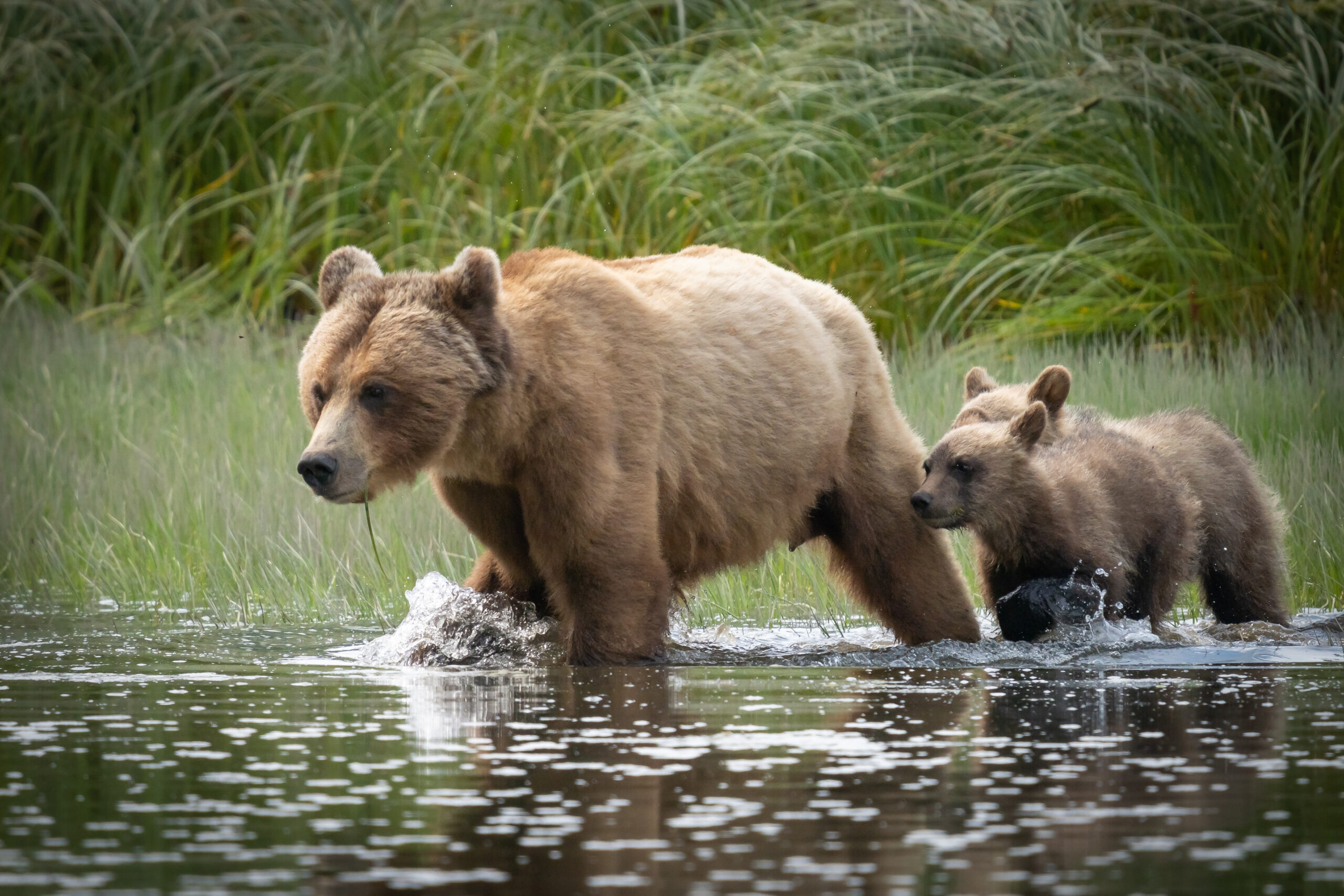
The graceful placement of enormous paws straddles the yellow line while small ones are clumsily dropped around on either side. It is a fragile relationship with the residents, who give them a wide berth, as Momma grizzly makes her way through the middle of town with her cubs in tow. Curious, they dart around while she seems on a mission; she is heading to the river.
What is it that makes us want to return to a place? Love of the location? Its flora and fauna? Its culture? Maybe unfinished business? For us, it was a return to the stunning small hamlet of Bella Coola, British Columbia, and the opportunity to camp out in the wilderness, witnessing the presence of the grizzlies that call this valley home. What we would learn along the way would change our views and strengthen our bond.
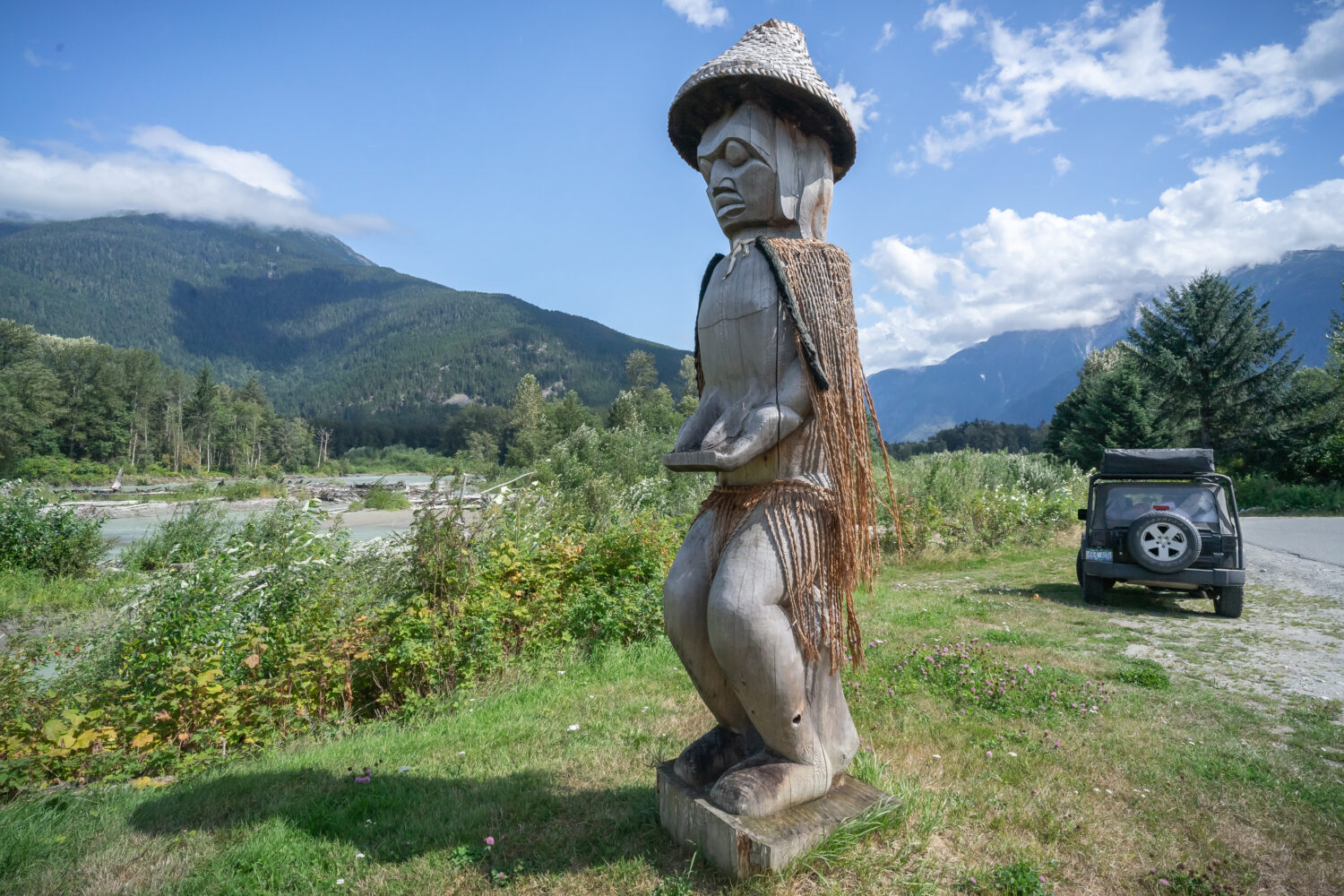
Ray and I had been on this journey before, on our motorcycles, but we wanted to return and explore more of the beauty of this remote native village nestled upon a Pacific inlet fjord. During our previous visit, we had stayed in a local hotel and explored the mountains by day, but this trip begged to be experienced by a different means. It would be a new and exciting adventure for us that would leave us in awe at every waking moment.
We chose to forgo the same route as before (by ferry) and drove the long way round, this time in our Jeep Wrangler, wanting to savor the journey. The 282-mile drive along Highway 20 starts in the central interior at Williams Lake and terminates on the coast at Bella Coola, our destination. A visual dichotomy and testament to the devastating wildfires that swept the area in 2018, there is a long stretch that stands scorched and barren, followed, in stark contrast, by lush green foliage and fields, ripe for wildlife foraging. Dotted along the route are tiny towns catering to locals and tourists alike with gas pumps and snacks. Services are limited, so being mindful of food and fuel was critical for the first leg of our trip.
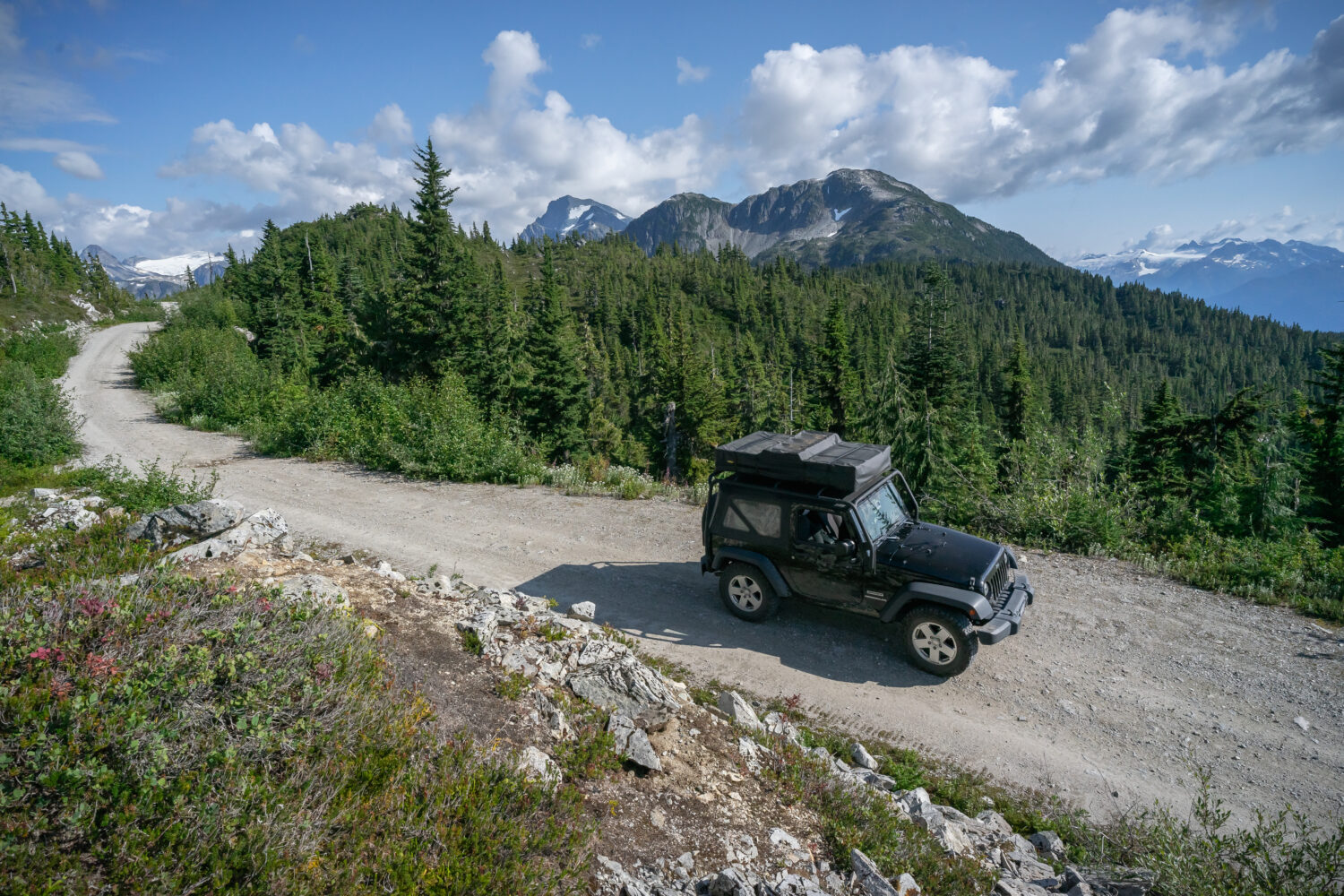
Through the desert canyons surrounding the Fraser River, amidst the glacial peaks of the Coast Mountains, through the desolate but lake-abundant Chilcotin Plateau, and the wildlife-rich Tweedsmuir South Provincial Park, the scenery is resplendent and truly a landscape photographer’s dream. With thoughtful planning, we allowed enough time for the snap-happy photog in me to capture some of this incredible backdrop.
A durable stretch of tarmac runs all the way through the Chilcotin Plateau and ends at Anahim Lake. After a long day’s travel from Vancouver Island, this was a perfect spot to spend the night before attacking the harrowing descent into the valley. Setting up the tent proved quick and easy while the lake provided a peaceful place to sit, enjoy the sunset, and reminisce about the day’s events and what we hoped to see next.
In the morning, we left the lake behind and hit the gravel road, the true beginning of our adventure. For many years, Bella Coola was linked to the world beyond only by a steep horse pack trail or by sea. Freedom Road, or known locally as “The Hill,” was built from each end by the people of Anahim Lake and Bella Coola, coming to completion in the middle. After two years of donated time, energy, equipment, and money, they developed this stretch that highway engineers said couldn’t be done, and the British Columbia government deemed an “impossible” project. It was possible and is currently listed as one of British Columbia’s most treacherous roads, but this route is worth every white-knuckle moment.
From the ear-popping 5,000 feet above sea level summit of Heckman Pass, leading to the Valley of the Grizzlies, is a breathtaking experience. Gazing in awe across the snow-peaked range of the Coast Mountains, I rolled my windows down, inviting in the crisp, unmistakable fresh mountain air. The sound of the wind gently rustling through the tree tops as birds called out across the expanse. It was a moment of serenity before the plunge.
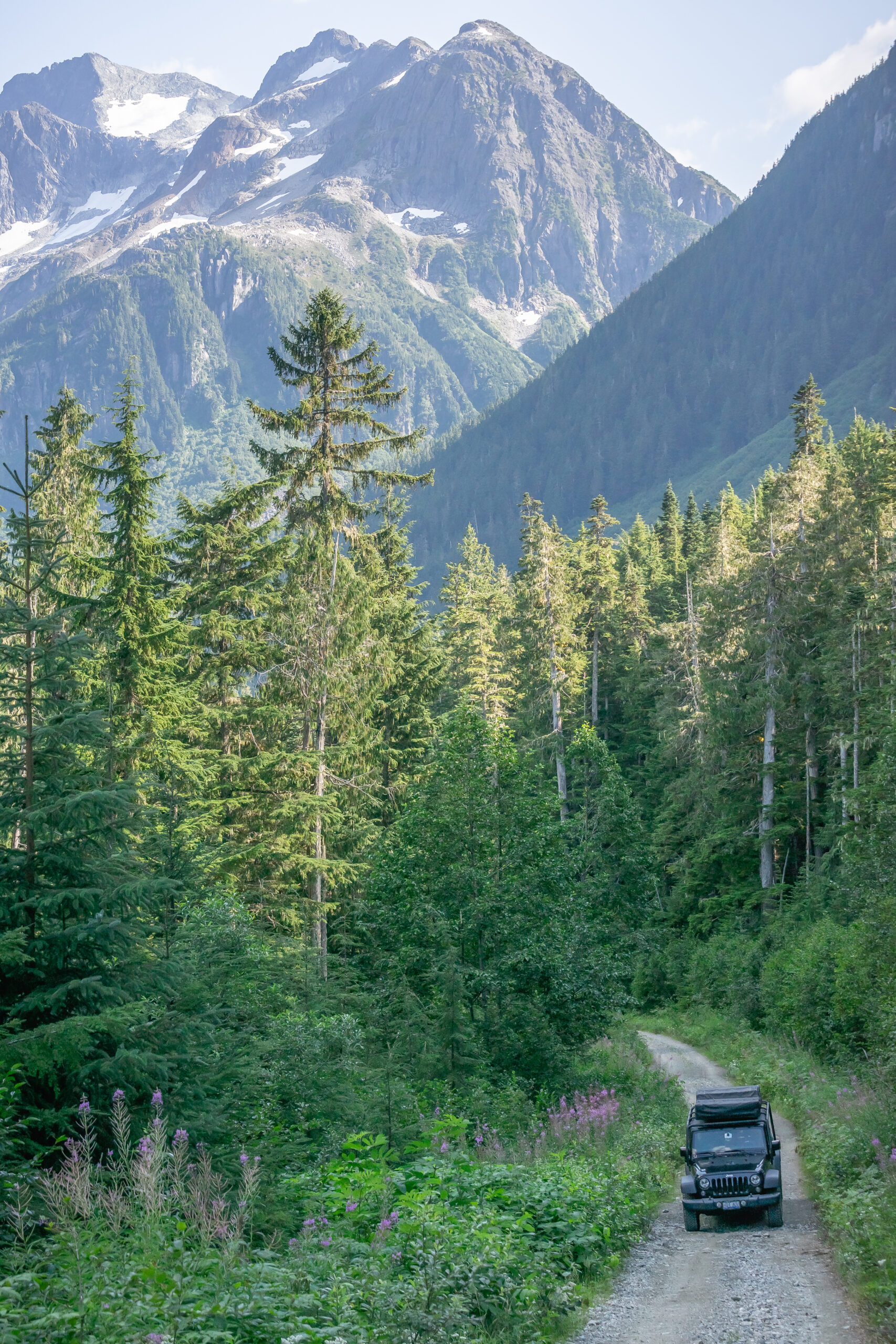
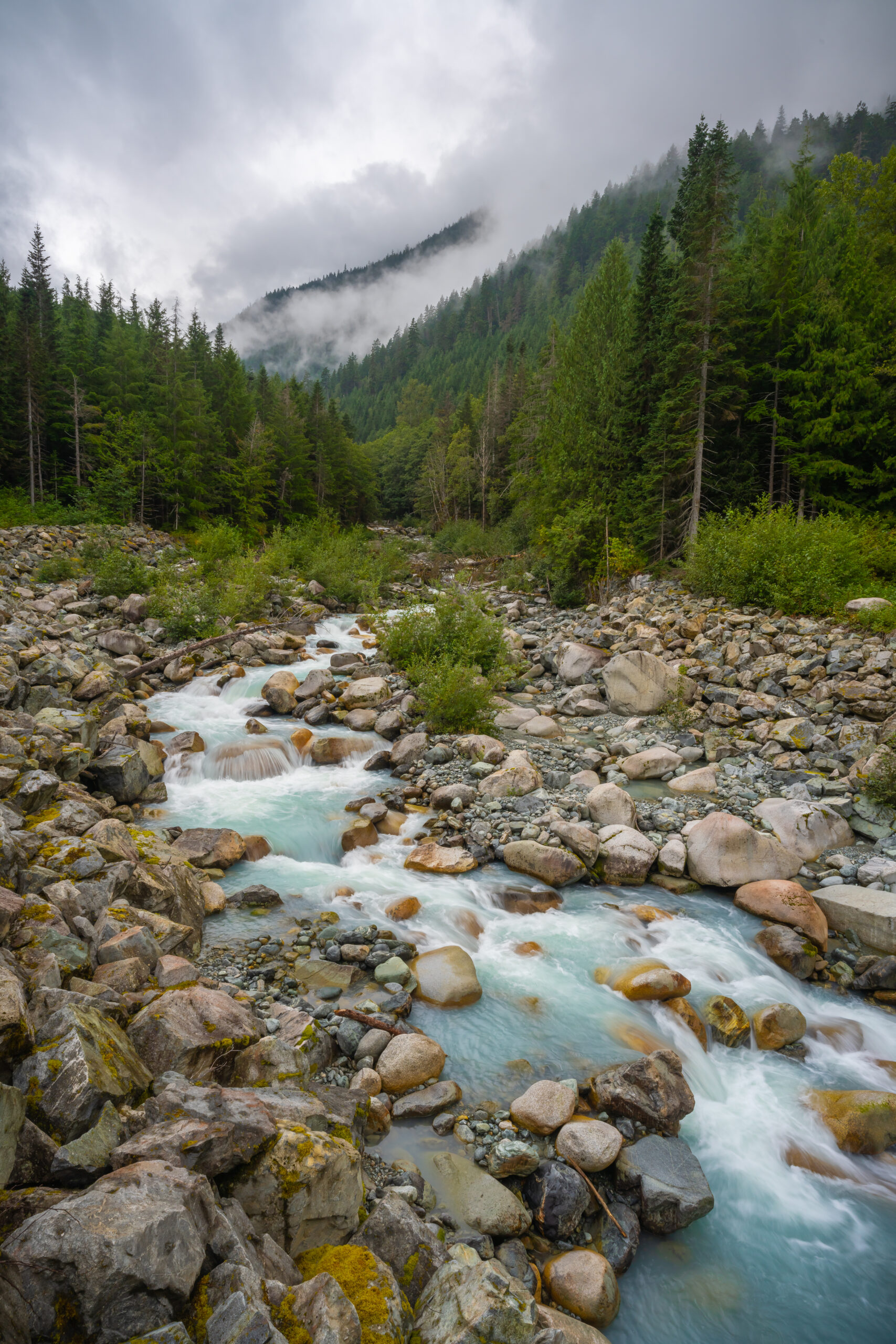
Down we went. The 27 miles of gravel road include 6.8 miles of hairpin turns, two switchbacks, and a 5-mile section of grades up to 18%. With relatively no shoulder and no guard rails, it is one wrong move from going over the edge. The narrow road and sheer drop off into the valley below certainly support its claim of being dangerous, and it was as thrilling as it was precarious. The view continued to be magnificent as we descended through Tweedsmuir Park, the largest provincial park in British Columbia. This is the same mountain pass that Alexander McKenzie recorded in 1793 as he reached the mouth of the Bella Coola River, one of the first true overlanders in North America.
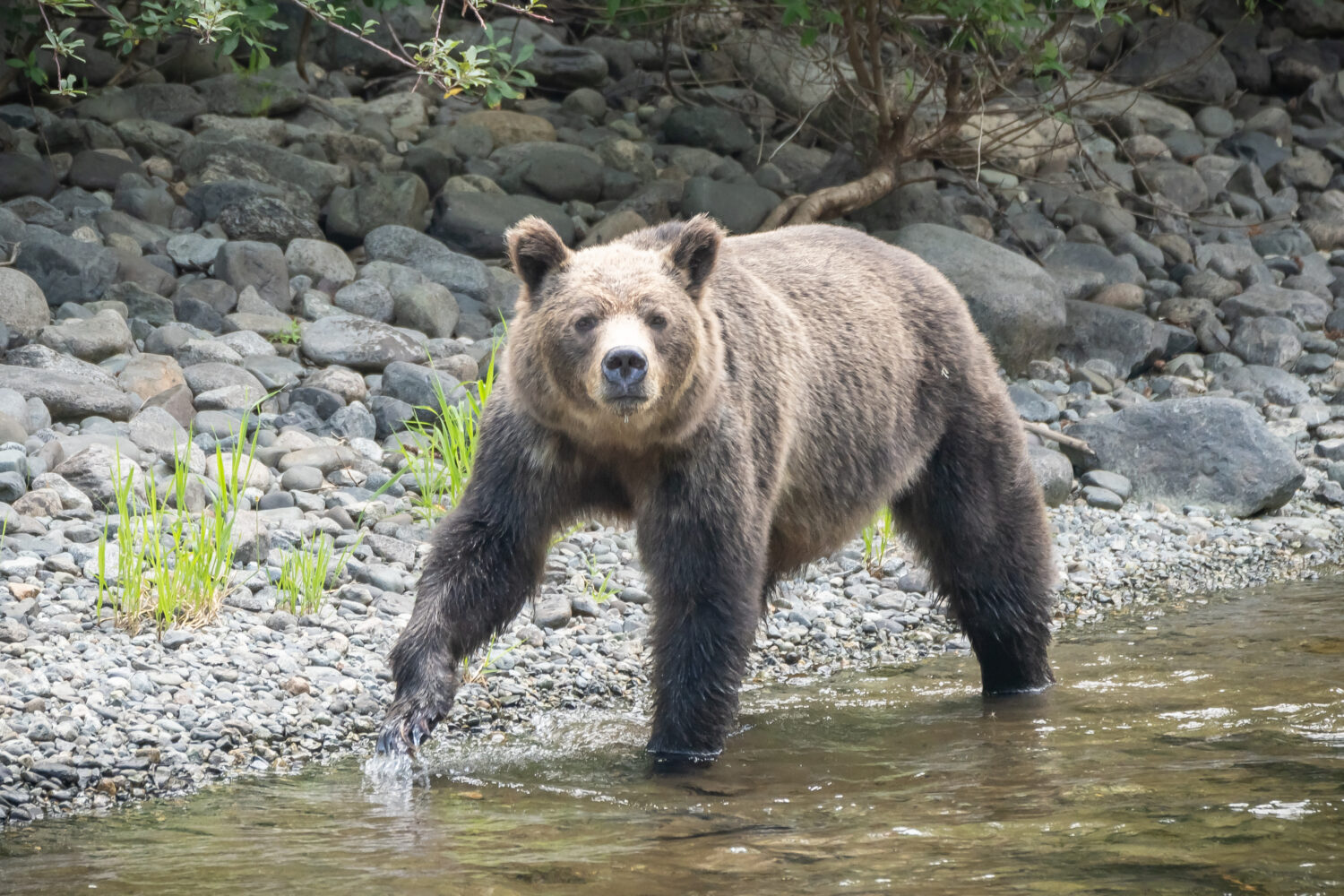
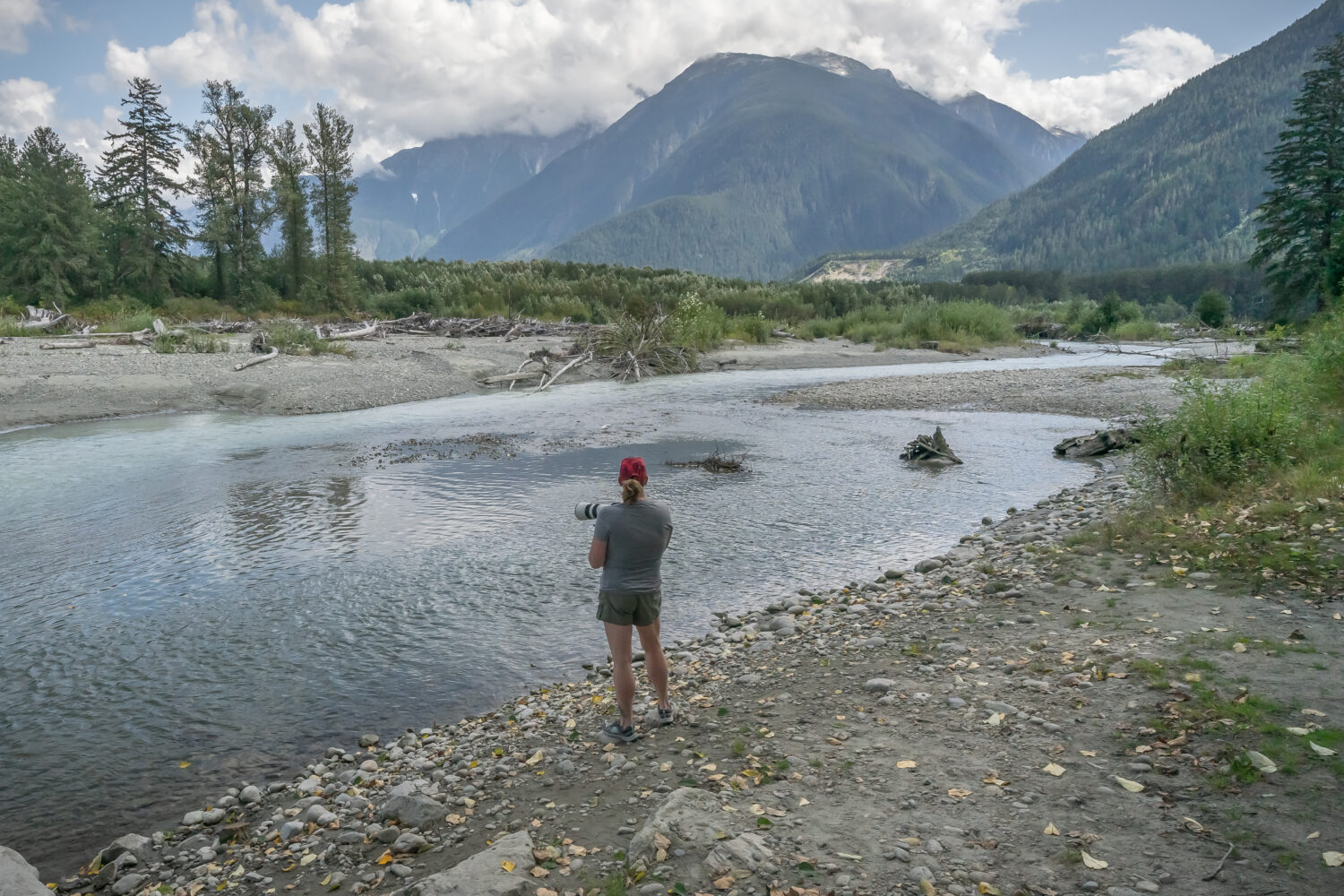
Upon reaching the valley floor, the Bella Coola River meandered alongside us to the left, where we spotted our first grizzly. With an excited squeal, I managed, “Babe, there’s a grizzly.” This big, beautiful bear slowly picked its way along the riverbank, splashing in the water’s edge, turning over rocks while keeping a keen eye out for its favourite meal, salmon. I chanced jumping out along the side of the road, zooming in with my Sony 200-600mm lens, keeping the river between us, knowing that this bear could cross swiftly, if provoked. Once it caught my scent and looked me straight in the eye, I retreated back into our trusty Jeep, content to continue watching from the safety of our steel cage.
Continuing on, it was time to stock up on provisions and enter Bella Coola. This remote hamlet lies at the end of the road within Canada’s Great Bear Rainforest and the Nuxalk Nation’s territory. This Indigenous First Nation of the Pacific Northwest Coast is rich with history and culture. According to archaeological findings, the valley and its inhabitants are estimated to date back 10,000 years; the Nuxalk would say from time immemorial.
Over 25,000 grizzlies reside in Canada, half of which live in British Columbia, and the residents here in Bella Coola play a huge role in their conservation, though there seems to be a decided difference in the locals’ opinions about their cohabitation. There are those who enjoy watching them traverse the town in order to reach the water, and those who see them as a nuisance as they rattle through garbage cans and force the locals to remain inside. That being said, their importance to the ecosystem and local economy is understood, and their spiritual significance is greatly respected.
Grizzly bears are habitat generalists, meaning they can reside from sea level to high-elevation alpine areas, making this a perfect region for inhabitation. As they are sensitive to development, enjoy a wide range of food and forage near the settlement, reducing human-wildlife conflict is something the residents strive for, and the focus on maintaining their habitat can be seen by the lack of expansion, bear sanctuaries, and the protection of the Great Bear Rainforest and surrounding wilderness. Further, in 2013, nine Nations announced a ban on commercial trophy hunting, and today this continues to be one of the most tightly controlled hunts on the planet.
We wanted to understand the importance and significance of the bear from a cultural perspective as well. Our desire was to see them in their natural environment, be as unobtrusive as possible, and be mindful of the territory we were exploring as a means of enriching our experience. The Aboriginal beliefs place people on an equal level with all other forms of non-human creation, including bears. Their ancestors believed that living beings switched between animal and human forms, making these interactions akin to social interactions, and this great respect was bestowed upon all living things. The bear itself is seen as independent and strong-willed and is said to symbolize strength, family, vitality, courage, and health.
With our cameras at the ready, we wandered the wilderness guardedly, on the lookout for wildlife; there were signs throughout the region indicating bears in the area, and we exercised caution. We were, after all, in the Valley of the Grizzlies. Though rare, there are documented reports of attacks by brown bears. The British Columbia Ministry of Environment, Lands and Parks, reports that four deaths and 25 serious maulings occurred over a three-year period, and WildSafe BC notes that there is an average of fewer than one fatal grizzly attack in the province every five years. Being armed with bear spray is a necessity, but more important is educating yourself about what to do in the event of an encounter and how to reduce this possibility by watching for signs of recent bear activity—fresh paw prints and fresh scat are good indicators—decreasing the risk of attraction and giving them respect and distance, particularly if you spot a sow and her cubs.
Past M. Gurr Trailhead, popular for hiking and climbing the giant rock that sits along a mosquito-laden pond, was a road as remarkable as it was rugged. Steep slopes led us higher and higher above the tree line and within the shadows of the various craggy mountains that make up the Central Coast range. Going from the crushed gravel of an easy off-road stretch to the jagged remains of debris eroded from the mountainside was no problem for our vehicle and driver, but it was a bit unnerving for me as we bounced side to side. Our goal was to hit a small, rustic campsite that we were told existed up here in the mountains, if you had the right vehicle. I can say that no car or RV would be enjoying this view anytime soon.
Alongside Grey Lake, we chose a spot to back in and set up camp; well, we had the whole area actually, so the choices were plentiful. Snugged in amidst the trees, we left our chosen plot for the night and went to explore our surroundings. We noted a few other rough sites, and judging by the overgrowth, this area is not often used. The lake was cool, with a tiny boardwalk where you could sit and breathe in the fresh alpine air. I took a few minutes to do just that and reflect on the trip so far. There had been some epic spots to stop and grab a few photos on the way up, and I had certainly felt the drop in temperature. Seeing the vast expanse of untouched terrain and immersing myself in the calm that surrounds me when taking in all of Mother Nature’s gifts is humbling and always fills me with a sense of peace.
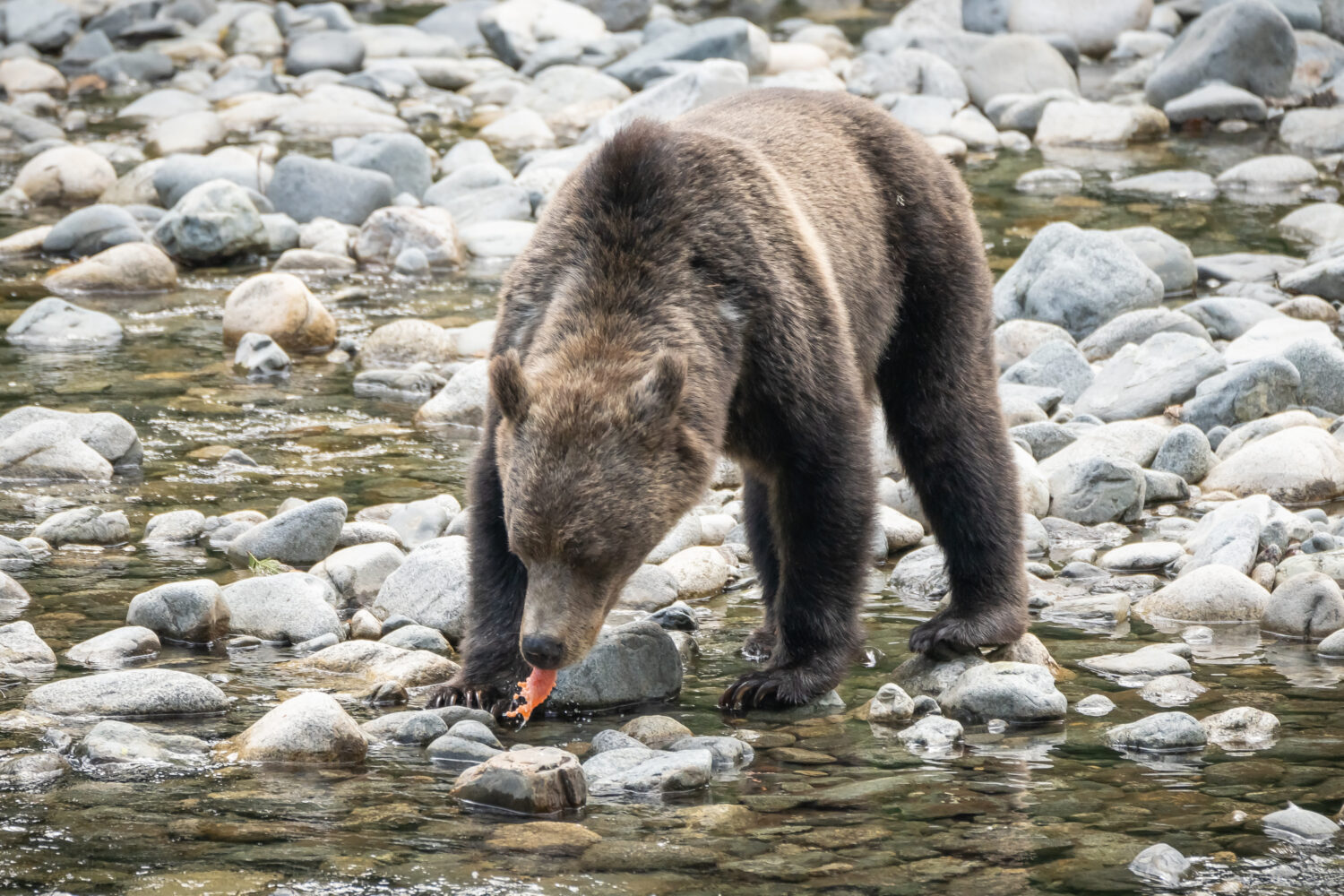
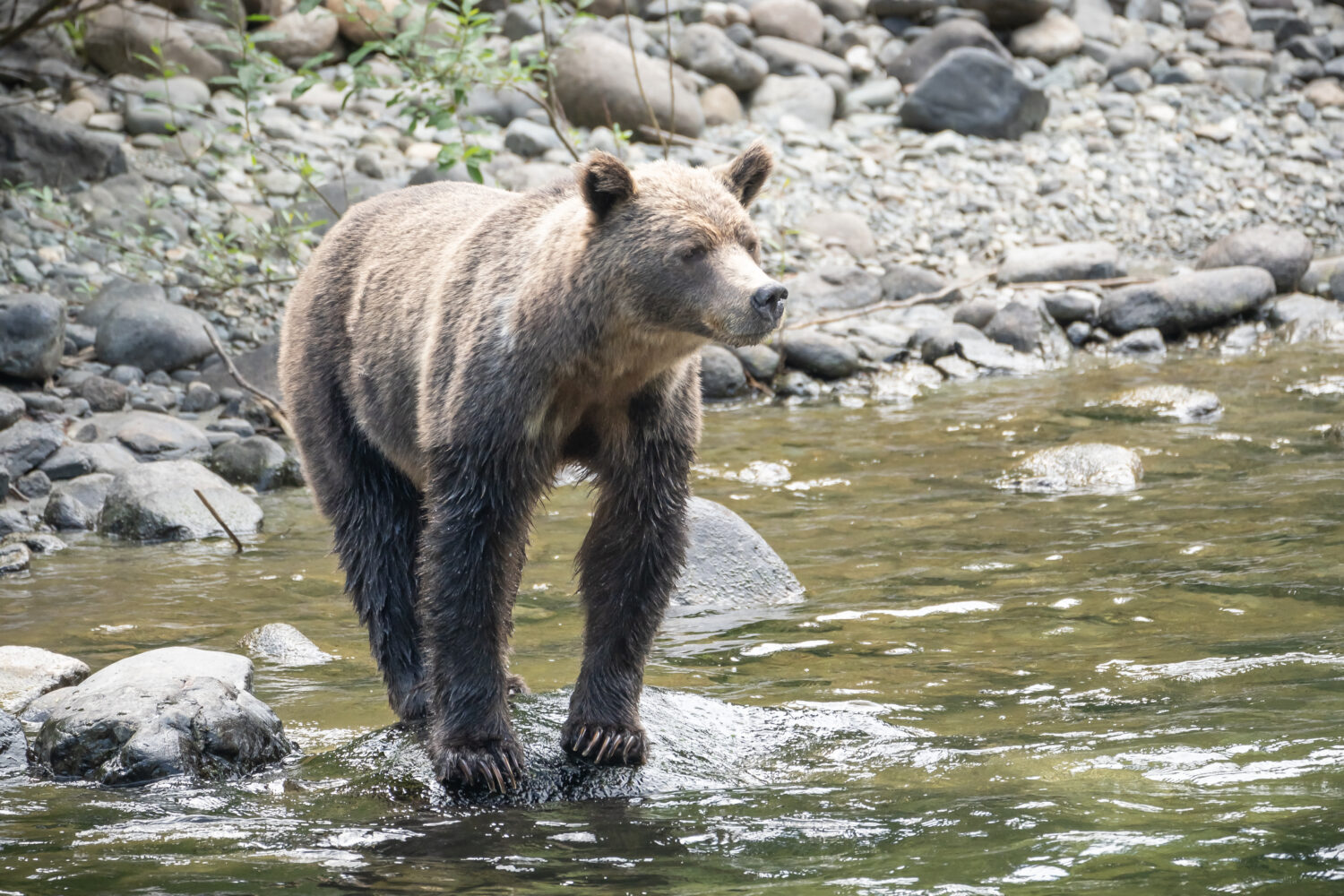
As time was drawing near to our departure, we headed back toward the bottom of the pass to explore a little more along the river’s edge. There you can find a bear sanctuary complete with viewing platforms overlooking the river in both directions, allowing spectators to enjoy bears foraging the water at a respectful, safe distance. It was here we once again spotted a grizzly; this one was enjoying the pink insides of his successful catch. We paused, marveling at the sheer size and power of these magnificent creatures that call this valley home.
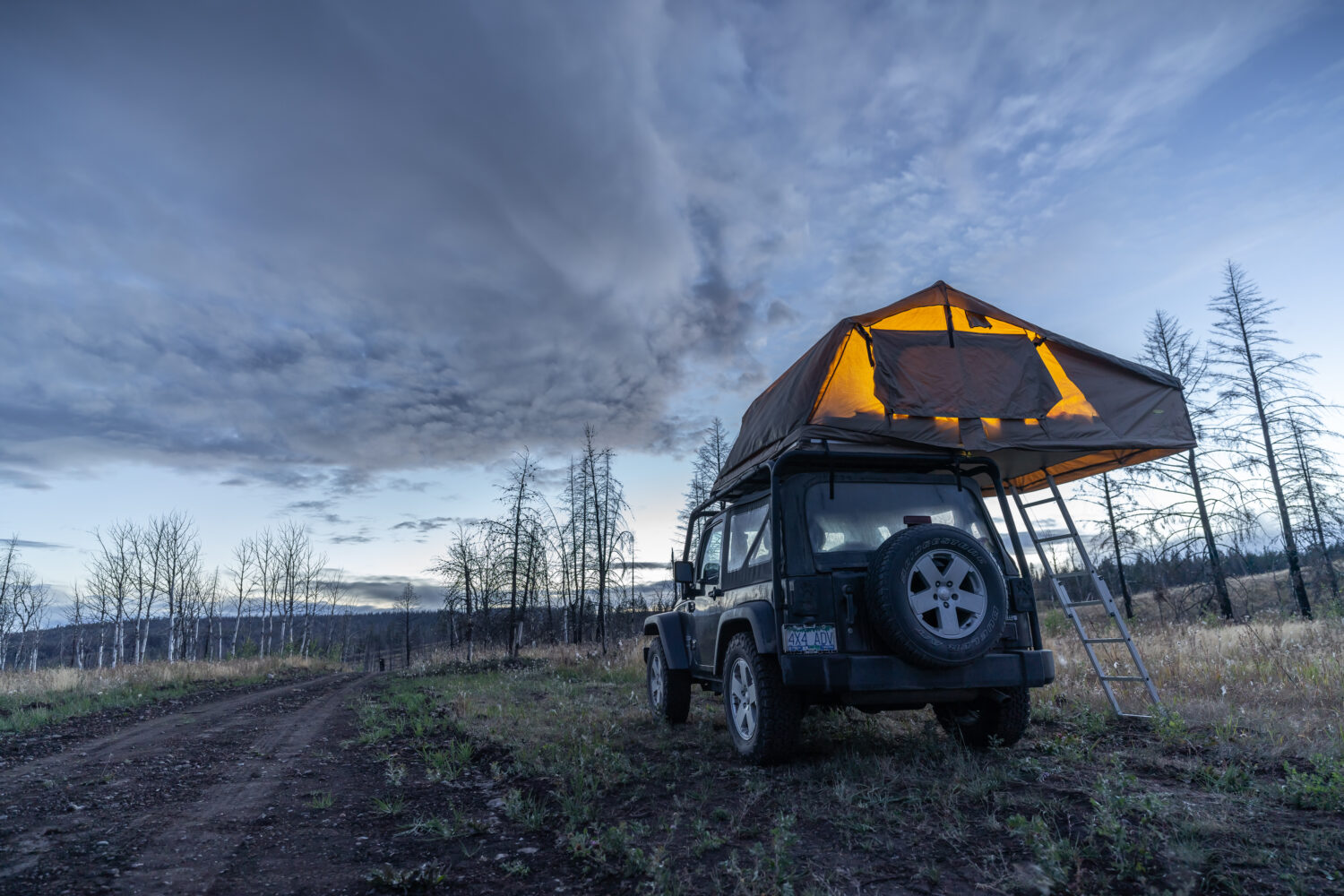
We explored more roads and found ourselves crossing bridges, winding around rock slides, and amidst more epic landscapes. Stealth camping for the final time on this trip, we found a clearing that had a perfect view of the sky. Some night shooting and stargazing made for a perfect end to what had been a near-perfect first overland experience; there are always lessons to be learned and means of improving when trialing new experiences.
With the search for the elusive grizzly at an end, it became clear to me that overlanding is more than exploring what’s outdoors; it is about connecting. Connecting with nature and being grateful for the ability to enjoy corners of our world that not everyone may have access to. About appreciating the beauty in the smallest of things and those that are too vast to imagine. It is respecting and appreciating wildlife as it exists in its own environment, and our role in how we impact it. It’s about connecting with your partner. Without the distractions of work, social media, and electronic entertainment, it becomes about the art of conversation, sharing dreams, getting a deeper understanding of who your partner is, and how they are in an environment devoid of everyday stressors. So, pour your favourite beverage, grab that big comfy chair, sit around the campfire, and immerse yourself in all that the world of overlanding has to offer.
Read More: Desk to Glory Launches “Why We Overland” 6-Part Film Series
Our No Compromise Clause: We do not accept advertorial content or allow advertising to influence our coverage, and our contributors are guaranteed editorial independence. Overland International may earn a small commission from affiliate links included in this article. We appreciate your support.
